
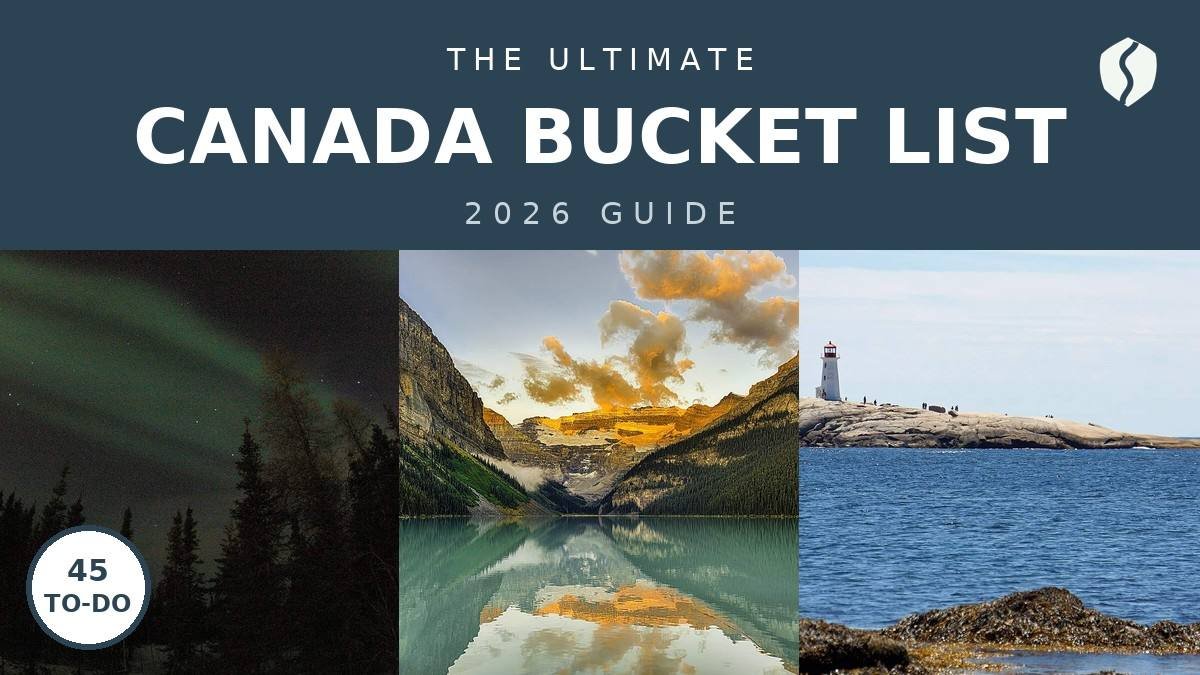
- ✓ This is a hub page: every item links to a full Canada Visitor Hub guide with prices, maps and how-to-get-there details — tick them off one trip at a time.
- ✓ Time it by season, not by geography: Canada’s bucket list is a calendar as much as a map — aurora and polar bears own winter, icebergs and tulips own spring, the Rockies own summer, larches own fall.
- ✓ I’ve done 31 of these 45 so far (the spreadsheet says so), and the rest are booked, researched or borrowed from trusted friends — every fact below was checked in October 2026.
Canada is the second-largest country on Earth and one trip cannot contain it. I learned this in 2019, trying to “do Canada” in ten days and ending up doing airports instead. Toronto to Vancouver is longer than London to Moscow — my spreadsheet had failed to impress that upon me.
So here’s the thing: the only sane way to see Canada is the bucket-list way — one list, ticked off trip by trip, season by season. I’ve stood under the Yellowknife aurora at −30°C, watched a polar bear amble past my Tundra Buggy, and eaten 2 AM poutine in Montreal. Forty-five items below, each worth the miles. Where a tip comes from a friend, a ranger or an official site rather than my own boots, I say so. Let’s go.
The 45, on a map
Ten anchor pins, coast to coast. Tap any stop to jump the map straight to it.
Map data © OpenStreetMap contributors. Open the full map
Icons & Wildlife — the greatest hits (1–8)
The eight things people mean when they say “I want to see Canada.” Start here.
1. See the northern lights during solar maximum (Yellowknife)

We’re in a once-in-a-decade window: solar maximum is still raging into 2026–2027, and Yellowknife sits directly under the auroral oval. I watched green curtains ripple for three straight hours at −30°C. My northern lights guide and solar maximum deep-dive have the month-by-month odds.
2. Lock eyes with a polar bear in Churchill
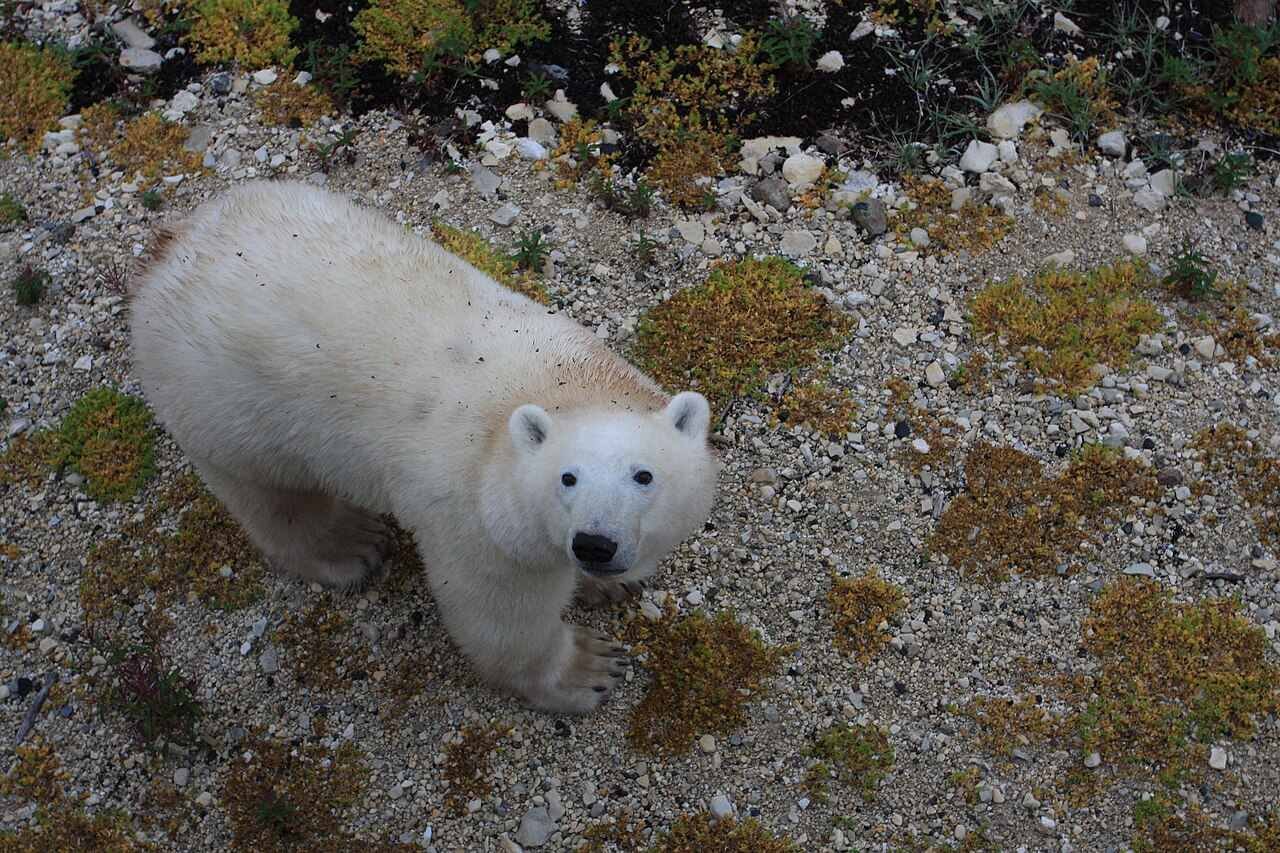
The only place on Earth to reliably see wild polar bears from a heated vehicle: a Tundra Buggy outside Churchill while a thousand-pound bear ambles past the window. Go October–November (see my Canada in November guide) and book 6–9 months ahead.
There are no roads to Churchill — fly from Winnipeg or take the 48-hour VIA Rail train. October buggy dates sell out by spring, so book early.
3. Feel the roar at Niagara Falls
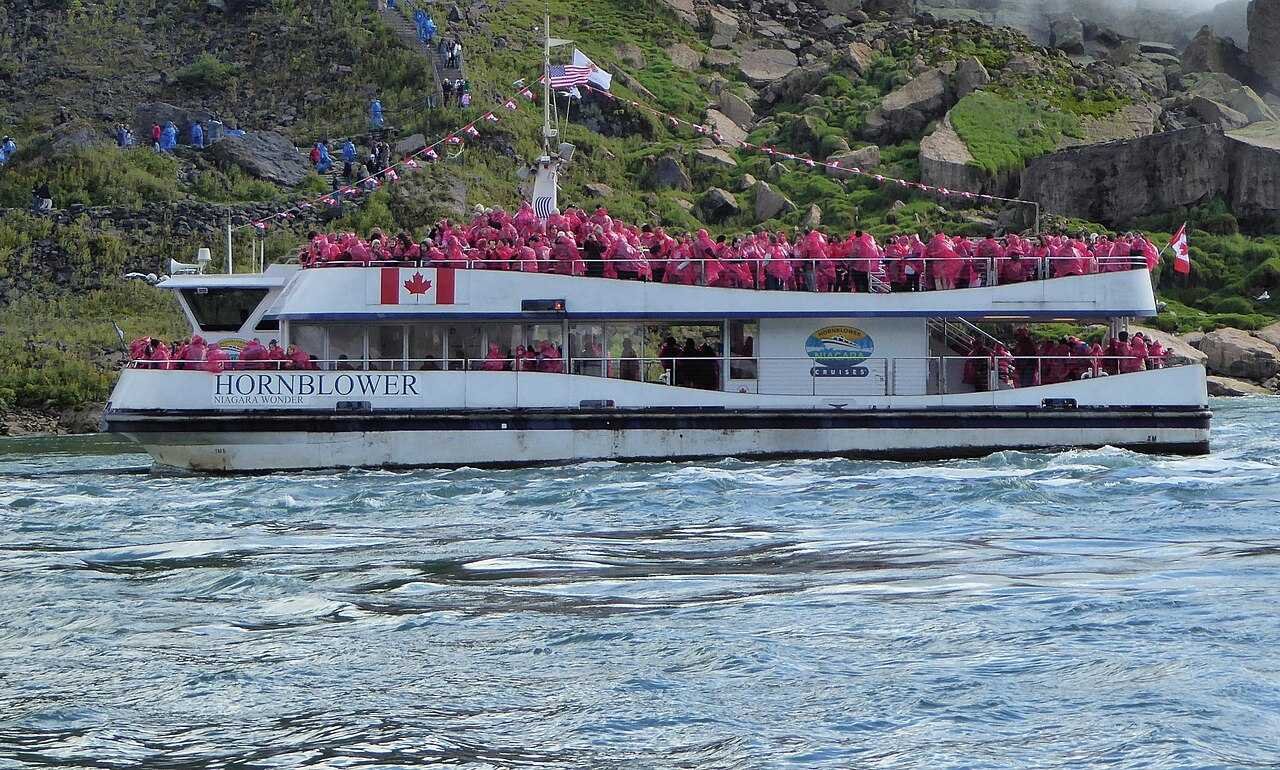
Six million cubic feet a minute over Horseshoe Falls — the number doesn’t prepare you for the rumble in your chest at Table Rock. Do Journey Behind the Falls, then the Hornblower boat into the mist. My Niagara Falls travel guide and 1-day itinerary have the playbook. → Niagara Parks — official site
4. Stand on the CN Tower’s Glass Floor (Toronto)
Transparent flooring 342 metres over the street. Timed-entry tickets run about $47; book the sunset slot a week ahead in summer. It’s #1 in my 7 best things to do in Toronto.
5. Spot a grizzly in the Rockies
No wildlife moment beats your first grizzly: the hump, the dish-face, the sheer mass. The Bow Valley Parkway at dawn is the classic corridor. I watched one flip rocks in a meadow for forty minutes and forgot I owned a camera. Keep 100 metres, carry spray. A Parks Canada ranger told me: “You don’t find the bears. You get lucky near the bears.”
6. Whale-watch where the rivers meet the sea
Two world-class options. In Quebec’s Saguenay–St. Lawrence Marine Park, ghost-white belugas surface beside your zodiac. In the Bay of Fundy, the world’s highest tides draw in humpbacks and fins. Every local I asked in New Brunswick said the same thing: go in August, take the small boat, sit up front.
7. See a moose — from a very safe distance
Canada’s most comically proportioned animal: all legs, all attitude, utterly unbothered by you. Algonquin’s Highway 60 corridor at dawn is the Ontario classic; Newfoundland has the densest population on Earth. I’ve seen four and laughed out loud every time. Do not approach — a moose is a thousand pounds of “nope.”
8. Meet the puffins on Newfoundland’s cliffs
Atlantic puffins — clown-faced, orange-beaked, absurdly photogenic — nest by the hundreds of thousands at Elliston and Witless Bay, near St. John’s. They arrive in May, leave by September; June is peak ridiculousness. A fisherman in Bonavista told me locals call them “sea parrots.” It fits.
Adventures — earn the view (9–16)
Canada doesn’t do passive sightseeing. These are the ones you come home with stories about.
9. Drive the Icefields Parkway (Banff to Jasper)

Two hundred thirty kilometres of the greatest road in Canada: turquoise lakes, hanging glaciers, a new jaw-drop every bend. Allow a full day — I did and still skipped two pullouts. Gas up in Lake Louise or Jasper; there’s no fuel between. My 3-day Banff itinerary and 2-day Jasper itinerary slot it into a full Rockies trip.
Drive northbound (Lake Louise → Jasper) in the morning so the sun lights the glaciers. Stop at Peyto Lake before 10 AM — the lot fills by 11 and I’ve seen cars turned away at noon in July.
10. Walk on a glacier — the Athabasca Ice Explorer
Those giant red buses drive onto the Athabasca Glacier and let you walk on 300-metre-thick ice. Tourist? Yes. Worth it? Absolutely — the guide’s spiel about the glacier retreating metres a year rewires how you think about climate change. I double-checked season dates on the official Columbia Icefield site: roughly May to October.
11. Ride the Banff Gondola to Sulphur Mountain at sunset
Eight minutes up, 2,281 metres, the whole Bow Valley laid out below. Walk the summit boardwalk to Sanson’s Peak at golden hour — I timed it so the light went pink on Cascade Mountain as I walked the ridge. Book the last gondola up and ride down in the dark with the valley lights twinkling.
12. Canoe Lake Louise at sunrise
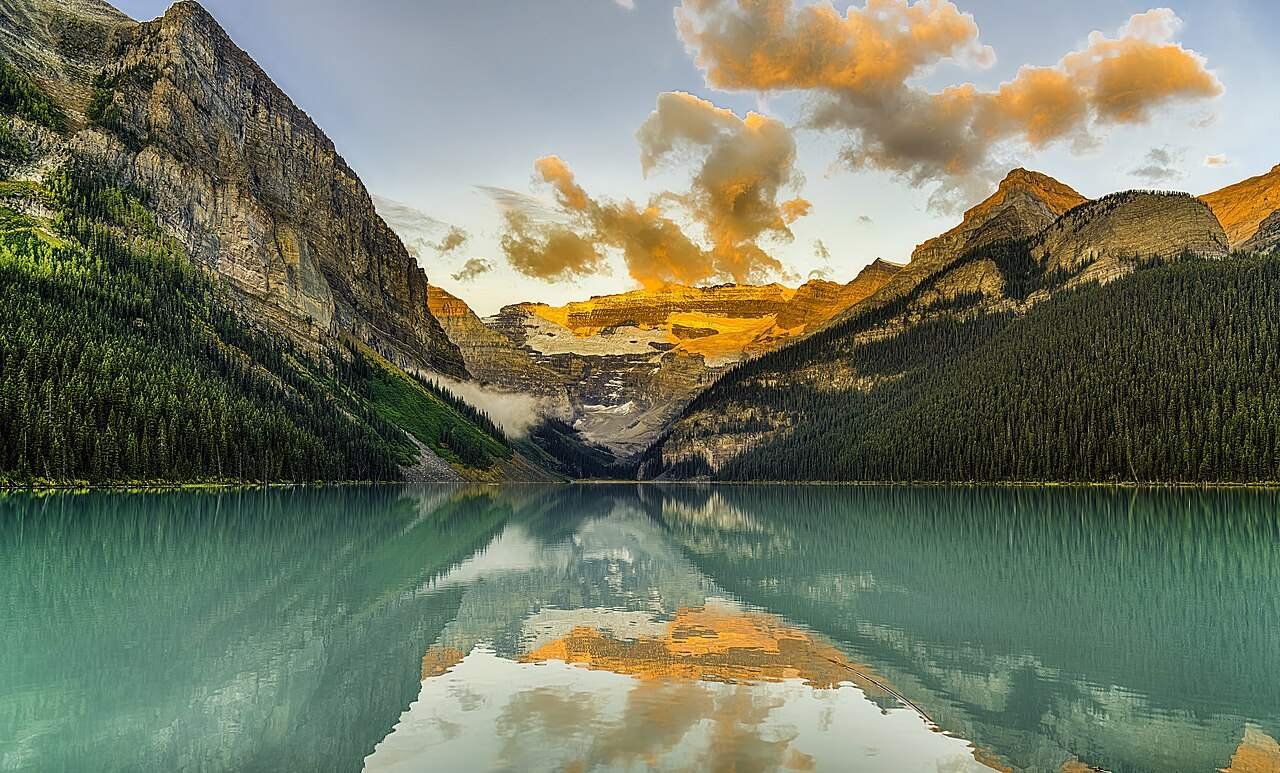
The red canoe on turquoise water is Canada’s most famous photo because it’s real. Be at the boathouse by 6:30 AM, before the crowds and the wind. Rentals run about $150/hour per canoe — split it four ways.
13. Surf the cold waves of Tofino
Surfing in Canada sounds like a dare, and the 8°C water confirms it — but in a thick wetsuit (rentals about $40/day), Cox Bay’s beach breaks are genuinely world-class. Lessons start around $100, everything included.
14. Cross the Arctic Circle on the Dempster Highway
Seven hundred forty kilometres of gravel from Dawson City to Inuvik, crossing the Arctic Circle at kilometre 405. Two friends who’ve driven it gave identical advice: carry two spares, a satellite communicator, and more fuel than your math says.
No cell service for most of the Dempster, fuel stops 200+ km apart. Rent a proper 4×4 (check the agreement covers gravel roads — many don’t) and go in late August or September for the tundra colours.
15. Dog-sled through a silent winter forest
A husky team, a sled, and the particular silence of a snow-loaded forest — just paws, runners and your breathing. Tours run nationwide (Laurentians, Banff, Whitehorse), 2–3 hours for $150–250. I did it in Mont-Tremblant; the musher let me drive until the first corner.
16. Drive the Cabot Trail — all 298 kilometres
Canada’s most beloved road trip: a cliff-hugging loop around Cape Breton with ocean on one side and highlands on the other. Drive it counter-clockwise (ocean side of the road, trust me on this one) and budget a full day — two with hikes. My best time to visit Cape Breton guide has the seasonal breakdown.
Everyone leaves the Skyline Trail right after the boardwalk viewpoint. Keep walking the loop instead: I watched the sun drop into the Gulf of St. Lawrence with four other people, and a moose wandered past at dusk.
Cities — the urban greatest hits (17–24)
Canada’s cities are criminally underrated. Eight that prove it.
17. Wander the walled city of Old Quebec
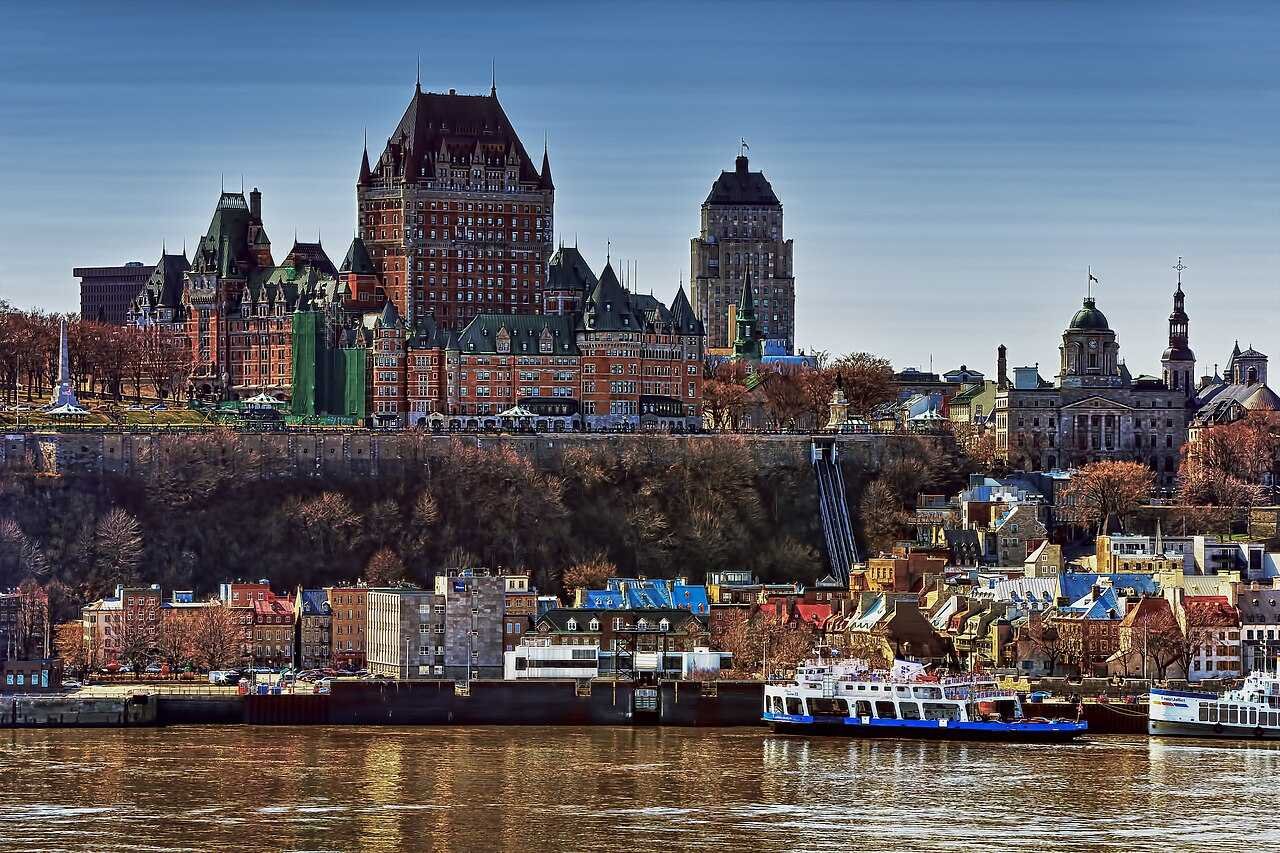
The only walled city north of Mexico, a UNESCO site, and the closest thing to Europe without crossing an ocean. The funicular down to Petit-Champlain, crêpes eaten while walking — I’ve been four times and it still disarms me. My 25 best things to do in Quebec City is the full companion. → Québec City tourism — official site
18. Eat your way through Montreal
Canada’s food capital, and it isn’t close. The holy trinity: a warm St-Viateur bagel, a smoked-meat sandwich at Schwartz’s (the line moves faster than it looks — I timed it, 22 minutes on a Saturday), and 2 AM poutine. My things to do in Montreal guide covers the full crawl. → Tourisme Montréal — official site
19. Sail under the Toronto skyline (Islands ferry)
Fifteen minutes, $9.57 round trip, and the single best view in Canada’s biggest city as the ferry pulls away from the Jack Layton terminal. I always ride to Centre Island and walk the boardwalk west. It’s #5 in my Toronto guide — and the stop I recommend first to visiting friends.
20. Skate the Rideau Canal in Ottawa
Every winter the canal freezes into the world’s largest skating rink — 7.8 km of ice through the capital, BeaverTails stands every few hundred metres. I checked skate conditions obsessively for a week before my trip (some winters it barely opens — have a backup plan). My things to do in Ottawa guide covers the winter edition.
21. Walk among the totem poles in Stanley Park (Vancouver)
Nine totem poles at Brockton Point, carved by Haida, Kwakwaka’wakw and other First Nations artists — BC’s most-visited spot, and it earns the attention. My things to do in Vancouver guide has the full park playbook.
22. Yell “yahoo” at the Calgary Stampede
Ten days every July, a million-plus people, and a city that decides office dress codes are optional. Rodeo, chuckwagons, pancake breakfasts on every corner — gloriously, unapologetically big. I went expecting kitsch and left a convert. My things to do in Calgary guide has the survival notes.
23. Bar-hop the Halifax waterfront
Canada’s friendliest city, proven on its waterfront: the boardwalk, the Maritime Museum’s quietly devastating Titanic exhibit, and a donair eaten on a bench watching the harbour. Pair it with my best road trips from Halifax for a long weekend.
24. Get lost in the Butchart Gardens (Victoria)
A limestone quarry turned into 55 acres of obsessive gardens — the Sunken Garden alone is worth the ferry from Vancouver. Go in June for the roses; summer fireworks Saturdays are the local move.
Food & Festivals — taste the country (25–32)
Canada’s food culture punches absurdly above its reputation. Eight delicious proofs.
25. Eat real poutine in Montreal

Fries, curds that squeak, gravy hot enough to melt them — in that order, always. My best poutine in Montreal guide names the ten spots worth the trip.
A Montreal line cook told me the real test of a poutine joint isn’t the poutine — it’s whether locals eat there at 1 PM on a Tuesday. Follow the hi-vis vests.
26. Pull hot maple taffy at a Quebec sugar shack
March and April: a lumberjack feast at a long communal table, then outside where they pour boiling syrup onto fresh snow and you roll it onto a stick. I burned my tongue, immediately did it again, and bought an embarrassing quantity of syrup. My Canada in April guide covers sugar-shack season.
27. Survive the Quebec Winter Carnival
Bonhomme — a seven-foot snowman — presides over the world’s largest winter carnival every February: ice palaces, night parades, canoe races across the half-frozen St. Lawrence. Drink the Caribou from a plastic cane cup like everyone else. I lasted four hours at −20°C before retreating to a crêperie. No regrets.
28. Catch the Montreal International Jazz Festival
Late June, downtown becomes the world’s largest jazz festival — hundreds of free outdoor concerts, the Quartier des Spectacles closed to cars. Graze the free stages: twenty minutes here, an hour there, dinner in between. Book hotels early.
29. Walk through a million tulips in Ottawa
Every May, Ottawa blooms with over a million tulips — the Netherlands’ living thank-you for sheltering their royal family in WWII. The Tulip Festival takes over Commissioner’s Park by Dow’s Lake. My Ottawa guide has the timing.
30. Crack into a Maritime lobster boil
On PEI or the Nova Scotia coast, lobster isn’t fancy — it’s lunch. The move is a lobster supper hall: whole lobster, mussels, chowder, a bib you will absolutely need. I ate mine at a picnic table over the water and finally understood why Maritimers are so cheerful. Go in season (roughly May–June) when traps are full.
31. Slurp Malpeque oysters in PEI
Malpeques are the oyster snob’s oyster — briny, cold-water, perfect. Dockside in Charlottetown or from a fisherman’s cooler on the North Shore, they taste like the ocean showing off. A dozen oysters, a local lager, boats coming in. Order six first if you’re new — then immediately order twelve, because you will.
32. Drive Ontario’s Butter Tart Trail
The butter tart — flaky pastry, gooey brown-sugar filling, the great raisin-or-no-raisin civil war — has its own trail through Kawarthas Northumberland. I did six bakeries in one day in the name of research. Professional opinion: runny beats firm, plain beats raisin. A hill I will die on.
Nature Wonders — the land itself (33–39)
Canada’s landscapes don’t do subtle. Seven places that rearrange your sense of scale.
33. Watch the sun rise over Peggy’s Cove
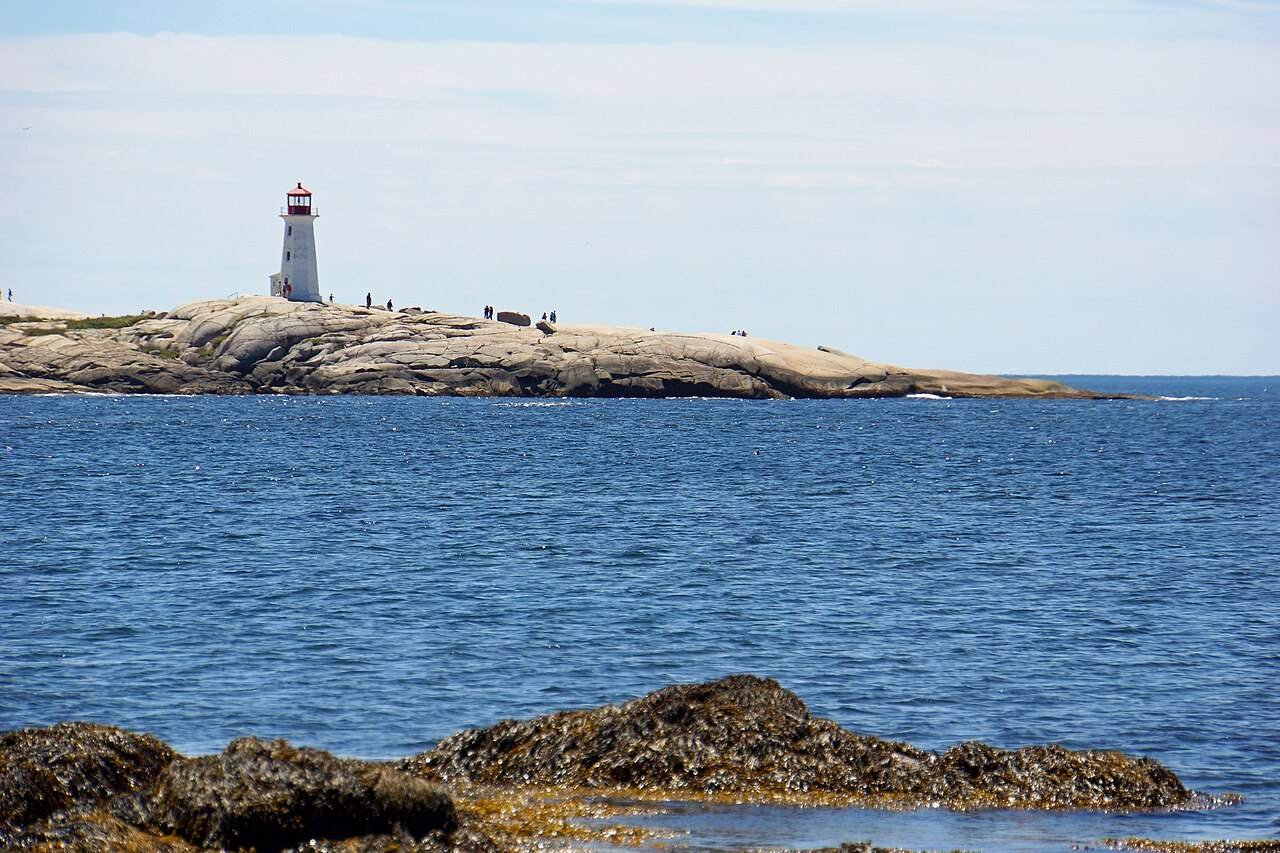
Canada’s most photographed lighthouse, on 400-million-year-old granite. Arrive at sunrise — I had the rocks to myself for an hour before the tour buses. Stay on the marked paths: the black rocks are slick and the waves dangerous. My best time to visit Nova Scotia guide has the timing.
Rogue waves have swept visitors off the dark rocks at Peggy’s Cove. Stay behind the railings and off the black rock zone — the lighthouse is just as photogenic from the safe side, I promise.
34. Storm-watch on Long Beach, Tofino
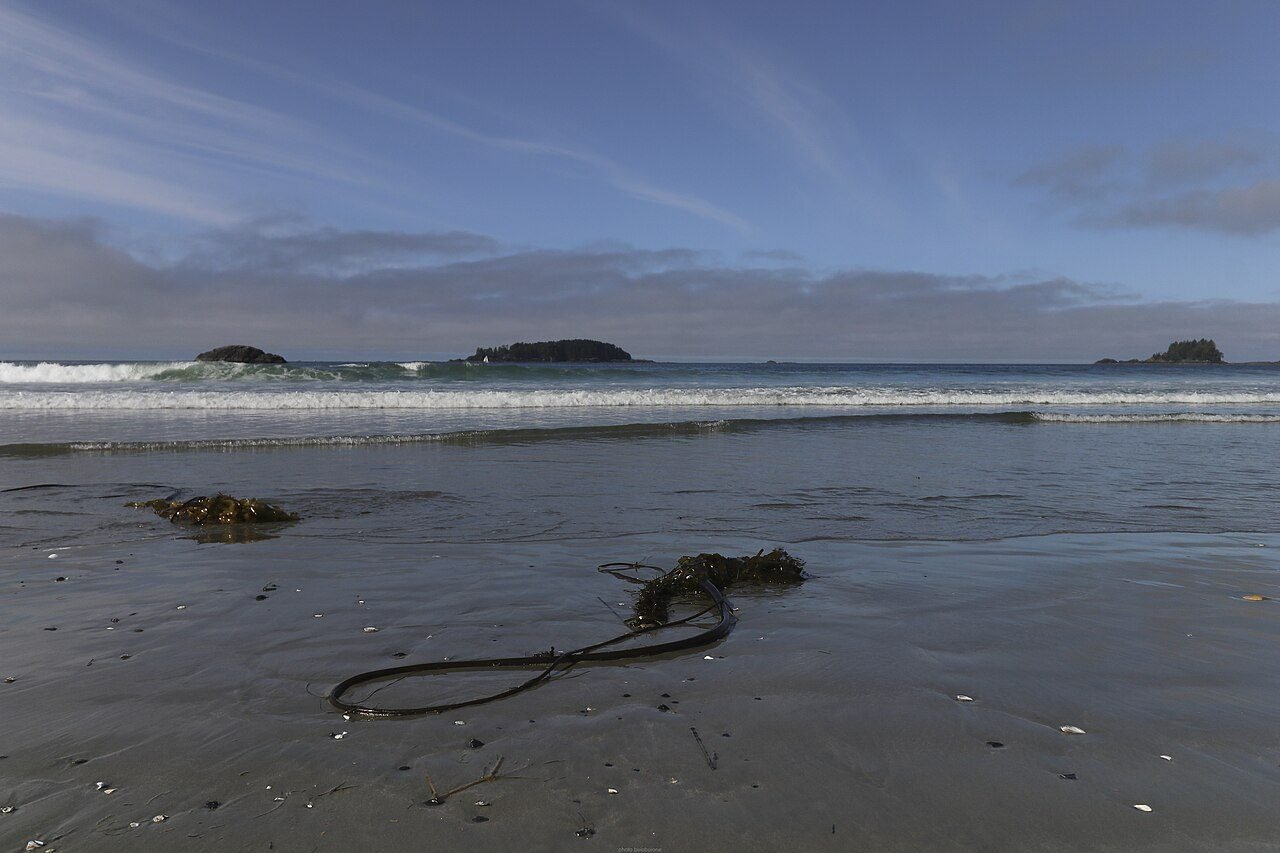
November to February, Pacific storms detonate against Vancouver Island — and Tofino turned watching them into an art form. Big windows, a fireplace, a storm raging outside: the coziest adrenaline in Canada. I did the budget version (a rainy Long Beach walk in full rain gear, then hot chocolate) and it was still magnificent. My Pacific Rim guide covers the coast.
35. Walk the ocean floor at Hopewell Rocks
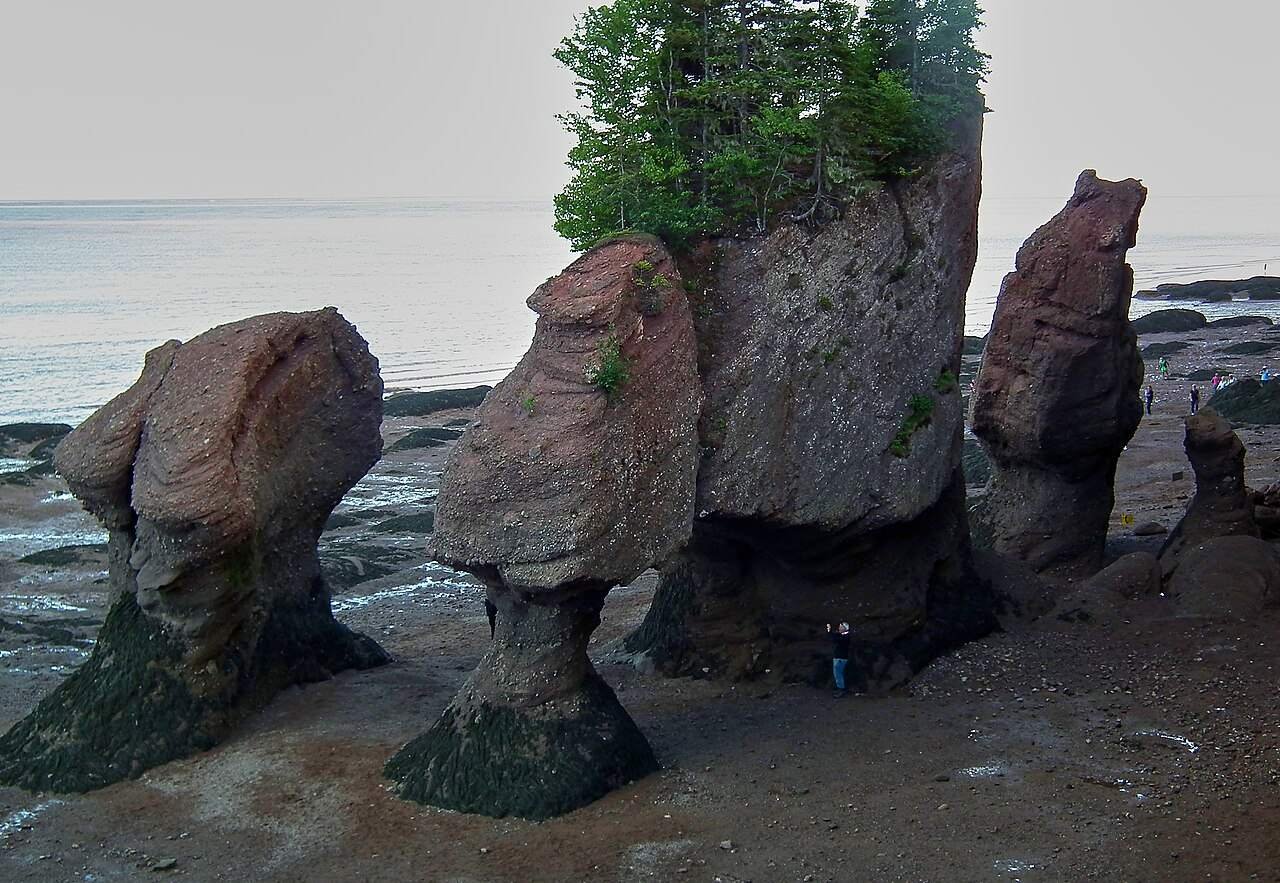
Fundy’s tides rise up to 16 metres — the world’s highest — and at low tide you walk the ocean floor among the flowerpot stacks, then kayak over the same spot hours later. Check the tide tables the night before (low tide is the whole point) and wear shoes you don’t love. My one-month Canada road trip itinerary routes through Fundy.
36. Hike the Tablelands in Gros Morne
A slab of the Earth’s mantle thrust to the surface — rust-orange and barren amid green Newfoundland. The 4 km Tablelands trail walks you through geology that shouldn’t exist above ground, and it’s a UNESCO site for exactly that reason. A Parks Canada interpreter told me astronauts trained here. I believed her. → Parks Canada — official site
37. Kayak with orcas in Johnstone Strait
Between northern Vancouver Island and the mainland, Johnstone Strait hosts the world’s largest gathering of resident orcas each summer. A Telegraph Cove guide described a pod surfacing fifty metres off his bow — I got goosebumps just hearing about it. Go July to September with a reputable outfitter.
38. See an iceberg drift past in Iceberg Alley
Every spring, 10,000-year-old Greenland icebergs — some the size of apartment blocks — drift down Newfoundland’s east coast. Twillingate calls itself the iceberg capital of the world. Most reliable May into June. Stand on the shore, listen to them crack and groan, and feel very small in the best way.
39. Stand under the night sky in a Dark-Sky Preserve
Jasper is the world’s largest accessible Dark-Sky Preserve, and on a moonless night the Milky Way is so bright it casts shadows — I didn’t believe that until I saw my own shadow on a trail at 1 AM. Lie back on a dock, give your eyes twenty minutes, and watch the sky fill in like a photograph developing.
Once-a-Season — the calendar items (40–45)
Some bucket-list moments only exist for a few weeks a year. Miss the window, wait twelve months.
40. Golden larch season in Banff (late September)
For about three weeks, the larches — the only conifers that turn gold — set Banff’s high valleys on fire. The Larch Valley trail above Moraine Lake is the classic: switchbacks through glowing gold forest to a hanging valley ringed by ten peaks. Start before 8 AM on a weekday. My Canada in September guide tracks the peak timing.
41. Watch icewine grapes harvested at dawn (Niagara, January)
Icewine needs grapes frozen solid on the vine — picked by hand, in the dark, at −8°C or colder. A few Niagara wineries let visitors watch the dawn harvest, fingers numb, breath fogging, then taste the liquid gold it becomes. I lasted forty minutes; the tasting room fireplace had never felt so earned.
42. Whale-watch the spring migration in Tadoussac (May–June)
When the St. Lawrence thaws, the whales return: minkes first, then humpbacks, belugas resident year-round. Long days, fewer boats, hungry whales feeding close to shore.
43. Peak fall colour in the Laurentians (early October)
Quebec’s Laurentian mountains ignite in the first two weeks of October — sugar maples going scarlet in waves down the valleys. The drive up Highway 15, the Mont-Tremblant gondola, a cidrerie stop for fresh cider: the definitive Canadian autumn. My Canada in October guide tracks the colour reports. Go midweek.
Colour peaks move roughly 100 km south per week — check the provincial foliage reports and chase the peak instead of guessing. I’ve timed three fall trips this way and nailed peak colour twice. The third time it rained for four days. You win some.
44. Watch the salmon run at Goldstream (late October)
Every fall, thousands of chum salmon fight up Goldstream River outside Victoria — leaping the falls, eagles circling, the whole ancient cycle in a park twenty minutes from downtown. It’s free and primal. Stand on the estuary bridge at low tide and watch them mass for the run.
45. Meet the belugas of Churchill (July–August)
Churchill in summer is a different planet from polar-bear season: 60,000 belugas pour into the Hudson Bay estuary, and you can kayak, paddleboard or snorkel among them. The belugas are curious enough to circle your kayak. The perfect bookend to #2: same town, opposite season, completely different magic.
45 down. Bucket lists aren’t really about finishing — mine grows with every trip. Start with the season you’re in, pick the region that calls to you, and go. Canada will do the rest.
What does the full bucket list cost?
All 45 is a multi-year project — most people do it in 3–4 big trips. The calculator prices one epic two-week trip across 2–3 regions (inter-regional flights in transport). Pick your style, set your days, and it does the rest.
Budget calculator
Per person, in Canadian dollars. One 14-day bucket-list trip across 2–3 regions.
Budget ≈ $100/day · Mid-range ≈ $180/day · Luxury ≈ $320/day. Fares and admission checked October 2026.
FAQs about the ultimate Canada bucket list
How long would it take to do all 45 things on this Canada bucket list?
Realistically, 3–4 big trips over 2–3 years (31 down so far). Cluster by region and season: one Rockies summer trip covers items 5, 9–12 and 40; one Maritimes fall trip covers 16, 33, 35 and 43; one winter trip covers 1, 2, 20 and 27. The list is the point, not the finish line.
What is the best month to start ticking off a Canada bucket list?
September is my pick for the single best month: larch season (40), fall colours starting, the Dempster’s tundra glowing, fewer crowds, early aurora up north. July wins for festivals, whales and the Stampede; February for the Winter Carnival and peak aurora. Planning around fall? Start with my Canada in September guide.
Is Canada expensive for a bucket-list trip?
About $180 per person per day mid-range (calculator above), more for the Arctic items. But the Parks Canada Discovery Pass ($75/year) pays for itself in two park visits, shoulder seasons slash accommodation, and half the nature items here are free.
Do I need a car to do these 45 bucket-list experiences?
For the full list, yes — a car plus domestic flights. The cities are excellent car-free, but the Icefields Parkway, Cabot Trail, Dempster, Gros Morne and most wildlife items need wheels. My approach: fly between regions, rent a car per region, and loop your driving routes — one-way inter-province rentals get pricey.
When is the best time to see the northern lights in Canada?
Right now. We’re in the tail of solar maximum, meaning unusually strong aurora through the 2026–2027 winter — the best displays in over a decade. Dark skies run September to March; Yellowknife, Whitehorse and Churchill are the top bets. See my solar maximum guide and where-to-see guide.
If I only have one week in Canada, which bucket-list items should I pick?
Fly into Calgary, rent a car, and do the Rockies greatest-hits week: the Banff Gondola (11), Lake Louise at sunrise (12), the Icefields Parkway (9), the Athabasca Glacier (10), and a grizzly-spotting dawn drive (5) — five bucket-list items in seven days. My 3-day Banff itinerary is the skeleton; stretch it to a week and slow down.
Keep exploring
Where to go deeper:
- 15 best places to visit in Canada — the destination shortlist behind this bucket list
- 15 best national parks in Canada — where half these experiences live
- One-month Canada road trip itinerary — the route that connects the coasts
- Where to see the northern lights in Canada — item #1, in full detail
- 3-day Banff itinerary — items #9–12 as one perfect trip
- 51 fun facts about Canada — dinner-party ammunition for the whole list
You’ve got this. Pick a season, pick a region, and start ticking — I’ll see you out there.