

- ✓ This is the window: Solar Cycle 25’s peak runs through 2026–27 — brighter, more frequent aurora, and more nights when the lights push far south. The next one this good is a decade away.
- ✓ Give it 3–4 nights: the aurora doesn’t care about your itinerary. Base yourself under the auroral oval — Yellowknife, Whitehorse, Churchill — and let the clouds have one night.
- ✓ Watch two forecasts: the Kp index tells you when to stay up; the cloud forecast tells you whether to bother.
My first aurora hunt was a disaster of my own making. It was 2019 — deep in the solar minimum, though I didn’t know that then — and I drove out of Edmonton with a thermos, a tripod, and an optimism that bordered on delusion. Two hours in a farmer’s field, staring at a grey smudge that was either the northern lights or a thin cloud. Still don’t know.
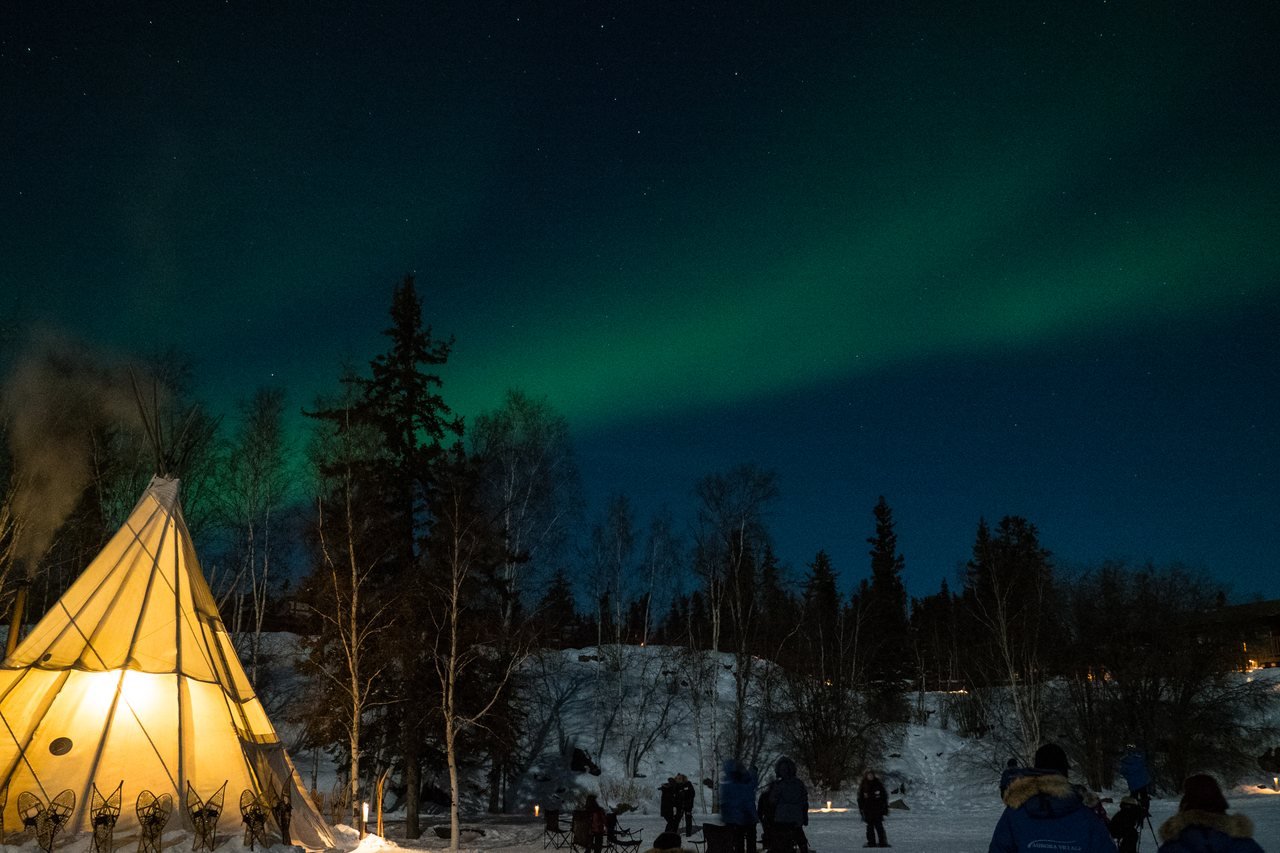
Years later I stood outside a teepee at an aurora camp near Yellowknife while the whole sky came unglued — green curtains folding over themselves, purple fringes, the works. Nobody photographed it. We just stood there. Here’s the deal: the difference between those two nights wasn’t luck. It was the sun. And right now, the sun is putting on its once-a-decade show.
What the solar maximum actually means
The sun runs on an 11-year cycle. Right now we’re at the top of Solar Cycle 25 — the solar maximum — with elevated activity expected through 2026 and into 2027. Translation: the sun is throwing more charged particles at Earth than usual, which means brighter aurora, more nights with a show, and storms strong enough to push the lights far south of their usual turf.
The number you’ll hear everywhere is the Kp index: a 0–9 scale of geomagnetic disturbance. Think of it as a volume knob — the higher it goes, the further south the lights reach. I double-checked the scale on NOAA’s Space Weather Prediction Center site before this trip — the official forecast page is the one bookmarked on my phone, not a third-party app. → NOAA SWPC — planetary K-index
Use NOAA SWPC’s 30-minute aurora forecast on the night itself — it shows the oval in near-real time. The 3-day forecast is for planning; the 30-minute one decides whether your boots go back on at midnight. → NOAA SWPC — 30-minute aurora forecast

One more thing: the equinox effect. Around the March and September equinoxes, Earth’s magnetic field lines up with the solar wind in a way that makes geomagnetic storms more likely. I filed that under “nice theory” until I watched the sky over Great Slave Lake in late September outperform my March trip. If you can choose, aim for March or September/October.
The 7 best aurora bases, on a map
Seven spots, from the easy fly-in to the full expedition. Tap any stop to jump the map to it — then read on for the drive times and the details.
Map data © OpenStreetMap contributors. Open the full map
1. Yellowknife, NWT — start here

If this is your first aurora trip, fly to Yellowknife. Full stop. Dead-centre under the auroral oval, open sky in every direction off Great Slave Lake, and a town that’s spent decades getting good at one thing: putting visitors under the lights. I once tried somewhere “less touristy” instead. Three nights of cloud over a town with one motel and no aurora guide. I’ve made this mistake so you don’t have to.
The move: one night at an aurora camp. The wake-up call came at 11:47 PM — a van took us 20 minutes out of town, and a guide handed me hot chocolate that tasted faintly of woodsmoke. −28°C and nobody cared. The sky did the folding-curtain thing for two hours. Then I slept until noon, zero guilt. Check the official visitor site for current operators — packages change seasonally. → Extraordinary Yellowknife — official visitor site
Pick a new-moon week. A bright moon washes out the faint stuff — on a moonless night in Yellowknife, even a modest Kp 2 show looks dramatic. I checked the lunar calendar before booking flights, and it’s the single cheapest upgrade you can make to this trip.
For the full breakdown of viewing spots around town, timing, and what to wear, my complete northern lights guide goes deeper — this article is the “why now”, that one is the “how”.
2. Whitehorse, YT — the road-tripper’s base

Whitehorse is the aurora trip for people who like their northern lights with a side of highway. You can fly in — but the real play is the Alaska Highway leg: about 24 hours of honest driving from Edmonton, the kind that reminds you why you bought the good tires. Gas up whenever you can. I watched my fuel gauge do something scary between Fort Nelson and Watson Lake, and I’ve made this mistake so you don’t have to.
The lights are as reliable as Yellowknife’s, but the viewing is more do-it-yourself: drive 20 minutes out of the light dome, kill the headlights at a pullout, and wait. My cloudy-night insurance was Takhini Hot Springs, 30 minutes out — one socked-in evening in the pools, steam rising into a sky that owed me an apology. No regrets. For ideas beyond the lights, the official Yukon tourism site is worth a browse. → Spectacular Yukon — official tourism site
3. Dawson City, YT — the frontier option
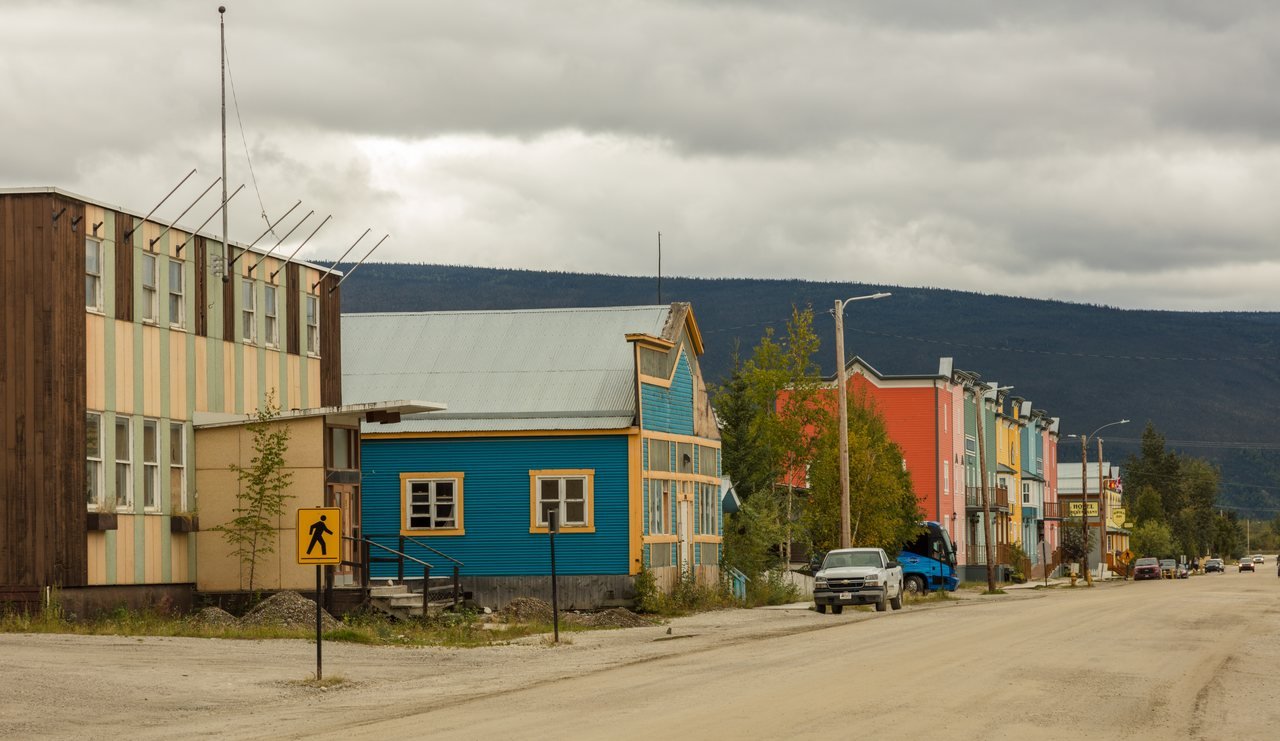
Dawson City sits at 64°N — properly north — and feels like a film set that forgot to stop being a town. Boardwalks, false-front saloons, the whole gold-rush thing, except people actually live here and the winter sky does things that make you forget to be cold. It’s worth the detour if you want your aurora trip to feel like an expedition rather than a package.
Fair warning, from someone who learned it the damp way: I showed up in late September with a parka rated to −10 and the kind of confidence that lasts until the first −18 night. Rent the real gear or pack like you mean it — my Canada winter packing list was written by the version of me that survived that trip. At Dawson’s latitude, the lights often start before 10 PM during solar maximum, while the southern towns are still waiting.
4. Churchill, MB — bears by day, aurora by night
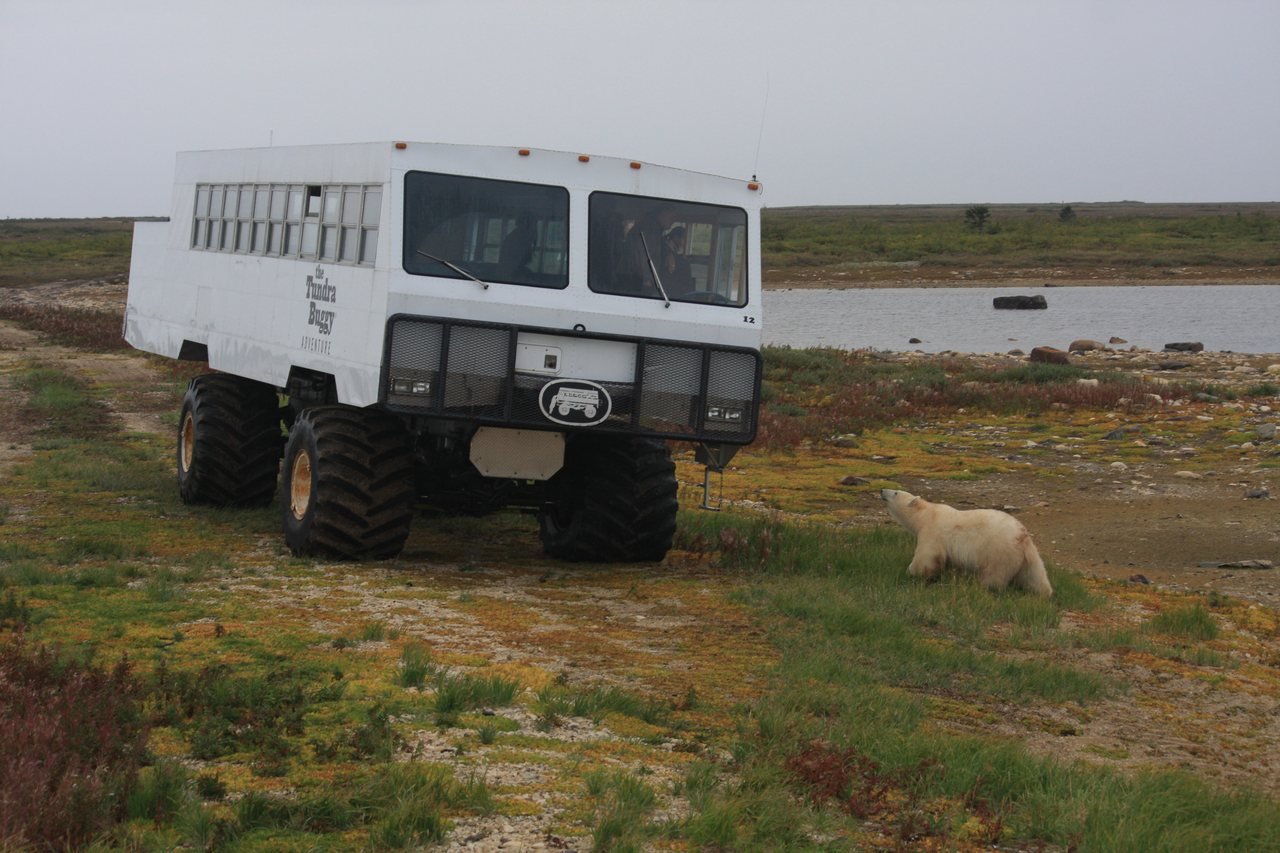
Churchill is the two-for-one. October and November bring the polar bears to the Hudson Bay coast — tundra buggies, the whole famous thing — and February and March bring the sharpest aurora of the year. Pick your season based on which miracle you want more.
I went for winter. The town is small, the bay freezes into a white plain, and the night sky feels closer than it should. A local at the hotel bar said the trick is to walk to the edge of town, away from the port lights — every local I asked said the same thing, and they were right. No roads in: you fly or take the train from Winnipeg. The train is 45 hours, and I won’t pretend that’s everyone’s idea of fun. I checked the official Travel Manitoba site for current operators before committing — prices move around, so check the week you book. → Travel Manitoba — official tourism site
5. Jasper, AB — the accessible one
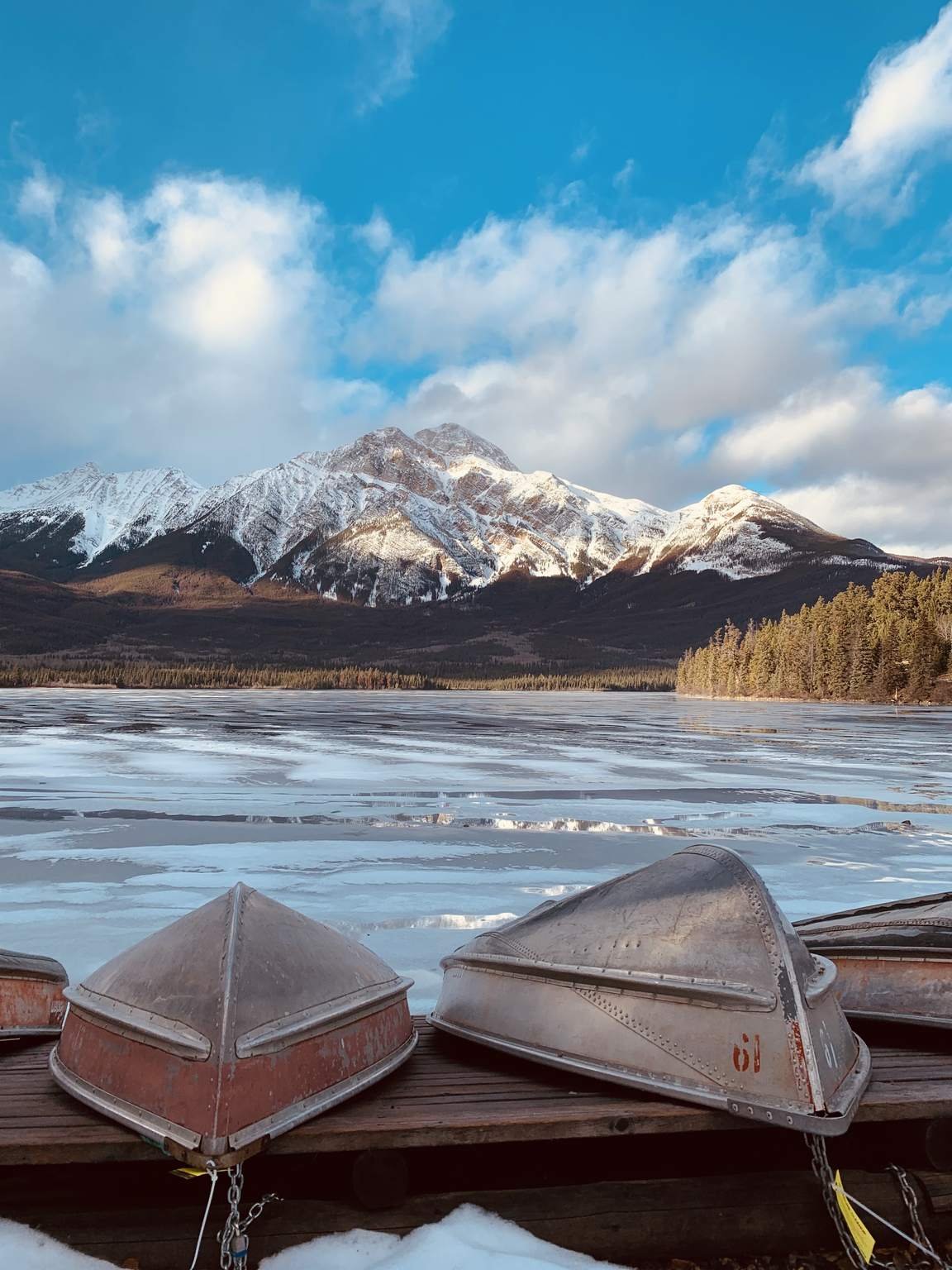
Jasper is the only spot on this list you can reach on a normal road trip — about 4 hours west of Edmonton on Highway 16. It’s a Dark Sky Preserve, so the town dims its lights for the sky, and during solar maximum that’s enough: a Kp 4–5 storm puts the lights over Pyramid Lake while you’re still wearing the jacket you drove in.
Be honest about the trade-off: Jasper won’t give you Yellowknife’s nightly reliability — you need a real storm, and storms don’t take bookings. But I drove the Icefields Parkway in October once, watched the sky shimmer past the Columbia Icefield, and pulled into a dark pullout with six other cars who’d all had the same idea. Nobody talked. That’s the Jasper version: shared, a little scrappy, a tenth of the planning. If you’re heading that way, my Banff–Jasper road trip itinerary slots in neatly.
Jasper and Banff need Kp 5+ for a real show — that’s storm territory, not nightly viewing. Don’t plan an entire aurora trip around the Rockies and then feel cheated. Plan a Rockies trip that might include the aurora, and let Yellowknife be the sure thing.
6. Fort McMurray, AB — the budget play
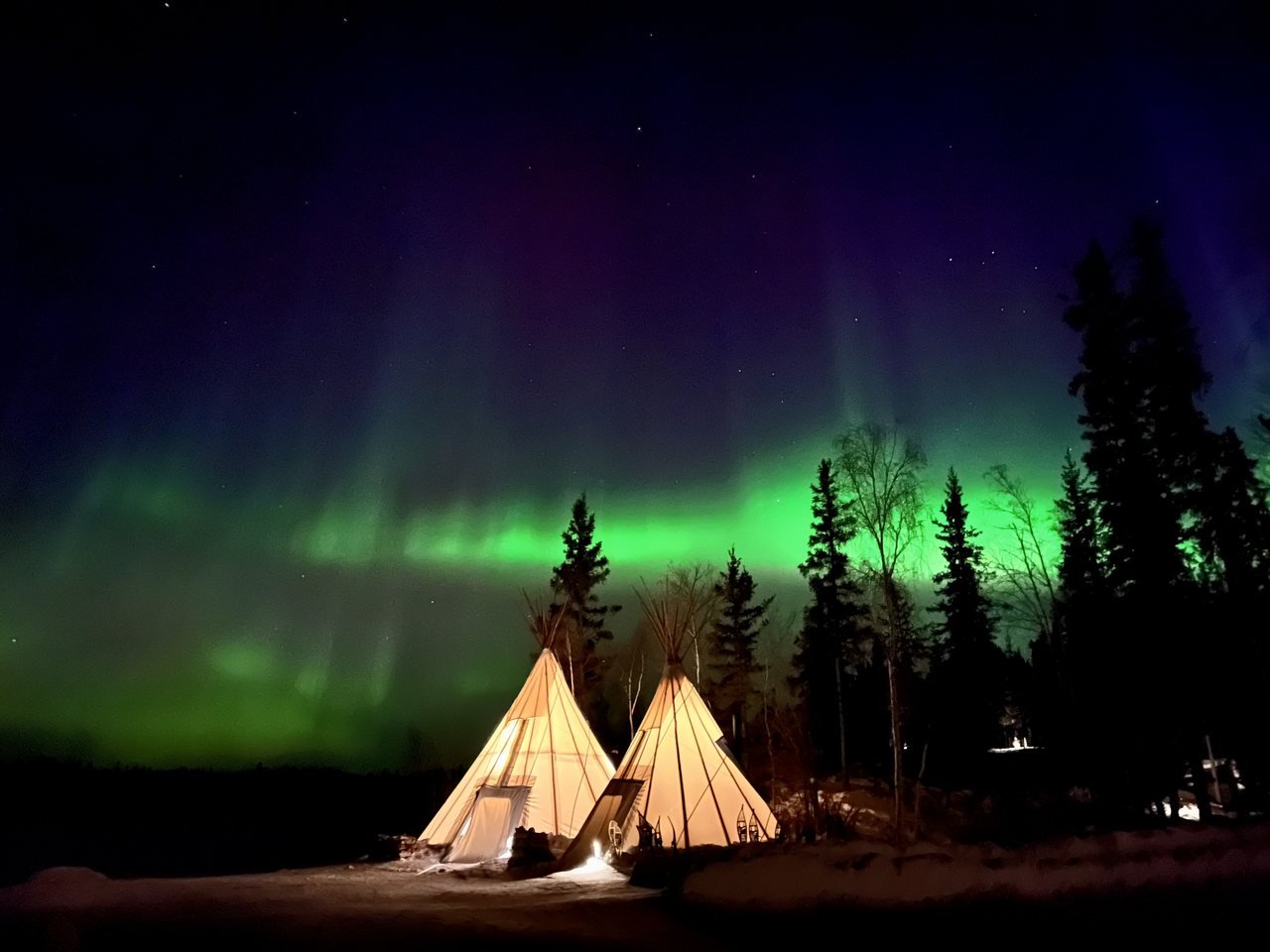
Nobody puts Fort McMurray on a vision board. But here’s the deal: it’s 4.5 hours north of Edmonton on Highway 63, the hotels are priced for oil workers instead of tourists, and the sky at 56°N during solar maximum does just fine on a Kp 4 night. This is the aurora trip you can do on a long weekend without booking a flight.
I drove up in February once, in a rig with winter tires and a healthy disrespect for the forecast. Somewhere past Wandering River the sky started glowing and I pulled over so fast the coffee went everywhere. Heated teepee camps run outside town on the good nights — same setup as the Yellowknife operators: fire, hot drinks, somebody else watching the sky so you can blink.
7. Torngat Mountains, NL — the expedition
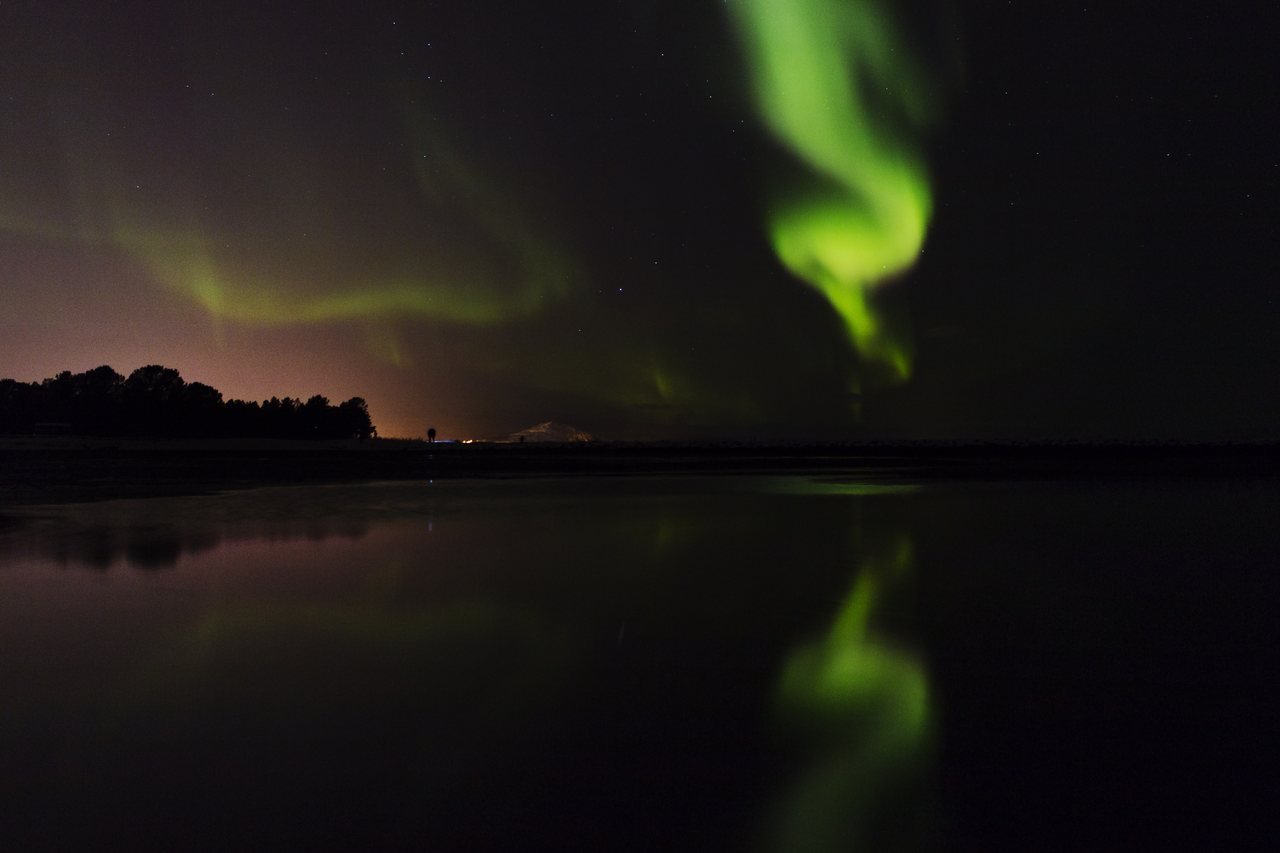
I’ll be straight: I haven’t been to the Torngats. This one lives on my list, not my résumé. The park sits at the northern tip of Labrador — no roads, no towns, access by Inuit-led base camp and charter flight — and the winter night sky up there is about as dark as it gets in the eastern Arctic. During solar maximum, that combination is the stuff of expedition brochures.
It’s expensive, logistically serious, and the season is short. I include it because if you read “no roads” as a feature rather than a warning, this is your spot — and there’s no better solar cycle to do it in. Everyone else: Yellowknife is right there, and it’s excellent.
Reading the forecast like you live there

You need two forecasts and one calendar — that’s the whole system, the way the guides at the Yellowknife camp explained it over woodsmoke hot chocolate:
1. The Kp index — the volume knob. Under the oval (Yellowknife, Whitehorse, Dawson, Churchill), Kp 2–3 is plenty. Jasper and Fort McMurray want Kp 4–5. Southern cities need a Kp 6–7 storm — a few times a year at solar maximum, almost never otherwise. NOAA’s Space Weather Prediction Center publishes the official numbers; everything else is a repackaging.
2. The cloud forecast — the part people forget. A Kp 7 storm under solid cloud is just a very dark sky. If it’s socked in, sleep. The aurora doesn’t punch through overcast, and no app changes that.
3. The moon calendar — the quiet killer of faint displays. New-moon weeks are the gold standard. A full moon won’t ruin a strong storm, but it washes out the subtle stuff that makes up most nights.
Peak viewing hours are 10 PM to 2 AM, usually best around midnight. That’s geometry, not folklore. Set the alarm — or let the camp’s wake-up call do it, like I did.
The guides watch the real-time solar wind data — not the Kp number, but the Bz component (whether the magnetic field is pointing south). When Bz flips south and stays there, the sky usually follows within an hour. You can watch the same feed on NOAA SWPC. It feels like cheating. It isn’t.
When the clouds win
They will. At least one night. The people who enjoy aurora trips plan for the cloudy nights instead of sulking through them.
In Whitehorse, that’s Takhini Hot Springs — I already told you about my steam-into-the-dark evening, and I’d do it again. In Yellowknife, the Prince of Wales Northern Heritage Centre is free and genuinely good. In Churchill, the Itsanitaq Museum holds one of the finest Inuit art collections in the country — I went in expecting twenty minutes and stayed two hours. Dog-sled kennel tours run in all three towns when the sky won’t cooperate, and a kennel visit in February is its own kind of excellent.
Pack for the waiting, too. The coldest I’ve ever been wasn’t skiing — it was standing still at −30 outside Yellowknife at 1 AM, because standing still is what aurora watching is. My winter packing list and Canada in winter guide both exist because of that night.
What does it cost?
An aurora trip costs more than a city weekend and less than you fear. The big variables are how far north you fly and whether you pay for guided camp nights or chase the lights yourself. Pick your style, set your nights — you want at least 3, 4 is better — and the calculator does the rest. Per person, Canadian dollars.
Budget calculator
Per person, in Canadian dollars. Based on a Yellowknife-based aurora trip.
Budget ≈ $220/day · Mid-range ≈ $415/day · Luxury ≈ $770/day. Fares checked October 2026.
| Expense (per person / day) | Budget | Mid-range | Luxury |
|---|---|---|---|
| Lodging | $70 (hostel dorm) | $160 (downtown hotel) | $320+ (aurora lodge) |
| Aurora tours | $60 (one camp night, split over the trip) | $110 (guided camp nights) | $180+ (private chase tour) |
| Food & drink | $55 | $85 | $150 |
| Getting around | $35 (bus + taxis) | $60 (rental rig) | $120+ (flights + transfers) |
| Daily total | ~$220 | ~$415 | ~$770 |
Flights to Yellowknife or Whitehorse are the wildcard — book those first, then build the trip around the fare you got. For the full cost picture, see my Canada trip cost guide.
A 4-night Yellowknife sample plan
| Night | The plan | If it’s cloudy |
|---|---|---|
| Night 1 | Arrive, settle in, sleep early — you’ll thank yourself at midnight tomorrow | Old Town wander + dinner; bed by 10 |
| Night 2 | Aurora camp night #1 — wake-up call, teepee, hot chocolate, the works | Heritage centre + a long dinner; most camps rebook you free |
| Night 3 | Rest night — self-drive to a dark pullout if the sky’s clear | Dog-sled kennel tour by day; sleep is also a plan |
| Night 4 | Aurora camp night #2 — your second swing at the sky | Souvenirs, a steak, and the flight home with a story anyway |
FAQs about the northern lights in Canada
When does the solar maximum window close?
Cycle 25 peaks through 2026 into 2027, then the long decline toward solar minimum around 2030–31. Next maximum: mid-2030s. It’s an 11-year clock, not marketing — this is the cycle to go on.
What Kp number do I actually need?
Under the auroral oval (Yellowknife, Whitehorse, Dawson, Churchill): Kp 2–3. Jasper and Fort McMurray: Kp 4–5. Toronto or Calgary: Kp 6–7, a few times a year at solar maximum. Bigger number, further south the lights reach.
What’s the single best month to go?
March. The equinox effect boosts geomagnetic activity and the nights are still long — see my Canada in March guide. Runner-up: late September into October, same boost, milder nights, lakes that mirror the sky.
Can I see the northern lights from Toronto or Vancouver?
Only in a Kp 6+ storm, with dark skies and a clear northern horizon — a few times per solar maximum. Don’t plan a trip around it. If you want to see the aurora, go north.
How cold is it, and what do I wear?
−20 to −35°C on winter viewing nights, and you’re standing still — always colder than moving. Merino base, fleece, puffy, shell, −40 boots, camera gloves plus big mitts, balaclava. Full list: my Canada winter packing list.
Can I photograph the aurora with my phone?
Yes — night mode, phone propped solid, 3–10 second exposure, flash off. A real camera with a wide lens still wins the dramatic shots. No joke: some of my favourite Yellowknife photos were taken on a phone by a guy who forgot his camera at the hotel.
Keep exploring
The lights are the headline — here’s the rest of the trip:
- Where to see the northern lights in Canada — the full guide: viewing spots, timing, and photography
- Canada in March — why the equinox month is the sweet spot
- Canada winter packing list — what to wear at −30 while standing still
- Canada in winter — the season beyond the lights
- Banff–Jasper road trip itinerary — pair the Rockies with a Jasper aurora gamble
- Canada trip cost guide — the full budget picture
- Best time to visit Canada — how aurora season fits the year
The sun won’t wait. Eleven years is a long time to wish you’d gone.
2 comments