

Here’s the thing about Quebec City: it doesn’t feel like the rest of Canada. It feels like someone lifted a walled French city out of the 1700s, set it on a cliff above the St. Lawrence, and built a modern city around it. I’ve visited four times now, in every season, and the first ten minutes on the Terrasse Dufferin still do the same thing to me: that little intake of breath where Europe and North America overlap and neither one fully explains what you’re looking at.
This is my honest, boots-on-the-ground list of the 25 best things to do in Quebec City — the stops I send every friend to, the ones I’d repeat in a heartbeat, and the two or three I’d skip so you can spend your hours better. Built for a 2–3 day first visit, but it covers winter too, because Quebec City in February is an entirely different — and honestly better — trip.
One more thing before the list: this city rewards walking and punishes over-scheduling. The ten headline stops sit within about a square kilometre, but the hills are real (your calves will know about the climb from Lower Town to Upper Town), so I’ve clustered the stops by neighbourhood — Upper Town in one block, Lower Town in another, beyond-the-walls for your freshest day.
Quick honesty note: prices and hours below are planning figures, hedged with a “~” on purpose. I double-checked the big-ticket ones as I wrote this — the Citadelle’s official site, Québec Cité’s official tourism site, and the official Carnival site (Feb 5–14, 2027). Do the same the week you go. Trust me on this one.
- ✓ The shape: Upper Town (walls, Citadelle, Terrasse) clusters together; Lower Town (Petit-Champlain, Place Royale) clusters together; Montmorency, Île d’Orléans and the museums are your beyond-the-walls day. One cluster at a time, no crisscrossing.
- ✓ The thing nobody tells you: the city is a hill. Literally. Plan the climbs, take the funicular once for the joy of it, and wear shoes with actual grip on the cobblestones — they’re treacherous when wet.
- ✓ Winter is not the consolation prize: the Carnival, the Ice Hotel and the toboggan slide make February one of the best months to come — if you dress like you mean it. Standing-still layers, not walking layers.
The headline ten: Old Quebec’s greatest hits
These are the ten stops that make the trip — all inside or touching the old walls, all walkable from each other. If you only have one full day, do these and you’ve had the essential Quebec City.
1. Watch the sun come up on the Terrasse Dufferin
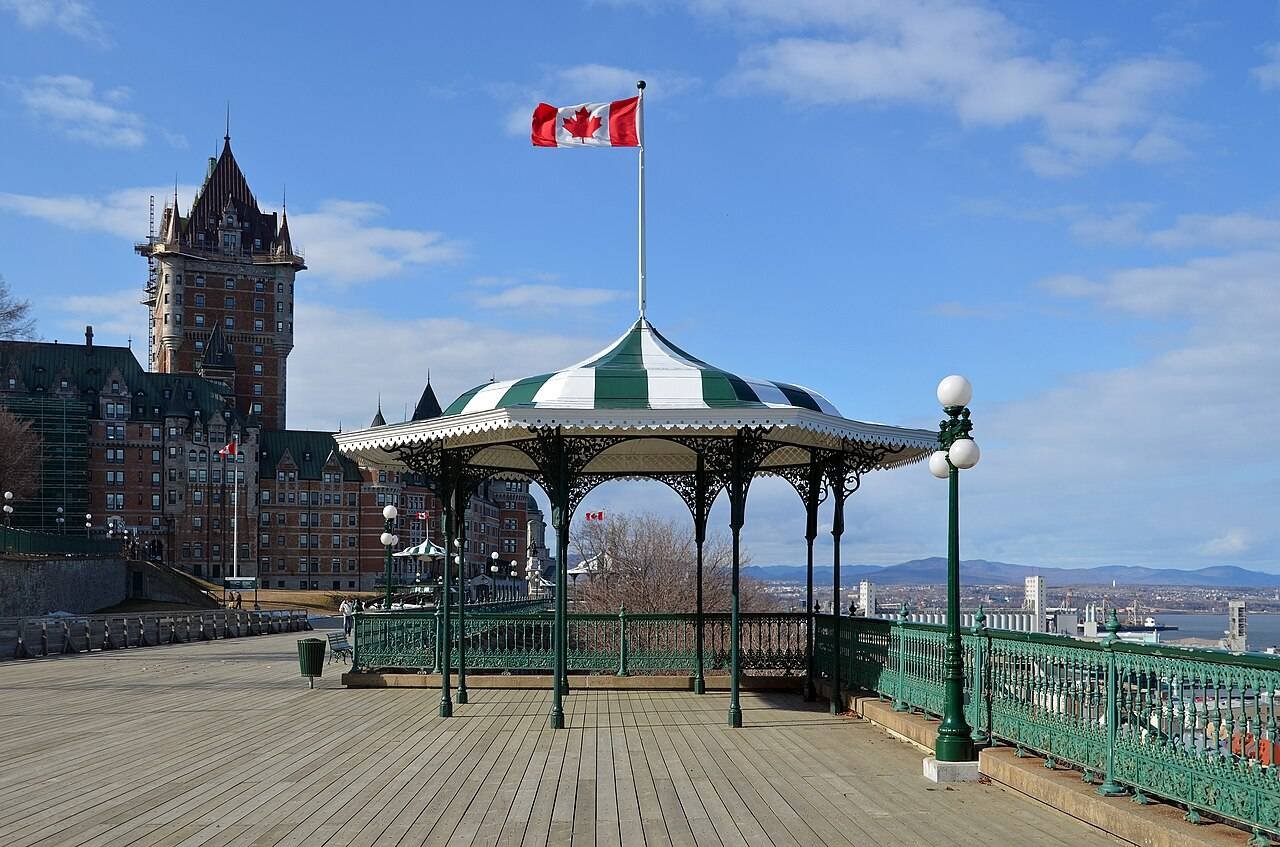
Start at the top, literally. The Terrasse Dufferin is the wide boardwalk behind the Château Frontenac, and at sunrise it’s the single best view in the city: the St. Lawrence spreading out below, the far shore going gold, and — this is the part that gets me every time — almost nobody else there. Tour buses arrive by 10 AM; at 6:30 it’s joggers, a few photographers, and you. My ritual: coffee from the kiosk near the Frontenac, walk the full terrace slowly, and stand at the far end watching the river wake up.
2. Go inside the Château Frontenac (don’t just photograph it)
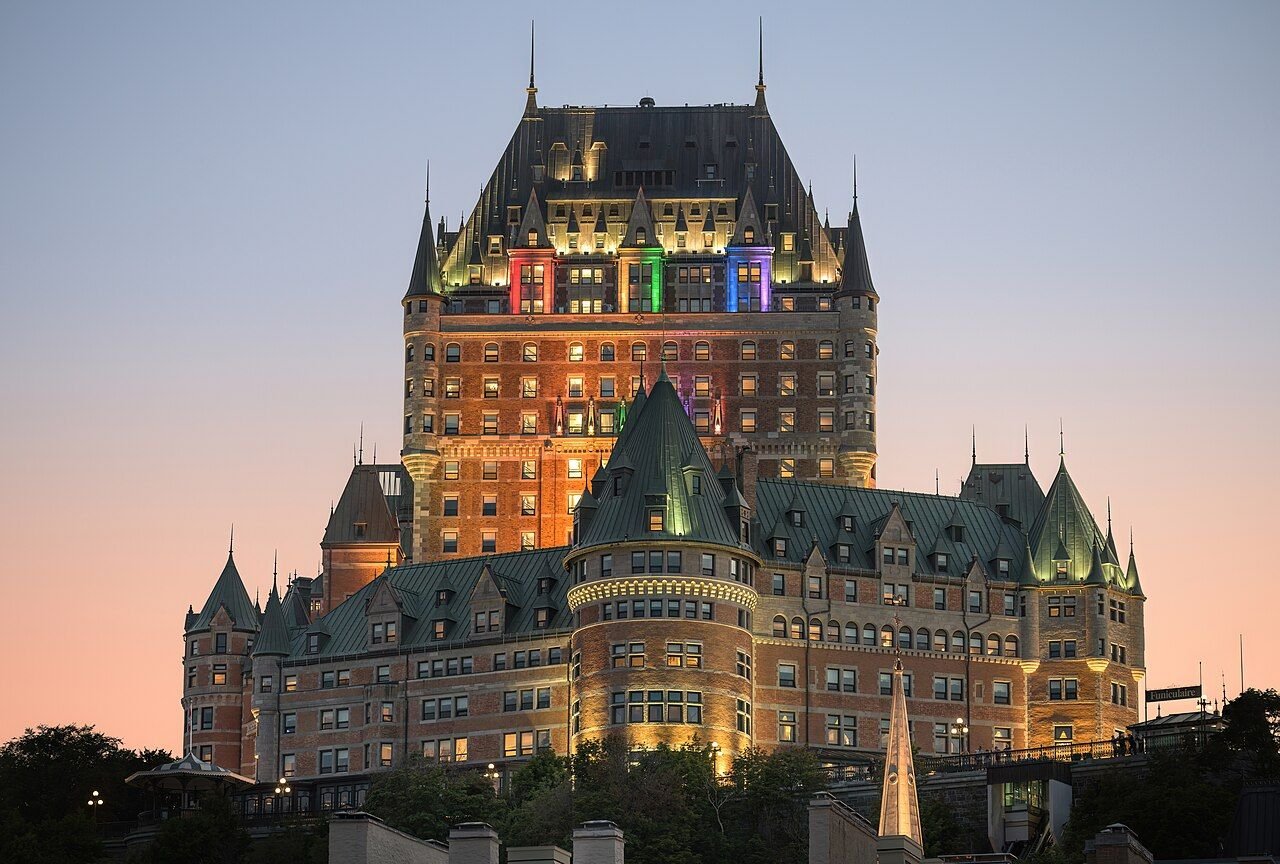
Everyone photographs the most photographed hotel in the world; almost nobody goes inside. Fix that. The lobby is free to wander — brass, marble, château-style grandeur — and the guided tour (~$25, book ahead) covers the 1943 Quebec Conference, where Churchill and Roosevelt planned D-Day over dinner. On my first two visits I did the drive-by photo and called it done. Huge mistake — the tour turned a pretty backdrop into actual history in 75 minutes.
Afternoon tea in the Frontenac’s lobby (book ahead) is the fanciest ~$60 you’ll spend in the city, and worth every penny — reserve when you book your hotel, not the morning of. And the terrace-level public washrooms are the nicest free washrooms in Old Quebec. You’re welcome.
3. Ride the funicular (or climb the breakneck stairs, your call)
The Funiculaire du Vieux-Québec links Upper Town (Terrasse Dufferin) to Lower Town (Petit-Champlain) — about a minute of cliff ride for ~$7 one way. Is it a “must”? Honestly, no — the Escalier Casse-Cou (“breakneck stairs”) are right there and free. But the funicular is fun in a way the stairs are not, the view down is genuinely lovely, and with tired legs it’s a game-changer. I timed it once because I’m like that: 4 minutes door to door versus 6 minutes and noticeably more sweat on the stairs. Fair warning: it doesn’t run in heavy rain or high wind — check before you count on it.
4. Stand in Place Royale where it all started
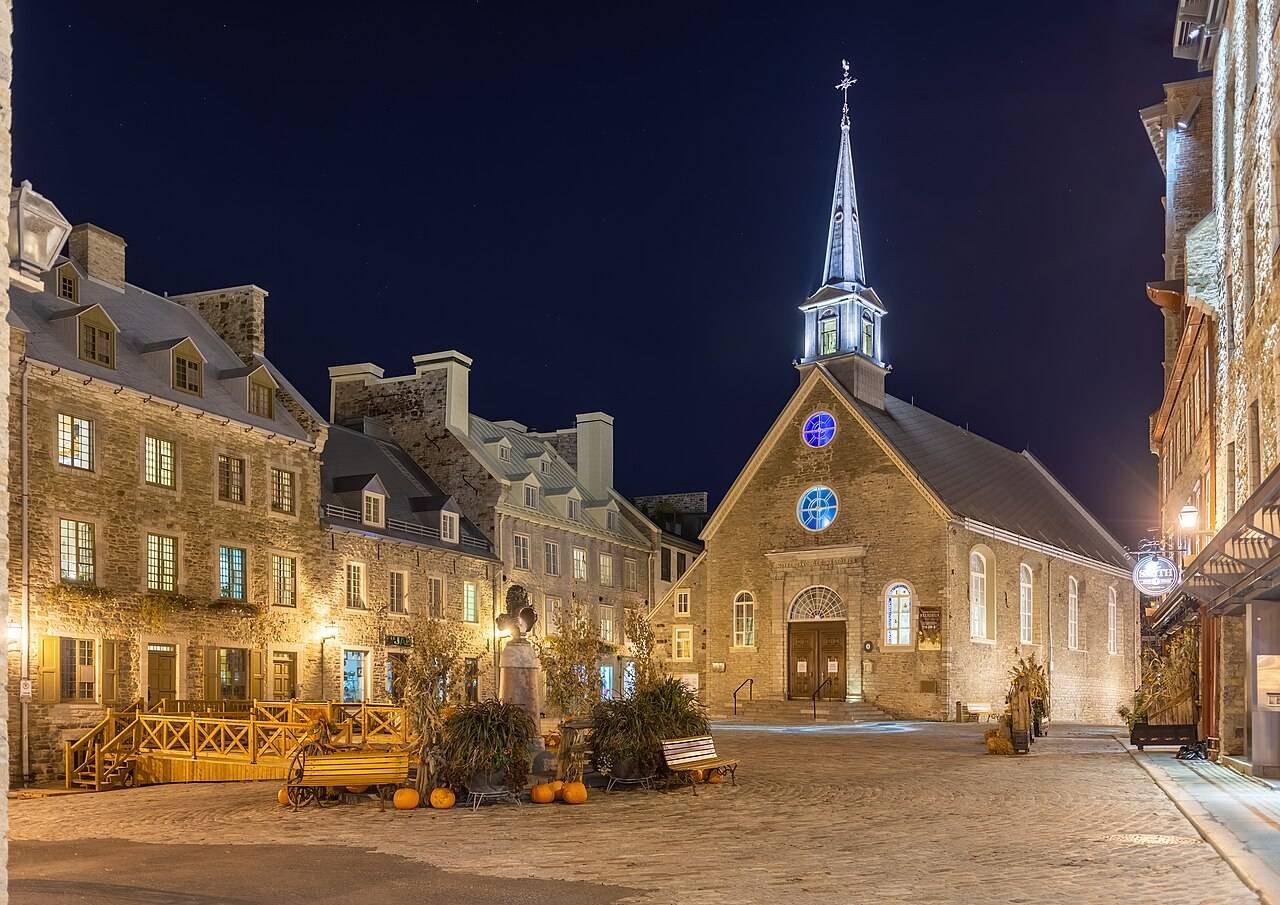
Place Royale is the oldest stone church square in North America — where Samuel de Champlain founded Québec in 1608. Come early or late: midday it fills with tour groups and the magic thins out. I walked through at noon on my first visit and thought “nice square.” I came back at 8 AM, alone with the church bells, and thought “oh. OH.” Timing is everything here.
5. Get happily lost in Petit-Champlain
Rue du Petit-Champlain is officially the oldest shopping street in North America, but forget the superlative — it’s the prettiest street in the city. Narrow, cobbled, lined with stone houses and tiny boutiques. The move: don’t shop first. Walk it end to end slowly, duck into the alleyways (the trompe-l’oeil mural is worth the five-second detour), then pick ONE shop to actually go into — the artisan co-ops over the souvenir mega-stores. Fair warning: the funicular dumps passengers at the top of this street, so it’s busiest 10 AM–3 PM. Go before 9:30 or after 4 and it’s a different street entirely.

6. Step into Notre-Dame-des-Victoires
The little stone church on Place Royale — built from 1688, the oldest stone church in North America — is free to enter and takes fifteen minutes. Small, dim, quietly beautiful, with model ships hanging from the ceiling (a sailor’s votive tradition). I’m not a church-every-trip person, but do not skip this one: it’s the spiritual heart of the square. Check the posted hours — it’s an active parish, not a museum.
7. Walk the city walls (the only walled city north of Mexico)
Quebec City is the only fortified city north of Mexico — 4.6 km of walls, four gates — and you can walk the ramparts for free. Best section: from Porte Saint-Louis toward the Citadelle, cannons still pointing at the river, about 45 minutes at a stroll. Here’s my personal moment: I walked it in a light October rain with the whole wall to myself — wet stone, old cannons, river mist — the most atmospheric hour of that trip. Bring a rain shell, not an umbrella; the wind on the wall eats umbrellas for breakfast.
8. Tour the Citadelle — the fortress that’s still on duty
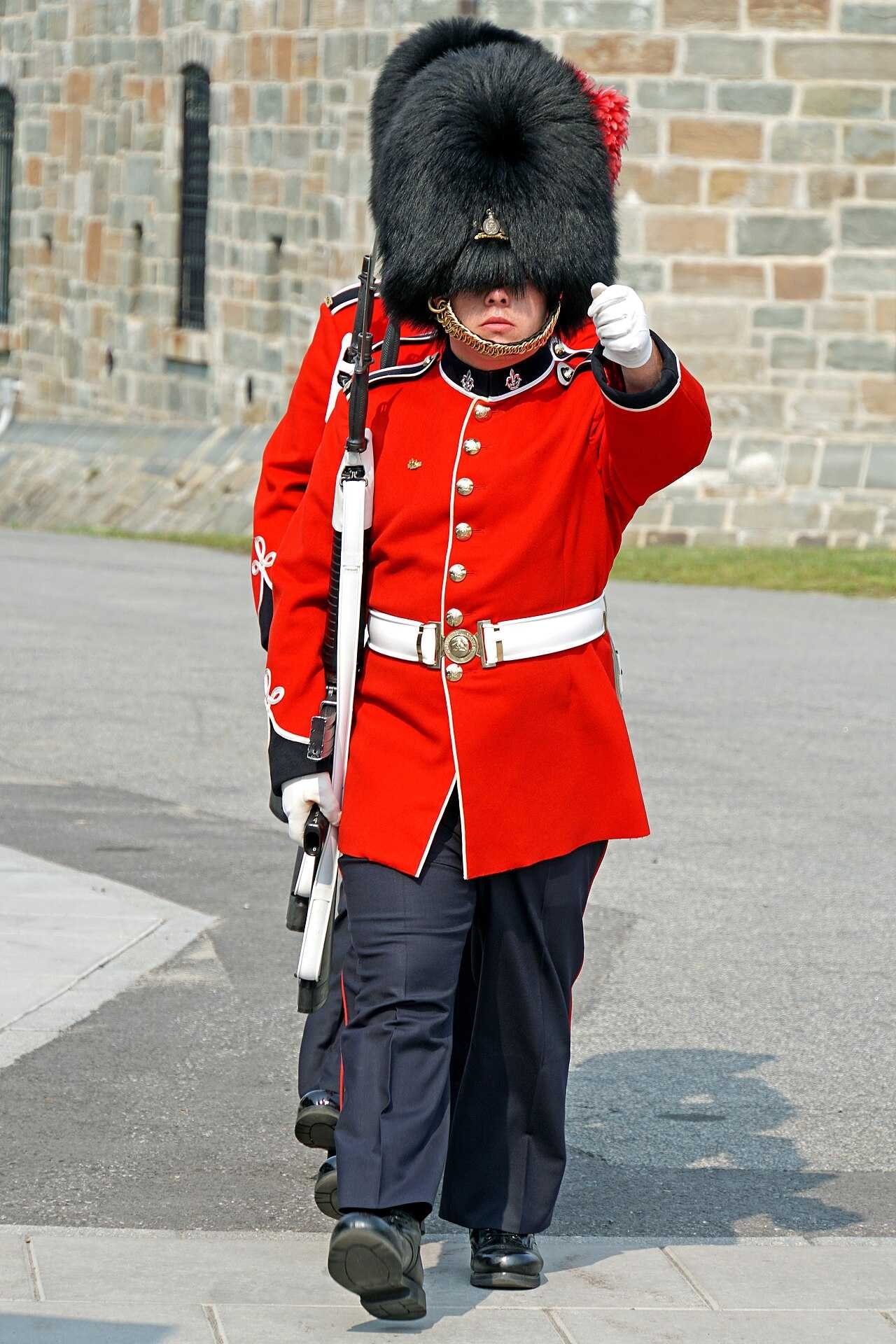
The Citadelle de Québec is still an active military installation (the Royal 22e Régiment — the Van Doos) and the Governor General’s second official residence, which makes the guided tour genuinely interesting rather than dutiful. Only guided tours get you inside (~$19 adult, ~1 hour, English or French — schedule on the Citadelle’s official site). In summer, time your visit for the Changing of the Guard (10 AM, late June to early September) — free from outside, but the tour gives it context.
9. Cross the Plains of Abraham (and read the panels)
The Plains of Abraham — where the British beat the French in 1759 in a fifteen-minute battle that changed the continent — is now a huge urban park. Most visitors treat it as a shortcut between the Citadelle and the museums, which is a waste. The museum (~$15) has an excellent multimedia show on the battle, and the park is where locals live: jogging, picnicking, cross-country skiing in winter. I spent an unhurried hour on the clifftop path — the calmest hour of the trip. Don’t skip the Joan of Arc garden in summer.
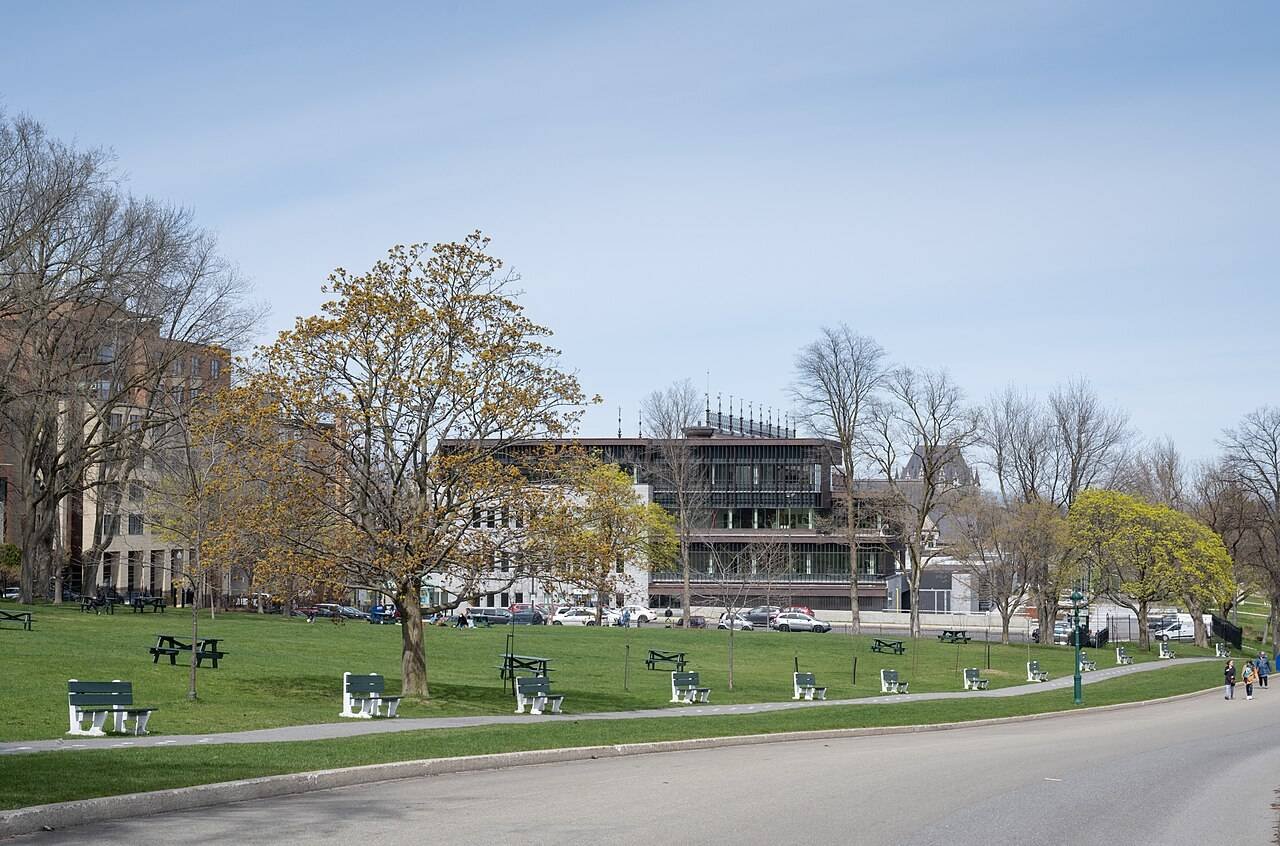
10. Climb to the Holy Door at Notre-Dame de Québec
The Basilica-Cathedral of Notre-Dame de Québec doesn’t get the love it deserves — everyone photographs the Frontenac and walks past one of the oldest cathedrals in North America. Inside: the Holy Door (Porte Sainte), only the seventh in the world and the first outside Europe; a beautiful neoclassical interior; a crypt you can tour. Free to enter, 20–30 minutes, two minutes from the funicular’s upper station. Pair it with the terrace walk — church, then coffee with a river view.
Beyond the walls: waterfalls, islands and museums
Everything above sits inside about a square kilometre. These next stops need a bus, a car, or your walking legs — they’re the reason to stay a third day.
11. Montmorency Falls — taller than Niagara, half the crowds
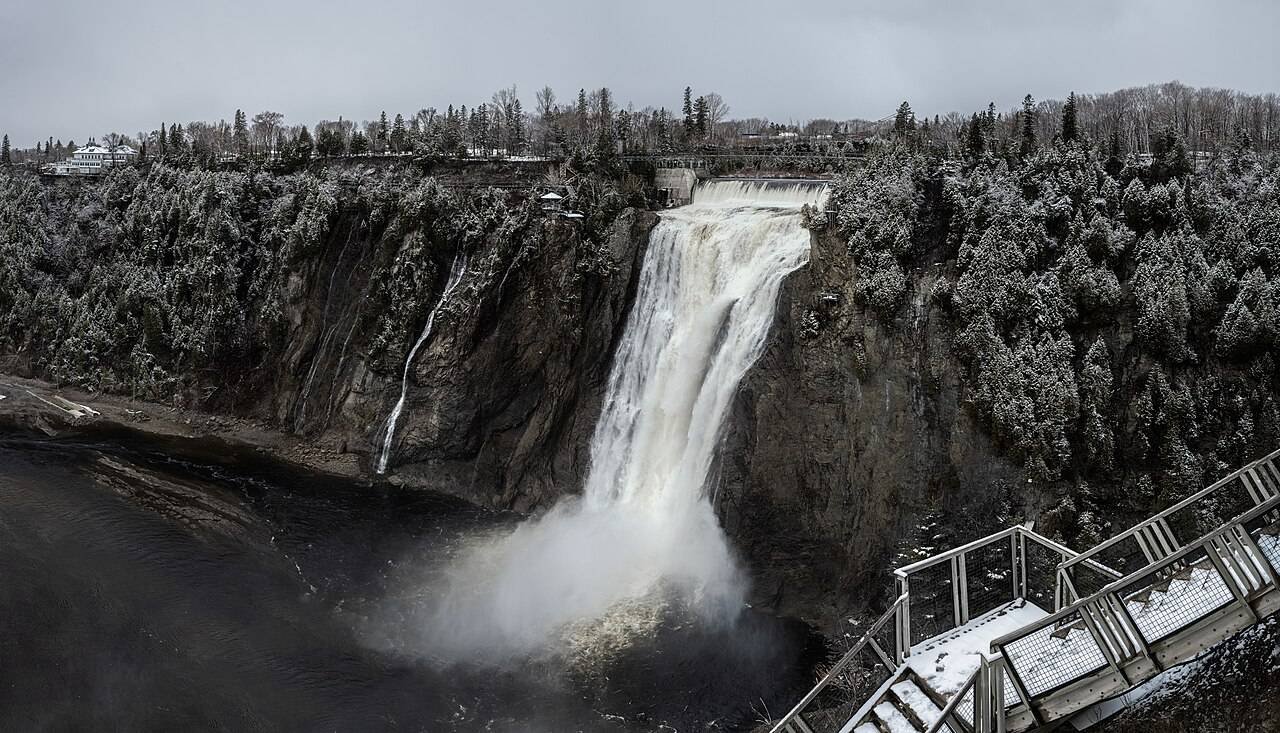
Parc de la Chute-Montmorency is 15 minutes from Old Quebec and the waterfall is 83 metres tall — 30 metres taller than Niagara Falls. Walk the clifftop path, cross the suspension bridge directly over the falls (the spray on a windy day is unreal), then take the cable car down — or the 487 stairs, if your knees are feeling brave. I took the stairs down and the cable car up: that’s the correct answer. Park entry ~$7.50, cable car ~$15 round trip (rates from Québec Cité’s official site). Getting there: RTC bus 800, ~30 minutes, a few dollars — no car needed. In winter the falls partially freeze into a spectacular ice cone. Do not skip this.
12. Loop Île d’Orléans — the island of slow afternoons
Île d’Orléans sits in the St. Lawrence 15 minutes east — the countryside Quebec City forgot to urbanize: 300-year-old stone houses, roadside strawberry stands, vineyards, chocolateries, blackcurrant (cassis) liqueur tastings. The full loop is 67 km — bring a car, or a bike if you’re serious — but a half-day in Saint-Pierre and Sainte-Famille gives you the flavour. My ritual: strawberries in season eaten with the windows down, a cassis tasting, and the view back to Montmorency Falls from the island’s west end. Go hungry.
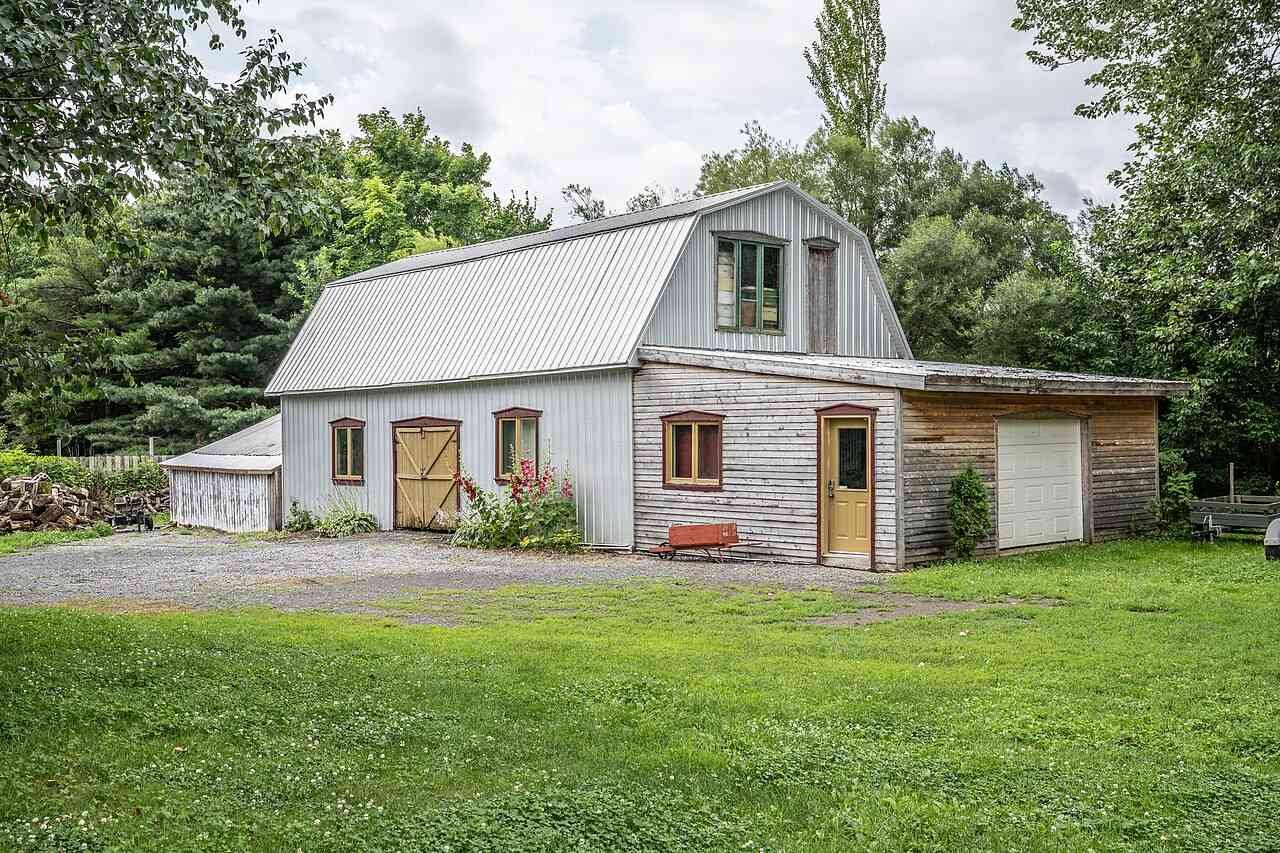
The island’s best-kept secret isn’t a shop — it’s the riverfront picnic tables at the Parc maritime de Saint-Laurent on the island’s south shore. Grab cheese, bread and strawberries from the roadside stands, sit facing the city skyline across the water, and thank me later. Almost nobody does this; everybody should.
13. Musée national des beaux-arts du Québec (MNBAQ)
The province’s fine-arts museum sits on the edge of the Plains of Abraham in a striking complex of old and new buildings (the glass pavilion alone is worth seeing). It’s the best survey of Québec art anywhere — from 18th-century religious art to Riopelle and Borduas — and the Inuit art section is genuinely world-class. Admission ~$24 adult; I double-checked hours on the MNBAQ’s official site — closed Mondays, so plan around that. Budget 2–3 hours. Honest take: one museum only? This one in summer, the Musée de la civilisation in winter.
14. Musée de la civilisation — the one for non-museum people
This is the museum I send people to when they say they don’t like museums: big, immersive, cleverly-designed exhibitions on Québec society — past blockbusters on everything from the Quiet Revolution to pop culture — in a beautiful building by the Old Port. Admission ~$24 adult; I checked what’s on at the museum’s official site before my last visit and I’d do the same — the rotating temporary exhibitions are the reason to go. Give it 2 hours, more if the current show grabs you.
15. Take the Québec–Lévis ferry (the cheapest cruise in Canada)
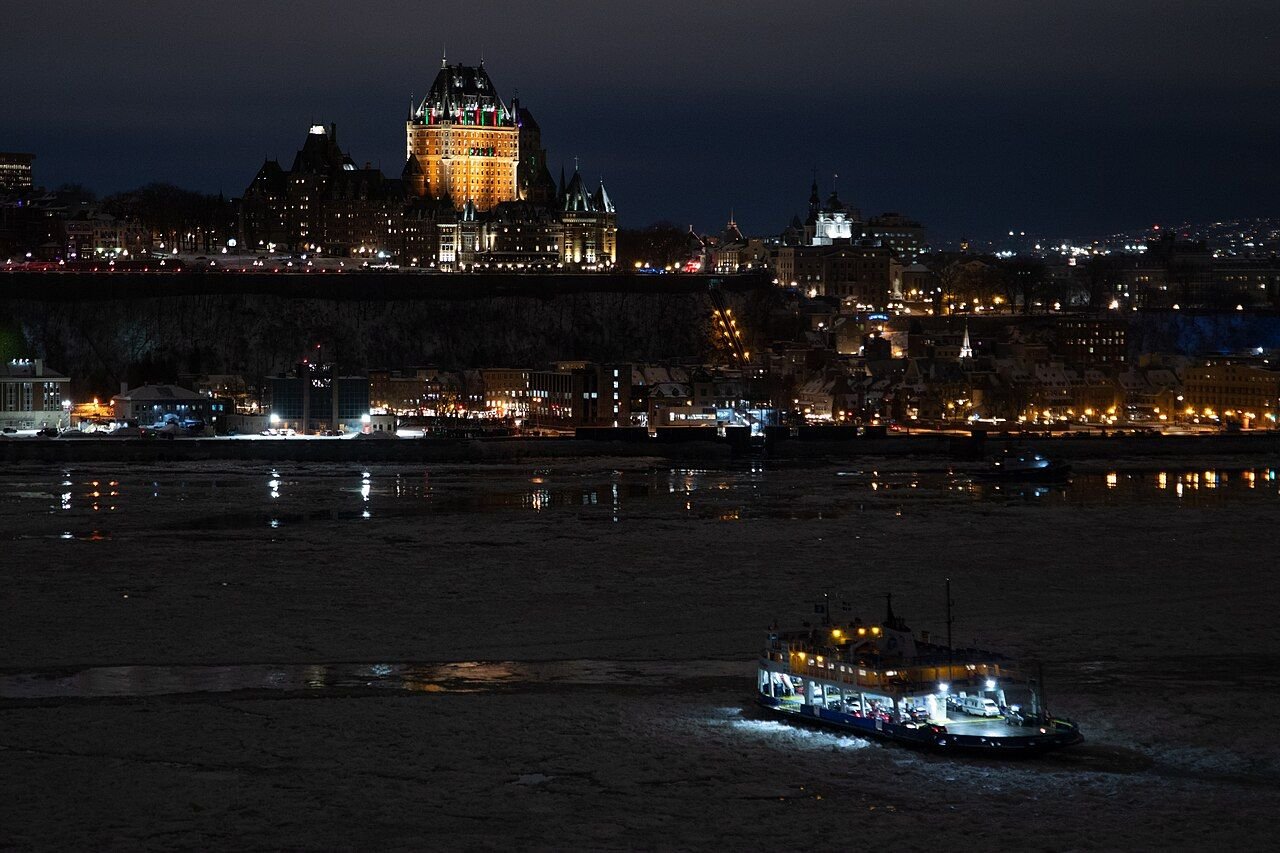
The ferry to Lévis costs ~$3.65, takes 12 minutes, and gives you the single best skyline view of the city: the Frontenac and the terrace rising above the river, exactly like the postcards. The ferry operator’s site has the current schedule — it runs year-round, and winter ice makes the crossing even more dramatic. You don’t need to do anything in Lévis — just ride over and back. I’ve done this crossing four times and the view still stops me mid-sentence. Sit on the Québec-facing side on the return leg, at sunset if you can.
16. Rue Saint-Jean outside the walls — where locals actually shop
Inside the walls is the postcard; Rue Saint-Jean (just outside Porte Saint-Jean) is the neighbourhood. Bakeries, bookshops, crêperies, the city’s best independent coffee — and prices that drop the moment you pass through the gate. This is where I buy souvenirs now (same maple everything, less markup) and where I’d send you for a casual dinner. Walk it end to end, then loop back via the quiet residential streets behind it.
17. Grande Allée after dark
Grande Allée — the grand boulevard running west past the Parliament — is Quebec City’s evening strip: patios in summer, bars year-round, and the place to be during Carnival. I’m not a club person, but I love a summer evening here: dinner on a patio, a walk past the lit-up Parliament, ice cream from a window counter. Honest note: it’s the loudest, most student-heavy part of the city after 10 PM — great if that’s your scene, skippable if it isn’t.
18. Basilica of Sainte-Anne-de-Beaupré (pair it with the falls)
Twenty minutes past Montmorency Falls sits one of North America’s great pilgrimage churches — the Basilica of Sainte-Anne-de-Beaupré, drawing about a million visitors a year, with towering spires, mosaics, and the famous wall of crutches left by the healed. You don’t need to be religious to be moved by it; the scale and the sincerity of the pilgrims do the work. It’s free to enter. The smart play: combine it with the falls in one morning (falls first, basilica second, back in the city for lunch) — doable on the bus 800 corridor without a car, or a 25-minute drive.
Eat like you mean it: three food stops that matter
Quebec City is one of Canada’s great food cities and most visitors under-eat it — they grab a crêpe and call it done. Don’t be those visitors. (Full disclosure: I plan trips around meals more than I admit in polite company.)
19. The poutine pilgrimage at Chez Ashton
Chez Ashton is the Québec City poutine institution — locals will fight you over whether it’s the best in the province. The move: a small poutine (it’s not small) with squeaky cheese curds and the peppery house sauce, eaten at the counter. I stood in line on Rue Saint-Jean behind what appeared to be the entire Laval University hockey team, and I’d do it again. ~$12–15. Pro tip: poutine is late-night food here — the Ashton on Grande Allée at midnight during Carnival is a cultural experience in itself.
20. Tourtière and the French-Canadian classics
Tourtière — the spiced meat pie that’s basically Québec’s national dish — is everywhere in winter and worth seeking out year-round: flaky crust, pork and warm spices, fruit ketchup (yes, really, and yes, it works). My personal moment: I ordered tourtière at a tiny place on Rue Saint-Jean on a −20°C February night, and the hot pie plus the cold walk home past the lit-up walls is still one of my core winter memories.
Restaurant hours in Quebec City are seasonal in a way that surprises visitors — many smaller spots in Petit-Champlain close one or two weekdays in the off-season (November, January, April), and some close entirely for a few weeks. Check hours the day you go, especially outside June–October and Carnival season.
Winter in Quebec City: the Carnival, the Ice Hotel, and the toboggan
Controversial opinion: the best time to visit Quebec City might be February. The crowds are gone, the snow makes the old city look like a film set, hotel prices drop — and the city throws one of the world’s great winter festivals. Here’s the winter trio.
21. The Québec Winter Carnival (Feb 5–14, 2027)
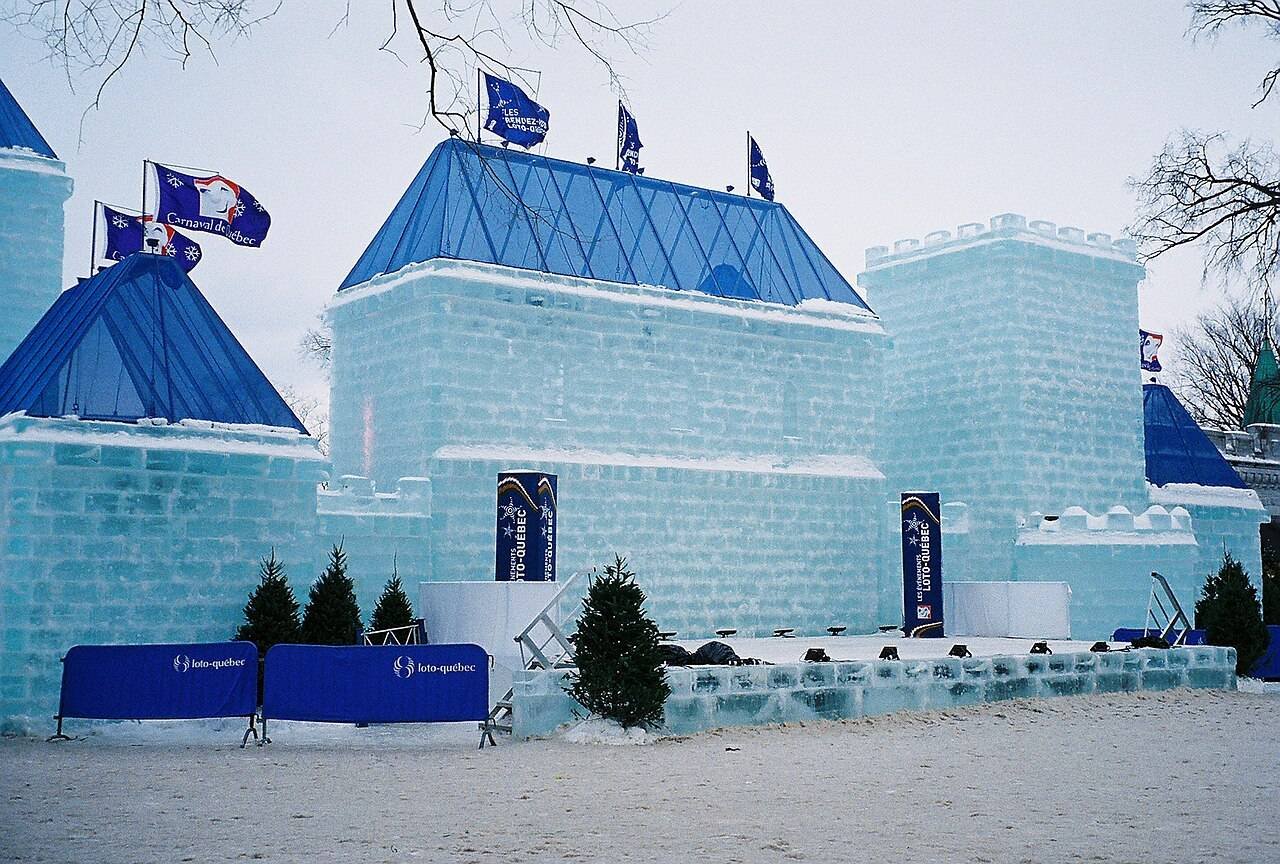
The Carnaval de Québec — billed as the largest winter carnival in the world — turns the city into a ten-day snow party: Bonhomme’s Ice Palace, night parades, ice canoe races, snow slides, and outdoor concerts where everyone dances in −20°C like it’s nothing. Next edition: February 5–14, 2027 (confirmed on the official Carnival site; re-check before booking flights). You’ll need the effigy pass (~$25). Dress for standing still — warm boots, real gloves, ear coverage. Do that and it’s magic; skip it and it’s miserable.
22. Sleep in (or just tour) the Hôtel de Glace
The Ice Hotel — rebuilt every winter, everything from the walls to the cocktail glasses made of ice — sounds gimmicky and turns out to be genuinely astonishing. Tour it by day (~$25) or actually sleep there (from ~$400+, thermal sleeping bag provided). I toured it on a −25°C day and the artist-carved themed suites were the most photographed hour of my whole winter trip. It’s at Village Vacances Valcartier, about 20 minutes north of the city, with shuttles in season. Book the overnight well ahead — it sells out.
23. Ride the Terrasse Dufferin toboggan slide + the German Christmas Market
The toboggan slide at the Terrasse Dufferin has been running since 1884 — a wooden slide where you hit ~70 km/h on a glorified cafeteria tray with a view of the St. Lawrence. It’s ~$30 for the day (unlimited rides, and you’ll want several): the most fun you can have fully clothed in winter. Then, from late November to late December, the German Christmas Market fills Old Quebec with wooden stalls, glühwein, sausages and lights — genuinely charming, not a tourist trap. My Canada in December guide has the full Christmas-market rundown.
Two after-dark extras
Quebec City after dark is underrated — the walls lit up, the streets empty. Two ways to do it right.
24. A ghost walk through Old Quebec
The Ghost Tours of Québec run year-round (evenings, ~$25, ~90 minutes) through the old city’s genuinely dark history — executions at Place Royale, the haunted pubs, the cholera years. I’m a skeptic about ghost tours, but this one works because the history is real and the guides tell it well. Go on your first night: it orients you to the old city’s layout better than any map.
25. The Old Port Market (Marché du Vieux-Port)
End where the locals shop: the Old Port Market near the cruise terminal is a year-round public market of Québec producers — cheese, charcuterie, maple everything, summer berry stands from Île d’Orléans. Smaller than Montréal’s Jean-Talon but friendlier, and the best place to assemble a picnic for the Plains or the ferry. I do a lap, buy too much cheese, and regret nothing. Open daily; mornings are best.
How many days do you need in Quebec City?
Two full days covers the headline ten at a comfortable pace — no 6 AM alarms required. Three days is the sweet spot: it adds Montmorency Falls, Île d’Orléans, and one museum without rushing. Four days lets you do it all slowly, add Sainte-Anne-de-Beaupré, and keep a weather buffer. Only have one day? Do stops 1–7 in order. My 2 days in Quebec City itinerary turns this list into a timed day-by-day plan.
Where to stay in Quebec City
Stay inside or touching the old walls and everything above works on foot. Upper Town puts you at the terrace and the walls; Lower Town is prettier and quieter at night but means climbing the hill daily. My pick for first-timers: Upper Town near Porte Saint-Jean — walkable to everything, slightly cheaper than the Frontenac block, and Rue Saint-Jean’s restaurants are your evening default. Full breakdown in my best area to stay in Quebec City guide.
Getting around Quebec City
Old Quebec is a walking city — the walled core is about a kilometre across, and walking is the point. For Montmorency Falls and Sainte-Anne-de-Beaupré, take RTC bus 800 from Old Quebec (~30 minutes, a few dollars). For Île d’Orléans you’ll want a car or a bike. You do not need a car for 2–3 days in the city itself — parking inside the walls is expensive and the streets were designed for horses. Combining with Montréal? My weekend trips from Montreal guide covers the run — ~3 hours by train or bus, and the riverside train ride is lovely.
When to visit Quebec City
June to October is the classic window: terraces open, everything running, long evenings — and peak prices and crowds in July and August. September and early October are the sweet spot (fall colour, thinner crowds). December brings the Christmas market; February brings the Carnival — my Canada in December and Canada in February guides cover the winter trip. April and November are the bargains: reduced hours at some attractions, but the city to yourself and the lowest hotel rates — see my cheapest time to visit Canada guide for when the deals land.
Where everything sits
Tap a stop to jump the map. The first pins cluster inside the walls; the Citadelle and the Plains stretch west along the clifftop; Montmorency and Île d’Orléans jump east along the river. That clustering is the whole strategy: walls in one block, river sights on your freshest day.
Map data © OpenStreetMap contributors. Open the full map
What Quebec City costs
This calculator covers the days themselves: food, sights, transit and the little treats. The sights line does the heavy lifting — the Citadelle tour, the museums, Montmorency’s cable car and a Carnival effigy or Ice Hotel tour add up fast — which is why a mid-range Quebec City budget lands where it does. Per person, in Canadian dollars, excludes accommodation.
Budget calculator
Per person, in Canadian dollars. Excludes accommodation.
Budget ≈ $120/day · Mid-range ≈ $210/day · Luxury ≈ $380/day. Per person, excludes accommodation. Prices checked October 2026.
FAQs
How many days do you need in Quebec City?
Two full days covers the headline stops at a comfortable pace — Upper Town one day, Lower Town and the walls the next. Three days is the sweet spot: it adds Montmorency Falls, Île d’Orléans, and one museum without rushing. Four days lets you do it all slowly and keep a buffer for weather. On a single day, do stops 1–7 in this guide in order and you’ll still leave happy.
Is Quebec City worth visiting in winter?
Yes — I’d argue February is one of the best months to come. The Québec Winter Carnival (Feb 5–14, 2027) turns the city into a ten-day snow festival, the Hôtel de Glace is open, the toboggan slide runs, and hotel prices drop from summer peaks. The catch: expect −15°C to −25°C, and dress for standing still (warm boots, real gloves, ear coverage). December is the other winter pick, for the German Christmas Market and the snow-globe old city.
Is Quebec City walkable?
Extremely — the walled core is about a kilometre across, and walking is the point. But it’s a hill: the Lower-to-Upper Town climb is steep and the cobblestones are slippery when wet. Wear shoes with grip, take the funicular (~$7) when your legs are done, and bus 800 for Montmorency Falls. No car needed for 2–3 days in the city; you’ll want one (or a bike) for Île d’Orléans.
Do I need to speak French in Quebec City?
No — you’ll get by in English everywhere tourists go: hotels, restaurants, museums and tours all operate bilingually. That said, a little effort goes a long way: bonjour, merci, s’il vous plaît and “parlez-vous anglais?” will warm up every interaction. Menus in the old city are usually bilingual; elsewhere, pointing and smiling works beautifully.
Can you do Quebec City as a day trip from Montreal?
You can, but I wouldn’t. It’s ~3 hours each way by train or bus (~255 km), leaving maybe six usable hours — enough for the terrace, Petit-Champlain and Place Royale at a forced march, and none of the beyond-the-walls stops. Stay one night minimum; two nights is the trip the city deserves. The riverside train ride is genuinely lovely, so the travel time isn’t wasted.
Is Montmorency Falls worth the trip?
Yes — it’s the single best half-day trip from the city. At 83 metres it’s 30 metres taller than Niagara Falls, 15 minutes from Old Quebec on bus 800, and you can walk a suspension bridge directly over the top. Park entry ~$7.50, cable car ~$15 round trip. In winter the falls partially freeze into a spectacular ice cone. Pair it with Sainte-Anne-de-Beaupré for a perfect morning.
Bottom line: start on the terrace at sunrise, go inside the buildings everyone else just photographs, eat the poutine at midnight, and give winter a chance. I’ve made the mistakes (the noon Place Royale, the skipped Frontenac tour, the umbrella on the walls) so your version runs smoother than mine did. You’ve got this. — Sarah