
I have stood in a parking lot outside Yellowknife at 1 AM, at minus thirty-four, staring at a sky full of cloud and nothing else — and paid good money for the privilege. Night two, the clouds cracked open and the whole sky went electric green, and I understood why people fly across the planet for this. Here’s the deal: the northern lights are not a sight you book, they are a negotiation between the sun, the clouds, and your willingness to stand outside in serious cold. This guide is the negotiation strategy.
The timing is the part I want you to hear first. We are riding the top of solar cycle 25 — the sun’s activity peaked around 2025 and stays cranked up through 2026 and into 2027. More solar storms mean more auroras, further south, on more nights. The lights are never guaranteed — anyone who says otherwise is selling you something — but if you have ever thought about chasing them, this is the window. Buckle up.
Quick honesty note: prices below are planning figures, hedged with a “~” on purpose. I double-checked the moving parts on the official sites as I wrote this — Spectacular NWT, Travel Yukon, Parks Canada. Do the same the week you go.
- ✓ Pick your odds, not your postcard: Yellowknife sits directly under the auroral oval with the highest success rates; everywhere else trades reliability for scenery, wildlife, or price.
- ✓ Clouds beat solar storms every time: a Kp 2 night with clear sky beats a Kp 6 night under cloud — the whole strategy below is built around places with reliably clear winter skies.
- ✓ Stay longer than you think: three nights is the minimum bet, five is the smart one. I have made this mistake so you don’t have to — my first trip was two nights and one of them was a total cloud-out.
How aurora chasing actually works (the 3-minute version)
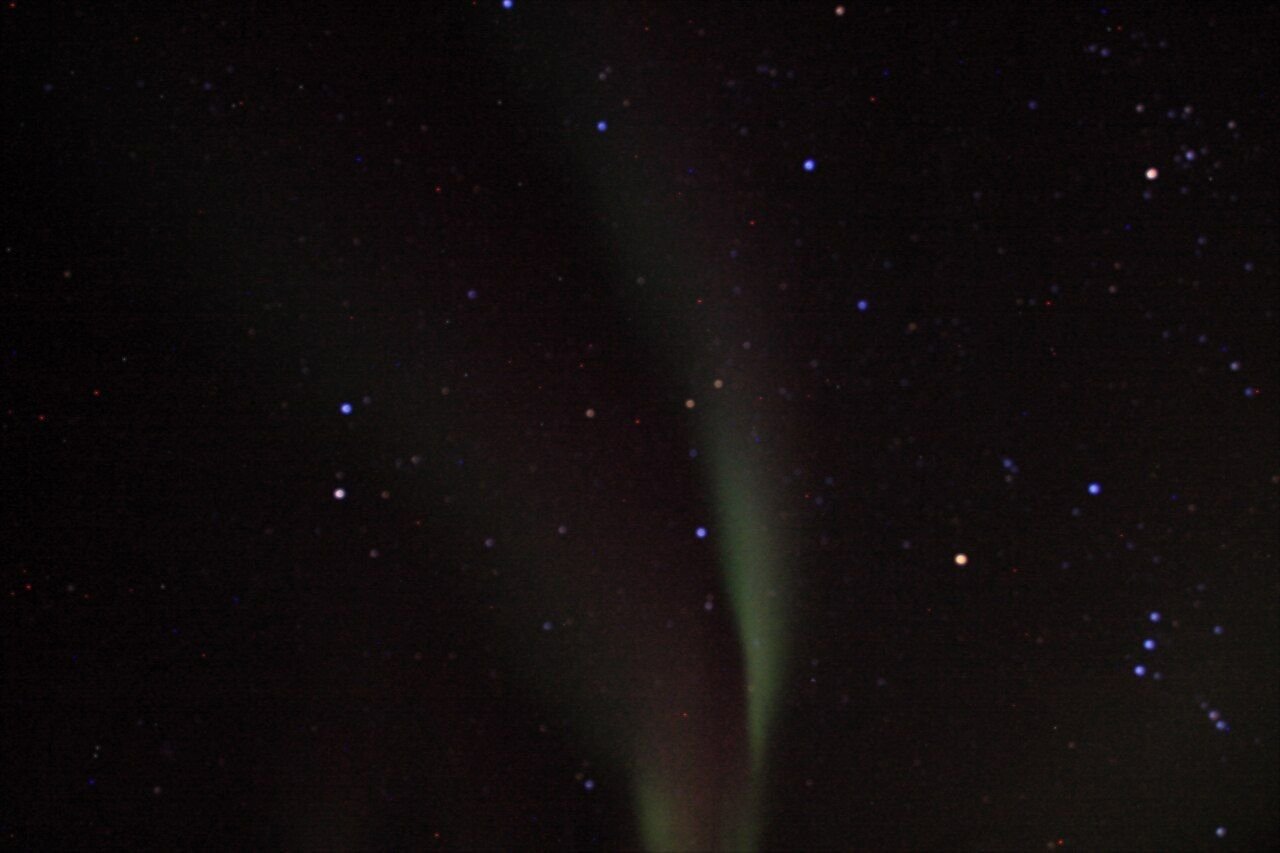
You need three things at the same time, and two of them are not the sun. Darkness: the aurora season runs roughly late August to mid-April — nobody chases in June, when the nights are too short. Clear skies: clouds are the real enemy, full stop. I have watched a Kp 6 geomagnetic storm — a big one — produce absolutely nothing because of a stubborn layer of stratus. Solar activity: the Kp index, 0 to 9. At Kp 1–2 the lights dance over Yellowknife and Churchill. At Kp 5+ they push down over Edmonton, Saskatoon, even Toronto on a wild night.
Where do you check? The NOAA Space Weather Prediction Center’s 30-minute aurora forecast is the gold standard — free, updated constantly. I keep it bookmarked all winter. Then check the cloud forecast in a normal weather app. Kp tells you the lights are happening; clouds tell you whether you can see them. The sun is doing its part right now — near the top of its 11-year cycle — so the only question is whether you are standing under clear sky.
The lights usually peak between about 10 PM and 2 AM local time — and the best display of my life started at 12:40 AM, an hour after I’d gone back inside. Set an alarm. Drink the coffee. Go back out. The sky does not care about your sleep schedule.
1. Yellowknife, Northwest Territories — the sure thing
If this is your first aurora trip and you want the best odds, stop reading the list and book Yellowknife. It sits directly under the auroral oval, the terrain is flat and open with almost no light pollution, and a whole local industry exists to get you under the sky. Operators claim roughly a 90%+ success rate over three nights, and in my experience that number is honest: stay three to five nights and the math is on your side.
Getting there: fly. Air Canada and WestJet run ~2.5-hour flights from Edmonton and Calgary, roughly $400–700 return in winter if you book ahead. Driving is a 1,500-km, 15-hour leg from Edmonton up the Mackenzie Highway — I’ve done it in summer, and in January it is a serious winter expedition, not a road trip. Fly in and rent a car locally or lean on tours. Best months: mid-August to mid-April, with January to March the peak (coldest, clearest, longest nights). The fall — September into October — is the sleeper pick: milder, cheaper, lights reflected in unfrozen lakes.
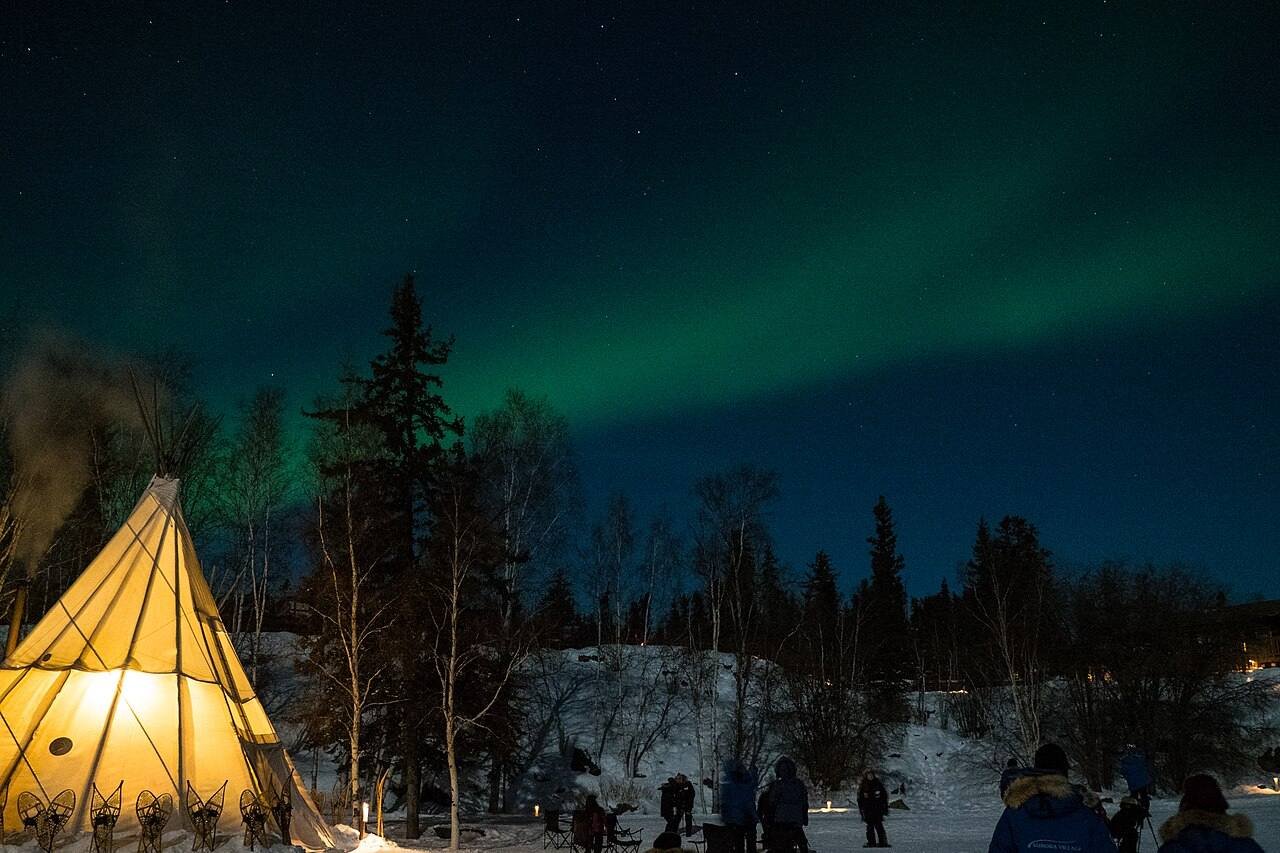
Tours vs DIY: this is the one place where tours genuinely earn their money. Spectacular NWT, the territory’s tourism site, lists the operators; the big names are the Indigenous-owned Aurora Village (heated viewing on a frozen lake, ~$100/person for viewing nights) and outfits like Yellowknife Tours. A guided night runs ~$80–150 per person and includes transport to dark-sky spots and hot drinks — worth it when it’s -30 and you don’t know the back roads. DIY is absolutely doable: drive the Ingraham Trail (Hwy 4) east out of town to the pullouts, kill the headlights, wait. That’s what I did on my clear night. A guide in Yellowknife told me the outfits watch the satellite loops and chase gaps in the clouds — the one thing a rental car can’t do for you.
Costs & where to stay: figure ~$250–350/person/day mid-range: hotel $150–220/night downtown, food $60–80, one guided viewing night every other night. Budget travellers: the B&B scene and self-catering cut that hard. Honest downside: January is genuinely brutal — my phone went from 60% to dead in about twenty minutes at -34, and my fingers lasted about ten. Dress for the number on the thermometer, then add a layer.
2. Whitehorse, Yukon — the mountains-and-lights combo
Whitehorse is my pick if you want the aurora plus a winter trip that isn’t only about standing in a parking lot at midnight. The city sits at 60°N, the surrounding valleys give you long sightlines in every direction, and the Alaska Highway runs right through it — this is driver’s country. The lights show from late August to mid-April; December through March is the core season.
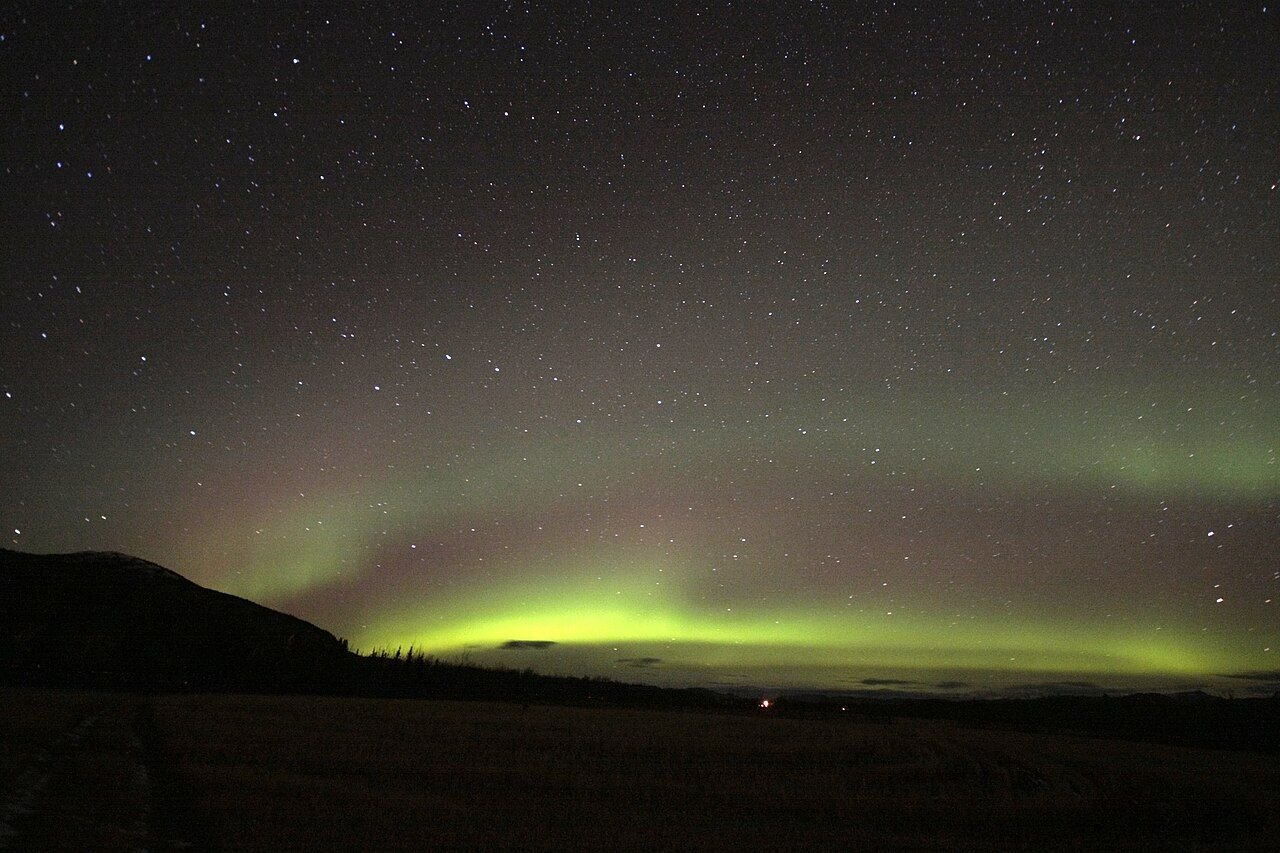
Getting there: fly from Vancouver (~2.5 hours, $350–600 return) or Calgary, or drive the Alaska Highway — the full leg from Dawson Creek is ~1,500 km of some of the best winter driving in Canada, and no joke, it is worth the detour if you have the days. In town, the AuroraCentre runs viewing nights from a heated facility (~$90/person), and locals swear by the pullouts along the road to Marsh Lake, about 30 minutes southeast — dark, open, facing north over the water. Tours vs DIY: DIY is easier here than in Yellowknife because the road network is good. That said, I took a wrong pullout off the Alaska Highway one night — turned down a logging road that got narrower and narrower until my headlights were the only light for kilometres. Great story; a local later told me that road was on the “don’t” list in winter. Book at least one guided night; go DIY once you know the area.
Costs & where to stay: mid-range ~$280–350/person/day: hotels $160–220, food $60–80, tours $90–150 a night. The daytime is the selling point — dog sledding, the Yukon Wildlife Preserve, Eclipse Nordic Hot Springs — so budget for at least one paid daytime activity. Honest downside: Whitehorse is a real town, so you need to drive 20–30 minutes out for truly dark sky. The odds are a notch below Yellowknife’s — figure on four to five nights to be comfortable.
3. Churchill, Manitoba — bears, belugas, and the lights
Churchill is the only place on this list where the aurora shares the billing — with polar bears. This little town on Hudson Bay sits directly under the auroral oval, with a local claim of up to 300 aurora nights a year, and the flat tundra gives you horizon-to-horizon sky. But here’s the deal: you cannot drive here. There is no road. You fly (~2.5 hours from Winnipeg, $600–1,000+ return) or you take the legendary 45-hour train — which I have not done, but every person I met in Churchill had, and they all described it the way people describe a pilgrimage.
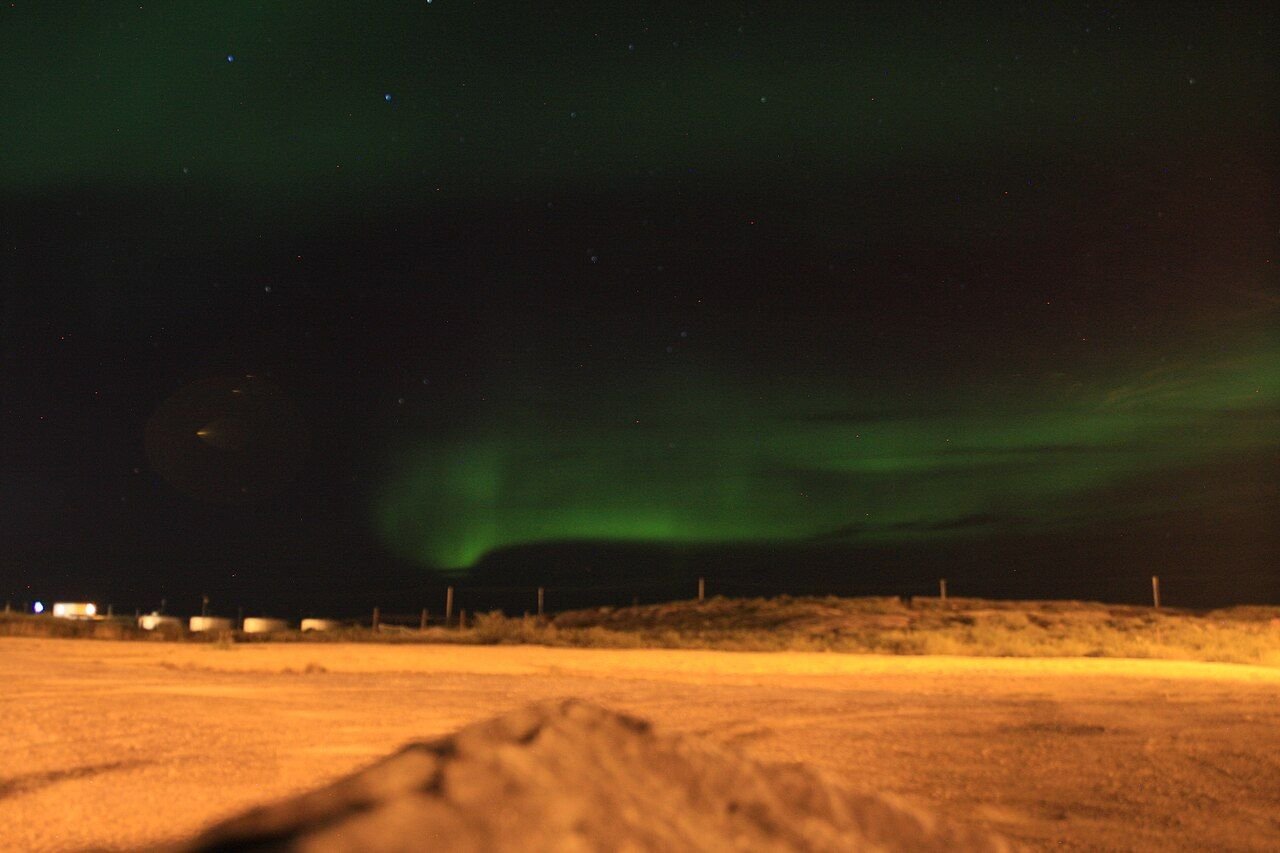
Best months: this is the tricky part. October and November are polar bear season — the famous month, the expensive month, and a decent aurora shoulder. February and March are the aurora season: deep winter, brutal cold, dark skies, and far fewer people. Summer (July–August) brings beluga whales but the nights are too short for the lights — don’t mix those up. My Canada in November guide covers the bear-season side if you’re combining trips. Tours vs DIY: in Churchill, tours aren’t optional — they’re the trip. Operators like Frontiers North Adventures and Lazy Bear Expeditions run multi-day packages with tundra buggies, heated viewing, and guides who know where the bears are (which matters, because the bears are here). DIY aurora viewing means walking the town’s dark edges at night — fine in February, but you do not wander the tundra alone in bear season. Period.
Costs & where to stay: the most expensive trip on this list, no contest. Multi-day aurora packages run $2,500–5,000+ per person for 4–6 nights, and bear-season packages climb higher. Hotels like the Lazy Bear Lodge book out months ahead. I nearly priced a February trip against October numbers and then wondered why my spreadsheet looked wrong — bear season is roughly double. I’ve made this mistake so you don’t have to: price the month you’re actually going. Honest downside: the cost, the remoteness, and the cold are all dialled to eleven. But watching the aurora ripple over a frozen Hudson Bay while a polar bear slept somewhere out in the dark? That’s the kind of night that recalibrates you.
4. Jasper, Alberta — the road-tripper’s aurora
Jasper is the aurora trip for people who already love driving. The town sits inside one of the world’s largest accessible Dark Sky Preserves — 11,000 square kilometres of protected night — and you can get there on pavement, in your own rig, with a cooler in the back. It doesn’t have Yellowknife’s oval-direct odds, but it has mountains, and mountains reflected in a lake under the aurora will ruin every other photo you’ve ever taken. A study ranking aurora destinations for 2026 put Maligne Lake — yes, that Maligne Lake, with Spirit Island — at the top of the world for the rare pink auroras, citing its dark skies and the way the peaks frame the shots.

Getting there: the drive is the point. Edmonton to Jasper is ~365 km, about 4 hours on the Yellowhead (Hwy 16); Calgary is ~415 km via the Icefields Parkway (Hwy 93). In winter, both highways demand respect — proper winter tires, check the Parks Canada Jasper page for road conditions, and gas up in Hinton or Lake Louise because the parkway has no winter services. I’ve driven the parkway in January and the pullouts I’d earmarked for night photography were buried in snowbanks taller than the car. Best months: September to March, with the Dark Sky Festival in October as the sweet spot — talks, guided stargazing, and the park at its most sky-obsessed. Mid-winter nights are longest but coldest.
Tours vs DIY: DIY all the way here. The classic spots are Maligne Lake Road, Pyramid Lake, and the pullouts along the Maligne Canyon road — all dark, all free, five to twenty minutes from town. Jasper doesn’t really have a Yellowknife-style aurora-tour industry; what it has is photographers in every pullout when the Kp spikes. Check my where to stay in Jasper guide for the hotel breakdown and my best time to visit the Canadian Rockies piece for the seasonal picture. Honest downside: this is a Kp 3+ destination — on a quiet-sun night you’ll see glorious stars but no lights. In 2026’s active sky that’s a bet I’d take, but budget four to five nights and have a daytime plan: the Maligne Canyon ice walk, the Jasper SkyTram, or just the drive itself.
Maligne Lake Road closes to vehicles in winter past Medicine Lake — but the road to Pyramid Lake stays open and is just as dark. I learned this staring at a closed gate at 11 PM with a Kp 4 forecast. Check the seasonal road status on the Parks Canada site before the night you need it, not during.
5. Wood Buffalo National Park — the biggest dark sky on Earth
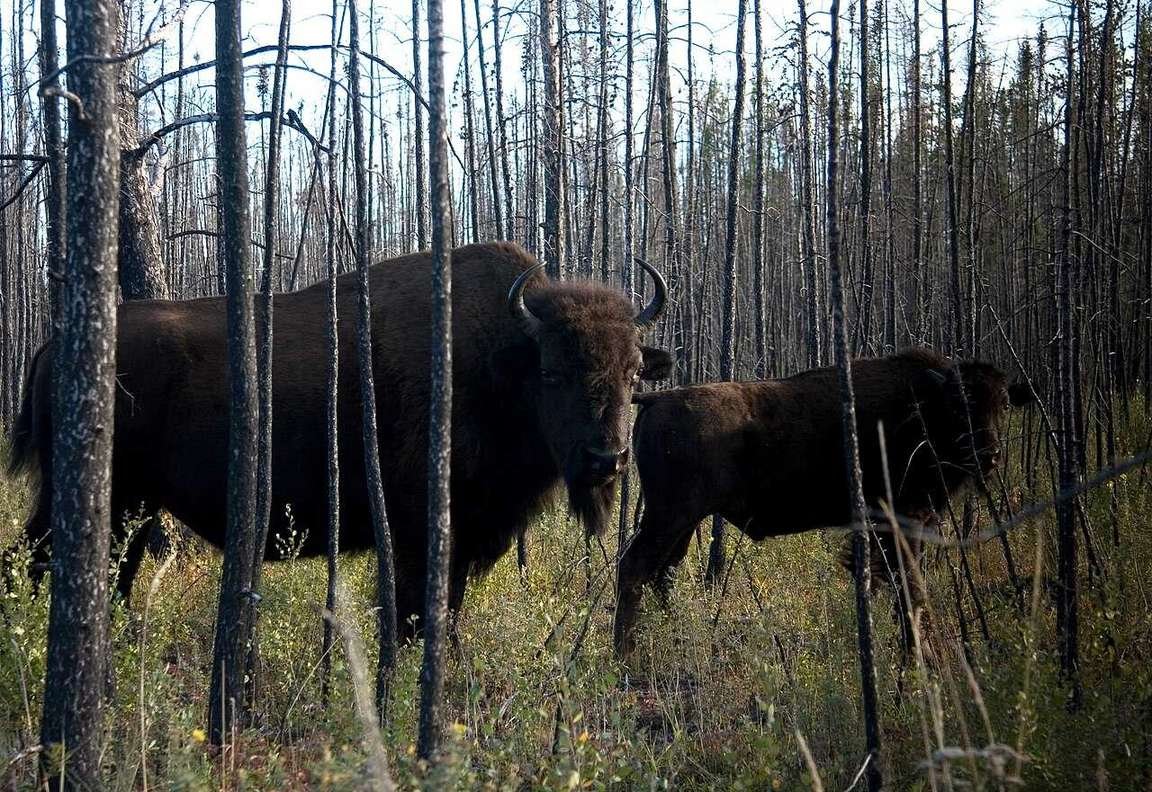
Wood Buffalo is the largest Dark Sky Preserve in the world — nearly 45,000 square kilometres, bigger than Switzerland — straddling the Alberta-NWT border. It is also one of the least-visited places on this list, which is exactly the appeal. The auroral oval passes right overhead, the light pollution is effectively zero, and the daytime comes with the world’s largest free-roaming wood bison herd and the Peace-Athabasca Delta. This is the aurora trip for people who find Yellowknife too crowded. (Yellowknife is not crowded. That’s the joke.)
Getting there: the gateway is Fort Smith, NWT. Fly from Edmonton via Hay River, or drive: Edmonton to Hay River is ~1,150 km, then the last ~270 km down Highway 5 — gravel, remote, and in winter a proper expedition. Gas up in Hay River, carry a full winter emergency kit, and tell someone your plan. Cell coverage is a rumour on Hwy 5. Check access and winter conditions on the Parks Canada Wood Buffalo page before committing. Best months: December to March for the longest nights.
Tours vs DIY: DIY, full stop — there is essentially no aurora-tour industry here. That’s the trade: total freedom, total self-reliance. Stay in Fort Smith (a handful of hotels and B&Bs), drive out to the dark pullouts, and you will likely be the only person watching the sky. Costs: the cheapest serious aurora trip in Canada once you’re there — ~$150–200/person/day, mostly food, fuel and a basic hotel. The catch is getting there costs time and fuel. Honest downside: if your car dies at -35 on Hwy 5, that is a real emergency, not an anecdote. Experienced winter drivers only. Everyone else: pick Yellowknife and live.
6. Grasslands National Park, Saskatchewan — the dark-sky sleeper pick
Grasslands is the answer to “what’s the darkest sky I can drive to?” A Royal Astronomical Society of Canada Dark-Sky Preserve in the driest corner of Saskatchewan, it has some of the darkest measurable skies in the country — and it’s a half-day drive from Regina, not a flight to the Arctic. The auroral oval doesn’t sit overhead here, so this is a solar-storm destination: when the Kp hits 4 or 5, the lights pour over the badlands and the prairie horizon, with nothing — no town glow, no mountains — between you and them.

Getting there: drive. Regina to the park’s West Block (Val Marie) is ~350 km, about 4 hours; Saskatoon is ~5. Gas up in Swift Current or Assiniboia, because Val Marie is small. Best months: September to March. The fall shoulder (September–October) is genuinely lovely: dark skies, mild nights, fall colours in the coulees. Winter brings the longest nights and the coldest wind you have ever felt standing still in a field. Check the Parks Canada Grasslands page for what’s open — services are thin in winter by design.
Tours vs DIY: DIY. There are no aurora tours; there are barely any people. Book an oTENTik (Parks Canada’s heated tent-cabins) in the West Block, or stay in Val Marie, and walk out your door at midnight. The 70 Mile Butte viewpoint is the classic dark-sky perch. Costs: ~$120–180/person/day — the cheapest trip on this list, mostly because you drove here and the sky is free. Honest downside: on a quiet-sun week you see the Milky Way — spectacular, not the assignment. This is the pick for the patient and the budget-conscious, and in a solar-maximum year like 2026, “patient” pays off more often than usual.
The East Block (near Wood Mountain) is even darker than the West Block and almost nobody goes there — but it has zero services in winter. I camped the West Block in October and had the entire butte viewpoint to myself at 1 AM, under a Kp 5 sky. For free. Tell no one.
7. Kuujjuaq, Nunavik — the far-north wildcard
Kuujjuaq is the one your friends haven’t heard of, which is half the reason to go. A fly-in Inuit community of about 2,800 on the Koksoak River in northern Quebec, it sits almost directly under the auroral oval — the lights here aren’t a maybe, they’re a nightly feature from September to April. What you’re buying is remoteness with infrastructure: the Arctic, but with hotels, restaurants, and scheduled flights. There is no road. There will never be a road. That’s the point.

Getting there: Air Inuit flies Montreal to Kuujjuaq in about 2.5–3 hours, several times a week — book early, because seats are limited and the fare is Arctic-priced (~$1,000–1,600 return). Once there, you’re on Inuit land, and the right move is local: Inuit guides run aurora viewing, snowmobile trips and cultural experiences out on the land. This is not a DIY destination — the land is vast, the weather turns fast, and going out with people who know it is both safer and, frankly, the whole point. The cultural depth is the differentiator: Inuit stories of the lights go back centuries, and hearing them under the actual sky beats any planetarium.
Costs & where to stay: expensive to reach, reasonable once there — ~$300–450/person/day including a guided outing every other night. Book the main hotels well ahead. Honest downside: flight schedules are thin and weather delays are normal — build a buffer day on each end. I’m serious, build two.
Photographing the aurora: the basics that actually matter
Your eyes will see the lights fine. Your camera needs help. The non-negotiables: a tripod (no exceptions — exposures run 5 to 15 seconds), a wide lens (f/2.8 or faster), and manual everything. Focus manually on a distant light — autofocus hunts in the dark and loses. Start at ISO 1600–3200, 8 seconds, widest aperture. Shoot RAW. Use the 2-second timer so your finger isn’t shaking the rig when the shutter fires.

Two things nobody tells you until it’s too late. One: cold kills batteries — keep your spares in an inside pocket against your body; when the camera battery dies at 40%, swap in the warm one and the “dead” one will resurrect in your pocket. I learned this watching my battery meter fall off a cliff during the best twenty minutes of sky I’ve ever seen. Two: your phone is better than you think — modern night modes can capture a bright display handheld, braced against the car roof. It won’t match the DSLR shot, but the photo you actually take beats the one you left in the hotel.
What to wear at -30°C (from a man who has been cold wrong)
The aurora demands you stand still outside, at night, in the coldest months, for hours. Standing still is the key phrase — you generate no heat, so dress like you’re going to sit in a freezer, because you are. The system: base layer (merino or synthetic, never cotton), mid layer (fleece or down), shell (a parka rated to -40, not a fashionable winter coat), legs (thermal leggings under insulated ski pants), feet (boots rated to -40 with thick wool socks — I wear the clunky ones and do not care how I look), hands (liner gloves under big mittens, so you can work the camera), head (balaclava plus a hat), and chemical hand and toe warmers by the dozen.
My full Canada winter packing list covers the rest, but the aurora-specific additions are: a thermos (hot drinks are morale), a headlamp with a red mode (white light ruins everyone’s night vision, including yours), and a foam pad to stand on — cold creeps up through your boots from frozen ground faster than through the air. I stood on bare ice for forty minutes my first night and my feet didn’t forgive me for a week. I’ve made this mistake so you don’t have to.
Never sleep in a running car to stay warm — carbon monoxide is odourless and it kills people every winter in the north. Keep viewing drives short, crack a window, and tell someone where you’re headed. The sky will still be there tomorrow.
Tours vs DIY: the honest math
Here’s how I think about it after doing both. Book tours in Yellowknife (at least two nights — the cloud-chasing and heated shelters are worth it), in Churchill (non-negotiable, it’s the whole trip), and in Kuujjuaq (local guides, Inuit knowledge, safety). Go DIY in Jasper, Wood Buffalo and Grasslands, where the infrastructure is roads and pullouts and the sky is free. Whitehorse is the hybrid: one guided night to learn the area, then DIY. The money version is in the calculator below — a guided night runs $80–150 per person.
Where everything sits
Tap a stop to jump the map. The pattern tells the story: Yellowknife, Whitehorse and Churchill sit right under the auroral oval; Jasper, Wood Buffalo and Grasslands trade a little oval-directness for scenery and solitude; Kuujjuaq puts the far north of Quebec on the board.
Map data © OpenStreetMap contributors. Open the full map
What an aurora trip costs
This calculator covers the trip itself once you’re in Canada: food, tours and viewing nights, getting around the north, and the cold-weather extras. Pick your style, set your nights. The “sights” line is the swing factor — it’s the difference between free pullouts in Grasslands and guided viewing nights in Yellowknife. Flights to Canada aren’t in here; the flight or drive north is, amortized across the trip. For the full country-wide picture, my Canada trip cost guide has the rest.
Budget calculator
Per person, in Canadian dollars. Excludes flights to Canada.
Budget ≈ $180/day · Mid-range ≈ $320/day · Luxury ≈ $600/day. Per person, excludes flights to Canada. Prices checked October 2026.
FAQs
What is the best month to see the northern lights in Canada?
January through March is the peak: the longest, darkest, clearest nights, especially in Yellowknife and Churchill. But don’t sleep on the shoulders — September and October bring milder weather, lower prices, and the lights reflected in unfrozen lakes, and the season runs into April (my Canada in April guide covers the last-call window). December pairs the lights with the holiday season.
Are the northern lights guaranteed if I go to Yellowknife?
No — and anyone who guarantees them is selling you something. What Yellowknife gives you is the best odds in Canada: operators report roughly 90%+ success over three nights because the town sits directly under the auroral oval with reliably clear winter skies. The way you buy certainty is with nights, not money: stay four or five nights and the math gets very friendly. Clouds are the only thing that can beat you, and even Yellowknife gets them.
Is 2026 really a good year for the northern lights?
Yes, genuinely. The sun runs on an ~11-year cycle, and cycle 25 peaked around 2025 — aurora activity stays elevated for a year or two after the peak, which puts 2026 and 2027 squarely in the sweet spot. More solar storms mean the lights appear on more nights and push further south than usual. This is the best sky Canada has had in a decade.
Should I go to Banff or Yellowknife for the northern lights?
Yellowknife if the lights are the mission — it’s under the auroral oval with triple the odds. Banff (and nearby Jasper) if you want a mountain trip where the aurora is the bonus round: on an active night the lights over the Rockies are unreal, but you need a Kp 3+ night. In a solar-maximum year like 2026 those nights come often enough that Jasper earns its spot — just give it four or five nights and have a daytime plan.
Can I photograph the northern lights with just my phone?
For a bright display, yes — modern night modes do a respectable job if you brace the phone against something solid and keep still. For the shot you’ll actually frame, you want a real camera: tripod, wide lens, manual focus, ISO 1600–3200, 5–15 seconds. Either way, bring spare batteries in an inside pocket — the cold drains them fast, and a dead battery during the best twenty minutes of sky is a special kind of heartbreak. Ask me how I know.
How cold does it get, and is aurora chasing safe?
Yellowknife and Churchill in January and February regularly hit -30°C to -40°C — no joke, that’s frostbite-in-minutes territory for exposed skin. Dress in the full system above (no cotton, -40 boots, mittens over liner gloves) and you’ll be fine. Safety rules: never sleep in a running car (carbon monoxide), tell someone your viewing plan, keep the fuel tank full on remote winter roads, and in Churchill’s bear season, do not wander outside town without a guide.
Bottom line: the sun is putting on its best show in a decade, and Canada has more dark sky than anywhere else on Earth. Pick Yellowknife for the odds, Jasper for the drive, Churchill for the story, Grasslands for the budget, Kuujjuaq for the edge of the map — stay at least four nights, dress warmer than you think, and set the alarm for midnight. The sky does the rest. See you out there. — James
8 comments