
Last updated: October 3, 2026
The short answer
- Day 1: Ride the Banff Gondola up Sulphur Mountain (book ~48h ahead for the best dynamic rate), wander Bow Falls, and soak the travel day off at the Upper Hot Springs (~$19.75).
- Day 2: Moraine Lake and Lake Louise via the mandatory Parks Canada shuttle — reservations launch April 15 and the 48-hour rolling release sells out in minutes (adult $12.75 + $3.50 booking fee).
- Day 3: Drive the Icefields Parkway to Bow Lake, Peyto Lake and Mistaya Canyon, then walk on an actual glacier on the Columbia Icefield Adventure (~$133, seasonal through Oct 12).
Three days is the sweet spot for Banff — trust me on this one. I’ve done the two-day version and the five-day version, and 72 hours is the Goldilocks plan: one town day, one lake day, one big mountain drive, and not a single hour wasted standing in a line you could have skipped. This whole itinerary is built on 2026 prices and hours checked in October 2026, written for the summer-to-fall season (June through mid-October).
Fair warning on timing, because it matters for this one: the lake shuttle and the Columbia Icefield are seasonal and both wrap up around October 12, 2026. If you’re reading this for a winter trip, Day 2 and Day 3 below will need snow boots and a different plan — I’ve added a winter note near the FAQs. And here’s the thing you need to hear first: Moraine Lake Road is closed to private vehicles year-round, full stop, no exceptions. Day 2 only works if you book the shuttle, so let’s start planning.
Getting to Banff and where to stay
Banff is about a 90-minute drive west of Calgary on the Trans-Canada Highway. I fly into Calgary (YYC), grab the rental car, and I’m usually parking in Banff by lunch (I timed it: 1 hour 35 minutes, and yes, I track that). If you’re not driving, Brewster and Banff Airporter run coach shuttles from the airport.
For three nights, stay in the Town of Banff — it’s inside the park, everything in this itinerary leaves from or passes through it, and the evening stroll down Banff Avenue is worth the premium by itself. My spreadsheet had a whole tab for this, and here’s what it said: Banff townsite for convenience, Canmore (25 minutes east) for better value and an equally gorgeous valley — see our 2-day Canmore itinerary if you want to double the trip. Mid-range hotels in Banff run roughly ~$250–450 per night in summer (estimate, before taxes and parking), and I once waited until June to book July. I paid for it. Literally.
You also need a Parks Canada park pass — $12.25/day for an adult, $24.50/day family (2026 official rates), available at the gate, online, or on your dashboard as a hangtag. Pro tip: each daily pass is valid until 4 PM the next day, so two well-timed dailies (~$24.50) can legitimately cover three full days. The annual Discovery Pass is $83.50 per adult — worth it only if you’re stacking Jasper and Yoho onto the trip (do it — our Banff–Jasper road trip itinerary has the full plan).
Day 1: Banff townsite, Sulphur Mountain, and a hot soak
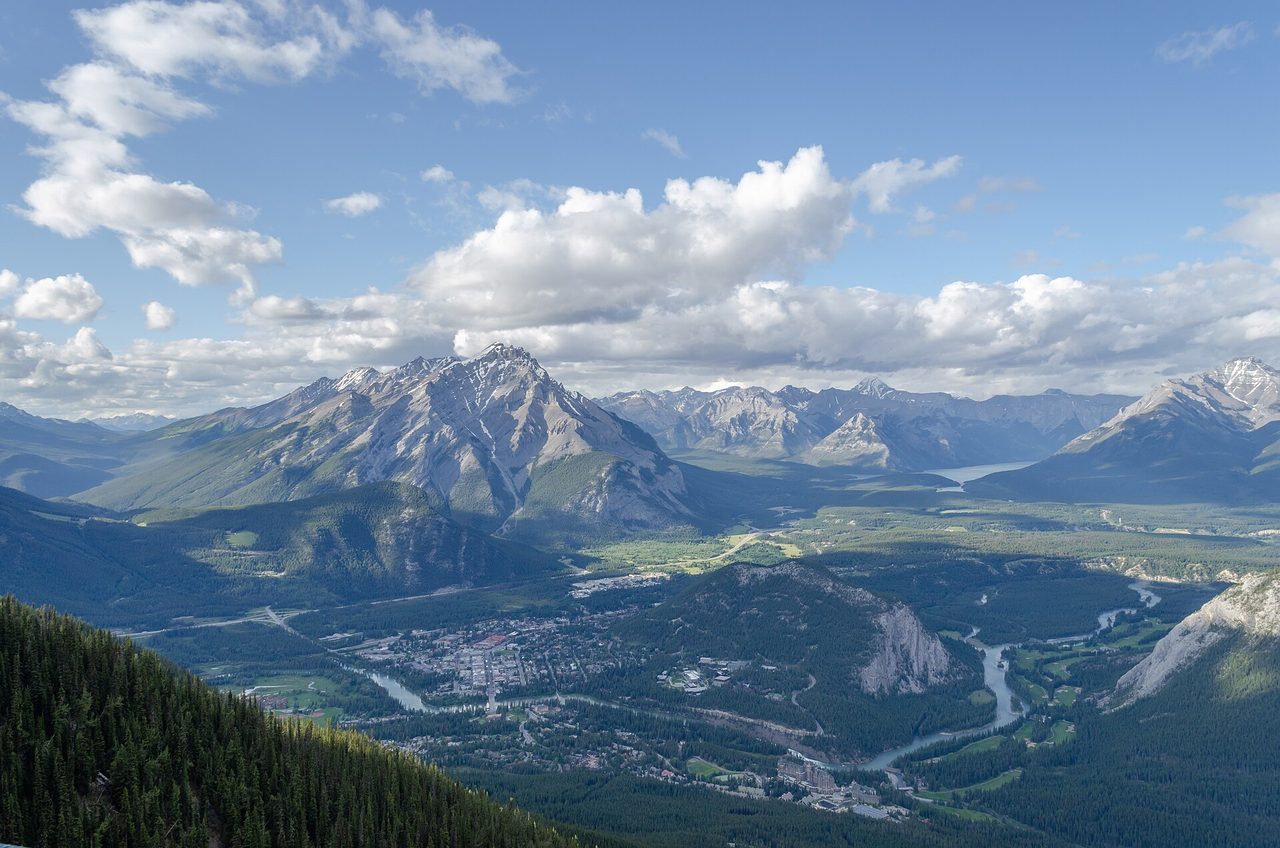
Day 1 is the Banff greatest-hits day, and it starts at altitude. This is also the day I always over-schedule, so I’m giving you a gentle pace — you’ll thank me at the hot springs.
9:00 AM — Banff Gondola up Sulphur Mountain (~$85 adult)
The Banff Gondola climbs 698 metres to the summit of Sulphur Mountain in about eight minutes, and the first ride of the morning is the one to take. I took the first gondola up once and watched the light spill down the Bow Valley — now I refuse to ride later than 10 AM. I’ll be honest: I showed up at 11:30 AM on a Saturday once. Never again.
Practical notes:
- Price: dynamic pricing, roughly ~$75–95 per adult depending on day and booking window (estimate). Book at least 48 hours ahead on the official site to lock the lowest tier. Kids 5 and under ride free anytime; one child (6–17) rides free per paying adult in the first two hours of the day.
- Getting there: the free gondola shuttle and Roam Transit Route 1 are included with a same-day pre-purchased ticket (May 15–October 12, 2026) — skip the $17.50 parking at the base entirely.
- At the top: the boardwalk to Sanson’s Peak (a 1 km, ~15-minute walk each way) and the old Cosmic Ray Station, plus the rooftop observation deck with six mountain ranges. Allow 2–3 hours. Bring a layer — it’s several degrees cooler up there, and I learned that the soggy way.
→ Banff Gondola — official tickets, best rates & hours
11:30 AM — Banff Avenue and lunch downtown
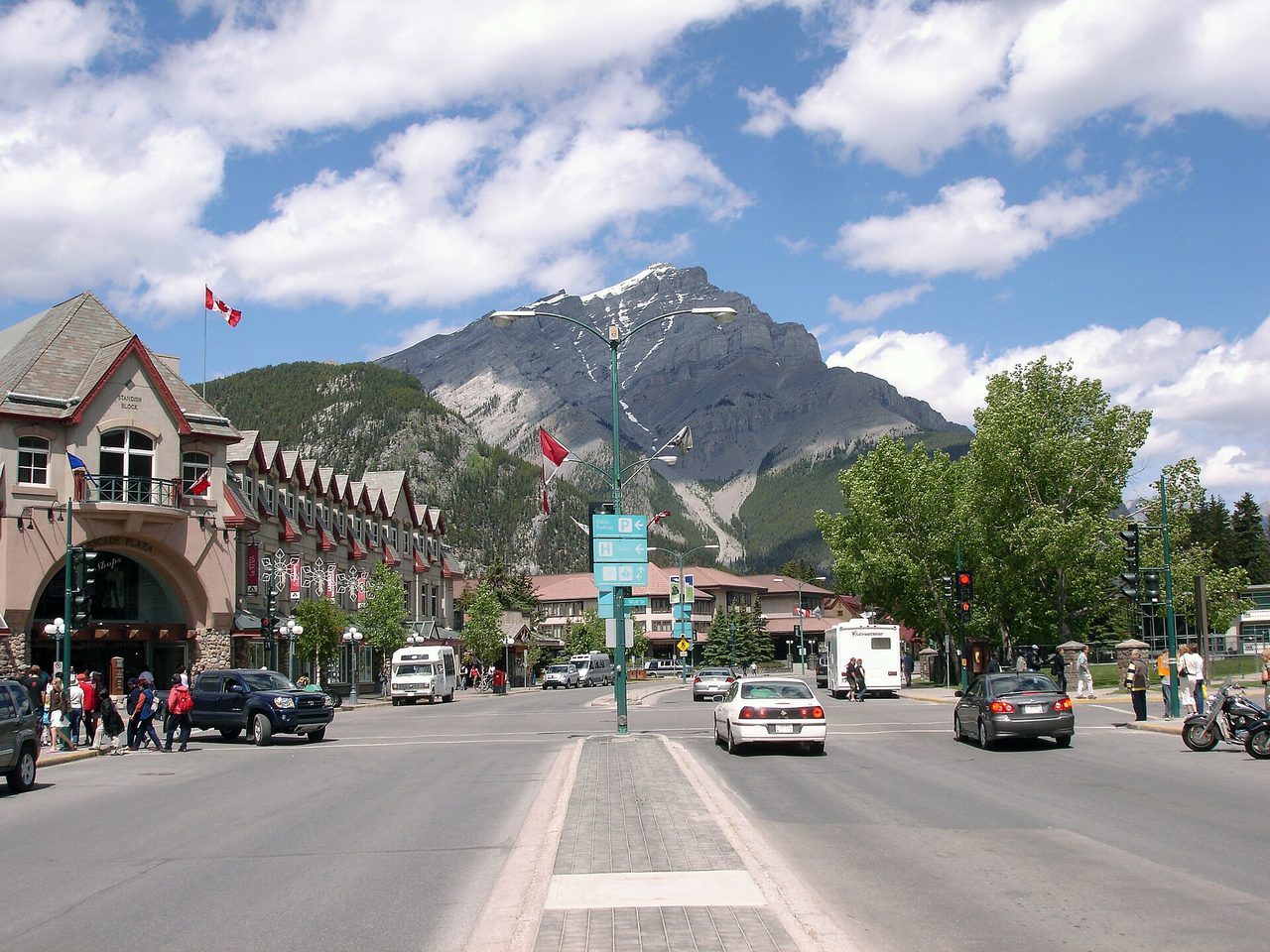
Ride down and stroll Banff Avenue with Cascade Mountain looming at the end of the street — it’s the most photographed main street in Canada for a reason. Budget ~$20–30 for lunch; the whole avenue is restaurants and fudge shops, and my rule is to pick by craving, not by tout. (My rule, and it’s never failed me.)
1:30 PM — Bow Falls riverside walk (free)
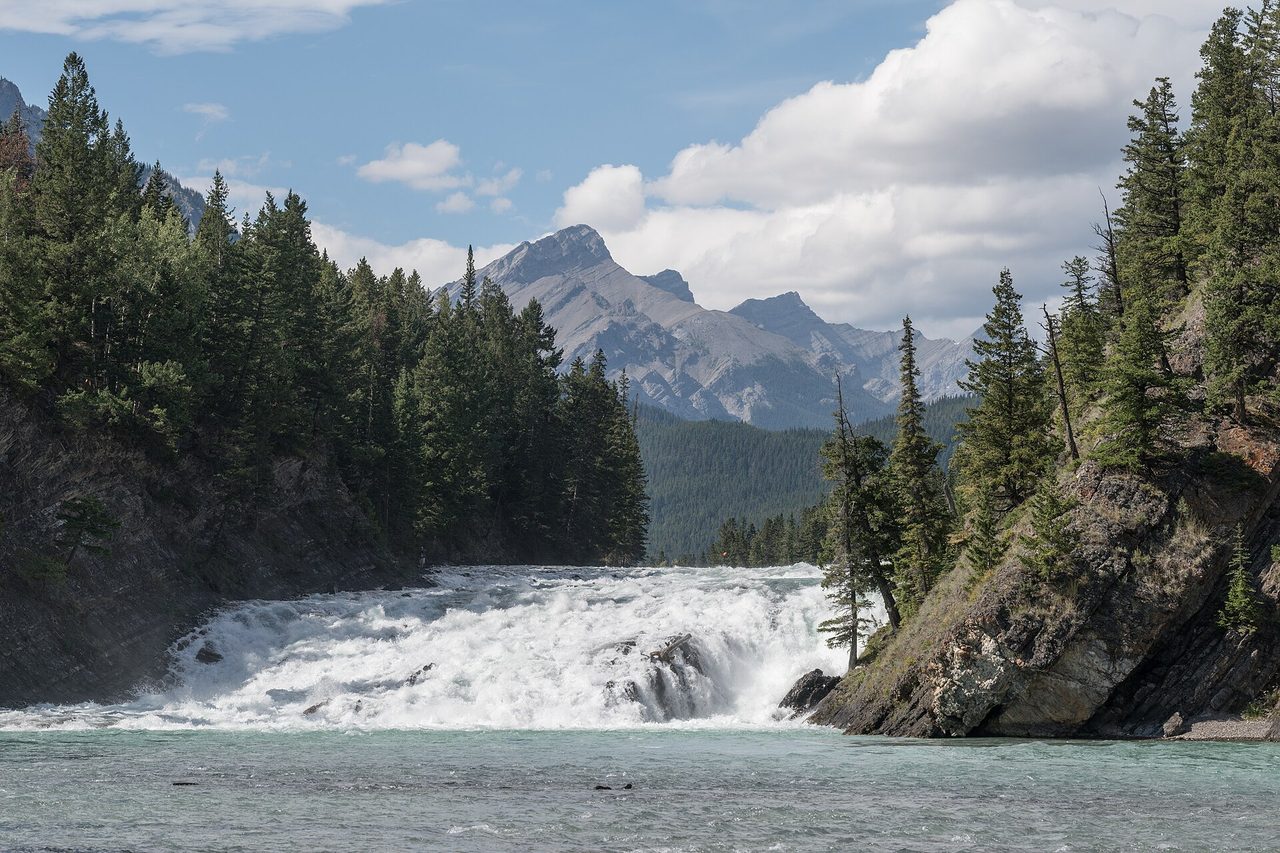
From downtown, the Bow River Trail leads to Bow Falls — an easy, flat ~2.5 km round-trip walk along the river. I’ve done this walk four times now, and I still stop at the same spot to watch the water shear over the limestone ledges. Detour up to Surprise Corner for the classic postcard shot of the Fairmont Banff Springs. Free, lovely, and exactly the right speed for a first afternoon.
4:30 PM — Banff Upper Hot Springs ($19.75)
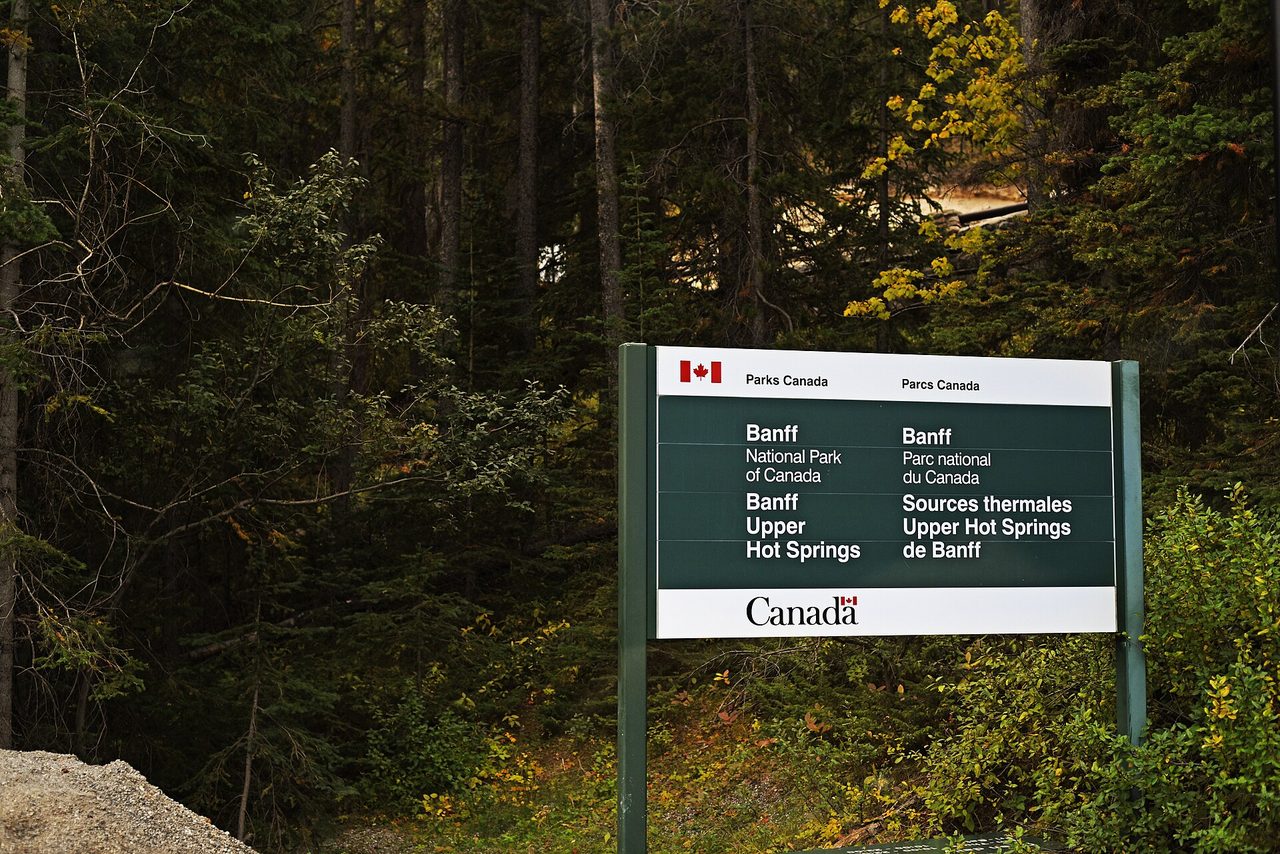
Here’s the thing: you’ve just flown or driven in, climbed a mountain, and walked the river. You have earned the hot water. The Banff Upper Hot Springs (2026 admission: adult $19.75, family $64.25 — locker token included) sits above the town with Mount Rundle filling the horizon, and soaking in the steaming mineral water while your muscles quietly forgive you is one of my favorite hours in the Rockies. I checked the current rates on the Parks Canada official fees page before I went — they change seasonally, so do the same. Bring a swimsuit and a towel; rentals exist but they’re not cheap.
7:00 PM — Dinner in Banff
Banff’s food scene has stepped up — the Avenue is wall-to-wall patios in summer, and a casual dinner runs ~$30–50 per person. The fondue spot (The Grizzly House) is the local legend; Bear Street Tavern’s honey-drizzled pizza is my actual favorite thing I’ve eaten in town. Book dinner for the same night you book your hotel — summer tables go a week out, and a two-hour wait with tired legs is a rookie error I will not let you make.
Day 1 spending: Gondola ~$85 + hot springs $19.75 + food ~$55 ≈ ~$160 (excluding hotel).
Day 2: Moraine Lake and Lake Louise — the shuttle day
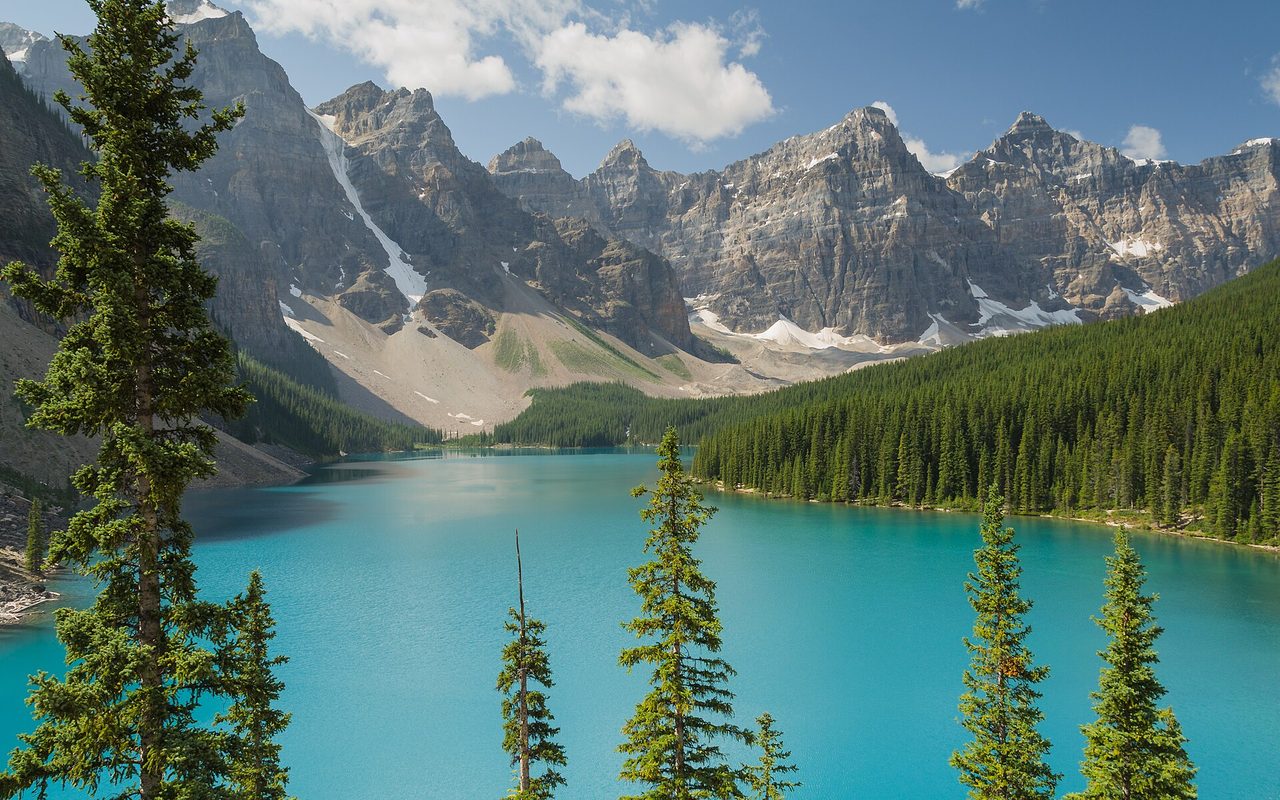
Day 2 is built around the two bluest lakes on the planet, and — say it with me — you cannot drive to Moraine Lake. Since 2023 the road has been closed to private vehicles year-round, and as of 2026 that includes vehicles with accessibility placards. Your only ways in are the Parks Canada shuttle, Roam Transit, or a licensed commercial operator. I planned my whole lake day around the shuttle, and honestly? It’s a game-changer — no parking lottery at 5 AM, no turnaround at the barrier.
The shuttle, demystified (book this first, before anything else)
- Reservation launch: April 15, 2026 at 8:00 AM MDT. 40% of the season’s seats release that day; the remaining 60% release on a rolling 48-hour window (8 AM MDT, two days before departure).
- Cost: adult $12.75, senior $6, youth $4, plus a non-refundable $3.50 online booking fee. Your park pass is separate.
- Where from: the Lake Louise Park & Ride at 1 Whitehorn Road (the Lake Louise Ski Resort lot, ~50 minutes from Banff) — free parking there. You must check in with your reservation to get your official ticket.
- The good stuff: one reservation covers both lakes — the Lake Connector shuttle runs between Lake Louise and Moraine Lake roughly every 30 minutes, and you can stay as long as you like. Last return bus leaves Moraine Lake at 7:30 PM.
- Sunrise chasers: the Alpine Start shuttle runs at 4 AM and 5 AM from Lake Louise Lakeshore to Moraine Lake (June 1–Oct 12), but reservations must be made by 5 PM the day before.
I first read about the 48-hour rolling release on the official Parks Canada shuttle page — and then I learned the hard way that “sells out in minutes” is not an exaggeration. Set an alarm. Use a computer. Have your account (reservation.pc.gc.ca) created the night before. Do not skip this prep.
7:00 AM — Moraine Lake: the Rockpile at sunrise
Shuttle to Moraine Lake first — the lake is at its famous turquoise best from mid-June through September, when glacial rock flour fills the basin. The Rockpile trail is a short, steep 300-metre scramble from the parking area, and the payoff is the classic Valley of the Ten Peaks panorama — the one that used to be on the Canadian twenty-dollar bill. Get there before 9 AM and you’ll have the viewpoint nearly to yourself. I arrived at 7:15 once and counted nine other people. At 11 AM, I counted hundreds. Pro tip: check the math.
The Moraine Lakeshore Path (easy, ~45 minutes) or the Larch Valley trail (ambitious, ~4 hours; larch trees turn gold in late September) fill the rest of the morning. Then catch the Lake Connector over to Lake Louise.
12:00 PM — Lake Louise

You can still drive to Lake Louise (parking is paid May–October and fills by mid-morning, which is why the shuttle wins), but arrive by shuttle and walk straight to the lakeshore. The water is a deeper blue than Moraine — somehow — and the Fairmont Chateau Lake Louise sits at one end like it owns the place, which, historically, it basically does.
Three ways to spend the afternoon:
- Lakeshore trail (2 km each way, flat, free) — the easy stroll to the far end with the glacier view.
- Lake Agnes Teahouse hike (7.4 km round trip, ~400 m elevation, 3–4 hours) — the classic. I hiked it in September and the chocolate cake at the teahouse (they helicopter in the supplies) tasted like victory. Bring cash — no card machines up there.
- Canoeing — the red canoes at the Fairmont boathouse rent by the hour (expect ~$150+/hour for up to three adults — estimate, check the boathouse for current rates). Expensive, yes. Worth every penny for the photos, yes.
Catch the shuttle back to the Park & Ride by early evening. This is the day to be in bed by 10 PM, because tomorrow starts early.
Day 2 spending: shuttle $12.75 + $3.50 fee + food ~$45 ≈ ~$60 (excluding hotel). The lakes are gloriously cheap once you’re on the bus.
Day 3: The Icefields Parkway — Bow Lake, Peyto Lake, Mistaya Canyon, and a glacier
The Icefields Parkway (Highway 93 North) is the 230 km Banff-to-Jasper highway everyone calls the most beautiful drive in the world. Here’s the thing: we are NOT driving to Jasper today — that’s a separate trip (see our Banff–Jasper road trip itinerary for the full run).. We’re driving to the Columbia Icefield, ~185 km from Banff, and hitting the three best roadside stops on the way. Fuel up in Banff before you leave — gas stations are rare on the Parkway, and I timed the drive: 2 hours to the Icefield with one quick stop.
8:30 AM — Bow Lake and the Crowfoot Glacier (free)
The Parkway’s first must-stop, about 35 minutes north of Lake Louise. Bow Lake sits under the Crowfoot Glacier — and I’ll be honest, the glacier looks less like a crow’s foot every year, which is the kind of quiet detail that makes you stop and stare. The historic Num-Ti-Jah Lodge on the shore does a legendary hot chocolate; I stopped for one and took exactly one hundred photos of the lake. Free stop, allow 30–45 minutes.
10:00 AM — Peyto Lake viewpoint (free)

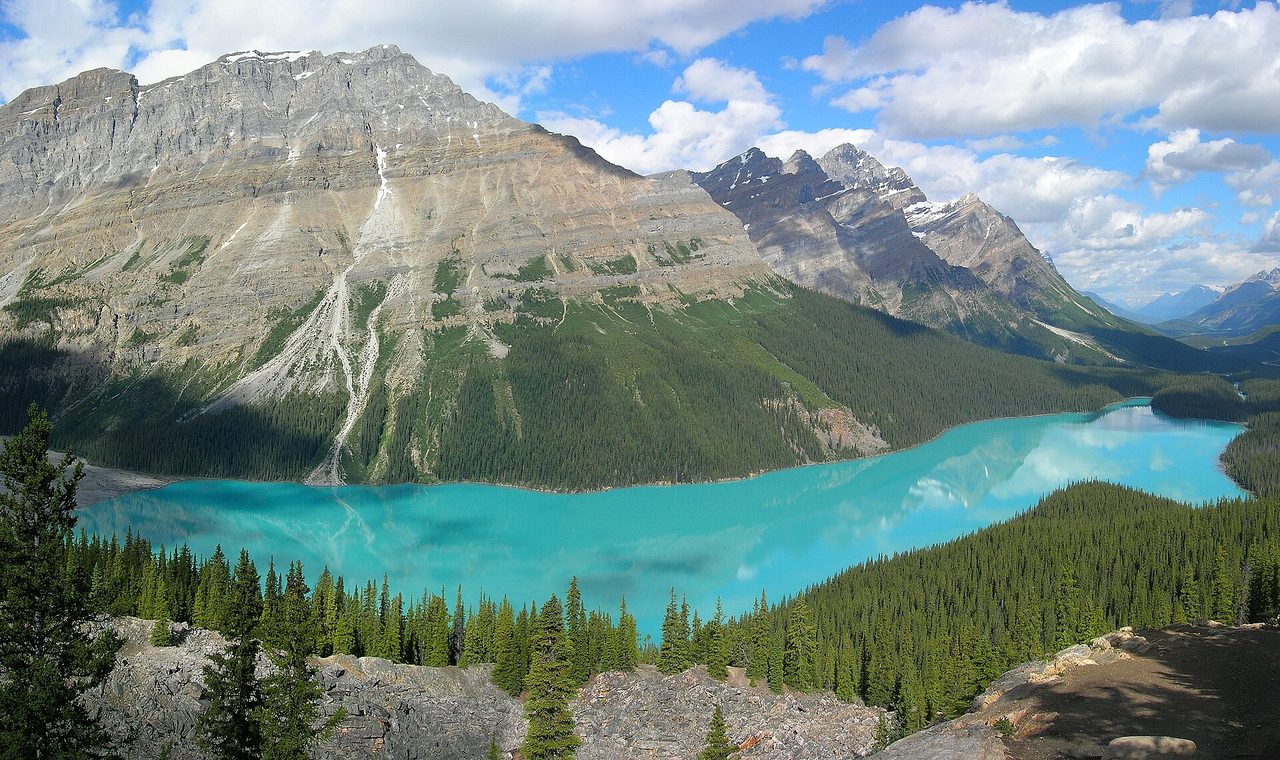
Ten minutes past Bow Lake, the Bow Summit viewpoint overlooks Peyto Lake — the fox/wolf-shaped lake that’s somehow an even more impossible blue than the other two. The paved trail from the parking area is a 10–15 minute uphill walk, and the viewing platform hangs right over the lake. Go before 10:30 AM: the parking lot fills by midday and the light is better anyway. Pro tip: this is the most crowded pullout on the Parkway — and even so, I got a railing spot at 10 AM with no trouble.
11:30 AM — Mistaya Canyon (free)
Fifteen minutes north of Peyto, Mistaya Canyon is the stop everyone drives past and shouldn’t. A short 0.5 km loop descends to a limestone gorge where the river squeezes through a slot canyon barely wider than my arms (I am 5’6″, and the sound it makes is genuinely startling). Fenced viewpoints, 30 minutes, and the best “wait, what is that” moment of the whole day. Do not skip this one.
1:00 PM — Columbia Icefield: the Glacier Adventure (~$133)
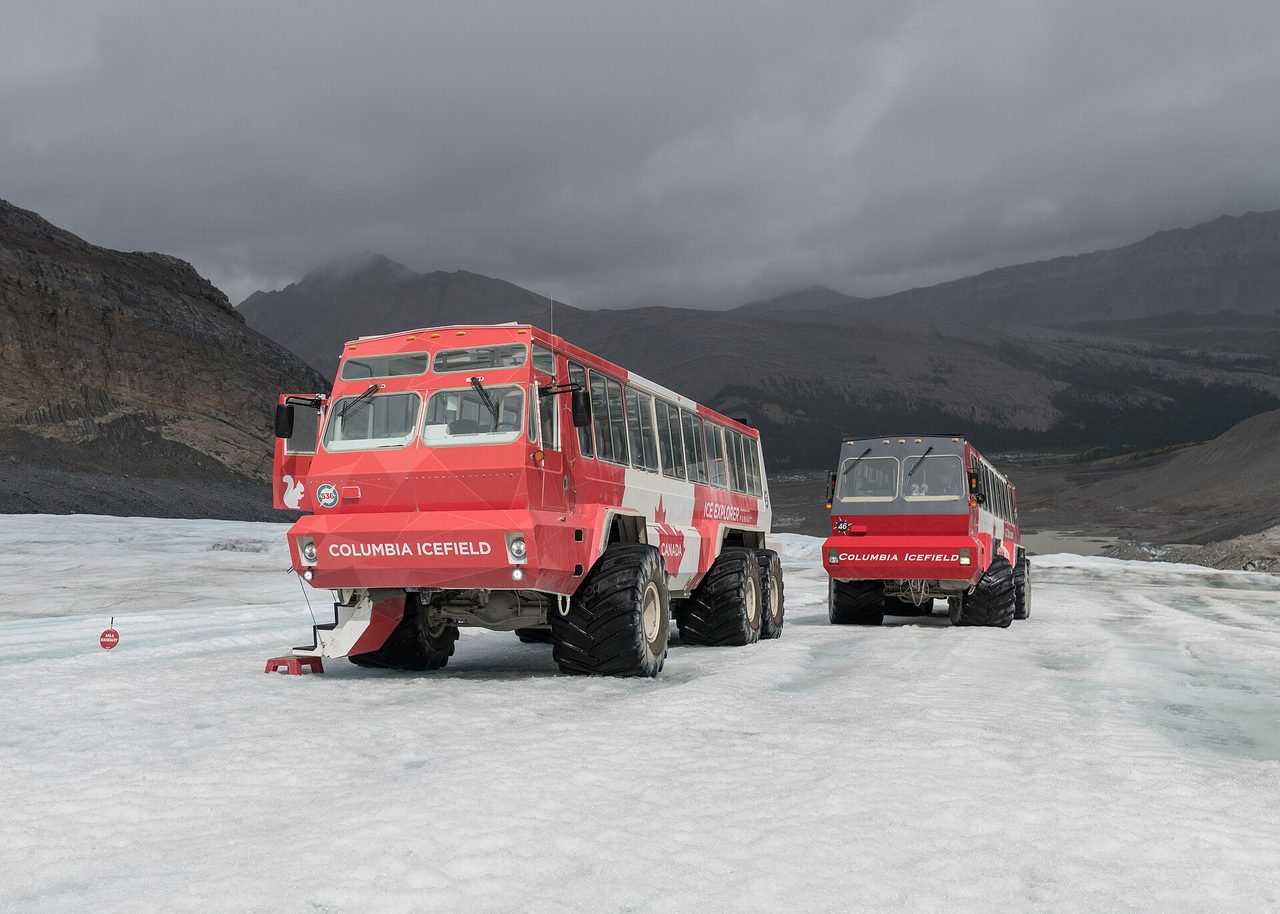
The centerpiece: the Columbia Icefield Glacier Adventure, a 2.5–3 hour guided experience where a massive Ice Explorer bus drives you directly onto the Athabasca Glacier and you get to walk on 10,000-year-old ice. Then the included Glacier Skywalk — a glass-floored platform hanging 280 metres above the Sunwapta Valley. I’m not a heights person, and I stepped onto the glass anyway. My knees had opinions. Worth it.
- 2026 season: May 1 – October 12 (weather dependent); peak hours 9 AM–5 PM. I double-checked the dates on the official Columbia Icefield hours page before I went — they shift every year, so do the same.
- Price: roughly ~$133 per adult for the classic Adventure tour (estimate — dynamic pricing applies, and there’s a 20%-off window after 3:30 PM). Book online to skip the lines.
- Time: the full experience takes 3+ hours, and the drive back to Banff is 2+ hours, so a 1 PM tour is the sweet spot — you’ll be back in Banff by 8 PM.
→ Columbia Icefield Adventure — official tickets & tour details
Day 3 spending: Glacier Adventure ~$133 + park pass (already counted) + gas ~$30 + food ~$45 ≈ ~$210 (excluding hotel).
How much does 3 days in Banff cost?
Sample budget per adult, excluding hotel (prices checked October 2026; items marked ~ are estimates):
| Item | Cost (CAD) |
|---|---|
| Park passes: 2× daily adult (covers 3 days via 4 PM-next-day rule) | $24.50 |
| Banff Gondola (dynamic pricing, booked ahead) | ~$85 |
| Banff Upper Hot Springs | $19.75 |
| Parks Canada lake shuttle + booking fee | $16.25 |
| Columbia Icefield Glacier Adventure | ~$133 |
| Rental car gas, 3 days (mountain gas prices) | ~$60 |
| Food & drinks, 3 days | ~$150–200 |
| Total | ~$490–540 |
Mid-range hotels run roughly ~$250–450/night in Banff townsite in summer — so the full three-day trip lands around ~$1,240–1,890 per person sharing a room, before flights. Trim it down by swapping the Glacier Adventure for the free Skywalk-free stops, or by staying in Canmore.
Timeline at a glance
| Day | Morning | Afternoon | Evening |
|---|---|---|---|
| Day 1 | Banff Gondola up Sulphur Mountain (~$85) | Bow Falls walk (free) → Upper Hot Springs ($19.75) | Dinner on Banff Avenue |
| Day 2 | Parks Canada shuttle: Moraine Lake at sunrise ($12.75) | Lake Connector → Lake Louise (hike/canoe) | Early night — early alarm |
| Day 3 | Icefields Parkway: Bow Lake + Peyto Lake (free) | Mistaya Canyon + Columbia Icefield Glacier Adventure (~$133) | Drive back to Banff, dinner |
FAQs about spending 3 days in Banff
Is 3 days enough for Banff?
Yes — three days is the sweet spot for a first visit. Day 1 covers the town, the gondola, and the hot springs; Day 2 gets you both Moraine Lake and Lake Louise via the shuttle; Day 3 is the Icefields Parkway and the Columbia Icefield. You won’t see everything (Johnston Canyon, the Plain of Six Glaciers, and Canmore all deserve their own trips — see our 2-day Canmore itinerary), but you’ll leave feeling like you did Banff properly. Short on time? Our 1-day Banff itinerary and 2-day Banff itinerary cover tighter plans.
Can I still drive to Moraine Lake in 2026?
No. Moraine Lake Road has been closed to private vehicles year-round since 2023, and as of 2026 there are no exceptions — even vehicles with accessibility placards must use the shuttle. To visit, book a Parks Canada shuttle ($12.75 adult + $3.50 booking fee) from the Lake Louise Park & Ride at 1 Whitehorn Road; reservations launch April 15, 2026 at 8 AM MDT with 60% of seats releasing on a rolling 48-hour window. The road itself is open June 1 through mid-October only. → Parks Canada — Lake Louise & Moraine Lake shuttle
How much does 3 days in Banff cost?
Budget roughly $490–540 CAD per adult excluding hotels (October 2026 prices): about $255 in attraction tickets (Banff Gondola ~$85, Columbia Icefield ~$133, lake shuttle $16.25, hot springs $19.75), ~$25 for park passes, ~$60 for mountain gas, and ~$150–200 for food over three days. Add roughly ~$250–450/night for a mid-range Banff hotel in summer.
Do I need a park pass, and is the Discovery Pass worth it?
You need a valid park pass whenever you’re recreating in Banff National Park — $12.25/day per adult or $24.50/day family in 2026, with each daily valid until 4 PM the next day. The annual Discovery Pass ($83.50 adult, $167.50 family) pays off if you have 7+ park days in a year, or if you’re adding Jasper and Yoho to this trip. Buy online or at the gate; hangtags must be visible on your dashboard. → Parks Canada — Banff fees
When is the best time of year for this itinerary?
Mid-June through September is prime: Moraine Lake Road is open (June 1–mid-October), the lake shuttle runs, and the Columbia Icefield tours operate (May 1–Oct 12). Late September adds golden larches at Moraine Lake with thinner crowds. This itinerary as written works for the summer season — in winter (November–April), Moraine Lake is unreachable, the Icefield tours don’t run, and the Parkway’s high viewpoints can be snowed in. A winter version swaps in: Banff Gondola Nightrise, Johnston Canyon’s frozen cathedrals, ice skating on Lake Louise, and skiing at Sunshine or Lake Louise Ski Resort. See our Banff travel guide for seasonal detail.
Is the Columbia Icefield Glacier Adventure worth $133?
For most first-timers, yes. It’s the only place on this itinerary where you physically stand on a glacier — the 2.5–3 hour tour rides an Ice Explorer onto the Athabasca Glacier and includes the glass-floored Skywalk, both departing from the Glacier Discovery Centre. Book online, aim for a midday tour, and note the 20%-off late-afternoon window. On a tight budget, skip it: Peyto Lake, Bow Lake, and Mistaya Canyon are all free and every bit as spectacular. → Columbia Icefield Adventure — official tickets
2 comments