
- ✓ Verified, not viral: every fact below was checked against an official source (Parks Canada, The Canadian Encyclopedia, Canada Post) — no made-up “Canada has the most Santa per capita” nonsense.
- ✓ 8 real places on the map: the wildest facts have actual locations — Dildo, the Big Nickel, the world’s largest beaver dam — all pinned on the interactive map.
- ✓ Use it to plan: these facts double as a trip-planning cheat sheet — the budget calculator below prices a real Canada trip in seconds.

I’ll be honest: this article started as a spreadsheet. (Of course it did.) Every trip I’ve taken across Canada, I’ve come home with a notebook full of things that made me stop mid-step and say “wait, WHAT?” Here they are: 51 facts, all true, all checked, grouped so you can find the good ones. I’ve stood in most of the places below and eaten my way through the food section twice.
A confession to start: my uncle spent three Decembers as one of Canada Post’s “postal elves,” answering Santa letters after his shift. He’d come home with stories — letters in 30 languages, drawings taped to every wall — and I never quite believed him until I looked it up myself. That’s fact #21 below, and it’s the one that made me write this whole list. You’ve got this.
The 8 places behind the facts, on a map
Eight pins, from Newfoundland to the Arctic. Tap any stop to jump the map straight to it — then go read the matching fact.
Map data © OpenStreetMap contributors. Open the full map
Geography: it’s bigger than you think
Canada’s geography is the whole joke and the whole point: a country so large that “popping over” to the next province is a two-day drive. Most visitors have no real sense of the scale until the numbers hit them.
- Canada is the second-largest country on Earth — about 9.98 million km², stretching roughly 5,500 km from the Atlantic to the Pacific. Only Russia is bigger.
- Canada has the longest coastline in the world — over 243,000 km of it, enough to circle the Earth six times. Those Arctic islands do a lot of heavy lifting.
- Canada touches three oceans: the Atlantic, the Pacific and the Arctic. Stand on the right beach in Nunavut and there’s nothing between you and the North Pole but very cold water.
- Canada has more lakes than any other country — an estimated two million or more, from the Great Lakes down to ponds that have never had names.
- Canada holds roughly one-fifth of the world’s fresh water. The Great Lakes alone (shared with the US) contain about a fifth of the planet’s surface fresh water.
- About 90% of Canadians live within 160 km of the US border. The country’s vast north is mostly empty, magnificent wilderness — which is exactly why the facts in the wildlife section exist.
- Canada spans six time zones — and Newfoundland runs 30 minutes ahead of Atlantic time, just to keep things interesting. Yes, half-hour time zones are real.
- The Trans-Canada Highway runs about 7,821 km from Victoria, BC to St. John’s, NL, making it one of the longest national highways on the planet. Driving it end to end takes the better part of a week.
- The Bay of Fundy has the highest tides in the world — up to 16 metres (52 feet), taller than a four-storey building. At low tide you can walk on the ocean floor among the Hopewell Rocks; six hours later it’s all underwater.
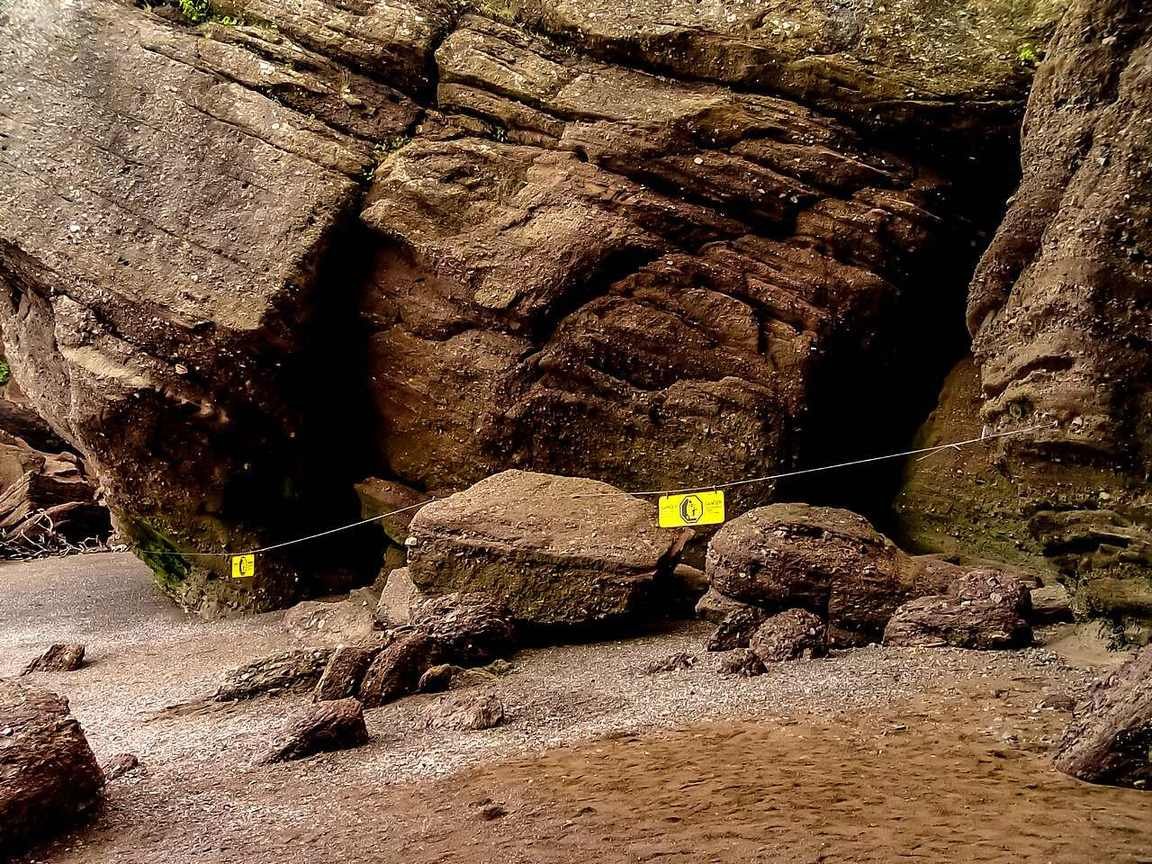
If these facts are making you want to go: the map above has 8 of the places pinned — tap a stop to jump straight to it, then read the matching fact number. The Bay of Fundy (stop 6) is the easiest win: time your visit for low tide and you can walk where the ocean was.
Wildlife: the locals are dramatic
I’ve locked eyes with a bull moose on the Cabot Trail, watched a beaver slap its tail three metres from my kayak, and stood in Churchill while a polar bear ambled past like it owned the place (it did). Canada’s animals do not do subtle.
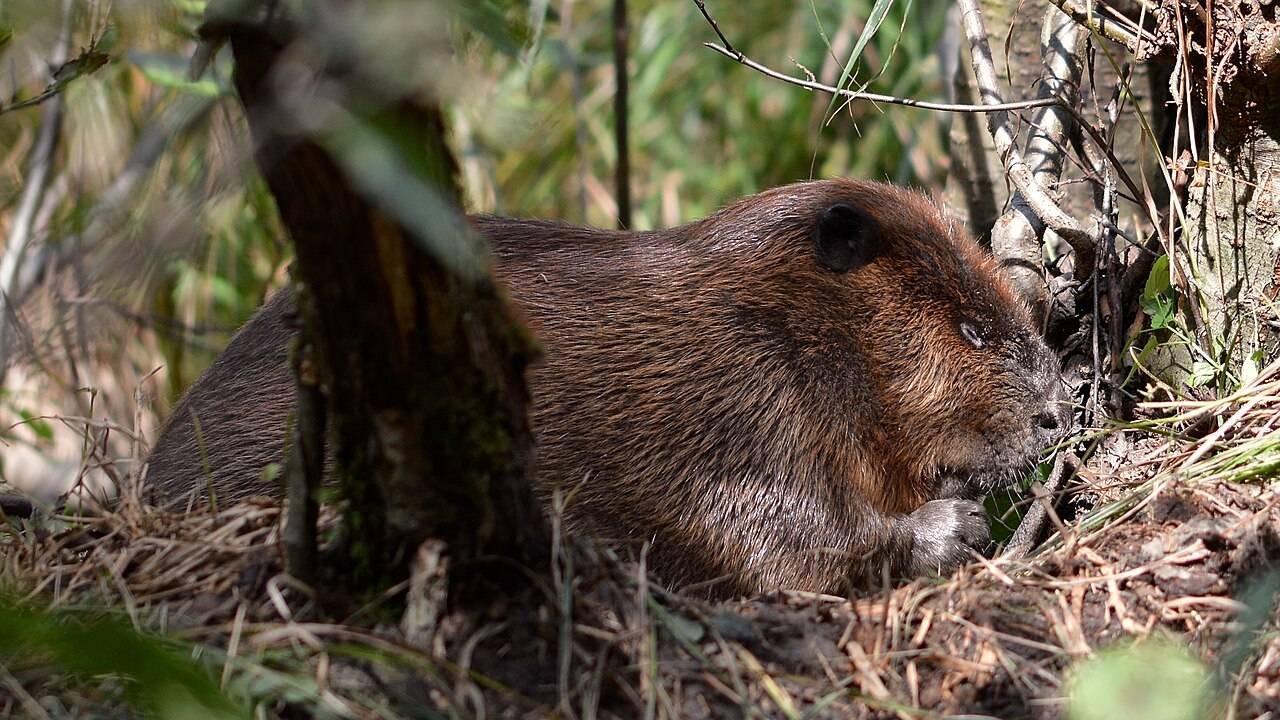
- The beaver has been Canada’s official national animal since 1975 — and honestly it earned it centuries earlier, since the fur trade built the country’s first economy.
- The world’s largest beaver dam sits in Wood Buffalo National Park: about 850 metres long, spotted on satellite imagery in 2007, and so massive it’s visible from space. Generations of beavers built it; one ecologist found it by accident on Google Earth. → Parks Canada — Wood Buffalo National Park
- About six in ten of the world’s polar bears live in Canada. Churchill, Manitoba — pin 7 on the map — is the famous viewing town, where the bears gather each autumn waiting for Hudson Bay to freeze.
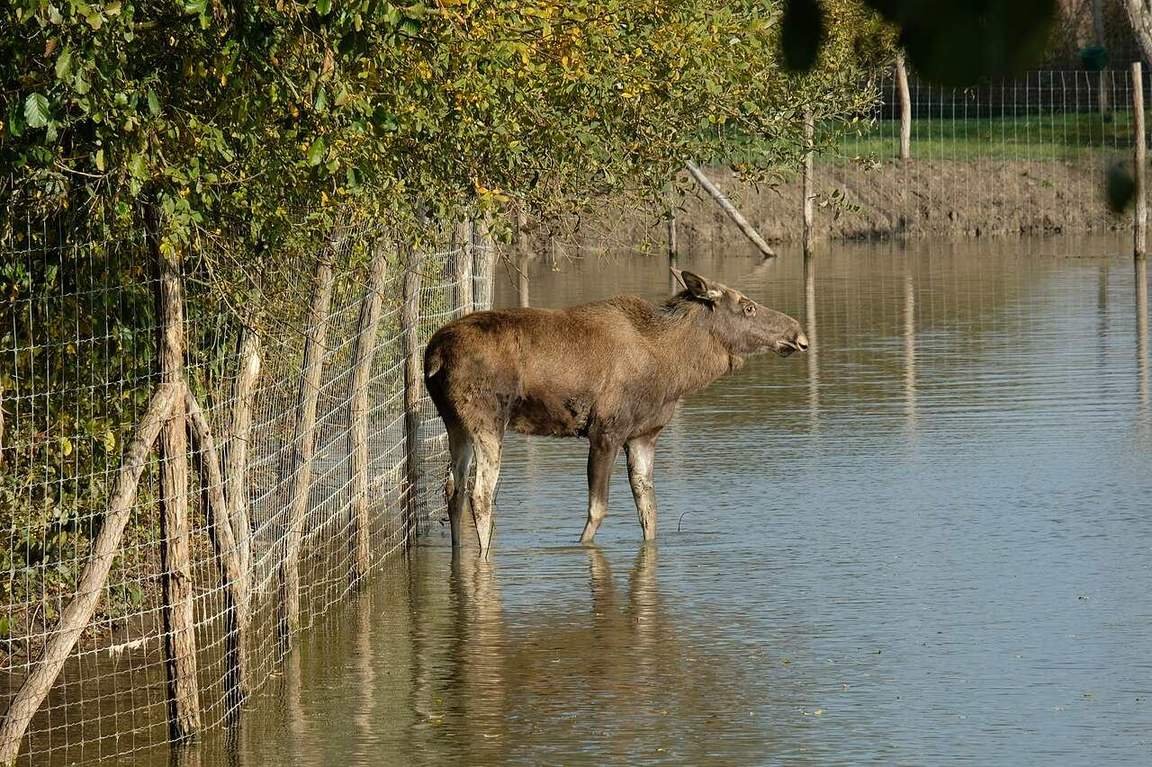
- A bull moose can stand 2.1 metres at the shoulder and weigh 700 kg — the largest member of the deer family, and far less cuddly than the cartoons suggest. Give them serious distance on the road.
- Narwhals — the “unicorns of the sea” — live in Canada’s Arctic waters. The tusk is actually a tooth, and it can grow over 3 metres long.
- Every spring, tens of thousands of red-sided garter snakes pour out of the limestone dens at Narcisse, Manitoba — the largest snake gathering on Earth, all of them completely harmless and mostly interested in each other.
- A polar bear’s fur isn’t white at all — each hair is a transparent, hollow tube that scatters light. The skin underneath is black, soaking up what little Arctic sun there is.
- Thousands of beluga whales summer in Hudson Bay near Churchill — the “canaries of the sea,” so chatty you can hear them through a boat hull.
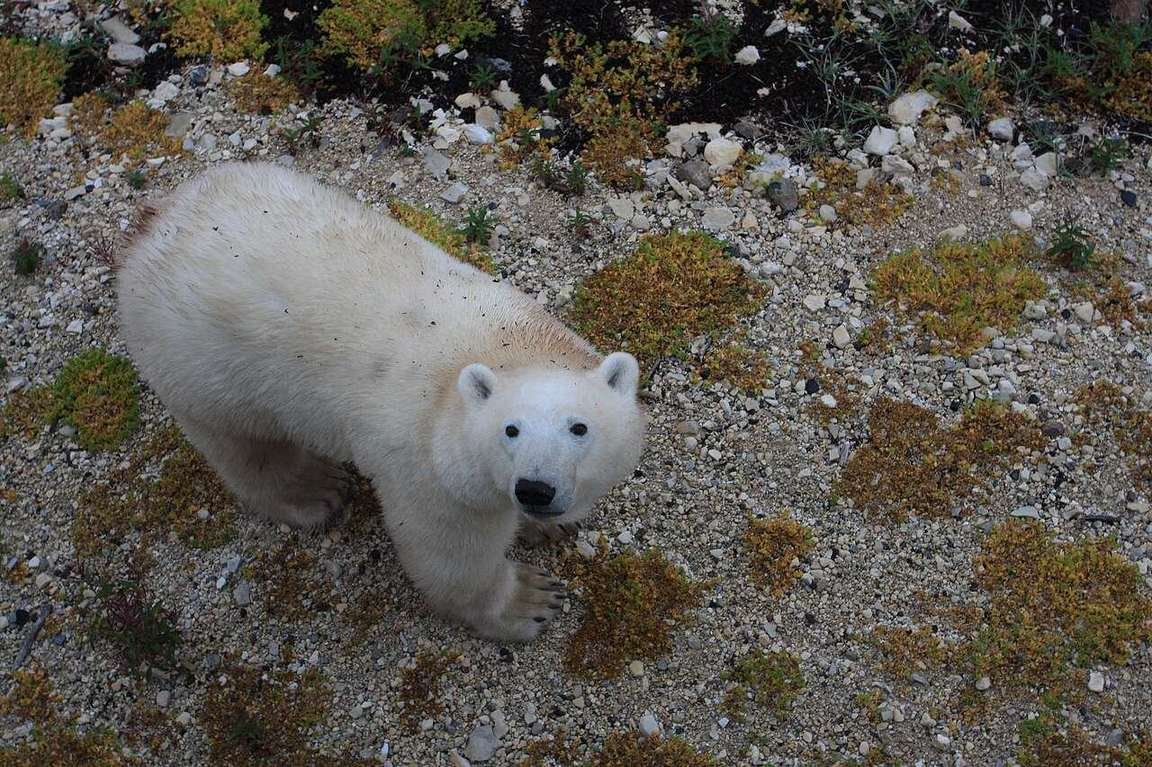
The wildlife here is genuinely wild. Moose injure more people than bears most years (usually on roads at dusk — drive carefully in moose country), and polar bears are not photo props: Churchill runs a Polar Bear Alert program for a reason. Admire from the buggy, the platform, or very far away.
Weird & wonderful: only in Canada
This is the section that started as bar trivia. A ranger at Head-Smashed-In Buffalo Jump told me the story behind fact #20 while we stood on the cliff edge — I laughed, then immediately wrote it down.
- There’s a real town in Newfoundland called Dildo — and in 2019, Jimmy Kimmel became its honorary mayor after campaigning for the job on his show. The town leaned all the way in, including a Hollywood-style sign.
- The northern Ontario town of Swastika refused to change its name during WWII — it was named decades earlier after the Sanskrit symbol of good luck, long before the symbol was stolen.
- Head-Smashed-In Buffalo Jump is named for a Blackfoot legend: a young brave watched a bison hunt from beneath a ledge and was crushed when the herd came over the cliff. The UNESCO site’s interpretive centre tells the full story, and it’s worth the stop.
- Santa’s official address is Santa Claus, North Pole, H0H 0H0, Canada — and Canada Post volunteers have answered every letter since 1982: more than a million a year, in 30+ languages, no stamp required. My uncle was one of the “postal elves,” and I double-checked his stories on Canada Post’s own pages — all true.
- The Quebec town of Asbestos renamed itself Val-des-Sources in 2020 — for reasons that need no explaining.
- “Eh” is a legitimate word — it’s in the Canadian Oxford Dictionary. My first week travelling in Ontario, I was convinced everyone was asking me questions. They were not.

- In Ontario, saying “sorry” can’t be used against you in court — the 2009 Apology Act made apologies inadmissible as admissions of liability. The stereotype is now legislation.
- Northwest Territories licence plates are shaped like polar bears — the only shaped plates in Canada, and the best souvenir you can’t buy.
- The Big Nickel in Sudbury is a 9-metre replica of a 1951 Canadian nickel, built in 1964 — the world’s largest coin, and a completely unironic roadside attraction. Do not skip it.


A Parks Canada interpreter at Head-Smashed-In told me the buffalo jump’s best hour is late afternoon, when the light rakes across the cliff face and the tour buses have left. You’ll have the 6,000-year-old hunting story — and the prairie wind — mostly to yourself.
History: older than it looks
Canada feels young — the flag, the anthem, the whole Confederation project — but the history underneath isn’t. Vikings beat everyone here by half a millennium, and the country’s first national park predates the Eiffel Tower’s paint job.
- Banff, established in 1885, was Canada’s first national park — and the third national park in the world, after Yellowstone (1872) and Australia’s Royal National Park (1879). My 2-day Banff itinerary covers the highlights.
- Vikings landed at L’Anse aux Meadows, Newfoundland around the year 1000 — about 500 years before Columbus sailed. It’s the only confirmed Norse settlement in North America.
- Canada didn’t get its own flag until 1965. The maple leaf flag only turned 60 in 2025 — younger than most of the people who salute it.
- The Stanley Cup (1893) is the oldest professional sports trophy in North America — older than the World Series trophy, the Grey Cup and all of them.
- Lacrosse — not hockey — is Canada’s official national summer sport; hockey is the national winter sport. Parliament settled it with the National Sports of Canada Act in 1994, and hockey fans have been mildly annoyed ever since.
- Newfoundland was the last province to join Canada — in 1949, after two referendums. It was its own dominion first, which is why Newfoundlanders still feel (correctly) like a country within a country.
- Alexander Graham Bell placed Canada’s first long-distance call in 1876 — from Brantford to Paris, Ontario. Yes, there’s a Paris in Ontario, and yes, that’s its own fun fact.
Food & drink: bring an appetite
I ate my first real poutine at 1 a.m. at a casse-croûte outside Quebec City, standing in a parking lot in October, the curds squeaking exactly the way they’re supposed to. Canada’s food facts are the ones that start arguments at dinner parties.
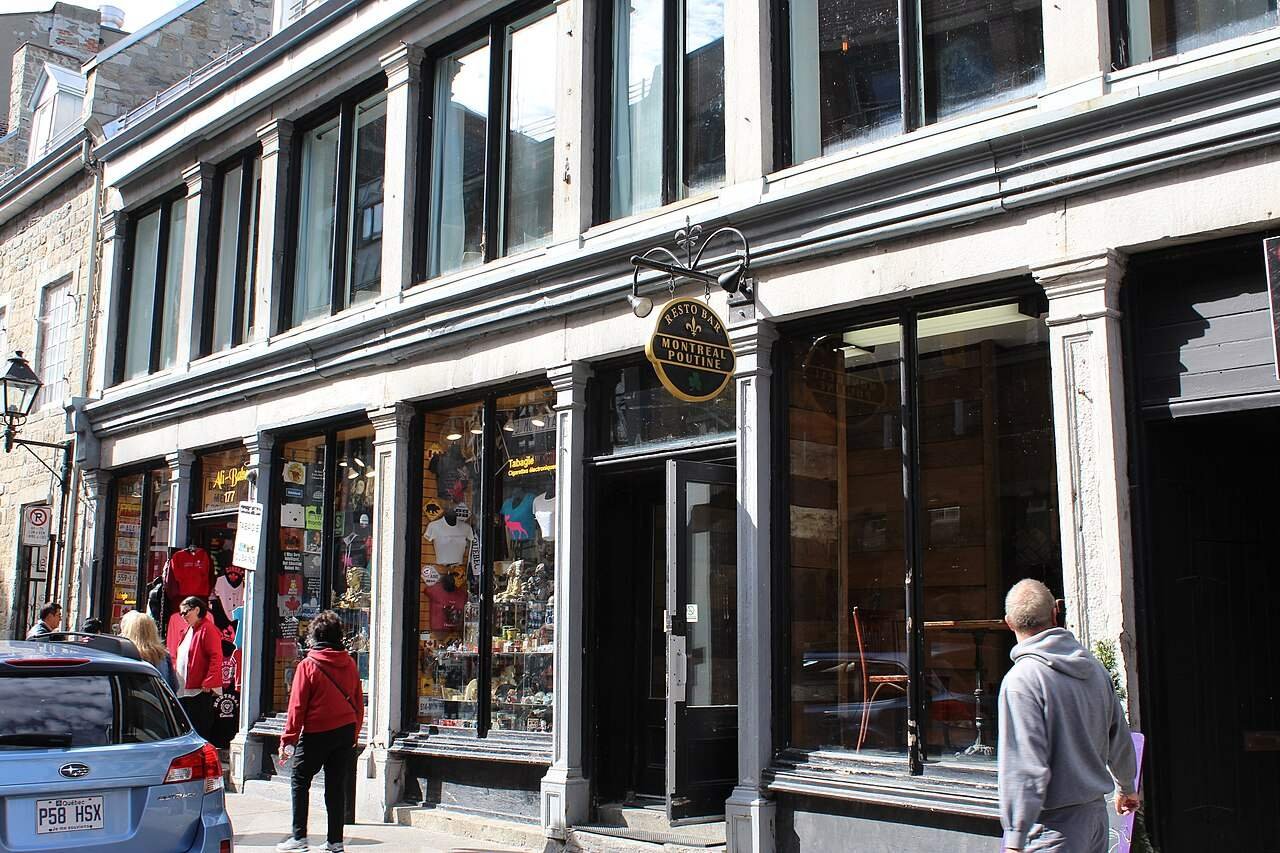
- Poutine was invented in rural Quebec in the 1950s — and Warwick and Drummondville still argue over which town did it first. Fries, fresh cheese curds, hot gravy: that’s the whole holy trinity. Taste-test your way through my best poutine in Montreal guide.
- Hawaiian pizza was invented in Chatham, Ontario in 1962 by Sam Panopoulos. Pineapple on pizza: a Canadian controversy we exported to the entire world. You’re welcome / I’m sorry.
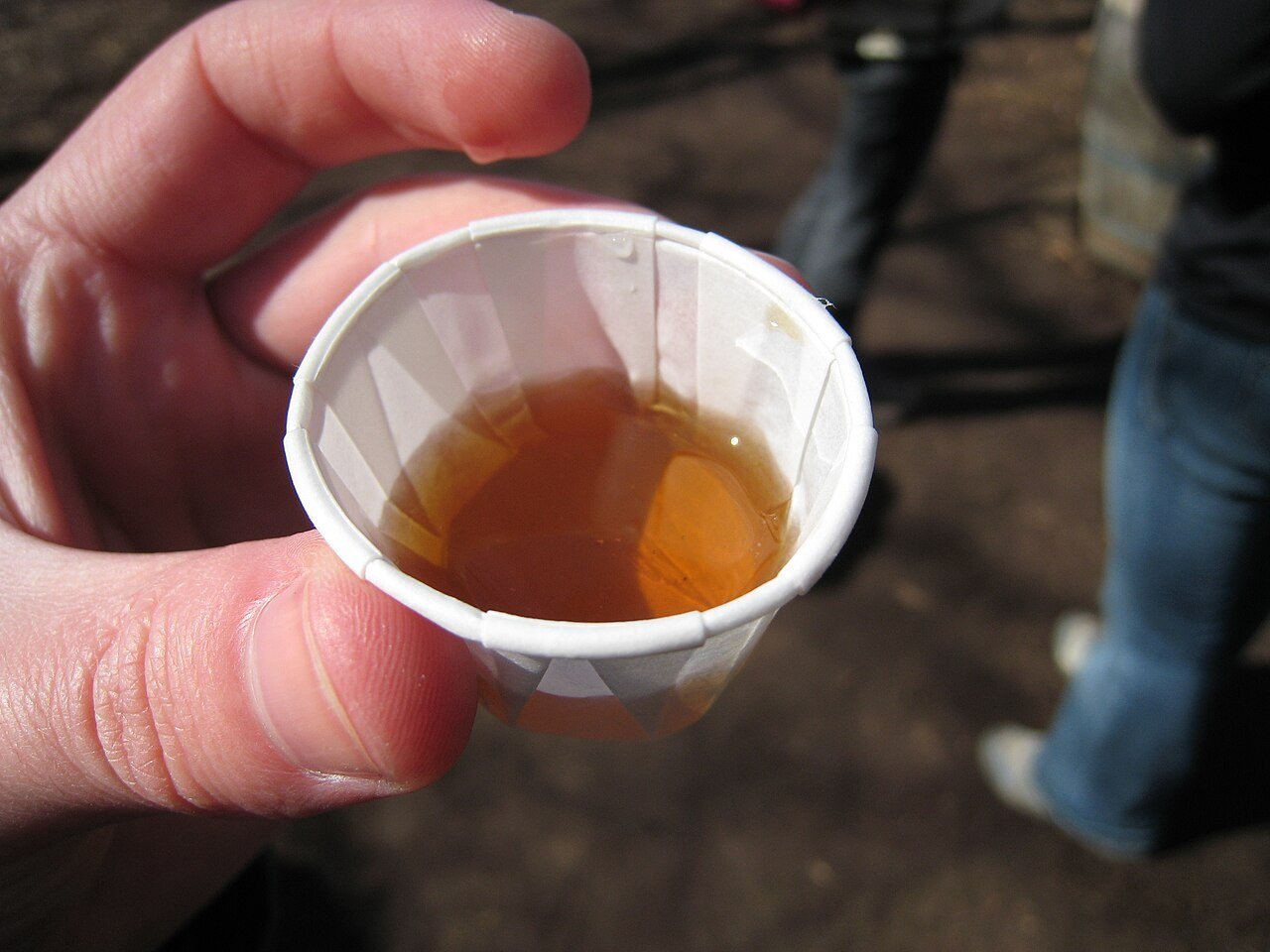
- Canada produces around three-quarters of the world’s maple syrup — and Quebec makes about 90% of Canada’s share. It is not a condiment here; it’s an industry.
- Quebec keeps a Global Strategic Maple Syrup Reserve — a real stockpile in Laurierville (pin 8 on the map), famously robbed of nearly $19 million of syrup in 2011–12. The Great Canadian Maple Syrup Heist is the most Canadian crime ever committed.
- The Caesar — Clamato, vodka, Worcestershire, celery-salt rim — was invented in Calgary in 1969 and is basically Canada’s national cocktail. Order one on a patio and you’ll fit right in.
- Peanut butter was first patented by Montreal pharmacist Marcellus Gilmore Edson in 1884. Your sandwich has a Canadian passport.
- Nanaimo bars are named after Nanaimo, British Columbia — and the city maintains an official Nanaimo Bar Trail with dozens of variations. I’ve done four stops. Worth every penny.
Culture & people: sorry, not sorry
Canadians are famously polite, constitutionally bilingual-ish, and self-deprecating about both. The politeness is real, the bilingualism is law, and the self-deprecation is a competitive sport.
- The $1 coin shows a loon, so Canadians call it the “loonie” — and the $2 coin naturally became the “toonie.” The currency has nicknames; the nicknames have merchandise.
- About one in five Canadians speaks French as a mother tongue. Canada is officially bilingual, and Québec is where the French-language culture runs deepest — start with things to do in Montreal if you’re curious.
- Nearly half of Toronto’s residents were born outside Canada — it’s one of the most multicultural cities on Earth. My Toronto travel guide is the best place to start exploring it.
- Canadians eat more Kraft Dinner per capita than any other nation — about 55% more than Americans. It’s the unofficial national dish, and no, we’re not embarrassed.
- “O Canada” only became the official national anthem in 1980. The French version dates to 1880 — a full century of singing it before it counted.
- In Ontario, Quebec and the Maritimes, milk comes in bags — three sealed pouches inside one bigger bag, poured with a special pitcher. Visitors stare. Canadians stare back, confused by the staring.
- The Mounties were founded in 1873 as the North-West Mounted Police. The red serge, the Musical Ride, the whole icon — it all started as a frontier police force.
Winter: the season that built the country
Fair warning: this section is cold. Canada does winter the way other countries do summer — as a full-contact national identity. I’ve skated the Rideau Canal with numb toes and a huge grin, and I’d do it again tomorrow.
- The coldest temperature ever recorded in Canada: −63°C in Snag, Yukon, on February 3, 1957. At that temperature, exposed skin freezes in under a minute. Respect the number.
- Churchill has a real polar bear jail — the Polar Bear Holding Facility holds bears that wander into town until Hudson Bay freezes over and they can go back to hunting seals. Repeat offenders get extra time. My Canada in November guide covers polar bear season.
- Canada is the world’s largest producer of icewine — grapes left to freeze on the vine, picked at −8°C or colder, pressed into something miraculous. Niagara and the Okanagan lead the way.
- Quebec law requires winter tires from December 1 to March 15 — the only province with a province-wide mandate. If you’re driving in winter, this is the standard to copy everywhere else.
Ottawa’s Rideau Canal freezes into the world’s largest skating rink every winter — 7.8 km of it. Go on a weekday morning, rent skates at the canal, and buy a BeaverTail pastry from a stand on the ice. Trust me on this one: it’s the most Canadian hour you can spend.
What does a Canada trip cost?
Reading 51 facts is free; seeing the country is not. These are realistic per-person daily numbers for a Canada-wide trip — pick your style, set your days, and the calculator does the rest (accommodation excluded — see the table).
Budget calculator
Per person, in Canadian dollars. Excludes accommodation.
Budget ≈ $95/day · Mid-range ≈ $165/day · Luxury ≈ $290/day. Fares and prices checked October 2026.
| Expense (per person / day) | Budget | Mid-range | Luxury |
|---|---|---|---|
| Accommodation | $50 (hostel dorm) | $190 (city hotel) | $380+ (upscale suite) |
| Food & drink | $40 | $70 | $130 |
| Sights (parks passes, museums…) | $15 | $30 | $50 |
| Getting around (flights, VIA Rail, transit) | $30 | $45 | $90 |
| Coffee, treats & souvenirs | $10 | $20 | $35 |
| Daily total | ~$145 | ~$355 | ~$685 |
Canada is a fly-and-train country: distances are too big to drive everywhere, so budget for at least one domestic flight and one long VIA Rail leg. My Canada train travel guide breaks down the routes worth the window seat.
FAQs about fun facts and visiting Canada
Do Canadians really say “eh”?
Yes — it’s in the Canadian Oxford Dictionary (fact #23), and you’ll hear it constantly in Ontario and the Prairies, usually to turn a statement into a friendly check-in: “Nice day, eh?” It’s less common among younger city dwellers, who seem to be phasing it out. Say it back and you’ll get a grin.
Is Canada bigger than the United States?
By total area, yes: Canada’s ~9.98 million km² beats the US’s ~9.83 million km² (fact #1). By land area alone, the US is actually a touch bigger — Canada’s total includes a lot of lakes and Arctic water. Either way, both are enormous, and Canada has about one-ninth the people.
Why does Santa’s address say H0H 0H0?
Because it reads as “ho ho ho” — Santa’s laugh. Canada Post created the special postal code for its Santa letter program (fact #21): address your letter to Santa Claus, North Pole, H0H 0H0, Canada, no stamp needed, and volunteers will write back in 30+ languages. Include a return address or the elves can’t reply.
Does it snow in Canada all year?
No — and Canadians are tired of this question (affectionately). Summers regularly hit 30°C+ in Toronto, Montreal and the Prairies, and the Okanagan can top 40°C. Winter is real — see facts #48–51 — but it’s a season, not a permanent condition. Visit June through September for the classic experience.
Are Canada’s wild animals dangerous?
They deserve respect, not fear. Moose are the biggest road hazard (drive carefully at dusk), bears need proper food storage and distance in the parks, and polar bears are genuinely dangerous — which is why Churchill has a bear jail (fact #49). The snakes at Narcisse (fact #15) are harmless garter snakes. Standard rules: keep your distance, never feed wildlife, and you’ll be fine.
Do I need a visa to visit Canada?
It depends on your passport. Many nationalities — including the US, UK, EU, Australia and Japan — are visa-exempt but need an eTA (Electronic Travel Authorization) if arriving by air. Others need a visitor visa. Check the official Canada.ca visitor page before you book: requirements change, and airlines will deny boarding without the right document.
Keep exploring
One list of facts is just the start — here’s where I’d go next:
- Best poutine in Montreal — taste fact #34 for yourself, at the source
- Canada in November — polar bear season in Churchill (facts #12 and #49)
- 2-day Banff itinerary — Canada’s first national park (fact #27)
- Toronto travel guide — the multicultural heavyweight (fact #43)
- Canada train travel guide — see the country the slow way, window seat guaranteed
- Where to see the northern lights in Canada — Churchill doubles as an aurora hotspot
You’ve got this. Fifty-one facts, one enormous country — and now you’re the most interesting person at the dinner party.