
Last updated: October 3, 2026
The short answer
- Best overall: Mid-September to mid-October — warm ocean, fewer crowds, and the Cabot Trail’s fall colours at their peak (the 30th Celtic Colours International Festival runs October 9–17, 2026).
- Best for festivals and beaches: July and August — the Royal Nova Scotia International Tattoo (July 1–5, 2026), the TD Halifax Jazz Festival (July 7–12, 2026), and the warmest ocean water of the year.
- Best for budget: May and November — lower hotel and flight prices, though some seasonal attractions will be closed and the weather is a coin toss.
Nova Scotia is the province I plan around other people’s schedules, and here’s the thing: the “best time” genuinely changes with what you want. I’ll be honest — I once planned an entire June trip around beach days and sunshine, showed up at Peggy’s Cove in a sundress, and spent two days inside a fog bank. The Atlantic runs the show here, and it does not care about your color-coded itinerary. (Ask me how I learned that the hard way.)
So this is my seasonal guide, written from four trips’ worth of wins and soggy mistakes, with 2026 festival dates I double-checked myself. Choose your month by the experience you want most — the province delivers all of them, just not all at once.
Nova Scotia weather by month: what to expect
The ocean moderates everything: winters are milder than the rest of Canada, spring is late, and warmth lingers into fall. Halifax averages (highs/lows in °C, with typical rainy days) look like this:
| Month | Avg high | Avg low | Rainy days |
|---|---|---|---|
| Jan | 0 | -8 | ~10 |
| Feb | 0 | -8 | ~11 |
| Mar | 4 | -4 | ~13 |
| Apr | 9 | 1 | ~14 |
| May | 14 | 6 | ~16 |
| Jun | 20 | 11 | ~16 |
| Jul | 23 | 14 | ~16 |
| Aug | 23 | 15 | ~15 |
| Sep | 19 | 12 | ~13 |
| Oct | 13 | 6 | ~11 |
| Nov | 8 | 2 | ~10 |
| Dec | 3 | -4 | ~9 |
A few maritime quirks to plan around:
- June Gloom is real. The Atlantic warms slowly, so early June brings damp, foggy mornings on the coast. I showed up on a June 10th once expecting summer and got a wool-sweater weather lesson. If beach weather is your non-negotiable, aim for July 15 onward.
- The fog factor. It can be socked in at the coast while the inland Annapolis Valley is sunny and five degrees warmer — the North Mountain blocks the Bay of Fundy’s cold winds. Check the local forecast for the actual town you’re visiting, not a provincial average. I now have a whole spreadsheet tab for this (I know, I know).
- September is the sweet spot. The ocean has finally warmed up (it’s at its swimmable-ish best in August and September), the summer humidity drops out, and crowds thin. Trust me on this one: late August to late September is Nova Scotia’s best-kept secret.
Fall (mid-September to October): the best time to visit Nova Scotia
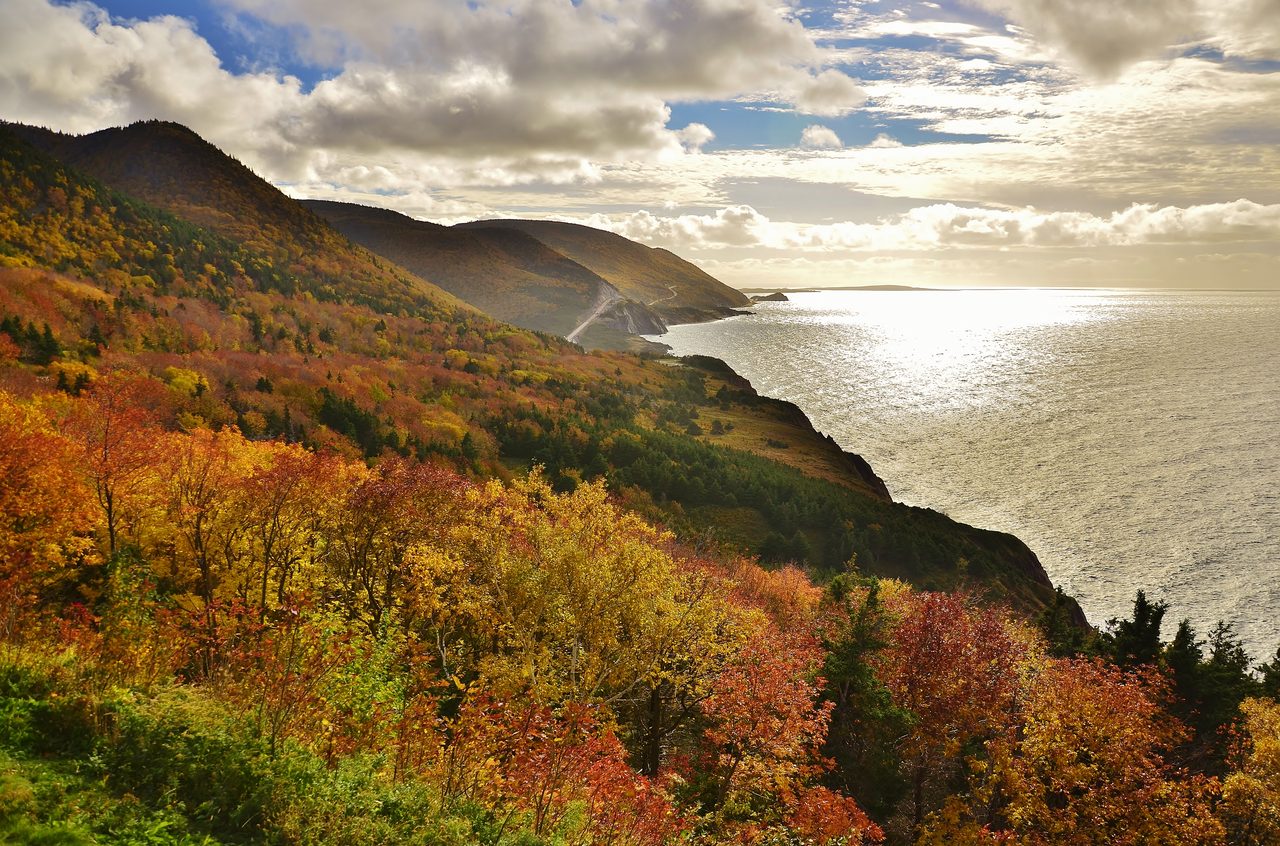
If I had to pick one season for a first trip, this is it — and I’m not the only one who thinks so, which is the catch. The Cape Breton Highlands ignite in red maple and gold birch, and the peak window is tight: roughly October 1–15, when the highlands blaze first at elevation and the colour spills down to the coast by the second week. By the third week, the wind usually moves in and it’s over.
Practical timing notes:
- Celtic Colours International Festival — October 9–17, 2026, the 30th anniversary edition with 52 concerts across 36 Cape Breton communities. I double-checked the dates on the festival’s official site before writing this; tickets sell out for the big shows, so book early. → Celtic Colours — official site & tickets
- Drive the Cabot Trail counter-clockwise. I did it clockwise the first time and spent 300 km craning over the passenger seat. Counter-clockwise (Baddeck → St. Ann’s → Ingonish → Pleasant Bay → Chéticamp) keeps the ocean on your right for the dramatic western stretch of coastline. Game-changer.
- Book your bed first, plan second. Ingonish and Chéticamp rooms vanish during festival week — I once waited until August and paid double in Baddeck. Rooms first, itinerary second. That’s the whole pro tip.
- The trail itself is free to drive; stopping inside Cape Breton Highlands National Park needs a Parks Canada pass, so check current fees on the official Parks Canada site before you go.
See our Cape Breton in Fall: The Ultimate 2026 Autumn Travel Guide for a full foliage deep-dive.
Summer (late June to August): peak season for festivals, beaches, and whales
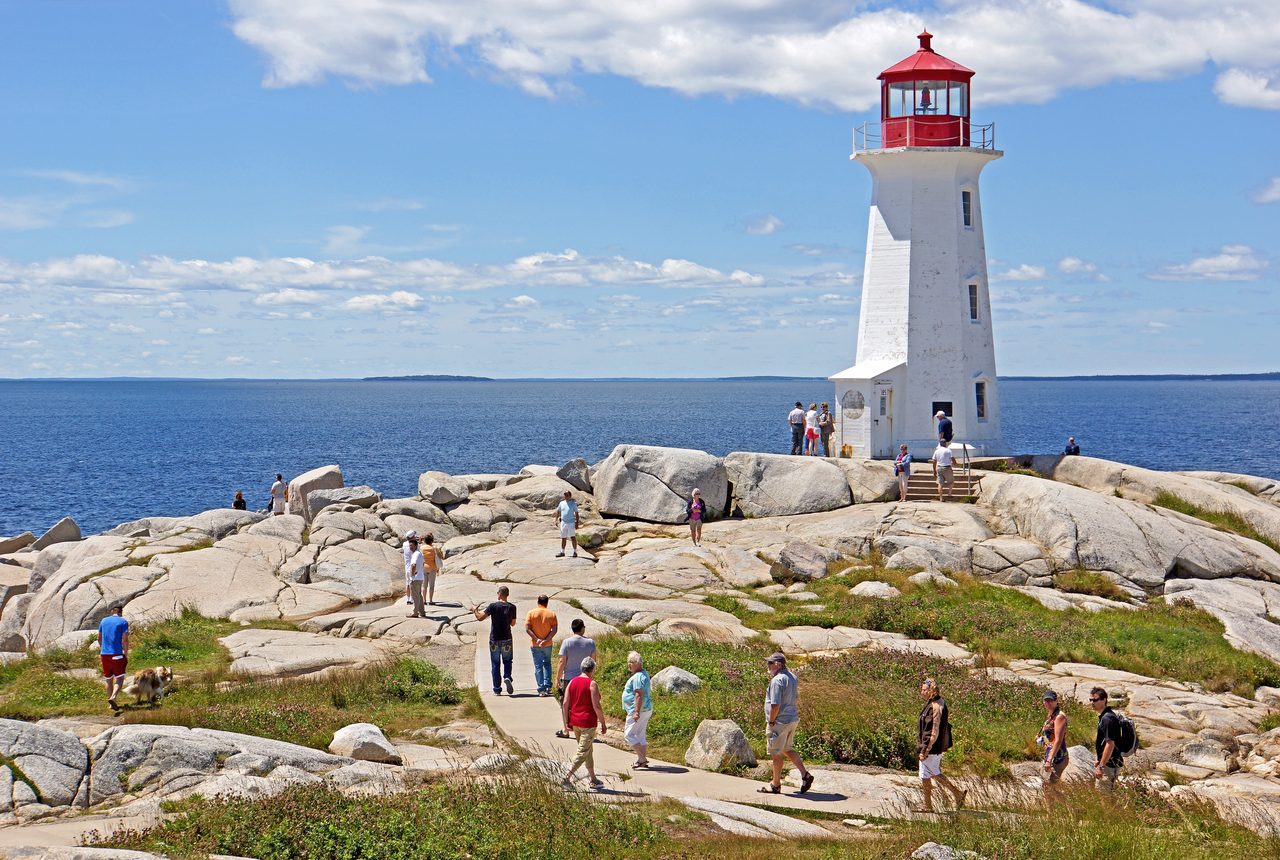
This is peak season, full stop: everything is open, the festivals stack up back-to-back, and the ocean is finally brave-able. Fair warning — it’s also the most expensive and most crowded. July through August hotels in Halifax run at their highest rates, and popular restaurants book out.
What’s on in 2026:
- Royal Nova Scotia International Tattoo — July 1–5, 2026, at the Scotiabank Centre in Halifax. Military bands, pipes and drums, acrobats, highland dancers; tickets run $20–$100, and kids 18 and under are free. I caught the Sunday matinee and it was the best $40-ish family-afternoon deal in the province. → Royal Nova Scotia International Tattoo — official site
- TD Halifax Jazz Festival — July 7–12, 2026, its 40th anniversary edition, mostly on the waterfront with the TD Main Stage at 1521 Lower Water Street. Free daytime programming plus ticketed evening headliners — do not skip the free 5–7 PM early-evening stages if you’re budget-watching. → Halifax Jazz Festival — official site
- Shakespeare by the Sea — July 4 to August 29, 2026, in Point Pleasant Park (2026 season: The Wizard of Oz). Theatre under the stars by the harbour. Bring a blanket.

Halifax itself is at its liveliest in summer — the boardwalk is buzzing, the harbour tours are running, and patios are in full swing. If you’re staying over, see our 3-day Halifax itinerary and the best time to visit Halifax companion guide.
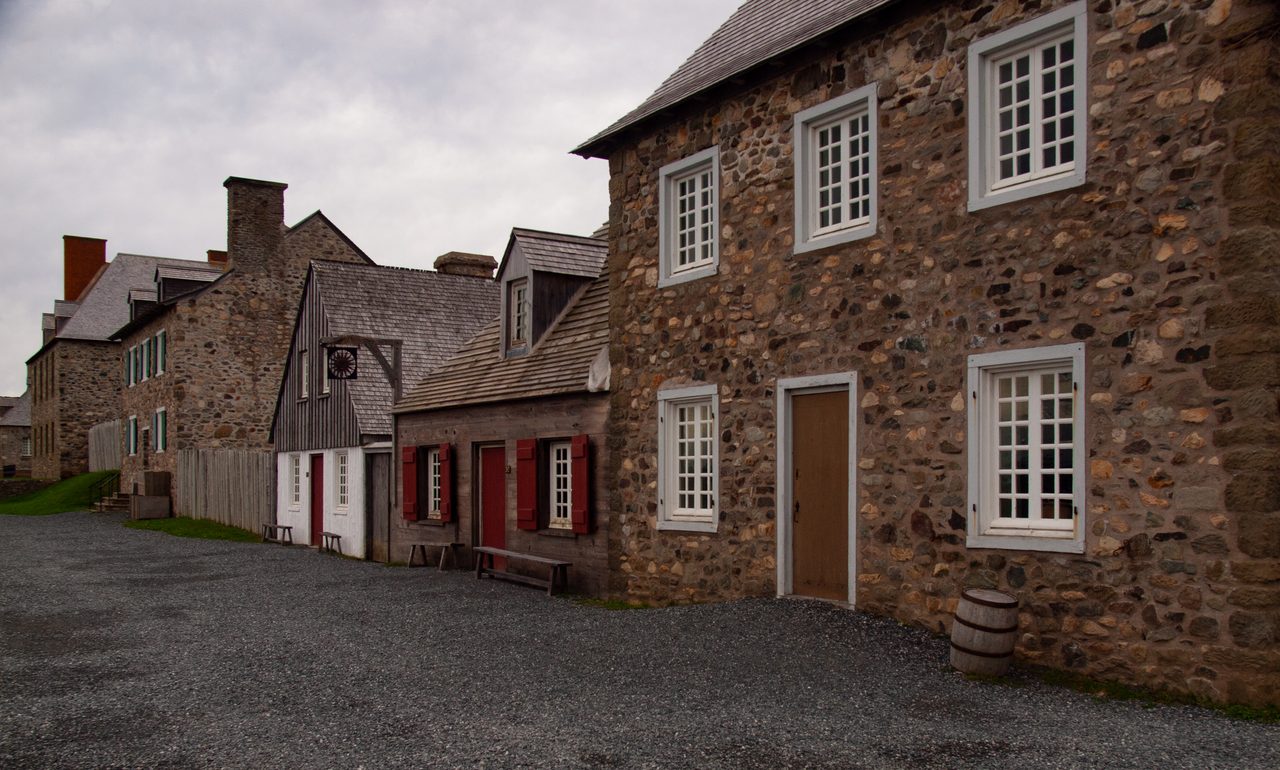
And don’t sleep on the Fortress of Louisbourg on Cape Breton Island — a full 18th-century French fortified town brought back to life with costumed interpreters, operating its full season from June through early October (I verified the season window on the official Parks Canada page before my last visit — confirm current dates before you go). It’s one of the best history experiences in Atlantic Canada, and kids are weirdly into the rum-tasting demonstrations. (The rum is for adults, obviously. The kids are into the cannons.)
Whale watching: June to October
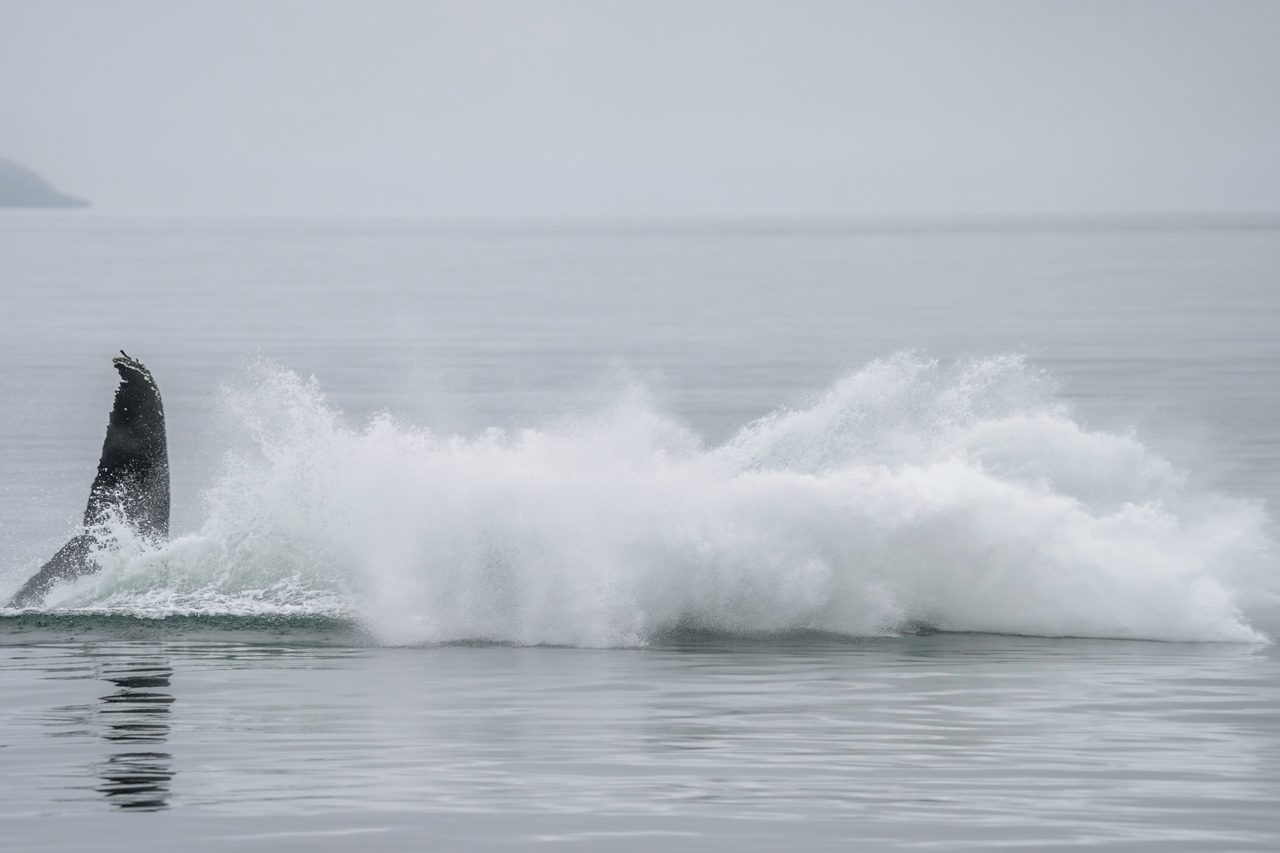
The whale watching season runs from late May through October, with peak sightings from June to September — and I’ll be honest, the humpback that breached forty metres from my boat off Brier Island is the single most jaw-dropping wildlife moment of my travel life. A guide on board told me the Bay of Fundy’s nutrient-rich tidal waters are what draw the whales in, and the concentration of species here is genuinely special: minkes and finbacks arrive first, humpbacks are the summer showstoppers, and pilot whales travel in pods through summer.
Where to go:
- Bay of Fundy — Digby Neck, Tiverton, and Brier Island: the classic. Tours run June to October; July and August give the best odds, while June and September are quieter with excellent wildlife. → Tourism Nova Scotia — where to go whale watching
- Cape Breton — Pleasant Bay, Chéticamp, Ingonish: combine it with a Cabot Trail drive. Minke and pilot whales, with humpbacks in summer.
Pro tip from my own soggy lesson: book your whale tour for your FIRST full day in the area, not your last. My first Fundy sailing got cancelled for wind — and because I’d built in buffer days, I just went the next morning. Do not skip the motion-sickness medication if you’re at all prone; the Bay of Fundy lives up to its reputation.
The Bay of Fundy tides: plan around the water
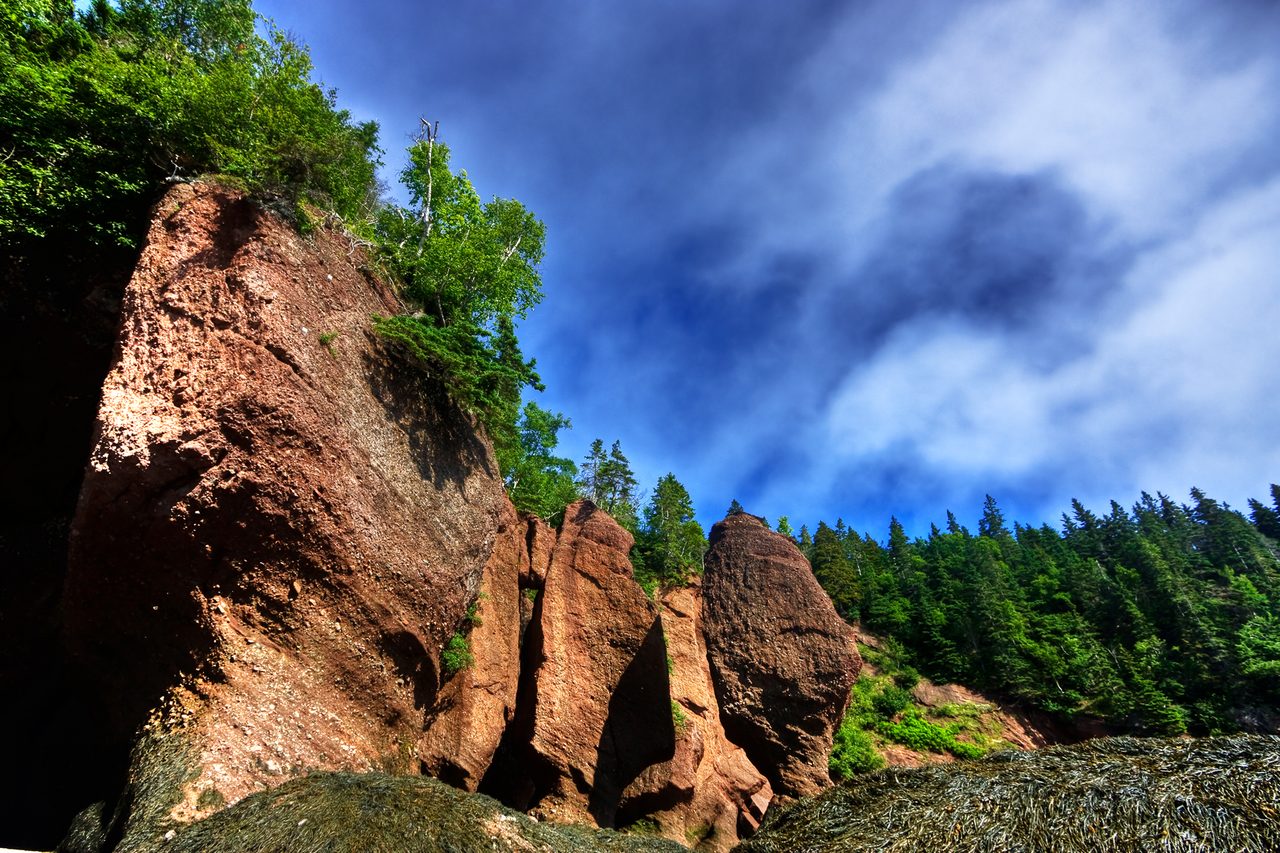
The Bay of Fundy has the highest tides on Earth — up to 16 metres of vertical swing — and Nova Scotia’s Fundy shore is the place to watch it happen. Here’s the thing most people miss: the tides matter more than the season. Arrive at the wrong time and you’ll stare at a mudflat wondering where the ocean went.
- Burntcoat Head Park (on the Minas Basin) marks the site of the world’s highest recorded tides — walk the ocean floor at low tide, then watch it fill 16 metres by high tide. I timed it once (obviously) and nearly mistimed it twice. Check a tide chart for the day — the visitor centre posts them.
- Tidal bore rafting on the Shubenacadie River near Maitland: when the incoming Fundy tide collides with the river’s current, you get a churning wave you can raft upriver on. Trips run roughly May to October. You will get soaked; that’s the point.
- Hall’s Harbour on the Fundy shore for lobster and the spectacle of fishing boats sitting on the harbour floor at low tide.
→ Tourism Nova Scotia — 8 ways to experience the Bay of Fundy
Lobster seasons: when to eat the freshest catch
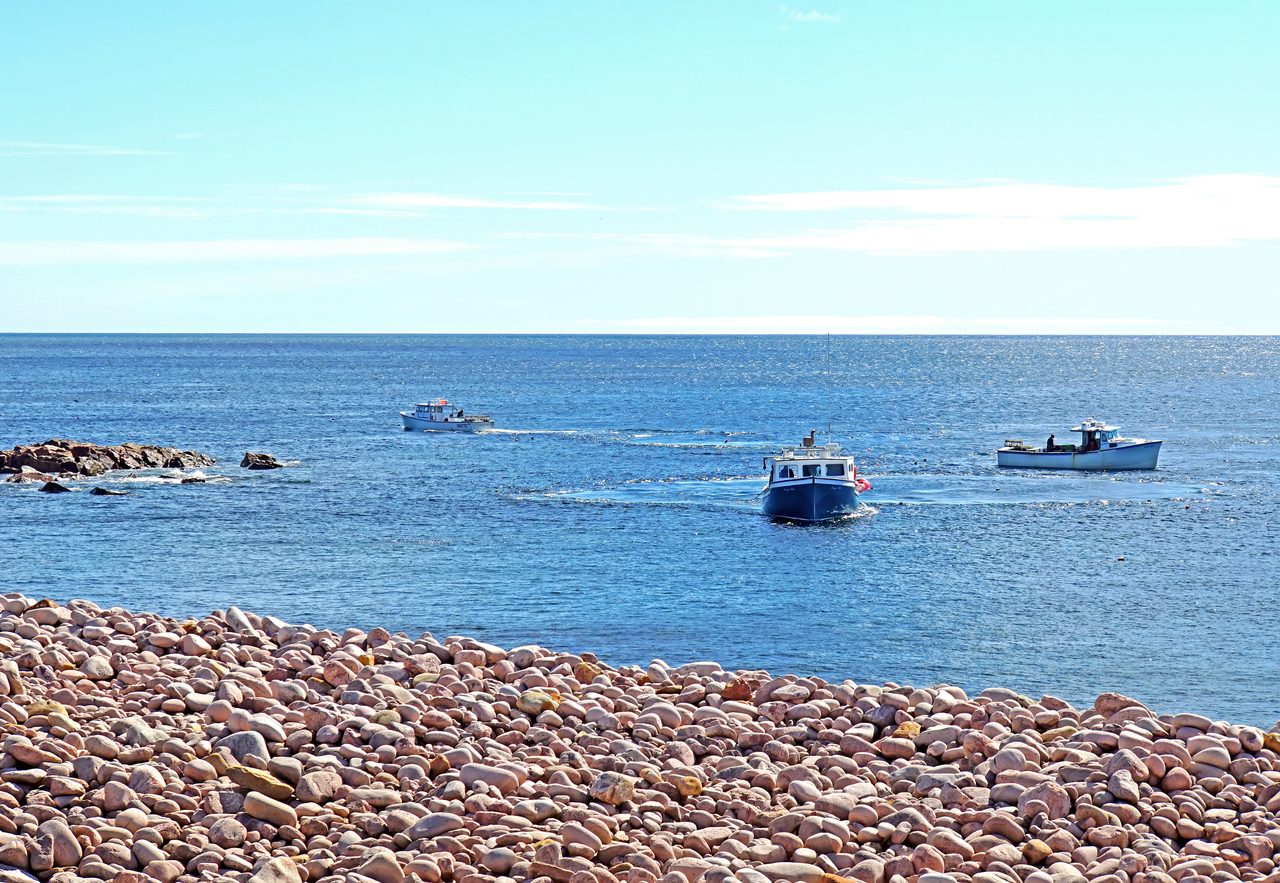
Nova Scotia’s lobster calendar is wonderfully confusing — different fishing areas open at different times, which means there’s almost always fresh local lobster somewhere. This is the breakdown I keep on my phone:
| Region | Season | Where to eat it |
|---|---|---|
| Southwest NS (Shelburne, Yarmouth, Digby) | Late Nov – May 31 (winter fishery) | Halifax restaurants year-round; Digby scallop-and-lobster towns |
| Eastern Shore & Halifax | Mid-Apr – late Jun | Halifax, Eastern Shore fishing villages — best for May/June visitors |
| Cape Breton | ~Mid-May – mid-Jul | Chéticamp, Ingonish, Baddeck — dockside along the Cabot Trail |
| North Shore / Gulf of St. Lawrence | Aug – early Oct | Pictou, Antigonish — pairs perfectly with fall road trips |
The takeaway: visit in May or June and you get the best shot at fresh Halifax-area lobster; visit in October and the North Shore season is still going. (A server in Chéticamp once told me the boats unloading across the harbour were delivering my dinner. I believed her, and she was right.) In winter, Halifax restaurants still serve southern Nova Scotia lobster from the winter fishery — cold-water lobsters, dense and sweet.
Spring (April to early June): quiet, cheap, and foggy
May is the shoulder-season sleeper: wildflowers, lambs, empty trails, and hotel rates that drop to their lowest of the year. The catch — the ocean is still cold, fog is frequent, and some seasonal restaurants and attractions don’t open until mid-June. I’ve done a May trip and loved the solitude; I’ve also done an April trip and spent half of it indoors. Aim for mid-May at the earliest, and pack for two seasons in one day (layers. Always layers).
Pair it with our 1-day Lunenburg itinerary — the South Shore wakes up beautifully in spring.
Winter (December to March): honest talk
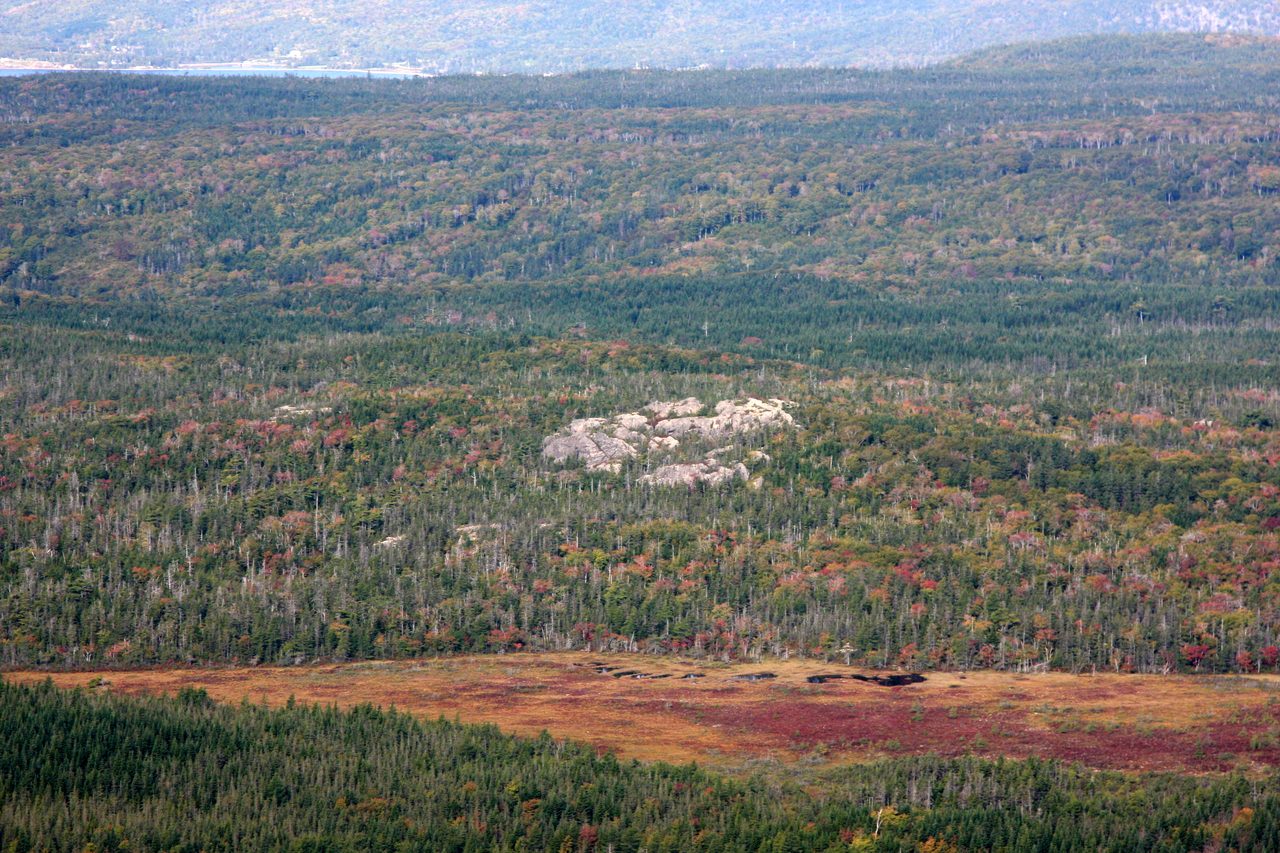
I’ll be honest: winter is not Nova Scotia’s star season. It’s cold (-5 to -15°C in January and February, plus wind), many seasonal attractions and restaurants close, and the Cape Breton Highlands can hold snow into April. But — and it’s a real but — it’s the cheapest time to fly in, Halifax’s pubs and music scene run year-round, the winter lobster fishery means fresh lobster in the city, and you’ll have the dramatic coastlines essentially to yourself. If you’re the kind of traveller who finds empty, moody coastlines romantic (I am), winter has its own stark magic. If you need things open and warm, it doesn’t. Fair warning, given with love.
Best time at a glance
| If you want… | Go in… | Trade-off |
|---|---|---|
| Fall colours + Celtic Colours | Oct 1–15 | Book months ahead; highest fall prices |
| Festivals + beaches + everything open | Jul–Aug | Peak prices and crowds |
| Whale watching | Jun–Sep | July–Aug best odds; book first day, not last |
| Fresh lobster | May–Jun or Oct | Depends on region — check the table above |
| Bay of Fundy tides | Any month — tides are daily | Check a tide chart, not the calendar |
| Budget travel | May or Nov | Some closures; weather is a coin toss |
| Quiet coastlines | Dec–Mar | Cold; seasonal stuff closed |
What does it cost by season?
Sample budget per adult for a 5-day trip, excluding flights (all figures below are rough 2026 estimates marked ~; the two hard numbers are the Tattoo’s $20–100 ticket range):
| Item | Summer (Jul–Aug) | Shoulder (May, Sep–Oct) |
|---|---|---|
| Mid-range hotel, Halifax (per night) | ~$200–350 | ~$120–200 |
| Rental car (per day) | ~$80–130 | ~$60–100 |
| Whale watching tour | ~$65–85 | ~$60–80 |
| Royal NS Tattoo ticket | $20–100 (July only) | n/a |
| Food & drinks (per day) | ~$70–100 | ~$60–90 |
| 5-day total | ~$1,500–2,400 | ~$1,000–1,600 |
Driving the full province? Our Nova Scotia road trip itinerary maps out the complete route with realistic day-by-day pacing.
Practical tips for timing your trip
- Layers, layers, layers. Coastal Nova Scotia can swing 10 degrees between morning fog and afternoon sun. I pack a windbreaker, a fleece, and a swimsuit on every trip, in every season. The swimsuit is optimism; the windbreaker is experience.
- Rent a car. Public transit won’t get you to the Cabot Trail, Digby Neck, or the Fundy shore. Book early for summer — rental fleets in Halifax sell out in July and August, and I once paid a painful premium booking two weeks out. Never again.
- Many attractions are seasonal. The Fortress of Louisbourg, whale tours, and most Cabot Trail restaurants run roughly June through October. If you’re visiting in the shoulder or winter months, confirm opening dates on official sites before you build your itinerary around them.
- Mind the fog when driving. The Cabot Trail in thick fog is genuinely sketchy — if visibility drops, pull into a lookoff and wait it out. The views will still be there in twenty minutes. Probably.
FAQs about the best time to visit Nova Scotia
What is the best month to visit Nova Scotia?
September. The ocean is at its warmest, summer humidity is gone, crowds have thinned, and you still get nearly all summer attractions open — plus early fall colour in the highlands. Early October is a close second if foliage is your priority, but book accommodation well ahead.
When is whale watching season in Nova Scotia?
Late May through October, with peak sightings from June to September. The Bay of Fundy (Digby Neck, Tiverton, Brier Island) and Cape Breton’s west coast (Pleasant Bay, Chéticamp) are the top spots — expect humpback, minke, finback, and pilot whales, with humpbacks most likely in summer. Book your tour for your first full day in case weather forces a reschedule.
When is the best time to see fall colours on the Cabot Trail?
Roughly October 1–15. The highlands turn first at elevation, then the colour spreads down to the coast. The Celtic Colours International Festival (October 9–17, 2026) lands right in the peak window — which is why accommodation on Cape Breton Island books out months ahead for those dates.
When is lobster season in Nova Scotia?
It depends on the region. Southwest Nova Scotia fishes November to May, the Halifax/Eastern Shore area fishes mid-April to late June, Cape Breton fishes roughly mid-May to mid-July, and the North Shore fishes August to early October. May, June, and October give most visitors the best shot at fresh local catch.
Is Nova Scotia worth visiting in winter?
Honestly, only for the right traveller. It’s cold and many seasonal attractions close, but it’s also the cheapest time to visit, Halifax’s pubs and restaurants run year-round, and the winter lobster fishery keeps fresh lobster on city menus. Come for moody, empty coastlines and low prices — not for beach days.
How many days do you need in Nova Scotia?
Five to seven days covers Halifax, the South Shore, and the Bay of Fundy; add three more for the Cabot Trail and Cape Breton Island. Ten days lets you do the full loop without rushing — and with the fog, the tides, and the whales, you’ll want buffer days. Trust me on this one.
2 comments