

- ✓ Peak colour moves north to south and high to low: chase larches in mid-September, maples in the first two weeks of October, southern Ontario in mid-to-late October — one trip can’t catch it all.
- ✓ Pick ONE region and time it right: the table below gives the week-by-week windows from my own October drives, checked against this year’s colour reports.
- ✓ Thanksgiving weekend is peak everything: colour, crowds, prices. Book stays early, start drives at sunrise, and check day-use permits before you go.
Here’s the thing about fall foliage in Canada: it isn’t one trip. It’s a whole calendar. I’ve chased peak colour for five Octobers now — with a spreadsheet, obviously, color-coded by region and week — and the biggest lesson is that the country doesn’t turn at once. The larches in the Rockies are already going gold while the Niagara maples are still stubbornly green. Time it right and you’ll drive through tunnels of scarlet with the windows down; time it wrong and you’ll photograph a lot of handsome bare branches.
So this is the master list: 18 places, coast to coast, ranked the way I’d rank them for a friend with one October. Ontario and Quebec do the heavy lifting (they’re the maple heartland, and they know it), Atlantic Canada adds coastline drama, and the West answers with something completely different — golden larches, which look like autumn borrowed someone else’s trees. A week-by-week timing table up front, a map with my ten anchor pins, then the full rundown. Every peak window below was cross-checked against regional colour reports in October 2026.
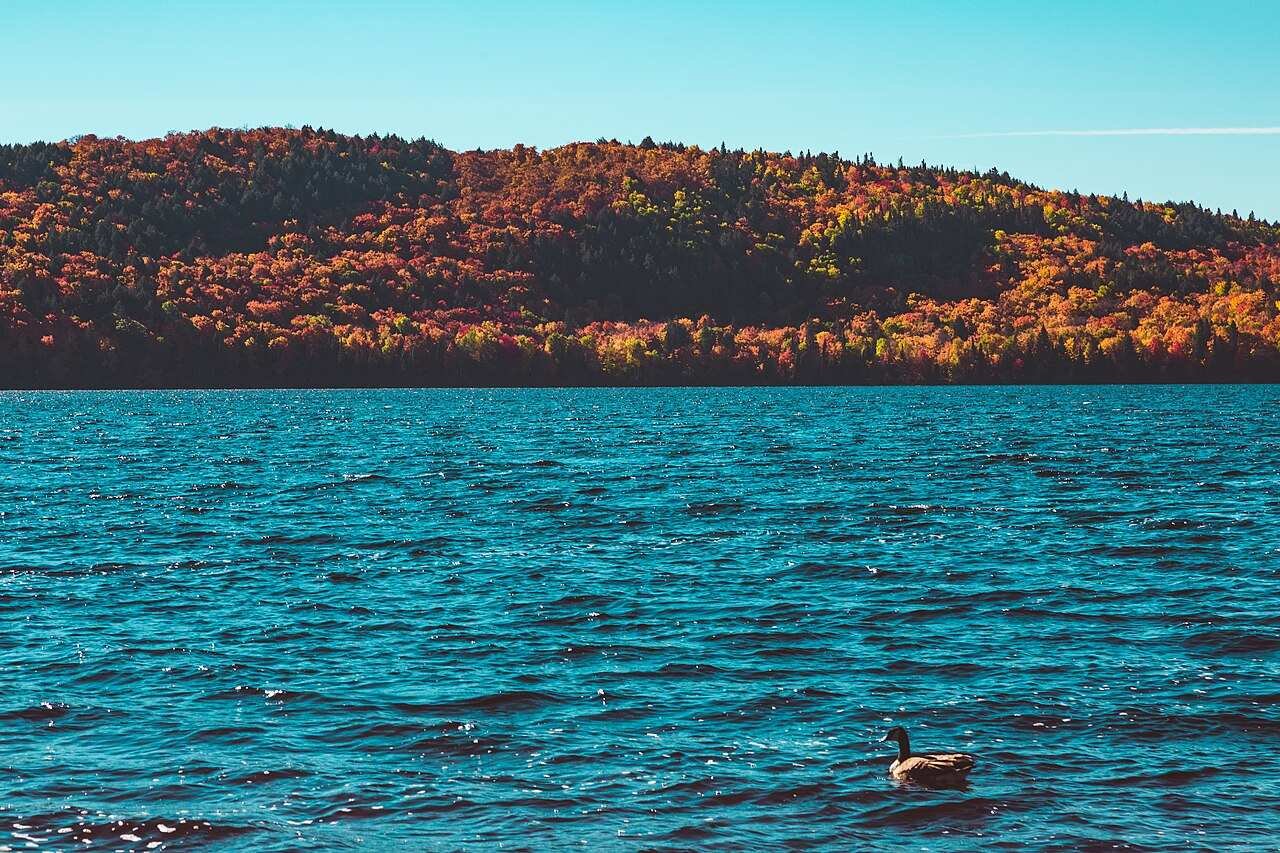
When do the colours peak in Canada?
Canada has no national peak week. Southern Ontario can be just hitting full colour while a high trail in Alberta is already dusted with snow. Here’s the calendar I actually plan from:
| Window | Where’s peaking | What you’ll see |
|---|---|---|
| Mid–late Sept | Rockies alpine zones, Manning Park | Golden larches at their very best |
| Late Sept–early Oct | Agawa Canyon, Laurentians, Mont-Tremblant, Eastern Townships | Sugar maples in full scarlet |
| First 2 weeks of Oct | Algonquin, Muskoka, Gatineau Park, Charlevoix, Cabot Trail, Fundy, Gros Morne | Peak hardwood colour — the classic window |
| Mid–late Oct | Niagara Parkway, Killarney, Okanagan, southern Nova Scotia, PEI | Last call — deep reds and golds |
Cold nights and warm days make the best colour, so an early cold snap usually means a more intense display — and one windstorm can strip a hillside overnight. I once drove three hours to a “peak” lookout the morning after a gale and photographed the world’s most scenic pile of leaves on the ground. Check the regional reports the week you go: Ontario Parks publishes a proper fall colour report every autumn, and I check it the way other people check the weather. → Ontario Parks — fall colour report
The 18 best places to see fall foliage, on a map
Ten anchor pins, east to west — from Fundy to the Rockies. Tap any pin to jump the map straight to it, then read the region-by-region rundown below.
Map data © OpenStreetMap contributors. Open the full map
Ontario: the maple heartland
1. Algonquin Provincial Park — the capital of fall colour
If one place owns October, it’s Algonquin: 7,600 square kilometres of maple, birch and beech, and in the first two weeks of October the Highway 60 corridor becomes a slow parade of brake lights and disbelief. The Lookout Trail gives you the classic panorama, and a canoe on Canoe Lake or Lake of Two Rivers puts the reflection right under your paddle. I double-checked the day-use rules on the official Algonquin page before my last trip: day-use vehicle permits need booking ahead online and sell out on peak fall weekends. → Ontario Parks — Algonquin Provincial Park
Go on a weekday and reach the Highway 60 trailheads before 10 AM. I once arrived at noon on the Saturday of Thanksgiving weekend and spent forty minutes circling the Lookout Trail lot — my spreadsheet had the timing right, but nothing in it accounted for that many cars. Sunday morning is noticeably calmer than Saturday.
2. Agawa Canyon — the train ride through the colour
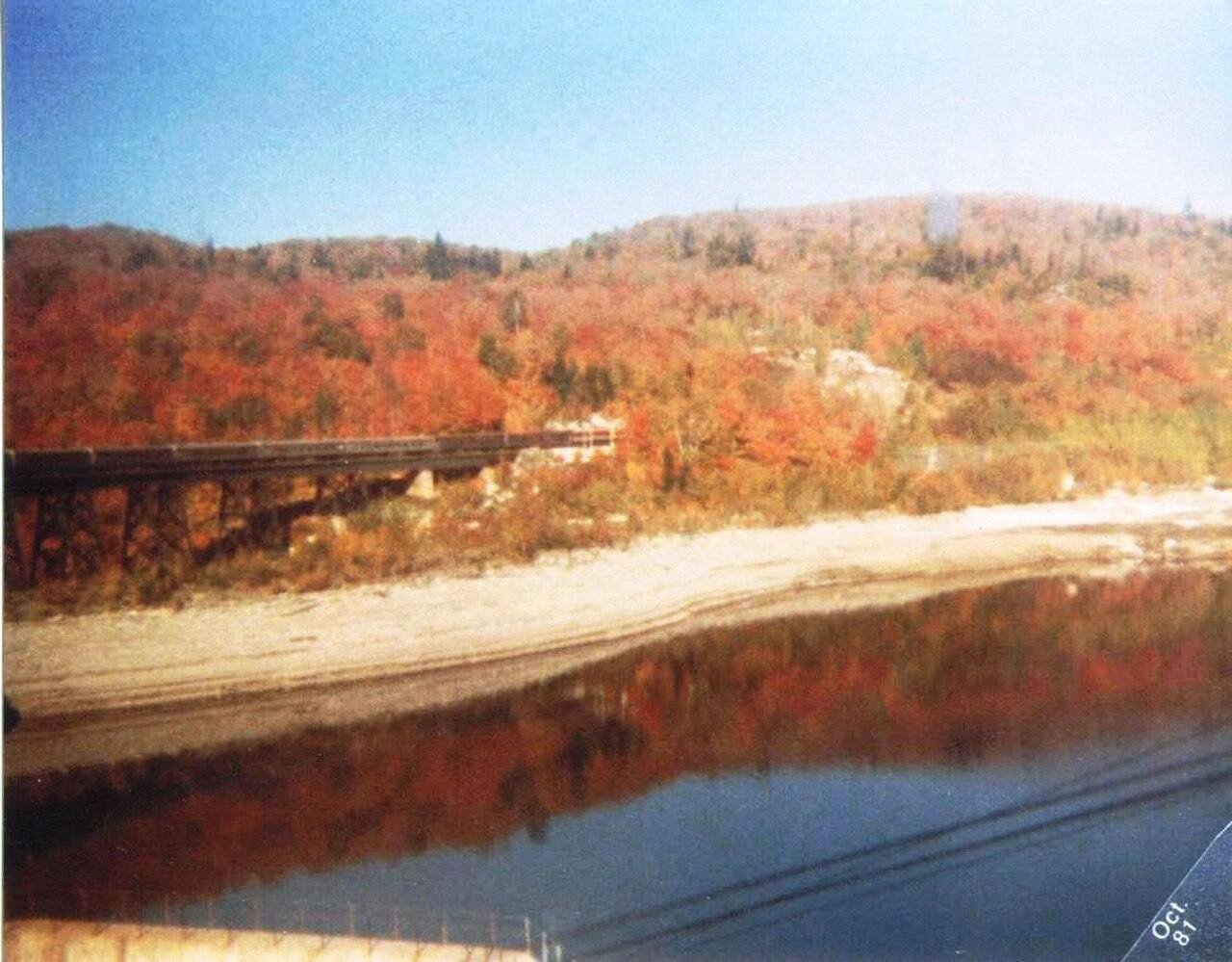
The Agawa Canyon Tour Train from Sault Ste. Marie is the country’s most famous foliage ride: 114 miles through the Canadian Shield to a canyon floor where maples close in overhead. Late September to early October is the window — the canyon peaks about a week before Algonquin. Book the moment you pick your dates; peak-colour departures sell out weeks ahead, and I learned that the refreshing way (no seat, everyone else’s photos).
3. Niagara Parkway — the late-season sleeper
In mid-to-late October the Parkway is a sleeper pick: tour buses gone, wineries mid-harvest, and the 55-kilometre river road from Niagara-on-the-Lake to Fort Erie glowing with late-turning maples and oaks. It peaks after Algonquin finishes, so it’s the perfect plan B if you missed the early-October window. I walked the riverside path at Queenston Heights on a grey Tuesday and had the escarpment view to myself — grey sky, by the way, is a gift for foliage photography (more on that below).

4. Killarney Provincial Park — earn your views
Killarney is for the hikers: the white quartzite ridges of the La Cloche Mountains rising over red maple forest and ink-blue lakes. The Crack trail is the signature — a steep scramble to a bare ridge with a 360-degree autumn panorama — and mid-October is when the maples below are at their deepest red. Four hours from Toronto, and it feels like the edge of the world. Fair warning: the park is deliberately low-facility, so bring everything with you.
5. Muskoka — cottage country in its best outfit
Muskoka is Algonquin’s calmer cousin: same granite-and-maple Shield country, same early-October peak, half the traffic. The Huckleberry Rock Lookout near Milford Bay gives you the whole lake-dotted panorama, and the Gravenhurst steamships run fall cruises past shorelines that look set on fire (the good kind). I did the lookout at 8 AM on a frosty morning and watched the mist burn off the lakes — worth every penny of the early alarm.
Quebec: the gold standard
Quebec is the province the rest of the country quietly admits does autumn best. Sugar maples turn a scarlet you don’t believe until you’re under it, and the hardwood forest runs at a scale Ontario can’t match. One week, one province? It’s this one.
6. The Laurentians — lakes, loops and covered bridges
An hour north of Montreal: lake towns strung along winding roads through maple forest peaking late September to early October. I based myself in Val-David for three nights and did a different loop each day, which my spreadsheet approved of and my rental car’s odometer did not.
7. Mont-Tremblant National Park — the quiet side of the mountain
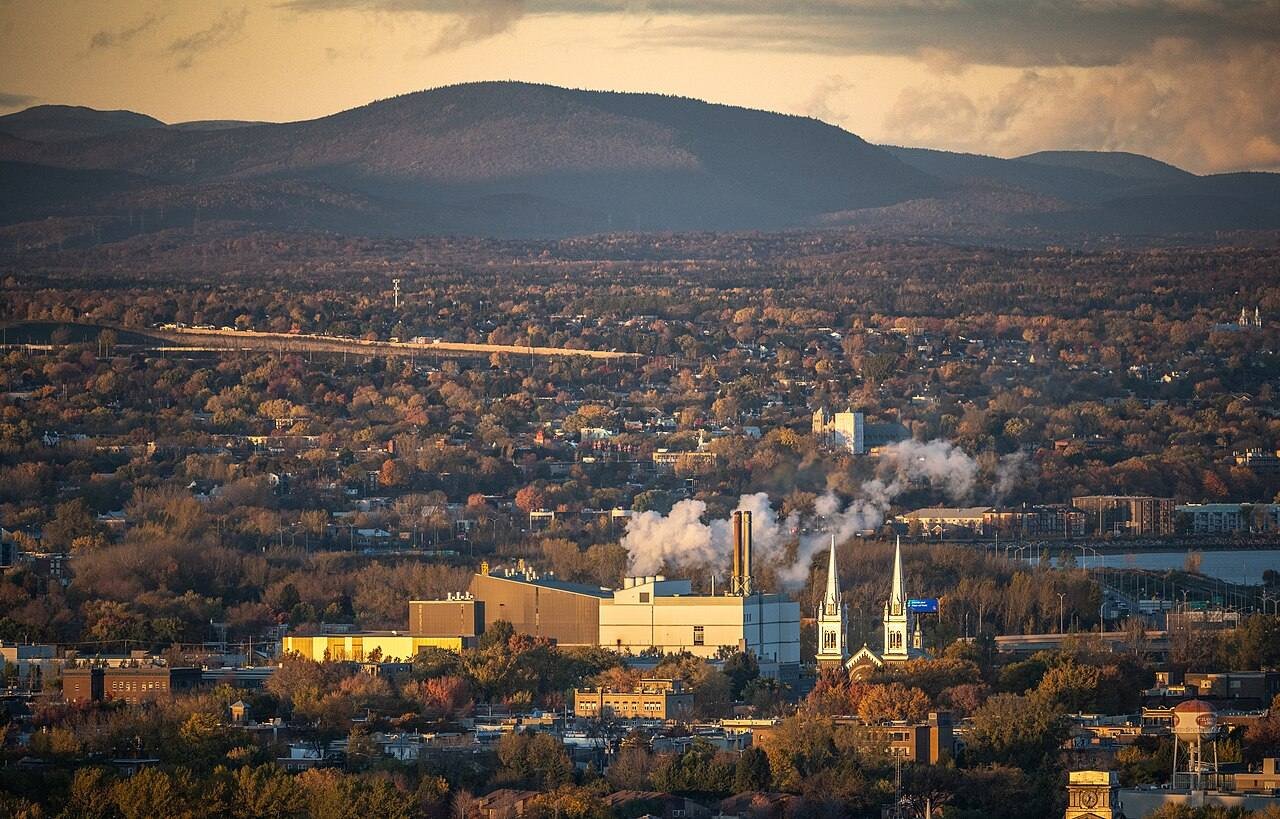
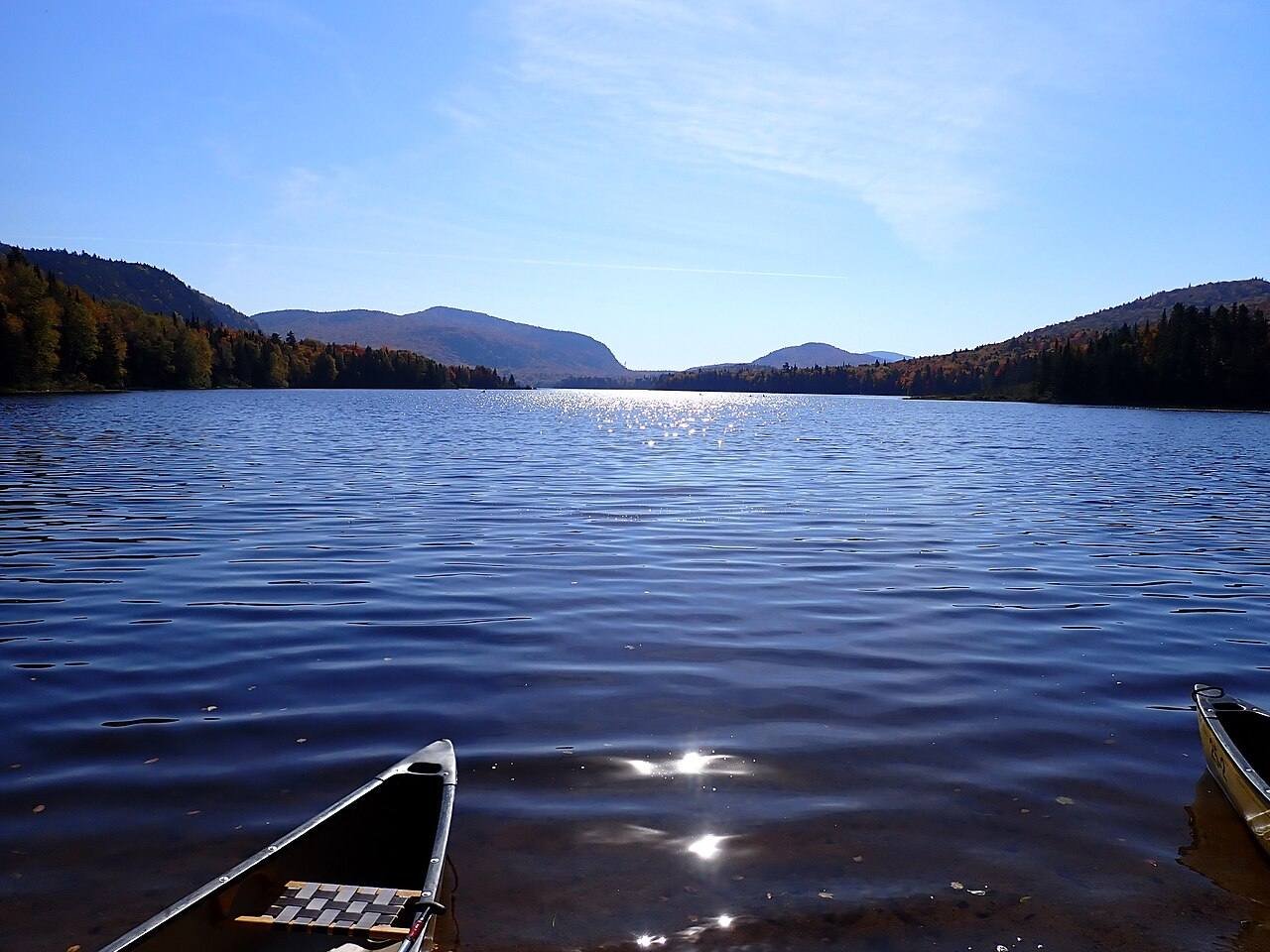
Not the resort village — the national park, twenty minutes east, where Lac Monroe and the Diable River sit inside serious maple-beech forest. It peaks late September to early October, just ahead of the Laurentians towns. The La Roche trail is short, the lookouts are big, and on a weekday you might share them with a moose. A park warden told me the week after the first frost is the money week — I’ve planned around that advice twice and she has not been wrong.
8. Gatineau Park — Ottawa’s backyard, at its best
Fifteen minutes from downtown Ottawa and somehow still wild: 361 square kilometres of forest with the Champlain Lookout staring down the Ottawa Valley. The first two weeks of October are peak, and the park runs shuttles on busy fall weekends — which tells you everything about the crowds. I paired it with a weekend in Ottawa (my Ottawa guide has the city half) and watched the sunset crowd gather at Champlain Lookout with their tripods. Arrive an hour before sunset or skip the parking lot entirely.
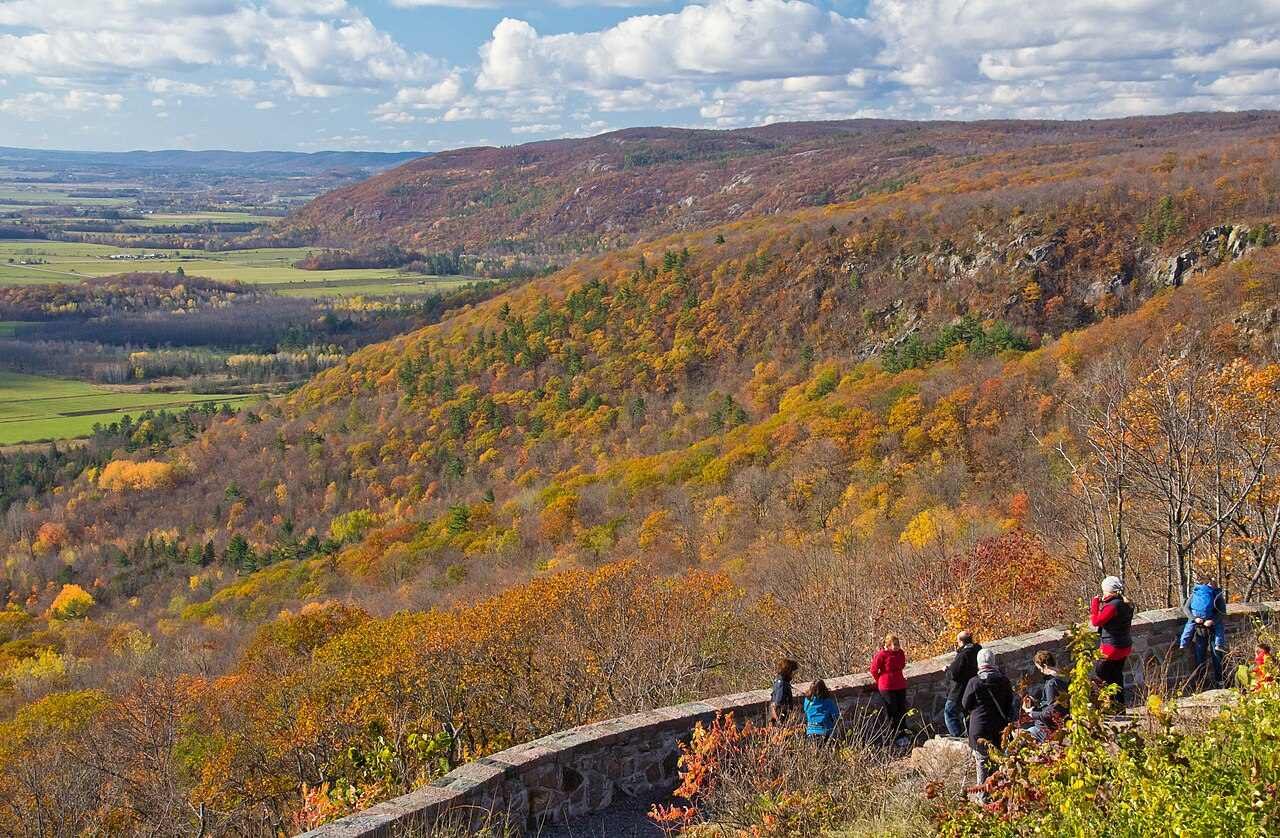
Gatineau Park closes several parkways to cars on peak fall weekends and runs shuttle buses instead — great for the forest, terrible if you didn’t know. I nearly missed the memo myself. Check the park’s fall schedule the night before, especially on Thanksgiving weekend.
9. Charlevoix — fjord country in scarlet
Charlevoix is the Quebec even Quebecers brag about: the St. Lawrence widens into something fjord-like, mountains drop straight to the water, and in early October the whole coastline is ringed in red. Base in La Malbaie, drive the Route du Fleuve, and ride the gondola up Mont du Lac des Cygnes for the high-country view — tundra, lakes and maple valleys in one frame. Four hours from Montreal, which keeps the crowds thinner than the Laurentians. Worth every kilometre.
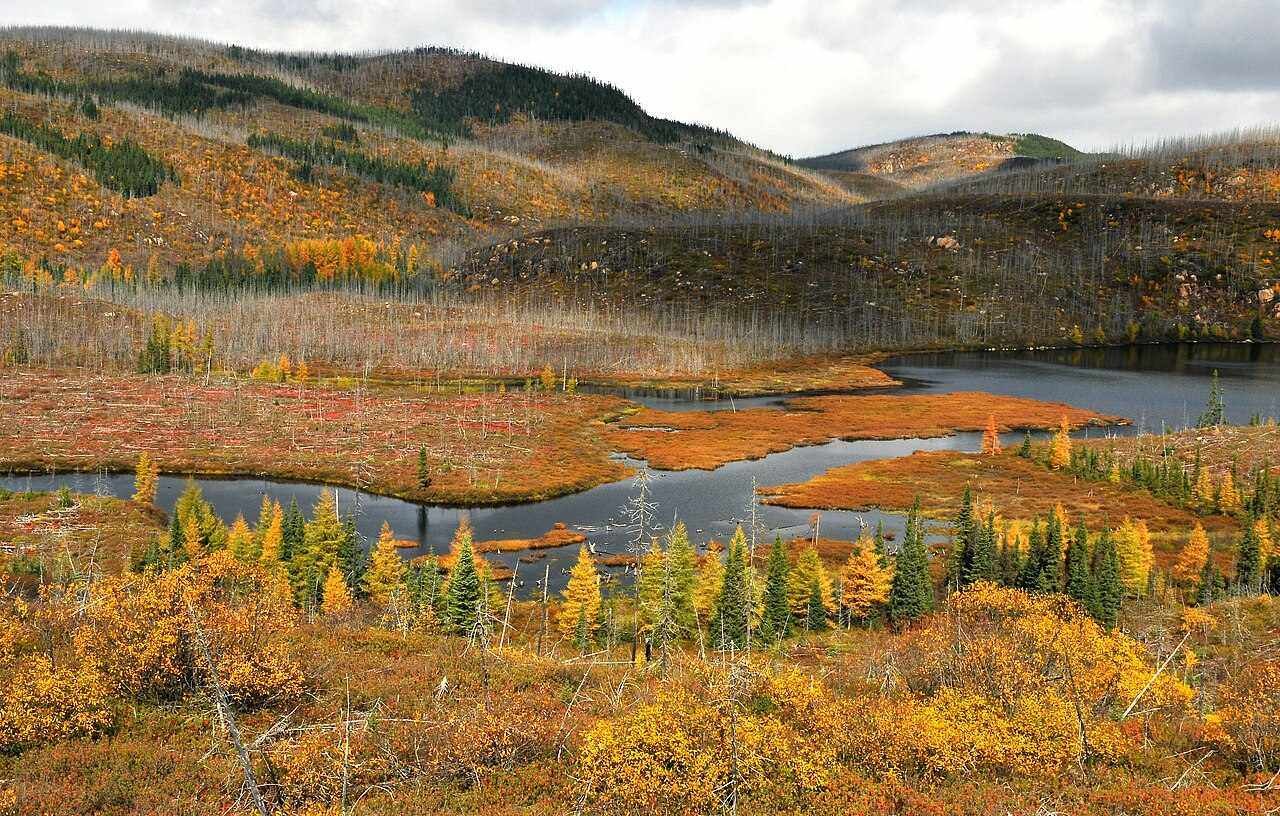
10. The Eastern Townships — wineries, villages and round barns
South of Montreal toward Vermont, the Townships do autumn the New England way: rolling hills, covered bridges, village greens, vineyards turning gold. Peak runs late September into early October, and the wine route through Dunham and Sutton pairs tastings with hillside colour. It’s the easy long-weekend version of a Quebec foliage trip. I did the covered-bridge loop on a drizzly Sunday — mist + red maples + a 150-year-old wooden bridge is unbeatable.
The Townships’ best foliage isn’t on the main wine route — it’s the back roads between Frelighsburg and Dunham, where orchards meet forest. A cidrerie owner in Dunham sketched me a loop on a napkin that I still have. Cider tasting at the end is not optional; it’s the reward.
Atlantic Canada: coast meets colour
Out east, the colour comes with salt air: red maples and golden birch against the Atlantic, peaking a touch later than Quebec’s. The drives are the attraction — pack the car, point it at the water, stop constantly.
11. The Cabot Trail, Cape Breton — the greatest foliage drive in Canada
I’ll say it plainly: the Cabot Trail in the first two weeks of October is the best fall drive in this country. Three hundred kilometres looping the Cape Breton Highlands, climbing from sea level to plateaus where the hardwood forest drops away to the Gulf of St. Lawrence below. The stretch between Pleasant Bay and Cape North is the money section — pull over at every signed lookout, no exceptions. I drove it counter-clockwise (the local recommendation) and stopped so often my passenger started timing the intervals. Give it two days minimum; it deserves three. My Halifax road trips guide has the full routing.
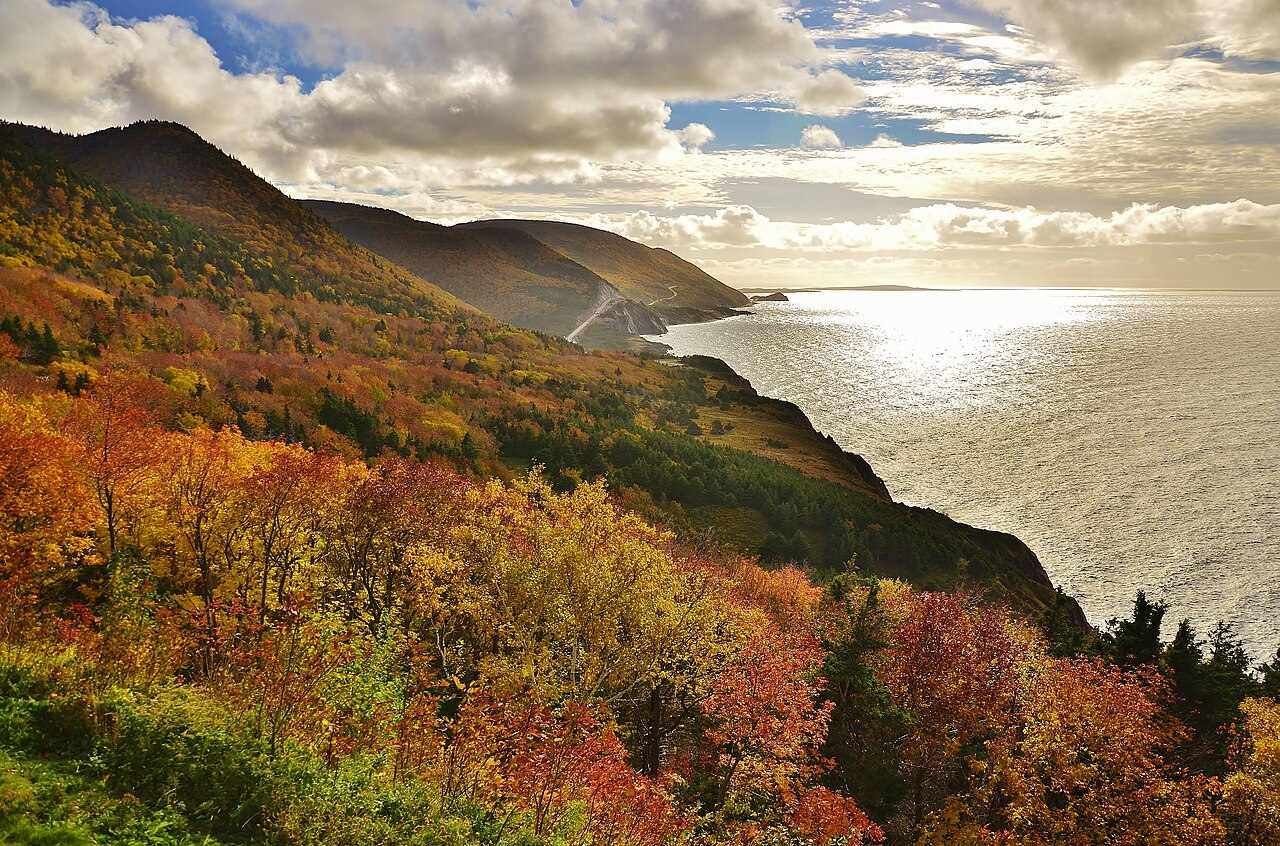
Stay overnight on the trail — Chéticamp or Ingonish, not Baddeck. The 7 AM light on the highlands is unreal and the lookouts are empty. Book months ahead; rooms are few and every leaf-peeper in the Maritimes knows it.
12. Fundy National Park — tides and turning leaves
Fundy pairs the world’s highest tides with Acadian forest in early-October colour: hike Dickson Falls through red maple in the morning, watch the Bay of Fundy drop twelve metres by afternoon. The covered bridges and waterfalls photograph beautifully, and the crowds are a fraction of Algonquin’s. Alma, the fishing village at the park gate, does a proper small-town October — sticky buns at the bakery, lobster boats in the harbour, zero pretension. → Parks Canada — Fundy National Park
13. Gros Morne National Park — the far edge of the colour
Newfoundland’s showpiece is wilder and later than the mainland: the Tablelands’ rust-red rock surrounded by turning tamarack, with colour stretching into mid-October. The west-coast drive through the park is spectacular and almost empty next to the Cabot Trail. It’s a commitment — the ferry or a flight to Deer Lake — but that’s the point. A couple I met at Lobster Cove Head had come for the hiking and stayed three extra days “because of the light.” I understood completely.
14. Prince Edward Island — the gentle finale
PEI turns late — mid-to-late October — the season’s graceful last chapter: gold farmland, red dirt roads lined with turning maples, and 435 car-free kilometres of the Confederation Trail made for slow cycling under the canopy. Base in Charlottetown and day-trip everywhere. Go for the oysters as much as the leaves; I’m not even slightly sorry about that advice.
Western Canada: the golden larches
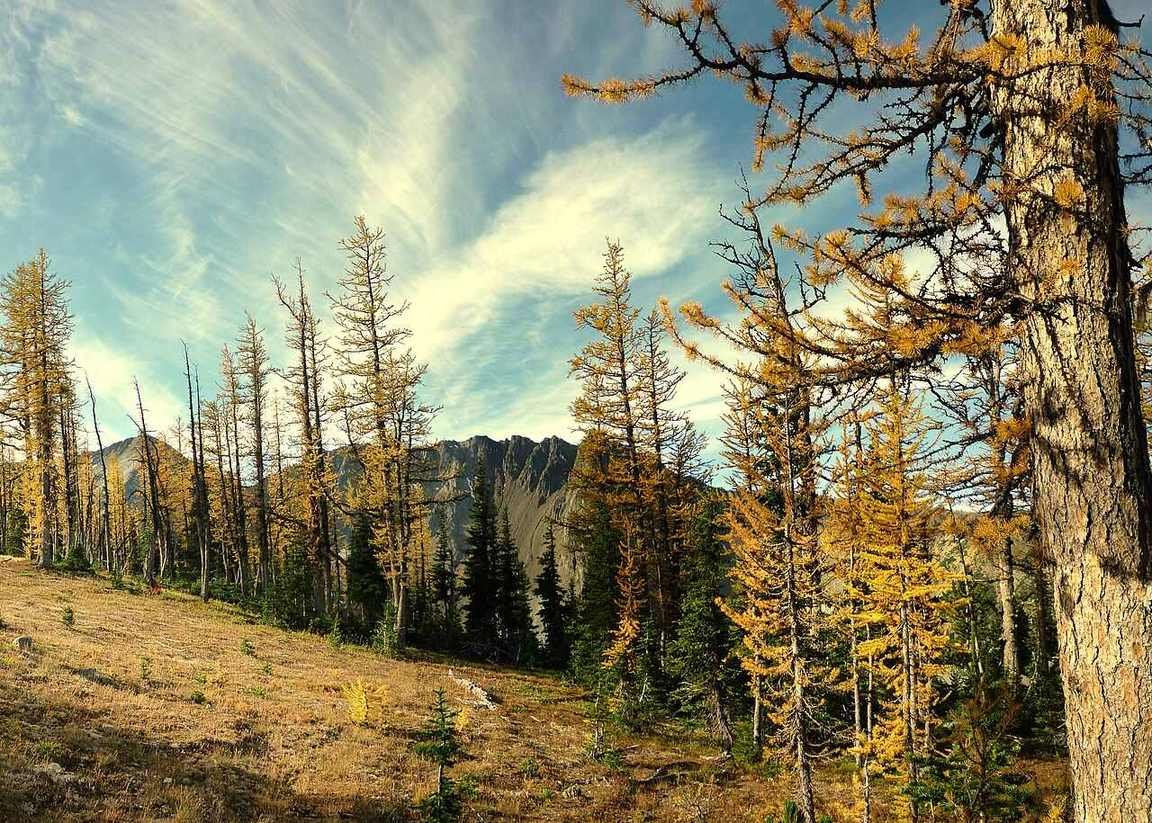
Out west, autumn plays by different rules. The Rockies have few maples — instead you get the larch: a conifer that turns brilliant gold and drops its needles, something that shouldn’t exist and absolutely does. The window is brutally short (two to three weeks, mid-September to early October), the trails get busy, and it is worth every bit of the effort.
15. Larch Valley, Banff — the famous gold rush
The Larch Valley trail above Moraine Lake is the larch hike: the valley opens into a bowl of gold beneath the Ten Peaks. Mid-to-late September is peak — miss it by a week and you’ll find needles on the ground. The logistics, and I’m serious: private vehicles can’t drive the Moraine Lake Road anymore; you go by Parks Canada shuttle, Roam transit or a commercial operator, and larch-season shuttles sell out. I booked the day reservations opened and still got a midday slot. A Parks Canada interpreter told me the valley sees its heaviest foot traffic of the year during larch season — heavier than August. Go on a weekday, go early. → Parks Canada — Banff National Park
Larch season and early snow overlap — I hiked Larch Valley in a t-shirt one September and in blowing snow the next, same week. Pack layers and check the Parks Canada trail report that morning. The gold is worth it; hypothermia is not.
16. Manning Provincial Park — BC’s larch country
Three hours east of Vancouver, Manning Park is where British Columbians do larch season without the Banff crowds: the Heather Trail winds through subalpine meadows where the larches go full gold in late September to early October, and the Lightning Lakes add the classic still-water reflections. I counted thirty people on the Heather Trail all day — compare that to Moraine Lake and you’ll see why locals guard this one. If you’re pairing it with the Rockies, my Banff–Jasper road trip guide covers that half.
17. The Okanagan Valley — wine country in gold
The Okanagan turns in mid-October, later than the interior mountains: vineyard rows going amber and crimson above the lakes, orchards heavy with the last apples, tasting rooms finally exhaled after summer. The most civilized foliage trip on this list — drive the Naramata Bench, stop for pinot, watch the sun set over the lake through a screen of gold. Kelowna and Penticton both make easy bases, and fall hotel rates are the year’s friendliest.
18. Kananaskis Country — the locals’ Rockies
West of Calgary, Kananaskis is where Albertans go when Banff gets too busy: the same Front Ranges, the same larch bowls (Chester Lake and Arethusa Cirque are the classics), a fraction of the crowds. Late September is the window. The Smith-Dorrien Trail — a gravel road past a string of alpine lakes — is one of the great unsung fall drives in the country. I almost left it off this list to keep it that way. Almost.
In Kananaskis, skip the famous spots at midday and drive the Smith-Dorrien at golden hour. A Canmore barista drew me a literal map on a napkin and sent me to the Chester Lake trailhead at 4 PM on a weekday. I shared the larches with six people and a very unbothered marmot.
Photography tips for peak colour
You don’t need fancy gear — I shoot most of my foliage on my phone — but these genuinely change the results. Overcast days are your friend: direct sun blows out reds; a bright grey sky saturates every colour. Shoot the edges of the day: the hour after sunrise and before sunset turns gold foliage incandescent — midday is for driving. Get low and shoot up through backlit maples: the leaves glow like stained glass, and it works on a phone. Bring a polarizer: it cuts glare off wet leaves and deepens the sky — the biggest upgrade for about $30. For larches, go wide and go early: the valleys photograph best in the first hour of light, and cold mountain mornings eat batteries, so charge everything overnight.
Where to stay: base towns for each region
Foliage trips live or die on the base town. My picks, from years of trial and spreadsheet error:
| Region | Base yourself in | Why |
|---|---|---|
| Algonquin | Huntsville | 20 min to the west gate; motels, restaurants, groceries |
| Agawa Canyon | Sault Ste. Marie | The train departs from here — stay the night before |
| Laurentians / Tremblant | Saint-Sauveur or Val-David | Central to every loop; village charm, easy parking |
| Gatineau Park | Chelsea or Wakefield | Right at the park gates; Ottawa is plan B |
| Charlevoix | La Malbaie | Waterfront inns on the Route du Fleuve |
| Cabot Trail | Chéticamp or Ingonish | On the trail itself — sunrise light, no backtracking |
| Fundy | Alma | Fishing-village base at the park gate |
| Banff larches | Canmore | Cheaper than Banff townsite, 20 min to the trailheads |
| Manning Park | Hope or the park resort | Hope is 45 min west; the resort puts you inside the park |
October is shoulder season almost everywhere here, which means better rates. The exceptions are Thanksgiving weekend and larch-season weekends in Banff, when prices spike and rooms vanish — book those two to three months out.
What does a fall foliage road trip cost?
What I actually paid across my October trips, as a per-person day plan. October is shoulder season, so stays run cheaper than summer — except Thanksgiving weekend and larch season in Banff, when all bets are off. Pick your style, tell the calculator how many days you’re driving, and it does the rest. (Accommodation not included.)
Budget calculator
Per person, in Canadian dollars. Excludes accommodation.
Budget ≈ $110/day · Mid-range ≈ $185/day · Luxury ≈ $310/day. Park fees and fuel prices checked October 2026.
| Expense (per person / day) | Budget | Mid-range | Luxury |
|---|---|---|---|
| Accommodation | $70 (motel) | $160 (inn / B&B) | $320+ (resort lodge) |
| Food & drink | $40 | $70 | $120 |
| Sights (park fees, gondolas, train) | $15 | $25 | $45 |
| Getting around (rental + fuel) | $45 | $70 | $110 |
| Coffee, treats & souvenirs | $10 | $20 | $35 |
| Daily total | ~$180 | ~$345 | ~$630 |
FAQs about fall foliage in Canada
When is peak fall foliage in Canada?
It depends on the region — there’s no single peak week. Golden larches in the Rockies and Manning Park peak mid-to-late September; the Laurentians, Mont-Tremblant and Agawa Canyon peak late September to early October; Algonquin, Gatineau Park, Charlevoix, the Cabot Trail and Fundy peak in the first two weeks of October; the Niagara Parkway, Killarney and the Okanagan finish in mid-to-late October. Pick your region from the timing table above, then confirm with the local colour report the week you travel.
Where is the absolute best fall foliage in Canada?
For classic red-maple colour: Algonquin Provincial Park and the Laurentians — the two names every Canadian will give you, and they’ve earned it. For the most dramatic single drive: the Cabot Trail. For something completely different: the golden larches of Larch Valley in Banff. My best fall colours in Canada guide ranks them head to head.
Algonquin or the Laurentians — which should I choose?
You can’t go wrong, but they suit different trips. Algonquin is wilder — canoe lakes, backcountry trails, the full Canadian Shield — and an easy drive from Toronto. The Laurentians are the more civilized version: lake villages, scenic lifts, wineries nearby, an easy drive from Montreal. Algonquin for the wilderness purist; the Laurentians for the long-weekend romantic. Both peak in the same early-October window.
How do I see the golden larches in Banff?
Hike the Larch Valley trail from Moraine Lake in mid-to-late September. The critical part: private cars can’t drive to Moraine Lake — book the Parks Canada shuttle the day reservations open, because larch-season seats sell out. Go on a weekday, start early, and pack for sudden weather changes — larch season and early snow overlap. My September guide has the full larch-season rundown.
Can I do a fall foliage trip in Canada without a car?
Mostly, no — I won’t sugarcoat it. The great foliage routes (Highway 60, the Cabot Trail, the Laurentians loops) have essentially no public transit. The exceptions: the Agawa Canyon Tour Train from Sault Ste. Marie (the train is the trip), Gatineau Park (reachable from Ottawa, with fall shuttles on busy weekends), and the Moraine Lake shuttles for the larches. For everything else, budget for a rental — October rates are usually kind.
What should I pack for a fall colours trip?
Layers, always layers. October swings from t-shirt weather to frost in a single day, especially at elevation — I pack a base layer, a fleece and a windproof shell even for “easy” drives. Add a warm hat and gloves for sunrise lookouts, waterproof boots for muddy trails, a thermos (trust me on this one), and a power bank — cold mornings drain phone batteries fast. Hiking larch country? Throw in microspikes. For the full seasonal picture, see Canada in October.
Keep exploring
One October isn’t enough — here’s where I’d go next:
- The best fall colours in Canada — the head-to-head ranking of every region on this list
- Canada in October — weather, Thanksgiving travel and the full autumn picture
- Canada in September — larch season and shoulder-season travel
- I drove to Algonquin for peak colours on a Saturday — what I learned the hard way
- Banff–Jasper road trip itinerary — pair the larches with the Icefields Parkway
- Thanksgiving in Quebec City — peak colour plus the long weekend, done right
You’ve got this. Pick your region, check the colour report, and go stand under some maples — October in Canada is the best month of the year, and I will not be taking questions.