

- ✓ Pacific Rim National Park Reserve is three parks in one: the drive-up Long Beach unit between Tofino and Ucluelet, the boat-only Broken Group Islands, and the 75‑km West Coast Trail. Most visitors only ever see the first.
- ✓ Give it 3–4 days for Long Beach alone — surfing, storm watching, rainforest trails and a boat trip to Meares Island. The full three units need two weeks and real logistics.
- ✓ Winter is a feature, not a bug: storm watching season (November–February) is the park’s best show, and the Long Beach unit is open year-round.
- ✓ It’s three separate units, not one park: Long Beach (drive-up, between Tofino and Ucluelet), the Broken Group Islands (boat-only, kayak country), and the West Coast Trail (75‑km backpacking, permit required). Plan for them separately.
- ✓ The ocean is cold year-round (~10°C) — surfing and kayaking are wetsuit sports here, and storm watching is best enjoyed from behind glass with something hot.
- ✓ The West Coast Trail needs a reservation the moment bookings open (February, 8 AM Pacific) — the full breakdown is in the trail section below.
Here’s the deal with Pacific Rim National Park Reserve: it’s not one park. It’s three, scattered along the storm-chewed west coast of Vancouver Island, and almost nobody visits all three in one trip. There’s the Long Beach unit — 16‑ish kilometres of sand, surf shops, and storm watchers between Tofino and Ucluelet. Then the Broken Group Islands, a hundred-odd islands in Barkley Sound you can only reach by boat. And the West Coast Trail, a 75‑kilometre backpacking route with a reputation for eating hikers’ knees.
I came for the beach in January. That tells you something about this park: the weather that ruins other trips is the trip here. I stood at South Beach in a borrowed rain shell while the wind hit sideways and a wave threw a piece of driftwood the size of a park bench ten metres up the sand. Nobody else was there. It was the best thing I saw all year.
What follows is the full breakdown — how to get in, what each unit actually demands, what it costs, and the mistakes I made so you don’t have to. Every price checked October 2026.
Getting there: Highway 4 earns its reputation
The park sits on the west coast of Vancouver Island, in the traditional territories of the Nuu-chah-nulth First Nations. There is exactly one road in: Highway 4 from Port Alberni, about 100‑some kilometres of winding two-lane asphalt that climbs, drops, and threads past Kennedy Lake. Budget 2.5–3 hours from Port Alberni, 4–5 hours from Nanaimo (which is itself a 1.5–2 hour BC Ferries sailing from Horseshoe Bay, near Vancouver).
The first time I drove it, I did it wrong in every way the road allows. I left Port Alberni at dusk, got stuck behind a logging truck doing 40 through the twisty bits, and watched my fuel gauge drop past a quarter with no cell signal and no gas station in sight. I white-knuckled it into Tofino on fumes and a prayer. I’ve made this mistake so you don’t have to:
Highway 4 is winding, narrow in places, and shared with logging trucks that do not slow down for your sightseeing. Gas up in Port Alberni (last cheap fuel), check DriveBC for closures before you leave, and allow daylight — dusk is when the deer and the regrets come out. Winter tires are legally required on most BC highways October 1 to March 31, and this road is exactly why. If you’re renting, my renting a car in Canada guide covers the insurance fine print.
No car? It’s doable but limited. The West Coast Trail Express shuttle runs Victoria–Port Renfrew–Bamfield for hikers, and seasonal buses connect Nanaimo and Victoria to Tofino. Tofino and Ucluelet are 40 minutes apart on the same highway, and most trailheads are on it.
Park fees: what entry actually costs
Entry fees are per-person, per-day, and apply at all three units. I checked the current numbers on the official Parks Canada site — here’s the 2026 picture:
- Adult daily: $12.25 — valid until 4 PM the next day.
- Family/group daily: $24.50 — covers up to 7 people in one vehicle, which makes it the obvious buy for two or more adults.
- Discovery Pass (annual): $83.50 adult / $167.50 family-group — worth it at 7+ days in any Parks Canada site. (See how Pacific Rim compares in my Canadian national parks overview.)
- Youth 17 and under: free, as always.
There’s no staffed gate on most beach accesses — you buy your pass at the Kwisitis Visitor Centre or the trailhead kiosks, and rangers do check. In summer 2026 the Canada Strong Pass waived national park admission entirely (June 19–September 7, with 25% off camping) — it was a federal program, so check whether it’s back before counting on free entry.
That’s just entry. The West Coast Trail and Broken Group Islands have their own fee layers — those are in the sections below.
The three units, on a map
Seven stops, from the surf beaches down to the trailheads. Tap any stop to jump the map straight to it. Note the geography: the Long Beach unit is the northern cluster around Tofino; the Broken Group and the trail are a long, winding drive (or a boat) south.
Map data © OpenStreetMap contributors. Open the full map
1. Long Beach — the one everyone means
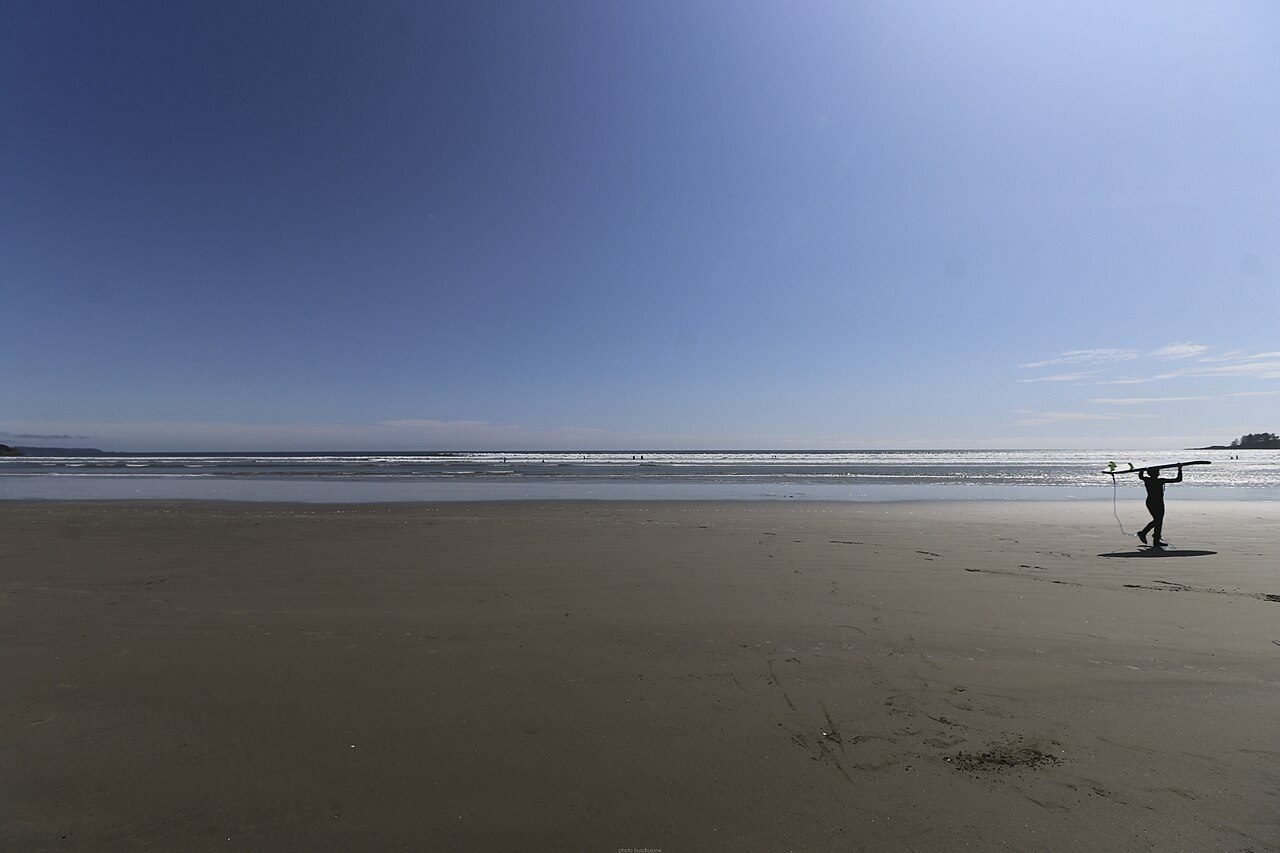
The Long Beach unit is the park’s front door: roughly 16 kilometres of sand strung between Tofino and Ucluelet, with the Kwisitis Visitor Centre at Wickaninnish Beach as your starting point. This is the unit that’s open all year, the one with the parking lots and the surf shops, and the one where 90% of visitors spend 90% of their time. Here’s the deal: that’s fine. It earns it.
The beach itself runs through several named stretches — Wickaninnish, Combers, Schooner Cove, Florencia Bay — all driftwood, all thunder. Behind the dunes, the Rainforest Trail does two one-kilometre boardwalk loops through old-growth cedar so tall it recalibrates your sense of scale. Go early; the light through the canopy at 9 AM is the park’s quietest show.
And then there’s winter. Storm watching season runs roughly November through February, when Pacific lows roll in and the surf goes feral. I was there in January: horizontal rain, waves detonating on the rocks at South Beach, and me in a borrowed shell standing there like an idiot, grinning. The hotels lean into it — glass walls, fireplaces, hot tubs facing the ocean. Pack for it: my Canada packing list was written for summer, but the rain-shell logic applies double here. (Winter storms pair oddly well with holiday timing — see Canada in December for the full seasonal picture.)

2. Surfing at Cox Bay — my three seconds of glory
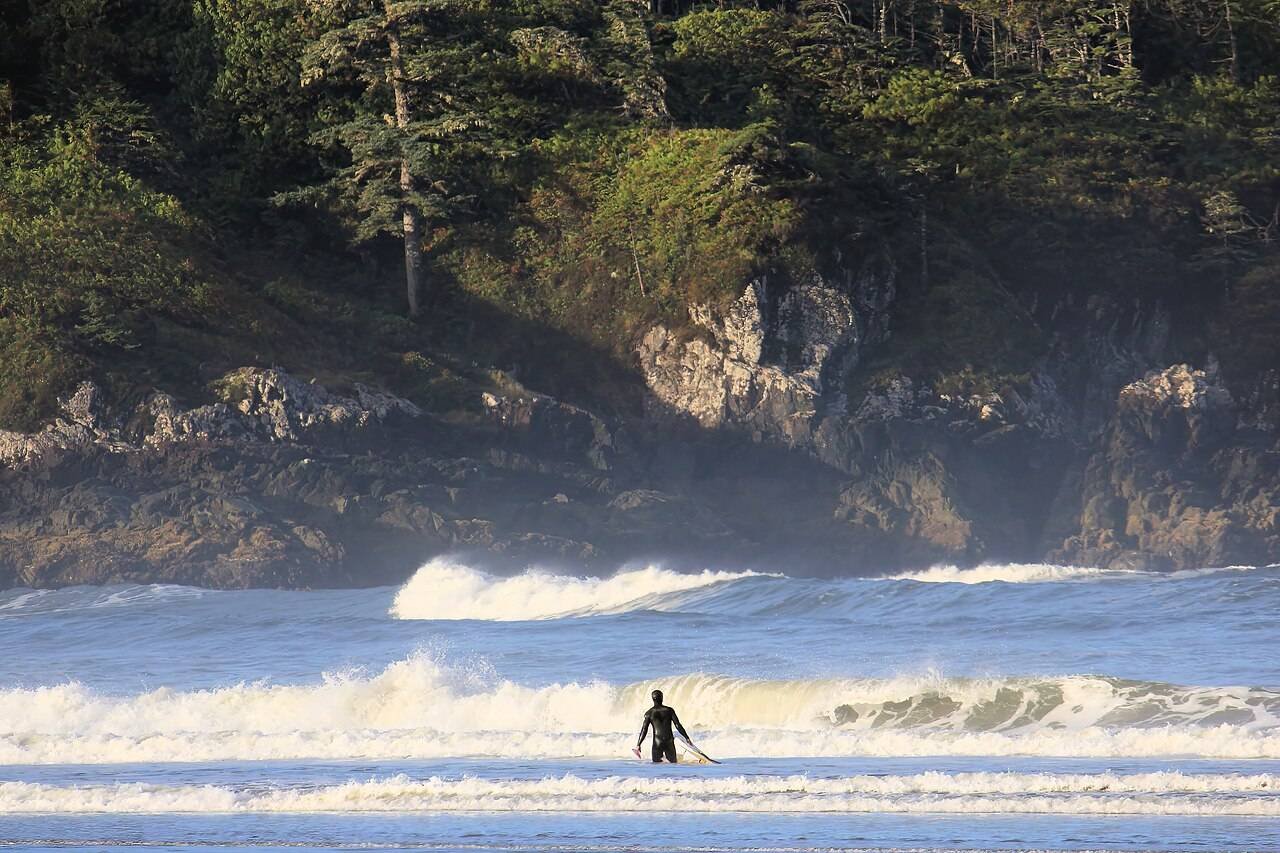
Canada has a surf capital. It’s Tofino. Cox Bay is the main break inside the park’s orbit — consistent beach break, works on most swells, and the lineup is friendlier than its reputation. I booked a group lesson, squeezed into a 5mm wetsuit (you will look like a seal; accept it), and spent two hours being personally victimized by the Pacific Ocean.
The instructor’s entire job was shouting “POP UP” at me. I popped up exactly once, rode the whitewash for approximately three seconds, and fell off with enough enthusiasm to fill my wetsuit with seawater. Still the most fun I’d had in months. Lessons run about $100–130 per person including board and wetsuit; board-and-wetsuit rentals alone are roughly $60–75 a day. Book the day before in summer — the good shops sell out.
The water sits around 10°C all year — this is a wetsuit sport, full stop, even in August. Rip currents are real on these beaches: swim and surf near the flagged patrolled areas, and never turn your back on the ocean. The park’s surf beaches are unsupervised, so beginners should stick to lessons with a local shop.
Chesterman Beach (just south, outside the park boundary) is the gentler learning wave if Cox Bay is firing too big. You will swallow salt water. Budget for it emotionally.
3. The rainforest: boardwalks and the Big Tree Trail
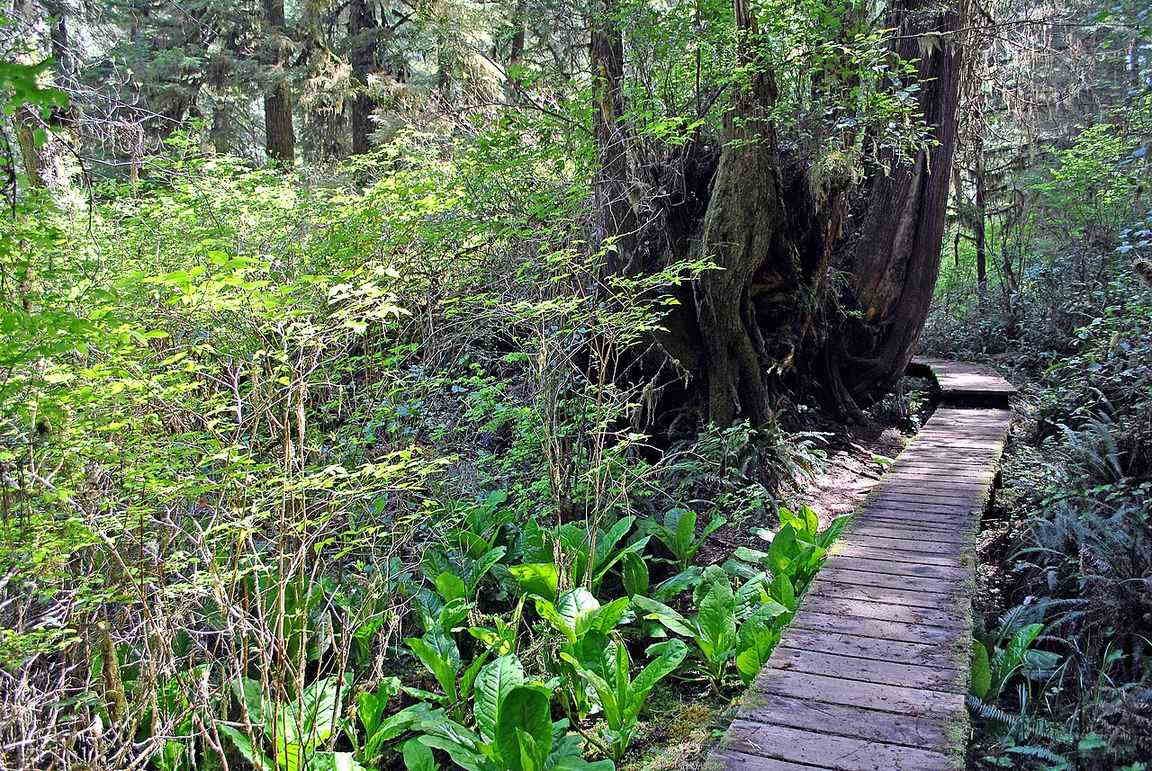
Here’s what the brochures undersell: the forest. The Long Beach unit sits inside some of the last great temperate rainforest on earth, and the Rainforest Trail — two easy one-kilometre boardwalk loops right off Highway 4 — is the cheapest awe-per-dollar in the park. Do both loops; it takes an hour and it’ll reset your whole trip.
But the real trees are across the water. Meares Island, visible from Tofino harbour, is a Tla-o-qui-aht Tribal Park, and the Big Tree Trail is a one-kilometre boardwalk past thousand-year-old red cedars. You get there by water taxi from Tofino (about 10 minutes, roughly $25–35 round trip). The Nuu-chah-nulth concept of Tsawalk — everything is one, everything is connected — is the lens the trail practically hands you: moss on everything, a forest that eats its own dead and calls it lunch.
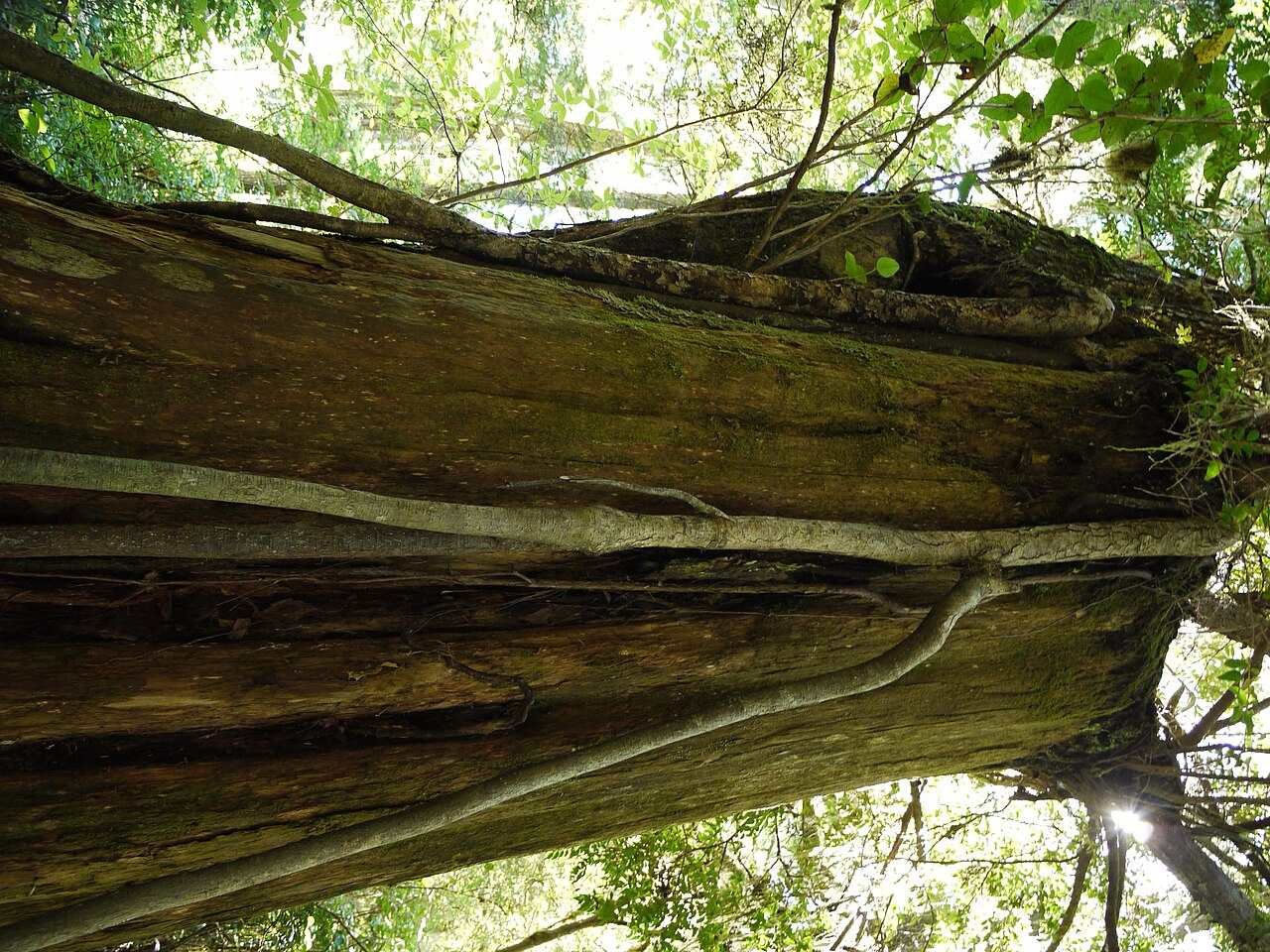
Take the first water taxi of the morning to Meares Island. The Big Tree Trail is a short loop, and by midday the boardwalk fills with tour groups. At 9 AM I had the giant cedars to myself for twenty minutes — the only sound was water dripping off moss. Also in Tofino: the Naa’Waya’Sum Coastal Indigenous Gardens (the former Tofino Botanical Gardens) runs forest and shoreline trails with Indigenous art installations — a solid rainy-afternoon backup, and it’s where I learned the gardens had been renamed in 2024.
4. The Broken Group Islands — kayak country
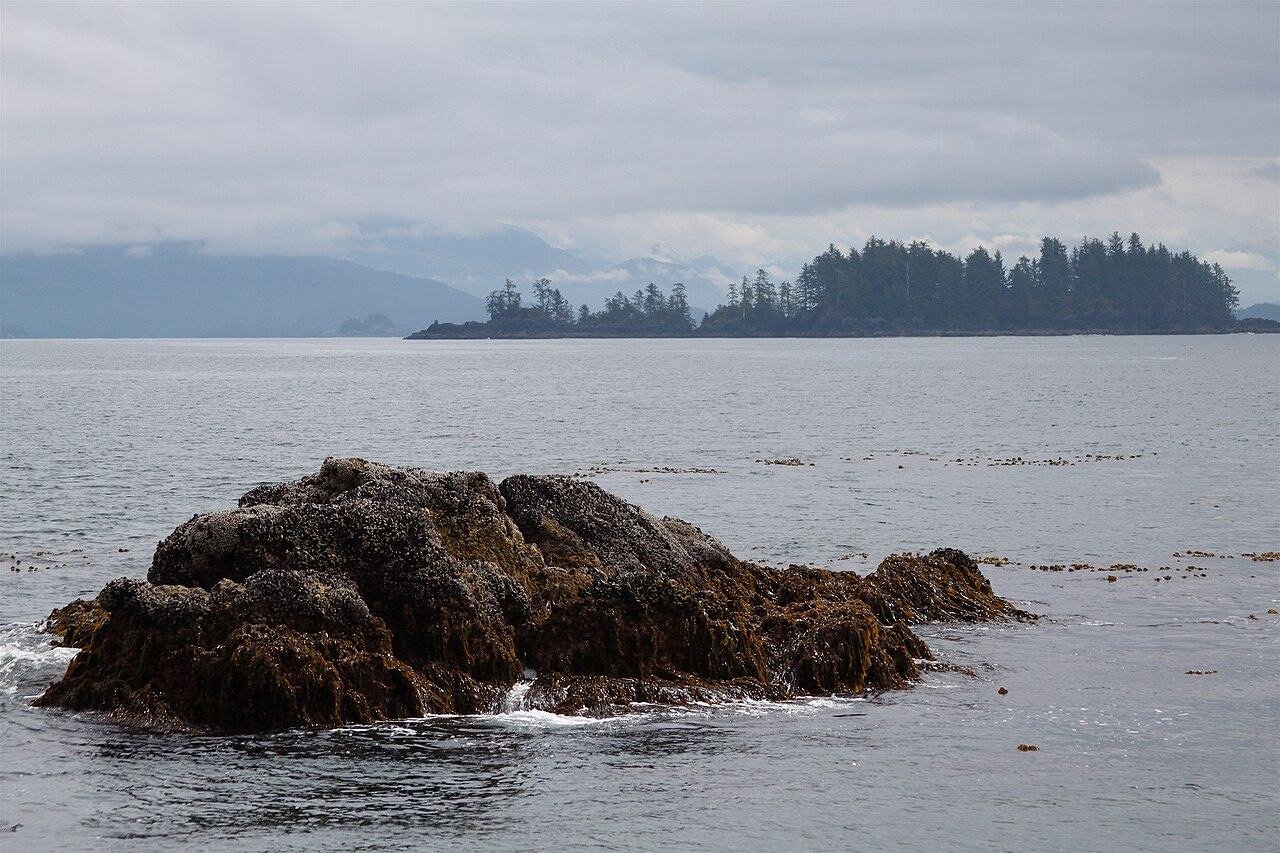
The second unit is the one most visitors never see: 100+ islands and islets scattered across Barkley Sound, open May 1 to September 30, reachable only by boat. This is the park’s kayak unit. Sheltered passages, shell beaches, sea stars at every low tide, and campsites on a handful of the larger islands (Hand, Dodd, Turret, Clarke, Gilbert, Gibraltar and Willis).
The logistics are the trip. You launch from Bamfield or Toquart Bay, paddle 2–3 hours across open water to reach the islands, and camp at designated sites only. There is no fresh water in the Broken Group — you carry every litre. I double-checked the camping rules on the official Parks Canada site: backcountry fees run about $11.50 per person per night on top of your park pass, and reservations are strongly recommended in summer.
Not a confident sea kayaker? Book a guided multi-day trip with a licensed outfitter (they run out of Bamfield and Ucluelet) or do a day-trip water taxi to beachcomb the shell beaches. The water here is absurdly alive — I watched a sea otter crack a crab open on its chest like it was eating popcorn. Here’s the deal: this unit rewards planners and punishes improvisers. Plan it.
5. The West Coast Trail — 75 kilometres of “nope”
Full honesty first: I have not hiked the whole West Coast Trail. I day-tripped to the southern trailhead at Pachena Bay, watched the West Coast Trail Express bus unload a dozen hikers, and talked to two of them. One was limping. One was grinning. Both said the same thing: “Worth it. Never again.” I believed them both.
The facts, from the official Parks Canada site: the trail runs 75 km between Port Renfrew and Bamfield, open May 1 to September 30, and takes 6–8 days for most hikers. The 2026 costs: $25.75 reservation fee + $166.75 trail fee per person + two mandatory $28 ferry crossings (Gordon River and Nitinat Narrows), plus your park pass. There are no walk-up permits — reservations opened February 5, 2026 at 8 AM Pacific and the prime July–August dates vanished in hours.
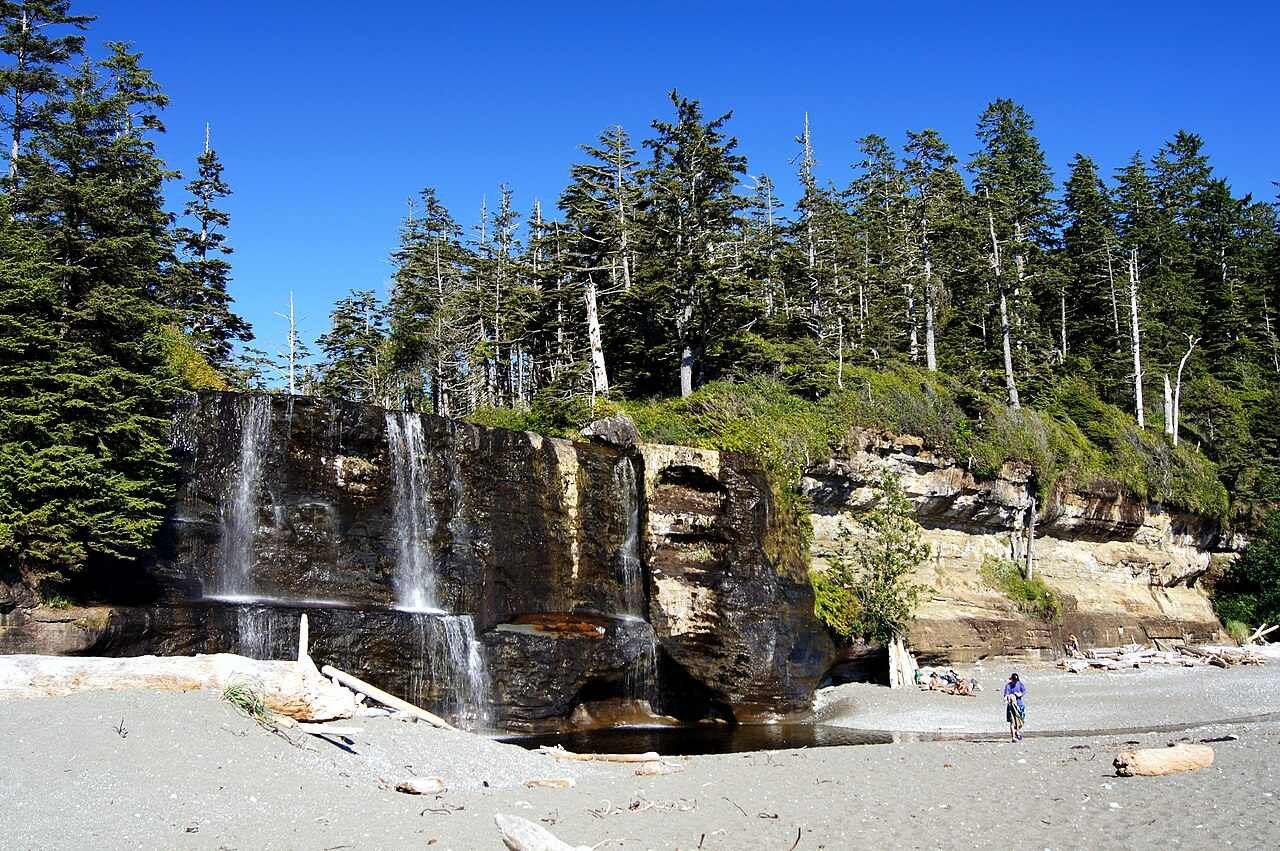
Why bother? Because it’s the trail: ladders down cliffs, cable cars across rivers, Tsusiat Falls pouring straight onto the beach, sea lions on the rocks, and a mandatory orientation briefing that includes the phrase “cougar encounter” said with complete professional calm. The bus driver who’d been running the Victoria–Bamfield route for years told me the trail’s real filter isn’t fitness, it’s the ladders — “people train for the kilometres and forget they’re climbing telephone poles.” Train for the ladders.
6. Ucluelet — the quieter end of the park

Ucluelet (yoo-KLOO-let) is Tofino’s calmer sibling: a working fishing town at the park’s south end, cheaper beds, and the Pacific Rim Visitor Centre on the highway into town. The headline is the Wild Pacific Trail — a free, mostly flat oceanside path ending at the Amphitrite Point Lighthouse. It’s the best easy walk in the whole park system, and on a stormy day the blowholes along the cliffs are violent in the fun way.
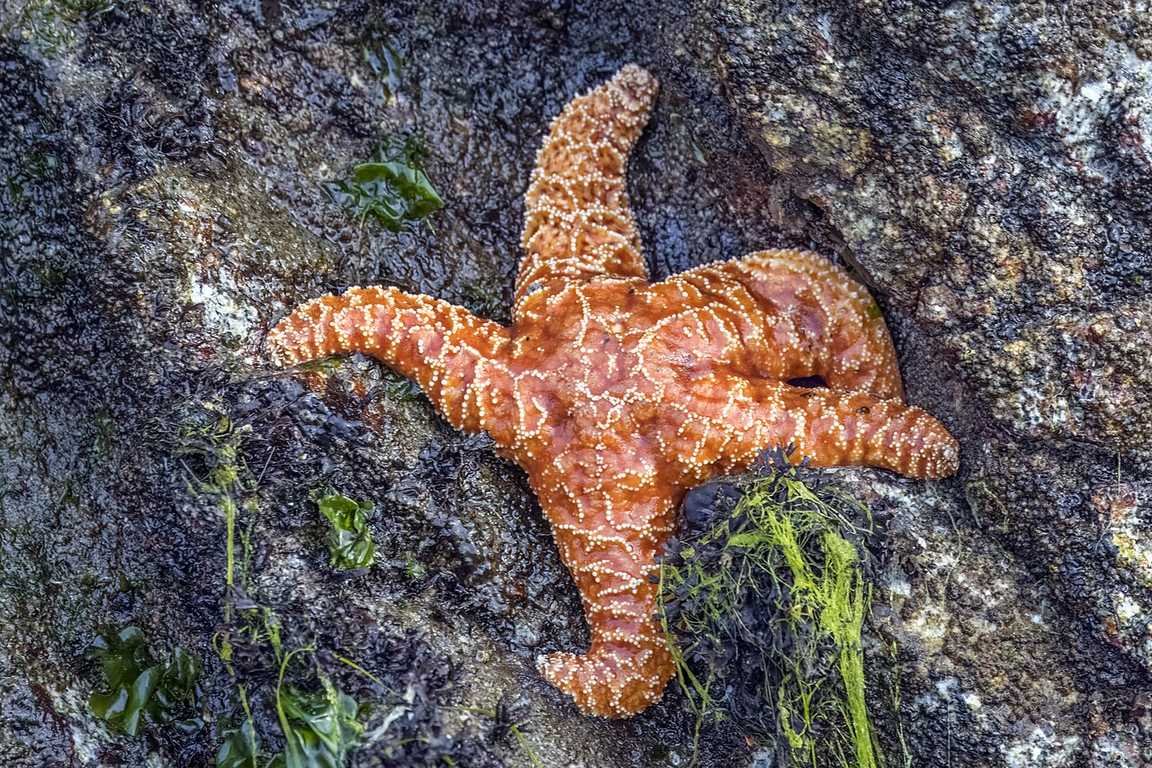
Low tide is the other show. The rocky shorelines around both towns expose tide pools packed with ochre sea stars, anemones, and sea urchins — go at the lowest tide of the day and watch where you step. Look, don’t pry: leave everything where the ocean put it.
Wildlife: the locals you’ll actually see
The park’s wildlife roster reads like a nature documentary pitch: grey whales (peak migration March–April), black bears flipping rocks on the beaches at low tide, coastal wolves, bald eagles, and sea otters. I saw bears twice — once from the car (correct), once from closer than I’d have liked on a beach trail (incorrect, and I backed away promptly).
The rules are simple and non-negotiable: store food in bear-proof containers, never approach wildlife, and keep dogs leashed where allowed. Cougars live here too, though they’re rarely seen. Deadpan truth: the most dangerous animal on the coast is the ocean itself. Respect the water first, the bears second.
What does Pacific Rim cost?
Prices below are what I actually paid, as a per-person day plan. Pick your travel style, tell the calculator how many days you’re staying, and it does the rest. (Tofino lodging is its own budget line — see the table below.)
Budget calculator
Per person, in Canadian dollars. Excludes accommodation.
Budget ≈ $80/day · Mid-range ≈ $170/day · Luxury ≈ $325/day. Park fees checked October 2026.
| Expense (per person / day) | Budget | Mid-range | Luxury |
|---|---|---|---|
| Accommodation | $45 (hostel / Green Point camp) | $200 (Tofino motel) | $450+ (oceanfront lodge) |
| Food & drink | $35 | $65 | $120 |
| Sights (surf rental, tours, passes) | $15 | $45 | $110 |
| Getting around (rental + fuel) | $20 | $40 | $60 |
| Coffee, treats & souvenirs | $10 | $20 | $35 |
| Daily total | ~$125 | ~$370 | ~$775 |
Tofino accommodation is the budget-killer — summer rates book out months ahead, and even the motels aren’t cheap. Ucluelet runs 20–30% less for comparable beds. For the wider picture, my Canada trip cost guide puts the coast in national context.
Suggested 4-day plan
| Time | Day 1 — arrive & Long Beach | Day 2 — surf & forest | Day 3 — islands & trails | Day 4 — Ucluelet & depart |
|---|---|---|---|---|
| Morning | Drive Highway 4 in (daylight!), stop at the Kwisitis Visitor Centre | Surf lesson at Cox Bay (booked yesterday) | First water taxi to Meares Island — Big Tree Trail | Wild Pacific Trail to the Amphitrite Lighthouse |
| Midday | Rainforest Trail, both loops | Lunch in Tofino, recover at Chesterman Beach | Back by lunch; afternoon tide-pooling at low tide | Pacific Rim Visitor Centre, then drive out |
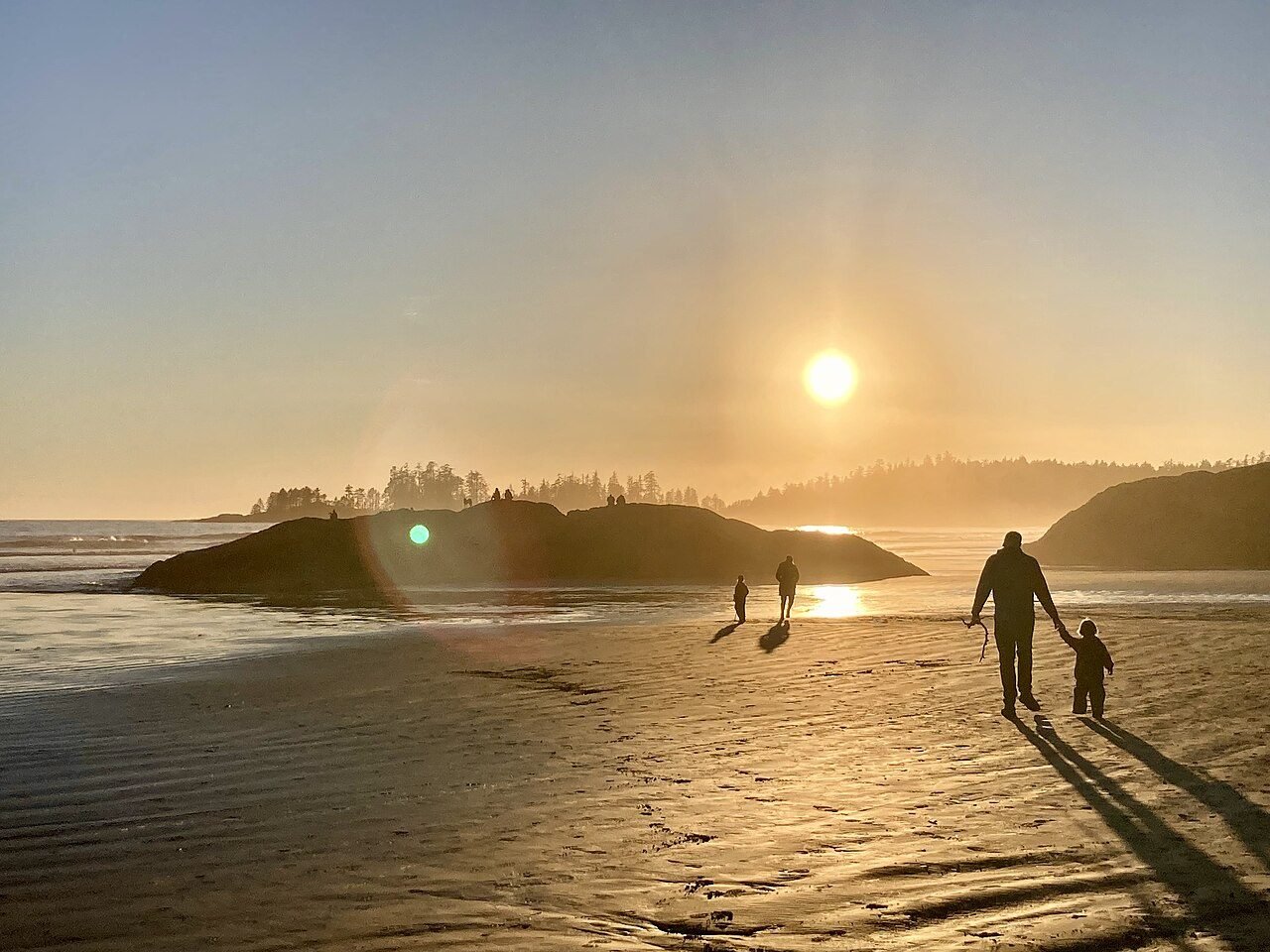
| Evening | Sunset walk on Long Beach | Fish tacos, early bed (your arms will thank you) | Storm-watch from a beachfront hot tub, winter or not | Highway 4 back to Port Alberni before dark |
FAQs about Pacific Rim National Park
How many days do you need in Pacific Rim National Park?
Three to four days covers the Long Beach unit properly — beaches, a surf lesson, the Rainforest Trail, Meares Island, and a day in Ucluelet. The Broken Group Islands add 3–5 days of kayaking, and the West Coast Trail is a full 6–8 day expedition. Doing all three units in one trip takes the better part of two weeks and serious logistics.
Can you visit Pacific Rim National Park in winter?
Yes — and you should consider it. The Long Beach unit is open all year, and November through February is storm watching season, the park’s signature winter experience. The West Coast Trail and Broken Group Islands close October through April. Winter means rain, short days, and empty beaches; summer means surf crowds and booked-out accommodation. Pick your weather.
Do I need a car to visit Pacific Rim National Park?
Practically, yes. Highway 4 is the only road in, and the trailheads, beaches, and two towns are spread along it. Seasonal shuttles connect Nanaimo and Victoria to Tofino, and the West Coast Trail Express serves hikers — but without a car you’ll miss half the stops. Rent in Nanaimo or Victoria and read the fine print in my renting a car in Canada guide first.
Is surfing at Tofino good for beginners?
Yes — it’s one of the best places in North America to learn. Cox Bay and Chesterman Beach have forgiving beach breaks and a whole industry of surf schools. The catch is the water: around 10°C year-round, so you’ll be in a thick wetsuit even in August. Take the lesson. I stood up for three seconds and I’m still telling people about it.
How hard is the West Coast Trail, really?
Hard. It’s 75‑km of mud, ladders, cable cars, and tidal shelves, done in 6–8 days with a full pack. You need a reservation (from February), the trail fee, and backcountry experience — this is not a first-backpacking-trip trail. The ladders are the surprise filter: climbers of telephone poles need apply. If that sounds like too much, the Juan de Fuca Trail and the Wild Pacific Trail give you the same coastline in day-hike doses.
Are there bears and cougars in the park?
Yes — black bears, coastal wolves, and cougars all live here, and bears are commonly seen on the beaches at low tide. Store food properly, keep your distance, keep dogs leashed, and read the park’s wildlife safety briefings before you go. Statistically, the ocean is the bigger hazard: sneaker waves and rip currents injure more visitors than every animal combined.
Keep exploring
Pacific Rim is the wild edge of the island — keep going:
- National parks in Canada — how Pacific Rim stacks up against the other 37
- Things to do in Vancouver — the usual launch point for the island
- 4-day Vancouver itinerary — pair the city with the coast
- Where to stay in Victoria — the other end of the island, and the WCT bus starts here
- Canada summer packing list — the rain-shell logic applies year-round on the west coast
- Canada in December — storm season timing, if winter’s your plan
The coast doesn’t care about your itinerary. Go anyway.
1 comment