
Last updated: October 3, 2026
The short answer
- Day 1: I walk Halifax’s 4 km waterfront boardwalk, eat a donair (the city’s official food since 2015), and spend the afternoon at the Maritime Museum of the Atlantic (adult ~$11, with Titanic and Halifax Explosion exhibits).
- Day 2: Halifax Citadel National Historic Site for the daily Noon Gun (fires every day except Christmas Day), a slow afternoon in the free Halifax Public Gardens, and a $3 ferry ride to Dartmouth — the cheapest harbour cruise in Canada.
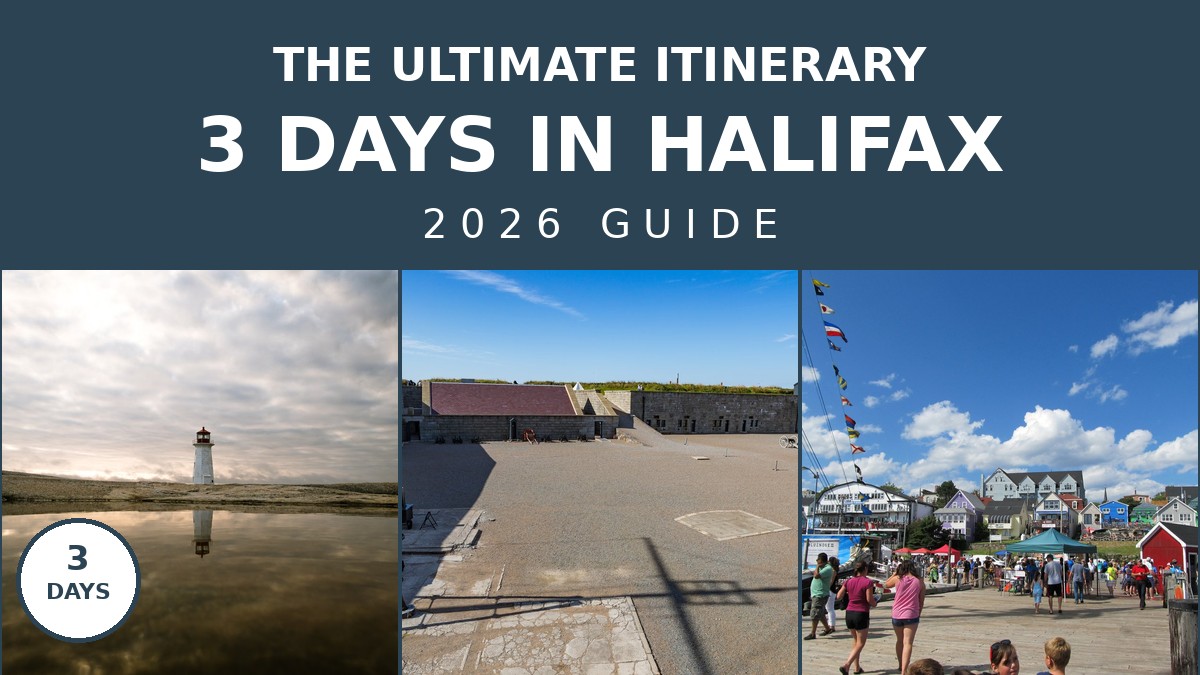
- Day 3: A South Shore driving loop: Peggy’s Cove and its famous lighthouse (~1 hour), Mahone Bay’s three churches, and UNESCO-listed Old Town Lunenburg (~90 minutes back to Halifax).
Three days is the sweet spot for Halifax — trust me on this one. I’ve done the “one frantic day before the ferry” version, and it’s a mistake: this is a city that rewards slowing down. In 72 hours you get the waterfront and the museums, the hilltop fortress and the Victorian gardens, and one full day on the South Shore where the Atlantic does all the showing off. This itinerary uses 2026 prices and hours checked in October 2026, and it’s written for the main travel season (roughly May through October). Here’s the thing about Halifax weather, though: even in July, a fog bank can roll in and drop the temperature ten degrees in an hour. Layers are non-negotiable. I learned that one the soggy way.
Getting to Halifax and where to stay
Halifax Stanfield International Airport (YHZ) sits about 35 km north of downtown — a 30–40 minute ride. I took the 320 Regional Express bus straight from the arrivals level: $4.75 adult cash (exact change only), or buy it contactless in the HFXGO app before you board. Pro tip: the HFXGO app works for every bus and the ferry in the city, and you will want it on Day 2. → Halifax Transit — official fares, tickets & passes
For where to base yourself: stay downtown or on the waterfront. The whole first two days of this itinerary are walkable from there, which means no rental car, no parking fees, and no navigating Halifax’s charmingly hilly one-way streets. I stayed near the waterfront and walked everywhere — I timed it: Citadel Hill from the boardwalk is about 20 minutes uphill, and you’ll feel all of it. For the full breakdown — neighbourhoods, waterfront vs. downtown, and hotel picks — see our best areas to stay in Halifax.
Fair warning on timing if you’re picking your month: July and August bring the warmest weather and the big festivals — the Royal Nova Scotia International Tattoo ran July 1–6, 2026, the TD Halifax Jazz Festival July 7–12, and the Halifax Busker Festival’s 40th anniversary edition July 29–August 3. September and October are my personal pick: fewer crowds at Peggy’s Cove, fall colour, and you can still eat dinner outside most nights. Shoulder-season hotel rates don’t hurt either.
Day 1: The waterfront, a donair, and maritime history
Day 1 is gloriously simple: the harbour, the food, and the museum that explains why this city exists at all. Everything today is flat, walkable, and within about a kilometre of the water.
9:00 AM — Walk the Halifax Waterfront Boardwalk (free)
Start at the Halifax Waterfront Boardwalk — roughly 4 km of wooden boardwalk running the length of downtown, one of the longest downtown boardwalks in the world. I walked it end to end on my first morning (took me just under an hour at a dawdling, coffee-in-hand pace), and it’s the best orientation you can give yourself: working harbour on one side, restaurants and shops on the other, Georges Island sitting out in the middle of the water.
Practical notes:
- Don’t miss: the wave-shaped seating, the big orange hammocks (yes, really), and the CSS Acadia moored at the museum wharf — a steamship that served in both World Wars, 1913 to 1969.
- One thing to skip: hunting for Theodore TOO, the smiling tugboat. I checked before my trip — he left Halifax Harbour in June 2021 for Ontario. The original filming model from the TV show is inside the Maritime Museum instead (see this afternoon).
- Timing: morning light hits the harbour beautifully, and you’ll beat the tour-bus crowds that arrive by 11.
12:30 PM — Donair lunch: the official food of Halifax (~$12)
You cannot say you’ve been to Halifax without eating a donair. In 2015 the city officially declared it the official food of Halifax (there’s even a National Donair Day, December 8 — plan accordingly), and the story is pure Halifax: Greek immigrant Peter Gamoulakos opened King of Donair in 1973, swapped lamb for spiced beef and tzatziki for a sweet garlic sauce made with evaporated milk, and accidentally created a legend.
I’ll be honest about my rookie mistake: I ordered one with no napkin strategy. The sweet sauce had dripped through the pita onto my shirt within four bites. Ask for extra napkins. Eat it leaning slightly forward. Thank me later.
King of Donair’s Pizza Corner location is the original, but any downtown pizza shop will do you right — every local I asked said the same thing: the sweet sauce is the whole point. Budget ~$10–14.
2:00 PM — Maritime Museum of the Atlantic (adult ~$11)
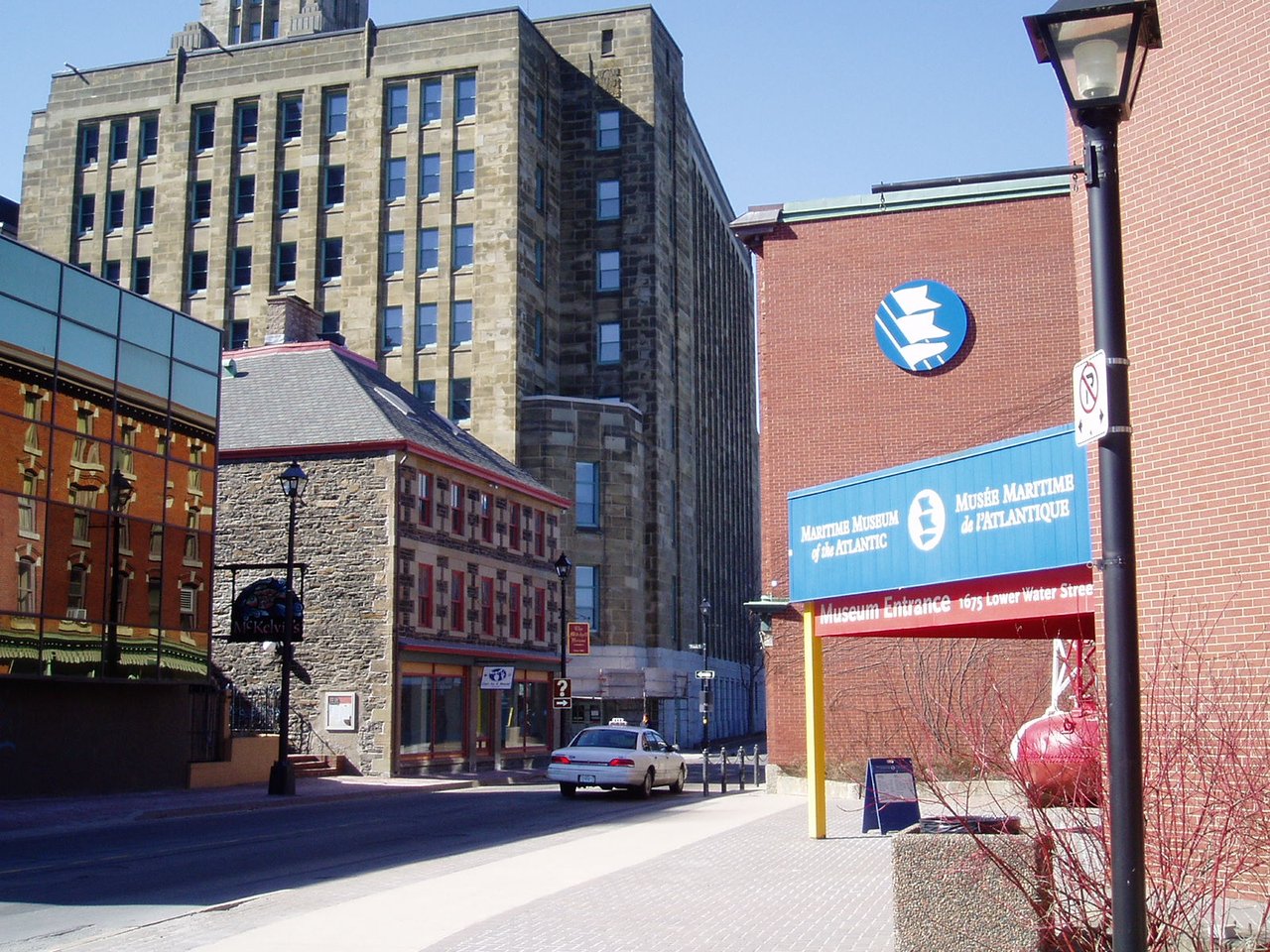
Right on the boardwalk, the Maritime Museum of the Atlantic is Canada’s oldest and largest maritime museum — and worth every penny of its modest admission (about ~$11 for adults in 2026, though I hadn’t heard about the free Tuesday-evening community nights until I checked the museum’s site — glad I did: free entry Tuesdays 4–8 PM).
Allow 2 hours. The two galleries that hit hardest:
- The Titanic exhibit — Halifax recovered 150 victims of the 1912 disaster, and the artifacts here are the real thing: an actual deck chair, a pair of tiny shoes belonging to the “Unknown Child.” A volunteer at the museum told me researchers from the 1997 film came here to study the collection. It shows.
- The Halifax Explosion gallery — the December 1917 blast that levelled the city’s north end. It’s sobering, essential Halifax history, and the museum handles it beautifully.
Hours: daily 9:30 AM–4:30 PM (Tuesdays until 8 PM). The CSS Acadia is open in summer and fall, weather permitting. → Maritime Museum of the Atlantic — official site · Discover Halifax — plan your museum visit
7:00 PM — Dinner on the waterfront
Circle back to the Historic Properties warehouses on the boardwalk for dinner — old stone privateers’ warehouses turned into restaurants and shops, and the best patio real estate in the city. Budget ~$25–40 per person for a casual seafood dinner (the lobster roll is the move on night one; save the donair poutine for night two — do not skip it).
Day 1 spending: airport bus $4.75 + donair ~$12 + museum ~$11 + dinner ~$35 ≈ ~$63 (excluding hotel).
Day 2: Citadel Hill, Public Gardens, and the ferry to Dartmouth
Day 2 is the history-and-views day, and it starts with a hill. A real one.

10:00 AM — Halifax Citadel National Historic Site (adult ~$13.25)
The star-shaped fortress on Citadel Hill has guarded the city since Halifax was founded in 1749 (the current version is mid-1800s), and the views of the harbour from the ramparts alone are worth the climb. I double-checked the 2026 season on Parks Canada’s official hours page before I went — open daily 9 AM–5 PM from May 7 through November 5, 2026 — and they change the season dates every year, so do the same. Adult admission runs about ~$13.25 in 2026.
Two things to plan around:
- The Noon Gun: fired daily at 12:00 noon (every day except Christmas Day), a tradition running since 1857. Be on the ramparts or in the parade square a few minutes early — and fair warning, it is LOUD. I knew it was coming and I still jumped. Your camera will not do it justice.
- The 78th Highlanders: kilted reenactors do drills, bagpipes, and musket demonstrations through the day. Ask them questions — they’re civilians in costume, and they’re genuinely happy to talk.
Allow 2–3 hours. Wear real shoes; the ramparts are not flip-flop terrain. → Parks Canada — Halifax Citadel National Historic Site
2:00 PM — Halifax Public Gardens (free)

Ten minutes’ walk from the Citadel (downhill, mercifully), the Halifax Public Gardens are 16 acres of pure Victorian-era garden — opened in 1867, free to enter, and one of the finest surviving examples of a Victorian garden in North America. Wrought-iron gates, ornate fountains, a duck pond, 140+ species of trees, and the bandstand where free concerts happen on summer Sundays.
I brought a book and a coffee and sat by the pond for an hour. Do not skip this — after the crowds and cannons of the morning, it’s the reset your itinerary needs. Hours: daily 8 AM–dusk. → Halifax Public Gardens — official site
4:30 PM — Ferry to Dartmouth ($3)
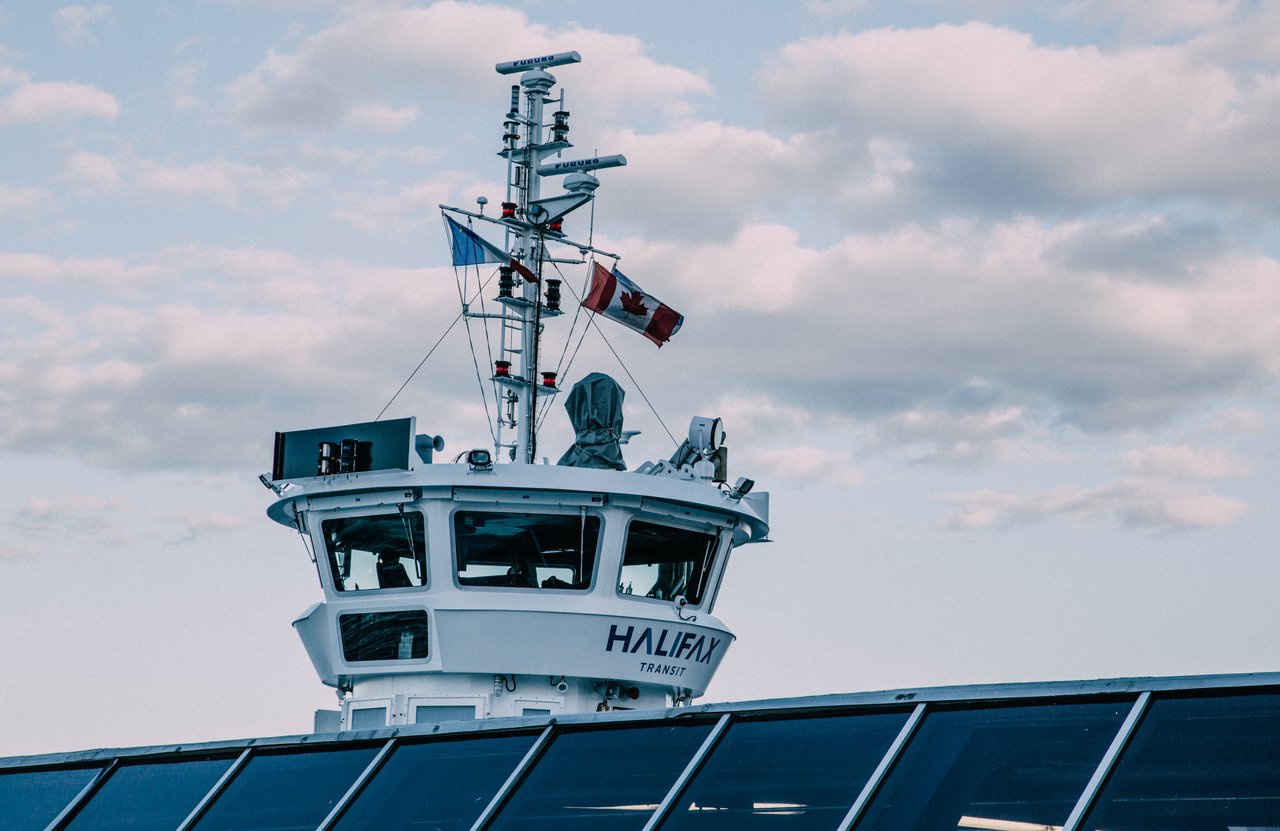
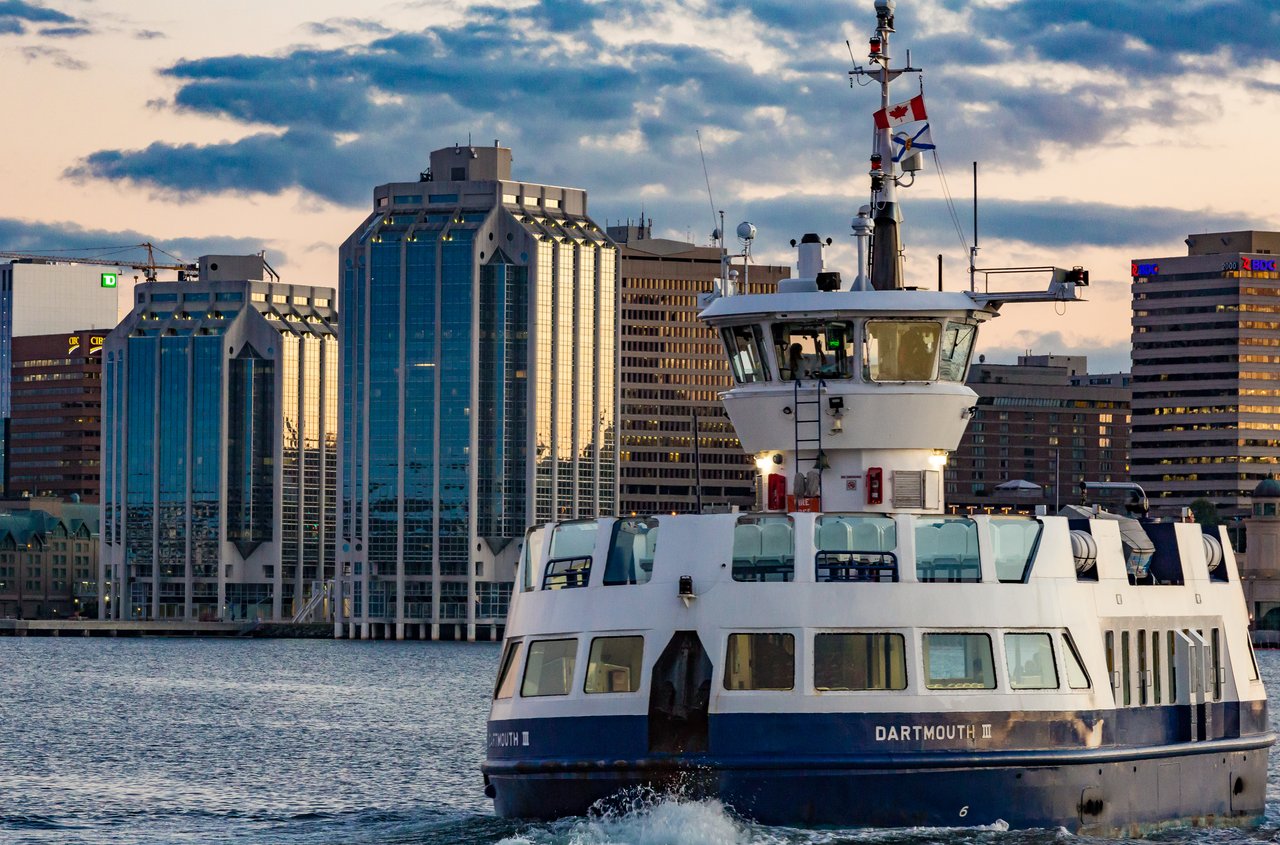
Walk back to the waterfront ferry terminal and ride the Halifax–Dartmouth ferry across the harbour — $3 adult cash (exact change), or tap in the HFXGO app. I timed the crossing: 12 minutes flat, and it’s genuinely the cheapest harbour cruise in Canada, with the skyline view the postcards charge for. The Alderney Landing terminal in Dartmouth has a market and a patio with the best across-the-water view of the city. Grab a drink, watch the ferries cross, ride back.
7:30 PM — Dinner and live music on Argyle Street
Finish the day on Argyle Street, the restaurant-and-bar strip a few blocks up from the water — this is where the Celtic music happens. I ducked into a pub for a fiddle session on a Tuesday night and stayed two hours longer than my spreadsheet allowed. (The spreadsheet forgave me.)
Day 2 spending: Citadel ~$13.25 + ferry $3 + food ~$50 ≈ ~$66 (excluding hotel).
Day 3: Peggy’s Cove, Mahone Bay, and Lunenburg
Today you need wheels — this is the one day of the trip that doesn’t work on foot. Rent a car from a downtown agency for the day (~$80–120), or book a South Shore tour if you’d rather not drive. The classic loop runs Halifax → Peggy’s Cove → Mahone Bay → Lunenburg → back to Halifax, about 250 km total. Fill up before you leave the city; gas stations thin out on the Lighthouse Route.
8:30 AM — Drive to Peggy’s Cove (~1 hour)
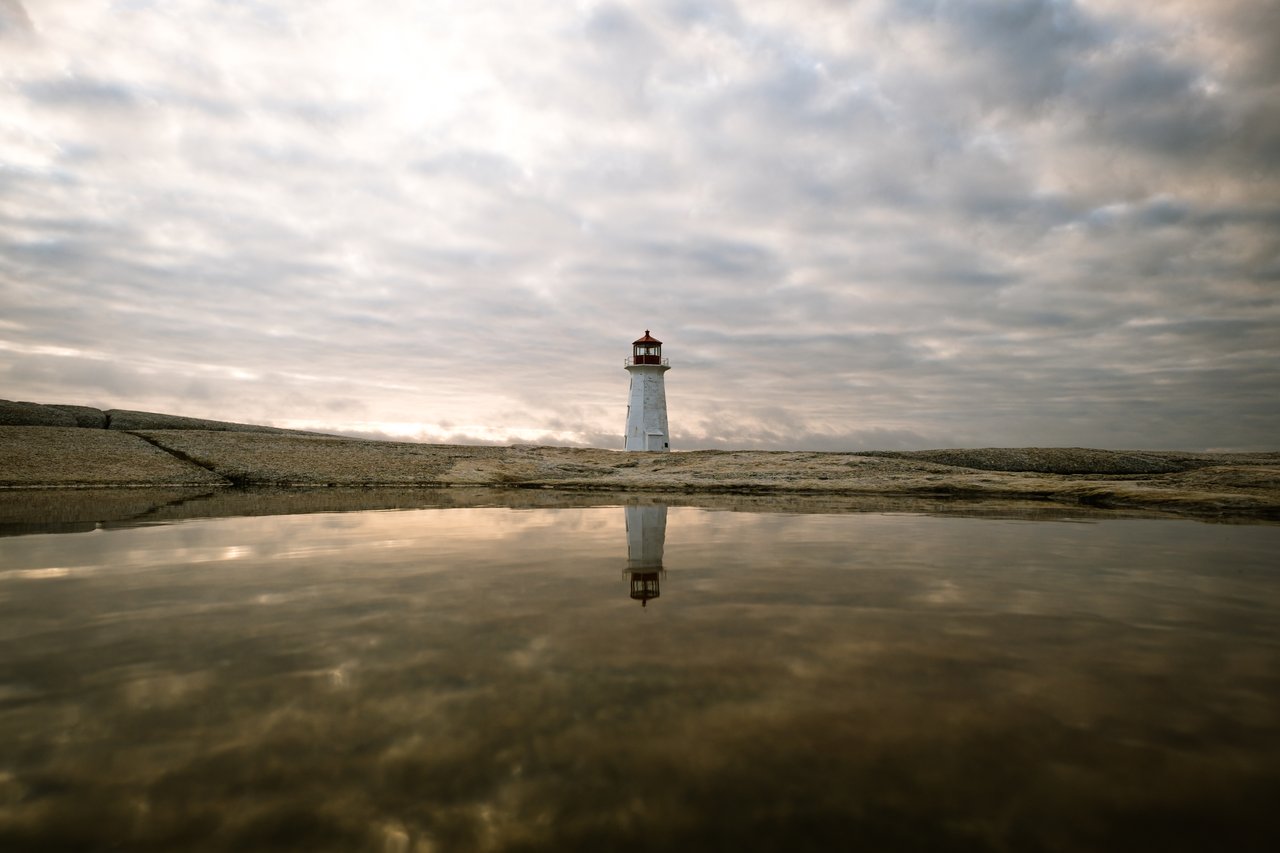
Peggy’s Cove is about 44 km southwest of Halifax — roughly an hour on the winding coastal road, and every minute of the drive is part of the experience. The village itself is tiny; the main event is Peggys Point Lighthouse (first built 1868, the current octagonal tower from 1915), still operated by the Canadian Coast Guard, sitting on a vast sweep of granite at the edge of the Atlantic.
Here’s the thing, and I cannot stress this enough: stay off the black rocks near the water. The dark, wet-looking granite is slippery algae, and rogue waves sweep people off these rocks every year — the province posts security patrols from May to January and roughly 700,000 visitors come through annually, so the warning signs are there for a reason. Admire the surf from the dry, light-coloured rock. Then walk the village, poke into the galleries, and grab a lobster roll or a cranberry square at the café.
Allow 1.5–2 hours. Go early — by 11 AM the tour buses arrive and the magic-to-crowd ratio shifts.
11:30 AM — Mahone Bay’s three churches
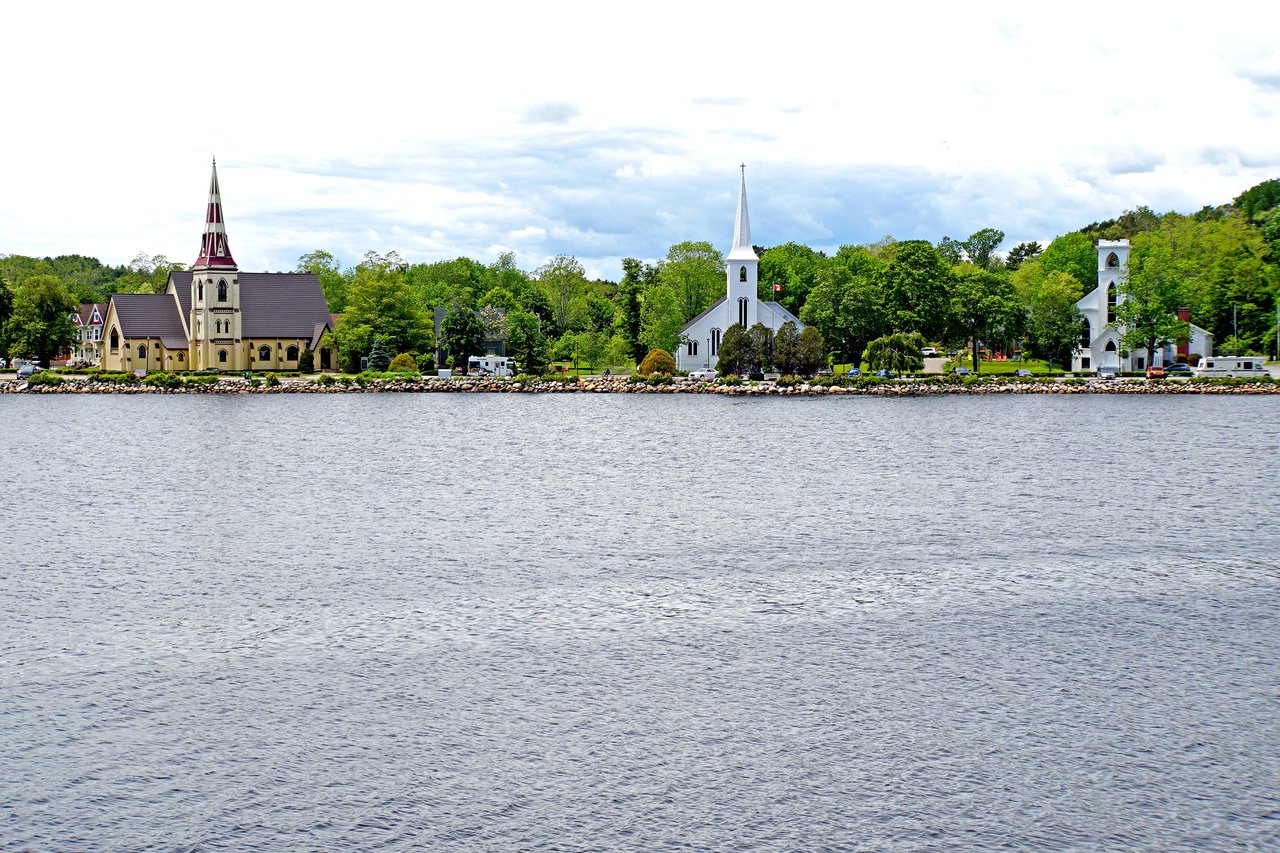
About 45 minutes west, Mahone Bay is the postcard: three historic churches lined up along the waterfront, best photographed from across the harbour. It’s a 30–45 minute stop for most people — stroll the main street’s boutiques, grab a coffee, take the photo everyone takes (because it’s genuinely that pretty).
1:30 PM — Lunenburg: a UNESCO World Heritage Site
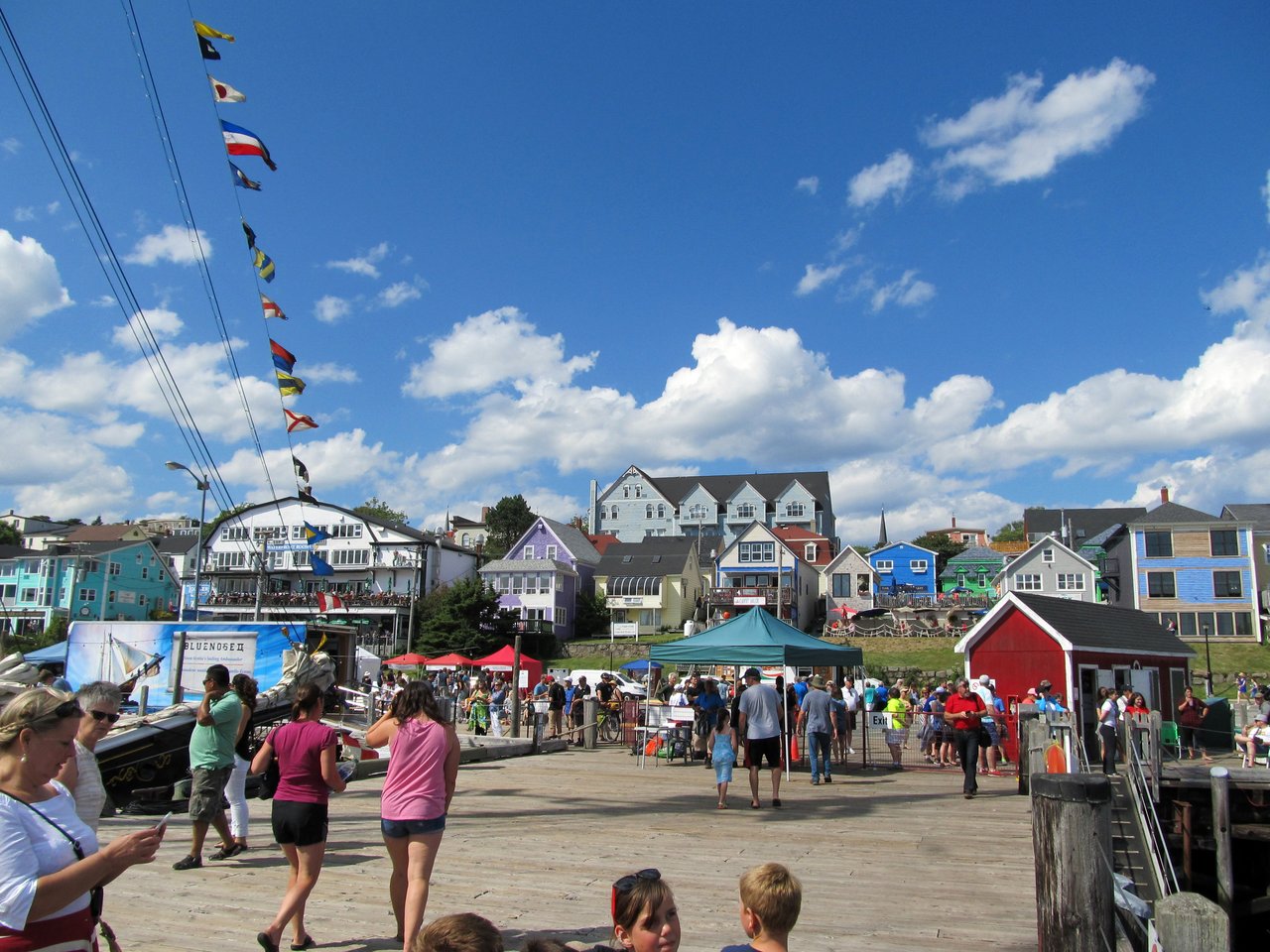
Twenty minutes farther west sits Old Town Lunenburg, designated a UNESCO World Heritage Site for its remarkably preserved 18th-century planned-town layout — and it’s as colourful in person as in the photos. The waterfront is the heart of it: the Fisheries Museum of the Atlantic, the tall ships, and (seasonally) the Bluenose II, the famous racing schooner replica.
Practical notes:
- Park a few blocks inland — waterfront parking fills fast in summer — and explore on foot. It’s hilly; comfortable shoes again.
- The Fisheries Museum of the Atlantic has its own admission fee; allow an hour if you go in.
- Lunch on the waterfront runs ~$20–30. I had fish and chips with the harbour in front of me and zero regrets.
→ Nova Scotia Tourism — Lunenburg, UNESCO heritage & home of the Bluenose
4:30 PM — Drive back to Halifax (~90 minutes)
Head home via Highway 103 — about 90 minutes. You’ll be back in Halifax for dinner with the whole evening to spare, which is exactly why this loop works in a day.
Day 3 spending: car rental ~$100 (split if you’re two) + gas ~$30 + food ~$45 ≈ ~$175 (excluding hotel; Peggy’s Cove and Mahone Bay are free).
Where to eat in Halifax: 3-day shortlist
- A donair — the official food of Halifax since 2015. King of Donair’s original Pizza Corner spot, or any downtown pizza shop. Extra napkins. Trust me on this one.
- Lobster rolls on the waterfront — Day 1 lunch or dinner; ~$18–25. The boardwalk vendors do them well.
- Donair poutine — the inevitable, glorious fusion. Day 2 dinner.
- Fish and chips in Lunenburg — Day 3 lunch on the waterfront (~$20–30).
- Argyle Street pubs — dinner plus a fiddle session; the Celtic music scene is the real thing here.
How much does 3 days in Halifax cost?
Sample budget per adult, excluding hotel (prices checked October 2026; items marked ~ are estimates):
| Item | Cost (CAD) |
|---|---|
| Airport bus 320, round-trip (Halifax Transit) | ~$9.50 |
| Harbour ferry to Dartmouth (Halifax Transit) | $3 |
| Halifax Citadel admission (adult) | ~$13.25 |
| Maritime Museum of the Atlantic (adult) | ~$11 |
| One-day car rental + gas (Day 3) | ~$130 |
| Food & drinks, 3 days | ~$130–170 |
| Total | ~$300–340 |
Mid-range downtown hotels run roughly ~$180–300/night in summer (our best areas to stay in Halifax guide covers where to base yourself). Short on time? Our 1-day Halifax itinerary and 2-day Halifax itinerary compress the highlights.
Timeline at a glance
| Day | Morning | Afternoon | Evening |
|---|---|---|---|
| Day 1 | Waterfront boardwalk walk (free) | Donair lunch + Maritime Museum (~$11) | Dinner at Historic Properties |
| Day 2 | Halifax Citadel + Noon Gun (~$13.25) | Public Gardens (free) + ferry to Dartmouth ($3) | Argyle Street dinner + Celtic music |
| Day 3 | Peggy’s Cove lighthouse (~1 hr drive, free) | Mahone Bay churches + Lunenburg UNESCO site | Drive back to Halifax (~90 min) |
FAQs about spending 3 days in Halifax
Is 3 days enough for Halifax?
Yes — three days is the sweet spot. Day 1 covers the waterfront boardwalk, the donair, and the Maritime Museum of the Atlantic; Day 2 takes in the Halifax Citadel, the Public Gardens, and a ferry ride to Dartmouth; Day 3 is the South Shore loop (Peggy’s Cove, Mahone Bay, Lunenburg). With only 1–2 days, see our 1-day Halifax itinerary or 2-day Halifax itinerary.
Do I need a car for 3 days in Halifax?
Only for one day. Days 1 and 2 are entirely walkable from downtown or the waterfront — the boardwalk, museums, Citadel, and Public Gardens are all within about a kilometre of the harbour, and the Dartmouth ferry is public transit. Day 3 (Peggy’s Cove, Mahone Bay, Lunenburg) needs a car: rent one downtown for the day (~$80–120) or book a South Shore tour.
What is the Noon Gun at the Halifax Citadel?
A cannon fired daily at 12:00 noon from the Halifax Citadel — every day except Christmas Day — a tradition running since 1857. Be on the ramparts or in the parade square a few minutes before noon; it is very loud. The Citadel is open daily 9 AM–5 PM from May 7 to November 5, 2026, with adult admission about ~$13.25. Always confirm current hours on the official Parks Canada page.
Is Peggy’s Cove safe to visit?
Yes, with one firm rule: stay off the black rocks near the water. The dark, wet-looking granite is covered in slippery algae, and unpredictable waves sweep visitors off the rocks every year — the province posts security patrols from May to January. Admire the surf from the dry, light-coloured rock above the waterline, and you’ll have a perfectly safe visit. Entry is free; allow 1.5–2 hours and go early to beat the tour buses.
How much does 3 days in Halifax cost?
Budget roughly ~$300–340 CAD per adult excluding hotels (October 2026 prices): about $27 in transit (airport bus and the $3 harbour ferry), ~$24 in attraction admissions (Citadel ~$13.25, Maritime Museum ~$11), ~$130 for a one-day car rental with gas, and ~$130–170 for food over three days.
When is the best time to visit Halifax?
July and August are the warmest and liveliest — the Royal Nova Scotia International Tattoo, the TD Halifax Jazz Festival, and the Halifax Busker Festival all ran in July and early August 2026. September and October are my pick: smaller crowds, fall colour, and still-pleasant patios. Whenever you go, pack layers — Halifax fog can drop the temperature ten degrees in an hour, even in summer. For a deeper seasonal breakdown, see our best coastal towns in Nova Scotia and consider extending into our Nova Scotia road trip itinerary.
That’s the whole plan — waterfront, fortress, gardens, and one very photogenic day on the South Shore. You’ve got this.
11 comments