

- ✓ Two mountains in one resort: the sunny, social south side and the steeper, quieter north side, plus Versant Soleil by the casino — 102 trails, 645 m of vertical, and a 6 km cruiser called Nansen that runs the whole way down.
- ✓ Non-skiers are not an afterthought here: dog sledding, snowshoeing in a 1,510 km² national park, a Scandinavian spa, an outdoor rink, and a casino reached by gondola — a mixed group can genuinely all have a good day.
- ✓ All prices are planning ranges, not quoted rates: lift tickets, lessons, tours and rooms swing hard by date, so check the official sites linked below for your exact weekend.
Here’s the deal with Mont Tremblant: it is the closest thing eastern Canada has to a full resort town, and it is only about 90 minutes from Montreal. I drove up expecting a ski hill with a few hotels attached. What I found was a whole pedestrian village at the base, a second town a few kilometres away that most visitors never see, and a national park the size of a small country sitting right next door. Buckle up — this one has layers.
First, a confession, because I’ve made this mistake so you don’t have to: my GPS said “Mont-Tremblant” and I followed it to the old town, not the resort. The town of Mont-Tremblant (the Saint-Jovite area) and the Tremblant resort village are two different places, about 10 minutes apart by car. If you want lifts, restaurants and the pedestrian village, navigate to the resort, not the town. I figured this out in a gas station parking lot, in the snow, while my windshield fogged up. You get to skip that part.
Getting to Mont Tremblant from Montreal
It’s roughly 135 km from downtown Montreal — Autoroute 15 north to Saint-Jérôme, then Route 117 north, then Route 327 east to the resort. In clear weather that leg takes about 1 hour 45 minutes. On a Friday afternoon in ski season, or in a snow squall on the 117, allow two and a half hours and don’t fight it. I stopped counting the cars in the ditch after the third one. Winter driving here is not a suggestion: Quebec law requires winter tires from December 1 to March 15, and the 117 climbs into real Laurentian weather. Gas up in Saint-Jérôme if your gauge is anywhere near a quarter — services thin out after that, and I watched my own gauge do something I didn’t enjoy north of Sainte-Agathe.
No car? Autobus Galland runs Montreal to Mont-Tremblant, roughly twice daily, around $35–45 one way and about 3 hours. Book ahead in ski season — the Friday evening bus fills. → Autobus Galland — official site
If you’re flying into Montreal-Trudeau and driving straight up, do not assume a rental comes with winter tires by default — confirm it at booking. I have stood at a rental counter in January being told my car had all-seasons, and that is a conversation you do not want at 6 PM with snow starting. Quebec’s winter-tire rule runs December 1 to March 15.
Once you’re at the resort, park the rig and forget it. The pedestrian village is car-free, a free Cabriolet gondola links the upper and lower village, and a resort shuttle covers the outlying lodges. The old town is the only leg that really wants a car or a taxi.
The mountain, on a map
Six stops, from the resort base to the national park. Tap any stop to jump the map straight to it.
Map data © OpenStreetMap contributors. Open the full map
Skiing Tremblant: the two sides and how to pick your day
The numbers first, because they matter: 102 trails, 14 lifts, a 875 m summit and 645 m of vertical, spread over four faces — Versant Sud (south), Versant Nord (north), Versant Soleil (sunny side, by the casino) and The Edge. The season typically runs mid-November to late April, and snowmaking covers a big share of the mountain, so early-season trips are less of a gamble than they look. I double-checked the trail count and vertical on the resort’s own pages and the mountain’s published stats before writing this — they’re consistent across sources, which is more than I can say for some resorts.

Here’s how I’d split it. Versant Sud is the main front side — the gondola and Flying Mile lifts, the beginner areas, the terrain parks, and most of the crowds. It’s where you start. Versant Nord is steeper, quieter, and where the stronger skiers drift by mid-morning; the glades and the long cruisers live here. Versant Soleil faces the afternoon sun, sits next to the casino, and is the sleeper pick: between about 11 AM and 2 PM, while everyone else is at lunch, its long blue runs are often wide open. The Edge is the advanced add-on beyond the north side — glades, steeps, fewer people, no apologies.
One run to build a day around: Nansen, the 6 km green cruiser from the summit all the way to the base. I skied it at the end of a long day with legs that had already filed their resignation, and it was the best decision I made all weekend — wide, gentle, and long enough that you actually feel like you went somewhere. Beginners: this is your summit run, and yes, you can genuinely say you skied top to bottom.
Ride the gondola up first thing, before the lift lines form, and ski the south side while it’s still firm. Then cross to the north side late morning and finish on Versant Soleil in the afternoon sun. That loop — south, north, sun — is the whole mountain in one day without ever standing in the same line twice.
Lift tickets and lessons
Tickets are priced by date and age, and they are not cheap — plan on roughly $130–170 per adult per day at the window in peak season, less if you buy online in advance or ski midweek. I’m deliberately giving you a range, not a price: Tremblant uses date-based pricing, so the exact number for your weekend lives on the resort site, and anyone quoting you a single fixed price is guessing. Multi-day tickets cut the daily rate meaningfully, and kids, seniors and beginners have their own brackets. → Tremblant — official site for tickets, lessons and conditions
Lessons: if you’ve never skied, book a group lesson for your first morning, not your first afternoon — you want the lesson before your legs are tired and your confidence is dented. The resort’s ski school runs group and private lessons for adults and kids, plus dedicated beginner zones on the south side. I watched a friend try to teach his partner on the main slopes once. Nobody enjoyed it, including me, and I was just watching.
A word on lift lines, because Tremblant’s are real on weekends. The gondola line at 9 AM on a Saturday is the longest line you’ll stand in all weekend, and it moves slowly because everyone arrives at once. The fix is boring and it works: be at the lift at 8:30, ski hard until 11, then take a long lunch while everyone else queues. The single-rider lines at the big lifts are also worth using if your group doesn’t mind splitting up for one chair — I cut a 25-minute wait to about five that way, and met a very chatty snowboarder from Ottawa who gave me the Versant Soleil lunch-window tip in the first place. Skiing is a social sport, but standing in line isn’t.
One more thing worth knowing before you pick a weekend: Tremblant’s snowmaking is genuinely industrial — more than a thousand snow guns — which means the main runs are usually in good shape even when natural snowfall has been thin. It also means the resort can feel busy on a thin-snow weekend, because everyone is on the same open runs. If you can swing it, a midweek trip in January or February is a different mountain: same snow, half the people, cheaper rooms.

The summit is 875 m and the wind up there is no joke. I have stood at the top in a wind that turned a blue run into a survival exercise. Check the resort’s lift and trail status before you go up, carry a layer you think you won’t need, and if the gondola is on wind hold, ski the lower mountain and try again after lunch — it usually settles.
The pedestrian village after the lifts close
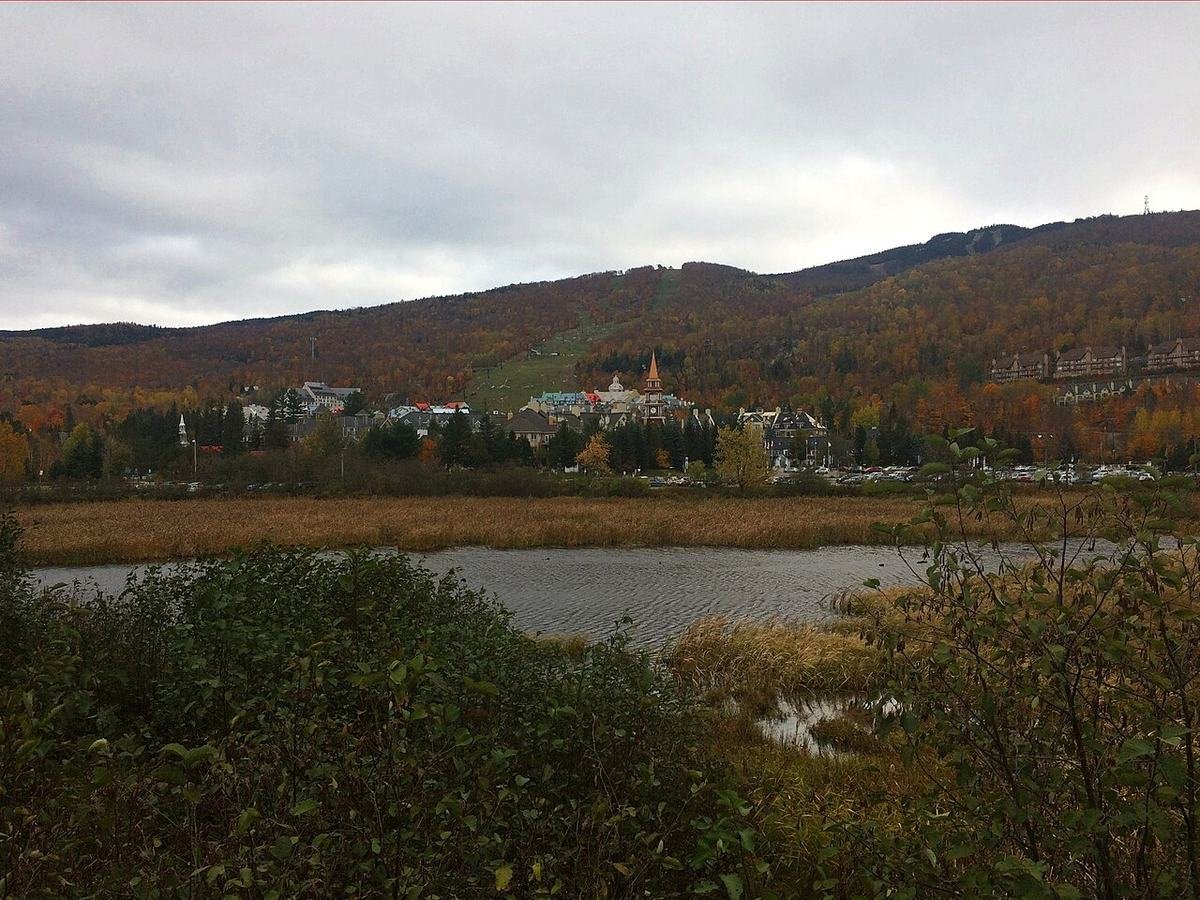
The village is the part of Tremblant people photograph most, and for once the photos are honest: a compact, car-free cluster of colourful buildings in a vaguely Alpine, vaguely Québecois style, stacked up the hillside around Place Saint-Bernard, with the clock tower (Tour des Voyageurs) as the landmark. It is, in the nicest possible way, a purpose-built resort village — nobody pretends it grew organically, and that’s fine, because it works. You can walk from your condo to the lifts in ski boots without crossing a road.

Evenings here are low-key by design: restaurants ranging from poutine counters to proper sit-down dining, bars with live music on weekends, shops that stay open late, and a lot of people wandering in ski boots eating crêpes. Prices in the village run higher than in the old town — that’s the resort premium, and it’s real. If a dinner bill stings, walk 10 minutes to the old town the next night and eat for noticeably less. I did exactly that, twice.

Ride the Cabriolet gondola after dark, when the village lights are on and the lift lines are gone. It’s free, it’s quiet, and it’s the best view of the village you’ll get without skiing. A lift attendant told me most visitors never ride it at night — their loss.

Non-ski days: what to do when your legs give out
Every ski trip has a day when someone’s knees file a complaint. Tremblant handles that day better than most resorts. Here’s the honest shortlist, in the order I’d actually do them:
Dog sledding. Kennels around Tremblant run guided sled tours through the forest, usually an hour or two, with a musher driving and you riding (some tours let you try driving). Book ahead — the good operators fill on weekends. It is colder than you think on the back of a sled, and louder: a team of huskies leaving the kennel sounds like a small riot. Worth every penny.

Snowshoeing and cross-country skiing. The national park (below) is the headline, but the resort area also has groomed cross-country and snowshoe trails, and the Domaine Saint-Bernard area near the village has its own network. Snowshoes rent cheaply and the learning curve is exactly zero — if you can walk, you can snowshoe, and the quiet of a snowed-in forest trail is the best antidote to a noisy resort day.

Scandinave Spa Mont-Tremblant. Outdoor hot pools, cold plunges, saunas and steam rooms in a quiet, no-talking zone a short drive from the village. This is where ski legs go to recover. Go in the evening after your last run, not before — I made the before mistake once and spent the afternoon skiing like a boiled noodle. → Scandinave Spa Mont-Tremblant — official site
Ice skating. There’s an outdoor rink in the village area, and Lac Tremblant itself freezes for skating when conditions allow — always check what’s actually open and maintained rather than assuming the lake is safe. Skate rentals are available in the village. It’s a good one-hour activity, especially with kids who are done with ski school.
Casino de Mont-Tremblant. A full casino next to Versant Soleil, reached from the village by the Casino Express Gondola — which is itself half the point, since you ride a gondola to go gamble. It’s open evenings, it’s 18+ (Quebec casino age), and it’s the obvious bad-weather or no-ski evening plan. I’m not a gambler; I went for the gondola ride and stayed for the view. Set a budget before you walk in, obviously.
Snow tubing. The resort runs a tubing park with multiple lanes, and it’s the best low-skill, high-laugh activity on the mountain — no lessons, no balance required, just a tube and a slope. It’s especially good for groups where half the people ski and half don’t, because everyone ends up at the bottom laughing at each other. Go in the late afternoon when the ski day is winding down and the lanes are quieter.
Just walking the village. Don’t underestimate this one. A slow evening wander through the pedestrian village, with the lights on and the snow falling, is a legitimate activity — especially if you’ve spent the day working hard on the mountain. Stop for a crêpe, window-shop, watch the skiers come down the last run under the lights. Some of my best Tremblant evenings involved zero activities and a warm drink.
Plan your non-ski day for the middle of the trip, not the end. Day two is when legs are sorest and lift lines are longest on a weekend — swap it for the spa and a dog sled tour, then come back to the slopes on day three fresh. Your future self will send thanks.
Mont-Tremblant National Park in winter
Right next door to the resort — and easy to miss entirely, which is a shame — sits Parc national du Mont-Tremblant, Quebec’s oldest national park (created 1895) and its largest, at 1,510 km², with 400 lakes and six major rivers. I double-checked those numbers on Sépaq’s official park page before writing this. In winter the La Diable sector (the one closest to the resort, around Lac Monroe) runs groomed cross-country ski trails, snowshoe trails and winter camping for the hardy. You buy a daily access right online before you go — Sépaq caps daily entries, and showing up without one on a busy weekend is a gamble. → Parc national du Mont-Tremblant — Sépaq official page
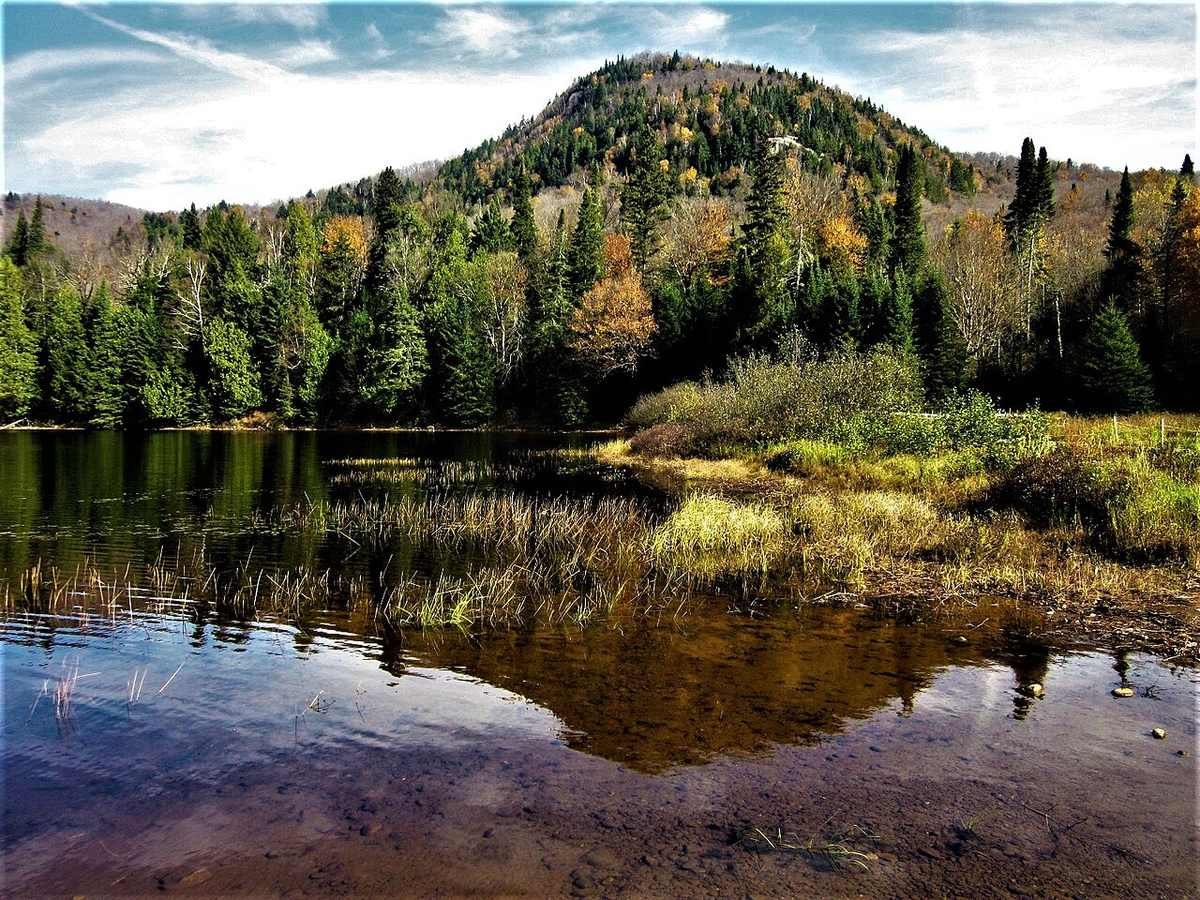
Winter in the park is quiet in a way the resort never is. No lift music, no lift lines, just the sound of your own skis. If you’ve never tried cross-country skiing, the park’s groomed trails are a gentler introduction than the resort’s downhill chaos, and the rental shops in the area will set you up. Bring water and a charged phone: trailheads are spread out and cell coverage is patchy in the valleys.

The park became Quebec’s first International Dark Sky Park in 2023. On a clear winter night, drive 20 minutes from the resort lights, turn the car off, and look up — the Milky Way over a frozen lake is the one thing at Tremblant that costs nothing and beats everything else on this list.
Tremblant in French, and other things worth knowing
Tremblant is in Quebec, and French is the first language here — trail signs, lift announcements and menus lean French first, English second. You do not need to speak French to have a good trip; the resort staff all handle English. But a little French goes a long way, and it costs nothing: bonjour on the lift, merci at the counter, and reading versant as “side of the mountain” will save you from staring at the trail map like it’s a puzzle. I speak rough tourist French and it was enough — plus, ordering poutine in French just tastes better. That’s not science. It’s a feeling.
Holiday crowds are the one thing to plan around. Christmas to New Year’s, the February long weekend and Quebec’s school break weeks are the busiest times on the mountain, with the highest prices and the longest lines. If those are your only dates, book rooms and lessons early and accept the crowds. If you have any flexibility at all, the weeks just after New Year’s and in early March are the sweet spot: full operations, good snow, sane prices.
Dress for the summit, not the village. The temperature at 875 m with wind is a different animal from the temperature in the village. I have skied in a jacket that was perfect at the base and useless at the top. Layers, a proper neck gaiter, and gloves (not just liners) are the difference between a full day and a 2 PM retreat to the lodge. Hand warmers are cheap insurance — buy a pack in the village before you need them, not after.
One last practical note: the resort is spread out enough that your phone battery will die faster than you expect in the cold. Keep it in an inside pocket, not a jacket pocket, and screenshot your lodging address and the shuttle times before you head out. I learned that one standing in a parking lot at dusk, with a dead phone and a vague memory of where I’d parked. The lot was bigger than my memory.
Where to stay: three bases, three budgets
Keep it simple. There are really three places to base yourself, and the right one depends on how much walking in ski boots you’re willing to do:
The pedestrian village is ski-in, ski-out territory: condos and hotels right on the slopes, steps from restaurants and lifts. It’s the most convenient and the most expensive, especially on weekends and holidays. Book early for February and March — the village sells out on long weekends, and I’ve seen people end up 20 minutes away because they booked in January for a February trip.

The old town (Saint-Jovite) is the budget move: motels, inns and apartments in a real small town with a grocery store, local restaurants and a church square, about 10 minutes by car from the lifts. You’ll drive to ski each day, but you’ll eat better for less and sleep quieter. This is where I’d stay on a longer trip.

Lake-side and Versant Soleil lodges sit in between: quieter than the village, closer to the slopes than the old town, and a good pick for families who want a condo kitchen. Versant Soleil has its own lifts and the casino gondola link, so you’re not stranded. Wherever you stay, check whether parking is included — village parking is paid and it adds up over a long weekend.
If you’re combining Tremblant with a Montreal city stay, my Montreal travel guide covers the city end, and Montreal in winter covers the season. For the wider province, see the best places to visit in Quebec.
What does Mont Tremblant cost?
Prices below are planning ranges per person per day, in Canadian dollars. They cover food, activities, local transport and treats — not accommodation and not lift tickets, because those two swing the total more than everything else combined. Budget lift tickets separately (roughly $130–170 per adult per day at the window in peak season, less booked ahead or midweek) and rooms separately (village condos and hotels from roughly $150–400+ per night depending on season and size). Pick your travel style, tell the calculator how many days you’re staying, and it does the rest.
Budget calculator
Per person, in Canadian dollars. Excludes accommodation and lift tickets.
Budget ≈ $130/day · Mid-range ≈ $220/day · Luxury ≈ $390/day. Excludes accommodation and lift tickets — budget those separately. Planning ranges for 2026–27, not quoted rates.
| Expense (per person / day) | Budget | Mid-range | Luxury |
|---|---|---|---|
| Accommodation (share of room) | $75 (old-town motel, shared) | $150 (village condo, shared) | $300+ (village hotel / large condo) |
| Food & drink | $45 | $75 | $130 |
| Activities (non-lift: spa, tours, rink) | $45 | $95 | $170 |
| Getting around (shuttle, parking share) | $20 | $25 | $40 |
| Coffee, treats & souvenirs | $20 | $25 | $50 |
| Lift ticket (ski days only) | $130–170 | $130–170 | $130–170 |
| Daily total (with lift ticket, ski day) | ~$335–375 | ~$500–540 | ~$690–730 |
For the bigger Canada-wide picture, my Canada trip cost guide puts Tremblant in context against Banff, Whistler and the rest — spoiler: Tremblant is not the cheapest ski trip in Canada, but it’s cheaper than flying west, and the drive from Montreal is the whole trick.
Suggested 3-day plan
| Time | Day 1 — south side + village | Day 2 — non-ski day | Day 3 — north side + Nansen |
|---|---|---|---|
| Morning | Gondola up first thing, south side while it’s firm | Dog sledding tour in the morning cold | North side steeps and glades before the crowds |
| Midday | Lunch in the village, then Versant Soleil in the afternoon sun | Snowshoe in the national park, La Diable sector | Nansen top-to-bottom, then lunch at the summit |
| Afternoon | Easy cruisers, then skate on the village rink | Scandinave Spa for the legs | Last runs on the south side, gear returned |
| Evening | Dinner in the village, Cabriolet ride after dark | Casino by gondola, or dinner in the old town | Farewell dinner in the old town (cheaper, quieter) |
FAQs about Mont Tremblant
How many days do you need at Mont Tremblant?
Three days is the sweet spot for a first trip: two ski days and one non-ski day in the middle, which is when your legs will want it. Two days works if you only ski — one day on the south side, one on the north. One day is doable from Montreal as a long day trip (leave by 7 AM), but you’ll spend a third of it in the car.
When is the best time to ski at Mont Tremblant?
January through March is the reliable window: cold enough for good snow, full lift operations, and all four faces open. December can be excellent but depends on early snowmaking; late March into April brings softer spring snow and quieter slopes. The season typically runs mid-November to late April. If you want the best snow and don’t mind cold, February is the pick — just dress for −20°C wind chill at the summit.
Do I need a car at Mont Tremblant?
Not once you’re at the resort — the village is car-free, the Cabriolet gondola links the village levels, and shuttles cover the lodges. But getting there without a car means the Galland bus from Montreal, and reaching the old town or the national park without a car is awkward. My take: if you’re staying in the village and only skiing, skip the car. If you want the park, the spa and the old town, bring one.
Is Mont Tremblant good for beginners?
Yes — genuinely, not just in the brochure sense. The south side has real beginner areas, a dedicated learning zone, group lessons, and the 6 km Nansen cruiser that lets a beginner ski from the summit to the base. The mistake beginners make is skipping the lesson and following friends onto a blue run. Take the morning lesson. Your friends will wait.
What is there to do at Tremblant if you don’t ski?
Plenty, and that’s the resort’s real strength for mixed groups: dog sledding, snowshoeing and cross-country skiing in the national park, Scandinave Spa, ice skating, the casino by gondola, and a whole pedestrian village of shops and restaurants. A non-skier can have a full three days here without ever touching a lift — which is more than I can say for most ski hills.
Is Mont Tremblant or Banff better for a ski trip?
Different trips. Tremblant wins on access from eastern Canada — a 90-minute drive from Montreal versus a flight west — and on village life for non-skiers. Banff wins on scale, scenery and snow depth; the Rockies are simply bigger mountains. If you live in Ontario or Quebec, Tremblant is the easy weekend. If you’re flying anyway, read my Banff in winter guide and Lake Louise in winter guide before you decide.
Keep exploring
Tremblant is the Laurentian anchor — here’s where I’d go next:
- Montreal travel guide — the city at the bottom of the drive, done properly
- Montreal in winter — the city in the same season, same coat
- Quebec City in winter — the next Quebec stop east, and worth the extra drive
- Best places to visit in Quebec — where Tremblant sits in the province
- Banff in winter — the western comparison, for when you’re ready to fly
- Canada trip cost guide — what the whole country costs, side by side
One last thing: Tremblant rewards the skier who plans the non-ski day as carefully as the ski days. Book the dog sled tour before you arrive, put the spa on day two, and save Nansen for the last afternoon, when your legs are tired and a long gentle cruiser is exactly what you want. See you at the summit. Or at the bottom, in the village, eating crêpes. Both count.