

- ✓ The lake is the whole trip, not a photo stop: the rink, the ice carvings, the snowshoe trails and the ski hill all sit within a few kilometres of the shoreline.
- ✓ Stay in Banff town unless the lake hotel is the point: it is cheaper, the food is better, and the drive to the lake is an easy morning leg.
- ✓ All prices here are approximate planning ranges, not quoted rates: check the official sites linked below for your dates — winter prices and festival dates move every season.
Here’s the deal with Lake Louise in winter: in summer it is a postcard you fight crowds to photograph, and in winter it is a place you actually get to use. The lake freezes solid, someone clears a rink on it, ice carvers build a small frozen city on the shoreline, and the trails that were packed with hikers in July go quiet enough that you can hear your own snowshoes. I drove up from Banff on a January morning with the thermometer reading −22°C, convinced I had made a mistake, and spent the next three days not wanting to leave. That is the whole pitch. The cold is real, the light is unreal, and the lake in winter is better than the lake in summer. No joke.
My first mistake came fast. I walked out onto the rink in rental skates, pushed off like I knew what I was doing, and went down on my backside within about ten seconds, in front of a family from Calgary who were far too polite to laugh out loud. I got up, took smaller strides, and within half an hour I was gliding past the ice castle with Mount Victoria filling the whole end of the lake. That is the rhythm of a Lake Louise winter trip: a clumsy start, then something so good you forget the cold entirely. I have made this mistake so you don’t have to — lace the rentals tight, bend your knees, and accept the first fall as part of the ticket price.
A second confession, since we are being honest: I nearly skipped this trip because the forecast scared me off. −25°C sounds like a reason to stay home. It is not. It is a reason to wear the right layers, keep moving, and duck inside for hot chocolate every hour or so. I double-checked the rink and festival details on the official sites linked below before I went, because winter at the lake runs on conditions — ice thickness, trail grooming, road closures — and none of it is worth guessing at.
The lake and its immediate area, on the map
Everything in this guide sits within a short drive of the shoreline. Tap any stop to jump the map straight to it.
Map data © OpenStreetMap contributors. Open the full map
Getting there: the leg from Banff, and the leg from Calgary

Most people come from Calgary, and the drive is simple on paper: about two hours west on the Trans-Canada Highway to Banff, then another 45 minutes or so to Lake Louise. In winter, simple on paper is not the same as simple on the road. The highway between Banff and Lake Louise climbs, it ices, and on a storm day it closes or crawls. I have driven that leg in falling snow with the wipers working overtime and a line of brake lights ahead, and the only good decisions I made were leaving early and having a full tank. Gas up in Banff. I watched my fuel gauge do something scary on a mountain leg once, and I have made this mistake so you don’t have to.
Winter tires are not a suggestion here. They are the difference between a trip and a story you tell later about the ditch. If you are renting, confirm winter tires when you book, not at the counter. If you would rather not drive at all, shuttles and buses run between Banff town and Lake Louise in winter, and the village and lakeshore are walkable once you arrive. My where to stay in Banff guide sorts the town bases, and my Banff trip cost guide prices the whole town stay. One practical note: a Parks Canada park pass applies for Banff National Park, so budget for that on top of everything else. I double-checked the current pass details on Parks Canada’s site before my last trip. → Parks Canada — official site
Never plan a tight flight connection out of Calgary on your last day at the lake. A storm that makes the skiing great can also slow or close the Trans-Canada between Lake Louise and Calgary. Check road conditions the night before and again in the morning, leave early, and keep a night of slack if your flight matters.
Skating the frozen lake: the rink, the season, the rentals
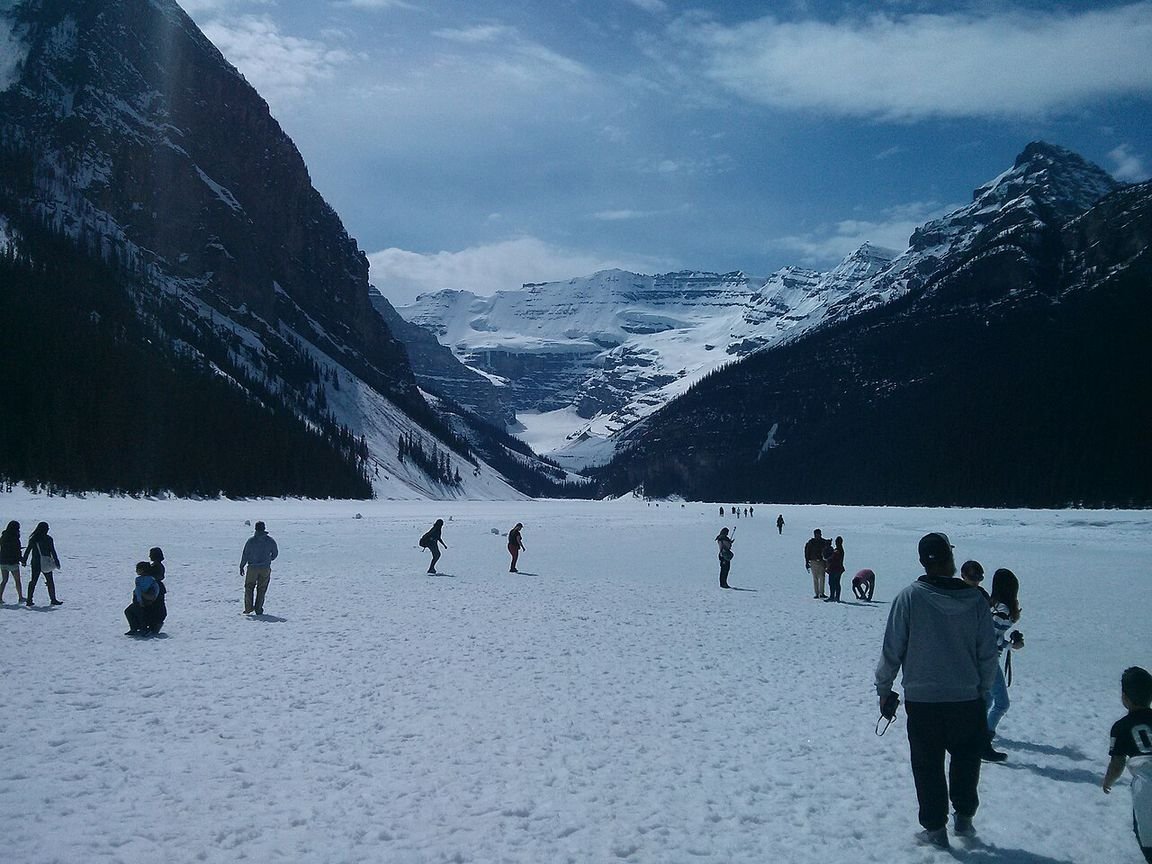
The rink sits on the lake itself, right in front of the Fairmont Chateau Lake Louise, with the Victoria Glacier at the far end like a backdrop someone painted and then forgot to take down. Skating here is free in the sense that the ice costs nothing to stand on; what costs money is the gear if you do not bring your own. Skate rentals are available at the lake, typically by the hour or the day, at a planning range of roughly $15–30 per person for a rental session, and ice cleats or other traction aids are sometimes available for walkers who want to get out on the ice without skates. Check the Chateau’s own site for current rental details before you go, because winter operations change by season. → Fairmont Chateau Lake Louise — official site
The skating season usually runs from about mid-December to mid-April, depending on when the ice is thick enough and when spring softens it. Those are approximate windows, not promises: the rink is maintained only while conditions allow, and warm spells can close it. I double-checked the current rink status on the official pages before my trip, and you should do the same on the morning you plan to skate. The best time of day is early. I skated at sunrise on my second morning, when the rink was nearly empty, the light was pink on the peaks, and the only sound was skates on ice. By midday the same rink was busy with families, photographers and a line for rentals. Both versions are fun. Only one of them feels like you have the lake to yourself.
What it actually feels like: colder than a city rink, windier, and much, much bigger. The maintained rink area is only part of the frozen surface, and you should stay on the cleared and signed area rather than wandering off across the lake on your own. The ice beyond the rink is not maintained, and the shoreline near the inflow and outflow is the kind of place where ice stays thin. A staff member at the lake told me exactly that on my first morning, in the tone of someone who has said it a hundred times that week. Listen to that person. Skate inside the rink, take breaks inside where it is warm, and keep your phone in an inside pocket — cold kills batteries fast, and mine died at about 40 percent on the coldest morning.

Families should know the rink works for all levels, including total beginners. The ice is flat, there is room to wobble, and nobody is judging your first lap — half the people out there are also on rental skates, also wobbling. Bring gloves you can fall in, a neck warmer, and something warm to drink for afterwards. The Chateau’s lakefront lounges are the obvious warm-up, and they are priced like a grand hotel because they are one. Budget roughly $10–20 per person for a hot drink and a snack inside, or pack a thermos and drink it on a bench like I did on day one, which costs nothing and tastes better for the smugness.
Skate first thing in the morning, then warm up, then come back at dusk if the rink is lit. The morning session is quiet and photogenic; the evening session is the one you will remember. Two short skates beat one long, frozen one.
Ice Magic Festival: ice carving on the shoreline

The Ice Magic Festival is the lake’s winter showpiece: international ice carvers work huge blocks of ice into sculptures on the lakeshore in front of the Chateau, and the finished pieces stand on the shore for visitors to walk among. It typically takes place in January — treat that as an approximate window and check the official Chateau site for the exact dates in your year, because the festival dates move and the carving competition days are the ones worth timing your trip around. During the carving days you can watch the sculptors work with chainsaws, chisels and torches, which is louder and more dramatic than the word “festival” suggests. After the carving is done, the sculptures stay up while the cold holds, lit in the evenings.
Here’s the deal with timing a trip around Ice Magic: the carving competition itself lasts only a few days, but the sculptures usually remain on display for weeks afterwards, weather permitting. If you cannot hit the competition days, you can still see the finished work on a later January or February visit. If you do hit the competition days, go early in the day to watch the carving and come back after dark to see the pieces lit. I walked the shoreline at dusk with the sculptures glowing and the lake dark behind them, and it was the single best hour of my trip. No joke — better than the skiing, and I like skiing.
A practical note on crowds and cost: the festival shoreline is free to walk in the sense that there is no separate festival ticket for viewing the sculptures from outside, but the Chateau grounds and the lakeshore get busy during festival days, and parking at the lake fills early. Arrive before mid-morning or take the shuttle from Banff town or the village. The Chateau’s own site is the place to check for any ticketed events, viewing hours and current conditions. → Fairmont Chateau Lake Louise — official site If Ice Magic is the reason for your trip, book lodging early: festival weekends are among the busiest winter weekends at the lake, and the village’s cheaper rooms go first.
Snowshoeing: the quiet trails
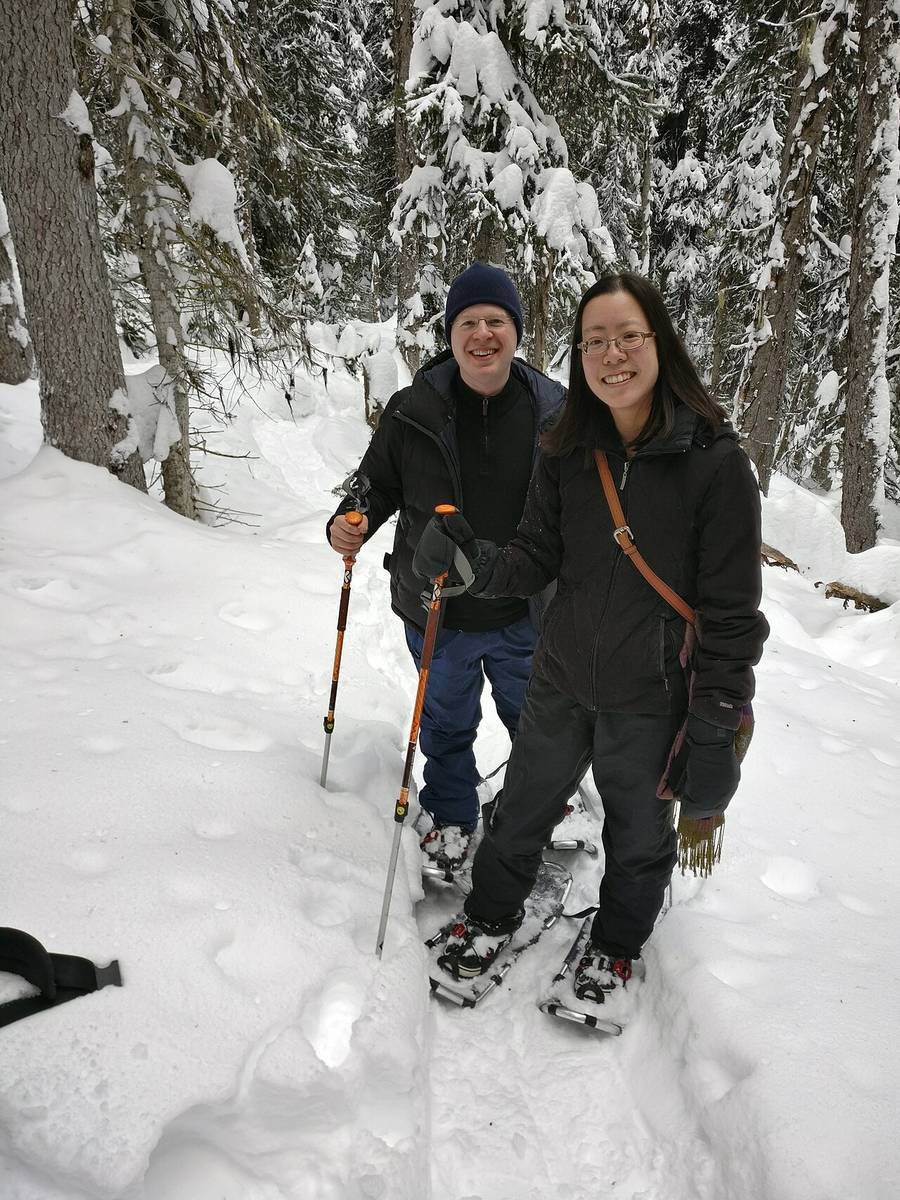
Snowshoeing is the best way to get away from the rink crowds without needing any skill at all. If you can walk, you can snowshoe. The classic is the Lakeshore Trail, which runs along the shore from the Chateau toward the far end of the lake. In winter it is packed enough to walk in boots on a mild day, but snowshoes make it easy after fresh snow, and they let you step off the packed line without sinking to your knees. I snowshoed the shoreline on my third morning, after an overnight snowfall, and the trail was empty except for a couple of photographers and a raven doing something loud and judgmental overhead. The lake on one side, snow-loaded spruce on the other, and nobody in a hurry. Worth the detour, and then some.
The Louise Creek trail toward the village is another easy winter option, and the trail toward Louise Falls — frozen solid in winter, a wall of blue-white ice — is the classic half-day snowshoe from the lake. Budget roughly 2–3 hours round trip for the falls trail at a snowshoe pace, more if you stop for photos, which you will. Snowshoe rentals are available at the lake and in the village, at a planning range of roughly $20–35 per person per day, and some lodgings lend them to guests. I double-checked rental availability on the official visitor pages before my trip, because winter rental stocks are smaller than summer’s and a holiday weekend can sell out. → Banff & Lake Louise Tourism — official site
A ranger at the Visitor Centre told me the shoreline trail is quietest in the last hour before sunset, when the day-trippers have left and the light goes gold on the peaks. I tested it. She was right. Save one short snowshoe for late afternoon and finish at the rink as the lights come on.
Three snowshoe rules that matter more than technique. First, stay on marked winter trails: the summer hiking routes up the surrounding slopes cross avalanche terrain in winter, and a snowshoe trail that looks inviting can lead somewhere it should not. The Lakeshore, Louise Creek and Louise Falls routes are the safe, signed winter choices; the high trails above the lake are not winter walks. Second, tell someone where you are going, even for a short trail. Third, carry water even though it is cold — I forgot mine on the falls trail, got thirsty and stubborn about it, and spent the walk back thinking about a bottle of water like it was a luxury good. I have made this mistake so you don’t have to.
The Lake Louise Ski Resort: the hill above the lake

The Lake Louise Ski Resort sits a few minutes’ drive from the shoreline, up its own access road, and it is a different world from the quiet lake: lifts, groomers, a proper ski day. The hill is known for long, wide groomed runs and huge views back toward the lake and the peaks, and it suits intermediates better than anywhere else in the Banff area. Beginners have gentle terrain near the base; strong skiers have the back bowls and the steeps. My mid-range planning range for a ski day here, counted inside a Banff-town stay, runs about $180–280 per person for the day including an advance lift ticket, rentals if you need them, food and the drive share — before lodging. Book lifts online in advance; window prices sting, and I learned that lesson the expensive way at another resort years ago and have not repeated it since.
Cross-country skiing deserves its own line, because the lake itself is part of it: in deep winter, tracked cross-country trails run on and around the lake area, and skiing across a frozen lake with the peaks ahead is one of those experiences that sounds made up and is not. Rentals for cross-country gear are available at the lake and in the village at a planning range similar to snowshoes, roughly $20–40 per person per day. If you are choosing between a ski-resort day and a lake day, here is my honest take: the resort is the better skiing, and the lake is the better memory. Do both if you have three days. If you have two, skate and snowshoe on day one and ski on day two. For the full ski-cost breakdown across the western resorts, see my Canada ski trip cost guide. → Lake Louise Ski Resort — official site

One more hill note, and it is about timing: the ski resort and the lake have different best hours. The resort is best mid-morning, once the lifts are running and the groomers are still fresh. The lake is best at sunrise and dusk. Plan the day around that split and you get both at their best instead of one at its worst. I skied the resort until mid-afternoon on my last day, drove down to the lake, and skated the last light. That is the day I would repeat exactly, which is a rare thing to say about any itinerary I have written.
Staying at the lake vs Banff town: the honest trade-off

Staying at the lake means staying at the Chateau or in the village, and the two are very different propositions. The Chateau is the point of the trip for some people: you wake up on the lake, skate before breakfast, and watch the light change from your room. It is also priced like the grand hotel it is, with a planning range roughly $350–600+ per night for a room in winter, before food. The village, a few minutes down the road, has smaller lodgings and hostels at a planning range roughly $120–250 per night, plus a grocery store, a couple of restaurants and the rental shops. The village is the budget move that still keeps you at the lake.
Banff town, 45 minutes away, is the move I recommend for most people. The lodging range is wider, from hostels at roughly $50–95 per person per night to mid-range hotels at roughly $160–280 per night for a room share, the restaurants are better and cheaper than anything at the lake, and the town has grocery stores, gear shops and a real main street to walk after dark. The trade-off is the daily leg: you drive or shuttle to the lake each morning and back each evening, which costs 45 minutes each way and a fuel share. For a two- or three-day trip, that trade is worth it. For a honeymoon, a special occasion, or a trip built entirely around Ice Magic weekend, stay at the lake and pay for the privilege. My where to stay in Banff guide breaks the town’s neighbourhoods down by budget, and my best time to visit Banff guide covers the month-by-month trade-offs.
Evenings at the lake are quiet, and that is part of the appeal. The Chateau in the festive season leans into it — decorations, a gingerbread display, warm lounges — and the village has a couple of low-key dinner spots. Evenings in Banff town are livelier: restaurants, bars, a hot pool or two if you count the hot springs, and a main street that stays awake. I spent my lake nights early, in bed with a book, and my Banff nights out. Both were right. If you stay in the village, eat dinner before you get hungry, because the village’s kitchens are few and they fill up on festival weekends.
Winter safety and the cold: what −25°C actually means

The cold at Lake Louise in January and February is not a joke and not a reason to cancel. Daytime highs often sit around −10°C to −20°C, and cold snaps push lower, especially at night. Dress in layers: a warm base layer, an insulating middle, and a windproof outer shell, plus a warm hat, a neck warmer or balaclava, mittens rather than gloves, and warm boots with grip. Mittens beat gloves every time — I wore gloves on my first morning, lost feeling in my fingers within twenty minutes, and switched to mittens for the rest of the trip. I have made this mistake so you don’t have to.
Plan your day in warm-up blocks. Skate or snowshoe for an hour or so, go inside, drink something hot, warm your hands properly, then go back out. Frostbite is a real risk in a wind at −25°C, and it does not announce itself politely: numb, white or waxy skin means get inside and warm up slowly, and do not rub it. Keep your phone in an inside pocket, carry a small daypack with water, snacks and an extra layer, and wear sunscreen — mountain sun on snow burns faces in winter, and I have had the dumbest sunburn of my life on a ski day in February. Sunglasses or goggles matter too: the glare off the frozen lake on a sunny day is fierce.
Avalanche terrain is not a winter hiking playground. The signed winter trails at the lake — the shoreline, Louise Creek and Louise Falls routes — are the safe choices. The summer trails climbing the slopes above the lake cross avalanche paths in winter and are not walks, however inviting they look under snow. Check the daily avalanche forecast and the Visitor Centre’s advice before any trail beyond the signed winter routes, and never head into the backcountry without training, gear and a partner.
Driving safety deserves its own paragraph, because the drive is where winter trips actually go wrong. Winter tires, a full tank, daylight driving when possible, and no rushing on the Banff–Lake Louise leg. Carry a blanket, a shovel and a phone charger in the rig, and if the highway report says travel is not recommended, believe it. The lake will still be frozen tomorrow. Your schedule is the only thing that will not be.
A 2-day lake plan that actually works
Day one is the lake day. Arrive early, skate at sunrise, warm up, walk the ice carvings if the festival is on, snowshoe the shoreline in the afternoon, and finish with a dusk skate. Day two is the ski day, or the falls snowshoe if you do not ski: resort in the morning, lake at dusk, dinner in Banff town. A third day, if you have it, is the slow day — sleep in, skate late, snowshoe Louise Creek to the village, and leave after lunch. That third day is the one people skip and then wish they had not, because the first two days are full and the lake rewards a slow morning.
| Day | Morning | Afternoon | Evening |
|---|---|---|---|
| Day 1 — the lake | Sunrise skate on the rink | Ice carvings + Lakeshore snowshoe | Dusk skate, dinner in the village or Banff |
| Day 2 — the hill or the falls | Ski resort, or Louise Falls snowshoe | Cross-country on the lake trails | Last skate at dusk, dinner in Banff town |
| Day 3 — slow (optional) | Late skate, Chateau shoreline walk | Louise Creek snowshoe to the village | Drive back to Banff or Calgary |
What does Lake Louise in winter cost?
Prices below are approximate planning ranges per person per day for a Banff-town base, in Canadian dollars. Pick your travel style, tell the calculator how many days you’re staying, and it does the rest. (Accommodation and ski lift passes NOT included — see the ranges above for those. The calculator covers food, rink and trail extras, local transport and treats.)
Budget calculator
Per person, in Canadian dollars. Excludes accommodation and lift passes.
Budget ≈ $95/day · Mid-range ≈ $170/day · Luxury ≈ $300/day. Add accommodation and lift passes from the ranges above. Prices are planning ranges — check official sites for your dates.
| Expense (per person / day) | Budget | Mid-range | Luxury |
|---|---|---|---|
| Accommodation (Banff-town base, share) | $50–95 (hostel dorm) | $160–280 (hotel/condo share) | $350+ (lake hotel) |
| Ski lift (advance online, ski day only) | $90–130 | $130–200 | $200+ (peak window) |
| Skate / snowshoe rental | $15–30 (skates) | $20–35 (snowshoes) | $40 (both, full day) |
| Food & drink | $45 | $80 | $140 |
| Getting around (fuel, shuttle share) | $15 | $30 | $50 |
| Warm-ups, treats & extras | $15 | $30 | $70 |
For the wider winter picture, my Niagara Falls in winter guide is the eastern bookend, and my best time to visit the Canadian Rockies guide covers the snow-versus-crowd trade-offs across the season.
FAQs about Lake Louise in winter
When is the lake frozen enough to skate on?
Usually from about mid-December to mid-April, but those are approximate windows, not guarantees. The rink is maintained only while the ice is thick and safe, and warm spells can close it. Check the current rink status on the official Chateau and Parks Canada pages on the morning you plan to skate, and stay on the cleared, signed rink area.
When is the Ice Magic Festival, and do I need tickets to see the sculptures?
Ice Magic typically takes place in January, with carving competition days followed by weeks of display while the cold holds — check the official Chateau Lake Louise site for the exact dates in your year, as they move. Viewing the sculptures from the shoreline is free to walk among; any ticketed events, viewing hours or conditions are listed on the Chateau’s site. Book lodging early for festival weekends.
Do I need a car to visit Lake Louise in winter?
No, but it helps. Shuttles and buses run between Banff town and Lake Louise in winter, and the village and lakeshore are walkable once you arrive. A car gives you sunrise and dusk at the lake on your own schedule, which is when the lake is best. If you drive, get winter tires, check road conditions daily, and never plan a tight Calgary flight connection on your last day.
Is it better to stay at the lake or in Banff town?
For most people, Banff town: wider lodging range, better and cheaper food, and a real main street, with a 45-minute leg to the lake each morning. Stay at the lake if the Chateau itself is the point of the trip, or for a special occasion or Ice Magic weekend — and book early, because the village’s cheaper rooms go first.
Can beginners snowshoe and skate at Lake Louise?
Yes, both. Snowshoeing needs no skill beyond walking, and the Lakeshore and Louise Creek trails are gentle winter routes. The rink suits all levels, including first-timers on rental skates — lace them tight, bend your knees, and accept the first fall. Rentals for skates and snowshoes are available at the lake and in the village.
How cold does it get, and what should I wear?
Daytime highs in January and February often sit around −10°C to −20°C, colder at night and in cold snaps. Wear layers — warm base, insulating middle, windproof outer — plus a warm hat, neck warmer, mittens (not gloves), and warm boots with grip. Plan warm-up breaks indoors every hour or so, keep your phone in an inside pocket, and wear sunscreen and sunglasses: sun on snow burns and glares.
Keep exploring
The lake is only the start of a Rockies winter — here’s where I’d go next:
- Canada ski trip cost — the full western ski budget, resort by resort
- Banff trip cost — the full Banff numbers, town and mountain
- Where to stay in Banff — hostels to grand hotels, by budget
- Best time to visit Banff — month by month at the lake and in town
- Best time to visit the Canadian Rockies — snow, crowds and prices by month
- Niagara Falls in winter — the eastern winter bookend
Gas up in Banff, lace the rentals tight, and skate at sunrise. The lake will do the rest.
2 comments