
- ✓ Winter here is a whole season, not a 10-day Carnival: the slide, the rink, the markets and the frozen falls run for months — January and February are quieter and cheaper than Carnival week.
- ✓ Old Town is the base and the main event: sleep inside the walls, walk everywhere in the snow, and treat Montmorency and the Ice Hotel as half-day trips.
- ✓ All prices here are planning ranges, not quoted rates: attractions change prices by date, so check the official sites linked below for your exact dates.
Here is the thing nobody tells you about Quebec City in winter: it is not a city that tolerates winter. It celebrates it, loudly, in French, with hot chocolate. I arrived on a January morning when the overnight low had been minus sixteen, and the first thing I did was slip — not dramatically, just a small, undignified skid — on the icy steps down into Petit-Champlain. A shopkeeper saw the whole thing, smiled the smile of someone who has seen it a thousand times, and said, in English, “Welcome to Quebec.” I took that as a good omen, and it turned out to be one.
What follows is the trip I actually did over three days, based inside the old walls: snowy Old Town streets, the toboggan slide on Dufferin Terrace, skating at Place d’Youville, a frozen waterfall at Montmorency, and a day trip to the Ice Hotel. It deliberately skips the Carnival crowds. The Quebec Winter Carnival runs for about ten days in late January and early February, and it is wonderful — but this guide is for the other hundred days of winter, when the same snow is there, the lines are shorter, and the hotels cost less. Every price below is an approximate planning range in Canadian dollars for 2026–27. I double-checked the toboggan and Montmorency prices on the official sites before writing this, and you should do the same for your dates.
The stops on the map
Eight stops: six walkable inside and around Old Town, plus two half-day trips east and north. Tap any stop to jump the map straight to it.
Map data © OpenStreetMap contributors. Open the full map
First, the shape of a Quebec City winter day
Quebec City winter runs on a simple rhythm, and once you learn it, the cold stops being the story. Mornings are bright and bitter — January averages a high around minus six and a low around minus sixteen, so the first hour outside is the coldest hour of your day. By midday the sun is doing real work, the streets fill up, and the city feels alive. By four the light is gone, the street lamps come on, and everyone is either skating, shopping, or sitting somewhere warm with something hot. I planned around that rhythm: hard outdoor activity late morning, easy walking and markets in the afternoon, and a warm room by evening.
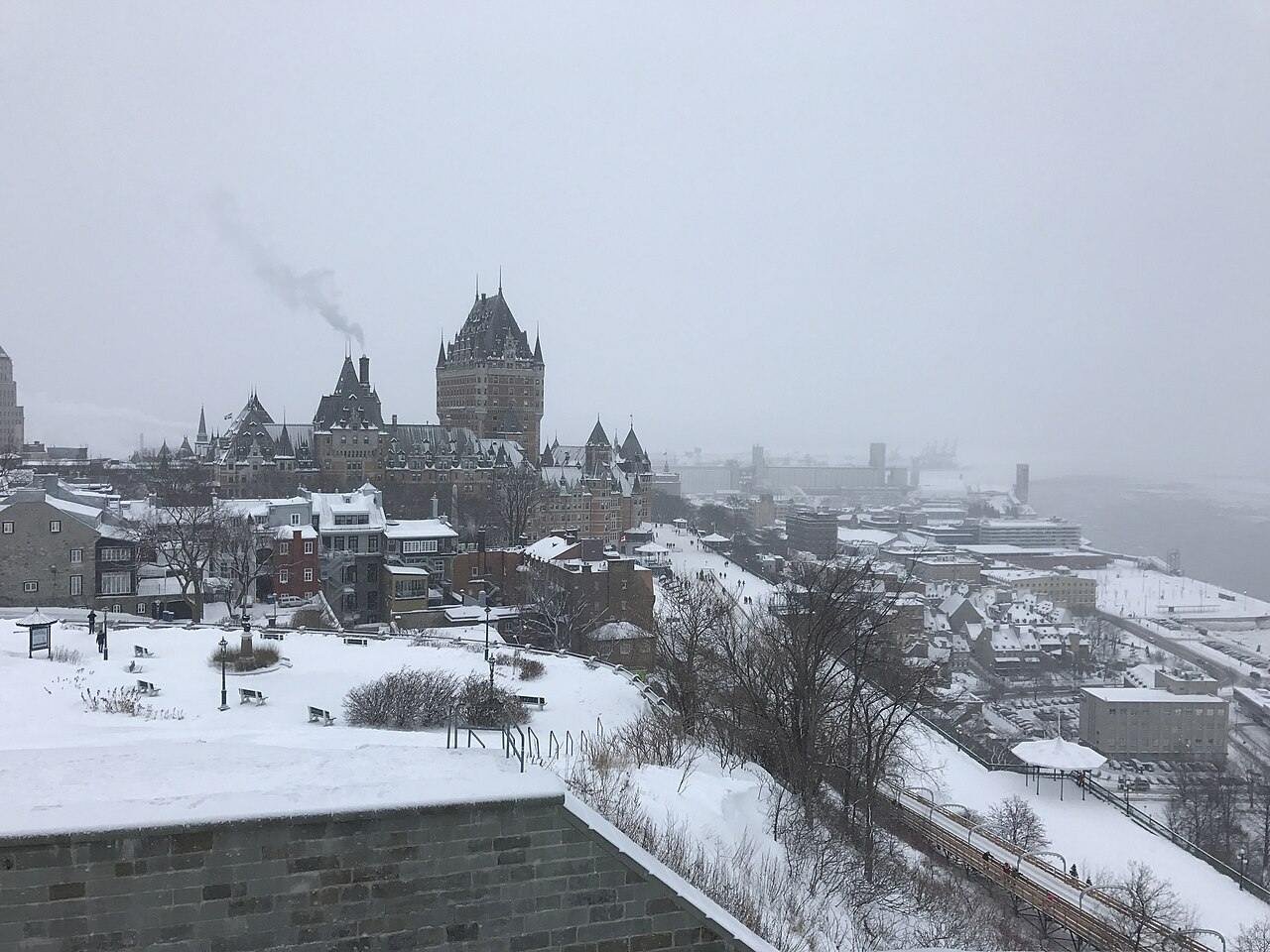
Old Town splits into two levels, and the hill between them is the whole geography of your trip. Upper Town holds the Château, Dufferin Terrace, the Plains of Abraham and most of the hotels. Lower Town holds Petit-Champlain, the Old Port and the prettiest snow. Between them are steep streets, staircases, and the Old Quebec Funicular, a little cliff railway that has connected the two levels since 1879. The funicular costs roughly $5–6 per person each way — check the posted price at the station, because it has moved around in recent years. I rode it once, walked the stairs every other time, and honestly the stairs in the snow are half the experience, as long as your boots have grip.
One more thing about the cold, because it matters: minus sixteen in Quebec City is a dry cold, and it is entirely manageable with the right layers. I wore a base layer, a sweater, a proper winter coat, insulated boots, mitts (not gloves — I learned that lesson in Banff and I am not relearning it here), and a neck warmer pulled up over my chin. The people who look miserable in Quebec winter are the people in fashion boots and thin gloves. Dress like you mean it, take warming breaks without guilt, and the city will be kind to you.
Snowy Old Town: Petit-Champlain and the Upper Town streets
Petit-Champlain is the street on every postcard, and in winter it earns it. It is a narrow, cobbled lane at the foot of the cliff, lined with stone houses, tiny boutiques and cafés, and in snow it looks like a film set that forgot to tell anyone it was a film set. I walked it three times: once in the morning when the shopkeepers were shovelling their doorways, once at midday when it was busy, and once at night when the lights were on and the snow was falling again. The night walk was the best one, and it was free.

Practical notes for the walk: the cobbles and the stairs ice up, so wear boots with real tread and take the handrails seriously. The street is short — you can walk the whole of Petit-Champlain in ten minutes — so slow down, go into the shops, and warm up in a café halfway. The Old Quebec Funicular station sits right at the top of the Breakneck Stairs (Escalier Casse-Cou), which is exactly as steep as it sounds. If you have knee trouble, take the funicular down and the stairs up, or just take the funicular both ways and save your knees for the toboggan.
Upper Town in winter is quieter and grander: Rue Saint-Louis, Rue Saint-Jean outside the walls, and the long, wind-scoured boardwalk of Dufferin Terrace. I did most of my morning wandering up here, when the light was low and the Château looked enormous against the sky. The terrace is free to walk, it runs along the cliff above the St. Lawrence, and on a clear day you can see across the river to Lévis. On a snowy day you can barely see the river at all, and that is beautiful in a different way.

Walk Petit-Champlain twice: once in daylight for the shops, once after dark for the lights. The street is short, the evening walk is free, and the snow under the lamps is the most romantic ten minutes in the city. Bring boots with grip — the cobbles ice up fast after sunset.
The $5 toboggan slide: Au 1884 on Dufferin Terrace
Here is the best five dollars in Quebec City. The Au 1884 toboggan slide has run on Dufferin Terrace, beside the Château Frontenac, since 1884 — making it older than the Château itself, which opened in 1893. Three wooden toboggans, each seating up to four people, race down an iced chute at up to 70 kilometres per hour. You buy a ticket at the little Au 1884 stand, you haul your toboggan up to the top yourself (this is the workout), and then you fly down in about fifteen seconds of pure, undignified joy.
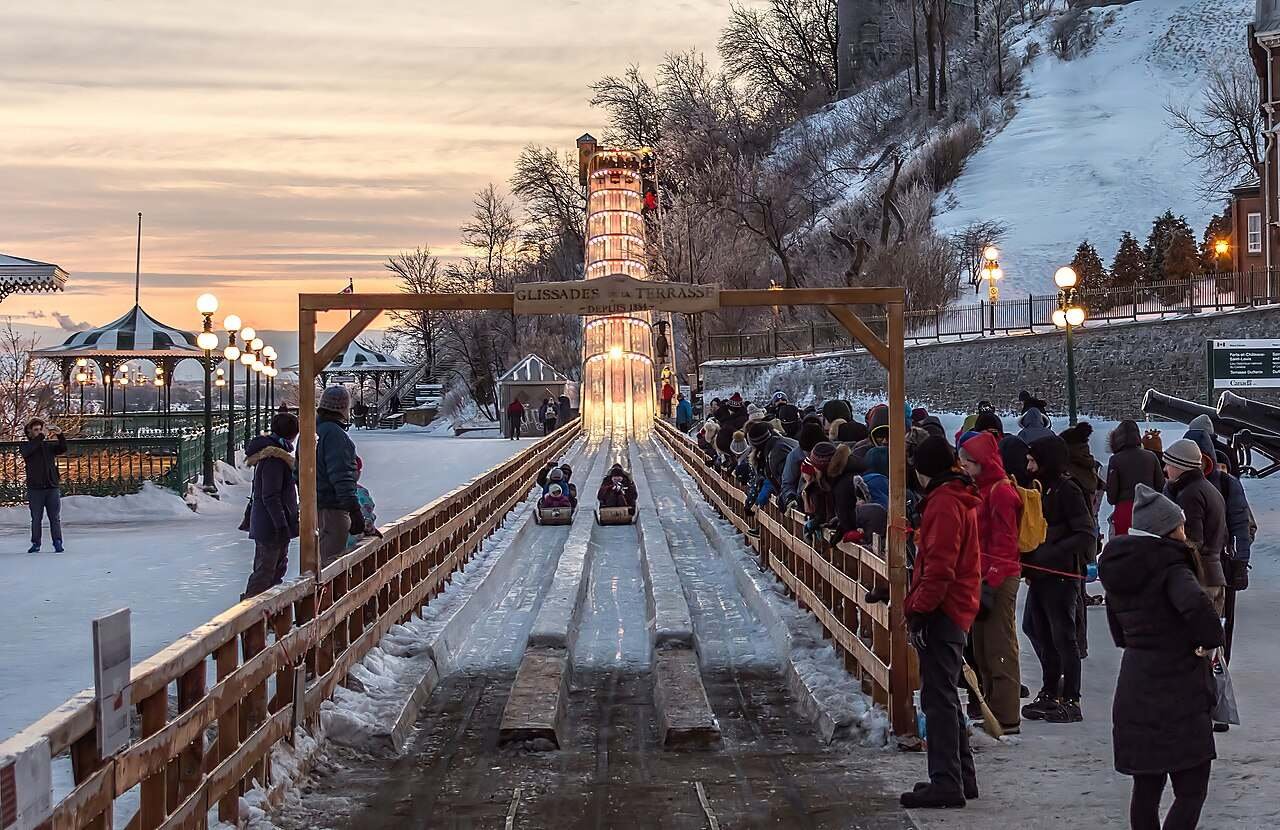
I double-checked the tickets on the official site before writing this: a regular ticket is $5, taxes included, valid for one ride on a specific date, and children under three ride free. A flexible ticket costs about $8. The 2026–27 season opens December 4, 2026, and the slide typically runs through to mid-March, weather permitting. Book online at au1884.ca, or buy at the stand — buying in person avoids an online booking fee, and on a quiet January weekday there was barely a line at all. The slide also closes without warning in bad weather, so check the site on the morning you plan to ride. I rode it twice, once in the morning and once at dusk, and the dusk ride, with the terrace lights on and the river dark below, was the better one.
The toboggan slide closes in bad weather and at the operator’s discretion, with no advance warning. Do not build a whole day around a single ride time — check au1884.ca on the morning you go, and have the rink or the market as your backup plan. Also: you pull your own toboggan up to the top. It is a short, steep haul, and it is part of the fun — unless you have a bad knee, in which case let someone else in your group do the hauling.
After the slide, warm up properly. The Au 1884 stand sells hot chocolate, and the Château’s bars are right there if you want to sit down somewhere grand. My pattern was simple: slide, hot chocolate, stand on the terrace watching the next toboggan come down, and then walk the terrace slowly while my hands thawed out in my pockets.
Skating at Place d’Youville, and the winter markets
Place d’Youville, just outside the walls on Rue Saint-Jean, holds the city’s most central outdoor rink. It is small, it is charming, and in the evening, with the lights on and the music playing, it is the easiest good time in Quebec winter. Skating is free if you bring your own skates, and rentals are available nearby for roughly $15–25 — check the rink-side posted prices, because rental outfits change by season. I skated here on my second evening, badly, while children skated past me without visible effort. Bring gloves you can fall in.

The rink sits beside the German Christmas Market (Marché de Noël allemand de Québec), which fills Place d’Youville and the surrounding squares with wooden chalets in the run-up to Christmas. For 2026 the market runs November 19 to December 23, and entry is free — you pay only for what you eat and drink. I went for the mulled wine, the sausages, and the general feeling of being inside a snow globe, and I stayed longer than I planned because the chalets are warm and the smell of gingerbread is a real thing. If your trip is in January or later, the market is gone, but the rink stays, and the Old Port Market below is still there.

The Marché du Vieux-Port, the year-round farmers’ market on Quai Saint-André, is the quieter, local-er market stop. It is a working market, not a tourist show: cheese, charcuterie, maple products, bread, and hot food stalls. I ate lunch here on my third day, standing up with a sandwich and a coffee, watching the river. It is the best cheap lunch in Old Town, and it is where you buy the maple butter to take home.
Skate at Place d’Youville after dark, not mid-afternoon. The daytime rink is families and lessons; the evening rink is lit up, quieter, and feels like a date even if you are alone. Then walk two minutes to the market chalets (in December) or to a Rue Saint-Jean café (in January) for something hot. A market vendor told me that trick, and I tested it twice. He was right both times.
Frozen Montmorency Falls: the half-day trip that steals the show
Montmorency Falls is 83 metres tall — a full 30 metres taller than Niagara Falls — and it sits just 15 minutes east of Old Town in Parc de la Chute-Montmorency. In winter it is a different waterfall from the summer one: the spray freezes as it falls, the cliff ices over, and at the base a huge cone of ice called the Pain de Sucre (Sugar Loaf) builds up through the coldest months. I went on a minus-fourteen morning, when the mist off the falls was freezing on the railings, and the whole place looked like it had been carved rather than built.

Getting there is easy: the RTC Métrobus 800 runs from downtown toward Beauport and stops near the falls, or it is a roughly 15-minute drive with paid parking on site. I double-checked the park’s official Sépaq pages before writing this, and the winter details matter: the cable car runs at certain times in winter, with an adult round trip listed at $14.95 for 2026–27, and daily park access for adults is listed around $10.42 in the low season (November 2, 2026 to March 31, 2027). But — and this is the important winter catch — the panoramic staircase and the boardwalk at the foot of the falls on the east side are NOT accessible in winter, and walking on the Sugar Loaf itself is strictly forbidden. The park can also close temporarily on thaw days, when ice may fall. Check the Sépaq park page on the morning you go, and note the park is closed December 25.
Do not plan a Montmorency trip around the staircase or the foot-of-the-falls boardwalk in winter — both are closed in the cold months, and the Sugar Loaf ice cone is strictly off-limits to walk on. The cable car and the upper viewpoints are the winter experience. If you want the full staircase-and-boardwalk version, that is a summer trip.
What you CAN do in winter is genuinely good: ride the cable car for the cliff-top view over the frozen river and Île d’Orléans, walk the upper trails on foot or snowshoes, watch ice climbers on the frozen walls, and stand at the viewpoints while the falls thunder past. Budget about half a day, including the bus or drive each way, and go in the morning when the light is on the falls and the park is quiet.
The Plains of Abraham and the quiet winter parks
The Plains of Abraham — the big, flat, historic park just west of Upper Town — is where Quebec City does its everyday winter. In summer it is picnic lawns and history; in winter it is groomed cross-country ski trails, snowshoe paths, and locals walking dogs in the snow. It is free to walk, and it is the best place in the city to feel how much space winter gives you here. I walked the park on my last morning, when the snow was fresh and the only tracks were skiers’, and it was the calmest hour of the trip.

If you want a second quiet park, Domaine de Maizerets, east of downtown toward Beauport, is another local favourite in winter: wooded trails, a pond, and far fewer visitors than the Plains. Rentals for cross-country skis and snowshoes are available at sports shops in town and at some park pavilions; expect roughly $20–35 for a half-day rental as a planning range. You do not need to be good at either sport. I snowshoed for the first time on this trip, fell over exactly once, and still called it a success.
The Ice Hotel: a day trip to a hotel made of ice
The Hôtel de Glace at Village Vacances Valcartier, about 30 minutes north of Old Town, is rebuilt from snow and ice every December and stands from early January until the spring melt, usually late March. It has themed suites carved from ice, a chapel, a grand hall, and an ice bar where you drink from a glass made of ice. I went as a day visitor, which is what most people do: a self-guided walk through the hotel takes about an hour, and a day visit costs roughly $30 per adult as a planning range. An overnight stay in a themed suite costs several hundred dollars per night and books up months ahead — check the official Valcartier site for your dates, because the price moves a lot by night.
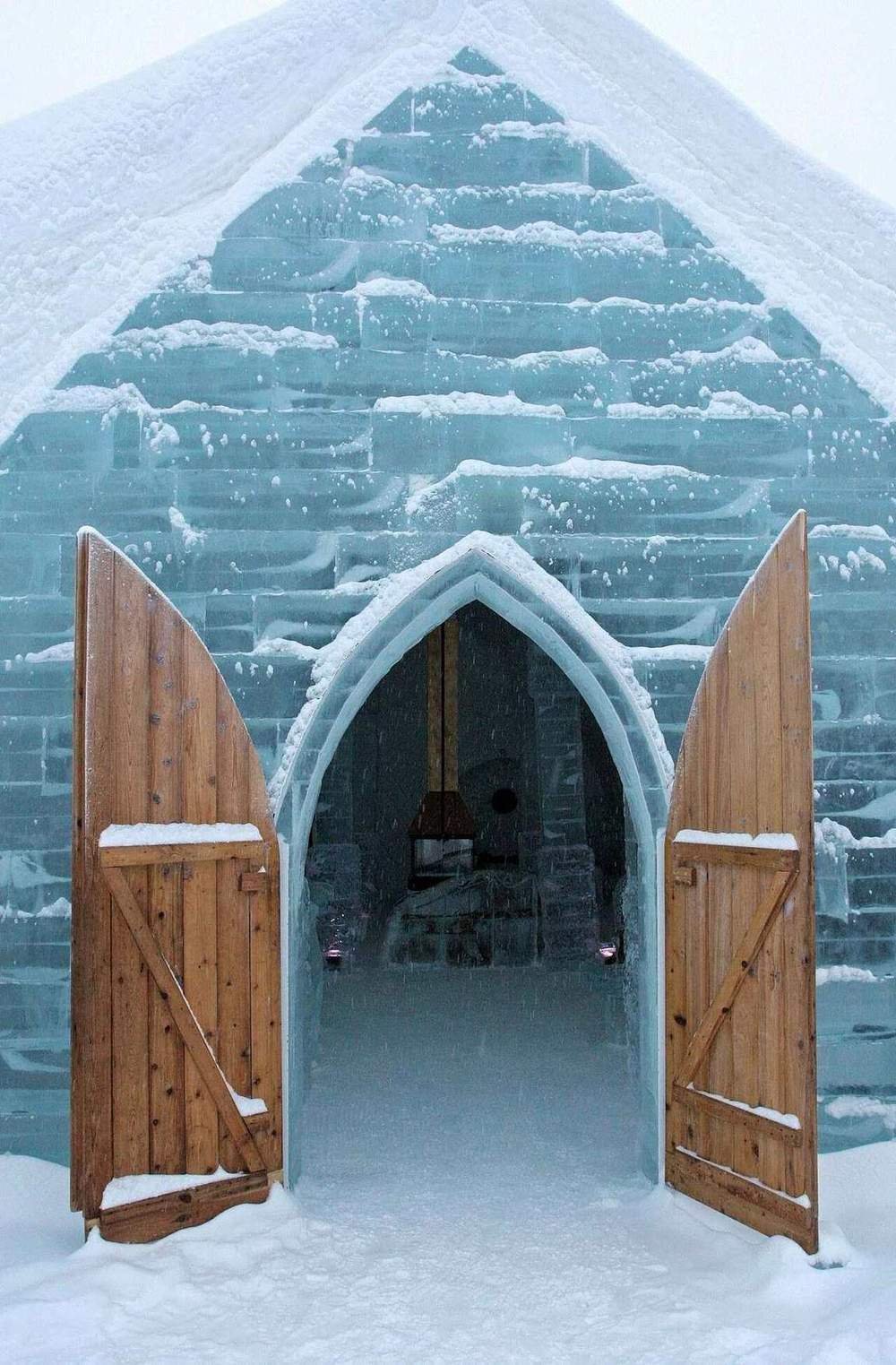
Inside, the temperature sits around minus three to minus five, whatever it is outside, so dress as if you are going for a winter walk, not a hotel tour. I wore everything I owned and was comfortable for the hour. The honest verdict: the day visit is worth it once, especially combined with Valcartier’s winter tubing hills next door, but it is a detour, not a base. Go in the morning, do the tubing after lunch if you want a full day out, and be back in Old Town for dinner. Book day-visit tickets on the official Valcartier page before you drive out, because the hotel limits daily entries.
Do the Ice Hotel as a morning day visit, not an overnight, unless sleeping on ice is genuinely on your bucket list. The day visit gives you the whole hotel — suites, chapel, ice bar — for about $30, and you sleep that night in a warm Old Town bed. Pair it with Valcartier’s tubing hills in the afternoon and you have a full, excellent day out.
Where to warm up: cafés, the Château, and where to stay
Quebec winter is a café culture in disguise. Every cold walk ends, sooner or later, in a warm room with a thick hot chocolate, and Old Town is full of those rooms: the cafés on Petit-Champlain, the tea rooms on Rue Saint-Louis, and the grand public spaces of the Château Frontenac itself. You do not need to stay at the Château to walk through it — the lobby, the shops and the bars are open to visitors, and stepping inside from a minus-sixteen street into that warm, wood-panelled lobby is one of the great small pleasures of the trip.

For sleeping, stay inside the walls if you can. The full neighbourhood breakdown is in our companion guide to the best area to stay in Quebec City, but the short version is this: Upper Town near the Château or Rue Saint-Jean for first-timers, Lower Town near Petit-Champlain for atmosphere, and Saint-Roch just outside the walls for lower prices and a younger, local feel. In January and February, outside Carnival week, hotel prices drop noticeably — one more reason to come in the quiet months. Expect roughly $120–200 a night for a mid-range Old Town room in the quiet season as a planning range, more at the Château itself.
Food in winter is hearty and French, and it is priced for a small city, not a resort town. Expect roughly $18–30 per person for a casual dinner main, $35–55 for a nicer sit-down dinner, and $10–18 for a café breakfast or lunch. My pattern was the same as everywhere I travel in winter: a big breakfast, a market or café lunch, and one proper dinner in town each night. Poutine shows up on menus all over Old Town — it is a Quebec invention, and a hot poutine after a cold walk is not a cliché, it is a survival strategy.
Getting there and getting around without a headache
Most visitors reach Quebec City from Montreal: about 250 kilometres on Autoroute 20, roughly two and a half hours in good conditions, longer in a storm. Québec City Jean Lesage International Airport has flights from Montreal, Toronto and other Canadian cities, plus seasonal international service. Buses run between Montreal and Quebec City several times a day. If you drive in winter, get winter tires — Quebec law requires them from December 1 to March 15 — and check road conditions on the morning you travel. Our guide to winter driving in Canada for tourists covers the tire law and storm protocol in full.
Once you are in Old Town, you do not need a car at all. The walkable core covers Petit-Champlain, the terrace, the rink and the Plains, and the RTC bus network covers Montmorency (bus 800) and the rest of the city. Taxis and ride-hailing fill the gaps. If you do rent a car, remember that Old Town streets are narrow, parking is tight, and winter parking rules are enforced — a car is a tool for the Montmorency and Valcartier day trips, not for Old Town itself.
Never plan a tight flight or bus connection on your last winter day. A storm that makes the city beautiful can also slow Autoroute 20 between Montreal and Quebec City, and winter driving here does not respect itineraries. Build a buffer afternoon into your departure plan — it costs less than a rebooked ticket.
A final word on the cold: Quebec City winter regularly sits between minus five and minus twenty, colder with wind chill on the terrace. Dress in layers, cover your face on windy walks, and take warming breaks without guilt. The warm ones, in mitts, drinking hot chocolate at two o’clock, are doing it right.
What a 3-day Quebec City winter trip costs
Here is the honest math, per person, for three days based inside the walls. Every figure is an approximate planning range for 2026–27, not a quoted rate. Lodging assumes two people sharing a room, so the nightly room price is split in half. The calculator below covers food, sights, transport and extras; lodging and the big-ticket activities are in the table.
| Expense (per person, 3 days) | Budget | Mid-range | Luxury |
|---|---|---|---|
| Lodging, 3 nights (shared room) | $150–270 | $450–750 | $900–1,500 |
| Activities: toboggan, Montmorency, Ice Hotel day visit | $50–60 | $60–100 | $80–180 |
| Food, transport & extras (calculator, 3 days) | $330 | $570 | $990 |
| Estimated 3-day total, per person | $540–660 | $1,080–1,420 | $1,970–2,670 |
The table tells the real story: Quebec City winter is not an expensive trip by Canadian city standards, because the best things — the terrace walk, the night walk down Petit-Champlain, the Plains, the rink with your own skates — are free. Lodging is the lever, and January and February outside Carnival week are the discount. The second lever is food: a market lunch and a café breakfast beat a restaurant lunch every time, and save the money for one proper dinner.
Use the calculator below for the day-to-day part of the budget: food, sights, local transport and treats. It does not include lodging, which is in the table above. Pick your style, set your days, and it does the rest.
Budget calculator
Per person, in Canadian dollars. Excludes accommodation.
Budget ≈ $110/day · Mid-range ≈ $190/day · Luxury ≈ $330/day. Add accommodation from the table above. Prices are planning ranges for 2026–27 — check official sites for your dates.
A 3-day Quebec City winter itinerary that actually works
Day one: arrive, settle into Old Town, walk Petit-Champlain in the afternoon light, and ride the Au 1884 toboggan at dusk. Walk the terrace, eat a proper dinner, and go to bed early. Do not try to fit Montmorency into arrival day. The falls will still be frozen tomorrow.
Day two: Montmorency in the morning, by bus 800 or car. Cable car up, upper viewpoints, back in town for a market lunch at the Old Port Market. Afternoon: the Plains of Abraham for a walk or snowshoe, then skating at Place d’Youville after dark, with hot chocolate to finish. Day two is the big outdoor day, and it should feel like one.
Day three: the Ice Hotel in the morning, tubing at Valcartier after lunch if you want it, and back in Old Town for a farewell dinner. If the weather turns or the Ice Hotel is not your thing, swap day three for a slow Old Town day: the funicular, the shops on Rue Saint-Jean, a long lunch, and a second toboggan ride. The trip still works. That is the point of a city where the main attraction is the city itself.
FAQs about Quebec City in winter
Is Quebec City worth visiting in winter outside Carnival?
Yes — that is the whole point of this guide. The toboggan slide, the Place d’Youville rink, the frozen Montmorency Falls and the Ice Hotel all run for months, not just during the roughly ten Carnival days in late January and early February. January and February outside Carnival week are quieter, and hotels are usually cheaper.
How much is the Au 1884 toboggan slide?
A regular ticket is $5, taxes included, for one ride on a specific date, and children under three ride free. A flexible ticket costs about $8. The 2026–27 season opens December 4, 2026, and the slide typically runs to mid-March, weather permitting. Check au1884.ca on the morning you go, because the slide closes without warning in bad weather.
How cold does Quebec City get in winter, and what should I wear?
January averages a high around minus six and a low around minus sixteen, colder with wind chill on Dufferin Terrace. Wear layers, a proper winter coat, insulated waterproof boots with good grip, mitts rather than thin gloves, and a neck warmer. Take warming breaks indoors without guilt — cold is not a competition.
Can you visit Montmorency Falls in winter?
Yes, the park is open year-round, and the frozen falls plus the Pain de Sucre ice cone are a genuine winter sight. But the panoramic staircase and the foot-of-the-falls boardwalk are closed in winter, and walking on the Sugar Loaf is strictly forbidden. The cable car runs at certain times in winter — adult round trip is listed at $14.95 for 2026–27 — and the park can close temporarily on thaw days. Check the Sépaq page before you go.
Do I need a car in Quebec City in winter?
No, not for an Old Town trip. The walkable core covers Petit-Champlain, the terrace, the rink and the Plains, and the RTC bus 800 runs to Montmorency Falls. A car is useful for the Ice Hotel at Valcartier, about 30 minutes north, and for the drive from Montreal. Inside Old Town, a car is more trouble than it is worth: narrow streets, tight parking, and winter parking rules.
Is the Ice Hotel worth a day visit, or should I sleep there?
For most visitors, the day visit is the right call: about an hour, roughly $30 per adult as a planning range, and you see the whole hotel — suites, chapel, ice bar — then sleep in a warm Old Town bed. The overnight stay costs several hundred dollars a night and books up months ahead. Book day-visit tickets on the official Valcartier site before you drive out.
Keep exploring
If Quebec City winter has you planning the next leg, start with our 25 best things to do in Quebec City guide for the year-round version of the city, our 2 days in Quebec City itinerary for a shorter trip, our best Christmas markets in Canada guide if you are coming in December, and our Canada trip cost guide for the full national budget. Pack mitts, buy the $5 slide ticket, and leave room in the plan for a snow day. Quebec City rewards the traveller who does.