
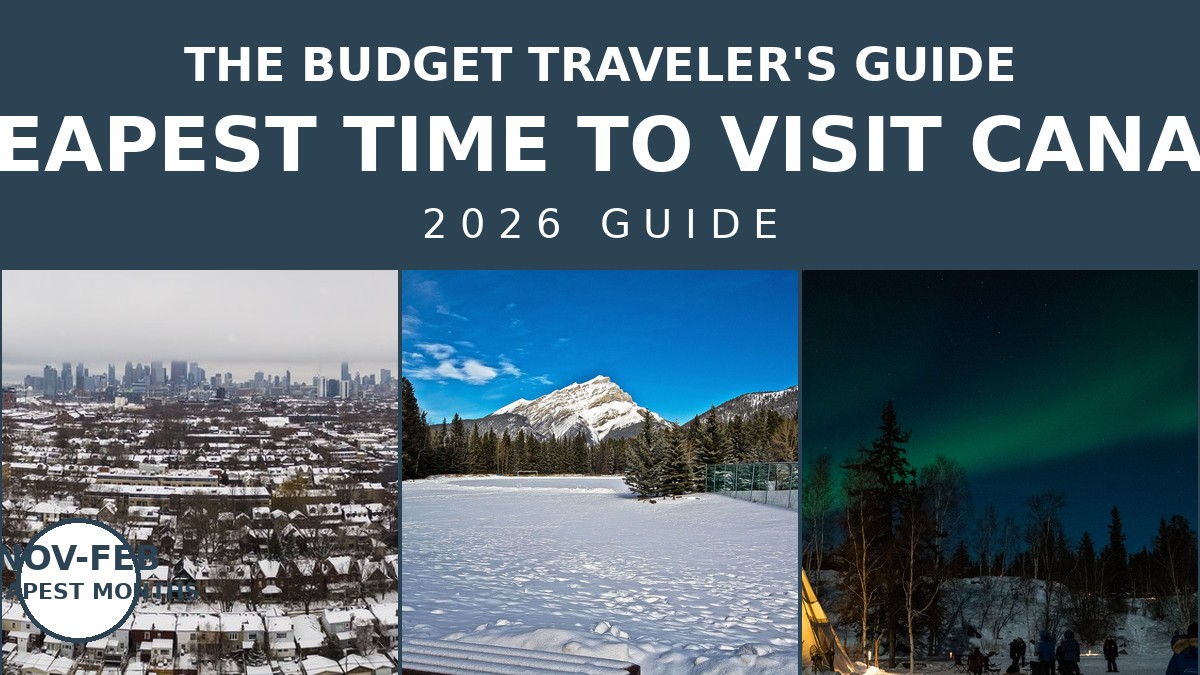
Last updated: October 3, 2026
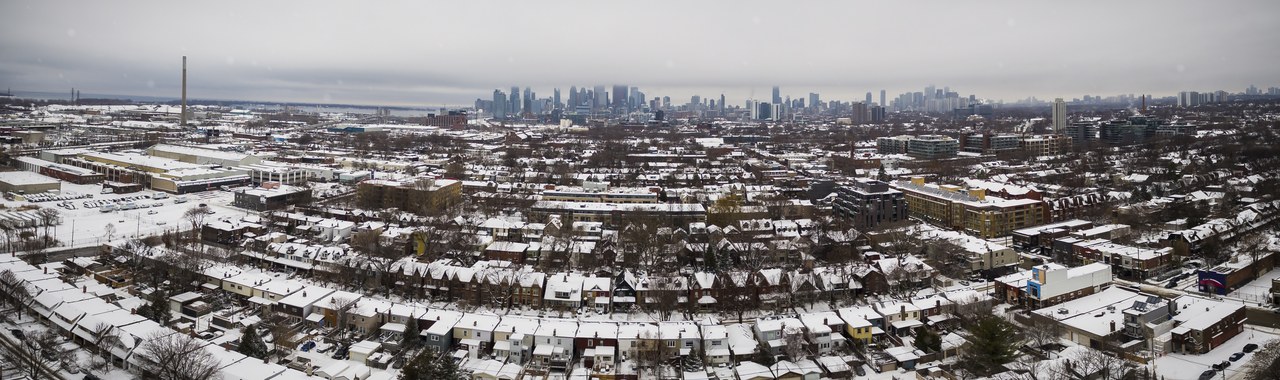
The short answer
- The cheapest months are November, January, and February — post-holiday demand craters, and I regularly see flights and downtown hotels 30–40% below summer prices.
- Fly mid-week (Tuesday–Thursday) and book 1–2 months out — Expedia’s 2026 Air Hacks report names Thursday the cheapest departure day, and January the cheapest month to fly domestically in Canada.
- Pick the Prairies, Atlantic Canada, or Quebec City over Banff and Vancouver — and stay in Canmore instead of Banff to save up to ~30% on the same mountain views.
Dreaming of the Rockies or the cobblestones of Old Montreal but wincing at the price tag? I’ll be honest: Canada can be brutally expensive in July and August. But here’s the thing — I once showed up in Banff in mid-July with no hotel reservation and a color-coded spreadsheet full of optimism. Never again. That trip taught me the single most valuable lesson in Canadian travel: the calendar is your biggest budget tool. Time it right, and this country goes from eye-watering to genuinely affordable. This guide is my full 2026 playbook — cheapest months, cheapest regions, booking tricks, and the free winter fun that makes the cold completely worth it.
Understanding Canada’s travel seasons: peak, shoulder, off-peak
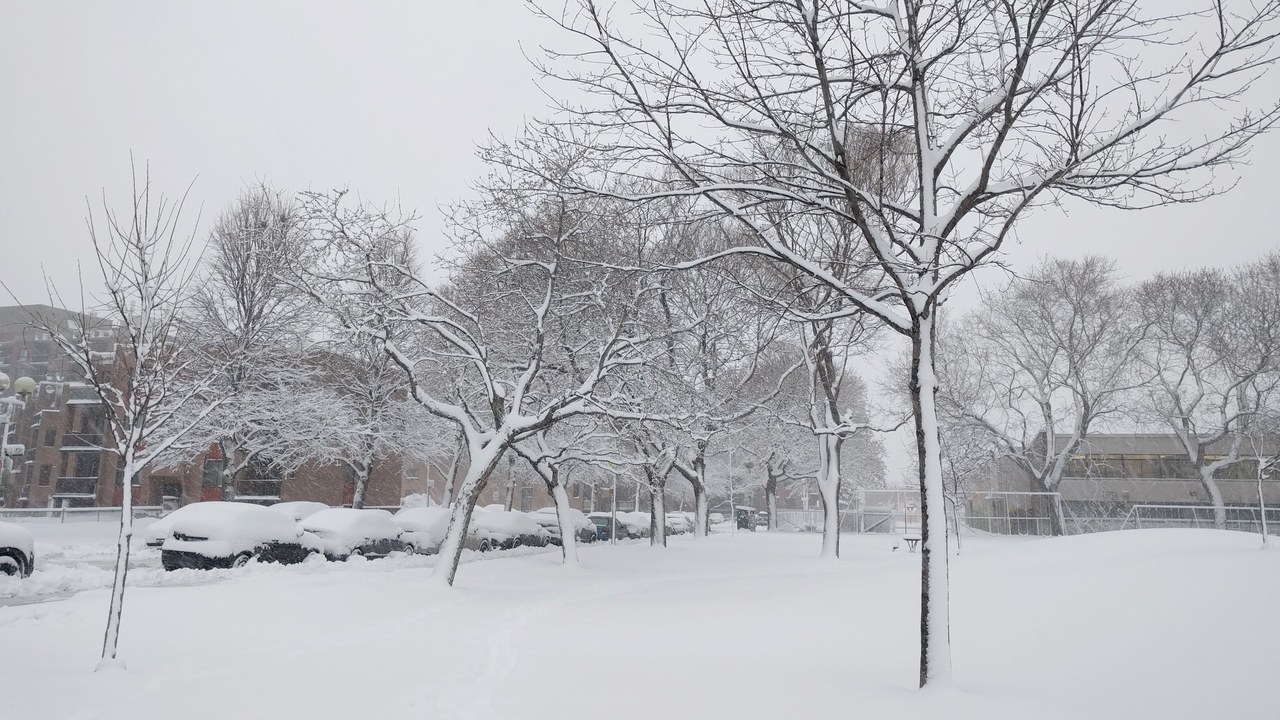
Canada’s prices follow one simple rule: when everyone wants to be here, you pay for it. Here’s how the seasons break down:
- Peak (June–August): the most expensive months of the year. Hotels in Banff, Vancouver, and Toronto sell out, national parks are packed, and even roadside motels charge premium rates. Beautiful weather — and beautiful prices.
- Shoulder (May, September–October): my personal sweet spot. Decent weather, thinning crowds, and prices dropping fast. October in particular is a game-changer — fall foliage without the summer tax.
- Off-peak (November–April, excluding Christmas/New Year): the absolute cheapest window. Hotel occupancy craters, airlines discount aggressively, and I’ve seen luxury downtown hotels in Toronto and Vancouver slash rates just to fill rooms. The catch? It’s cold. The fix? Layers — and everything below.
I’ve traveled all three seasons multiple times now, and here’s my honest take: shoulder season is the best experience per dollar, but off-peak is the best price, full stop. If you can handle sub-zero temperatures (and the free skating, cozy pubs, and northern lights that come with them), winter is when Canada pays you back.
The cheapest months to visit Canada: November, January, February
If airfare is your biggest line item, November is the clearest winner — it’s the pre-holiday lull, when airlines have empty seats and nobody’s traveling yet. Several fare analyses I’ve read (including Kiwi.com’s breakdown of Canada flight pricing) put January–March plus late October and November as the cheapest flying months, and November consistently comes out on top for international arrivals.
January and February are nearly as cheap — with one fair warning: skip the ski resorts. Whistler, Banff, and Mont-Tremblant stay expensive all winter because of ski demand (Calgary and Vancouver airports see elevated fares November–April for exactly this reason). Stick to the big cities and you’ll find rock-bottom rates. I spent four days in Toronto in late January once — a genuinely nice downtown hotel, indoor museums, the PATH underground network when it hit -18°C — for less than two summer nights in the same hotel would have cost. I timed it: my January hotel was literally 45% of the August quote for the same room.
And pro tip: avoid the Christmas/New Year bubble (roughly December 20–January 3). Prices spike hard for about two weeks, then fall off a cliff. Fly in after January 5 and you’re golden.
2026 holidays and events that will wreck your budget
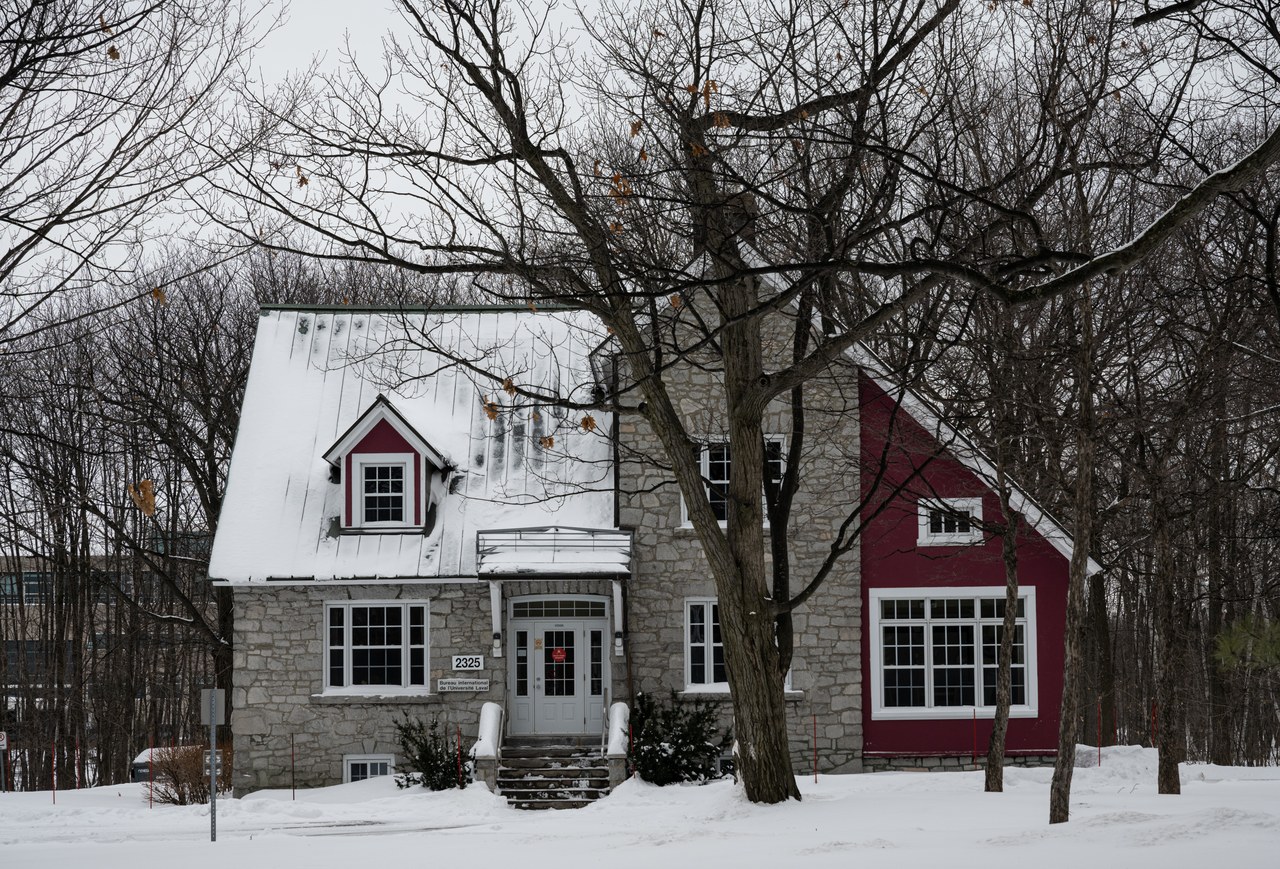
Even in cheap months, a long weekend or festival can blow up prices for a few days. I keep a running list on my travel spreadsheet (of course I do). For 2026, circle these:
- Family Day — Monday, February 16, 2026 (AB, BC, NB, ON, SK; Louis Riel Day in Manitoba, Islander Day in PEI, Heritage Day in Nova Scotia). Domestic flights and hotels tick up for the long weekend.
- Victoria Day — Monday, May 18, 2026. The unofficial start of summer — campgrounds, cottages, and domestic flights all surge.
- Canada Day — Wednesday, July 1, 2026. Mid-week in 2026, but still peak summer pricing everywhere.
- Thanksgiving — Monday, October 12, 2026. A lovely time to visit, but book around the long weekend if you can.
- Québec Winter Carnival — February 6–15, 2026. Ten days of ice palaces, night parades, and Bonhomme — genuinely bucket-list, but it pushes Quebec City hotel prices way up. I checked the details on the official Québec City tourism page before writing this. Smart move: visit the week before or after the carnival for winter prices without the carnival premium.
The rule is simple: check for long weekends and festivals before you book anything. A trip shifted by one week can save you hundreds.
The cheapest month to fly to Canada — and the cheapest days
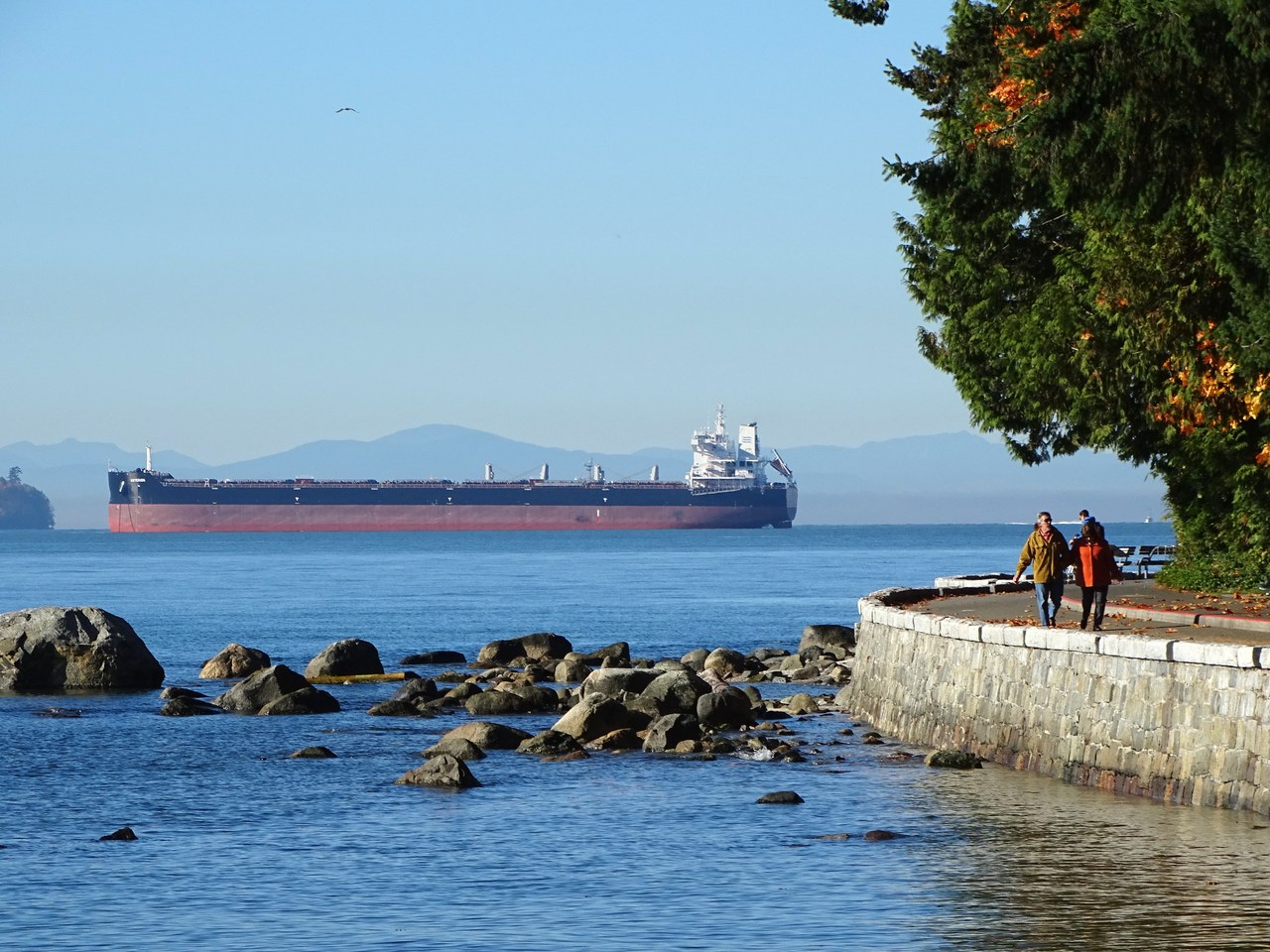
Month matters most, but the day of the week matters more than people think. Here’s what the data says:
- Cheapest months to fly: November first, then January and February. September and October are also strong for shoulder-season fares.
- Cheapest days to depart: Tuesday, Wednesday, and Thursday. Expedia’s 2026 Air Hacks report found Thursday is the cheapest departure day overall (about 8% less than flying Saturday), and January the cheapest month to fly domestically in Canada. Business travelers crowd Monday and Friday; weekenders fly Friday and Sunday — dodge them by aiming mid-week.
- Booking window: for domestic Canadian flights, booking roughly 15–30 days out tends to beat both last-minute panic and booking six months early. For international flights into Canada, 31–45 days ahead is the sweet spot in the same report (saving ~$190 on average versus booking six months out). Do not book six months early “to be safe”; the data says you’ll overpay.
- Red-eyes and crack-of-dawn flights: budget airlines price pre-6 AM departures lowest. I once took a 5:40 AM flight out of Toronto to save $90. Was it painful? Yes. Did it pay for my hotel night? Also yes.
Where you land matters too: Toronto Pearson (YYZ) usually has the most competitive international fares thanks to sheer volume, Montreal-Trudeau (YUL) can be cheaper from Europe, and Vancouver (YVR) tends to run priciest as a Pacific gateway. If your itinerary is flexible, price all three before you commit — trust me on this one, the difference can be $200+.
Which parts of Canada are cheapest? The regional breakdown

Canada is not one market — it’s ten provinces with wildly different price levels. Here’s the honest ranking:
- The Prairies (Manitoba, Saskatchewan, Alberta): the budget champions. Winnipeg and Saskatoon have the lowest big-city hotel and food costs in the country, and Calgary works as a far cheaper Rockies gateway than flying straight into the mountains. A front-desk clerk in Winnipeg once told me their January rates are “basically a rounding error” — she wasn’t far off.
- Atlantic Canada: New Brunswick, Nova Scotia, Newfoundland and Labrador, and PEI. Gorgeous, underrated, and meaningfully cheaper than central Canada — especially outside July–August. Halifax in October is one of my favorite value trips in the country.
- Quebec City over Montreal: both are cheaper than Toronto or Vancouver, but Quebec City in winter (outside carnival week) is a genuine steal — European old-town charm at Prairie-adjacent hotel prices.
- Secondary cities rising: places like Hamilton, Kingston, Victoria, and Kelowna give you the region’s highlights without the marquee-city markup. Every local I asked in 2026 said the same thing: the second city is where the value is.
And the single biggest regional hack in Canadian travel:
Stay in Canmore, not Banff
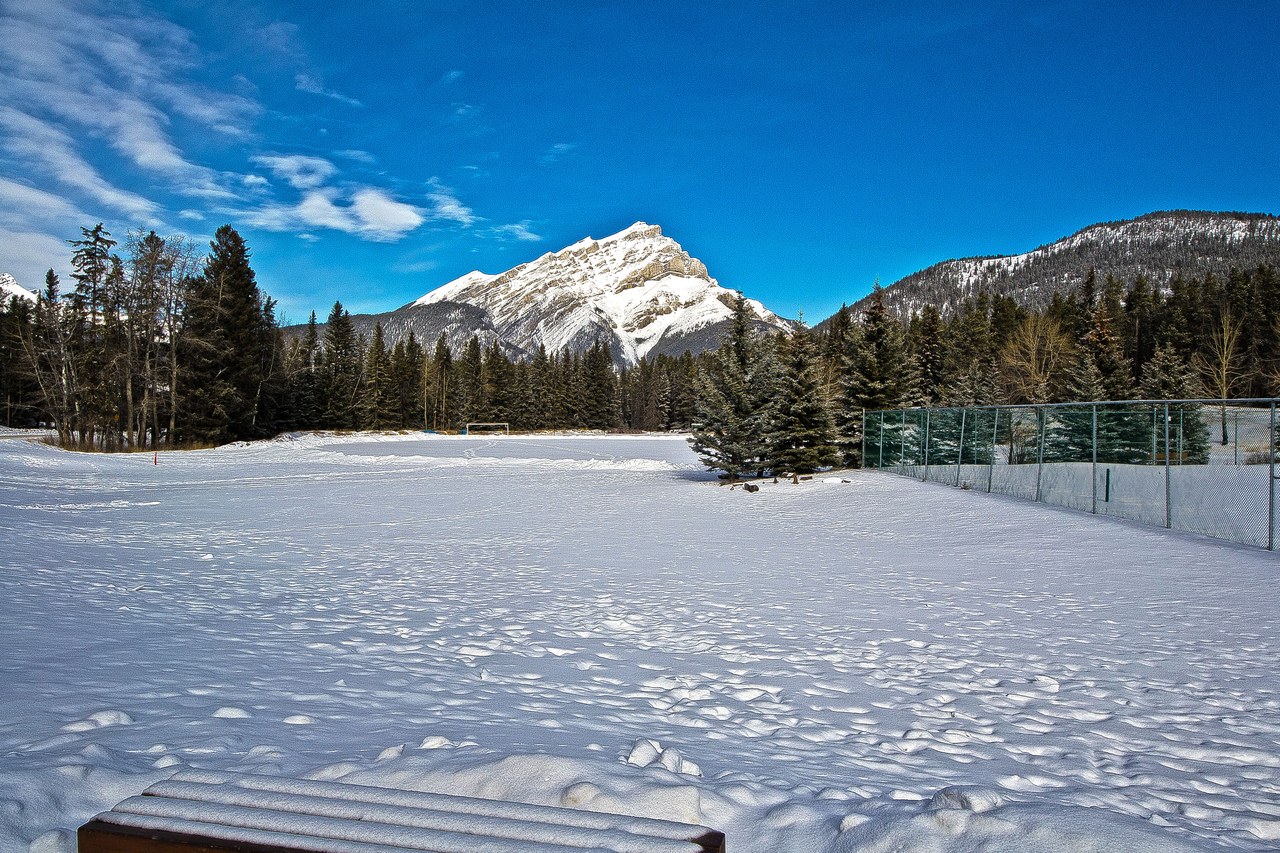
Banff is the name everyone knows, and Banff hotels price like it. Canmore sits 20 minutes down the Trans-Canada with the same jaw-dropping mountain views, excellent restaurants, and hotels that routinely run ~25–30% cheaper. I stayed in Canmore for four nights, took the local Roam transit bus into Banff for day trips, and saved enough to cover my entire food budget. Same mountains. Same parks. Different invoice. If you’re planning the Rockies, read our 2-day Banff itinerary — it works perfectly from a Canmore base.
Booking strategies that actually save money
This is the spreadsheet-nerd section, and I make no apologies. These are the moves that consistently work:
- Set fare alerts early, book in the window. Track your route on Google Flights for a few weeks to learn its normal range, then book when it dips — roughly 15–30 days out for domestic, 31–45 days for international. Do not book six months early “to be safe”; the data says you’ll overpay.
- Be ruthlessly flexible. Shifting departure by a day or two (into that Tue–Thu window) routinely saves $50–150 per ticket. My rule: I never book the first dates I check.
- Clear cookies / compare in an incognito window. I’ll be honest, the evidence on dynamic pricing is mixed — but it costs nothing and I’ve caught price jumps twice. Worth the 30 seconds.
- Check the exchange rate. If you’re visiting from the US or Europe, the Canadian dollar has been favorable for years — your money stretches further than the sticker prices suggest.
- Bundle the boring stuff. Off-peak hotel + flight packages (the kind airlines and big booking sites push in November and February) can undercut booking separately by 10–20%. I priced it both ways for a February Montreal trip; the bundle won by $180.
Where to stay for less (without suffering)
- University residences in summer. From May to August, universities in Toronto, Montreal, Vancouver, and Ottawa rent out dorm rooms as budget hotel-style accommodation — central, clean, and often under $100/night. I stayed in one in Montreal and it was the best-located “hotel” of the trip.
- Off-peak luxury for mid-range money. November and February are when 4-star downtown hotels drop to 3-star prices. If you’ve ever wanted the fancy hotel, this is when you book it.
- Hostels aren’t just for 22-year-olds. Canada’s HI hostels in Banff, Vancouver, Toronto, and Montreal have private rooms that beat budget hotels on price — with kitchens that save you real money on food.
- Stay slightly outside the core. Airport-area and suburban hotels near a SkyTrain/subway/metro station can run 30–40% cheaper than downtown, with a 20-minute transit ride. Just confirm the transit runs late — I checked station hours on the transit agency’s site before booking, and you should too.
Transportation hacks for the Great White North
- VIA Rail Discount Tuesdays. VIA runs weekly Tuesday deals (code TUESDAY) on the Quebec City–Windsor corridor and long-haul routes — I’ve seen Toronto–Montreal and Toronto–Ottawa fares drop meaningfully. Check the official VIA Rail Discount Tuesday page and book on a Tuesday regardless of when you travel.
- Budget airlines for the long hops. Canada is enormous — flying Toronto–Vancouver or Toronto–Calgary on a discount carrier beats two days of driving on both cost and sanity. Book those mid-week departures.
- City transit day passes. Toronto, Montreal, and Vancouver all sell day passes that pay for themselves in three rides. Tap on, tap off, and don’t even think about downtown parking (I timed it: parking in downtown Toronto cost me more than the transit pass, the coffee, and the museum ticket combined).
- Free intercity options are rare — plan around it. Unlike Europe, Canada has almost no free long-distance transport. Budget for the big moves between cities; save within them by walking and transiting.
Free and low-cost fun (the cold has perks)
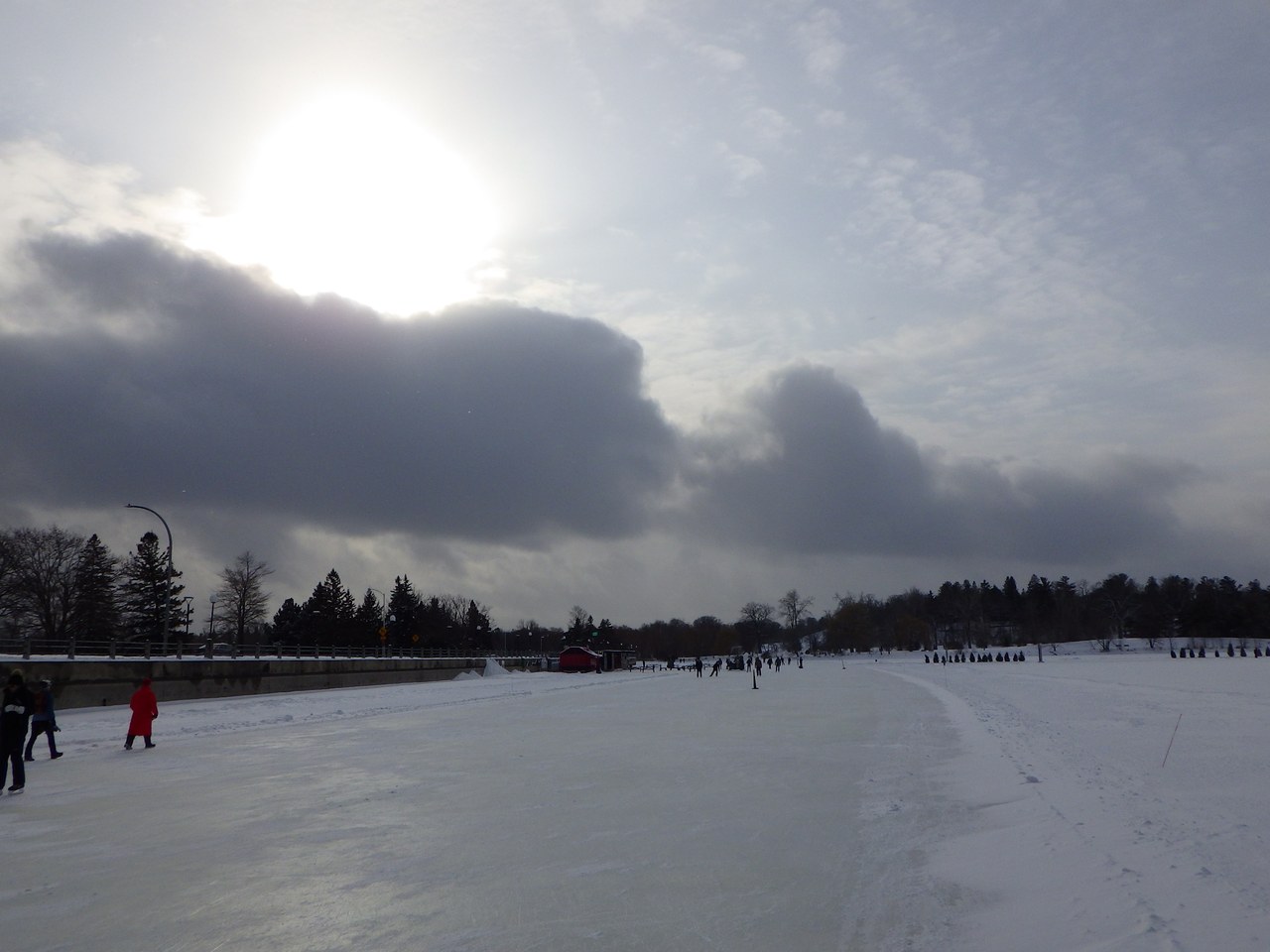
Winter’s secret is that the best stuff is free. My greatest hits:
- Skate the Rideau Canal in Ottawa — the world’s largest skating rink, 7.8 km of it, completely free. I went on a -15°C afternoon, rented skates nearby, and ate a BeaverTail at the halfway point with frozen fingers and zero regrets. Do not skip this if you’re in Ottawa in winter.
- Free museum windows. Many major museums have free or discounted admission on specific days or evenings — the Art Gallery of Ontario, the Montreal Museum of Fine Arts, and several others run free Wednesday evenings or monthly free days. I double-checked the current free-admission schedules on each museum’s official site before my visits — they change, so do the same.
- Free walking tours. Toronto, Montreal, Vancouver, and Quebec City all have tip-based walking tours that are genuinely excellent. I tip well because the guides earn it.
- Festivals that cost nothing to attend. Ottawa’s Winterlude, Montreal’s winter programming, Toronto’s winter festivals — most outdoor events are free; you pay only for the hot chocolate.
See the northern lights without the luxury price tag

Yellowknife is one of the world’s most reliable aurora-viewing spots — and here’s the thing, the lights themselves are free. The expensive part is getting there and the multi-night tour packages. The budget play: fly in November or late winter (cheaper fares, dark skies, peak aurora season runs roughly November–March), stay in a basic hotel or B&B, and either self-drive to a dark viewing spot or book a single-night tour instead of a three-night package. I haven’t done Yellowknife yet — it’s the top of my own winter list — but every aurora chaser I’ve talked to says one clear night is all it takes, and the shoulder of the season is when the deals live.
What does a budget trip to Canada actually cost? (2026)
Sample daily budget per person (prices checked October 2026; items marked ~ are estimates — your mileage will vary by city):
| Item | Peak (Jun–Aug) | Shoulder (May, Sep–Oct) | Off-peak (Nov, Jan–Feb) |
|---|---|---|---|
| Hotel (mid-range, double occupancy) | ~$250 | ~$160 | ~$110 |
| Food & drinks | ~$80 | ~$70 | ~$60 |
| Local transport | ~$60 | ~$50 | ~$45 |
| Attractions & activities | ~$50 | ~$35 | ~$25 |
| Total per day | ~$440 | ~$315 | ~$240 |
A week in off-peak season runs roughly ~$1,700 per person before flights — versus ~$3,100 in peak summer. Timing alone can nearly halve your trip cost. That, right there, is the whole argument for November.
FAQs about the cheapest time to visit Canada
What is the cheapest month to visit Canada?
November is the cheapest overall — the pre-holiday lull brings the year’s lowest flight and hotel prices. January and February are nearly as cheap (outside ski resorts), with deep post-holiday discounts on city hotels in Toronto, Montreal, and Vancouver. Avoid the December 20–January 3 holiday bubble, when prices spike.
When is the cheapest time to fly to Canada?
November for international flights, and January–February for domestic Canadian flights — Expedia’s 2026 Air Hacks report names January the cheapest month to fly domestically, driven by lower demand after the holidays. Fly Tuesday through Thursday for the lowest fares (Thursday is the single cheapest departure day overall), and book roughly 1–2 months ahead for international routes or 15–30 days out for domestic ones.
Is it worth visiting Canada in January or February?
Yes, if you dress for it. Cities like Toronto, Montreal, Ottawa, and Quebec City are at their cheapest, museums and indoor attractions are uncrowded, and you get free winter highlights like skating the Rideau Canal. Skip the ski resorts in these months — Whistler and Banff-area pricing stays high all winter. Pack proper layers; -15°C is normal and honestly fun once you’re dressed right.
Which province in Canada is cheapest to visit?
The Prairie provinces (Manitoba, Saskatchewan, Alberta) have the lowest hotel and food costs — Winnipeg and Saskatoon are the country’s best-value cities. Atlantic Canada is next, especially outside summer. Within the expensive regions, use the workarounds: Canmore instead of Banff (~25–30% cheaper stays), Quebec City instead of Montreal in winter, and secondary cities like Hamilton or Victoria over the marquee names.
How far in advance should I book flights to Canada?
About 1–2 months ahead for international flights and 15–30 days out for domestic Canadian flights, per Expedia’s 2026 fare data. Booking much earlier rarely helps — fares tend to drop into that window. Set a fare alert, watch for a few weeks, and pounce on mid-week departures.
Can I see the northern lights on a budget?
The lights themselves are free — Yellowknife is one of the most reliable viewing spots in the world from roughly November to March. Save by traveling in November or late winter (cheaper flights, dark skies), staying in a basic hotel or B&B, and booking a single-night aurora tour instead of a multi-night package. One clear night is genuinely all it takes.
3 comments