
Last updated: October 3, 2026
The short answer
- Best months: January and February deliver the deepest snow, the brightest northern lights, and the biggest festivals (Winter Carnival, Winterlude, Banff SnowDays). December is magical but pricier around the holidays.
- Don’t miss: The Québec Winter Carnival (Feb 6–15, 2026), skating the Rideau Canal Skateway in Ottawa, the Hôtel de Glace ice hotel, and at least one ski day — Whistler for scale, Mont-Tremblant for value.
- Budget: Expect roughly ~$200–350 per person per day for a mid-range winter trip (hotel, food, one paid activity), with ski days running higher (~$179+ for a Whistler lift ticket alone).
I’ll be honest: my first winter trip to Canada, I packed like I was going to a slightly brisk autumn. I stepped off the shuttle at Lake Louise in January wearing thin “water-resistant” gloves and learned within four minutes that water-resistant and waterproof are not the same word. (My spreadsheet now has a dedicated packing tab. You’re welcome to benefit from my suffering.)
Here’s the thing, though — winter is when Canada makes the most sense. The Rockies under fresh snow, a whole city that throws a two-week party because it’s cold, a canal that becomes the world’s biggest skating rink. I’ve done the winter version of this country four times now, in four different provinces, and this guide is everything I’d tell a friend who asked me where to start. All dates, prices, and hours below were checked in October 2026.
When to visit Canada in winter
The Canadian winter travel season runs roughly December through March. But not all winter months are equal, and here’s my planner-brain breakdown:
- December: Gorgeous for Christmas markets and lights (Niagara’s Winter Festival of Lights is free and spectacular), but ski resorts are expensive around the holidays and the snowpack isn’t at its best yet.
- January: My pick. The deep-winter festivals start, aurora season peaks, crowds thin out after New Year, and prices drop. Yes, it’s cold — I’ll get to that — but this is when winter is doing its job.
- February: The festival month. Québec’s Winter Carnival, Ottawa’s Winterlude, and Banff’s SnowDays all happen now. Snowpack is at its deepest for skiing.
- March: Longer days, milder temperatures, great spring skiing — but the big festivals wind down and the ice hotel typically closes around March 22.
Fair warning: January temperatures in the Prairies and the North can hit -30°C or lower. The Rockies and Quebec City usually sit around -5 to -15°C, which sounds survivable until the wind picks up. Layers aren’t a suggestion; they’re the whole strategy. More on that below.
The best places to visit in Canada in winter
If I had to pick only three winter destinations, they’d be Quebec City, Banff, and Whistler — one for culture and festivals, one for mountain scenery, one for skiing. Ottawa is a strong fourth if festivals are your thing. Here’s how they break down.
Quebec City: the winter postcard
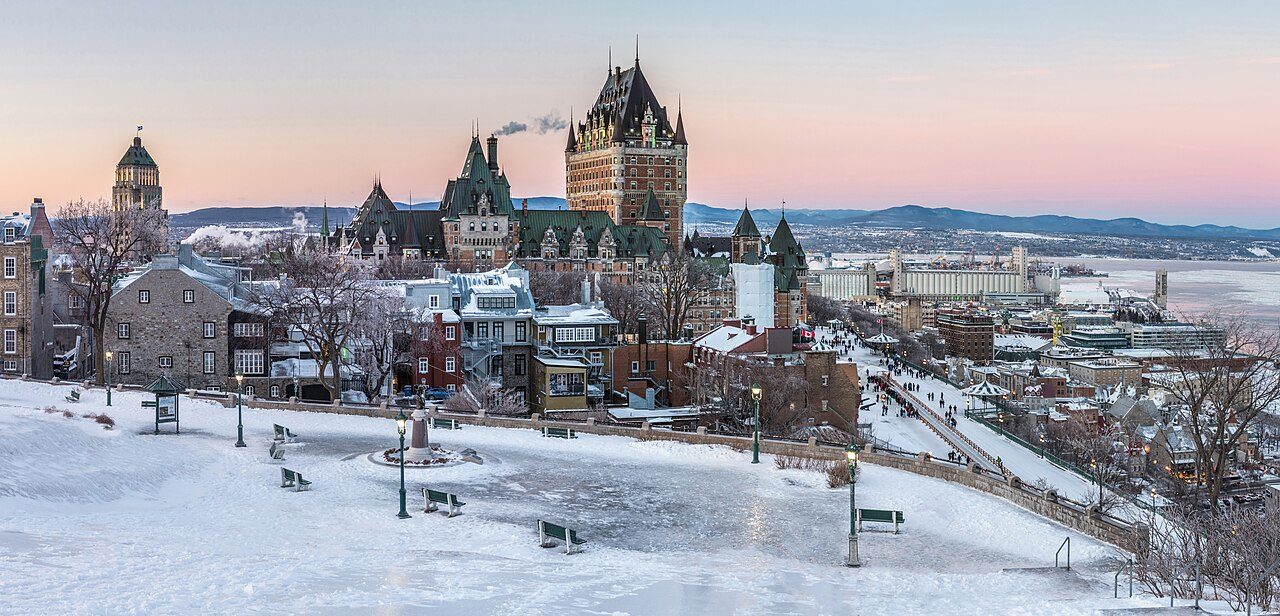
Old Quebec in winter is the closest thing North America has to a European Christmas card — and the city knows it, because it throws the continent’s biggest winter party. I double-checked the 2026 dates on the Carnaval’s official page before writing this (they shift slightly every year, so do the same).
The Carnaval de Québec (February 6–15, 2026) is the 72nd edition of the world’s largest winter carnival. You need an Effigy pass to enter the official sites — it was around $39 CAD in 2026 for ages 13 and up, free for 12 and under — and it gets you into the ice palace, the snow sculptures, and the famous night parades (February 7 in Lower Town, February 14 on Grande Allée). I’ll be honest: I wore my cute city boots to a night parade once and stood on an ice-slicked curb for two hours. Do not be me. Wear the ugly boots.
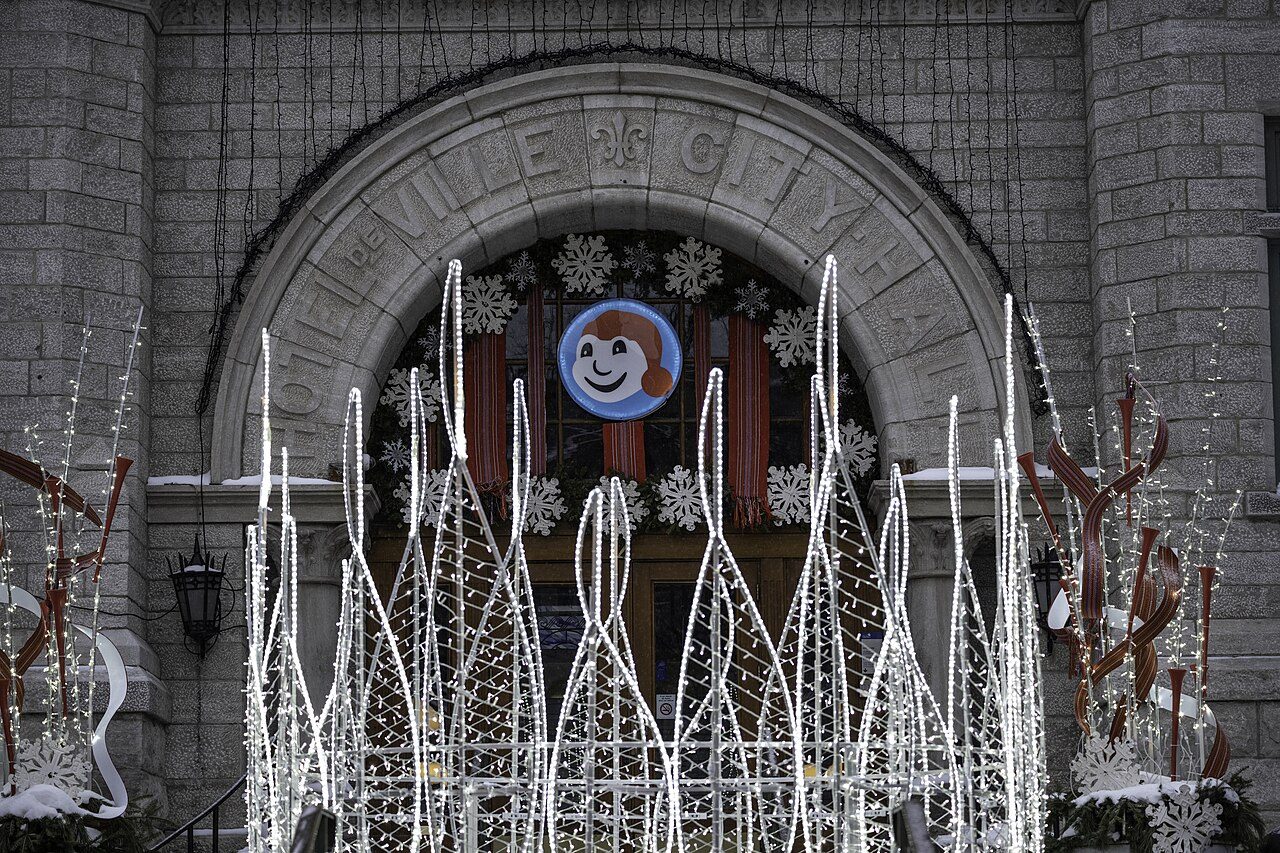
Beyond the Carnival, the Old Town itself is the attraction: tobogganing down the Terrasse Dufferin slide (it’s been running since 1884 — I paid the few dollars, screamed the whole way, and went again), ice skating at Place D’Youville, and the German Christmas Market if you’re there in December.
Twenty minutes from the city sits the Hôtel de Glace, North America’s only ice hotel. For the 2026 season it was open January 4 through March 22, with daytime tours from about $26. I haven’t slept there overnight (overnight packages run several hundred dollars for two), but the daytime visit was one of the strangest, most beautiful hours of my winter travel life. → Hôtel de Glace — official visiting info · Carnaval de Québec — official site

Pro tip: pair Quebec City with our 2-day Quebec City itinerary — it covers the Old Town highlights if you extend your winter trip.
Ottawa: skate the world’s biggest rink

The Rideau Canal Skateway is 7.8 km of groomed ice running through the capital — the largest naturally frozen skating rink in the world. I checked the daily ice conditions on the National Capital Commission’s page every morning of my trip (they update them constantly, and warm spells can close sections — do the same before you lace up). BeaverTails from a canal-side stand at -12°C, skates on, Parliament in the distance: it’s peak Canada, and it’s free.
Winterlude (January 30 – February 16, 2026) turns the whole thing up: ice sculptures at Confederation Park, snow slides and a Ferris wheel at Snowflake Kingdom in Gatineau, and the canal buzzing every weekend. I found the festival dates and official site lineup on Ottawa Tourism’s page — and fair warning, hotels near the canal book out for the February weekends, so reserve early. → Ottawa Tourism — Winterlude 2026 guide
Banff & Lake Louise: the deep-snow mountains
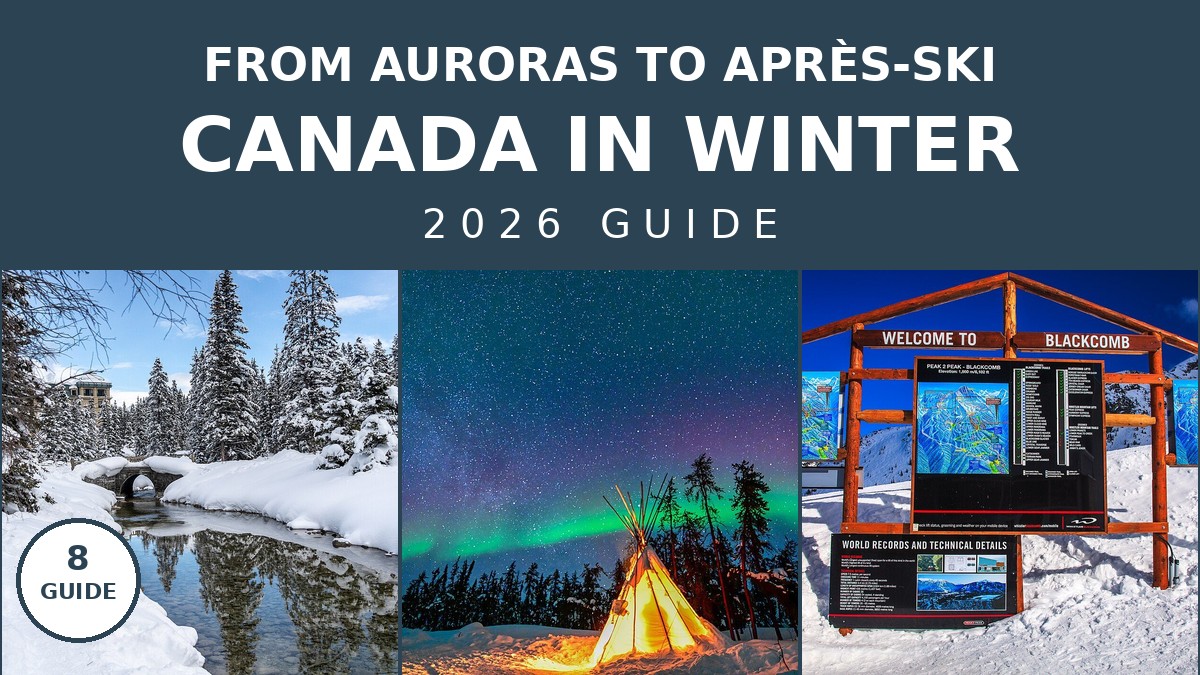
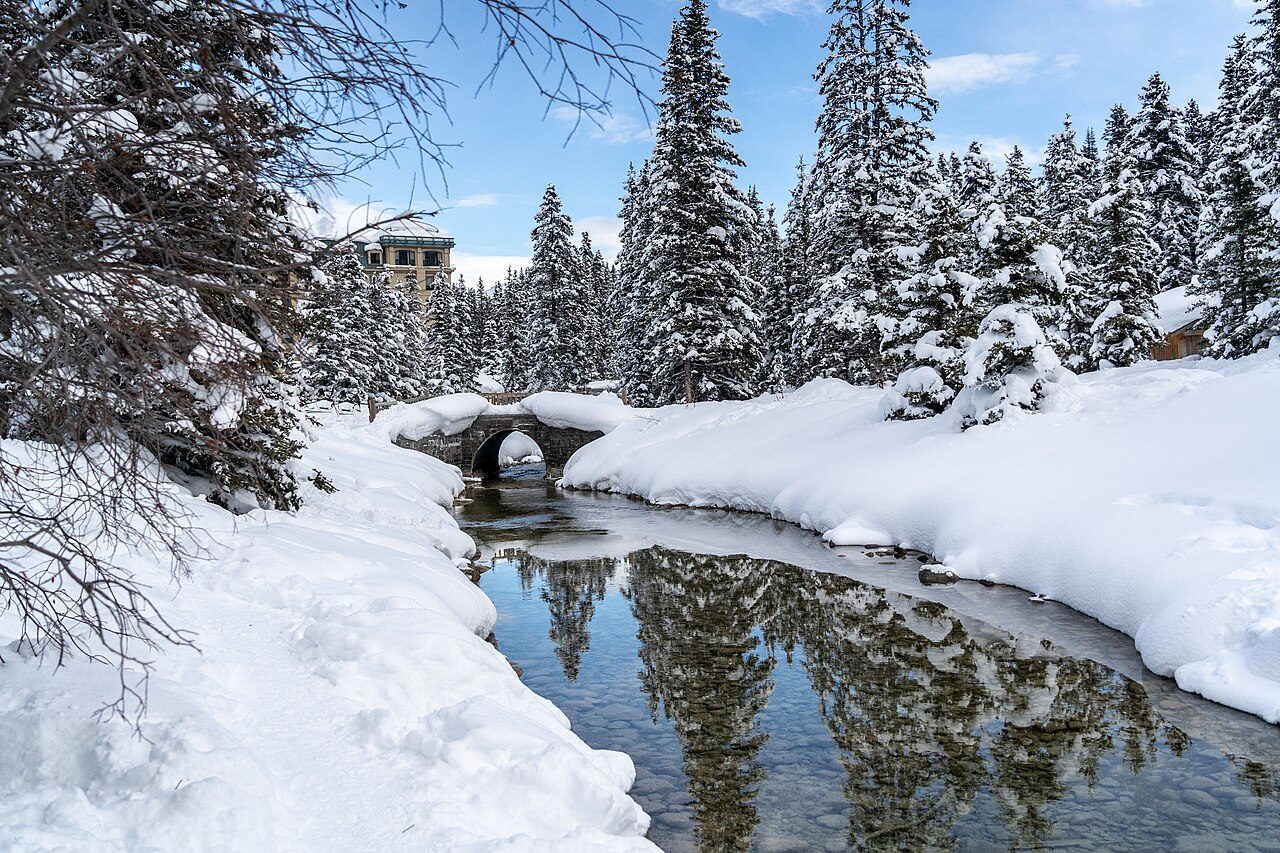
I’ve done Banff in summer and winter, and winter wins. Lake Louise frozen solid (yes, people skate and play hockey on it), Johnston Canyon’s frozen waterfalls, and hot springs that hit differently when there’s snow in your hair. The hero image at the top of this guide is Lake Louise after fresh snowfall — that’s not a filter, that’s just January.
Banff SnowDays ran January 16 – February 8, 2026: snow sculptures along Bear Street, skijoring (skiers pulled by horses down Banff Avenue — I watched it and it’s gloriously absurd), and a family play zone in Central Park. I confirmed the dates on SkiBig3’s festival page before publishing this. → SkiBig3 — Banff SnowDays 2026
Planning a Rockies winter trip? See our 2-day Banff itinerary for how to fit it into a bigger route.
Whistler: the big-mountain ski trip

Whistler Blackcomb is North America’s largest ski resort, and winter is its home turf — the 2026/27 season opened with the usual fanfare, and the village is at its liveliest from December through March. On pricing: a 1-day adult Day Pass lists at $179 (unrestricted) for 2026/27, dropping to around $97/day on a 10-day pass bought in advance. The mountain’s own advice, which I will now pass to you with feeling: buy before the early-December price increases, because day-of window prices are genuinely triple. → Whistler Blackcomb — official lift tickets
Non-skiers, don’t skip Whistler in winter either — the Scandinave Spa thermal journey and the PEAK 2 PEAK gondola as a sightseer are both worth it. Our 3-day Whistler itinerary has the full winter playbook.
Mont-Tremblant: the East Coast ski answer
If your trip is Quebec-and-Ontario-based, Mont-Tremblant is the eastern ski heavyweight: 102 trails, a pedestrian village that looks like it was designed for Instagram, and lift tickets roughly half of Whistler’s. Adult full-day tickets for the 2025/26 season ran about $129–185 CAD depending on date (peak holidays cost more, and buying online in advance saves real money — trust me on this one).
Chasing the northern lights

The aurora is the one winter experience I’d plan an entire trip around. Here’s the thing most people get wrong: you don’t need to go to the Arctic. You need dark skies, clear weather, and solar activity — and Canada has all three in spades.
- Yellowknife, Northwest Territories — the aurora capital. Flat, dark, and directly under the auroral oval; dedicated aurora-viewing tours run nightly in season. (Photo above is Yellowknife — I still think about it.)
- Whitehorse, Yukon — slightly easier to reach, with hot springs to soak in while you wait for the sky to perform.
- Churchill, Manitoba — aurora plus polar bears in the early-winter months. Yes, really. A front-desk clerk in Winnipeg once told me Churchill in February is “the coldest best decision you’ll ever make,” and I believe her.
- Jasper, Alberta — a designated Dark Sky Preserve; the best aurora odds in the Rockies, and far fewer crowds than Banff.
Pro tip: December through February gives you the longest nights. Check the aurora forecast (the University of Alaska’s 30-minute forecast is the one I use) and get away from town lights — even 20 minutes of driving makes a huge difference.
Canada’s winter festival calendar
I keep this table on my phone every winter. Dates are 2025/26 season, verified in October 2026 — always reconfirm on the official sites before booking flights, because winter festivals shift with the calendar and the weather.
| Festival | Where | 2025/26 dates |
|---|---|---|
| Niagara Winter Festival of Lights | Niagara Falls, ON | Nov 15, 2025 – Jan 4, 2026 (free) |
| Hôtel de Glace season | Québec City area, QC | Jan 4 – Mar 22, 2026 |
| Banff SnowDays | Banff & Lake Louise, AB | Jan 16 – Feb 8, 2026 |
| Winterlude | Ottawa–Gatineau, ON/QC | Jan 30 – Feb 16, 2026 |
| Carnaval de Québec | Québec City, QC | Feb 6 – 15, 2026 |
The Niagara Winter Festival of Lights deserves a special mention: 8 km of displays, over 3 million lights, 75 installations — and it’s completely free. I did it as a day trip and wished I’d stayed overnight; the falls lit up at night in January is something else. → Niagara Parks — Winter Festival of Lights
Top winter activities beyond skiing

- Dog sledding — available in Quebec, Banff, and the Yukon. I did a half-day run outside Quebec City and spent the first ten minutes grinning like an idiot. The dogs are athletes; you are cargo. Accept this.
- Ice skating outdoors — the Rideau Canal is the headline act, but Lake Louise, Toronto’s Harbourfront, and Quebec City’s Place D’Youville all have magical rinks.
- Snowshoeing — the cheapest guided winter activity going, and Parks Canada runs excellent guided snowshoe walks in Banff and Jasper. I found this out the sweaty way: dress lighter than you think, you’ll warm up fast.
- Ice fishing, snowmobiling, and hot springs — the Rockies’ hot springs (Banff Upper, Radium, Miette) are open year-round, and soaking outdoors at -10°C is a top-five life experience.
- Winter hiking — Johnston Canyon’s frozen waterfalls in Banff are a catwalk of ice, and the trail is maintained all winter.
What to pack for Canada in winter
My packing tab exists because of that Lake Louise glove incident, so take it from me:
- Base layer: merino or synthetic thermals, top and bottom. Cotton kills (it holds sweat and freezes) — I’ll be honest, I learned this from a guide in Banff, not from wisdom.
- Mid layer: fleece or down puffer.
- Outer layer: waterproof, windproof shell. Waterproof. Not water-resistant. Ask me how I know.
- Extremities: waterproof insulated gloves or mittens (mittens are warmer), a proper toque, a neck gaiter or balaclava, and wool socks. Hand warmers are a game-changer — buy a multipack before you leave home.
- Feet: insulated, waterproof winter boots with real tread. The cute city boots stay home. (The night-parade incident. Never again.)
- Extras: lip balm and moisturizer (the dry cold is brutal), sunglasses (snow glare is real), and a small thermos — hot tea on a frozen lake is elite.
Most of this is cheaper at home than in a resort town. The one thing worth buying in Canada: a proper toque. You’ll wear it every day.
Winter driving: what you need to know
Renting a car in winter? A few non-negotiables:
- Winter tires are legally required in Quebec from December 1 to March 15 — rental cars there come equipped, but confirm at pickup.
- British Columbia requires winter tires or chains on most mountain highways from October 1 to April 30. The Sea to Sky Highway and the routes into Whistler, Banff, and Jasper all count.
- Keep the tank at least half full, carry a blanket and snacks, and download offline maps — mountain passes lose signal exactly when you’d want it most.
- Daylight is short: in December, the sun sets around 4–4:30 PM in most of Canada. Plan mountain drives for daylight hours.
If driving in winter conditions sounds stressful, the train is a legitimate alternative — our Canada train travel guide covers the scenic winter routes.
How much does a winter trip to Canada cost?
Sample budget per adult, per day (prices checked October 2026; items marked ~ are estimates):
| Item | Cost (CAD) |
|---|---|
| Mid-range hotel (city, e.g. Quebec City, Ottawa) | ~$150–250/night |
| Mid-range hotel (Banff, Whistler in ski season) | ~$250–400/night |
| Food & drinks | ~$60–100 |
| Whistler lift ticket (adult, 2026/27 advance pricing) | ~$179 |
| Mont-Tremblant lift ticket (adult, advance) | ~$129–185 |
| Ski/snowboard rentals | ~$50–70 |
| Winter Carnival Effigy pass (ages 13+) | ~$39 |
| Hôtel de Glace daytime visit | ~$26 |
| Dog sledding tour (half-day) | ~$150–250 |
| Typical daily total (mid-range, one paid activity) | ~$200–350 |
Winter travel insurance is worth every penny for a trip like this — cold-weather injuries, flight delays, and ski coverage add up fast. Read our Canada travel insurance guide before you book.
FAQs about visiting Canada in winter
When is the best time to visit Canada in winter?
January and February are the sweet spot: the deepest snow, peak aurora season, and all the major festivals (Québec Winter Carnival, Winterlude, Banff SnowDays) happen then. December is lovely for lights and Christmas markets but pricier around the holidays; March offers milder weather and spring skiing but fewer festivals.
Is Canada too cold to visit in January?
Not if you dress for it — I’ll be honest, the cold is manageable with proper layers (thermals, fleece, waterproof shell, real winter boots). Quebec City and the Rockies usually sit between -5 and -15°C; the Prairies and the North can drop below -30°C, which is a different sport entirely. The key is windproof, waterproof everything and no exposed skin on the coldest days.
Where is the best place to see the northern lights in Canada?
Yellowknife, Northwest Territories, is the most reliable — it sits directly under the auroral oval and dedicated viewing tours run nightly in season. Whitehorse, Yukon, and Churchill, Manitoba, are excellent alternatives, and Jasper’s Dark Sky Preserve offers the best aurora odds in the Rockies. Go between December and February for the longest nights, and get at least 20 minutes away from town lights.
How much does a week-long winter trip to Canada cost?
Budget roughly $1,400–2,450 CAD per adult for a mid-range week (~$200–350/day covering hotel, food, and one paid activity daily), excluding flights. Ski days push it higher — a Whistler lift ticket alone is $179 at 2026/27 advance pricing, plus ~$50–70 for rentals. Festivals like Winterlude and the Niagara Festival of Lights are free, which helps.
Do I need winter tires to drive in Canada in winter?
In Quebec, winter tires are legally required from December 1 to March 15, and rental cars there come equipped — confirm at pickup. In British Columbia, winter tires or chains are required on most mountain highways from October 1 to April 30. Even where not legally required (Alberta, Ontario), winter tires are strongly recommended from November through March.
Is the Québec Winter Carnival worth it?
Yes — for first-timers, it’s the single best winter event in the country. The 2026 edition runs February 6–15; the Effigy pass (around $39 for ages 13+, free for 12 and under) covers the ice palace, snow sculptures, and night parades. Book accommodation early — Quebec City fills up for Carnival weekends — and wear your warmest boots, not your cutest ones. Trust me on this one.
Winter in Canada is a logistics puzzle — and it’s worth every penny to solve it. Pack the ugly boots, book the festival weekends early, and remember the cold is just weather. You’ve got this.
1 comment