
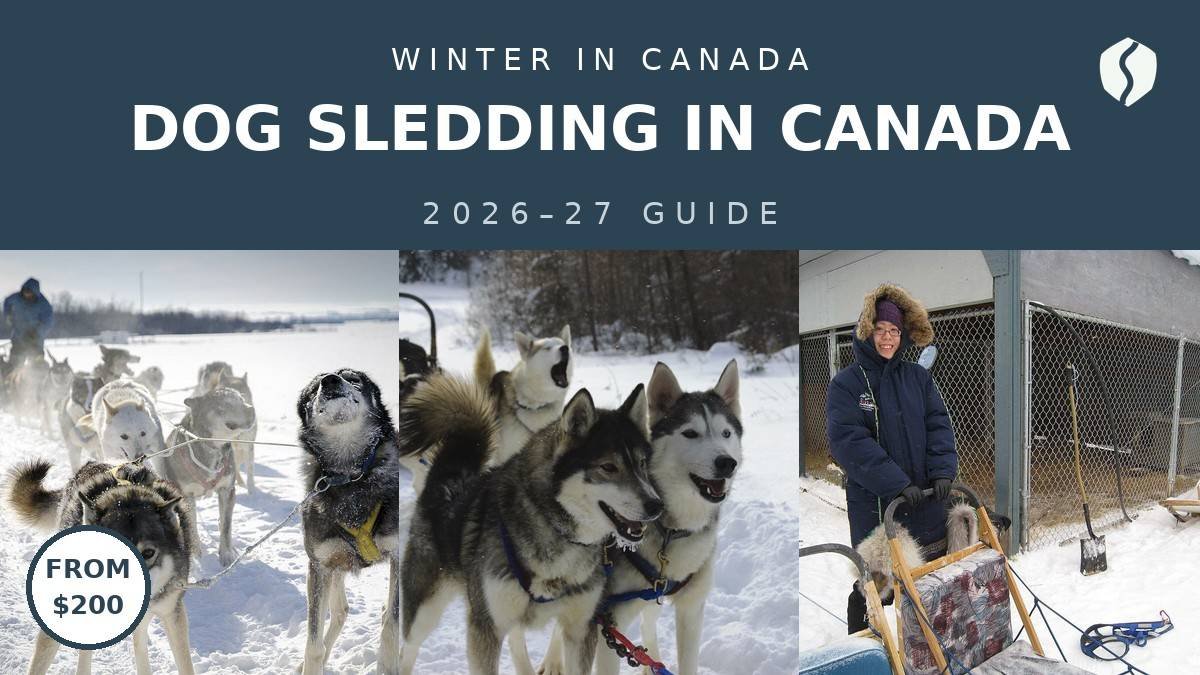
- ✓ Most tours run 2–4 hours, with about 1 hour actually on the sled — the rest is meeting the dogs, learning to drive, and hot chocolate at the end. Budget C$200–400 per person for a short tour; the Rockies cost more.
- ✓ You can drive your own team at most kennels — no experience needed, and the guide rides ahead of you. Riding as a passenger is the easier option, and honestly the warmer one.
- ✓ Book 2–4 weeks ahead, longer for holidays — the good kennels are small, the sleds are few, and Christmas week sells out while you’re still deciding.
Here’s the deal with dog sledding: the dogs are the whole trip. You show up at a kennel in the cold, a dozen huskies lose their minds with excitement, and then — the second they start pulling — they go dead quiet. Just paws on snow and the runners whispering underneath you. No joke, it’s the quietest loud thing I’ve ever done.
I’ve now done this three times in three very different places: a half-day out of Canmore, a short run near Mont-Tremblant, and a longer day in the Yukon. I’ve also made the classic mistakes, so you don’t have to. I wore ski gloves once. Twenty minutes in, my fingers were done, and the guide had to lend me his spare mitts. Every price, hour, and address in this guide was checked in November 2026 — mostly on the operators’ own sites, because prices move every season and secondhand lists go stale fast.
What a dog sled tour is actually like
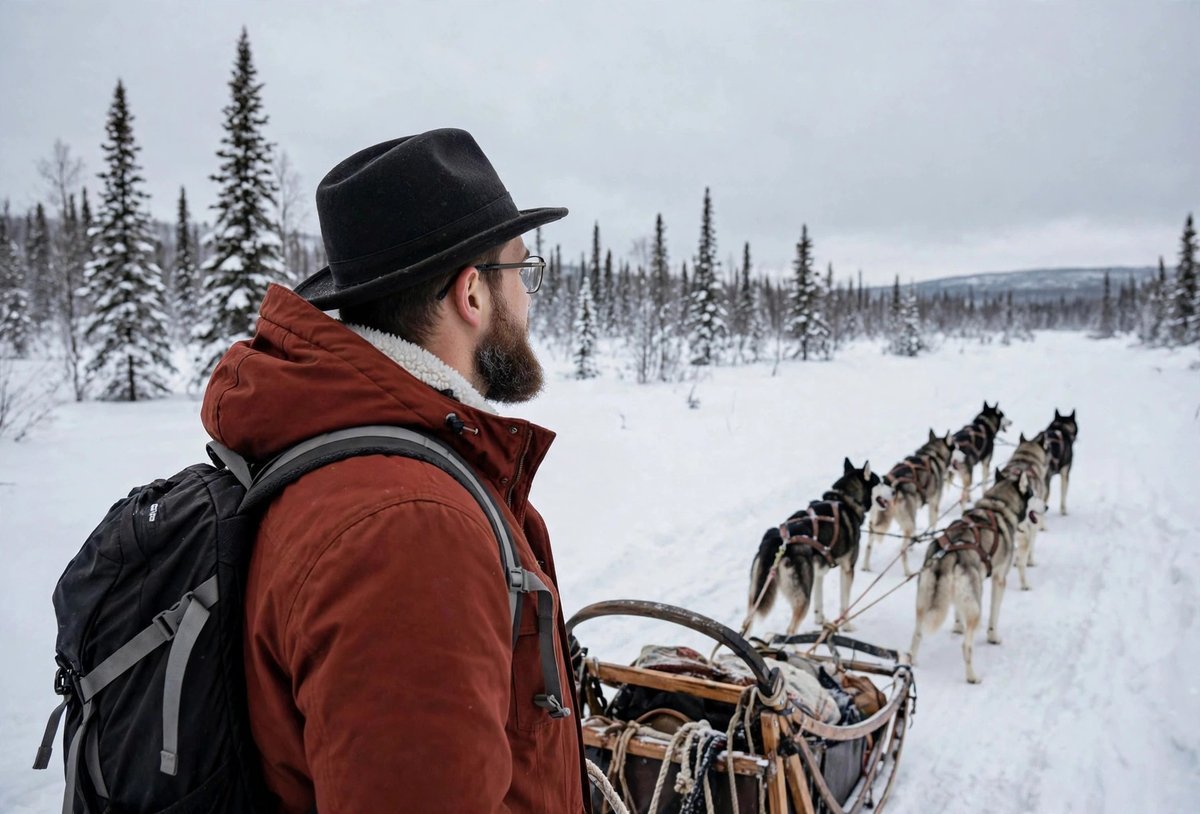
Forget the postcard version where you sit back like royalty while noble huskies glide through a forest. Here’s what actually happens, in order.
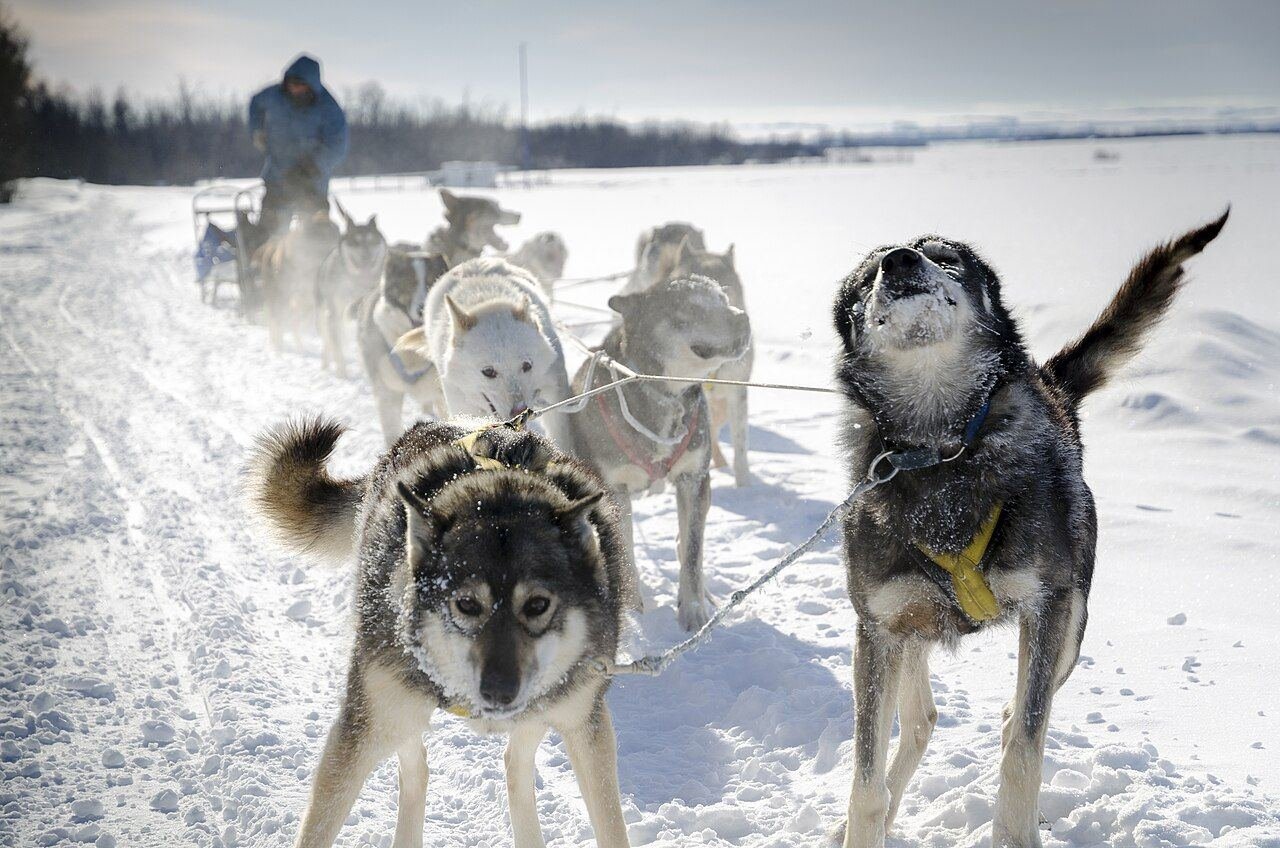
You arrive at the kennel and meet the dogs first. This is the best part, and the part nobody warns you about: the dogs are loud. Barking, jumping, spinning in their harnesses. They want to run, and they want you to know it. The guide introduces the team, explains who’s who — the lead dogs, the wheel dogs closest to the sled — and then shows you how to harness up. At a good kennel, you help with this.
Then the driving lesson. It’s short — ten minutes, maybe fifteen. How to stand on the runners, how to brake (stomp the brake claw into the snow), how to say “gee” for right and “haw” for left, and how to get off and run uphill when the team needs help. Here’s the thing the brochure skips: you will get off and run. On any hill worth the name, the dogs need a push. If you’d rather not, ride as a passenger — the guide drives, you sit wrapped in a blanket, and nobody judges you. I’ve done both. Driving is better. Riding is warmer.
On the trail, the team settles into a trot and the noise stops. That’s the moment it makes sense. Four to six dogs pull the sled at a steady 10–15 km/h through forest and across frozen lakes, and the only sounds are breathing and snow. Most tours stop once or twice — for photos, or a fire and hot chocolate on a longer run. Back at the kennel you help unharness the dogs (they get water and a snack first, always), and the whole thing ends with you standing around in the snow not wanting to leave.
Total time on the sled is shorter than the tour length. A “2-hour tour” usually means about an hour on the sled, plus kennel time and the lesson; a half-day means two to three hours on the trail. If you want a long ride, book the half-day. The 2-hour option is a taster, and a good one — but it’s a taster.
Book the first slot of the morning. The dogs are freshest, the trails are cleanest, and the light is better for photos. I’ve done both the 9 AM and the 3 PM runs — same trail, same dogs, and the morning one felt like a different trip entirely.
The meeting point is almost never the office address on the website. Most kennels run their tours from a trailhead 20–45 minutes away — Snowy Owl meets in Canmore and shuttles you to Boundary Ranch in Kananaskis, and Boreal Kennels’ tours start in Carcross, 45 minutes south of Whitehorse. Read the confirmation email twice. I learned this the sweaty way, driving to the wrong place.
The 6 best places to go dog sledding in Canada, on a map
Six kennels, from the Rockies to the far north. Tap any stop to jump the map to it. Prices below are per person in Canadian dollars, checked November 2026 on the operators’ own sites — taxes extra unless noted.
Map data © OpenStreetMap contributors. Open the full map
1. Canmore & the Rockies — Snowy Owl Sled Dog Tours
The classic. Snowy Owl is Canmore’s first and best-known sled dog company. The office is at 829 10 Street in Canmore, and from there they shuttle you about 30 minutes out to Boundary Ranch in Kananaskis, where the trails run. It’s the only operator in the Banff–Canmore area where you can drive your own team — riding is fine, but standing on the runners with six dogs ahead of you is the version you’ll remember.
Their short tour is the Powder Hound Express: 2 hours total, about 10 km on the trail, roughly an hour on the sled, running 9 AM, 11 AM, 1 PM and 3 PM, December through April. Regular-season prices are $370 for one person, $660 for two on an instructor-driven sled, $690 for two driving your own sled, and $885 for three driving, plus GST; high-season dates (mid-December to early January, mid-February, and late March to early April) run about $35–40 more per sled. The longer Sunfeather Winterlude is 4 hours with about 3 hours on the sled and 24 km of trail — $735 for one person, $1,340 for two instructor-driven, $1,410 for two self-driven, plus GST. Lunch can be added for $22 a person. I double-checked all of this on Snowy Owl’s own site before writing — their prices have climbed over the last couple of years, so don’t trust an old blog post (including, frankly, the one that says a sled for two costs $610; it doesn’t anymore). → Snowy Owl — Powder Hound Express, official prices · Sunfeather Winterlude
Pair it with a few days in the mountains — my Banff in winter guide covers where to stay, and the Canada ski trip cost guide keeps the rest of the budget honest. Gas up before you leave Canmore. The rig and I have history on that front.
Snowy Owl runs a free-run enrichment program — the only kennel in the Bow Valley that does, by their own account — and guests can watch the dogs run loose before the tour. It’s worth arriving early for. You learn more about a kennel watching its dogs off-tether for ten minutes than from any brochure.
2. Haliburton, Ontario — Winterdance Dogsled Tours
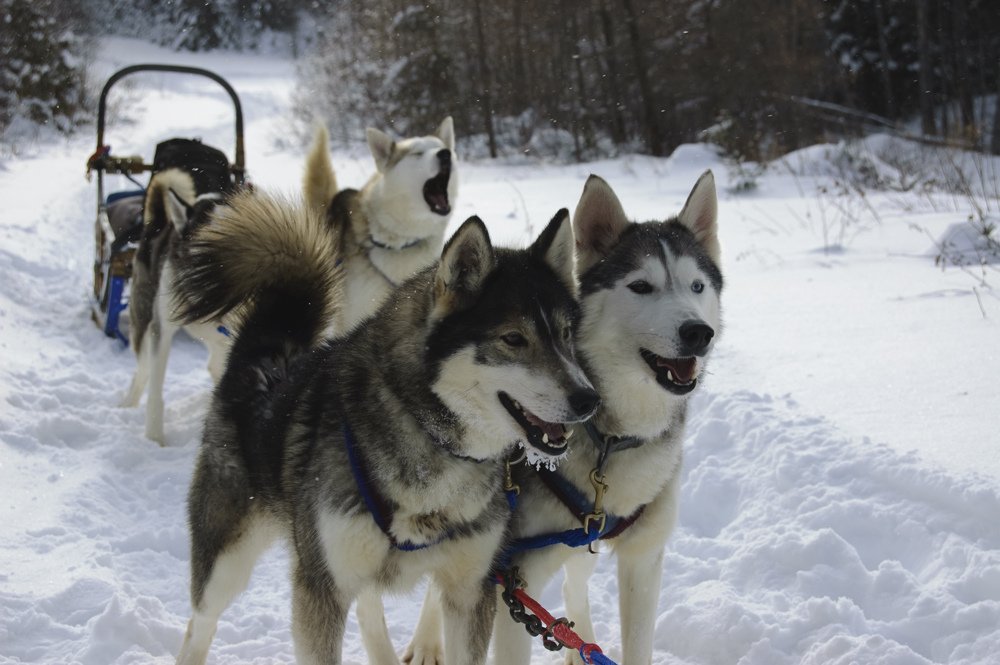
The closest serious dog sledding to Toronto, and the easiest trip on this list to actually do. Winterdance sits on 2,100 acres of private trails near Eagle Lake in the Haliburton Highlands, about 290 km northeast of the city — a 2.5-hour drive, no flight, no hotel strictly needed if you leave early. The address is 1888 Hodgson Road, Haliburton. They run 2-hour, half-day, full-day, moonlit evening, and multi-day trips from December to March, and their kennel holds well over 100 Siberian huskies.
What sold me on this place is the owners’ résumé. Hank DeBruin and Tanya McCready-DeBruin have finished the 1,000-mile Iditarod (2010 and 2012) and the 1,000-mile Yukon Quest (2011 and 2014) — these are not hobby dogs. That pedigree shows in how the tours run: small groups, real instruction, and dogs that are clearly athletes, not props. Their site doesn’t publish prices, so plan on the Ontario going rate: roughly $200–350 per person for a one- or two-hour tour, $300–500 for a half-day, and $600–1,000 for a full day, per Destination Ontario’s current guide. Confirm the number by email before you drive up. → Winterdance — official site · Destination Ontario — dog sledding in Ontario
Winterdance is also the only operator on this list that runs moonlit night tours as a regular thing — worth the detour if you can time it. And if you’re driving up from Toronto in winter, read my winter driving guide first. Highway 118 in a snow squall is no joke.
3. Mont-Tremblant, Quebec — Tremblant Dogsledding
The most convenient dog sledding in Quebec. Tremblant’s dogsled tours run from a base at 111 Chemin de l’Albatros, about 7 minutes from Station Mont-Tremblant. The season runs December 12, 2026 to April 4, 2027, Wednesday to Sunday, with departures at 9:10 AM, 11 AM and 1:30 PM.
There are four tour flavours, and the price depends on which one and when you go. The Diable Adventure (the one closest to the village) starts from $199 per adult; the Nordic Adventure from $177; the Vallée Adventure from $184; and the Hautes-Laurentides tour from $171. On Tremblant’s own booking page, an adult ticket runs $199 without transport or $219 with transport in regular season, and $244–264 over the Christmas holidays (December 19 to January 3), plus royalty and taxes. Kids 12–17 run a little cheaper. Every tour is about 1 hour on the sled with a guide, and the Diable tour caps each sled at 450 lbs total with a 240 lb per-person limit — check that before you book, not after. I double-checked the holiday pricing on Tremblant’s official activities page, because the numbers shift by week. → Tremblant — dog sledding, official page · Tremblant Activities — dogsledding comparison table
One warning from the operator’s own site, and it’s worth hearing: these tours fill up weeks in advance for holiday weeks and weekends. If you’re going over Christmas or the February school break, book the moment your dates are firm. My Mont-Tremblant travel guide covers the rest of the village — where to stay, where to eat, and what to do when your legs give out.
Cheaper alternative nearby: Aventure Quatre Saisons in Rivière-Rouge, about 45 minutes from the resort, runs a 1-hour dogsledding tour from $169 per person, helmet included, with a 2-hour option as well. It’s a smaller, quieter operation, and the Laurentians setting is the real thing. → Aventure Quatre Saisons — dog sledding near Mont-Tremblant
4. Charlevoix, Quebec — La Reine et le Millionnaire
The smallest kennel on this list. La Reine et le Millionnaire is a family-run operation at 600 Rang Saint-Placide Nord, Baie-Saint-Paul, about 10 minutes from town and 1 hour 15 minutes from Quebec City. The kennel is small on purpose — a maximum of four sleds per outing — and the dogs are a mix of Siberian Huskies, Alaskan Malamutes and Greenland Dogs, each with its own box and a large wooded park to run free in.
Their standard outing is the 1.5-hour adventure: from $115 per adult and $79 per child, with about 30 minutes of harnessing and driving training and about an hour on the trails. The half-day experience runs from $175 per adult and $115 per child, with about 2 hours of sledding. Minimum age is 5; you can drive your own team from 14, with the guide’s approval. The duo option caps at 160 kg (350 lbs) combined, and bookings are by email or phone only — they match each team to the people on it, so they ask your age and weight before confirming. That’s a good sign, not a hassle.
New for winter 2026–27: two twilight outings. Le Rituel du musher, from mid-December, is a three-hour evening experience with a sunset ride and the mushers’ evening routine — feeding and caring for the dogs. L’aventure au crépuscule, from late January, is a 90-minute outing with a 6 km route just before sunset, the last light falling over Baie-Saint-Paul and the St. Lawrence. I verified all of this on the kennel’s own site and in Tourisme Charlevoix’s winter 2026–27 guide. → La Reine et le Millionnaire — official site
This one is a workout. The kennel’s own conditions page says it plainly: you need to be in good physical condition, because on uphill sections you get off the sled and run to help the dogs, and you need quick reactions on the brake. If you want a gentle ride where you just sit, pick a passenger tour elsewhere. Charlevoix is for people who want to work a little.
5. Yellowknife, Northwest Territories — North of 60 Aurora Adventures
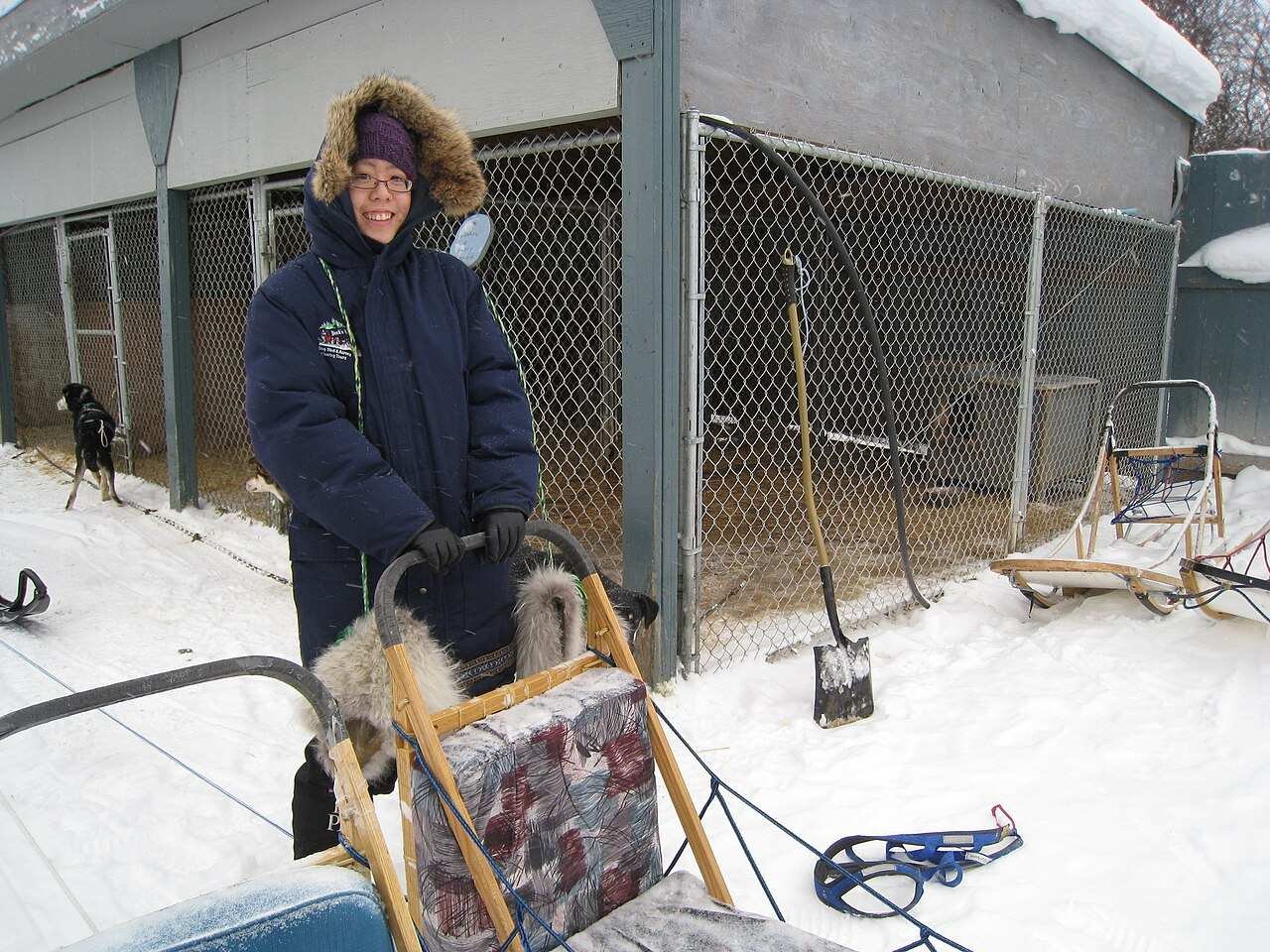
Yellowknife is where dog sledding stops being a resort activity and starts being a way of life. The operator I’d point you to is North of 60 Aurora Adventures, an Indigenous-owned family partnership run by cousins sharing the cultural traditions of their ancestors, based out on the Yellowknife Highway at KM 324. Their traditional dog sledding outing runs about 4 hours door to door — pickup from your hotel, a ride out onto the land, time with the dogs, and warm drinks after — with roughly 25 minutes actually on the sled. Prices sit around C$110–160 per person; the range is wide because operators bundle transport and refreshments differently, so check what’s included before comparing.
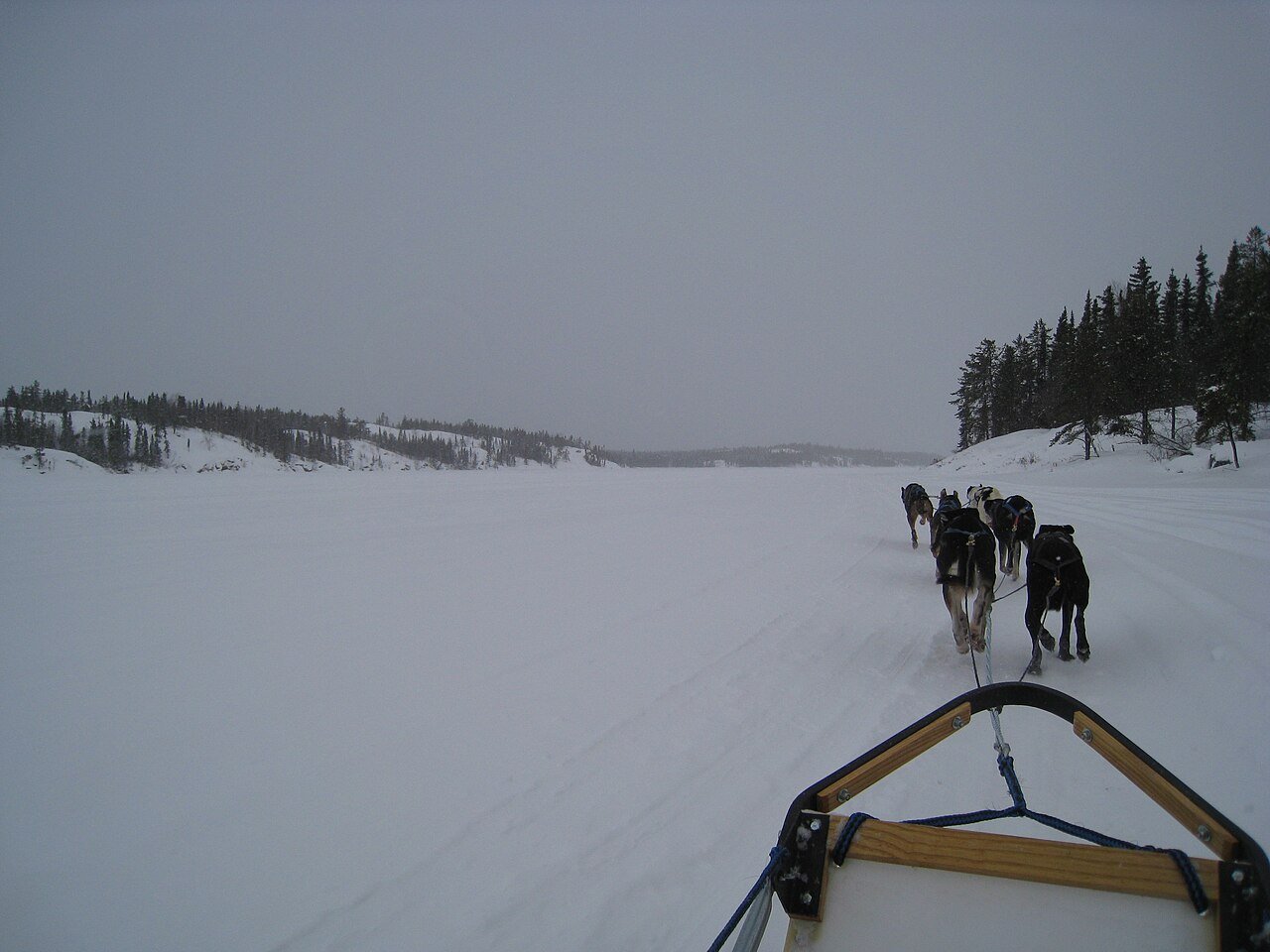
Yellowknife is also the place to combine dog sledding with the northern lights. Aurora Village, the Indigenous-owned lodge on the Ingraham Trail, runs daytime dog sledding alongside its nightly aurora viewing from heated teepees — sled by day, sky by night, same property. If you’re building a Yellowknife trip around the lights, my northern lights in Yellowknife guide covers the timing, the odds, and what the cold is actually like at 2 AM. → Aurora Village — official site
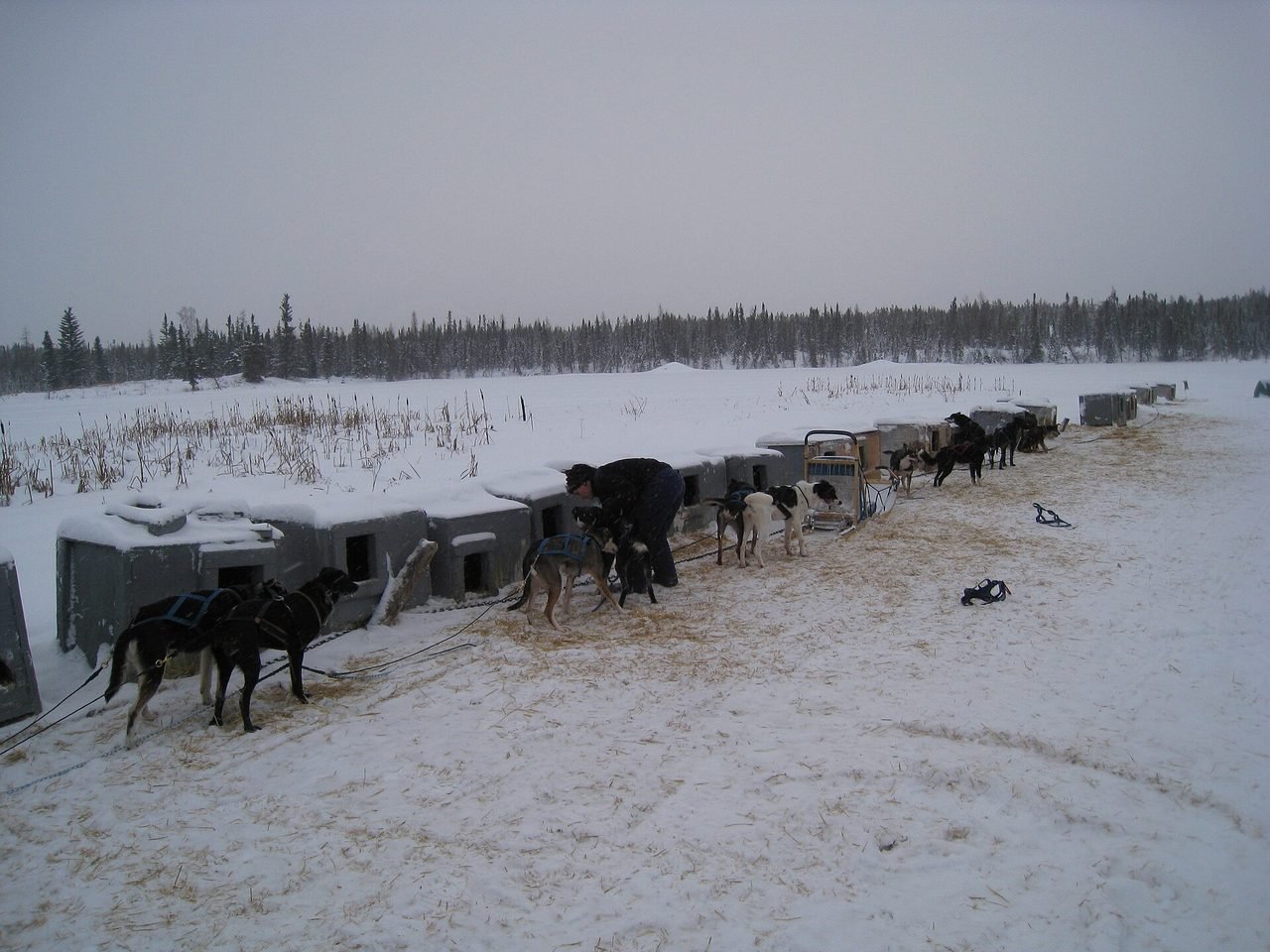
Choosing between Yellowknife operators: reviews vary a lot. Look for the same things as in the ethics section below — small groups, time with the dogs, a guide who knows the dogs by name. North of 60 checks those boxes. Skip any operator that treats the kennel as a photo stop.
6. Whitehorse & the Yukon — Boreal Kennels
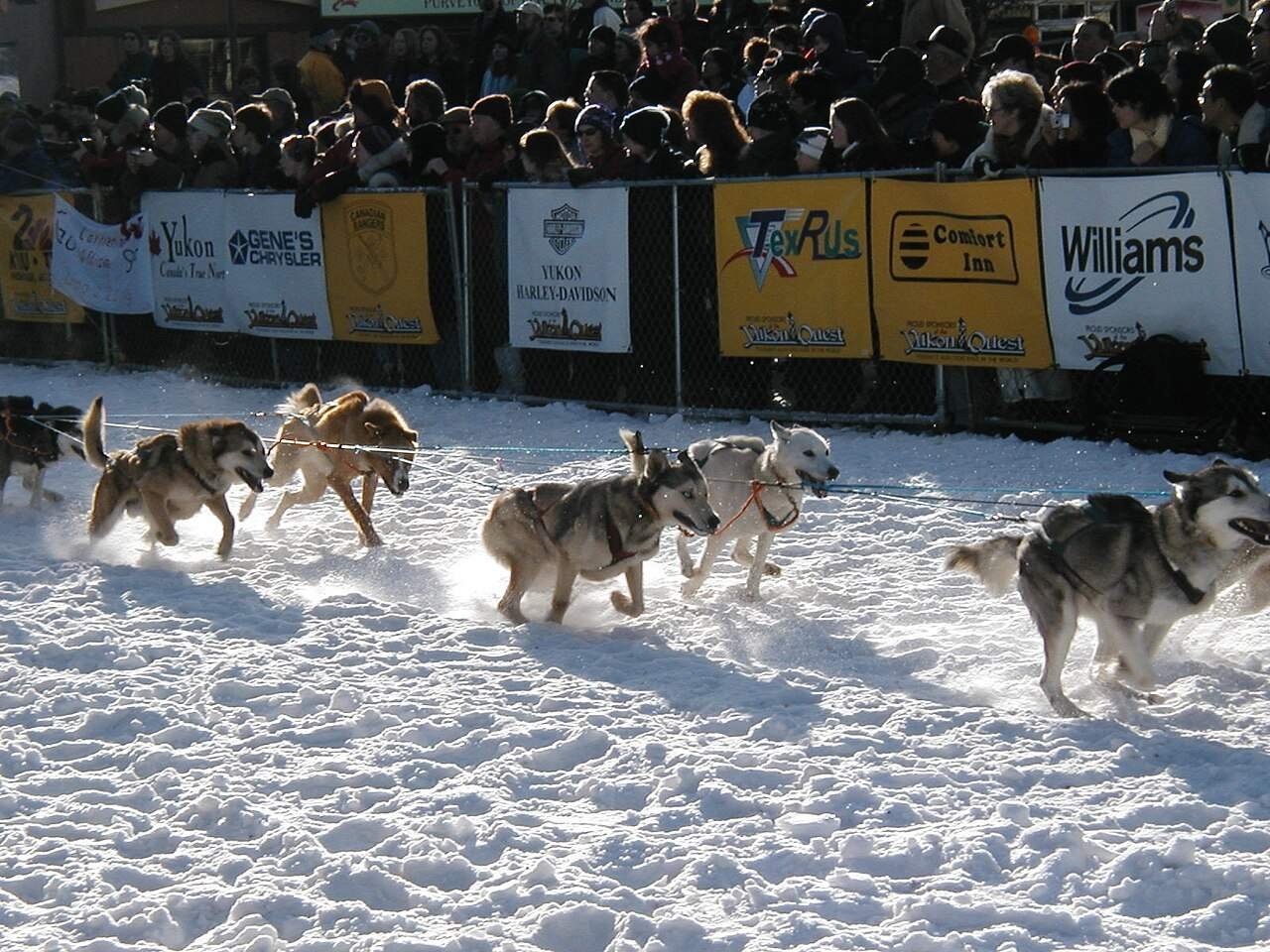
If you only do one dog sledding trip in Canada, do it in the Yukon. Boreal Kennels is a family-run outfitter in Carcross, 70 km (45 minutes) south of Whitehorse on the South Klondike Highway, right where the historic White Pass Trail of the Klondike Gold Rush runs past their trails. The setting does half the work: forest trails, frozen lakes, Bennett Lake, mountains on every side.
Their day trips are self-drive — your own team of four to six huskies. A half-day is $290 per adult and $185 per child; a full day is $395 per adult and $225 per child, plus 5% tax, with a 6% booking fee on online bookings. A transfer from downtown Whitehorse can be added for $53 per person. Kids are welcome from age 5 on the half-day and 12 on the full day. And if a day isn’t enough, their multi-day expeditions run 2 days from $995, 3 days from $1,525, 5 days from $2,525 and 7 days from $3,450 per person, all-inclusive with meals, camping gear and a guide — January to early April, with February and March the most comfortable months for longer trips. I checked every one of those numbers on Boreal’s own site. → Boreal Kennels — day trips, official prices · Multi-day expeditions
Also worth knowing: Muktuk Adventures, about 20 minutes from downtown Whitehorse on the Takhini River, runs one of the biggest kennels in the territory — over 100 dogs, many descended from their Yukon Quest champion team — with half-day, full-day and multi-day trips. I couldn’t verify their current prices, so I’m not quoting them; check directly. My Whitehorse in winter guide covers the rest of the trip — where to stay, the hot springs, and how to get there without a car.
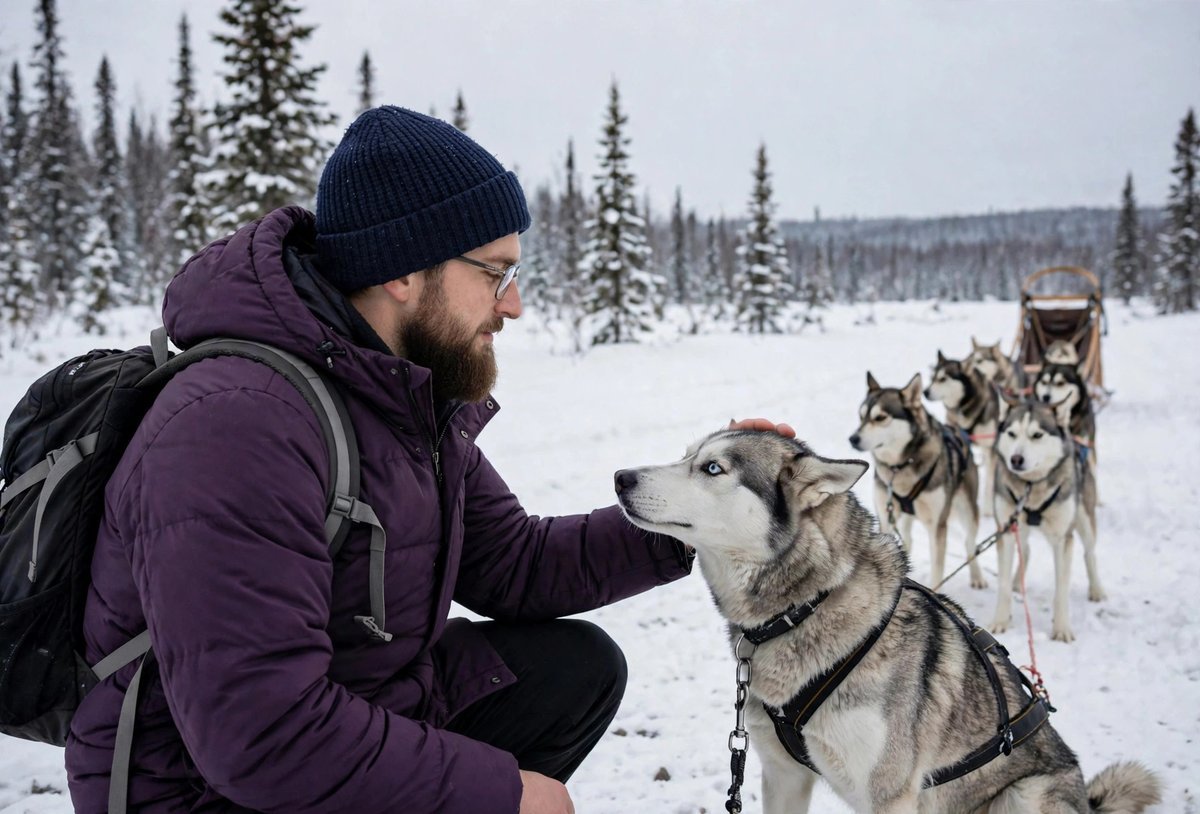
How to pick an ethical operator — and meet the dogs
Dog sledding has a welfare question attached to it, and it’s fair to ask. The dogs are working animals, and the difference between a good kennel and a bad one is visible if you know what to look for. Here’s what I check before I book — and what I’ve seen done well at the kennels on this list.
Meet the dogs before you pay. A good operator builds the kennel visit into the tour: you meet the team, you help harness, you see where the dogs live. La Reine gives each dog its own box and a large wooded park to run free in, and their booking process — matching teams to people by age and weight — is built around the dogs’ welfare. Snowy Owl’s free-run enrichment program is the same idea. If an operator won’t let you near the kennel, walk away.
Small groups, real limits. Four sleds maximum at La Reine. Four to six dogs per team at Boreal. Weight limits that exist for the dogs’ sake, not yours — 160 kg combined for a duo at La Reine, 240 lbs per person and 450 lbs per sled at Tremblant. A kennel that takes anyone, any size, any number, is a kennel that’s optimizing for volume.
The dogs should look like athletes. Lean, bright-eyed, excited to run. The barking before the start is normal — it’s excitement, and it stops the moment they pull. What’s not normal is a quiet, flat, disinterested team, or dogs that flinch from people. I’ve never seen that at a kennel I’d recommend, and I’d leave if I did.
Ask what happens in the off-season. Good kennels keep their dogs year-round — many run dryland cart tours in summer — and the dogs stay with the same mushers. A proud musher will talk your ear off about it. A dodgy one will change the subject.
The best welfare check costs nothing: watch the dogs at the end of the run. At a good kennel, the dogs get water and a snack before the humans get anything, and the guides check every dog’s feet and harness rubs before they check their phones. I’ve seen it done right in Canmore and in Carcross. It’s the fastest way to know you picked well.
What to wear (and what the operator provides)
Operators provide the sled and usually a helmet. Everything else is on you, and the cold does not negotiate. Here’s what actually works, learned the hard way.
Layers, not one big coat. A thermal base layer, a fleece mid-layer, and a windproof shell. You’ll heat up fast when you’re running uphill behind the sled, then cool down just as fast when you’re standing on the runners. Being able to unzip is the whole game.
Mittens, not gloves. I said it before and I’ll say it again: ski gloves cost me twenty minutes of numb fingers on my first trip. Mittens, with a thin liner glove underneath so you can still work the brake and the harness clips. Bring a spare pair. They’re small, they weigh nothing, and you’ll be glad.
Warm boots with grip. Insulated winter boots, rated well below the day’s temperature, with a sole that grips packed snow. You’ll be stepping on and off the runners and running on ice. Fashion boots need not apply. Two pairs of socks — La Reine et le Millionnaire actually lists this on their what-to-bring page, and they’re right.
Cover your face. A balaclava or a neck gaiter pulled up over your nose, plus ski goggles or a ski mask. At 15 km/h in −20°C, the wind finds every gap. A beanie without a pompom — again, La Reine’s advice, because a pompom snags on the harness lines — and sunglasses for the glare on bright days. No, not the cool ones. The ones that stay on.
The rest: hand warmers, a small backpack for a water bottle (it’ll freeze in the sled), lip balm, and sunscreen — yes, sunscreen, in winter, on snow.
Who it’s for — and who should skip it
Dog sledding is for almost everyone, with a few honest exceptions.
It’s great for: families with kids over 5 (the minimum at Boreal’s half-day and at La Reine), couples who want one big shared experience instead of another ski day, and anyone who likes animals more than adrenaline. Kids usually ride in the sled basket, and most kennels let younger children share a sled with an adult at a reduced price. It’s also good for people who don’t ski — no skill, no balance, no falling over in front of strangers.
Think twice if: you have a bad back or bad knees — the ride is bumpy, and getting on and off the runners takes agility. Driving your own team needs moderate fitness: you’ll run uphill in snow, and the brake needs a firm stomp. Pregnant travellers aren’t permitted at several kennels, including La Reine and Aventure Nord-Bec near Quebec City — check before you book, not at the trailhead. If you’re over the weight limits, say so when you book; a good operator will sort out a passenger option.
On the cold: tours run in serious winter temperatures, and they don’t cancel for −20°C. They do cancel for extreme cold (usually around −30°C or worse, depending on the operator), for storms, and for poor trail conditions. If your tour is cancelled, you’ll be offered another date or a refund — that’s standard.
When to go — and how far ahead to book
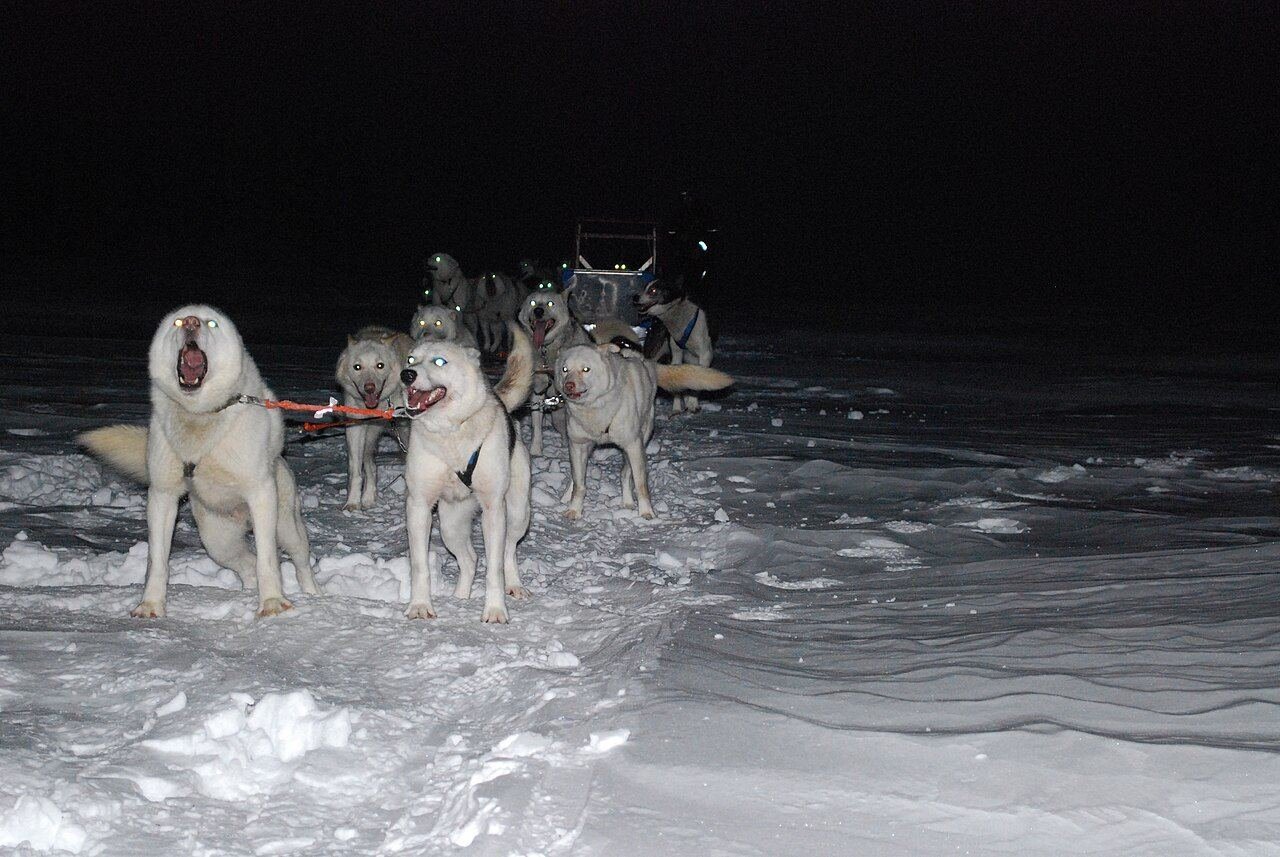
The season runs roughly December to April, depending on snow. The sweet spot is February and March: reliable snow, longer days, and temperatures that have climbed out of the January deep freeze — Boreal says outright that February and March are the most comfortable months for longer trips. December can be thin on snow early in the month, and April is a gamble at the southern kennels.
Booking lead times: two to four weeks ahead for a normal weekend, six to eight weeks for Christmas, New Year’s, and the February school break. Tremblant’s own site warns that holiday weeks fill up weeks in advance, and they mean it. The kennels are small — four sleds at La Reine, a handful of teams at Boreal — and once the sleds are gone, they’re gone. Weekday mornings are the easiest slots to get and the best ones to take.
One more thing: check the snow, not just the calendar. A warm December can push opening dates back, and a kennel will tell you honestly if the trails aren’t ready — it’s in their interest too. If you’re flying in specifically for this, book the sledding for your first full day, so a weather delay still leaves you a second chance.
What does dog sledding in Canada cost?
Short answer: about $115–370 per person for a short tour, more in the Rockies, less in Quebec and the North. The full picture, per person, from the operators’ own sites:
| Tour (per person) | Length | Price (CAD) |
|---|---|---|
| La Reine et le Millionnaire, Charlevoix (1.5-hour) | ~1 hour on sled | From $115 adult / $79 child |
| Aventure Quatre Saisons, Laurentians (1-hour) | 1 hour on sled | From $169 |
| Tremblant dogsledding (Diable / Nordic / Vallée) | ~1 hour on sled | From $171–199; $199–264 with transport by date |
| La Reine et le Millionnaire, Charlevoix (half-day) | ~2 hours on sled | From $175 adult / $115 child |
| Winterdance, Haliburton (1–2 hours) | 1–2 hours | ~$200–350 (Ontario going rate) |
| North of 60, Yellowknife (half-day outing) | ~25 min on sled | ~$110–160 |
| Boreal Kennels, Yukon (half-day) | Half-day | $290 adult / $185 child |
| Snowy Owl, Canmore (Powder Hound, 2-person sled) | ~1 hour on sled | $660 per sled ($330 each) |
| Snowy Owl, Canmore (Powder Hound, solo) | ~1 hour on sled | $370 |
| Snowy Owl, Canmore (Sunfeather, 4-hour) | ~3 hours on sled | $735 solo / $1,340 two, instructor-driven |
| Boreal Kennels, Yukon (full day) | Full day | $395 adult / $225 child |
| Boreal Kennels, Yukon (multi-day expedition) | 2–7 days | From $995 (2 days) to $3,450 (7 days) |
Taxes are extra on most of these (GST in Alberta, GST + PST/QST in Quebec, 5% GST in Yukon), and a few operators add a small online booking fee. The per-sled pricing at Snowy Owl is worth understanding: you pay for the sled, not per person, so a two-person sled at $660 is $330 each — suddenly the Rockies don’t look so bad split two ways. Buckle up, though: the full-day and multi-day trips are where the real money goes, and they’re worth every cent if you’ve got the time.
The calculator below covers a full dog-sledding trip day — food, activities (including your sled tour averaged across the trip), getting around, and the small stuff. Accommodation isn’t in it; see the table underneath. Pick your style, set your days, and it does the rest.
Budget calculator
Per person, in Canadian dollars. Excludes accommodation.
Budget ≈ $165/day · Mid-range ≈ $285/day · Luxury ≈ $490/day. Sled tour prices checked November 2026.
| Expense (per person / day) | Budget | Mid-range | Luxury |
|---|---|---|---|
| Accommodation | $50 (hostel / budget motel) | $180 (hotel) | $350+ (lodge / resort) |
| Food & drink | $40 | $70 | $120 |
| Activities (sled tour averaged over trip) | $90 | $150 | $250 |
| Getting around (rental, fuel, transfers) | $25 | $40 | $80 |
| Warm layers, treats & souvenirs | $10 | $25 | $40 |
| Daily total | ~$215 | ~$465 | ~$840 |
One honest note: the sled tour is a one-off, not a daily cost. A mid-range 2-day trip works out to roughly $570 before accommodation if your tour costs around $300 — the calculator spreads that across your days so the number stays useful. For the multi-day Yukon expedition, ignore the calculator and budget off the expedition price; it’s all-inclusive.
Suggested 3-day plan — a dog sledding weekend
Here’s how I’d do it with a long weekend and one sledding trip to build it around. This is the Canmore version; the shape works anywhere.
| Time | Day 1 — arrive & settle | Day 2 — the sled day | Day 3 — one more winter thing |
|---|---|---|---|
| Morning | Drive or fly in, check in, rent or sort your cold-weather gear | 9 AM sled tour — the morning slot, dogs at their freshest | Slow morning: frozen lake walk or a short snowshoe |
| Midday | Lunch in town, confirm tomorrow’s meeting point and time | Hot lunch back in town — you’ll have earned it | Brunch, then one last stop (a viewpoint, a frozen waterfall) |
| Afternoon | Easy walk or a short drive to a viewpoint; early night | Warm up: a café, a bookstore, a nap. Your legs will vote for this. | Drive home before dark — winter roads and tired eyes don’t mix |
| Evening | Dinner, lay out tomorrow’s layers, check the forecast | A proper dinner and an early night; you’ll be asleep by 9 | — |
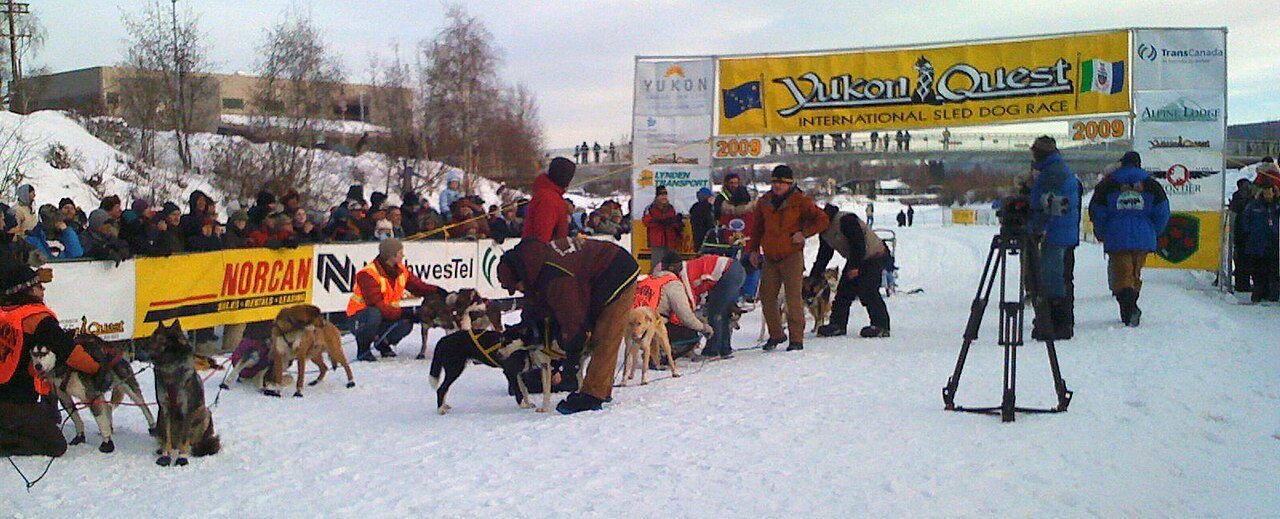
The racing roots: Yukon Quest and Iditarod
Dog sledding in Canada didn’t start as a tourist activity. It started as transport — the way mail, supplies and people moved across the North before there were roads. The two races that still define it are the Yukon Quest, a 1,000-mile race between Whitehorse and Fairbanks that has run since 1984, and Alaska’s Iditarod. The kennels in this guide are part of that world: Winterdance’s owners have finished both races, Boreal’s founder has guided expeditions since 2001, and Muktuk’s dogs descend from a Yukon Quest champion team.
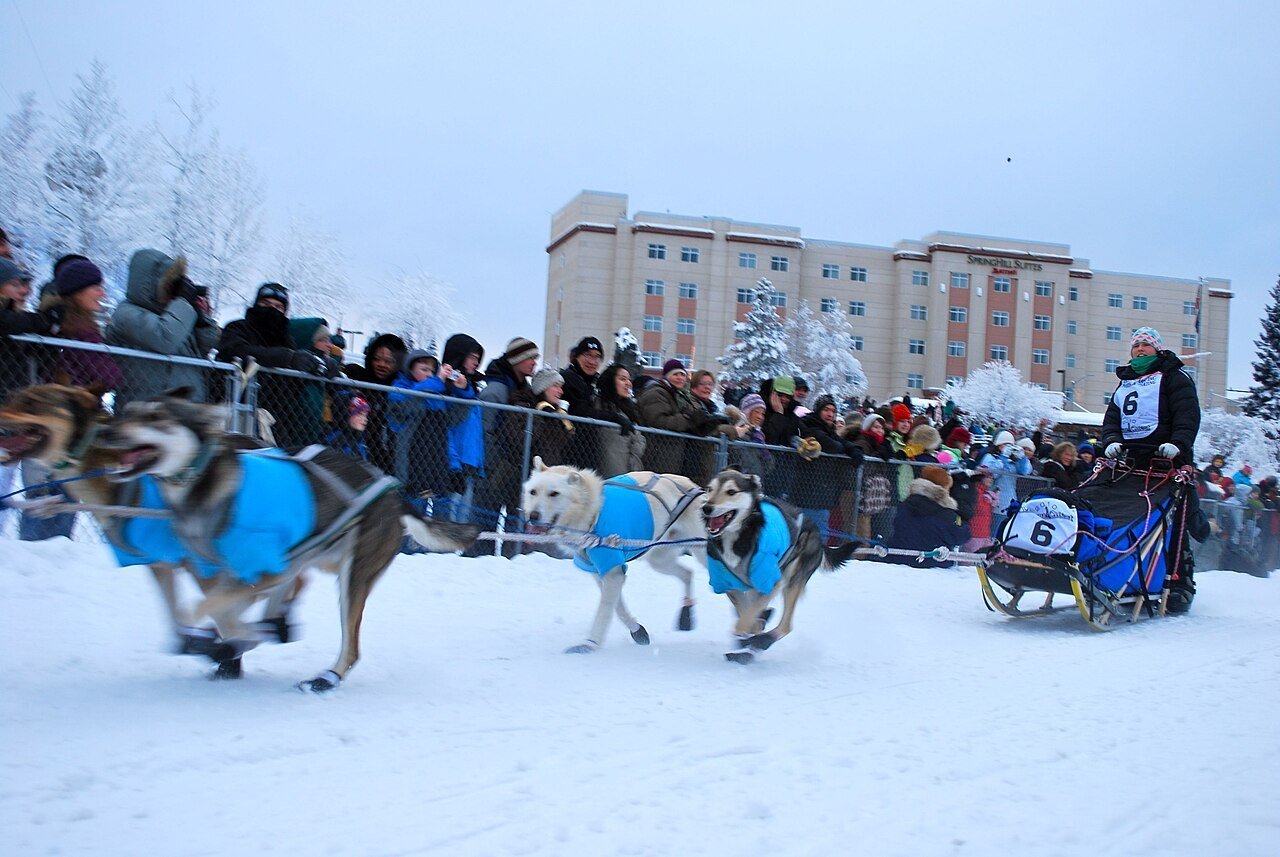
You don’t need to care about racing to enjoy a tour. But it helps to know why the dogs are the way they are — why they go quiet when they pull, why the guide knows every dog’s name and quirks. These are working athletes, bred for distance, and a tourist ride is their easy day.
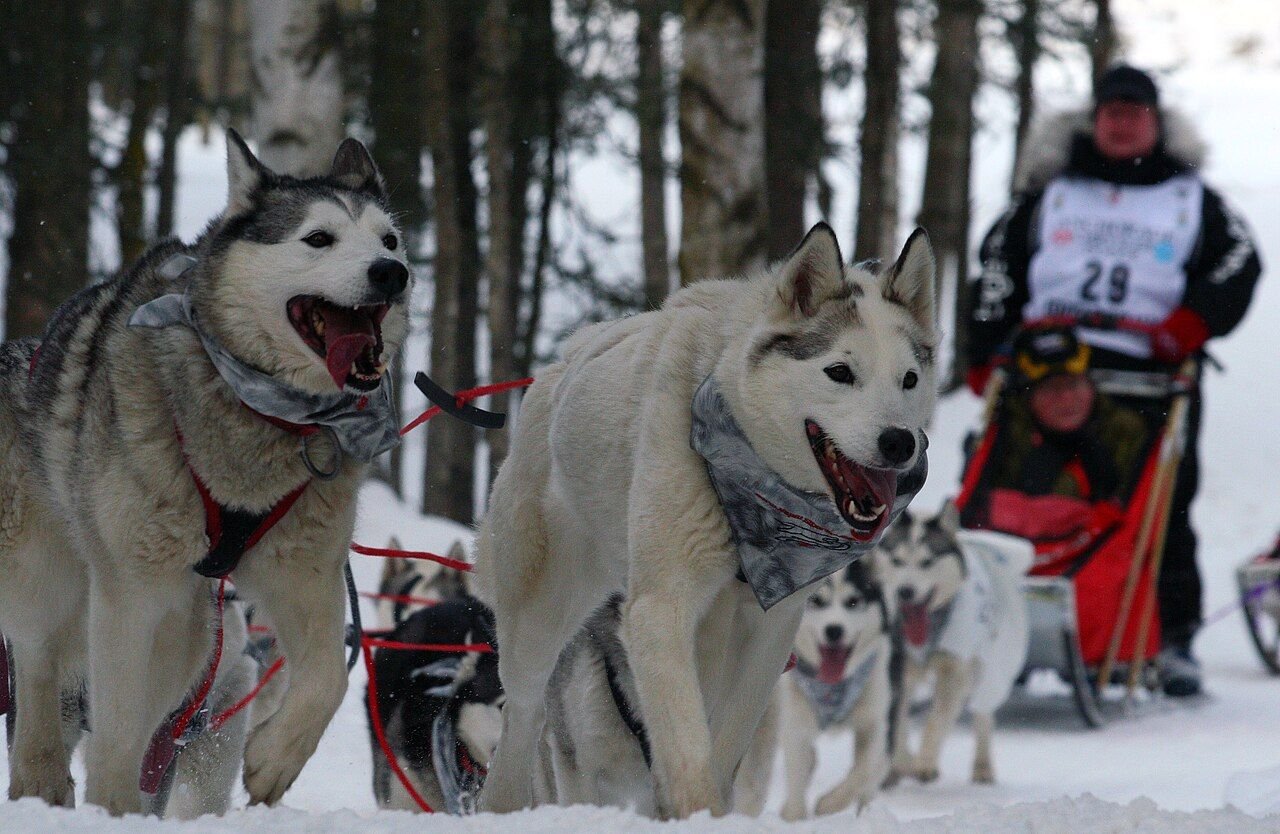
If your trip lines up with race season, go watch a start or a finish. The Yukon Quest usually starts in early February, alternating direction each year between Whitehorse and Fairbanks. It costs nothing, it’s loud, it’s cold, and it’s the best free show in northern winter.
FAQs about dog sledding in Canada
How much does dog sledding cost in Canada?
Most short tours run C$115–370 per person, depending on where you go and how long you’re out. The cheapest verified options are in Quebec — La Reine et le Millionnaire in Charlevoix from $115, Tremblant from $171–199 — and the priciest are in the Rockies, where Snowy Owl’s Powder Hound Express is $370 solo or $660 for a two-person sled. Half-day tours run $175–395, full days $395 and up, and multi-day Yukon expeditions start at $995 per person. Taxes are extra almost everywhere.
Can I drive my own dog sled, or do I have to ride as a passenger?
You can drive at most kennels — it’s the standard option, not the exception. Snowy Owl, Boreal Kennels, La Reine et le Millionnaire and Winterdance all offer self-drive tours, and the lesson takes about 10–15 minutes before you set off, with the guide riding ahead of you. You’ll need to be in reasonable shape: you run uphill on the steeper sections and work the brake. If you’d rather not drive, every operator offers a passenger option where the guide drives and you ride in the sled basket. Minimum driving ages vary — 14 at La Reine, 16 at some Ontario kennels.
What is the best time of year to go dog sledding in Canada?
February and March are the sweet spot: reliable snow, longer daylight, and temperatures that have eased off the January lows. Most operators run December to April — Snowy Owl December to April, Tremblant December 12 to April 4, Boreal January to early April — but early December can be thin on snow at the southern kennels, and April is a gamble. Book two to four weeks ahead for a normal weekend, and six to eight weeks ahead for Christmas, New Year’s and the February school break.
Is dog sledding cruel to the dogs?
It depends entirely on the kennel, which is why choosing well matters. At a good operation the dogs are athletes: they live at the kennel year-round, they’re visibly excited to run, and they go quiet the moment they pull — that’s a working dog doing the thing it was bred for. Look for small groups, weight limits, time with the dogs before and after the ride, and guides who know the dogs by name. Skip any operator that won’t let you see the kennel, packs the sleds, or treats the dogs as a photo prop.
What should I wear dog sledding?
Layers: a thermal base, a fleece mid-layer, and a windproof shell you can unzip. Mittens, not gloves — with a thin liner underneath — plus insulated winter boots with grip, two pairs of socks, a balaclava or neck gaiter, ski goggles or a ski mask, and sunscreen. Operators provide the sled and usually a helmet; some, like La Reine et le Millionnaire, also ask you to bring a beanie without a pompom and ski goggles. Bring hand warmers and a spare pair of mittens. You’ll heat up fast running uphill and cool down fast standing on the runners.
Where is the best place to go dog sledding in Canada?
It depends on what you want. Canmore (Snowy Owl) is the best first-timer experience and the easiest to pair with a Rockies trip. Haliburton (Winterdance) is the closest to Toronto and the best value for a weekend. Mont-Tremblant is the easiest to fit into a ski trip. Charlevoix (La Reine et le Millionnaire) is the most hands-on and the most personal. Yellowknife (North of 60) is the one to pair with the northern lights. And Whitehorse/Carcross (Boreal Kennels) is the deepest experience — the one to pick if you want a full day or a multi-day expedition in the country where sled dogs are still a way of life.
Keep exploring
Here’s the rest of the season:
- Banff in winter — the Rockies trip to pair with a Canmore sled tour
- Whitehorse in winter — the Yukon beyond the kennel: hot springs, wildlife, and the long nights
- Northern lights in Yellowknife — sled by day, aurora by night
- Mont-Tremblant travel guide — the full village guide for your Tremblant trip
- Canada ski trip cost — what the rest of a winter trip actually costs
- Winter driving in Canada for tourists — read this before you drive to any kennel in a snow squall
Pick a kennel, book early, wear mittens, and let the dogs do what they love doing. The quiet out on the trail will do the rest.