
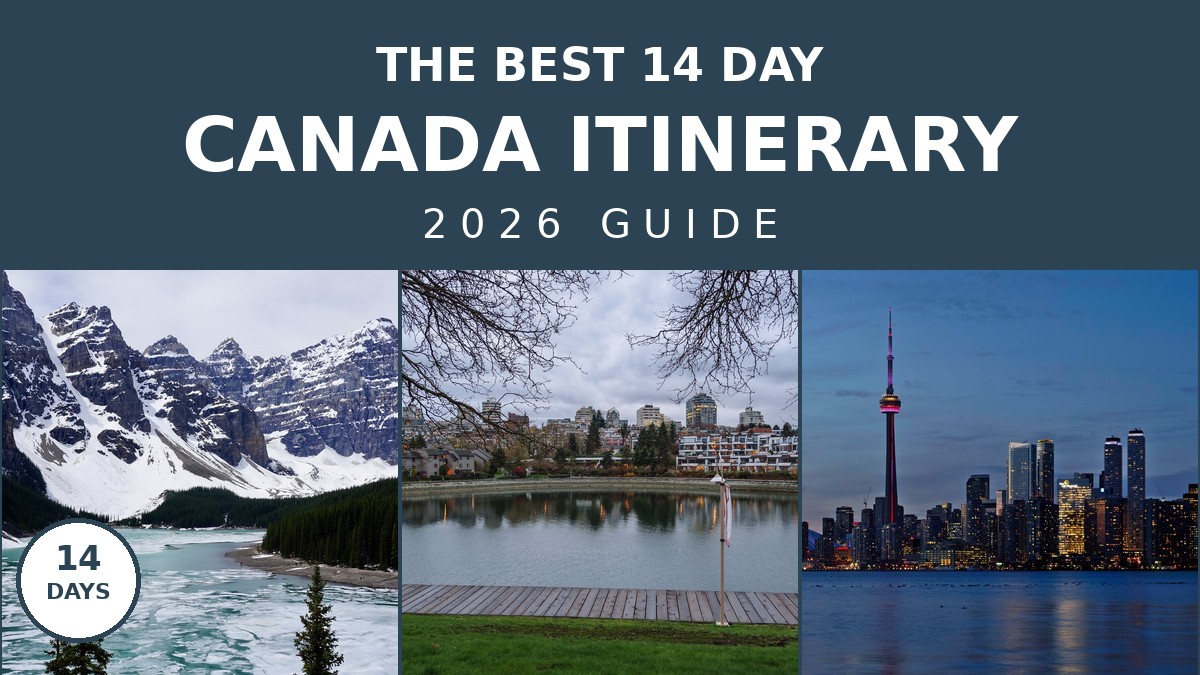
Last updated: October 3, 2026

The short answer
- Pick ONE side of the country: 14 days is the sweet spot for a West Coast + Rockies deep dive (Vancouver → Okanagan → Banff → Jasper) or an Eastern cities loop (Toronto → Niagara → Ottawa → Montreal → Quebec City) — not both.
- The bookings that sell out first: the Parks Canada Lake Louise/Moraine Lake shuttle (reservations opened April 15, 2026 at 8 AM MDT, rolling 48-hour releases all season) and summer hotels in Banff and Quebec City — set your alarms and book months ahead.
- Best months to go: late June to mid-September for hiking and lake access; late September if you want golden larches without the August crowds. All prices and hours below were checked in October 2026.
I’ll be honest: I once tried to build a 14-day Canada spreadsheet that covered both coasts. I had color-coded tabs for it and everything. Three days in, I sat at my desk and realized I’d designed a flight-and-rental-car marathon, not a vacation. Here’s the thing — Canada is the second-largest country on Earth, it spans six time zones, and the flight from Vancouver to Toronto alone takes about five hours before you even touch airport security. So I deleted the east tab, kept the west one, and never looked back.
That’s the single most important decision in this guide: choose one side of the country and actually enjoy it. Fourteen days is the perfect window for a regional deep dive — long enough to stop rushing, short enough to stay affordable. I’ve done versions of both routes below, and I’ll tell you exactly which one to pick, what to book first, and what it really costs in 2026. You’ve got this.
West vs. East: which 14-day route is actually for you?
Quick gut check before you scroll:
| Western Route (Vancouver → Rockies) | Eastern Route (Toronto → Quebec City) | |
|---|---|---|
| Best for | Hikers, photographers, lake-chasers, road-trip people | Foodies, history buffs, city walkers, francophile romantics |
| The vibe | Jagged peaks, turquoise lakes, wine country, alpine air | Skylines, waterfalls, cobblestone streets, old-world Europe |
| Getting around | You’ll want a rental car — transit exists but the parks reward drivers | Totally doable by train + city transit (do not skip the VIA Rail option) |
| When to go | Mid-June to mid-September (high lakes thawed, Icefields Parkway fully open) | May to October; fall foliage in late September is gorgeous |
Neither route is the “right” answer — they’re just different trips. The West is the one I recommend if this is your first time in Canada and you want the postcard version. The East is my pick for people who’ve done the Rockies already and want culture, food, and cities that feel nothing alike (Toronto, Montreal, and Quebec City are three different worlds).
Route 1 — The West: Vancouver to the Canadian Rockies

Day 1 — Vancouver: Stanley Park and the waterfront
Morning: Land at YVR, take the SkyTrain Canada Line downtown (~25 minutes, ~$9 to downtown), and drop your bags. Pro tip from someone who learned the sweaty way: start at Stanley Park early. I showed up at 11 AM on a Saturday once. Never again — the Seawall gets packed by noon. The 10 km Seawall loop is free, flat, and the single best first impression Vancouver can give you. I timed it: 2 hours walking, 45 minutes if you rent a bike.
Afternoon: Wander the West End and Granville Island’s public market (free entry; the ferry across False Creek is a few dollars and worth it for the ride alone). I timed the ferry at about 5 minutes — small, but the views are a whole mood.
Evening: Dinner in Gastown — the steam clock is touristy, the cobblestone streets are not. Get to bed early; the ferry day tomorrow starts at dawn. Read our Ultimate Vancouver Travel Guide if you’re adding city days.
Day 2 — Ferry to Victoria, Butchart Gardens
8:00 AM: This is the “listen to me” part: reserve your BC Ferries sailing in advance. I once showed up at Tsawwassen without a reservation and watched two full sailings leave without me (that’s two hours of my life I will never get back). The Tsawwassen → Swartz Bay crossing takes about 95 minutes and the views of the Gulf Islands are half the fun — stand on the outer deck, trust me on this one.
Afternoon: Drive into Victoria (30 minutes from Swartz Bay) and head straight to Butchart Gardens. I’ll be honest, gardens aren’t usually my thing, but the Sunken Garden made me stop mid-sentence. Go at opening if you can — the tour buses arrive by 11. Allow 2–3 hours.
Evening: Stroll the Inner Harbour: the Parliament Buildings lit up at night, the Empress Hotel, and fish and chips on a bench. My spreadsheet had exactly 90 minutes allotted for this. I stayed two hours. Some things defy the spreadsheet.
Day 3 — Victoria morning, back to Vancouver
Morning: Beacon Hill Park (free, peacocks included) and the Royal BC Museum if the weather turns. Grab a late lunch in Chinatown — Fan Tan Alley is one alley, but it’s a good one.
Afternoon: Ferry back to Tsawwassen (again: reserved sailing). Overnight in Vancouver — pick up the rental car tomorrow instead of tonight, since downtown parking will eat ~$30–40 overnight and you don’t need the car until morning. Pro tip: most downtown rentals open by 8 AM; book the pickup for 8:30 and you’ll beat the lineup.

Days 4–5 — The Okanagan Valley: Kelowna wine country
Day 4 morning: Drive Vancouver → Kelowna (~4 hours via the Coquihalla, Highway 5). Fair warning: the Coquihalla is beautiful and absolutely a mountain highway — check road conditions in winter, and budget one extra hour for photo stops because you will stop. I stopped four times. My passenger stopped complaining by the second one.
Day 4 afternoon + Day 5: The Okanagan is Canada’s wine country and the locals know it, even if the rest of the world hasn’t caught on yet. Tasting fees run ~$10–25 per winery, often waived with a bottle purchase (estimate — confirm with each winery). My approach: pick a cluster in West Kelowna or along the Naramata Bench and do three tastings max, because here’s the thing — tasting number four is when your notes stop being useful. Book a dinner on a patio overlooking Okanagan Lake; the sunset over the water is worth every penny.
Swim in the lake if it’s summer — the water’s warm by July, and after two city days your legs will forgive you for the drive. Two nights in Kelowna or Penticton gives you a full tasting day without the design-driver math.
Day 6 — Kelowna → Banff via Revelstoke
The long-drive day: Kelowna to Banff is roughly 5–6 hours depending on stops. Two good options, and I have opinions:
- Revelstoke detour (my pick): stop at the Enchanted Forest / giant cedars, then lunch in Revelstoke. The mountain pass driving here is genuinely spectacular — keep your camera charged.
- Yoho National Park shortcut: Takakkaw Falls and Emerald Lake are barely off the Trans-Canada and far quieter than Banff’s big-name lakes. A ranger at the Yoho visitor centre once told me Yoho gets a fraction of Banff’s visitors with scenery that holds its own — she was not wrong.
Arrive in Banff town by late afternoon, check in, and do the easy evening walk: Bow Falls + the Fairmont Banff Springs exterior (free to gawk). If you’re choosing between this region’s longer loops, our Alberta road trip itinerary has more drive-day ideas.
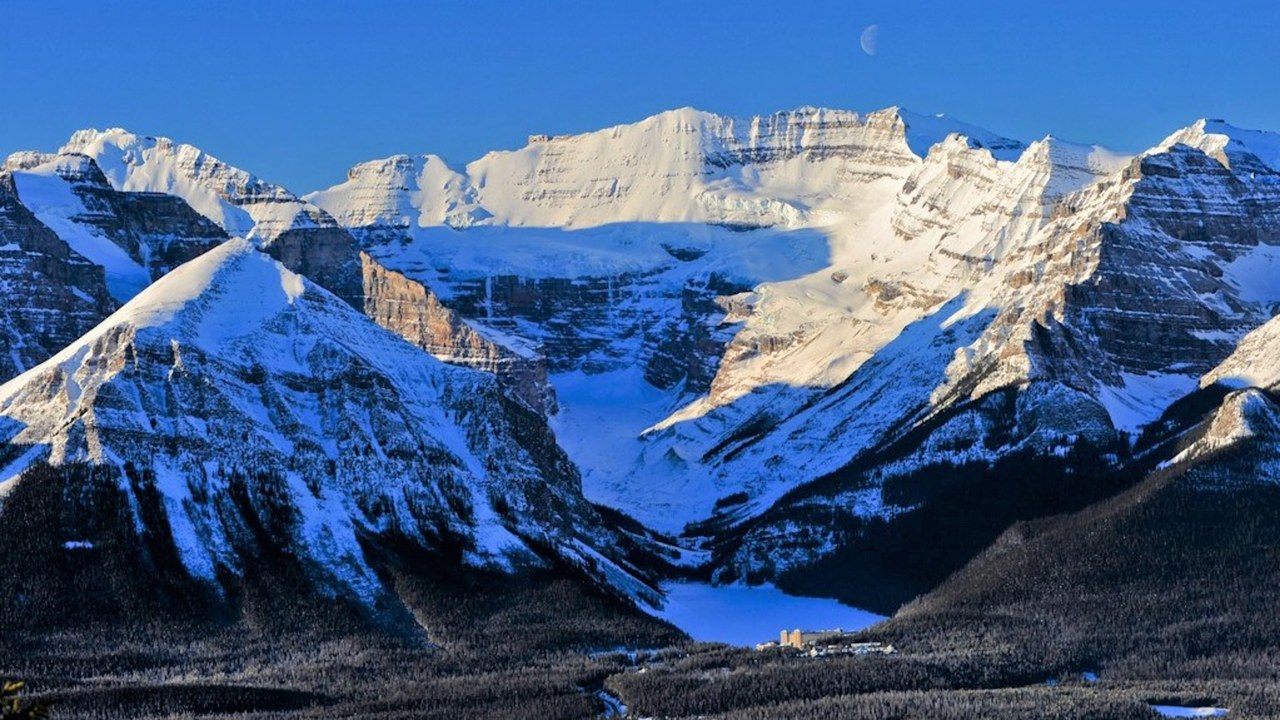
Days 7–10 — Banff, Lake Louise, and Moraine Lake
These four days are the heart of the western route, and they run on one rule: the lakes are a morning activity. Book everything else around that.
Day 7 — Lake Louise + Moraine Lake (the big booking day): This is the single most competitive reservation of the whole trip, so let me be very precise. Private vehicles are banned from Moraine Lake Road year-round — you must take the Parks Canada shuttle, and reservations for the 2026 season opened April 15, 2026 at 8 AM MDT, with 40% of seats released on launch day and the rest on a rolling 48-hour window (8 AM MDT, two days before your visit). The shuttle season runs May 15 to October 12, 2026. I set two alarms, made my Parks Canada account the night before, and was in the virtual waiting room by 7:40 AM — I got Moraine Lake as my first lake and I’m still proud of it. One shuttle reservation covers both lakes via the Lake Connector. I double-checked the dates and the Park & Ride location (Lake Louise Ski Resort, 1 Whitehorn Road) on Parks Canada’s official Lake Louise shuttle page before my trip — dates and times shift every year, so do the same. Shoutout to the barista in Banff who told me the Alpine Start shuttle (4–5 AM) is the sunrise photographer’s move.
Do Moraine first (sunrise light hits the Ten Peaks best before 9 AM), then the Lake Connector to Lake Louise. Hike the easy Lake Agnes Tea House trail if your legs are up for it (3.4 km up, and yes, the tea house really is a tea house at the top).
Day 8 — Banff town: Sulphur Mountain Gondola for the panorama, the free Cave and Basin National Historic Site, and the Banff Upper Hot Springs in the evening (the hot soak after four hiking days is a game-changer — and it’s the cheapest ticket in town). Stroll Banff Avenue after dinner; the whole street smells like campfire and fudge.
Day 9 — Icefields Parkway preview or Canmore: Take the morning to drive the first stretch of the Icefields Parkway to Peyto Lake (45 minutes each way from Lake Louise) — the viewpoint looks like someone turned the saturation slider to eleven. Afternoon in Canmore for a quieter, cheaper dinner than Banff; I liked Canmore’s main street more than I expected. Our 2-day Banff itinerary covers this area in tighter detail if you’re extending.
Day 10 — flex day: This is the buffer I insist on in every 14-day plan. Use it for weather (mountain weather owes you nothing), a second shot at a lake you missed, or the Johnston Canyon catwalks. A flex day is the difference between a trip and a triathlon — build it in.

Days 11–13 — The Icefields Parkway and Jasper
Day 11 — Drive the Icefields Parkway (Banff → Jasper): 230 km of the most beautiful highway in Canada, and I say that having driven it twice. Plan the full day. Stops I actually made: Bow Lake, the Columbia Icefield (walk up to the Athabasca Glacier toe — free, and standing on glacier ice in July is surreal), Sunwapta Falls, and Athabasca Falls. Arrive in Jasper town by evening. A park ranger at the Jasper info centre told me the landscape is visibly recovering from the July 2024 wildfire — new green growth everywhere, and he said visitors have been asking all the right questions about it.
Day 12 — Jasper (post-fire, and very much open): Let’s be honest about this: the 2024 wildfire burned about 3.5% of Jasper National Park, but it hit the townsite hard, and the community has been rebuilding ever since. As of summer 2026, Maligne Lake is open, the Jasper SkyTram is running, the Valley of the Five Lakes trail reopened, and visitation is back near pre-fire levels. Two areas stay closed through 2026: Maligne Canyon and Cavell Road (debris-flow risk on the burned slopes) — Parks Canada says so on its official Jasper recovery page, which I checked before writing this. Do the Maligne Lake cruise to Spirit Island (book ahead — it sells out), Pyramid Lake at sunset, and dinner somewhere local. Going to Jasper right now is both a great trip and a genuinely meaningful way to support a rebuilding town.

Day 13 — Jasper → Edmonton or Calgary: If you flew into Vancouver and out of Calgary (my recommended open-jaw), drive Jasper → Calgary today (~4.5 hours via the Icefields Parkway back south, or ~5 hours the other way — check your map). If you’re flying home from Edmonton instead, it’s a 3.5-hour hop east. Overnight in Calgary.
Day 14 — Calgary and departure
Morning: Calgary Tower or the Bow River pathway for a last stretch of the legs, plus a proper brunch — you’ve earned it. Return the rental car with a full tank (airport gas stations are a racket, fill up in town).
Afternoon: Fly home from Calgary (YYC). Open-jaw flights (into Vancouver, out of Calgary) usually cost about the same as a round trip and save you a full day of backtracking — I price-checked this for my own trip and the difference was under $50.
Route 2 — The East: Toronto, Niagara, Ottawa, Montreal, Quebec City
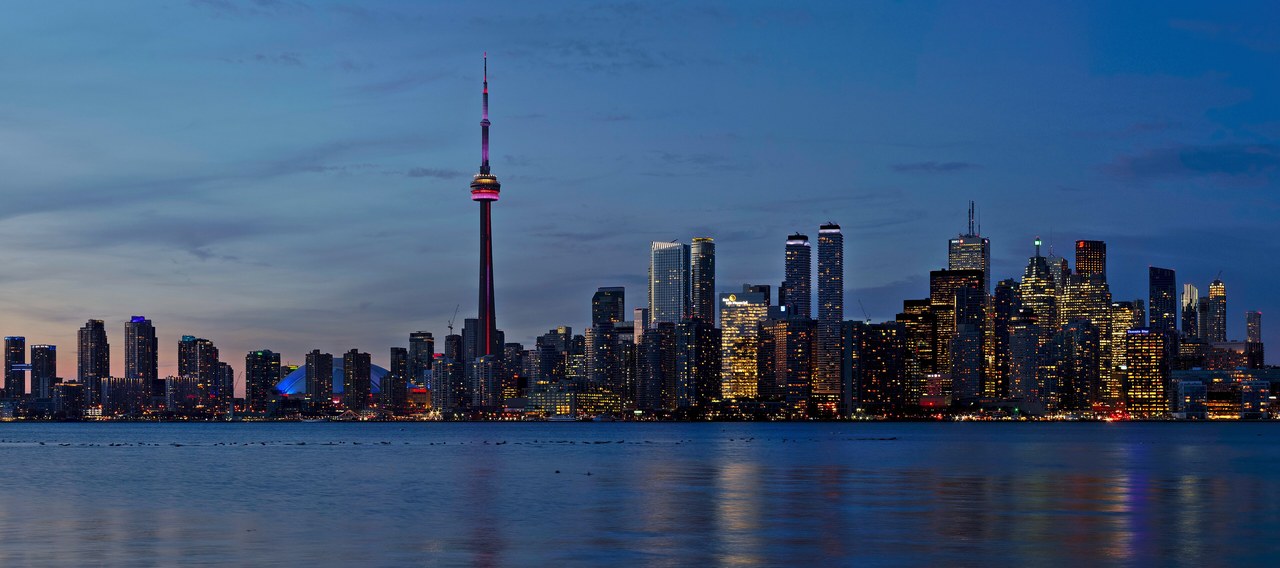
Days 1–3 — Toronto and Niagara Falls
Day 1 — Toronto: Arrive, drop bags downtown, and head to the CN Tower — I checked the current prices on the official CN Tower ticket page: $47 adult general admission. Book the sunset slot — day and night views in one ticket is the best value in the city. Evening in the Distillery District.
Day 2 — Niagara Falls: The day trip is ~1.5 hours each way by GO Train + bus (I timed it at almost exactly 2 hours door to falls). You only need two paid attractions: the boat ride into the mist and Journey Behind the Falls ($33 adult, plus 13% HST — checked September 2026). Fair warning, from personal experience: put your phone in a waterproof pouch before the portals. The mist soaked mine in four seconds flat and my camera roll paid for it. The falls themselves are free, obviously — Table Rock viewpoint at sunset is the move. If you have extra days, our 1-day Niagara Falls itinerary goes deeper.
Day 3 — Toronto neighborhoods: Kensington Market in the morning (go hungry), the AGO or Ripley’s Aquarium in the afternoon depending on weather, and the Toronto Islands ferry at golden hour if it’s clear. Three days is the sweet spot here — our 3-day Toronto itinerary has the full day-by-day.
Days 4–5 — Ottawa and the Thousand Islands
Day 4: VIA Rail to Ottawa (~4.5 hours, downtown to downtown — this is why the train beats flying for this corridor). Parliament Hill, the ByWard Market, and the Rideau Canal (a UNESCO site and the world’s largest skating rink in winter — sadly not in July). Note: the Centre Block is mid-renovation for years, so check what’s open before you promise anyone the classic tour.
Day 5 — Thousand Islands day trip: Drive or tour east to Gananoque for the 3-hour 1000 Islands cruise (~$60–65 adult, estimate — confirm with the operator). Boldt Castle on Heart Island is technically in the US, so bring your passport if you take the stopover cruise. Back to Ottawa or onward — I overnighted in Kingston on my trip and didn’t regret it.

Days 6–9 — Montreal
Day 6: VIA Rail Ottawa → Montreal (~2 hours). Check into the Plateau or Old Montreal. Afternoon: walk the Old Port and Place Jacques-Cartier — cobblestones, buskers, crêpes. It genuinely feels like a different country, which is the whole point.
Day 7 — Old Montreal + food: Notre-Dame Basilica (the blue interior is worth every penny of the ~$15 admission), the Pointe-à-Callière museum if it’s rainy, and Marché Jean-Talon in the afternoon. I planned one bagel stop and ended up at three. Mile End bagels: still thinking about them.
Day 8 — Mount Royal + the Underground: Hike or bus up Mount Royal for the Kondiaronk Belvedere viewpoint (free, and the best skyline view in the city). Afternoon exploring the Underground City — I got mildly lost in the RESO tunnels and honestly that’s the experience. Poutine for dinner; don’t overthink it.
Day 9 — flex day: The Botanical Garden, the Biodome, or just a slow café morning in the Plateau. Same rule as the West: one buffer day keeps the whole trip human.
Days 10–13 — Quebec City and Charlevoix
Day 10: VIA Rail Montreal → Quebec City (~3.5 hours). Drop bags and walk the Terrasse Dufferin boardwalk at golden hour — the St. Lawrence stretching out below you, the Château Frontenac glowing behind you. I stood there for twenty minutes doing absolutely nothing, and it was one of my favorite moments of the trip.

Day 11 — Old Quebec: This is North America’s only walled city north of Mexico, and the whole old town is a UNESCO World Heritage Site. Walk the ramparts (free), ride the funicular down to Petit-Champlain (~$5 each way, estimate), and lose an afternoon in the lower town’s shops and galleries. My front-desk clerk told me the Citadelle tours sell out on summer weekends — book the morning slot.
Day 12 — Charlevoix or Île d’Orléans: Rent a car for the day (or take a tour) into Charlevoix — the drive along the St. Lawrence past Baie-Saint-Paul is stunning, and the fromageries alone justify it. Short on time? Île d’Orléans is 15 minutes from downtown and does chocolate, strawberries, and cider in one loop.
Day 13 — Montmorency Falls: 83 metres — taller than Niagara, and a 15-minute drive from town. The cable car up and the walk across the top are both worth it. Back to Quebec City for a farewell dinner in the old town; book ahead on weekends.
Day 14 — Departure
Fly home from Quebec City (YQB) or take the train back to Montreal for a cheaper international flight — I compared both for my trip and Montreal saved me ~$120. Either way, the airport runs are easy compared to the West’s driving days.
Do you need a car? (The logistics section)
West route: yes, rent one. Book the smallest car that fits your luggage — gas is cheaper than the upgrade, and mountain parking spots are tight. Book 2–3 months ahead for summer; July–August rates spike hard. Expect ~$70–100/day for a mid-size rental (estimate).
East route: no. VIA Rail’s Corridor trains connect Toronto → Ottawa → Montreal → Quebec City, all downtown-to-downtown, and each city has solid transit. I did the whole eastern loop car-free except one rental day for Charlevoix.
The dream option: VIA Rail’s The Canadian. If you want the journey to be the trip, The Canadian runs Toronto ↔ Vancouver twice weekly, taking 4 nights (westbound departs Toronto Wednesdays and Sundays at 9:55 AM, arriving Vancouver around 8 AM on day 5). Economy seats start from ~$514 Toronto–Vancouver; a Sleeper Plus cabin for two runs from ~$1,960 per person with meals included — prices shift hard by season, so price your exact dates. It’s not fast, but the dome car through the Rockies at sunrise is something you’ll talk about for years. See our Canada train travel guide for the full breakdown.
Internal flights: flying Vancouver → Toronto takes ~5 hours. If your 14 days somehow span both regions (please don’t), book the internal flight for the middle weekend when fares dip.
RV rental: popular in the Rockies and the Maritimes, but do the math — nightly RV site fees (~$40–80, estimate) plus a bigger gas bill often erase the hotel savings. Rent an RV for the experience, not the budget.
Best time to go in 2026 (and what it costs)
| Season | West route | East route |
|---|---|---|
| June – mid-September | Peak. All lakes thawed, Icefields Parkway fully open, Lake Louise shuttle running (through Oct 12, 2026). Book 3–6 months out. | Peak. Warm, festivals everywhere, Niagara at full flow. Book 2–4 months out. |
| Late September | Larch season! Golden larches at Moraine Lake, fewer crowds, shuttle still running into early October. My favorite window. | Fall foliage in Quebec City and Charlevoix is spectacular; crowds thin after Labour Day. |
| October – May | Ski season in Banff (from November); lakes freeze; many alpine roads close. A different trip entirely. | Christmas markets in Quebec City are magical; otherwise it’s a city trip with winter coats. |
How much does 14 days in Canada cost?
Sample mid-range budget per adult, West route (prices checked October 2026; items marked ~ are estimates):
| Item | Cost (CAD) |
|---|---|
| Open-jaw flight into Vancouver, out of Calgary (from North America/Europe) | ~$400–900 |
| Rental car, 14 days + gas | ~$1,200–1,800 |
| Hotels, 13 nights (~$150–250/night) | ~$2,000–3,250 |
| Attractions (CN Tower, gondolas, cruises, gardens) | ~$250–400 |
| Parks Canada Discovery Pass (annual, adult ~$84) | ~$84 |
| Lake Louise / Moraine Lake shuttle reservation | $8 |
| Food & drinks, 14 days (~$60–80/day) | ~$840–1,120 |
| Total per adult (excluding international flights) | ~$4,400–7,000 |
The East route runs a bit cheaper — no rental car, and VIA Rail Corridor fares are modest. Couples can shave ~20% off the hotel line by sharing rooms (obviously), and the Discovery Pass family version (~$168, estimate) covers everyone in one vehicle — I double-checked the math and it beats two adult passes once you hit about a week of park days. Don’t forget travel insurance — see our Canada travel insurance guide before you book anything non-refundable.
Packing essentials for 14 days across Canada
Layers, layers, layers — mountain mornings in July can be 5°C and afternoons 25°C. I pack the same core kit for both routes: a proper rain shell (not a windbreaker), broken-in walking shoes plus trail runners for the West, a swimsuit for Okanagan Lake and hot springs, and a small daypack for lake days. Sunscreen and a hat for the alpine glare; a power bank for the long drive days. And one nice outfit — Quebec City and Montreal dinners deserve better than hiking pants. I’ll be honest, I forgot the nice outfit once and ate a very good dinner feeling very underdressed. Do not be me.
Timeline at a glance
| Day | West route | East route |
|---|---|---|
| 1 | Vancouver: Stanley Park + waterfront | Toronto: CN Tower at sunset ($47) |
| 2 | Ferry to Victoria, Butchart Gardens | Niagara Falls day trip (boat + Journey Behind the Falls) |
| 3 | Victoria morning, ferry back | Toronto neighborhoods: Kensington Market, Islands ferry |
| 4–5 | Okanagan wine country (Kelowna base) | Ottawa (VIA Rail) + Thousand Islands cruise |
| 6 | Drive to Banff via Revelstoke/Yoho | VIA Rail to Montreal, Old Port evening |
| 7–10 | Banff: Lake Louise + Moraine Lake shuttle day, Banff town, Canmore, flex day | Montreal: Old Montreal, Mount Royal, Underground City, flex day |
| 11–13 | Icefields Parkway drive, Jasper (Maligne Lake), drive to Calgary | Quebec City: Old Quebec, Charlevoix, Montmorency Falls |
| 14 | Calgary morning, fly home (open-jaw) | Fly home from Quebec City or Montreal |
FAQs about the best 14-day Canada itinerary
Can you see all of Canada in 14 days?
Not well. Canada spans six time zones, and the Vancouver–Toronto flight alone is about five hours before airport time. Fourteen days is the sweet spot for one region done properly — the West (Vancouver to the Rockies) or the East (Toronto to Quebec City) — with travel days that feel like part of the trip instead of a commute. Trying both coasts means spending half your vacation in transit.
Which is better: the western or eastern 14-day route?
Pick the West if you want mountains, lakes, and road-trip scenery — it’s the classic first-visit Canada. Pick the East if you prefer cities, food, and history; Toronto, Montreal, and Quebec City are wildly different from each other, and the whole loop works car-free by train. I’ve done both, and the deciding question is simple: do you pack hiking boots or restaurant reservations first?
When do I need to book the Lake Louise and Moraine Lake shuttle for 2026?
Reservations for the 2026 season opened April 15, 2026 at 8 AM MDT, with 40% of seats released on launch day and the rest on a rolling 48-hour window (8 AM MDT, two days before your visit). The shuttle season runs May 15 to October 12, 2026. Moraine Lake Road is closed to private vehicles year-round, so the shuttle (from the Lake Louise Ski Resort Park & Ride) is the main way in. Book through the Parks Canada Reservation Service and create your account the night before — launch-day seats sell out in minutes.
Is Jasper worth visiting after the 2024 wildfire?
Yes — and I’d argue there’s never been a more meaningful time to go. As of summer 2026, Maligne Lake, the Jasper SkyTram, the Icefields Parkway, and most trails are open, the Valley of the Five Lakes trail reopened, and visitation is back near pre-fire levels. Only Maligne Canyon and Cavell Road stay closed through 2026. The town is rebuilding, local businesses are open, and visiting directly supports the recovery. Check Parks Canada’s Jasper recovery page for current closures before you go.
Do I need a car for 14 days in Canada?
For the western route, yes — a rental car is the practical choice for the Okanagan, Banff, and the Icefields Parkway (budget ~$70–100/day in summer, booked 2–3 months ahead). For the eastern route, no: VIA Rail connects Toronto, Ottawa, Montreal, and Quebec City downtown-to-downtown, and each city has good transit. If you’d rather skip driving entirely on the West, VIA Rail’s The Canadian runs Toronto ↔ Vancouver twice weekly — 4 nights in a dome car through the Rockies — with economy from ~$514 and sleeper cabins from ~$1,960 per person.
How much does a 14-day Canada trip cost in 2026?
For a mid-range trip, budget roughly $4,400–7,000 CAD per adult excluding international flights: about $1,200–1,800 for a 14-day rental car plus gas (West route), $2,000–3,250 for 13 nights of hotels, ~$250–400 for attractions, ~$84 for the Parks Canada Discovery Pass, $8 for the Lake Louise/Moraine Lake shuttle reservation, and ~$840–1,120 for food. The eastern route runs cheaper since it works car-free by train. Traveling in shoulder season (late May, late September) trims the hotel line noticeably.
Keep exploring
- 10 Day Canada Itinerary: 2026 Travel Guide
- The Best 7 Day Canada Itinerary: 2026 Guide
- The Ultimate Canada Itinerary: 2026 Travel Guide
- The Ultimate Vancouver Travel Guide: 2026 Edition
- The Ultimate Banff Travel Guide: 2026 Edition
- Canada Train Travel Guide: 2026 Edition