
Last updated: October 3, 2026

The short answer
- The 7-day core route: Calgary → Banff (2 nights) → Lake Louise & Moraine Lake (1 day) → the 232 km Icefields Parkway (2 days) → Jasper (2 nights). This is the trip. Everything else is a bonus.
- 2026 rule changes that matter: Moraine Lake Road is closed to private vehicles — you need a Parks Canada shuttle reservation ($12.75/adult return, released April 15 and 2 days ahead). Maligne Canyon is closed for the whole 2026 season while Parks Canada rebuilds the footbridges lost in the 2024 wildfire.
- Got two weeks? Add the Drumheller Badlands and Waterton Lakes. They feel like a different province. Worth the detour, no joke.
Here’s the deal. I once tried to do Alberta in five days. It added nothing but blur — I have photos of lakes I can’t name and a gas receipt from a town I’m not sure I visited. This itinerary is the fix: 7 days for the classic Calgary-to-Jasper run, and 14 days if you want the whole province, badlands and all. Prices and hours below were checked in October 2026 — confirm the 2027 season dates before you travel, because mountain parks change the rules every year.
Buckle up. The prairies end fast.
The only three things that actually matter
Before the day-by-day stuff, three boring topics that will save your trip.
1. The park pass. You need a Parks Canada pass for every day you stop inside a national park. In 2026 the Discovery Pass (annual) runs $83.50 for an adult and $167.50 for a family/group of up to seven in one vehicle — the break-even is roughly seven park days, so any road trip touching Banff, Jasper, and Waterton makes the family pass the obvious call. One honest wrinkle from this season: admission was free June 19 – September 7, 2026 under the Canada Strong Pass, so daily rates only matter outside that window (roughly $12.25/day adult, $24.50/day family once normal fees resumed on September 8). I double-checked the current fee table on Parks Canada’s official fees page before writing this — they adjust every year, so do the same.
2. The season. Mid-June to late September. Full stop. Everything below assumes summer: shuttles running, Moraine Lake thawed, the parkway snow-free. Late September is gorgeous (the larch trees go gold) but services start closing. Winter is a different trip entirely.
3. The rig. Any car works on these paved highways. I did it in a sedan and regretted nothing. What matters is fuel discipline, not horsepower: the Icefields Parkway has zero cell service and one gas station (Saskatchewan River Crossing). I’ve made this mistake so you don’t have to — gas up in Lake Louise, even if the gauge says you’re fine. It won’t be.
The 7-day core: Calgary to Jasper
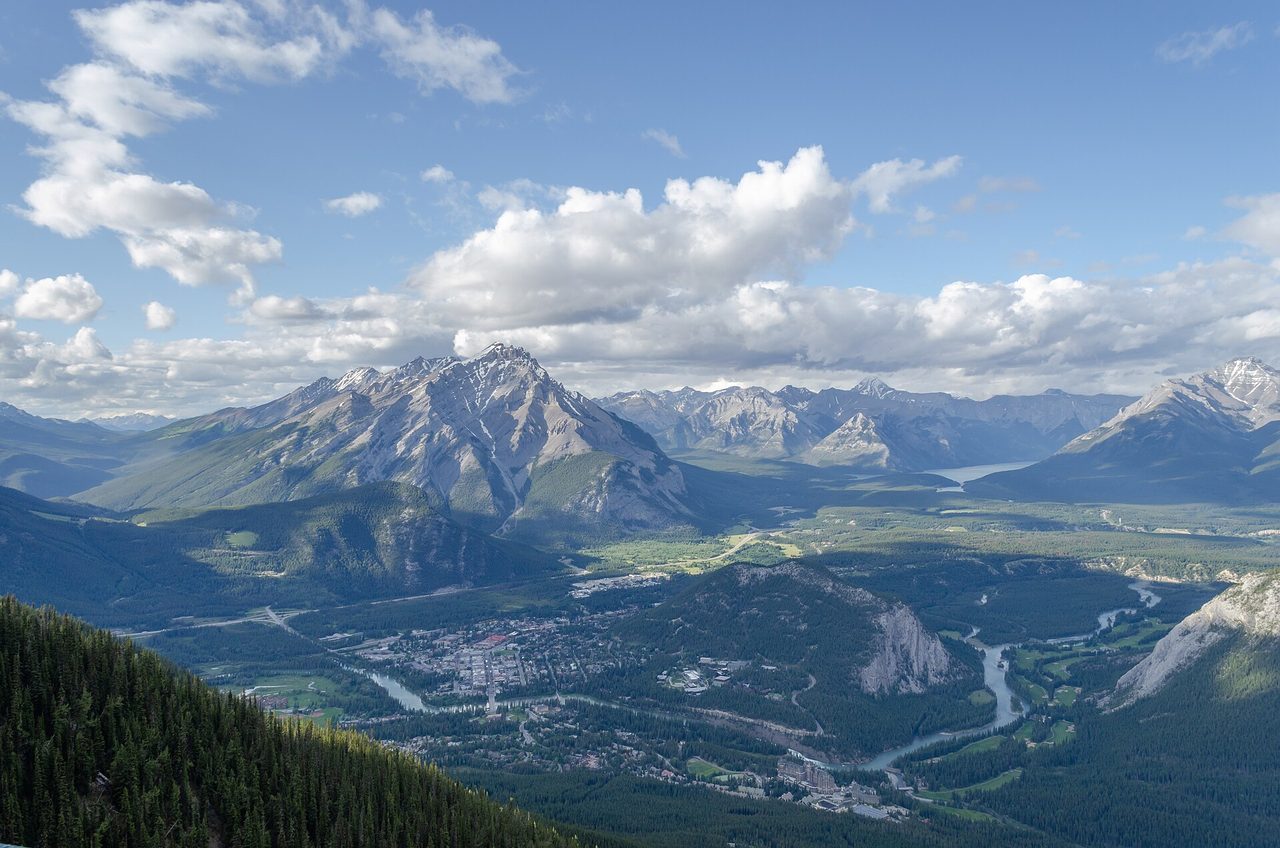
Day 1 — Calgary → Banff (115 km, ~90 minutes)
Fly into Calgary, pick up the car, and get out of the city fast. If you want one night downtown first, our 3-day Calgary itinerary has you covered — but honestly, the mountains start an hour west and that’s where you’re going.
Banff townsite sits inside the national park, which means every street has a view and every parking spot has a competitor. My move: ride the Banff Gondola up Sulphur Mountain on day one, when your legs are fresh and the afternoon light hits the Bow Valley. Adult tickets run on dynamic pricing — expect roughly ~$85 (cheaper on weekday mornings, pricier on Saturdays), and parking at the base costs ~$17.50/day if you drive there. A ranger at the summit told me the boardwalk to Sanson’s Peak is the best free add-on in town. She was right. It’s the one.
Day 1 driving: 115 km, about 1.5 hours, plus one mandatory pullout where you’ll photograph the peaks appearing at the park gate. Everyone does. Join in.
Day 2 — Lake Louise & Moraine Lake
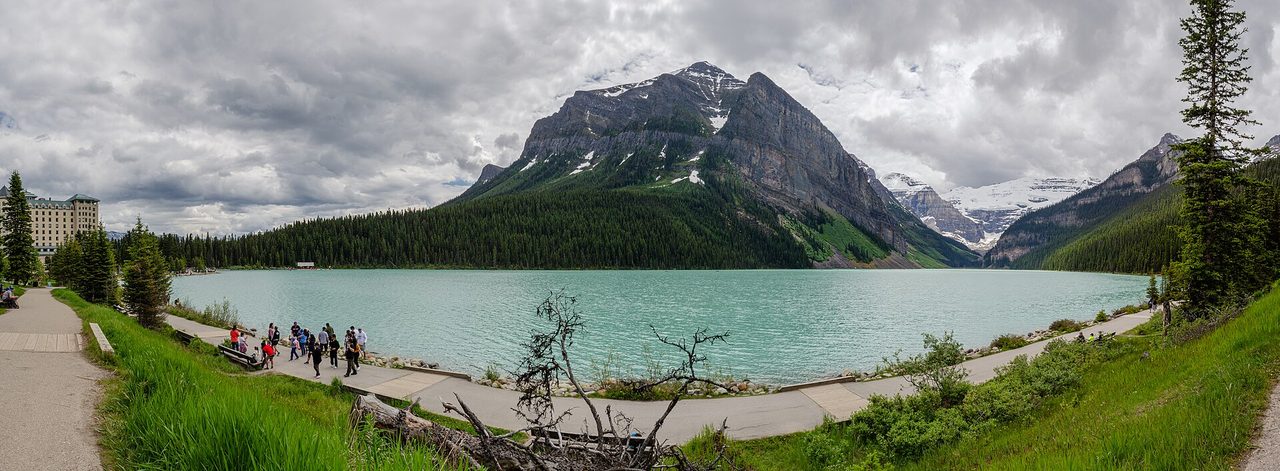
Two lakes. One day. Start at sunrise-ish.
Moraine Lake first. Here’s the part everyone learns too late: you cannot drive to Moraine Lake. The road has been closed to private vehicles for years. Your options are the Parks Canada shuttle ($12.75/adult return plus a small reservation fee), a commercial operator, or a guided tour. I first read about the 2-days-ahead rolling release on Parks Canada’s official shuttle page — and then I learned the hard way that “sells out in minutes” is not an exaggeration. Reservations opened April 15, 2026 for 40% of the season; the rest drop at 8 a.m. MDT, two days before each date. Set an alarm. Be logged in. The shuttle runs June 1 – October 12, 2026, every 30 minutes, last return 7:30 p.m. → Parks Canada — Lake Louise & Moraine Lake shuttles
Once you’re there, climb the Rockpile. It takes five minutes and every calendar photo of Moraine Lake was taken from the top.
Lake Louise second. Same shuttle reservation covers the Lake Connector between the two lakes — no extra booking, first-come first-served. At Lake Louise, skip the shoreline crowd and hike the Lake Agnes Teahouse trail (7 km return, ~2.5 hours). The tea tastes like victory. Budget ~$15–25 for lunch at the teahouse.
Day 2 driving: 57 km Banff → Lake Louise, plus shuttle time. You’ll stop anyway. Nobody doesn’t.
Day 3 — The Icefields Parkway, part one: Lake Louise to the Columbia Icefield
232 km. One road. Zero cell service. This is the leg the whole trip is named for.
Gas up in Lake Louise. I’ve said it twice now because I ignored it once. Moving on.
Stop at everything:
- Bow Lake & Crowfoot Glacier — 30 minutes from Lake Louise. Coffee-worthy view, no hiking required.
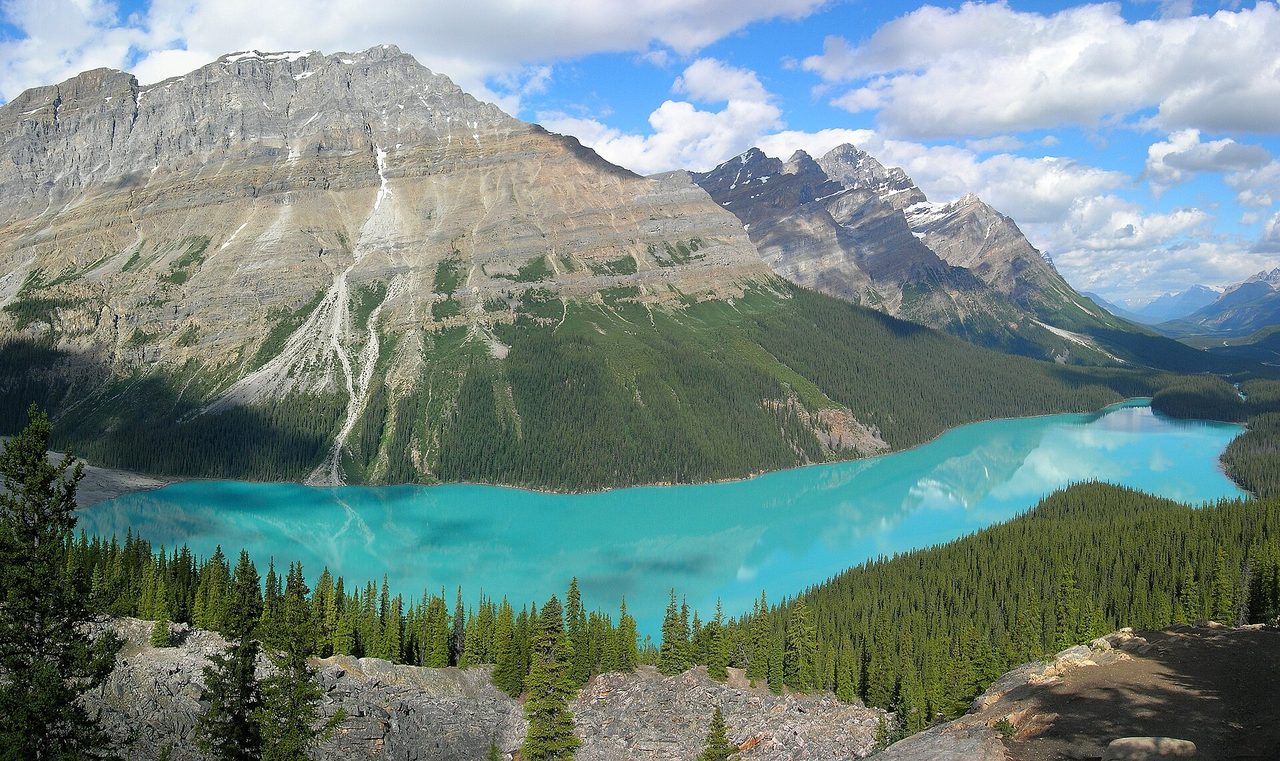
- Peyto Lake — the short paved climb to the overlook is the best ten minutes of your day. The lake really is shaped like a wolf’s head. Nobody knows why this matters. It just does.
- Mistaya Canyon — a 20-minute detour down a steep trail to a slot canyon where the river does something violent and blue.
Sleep near the icefield at the end of this leg — either backtrack slightly to Lake Louise or push to the Columbia Icefield area. Do not drive this road at dusk if you can avoid it. Elk own the asphalt after 6 p.m., and they do not signal.
Day 3 driving: ~130 km of the parkway’s 232, but plan on 4–5 hours with pullouts. I stopped six times. You’ll stop more.
Day 4 — Columbia Icefield → Jasper

The Columbia Icefield Adventure is the one paid attraction I’d never cut from this itinerary: a giant all-terrain Ice Explorer drives you straight onto the Athabasca Glacier so you can stand on centuries-old ice, plus the Glacier Skywalk — a glass-floored platform hanging over the Sunwapta Valley. Figure roughly ~$115/person for the combo (estimate — check the operator’s current pricing before you go), allow three hours, and book ahead in July/August.
Then drive the northern leg into Jasper:
- Sunwapta Falls — the waterfall takes a hard left turn through a narrow canyon. Photogenic, quick stop.
- Athabasca Falls — the most powerful waterfall on the parkway. The water carved this gorge from quartzite and you can feel it in your chest from the bridge.
I spent forty minutes once watching a grizzly do absolutely nothing in a meadow near the icefield. No joke — best forty minutes of the trip. Pullouts: use them. Wildlife: watch from the rig, or from far away on foot.
Day 4 driving: ~100 km parkway + pullouts, then 30 km into Jasper townsite.
Day 5 — Jasper: Maligne Lake & Spirit Island
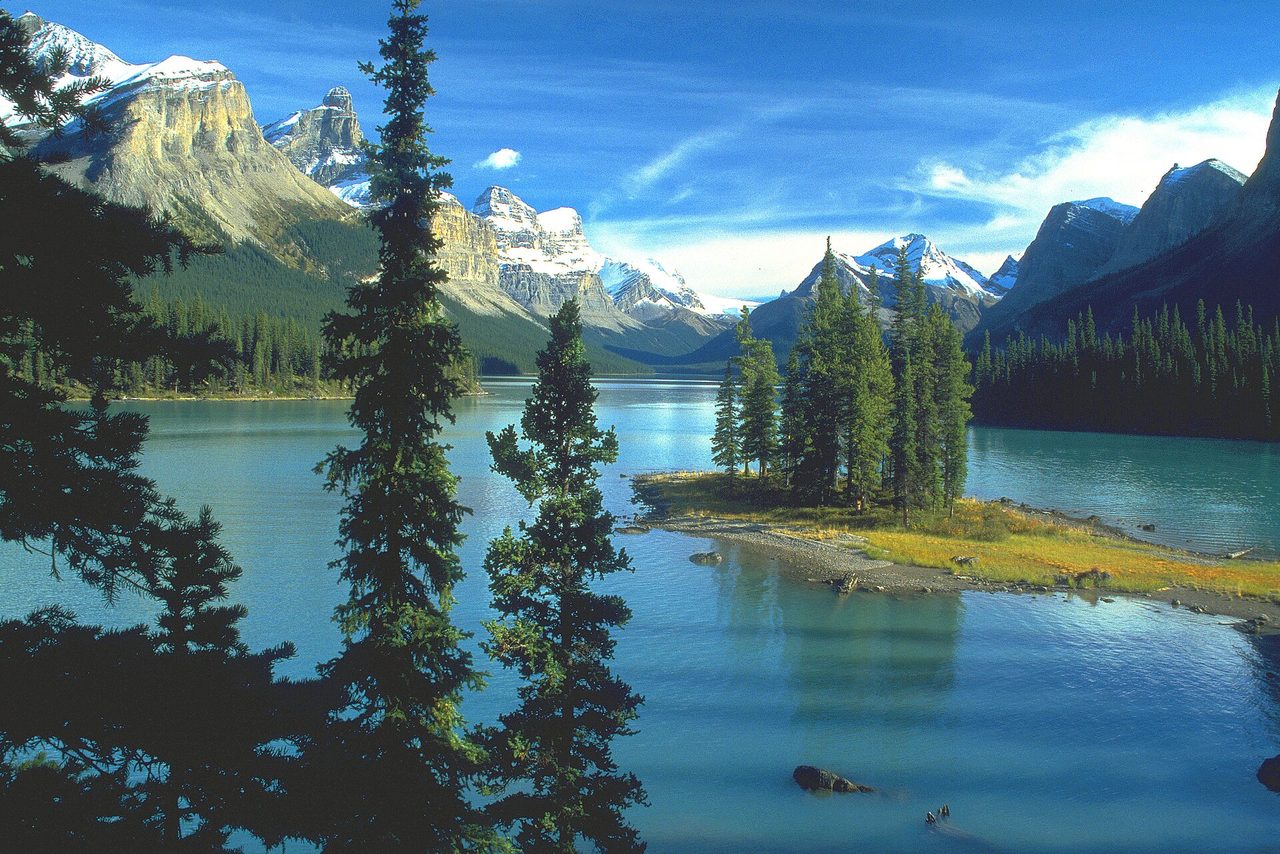
Jasper feels like Banff’s quieter sibling — same mountains, half the crowd, and in 2026 it’s still visibly rebuilding after the July 2024 wildfire that burned through parts of the townsite. New homes are going up, most businesses are open, and lodging fills fast — a front-desk clerk told me to book well ahead, and everything I’ve seen since backs her up. Before you plan, check current closures on Tourism Jasper’s official visitor guide.
Maligne Lake is the day’s anchor — 48 km up Maligne Road from town. Take the Maligne Lake cruise out to Spirit Island: it’s sacred to the Stoney Nakoda, reachable only by boat, and the first sailing of the day is the move — the water is glass before the wind picks up.
Heads up for 2026: Maligne Canyon is closed for the entire 2026 season — Parks Canada is rebuilding the footbridges destroyed in the 2024 wildfire. I’d planned a morning there and had to pivot; Pyramid Lake (minutes from town, easy shoreline walk under Pyramid Mountain) made a fine substitute.
If you want one more day in the area, our 2-day Jasper itinerary covers the slow version. Short on time? See 1 day in Jasper.
Days 6–7 — Exit options
You have three honest choices:
- Fly out of Edmonton — 365 km, ~4 hours southeast of Jasper. Drop the rig, go home.
- Drive back via the Icefields Parkway — you missed things. I guarantee it. ~4 hours to Lake Louise, and the light is different in the other direction.
- Soak day — Miette Hot Springs, 45 minutes northeast of Jasper townsite, is the hottest spring in the Rockies. Open 11 a.m.–9 p.m. daily; first-come, first-served (no reservations), and it closed for the 2026 season on October 12. Go early.
Want the full Banff-Jasper circuit written as its own trip? Read our Banff–Jasper road trip itinerary.
The 14-day extension: the Badlands & the South
The Rockies are half of Alberta. The other half is dinosaurs, desert, and the abrupt wall where the prairies hit the mountains.
Days 8–10 — Drumheller & the Badlands
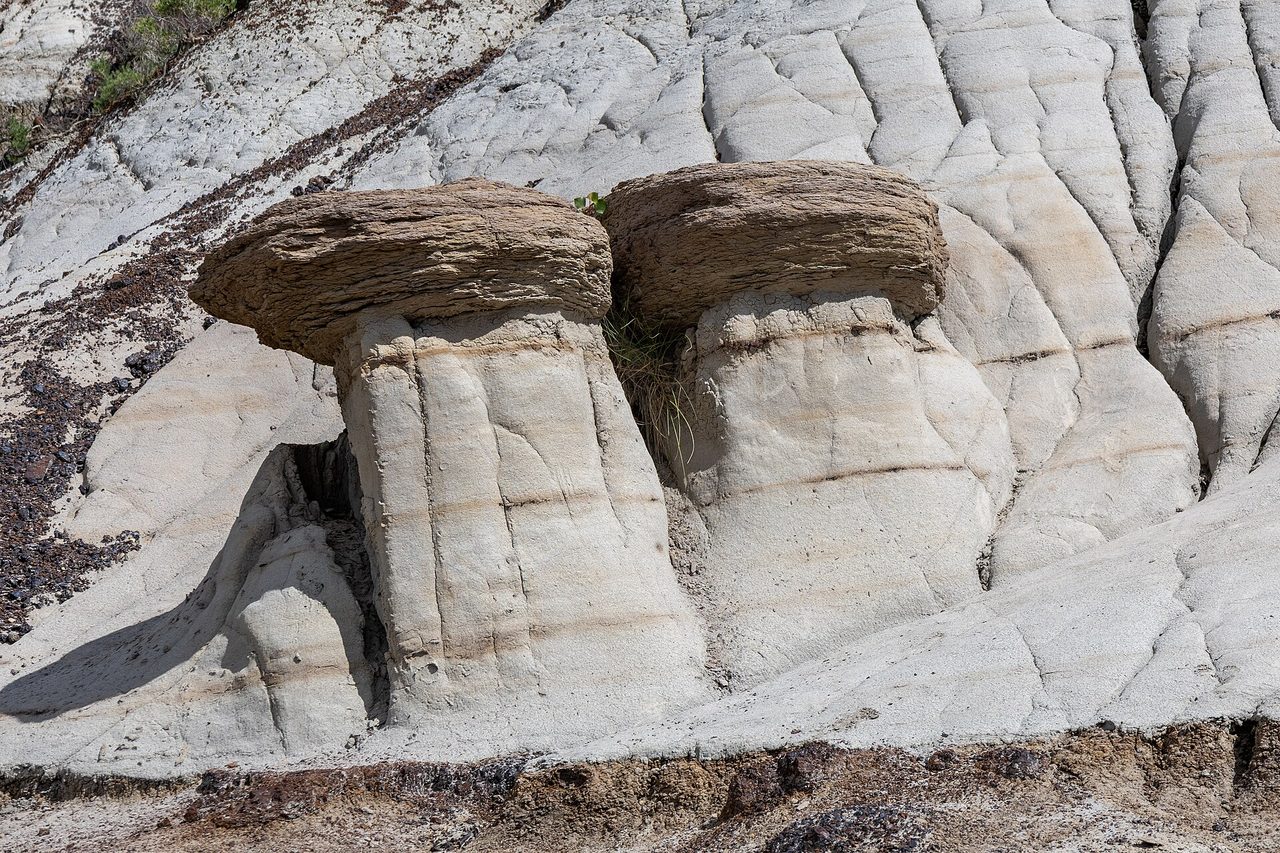
Drive southeast from Calgary (135 km, ~1.5 hours) into the Canadian Badlands — striped canyons, hoodoos, and the Royal Tyrrell Museum, which is the best dinosaur museum on the planet and I don’t feel weird about saying that. The Dinosaur Trail loop (a 48 km signed route past the museum, the hoodoos, and Horsethief Canyon) takes a full day if you stop properly. Which you will.
This leg is cheap — museum admission is a fraction of a gondola ticket — and it’s the part of the trip everyone remembers because it was nothing like they expected.
Days 11–13 — Waterton Lakes

South from Calgary: 270 km, ~3 hours. Waterton Lakes National Park is where the prairies end in a wall of rock — the mountains just start, no foothills, no warning. It’s smaller, quieter, and windier than the big northern parks, and the hiking is excellent. Cruise Upper Waterton Lake (it crosses into the U.S. — bring ID), walk Cameron Lake, and eat in the tiny village.
Day 14 — The Cowboy Trail home
The Cowboy Trail (Highway 22) runs north along the foothills back toward Calgary or Edmonton — ranch country, one-horse towns, zero traffic. Fill the tank in Pincher Creek or Longview. Then fly home out of Calgary and admit the five-day version was never going to work.
For more road trip craft before you go, see 15 essential Canada road trip tips.
What does an Alberta road trip cost in 2026?
Sample budget per adult, 7 days, excluding flights and hotel (prices checked October 2026; items marked ~ are estimates):
| Item | Cost (CAD) |
|---|---|
| Parks Canada Discovery Pass (annual, family/group — one per car) | $167.50 |
| Moraine Lake shuttle (adult return + reservation fee) | $12.75 |
| Banff Gondola (dynamic pricing, advance purchase) | ~$85 |
| Columbia Icefield Adventure combo (Ice Explorer + Skywalk) | ~$115 |
| Maligne Lake cruise to Spirit Island | ~$80 |
| Royal Tyrrell Museum (14-day version) | ~$22 |
| Car rental, 7 days (economy, summer) | ~$450–650 |
| Fuel, 7-day loop (~1,500 km) | ~$180 |
| Food & drinks, 7 days | ~$350–450 |
| Hotels/lodges, 6 nights (mid-range, summer) | ~$1,200–1,800 |
Hotels are the big line item — Banff and Jasper in July/August are not gentle. Book the moment your dates are real.
Timeline at a glance
| Day | Route | Highlight |
|---|---|---|
| Day 1 | Calgary → Banff (115 km) | Banff Gondola, Sulphur Mountain (~$85) |
| Day 2 | Banff base day | Lake Louise + Moraine Lake shuttles ($12.75) |
| Day 3 | Icefields Parkway south (130 km) | Peyto Lake, Bow Lake, Mistaya Canyon (free) |
| Day 4 | Icefields Parkway north → Jasper | Columbia Icefield Adventure (~$115) |
| Day 5 | Jasper base day | Maligne Lake cruise, Spirit Island (~$80) |
| Day 6–7 | Exit via Edmonton or return parkway | Miette Hot Springs / spare day |
| Day 8–10 | Calgary → Drumheller (135 km) | Royal Tyrrell Museum, Dinosaur Trail |
| Day 11–13 | Calgary → Waterton Lakes (270 km) | Cruise, hiking, the wall of rock |
| Day 14 | Cowboy Trail → Calgary | Ranch country, flight home |
FAQs about the Alberta road trip itinerary
How many days do you need for an Alberta road trip?
Seven days is the minimum for the classic Calgary → Banff → Icefields Parkway → Jasper loop without driving like you’re being chased. Two weeks covers the whole province: add the Drumheller Badlands (3 days), Waterton Lakes (3 days), and the Cowboy Trail. Five days is technically possible and I do not recommend it — I tried.
Can I drive to Moraine Lake in 2026?
No. Moraine Lake Road is closed to private vehicles year-round. In 2026 you need the Parks Canada shuttle from the Lake Louise Park and Ride ($12.75/adult return plus a reservation fee), a Roam Transit connection from Banff, or a licensed commercial operator. Reservations opened April 15, 2026, with the remaining seats released at 8 a.m. MDT two days before each date — they sell out in minutes. One shuttle ticket covers both Moraine Lake and Lake Louise via the Lake Connector.
Do I need a park pass, and what does it cost in 2026?
Yes — you need a Parks Canada pass for every day you stop in a national park. For 2026 the annual Discovery Pass is $83.50 per adult or $167.50 per family/group (up to seven people in one vehicle), which pays for itself at about seven park days. Normal daily rates (about $12.25 adult / $24.50 family) applied outside the June 19 – September 7, 2026 free-admission window. Always confirm current rates on Parks Canada’s official fees page before you go.
Can I drive the Icefields Parkway in one day?
You can, but you’ll hate yourself. It’s 232 km of the best scenery in North America, with no cell service and exactly one gas station at Saskatchewan River Crossing — gas up in Lake Louise before you leave. I stopped six times in the first half and wanted more. Split it over two days: Lake Louise to the Columbia Icefield, then on to Jasper, and hit Bow Lake, Peyto Lake, and the two big waterfalls along the way.
Is Jasper worth visiting after the 2024 wildfire?
Yes — most of the park is open and the town is rebuilding, but check current closures before you go. In 2026, Maligne Canyon is closed for the entire season while Parks Canada rebuilds the footbridges lost in the 2024 wildfire — substitute Pyramid Lake or an extra Maligne Lake boat cruise. Book lodging early: beds are tighter while reconstruction continues. Tourism Jasper’s official visitor guide has the latest status.
When is the best time for an Alberta road trip?
Mid-June to late September. That’s when the Moraine Lake shuttles run (June 1 – October 12, 2026), the Icefields Parkway is reliably snow-free, and the glacier tours operate. July–August is peak: the best weather, the biggest crowds, the highest prices. Late September trades some open services for golden larch trees and thinner traffic. Winter is a completely different trip — ski resorts and frozen waterfalls instead of lakes.
Keep exploring
- The Ultimate Banff Jasper Road Trip Itinerary for 2026
- The Ultimate 2 Days in Banff Itinerary: 2026 Travel Guide
- The Perfect 2 Days in Jasper Itinerary: 2026 Travel Guide
- The Ultimate 3 Days in Calgary Itinerary: 2026 Guide
- The Perfect 1 Day in Edmonton Itinerary: 2026 Travel Guide
- 15 Essential Canada Road Trip Tips for Your 2026 Journey
4 comments