

- ✓ Quebec is the strict one: winter tires are mandatory there from 1 December to 15 March — no “all-seasons will do” argument.
- ✓ The rental desk is where winter trips go wrong: confirm winter tires, insurance and one-way rules in writing before you pay, not at the counter.
- ✓ When the storm wins, you stop: 511, a full tank, an emergency kit and a hotel night you can cancel are worth more than any driving skill.
Here’s the deal with winter driving in Canada: the roads are not trying to kill you, but they are completely indifferent to your schedule. I learned that on my first real winter leg, driving a rental out of Calgary toward the mountains on tires I had not checked, in snow I had underestimated, with a fuel gauge I had ignored. Nothing dramatic happened. That is the point. I pulled over, I checked the tires in a gas station lot like a man reading a warning label after the fact, and I drove the rest of the leg at half the speed I had planned. I have made this mistake so you don’t have to.
This guide covers what a tourist driver actually needs for the 2026–27 winter season: the tire laws that matter, the rental traps that cost real money, and a storm protocol for the day the forecast turns on you. I double-checked the rules on the official provincial pages linked below rather than trusting forum posts, and where a fine or a fee varies by company or by year, I say so plainly and point you to the official site instead of inventing a number. Rules and prices are framed for the 2026–27 season — check the official source for your exact travel dates before you drive.
The places this guide covers
Six cities and mountain areas, east to west. Tap any stop to jump the map straight to it. The tire rules and the 511 services change by province, so the city you are driving in matters as much as the car you are driving.
Map data © OpenStreetMap contributors. Open the full map
First, the one rule that overrides everything else
Canadian winter driving has no single national tire law. Each province sets its own rules, and the rules that bite tourists are the Quebec mandate and the BC highway designation. Everything else is a mix of strong advice, rental-company policy and common sense, and treating advice as optional is how people end up in a ditch explaining themselves to a tow driver.
One more confession before the details: I once spent forty minutes digging a rental out of a snowbank in Québec City after a plow buried it overnight. The car was fine. My schedule was not. I had parked on a street the plows needed, in a storm I had watched coming all day, because moving the car felt like a chore. Winter in Canada punishes that kind of laziness quickly and without malice. Check the parking signs, move the car before the storm, and keep a shovel in the trunk even if you never use it.

Winter tire laws, province by province
The table below gives the rules a tourist is most likely to meet. It is a planning summary for the 2026–27 season, not a legal text. If your trip crosses a provincial border, the new province’s rule applies the moment you cross it, and the official provincial site is the final word for your dates.
| Province / area | Winter tire rule for 2026–27 | What it means for you |
|---|---|---|
| Quebec | Winter tires mandatory 1 December to 15 March | Every vehicle on the road, including rentals, must have winter tires in that window. No exceptions for visitors. |
| British Columbia (most highways) | Winter tires or chains required 1 October to 30 April on most designated highways | Mountain and Interior routes, including the Sea to Sky and the Coquihalla, are designated. Check the BC government page for the exact highway list. |
| Ontario | No province-wide winter tire mandate | Winter tires are still the sensible choice from December to March, especially north of Toronto. Insurers may offer a winter-tire discount — ask, don’t assume. |
| Alberta & the Prairies | No province-wide winter tire mandate | Mountain park roads and long empty highways make winter tires a practical must, mandate or not. Park roads follow Parks Canada conditions. |
| Atlantic Canada | Rules vary by province | Check the provincial transport page for your province before driving there in winter. Coastal storms arrive fast. |
Quebec: the mandate is real, and it starts on 1 December
In Quebec, winter tires are mandatory from 1 December to 15 March. I double-checked this on the SAAQ’s official pages, Quebec’s road safety authority, and the dates are the ones to plan around. If you rent in Montreal in January, the car should already have winter tires — but “should” is doing heavy lifting at some rental counters, so check the tires yourself before you leave the lot. Look for the mountain-and-snowflake symbol on the sidewall. All-season tires with only the M+S marking are not the same thing, and a tired clerk telling you they are does not change the law.
Studded tires are a separate question. Their rules and permitted dates vary by province, and some places restrict them, so if your rental or your own car has studs, check the provincial page for every province on your route rather than assuming one province’s permission travels with you. For fines and exemptions, check the official SAAQ site for your dates — I am not quoting a fine figure here because it can change, and a wrong number in a travel guide is worse than no number. → SAAQ — official site

British Columbia: October to April on most highways
BC’s rule is the one that surprises visitors, because it starts early. From 1 October to 30 April, winter tires or chains are required on most designated highways — and the designated list covers the mountain and Interior routes tourists actually drive, including the Sea to Sky Highway to Whistler and the Coquihalla Highway. I double-checked the current designated-highway list and the tire standard on the BC government’s winter driving page before writing this, and that page is the one to recheck before any Interior leg, because designations can change. → BC winter driving — official Government of BC page
The practical version: if you are driving to Whistler, Banff via the Interior, or anywhere over a BC mountain pass between October and April, you need proper winter tires or chains, full stop. A rental picked up at Vancouver airport in November does not automatically come with them, which brings us to the rental desk. The Sea to Sky is a beautiful leg and a serious road in a storm — my Icefields Parkway itinerary covers the Rockies equivalent, and the same respect-for-the-leg rule applies to both. Buckle up, gas up, and leave early on storm days.

Photograph all four tires at pickup, including the sidewall symbol, and keep the photo until you return the car. It takes thirty seconds and it ends every “were those winter tires?” argument before it starts. I started doing this after a counter argument I could not win with words alone.
What counts as a winter tire?
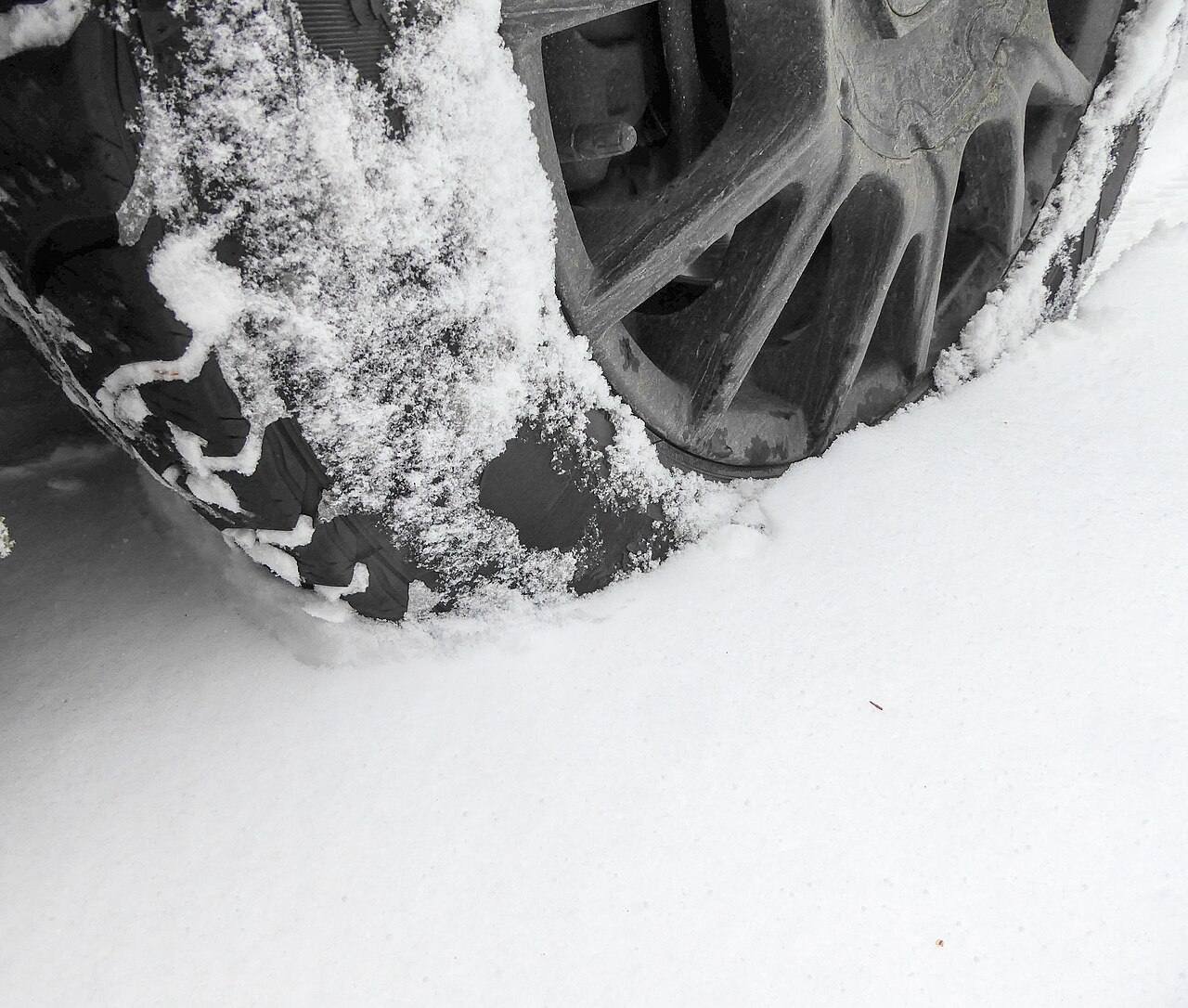
Look for the mountain-and-snowflake symbol on the sidewall. That symbol means the tire meets the winter standard. All-season tires are a compromise built for mild weather, and below about 7°C their rubber hardens and their grip drops off — that is physics, not marketing. All-weather tires that carry the snowflake symbol do count as winter tires in the provinces that use that standard, but check the provincial page for your route, because the details matter and I would rather you read the official wording than my summary of it.
Rental traps: the counter is the most expensive part of the trip
Renting a car in Canada in winter is straightforward if you do the work before you arrive, and expensive if you do it at the counter with a queue behind you. My full rental background is in my renting a car in Canada guide — what follows is the winter-only layer on top of it.
Trap 1: “winter tires included” that are not
Some rental fleets in Quebec and BC fit winter tires as standard in season. Others treat them as an add-on with a daily fee. Others will tell you the car has “all-season tires, which are fine” — in Quebec in January, they are not fine, and in BC on a designated highway, they are not compliant. Get the answer in writing before you pay: email or chat, save the reply, and ask specifically, “Will my car have tires with the mountain-and-snowflake symbol for my pickup dates?” If the answer is vague, switch companies. A daily winter-tire fee, where it exists, varies by company and location, so I am not quoting a figure — ask for the total, including taxes, for your whole rental, and compare that total, not the headline daily rate.
Trap 2: insurance that does not cover what winter does
Read the collision and liability wording before you decline or accept anything at the counter. Winter damage is rarely dramatic — it is a cracked windshield from road grit, a dented bumper from a parking-lot slide, a tow from a snowbank. Ask three questions and write down the answers: does the cover include windshield and tire damage, what is the deductible in Canadian dollars, and does it cover towing from a remote road? If you are visiting from abroad, check whether your travel insurance or your credit card’s rental cover applies in Canada and whether it excludes winter or off-road driving — many policies have exclusions buried in the fine print, and the counter is a bad place to discover them. Keep the rental company’s roadside number in your phone, not just on a paper folder in the glovebox.
Trap 3: one-way fees and the return-city surprise
One-way rentals — pick up in Vancouver, drop off in Calgary, for example — can carry a large one-way fee that only appears at the final checkout screen. Winter makes it worse, because companies need cars back in the city they came from and charge accordingly. Price the one-way total before you fall in love with the route, and compare it against returning the car and taking a bus or a flight for the last leg. My driving across Canada itinerary covers the long version of this trade-off, and the short version is the same: the route you dream about and the route you can afford to return from are sometimes different routes.
Trap 4: under-25 drivers
Drivers under 25 usually face a young-driver surcharge, and some companies will not rent certain vehicle classes to younger drivers at all. The surcharge amount varies by company and location, so check it as part of the total price, not as an afterthought, and make sure every driver who will actually drive is listed on the agreement — an unlisted driver in a winter accident is a paperwork disaster on top of a real one. If you are under 25 and the surcharge makes the rental silly, the honest alternative is buses, trains and ski shuttles for the mountain legs, which is also the safer choice on the worst storm days.
Never accept a car in winter without walking around it in daylight and photographing every existing scratch, dent and windshield chip, with the rental paperwork in the same photo set. Snow and road grit hide damage at pickup and reveal it at return. I learned this one the annoying way, in a return-lot argument over a bumper mark I did not make.
The mountain legs that deserve extra respect
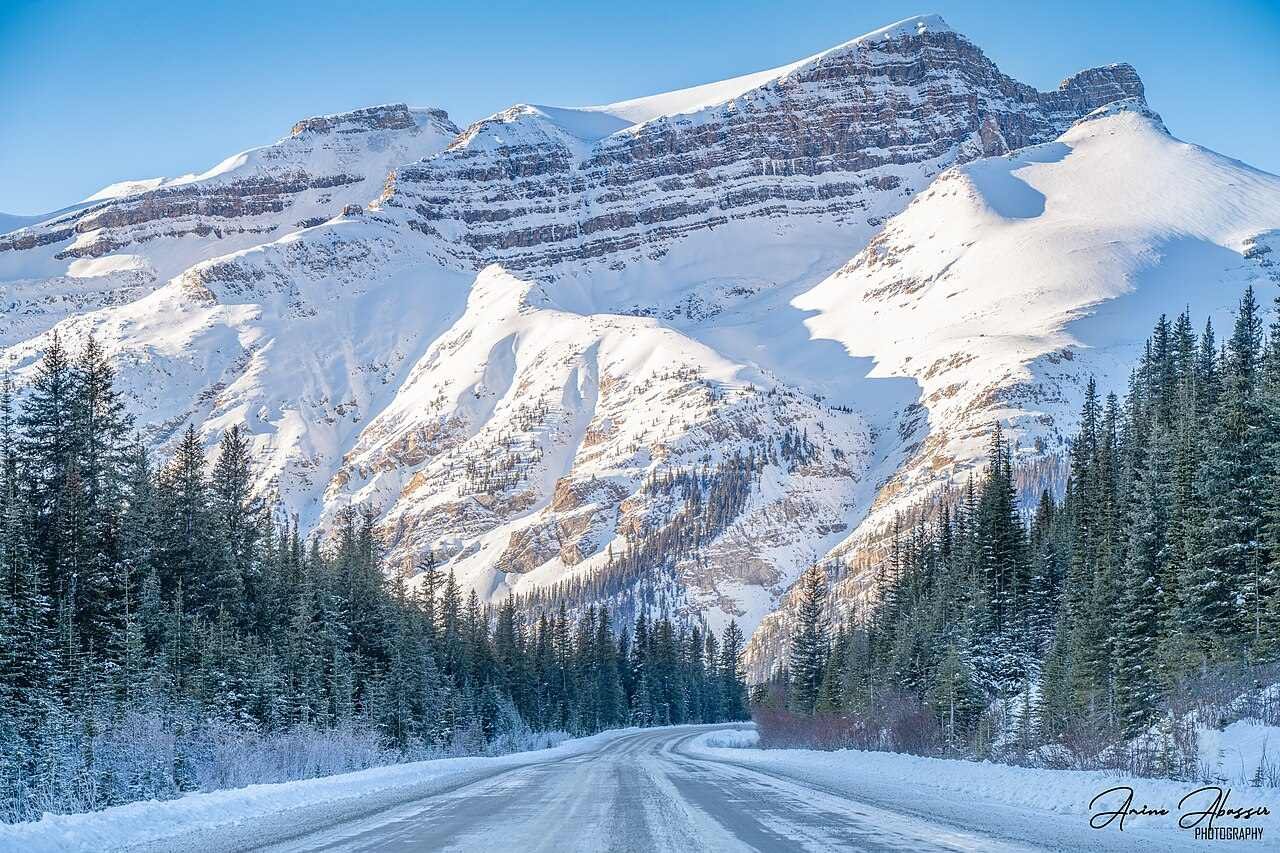
Three legs come up in almost every winter driving question I get, and they are worth naming plainly. The Sea to Sky Highway from Vancouver to Whistler is steep, winding and busy, and it closes or restricts traffic in bad storms — check DriveBC before you leave, not halfway up. The Icefields Parkway between Lake Louise and Jasper is one of the most beautiful drives on earth and one of the emptiest in winter, with long gaps between fuel and help, no cell signal in stretches, and weather that changes by valley. Rogers Pass, on the Trans-Canada through BC’s Interior, is avalanche-control country: closures for avalanche work are normal, planned and non-negotiable, and trying to beat a closure is how people spend a night in a closed highway queue. For the Rockies legs generally, my best time to visit the Canadian Rockies guide covers the seasonal trade-offs, and my where to stay in Banff guide sorts the base town if you decide to wait a storm out there, which is often the right call.

Storm protocol: what to do when the forecast turns
Here is the protocol I actually use, in order. It is boring. Boring is the point.
Step 1: check 511 before every leg, not just the first one
Canada’s 511 services are the official road-condition source, province by province. Bookmark the ones on your route before you leave home, and check them the night before and the morning of every driving day. A road that was open at breakfast can be closed by lunch in a mountain storm, and the 511 page will say so before your navigation app does.
- DriveBC — British Columbia road conditions, closures and webcams
- Québec 511 — Quebec road conditions and closures
- Ontario 511 — Ontario road conditions, closures and cameras
- Alberta 511 — Alberta road conditions and closures
Read the webcam images, not just the text status. A “compact snow” label and a webcam showing a white wall are different pieces of information, and the webcam is the honest one. If 511 says a pass is closed for avalanche control, it is closed. There is no local shortcut, and the queue of cars waiting at the gate is not a suggestion that it will open in five minutes.

Step 2: know when NOT to drive
Do not drive when any of these are true: the road authority says the road is closed; visibility is so poor you cannot see the lane markings or the car ahead’s tail lights; freezing rain is falling and the road is icing faster than plows can treat it; or you are tired, because winter driving tired is worse than summer driving tired by a wide margin. A whiteout is the hard stop. I once waited out a whiteout in a pullout near Rogers Pass, engine running in bursts, watching the snow erase the highway in front of me, and the two hours I “lost” were the cheapest two hours of that trip. The drivers who pushed on were the ones in the ditch. No joke — I passed three of them the next morning, all fine, all embarrassed, all late anyway.
The same rule applies to city driving in a blizzard. If your hotel can wait, let it wait. Cancel the dinner reservation, not the safety margin. Most Canadian hotels in winter have seen this movie before, and a phone call explaining a storm delay is a normal conversation, not an excuse.
A plow driver in Quebec City told me the safest winter habit is the least glamorous one: leave a full hour earlier than the navigation app says, and spend that hour on coffee if you don’t need it. I tested it for a whole trip. He was right. The hour you don’t need costs nothing; the hour you don’t have costs everything.
Step 3: drive like winter is a different skill, because it is
Slow down earlier than feels necessary. Double or triple your following distance on snow, and more on ice. Brake gently and early, in a straight line, before turns — never hard in the middle of one. If the car starts to slide, ease off the accelerator, look where you want to go, and steer there gently; fighting the slide with big steering inputs makes it worse. Keep the fuel tank at least half full on mountain legs, because a closure can turn a two-hour leg into a five-hour wait and idling burns fuel you will want later. Clear all the snow off the car before driving, not just a peephole in the windshield — snow flying off your roof at highway speed is a hazard to the car behind you, and in some provinces it is an offence. Check the provincial rules for your route if you want the exact wording.
Step 4: black ice and whiteouts, specifically
Black ice is the thin, nearly invisible ice layer that forms on bridges, overpasses, shaded curves and anywhere the temperature hovers near freezing overnight. It looks like wet road. The warning signs are a sudden quiet from the tires, a temperature display near 0°C, and ice forming on mirrors or wipers. If you suspect black ice, lift off the accelerator gently, do not brake hard, do not steer sharply, and wait for grip to return. Bridges freeze before roads do — that sign is not decoration.
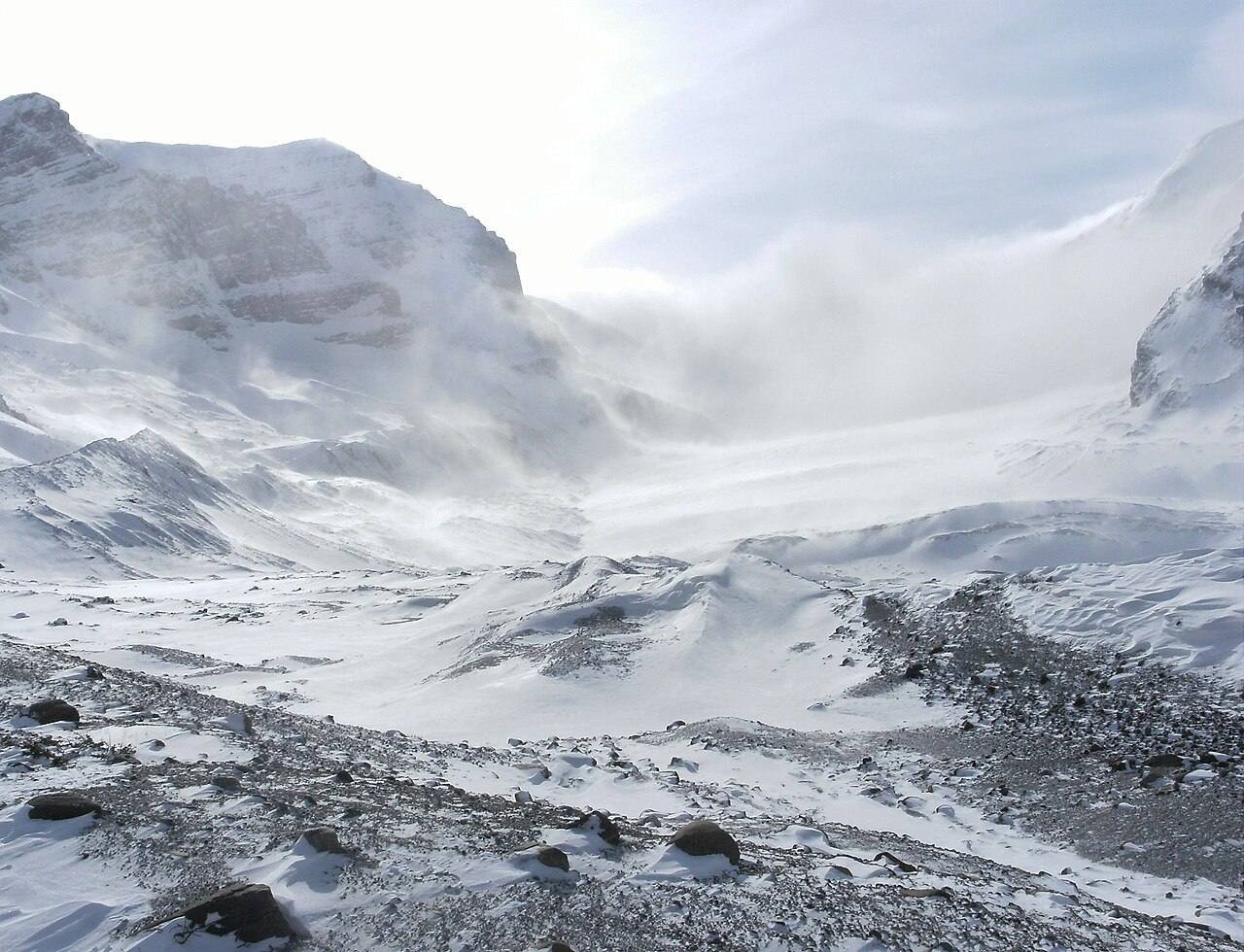
A whiteout is snow and wind erasing all contrast, so you cannot tell road from ditch from sky. If you are caught in one, slow down gradually, put the hazard lights on, and pull fully off the road at the first safe pullout, well clear of the travel lane. Stay in the car, keep the exhaust pipe clear of snow, run the engine in bursts for heat, and wait. Driving on because the pullout feels like giving up is how chain collisions happen. The pullout is the win.

Step 5: if you get stuck or slide off
Stay with the car unless it is unsafe to do so — the car is shelter, visibility and a landmark for rescuers. Put the hazards on, and a bright cloth on the antenna or mirror if you have one. Clear snow from the exhaust pipe before running the engine, and run it in bursts, not continuously, to save fuel and avoid carbon monoxide build-up. Try to free the car gently: clear snow from around the tires, use floor mats or sand under the drive wheels if you have them, and rock the car slowly forward and back. If that fails after a few tries, stop — spinning the tires digs you deeper and overheats the transmission. Call roadside assistance, give your highway and nearest kilometre marker or landmark, and wait. If you have no cell signal, wait for a passing plow or driver rather than walking for help in a storm; walking away from a warm car into a whiteout is the most dangerous move on this whole list.
Emergency kit: pack it before the first leg
Keep this kit in the car for the whole trip, not in a suitcase in the trunk under three bags. A rental will not come with most of it, so buy it at a gas station or hardware store on day one and consider it part of the rental cost.
| Kit item | Why it is there |
|---|---|
| Ice scraper + snow brush | Clear every window and light before driving, every time |
| Small shovel | Digging out beats waiting for a tow for a small snowbank |
| Blanket, warm hat, gloves | Waiting in a cold car without them is miserable and unsafe |
| Flashlight + extra batteries | Winter nights are long and highway pullouts are dark |
| Phone charger + power bank | 511 checks and rescue calls need a charged phone |
| Water + non-perishable snacks | A closure queue is a long wait with no services |
| First-aid kit | Basic, because remote roads mean slow help |
| Sand, kitty litter or traction mats | Grip under a spinning tire when you are stuck |
| Jumper cables or a booster pack | Cold kills batteries, especially on short-trip rentals |
| Windshield washer fluid rated for winter | Summer fluid freezes on contact and blinds you |
Winter driving day by day: a sensible first trip
If this is your first Canadian winter drive, do not start with a mountain pass in a storm. Start with a city leg in daylight, then a short highway leg, then the mountain day, with a flexible night in the middle you can spend waiting out weather without losing a booking. A Banff-based version of that plan works well: day one, Calgary to Banff in daylight, checking 511 before departure; day two, a short Banff-area drive and a rest day if a storm arrives; day three, the Icefields Parkway only if 511 and the webcams agree it is a good day. If you are building a wider winter trip around the driving, my Niagara Falls in winter guide is the eastern bookend, and my Canada trip cost guide puts the driving costs in a whole-trip budget. The pattern is the same everywhere: short legs, early starts, flexible nights, and no shame in staying put.
What does winter driving cost on top of the trip?
Prices below are planning ranges for the 2026–27 season, per person per day, for the driving extras only. Pick your travel style, tell the calculator how many days you are driving, and it does the rest. (Rental car base rate and accommodation NOT included — see the rental section above for what to check. The calculator covers food, fuel share, winter extras and treats.)
Budget calculator
Per person, in Canadian dollars. Excludes rental car base rate and accommodation.
Budget ≈ $95/day · Mid-range ≈ $165/day · Luxury ≈ $290/day. Add rental car base rate and accommodation separately. Prices are planning ranges for 2026–27 — check rental and hotel sites for your dates.
| Expense (per person / day) | Budget | Mid-range | Luxury |
|---|---|---|---|
| Food & drink on the road | $45 | $75 | $130 |
| Fuel & parking share | $30 | $50 | $80 |
| Winter gear & extras (amortized) | $10 | $20 | $40 |
| Treats & backup-night slack | $10 | $20 | $40 |
| Daily total (excl. rental & lodging) | ~$95 | ~$165 | ~$290 |
The rental itself is the variable that moves the total most, because winter-tire fees, one-way fees and young-driver surcharges differ by company and are not in the calculator above. Price the rental as a total, with every fee included, and add it to the calculator figure. That honest total is the number to compare against buses and trains for the same legs — on the worst storm days, the bus wins on both price and safety, and there is no shame in that trade.
FAQs about winter driving in Canada
Are winter tires mandatory in Canada for tourists?
It depends on the province. In Quebec, winter tires are mandatory from 1 December to 15 March, including for rental cars driven by visitors. In British Columbia, winter tires or chains are required from 1 October to 30 April on most designated highways. Ontario and Alberta have no province-wide mandate, but winter tires are still strongly recommended from December to March. Check the official provincial site for every province on your route, because the rule changes at the border.
Do Canadian rental cars come with winter tires?
Not always. Some fleets in Quebec and BC fit winter tires as standard in season; others charge a daily fee for them, and some will offer all-season tires that do not meet the Quebec or BC requirements. Confirm in writing before you pay that your car will have tires with the mountain-and-snowflake symbol for your pickup dates, and check the sidewalls yourself at the lot. Photograph all four tires at pickup.
When should I NOT drive in a Canadian winter storm?
Do not drive when the road is officially closed, when visibility is so poor you cannot see lane markings or tail lights ahead, when freezing rain is icing the road faster than plows can treat it, or when you are tired. In a whiteout, pull fully off the road at a safe pullout, put the hazards on, stay in the car, keep the exhaust pipe clear of snow, and wait. The hours you “lose” waiting are cheaper than any alternative.
Where do I check road conditions in Canada?
Use the official provincial 511 services: DriveBC for British Columbia, Québec 511 for Quebec, Ontario 511 for Ontario, and Alberta 511 for Alberta. Check the night before and the morning of every leg, and read the webcam images as well as the text status.
What is black ice, and how do I handle it?
Black ice is a thin, nearly invisible ice layer that looks like wet road. It forms first on bridges, overpasses, shaded curves and anywhere temperatures hover near freezing overnight. Warning signs are a sudden quiet from the tires, temperatures near 0°C, and ice on mirrors or wipers. If you suspect it, lift off the accelerator gently, do not brake hard, do not steer sharply, and wait for grip to return. Bridges freeze before roads do.
Can I drive the Icefields Parkway or the Sea to Sky Highway in winter?
Yes, when conditions allow — but both demand respect. Check 511 and the webcams before you leave, carry a full tank and an emergency kit, and have a flexible night you can spend waiting out a closure. The Icefields Parkway has long gaps between fuel and help and patchy cell signal; the Sea to Sky is steep and busy and can close in storms. If 511 says a pass is closed for avalanche control, it is closed, and there is no shortcut worth taking.
Keep exploring
The driving is only half the winter trip — here’s where I’d go next:
- Renting a car in Canada guide — the full rental background, beyond winter
- Driving across Canada itinerary — the long version of the one-way trade-off
- Icefields Parkway itinerary — the Rockies leg, in detail
- Where to stay in Banff — the base town for waiting out a storm
- Best time to visit the Canadian Rockies — snow, crowds and prices by month
- Niagara Falls in winter — the eastern winter bookend
- Canada trip cost — the whole-country budget context
Check the tires, check 511, gas up, and leave early. The snow will do the rest — and on the days it does too much, staying put is the drive.
4 comments