
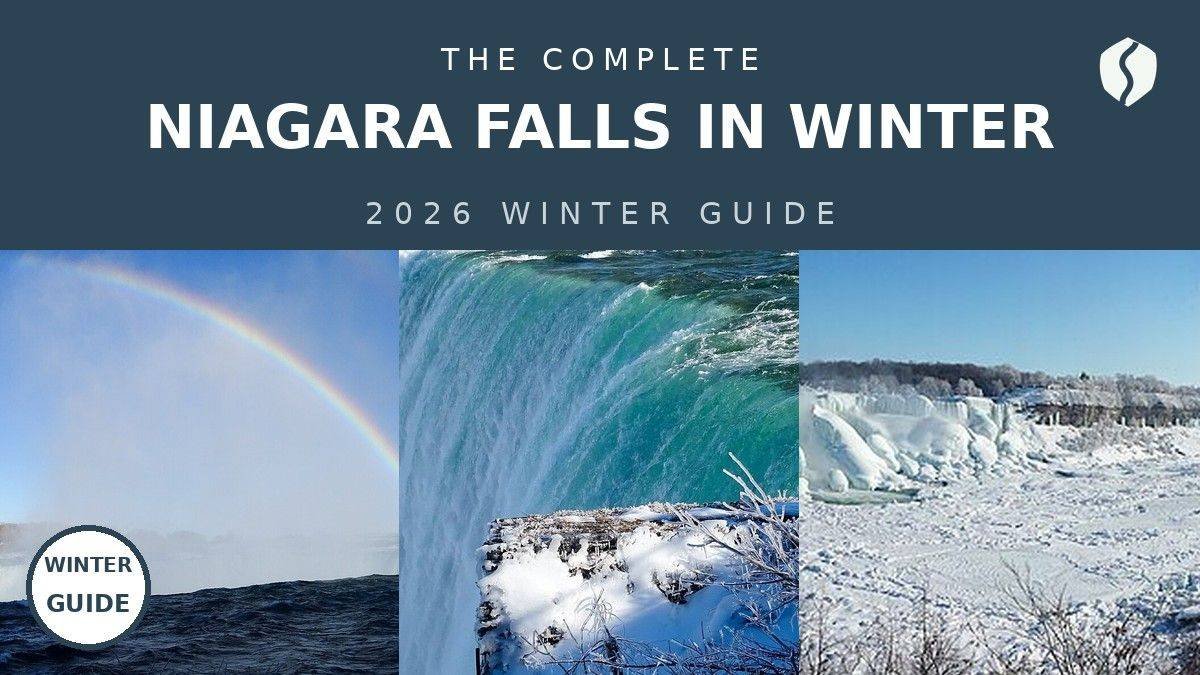
- ✓ Yes, it’s worth it — winter Niagara is a different spectacle, not a downgraded summer: icy railings, frozen spray, empty viewpoints and the falls lit in colour at 4:45 PM.
- ✓ The Winter Festival of Lights runs November 14, 2026 – January 10, 2027 — 3 million lights, free, nightly 5 PM–midnight, with fireworks Fridays and Saturdays at 8 PM.
- ✓ Some things close, the essentials don’t: the boats stop in winter, but Journey Behind the Falls, Table Rock, the Butterfly Conservatory and the illuminated falls stay open year-round.
I’ll be honest: my first instinct about Niagara Falls in winter was to skip it. I pictured grey slush, shuttered kiosks, and a sad half-frozen trickle over the edge. A friend who’d done it twice talked me into a December weekend anyway, and here’s the thing — she was right, and I was thoroughly wrong. Winter doesn’t shut Niagara down. It re-stages it: the crowds vanish, the prices drop, the mist from the falls freezes onto every railing and tree branch along the gorge, and at night the whole thing glows.
I’ve now done Niagara in winter twice — once during the Festival of Lights, once on a cold, bright January day when the gorge looked like something out of a nature documentary. This guide is everything I wish I’d known before the first trip: what’s actually open, what really does (and doesn’t) freeze, where to warm up, and how to dress so the wind off the gorge doesn’t win. Every date and hour below was checked in October 2026.
Is Niagara Falls worth visiting in winter? The honest answer
Short version: yes — if you want the spectacle, not the checklist. Winter Niagara is moody, dramatic and crowd-free. You get ice formations along the crest, frozen spray glittering on the trees, and the illuminated falls reflecting off low winter light before dinner. It is not the best choice if your dream trip depends on boat rides, warm-evening strolls and every attraction running at once.
What surprised me most was the quiet. On my January visit I stood at the Horseshoe Falls railing at 9 AM on a Saturday and counted maybe a dozen other people. In July you’d be shoulder-to-shoulder at that same railing. Winter visitors get the falls almost to themselves, hotels drop their rates (I paid less than half of summer prices for a fallsview room), and you can actually hear the water.
The tradeoff is real, though: some attractions close, daylight is short (sunset is around 4:45 PM in December), and the wind off the gorge is no joke. Pack right and plan around the early nightfall, and winter becomes the most atmospheric season at the falls. Plan it like a summer trip with a parka and you’ll be miserable.
The truth about “frozen” Niagara Falls

Let’s clear this up, because it’s the question everyone asks: the falls do not freeze solid. That much water — over 168,000 cubic metres per minute over Horseshoe Falls at peak flow — doesn’t just stop. What winter does instead is arguably prettier: the mist freezes onto railings, trees, rocks and cliff edges, building thick white coats of ice; ice chunks form along the crest and in the gorge below; and on very cold days the American Falls slows to a hushed trickle behind a curtain of ice.
The only time the falls actually stopped was in March 1848, when an ice jam at the river’s mouth blocked the flow for about 30 hours — locals reportedly walked out onto the riverbed. These days, an ice boom (a line of steel floats strung across the river near Buffalo) is placed each winter to hold back ice floes and prevent damaging ice jams in the gorge. It’s a genuinely clever piece of engineering, and it’s part of why the “frozen falls” photos you see are half true: the falls keep roaring, the ice builds around them.
One more thing I learned from a Niagara Parks guide on my first winter visit: the flow over the falls is reduced at night and in winter by hydroelectric diversion — the gorge gets more water by day in summer, less overnight in the off-season. It doesn’t make the falls look small (trust me, they don’t look small), but it’s why winter-night photos can look slightly gentler than summer ones.
Getting there in winter (from Toronto)
Niagara Falls is about 130 km from Toronto, and winter doesn’t change the two good options much. By train: GO Transit runs weekend rail service to Niagara Falls year-round (including winter), roughly two hours from Union Station; on weekdays, take a GO train to Burlington and transfer to the GO bus. I checked the current schedule on GO’s official site before my last trip — winter weekend service holds up well, just confirm the day before in case of weather delays. By car: the QEW is 90 minutes in good conditions, but lake-effect snow can hit the stretch near Hamilton hard — check the forecast, and budget extra time.
Once you’re there, you do not need a car in winter. Everything on the Canadian side — the falls, Table Rock, Clifton Hill, the Festival of Lights route — sits along one walkable stretch of the Niagara Parkway. The WEGO bus runs year-round and links the falls, hotels, the Butterfly Conservatory and Niagara-on-the-Lake. In winter, honestly, the walk along the parkway is half the fun — the mist freezes on the railings and the whole gorge edge sparkles.
The 10 winter stops, on a map
Ten stops, from the Horseshoe Falls up to Niagara-on-the-Lake. Tap any stop to jump the map straight to it.
Map data © OpenStreetMap contributors. Open the full map
1. Table Rock & the Horseshoe Falls — the icy money shot

Start where everyone starts, because winter or not, there’s no better first sight of Niagara. Table Rock is the grand old building right at the brink of Horseshoe Falls, and the upper-level viewing area puts you so close to the crest that you can feel the rumble in your chest. In winter the mist rises off the falls, drifts across the terrace, and freezes on the railings in thick white coats — on my January visit the railing looked like it had been piped with frosting.
Do not skip the terrace in winter just because it’s cold — this is the whole point of coming. The spray settles on everything: my camera lens iced over within ten minutes (fair warning: bring a microfibre cloth and keep the camera inside your jacket between shots), and the trees along the gorge edge glitter like they’ve been dusted with diamonds. The Table Rock complex itself is open year-round, with shops, a restaurant and the ticket centre for Journey Behind the Falls downstairs — the perfect warm-up between outdoor stints.
Go at 9 AM. I had the entire upper terrace to myself on a January Saturday morning — by 11 the day-trippers arrived and the magic ratio shifted. In December, sunset at ~4:45 PM means you can watch golden light on the ice, warm up for dinner, and be back out for the illuminated falls after dark. That’s two completely different shows in one day.
2. Journey Behind the Falls — winter edition
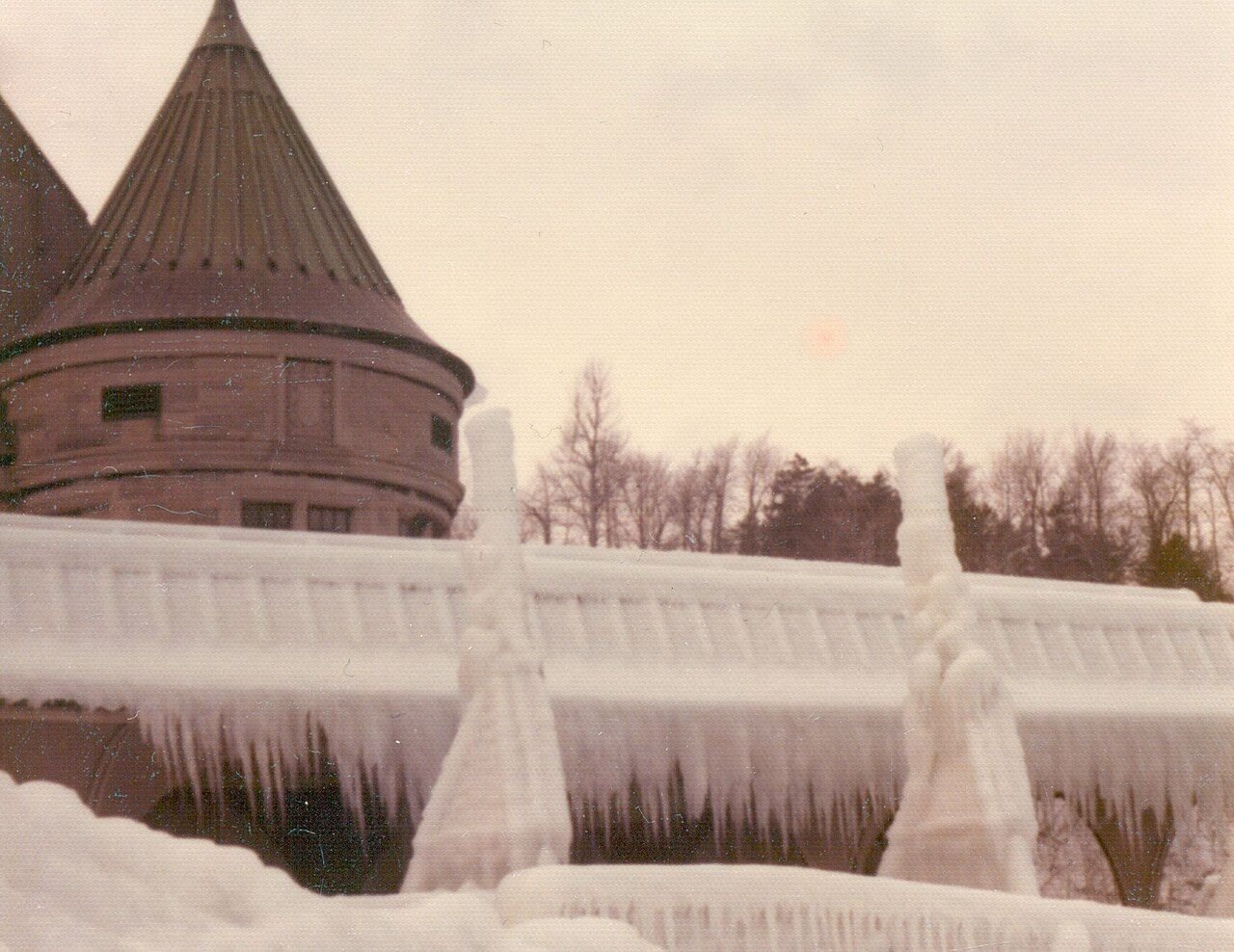
If there’s one paid attraction worth doing in winter, it’s this one. Journey Behind the Falls takes you down an elevator into tunnels carved through the bedrock behind Horseshoe Falls, ending at two observation decks right at the base of the thundering water. It’s open year-round — and in winter it’s arguably better than summer: the tunnels are warm, the falls’ roar feels bigger with fewer people, and the ice formations coating the deck railings make every photo look otherworldly.
You’ll get wet. They hand you a yellow rain poncho and you will need it — the spray is constant, and in winter it’s cold spray. Adult tickets run about $30; I checked the current price on Niagara Parks’ official site before my last visit, since prices move a little season to season. → Niagara Parks — official site
The observation deck ices up — the staff salt it constantly, but wear boots with real grip and take the stairs of the lower deck slowly. I found this out the soggy way when my fashionable winter boots slid on a patch of black ice and I grabbed the railing just in time. Fashion boots stay at the hotel.
3. American Falls & the Queen Victoria Park winter walk

Walk the riverside path north from Table Rock toward the American Falls, and winter does its best work here. The American Falls carry less water than Horseshoe, so in deep cold they slow behind curtains of ice and look genuinely half-frozen — this is the closest the falls get to the “frozen Niagara” postcard, and it’s where you should take that photo.
The walk itself is one of my favourite free things in Ontario in winter. Queen Victoria Park stretches along the gorge, and on a clear cold day the whole path is quiet, white, and glittering. The wind off the river is the real enemy — it cuts right through a regular winter jacket. On my first winter walk I turned back after twenty minutes because I’d dressed for “cold” instead of “cold next to 168,000 cubic metres of falling water per minute.” Dress for the second one (layering list below).
A Niagara Parks gardener I chatted with on the path told me the frost is thickest right after a cold snap with no wind — the mist hangs, freezes, and coats the trees in the park like something from a fairy tale. If the forecast shows −10°C and calm air, get to the parkway early the next morning. It’s the best version of this walk.
4. Winter Festival of Lights — the 8-km free show
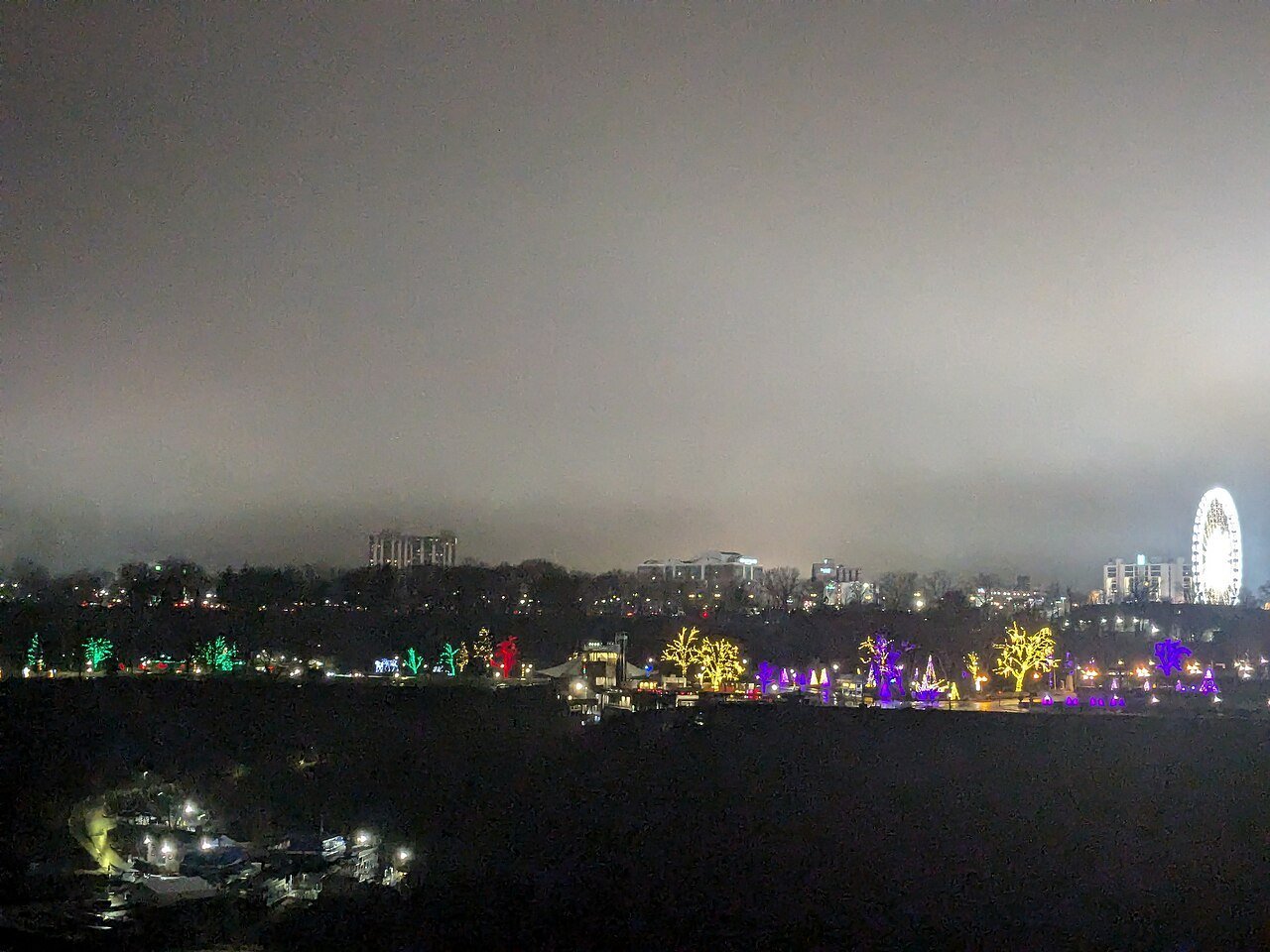
This is the reason to plan a winter trip around a specific date. The Winter Festival of Lights turns 8 km of the Niagara Parkway, Queen Victoria Park, Dufferin Islands and the tourist districts into Canada’s largest outdoor light festival — 3 million lights, over 75 displays, and it’s completely free. This season it runs November 14, 2026 – January 10, 2027, with the lights on nightly from 5 PM to midnight. I confirmed the dates against multiple event listings in October 2026 — this is the 44th edition.
The route is genuinely long, so treat it like a proper outing: walk the Queen Victoria Park stretch (about 2 km of the densest displays), then drive or ride the rest. I did the walk on a Friday night, hot chocolate in hand from the Hot Chocolate Trail stops along the way, and timed it for the 8 PM fireworks — they run every Friday and Saturday during the festival, nightly from December 25 through January 4, plus an extended show at New Year’s Eve midnight. Fireworks over the illuminated falls, in the cold dark, with almost no crowd by 9 PM: that’s the memory I still talk about.
One practical note: the festival is free, but the parking around Queen Victoria Park is not. Park at Table Rock or take the WEGO bus and save yourself the circle-the-block game on a busy December weekend.
Don’t miss Dufferin Islands on the route — the little islands south of the falls get wrapped in thousands of lights reflected in the water, and most drive-through visitors rush past. Walk in, take ten minutes, thank me later. The separate map pin above jumps you straight there.
5. The falls at night — illumination & fireworks

Here’s winter’s secret weapon: it gets dark at 4:45 PM, which means you get the illuminated falls for hours instead of minutes. Powerful LED lights wash the Horseshoe, American and Bridal Veil Falls in changing colour every night of the year — and during the Festival of Lights there’s a special five-minute choreographed show, “Sparkling Winter Lights,” on the Horseshoe Falls nightly at 6, 7 and 8 PM.
My move: dinner at a fallsview restaurant (Table Rock House Restaurant has the windows; book ahead), then a slow walk along the parkway as the colours shift. In summer you’d wait until 10 PM for this; in winter you get it right after dinner and you’re back at the hotel by 9. The cold air actually helps — the colours read sharper and the mist glows.
6. Clifton Hill & the SkyWheel — winter fun, no crowds

Clifton Hill — Niagara’s gloriously tacky entertainment strip — runs year-round, and winter is honestly the best time to enjoy it without the summer chaos. The wax museums, haunted houses, mini-golf and arcades all stay open, and the Niagara SkyWheel (the big observation wheel) runs through winter with heated, enclosed gondolas. I rode it at dusk on my December trip: fifteen minutes of slow rotation, the illuminated falls on one side, the Festival of Lights spread below, and barely a line.
Fair warning: Clifton Hill in winter is still Clifton Hill — bright, loud, and proud of it. If that’s not your speed, skip it and spend the afternoon in Niagara-on-the-Lake instead. If it is your speed, the Clifton Hill Fun Pass bundles several attractions and saves real money; I double-checked the current pass lineup on Clifton Hill’s official site before going, since the included attractions shift. → Clifton Hill — official site
7. Butterfly Conservatory — the tropical reset

Every winter Niagara itinerary needs one warm indoor anchor, and the Butterfly Conservatory is the best one. Ten minutes up the parkway from the falls, this glasshouse holds 2,000+ butterflies among tropical plants — it’s humid, green, and a full 25°C inside while January rages outside. My glasses fogged completely the moment I walked in, which made me laugh and then immediately made me very happy to be warm.
Give it 60–90 minutes, and time it for midday when your fingers are done with the cold. Adult admission is about $18; the conservatory is open year-round with slightly reduced winter hours, so check the day-of schedule on Niagara Parks’ site. It pairs naturally with a drive up the parkway — or the WEGO bus if you’re car-free. → Niagara Parks — Butterfly Conservatory hours & tickets
Wear the brightest colour you own into the conservatory — butterflies are drawn to bright clothing and you’ll get far better photos (and more landings) than in your sensible black puffer. I swapped my grey scarf for a red one at the door and a blue morpho parked on my shoulder for a full minute.
8. Niagara-on-the-Lake — the pretty town + ice wine country
Twenty minutes up the parkway, Niagara-on-the-Lake is the winter day trip that rounds out the falls perfectly. The 19th-century main street (Queen Street) looks like a film set under snow, the shops stay open, and the surrounding wineries are in their element: winter is ice wine season, and several wineries offer tastings of the sweet, concentrated wine made from grapes frozen on the vine. I did a tasting flight at a winery just outside town on my January trip and came home with a bottle I’m still a little too proud of.
Book winery visits ahead in winter — hours shrink outside summer, and the smallest tasting rooms run on reduced schedules. The town itself is an easy half-day: wander Queen Street, warm up in a café, and be back at the falls for the night illumination. My Niagara Falls travel guide has the full logistics for pairing the two.
9. Niagara Glen — the winter gorge (with caution)

The Niagara Glen is the wild side of the river: 4 km of trails descending into the gorge, past giant boulders and old-growth Carolinian forest. In winter, with snow on the pines and ice along the rapids, it’s stunning — and it’s the one stop in this guide that demands respect.
The Glen’s trails ice over badly — the stone staircases down into the gorge are genuinely treacherous in freeze-thaw weather. I went with microspikes on my boots and a hiking pole, stayed on the upper rim trail, and still turned back at the first descent when I saw the ice. If you don’t have traction devices, enjoy the Nature Centre’s overlook and skip the descent. No view is worth a broken ankle.
10. Dufferin Islands — the Festival’s prettiest corner
South of the falls along the parkway, the Dufferin Islands are a chain of tiny islands on quiet ponds — and during the Festival of Lights they become the single prettiest spot in Niagara. Thousands of lights wrap the trees and reflect in the still water, and because most visitors drive through, the walking paths stay blissfully uncrowded.
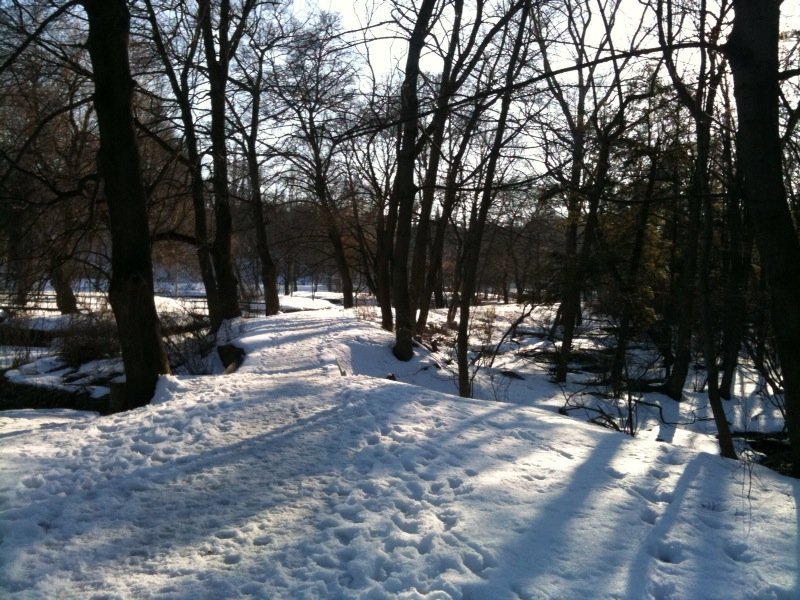
By day in winter it’s a different, quieter pleasure: frozen ponds, snow on the pines, ducks huddled at the unfrozen edges. Ten minutes of calm between the big sights. Free, always, and worth the detour either way.
What’s open vs. closed in winter
The single most useful thing I can tell you: the boats don’t run in winter, and almost everything else does. Here’s the breakdown, checked against Niagara Parks’ official site in October 2026:
Open year-round: Table Rock Welcome Centre, Journey Behind the Falls, Butterfly Conservatory, Skylon Tower, Niagara SkyWheel, Clifton Hill attractions, Niagara Glen trails (weather permitting), falls illumination every night.
Closed for winter (roughly late October/November – spring): the Hornblower boat cruises to the falls, White Water Walk, Whirlpool Aero Car, the zipline, and most riverside snack kiosks. The WEGO bus runs on a reduced winter schedule.
Winter-only / winter-special: the Winter Festival of Lights (Nov 14 – Jan 10), Friday/Saturday fireworks, the Hot Chocolate Trail, and ice wine season in Niagara-on-the-Lake.
If you were planning the boat ride, reframe it: winter gives you the lights, the ice, the empty viewpoints and the fireworks — a fair trade, and I say that as someone who loves the boat.
What does a winter trip cost?
Winter is the cheapest season at Niagara — hotels run well below summer rates and the biggest evening show is free. Pick your travel style, tell the calculator how many days you’re staying, and it does the rest. (Accommodation not included — see the table below.)
Budget calculator
Per person, in Canadian dollars. Excludes accommodation.
Budget ≈ $65/day · Mid-range ≈ $110/day · Luxury ≈ $195/day. Fares and admission checked October 2026.
| Expense (per person / day) | Budget | Mid-range | Luxury |
|---|---|---|---|
| Accommodation (winter rates!) | $40 (hostel) | $120 (fallsview hotel) | $280+ (fallsview suite) |
| Food & drink | $30 | $50 | $90 |
| Sights (Journey, SkyWheel, Butterfly…) | $10 | $25 | $45 |
| Getting around (WEGO + walking) | $15 | $20 | $35 |
| Coffee, treats & souvenirs | $10 | $15 | $25 |
| Daily total | ~$105 | ~$230 | ~$475 |
For the full year-round breakdown, see my Niagara Falls trip cost guide — winter numbers run noticeably lower than the summer figures there.
What to wear: winter survival at the falls
This is the section that makes or breaks the trip, so I’m not going to be cute about it. The falls create their own weather: mist, wind, and freeze-thaw ice on every paved surface near the gorge. Here’s what actually works:
Layers, not one big coat. Base layer (merino or synthetic, not cotton), insulating mid-layer, and a windproof outer shell. The wind off the gorge is the killer — a “warm” puffy without windproofing will betray you at the Table Rock terrace.
Boots with grip, full stop. The parkway and viewing terraces ice over from the frozen mist. I’ve seen too many visitors in fashion boots doing the penguin shuffle. Waterproof boots with real tread; add microspikes if you’re doing the Niagara Glen.
Protect the extremities. Warm hat, scarf or neck gaiter, insulated gloves (touchscreen-compatible so you’re not exposing fingers for photos), and warm socks. Hand warmers in the pockets are a game-changer for the Festival of Lights walk — I buy the little iron-powder packets and stuff one in each glove.
For your camera/phone: batteries die fast in the cold. Keep your phone in an inside pocket, bring a microfibre cloth for the mist (your lens will ice over), and don’t change lenses outdoors if you can avoid it.
The mist near the falls freezes onto everything — railings, steps, boardwalks, even the viewing platforms. Walk like the ground is lying to you, because it is. Every local I asked said the same thing: the injuries at the falls in winter are almost all slips, not cold.
Suggested 2-day winter itinerary
| Time | Day 1 — the falls, iced & lit | Day 2 — warm-ups & wine country |
|---|---|---|
| Morning | Table Rock at 9 AM — Horseshoe Falls terrace, empty viewpoints | Butterfly Conservatory — the tropical reset |
| Midday | Journey Behind the Falls + lunch at Table Rock (warm up!) | Niagara-on-the-Lake — Queen Street + ice wine tasting |
| Afternoon | Queen Victoria Park winter walk to the American Falls | Niagara Glen rim trail or Dufferin Islands (daylight version) |
| Evening | Fallsview dinner + Winter Festival of Lights walk (+ 8 PM fireworks Fri/Sat) | Clifton Hill + SkyWheel at dusk, illuminated falls finale |
FAQs about Niagara Falls in winter
Does Niagara Falls freeze in winter?
Not completely — there’s far too much water flowing for that. But the mist freezes onto railings, trees and rocks, ice builds along the crest and in the gorge, and the American Falls can look half-frozen in deep cold. The only time the falls actually stopped was March 1848, when an ice jam blocked the river for about 30 hours. Today an ice boom near Buffalo holds back ice floes each winter to prevent jams.
When is the Winter Festival of Lights in 2026?
The 44th annual Winter Festival of Lights runs November 14, 2026 – January 10, 2027. The 8-km route along the Niagara Parkway is lit nightly from 5 PM to midnight, admission is free, and fireworks go off Fridays and Saturdays at 8 PM (plus nightly December 25 – January 4, and an extended show on New Year’s Eve at 8 PM and midnight).
What is open at Niagara Falls in winter?
The essentials stay open year-round: Table Rock Welcome Centre, Journey Behind the Falls, the Butterfly Conservatory, Skylon Tower, the Niagara SkyWheel, Clifton Hill attractions, and the illuminated falls every night. Closed for winter: the Hornblower boat cruises, White Water Walk, Whirlpool Aero Car, and the zipline. The Winter Festival of Lights and ice wine season are winter-only bonuses.
Is winter a good time to visit Niagara Falls?
For the right traveller, it’s the best time. Crowds are a fraction of summer’s, hotel rates drop sharply, and you get the Festival of Lights, the illuminated falls from 4:45 PM, and fireworks — none of which exist in July. The tradeoffs: no boat rides, short daylight, and real cold with wind off the gorge. If you want the spectacle and don’t mind layering up, winter wins. If you want the full summer checklist, wait for June.
How do I get to Niagara Falls from Toronto in winter without a car?
GO Transit runs weekend rail service to Niagara Falls year-round, about two hours from Union Station — I checked the winter schedule on GO’s official site and it holds. On weekdays, take a GO train to Burlington and transfer to the GO bus. Once there, the WEGO bus links the falls, the Butterfly Conservatory and Niagara-on-the-Lake, and the main sights are all walkable along the Niagara Parkway.
What should I wear to Niagara Falls in winter?
Layers: base layer + insulating mid-layer + windproof shell (the gorge wind cuts through non-windproof jackets). Waterproof boots with real grip — the mist freezes on every terrace and walkway. Warm hat, scarf, insulated gloves, and hand warmers for the Festival of Lights walk. Keep your phone in an inside pocket (cold kills batteries) and carry a microfibre cloth — your camera lens will ice over from the spray.
Keep exploring
Winter Niagara is just one flavour — here’s where I’d go next:
- Niagara Falls travel guide — the full year-round planning companion
- 1-day Niagara Falls itinerary — the classic sprint version
- Niagara Falls trip cost — the full budget breakdown, day trip vs. overnight
- Canada in November — shoulder-season planning across the country
- Toronto travel guide — pair the falls with two days in the city
- Best places to visit in Ontario — where Niagara fits the bigger trip
You’ve got this. Winter Niagara rewards the planner who dresses for it — and now you’re one.
1 comment