
Last updated: November 4, 2026
- ✓ The Effigy pass is your festival ticket: one pass (about C$29 in presale planning range) covers the paid Carnival sites for the full 10 days — buy it before you arrive, because the gate price is higher.
- ✓ Half the magic is free: the parades, the snow sculptures on the streets, and wandering Old Quebec in its Carnival decorations cost nothing — save the pass for the Ice Palace and the Plains of Abraham sites.
- ✓ All prices here are planning ranges, not quoted rates: the Carnival sets its own prices each year, so check the official site linked below for your exact dates before you book anything.
Here’s the thing about the Quebec Winter Carnival: it is the only festival I have ever attended where the weather is not a problem to solve but the entire point. I arrived in Quebec City on a February evening with a color-coded spreadsheet, a hotel near Rue Saint-Jean, and — I’ll be honest — a coat that looked warm in a Toronto shop window and turned out to be decorative at minus eighteen. By nine o’clock I was buying a proper tuque from a street vendor on Grande Allée while Bonhomme’s face smiled down at me from every lamppost, and I understood the deal immediately. You do not endure this festival. You dress for it, and then it is wonderful.
What follows is the practical guide I wish I’d had: what the Effigy pass actually gets you, which events are free, how the 10 days (5–14 February 2027, per the brief for this guide — confirm the final program on the official site) are shaped, where to sleep and eat during festival week, and what a festival weekend really costs. Every price below is an approximate planning range in Canadian dollars for 2026–27. I double-checked the official Carnival site before writing this, and you should do the same for your dates, because parade times and site hours move year to year.
The festival on a map
Seven stops, all walkable in Old Quebec and the Parliament Hill area, plus the riverfront where the canoes race. Tap any stop to jump the map straight to it.
Map data © OpenStreetMap contributors. Open the full map
First, the Effigy pass: what it is and whether you need one
Every Carnival visitor meets the Effigy sooner or later: a small plastic snowman medallion, worn on your coat, that is the festival’s ticket. The Effigy pass is what gets you into the paid Carnival sites — the Ice Palace, the Plains of Abraham village and the other gated activities — for the whole 10 days. The planning range for this guide is about C$29 if you buy in presale, with a higher price at the gate. Treat that as a range, not a quote: the Carnival sets the price each year, and I double-checked the current pass information on the official Quebec Winter Carnival site before writing this. Buy online before you arrive. It is cheaper, and it saves you a cold wait at a gate booth.
Do you need one? If you plan to enter even two paid sites, yes — the pass pays for itself against per-site entry, and it covers all 10 days, so a second or third visit to a site costs nothing extra. If you are only in town for one evening and your plan is a parade plus a walk through Old Quebec, you can honestly skip it: the parades are free, the decorated streets are free, and nobody checks an Effigy on a public sidewalk. My own pattern was the pass plus free evenings — paid sites by day, free parades by night — and it felt like the right split.
Children’s pricing, family passes and group rates change year to year, so check the official pass page for your dates rather than trusting any single number in this guide. One practical note: wear the Effigy where staff can see it, on the outside of your coat, not buried under a scarf. I watched a family at the Ice Palace gate dig through four layers of winter clothing looking for theirs while the line formed behind them. Fair warning: the gate staff are friendly, but they are also cold, and they will not wait forever.
Buy the Effigy pass online in presale, before you leave home. It is the single cheapest decision in this whole guide: a lower price than the gate, no cold queue at a booth, and it covers all 10 festival days, so you can dip in and out of the paid sites without thinking about tickets again.
Bonhomme and the Ice Palace
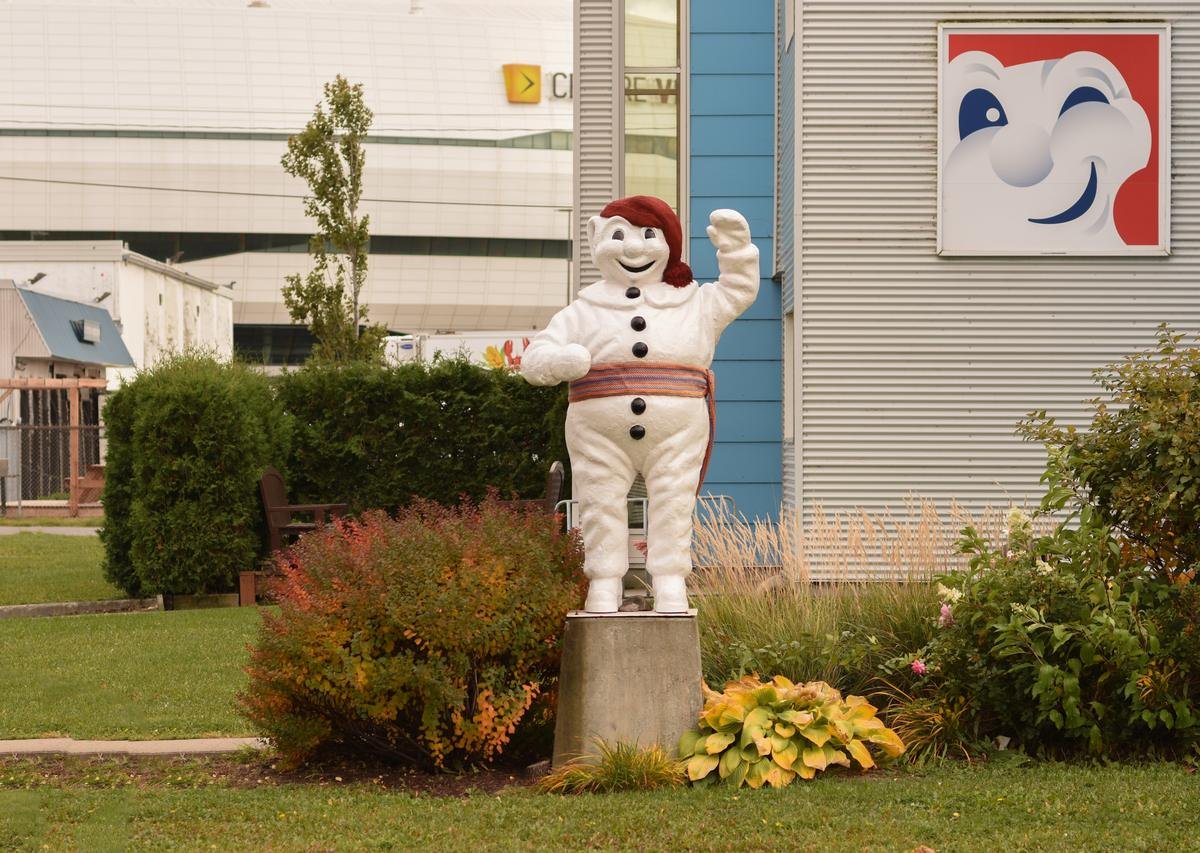
Bonhomme Carnaval is the festival’s snowman mascot — red tuque, black buttons, the arrowed sash called a ceinture fléchée — and he is everywhere during the 10 days: on lampposts, on shop windows, waving from floats, posing for photos at the sites. Meeting Bonhomme in person is a genuine event for kids (and, I confess, for me too). He appears at the sites and in the parades on a published schedule; check the day’s program on the official site rather than wandering hopefully. I showed up at the Plains village at 11 AM on a Saturday once, expecting a Bonhomme sighting, and learned that the schedule is a real document with real times. Never again. Check first, then go.

The Ice Palace (Palais de glace) is Bonhomme’s residence, built fresh from ice and snow each winter near Place d’Youville. It is smaller than the name suggests and more magical than the photos suggest, especially at night when it is lit. Go once in daylight, for the ice carving details, and once after dark if you can, for the lights. Inside is, obviously, cold — it is a building made of ice — so do not plan to linger for an hour. Twenty minutes, lots of photos, then hot chocolate. That is the correct Ice Palace visit, and I have now done it exactly that way twice.
The palace sits within easy walking distance of Rue Saint-Jean and the Parliament area, which makes it a natural first stop on a festival day: Ice Palace in the morning, lunch on Rue Saint-Jean, Plains of Abraham in the afternoon, parade in the evening. That loop is the spine of this guide, and it works because everything is close together. No buses, no taxis, just warm boots and a plan.
The night parades: the free event you plan your trip around
The night parades are the Carnival’s signature free event, and they are the reason I tell people to stay at least one Saturday night. Floats, marching bands, dancers, and Bonhomme himself move down Grande Allée after dark, with the street lights and the crowd’s breath fogging in the cold air. The parades traditionally run on the two Saturday evenings of the festival, but confirm the dates and the route on the official program — routes have changed over the years, and this guide will not guess them for you.

My parade lesson, learned the hard way: arrive early and pick the side of the street with your back to the wind. I stood for an hour on the wrong side one Saturday, facing into a wind off the river, and by the time Bonhomme’s float rolled past I was applauding with numb hands inside my mitts. The second Saturday I arrived forty minutes early, stood with the wind at my back near the Parliament end, and actually enjoyed the whole parade. Pro tip, earned honestly: bring a small foam pad or folded jacket to stand on. The parade is long, the ground is ice, and your feet will thank you.
Parade crowds are dense and the streets close to traffic, so build in extra walking time and agree on a meeting point with your group before the floats arrive. Phone batteries die fast in minus twenty, and a lost group member with a dead phone is a real festival problem. I now screenshot the parade map and the meeting point before leaving the hotel, every time.
The ice canoe race: the wildest thing you will see all winter
Now, the ice canoe race (course en canot à glace) is the event that made me gasp out loud, which I do not do often. Teams of five paddle and push and haul a canoe across the frozen St. Lawrence between Quebec City and Lévis, running over ice floes when the water runs out and paddling again when it opens up. It is part race, part obstacle course, part controlled chaos, and it looks exactly as hard as it sounds. The race traditionally runs on the first festival Sunday, with the best viewing from the riverfront near the ferry terminal in the Lower Town. Confirm the date on the official program: it depends on ice conditions, and ice conditions are not negotiable.
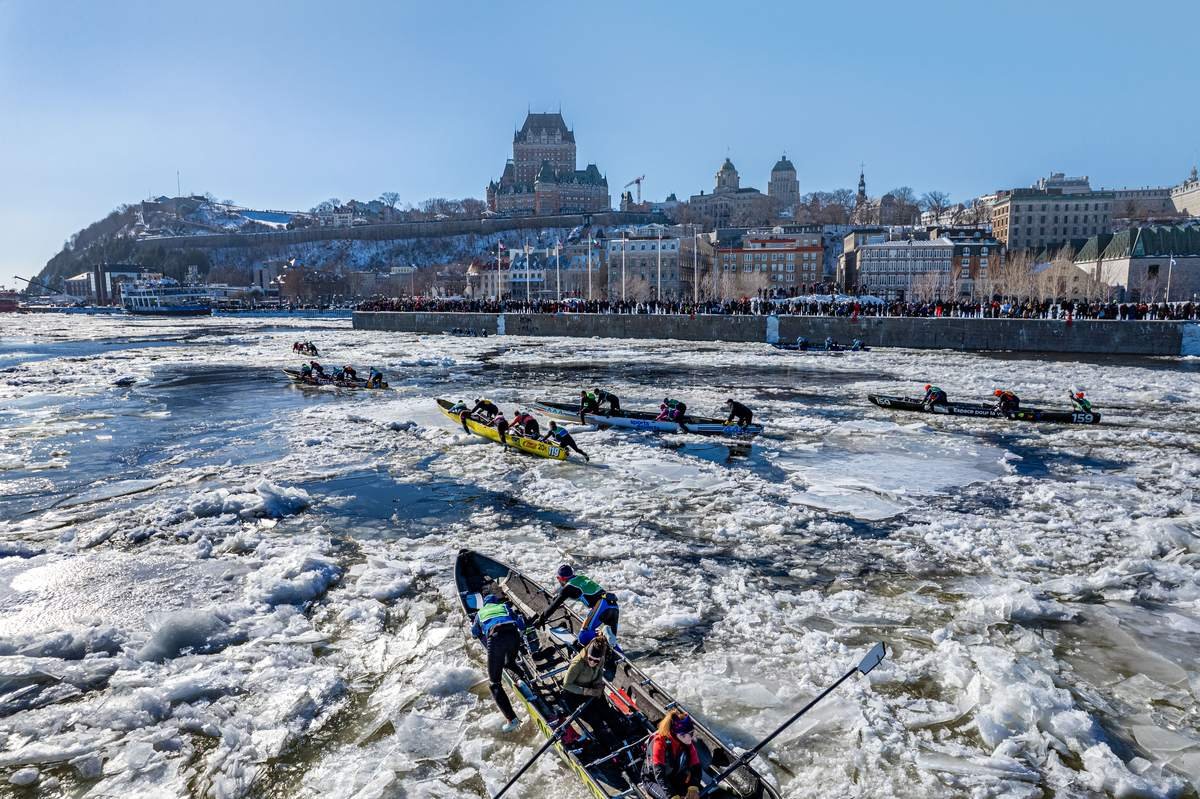
Watching tip: the start is the spectacle, but the middle of the race is the story — teams stalling on ice, sprinting with the canoe on their shoulders, falling behind and clawing back. I watched from the riverfront walkway near the ferry terminal, and the crowd’s reaction told the whole story: gasps, then cheering, then strangers explaining the rules to each other in two languages. Dress warmer than you think you need to. The riverfront is the windiest, coldest viewing spot in the whole festival, and the race lasts longer than a parade. Layers, hand warmers, and a hot drink from a Lower Town café before you walk down to the water.
If you cannot make race day, the ice canoe sculpture at Pointe-à-Carcy, near the riverfront, is a year-round reminder of the tradition, and the race is worth building a whole weekend around if you can. It is the single most Quebec City thing in this guide, and I mean that as the highest praise.
Snow sculptures, ice slides and the Plains of Abraham
The Plains of Abraham (les plaines d’Abraham) become the Carnival’s outdoor village during the festival: ice slides, snow sculptures, family games, food stalls, and room to run around without worrying about traffic. This is the site where the Effigy pass earns its keep for families — the slides alone can fill an afternoon, and the sculpture displays are the kind of thing you photograph from every angle and then photograph again.
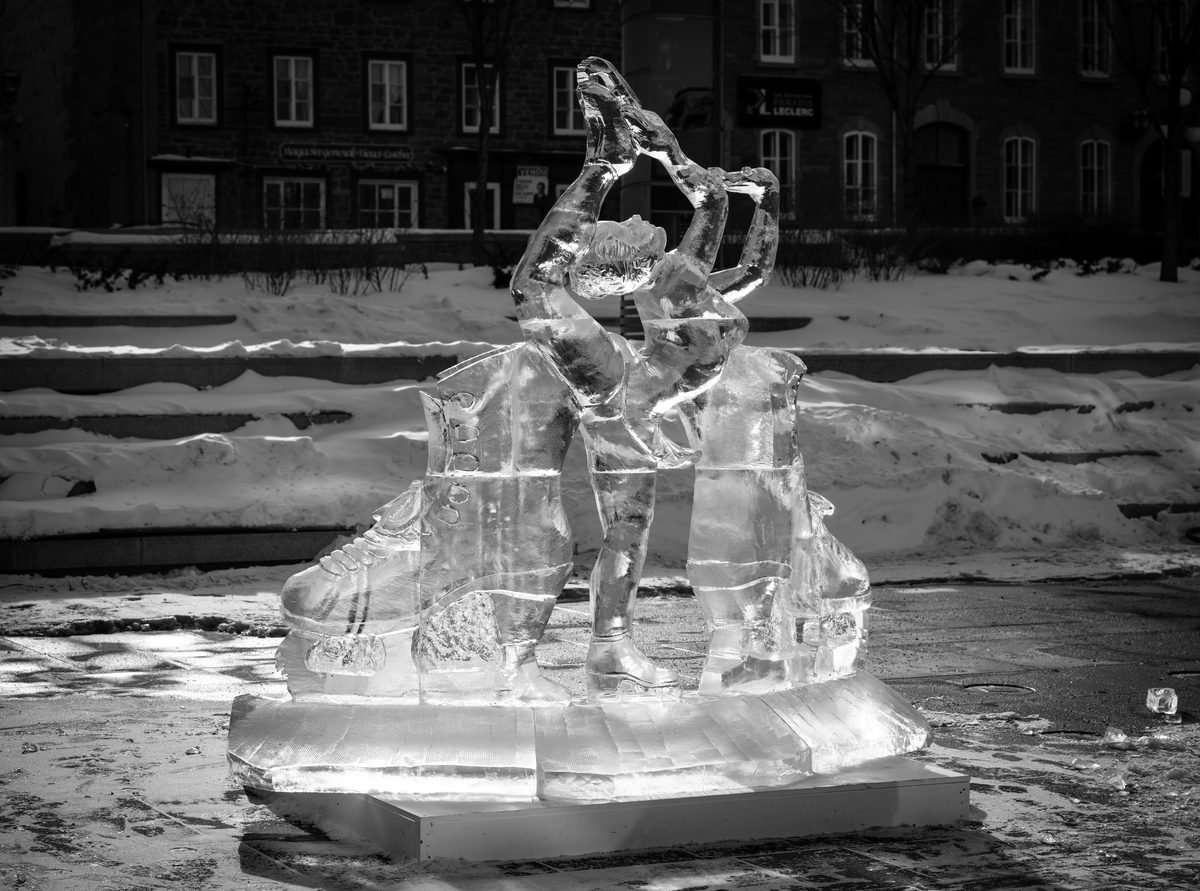
International snow sculpture teams traditionally compete during the festival, and their finished works stay on display while the weather holds. Go in the morning for the clearest photos and the shortest slide lines; by mid-afternoon on a Saturday the village is at its busiest, which is fun in its own way but slower. I went at nine on a weekday morning and had the sculpture walk almost to myself, which felt like a small miracle in the middle of a famous festival. Weekday mornings are the quiet secret of this whole event, and I am slightly annoyed at myself for telling you.
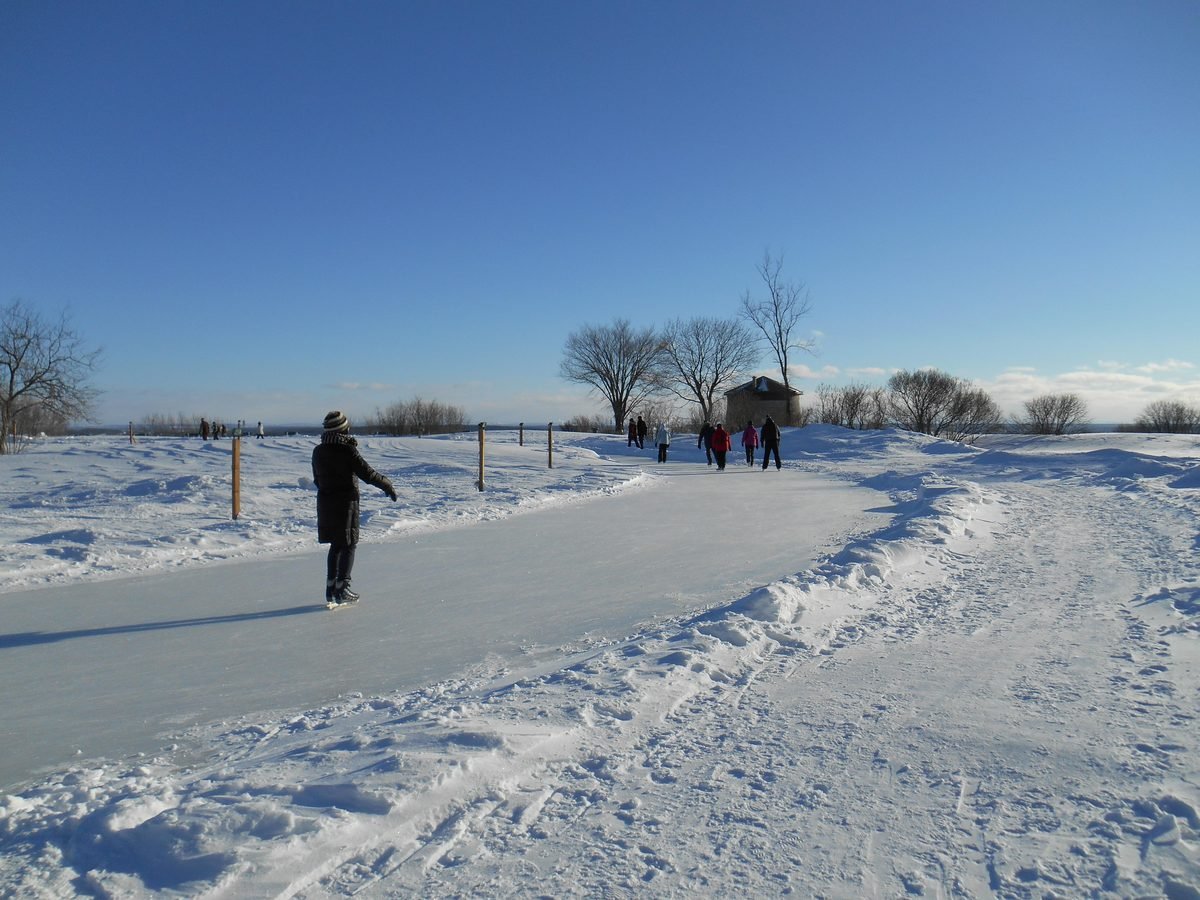
The Plains also carry the festival’s best free-adjacent activity: the ice skating ring on the Plains is a winter classic, and skating with the city skyline behind you is worth the rental fee even if you only last twenty minutes. I lasted twenty-five, fell once, and considered it a complete success. Bring your own skates if you have them; rentals are available on site in winter, and the ring is busiest on weekend afternoons.
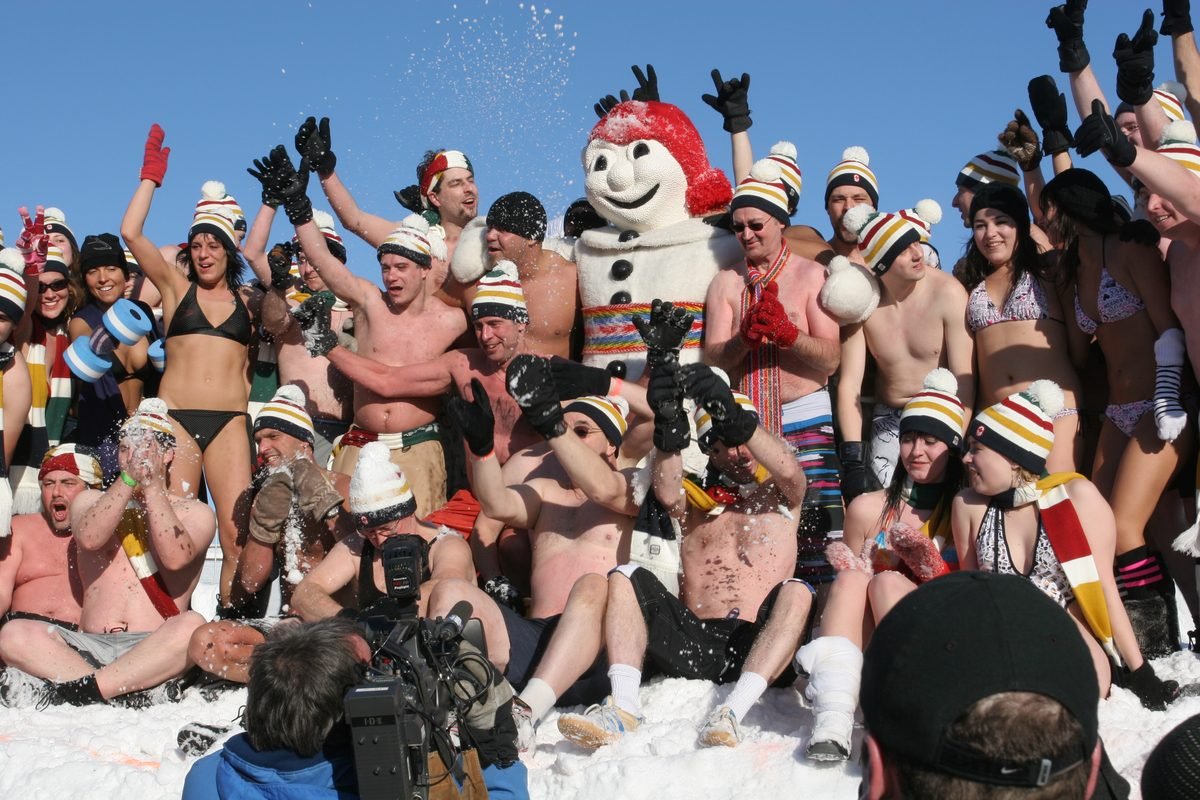
The snow bath (bain de neige) — brave souls in swimsuits rolling in the snow — is the festival’s most photographed tradition, and it is free to watch. A Carnival volunteer told me the best viewing is from the side, not the front, where you can see the participants’ faces as they commit to the snow. She was right, and I have never laughed so hard standing still in minus fifteen.
What is free and what is paid
This is the question I get most about the Carnival, so here it is plainly. Paid sites (Effigy pass required) generally include the Ice Palace and the Plains of Abraham village activities, plus any ticketed shows and rides inside the sites. Free, no pass needed: the night parades, the decorated streets of Old Quebec, the outdoor snow sculptures on public streets, watching the ice canoe race from the public riverfront, and wandering Petit-Champlain and the Terrasse Dufferin in their winter dress. Food, drinks and souvenirs cost extra everywhere, pass or not.
| Experience | Free or paid? | Planning note |
|---|---|---|
| Night parades on Grande Allée | Free | Arrive 40+ min early; confirm dates on the official program |
| Ice Palace at Place d’Youville | Paid (Effigy) | Go once by day, once after dark if you can |
| Plains of Abraham village + slides | Paid (Effigy) | Weekday mornings are quietest |
| Ice canoe race viewing (riverfront) | Free | Dress for river wind; date depends on ice conditions |
| Snow bath (watching) | Free to watch | Stand at the side for the best view |
| Old Quebec streets, Petit-Champlain, Terrasse Dufferin | Free | Best at dusk, when the lights come on |
| Skating on the Plains ring | Rental fee if needed | Bring your own skates if you have them |
One honest caveat: the exact split of free versus paid changes a little each year as the program changes, so treat this table as the shape of the festival, not a contract. The official program for your dates is the final word, and it is worth a ten-minute read the night before you arrive. I read it over breakfast on my first morning and replanned two days on the spot. That is normal. That is the festival working as intended.
Where to stay and eat during festival week
Festival week is the busiest winter week in Quebec City, and the booking rule is simple: book early, stay central, and do not try to save money by staying far away. The whole festival is walkable from Old Quebec and the Parliament Hill area, and a hotel near Rue Saint-Jean or Grande Allée puts every site within a twenty-minute walk. A cheaper room out by the highway costs you a bus ride in the cold every single time you want to go back for a warmer layer, and you will want to go back for a warmer layer. Trust me on this one. Our best area to stay in Quebec City guide breaks down the neighbourhoods by budget, and the short version for Carnival week is: Upper Town near Saint-Jean for first-timers, Lower Town near Petit-Champlain if you want the prettiest mornings, and anywhere with a real lobby you can warm up in.
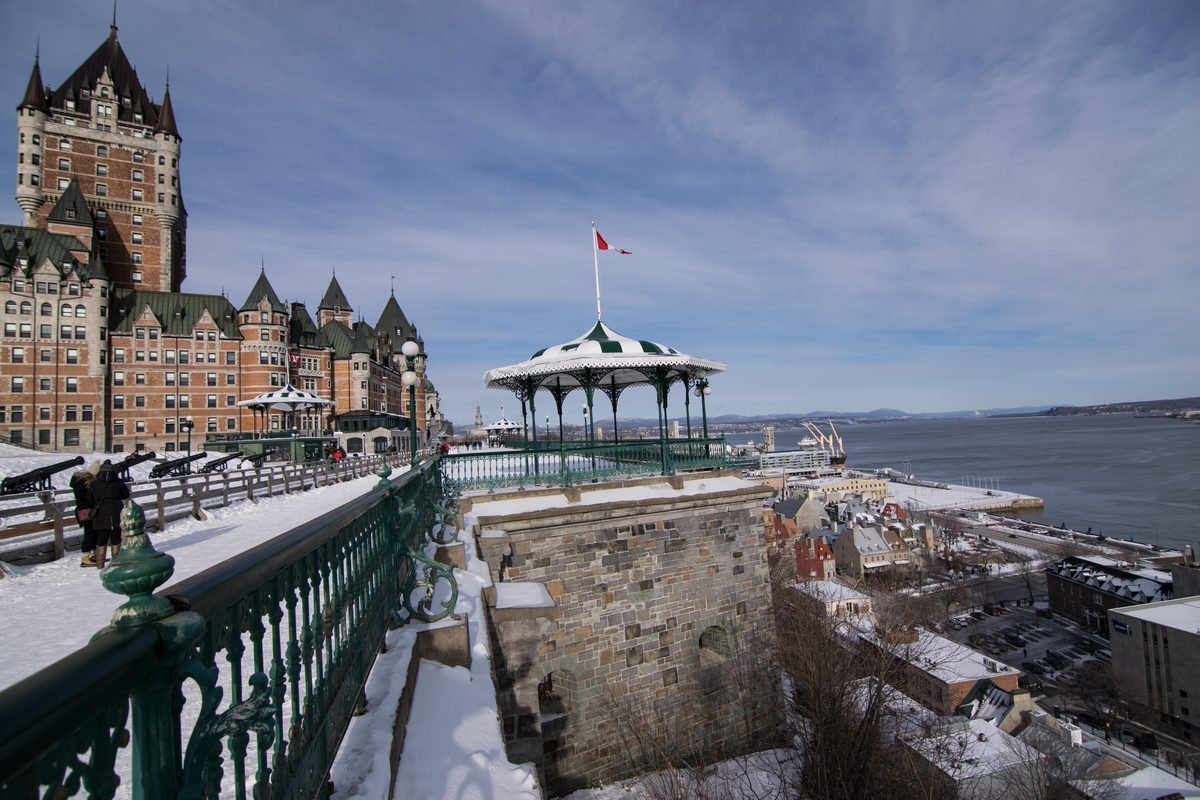
Hotel prices jump during Carnival week — expect festival-week rates roughly 20–40% above a quiet January week for the same room, as a planning range — and the central hotels sell out first. If your dates are flexible, the weekdays of the festival (Tuesday to Thursday) are noticeably quieter and sometimes cheaper than the two parade weekends, with the same Ice Palace, the same village, and shorter lines everywhere. I stayed over a weekday stretch once and a parade weekend once, and the weekday stay was the calmer trip by a wide margin. The parade weekend was the louder, better-photographed one. Pick your priority.

Food during Carnival week is hearty Quebec winter food, and this is the week to eat it without apology. Tourtière (meat pie), pea soup, poutine from a casse-croûte, maple taffy poured on snow at a street stall, and caribou — the Carnival’s traditional warm drink of red wine and spirits, served at outdoor bars — are all part of the festival, not extras. Expect roughly C$15–25 per person for a casual lunch, C$30–55 for a sit-down dinner, and C$5–10 for street snacks and hot drinks, as planning ranges. My pattern was simple and it worked: a big breakfast at the hotel or a Saint-Jean café, a cheap hot lunch from a stall or casse-croûte, and one proper dinner each night, booked ahead, because the good rooms fill up during festival week and walk-ins wait in the cold.

For families: the festival is genuinely built for kids — Bonhomme appearances, slides, sculpture walks, and the snow bath as a spectator sport — but plan around warming breaks. My rule with kids in tow would be: one paid site, then indoors for hot chocolate, then one more activity, then back to the hotel before anyone gets miserable. The festival rewards the family that paces itself and punishes the family that tries to do everything before lunch. I watched both kinds of family on the Plains, and I know which one I’d rather be.
Book dinners ahead for parade Saturdays, and eat before the parade, not after. After a night parade, every restaurant near Grande Allée fills at once, and the wait happens outside in the cold. I ate at six on parade night, walked to my spot warm and fed, and watched the post-parade restaurant lines with genuine sympathy.
Cold-weather survival: the honest version
Quebec City in February is properly cold: daytime temperatures often between minus ten and minus twenty, colder with wind chill on the riverfront and the Plains. This is not a reason to stay home. It is a reason to dress like you mean it. Layers, not one big coat: a warm base layer, an insulating middle, and a windproof outer shell. Mitts, not thin gloves. A neck warmer or balaclava for the riverfront. Warm, waterproof boots with good grip, because Old Quebec’s hills and cobbles ice over, and the prettiest streets are the slipperiest ones.
Phone batteries die fast in minus twenty, and a dead phone at a parade means no map, no meeting point, and no photos. Keep your phone in an inside pocket, bring a small power bank, and screenshot the day’s program and your hotel address before you leave. I learned this standing on Grande Allée with 2% battery and a parade about to start. The photos I missed still bother me.
Plan warming breaks into every day, without guilt. Cafés on Rue Saint-Jean, the shops of Petit-Champlain, hotel lobbies — the city is built for ducking inside. If you drive to Quebec City, winter tires are legally required in Quebec from December 1 to March 15, and the highways from Montreal can be stormy; our winter driving guide covers the rules. If you take the train or bus instead, you arrive downtown, warm, and ready — and honestly, for a festival trip where everything is walkable, not driving is the better plan. The RTC city bus network covers the wider city if you need it; routes and fares are on rtcquebec.ca.
Eight hours on cobblestones at the Carnival calls for the right boots — the Sorel Caribou is our festival pick in our guide to the best winter boots for Canada.
What a festival trip costs
Here is the honest math, per person, for a 3-day festival weekend based in Old Quebec. Every figure is an approximate planning range for 2026–27, not a quoted rate. Lodging assumes two people sharing a room, so the nightly room price is split in half. The Effigy pass uses the C$29 presale planning range. Food, transport and extras are the calculator numbers, stretched over three days. Check the official Carnival site and your hotel before you book, because the real total moves with your dates.
| Expense (per person, 3 days) | Budget | Mid-range | Luxury |
|---|---|---|---|
| Lodging, 3 nights festival week (shared room) | $210–330 | $450–750 | $900–1,500 |
| Effigy pass (presale planning range) | $29 | $29 | $29 |
| Food, transport & extras (calculator, 3 days) | $300 | $540 | $960 |
| Skating rental / extras (optional) | $0–20 | $20–40 | $40–80 |
| Estimated 3-day total, per person | $539–679 | $1,019–1,359 | $1,929–2,569 |
The table tells the real story: lodging is the lever, and the Effigy pass is the bargain. A hostel dorm or shared budget room can cut the lodging line by more than half compared with a mid-range hotel, and the pass itself is the cheapest line in the whole budget. The second lever is food: a market-style lunch and one proper dinner a day beats three restaurant meals, and the street snacks are part of the festival anyway. Use the calculator below for the day-to-day part of the budget: food, sights, local transport and treats. It does not include lodging or the Effigy pass, which are in the table above. Pick your style, set your days, and it does the rest.
Budget calculator
Per person, in Canadian dollars. Excludes accommodation and the Effigy pass.
Budget ≈ $100/day · Mid-range ≈ $180/day · Luxury ≈ $320/day. Add accommodation and the Effigy pass from the table above. Prices are planning ranges for 2026–27 — check the official Carnival site for your dates.
A 3-day festival weekend that actually works
Day one (Friday): arrive, settle into Old Quebec, buy or collect your Effigy pass, walk Rue Saint-Jean and Petit-Champlain in the afternoon light, and eat an early dinner before an evening wander past the Ice Palace after dark. Do not try to do everything on arrival day. You will be cold, the light will be short, and the festival will still be there tomorrow.
Day two (Saturday): Ice Palace in the morning, lunch on Rue Saint-Jean, Plains of Abraham village in the afternoon for the slides and sculptures, then the night parade in the evening — arrive early, stand with the wind at your back, and eat before the parade, not after. Day two is the big festival day, and it should feel like one.
Day three (Sunday): the ice canoe race from the riverfront in the morning if race day falls on your weekend (confirm the date — it depends on ice), then a slow afternoon on the Terrasse Dufferin and a farewell dinner in the Lower Town. If the race is not on your weekend, swap day three for a second Plains morning plus skating, and the same farewell dinner. The trip still works. That is the point of a festival with this many free streets and paid sites: there is always a backup plan that does not feel like one.
If you have the full 10 days, the shape is the same, stretched out: paid sites on weekdays when they are quiet, parades on the two Saturdays, the canoe race on its Sunday, and rest days built in. Nobody does all 10 days at full speed, and nobody needs to. The festival rewards the visitor who paces herself.
FAQs about the Quebec Winter Carnival
When is the Quebec Winter Carnival in 2027?
This guide covers the 10 festival days of 5–14 February 2027, per the brief for this article. Confirm the final dates and the day-by-day program on the official Carnival site before you book, because the program, parade dates and site hours are set each year and can shift.
What does the Effigy pass cost, and do I need one?
The planning range used in this guide is about C$29 in presale, with a higher gate price. One pass covers the paid sites for all 10 days. You need one if you plan to enter the Ice Palace or the Plains of Abraham village; you do not need one for the free events — the night parades, the decorated streets, and watching the ice canoe race from the public riverfront.
What is free at the Quebec Winter Carnival?
The night parades, wandering Old Quebec’s decorated streets, the outdoor snow sculptures on public streets, watching the ice canoe race from the riverfront, and strolling Petit-Champlain and the Terrasse Dufferin are all free. The paid sites (Ice Palace, Plains village) need the Effigy pass, and food, drinks and souvenirs cost extra everywhere.
How cold is Quebec City during the Carnival, and what should I wear?
Daytime temperatures often sit between minus ten and minus twenty, colder with wind chill on the riverfront. Wear layers, a windproof outer shell, mitts rather than thin gloves, a neck warmer, and warm waterproof boots with good grip for the icy hills and cobbles of Old Quebec. Plan warming breaks in cafés every couple of hours, and keep your phone in an inside pocket so the battery survives.
Do I need a car for the Carnival?
No. Every site in this guide is walkable from Old Quebec and the Parliament Hill area, and the RTC bus network covers the wider city. A car is more trouble than help during festival week: parking is tight, streets close for parades, and winter driving in Quebec requires winter tires by law from December 1 to March 15.
Is 3 days enough for the Carnival?
Yes, for the highlights: one day for the Ice Palace and the Plains village, one evening for a night parade, and one morning for the ice canoe race or skating, with Old Quebec’s free streets filling the gaps. Three days built around a parade Saturday is the sweet spot. The full 10 days suit visitors who want the quiet weekday version of the same festival, at a slower pace.
Keep exploring
If Carnival week has you planning the wider city, start with our things to do in Quebec City guide for the year-round sights, our best area to stay in Quebec City guide for neighbourhoods by budget, our Canada in February guide for what else is on across the country that month, our Canada trip cost guide for the full national budget, and our winter driving guide if you are driving to Quebec City. Dress warm, buy the pass early, and leave room in the plan for a second hot chocolate. You’ve got this.