
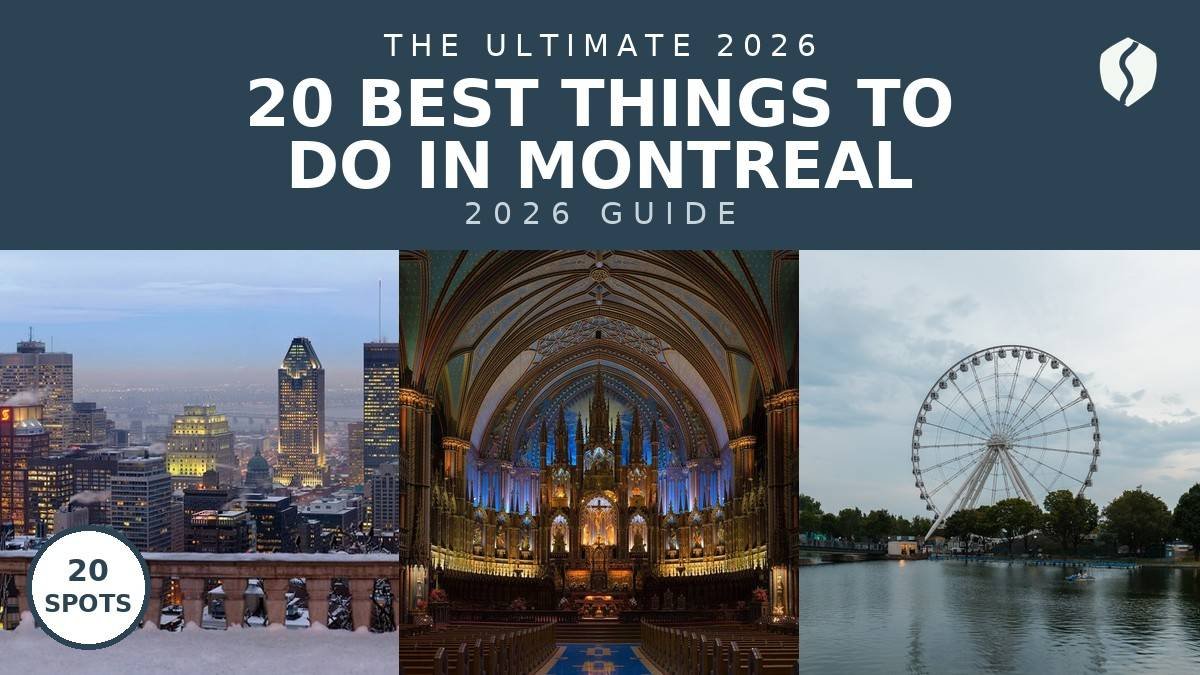
- ✓ Cluster by neighbourhood: Old Montreal, the Old Port and Pointe-à-Callière are one walkable bundle — do them on foot before you touch the metro.
- ✓ Eat your way up the Main: bagels in Mile End, smoked meat on Saint-Laurent, poutine at 3 AM — Montreal’s food is the itinerary, not a side quest.
- ✓ Two days is the sweet spot: one day for the Old Montreal + downtown icons, one for Mount Royal, the markets and the neighbourhoods — all without a car.
Montreal is the city that makes planners feel like geniuses and spontaneity look easy at the same time. I’ll be honest: my first visit, I treated it like a smaller Toronto and got it completely wrong. This is a French-first city with four centuries of layers — a Gothic Revival basilica next to a 1960s metro, a 283-step pilgrimage staircase next to a bagel shop that never closes. I’ve now been three times — once in a February deep-freeze, twice in summer — and the twenty stops below are the ones I’d hand to anyone with two or three days. Every price and hour was checked in October 2026.
A confession to start: my French is restaurant-level at best, and I once ordered what I thought was a coffee and received a small lecture (kind, but a lecture). Do not let the language thing stop you. Bonjour first, then English — that order matters here, and Montrealers are gracious about the rest. You’ve got this.
Getting around Montreal
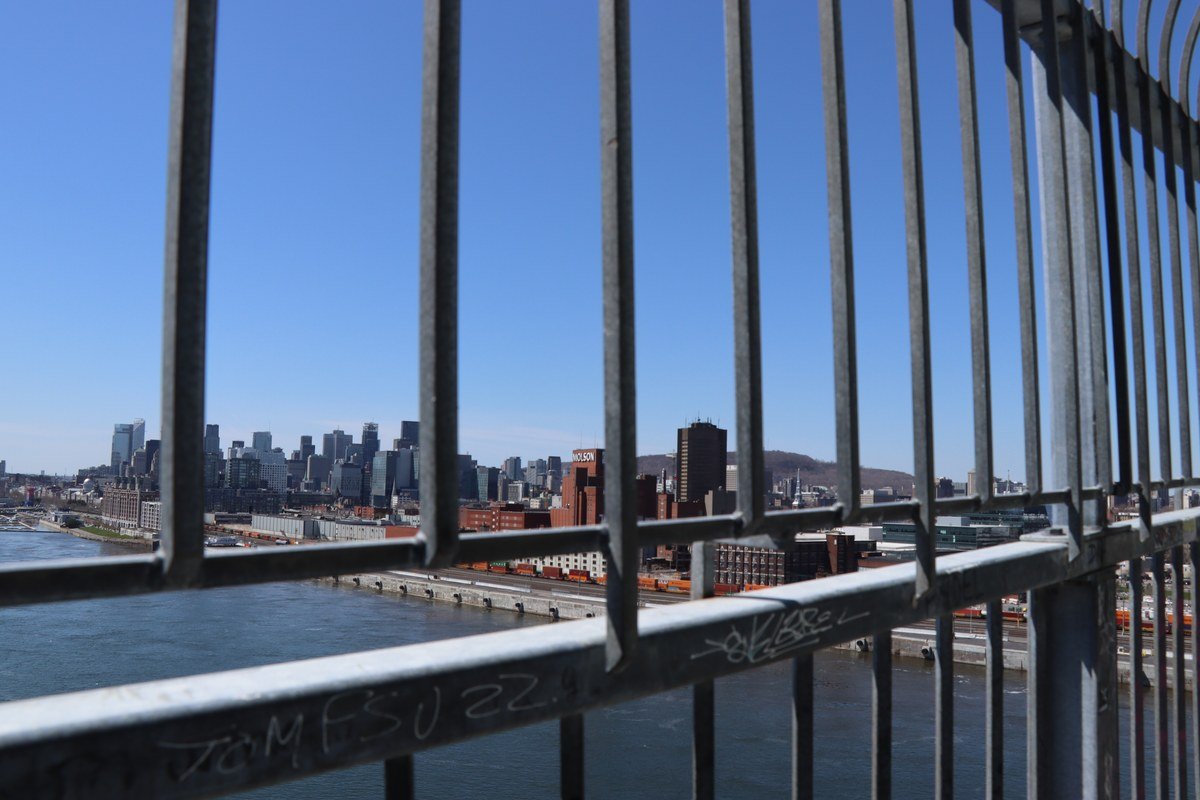
If you’re flying in, take the 747 airport bus from Trudeau Airport to downtown (Berri-UQAM): about 35–45 minutes depending on traffic. Here’s the thing — a 24-hour transit pass ($11.25) covers the 747 ride and all your metro and bus trips that day, so buy it at the airport machine and you’re set. I timed the ride on my last trip: 40 minutes door to Berri-UQAM, zero transfers.
Once downtown, the metro is your skeleton key: four lines (orange, green, yellow, blue), 68 stations, single rides at $3.75. Buy an OPUS card at any station machine and load a 3-day pass ($21.75) — it paid for itself by the second afternoon on my last visit. I double-checked the current fares on the STM’s official fares page in October 2026, and they held. → STM — official site & fares
You do not need a car in Montreal — trust me on this one. Every stop below is metro- or walk-accessible, and Old Montreal’s cobblestones will punish any rental car’s suspension anyway. The official visitor site is genuinely useful for festival dates and seasonal hours: → Tourisme Montréal — official visitor site
The 10 must-see stops, on a map
Ten stops, from the Old Port to the Botanical Garden. Tap any stop to jump the map straight to it.
Map data © OpenStreetMap contributors. Open the full map
1. Old Montreal (Vieux-Montréal) — start where the city started
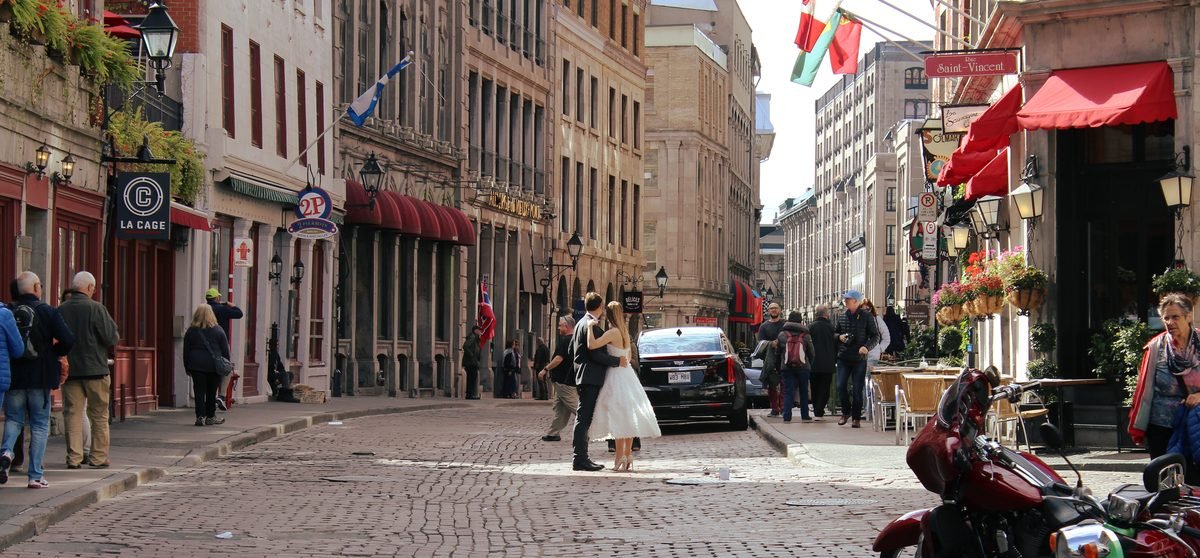
Four centuries of history in about ten walkable blocks. Start at Place d’Armes, wander down Rue Saint-Paul (the city’s oldest street), and just let the cobblestones decide. The grey-stone buildings, the horse-drawn calèches clip-clopping past, the smell of fresh crêpes from a corner café — this is the Montreal of every postcard, and it earns it. It’s free to wander, which is good, because you’ll want to do it twice: once in daylight, once after dark when the stone glows.
I’ll be honest: my first morning here, I tried to “do” Old Montreal in 45 minutes before a museum slot. Terrible plan. A shopkeeper on Rue Saint-François-Xavier watched me power-walking past her gallery for the third time and said, in the kindest possible French-accented English, “you are missing everything.” She was right. Slow down. The neighbourhood rewards the dawdler.
2. Notre-Dame Basilica — the interior that silences crowds

Step inside and the chatter dies. The Notre-Dame Basilica is a Gothic Revival masterpiece — deep-blue vaulted ceilings studded with gold stars, a carved-wood pulpit, and stained glass that throws jewel tones across the pews. Daytime admission is about $16 for adults (under-5s free), and the basilica is open roughly 9 AM to 4:30 PM weekdays, shorter hours Saturdays, and Sunday afternoons after mass. I double-checked hours on the basilica’s official site before my last visit — they shift around services, so check the day before. → Notre-Dame Basilica — official site
If you can swing it, come back for AURA, the evening light-and-sound show that projects the basilica’s story across the walls and ceiling (about $37 for adults — book ahead, it sells out). I sat in a pew with my neck craned back for the full 30 minutes and forgot to check my phone once, which for me is basically a miracle.
Go on a weekday morning right at opening. I’ve done the basilica twice — once on a Saturday afternoon (tour groups three-deep at the altar) and once on a Wednesday at 9:15 AM (I counted eleven people in the whole nave). Wednesday wins, and the light through the stained glass is best before noon.
3. Place Jacques-Cartier & Marché Bonsecours — the lively square
Five minutes from the basilica, Place Jacques-Cartier is Old Montreal’s living room: street performers, portrait artists, flower stalls, and terrace after terrace spilling onto the cobblestones. At its top end stands Marché Bonsecours, the domed 1847 market hall that’s now a showcase of Québec designers and crafts — free to browse, dangerous for your suitcase space. The square hums from morning to late night in summer; in winter it quiets to a locals’ shortcut, which has its own charm.
Sunday mornings belong to the faithful at the basilica — tourist visits don’t start until about 12:30 PM after mass. I once built a whole morning around the basilica on a Sunday and spent an hour circling Place d’Armes with a coffee instead. Lovely coffee, though.
4. The Old Port (Vieux-Port) — the waterfront promenade

Follow the cobblestones downhill and you hit the Old Port: two kilometres of waterfront promenade along the St. Lawrence, free and open all year. Rent a quadricycle, watch the sailboats in the yacht basin, or just walk the full stretch from the Clock Tower to the Science Centre with a coffee. In summer there’s a zipline and an urban beach vibe; in winter the same path turns into a bracing, crowd-free walk with the best light of the day. I double-checked seasonal activities on the Old Port’s official site — the programming changes a lot, so glance at it before you go. → Old Port of Montreal — official site
5. La Grande Roue de Montréal — the slow spin with the big view
Canada’s tallest observation wheel (60 metres) turns right over the Old Port, and here’s the thing: it’s not a thrill ride, it’s a 17–20 minute slow rotation in a heated cabin with a 360-degree panorama. You’ll pick out Mount Royal, the downtown towers, and the river stretching east. Tickets run about $28 for adults — book online to skip the ticket-booth line, especially on summer weekends. → La Grande Roue — official site
Fair warning: the cabins are fully enclosed and heated, which makes this one of the few viewpoints that’s genuinely lovely in February. I rode it on a grey -12°C afternoon and watched the ice chunks drift down the river — weirdly peaceful, and I had the cabin to myself.
6. Pointe-à-Callière Museum — the city under the city
Montreal’s archaeology and history museum sits exactly where the city was founded in 1642 — and the best part is underneath it. You descend into actual excavated foundations: Indigenous longhouse footings, the stone walls of the first settlement, old sewers you can walk through. It’s the rare museum where the building is the exhibit. Admission is about $26 for adults; give it two hours. I checked current exhibitions on the museum’s official site before going — the temporary shows rotate, and one of them is usually the sleeper hit. → Pointe-à-Callière — official site
This pairs perfectly with stops 1–5: it’s right at the edge of Old Montreal, so slot it in when your feet need a sit-down but your brain doesn’t.
7. Mount Royal Park — the mountain that named the city

Montreal is named for this hill, and the Kondiaronk Belvedere lookout is the city’s signature view: downtown towers in the foreground, the river beyond, and on a clear day the whole valley. The park was designed by Frederick Law Olmsted (the Central Park guy), and it’s free — walk up from downtown via the Peel Street stairs, or take the 11 bus to the top if your knees vote no. I double-checked trail and chalet info on the park’s official site; Les amis de la montagne runs great guided walks in summer. → Mount Royal Park — official site
Go for sunset, not midday. I’ve done this walk four times now — twice at noon (fine), once at sunrise (magical, freezing), once at sunset (the winner: the city lights come on while the sky goes pink behind the towers). Bring a layer; the wind at the lookout is no joke even in June.
8. Saint Joseph’s Oratory — the dome on the hill

The copper dome of Saint Joseph’s Oratory is visible from half the city, and up close it’s even more impressive — one of the world’s great basilicas, with a museum, a garden of the Way of the Cross, and a view that rivals the Kondiaronk lookout. Entry to the basilica is free (donations welcome); the famous front staircase has 283 steps, with 99 reserved for pilgrims who climb on their knees. I climbed all 283 on foot and my calves filed a formal complaint. Worth it. → Saint Joseph’s Oratory — official site
Combine the Oratory with Mount Royal in one outing — they’re on the same hill, and the metro (Côte-des-Neiges station) serves the Oratory directly. Doing them on separate days, like I did the first time, wastes a perfectly good afternoon.
9. Jean-Talon Market — breakfast, lunch, and souvenirs in one
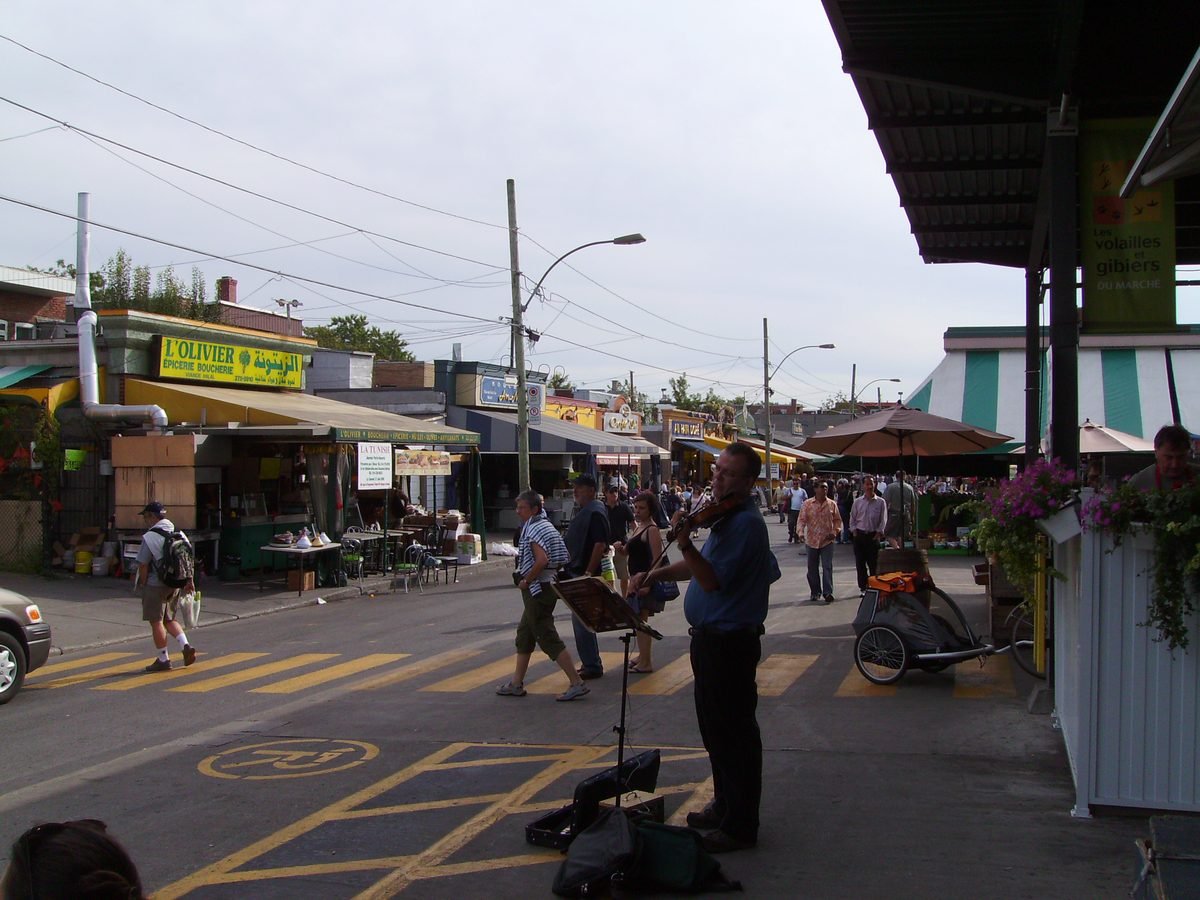
One of North America’s great public markets, in the heart of Little Italy. The open-air sheds overflow with Québec produce in season — corn, berries, heirloom tomatoes — and the permanent halls hold cheese shops, butchers, spice merchants, and a maple-products store that will ruin all other maple syrup for you. It’s free to enter; bring $20 and zero willpower. I double-checked the market’s hours on the official Marchés publics site — the outdoor season runs roughly May to October. → Marchés publics de Montréal — official site
Go hungry and graze. A cheese vendor handed me a sliver of 3-year aged cheddar when I asked what he eats for breakfast, then pointed me to the tiny crêpe stand two stalls down. The best things at Jean-Talon aren’t on any menu — they’re whatever the person behind the counter is excited about that morning. Ask.
10. Mile End: the bagel pilgrimage
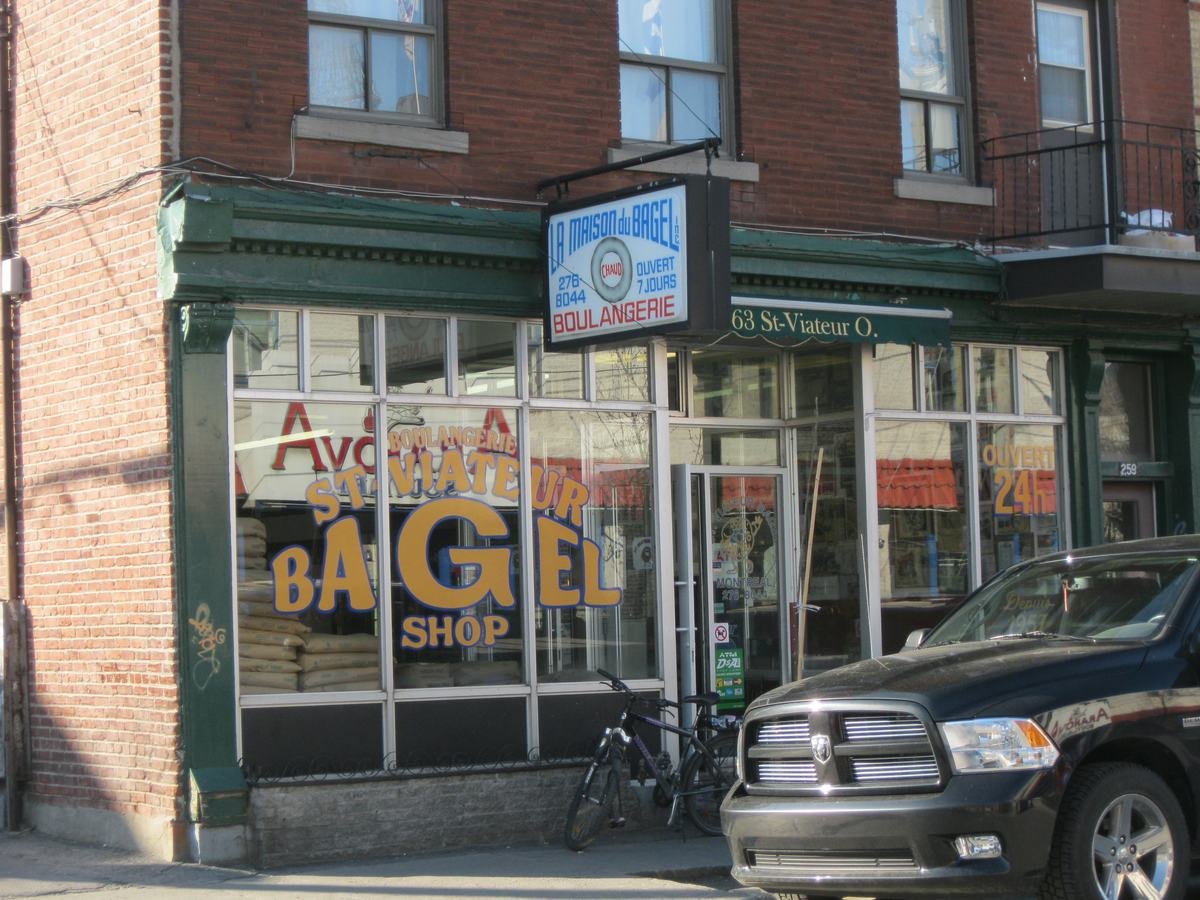
Montreal bagels are smaller, denser, sweeter, and wood-fired — and they are not New York bagels, so don’t start that sentence. The two temples are St-Viateur (open 24 hours, the original on Rue Saint-Viateur Ouest) and Fairmount (a few blocks away, open since 1919). A dozen costs about $12–14, and a sesame bagel eaten warm on the sidewalk is one of the great cheap thrills in Canadian travel. → St-Viateur Bagel — official site
I did the only honest thing: bought half-dozens from both on the same morning, still warm, and taste-tested on a Mile End bench. My verdict (St-Viateur, barely, for the chew) started a 20-minute debate with a local dog-walker who had opinions. Do the taste test. Pick a side. You’ll be asked.
11. Schwartz’s Deli — the smoked-meat institution
Since 1928, Schwartz’s has been serving Montreal smoked meat — brisket cured with the house spice blend, piled on rye with yellow mustard. A medium-fat sandwich runs about $14–16, and the line out the door on Boulevard Saint-Laurent is part of the experience (it moves faster than it looks — I timed it at 25 minutes on a Saturday lunch). Order the smoked meat, a pickle, and a cherry cola. That’s the whole order. Don’t overthink it. → Schwartz’s Deli — official site
12. Boulevard Saint-Laurent murals — the Main as an open-air gallery
“The Main” — Boulevard Saint-Laurent, the street that splits the city east-west — is lined with giant murals from the annual MURAL Festival each June. The stretch through the Plateau is the densest: whole building facades turned into art, free to see, best on foot. I walked it on a Sunday morning with a bagel (see stop 10) and counted fourteen murals before my coffee ran out. Pair it with Schwartz’s — the deli sits right on the Main, and the murals start a few blocks south.
13. The Underground City (RÉSO) — 33 kilometres of indoors
Here’s the thing nobody tells first-timers: downtown Montreal has a second city underneath it. The RÉSO — the Underground City — links metro stations, office towers, malls, and hotels across 33 kilometres of climate-controlled tunnels. In February it’s a survival strategy (I walked from my hotel to dinner without a coat in -20°C and felt like I’d hacked winter); in summer it’s a cool shortcut between sights. It’s free to explore — just follow the signs from any downtown metro station and try not to get lost. You will get lost. That’s half the fun.
Fair warning: the signage assumes you already know where you’re going. My system: pick a landmark (Eaton Centre, Place des Arts), follow its name, and surface when you smell food courts.
14. Montreal Museum of Fine Arts — Canada’s oldest art museum
The MMFA has been collecting since 1860, and its five pavilions span everything from Old Masters to Inuit art to contemporary Québec design. The permanent collections are free to visit; the big temporary exhibitions are ticketed (about $24 for adults — I checked the current exhibition pricing on the museum’s official site, since the headline shows change). Give it a half day, or duck in for one pavilion between other downtown stops. → Montreal Museum of Fine Arts — official site
15. McCord Stewart Museum — the social history of Canada
If the MMFA is the art, the McCord Stewart Museum is the story: 1.5 million objects tracing Canadian social history, with especially strong Indigenous cultures and Montreal street-photography collections. It’s the museum that made me understand the city I was standing in. Admission is about $20 for adults — hedged with a ~, since their pricing pages were being restructured when I checked; confirm on the official site before you go. → McCord Stewart Museum — official site
16. Lachine Canal — the city’s favourite bike path

The Lachine Canal — a Parks Canada national historic site — runs 14.5 kilometres from the Old Port southwest, and the paved path along it is where Montreal goes to breathe. Rent a bike (BIXI stations are everywhere in summer; a day pass is about $14), and ride to the Atwater Market end for lunch. It’s free, flat, and the locks and old industrial buildings give it real character. I checked path conditions and boat schedules on the Parks Canada page — the canal opens to navigation around late May. → Parks Canada — Lachine Canal
17. Atwater Market — the canal-side food hall
At the Lachine Canal’s midpoint sits Atwater Market, the 1933 art-deco market hall with a clock tower you can spot from the bike path. Smaller and more food-focused than Jean-Talon, it’s the perfect ride destination: grab a sandwich, a pastry, and a spot on the canal bank. In summer the terrace is packed with locals doing exactly that. Free to enter; the charcuterie will cost you.
18. Botanical Garden — 75 hectares of calm
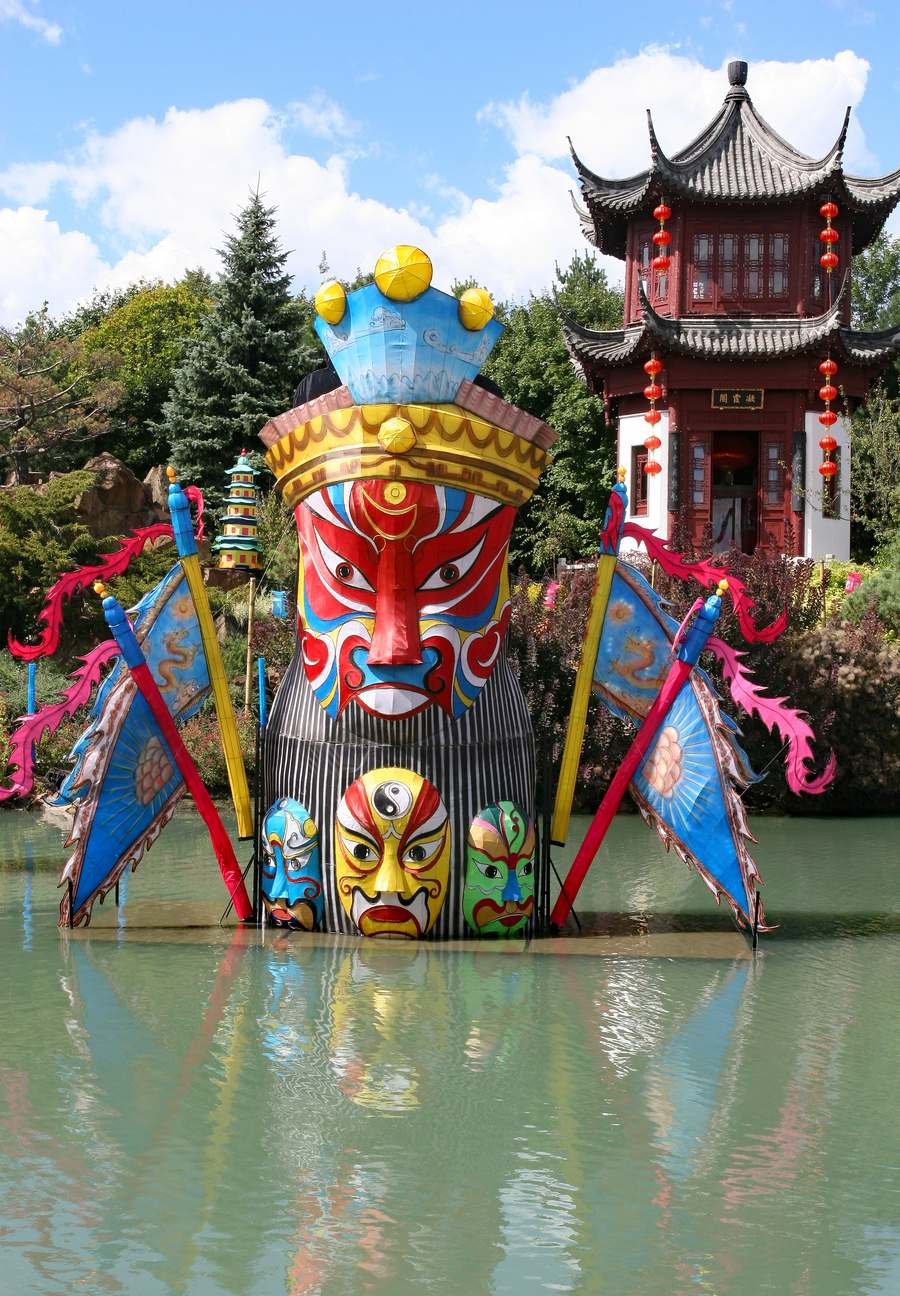
The Montreal Botanical Garden is one of the world’s great urban gardens — 75 hectares, 10 exhibition greenhouses, and themed gardens including the exquisite Chinese Garden (built by artisans from Shanghai) and the Japanese Garden. Admission is about $22 for adults in the outdoor season. In autumn, the Gardens of Light event illuminates the Chinese and Japanese gardens with lanterns — travelers report it as the single prettiest evening in Montreal, and I believe them. I double-checked seasonal programming on Tourisme Montréal’s site; book Gardens of Light tickets ahead, they sell out. → Tourisme Montréal — attractions
19. Biodome — five ecosystems under one roof
Right next door to the garden (and part of the same Espace pour la vie complex), the Biodome recreates five ecosystems of the Americas — tropical rainforest, Laurentian maple forest, Gulf of St. Lawrence, Labrador coast, and sub-Antarctic islands — inside a former Olympic velodrome. The penguins are the headliners, but the sloths stole my visit. Admission is about $23 for adults; combined tickets with the garden and planetarium save money if you’re doing more than one. It’s the ideal rainy-day or deep-winter stop — warm, humid, and full of monkeys.
20. La Banquise — settle the poutine debate at 3 AM
You cannot leave Montreal without a stance on poutine, and La Banquise in the Plateau is where stances are formed: open 24 hours, 30+ poutine varieties, the classic (fries, cheese curds, gravy) for about $10–13. My take, after three visits: the classic beats every fancy variation, the curds must squeak, and eating it at midnight after a show is the correct context. For the full ranking of the city’s best bowls, see my best poutine in Montreal guide — I ate my way through nine contenders so you don’t have to.
What does Montreal cost?
Prices below are what I actually paid across my visits, converted to a per-person day plan. Pick your travel style, tell the calculator how many days you’re staying, and it does the rest. (Accommodation not included — see the table below for that.)
Budget calculator
Per person, in Canadian dollars. Excludes accommodation.
Budget ≈ $70/day · Mid-range ≈ $110/day · Luxury ≈ $220/day. Fares and admission checked October 2026.
| Expense (per person / day) | Budget | Mid-range | Luxury |
|---|---|---|---|
| Accommodation | $40 (hostel dorm) | $170 (downtown hotel) | $350+ (Old Montreal boutique) |
| Food & drink | $35 | $55 | $115 |
| Sights (basilica, museums, wheel…) | $15 | $25 | $45 |
| Getting around (metro) | $10 | $15 | $30 |
| Coffee, treats & souvenirs | $10 | $15 | $30 |
| Daily total | ~$110 | ~$280 | ~$570 |
Montreal is kinder to budgets than Toronto — the free stuff (Mount Royal, the markets, the murals, the Underground City) is genuinely the best stuff. For the full money picture, see my Canada trip cost guide.
Suggested 2-day plan
| Time | Day 1 — old city icons | Day 2 — the hill, markets & neighbourhoods |
|---|---|---|
| Morning | Notre-Dame Basilica at opening + Old Montreal wander | Jean-Talon Market graze (go hungry) |
| Midday | Pointe-à-Callière Museum + Place Jacques-Cartier lunch | Mile End bagel taste test + Schwartz’s Deli |
| Afternoon | Old Port promenade + La Grande Roue ride | Lachine Canal bike ride + Atwater Market |
| Evening | Mount Royal sunset from the Kondiaronk lookout | Boulevard Saint-Laurent murals + La Banquise poutine |
FAQs about things to do in Montreal
How many days do you need in Montreal?
Two full days covers the twenty stops in this guide at a comfortable pace — one day for Old Montreal and the Old Port cluster, one for Mount Royal, the markets and the neighbourhoods. With three days, add the Botanical Garden + Biodome half-day and a slow morning in the Underground City. One day is doable but you’ll skip things you wanted to see; I’ve tried, and the bagel taste test alone deserves its own morning.
What is the best time of year to visit Montreal?
May through October is the sweet spot: terrace season, festival season (jazz, Just for Laughs, MURAL), and the markets at full tilt. July is glorious and busy; I’m partial to September, when the crowds thin and the light goes golden. Winter is the contrarian pick — the Underground City, AURA, and the festivals make February genuinely fun if you dress like you mean it. For the full seasonal breakdown, see Canada in December.
Do I need to speak French in Montreal?
No — but learn five words. Montreal is officially French-speaking, and downtown service is fully bilingual. The magic formula: start every interaction with “Bonjour!”, then switch to English without apology. In thirty-plus interactions across three trips, I was met with warmth every single time I led with bonjour. Out in the neighbourhoods, a few French phrases go further — but nobody will strand you for not having them.
Is Montreal expensive to visit?
Less than you’d think for a major city. A mid-range day runs about $110 per person excluding accommodation (see the calculator above), and the city’s best experiences — Mount Royal, both markets, the murals, the Underground City, the Old Port — are free. The budget-killers are downtown hotels and the ticketed headliners (basilica, museums, the wheel) all in one day. Spread the paid sights across your trip and eat one big market lunch instead of two restaurant meals. Timing matters too: see the cheapest time to visit Canada for shoulder-season savings.
Do I need a car in Montreal?
No — and you’ll be happier without one. Every stop in this guide is reachable by metro or on foot, and Old Montreal’s cobblestones plus downtown parking rates ($25–40 a day) make driving a penalty, not a convenience. The one exception: if you’re adding a day trip, rent for that day only. Montreal makes a perfect base for exploring the province — see my weekend trips from Montreal for the best escapes.
What should I absolutely not miss in Montreal?
If I had to pick three: Old Montreal at dawn (empty cobblestones, coffee in hand), Mount Royal at sunset (the Kondiaronk view with the city lights coming on), and the bagel taste test (St-Viateur vs. Fairmount, still warm, on a Mile End bench). Everything else is excellent — those three are the ones I dream about. And if Montreal has you hooked on Québec, my things to do in Quebec City guide is the natural next chapter.
Keep exploring
Montreal is just the start — here’s where I’d go next:
- Best poutine in Montreal — nine bowls ranked, so you can skip straight to the good stuff
- Weekend trips from Montreal — when the city isn’t enough: Laurentians, Eastern Townships and beyond
- Things to do in Quebec City — the natural next chapter: walls, the Frontenac and Montmorency Falls
- Things to do in Ottawa — two hours west: Parliament Hill, the Canal and the museums
- 2-day Quebec City itinerary — pair it with Montreal for the perfect Québec week
- Canada trip cost guide — the full money picture for planning a bigger trip
- Canada summer packing list — what to actually bring for a May–October visit
You’ve got this. Montreal rewards the planner — and now you’re one.
1 comment