
Last updated: October 3, 2026

The short answer
- Festival season: February 2026 packs in the 72nd Quebec Winter Carnival (Feb 6–15), Ottawa’s Winterlude (Jan 30–Feb 16), Winnipeg’s Festival du Voyageur (Feb 13–22), and Montreal’s Nuit blanche (Feb 28) — plan your city around one of them.
- Best snow, fewer crowds: February brings the deepest snow base of the year to Whistler, Banff, and Tremblant, while city hotels in Toronto, Montreal, and Vancouver sit in shoulder-season pricing.
- Aurora season is still excellent: the official solar maximum was October 2024, but 2026’s declining phase keeps the lights strong — Yellowknife and Whitehorse are your best bets for a three-night chase.
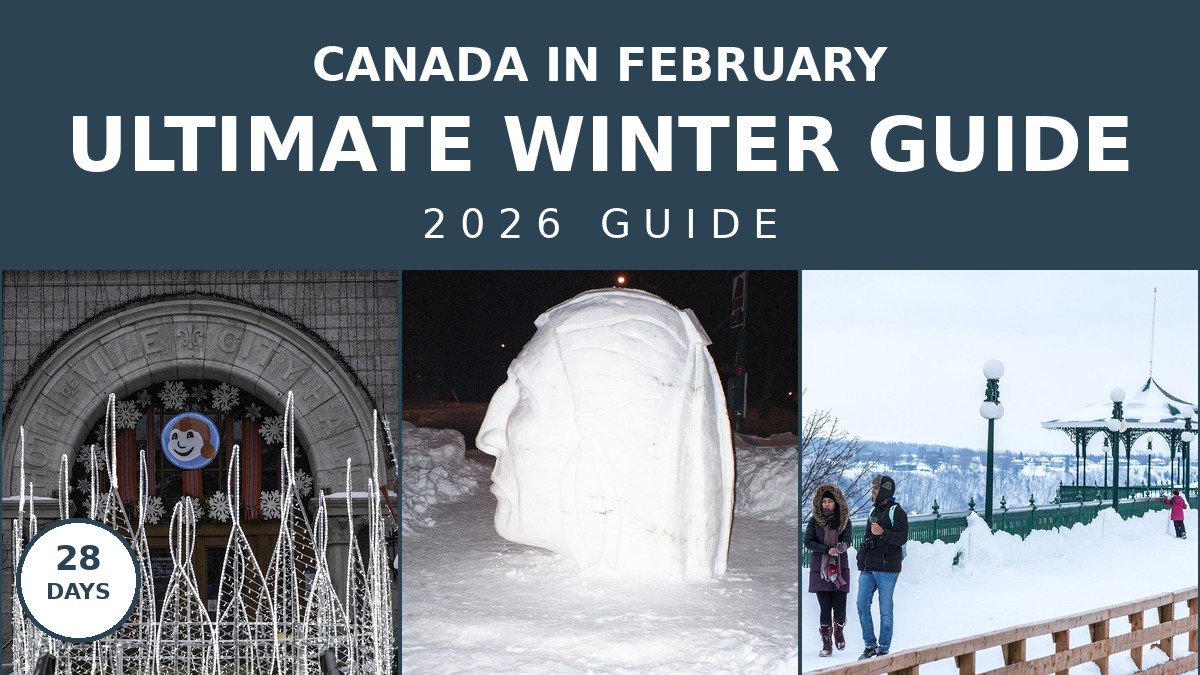
I’ll be honest: the first time I visited Canada in February, I showed up in Quebec City in a coat that was “totally fine for New York in January.” I lasted forty minutes. I bought a toque from a souvenir stand on Rue Saint-Jean, paid triple what it’s worth, and have never traveled without a proper parka since. Fair warning — and pro tip, if you’re starting your February trip in Quebec City, do not skip the layer check at the end of this guide before you fly.
But here’s the thing: February is my favorite month in Canada, and I plan my whole winter around it. The Christmas crowds are gone, the snow is at its deepest and most reliable, and the festivals are the kind of thing locals actually get excited about — not tourist-trap filler. Every major date, price, and opening detail below was checked in October 2026, and where something comes from someone else (a ranger, a festival press release, a front-desk clerk who knew more than my spreadsheet), I’ll tell you straight.
February weather in Canada: five countries in one
Canada in February is not one winter — it’s several, and packing for the wrong one is the classic rookie error (ask me how I know). Here’s my regional cheat sheet:
| Region | Typical February highs/lows | What it feels like |
|---|---|---|
| Vancouver & Victoria | 3°C to 9°C (37–48°F) | Cool and rainy at sea level; deep powder on Grouse and Cypress mountains above the city. You can ski and stroll the seawall in the same day. |
| Toronto | -8°C to -1°C (18–30°F) | Cold with a lake breeze that bites; windproof outer layer required. |
| Montreal | -13°C to -4°C (9–25°F) | Proper winter — the deep cold that keeps the ice festivals frozen. |
| Quebec City | -16°C to -6°C (3–21°F) | The coldest major city on this list; dress like a local or suffer like a tourist. |
| Banff / Rockies | -15°C to -4°C (5–25°F) | Dry, thin, brilliantly sunny alpine cold. The sun off the snow is intense — sunglasses are non-negotiable. |
| Winnipeg / Prairies | -18°C to -7°C (0–19°F) | Dry, serious cold under piercing blue skies. Frostbite is a planning item, not a scare story. |
The good news: by late February, southern Canada gets nearly 11 hours of daylight — those extra hours make a huge difference for sightseeing, and late-winter sun on your face is one of winter’s small mercies. (These ranges are Environment and Climate Change Canada climate normals, not a forecast — check a 7-day forecast before you pack.)
The big four: 2026 winter festivals
February is the most festive month on the Canadian calendar. Once the holiday rush dies down, Canadians beat the winter blues by throwing enormous outdoor parties. I plan my February trips around these — and for 2026, the lineup is a good one.
Quebec Winter Carnival (Carnaval de Québec): February 6–15, 2026
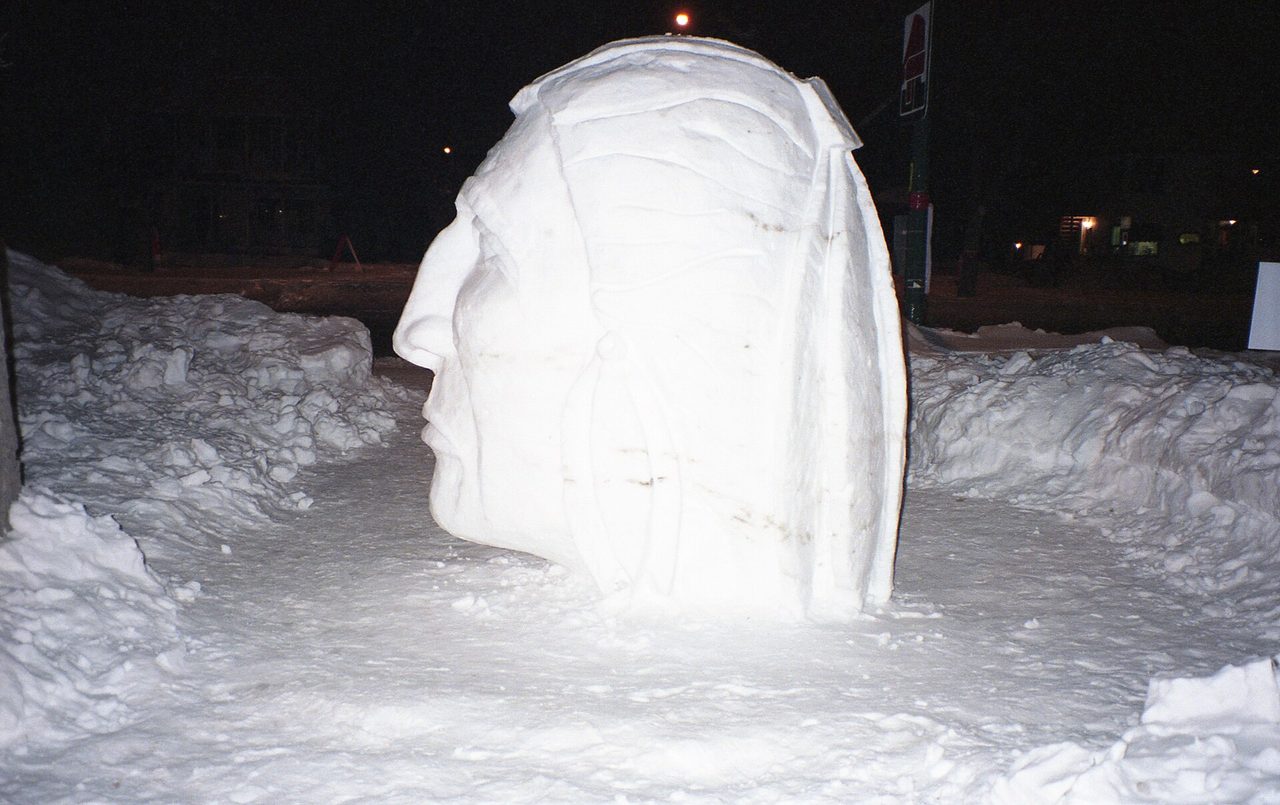
The world’s largest winter carnival turns 72 in 2026, and Old Quebec becomes a snow-covered fairytale for ten days. I double-checked the 2026 dates on the official program page before planning — they shift slightly every year, so do the same. → Carnaval de Québec — official 2026 edition info The 2026 edition adds a few new twists: rappelling down the Château Frontenac, a Ferris wheel of colors, and an 18+ Cayo Carnaval party at Spa des Neiges — alongside the classics: Bonhomme’s Ice Palace, the two night parades (February 7 in Limoilou, February 14 on Grande Allée), the ice canoe race on the St. Lawrence (February 8), and the legendary St-Hubert Snow Bath for the truly brave.
Admission runs on the Effigy pass — the festival’s official badge (required on official sites, roughly ~$30–40 for the festival, kids 12 and under free). And do not skip the maple taffy pulled straight off the snow; it’s the single best $4-ish street snack in Canadian winter. Pair this with our 2-day Quebec City itinerary to build the trip around it.
Ottawa’s Winterlude: January 30 – February 16, 2026
Winterlude is Ottawa’s 48th annual winter festival, and its centerpiece is the Rideau Canal Skateway — 7.8 km of frozen canal through the heart of the capital, the largest skating rink in the world, free and open around the clock whenever the ice is in. Here’s the thing nobody tells first-timers: “the ice is open” is weather-dependent, and it is not a promise. I checked the NCC’s Skateway page every single morning of my last Ottawa trip — after the 2022–23 season when the canal never opened at all, I do not take the ice for granted (this year it fully reopened January 16, 2026, and stayed strong).
Skating between Parliament and Dow’s Lake, stopping at the wooden huts for a BeaverTail (hot fried dough with cinnamon sugar — a Canadian rite of passage), is the single most joyful hour of my February calendar. Across the river in Gatineau, the Snowflake Kingdom in Jacques-Cartier Park runs giant snow slides and ice carving exhibitions, and Confederation Park hosts the international ice-carving showcase. It’s worth three days minimum — see our 1-day Ottawa itinerary for the warm-up version.
Festival du Voyageur in Winnipeg: February 13–22, 2026
Western Canada’s largest winter festival takes over Winnipeg’s Saint-Boniface district for ten days, celebrating French-Canadian, Métis, and First Nations culture with the energy of a giant kitchen party. A guide at Fort Gibraltar — the reconstructed fur-trade fort inside the festival grounds — told me the festival now hosts over 150 artists across its ten days, and honestly, the snow sculpture walk at Whittier Park is worth the flight alone.
Day tickets run roughly ~$30–40 for adults (kids 5 and under free), with a full Voyageur Pass around ~$110 — I checked Tourism Winnipeg’s official listing for the 2026 dates and ticketing, and prices vary by day, so buy ahead online. → Festival du Voyageur — Tourism Winnipeg official listing Do not skip the maple taffy on snow here either (yes, twice in one article — it’s that good), and take the free shuttle, because on-site parking is extremely limited.
Montreal en Lumière and Nuit blanche: February 2026
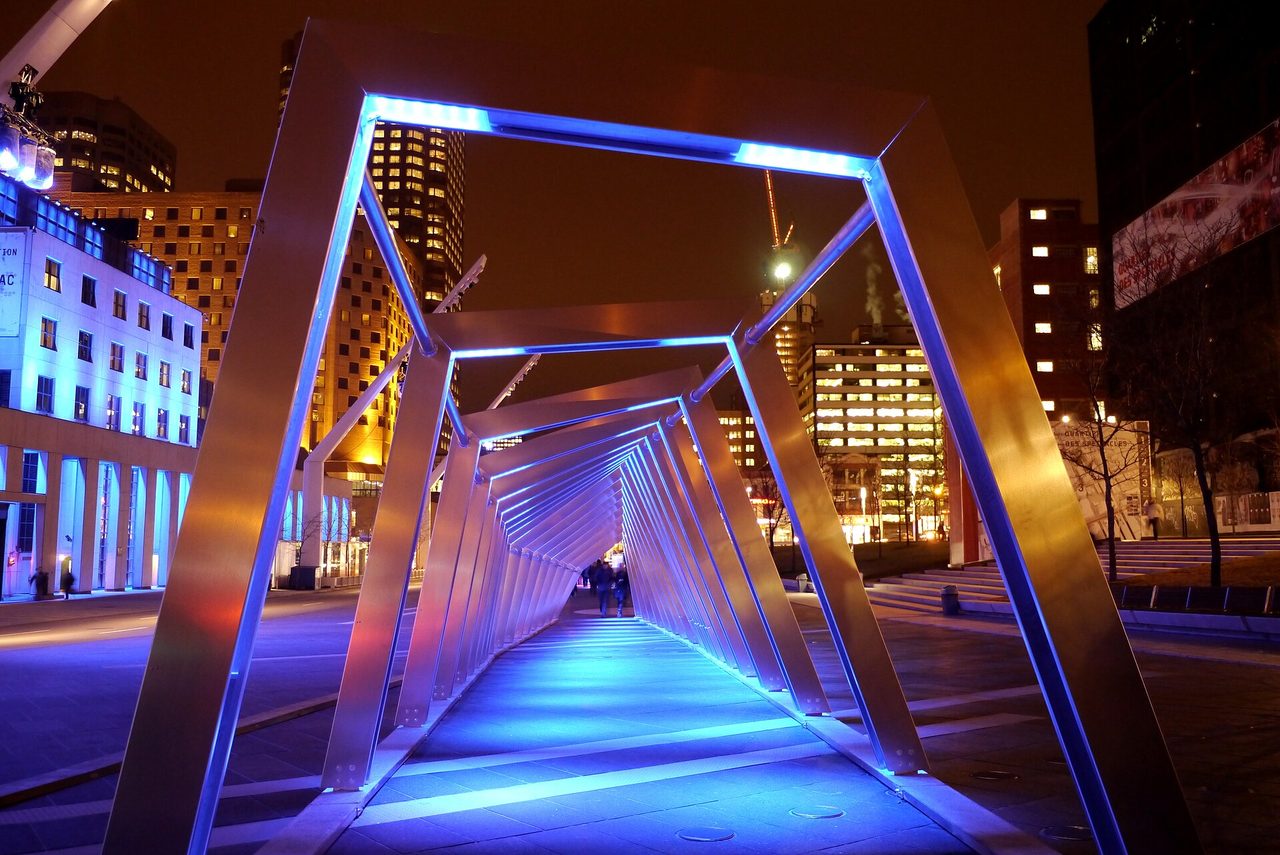
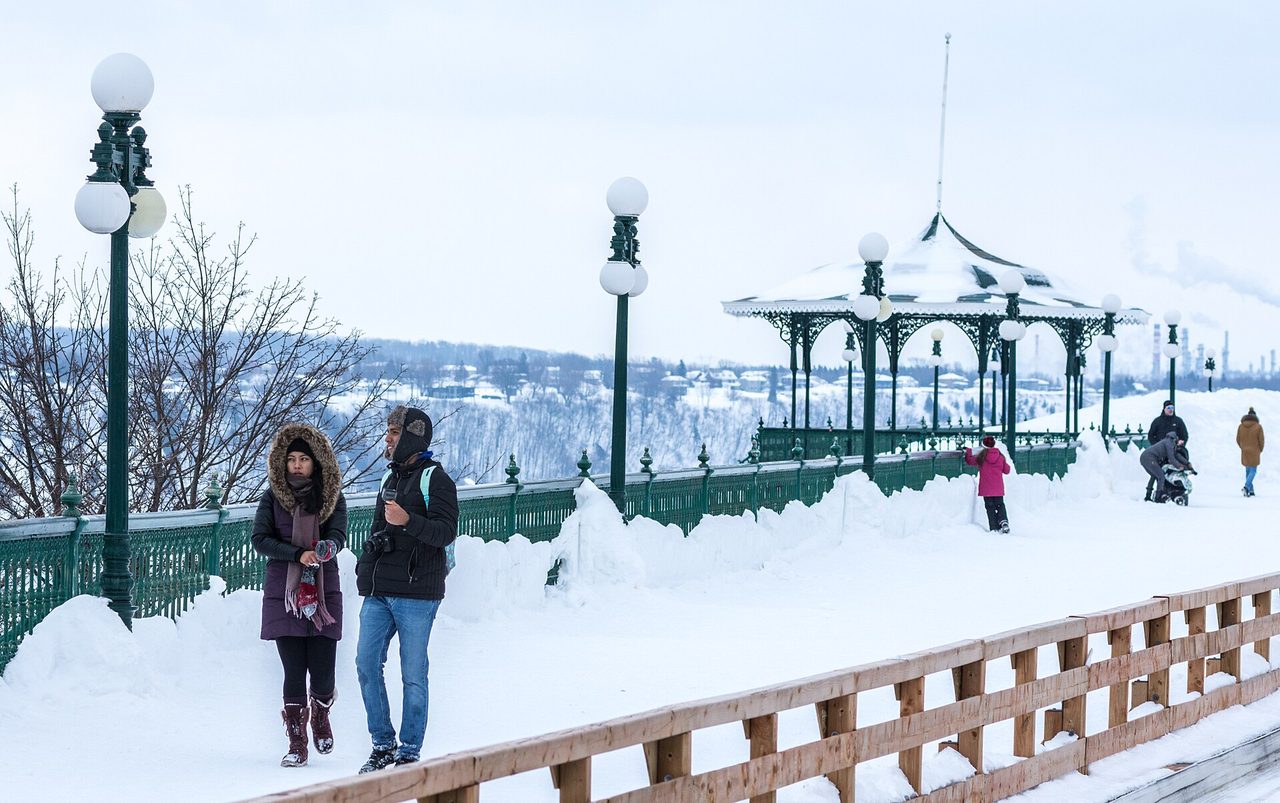
Montreal does winter differently: less snow-fort, more champagne-and-light-installations. MONTRÉAL EN LUMIÈRE runs through late February into early March 2026, with a free outdoor site in the Quartier des Spectacles, gourmet culinary programming, and the famous Nuit blanche on February 28, 2026 — one all-night arts festival where museums, galleries, and venues stay open until dawn. The 2026 program lists nearly a hundred activities spread across the city, most of them free. → MONTRÉAL EN LUMIÈRE — official Nuit blanche program
I’ll be honest: I am not a stay-up-all-night person anymore, and even I stayed out until 2 AM last time. It’s that good. Building a Montreal trip around it? Our 2-day Montreal itinerary is the template I’d use.
Where to go for winter adventure: the big three

February is prime season on the slopes: the snow base is at its deepest, the crowds have thinned since the holidays, and the conditions are the year’s most reliable.
- Whistler Blackcomb, BC — North America’s largest ski resort, with over 8,000 acres of terrain and a snow base that usually peaks in February. Non-skiers get the PEAK 2 PEAK Gondola (open for winter sightseeing), bobsleigh at the Sliding Centre, and a pedestrian village with a legendary après scene. See our 3-day Whistler itinerary for the full plan.
- Banff and Lake Louise, Alberta — The Big 3 (Lake Louise, Sunshine Village, Mt. Norquay) sit inside a national park, which means the views stop you mid-turn. Lake Louise itself freezes into a skating rink framed by the Victoria Glacier, and Johnston Canyon’s catwalks lead to frozen waterfalls that look like a cathedral of blue ice. See our 2-day Banff itinerary.
- Mont-Tremblant, Quebec — The East’s answer: a colorful European-style pedestrian village, excellent night skiing, and the Scandinave Spa a short drive away (hot outdoor baths while snow falls on your head — worth every penny, trust me on this one).
Pro tip on the Family Day long weekend (February 16, 2026 in Ontario, Alberta, BC, Saskatchewan, and New Brunswick): ski hills sell out, lift lines double, and hotel prices spike. Ski the weekdays around it instead — I once did the Saturday of that weekend at a big resort and spent more time in lines than on runs. Never again.
Northern lights in February 2026: still an excellent year
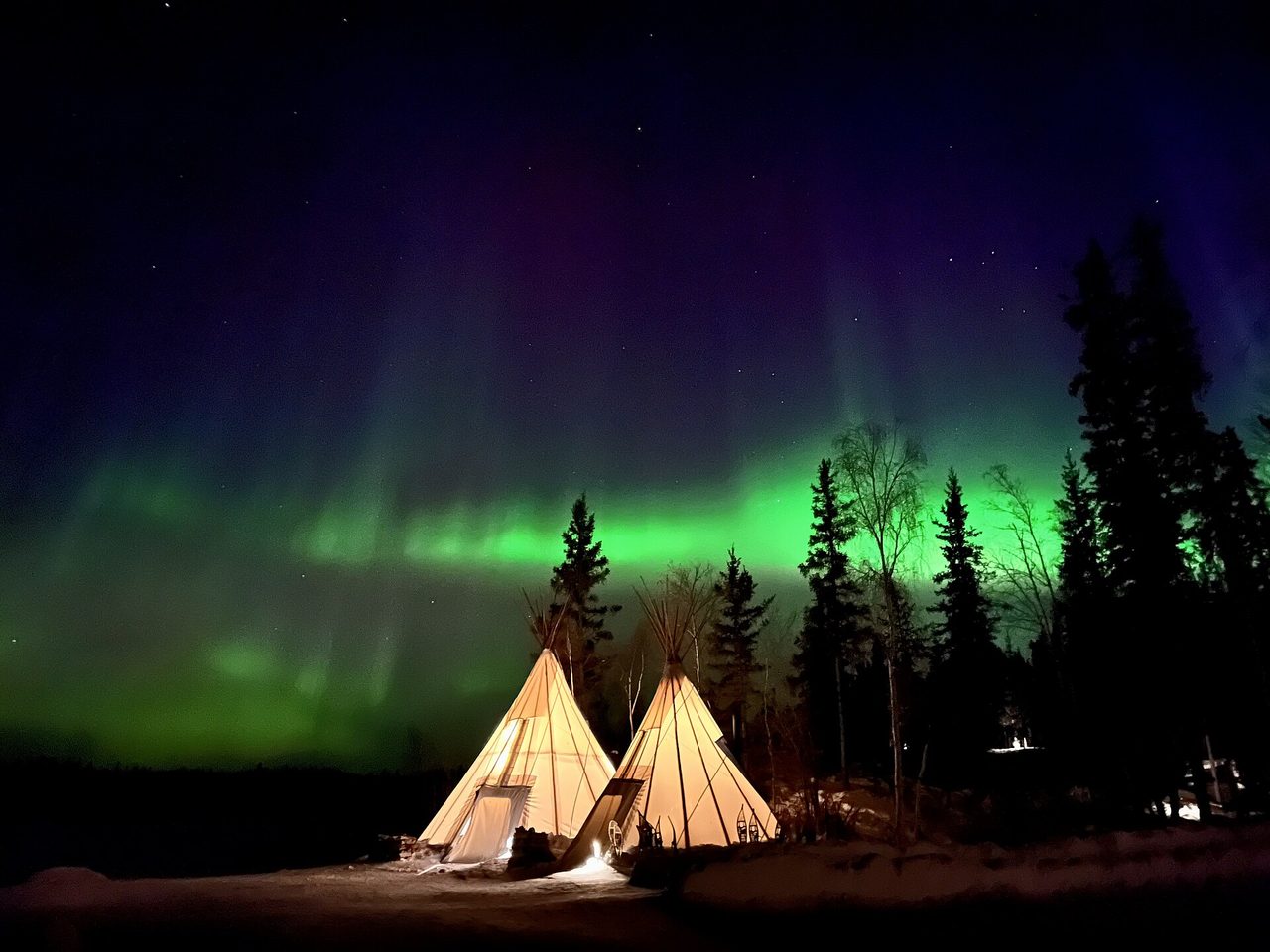
Let me correct something half the internet still gets wrong: the official solar maximum of Solar Cycle 25 was October 2024, not 2026 (Belgium’s SIDC, which keeps the official sunspot record, confirmed it). But here’s the thing — the years after maximum are often the best for aurora chasing, as coronal holes drift toward the Sun’s equator and send steady streams of solar wind our way. I first read about this decline-phase effect on a space-weather blog, and it changed how I plan: 2026 remains an excellent aurora year.
Your best bets in Canada:
- Yellowknife, Northwest Territories — the self-declared aurora capital, flat and dry with famously clear February skies. Local operators claim around a 90% success rate over a three-night stay, and watching from a heated teepee at -30°C is an experience I think about in July.
- Whitehorse, Yukon — a more dramatic mountain backdrop, with daytime dog sledding and a soak at the Takhini Hot Springs before the night show. The Yukon Wildlife Preserve is a great daylight stop for Arctic animals.
Practical aurora rules I learned the hard way: check the 30-minute NOAA aurora forecast before heading out; go between roughly 10 PM and 2 AM local time; get away from town lights; and keep spare camera batteries inside your jacket, against your ribs — mine died at -30°C in Yellowknife before the lights even peaked. A wide-angle lens at f/2.8, ISO 800–3200, a sturdy tripod, and thin liner gloves under your mitts round out the kit.
Wildlife, frozen falls, and storm watching

People assume Canadian wildlife just sleeps through February. It doesn’t — and against the snow, big mammals are easier to spot than in summer.
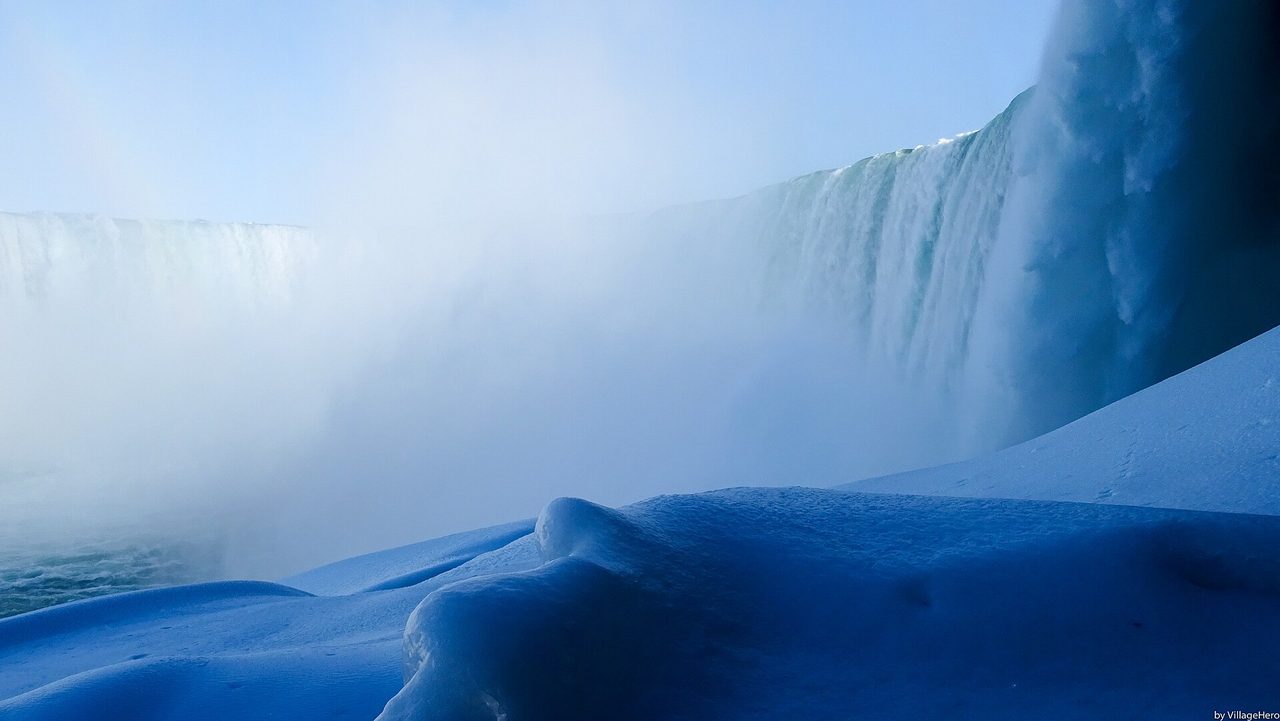
- Niagara Falls in winter — the mist freezes onto every railing, tree, and lamp post, building ice sculptures along the brink. The falls never fully stop, but on the coldest stretches an ice bridge can form below. Fewer crowds, lower hotel rates, and the most dramatic version of the falls you’ll ever see.
- Jasper National Park, Alberta — a designated dark-sky preserve where elk and bighorn sheep gather near the townsite and the Icefields Parkway. February’s fresh snow makes tracking easier; dawn and dusk are the magic hours. A park ranger at a trailhead pullout once told me to scan the tree line, not the meadow — best advice I got all week.
- Tofino, BC — storm watching — the moody alternative to snow: February is peak storm season on Vancouver Island’s west coast, where you watch massive Pacific rollers from a fireside lounge. Bald eagles and sea lions are the wildlife bonus.
One logistics note: national parks stay open in February, but the Icefields Parkway between Banff and Jasper legally requires winter tires, and some side roads close to cars (they stay open for cross-country skiers). I check Parks Canada’s road conditions page the morning of any winter park drive — do the same.
Budgeting and packing for a February trip
February is a split personality for your wallet: shoulder season in the cities, high season on the mountains. City hotels in Toronto, Montreal, and Vancouver drop nicely; Banff and Whistler charge peak rates, especially around the Family Day weekend. Sample daily budgets per person (estimates — marked ~, and they swing a lot by city):
| Traveler type | City trip (Toronto/Montreal/Ottawa) | Ski resort (Whistler/Banff) | Aurora chase (Yellowknife/Whitehorse) |
|---|---|---|---|
| Budget | ~$120–180/day | ~$180–250/day | ~$200–280/day |
| Mid-range | ~$200–320/day | ~$300–450/day | ~$320–480/day |
| Comfortable | ~$350+/day | ~$500+/day | ~$550+/day |
These assume hostels/Airbnbs or 3-star hotels, self-catering some meals, and booking lift passes and gear rentals online well ahead. Flying into Canada? February flights are usually cheaper than summer — the trade-off is weather risk, so build a buffer day into tight itineraries.
The packing list that actually works
My three-layer system, refined over six February trips:
- Base layer: merino wool thermals (top and bottom) — they wick sweat and don’t stink after three days. Trust me on this one.
- Mid layer: a fleece or down puffer for insulation.
- Outer layer: a waterproof, windproof shell. Wind is what gets you in Toronto and on the Prairies.
- Extremities: wool socks, a proper toque (that’s a beanie), insulated waterproof boots rated to at least -20°C, and a neck gaiter — the item I forgot once and then bought at souvenir prices.
- Don’t forget: polarized sunglasses (snow glare is brutal), lip balm, moisturizer, and hand/toe warmers for festival days when you’re standing around.
Driving? An AWD rental with winter tires is the move, plus an ice scraper and snow brush (rental companies sometimes “forget” the brush — ask). Rather skip the stress? VIA Rail’s Canadian between Toronto and Vancouver is spectacular under snow — book a sleeper if your budget stretches to it.
FAQs about visiting Canada in February
Is February a good time to visit Canada?
Yes — if you embrace winter, February is arguably the best month. The snow base is deepest for skiing, the winter festivals (Quebec Winter Carnival, Winterlude, Festival du Voyageur) only happen now, city hotel prices are in shoulder season, and 2026 is still an excellent aurora year. The trade-off is real cold (-15°C and below in Quebec City, the Prairies, and the North), so pack properly and plan around it rather than fighting it.
What are the 2026 dates for the Quebec Winter Carnival?
The 72nd Carnaval de Québec runs February 6–15, 2026, in Quebec City. Key events include the two night parades (February 7 in Limoilou, February 14 on Grande Allée), the ice canoe race on the St. Lawrence (February 8), and Bonhomme’s Ice Palace. You’ll need an Effigy pass for the official sites (roughly ~$30–40; kids 12 and under free). I double-checked the dates on carnaval.qc.ca before planning — confirm 2027 dates there when the time comes.
Can you skate the Rideau Canal in February 2026?
Usually, yes — February sits in the heart of skating season, and in 2026 the Skateway fully reopened on January 16 after an early-January warm spell. But the ice is entirely weather-dependent: it needs sustained cold to stay open, and it has closed for full seasons before (2022–23 never opened). Check the NCC’s Skateway status page the morning you plan to skate, and have a backup plan (the museums and Winterlude’s Confederation Park sites) ready.
Is 2026 a good year to see the northern lights in Canada?
Yes. The official solar maximum was October 2024, but 2026 sits in the declining phase of Solar Cycle 25, which frequently produces excellent, regular aurora displays. Yellowknife (NWT) and Whitehorse (Yukon) are the top Canadian bases; plan at least three nights to give the weather a chance, go out between 10 PM and 2 AM, and keep camera batteries warm inside your jacket.
How much does a February trip to Canada cost?
It depends on the trip style. Budget roughly ~$120–180/day per person for a city trip (Toronto, Montreal, Ottawa), ~$180–250/day at a ski resort before lift tickets, and ~$200–280/day on an aurora chase to Yellowknife or Whitehorse. Cities are cheapest in February (shoulder season), while ski resorts charge peak rates — especially over the Family Day long weekend (February 16, 2026). These are estimates; booking flights, hotels, and lift passes early is the biggest lever you have.
What should I pack for Canada in February?
Use the three-layer system: merino wool base layer, insulating mid layer (fleece or down puffer), and a waterproof, windproof outer shell. Add wool socks, a toque, insulated boots rated to -20°C, a neck gaiter, and polarized sunglasses for snow glare. For the Prairies, the North, or aurora watching, add serious cold-weather gear — expedition-weight parka, balaclava, and hand/toe warmers — because -30°C is a real possibility.
Keep exploring
- Canada in January: The Ultimate 2026 Winter Travel Guide
- Canada in Fall: The Ultimate 2026 Autumn Travel Guide
- The Best 14 Day Canada Itinerary: 2026 Travel Guide
- The Ultimate 1 Day in Niagara Falls Itinerary: 2026 Guide