
Last updated: October 3, 2026
The short answer
- When to go: Peak colour sweeps Canada from north to south — the Rockies’ larch season peaks in the last week of September, Algonquin and the Laurentians hit stride in late September to early October, and the Maritimes glow through mid-October. In this warm El Niño year, everything is running slightly later than usual.
- Where to go: My top five for 2026 — Algonquin Provincial Park, the Laurentians, the Cabot Trail, Banff’s larch valleys, and the Agawa Canyon Tour Train. Each has a different personality (and a different price tag).
- How to plan: Book fall-season tickets now (the Agawa Canyon train’s October departures are already selling out), travel midweek to dodge the Thanksgiving crowds, and check the live Ontario Parks Fall Colour Report before you commit to anything.
I’ll be honest: I planned my first Canada-in-fall trip the way I plan everything — with a color-coded spreadsheet and a very confident column labeled “peak colour: Oct 1–7.” The leaves did not read my spreadsheet. The Rockies were already golden two weeks early, Algonquin was a patchy in-between, and I spent three days chasing a forecast that had gone stale. Here’s the thing: fall in Canada isn’t one season, it’s a whole wave rolling from north to south over six weeks, and the trick is knowing where your wave is when you arrive.
This guide is everything I learned the hard way (and a few things I learned the expensive way), refreshed for 2026: exactly when peak colour hits each region, the five destinations genuinely worth the trip, what the weather is actually like, what to pack, what it costs, and the festivals worth building a trip around. All prices and dates below were checked in October 2026 — and this year’s El Niño is nudging the peak a little later than usual, so read the timing section before you book anything.
When to see fall colours in Canada: 2026 timing
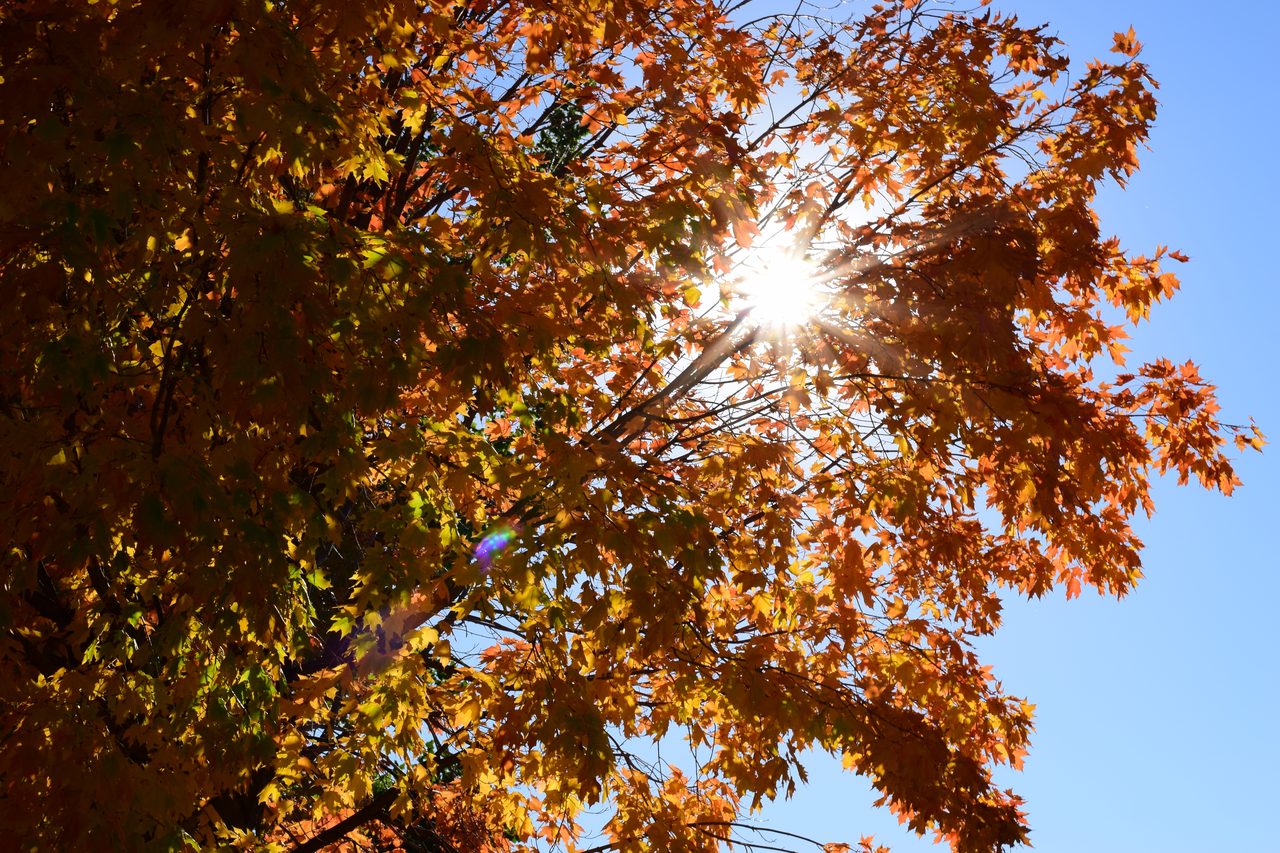
Canada is nearly 10 million square kilometres, so “fall” doesn’t arrive everywhere at once — it sweeps from north to south and from high elevation to low. The basic rhythm: the Rockies’ golden larches peak in the last week of September, Ontario and Quebec’s sugar maples hit stride in late September to early October, and the Atlantic coast holds its colour into mid-October (Vancouver, meanwhile, can stay green well into October before turning).
| Region | Typical 2026 peak window | What turns |
|---|---|---|
| Canadian Rockies (Banff, Lake Louise) | Sept 20 – Oct 3 | Golden alpine larches |
| Algonquin Park & northern Ontario | Late Sept – early Oct | Sugar and red maples |
| Laurentians & Quebec’s Eastern Townships | Late Sept – early Oct | Maples, birch, beech |
| Muskoka & Georgian Bay | Early – mid-Oct | Maples, oak, birch |
| Cape Breton & the Maritimes | Mid-Oct | Mixed hardwoods along the coast |
| Niagara Escarpment & southern Ontario | Mid – late Oct | Maples, oak, beech |
Two caveats for 2026, both learned from actual trips rather than vibes. First: Environment Canada’s climatologist noted this season that El Niño’s warmer pattern is pushing the foliage peak a bit later than usual — Algonquin, for instance, was still at roughly 90% colour with barely any leaf fall at the end of September 2026, per the latest Ontario Parks report, instead of being past peak. Second: my most expensive fall-travel mistake ever was planning around a blog’s “peak colour report” that turned out to be two weeks old. Do not be me. The Ontario Parks Fall Colour Report tracks colour-change and leaf-drop percentages park by park with updates through the season — I check it the week before I go, every time.
Pro tip: plan a north-to-south route and you can “chase” the peak as it moves down the map. I timed it on a Toronto-to-Cape-Breton drive once and caught peak colour three times in nine days (my spreadsheet was insufferably pleased with itself).
The 5 best places to see fall colours in Canada
Here’s the thing about “best fall foliage” lists: they’re only useful if they match how you travel. Some people want a windshield view, some want a hike that earns the view, and some want to sit on a train while someone else handles the logistics. So here are my five — one for every travel personality — all verified for the 2026 season.
1. Algonquin Provincial Park, Ontario
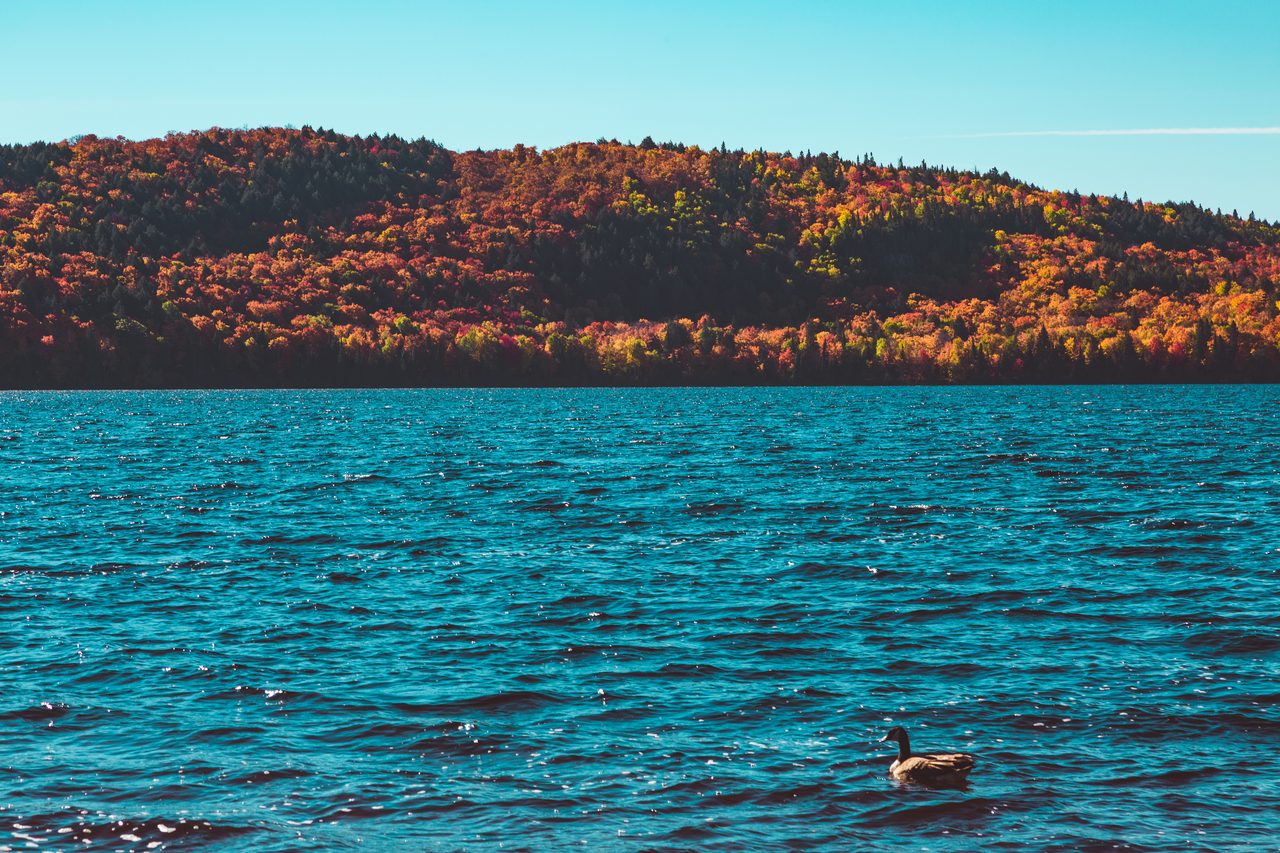
Algonquin is the classic for a reason: sugar and red maples turning the hills around Highway 60 into a rolling sea of crimson. The red maples peak first (late September — the Friends of Algonquin Park put the average peak around September 27), then the poplars and birches take over with a golden encore into mid-October, and finally the tamaracks — Ontario’s only colour-changing conifer — go gold around the wetlands in late October.
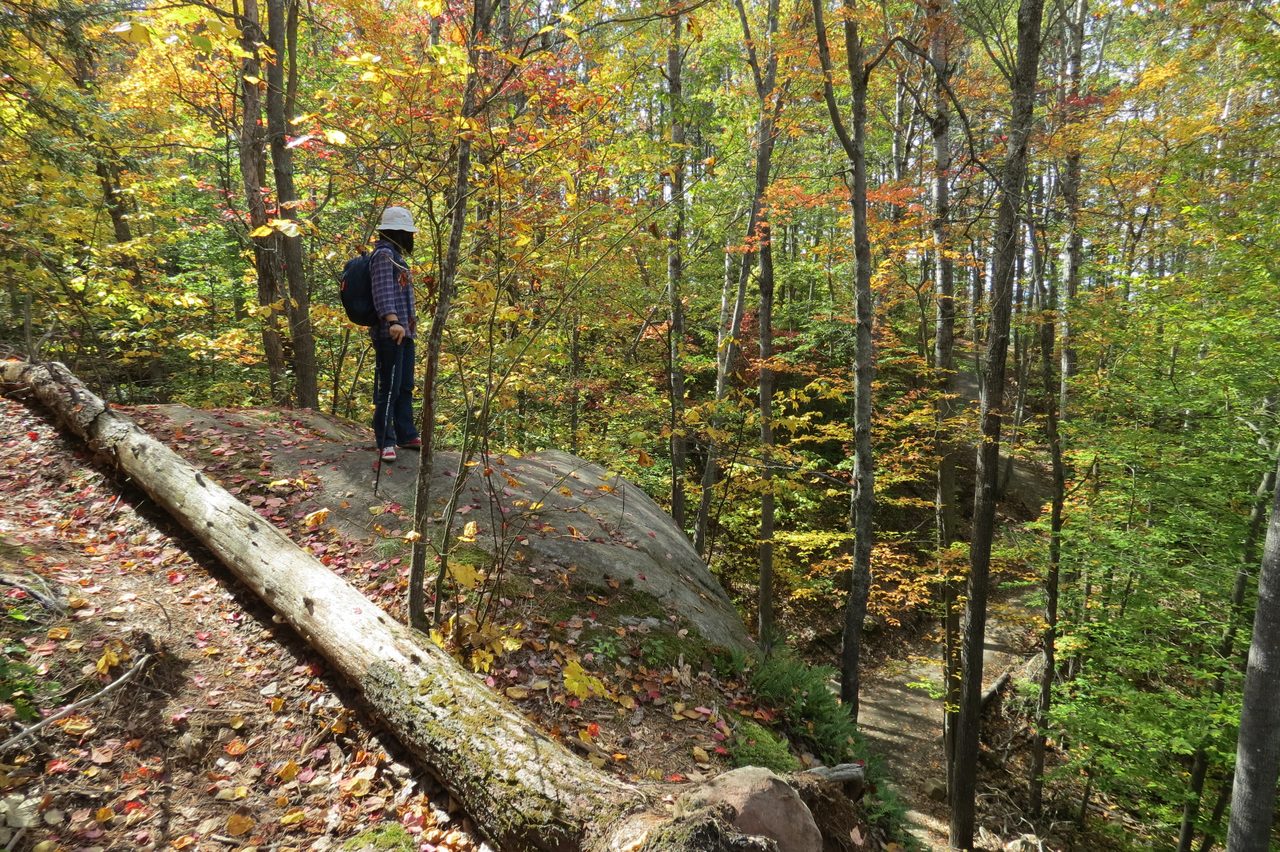
Practical stuff, all double-checked: the 56-km Highway 60 corridor is the main artery, and a daily vehicle permit runs $21.00 per vehicle in 2026 (HST included). The Lookout Trail is a 2-km return with the best panorama for the least effort, and the longer Track and Tower or Centennial Ridges trails earn their views. Fair warning from someone who learned the sweaty way: the Lookout Trail parking fills by 9 AM on peak weekends. I circled for 25 minutes one Thanksgiving Saturday and missed the morning light entirely. Go midweek if you can, or arrive before 8:30.
Lodging reality check: in-park lodges and campgrounds book out 6–12 months ahead for the peak weekends — I once waited until July for an October trip and paid for it, literally. Gateway towns like Huntsville, Dwight, and Whitney hold late availability. Pairing this with city days? Algonquin makes a perfect add-on to a Toronto trip (about 3 hours north of the city).
2. The Laurentians & Mont-Tremblant, Quebec
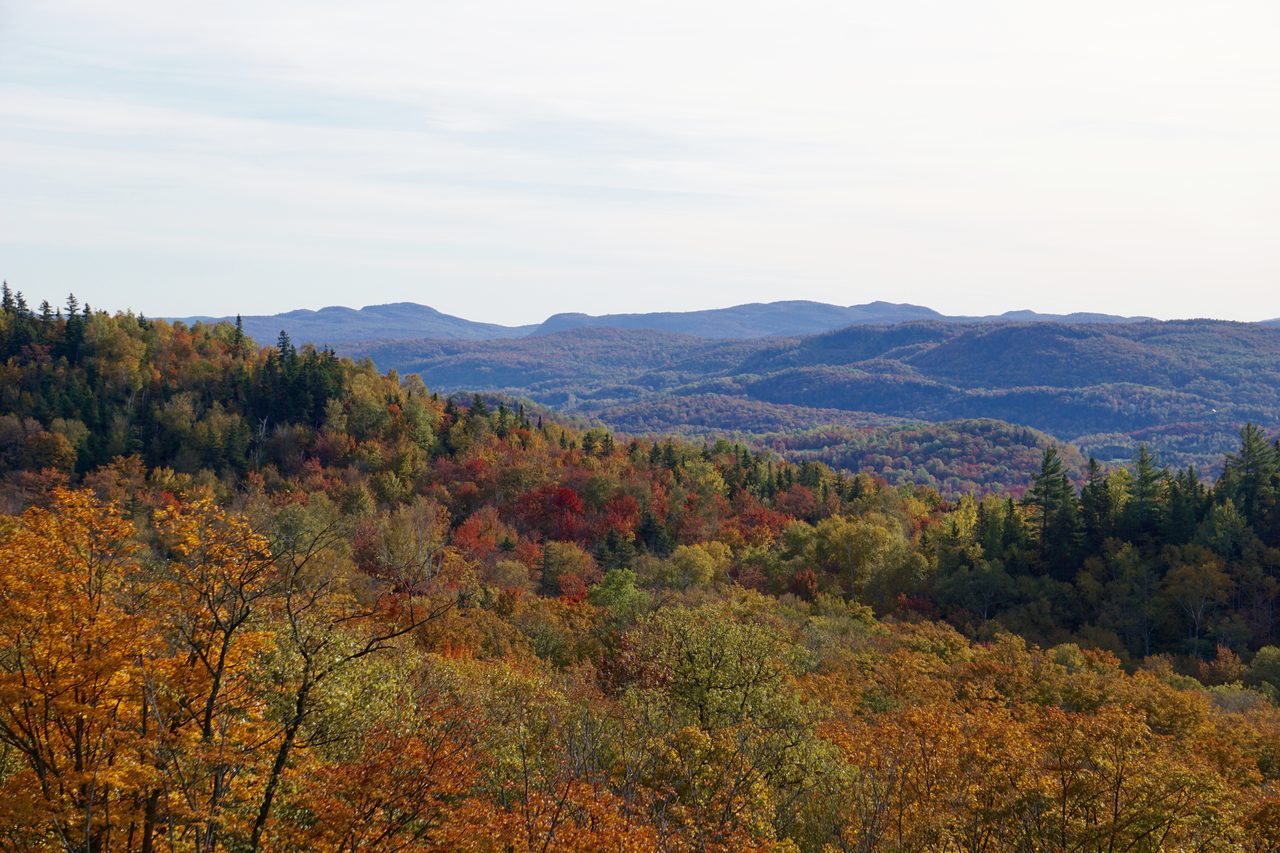
If Algonquin is the classic, the Laurentians are the classic’s chic Quebec cousin — sugar maples, yellow birch, and beech draped over rolling mountains, with winding forest roads that seem designed for leaf-peeping drives. Peak here lands late September to early October, roughly tracking Algonquin.
Mont-Tremblant is the anchor: the summit views over a sea of red and gold are genuinely spectacular, and the village below does autumn properly (think cider, terrasses, and shops selling exactly the sweater you forgot to pack). I did the drive up from Montreal twice last fall and I’ll say this — the colours start showing on the higher ridges first, so aim for the last weekend of September and you’ll catch both the ridgelines and the valleys.
From Montreal, the Laurentians are an easy day trip or a two-night escape — and if you’re spending time in the city too, our Montreal in Fall guide covers what to do when you’re not chasing leaves. For the full driving version, see our Quebec road trip itinerary.
3. The Cabot Trail, Cape Breton Island, Nova Scotia
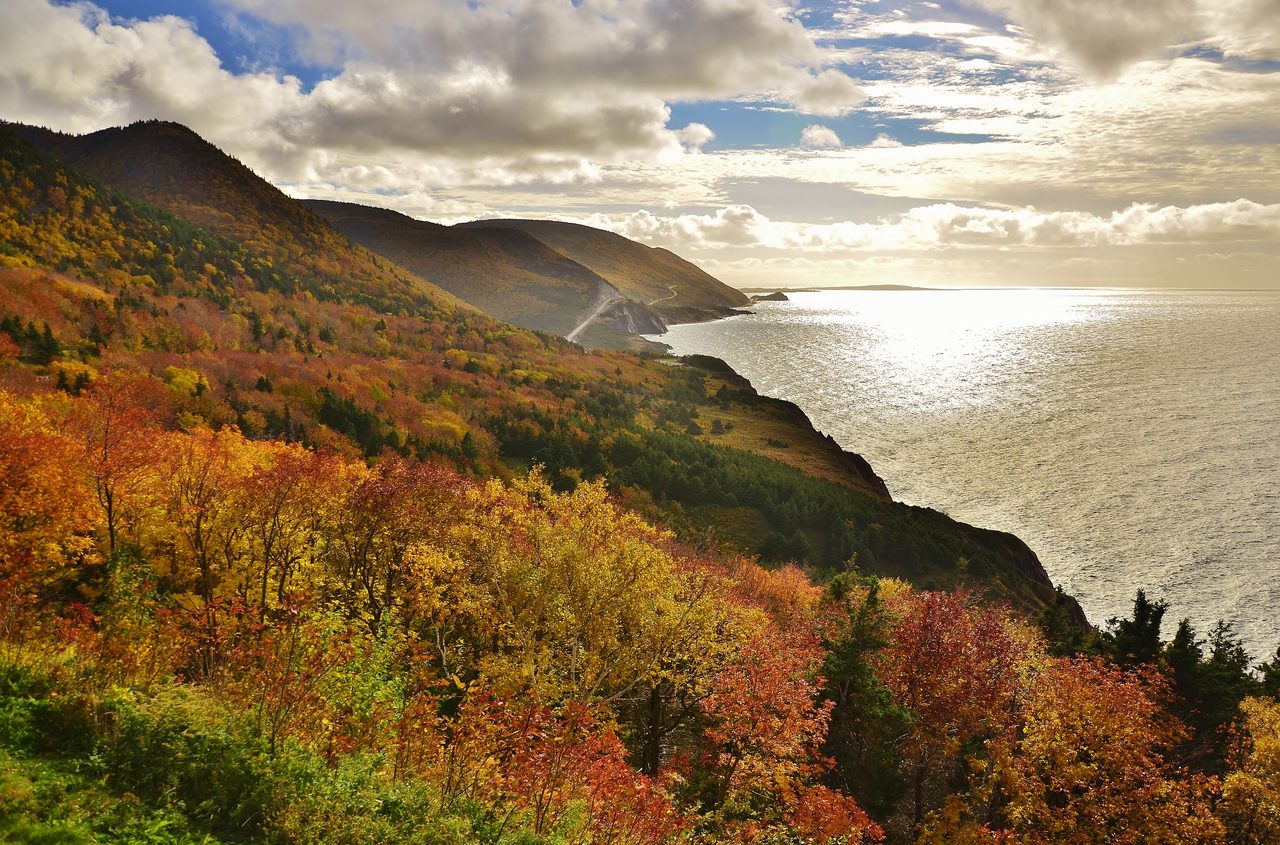
The Cabot Trail is a ~300-km loop around Cape Breton Island that is routinely called one of the world’s best drives — and in mid-October, with the highland hardwoods in full colour and the ocean flashing between the trees, I finally understood why. It’s the longest-lasting colour of the five on this list: the maritime climate keeps things mild and the peak stretches through mid-October.
And 2026 is the year to do it: the Celtic Colours International Festival runs October 9–17, its 30th anniversary, with 52 concerts across 36 island communities — fiddles, Gaelic song, and square dances in church halls, all timed to the peak leaves. I double-checked the 2026 dates on the festival’s official site before writing this up (they change slightly every year, so do the same). → Celtic Colours International Festival — official site · Tourism Nova Scotia — festival details
One planning note from my own trip: the Cabot Trail’s best viewpoints have small pullouts, and the festival brings serious crowds to a small island — book accommodation well ahead (I stayed in Baddeck and drove sections of the loop as day trips, which worked beautifully). See our Cape Breton in Fall guide for the full breakdown.
4. Banff’s larch season, Alberta
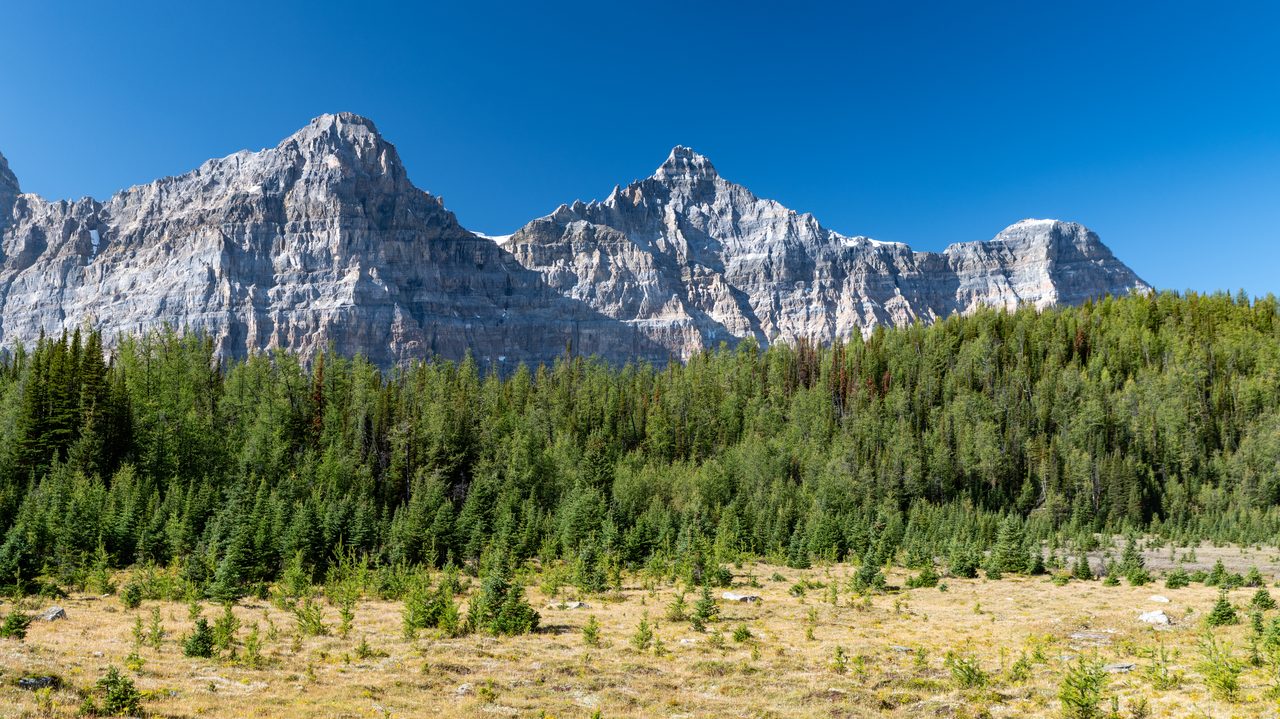
Out west, autumn isn’t about maples — it’s about larches. These are conifers with needles that turn neon gold before dropping, and for about ten days in the Rockies they transform entire valleys. The sweet spot is the last week of September (roughly September 20 to October 3, though it shifts with the weather).
Larch Valley, above Moraine Lake, is the famous one: a moderate climb through a stand of larches with Ten Peaks looming over everything. I’ll be honest — I showed up for the larches one year in a city jacket and jeans, and by the top of the switchbacks I was borrowing warmth I hadn’t brought. It is 5–10°C colder at altitude, and snow can dust the trail any time after mid-September. Layer properly (see packing below).
Logistics for 2026: you can’t drive to Moraine Lake — Parks Canada runs shuttles only, and in 2026 the shuttle season and lake access run through October 12, with the road closing to all traffic the next day. Book shuttle seats as early as Parks Canada releases them; they sell out for larch-season weekends. You’ll need a Parks Canada Discovery Pass (~$83.50 per adult for the annual pass in 2026) to hike in the park. A ranger at the Moraine Lake shuttle stop told me the first shuttle of the day is the move — the light on the gold needles is unreal before 9 AM, and the trail gets busy fast.
Want the full mountain plan? Our 2-day Banff itinerary covers the essentials.
5. The Agawa Canyon Tour Train, Ontario
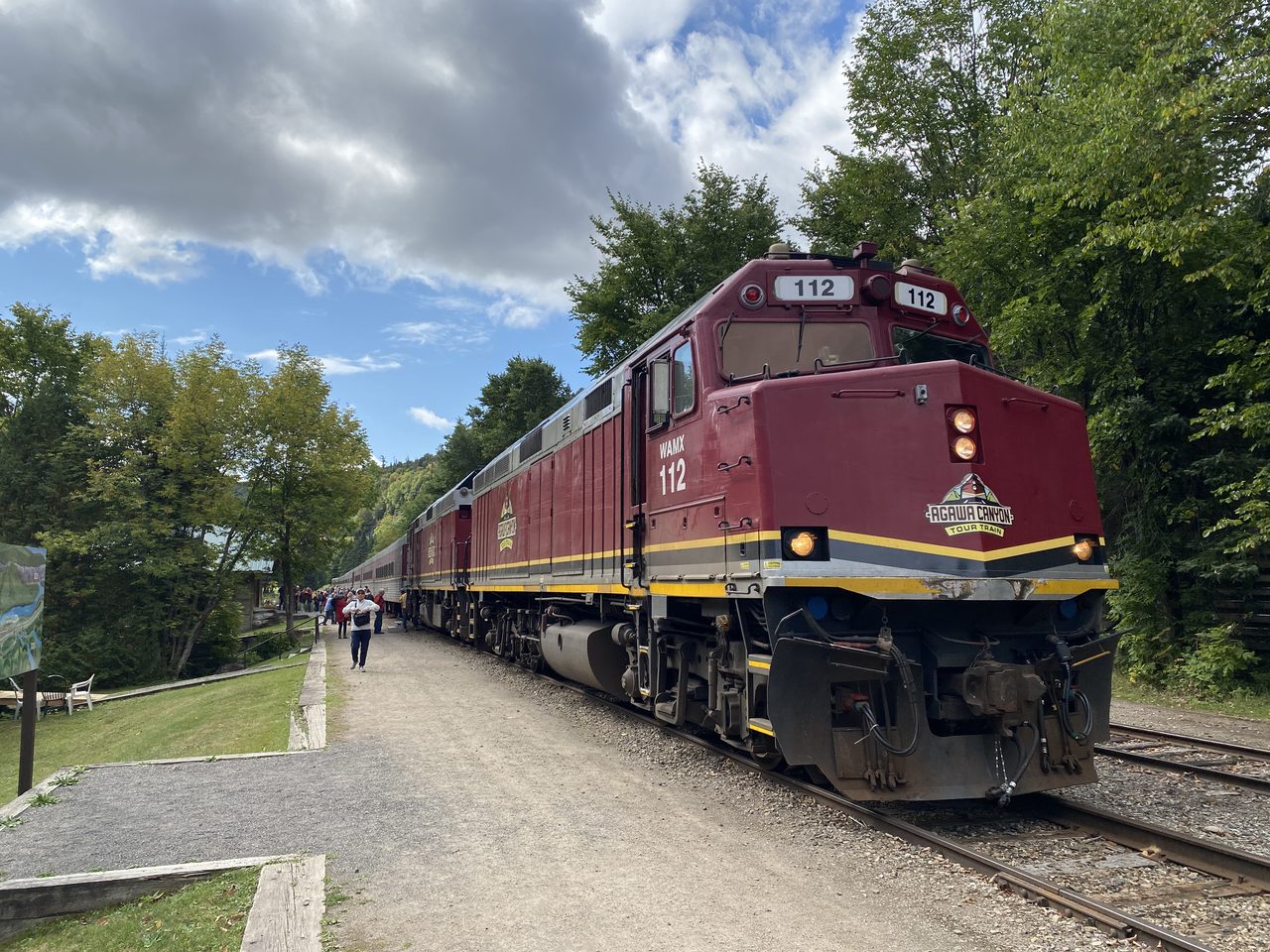
For the sit-back-and-watch-the-world-turn-gold crowd, this is the one: a full-day wilderness rail excursion from Sault Ste. Marie, 114 miles through the Canadian Shield to the floor of Agawa Canyon, with a 90-minute stop to hike the Lookout Trail and see Bridal Veil Falls. The scenery here literally inspired the Group of Seven — J.E.H. MacDonald called the canyon “the original site of the Garden of Eden,” and standing at the lookout in late September, I got it.
2026 details (checked on the official booking page — prices change by season, so confirm on the official site before you book): the summer season runs August 1–September 14 (~$154 adult, ~$125 senior, ~$78 child), and the fall season runs roughly September 15–October 18 at ~CA$166 for all ages. It’s a 10-hour day, boarding at 8 AM from the depot at 87 Huron St in Sault Ste. Marie, back around 6 PM, with GPS-triggered commentary on board. The sweet spot is the last two weeks of September plus the first week of October — and fair warning, October departures were already selling out when I checked. Book early. → Agawa Canyon Tour Train — official tickets
I did this trip on a drizzly Tuesday in late September once, half expecting it to be a wash. It wasn’t. The mist made the reds look electric, the commentary actually taught me things (the Ojibway and fur-trade history along the line), and the canyon at peak colour is one of those places that justifies the entire journey north. Worth every penny.
What the weather’s actually like (and what to pack)
Fall weather in Canada is not one thing — it’s “pack for three seasons and you’ll use all of them.” Here’s what I actually experienced, as rough October averages (mark these with ~ in your head — mountain weather has opinions):
| Region | Early Oct highs | Early Oct lows | The vibe |
|---|---|---|---|
| Ontario (Toronto, Algonquin) | ~12–16°C | ~3–7°C | Crisp mornings, gorgeous afternoons, rain possible |
| Quebec (Montreal, Laurentians) | ~11–15°C | ~2–6°C | Similar to Ontario, frosts earlier in the mountains |
| The Rockies (Banff) | ~8–12°C | ~-5 to 0°C | Snow possible any time after mid-Sept; big daily swings |
| Nova Scotia coast | ~12–16°C | ~5–8°C | Mild but windy; ocean mist is a feature, not a bug |
| West Coast (Vancouver) | ~13–16°C | ~7–10°C | The rainiest of the bunch — pack the shell |
Packing list (my actual list, refined over four autumn trips):
- Three-layer system: merino or synthetic base layer, fleece or puffy mid-layer, waterproof-breathable shell. This combination handles everything from a sunny Cabot Trail pullout to a snowy Moraine Lake morning.
- Warm hat + gloves: not optional above 1,500 m or after mid-October anywhere. I forgot gloves at Lake Louise once and my hands staged a full revolt.
- Waterproof hiking shoes or boots: trails are muddy in fall, and boardwalks get slick. Break them in before you go.
- Daypack with the ten essentials-ish: water, snacks, headlamp (it gets dark early), and a paper backup of your plans — mountain cell service is spotty.
- A thermos: game-changer. Hot coffee at a frosty viewpoint is one of life’s great underrated pleasures. Trust me on this one.
A note for photographers: fall is golden-hour season — low sun, long shadows, mist on the lakes. Bring a polarizing filter (it makes the reds pop instead of washing out), a tripod for those dawn reflections, and spare batteries (cold drains them fast). One rule I double-checked before my last trip: drones are banned in all Canadian national parks, and Transport Canada requires registration and a pilot certificate for drones 250 g and up — check the current rules on Transport Canada’s site before you fly anywhere.
2026 fall festivals worth planning around
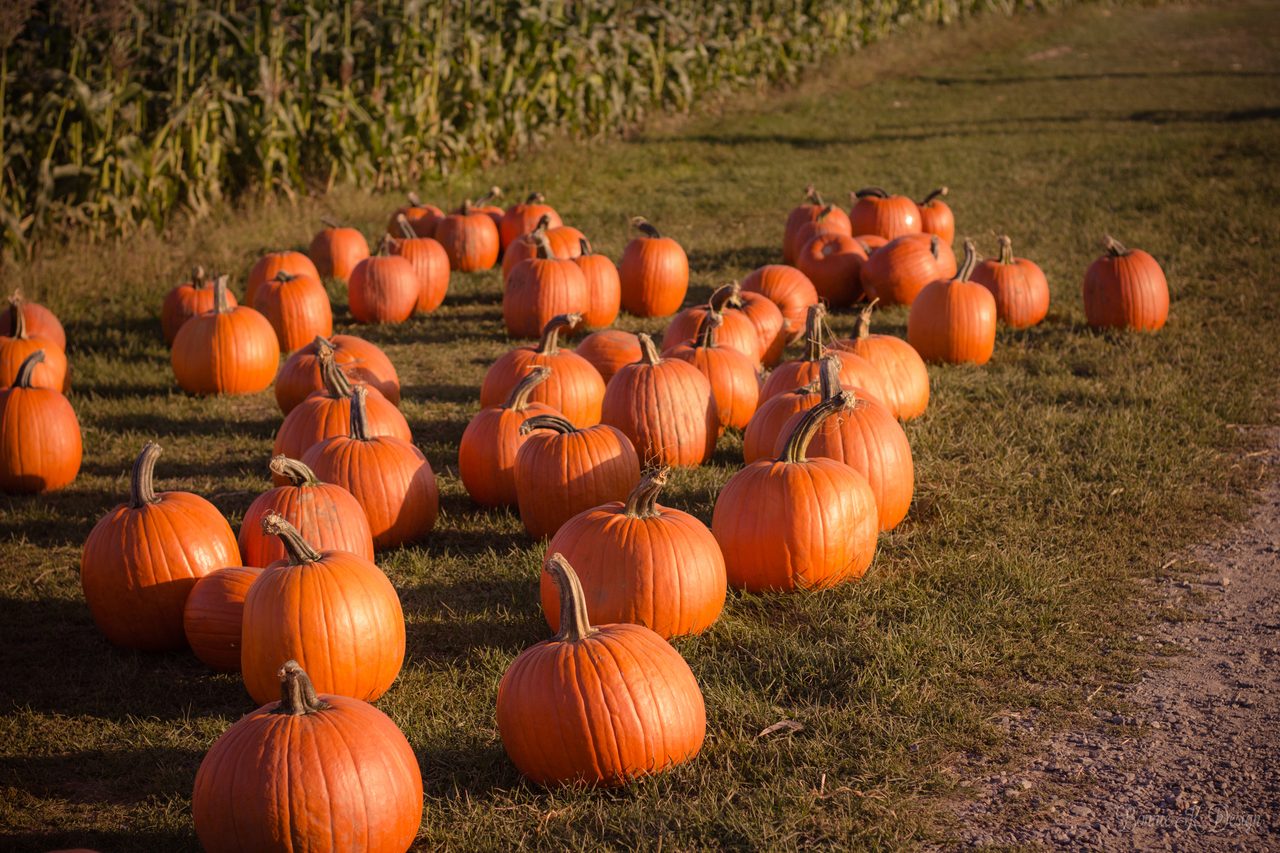
The leaves are the headliner, but fall in Canada comes with a full supporting act of festivals — and they double as crowd-avoidance intelligence, because they tell you exactly when and where everyone else will be.
- Celtic Colours International Festival (Cape Breton Island, NS) — October 9–17, 2026, the 30th anniversary edition. Nine days of Celtic music in 36 communities, timed to peak foliage. Book accommodation months ahead; the island is small and the festival is not.
- Canadian Thanksgiving — Monday, October 12, 2026. The long weekend is simultaneously the best and worst time for fall travel: colours are peaking across Ontario and Quebec, but every popular park, train, and lodge is at maximum capacity. My rule: either book the weekend 6+ months out, or travel the midweek days around it and have the trails to yourself.
- Harvest season & pumpkin patches. From late September, farm country across Ontario, Quebec, and the Annapolis Valley runs corn mazes, apple picking, and pumpkin patches — the perfect low-effort half-day between big drives. I stop at one on every fall road trip. Every single one. (My spreadsheet has a tab. Don’t judge.)
- Culture Days — September 18 to October 4, 2026, with free arts and culture events in communities across the country. A lovely, free add-on if your dates overlap.
How much does a fall trip in Canada cost?
Fall is shoulder season, which is genuinely great news for your wallet: summer crowds are gone and hotel rates drop 15–30% in most regions (the exception is peak-weekend lodge country in Algonquin and Banff, which prices like it’s still August). Here’s a realistic per-adult budget for a 7-day fall road trip, based on October 2026 prices — items marked ~ are my estimates:
| Item | Cost (CAD) | Notes |
|---|---|---|
| Mid-range hotels, 7 nights | ~$1,050–1,750 | ~$150–250/night; book park lodges 6–12 months out |
| Rental car, 7 days | ~$420–700 | Book early for October; one-ways cost more |
| Food & drinks, 7 days | ~$420–630 | ~$60–90/day; grocery-store breakfasts save real money |
| Attractions | ~$150–350 | Agawa Canyon train ~$166, gondolas, park permits |
| Total (per adult, excl. flights) | ~$2,040–3,430 | Cheaper midweek, pricier on Thanksgiving weekend |
Two budget notes from experience: park entry is the cheapest line item and the best value — Ontario’s day-use permits and Parks Canada passes cost less than one restaurant dinner and buy you the whole landscape. And the single biggest money lever is when you go: shift a trip from the Thanksgiving weekend to the following midweek and I’ve seen identical Banff hotels drop by a third.
Planning your 2026 fall road trip: my logistics checklist
- Book the big-ticket items first: Agawa Canyon Tour Train October departures, Moraine Lake shuttles for larch season, and any in-park lodge — all of these sell out. Everything else can flex.
- Travel midweek. I cannot stress this enough. A Tuesday in Algonquin versus a Saturday in Algonquin are two different parks — same leaves, one-tenth the people.
- Chase the colour north to south. Start in the Rockies or northern Ontario in late September, end in the Maritimes or southern Ontario in mid-October, and you’ll ride the peak the whole way.
- Check live trackers, not old blogs. The Ontario Parks Fall Colour Report (linked above) and Bonjour Québec’s foliage map update through the season — a forecast from August is a historical document by October.
- Build in a weather day. Fall weather is gloriously moody, and one grey day in seven is about average. I plan my must-do hike for day two or three, not day one, so a rainy arrival doesn’t wreck the plan.
You’ve got this. Fall is, I’ll be honest, my favourite season to travel in Canada — the crowds thin out, the light goes golden, and every viewpoint feels like it was arranged just for you. (It wasn’t. But it feels like it.)
FAQs about Canada in fall
When is the best time to see fall colours in Canada in 2026?
It depends on where you’re going: the Rockies’ larch season peaks in the last week of September, Algonquin Park and the Laurentians peak from late September to early October, and Cape Breton and the Maritimes hold their colour through mid-October. For 2026, note that El Niño’s warmer pattern is pushing the peak slightly later than usual — Algonquin was still at ~90% colour with minimal leaf fall at the end of September 2026. Always confirm with a live tracker like the Ontario Parks Fall Colour Report before you travel.
Where are the best fall foliage spots in Canada?
My top five: Algonquin Provincial Park in Ontario (the classic sugar-maple show along Highway 60), the Laurentians and Mont-Tremblant in Quebec, the Cabot Trail on Cape Breton Island in Nova Scotia (peak mid-October), Banff’s Larch Valley in Alberta for the golden larches (last week of September), and the Agawa Canyon Tour Train in northern Ontario for a sit-back rail journey through peak colour. For a deeper ranking, see our Best Fall Colours in Canada: 2026 Foliage Guide.
How much does the Agawa Canyon Tour Train cost in 2026?
For the 2026 fall season (roughly September 15–October 18), tickets are ~CA$166 for all ages — adults, seniors, and youth all pay the same. The summer season (August 1–September 14) is cheaper at ~$154 for adults, ~$125 for seniors, and ~$78 for children. It’s a 10-hour day trip (8 AM–6 PM) departing from 87 Huron St in Sault Ste. Marie, and October departures sell out — book ahead on the official Agawa Canyon Tour Train site.
Is Canadian Thanksgiving a good time to see fall colours?
Colour-wise, yes — Canadian Thanksgiving (Monday, October 12, 2026) lands right in the peak window for Ontario, Quebec, and the early Maritimes. Crowd-wise, it’s the busiest fall weekend of the year: popular parks, trains, and lodges book out months ahead and trailhead parking fills by mid-morning. Either book 6+ months out or travel the midweek days around the holiday for the same colours with a fraction of the people.
Do I need a car to see fall colours in Canada?
For most of the best spots, yes — Algonquin, the Laurentians, the Cabot Trail, and the Rockies are all driving destinations, and the freedom to chase the colour as it moves is half the fun. The exceptions: the Agawa Canyon Tour Train is a full-day rail trip from Sault Ste. Marie (no driving required once you’re there), and Parks Canada shuttles serve Moraine Lake/Larch Valley in Banff. Budget roughly $420–700 CAD for a week-long rental in October 2026.
Can I fly a drone for fall foliage photos in Canada?
Probably not where you want to. Drones are banned in all Canadian national parks (including Banff and anywhere you’d photograph the larches), and Transport Canada requires drone registration plus a pilot certificate for anything 250 g and up. Provincial parks have their own restrictions too — check the specific park’s rules before you pack the drone. A polarizing filter and a tripod will do more for your fall photos anyway.
Keep exploring
- The Best Fall Colours in Canada: 2026 Foliage Guide
- Cape Breton in Fall: The Ultimate 2026 Autumn Travel Guide
- Montreal in Fall: The Ultimate 2026 Autumn Travel Guide
- The Ultimate 2 Days in Banff Itinerary: 2026 Travel Guide
- The Ultimate Quebec Road Trip Itinerary for 2026