
Last updated: October 3, 2026
The short answer
- Day 1: Old Montreal on foot — Place d’Armes, Notre-Dame Basilica (adult $16), a poutine lunch on Rue Saint-Paul, the Old Port and La Grande Roue (from ~$30), then the free Cité Mémoire light projections after dark.
- Day 2: Sunrise-style views from Mount Royal (free), still-warm bagels in Mile End, Schwartz’s smoked meat for lunch (~$13 — use the takeout line), the Plateau’s murals, and Marché Jean-Talon in the afternoon.
- Getting around: You do not need a car. A 3-day STM transit pass ($21.75) covers the whole itinerary; most of both days is on foot.
Two days in Montreal is the perfect first visit — trust me on this one. I’ve been four times now, and 48 hours hits the sweet spot: one full day for cobblestones, basilicas and the river; one full day for the mountain, bagels, smoked meat and the neighbourhoods that make locals smug about living here. This itinerary is built for the warm season (late May through October), uses 2026 prices and hours checked in October 2026, and runs entirely without a car. Here’s the thing: Montreal rewards people who walk a lot and plan a little. I am both of those people, so let’s go.
Getting around Montreal in 2 days: you don’t need a car
Montreal’s Metro (run by the STM) has four lines that connect basically everything in this itinerary — and here’s the thing, the stations themselves are half the fun, with each one designed differently. Fares for 2026: a single trip is $3.75, a 24-hour pass is $11.25, and the one you want is the 3-day pass at $21.75. It covers metro and buses across the city. An OPUS card costs $6 and you load the pass onto it at any station machine (tap on, tap off — I timed it, it takes ten seconds). Coming straight from the airport? The 747 express bus is $11.25 and includes a 24-hour all-modes pass, which is a genuinely good deal. → STM — official OPUS card and fares page
For the fun in-between trips, BIXI bike-share docks are everywhere from Old Montreal to the Plateau — I grab one through the app whenever the next Metro connection looks annoying. A one-way ride is a couple of dollars (unlock fee plus per-minute), so it’s perfect for a single hop like the Old Port to the Plateau.
Where to stay for 2 nights in Montreal
Pick your neighbourhood and the trip gets easier — all three of these are on the Metro and within the plan:
- Old Montreal (Vieux-Montréal) — the postcard: stone buildings, the river at the end of every street. Priciest and most romantic, and Day 1 starts outside your door. Boutique hotels here run ~$300–450/night in summer.
- Downtown / Quartier des spectacles — the practical pick: central to everything, tons of hotel choice, ~$200–350/night. This is where I stay (my spreadsheet says so).
- The Plateau / Mile End — the local-feel pick: spiral staircases, cafés on every corner, and Schwartz’s is your neighbour. Boutique hotels and B&Bs ~$180–300/night.
See our best area to stay in Montreal for tourists for the full neighbourhood breakdown, and if you’re counting dollars, our Montreal on a budget guide keeps the whole trip cheap without missing anything.
Day 1: Old Montreal, the Basilica & the Old Port
Day 1 is the historic core, and it is entirely walkable — I logged just over 18,000 steps and regretted none of them. Wear real shoes (the cobblestones are authentic, which is to say: uneven).
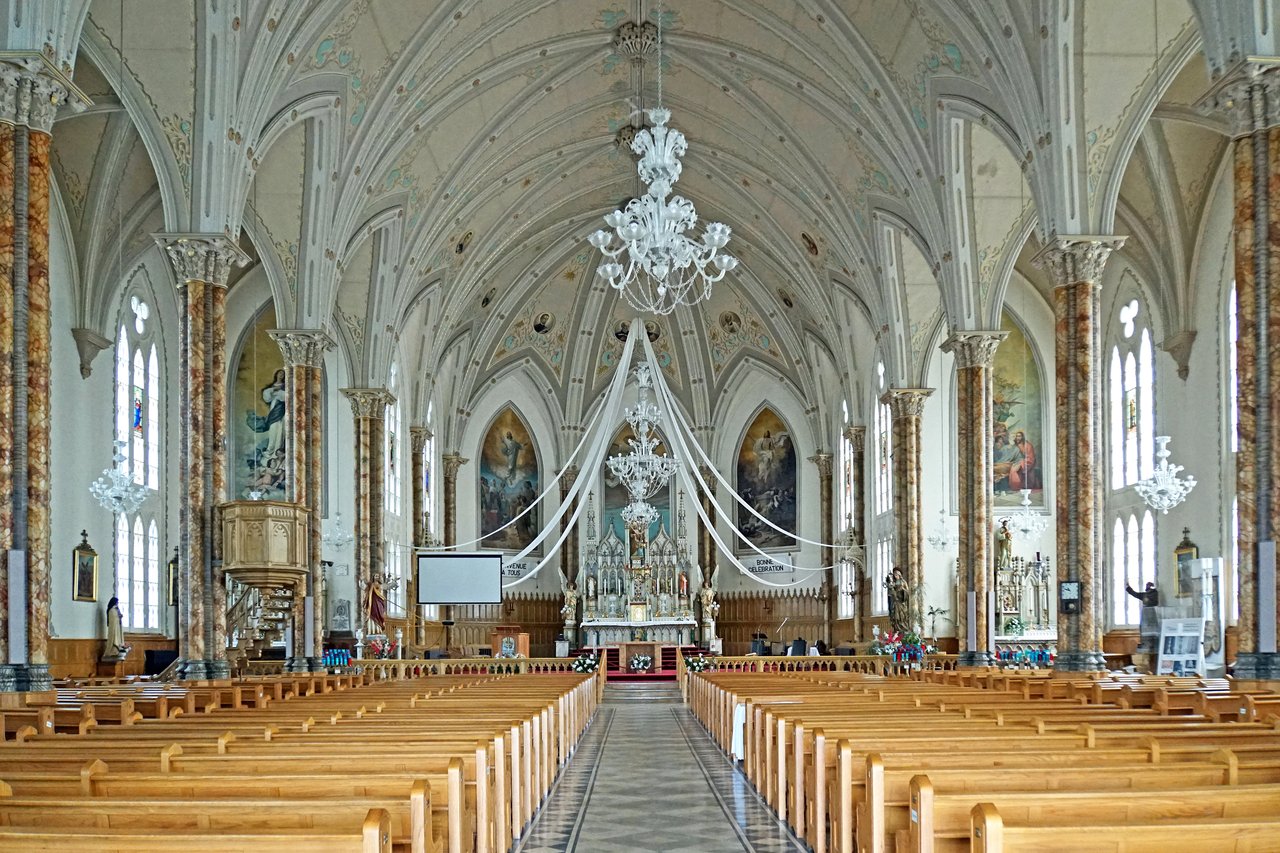
9:00 AM — Place d’Armes and the Old Montreal wander (free)
Start at Place d’Armes, the square in front of Notre-Dame, before the tour buses arrive. Give yourself a full hour to zigzag the cobblestone streets — Rue Saint-Paul is the oldest street in the city, all stone facades and gallery windows, and Rue Saint-François-Xavier has my favourite old bank buildings. Pro tip: download an offline map before you go. The streets are a beautiful maze and I took the wrong one twice (the second time was arguably on purpose).
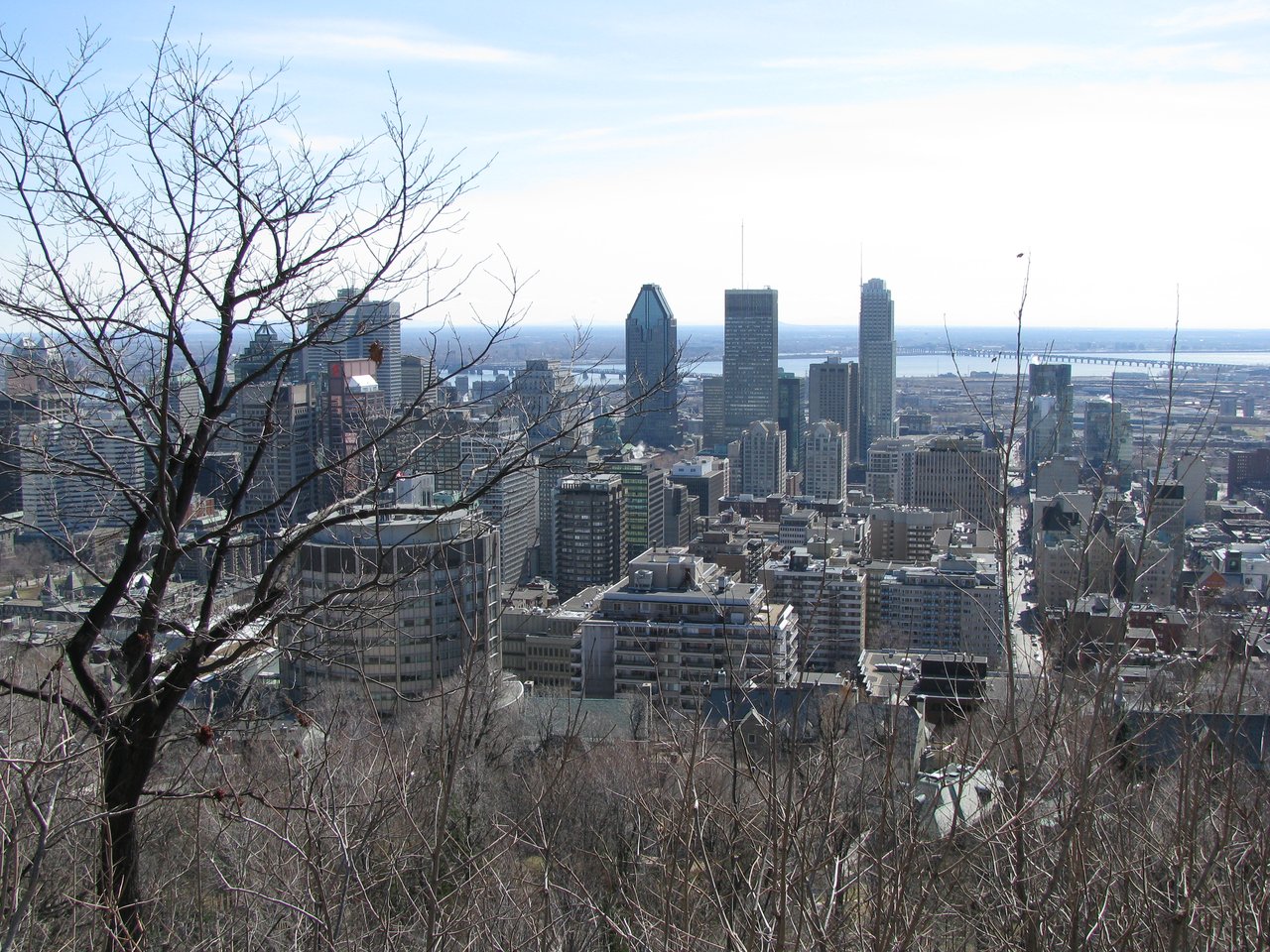
10:00 AM — Notre-Dame Basilica ($16)
Do not skip this — I’ll be honest, I almost did on my first visit because “another church,” and it would have been the biggest mistake of the trip. The interior is a blue-and-gold fever dream: deep blue ceiling studded with gold stars, carved wood everywhere, and light that makes everyone look like they’re in a painting. Get there close to the 9 AM opening if you can; by noon the tour groups arrive and the vibe changes.
Practical notes (I double-checked the hours on the Basilica’s official site before I went — they shift with the seasons, so do the same):
- Hours: Monday–Saturday 9:00 AM–4:00 PM, Sunday 12:30–4:00 PM.
- Admission: $16 for adults, $14 students 17–22, $10 children 6–16. Tickets at the door.
- Evening option: AURA, the Moment Factory light-and-sound show inside the basilica, runs most evenings — adult tickets from ~$37. It’s the splurge alternative to tonight’s free plan. → Notre-Dame Basilica — official AURA page
→ Notre-Dame Basilica — official site, hours & tickets
12:30 PM — Lunch: poutine on Rue Saint-Paul (~$15)
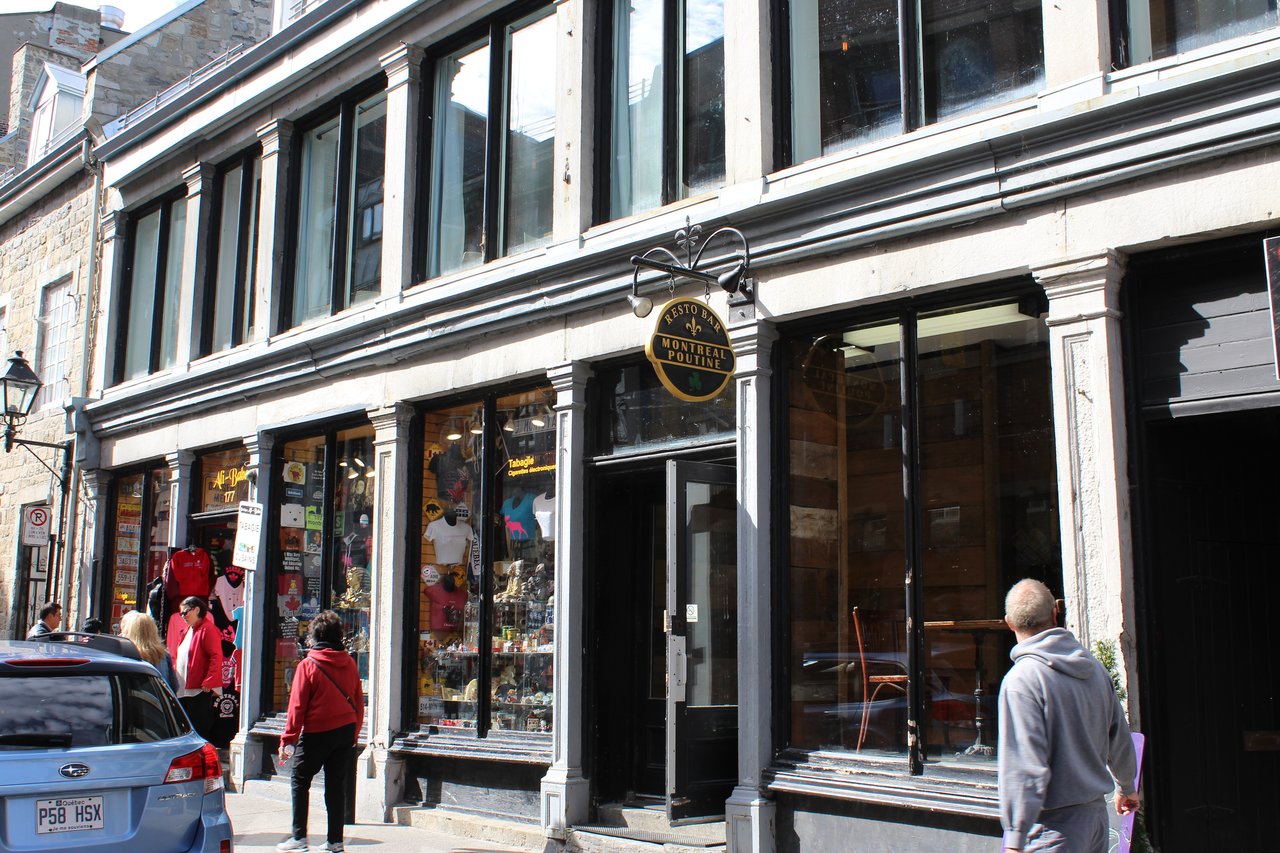
You need a proper poutine within your first six hours in Montreal — those are my rules. Rue Saint-Paul and the side streets are lined with casual spots; a classic poutine runs ~$10–15 depending on toppings. Order it with the cheese curds squeaky (they should squeak, that’s how you know) and sit on a terrace if the weather’s cooperating. Fair warning: Old Montreal menus skew tourist-priced, so peek at the posted menu before you commit — I didn’t once, and my $24 club sandwich still haunts me.
2:00 PM — The Old Port and La Grande Roue (from ~$30)
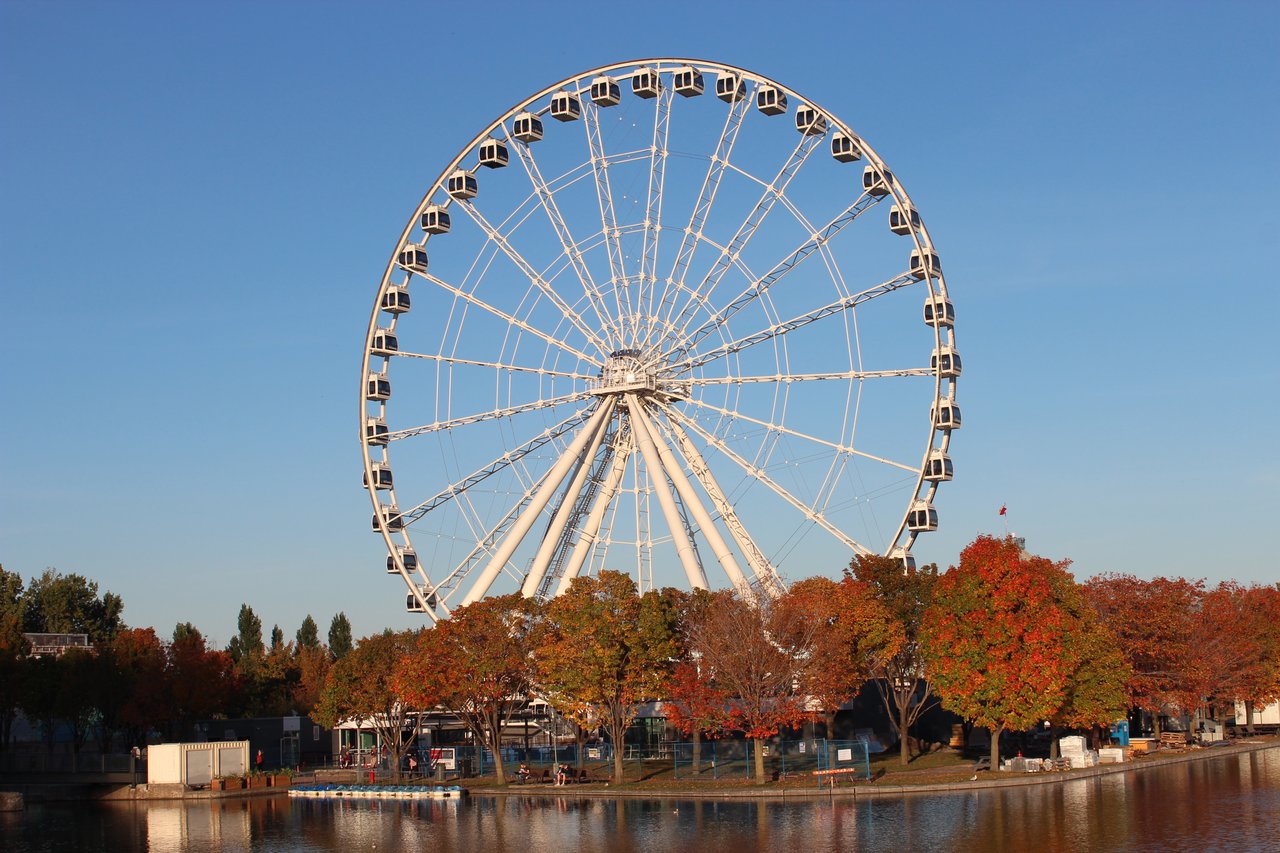
Walk downhill to the water (everything in Old Montreal slopes toward the St. Lawrence — gravity is your tour guide). The Old Port promenade is made for the post-lunch amble: street performers, the Clock Tower beach in summer, and La Grande Roue, Canada’s tallest observation wheel at 60 metres. The ~20-minute ride in a climate-controlled gondola gives you the skyline, the river and Mount Royal in one slow circle. Adult tickets run from ~$30 depending on where you book — I grabbed mine online ahead of time and walked straight past the ticket line, which felt like a small personal victory. Sunset rides are the move if your timing flexes.
6:30 PM — Dinner, then Cité Mémoire after dark (free)
Dinner back in Old Montreal — the terraces on Place Jacques-Cartier are lively and the people-watching is elite. Then, as night falls, go see Cité Mémoire: huge video projections beamed onto the walls of Old Montreal buildings, telling the city’s history in light and sound. It’s completely free, and it turned my evening stroll into one of those travel moments I still think about. It runs Wednesday to Sunday evenings (2026 schedule: as soon as night falls, from mid-May onward) — download the free Montréal en Histoires app before you go for the soundtracks in English. → Cité Mémoire — official schedule
If you’d rather do the AURA basilica show tonight instead, book the late slot and flip Cité Mémoire to a post-dinner walk — both are evening plans, so pick one.
Day 1 spending: transit day share ~$7 + Basilica $16 + La Grande Roue ~$30 + food ~$60 ≈ ~$115 (excluding hotel).
Day 2: Mount Royal, bagels, smoked meat & the Plateau
Day 2 is the local Montreal — the one residents brag about. Start early on the mountain and let the day get progressively more delicious.

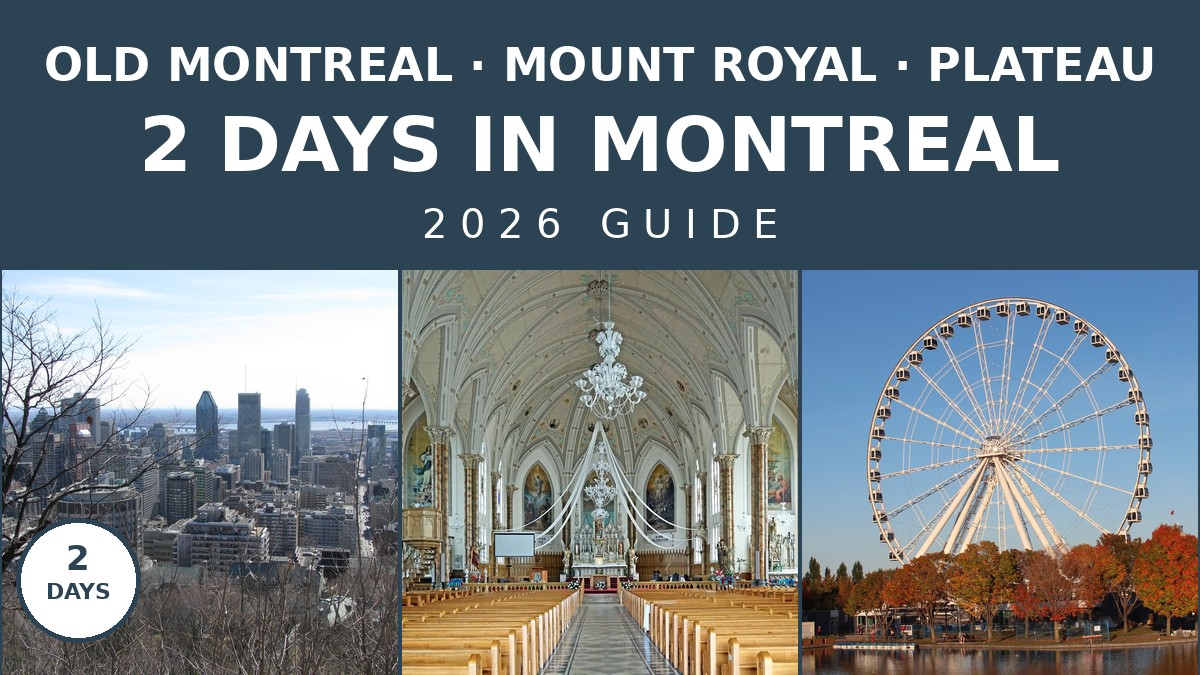
8:30 AM — Mount Royal and the Kondiaronk Belvedere (free)
The mountain is the city’s backyard, designed by Frederick Law Olmsted (yes, the Central Park guy). Walk up from the Peel Street entrance — it’s about 30–45 minutes of steady uphill through the trees, and the Kondiaronk Belvedere at the top hands you the entire downtown skyline in one panorama. I showed up at 8:30 AM on a weekday once and had the lookout nearly to myself; by 11 it belongs to everyone. The illuminated cross nearby is a Montreal icon, and the Maison Smith visitor centre at the trailhead has maps and washrooms. Free, obviously — the best views in the city always are.
11:00 AM — Wood-fired bagels in Mile End (~$5)
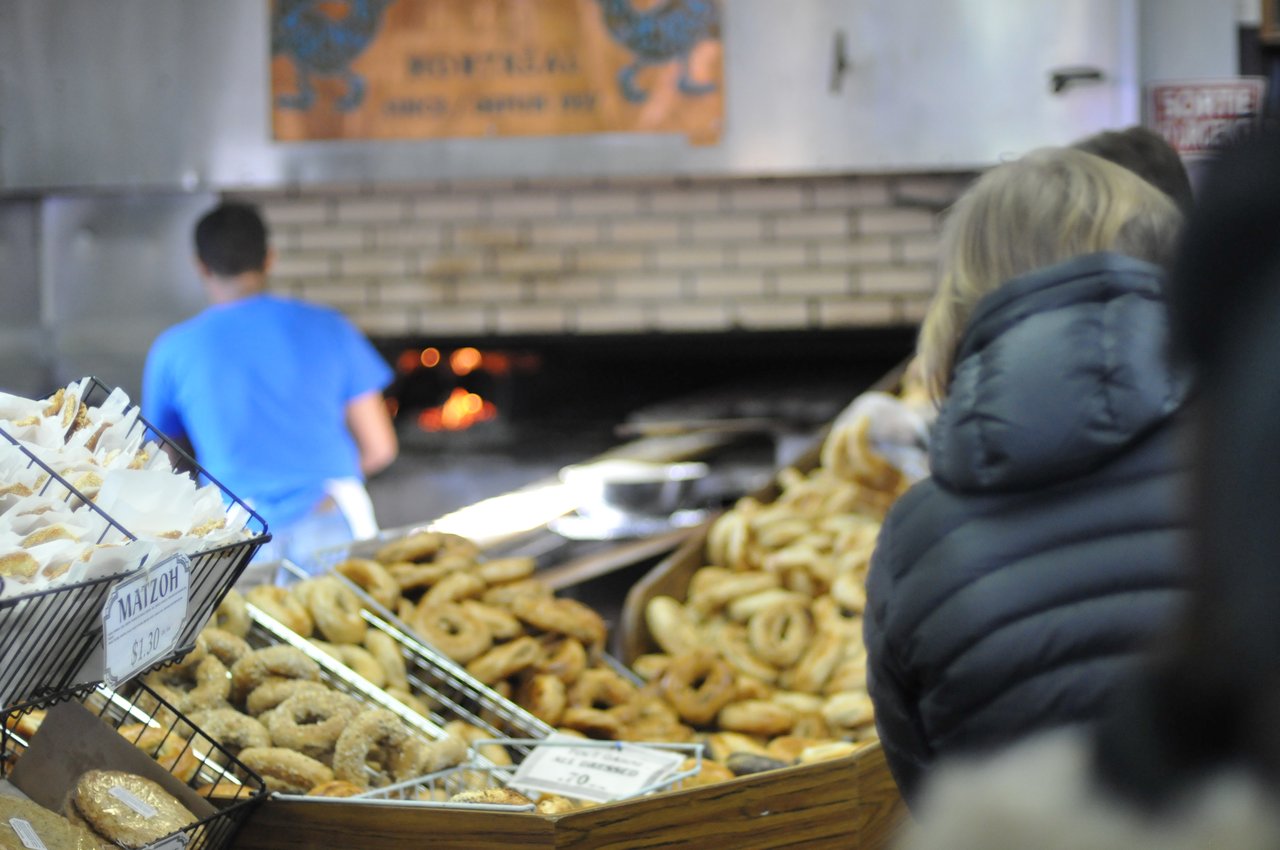
Take the Metro to Mile End for the great Montreal debate: St-Viateur vs. Fairmount. A barista in Mile End told me the correct answer is “try both and pick your team,” which is the most Montreal sentence I’ve ever heard. The original St-Viateur on Rue Saint-Viateur runs around the clock with the wood ovens going — and here’s the thing, you can smell it from half a block away. A still-warm sesame bagel costs about a buck; get a half dozen (~$5–7) and eat two immediately like a normal person.
12:30 PM — Schwartz’s Deli (~$13)
Now the main event: Schwartz’s at 3895 Boulevard Saint-Laurent, serving smoked meat since 1928. The sandwich — hand-sliced, piled on rye with yellow mustard — runs ~$13, and it is worth every penny. Two confessions: I showed up at noon on a Saturday once. Never again — okay, it was still worth it, but here’s the actual pro tip: there are two lines, and the takeout line moves three times faster than the dine-in line. Grab your sandwich to go and eat it on the bench outside like a local. Second confession: I found out the hard way that the dining room is cash-only, so hit an ATM first. (The black cherry soda is mandatory. I don’t make the rules.) → Schwartz’s Deli — official site
Hours: daily 10:00 AM–11:00 PM, Friday–Saturday until midnight.
2:30 PM — Plateau Mont-Royal murals and staircases (free)
Walk it off through the Plateau — and fair warning, this neighbourhood will make you want to move here. Boulevard Saint-Laurent and the side streets are an open-air gallery of huge murals (the MURAL Festival paints new ones every June), and the famous outdoor spiral staircases curl up the fronts of the triplexes on every residential street. I’ve photographed the same turquoise staircase on Rue Duluth three times now and I am not done. No plan needed: just wander between Saint-Laurent and Saint-Denis, pop into the bookshops, and let the neighbourhood do the work.
4:00 PM — Marché Jean-Talon (snacking ~$15)
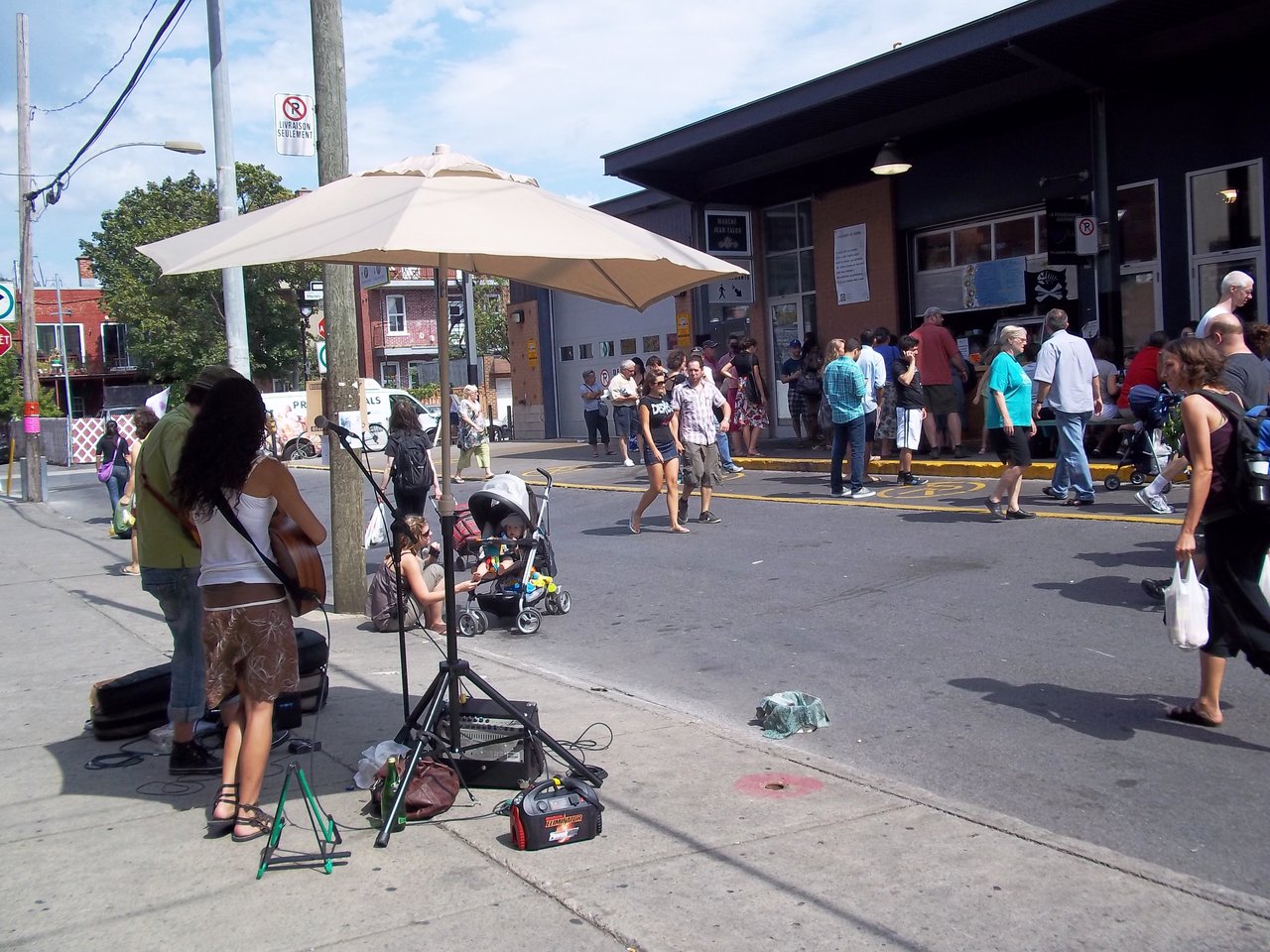
End the afternoon at Marché Jean-Talon in Little Italy — one of North America’s great public markets. In summer the outdoor stalls overflow with Quebec berries, corn and tomatoes; year-round the covered halls do cheese, charcuterie, pastries and maple everything. Go hungry-ish and graze: a maple soft-serve here, a chunk of Oka there. I checked the hours on the official market site before my visit — they’re Monday–Saturday 8:00 AM–6:00 PM, Sunday 8:00 AM–5:00 PM, and they mean it. → Marché Jean-Talon — official hours
7:00 PM — Dinner in Mile End or Little Italy
You’re already in the right neighbourhood. Mile End does casual-cool (wood-fired everything, natural wine bars), Little Italy does red-sauce comfort on Boulevard Saint-Laurent. Budget ~$25–40 per person for a relaxed dinner with a glass of something. Then Metro home, feet up — you’ve earned it.
Day 2 spending: transit day share ~$7 + bagels ~$5 + Schwartz’s ~$13 + Jean-Talon ~$15 + dinner ~$35 ≈ ~$75 (excluding hotel).
How much does 2 days in Montreal cost?
Sample budget per adult, excluding hotel (prices checked October 2026; items marked ~ are estimates):
| Item | Cost (CAD) |
|---|---|
| STM 3-day transit pass (All Modes A) | $21.75 |
| Notre-Dame Basilica (adult 23+) | $16 |
| La Grande Roue (adult) | ~$30 |
| Schwartz’s smoked meat sandwich + soda | ~$15 |
| Bagels + Jean-Talon grazing | ~$20 |
| Food & drinks, 2 days (lunches, dinners) | ~$100–140 |
| AURA evening show (optional splurge) | from ~$37 |
| Total (without AURA) | ~$200–245 |
Hotels add ~$180–350/night depending on neighbourhood — see our best area to stay in Montreal for tourists to pick your base. Pairing this with Quebec City? Our 2-day Quebec City itinerary picks up right where this one leaves off.
Timeline at a glance
| Day | Morning | Afternoon | Evening |
|---|---|---|---|
| Day 1 | Place d’Armes + Old Montreal wander (free) → Notre-Dame Basilica ($16) | Poutine lunch on Rue Saint-Paul (~$15) → Old Port + La Grande Roue (~$30) | Dinner in Old Montreal + free Cité Mémoire projections |
| Day 2 | Mount Royal + Kondiaronk Belvedere (free) → Mile End bagels (~$5) | Schwartz’s smoked meat (~$13) → Plateau murals (free) → Jean-Talon Market (~$15) | Dinner in Mile End / Little Italy |
FAQs about 2 days in Montreal
Is 2 days enough for Montreal?
Yes — two days is the sweet spot for a first visit. Day 1 covers Old Montreal, Notre-Dame Basilica and the Old Port; Day 2 covers Mount Royal, Mile End bagels, Schwartz’s smoked meat, the Plateau and Jean-Talon Market. You’ll leave with a real feel for the city, and a very strong urge to come back for the festivals.
How much does a 2-day trip to Montreal cost?
Budget roughly $200–245 CAD per adult excluding hotels (October 2026 prices): ~$52 for the STM 3-day pass and the two paid attractions (Basilica $16, La Grande Roue ~$30), plus ~$150–195 for food over two days. Hotels run ~$180–350/night depending on the neighbourhood.
Do I need to speak French in Montreal?
No, but a little goes a long way. Montreal is the world’s second-largest French-speaking city, and almost everyone in tourist areas speaks excellent English — but opening with “bonjour” instead of “hi” earns you visibly warmer service. Learn “merci” (thank you) and “s’il vous plaît” (please) and you’ll be fine everywhere in this itinerary.
What’s the best area to stay in for 2 days in Montreal?
For first-timers, Downtown is the most practical base — central, well-connected, and full of hotel choice. Old Montreal is the most atmospheric (and priciest); the Plateau and Mile End are the most local-feeling. All three sit on the Metro lines this itinerary uses. See our best area to stay in Montreal for tourists for the full breakdown.
Is Schwartz’s Deli worth the wait?
Yes — the smoked meat sandwich (~$13) is the real thing, and the 1928 dining room is half the experience. But skip the dine-in line: the takeout line moves much faster. Go at off-peak hours (mid-afternoon, not noon Saturday), bring cash for the dining room, and order the black cherry soda.
Do I need a car for 2 days in Montreal?
No. This entire itinerary runs on foot, the Metro and the occasional BIXI bike. A 3-day STM pass ($21.75) covers every ride you’ll take, and both days are built around walkable neighbourhoods. The only wheels you need are the ones on La Grande Roue.
6 comments