
Last updated: October 3, 2026

The short answer
- The Rockies win the list: Banff, Lake Louise, Moraine Lake, the Icefields Parkway, and Jasper are the five places I’d build any first Alberta trip around — book the Lake Louise/Moraine Lake shuttles the minute reservations open in April.
- Don’t skip the east and south: Drumheller’s badlands and the Royal Tyrrell Museum (adult ~$25) plus Waterton Lakes and Writing-on-Stone show you an Alberta most visitors never see.
- Budget smart: A Parks Canada Discovery Pass (~$84 adult / ~$168 family for 12 months in 2026) pays for itself fast, and 7–10 days is the sweet spot for the full loop from Calgary.
Fifteen places. I’ve now stood in front of all of them, notebook in hand, and I’ll be honest: this list nearly broke my spreadsheet. Alberta is one of those rare destinations where the greatest hits (Banff, Lake Louise, Jasper) genuinely deserve their fame AND the lesser-known corners (the badlands, Waterton) sneak up and steal the show. Here’s the thing — most people plan a Rockies trip and tack Alberta’s other gems on “if there’s time.” There never is. So this 2026 guide gives every one of the 15 its proper due, with current prices, honest crowd warnings, and the mistakes I made so you don’t have to.
1. Banff National Park — The Crown Jewel
Banff is Canada’s first national park and still its most famous, and yes, it lives up to the hype — with one caveat that changed everything about how I plan: the crowds are real, and the logistics reward the planner. (Hi, it’s me. I was born for this.)
Start in the town of Banff itself. The Sulphur Mountain Gondola whisks you 2,281 metres up in eight minutes to a boardwalk with six mountain ranges on display. Pro tip: book the first ride of the day. I showed up at 11 AM on a Saturday once and spent more time in the queue than on the summit — never again. At the top, the summit boardwalk is an easy stroll, and the interpretive center is genuinely good (not gift-shop-with-pretensions good — actually good). In 2026 adult rides run in the mid-$70s; I double-checked the current price on the gondola’s official site before I went, and you should too, because mountain attraction pricing moves around more than you’d think.
Back at ground level, Cave and Basin National Historic Site is where Canada’s park system was born — a steamy little grotto with a genuinely weird and wonderful origin story. And after a day on your feet, the Banff Upper Hot Springs (~40°C mineral water, mountains all around) is worth every penny. Fair warning: go on a weekday evening. The weekend line at the change rooms tested my patience in a way only hot springs can.
Canmore, 20 minutes east of the park gates, is where I’d stay if Banff prices make you wince (they will — I priced a July weekend once and closed the tab). It’s the locals’ mountain town: Ha Ling Peak for hikers, craft breweries for everyone else, and a Main Street that hasn’t been fully polished for Instagram yet. Trust me on this one — at least one dinner in Canmore.
2. Lake Louise — The Icon (and the Plan It Demands)
Lake Louise is the turquoise lake on every Alberta postcard, and here’s the thing nobody tells you first: it’s the system around it that makes or breaks your visit, not the lake itself (the lake is perfect; it has never once disappointed me).
In 2026, Parks Canada shuttles are the whole game. Moraine Lake Road is closed to personal vehicles year-round — the only way in is a Parks Canada shuttle, a licensed commercial operator, or your own two feet. Reservations launched April 15, 2026 at 8 AM MDT: 40% of seats on launch day, the remaining 60% released on a rolling 48-hour window (8 AM, two days before departure). I learned this the sweaty way in my first attempt years ago — showed up hoping to wing it, watched full buses sail past, and ended up hiking the wrong trail to console myself. Set the alarm. Create your Parks Canada account in advance. → Parks Canada — Lake Louise & Moraine Lake shuttle reservations
Once you’re there, walk the Lakeshore Trail (flat, 4 km return, about an hour) — and then keep going. The crowds thin dramatically past the first kilometre, which is where the lake gets quiet enough to hear the ice cracking off Victoria Glacier. I timed it: shoreline serenity achieved at roughly the 20-minute mark. Do not skip the Lake Agnes Tea House hike either (7.6 km return, switchbacks included, alpine tea at the top tastes 40% better because of the view — science).

3. Moraine Lake — Sunrise, Ten Peaks, Zero Cars
Moraine Lake is ten minutes from Lake Louise by shuttle and somehow feels like a different planet — the Valley of the Ten Peaks rises straight up behind water so blue it looks edited. (It isn’t. I checked. Twice.)
The shuttle reservation that gets you to Lake Louise includes the Lake Connector between the two lakes, so plan both in one morning — I’ll be honest, arriving at Moraine Lake before 8 AM is the single best crowd-avoidance move in this entire guide. The Rockpile Trail is the classic viewpoint: a short, steep staircase of a climb (20 minutes, legs burning, worth it). The first time I did it I was too busy framing the shot to notice the actual view; the second time I left the camera in the bag for ten minutes. Pro tip disguised as a confession: do the second one first.
4. The Icefields Parkway — The Drive Is the Destination
Highway 93 North from Lake Louise to Jasper: 230 km, and everyone — including me, in my notes app, in all caps — calls it one of the most beautiful drives on Earth. It is. But here’s the thing: it is not a “drive.” It is a full-day, stop-every-twenty-minutes, pack-a-picnic event. I allowed five hours my first time and finished the drive in nine. Zero regrets. Game-changer: fill the tank and pack lunch in Lake Louise, because there’s essentially nothing between there and Saskatchewan Crossing but glory.
My can’t-miss stops, north to south:
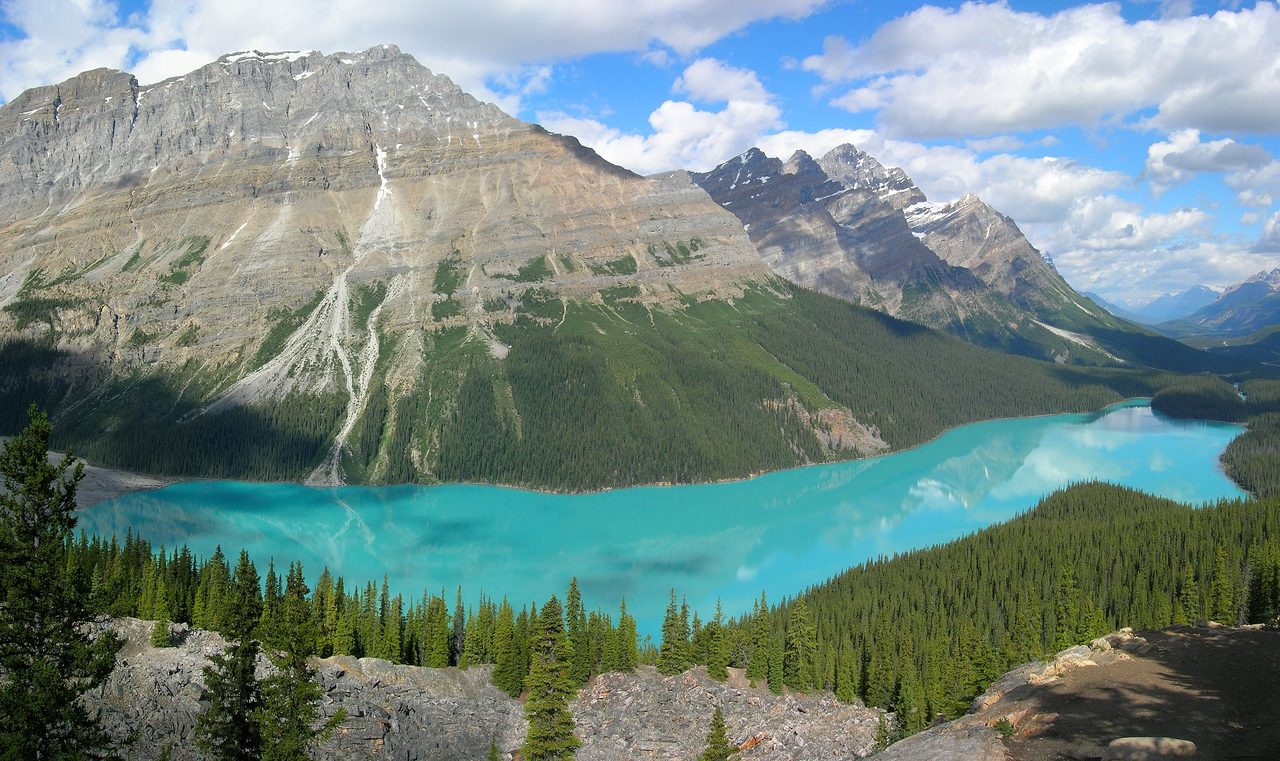
- Peyto Lake — the famous wolf-head-shaped one, best from the Bow Summit overlook (a short climb from the parking lot — I made my brother race me up it; I lost, gracefully). The color in July is unreal.
- Bow Lake — quieter, moodier, often half-empty while everyone queues for Peyto. A ranger at the overlook told me the Num-Ti-Jah Lodge shoreline is the best picnic spot on the parkway, and she was right.
- Columbia Icefield (see below) — the halfway point and the biggest stop.
- Athabasca Falls & Sunwapta Falls — both short walks from the road, both thunderous in early summer. Athabasca at full spring melt is the loudest water I’ve ever heard outside of Niagara.
For the full route breakdown, see our Banff to Jasper road trip itinerary — and if you’re doing the whole province, our Alberta road trip itinerary strings the loop together.
5. Columbia Icefield — Walk on Ancient Ice
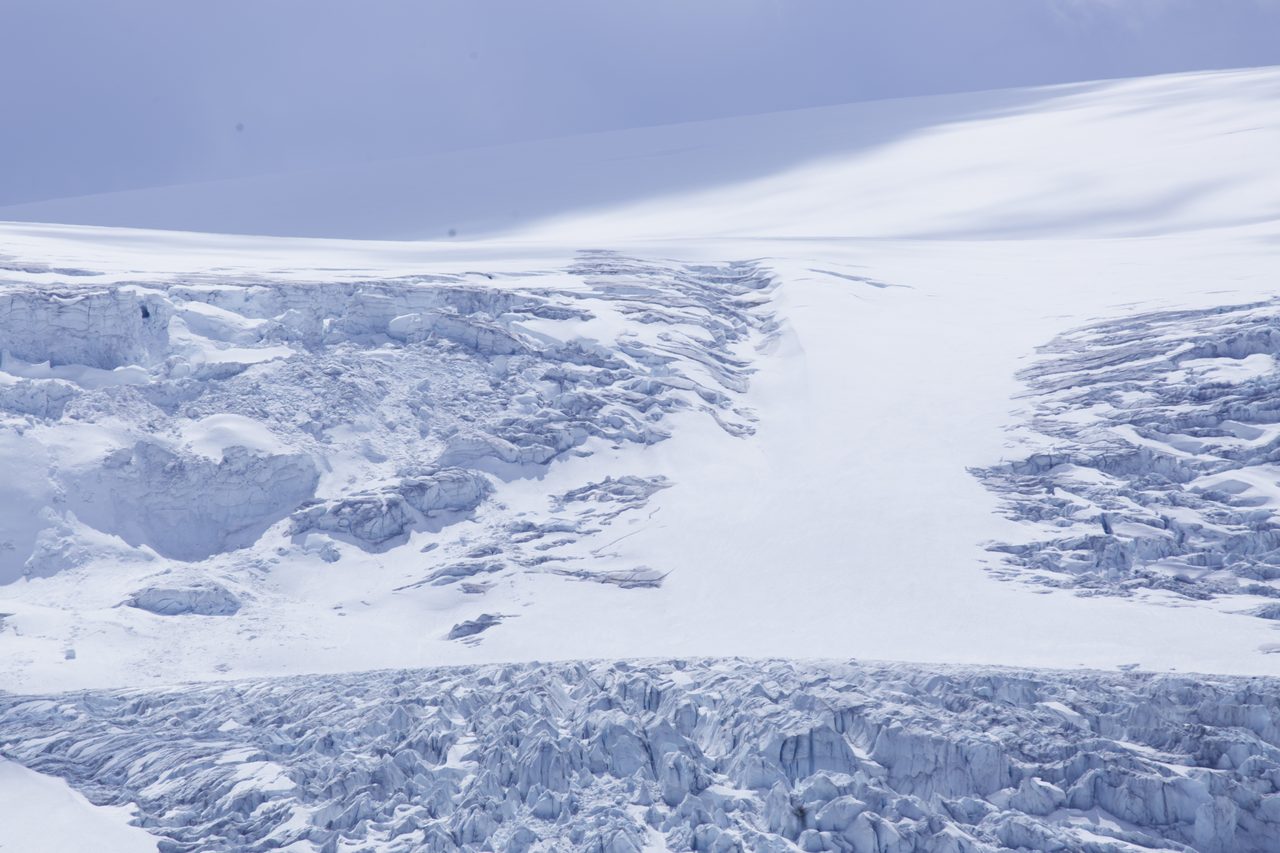
At the parkway’s midpoint, the Columbia Icefield spills the Athabasca Glacier down toward the road, and you can ride a purpose-built Ice Explorer vehicle straight onto it. I’ll be honest: I was skeptical this would feel touristy. It didn’t — standing on ice hundreds of years old, drinking glacier meltwater from a little stream, recalibrated my whole sense of time. Fair warning: it is bright up there. I forgot my sunglasses once and spent the tour squinting like a mole person. Bring them, bring sunscreen (the reflection is no joke), and bring a layer — it’s noticeably colder on the ice.
The Columbia Icefield Skywalk — a glass-floored walkway over a 280-metre drop — is right across the road and pairs perfectly with the glacier tour. Combo tickets exist and they’re the move. Book ahead in summer; the Ice Explorer seats sell out on sunny July days the way the Moraine Lake shuttles do.
6. Jasper National Park — Rugged, Relaxed, and Rebuilding
Jasper is Banff’s wilder, quieter sibling — and in 2026 it deserves your visit for one more reason: the town and park are still visibly recovering from the devastating July 2024 wildfire, and tourism is part of the comeback. Hotels, restaurants, and tour operators are open and welcoming visitors; per Parks Canada, virtually all trails have reopened for summer 2026, with the notable exception of Cavell Road and Maligne Canyon, which remain closed for the 2026 season while slope rehabilitation continues. I double-checked the closure status on Parks Canada’s official recovery page before writing this — check it again before you go, because reopening work moves in stages. → Parks Canada — Jasper wildfire recovery updates

The headline act is Maligne Lake and the Spirit Island cruise — a 90-minute narrated boat ride down one of the most photographed lakes in Canada to a tiny island backed by glacier-hung peaks. Cruises run roughly late May to mid-October 2026, starting around ~$72–82 adult; book ahead, because summer sailings sell out. I took the morning cruise on glassy water and the reflections were so perfect I kept checking they were real. (They were. I asked a couple next to me. We all just stared.)
Jasper is also one of the world’s largest Dark Sky Preserves — the stargazing here is genuinely elite, and the October Dark Sky Festival brings astronomers and telescopes to town. Pyramid Lake at sunrise is my quiet-morning pick: mirror reflections, usually empty, five minutes from town. And the wildlife? Elk on the golf course, bighorn sheep on the parkway, bears doing bear things in the meadows — I watched a grizzly do absolutely nothing for twenty minutes near the Columbia Icefield and it was one of the best twenty minutes of my trip. Keep 30+ metres away. Always.
7. Drumheller & the Canadian Badlands — Dinosaurs and Hoodoos
Turn east from the mountains and Alberta becomes a different planet: striped coulees, sandstone hoodoos, and the densest dinosaur fossil beds on Earth. Drumheller is the gateway town, and the Royal Tyrrell Museum is the reason to go — one of the world’s great dinosaur museums, with 40+ mounted skeletons including a T. rex and the impossibly well-preserved nodosaur Borealopelta. In 2026 adult admission is ~$25 and summer hours run 9 AM–9 PM daily; I checked the current hours on the museum’s official site before my visit — they change seasonally, so do the same. Allow at least two hours. My dinosaur-obsessed inner child needed three. → Royal Tyrrell Museum — official site
Outside the museum, the badlands are free and spectacular:
- Horseshoe Canyon — a massive U-shaped canyon of banded rock, twenty minutes west of Drumheller. The rim trail is easy; dropping into the coulees is where the adventure is. I went down with one water bottle in July heat. Do not be me. Bring two.
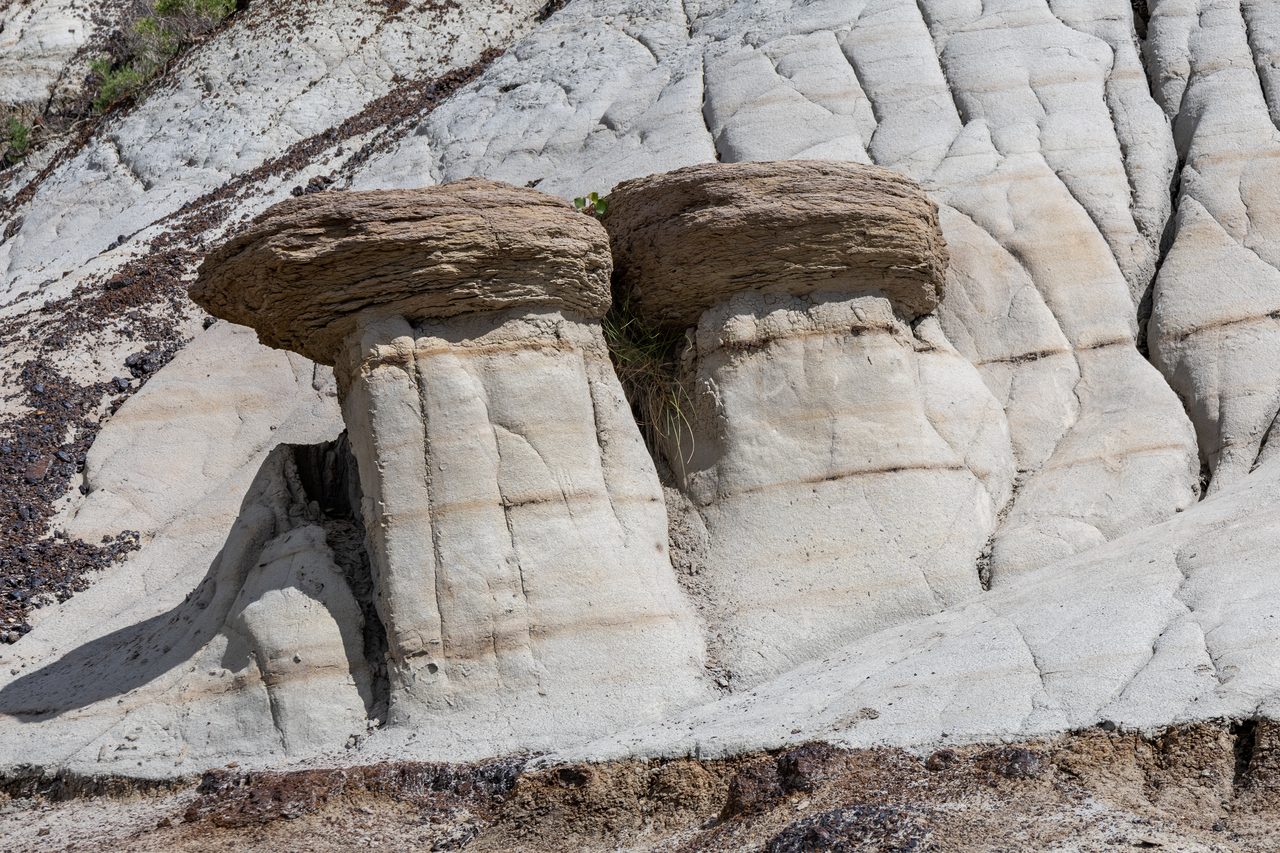
- The Hoodoos Trail — sandstone spires with caprocks that look sculpted by a very patient alien. Short walk, huge payoff.
- Writing-on-Stone Provincial Park (Áísínai’pi) — further south, a UNESCO World Heritage Site holding the largest concentration of Indigenous rock art on the Great Plains. The petroglyphs and pictographs go back thousands of years; take a guided tour to see the protected panels. I’ll be honest: this one moved me more than I expected. Book the tour — the self-guided trails don’t reach the main panels.
8. Waterton Lakes & Southern Alberta — The Quiet Corner
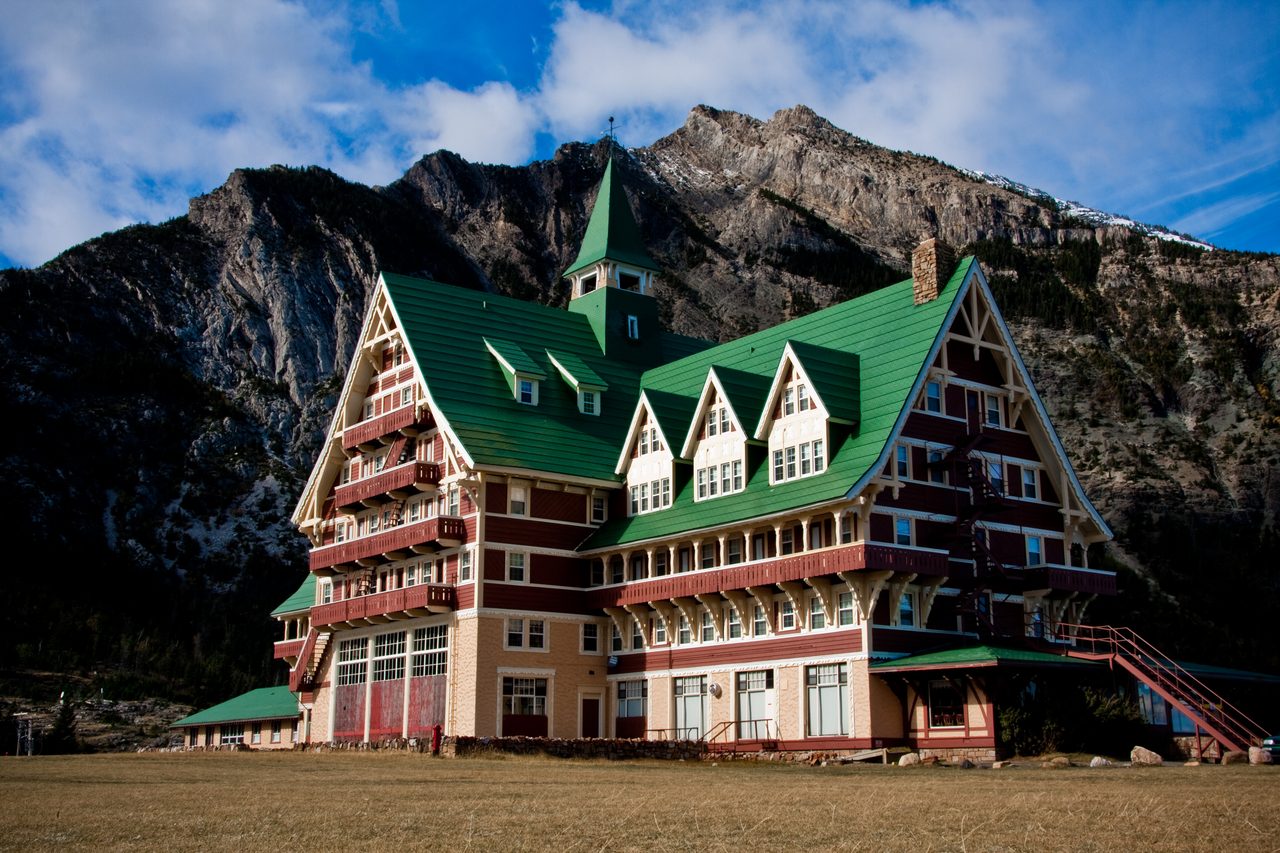
Waterton Lakes National Park is where the prairies crash into the Rockies, and because it’s a detour from the Banff–Jasper corridor, it stays blissfully uncrowded. The Prince of Wales Hotel — a 1927 railway hotel perched on a bluff above Upper Waterton Lake — is one of the most photographed buildings in Canada, and afternoon tea on its terrace is worth the splurge. Even if you don’t stay (book months ahead — it fills), walk the lakeshore trail beneath it at golden hour.
Thrill-seekers: the Crypt Lake hike starts with a boat shuttle across the lake, then climbs past waterfalls, through a natural tunnel, and along a cliff-side ledge with a cable for company. It’s routinely called one of Canada’s best day hikes, and it earns it — but it’s a full, serious day (17+ km), so start early and check the boat schedule the night before. I watched a couple sprint for the last boat back. Stressful. Not aspirational.
For the drive between the parks, take Highway 22 — the Cowboy Trail — through ranching country, with the Rockies as a constant backdrop. Stop at Lundbreck Falls, where the Crowsnest River drops over a 12-metre limestone lip. It’s the kind of stop my spreadsheet would never have scheduled and my memory kept anyway.
9. Calgary & Edmonton — The Urban Bookends
Alberta’s two cities make perfect trip bookends (fly into one, out of the other), and they’re more fun than their “cowboy town / government town” reputations suggest.
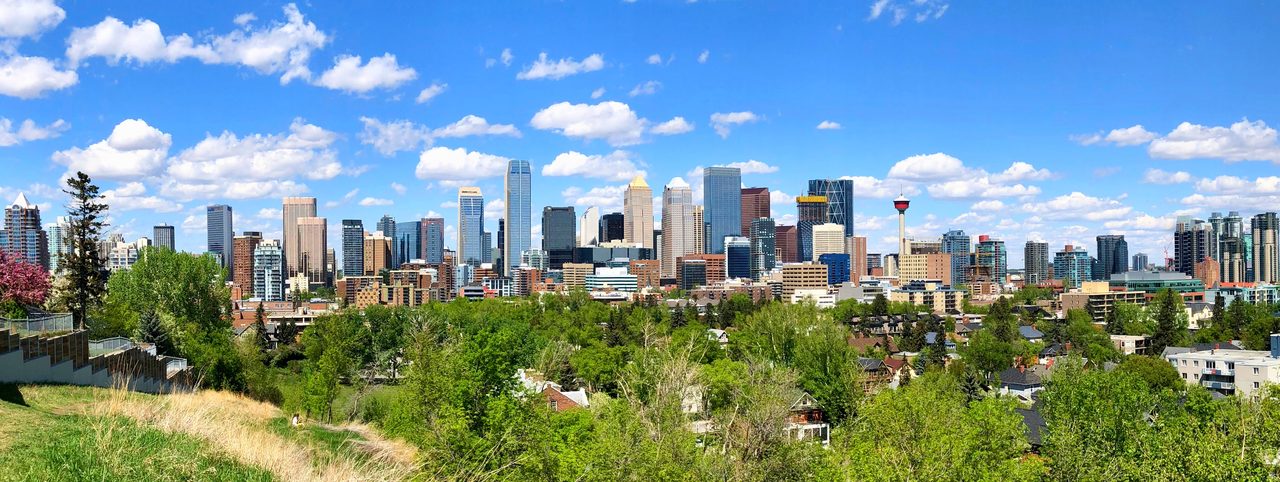
Calgary blends glass towers with genuine western roots. Heritage Park (Canada’s largest living history museum) is my top pick for a half-day, the Bow River pathway system is one of the best urban trail networks in the country, and 17th Ave and Stephen Avenue cover the food-and-drink beat. If you’re here in early July, the Calgary Stampede — ten days of rodeo, concerts, and pancake breakfasts — is either the best or the most overwhelming thing you’ll ever attend. (Both. It’s both.) See our 3-day Calgary itinerary and 2-day Calgary itinerary for the full plan.
Edmonton is Festival City for a reason — the August Fringe Theatre Festival is the biggest and oldest fringe festival in North America, and summer weekends are stacked. The River Valley (160+ km of trails, the largest urban parkland in North America) surprised me the most — I expected a mall city and got a trail city with a mall in it. The West Edmonton Mall is still a spectacle worth a look, and Old Strathcona’s Whyte Avenue does the historic-artsy thing well. See our 2-day Edmonton itinerary.
When to visit Alberta
Here’s the thing: Alberta is genuinely a four-season destination, but for this list, July through mid-September is the sweet spot — alpine trails are snow-free, the lakes are at peak color, and everything is open. June can still have snow at high elevations (I once postholed through a “summer” trail at Lake Louise in late June — ask me about my socks). Late September brings golden larches and thinner crowds, which my planner heart loves. Winter (December–March) flips the script: world-class skiing at Lake Louise, Sunshine Village, and Marmot Basin, frozen waterfalls, and Banff’s hot springs in falling snow. Shoulder-season travelers: confirm 2027 seasonal dates on official sites before booking, since gondolas and cruises run on their own calendars.
How much does Alberta cost?
Sample budget per adult for a 7-day Rockies loop (2026 prices checked October 2026; items marked ~ are estimates):
| Item | Cost (CAD) |
|---|---|
| Parks Canada Discovery Pass (12 months, adult) | ~$84 |
| Lake Louise / Moraine Lake shuttle | ~$8 |
| Sulphur Mountain Gondola (Banff) | ~$76 |
| Columbia Icefield glacier tour + Skywalk combo | ~$110–130 |
| Maligne Lake cruise to Spirit Island | ~$72–82 |
| Royal Tyrrell Museum (Drumheller) | ~$25 |
| Car rental, 7 days (split between 2) | ~$350–500 |
| Mid-range hotels, 7 nights | ~$1,050–1,750 |
| Food & drinks, 7 days | ~$450–600 |
| Total (solo share) | ~$2,225–3,245 |
Pairing Banff days with city days? See our Banff travel guide and 2-day Banff itinerary for tighter plans.
A 7-day Alberta route at a glance
| Day | Where | Highlights |
|---|---|---|
| Day 1 | Calgary → Banff | Sulphur Mountain Gondola (~$76), Banff town, Upper Hot Springs |
| Day 2 | Lake Louise & Moraine Lake | Shuttle day (booked in April!), Lakeshore Trail, Rockpile viewpoint |
| Day 3 | Icefields Parkway → Jasper | Peyto Lake, Bow Lake, Columbia Icefield glacier tour (~$110–130) |
| Day 4 | Jasper | Maligne Lake cruise (~$72–82), Pyramid Lake, dark-sky stargazing |
| Day 5 | Drumheller Badlands | Royal Tyrrell Museum (~$25), Horseshoe Canyon, Hoodoos Trail |
| Day 6 | Waterton Lakes | Prince of Wales Hotel, Crypt Lake hike or lakeshore trails, Cowboy Trail drive |
| Day 7 | Calgary or Edmonton | Heritage Park or River Valley trails, Stampede (July) or Fringe (August) |
FAQs about visiting Alberta
How many days do I need in Alberta?
Seven to ten days covers all 15 places at a humane pace: 2–3 days for Banff and Lake Louise, a full day for the Icefields Parkway, 1–2 days in Jasper, a day for Drumheller’s badlands, a day for Waterton Lakes, and a city day in Calgary or Edmonton. With only 3–4 days, stick to the Banff–Lake Louise–Icefields Parkway core and save the badlands and Waterton for next time.
Do I need a car to visit Alberta?
For this list, yes — a car is the practical choice. The Icefields Parkway, Drumheller badlands, Waterton Lakes, and the Cowboy Trail have no meaningful public transit, and the distances are big (Calgary to Jasper is ~415 km). Calgary and Edmonton themselves are easy without a car, and Banff town is walkable with Roam transit, but the full 15-place loop needs wheels. See our Alberta road trip itinerary for the driving plan.
Is Jasper open in 2026 after the 2024 wildfire?
Yes — Jasper National Park and the townsite are open and welcoming visitors in 2026, with hotels, restaurants, and tour operators running. Per Parks Canada, virtually all trails reopened for summer 2026; the exceptions are Cavell Road and Maligne Canyon, which remain closed for the 2026 season during slope rehabilitation. Expect some visible recovery work around town — and consider it a good reason to visit, not to stay away. Check Parks Canada’s Jasper recovery page before you go.
How do I get to Moraine Lake in 2026?
Only by shuttle. Moraine Lake Road is closed to personal vehicles year-round, so you need a Parks Canada shuttle reservation (launched April 15, 2026 at 8 AM MDT, with 60% of seats released on a rolling 48-hour window), a seat on Roam Public Transit from Banff, or a licensed commercial operator. Your Parks Canada shuttle ticket includes the Lake Connector between Lake Louise and Moraine Lake, so do both lakes in one morning. Book at Parks Canada’s shuttle page.
What is the best time to visit Alberta?
July through mid-September for the full 15-place list: snow-free alpine trails, peak lake colors, and all attractions open. Late September offers golden larches and fewer crowds. December to March is prime for skiing (Lake Louise, Sunshine Village, Marmot Basin) and hot springs in the snow — but many summer-only experiences like the Moraine Lake shuttle and Maligne Lake cruise don’t run in winter.
How much does a week in Alberta cost?
Budget roughly $2,225–3,245 CAD per adult for a 7-day Rockies loop (October 2026 prices), including ~$84 for a Parks Canada Discovery Pass, ~$110–130 for the Columbia Icefield combo, ~$72–82 for the Maligne Lake cruise, ~$25 for the Royal Tyrrell Museum, ~$350–500 for a shared rental car, ~$1,050–1,750 for mid-range hotels, and ~$450–600 for food. Summer hotel rates in Banff and Jasper are the biggest variable — book early.
Keep exploring
- Banff Travel Guide: 2026 Edition
- The Ultimate 2 Days in Banff Itinerary: 2026 Guide
- Banff to Jasper Road Trip Itinerary: 2026 Guide
- Alberta Road Trip Itinerary: 2026 Guide
- The Ultimate 3 Days in Calgary Itinerary: 2026 Guide
- The Ultimate 2 Days in Edmonton Itinerary: 2026 Guide