
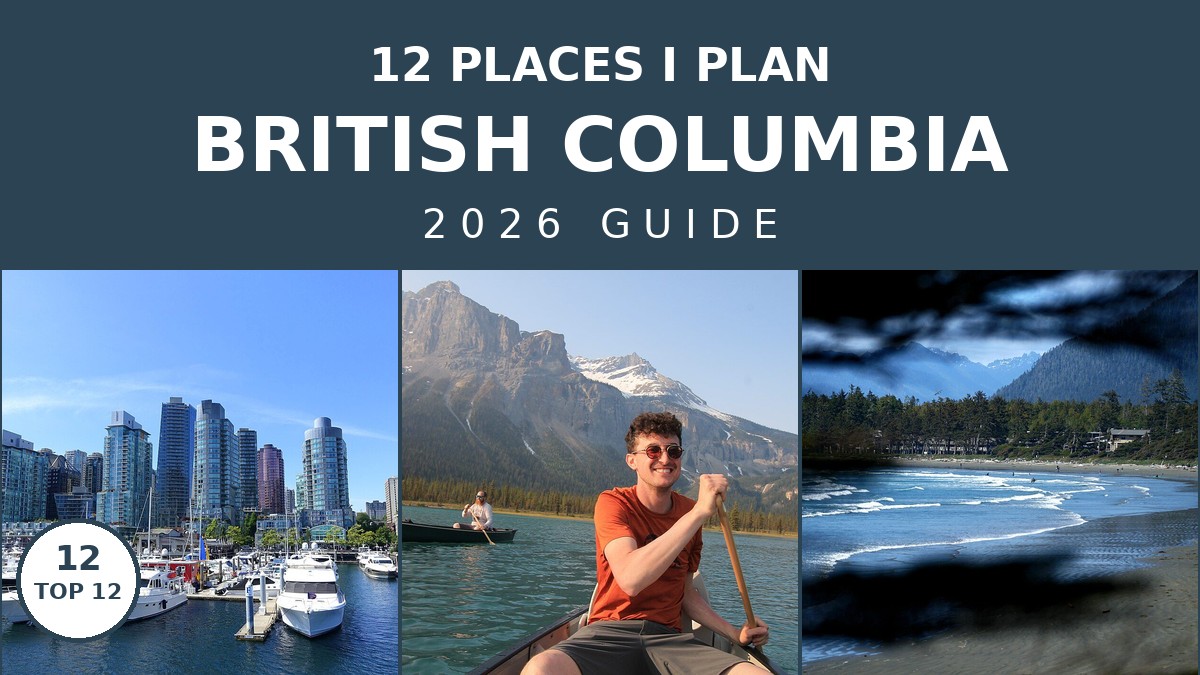
Last updated: October 3, 2026
The short answer
- The big three: Vancouver, Whistler, and Victoria — I plan every BC trip around this triangle, because they’re all within a day of each other and they cover city, mountains, and island charm in one loop.
- 2026 prices (checked October 2026): Capilano Suspension Bridge ~$75, Grouse Mountain Skyride ~$68, Butchart Gardens ~$44.25 in summer, Sea to Sky Gondola $73.95 online — budget ~$3,000–3,400 per adult for a 7-day road trip excluding flights.
- Best time: July through September for the classic trip; Tofino storm-watching is November to February, and Whistler skis December to April. BC is really three trips wearing one trench coat.
I’ll be honest: I’ve planned more BC trips than I can count (for friends, for family, for myself “just one more time”), and British Columbia still manages to surprise me. It’s bigger than most countries — five hours of driving can take you from ocean surf to desert wine country to alpine glaciers — so the trick isn’t seeing all of it. The trick is picking the right 12 places and stopping there. Here’s the thing: this list is the one I hand to every friend who asks. Twelve places, in my order of “do not skip.”
1. Vancouver: the city that starts every BC trip
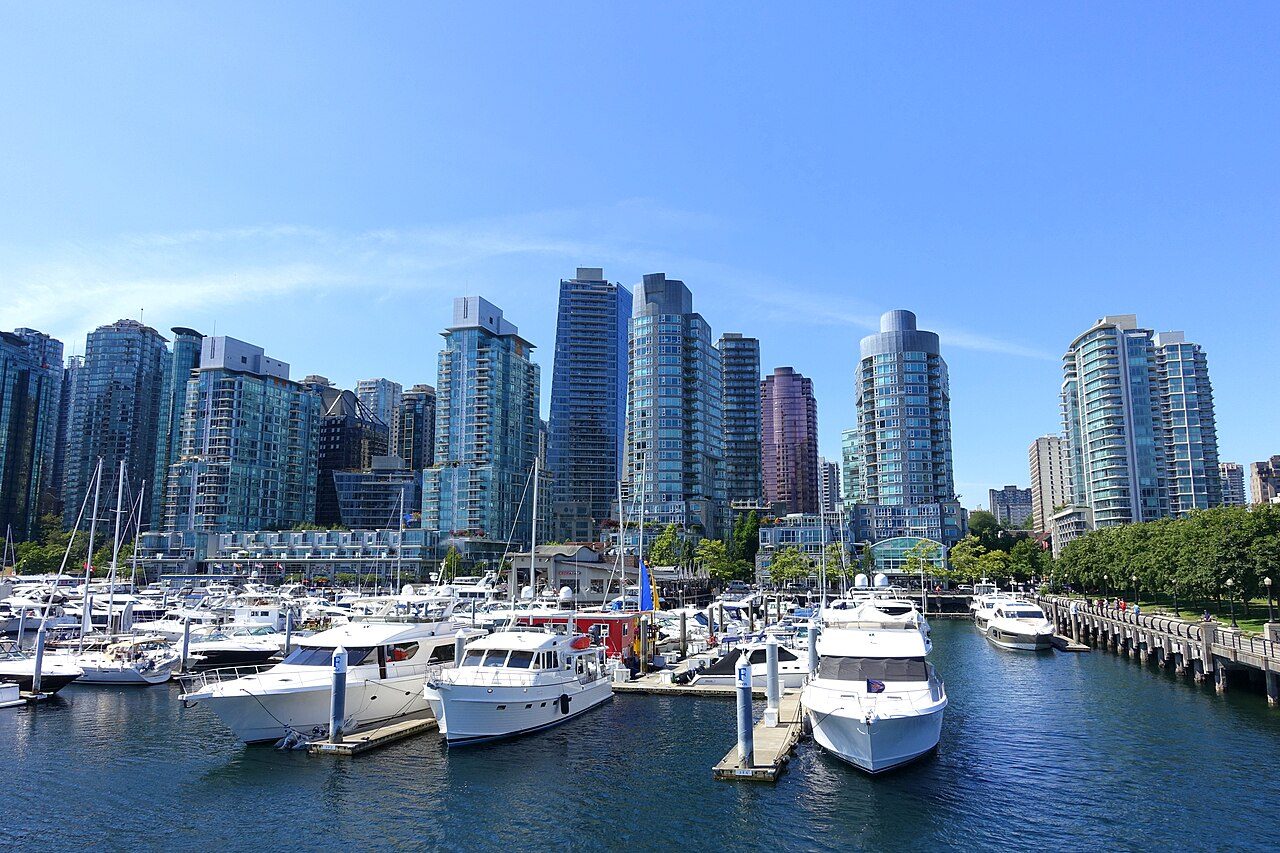
Every BC adventure I plan starts here, and not just because the airport is here. Vancouver is where the mountains fall into the sea, and you feel it everywhere — the 10 km Seawall loop around Stanley Park (I timed it once: 2 hours on a rental bike, with three photo stops I told myself were “stretching”), the totem poles at Brockton Point, Granville Island’s public market on a Saturday morning when the salmon samples are flowing.
Do the North Shore day if you can: the Capilano Suspension Bridge (~$75 adult in 2026 — I checked the current price on their official site before I went, and yes, it goes up every year) and the Grouse Mountain Skyride (~$68 adult). I double-checked Grouse’s hours on the official site too — the summer season runs April to mid-November, and the free shuttle from Canada Place is the move if you’re car-free.
→ Capilano Suspension Bridge — official tickets · Grouse Mountain — official site
Pro tip: go to Capilano at opening, not at noon. I showed up at 1 PM in August once and the bridge was a human conveyor belt. Never again.
See our 2-day Vancouver itinerary for the full day-by-day plan.
2. Whistler: more than a ski resort
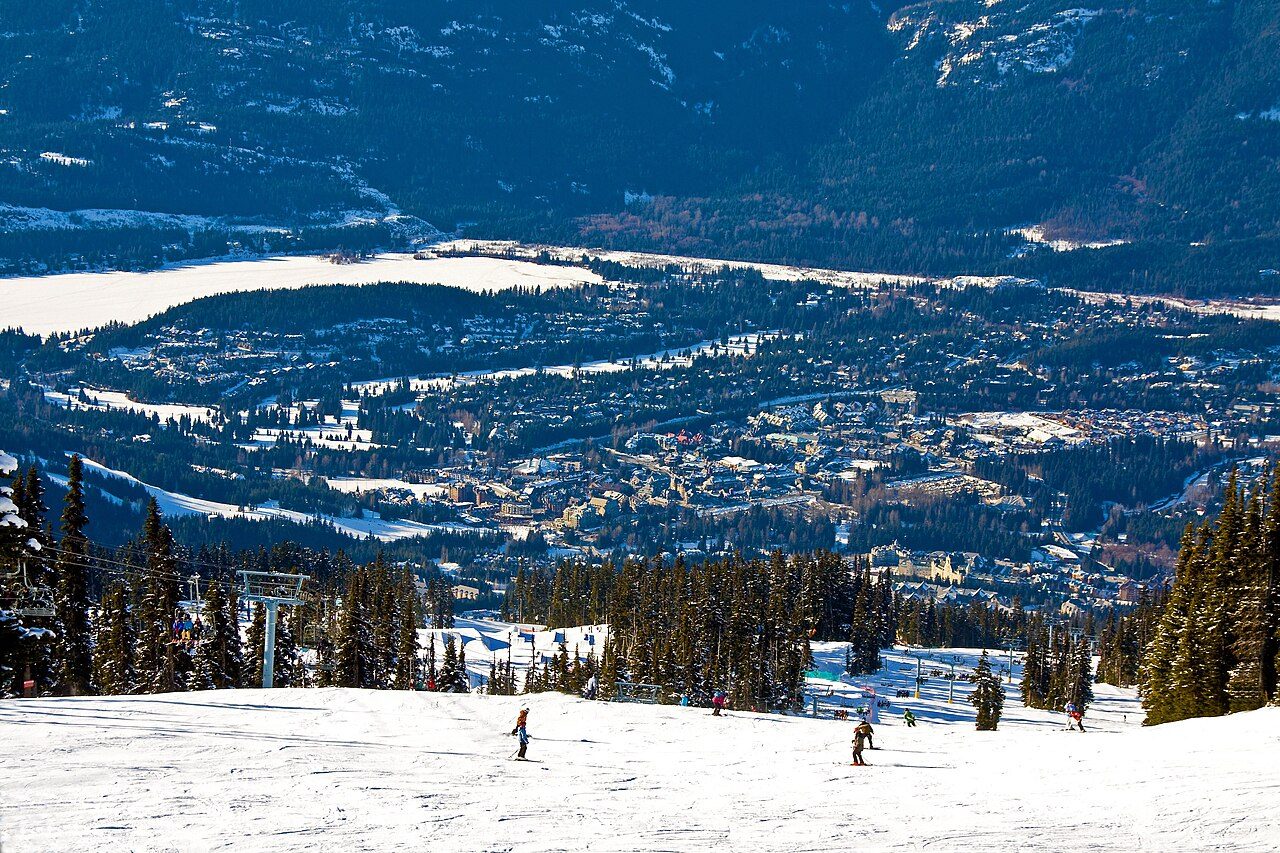
Here’s the thing about Whistler: half the people who love it have never clicked into a ski binding. Summer Whistler is the version I prefer — the PEAK 2 PEAK Gondola gliding 4.4 km between Whistler and Blackcomb mountains (~$110 adult for the 2026 Summer Alpine Experience, and worth every penny), alpine wildflower trails at the top, and the Village Stroll for the evening.
Fair warning from experience: the summer sightseeing season is short. In 2026 the PEAK 2 PEAK ran June 13 to September 7, so if Whistler is your priority, come in July or August. And buy your gondola ticket online in advance — the window price is the “I didn’t plan” tax.
See our 3-day Whistler itinerary for the full car-free plan.
3. Victoria: the walkable little capital
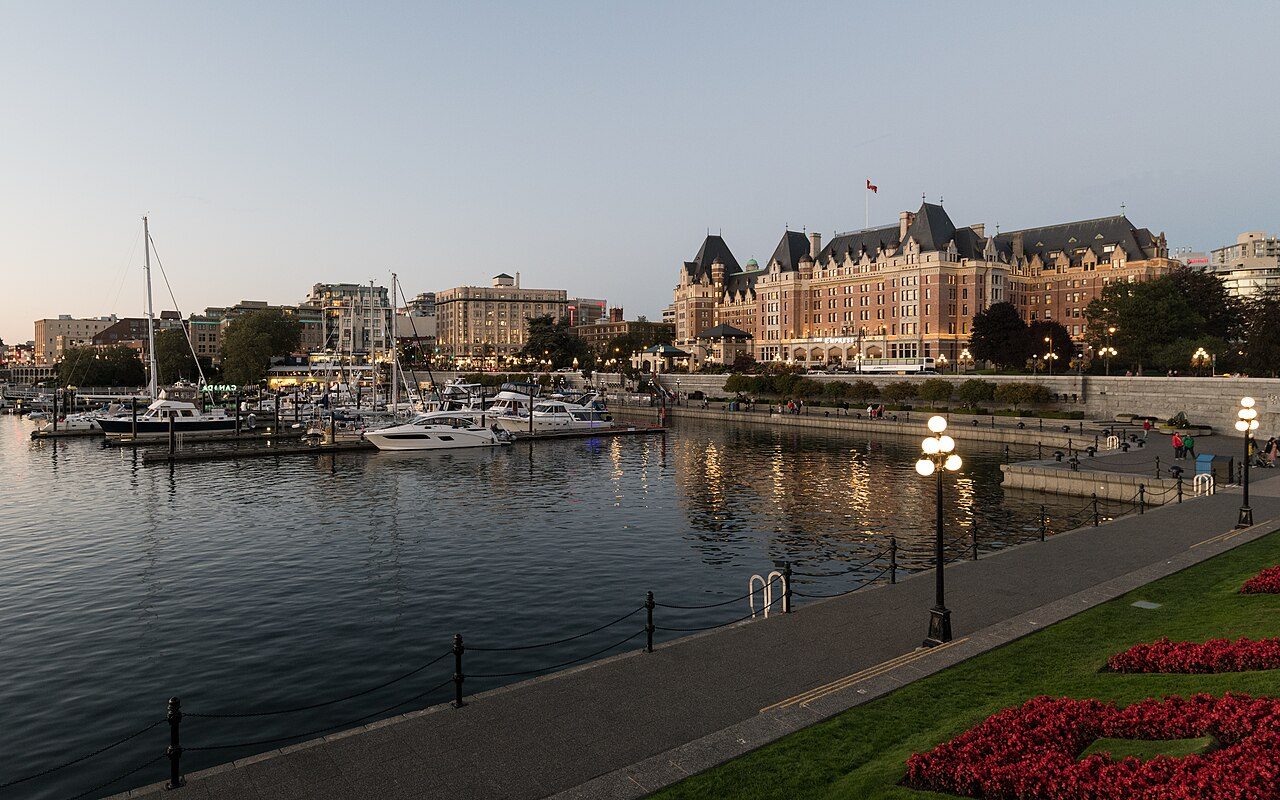
Victoria is the city I send people who think they’ve “done” Canadian cities. The Inner Harbour is postcard-perfect — the Fairmont Empress, the Parliament Buildings lit up at night, buskers doing things with fire — and the whole downtown is genuinely walkable (my spreadsheet says 15 minutes from the harbour to the best bookshop; I checked).
Do not skip the Royal BC Museum: adult admission is $32 in 2026, and the Old Town recreation on the third floor is the most immersive museum exhibit I’ve walked through in Canada. I’ve done it three times and I still find details I missed.
Getting there is half the fun: the BC Ferries sailing from Tsawwassen to Swartz Bay is 95 minutes through the Gulf Islands, and I always go up on deck even when it’s cold. Walk-on passenger fare runs around ~$20 in 2026 (estimate — fares shift by season, so check the official site). → BC Ferries — official schedules & fares · Royal BC Museum — official site
Pair it with our 2-day Victoria itinerary.
4. The Butchart Gardens
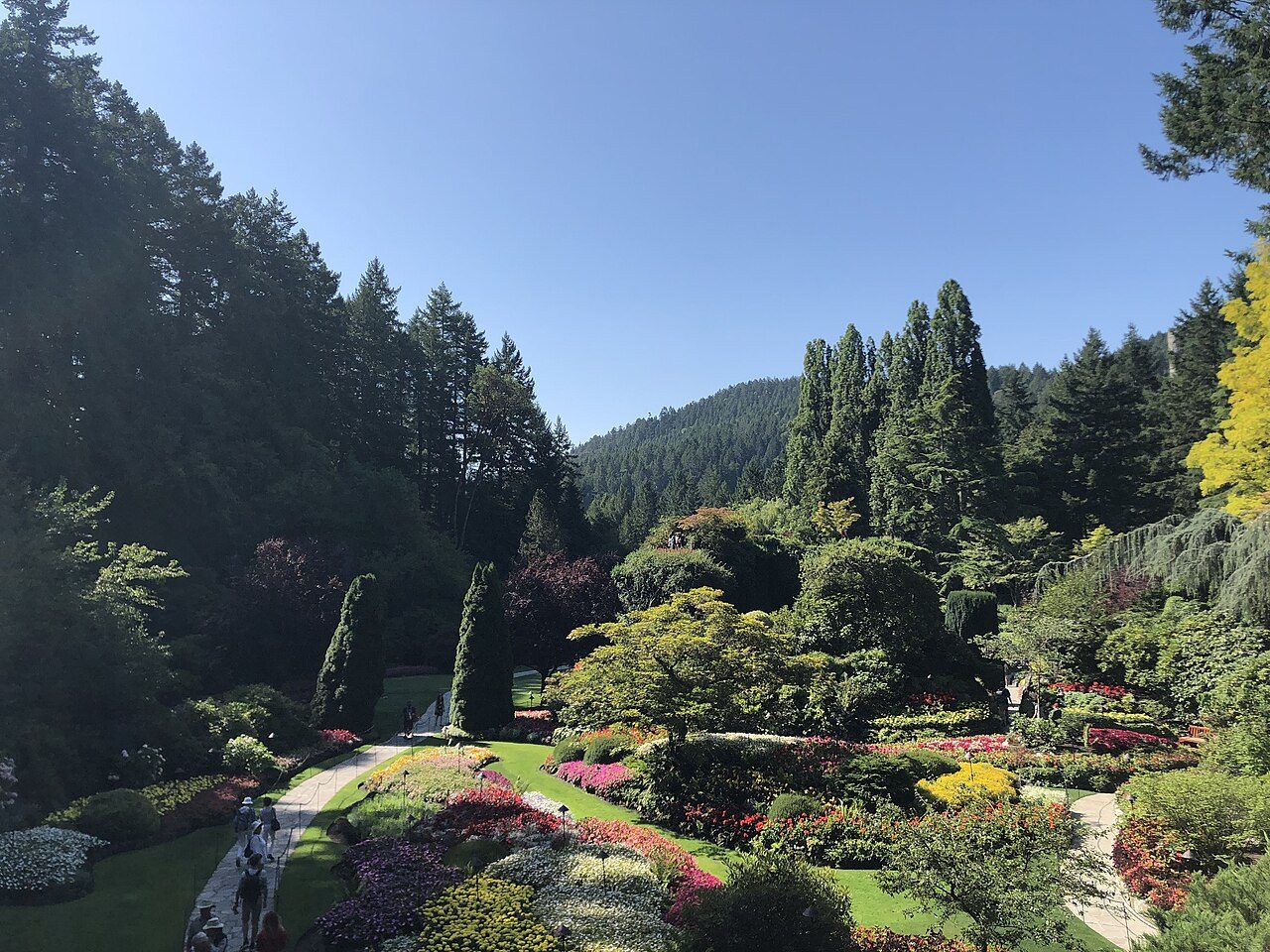
Twenty-three kilometres from downtown Victoria sits a 55-acre garden built in a former limestone quarry, and I’ll be honest — I expected “nice garden.” What I got was the Sunken Garden at golden hour, and I stood there for a full ten minutes doing nothing, which for me is basically a medical event.
Adult admission is ~$44.25 in summer (June–September 2026 pricing), cheaper in the shoulder seasons. I checked the hours on the official site before my visit — they’re seasonal, so do the same, and plan 2–3 hours. The Saturday-night fireworks in summer are a whole separate event if your dates line up.
→ The Butchart Gardens — official site
Pro tip: the Blue Poppy Restaurant books out for afternoon tea days ahead. I learned this the “standing outside looking in” way.
5. Tofino & the wild west coast
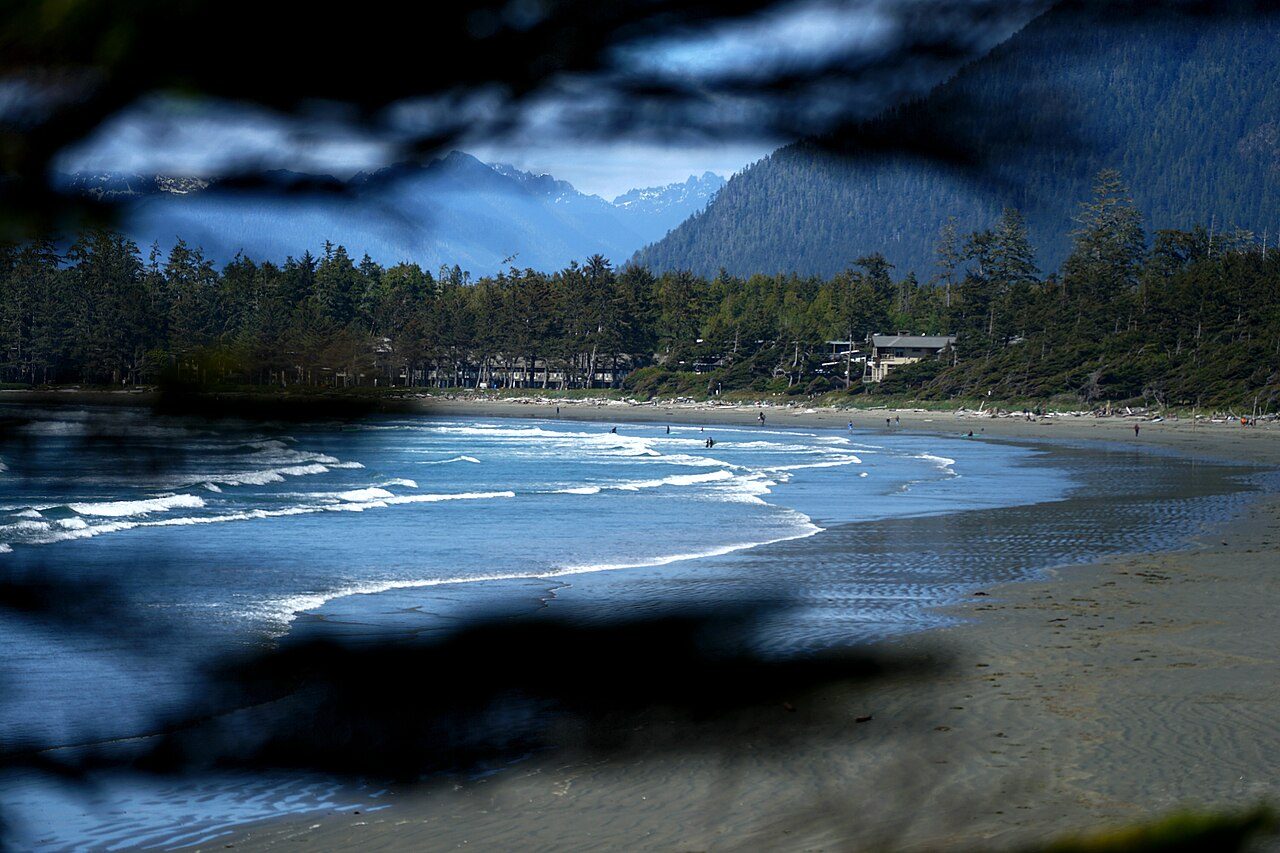
Tofino is where the road ends — literally, Highway 4 just stops at the Pacific — and it feels like it. Long Beach in Pacific Rim National Park Reserve is 16 km of surf and sea stacks, the surfing is year-round (wetsuits mandatory; the water is a bracing 8–10°C even in August), and the fish tacos are a legitimate food group here.
Here’s the thing most people miss: Tofino has two seasons and they’re both great. Summer is surf lessons and whale watching; November to February is storm-watching season, when 6-metre waves slam the coast and the hotels lean into it with fireplaces and rain-forest views. I’ve done both, and the storm season is the one I dream about.
Getting there takes commitment — it’s a 4–5 hour drive from Nanaimo (or the ferry + drive from Vancouver) — which is exactly why it stays special.
6. The Okanagan Valley: Canada’s wine country
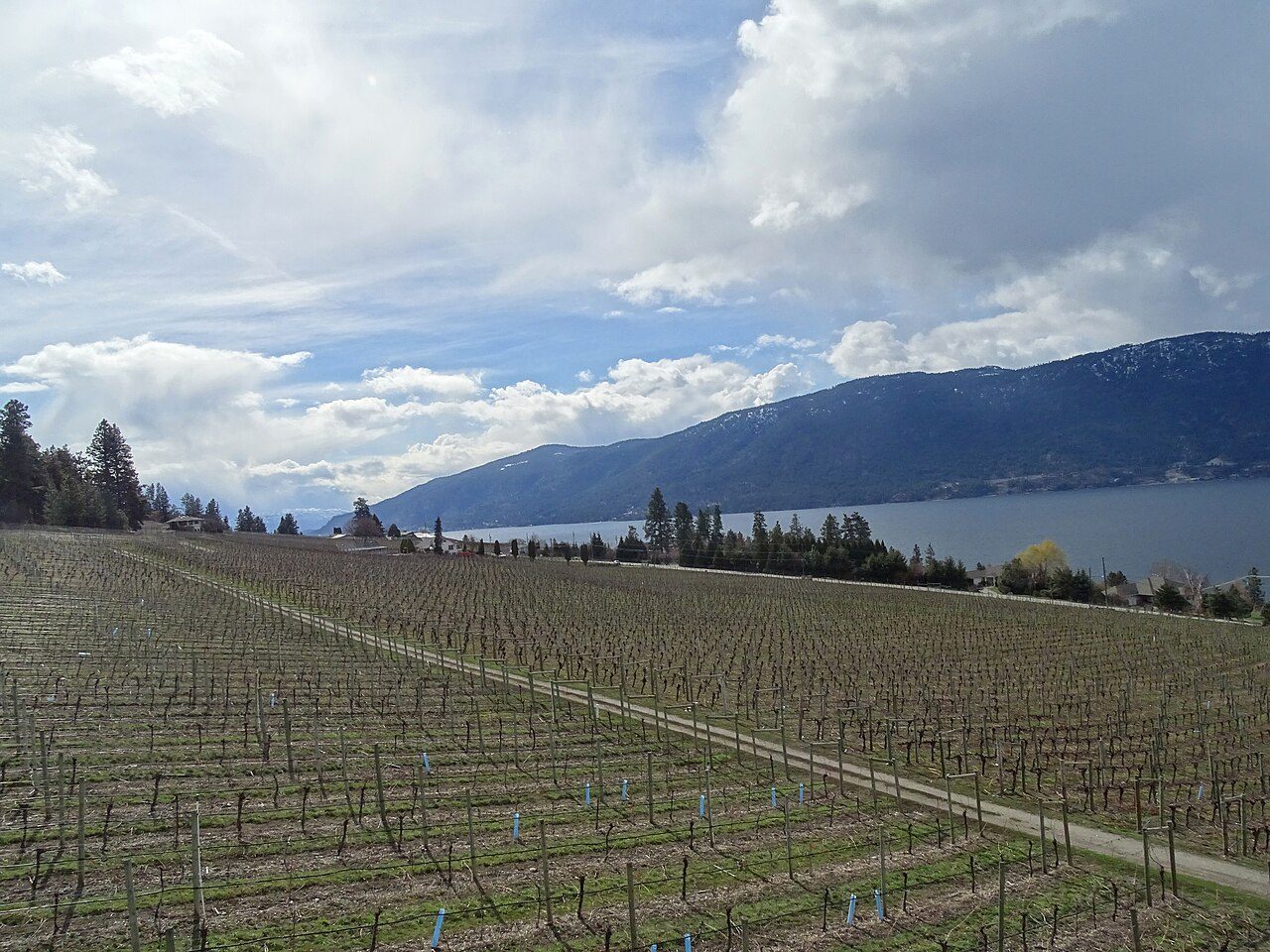
Everyone knows about Napa. Almost nobody outside Canada knows the Okanagan has ~180 wineries strung along a string of warm lakes, with tasting flights that cost a fraction of California’s. I did a two-day tasting loop around Kelowna and Naramata last summer and — fair warning — the “I’ll just spit” plan lasted exactly one winery.
Base yourself in Kelowna or Penticton. Tasting fees run roughly ~$15–25 per winery (estimate; most waive it with a bottle purchase), and the lake beaches are the perfect afternoon reset between tastings. September is my pick: harvest season, warm days, and the summer crowds have gone home.
→ HelloBC — official BC tourism site
7. Yoho National Park: the Rockies’ quiet side
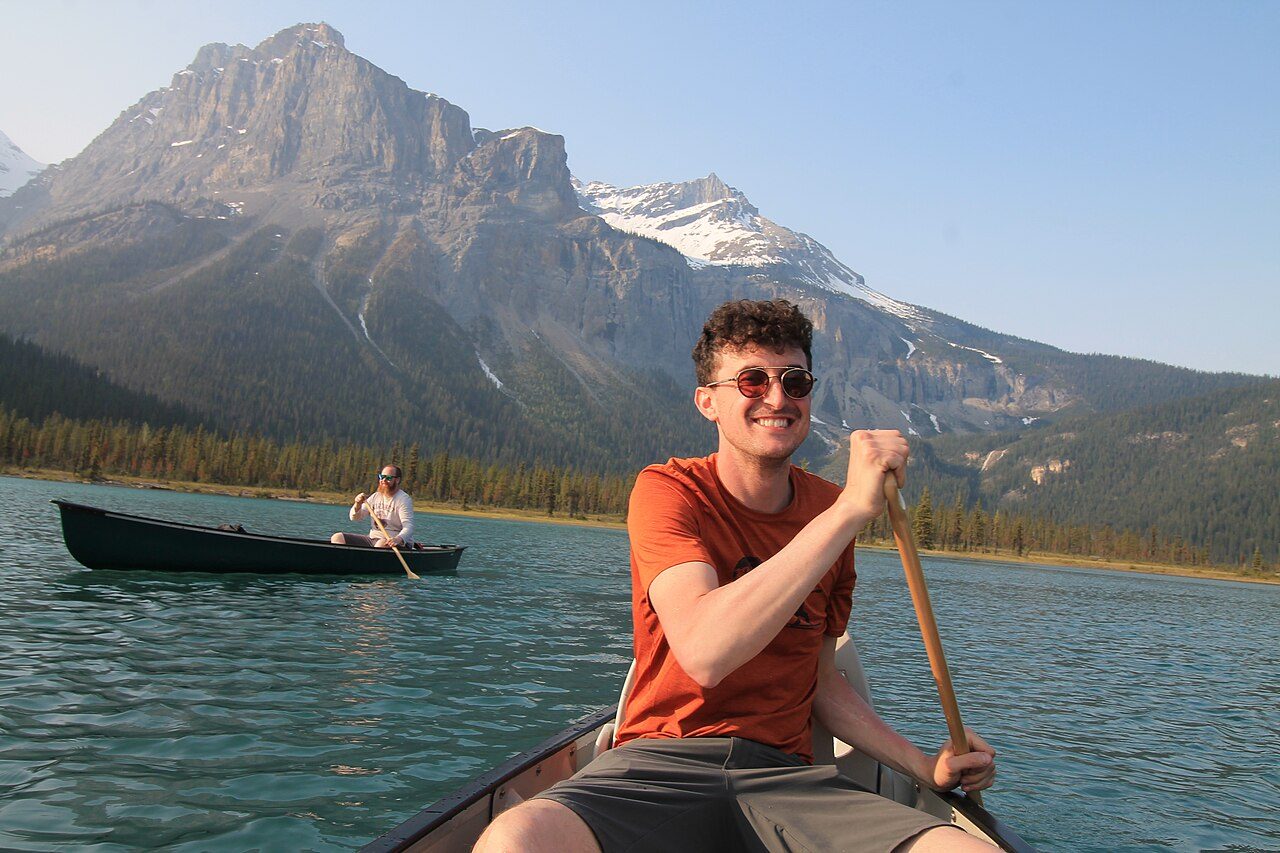
Yoho sits just across the Alberta border on the BC side of the Rockies, and it gets a fraction of Banff’s crowds with arguably better waterfalls. Takakkaw Falls drops ~373 metres (one of Canada’s tallest), the red canoes on Emerald Lake are the photo you’ve already seen a hundred times and it’s still better in person, and the Burgess Shale fossil beds are a UNESCO site most visitors drive right past.
Here’s the thing: a Parks Canada Discovery Pass (~$75 for the year, estimate) pays for itself fast if you’re doing Yoho plus any other national park on this list. → Parks Canada — Yoho National Park
8. Revelstoke
Revelstoke is the mountain town that still feels like a town — not a resort wearing a town costume. Revelstoke Mountain Resort has the most vertical (1,713 m) of any North American ski hill, but my favourite Revelstoke memory is free: the Giant Cedars Boardwalk, a 500-metre stroll through 500-year-old cedar trees that smells like the best candle you’ve ever owned.
Summer brings the Pipe Mountain Coaster and wildflower meadows at the resort; winter brings the deep powder the town is famous for. It’s a natural overnight stop between Yoho and the Okanagan — which is how I first ended up there, and why I now plan trips around it.
9. Kootenay National Park
If Yoho is the Rockies’ quiet side, Kootenay is the quiet side’s quiet side. Highway 93 winds through it from the Trans-Canada down to Radium, and the whole park reads like a greatest-hits album: Marble Canyon’s narrow limestone gorge, the ochre pools of the Paint Pots, and the Radium Hot Springs at the south end — where you can soak in 40°C mineral water while snow falls on the peaks around you (I did exactly this in October, and I still talk about it).
It’s an easy add to any Rockies loop and almost never crowded. Do not skip Marble Canyon — it’s a 20-minute walk and it looks like it belongs in a fantasy novel.
10. Squamish & the Sea to Sky corridor
The drive from Vancouver to Whistler deserves its own entry, because Highway 99 is 120 km of “pull over, I need a photo.” Squamish sits at the halfway point, and it’s earned its nickname as Canada’s outdoor recreation capital: the Stawamus Chief hike (three peaks, increasingly spicy), the Sea to Sky Gondola ($73.95 adult online in 2026, and the suspension bridge at the top is the real headline), and Shannon Falls — 335 metres of free waterfall, a 10-minute walk from the parking lot.
I timed my last drive: Vancouver to Squamish is about an hour, Squamish to Whistler another hour, and I stopped four times. You’ll stop more. → Sea to Sky Gondola — official tickets
11. Salt Spring Island
The Gulf Islands are BC’s slow-living secret, and Salt Spring is the easiest to reach — ferries run from Tsawwassen (near Vancouver) and from Swartz Bay (near Victoria). The Saturday Market in Ganges is the island’s beating heart: local cheese, cider, art, and the kind of people-watching you can’t plan.
I’ll be honest, I came for the market and stayed for the farm stands — honour-system boxes of eggs and flowers on every back road, cash in the jar. Rent a bike or bring the car on the ferry; the island is hilly and spread out. One full day is enough, two is better.
12. Haida Gwaii: the trip of a lifetime
I saved the most extraordinary for last. Haida Gwaii — the archipelago off BC’s north coast, ancestral home of the Haida Nation — is unlike anywhere else in Canada. Gwaii Haanas National Park Reserve protects ancient village sites like SG̱ang Gwaay, a UNESCO World Heritage Site where weathered memorial poles still stand in the rainforest, guarded by Haida watchmen.
Fair warning: this is not a casual add-on. You get there by plane from Vancouver or by an overnight ferry from Prince Rupert, and Gwaii Haanas is only visitable with licensed operators. But if you have the time and budget, every traveller I know who’s been calls it the single most moving place in the country. It’s the one I’m saving for my own big trip — and trust me on this one, it’s worth the effort.
When to go: my month-by-month cheat sheet
BC isn’t one climate — it’s about six wearing a trench coat. Here’s how I break it down:
| When | Where it shines | Watch for |
|---|---|---|
| May–June | Okanagan wine, Victoria gardens, fewer crowds | Some mountain trails still under snow |
| July–August | Everywhere — the classic window | Book everything early; wildfire smoke is possible |
| September | Okanagan harvest, golden larches, thinner crowds | Whistler summer sightseeing ends early September |
| October | Fall colour, first Tofino storms | Coast rain returns with enthusiasm |
| December–March | Whistler skiing, Tofino storm-watching | Many alpine roads and trails closed |
Getting around British Columbia
Here’s the thing: BC rewards drivers. A rental car is the simplest way to connect the coast, the Okanagan, and the Rockies — and the drives themselves (the Sea to Sky, Highway 93 through Kootenay, the Trans-Canada through Rogers Pass) are half the experience.
That said, the Vancouver–Victoria–Whistler triangle is very doable without a car: BC Ferries links the mainland to Vancouver Island, Skylynx and Epic Rides coaches run Vancouver–Whistler, and both cities have excellent transit (tap on, tap off with your credit card — I timed my SeaBus crossing once: 12 minutes of pure harbour joy). Tofino, the Okanagan, and Haida Gwaii are the ones where you’ll really want wheels.
See our BC road trip itinerary and Vancouver Island road trip itinerary for route plans.
How much does a week in BC cost?
Sample budget per adult, excluding flights for a 7-day trip (prices checked October 2026; items marked ~ are estimates):
| Item | Cost (CAD) |
|---|---|
| Mid-range hotels, 7 nights | ~$1,400–1,750 |
| Rental car, 7 days | ~$490 |
| Capilano Suspension Bridge (adult) | ~$75 |
| Grouse Mountain Skyride (adult) | ~$68 |
| Butchart Gardens (adult, summer) | $44.25 |
| Sea to Sky Gondola (adult, online) | $73.95 |
| Royal BC Museum (adult) | $32 |
| PEAK 2 PEAK Gondola (adult) | $110 |
| Food & drinks, 7 days | ~$560–700 |
| Total | ~$3,000–3,400 |
FAQs about visiting British Columbia
How many days do you need in British Columbia?
Seven days is the sweet spot for a first trip: 2–3 days in Vancouver (including the North Shore), 1–2 in Whistler, and 2 in Victoria with the Butchart Gardens. Ten days lets you add Tofino or the Okanagan. Haida Gwaii deserves its own dedicated trip — don’t try to squeeze it into a week.
What is the best time to visit British Columbia?
July through September for the classic trip — the driest weather, all attractions open, and the mountain trails snow-free. September is my personal favourite: harvest season in the Okanagan, fewer crowds, and usually still-warm days. For skiing, December to March; for Tofino storm-watching, November to February.
What is the prettiest place in British Columbia?
I’ll be honest — asking me to pick one is cruel, and my answer changes by mood. Emerald Lake in Yoho for the colour, Long Beach in Tofino for the drama, and the Sunken Garden at Butchart for the “how is this real” factor. If I had to hand you one photo to sell the province, it’d be the red canoes on Emerald Lake. Trust me on this one.
Is British Columbia expensive to visit?
It’s not cheap, but it’s very manageable with planning. Budget roughly ~$3,000–3,400 CAD per adult for a 7-day trip excluding flights (October 2026 prices). The big-ticket items are hotels and the rental car; many of the best experiences — Stanley Park’s Seawall, Shannon Falls, the Village Stroll in Whistler — are completely free.
Can you visit British Columbia without a car?
Partially. Vancouver, Victoria, and Whistler connect well by ferry, coach, and transit — I planned a fully car-free version of that triangle myself. But Tofino, the Okanagan wine country, and the Rockies parks really need a car (or a guided tour). If you’re car-free, base yourself in the cities and take day tours outward.
Do I need a passport to visit British Columbia?
If you’re arriving from outside Canada, yes — a valid passport, and most visitors also need an eTA (electronic travel authorization) or a visitor visa depending on nationality. Canadians just need government-issued photo ID for domestic travel. Check the official Government of Canada site well before you book — this is the one paperwork item you do not want to discover at the airport.
Keep exploring
- The Ultimate 2 Days in Vancouver Itinerary: 2026 Guide
- The Ultimate 3 Days in Whistler Itinerary: 2026 Guide
- The Ultimate 2 Days in Victoria Itinerary: 2026 Guide
- British Columbia Road Trip Itinerary
- Vancouver Island Road Trip Itinerary