

Last updated: October 3, 2026

The short answer
- Old Quebec is the whole point: the only walled city north of Mexico (UNESCO listed since 1985), and it genuinely rewards getting lost in — I planned two “structured” mornings and both dissolved into wandering within the hour.
- Winter is the power move: the Québec Winter Carnival (Feb 6–15, 2026) turns the city into a snow-globe, with the Effigy pass running ~$29–39 — worth every penny if you dress for it.
- Budget per day: plan ~$130–180 per person per day excluding hotels, and treat the funicular (~$7), Citadelle tour (~$22), and the Québec–Lévis ferry (~$4) as your three small splurges.
Quebec City is the one Canadian city that made me stop mid-step and laugh at myself — because I’d spent a whole morning photographing a castle-hotel and nobody at home would believe it wasn’t Europe. Here’s the thing: it is North America, it’s three hours from Montreal, and the French you half-remember from school comes in very handy. This guide is everything I wish I’d known before my first visit, updated with 2026 prices and dates I’ve checked in October 2026.
Getting to Quebec City (it’s easier than you think)
Most visitors arrive via Montreal — it’s about a 3-hour drive east, and the bus and Via Rail run the corridor daily into the gorgeous Gare du Palais (the train station itself is worth arriving at, trust me on this one). Jean Lesage International Airport (YQB) sits about 20 minutes from Old Quebec by taxi or airport shuttle, with direct flights from major Canadian cities and a growing list of US hubs. Once you’re inside the walls, you won’t need a car at all — I walked everywhere, and the only wheels I used all trip were the funicular and a ferry.
Pro tip: if you’re combining this with Montreal (and you should), read our 2-day Montreal itinerary — the train between the two cities is the civilized way to do it.
Old Quebec: the walled city, top to bottom
Old Quebec (Vieux-Québec) is a UNESCO World Heritage Site and the only fortified city north of Mexico — founded by Samuel de Champlain in 1608, which makes it one of the oldest European settlements on the continent. It’s split into the Upper Town (Haute-Ville), perched on Cap Diamant, and the Lower Town (Basse-Ville) down by the St. Lawrence. I double-checked the history on the city’s official tourism pages before writing this, and honestly the fun part is that the history is visible — you’re walking it.
Terrasse Dufferin and the Château Frontenac
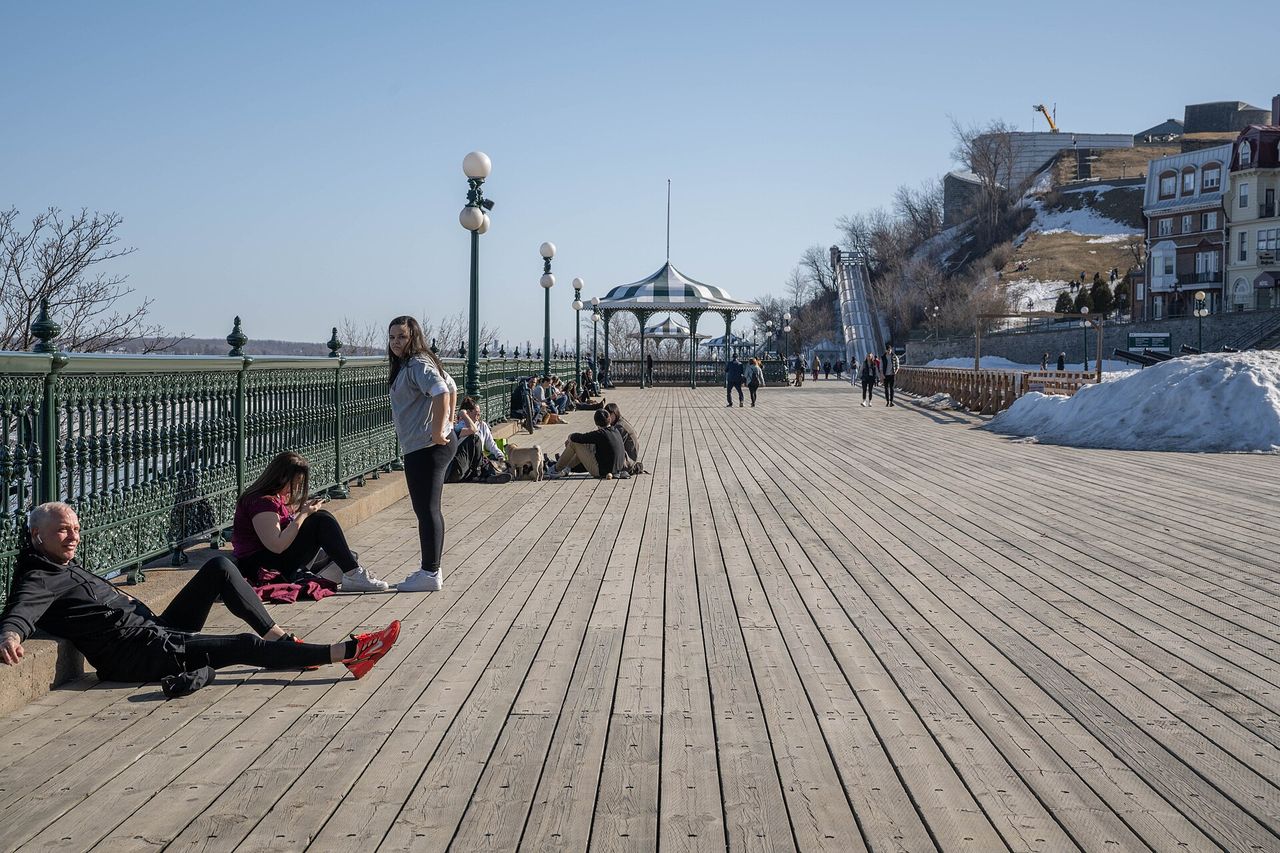
Start where everyone starts: the Terrasse Dufferin, the wide boardwalk wrapping around the Château Frontenac with river views that don’t quit. The Château — the castle-hotel you see in every photo — has been towering over the city since 1893, and seeing it in person does something to you. I’ll be honest: I stood there for ten full minutes on my first morning just staring. In winter, the terrace hosts a classic toboggan slide (the one in the photo above); in summer it’s street performers and sunset crowds. This is also the funicular’s upper station.
Rue du Petit-Champlain and Place Royale
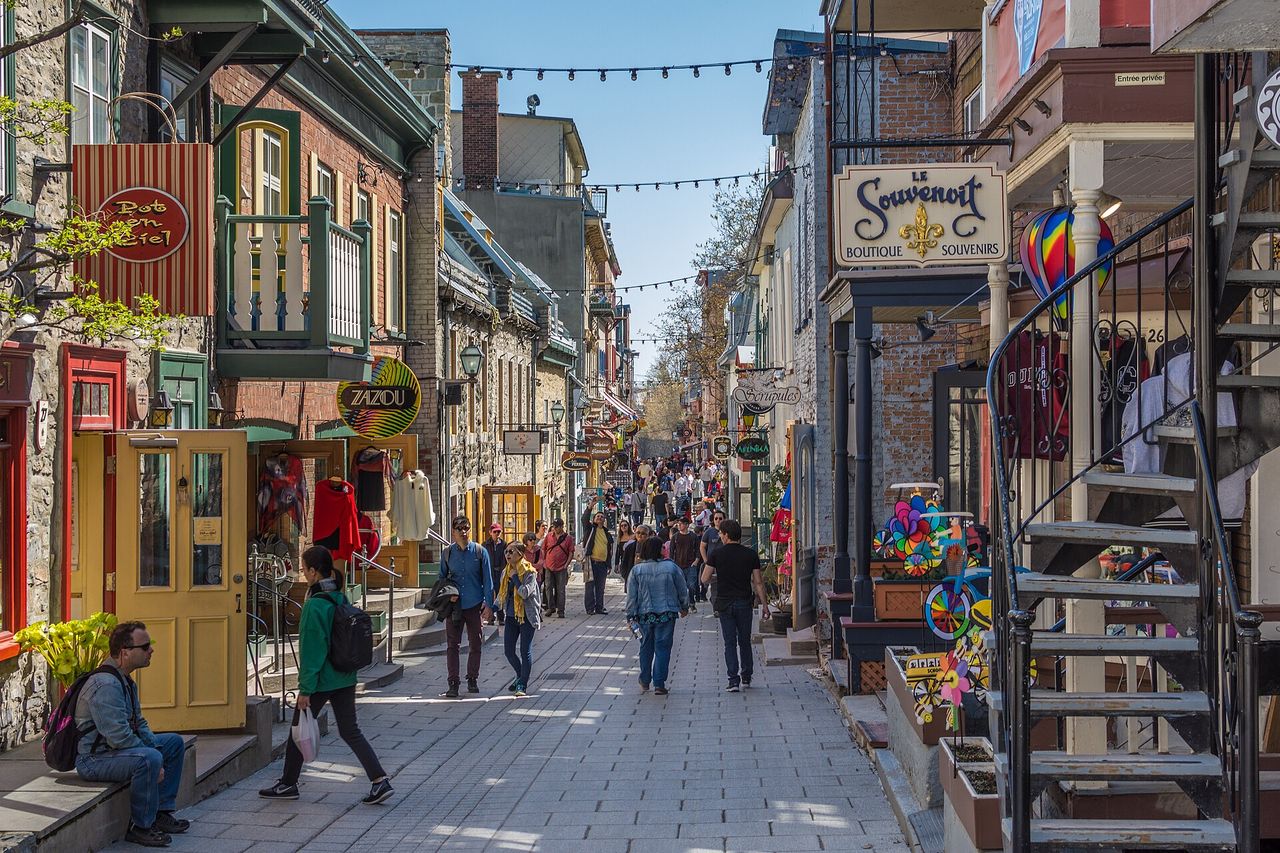
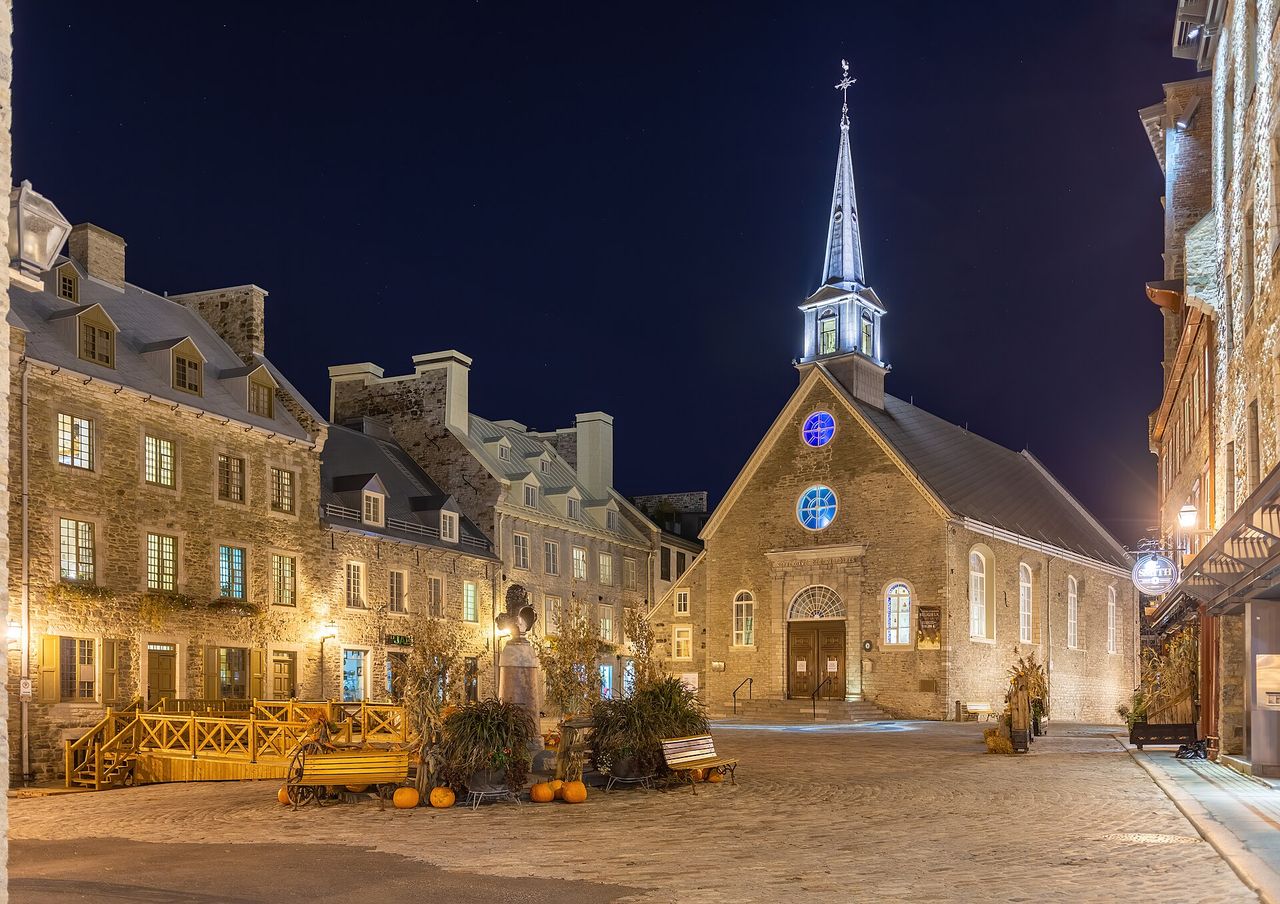
The prettiest street in Canada — I’ll fight anyone on this — is the rue du Petit-Champlain, the oldest commercial street in North America, tumbling down through the Lower Town. I found this out the sweaty way: I took the stairs down from the Upper Town, which is a workout, and immediately wished I’d taken the funicular. Learn from me. The street is lined with boutiques, crêperies, and public art, and it spills into Place Royale, the stone square where Champlain’s colony began, anchored by the Notre-Dame-des-Victoires church (built 1688, the oldest stone church in North America). A few minutes’ walk away sits the Musée de la civilisation (~$26 adult) — an interactive, very-kid-friendly deep dive into 400 years of Quebec life. I went in for “an hour” and stayed for three.
The Old Quebec Funicular (~$7 one-way)
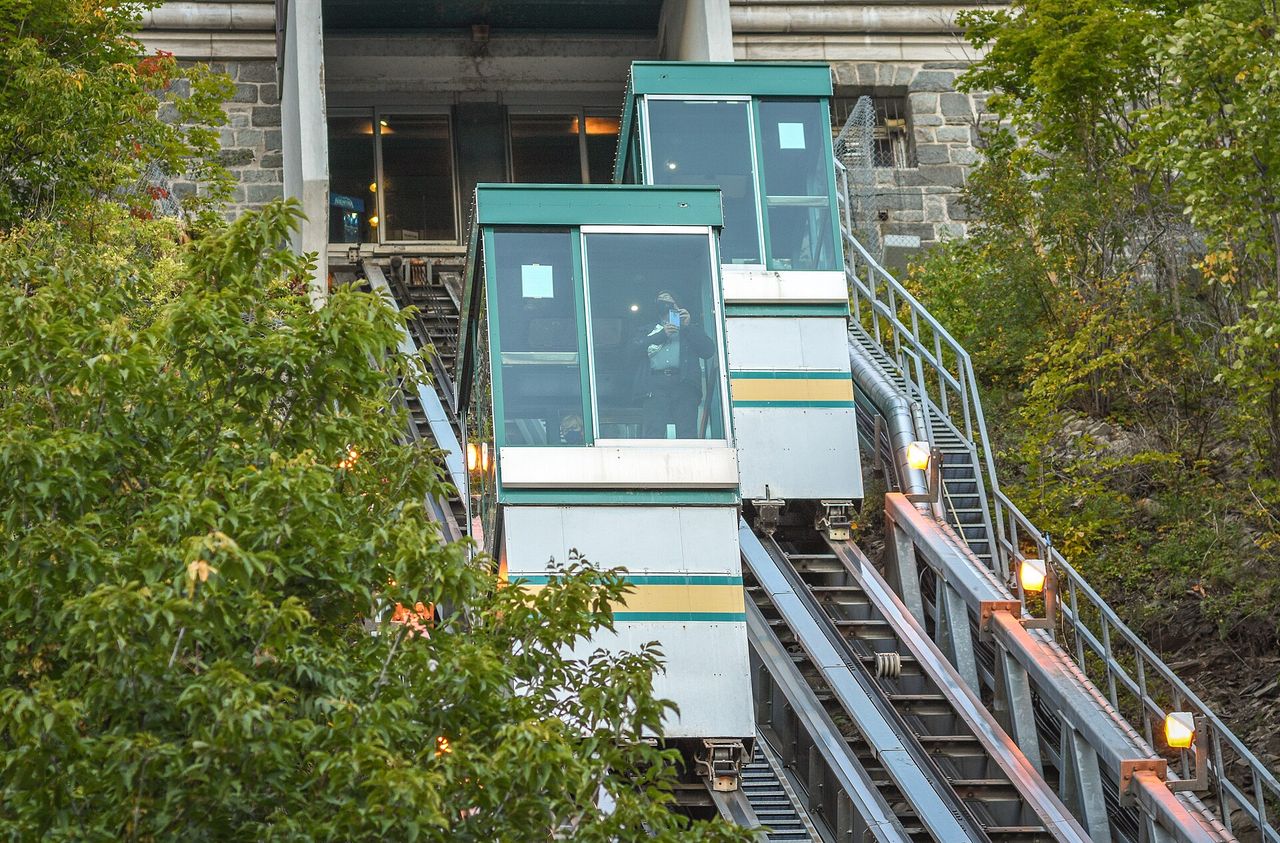
The funicular connects the Dufferin Terrace to the rue du Petit-Champlain in under a minute, and it saves your knees a brutal climb (the hill is steeper than it looks — ask me how I know). 2026 reviews put the fare at ~$7 one-way (cash or card at the stations), and it runs year-round. I rode it four times in two days. Do not skip it — the view descending over the Lower Town rooftops toward the river is the postcard shot, and you’re in it.
Forts, walls, and the Citadelle: the military side
Quebec City doesn’t just look fortified — it is fortified, and the military history is woven into everything. The 4.6 km of ramparts, four gates, and bastions still encircle the Upper Town, and walking the full wall circuit (I timed it: about 90 minutes at a dawdle) is free and genuinely lovely, especially at golden hour.
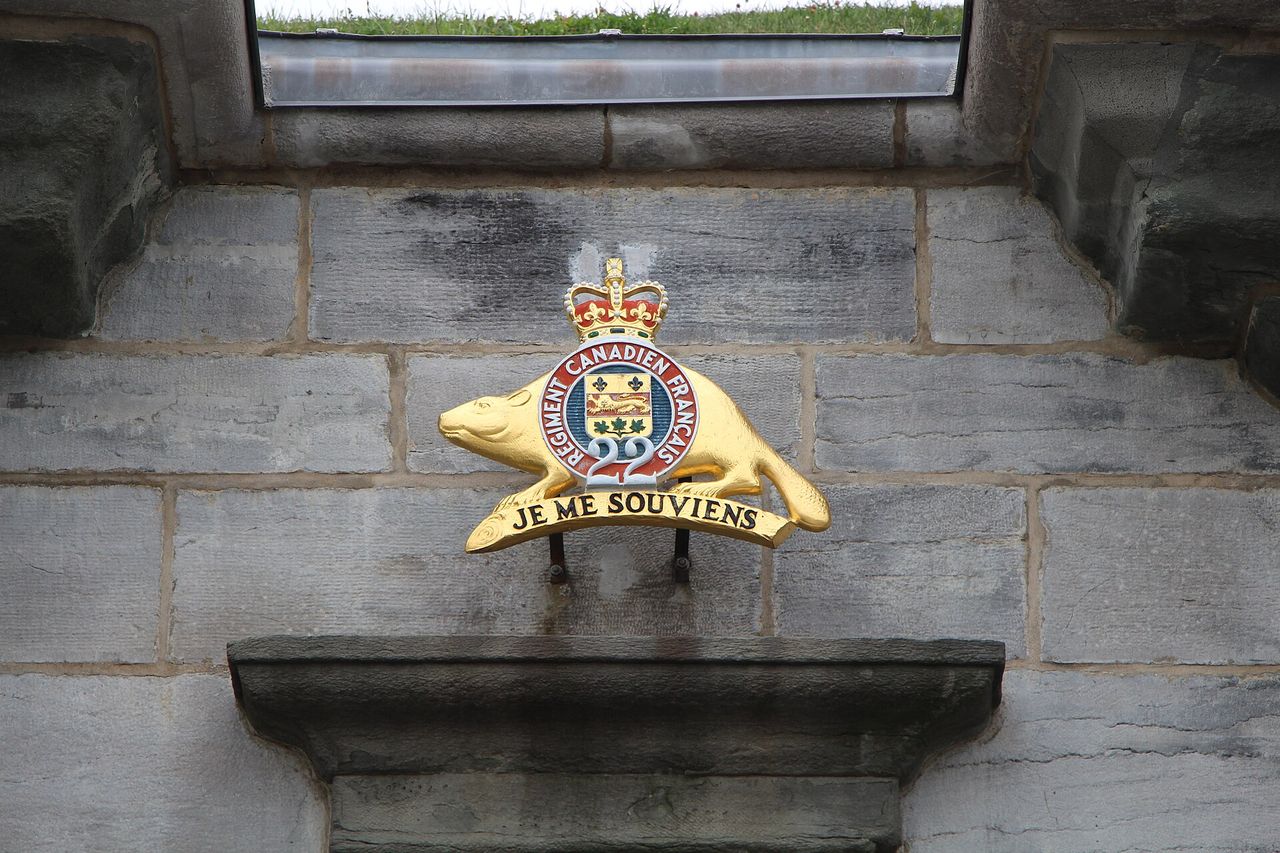
La Citadelle de Québec: guided tour ~$22
The Citadelle — an active military installation and the largest British fortress in North America — can only be visited on a guided tour, and the tour is the experience: 60 minutes through the King’s Bastion, the powder magazine, and the Royal 22e Régiment Museum. Adult admission is $22, tours run daily 9:00 AM–5:30 PM, and in summer the Changing of the Guard ceremony is included. I checked the current schedule on La Citadelle’s official site before I went — hours shift seasonally, so do the same. Fair warning: it’s a working base, so book ahead in summer; I nearly missed a slot by assuming walk-ins were fine.
Plains of Abraham
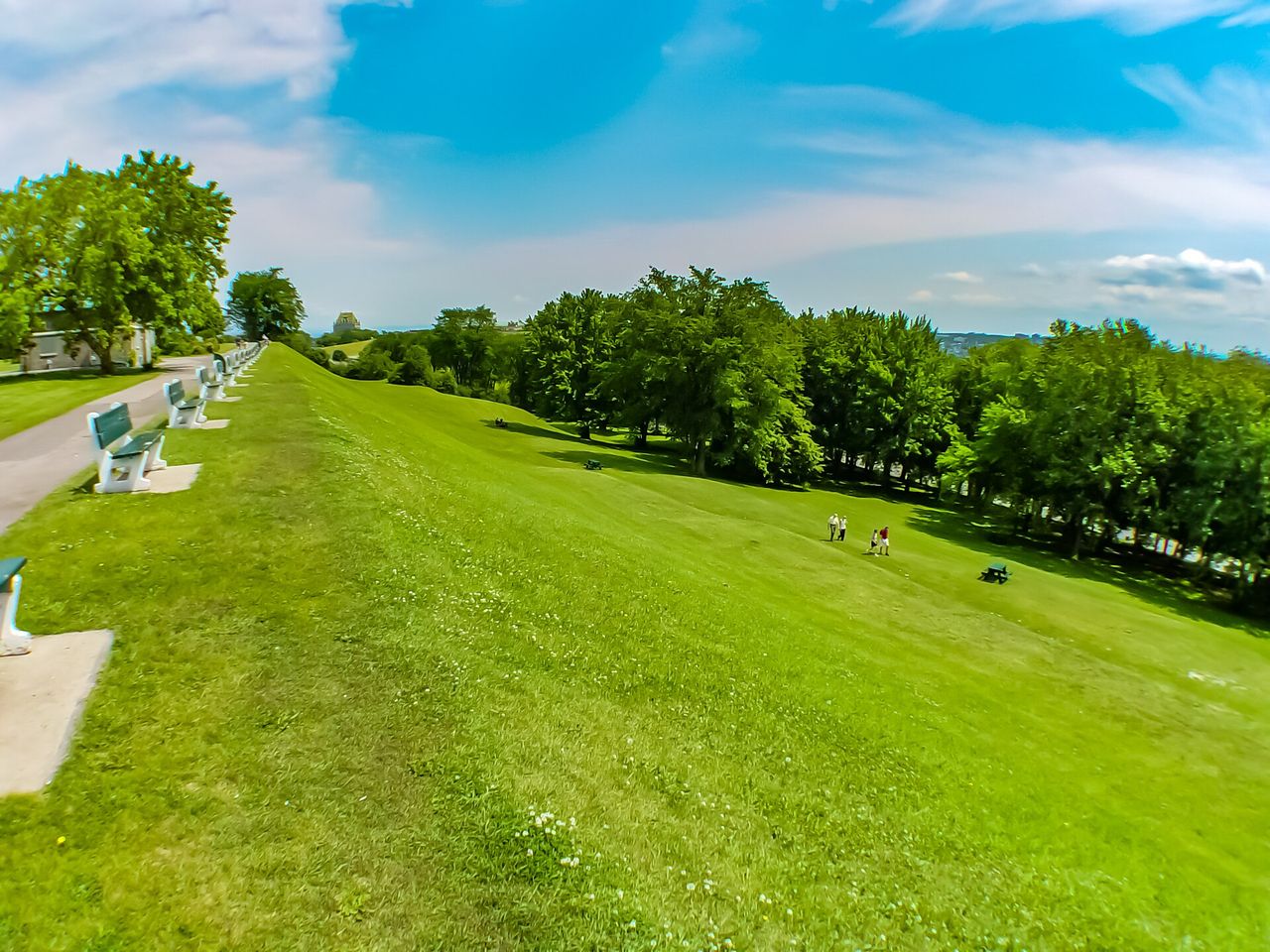
Just outside the walls, the Plains of Abraham is the 1759 battleground-turned-city-park — 108 hectares of green where locals jog, picnic, and cross-country ski, with the best skyline views in the city. The Musée des plaines d’Abraham runs exhibits on the siege, but honestly, half the joy is just walking the cliff-top promenade from the Citadelle to the Joan of Arc Garden with a coffee. Free, obviously, and my favorite morning of the trip (I did this walk twice — once at sunrise, once with a croissant, and the croissant walk won).
The Québec Winter Carnival: February 6–15, 2026

The Québec Winter Carnival — the biggest winter carnival on the planet — is the reason I now tell people to visit Quebec City in February on purpose. The 72nd edition runs February 6–15, 2026, centered around the Plains of Abraham, the Parliament building, and Grande Allée, with Bonhomme’s ice palace, night parades, ice canoe races on the St. Lawrence, snow slides, and warming huts everywhere. The Effigy (your festival pass, required for ages 13+) costs $29 if bought before January 11 and $39 after; kids 12 and under are free. I verified the 2026 dates and pricing on Visit Québec City’s official Carnival page.
Now for the real talk: February in Quebec City is frette — routinely −15 to −20°C. Dress like a local: merino base layer, real winter boots (ice grips if you have them), mittens not gloves, and take warming-hut breaks before you’re miserable. I underestimated the wind off the river on day one and spent the afternoon doing what the locals call “la danse du froid” — the cold dance. Worth it. Game-changer, honestly.
Best time to visit Quebec City: a season-by-season planner’s take
Here’s my honest ranking, because I keep a mental spreadsheet for this kind of thing:
- Winter (late Jan–Feb): the Carnival, the snow-dusted walls, hotel rates at their lowest — and the city owns winter instead of enduring it. My top pick if you can handle the cold.
- Summer (June–Aug): patios, the Festival d’été de Québec (July’s big music festival), long golden evenings on the terrace. Crowds and cruise ships peak in July–August — I showed up at the funicular at 11 AM on a Saturday once. Never again.
- Fall (late Sept–Oct): foliage along the ramparts, harvest food, thinning crowds. Arguably the prettiest season and my sleeper pick.
- Spring (Apr–May): cheapest and quietest, but muddy and unpredictable — some attractions run reduced hours.
What to eat: a very opinionated food shortlist
I’m not a food writer (that’s Emily’s department — she has opinions about maple), but three days of eating in Quebec City taught me enough to warn you about the good stuff:
- Poutine, obviously — but get the classic first before the fancy versions. The rue Saint-Jean corridor has the best late-night options in the Upper Town.
- Tourtière — the French-Canadian meat pie. Every local I asked said the same thing: try it somewhere old-school, not somewhere with Edison bulbs.
- Maple taffy (tire d’érable) — hot maple syrup poured on snow and rolled onto a stick. I ate mine leaning against a wall on the Petit-Champlain and got syrup on my gloves. Zero regrets.
- Cretons, pouding chômeur, and a proper sugar-shack brunch if your trip overlaps with maple season (March–April).
Budget-wise: a casual bistro lunch runs ~$18–28 per person, dinner at a proper restaurant ~$40–70, and a tasting-menu splurge ~$120–150. Coffee and a pastry for the terrace at sunrise? ~$8, and worth every penny.
Day trips: Montmorency Falls and beyond
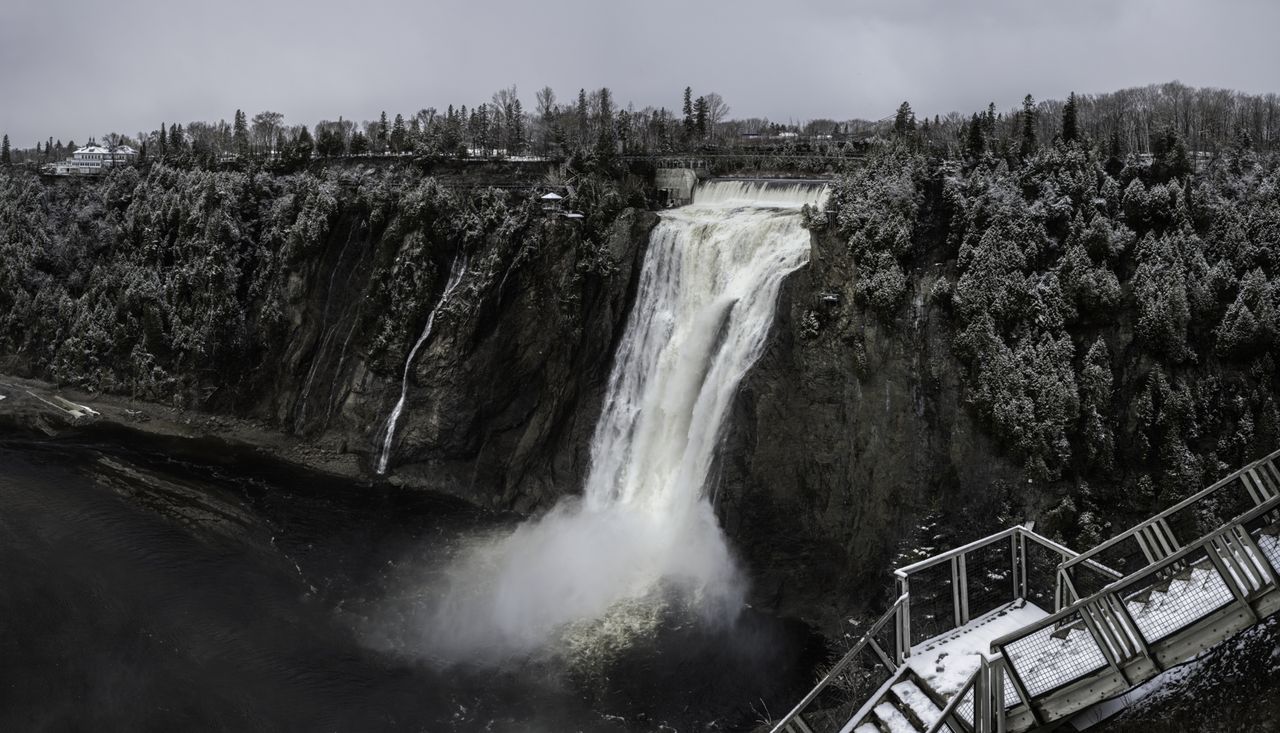
Parc de la Chute-Montmorency (half day, ~13 km away)
Montmorency Falls drops 83 metres — a full 30 metres taller than Niagara — and it sits 15 minutes from Old Quebec, reachable on the RTC Métrobus 800 (terminus at the falls). Park admission runs ~$10–13 per adult, and the cable car to the top is about $15 round-trip. Walk the cliffside boardwalk to the suspension bridge that spans the top of the falls, then feel the spray at the base. I double-checked hours on Sépaq’s official Montmorency page before going — the site is open year-round, and in winter the falls freeze into a spectacular ice cone (the “sugarloaf”). Allow 2–3 hours.
Île d’Orléans and Sainte-Anne-de-Beaupré
With a full second day: Île d’Orléans, the island of roadside strawberry stands, chocolatiers, and 18th-century stone houses, loops beautifully in half a day by car. Pair it with the Basilica of Sainte-Anne-de-Beaupré, one of North America’s great pilgrimage churches, 35 km east along the river. No car? Several operators run guided day trips from Old Quebec — ask at the tourist info center on the Terrasse Dufferin.
Where to stay: my neighborhood breakdown
- Upper Town (inside the walls): the dream — step out of your hotel and you’re in it. The Fairmont Le Château Frontenac is the splurge (rates typically $400+ in peak season); dozens of charming inns and B&Bs on rue Saint-Louis and around Place d’Armes run ~$200–350 a night.
- Lower Town (Petit-Champlain / Old Port): romantic and cobblestoned, with boutique hotels and loft-style stays — my pick for couples. Expect ~$180–300.
- Saint-Roch: the cool-kid neighborhood 15 minutes’ walk north — great restaurants, cheaper beds (~$120–200), and the city’s best coffee scene. My pick for budget-conscious planners.
Pro tip: book early for Carnival (Feb 6–15, 2026) and the Festival d’été (July) — I once waited until June for a July trip and paid for it. Literally.
How much does a Quebec City trip cost?
Sample budget per adult, 2 days, excluding hotel (prices checked October 2026; items marked ~ are estimates):
| Item | Cost (CAD) |
|---|---|
| Old Quebec Funicular (round trip) | ~$14 |
| La Citadelle guided tour | $22 |
| Musée de la civilisation | ~$26 |
| Québec–Lévis ferry (round trip, pedestrian) | ~$8 |
| Montmorency Falls admission + cable car | ~$25 |
| Food & drinks, 2 days | ~$120–160 |
| Local transit (day passes, ~$9 each) | ~$18 |
| Total | ~$230–270 |
Hotels inside the walls run ~$200–350/night in shoulder season, more in summer and Carnival week. And do yourself a favor: ride the Québec–Lévis ferry at sunset. It’s ~$4 each way for a pedestrian, takes 12 minutes, and the view back at the floodlit Château is the best four dollars you’ll spend all trip — I rode it twice, once each direction, just for the skyline.
2 days in Quebec City: my at-a-glance plan
| Morning | Afternoon | Evening | |
|---|---|---|---|
| Day 1 | Terrasse Dufferin + Château Frontenac, funicular down (~$7) | Petit-Champlain + Place Royale, Musée de la civilisation (~$26) | Sunset ferry to Lévis (~$4), dinner in Lower Town |
| Day 2 | La Citadelle guided tour ($22) + walls walk | Plains of Abraham + Montmorency Falls (~$25) | Dinner on rue Saint-Jean, nightcap on the terrace |
Want the hour-by-hour version? See our 2-day Quebec City itinerary — or stretch it with the 3-day version if you want the Île d’Orléans day trip.
FAQs about visiting Quebec City
Is Quebec City worth visiting?
Yes — it’s the most distinctive city in Canada. Old Quebec is the only walled city north of Mexico, a UNESCO World Heritage Site since 1985, and it genuinely feels like Europe without the transatlantic flight. Two to three days is the sweet spot for a first visit; our 2-day Quebec City itinerary covers the highlights.
Do I need to speak French in Quebec City?
No, but it helps. French is the first language here — greetings, menus, and signage lead with French — but virtually everyone in the tourism industry speaks English. I’ll be honest: my rusty high-school French got me warmer smiles and better recommendations than my English ever did. A cheerful “bonjour” goes a long way.
How many days do I need in Quebec City?
Two full days covers Old Quebec (Upper and Lower Town), the Citadelle, the Plains of Abraham, and a half-day at Montmorency Falls. Add a third day for Île d’Orléans or the Carnival if you’re visiting February 6–15, 2026. See our 1-day and 3-day Quebec City itineraries for tighter and looser plans.
When is the Québec Winter Carnival in 2026?
The 72nd Québec Winter Carnival runs February 6–15, 2026, across the Plains of Abraham, the Parliament area, and Grande Allée. The Effigy pass costs $29 before January 11 and $39 after (kids 12 and under free), covering the ice palace, night parades, and activity sites. Dress for −15°C or colder — this is not a light-jacket situation.
Is the Old Quebec Funicular worth it?
Yes — for ~$7 one-way it’s the easiest money you’ll spend in Quebec City. The glass-walled car runs from the Dufferin Terrace to the rue du Petit-Champlain in under a minute, saving a steep climb, and the descending view over the Lower Town rooftops is spectacular. I rode it four times in two days and I’d do it again tomorrow.
What’s the best way to get from Montreal to Quebec City?
The drive is about 3 hours via Highway 20/40, and intercity buses and Via Rail trains run the corridor daily into Gare du Palais — the train is my recommendation if you’d rather watch the St. Lawrence roll by than drive. Pairing the two cities is classic: see our 2-day Montreal itinerary to plan the combo.
6 comments