
Last updated: October 3, 2026
The short answer
- Morning: Sunrise at the Three Sisters viewpoint, coffee from Eclipse Coffee Roasters, and a stroll across the historic Canmore Engine Bridge over the Bow River.
- Midday: Pick your hike — Grassi Lakes (easy 4 km loop, ~1–2 hours) or the Ha Ling Peak grunt (~7.8 km, 3–5 hours, ~800 m of climbing). Both need the $15 Kananaskis Conservation Pass for parking.
- Afternoon & evening: Lunch on Main Street, the flat Bow River Loop, a dip at Quarry Lake, then a craft brewery and sunset alpenglow on Mount Rundle. Budget ~$75–140 per person excluding your bed.
I’ll say it plainly: Banff gets the postcards, but Canmore is where I’d rather spend a day. I did the rush-straight-to-Banff thing on my first Rockies trip and spent half of it circling for parking; Canmore, 25 km down the highway, has the same ridiculous mountain views, better patios, and a locals-first energy that Banff lost somewhere around the third souvenir shop. Here’s the thing, though — one day in Canmore only works if you sequence it properly. This itinerary runs on 2026 prices and hours checked in October 2026, is built for summer (June–September), and starts early on purpose. Pro tip: set two alarms. The sunrise is worth it, and I say that as someone who plans her trips in color-coded spreadsheets and still nearly slept through it.
Getting to Canmore: the logistics that matter
Canmore sits on the Trans-Canada Highway (Highway 1), about 105 km and ~1h10–1h15 west of Calgary, and 25 km (~20–25 minutes) southeast of Banff. I timed the Calgary–Canmore drive twice: once at 6:40 AM on a July Sunday (68 minutes, empty road, perfection) and once at 3 PM on a Friday (add 20 minutes and some light screaming at traffic). Leave early.
If you’re not driving, Roam Transit is genuinely excellent here. Route 3 runs between downtown Canmore and Banff for $6 one-way (day pass $15), and — my favorite detail — Canmore’s local routes (5C, 5T) are free. In summer, Roam’s Route 12 also connects downtown Canmore to the Grassi Lakes trailhead, Quarry Lake, and the Nordic Centre, which basically solves your whole car-free day. I checked the current fares on Roam Transit’s official fares page before I went — they update seasonally, so do the same.
Now, the one piece of paperwork: the Kananaskis Conservation Pass. It’s $15 for a day or $90 for a year (2026 rates), registered to your licence plate, and it’s required to park at the Grassi Lakes trailhead, the Canmore Nordic Centre, and the Ha Ling trailhead. You do not need it for the Canmore townsite itself. I bought mine online the night before from the official source — here’s the thing, you can buy it any time up until 11:59 PM on the day of your visit, but not retroactively, so don’t “do it later.” → Explore Canmore — official Kananaskis Conservation Pass info
Bear safety is non-negotiable: this is active grizzly and black bear country. Carry bear spray in an accessible holster, hike in groups, and make noise on the trail. I double-checked the current trail reports on Alberta Parks before every hike I did here — check the Alberta Parks trail report for the Canmore area the night before you go.
Morning: sunrise, coffee, and the Engine Bridge

6:30 AM — Sunrise at the Three Sisters viewpoint
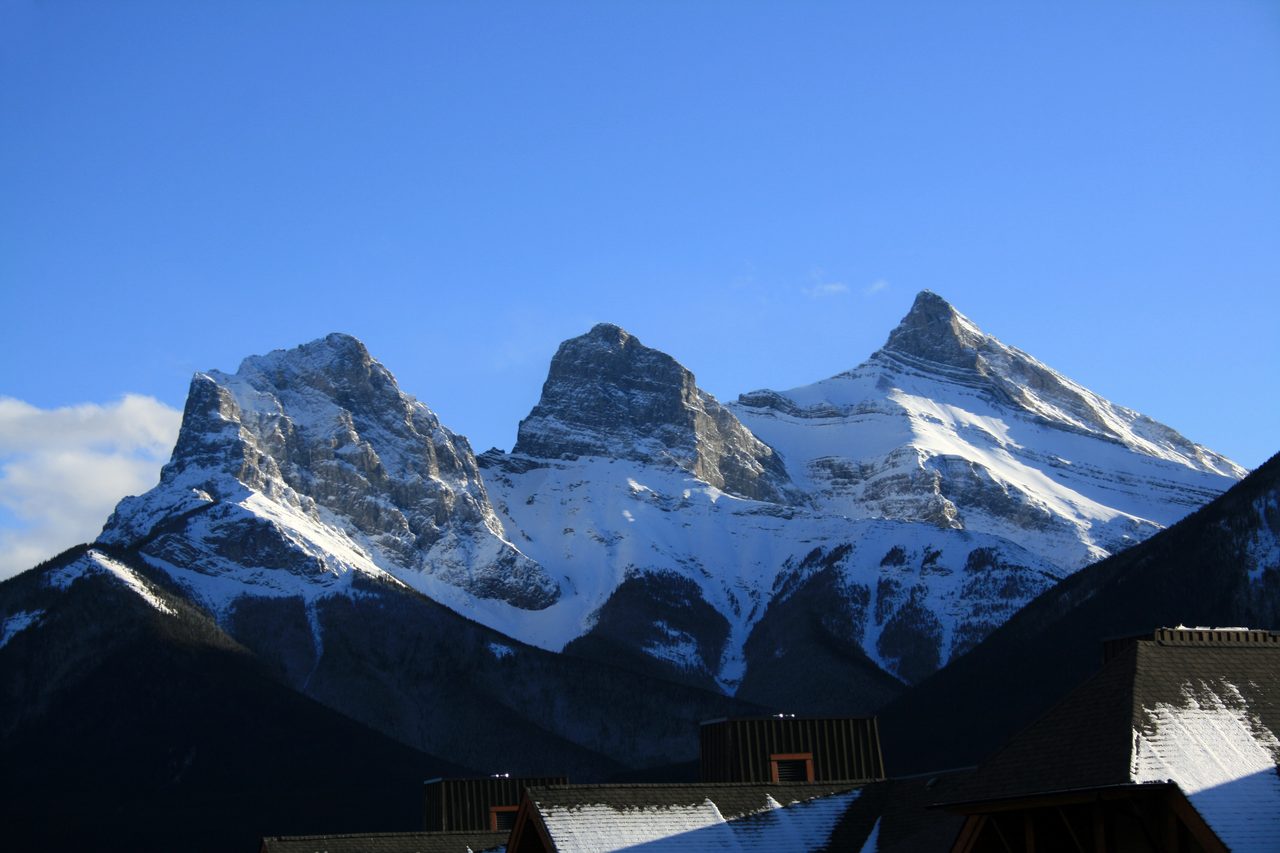
Yes, 6:30. I’m sorry, but trust me on this one: the Three Sisters — the three shark-fin peaks that are basically Canmore’s logo — catch the first light in a way that makes every photographer within 50 km lose their mind, politely. The classic viewpoint is off Three Sisters Parkway, and there’s a quieter reflection spot near the Bow River dog park where a local photographer told me to stand: a calm side channel under the railway bridge catches the peaks like glass on still mornings. I showed up at 6:20 with a thermos and exactly two other humans, and it was the single best hour of my day.
Fair warning: mountain mornings are cold even in August. I wore a down jacket over pajamas and regretted nothing.
8:00 AM — Coffee and breakfast (from ~$15–20)
Caffeine time. Eclipse Coffee Roasters is my pick — locally roasted, serious about beans, and the kind of place where the barista remembers your order by day two. (A barista here once steered me to the Upper Grassi Lakes trail over the Interpretive one because “the stairs are a whole personality” — accurate, and I quote her below.) For breakfast, Rocky Mountain Bagel Co. does hearty grab-and-go sandwiches, or sit down at Communitea Cafe if you’ve got time — their breakfast burrito genuinely carried me up a mountain once.
8:45 AM — The Canmore Engine Bridge (free)
Before you leave the town center, walk the Canmore Engine Bridge — a former coal-mining railway bridge turned pedestrian crossing over the turquoise Bow River. It frames Mount Rundle on one side and Ha Ling Peak on the other, and I have now photographed it four times and still stop every single time. It’s also your gateway to the riverside trail network you’ll come back to this afternoon. Allow 20–30 minutes of pleasant dawdling.
Late morning: choose your hike
This is the fork in the day. Pick ONE — I’ll be honest, I have tried to do both in a day and it ended with me eating dinner lying horizontally. Both trailheads require the Kananaskis Conservation Pass for parking (remember: $15/day), and both are roughly a 10–12 minute drive from downtown — or reachable on summer Roam Route 12.

9:30 AM — Grassi Lakes: the easy, gorgeous option (free + pass)
Grassi Lakes is the best effort-to-reward ratio in the Bow Valley, and I don’t say that lightly. Two routes climb to a pair of shallow, impossibly turquoise lakes: the easy Upper trail (an old road through the forest) and the harder Interpretive trail (steep stairs past a waterfall, with the best views of Canmore and the Bow Valley). Loop them together — up the Interpretive, down the Upper — for about 4 km and 1–2 hours, with 170 m of elevation gain. I double-checked those stats on Travel Alberta’s official Grassi Lakes listing and my watch agreed, roughly.
A few hard-won notes:
- Go before 9 AM on weekends. I showed up at 11 AM on a Saturday once. The lot was full, I circled twice, and I parked somewhere that required a small expedition to reach the trailhead. Never again.
- The Interpretive trail is closed in winter (ice), but the Upper stays open year-round.
- This is a designated wildlife corridor — stay on marked trails, no exceptions.
10:00 AM — Ha Ling Peak: the ambitious option (free + pass)
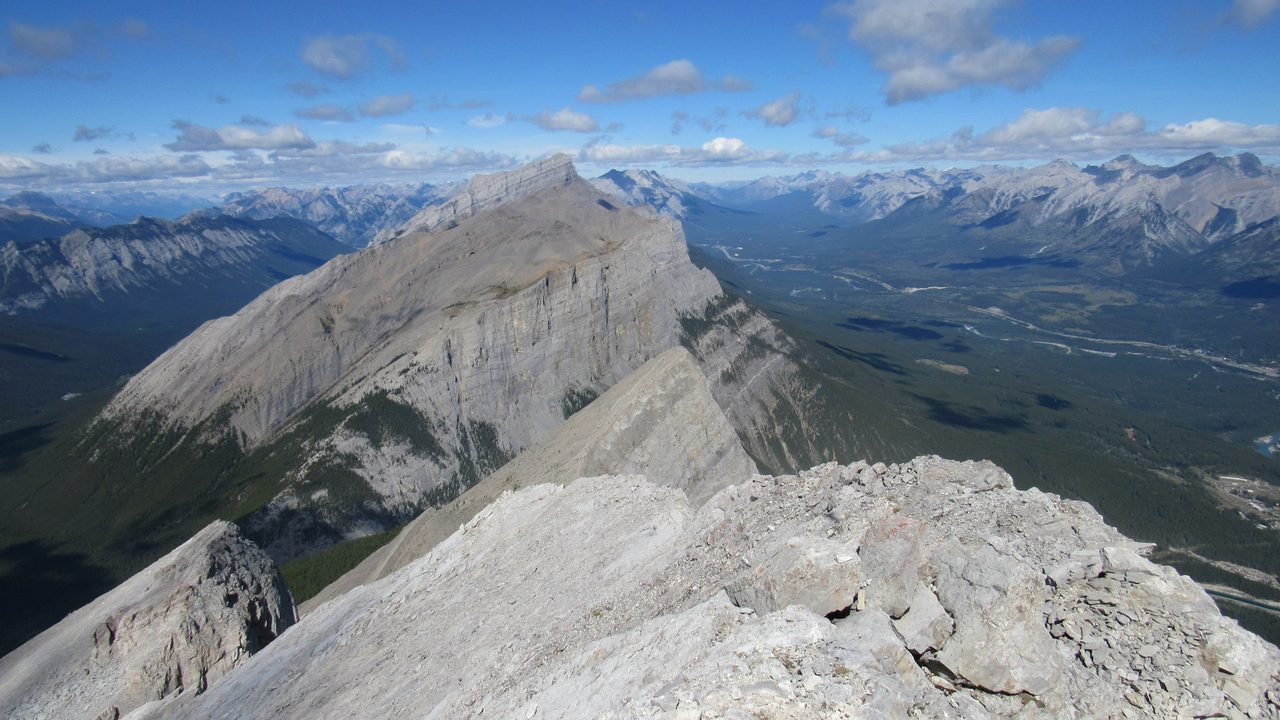
If “easy lakes” sounds like a warmup, Ha Ling Peak is Canmore’s signature grunt: ~7.8 km round trip, ~760–810 m of elevation gain, 3–5 hours of relentless uphill, with a 360° summit payoff over the Bow Valley and Spray Lakes. The trailhead is off Smith Dorrien Road (Highway 742), across from the Goat Creek Day Use Area, about 10 minutes from downtown.
My confession: I attempted this with one 500 ml water bottle and the confidence of a woman who plans everything. The final scree section in August heat humbled me completely — I turned around 200 m from the saddle and a kind retiree from Calgary gave me half her water. Now I carry 1.5 litres minimum and check the Alberta Parks trail report first, because the stairs and scree up there are no joke in shoulder season. Best months: late June through September.
Bear spray, layers, real boots. You know the drill — but for this one, actually do it.
Afternoon: Main Street, the Bow River Loop, and Quarry Lake
1:00 PM — Lunch on Main Street (~$15–25)
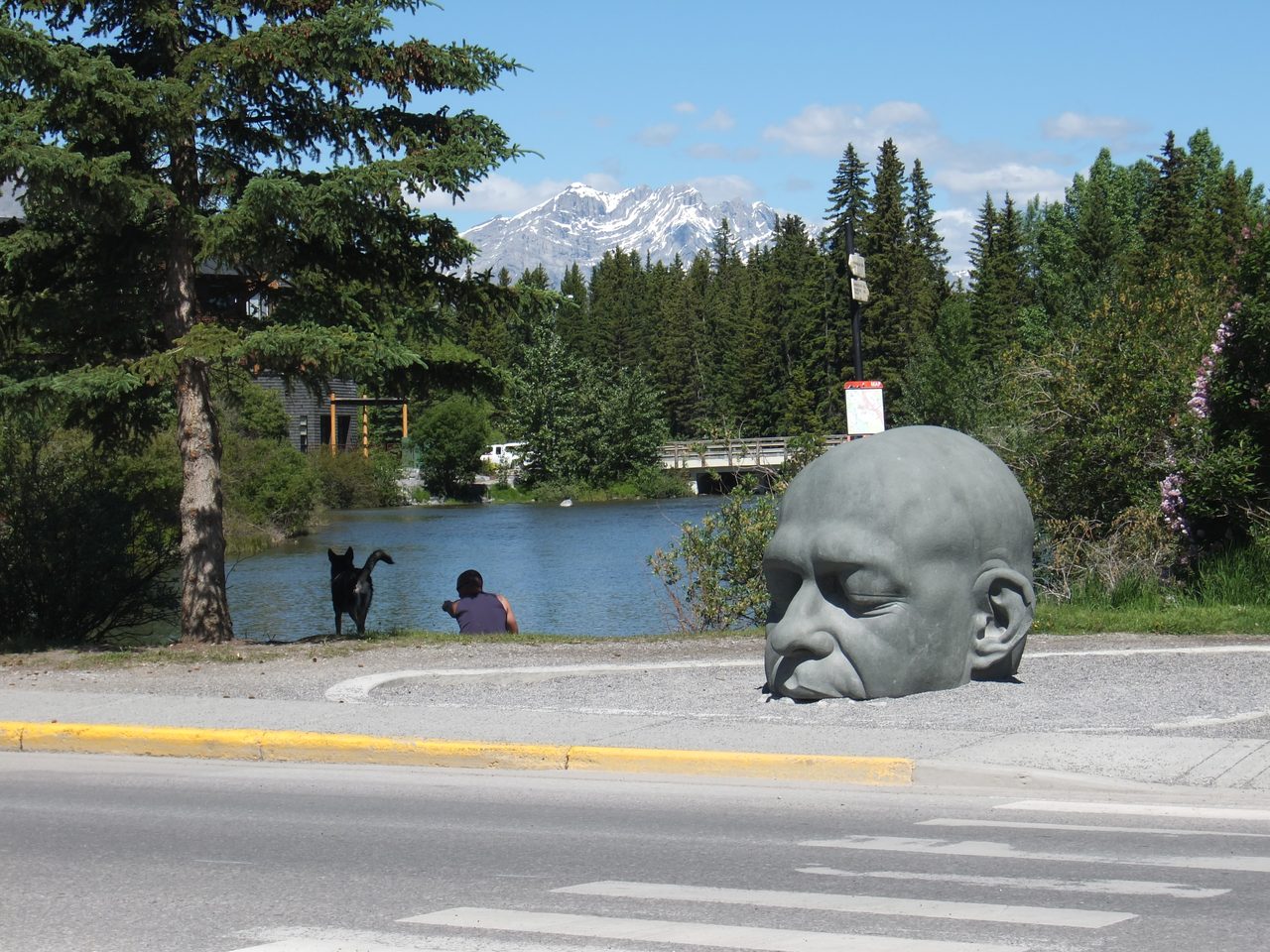
Head back into town for lunch. Canmore’s Main Street (8th Street) is refreshingly chain-free — galleries, gear shops, and patios with mountain views. The Grizzly Paw is the local staple (burgers, house-brewed craft soda, and a brewpub energy that feels lived-in, not staged), and there are solid delis and bakeries for quicker bites. Say hi to the Big Head — the giant sculpted head on the street that every visitor photographs and every local pretends not to notice. I’ve taken the photo twice. No regrets.
Wander the galleries while you’re here: the Carter-Ryan Gallery showcases Indigenous art and sculpture, and the independent shops are genuinely local — your money stays in town. Pro tip from my spreadsheet era: most shops close around 5–6 PM, so browse now, not after dinner.
2:30 PM — The Bow River Loop (free)
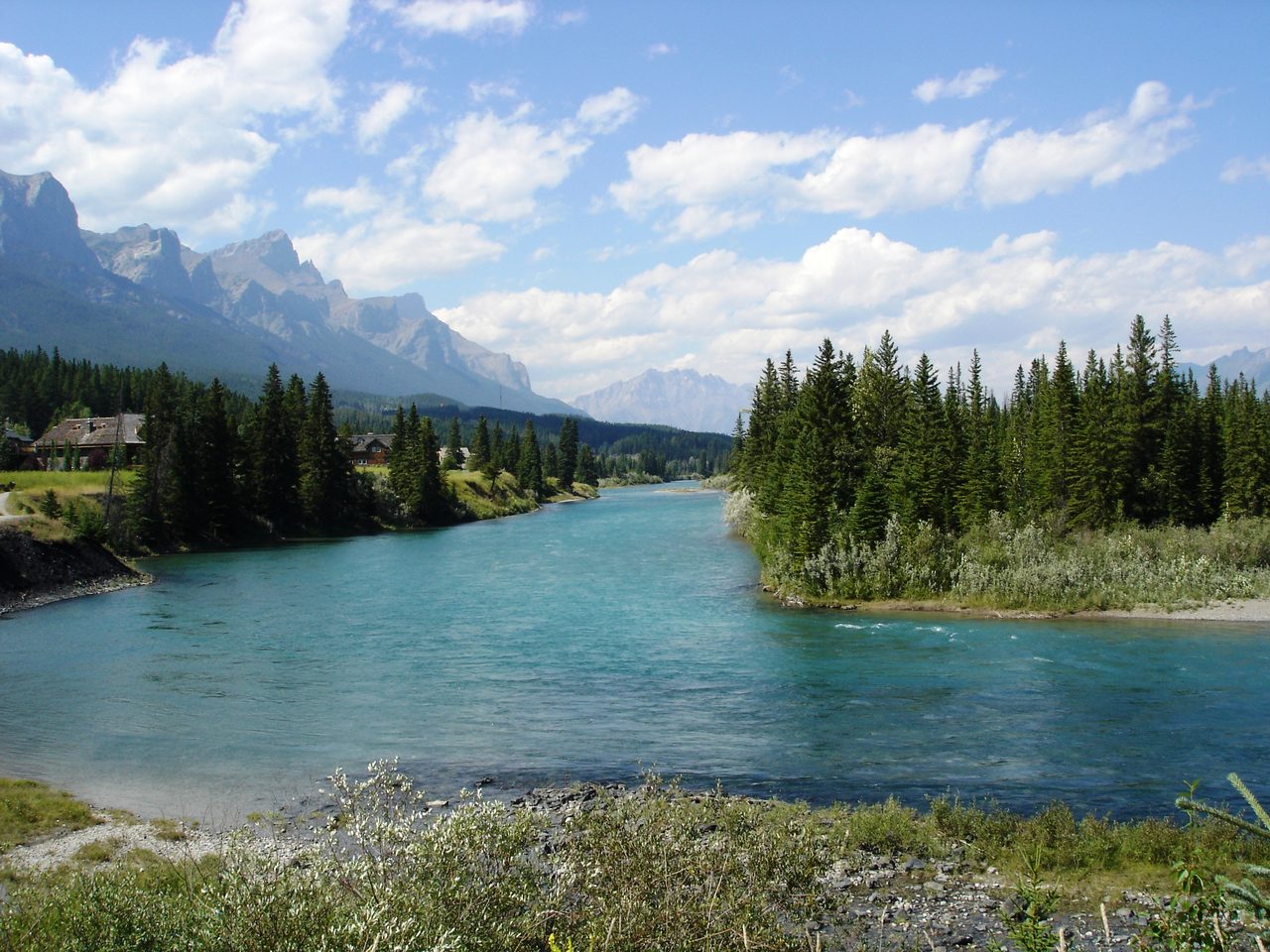
If your legs are cooked from the morning (mine were), the Bow River Loop is the perfect flat recovery walk — a gravel path along the riverbank with constant peak views, popular with dog-walkers and stroller-pushers alike. I’ve done this loop four times now and I still take the wrong turn at the bridge by the Engine Bridge end (it’s a rite of passage). Keep an eye out for elk grazing near the water — I once watched a whole herd from the path while a local walked past like it was a bus stop. For him, it was.
4:00 PM — Quarry Lake (free)
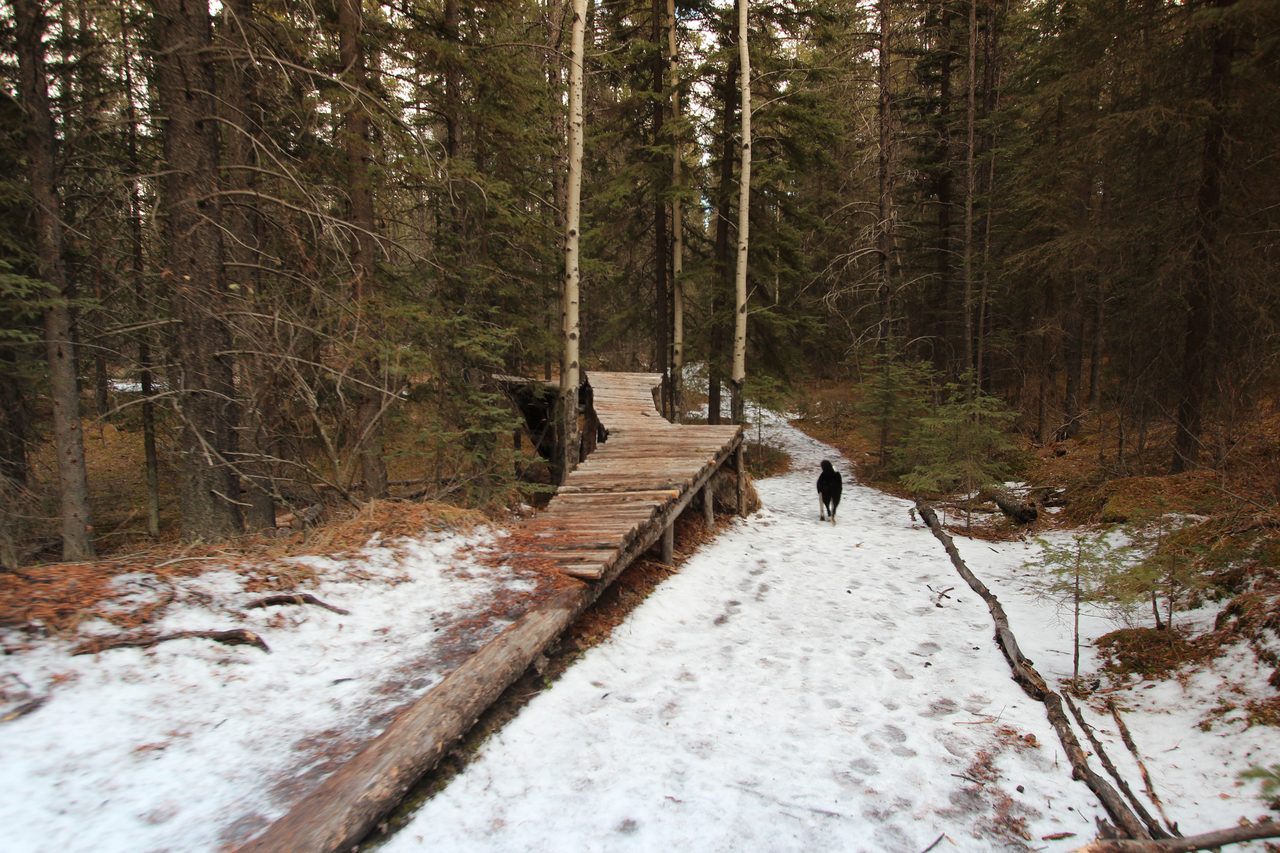
End the active part of your day at Quarry Lake, a former mining site turned swim spot that locals call the “living room” of Canmore. The water is mountain-fed, which is a polite way of saying my toes went numb in exactly 30 seconds — and I still got in twice. There’s a big off-leash dog area (Canmore is extremely dog-friendly), easy surrounding trails, and a grassy shoreline made for a picnic. In summer, Roam’s Route 12 stops here, so you don’t even need the car.
Rainy-day backup: the Canmore Museum covers the town’s coal-mining heritage and geology — a genuinely good hour indoors, and I say that as someone who usually chooses trails over museums.
Evening: breweries, dinner, and alpenglow
6:00 PM — The brewery circuit (~$20 for a flight)
Canmore has quietly become the craft-beer capital of the Rockies, and the vibe is the opposite of Banff’s tourist-trap pubs — small-batch, industrial-casual, full of people who actually live here. Sheepdog Brewing does experimental small batches, and The Grizzly Paw’s downtown spots pour their own brews with Three Sisters views. If spirits are more your thing, Wild Life Distillery makes gin and vodka from local grains and mountain water. Most places do tasting flights, so you can sample without committing — though I have never once successfully left after “just one flight.”
7:30 PM — Dinner and sunset (~$30–60)
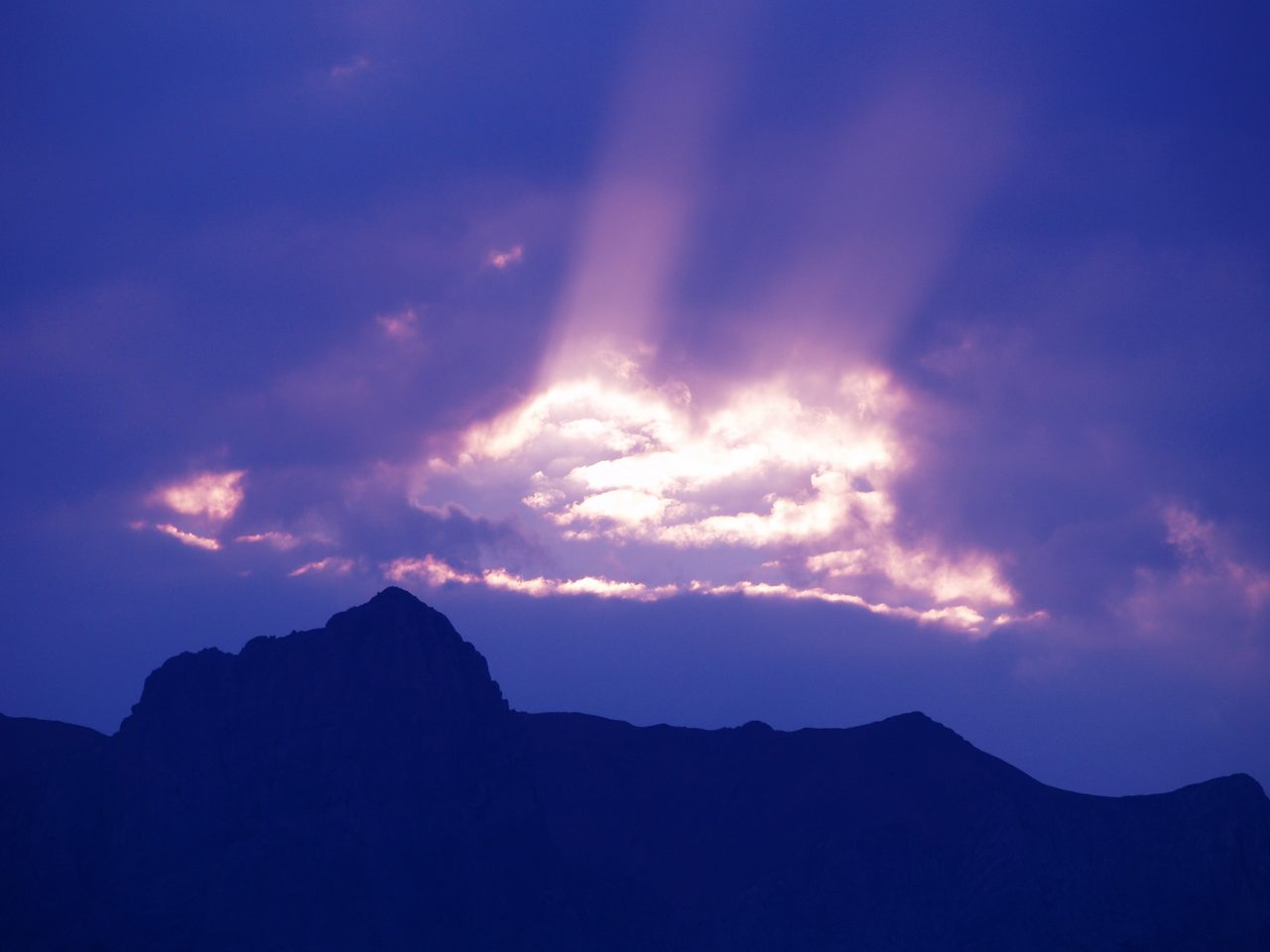
Canmore’s food scene punches way above a town of 15,000 — from thin-crust pizza to fine dining built on foraged local ingredients. This is your splurge meal; you climbed a mountain today (or a very steep staircase, which counts). Then, for the finale: find a west-facing spot and watch alpenglow set Mount Rundle and Lady Macdonald on fire — that orange-pink glow on the peaks at sunset. The Bow River reflections during alpenglow are the best free show in town, and after a day like this one, you’ll just stand there grinning. I did.
Evening add-on: Banff is only 25 km away — Roam Route 3 runs into the night ($6 one-way), so a quick evening wander down Banff Avenue is doable if you’ve got energy left. Just remember you’d need a Parks Canada day pass ($12.25/adult, valid until 4 PM the next day) to stop and sightsee in the national park. See our 1-day Banff itinerary if you want to give it a full day instead.
How much does 1 day in Canmore cost?
Sample budget per adult, excluding hotel (prices checked October 2026; items marked ~ are estimates):
| Item | Cost (CAD) |
|---|---|
| Kananaskis Conservation Pass (day, per vehicle) | $15 |
| Coffee + breakfast | ~$15–20 |
| Lunch on Main Street | ~$15–25 |
| Brewery tasting flight | ~$20 |
| Dinner | ~$30–60 |
| Roam Transit (if going car-free) | ~$6–15 |
| Total | ~$75–140 |
Staying overnight? Canmore’s hotels run roughly ~$180–350/night in summer (estimate, before taxes) — noticeably cheaper than Banff for the same mountains. Pair this with our 2-day Canmore itinerary if you’ve got another day, or the 2-day Banff itinerary to add the national park properly.
Timeline at a glance
| Time | What | Cost |
|---|---|---|
| 6:30 AM | Sunrise at the Three Sisters viewpoint | Free |
| 8:00 AM | Coffee + breakfast in town | ~$15–20 |
| 8:45 AM | Canmore Engine Bridge stroll | Free |
| 9:30 AM | Hike: Grassi Lakes (easy) or Ha Ling Peak (hard) | Free + $15 K-pass |
| 1:00 PM | Lunch + wander Main Street | ~$15–25 |
| 2:30 PM | Bow River Loop walk | Free |
| 4:00 PM | Quarry Lake dip & picnic | Free |
| 6:00 PM | Brewery tasting flight | ~$20 |
| 7:30 PM | Dinner + alpenglow on Mount Rundle | ~$30–60 |
FAQs about 1 day in Canmore
Is 1 day in Canmore enough?
One well-planned day covers the highlights: sunrise at the Three Sisters, one solid hike (Grassi Lakes or Ha Ling Peak), Main Street, the Bow River Loop, Quarry Lake, and a brewery evening. You’ll leave with a full camera roll and tired legs. With a second day, see our 2-day Canmore itinerary — it adds the Nordic Centre and a slower pace.
Do I need the Kananaskis Conservation Pass for Canmore?
Only to park at provincial trailheads — Grassi Lakes, the Canmore Nordic Centre, and the Ha Ling trailhead all require it ($15/day or $90/year in 2026, registered to your licence plate). You do not need it for the Canmore townsite itself. Buy it online before 11:59 PM on the day of your visit via the official Explore Canmore page.
Can I do Canmore without a car?
Yes — and it’s easier than you’d think. Roam Transit’s local Canmore routes (5C, 5T) are free, Route 3 connects Canmore to Banff for $6 one-way, and summer Route 12 serves the Grassi Lakes trailhead, Quarry Lake, and the Nordic Centre. Fares are listed on Roam Transit’s official fares page. Coming from Calgary, you’ll still want a shuttle or rental car for the ~105 km drive from the city.
Grassi Lakes or Ha Ling Peak — which should I pick?
Grassi Lakes (4 km, 1–2 hours, 170 m gain) if you want maximum beauty per step — turquoise lakes, a waterfall, and town views with modest effort. Ha Ling Peak (~7.8 km, 3–5 hours, ~800 m gain) if you’re fit and want a real summit with a 360° panorama. I’ve done both; Grassi Lakes is the one I’d send a first-timer to, and Ha Ling is the one I brag about.
Is Canmore better than Banff?
Different, not better — but for a single day, Canmore wins on value and ease. Same Rockies scenery, cheaper hotels and food, far less crowded trailheads, and a craft-beer scene Banff can’t touch. Banff has the national-park icons (Lake Louise, Moraine Lake); Canmore has the locals’ Rockies. Do both if you can — they’re 25 km apart. See our 1-day Banff itinerary for the other side.
When is the best time to visit Canmore?
June through September for hiking — trails like Ha Ling are typically snow-free from late June, and Grassi Lakes’ Interpretive trail is open in summer (it’s closed in winter). July and August are busiest, so start hikes before 9 AM. Winter brings a different Canmore: the Nordic Centre’s cross-country trails, frozen waterfall walks, and far fewer crowds — but that’s a separate itinerary.
1 comment