

Last updated: October 3, 2026
The short answer
- Morning: I start at Château Frontenac and Dufferin Terrace, then take the guided tour of the Citadelle de Québec (adult $22) and walk the Plains of Abraham.
- Afternoon: Down to Lower Town on the funicular (~$6–7 one-way) for Place Royale, Petit-Champlain, and Notre-Dame-des-Victoires church.
- Late afternoon + evening: Montmorency Falls (83 metres, free to admire from the top park area) or a wander of Île d’Orléans, then dinner and the illuminated city walls — the whole day costs about ~$120–155 per adult, not counting the hotel.
Here’s the thing about Quebec City: it packs more “wait, I’m still in Canada?” into one square kilometre than anywhere else I’ve been. One day is honestly the perfect highlight reel — the entire historic core sits inside the old walls, so you can walk from a fortress to a waterfall viewpoint without ever needing a car (or, in my case, needing a nap). This itinerary uses 2026 prices and hours checked in October 2026, runs entirely on foot plus one funicular ride, and is written for any season — just swap the layers. Fair warning on the knees: Quebec City is famously vertical. The Upper Town (Haute-Ville) sits on a cliff 98 metres above the Lower Town (Basse-Ville), and moving between them is the cardio event of your trip. I planned this route so you only climb up once. You’re welcome.
Getting around for one day (no car needed)
Everything below happens within Old Quebec, which is gloriously compact and walkable — I’ve done this exact loop three times now, and my step counter lands around 18,000 by dinner. Arriving by plane? The airport shuttle and taxis reach the old city in about 25 minutes. Arriving by cruise? You dock at the Saint-Lawrence terminal practically inside Lower Town, which means you can start sightseeing the moment you step off the ship — a huge plus on a one-day schedule.
Your knees have two ways down the cliff: the stairs (free, sweaty, character-building) or the Old Quebec funicular, a glass-walled incline elevator that slides from Dufferin Terrace to Rue du Petit-Champlain in about two minutes for roughly $6–7 CAD one-way. I double-checked the current price on the official funiculaire site before my last visit — it runs daily 9:00 AM–9:00 PM — but it does close in heavy rain, and I found that out the soggy way. Pro tip: ride it down, walk back up through Lower Town in the afternoon when you’ve had lunch. Trust me on this one.
Morning: the heights of Upper Town

8:30 AM — Château Frontenac and Dufferin Terrace (free)
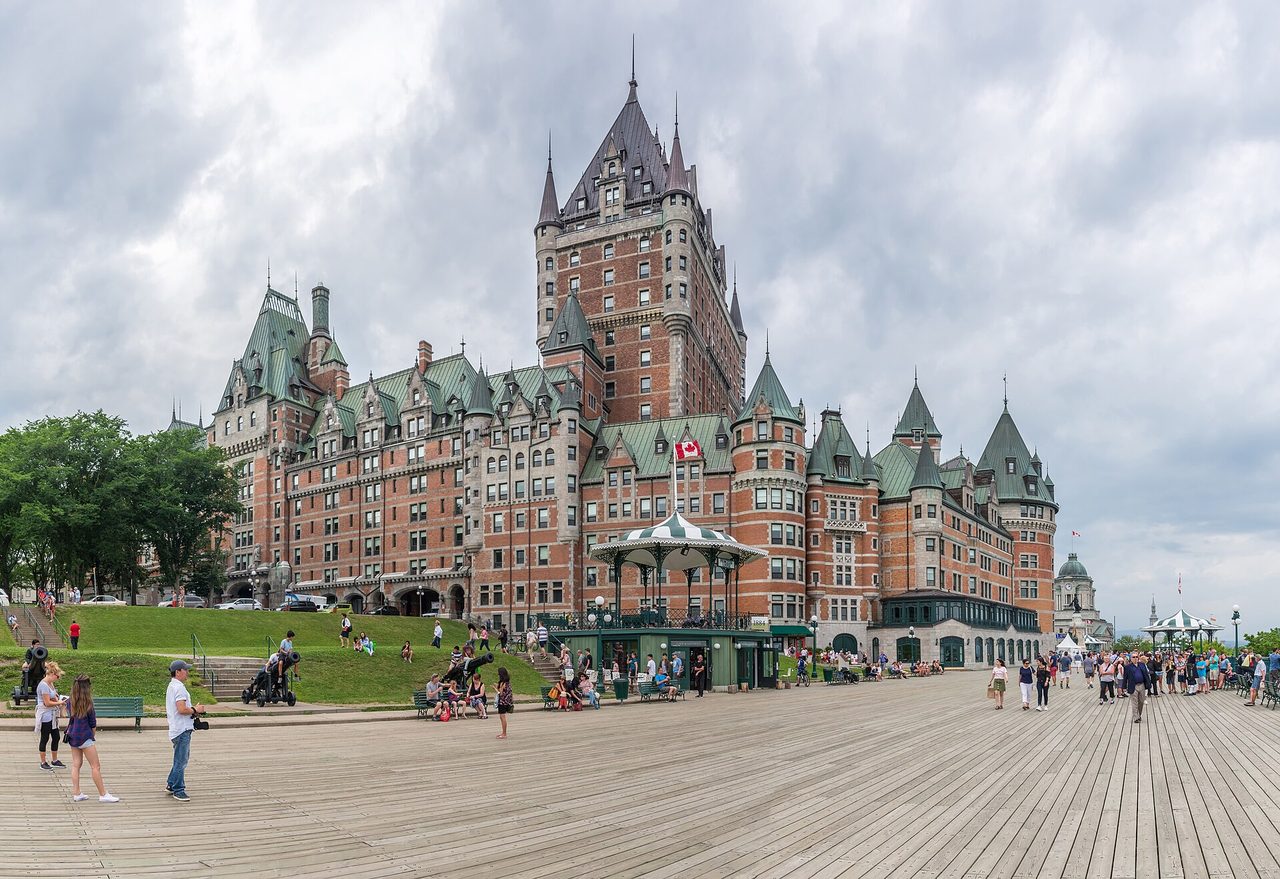
Start at the most photographed hotel in the world — and I’ll be honest, I showed up at 8:30 AM with a coffee and had the Dufferin Terrace nearly to myself. The terrace is a grand wooden boardwalk wrapping around Cap Diamant, and the morning light hits the Château’s copper rooftops first. Keep an eye out for the glass panels set into the floorboards: they reveal the buried ruins of the Saint-Louis Forts and Châteaux underneath, which stopped me mid-stride the first time (surprise history under your feet — my favorite kind).
Guided tours of the hotel’s interiors have historically run about ~$30, but availability and policy change often — I checked before my last trip and found mixed reports, so confirm current options on the hotel’s official site before you count on it. Honestly? The exterior and the terrace are the free highlight anyway. Don’t skip walking the terrace end to end; the river views toward Lévis on the far shore are the best free panorama in the city.
10:00 AM — Citadelle de Québec tour (adult $22)
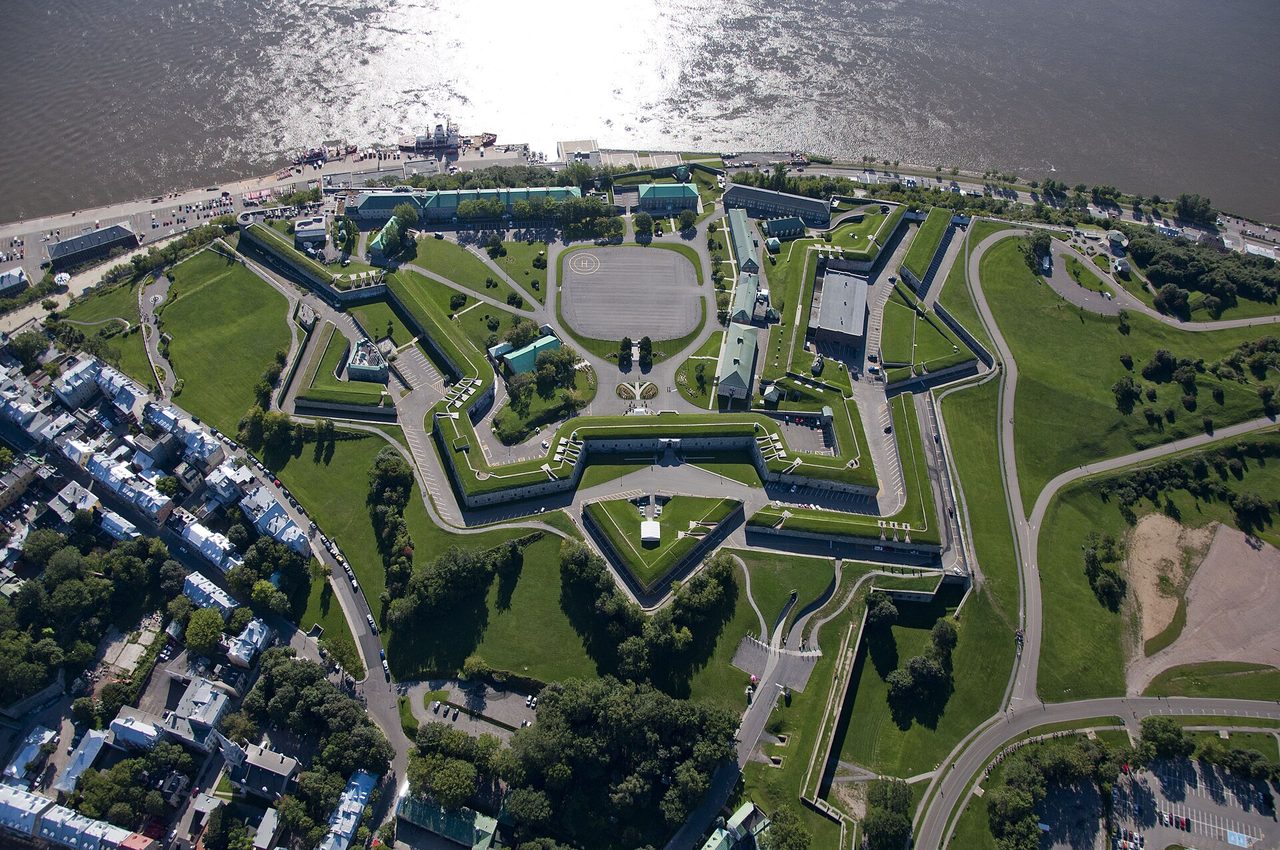
From the terrace, it’s a short walk to the Citadelle — the “Gibraltar of the Americas,” the largest British-built fortress on the continent, and still an active military base. Here’s the confession: I showed up at 11 AM on a Saturday once. Never again. Go for the first or second morning tour; you cannot wander this one on your own, and the guided tour is mandatory.
The one-hour guided tour costs $22 for adults (seniors and students $20), includes the Royal 22e Régiment Museum, and runs daily 10:00 AM–5:30 PM in fall and winter (9:00 AM–5:30 PM in summer). I double-checked the tour price and schedule on the Citadelle’s official site before I went — tour times are limited, so book ahead in summer. A guide on my tour told me the goat mascot, Batisse, still marches in the summer Changing of the Guard (mid-May through early September), and the whole regiment really does take the noon cannon seriously. Dress for weather — most of the tour is outdoors, and I once did it in a windbreaker that lied about being windproof.
12:00 PM — Plains of Abraham (free)

Walk west from the Citadelle and the fortifications open onto the Plains of Abraham — the rolling park where the 1759 battle between the French and British empires decided the fate of North America. Today it’s Quebec’s answer to Central Park, just with more cannons and historical markers. I always take 20 minutes here with a snack from the hotel breakfast buffet (my planner instinct: eat standing up, admire the cannons, keep moving). It’s free, it’s green, and your legs get a flat-ish break before lunch.
Lunch: poutine done right
By now you’re hungry, and here’s the thing — do not settle for fast-food poutine. The real Quebec version uses fresh cheese curds that squeak, and I can confirm the squeak is real (first bite, Petit-Champlain area, 2019, I still think about it). Budget ~$14–18 for a proper poutine, ~$20–25 for a fuller lunch with tourtière (meat pie) or yellow pea soup at a casual bistro. My rule: pick the place in Upper Town near Place d’Armes with the line of French-speaking locals. The line has never failed me.
Afternoon: a deep dive into Lower Town
Take the funicular down (~$6–7 one-way) or brave the stairs, and land in the oldest shopping street in North America. Lower Town is the postcard — stone houses, flower boxes, buskers — and it’s where I do most of my souvenir damage.
2:15 PM — Place Royale (free)
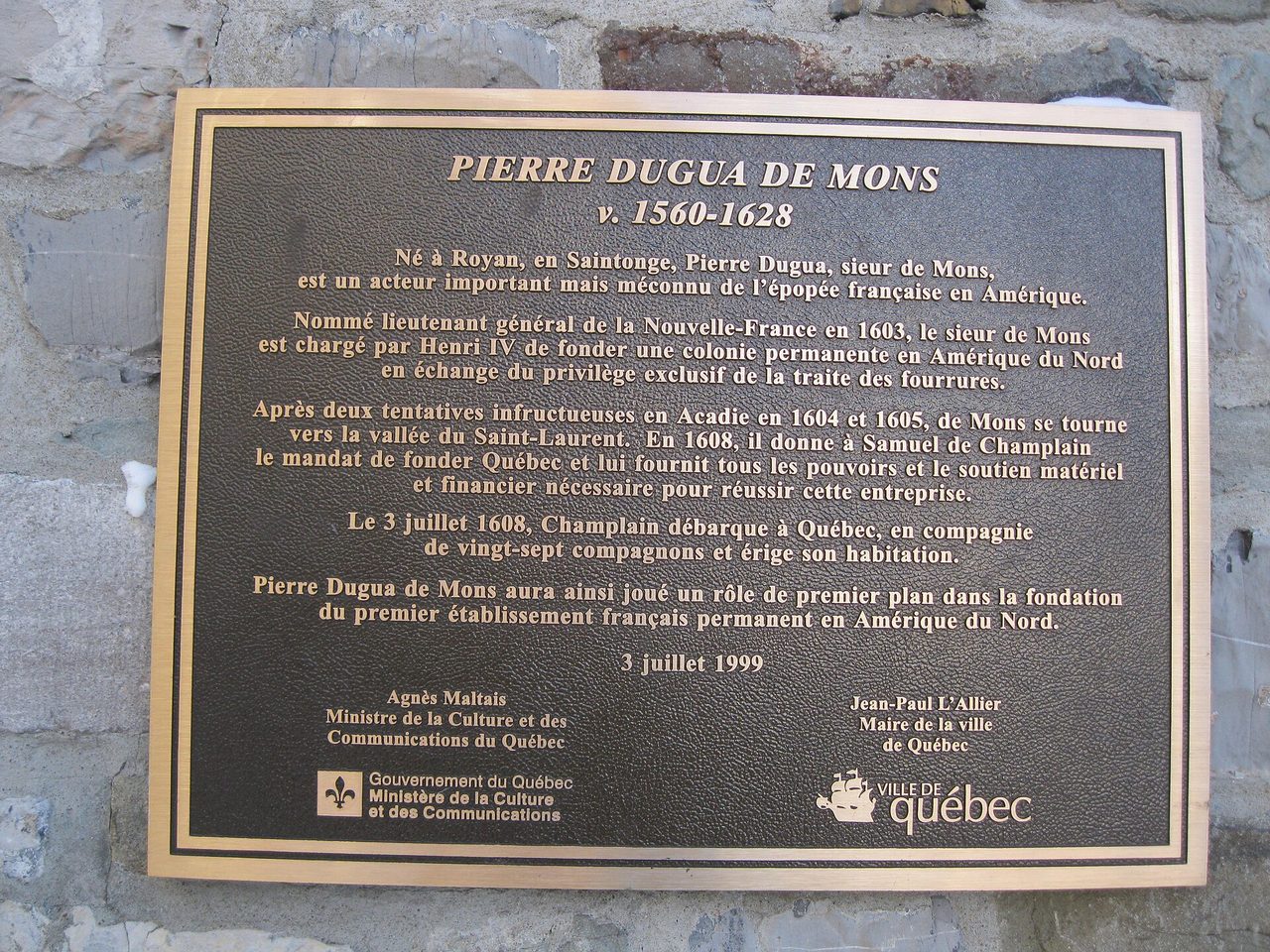
This is the birthplace of French civilization in North America — Samuel de Champlain founded Quebec here in 1608 — and it looks exactly like the Europe you were promised. The square is ringed by 17th- and 18th-century stone houses, and it’s the spot for the “am I in France?” photo. I’ll be honest: it’s crowded by 2 PM in summer. I went at opening-time-on-a-Tuesday energy and practically had the cobblestones to myself for ten glorious minutes.
2:45 PM — Rue du Petit-Champlain
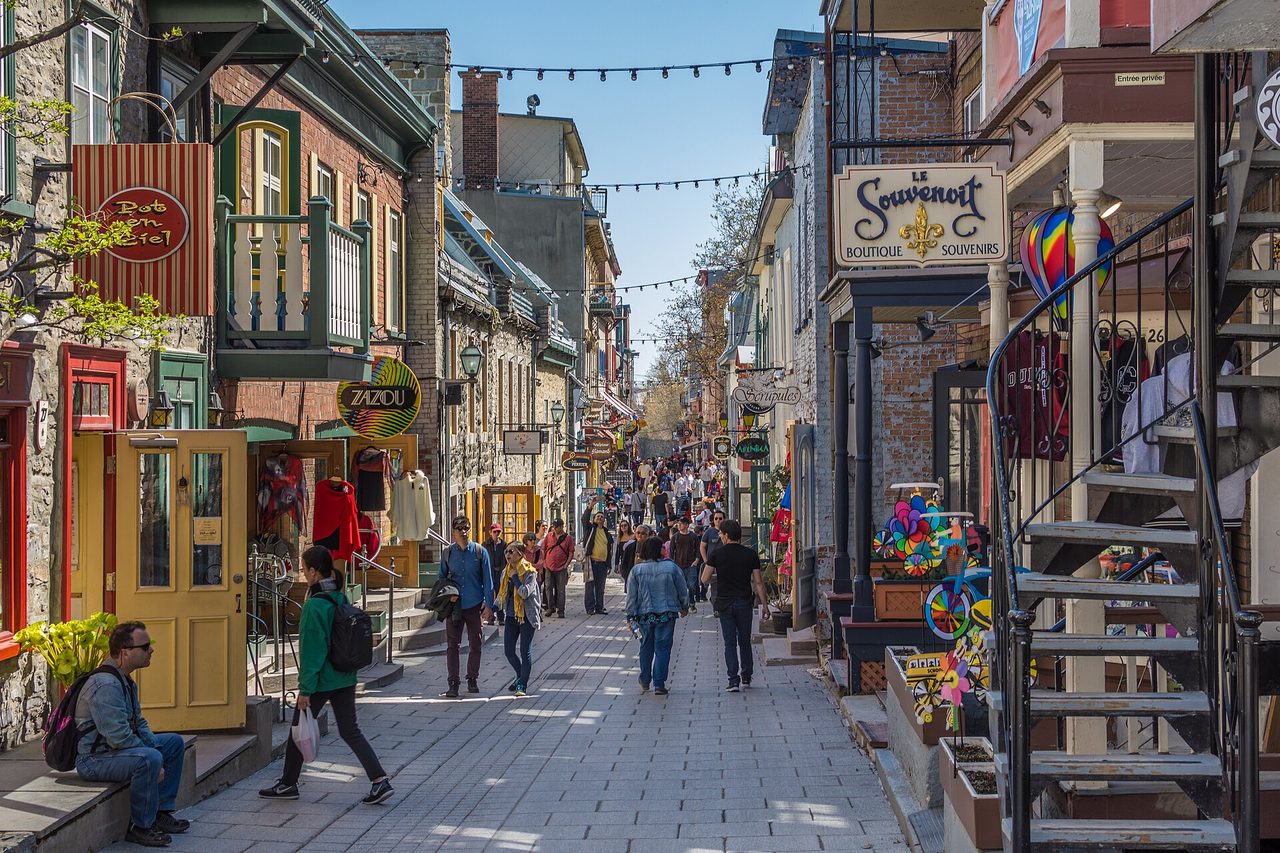
From Place Royale, wander Rue du Petit-Champlain — North America’s oldest commercial street, lined with artisan boutiques, crêperies, and those giant trompe-l’œil murals. I always lose 45 minutes here minimum (my spreadsheet budgets 30; my feet budget 90). This is your souvenir stop: maple everything, locally made candles, and prints of the Château that look suspiciously like your own photos.
3:15 PM — Notre-Dame-des-Victoires church (free)

Right on Place Royale sits the oldest stone church in North America (1688). Step inside for five quiet minutes — the interior is all wood-carved warmth and model ships hanging from the ceiling, a sailor’s prayer tradition. It’s free, it’s peaceful, and it’s the reset button your afternoon needs.
Late afternoon: the waterfall option
If you have a car, a taxi, or a couple of bus fares, there’s one excursion worth your remaining daylight:
Montmorency Falls (83 metres — taller than Niagara)
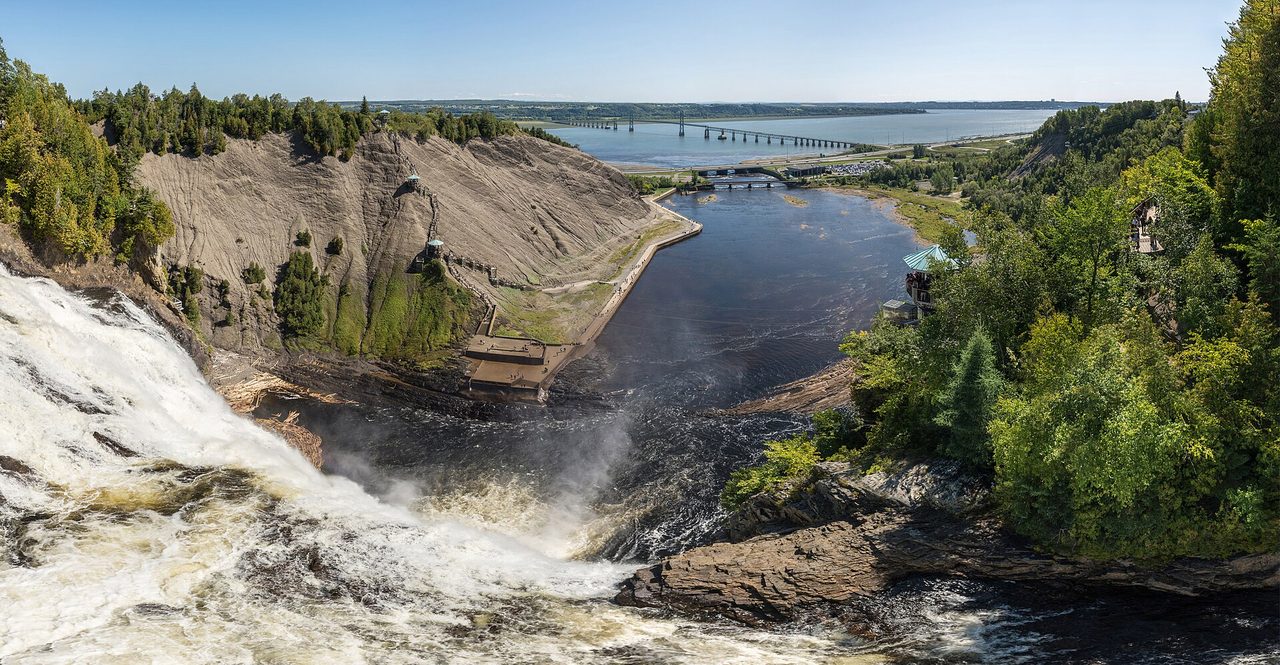
Fifteen minutes east of Old Quebec, the Montmorency River drops 83 metres off a cliff — 30 metres taller than Niagara Falls — and the whole spectacle takes about 90 minutes. The 487-step panoramic staircase descends alongside the cascade (I climbed up instead, once, and my calves filed a formal complaint), the suspension bridge crosses right over the crest, and the cable car rides up for the sweeping view. Parking ran about ~$16 in 2026 according to summer visitor reports, with the cable car extra on top — I checked the official Sépaq page before my trip, and prices here do shift, so confirm before you go. No car? The public bus from the city centre is a few dollars, and honestly it’s the best value view in the region.
Fair warning: if you’re on a cruise-ship schedule or the weather’s iffy, skip this and stay in the old city — there’s more than enough there.
Evening: dinner and the lit-up walls
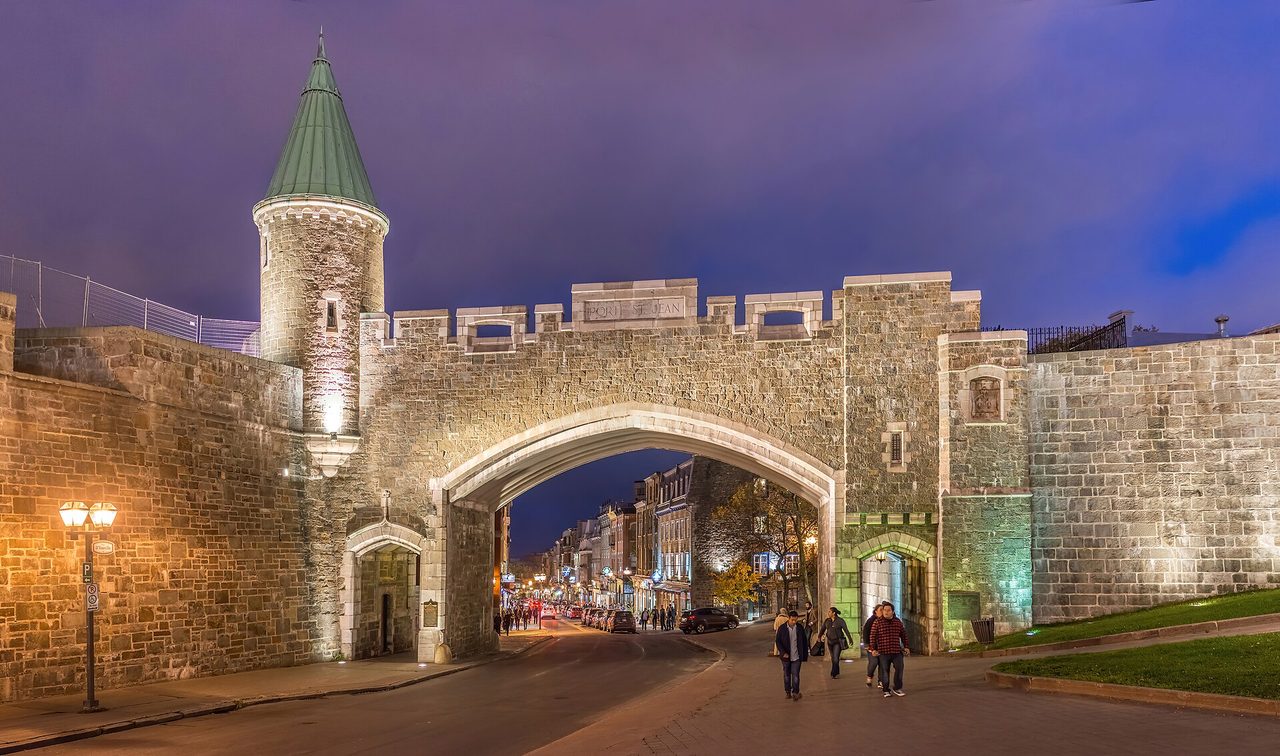
Back in the city, Quebec City after dark is the real magic hour. Dinner budget: ~$35–50 per person at a mid-range bistro in Upper Town — think duck confit, game, and maple crème brûlée. Then walk the walls. The fortifications and gates (like Porte Saint-Jean, above) are floodlit at night, and strolling the ramparts with the city glowing below is my favorite free thing in Quebec City. I’ve done this walk four times now, and the moment the Château lights up against the dark river still gets me. You’ve got this — finish with a walk along the Governor’s Promenade if your legs have anything left.
How much does 1 day in Quebec City cost?
Sample budget per adult, excluding hotel (prices checked October 2026; items marked ~ are estimates):
| Item | Cost (CAD) |
|---|---|
| Citadelle de Québec guided tour | $22 |
| Old Quebec funicular (one-way) | ~$6–7 |
| Montmorency Falls parking / bus | ~$16 (or a few dollars by bus) |
| Lunch (poutine at a local spot) | ~$15–20 |
| Snacks, coffee, souvenirs | ~$25–35 |
| Dinner (mid-range bistro) | ~$35–50 |
| Total | ~$120–155 |
Skipping the waterfall? Your day drops to roughly ~$100–120. Short on time but want more? See our 2-day Quebec City itinerary or 3-day Quebec City itinerary for the slower version.
Timeline at a glance
| Time | What | Cost |
|---|---|---|
| 8:30 AM | Château Frontenac + Dufferin Terrace | Free |
| 10:00 AM | Citadelle de Québec guided tour (~1 hr) | $22 |
| 12:00 PM | Plains of Abraham stroll | Free |
| 12:45 PM | Lunch: poutine + tourtière in Upper Town | ~$15–25 |
| 2:00 PM | Funicular down to Lower Town | ~$6–7 |
| 2:15 PM | Place Royale + Petit-Champlain + Notre-Dame-des-Victoires | Free |
| 4:30 PM | Montmorency Falls (or extra old-city time) | ~$16 |
| 7:30 PM | Dinner, then the illuminated fortifications walk | ~$35–50 |
FAQs about spending 1 day in Quebec City
Is one day enough for Quebec City?
Yes — one day covers the highlights beautifully, because Old Quebec is so compact. You’ll see the Château Frontenac, the Citadelle, the Plains of Abraham, Lower Town’s Place Royale and Petit-Champlain, and still have time for Montmorency Falls or an evening walk on the walls. What one day doesn’t give you is lingering — for museums, the Winter Carnival, or Île d’Orléans at a slow pace, see our 2-day Quebec City itinerary.
Do I need a car for one day in Quebec City?
No. Old Quebec is entirely walkable — the whole itinerary above runs on foot plus the funicular between Upper and Lower Town. The only stop that needs wheels is Montmorency Falls, 15 minutes east, and the public bus from the city centre costs a few dollars. If you’re building a longer trip, see our Quebec road trip itinerary.
How much does the Citadelle de Québec tour cost in 2026?
Adult admission is $22 CAD ($20 for seniors and students), which covers the mandatory one-hour guided tour and the Royal 22e Régiment Museum. The Citadelle runs daily 9:00 AM–5:30 PM, and the Changing of the Guard ceremony happens in summer only. Reserve ahead — I double-checked the current schedule on the Citadelle’s official site before my last visit.
How do I get between Upper Town and Lower Town?
You have two options: the stairs (free, scenic, a real workout) or the Old Quebec funicular, a glass incline elevator from Dufferin Terrace to Rue du Petit-Champlain that costs about $6–7 CAD one-way and runs daily 9:00 AM–9:00 PM. It closes in heavy rain, so have the stairs as your backup — I needed them once, and my calves remembered it for days.
What should I eat in one day in Quebec City?
At minimum: poutine made with fresh squeaky cheese curds (not the fast-food version), plus tourtière (meat pie) or yellow pea soup if you have two meals in you. Lower Town’s Petit-Champlain has the crêperies and maple taffy stalls; Upper Town near Place d’Armes has the sit-down bistros. Budget ~$15–25 for lunch and ~$35–50 for dinner per person.
Is Quebec City worth visiting in winter?
Absolutely — with the right layers. The old city under snow is genuinely storybook, the funicular and Citadelle run year-round, and the Winter Carnival (usually the first two weeks of February) turns the whole city into a frozen festival. Fair warning: February is seriously cold, so pack real thermal gear and plan indoor breaks (churches, museums, cafés) between outdoor stops.
1 comment