
Last updated: October 3, 2026

The short answer
- Day 1 (Upper Town): I walk the Terrasse Dufferin boardwalk (free), take the 60-minute guided tour of the Citadelle de Québec (adult $22), and catch sunset over the Plains of Abraham.
- Day 2 (Lower Town): I ride the funicular down the cliff ($7, cash only — fair warning), explore Petit-Champlain and Place Royale, and spend the afternoon at the Musée de la civilisation (adult $27).
- Day 3 (beyond the walls): Montmorency Falls — 83 metres of water, 30 metres taller than Niagara (park entry $13.90 + cable car $14.95 round-trip), with an Île d’Orléans farm-stand detour on the way back.
Three days is the perfect amount of time for Quebec City — trust me on this one. I’ve tried to do it in two (frantic, and I left mad about it) and in five (lovely, but honestly Day 4 was nap-adjacent). Seventy-two hours gives you the full walled-city experience — Upper Town, Lower Town, and the one great day trip — without ever having to sprint between centuries. This itinerary is built for the late spring through fall season, uses prices and hours checked in October 2026, and assumes you’re staying somewhere you can walk back to for a midday reset (my color-coded version literally has “rest” blocked off on Day 2 — I’ll explain).
Here’s the thing about Quebec City: it’s the only fortified city north of Mexico, the old town is a UNESCO World Heritage Site, and practically every street has a plaque telling you why it matters. You could drown in history here, or you could follow this plan and let it wash over you between pastries. I strongly recommend the pastries.
Getting to Quebec City
Most visitors arrive one of three ways:
- By train: VIA Rail’s Corridor service runs Montreal → Quebec City in about 3.5 hours, dropping you at Gare du Palais right on the edge of Lower Town. This is the one I took — I timed it, and the walk from the station to my hotel in the Upper Town took 15 minutes uphill. (Read our Canada train travel guide for the full rundown.)
- By air: Québec City Jean Lesage International (YQB) is about 25 minutes from downtown; taxis run a flat ~$41 to the city centre and the 76/78 bus connects to the transit network.
- By bus or car: Orléans Express coaches run Montreal–Quebec City, and drivers can park at one of the Old Quebec parkades (~$25–30/day — I’ll be honest, driving inside the walls is a special kind of stress).
Once you’re here, you do not need a car. Old Quebec is compact, steep, and gloriously walkable — my phone logged 22,000 steps on Day 2 alone. The RTC’s route 800 bus handles the Montmorency day trip (~$4), and everywhere else is legwork.
Where to stay for 3 nights in Quebec City
- Upper Town (Haute-Ville): closest to the Citadelle, Terrasse Dufferin, and Grande Allée nightlife. Priciest and most convenient — and where I’d stay for a first visit (I picked a small hotel off rue Saint-Jean and could walk everywhere).
- Lower Town (Basse-Ville): quieter, romantic, right by Petit-Champlain and the Old Port. Lovely, but budget those hills — everything’s a climb back up.
- Outside the walls (Saint-Jean / Saint-Roch): the local-neighborhood option, usually 30–40% cheaper than inside the ramparts, and still a 15-minute walk in.
Expect mid-range hotels to run roughly ~$150–300 per night in the summer and fall high season (estimate, before taxes) — and book early for the Festival d’été (July) and fall foliage weekends, because I once waited until June for a September trip and the prices were, frankly, rude. Combining this with Montreal? See our 3-day Montreal itinerary.
Day 1: Upper Town — the ramparts, the Citadelle, and the Frontenac
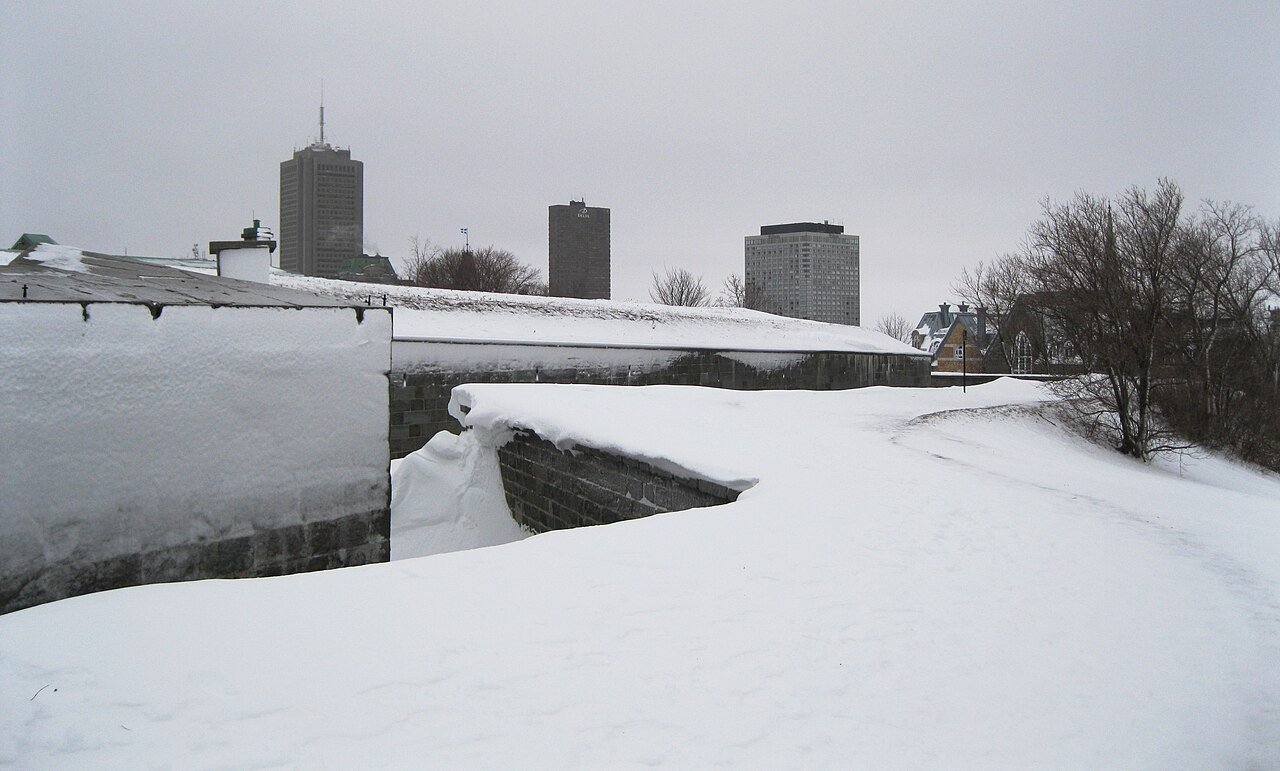
Day 1 is all about the high city: the fortress, the terrace, and the 109-hectare park where two empires settled an argument in 1759. Wear your best walking shoes — the cobblestones are beautiful and completely unforgiving.
9:30 AM — Terrasse Dufferin and the Château Frontenac (free)
Start where every postcard starts: the boardwalk behind the Château Frontenac, one of the most photographed hotels in the world. Terrasse Dufferin stretches along the cliff edge with absurd views over the St. Lawrence, and here’s the thing — it’s completely free and never crowded before 10 AM. I watched the morning light hit the hotel’s copper roofs and took roughly forty photos of essentially the same angle. No regrets.
In winter this terrace holds a toboggan slide; in summer it’s street performers and cannon views. Either way, walk its full length before the tour buses arrive.
11:00 AM — La Citadelle de Québec guided tour (adult $22)
The Citadelle is an active military base — home of the Royal 22e Régiment — so you can only visit on a 60-minute guided tour (in English or French). I checked the current hours and rates on the Citadelle’s official admission page before I went — they’re seasonal, so do the same. Current reference: adult $22, senior/student $20, open 9:00 AM–5:30 PM in spring–summer (May 16–August 31, 2026) and 10:00 AM–5:30 PM fall–winter. The tour includes the Royal 22e Régiment Museum, and the views over the city and river from the ramparts are worth the ticket alone.
Fair warning: the changing of the guard and the noon cannon are summer-season only (roughly mid-May to September 1). I visited in the shoulder season and missed the ceremony — worth every penny anyway, but if marching bands matter to you, plan for July or August and reserve ahead.
1:00 PM — Lunch in the Upper Town (~$18–25)
Refuel around rue Saint-Jean or rue Couillard — the tourist-trap gradient rises sharply the closer you get to the Frontenac, so walk five minutes in any direction and prices drop (this is my universal rule for old towns, and it’s never failed me). Budget ~$18–25 for a casual lunch.
2:30 PM — Plains of Abraham (free)
This is where the British defeated the French in 1759, and today it’s one of Canada’s great urban parks: 109 hectares of green sloping down to the river, with the Joan of Arc garden and the Musée des Plaines d’Abraham at its edge. I walked the full loop with a coffee and ended up sitting on the grass for an hour watching the river traffic. No regrets — this is your Day 1 exhale.
Allow 1.5–2 hours. The park paths are gorgeous at golden hour too, if you want to come back before dinner.
6:00 PM — Golden hour on the terrace, then dinner
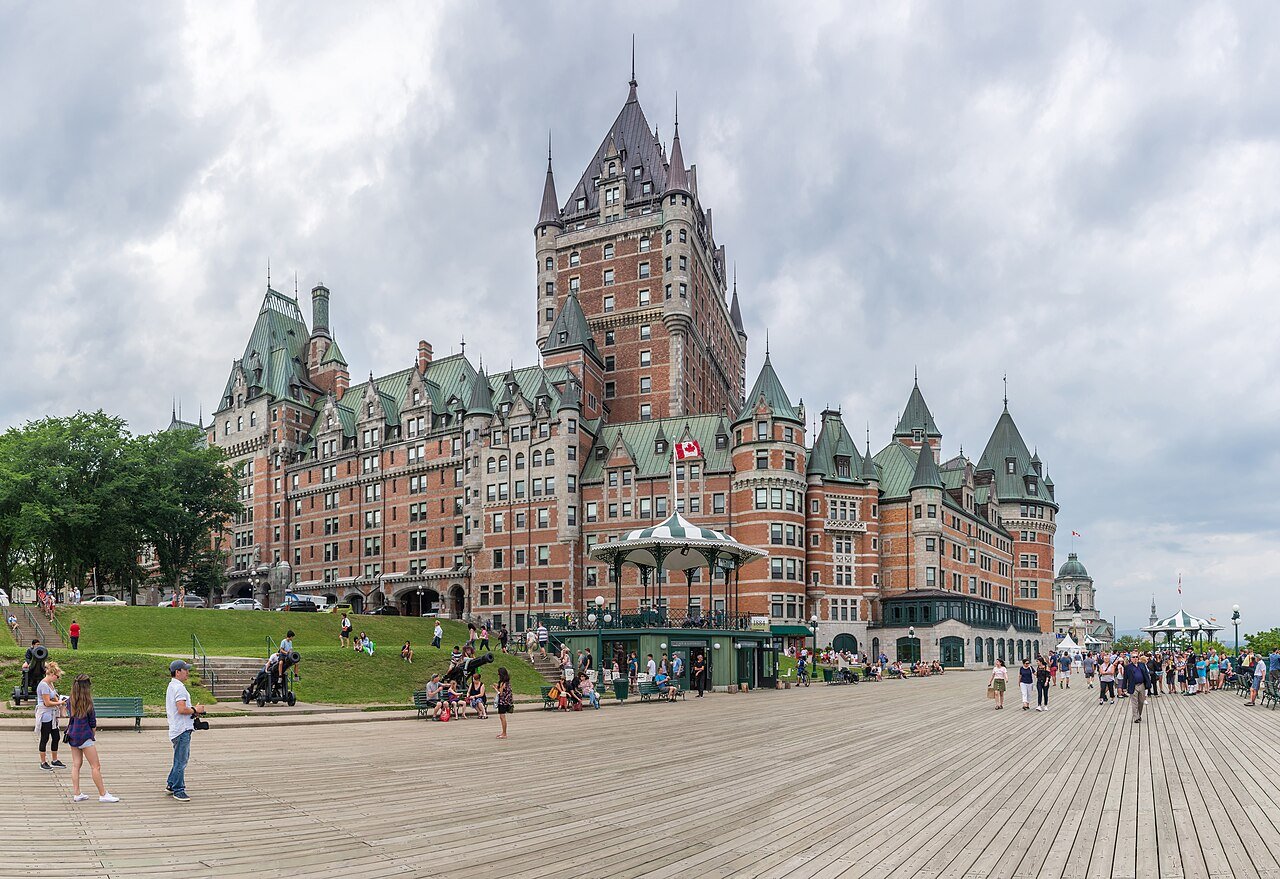
Circle back to Terrasse Dufferin for the evening light — the Frontenac glows at sunset, and the whole boardwalk turns into the city’s front porch. Then dinner: Grande Allée has the patio scene, rue Saint-Jean has the local feel. Budget ~$30–45 for a proper dinner (tourtière, the Quebecois meat pie, is the move if you see it on a menu — I’ll be honest, I ordered it three times in three days).
Day 1 spending: Citadelle $22 + food ~$55 ≈ ~$77 (excluding hotel).
Day 2: Lower Town — funicular, Petit-Champlain, and the museum
Day 2 is the pretty one. You’ll ride a 145-year-old cliff elevator down to the oldest shopping street in North America, wander a 17th-century square, and finish in the city’s best museum. My spreadsheet allocated 22,000 steps for this day. It was not wrong.
9:00 AM — Funiculaire du Vieux-Québec ($7, cash only)
The funicular has connected the Terrasse Dufferin to the Quartier Petit-Champlain since 1879, and it’s the most charming way to descend the 64-metre cliff. I double-checked the fares on the official funiculaire site before I went: $7 per person, one-way, cash only — no online tickets, ATM available at both stations, daily 9 AM–9 PM.
Pro tip that I learned the expensive way: it is CASH ONLY. I stood at the top station with a credit card and zero loonies, doing frantic mental math, before a souvenir-shop owner took pity on me and broke a $20. Bring coins. Trust me on this one.
9:15 AM — Quartier Petit-Champlain and the Breakneck Steps (free)
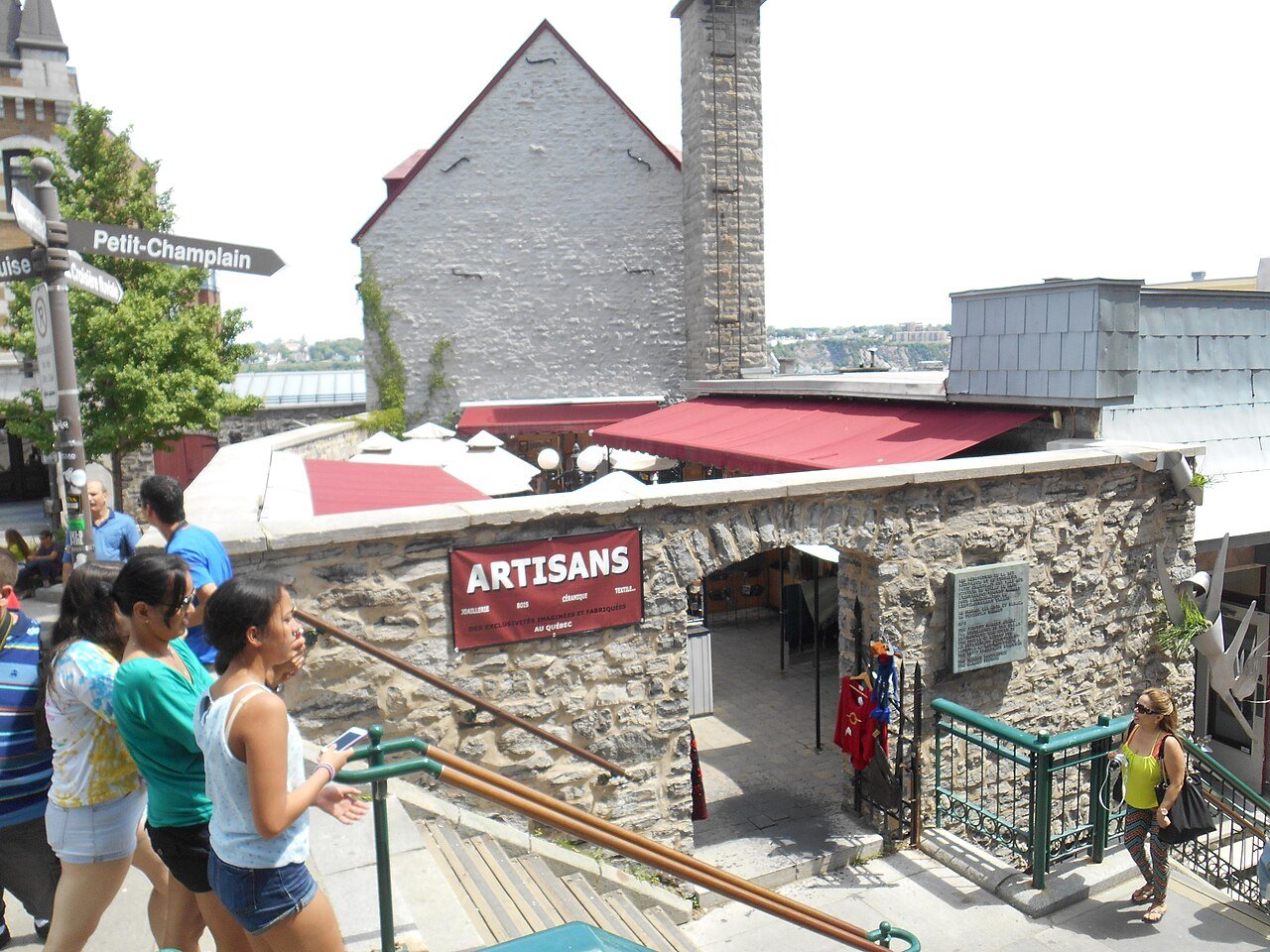
Petit-Champlain claims to be the oldest shopping district in North America, and the rue du Petit-Champlain delivers: stone buildings from the 1600s, artisan boutiques, and the famous Escalier Casse-Cou (Breakneck Steps) — a gloriously steep staircase you will absolutely photograph even though it is, technically, just stairs. I went up them. My calves filed a complaint.
Get here early. By 11 AM the street fills with tour groups, and the magic-to-elbow ratio drops fast. (I know, I know — I was in one of those groups for about ten minutes, then peeled off for coffee.)
11:00 AM — Place Royale and Notre-Dame-des-Victoires (free)
A five-minute walk brings you to Place Royale, the 17th-century square where Samuel de Champlain founded the city in 1608. The stone church of Notre-Dame-des-Victoires — the oldest in North America, built in 1688 — anchors the square, and the surrounding buildings house some of the city’s oldest homes. It’s free to wander, and the church welcomes visitors (donations appreciated).
This is my favorite “just stand there” spot in Quebec City. Sit on a bench, eat the pastry you bought in Petit-Champlain, and let 400 years of history do the entertaining.
12:30 PM — Lunch in Lower Town (~$18–25)
The Marché du Vieux-Port area and rue Saint-Paul have the best lunch value in the old town — sandwich shops, crêperies, and at least one place that will sell you poutine with a view of the river. I had the poutine. I have no notes.
2:00 PM — Musée de la civilisation (adult $27)
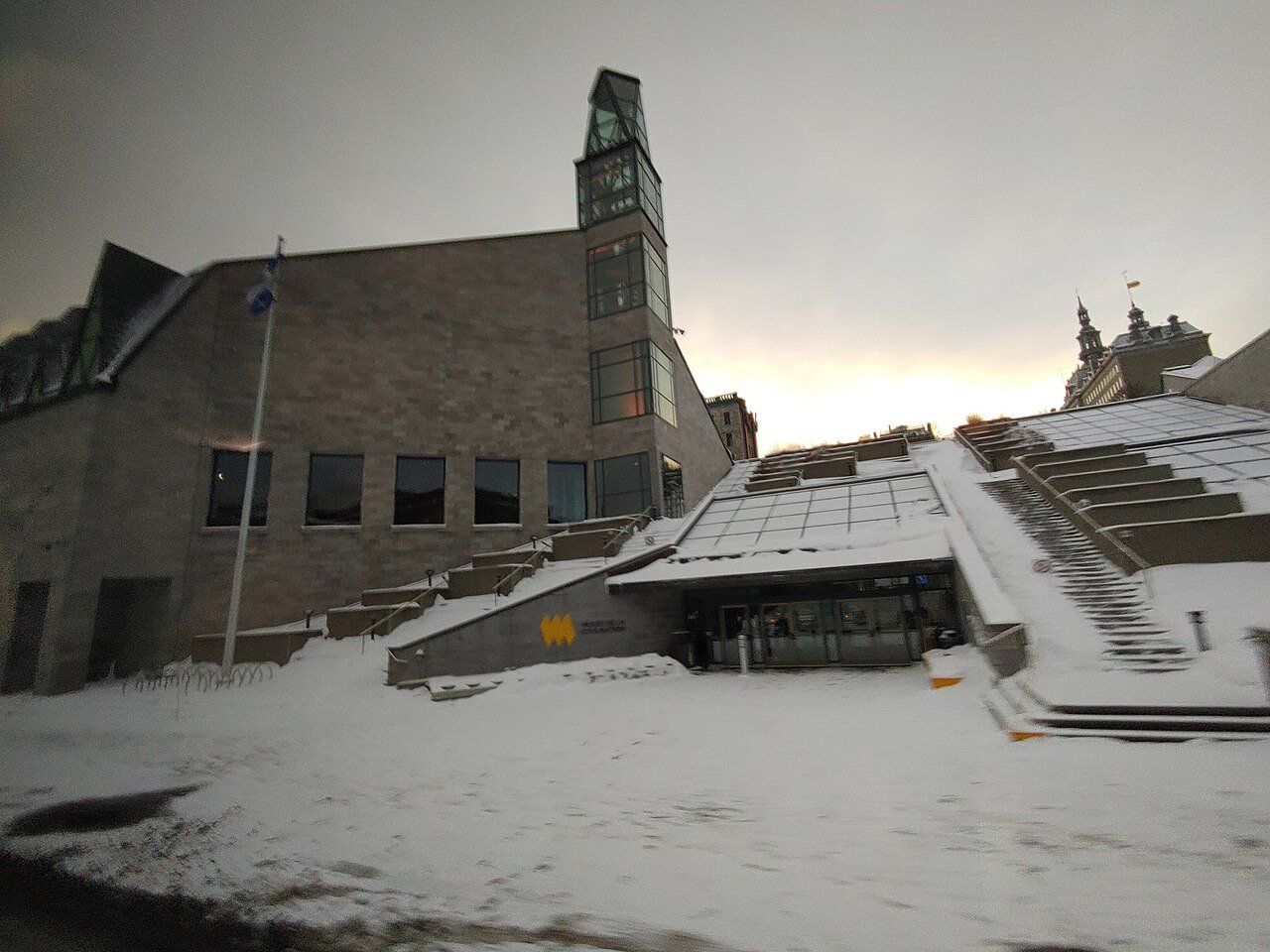
Quebec City’s flagship museum sits right in Lower Town, and it’s the one museum I’d call a do-not-skip. The permanent exhibits on Quebec society and First Nations history are genuinely interactive — not the dusty-glass-case kind. I checked the official schedule and rates page before visiting: adult tickets run $22 (ages 18–34) to $27 (35–64), open Tuesday–Sunday 10 AM–5 PM. Fair warning: it’s closed on Mondays — plan Day 2 for any other day of the week, or swap it with Day 1.
Allow 2–3 hours. The café overlooks the St. Lawrence, which is a dangerous combination with a good book.
7:00 PM — Dinner and an evening stroll through Place Royale

Lower Town after dark is a different city — the stone glows, the crowds thin, and Place Royale looks like a film set. I walked back through the square after dinner and had it almost to myself, which felt like a private screening of history. Take the stairs or the funicular back up (same $7, same cash-only rule — I checked, and yes, they still don’t take cards).
Day 2 spending: funicular $7 + museum $27 + food ~$55 ≈ ~$89 (excluding hotel).
Day 3: Montmorency Falls and Île d’Orléans

Day 3 leaves the walls behind. Montmorency Falls is 15 minutes from downtown, drops 83 metres (a full 30 metres taller than Niagara Falls), and pairs perfectly with a lazy loop around the farm island across the river. You don’t need a car for any of this.
9:00 AM — Bus to Parc de la Chute-Montmorency (~$4)
The RTC’s route 800 runs from downtown Quebec City to the falls in about 45–50 minutes — I double-checked this on the RTC trip planner the night before, because my spreadsheet had a whole contingency tab for it. A single fare is around ~$4. Drivers: it’s about 15 minutes from the old town, with paid parking at the park.
10:00 AM — The panoramic circuit: cable car, bridge, 487 steps
The falls are a Sépaq park, and the official rates are refreshingly simple: daily access $13.90 per adult (May 11–November 1, 2026) and the cable car $14.95 round-trip, per the Sépaq official rates page. The falls themselves run 83 metres — taller than Niagara, and I’ll be honest, the sound when you’re standing at the base viewpoint genuinely startled me.
The classic loop: ride the cable car up, walk the clifftop trails and the suspension bridge strung right across the top of the falls (the water roars beneath your feet — do not skip this), then descend the 487-step panoramic staircase on foot. I rode up and walked down, and the mist at the bottom was the best air-conditioning I’ve ever experienced.
Allow 2.5–3 hours. The panoramic circuit page lists every viewpoint if you want to plan your route — or do what I did and just follow the sound of water.
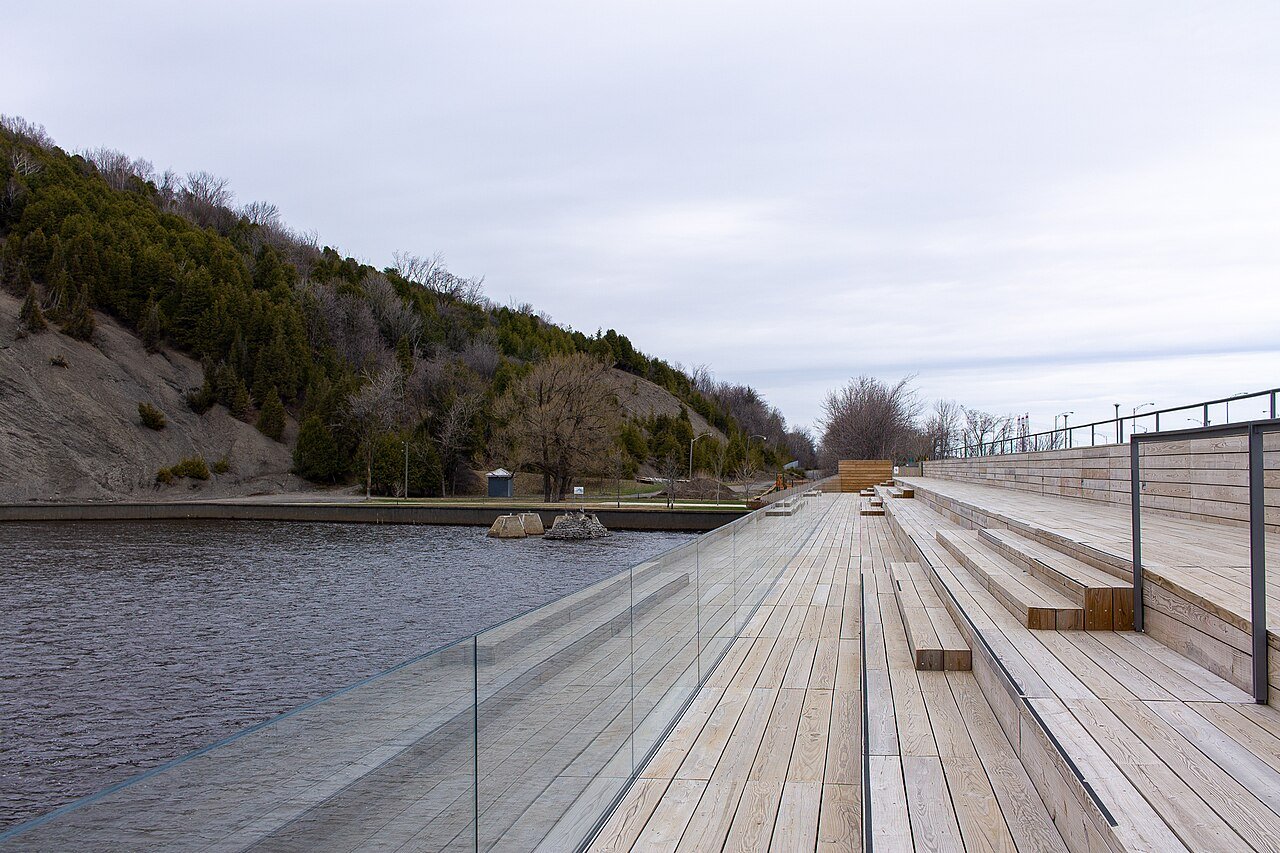
1:30 PM — Île d’Orléans farm-stand loop (free to wander)
From the falls, swing across the bridge to Île d’Orléans, the agricultural island in the St. Lawrence that’s been feeding Quebec City since the 1600s. The circuit is famous for its farm stands — strawberries in summer, apples and cider in fall, and a legendary chocolaterie that’s worth the detour alone. I bought a bag of chocolate-covered blueberries that did not survive the bus ride home. Pro tip: bring a tote bag. A second pro tip: the roadside cassis (blackcurrant) stands close early in the off-season, so check before you go.
Without a car this is the one stretch where a taxi/Uber (~$15–20 from the falls) or a half-day tour makes sense — or simply return to town and spend the afternoon wandering the Old Port instead. No shame in that; it’s a lovely fallback.
5:00 PM — Back in the old town for a farewell dinner
Return to the city with an appetite. This is the night to splurge — a proper Quebecois dinner in the Upper or Lower Town (~$40–60) as your send-off. If you’re continuing east, our Quebec road trip itinerary picks up where this one ends. Coming from Montreal and short on time? We also have 2-day and 1-day versions of this plan.
Day 3 spending: bus ~$4 + park access $13.90 + cable car $14.95 + food ~$50 ≈ ~$83 (excluding hotel).
Where to eat in Quebec City: 3-day shortlist
- Rue Saint-Jean breakfasts — my breakfast obsession is well documented, and the bistros along rue Saint-Jean delivered: proper eggs, strong coffee, and terraces where you can watch the city wake up. I ate breakfast out all three days. I’d do it again.
- Aux Anciens Canadiens — the classic Upper Town spot for traditional Quebecois: tourtière, pea soup, maple desserts. It’s been serving since 1966 and the room looks like a museum you can eat in (~$35–45 for dinner, estimate).
- Petit-Champlain crêperies — the Lower Town is crêpe country; grab a savory galette for lunch between sights (~$15–20, estimate).
- Marché du Vieux-Port — the Old Port market for picnic supplies: local cheese, charcuterie, and whatever fruit is in season. My Day 1 terrace sunset came with market cheese. Worth every penny.
- Île d’Orléans chocolaterie — see Day 3. The chocolate-covered blueberries. You’ve been warned.
How much does 3 days in Quebec City cost?
Sample budget per adult, excluding hotel (prices checked October 2026; items marked ~ are estimates):
| Item | Cost (CAD) |
|---|---|
| La Citadelle de Québec guided tour | $22 |
| Musée de la civilisation | $27 |
| Funiculaire du Vieux-Québec (one-way, cash) | $7 |
| Parc de la Chute-Montmorency daily access | $13.90 |
| Montmorency cable car (round-trip) | $14.95 |
| RTC bus to Montmorency Falls | ~$4 |
| Food & drinks, 3 days | ~$150–200 |
| Total | ~$240–290 |
Mid-range hotels run roughly ~$150–300/night in the high season — see our 3-day Montreal itinerary if you’re pairing this with a few days west (and you should).
Timeline at a glance
| Day | Morning | Afternoon | Evening |
|---|---|---|---|
| Day 1 | Terrasse Dufferin (free) + Citadelle tour ($22) | Plains of Abraham (free) | Sunset on the terrace + dinner |
| Day 2 | Funicular ($7, cash!) + Petit-Champlain (free) | Place Royale (free) + Musée de la civilisation ($27) | Lower Town at night + dinner |
| Day 3 | Bus 800 to Montmorency (~$4) | Falls circuit: access $13.90 + cable car $14.95; Île d’Orléans | Farewell dinner in the old town |
FAQs about spending 3 days in Quebec City
Is 3 days enough for Quebec City?
Yes — three days is the sweet spot. Day 1 covers Upper Town (the Citadelle, Terrasse Dufferin, Plains of Abraham), Day 2 covers Lower Town (funicular, Petit-Champlain, Place Royale, the museum), and Day 3 adds Montmorency Falls and Île d’Orléans. With only 1–2 days, see our 1-day Quebec City itinerary or 2-day Quebec City itinerary.
Do I need a car for 3 days in Quebec City?
No. Old Quebec is entirely walkable — I logged over 20,000 steps on my Lower Town day — and the RTC route 800 bus reaches Montmorency Falls from downtown for around ~$4. A car is only handy if you’re adding a longer Île d’Orléans loop or heading on to our Quebec road trip itinerary.
How much does 3 days in Quebec City cost?
Budget roughly $240–290 CAD per adult excluding hotels (October 2026 prices): about $85 in attraction tickets (Citadelle $22, museum $27, funicular $7, Montmorency access $13.90, cable car $14.95), ~$4 for the bus, and ~$150–200 for food over three days. Hotels run ~$150–300/night in the high season.
When is the best time to visit Quebec City in 2026?
June through October is peak: full hours everywhere, the Citadelle’s changing of the guard (mid-May to September 1), and fall foliage in late September–October. Winter is magical in its own way — the terrace toboggan slide, the ice hotel — but expect shorter hours and serious cold. I visited in the shoulder season and got thinner crowds at the cost of missing the guard ceremony; there’s always a tradeoff.
Is the funicular worth it, or should I just take the stairs?
The stairs are free and the funicular is $7 cash-only one-way, so the honest answer is: ride it once for the experience (it’s been running since 1879, and the cliff views are lovely), then take the Breakneck Steps or rue de la Montagne after that. Just bring cash — the funicular does not take cards, and I found that out the awkward way.
Can I do this itinerary in winter?
Mostly, with adjustments. The Citadelle runs guided tours year-round (fall–winter hours 10:00 AM–5:30 PM), the museum is open, and Montmorency Falls in winter — with the famous frozen “Sugarloaf” ice cone at its base — is spectacular (the cable car runs in winter too). But Terrasse Dufferin becomes a toboggan run, the funicular and falls stairs depend on weather, and you’ll want serious winter gear. The summer/fall version above is the classic.
1 comment