

- ✓ Start with the big five: poutine, peameal bacon, donair, tourtière and butter tarts — if you eat nothing else, eat those, in that order of urgency.
- ✓ Order the local version, not the famous one: the donair in Halifax, the salmon in Vancouver and the chowder in St. John’s taste nothing like the copies back home — and that’s the whole point.
- ✓ Come hungry, twice a day: one big sit-down meal and one market-or-street-food graze is the rhythm that worked for me — three full restaurant meals a day and you will tap out by day three. I know. I tried.
Okay, listen — I plan my trips around food, and Canada is the trip that broke my spreadsheet. Not because there isn’t enough to eat — because there is too much, and every city insists its dish is the one that matters. Montreal has poutine. Toronto has the peameal bacon sandwich. Halifax has the donair. And they are all, infuriatingly, right. I spent seven days eating my way from Montreal to St. John’s with a stop in Vancouver (yes, the geography is ridiculous — blame cheap flights, not me), and the fifteen dishes below are the ones I would cross the country for again. Every price is approximate, checked as best I could in October 2026, and every restaurant name is a place I actually stood in line at.
The smell that started it all: I could smell the peameal bacon from half a block away outside St. Lawrence Market in Toronto, and I was already speed-walking. Crispy edges, soft bun, mustard doing the heavy lifting — you already know this sandwich if you read my Toronto guide, but it belongs at the top of any Canadian food list, and I will defend that ranking with my whole chest.
The 15 iconic dishes at a glance
| # | Dish | Where to try it | Order this |
|---|---|---|---|
| 1 | Poutine | Montreal | La classique, extra curds |
| 2 | Peameal bacon sandwich | Toronto | Carousel Bakery, with mustard |
| 3 | Halifax donair | Halifax | Spiced beef, sweet sauce, extra napkins |
| 4 | BC salmon | Vancouver | Cedar-planked, in season |
| 5 | Japadog | Vancouver | Terimayo dog |
| 6 | Perogies | Winnipeg | Potato-cheddar, fried onions, sour cream |
| 7 | Tourtière | Quebec City | The classic pork pie, fruit ketchup |
| 8 | Seafood chowder | St. John’s | The daily catch version, with bread |
| 9 | Maple taffy on snow | Quebec / sugar shacks | Rolled on a stick, still warm |
| 10 | Butter tarts | Ontario | Plain first, then raisin if you must argue |
| 11 | Nanaimo bars | Nanaimo / BC | The classic three-layer bar |
| 12 | Montreal smoked meat | Montreal | Medium-fat, rye, mustard, pickle |
| 13 | Montreal bagels | Montreal | Sesame, wood-fired, still warm |
| 14 | Caesar cocktail | Everywhere (born in Calgary) | Classic rim, extra spicy if you dare |
| 15 | Beaver Tails | Ottawa / ski hills | Cinnamon sugar, with lemon if they offer it |
The 7 food stops, on a map
Seven cities, seven cravings. Tap any stop to jump the map straight to it.
Map data © OpenStreetMap contributors. Open the full map
1. Poutine — Montreal, the dish that defines Canada
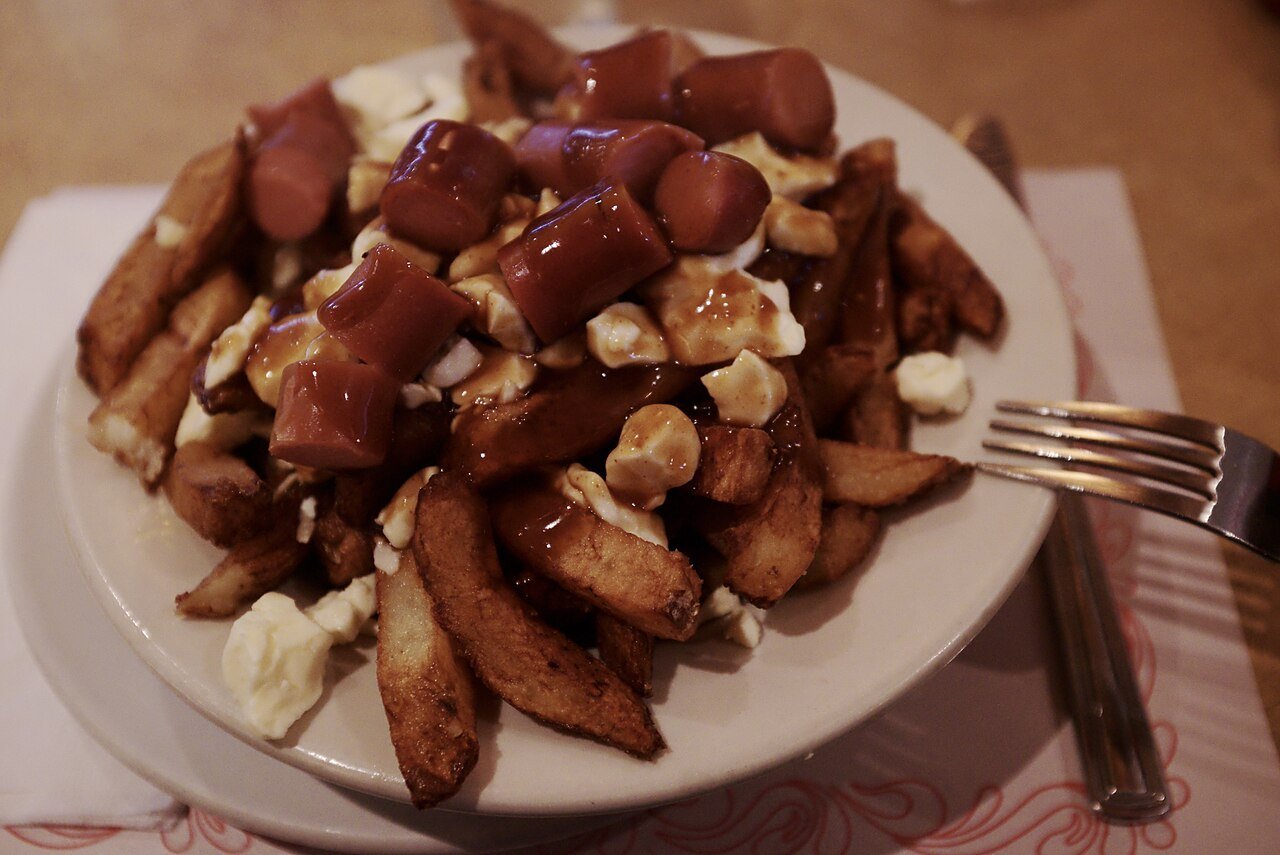
If Canada had to pick one dish to put on its passport, it would be poutine — fries, cheese curds and gravy, invented in rural Quebec in the 1950s and now served everywhere from gas stations to fine dining. The version that matters is the simple one: hot fries, curds that squeak against your teeth, and gravy that melts them just enough. Our server at La Banquise told me the curds arrive fresh every morning and the whole thing falls apart if they don’t squeak — and honestly, she was right, because the one time I had poutine with cold, silent curds I understood the tragedy firsthand.
I ate mine at nearly 1 AM, which is the correct time, at La Banquise on Rue Rachel in Montreal — the place is open around the clock and the line at midnight is half the experience. A classic runs about ~$12–15. Order it. Don’t overthink the toppings on your first visit; get the classique, sit on the curb if you have to, and accept that your shirt will not survive. → Tourisme Montréal — official site
Eat it immediately. Poutine has a five-minute window where the fries are crisp, the curds are half-melted and the gravy is still hot — after that it becomes a very tasty puddle. I learned this the soggy way carrying one back to my hotel once. Never again.
While you’re in Montreal, two more icons are non-negotiable. Montreal smoked meat (dish 12) — brisket cured and smoked for days, stacked on rye with mustard and a pickle — is the sandwich the city argues about the way other cities argue about sports teams. And Montreal bagels (dish 13), smaller, sweeter and wood-fired than the New York kind, are best eaten warm from a bag on the street. Both are worth the hype, and both will ruin the versions back home for you. Sorry in advance.
2. Peameal bacon sandwich — Toronto’s breakfast of champions
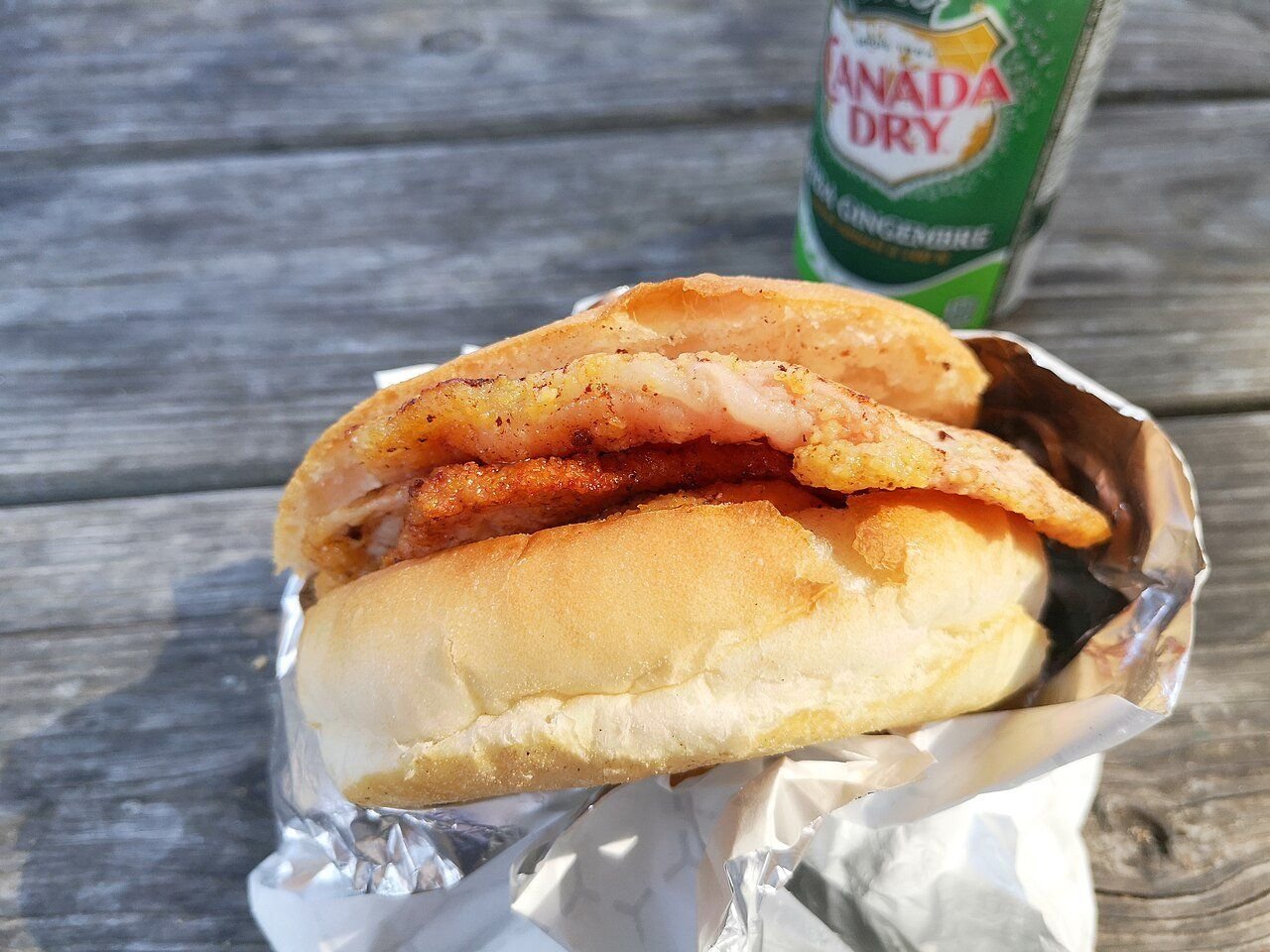
Peameal bacon is pork loin rolled in cornmeal (it used to be peameal, hence the name), griddled until the edges crisp, and piled onto a soft bun with mustard. It is, to die for — and I say that as someone who ate two in one morning. Did I need a second sandwich? No. Did I get one? Obviously. Carousel Bakery inside St. Lawrence Market is the classic spot, about ~$10, and the market itself — produce stalls, cheese counters, the smell of everything at once — is the best breakfast room in the city.
I double-checked the market’s current hours on the official St. Lawrence Market site before my last visit — they shift seasonally, and the South Market is closed Sundays and Mondays, which is exactly the kind of detail that ruins a morning if you miss it. If you’re building a Toronto trip around this sandwich (a legitimate life choice), my 1-day Toronto itinerary slots the market into a full downtown loop, and the Toronto travel guide covers where to stay near it.
The guy behind the counter told me Saturdays are chaos — hundreds of sandwiches before noon — but weekday mornings are calm, and if you ask nicely they’ll crisp your bacon a little extra. That extra crisp is the difference between a good sandwich and the one you text your friends about.
3. Halifax donair — sweet, messy, unforgettable
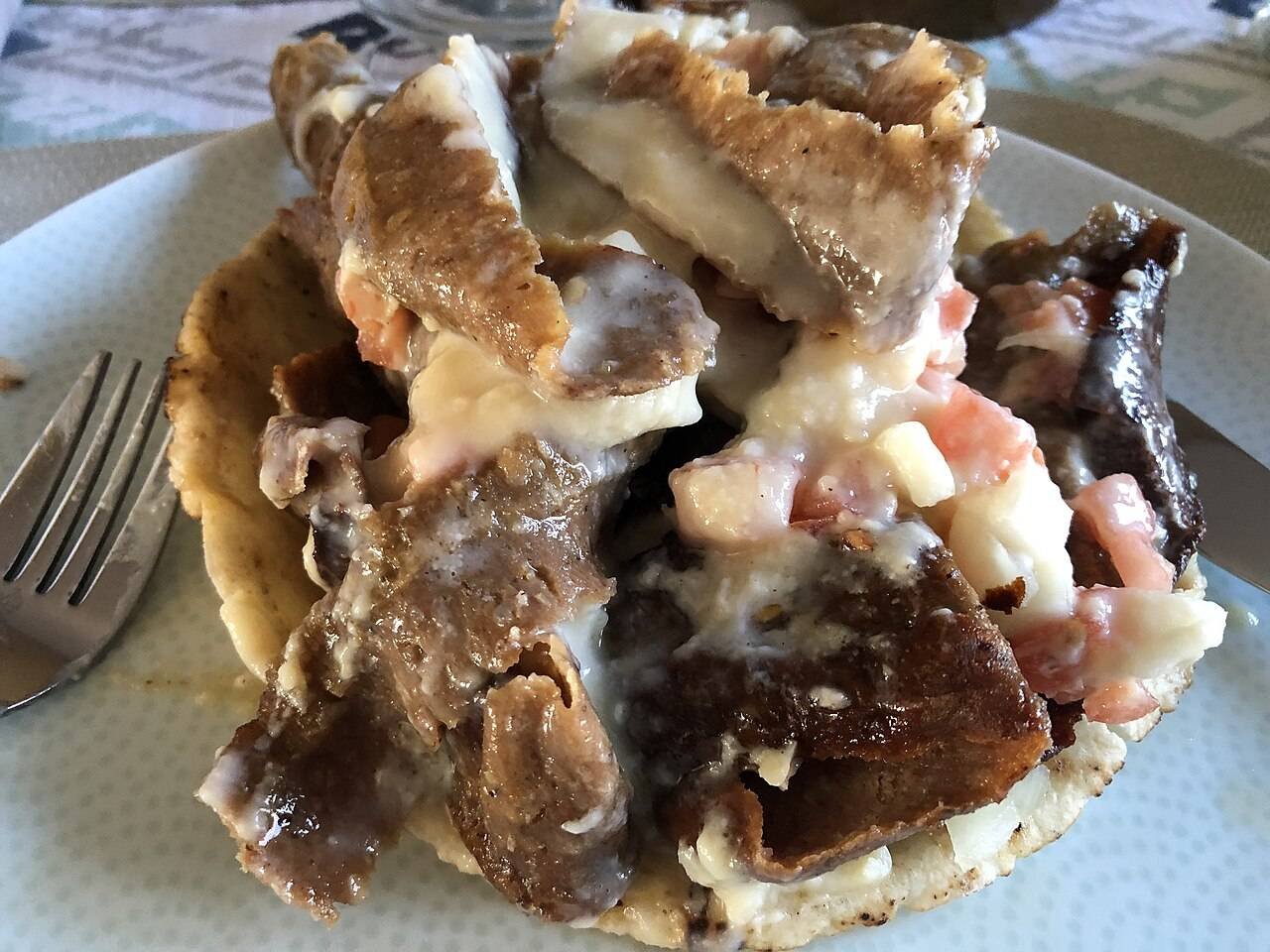
The donair is Halifax’s official food, and it is gloriously weird: spiced beef shaved off a spit, wrapped in a warm pita with diced tomato and raw onion, and drowned in a sweet, garlicky white sauce made from condensed milk. It was invented in Halifax in the 1970s as a local take on the gyro, and the sweet sauce is the whole personality — if you’ve only had garlic sauce donairs elsewhere, this is a different animal entirely.
King of Donair on Quinpool Road is the origin story — the place that invented it — and a donair runs about ~$12–14. Eat it leaning slightly forward. I did not, the first time, and the sauce found my shirt within thirty seconds. Our server just laughed — apparently that’s the universal donair baptism, and the staff have seen it ten thousand times. → Discover Halifax — official site
Do not order the donair “light sauce” on your first try — the sauce IS the dish, and a dry donair is just a sad wrap. Get the full sweet sauce, grab twice as many napkins as you think you need, and eat it standing up like everyone else.
4. Vancouver — BC salmon and the Japadog
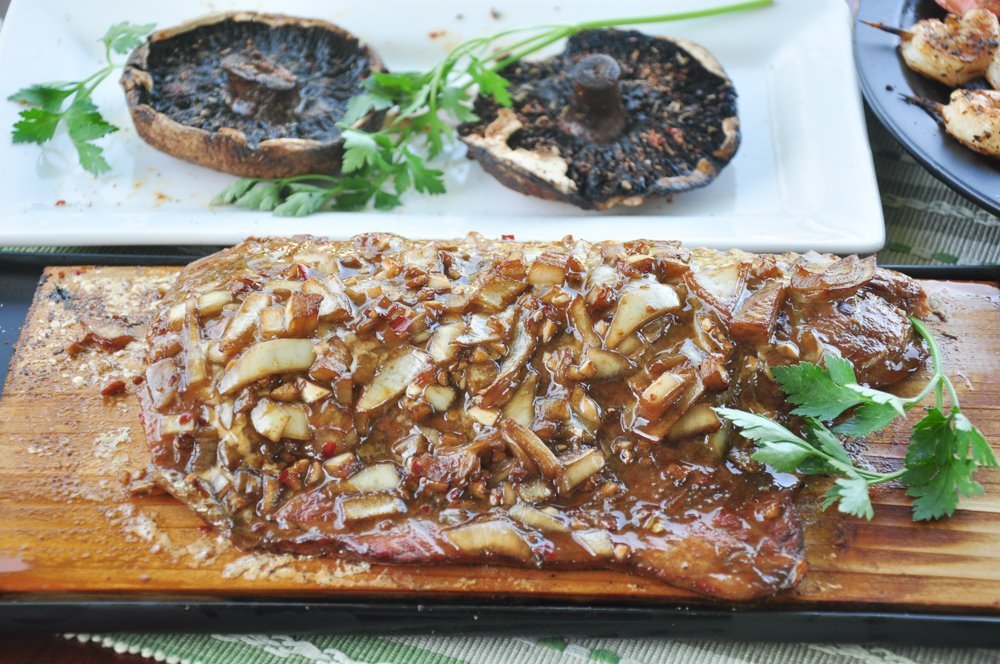
Vancouver gives you two completely different food icons within a ten-minute walk of each other, and I love that about it. First, BC salmon (dish 4) — wild Pacific salmon, ideally cedar-planked, ideally in season (roughly June through September, when the runs are on). It tastes like the ocean in the best way: rich, clean, nothing like the farmed fillets most of us grew up on. A salmon dinner at a decent Vancouver restaurant runs about ~$30–45, and if you’re planning the wider city trip, my things to do in Vancouver guide pairs the food streets with the seawall walks that burn them off.
Then, Japadog (dish 5) — a hot dog stand that became a Vancouver institution by topping dogs with Japanese ingredients. The Terimayo (teriyaki sauce, mayo, seaweed) is the signature, about ~$10–12, eaten standing on Robson Street. It sounds like a gimmick and tastes like a revelation — chef’s kiss, honestly, the seaweed crunch against the soft bun is the kind of contrast I think about for days afterwards. → Destination Vancouver — official site
5. Perogies — Winnipeg takes dumplings seriously
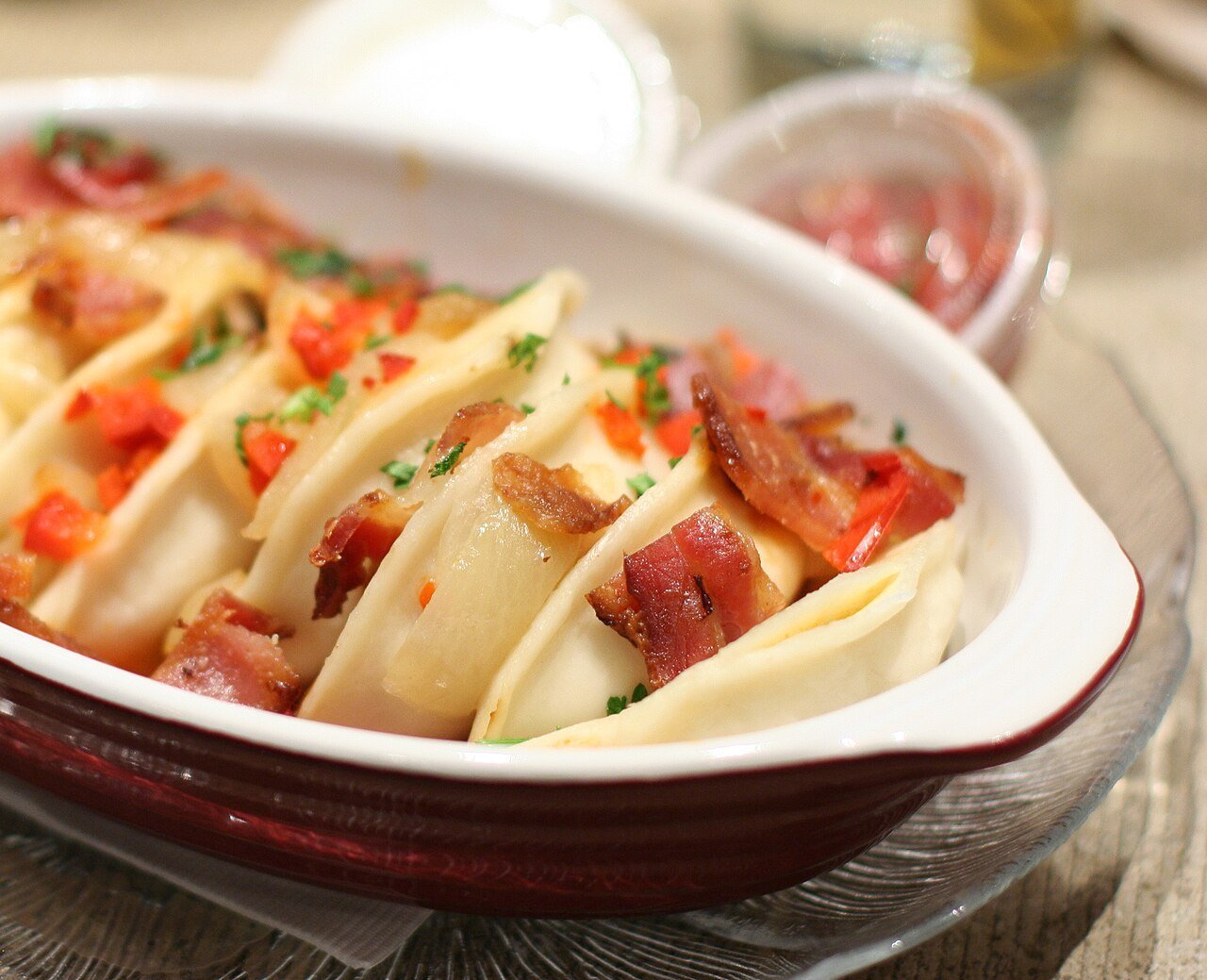
Perogies are the prairies’ comfort food: little dough pockets stuffed with potato and cheddar (or sauerkraut, or mushroom, or whatever a Ukrainian grandmother decided), boiled, then fried in butter with onions and served with sour cream. Winnipeg, with its deep Ukrainian community, is where they’re treated with proper reverence — this is not a side dish here, it’s the main event, and some families have opinions about dough thickness that could end friendships.
The Forks Market is the easy place to try them as a visitor — a plate runs about ~$12–16 — and a vendor there told me the potato-cheddar with fried onions is the one to judge a place by: if they get that right, everything else follows. I would go back just for the ones I had there, still steaming, eaten at a communal table while a busker played two tables over. → Tourism Winnipeg — official site
6. Tourtière — Quebec City’s Christmas pie, all year
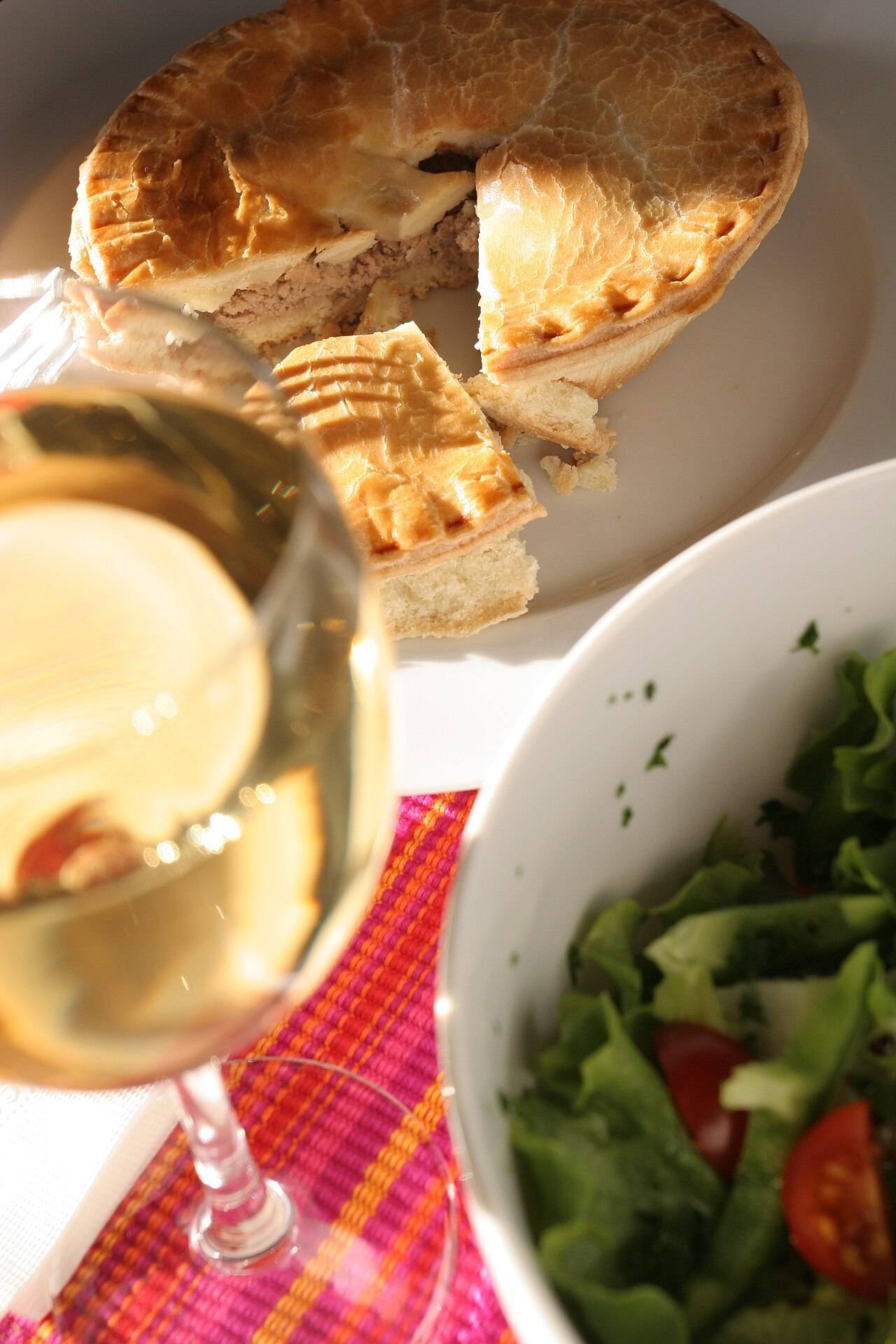
Tourtière is Quebec’s traditional meat pie — spiced pork (sometimes with veal or beef) in a flaky double crust, historically served at Christmas Eve dinner after midnight mass, now served year-round in Quebec City restaurants. The seasoning is the secret: cinnamon, clove and savoury in proportions every family guards, and the fruit ketchup on the side is not optional, it’s the law (not literally, but try telling a Quebecer that).
Aux Anciens Canadiens, in a stone house from 1675 in Old Quebec, is the classic room to try it — a slice with sides runs about ~$20–28 at lunch. I double-checked their menu on the restaurant’s site before going, and the room itself is half the experience: low beams, old stone, the feeling that this pie has been eaten in this exact spot for centuries. → Québec Cité — official tourism site
7. Seafood chowder — St. John’s, straight off the boat
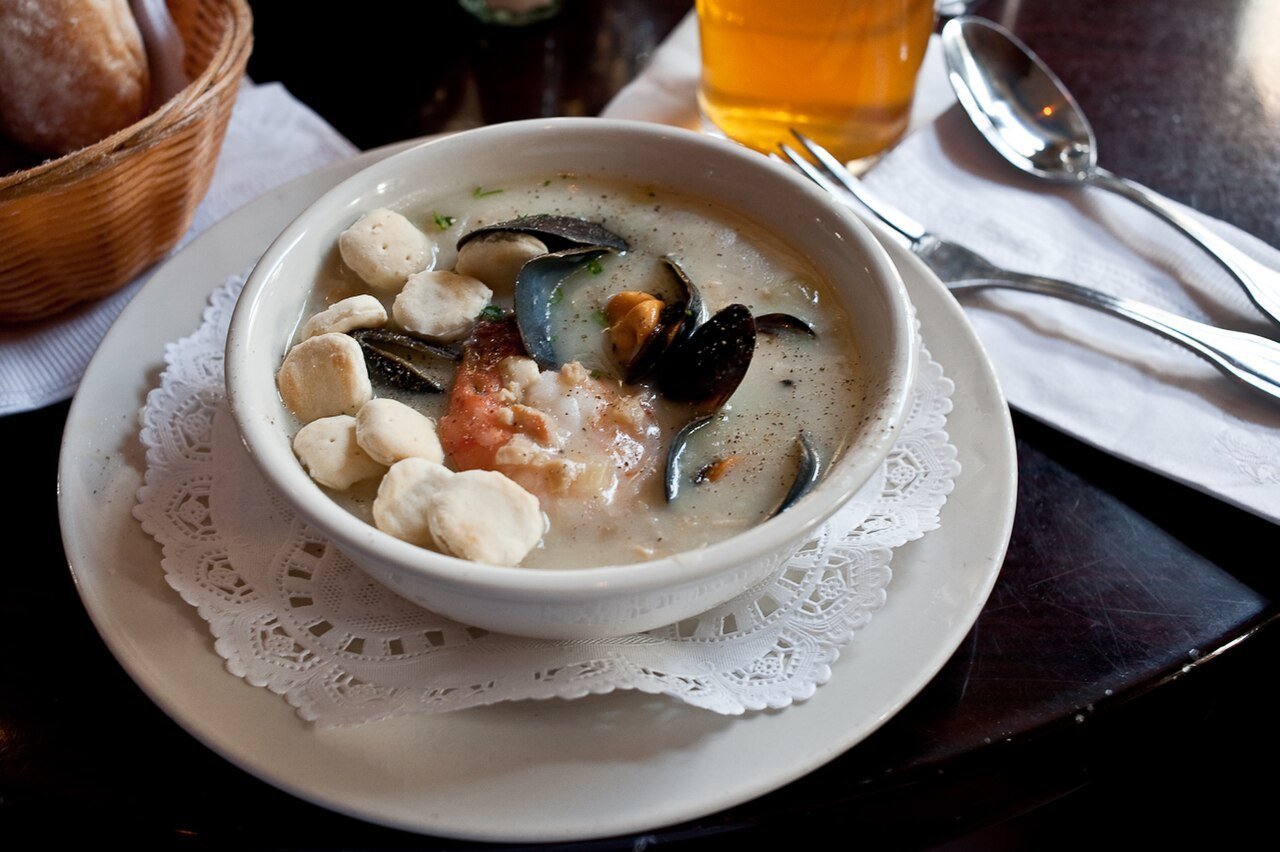
Newfoundland seafood chowder is whatever came off the boat that morning — cod, mussels, scallops, shrimp — in a creamy, buttery broth with potatoes, served with fresh bread for dunking. It’s the dish that tastes like the place: cold ocean, hard work, warm room. Mallard Cottage in Quidi Vidi, a fishing village ten minutes from downtown St. John’s, is the postcard version — a chowder there runs about ~$16–22, and the walk around the village harbour afterwards, past the fishing stages and the tiny brewery, is the perfect digestif.
Our server told me the chowder changes with the catch, so asking “what’s in it today?” isn’t a tourist question, it’s the correct one — and the answer tells you what’s actually in season. → Destination St. John’s — official site
8. Maple taffy on snow — the sugar shack ritual

Maple taffy — hot maple syrup poured onto fresh snow, rolled onto a stick as it cools — is the most Canadian dessert experience that exists, and it only works in winter and early spring, which makes it feel like a secret. Sugar shacks around Quebec and Ontario run the full ritual: a big traditional meal (pea soup, ham, baked beans, all of it touched by maple), then outside to the snow trough for the taffy. A sugar shack meal runs about ~$30–45 per person, and I checked a few shacks’ seasonal dates on their sites before planning — most run February through April, so this is a late-winter trip, not a summer one.
Roll slowly. The taffy sets fast on cold snow, and the first-timers (me, absolutely) who rush it end up with a sticky lump instead of a clean roll. Slow roll, steady stick, and eat it while it’s still slightly warm — that ten-second window is the whole magic.
9. Butter tarts — Ontario’s tiny, perfect argument-starter
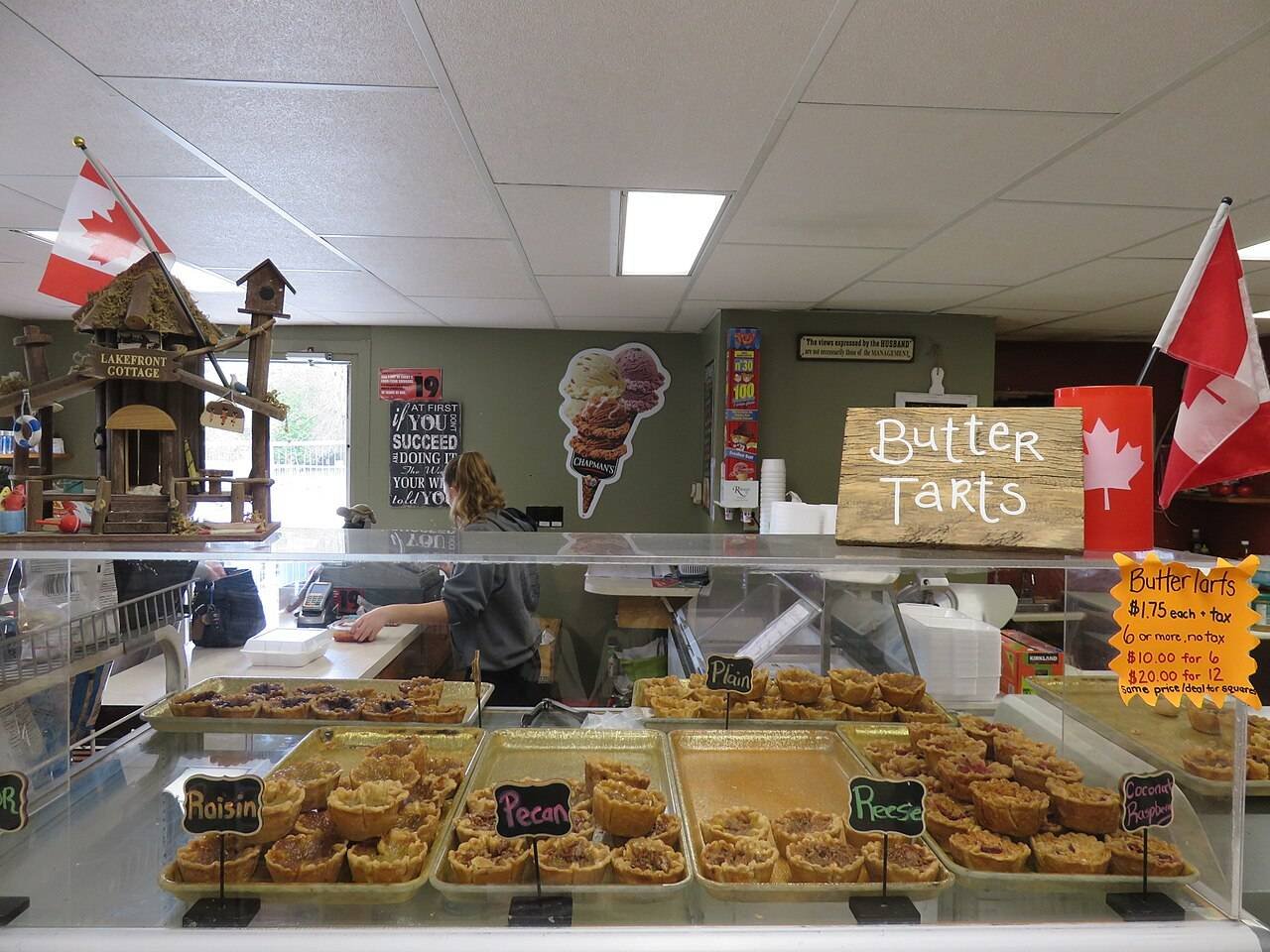
The butter tart is a small pastry shell filled with a gooey mixture of butter, sugar, syrup and egg — and it inspires the fiercest food argument in Ontario: runny or firm filling, raisins or no raisins. (Correct answers: slightly runny, and no raisins — fight me, but politely, because I have also eaten excellent raisin ones and I’m not a monster.) They’re sold in bakeries across Ontario for about ~$3–5 each, and the honest move is to buy three from three different bakeries and conduct your own taste test. I did exactly that on a drive through small-town Ontario and have never felt more scientific.
A baker in a small-town Ontario shop told me the runny ones sell out first every single morning — before 10 AM, gone — and the firm ones are what’s left for the afternoon crowd. If you want the good ones, go early. This is the kind of intelligence I now plan entire mornings around.
10. Nanaimo bars — BC’s no-bake legend
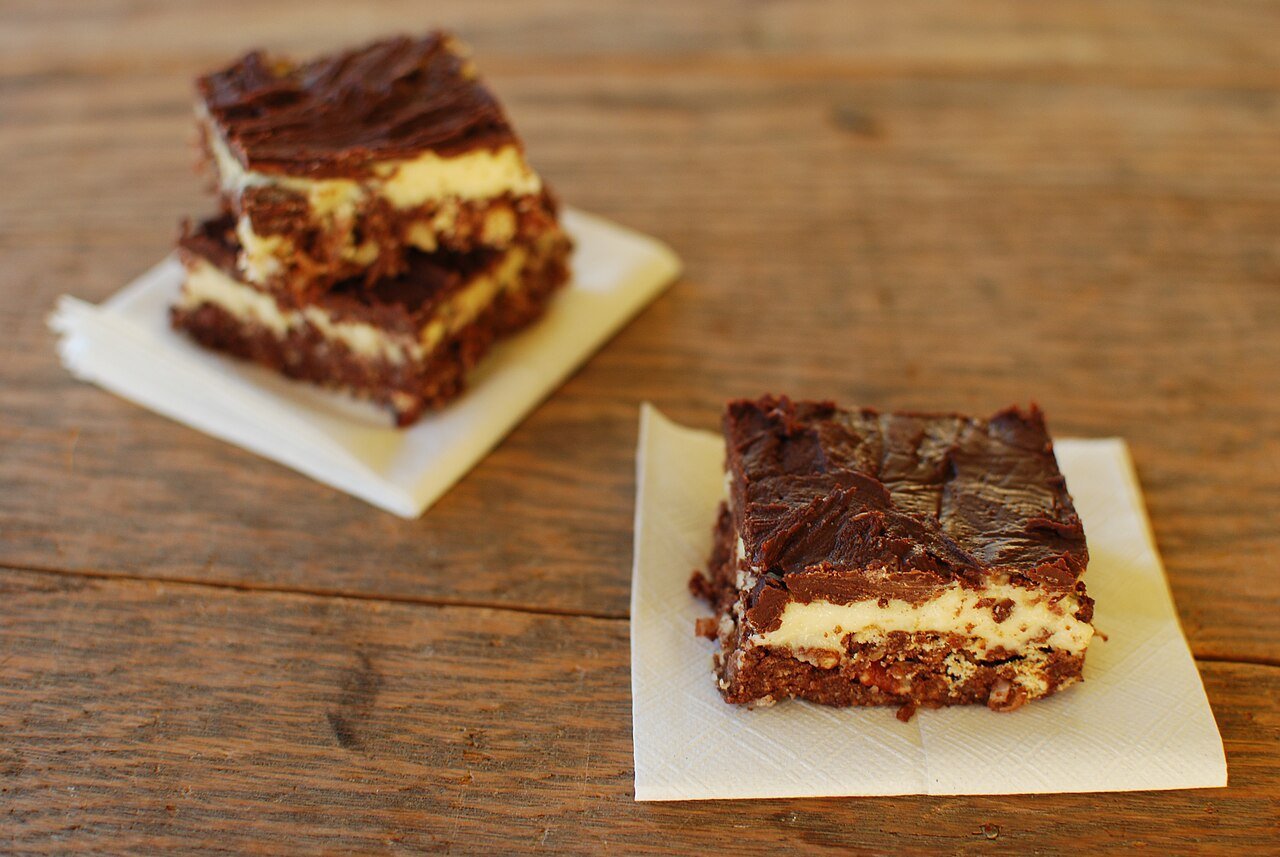
The Nanaimo bar is three layers of joy that requires no baking: a chocolate-crumb base, a sweet yellow custard middle, and a chocolate top that cracks when you bite it. Named after Nanaimo, BC, where it was popularized in the 1950s, it’s now sold in bakeries and coffee shops across the country for about ~$3–5 — and the Nanaimo Bar Trail in the city itself lists dozens of variations, from peanut butter to mint to maple, if you want to make a day of it.
The classic is the one to judge by: the custard layer should be thick, the chocolate top thin enough to crack cleanly, and the whole thing should be eaten cold, ideally with coffee. Worth the hype, completely. And if you’re turning this into a wider BC trip, the Banff–Jasper road trip is the scenic route east afterwards — just maybe not immediately after three Nanaimo bars.
Five more to hunt down
The list had to stop at fifteen, but these nearly made it and deserve a line each. The Caesar (dish 14) — vodka, Clamato, hot sauce, Worcestershire, rimmed with celery salt — was invented in Calgary in 1969 and is now Canada’s national cocktail; order one with brunch anywhere in the country and watch the bartender’s face light up. Beaver Tails (dish 15) — fried dough stretched into a tail shape, dusted with cinnamon sugar — are the Ottawa winter classic, best eaten outdoors on the Rideau Canal with cold hands. And if you’re driving the prairies, Saskatoon berry pie is the roadside find worth pulling over for — the berries taste like a cross between a blueberry and an almond, and a diner waitress in Saskatchewan told me the good ones come from backyard bushes, not farms. I believe her. I believe her because the pie she served me proved it.
What does a Canadian food trip cost?
Food is the main event here, so the calculator is food-first: the food line is the big one, and sights and transport are the supporting cast. Pick your eating style, tell it how many days you’re travelling, and it does the rest. (Accommodation not included — see the table below for that.)
Budget calculator
Per person, in Canadian dollars. Excludes accommodation.
Budget ≈ $75/day · Mid-range ≈ $135/day · Luxury ≈ $260/day. Prices approximate, October 2026.
| Expense (per person / day) | Budget | Mid-range | Luxury |
|---|---|---|---|
| Accommodation | $45 (hostel dorm) | $150 (midtown hotel) | $300+ (downtown suite) |
| Food & drink | $40 | $75 | $150 |
| Sights & attractions | $10 | $20 | $35 |
| Getting around (city transit) | $15 | $20 | $40 |
| Coffee, treats & souvenirs | $10 | $20 | $35 |
| Daily total | ~$120 | ~$285 | ~$560 |
Wondering where to base yourself between meals? My where to stay in Toronto guide breaks down the neighbourhoods by budget — and staying near a market is never the wrong call for a food trip.
Suggested 7-day eating route
| Day | City | Eat this |
|---|---|---|
| 1–2 | Montreal | Poutine at La Banquise, smoked meat, warm bagels |
| 3 | Toronto | Peameal bacon at St. Lawrence Market, butter tarts |
| 4 | Winnipeg | Perogies at The Forks |
| 5 | Vancouver | Cedar-plank salmon, Japadog on Robson, Nanaimo bar |
| 6 | Quebec City | Tourtière in Old Quebec |
| 7 | Halifax + St. John’s | Donair, then chowder in Quidi Vidi (fly between them!) |
This route is a tasting menu, not a realistic week — Halifax to St. John’s alone is a flight, and Vancouver sits on the opposite coast from everything else. Treat it as a hit list for multiple trips, or pick one coast and eat it properly. I did the cities across several trips and stitched them together here, because nobody should eat fifteen iconic dishes in seven days without a nap schedule.
FAQs about Canadian food
What food is Canada most known for?
Poutine — fries, cheese curds and gravy from Quebec — is the dish the rest of the world names first, and it deserves the title. After that, the answer splits by region: peameal bacon in Toronto, donair in Halifax, salmon in BC, tourtière in Quebec, and butter tarts and Nanaimo bars everywhere. If you only try one, make it poutine in Montreal, with curds that squeak.
Where is the best poutine in Canada?
Montreal, and specifically the late-night institutions like La Banquise on Rue Rachel — open around the clock, curds delivered fresh daily, and a menu of dozens of variations once you’ve had the classique. Quebec City and small-town Quebec casse-croûtes are also excellent. The rule I use: if the curds don’t squeak, it isn’t the real thing.
What is a Halifax donair, and how is it different from a gyro?
A donair is spiced beef shaved off a vertical spit, wrapped in pita with tomato and onion, and — crucially — smothered in a sweet sauce made from condensed milk, vinegar and garlic powder. A gyro uses tzatziki and is savoury; a donair is sweet, messy, and officially Halifax’s food. King of Donair invented it in the 1970s, and that’s the place to try your first one.
Is Canadian food expensive?
It depends how you eat. Street food and market meals — a peameal sandwich (~$10), a donair (~$12–14), a Japadog (~$10–12) — are genuinely affordable, and a budget food day runs about $75 per person including transport and sights (see the calculator above). Sit-down salmon dinners and sugar shack meals push it up fast, so mix one big meal with one market graze per day and you’ll eat like royalty without the royal bill.
What desserts is Canada known for?
Three, and all three are in this guide: butter tarts (gooey, Ontario, endlessly argued over), Nanaimo bars (three layers, no baking, from Nanaimo, BC), and maple taffy on snow (a winter sugar-shack ritual, not a bakery item). Add Beaver Tails for the fried-dough fans. If you have a sweet tooth, Ontario and BC together will keep you very happy.
Can I do this food trip in one week?
Honestly? Not all of it — the cities span five time zones, and Vancouver to St. John’s is a full day of flying. Pick one coast: Montreal–Toronto–Quebec City–Halifax in a week is very doable by train and short flights, or do Vancouver plus the prairies as a second trip. The dishes aren’t going anywhere — and neither is my appetite, apparently. For the bigger picture, start with the best places to visit in Ontario to plan the eastern half.
Keep exploring
Still hungry? Here’s where I’d go next:
- Things to do in Montreal — the city behind the poutine, smoked meat and bagels
- 1-day Toronto itinerary — the market morning, slotted into a full day
- Things to do in Vancouver — seawall walks to burn off the salmon and Japadog
- Things to do in Calgary — home of the Caesar cocktail
- Banff–Jasper road trip — the scenic route after the eating is done
- 1-day Niagara Falls itinerary — the classic Ontario add-on, with winery stops
Order it. Don’t overthink it. And if the curds don’t squeak — send it back, and tell them I sent you.