
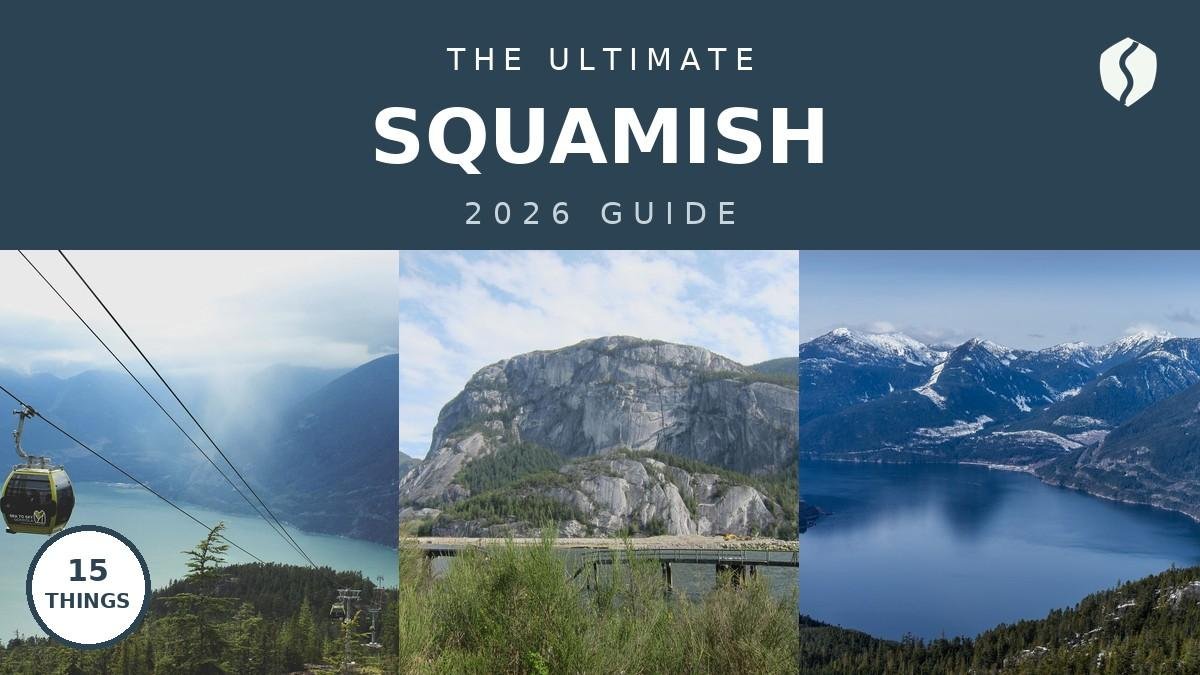
- ✓ Do the gondola OR the Chief, not both on the same morning: they end at nearly the same viewpoint, and your legs will thank you for choosing one.
- ✓ Book the gondola and the mine tour ahead in summer: both sell out on sunny weekends, and walk-up disappointment is a real Squamish experience I do not recommend.
- ✓ Two days is the sweet spot: one day for the gondola, the falls and the mine, one for the Chief, the Spit and downtown — with a winter eagle trip as the best possible excuse to come back.
Squamish is the town I kept driving through on my way to Whistler — and I’ll be honest, that was a mistake I made for years. The Sea to Sky Highway does its job too well: it whisks you past granite walls, waterfalls and the little downtown, and you think, “pretty, must stop someday.” Here’s the thing: someday should be this trip. Squamish isn’t a pit stop. It’s the outdoor capital of the corridor: world-class climbing, a gondola floating over a fjord, a mine you can ride a train into, and — in winter — one of the largest bald eagle gatherings on the planet. I’ve done Squamish three times now; the fifteen stops below are the ones I’d hand anyone with two days.

A confession to start: I am not a climber. I showed up in Squamish with hiking boots, a spreadsheet, and zero upper-body strength, and still had the time of my life — this town rewards walkers, riders, paddlers and lookers just as much as people who hang off granite for fun. Trust me on this one: you do not need to climb anything to love Squamish. You just need to look up.
Getting to Squamish (and getting around without a car)
Squamish sits about 64 kilometres north of Vancouver on Highway 99, the Sea to Sky Highway — roughly an hour’s drive on a good day, longer on a sunny Saturday. If you’re driving, that highway is half the attraction: it hugs Howe Sound the whole way, and my Sea to Sky Highway stops guide covers the pullouts worth your time on the way up.
No car? You’re fine, and I say that as someone who did the car-free version on my second trip. The Squamish Connector bus runs between Vancouver, Squamish and Whistler, dropping in downtown Squamish — I double-checked the current schedule and stops on the official site before booking, because Vancouver departure points have shifted before. → Squamish Connector — official site Once you’re in town, downtown is walkable, the local bus reaches the gondola area and Brackendale, and taxis fill the gaps. Fair warning: the falls, the gondola and Alice Lake are spread along the highway, so without a car you’ll be stitching together bus times and the odd taxi — plan it the night before (spreadsheet optional but, in my case, inevitable).
If you’re coming from Vancouver for just a day, take the earliest bus and plan your return from Squamish, not Whistler — last departures fill up on summer Sundays, and I once watched a whole platform of day-trippers do the maths on a taxi to Vancouver. For the full car-free playbook, see my day trips from Vancouver without a car.
The 10 must-see stops, on a map
Ten stops, from Porteau Cove in the south to Alice Lake and Brackendale in the north. Tap any stop to jump the map to it.
Map data © OpenStreetMap contributors. Open the full map
1. Ride the Sea to Sky Gondola
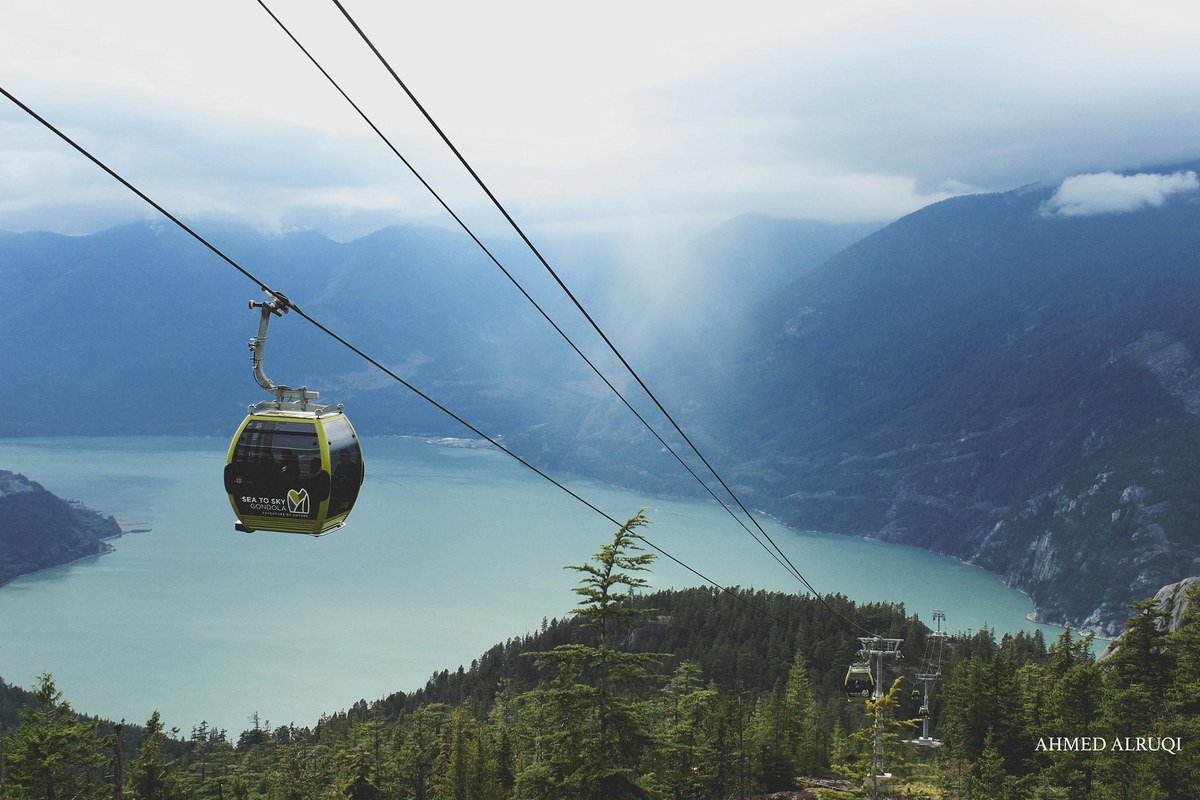
If you do exactly one paid attraction in Squamish, make it this one. The gondola lifts you 885 metres above Howe Sound in about ten minutes, and the moment the cabin clears the trees, the whole fjord opens up below you — I genuinely gasped, and I’d seen the photos. At the top: a summit lodge, the Sky Pilot suspension bridge, and trails including the Chief Overlook, staring straight across at the granite wall below. I double-checked prices on the official site before my last visit — adult round-trip tickets run roughly $60–70 CAD in peak season, and they sell out on sunny weekends, so book ahead. → Sea to Sky Gondola — official site
Ride first thing in the morning. I took the 9 AM cabin on a July Saturday and had the suspension bridge nearly to myself; by noon the summit deck was a queue with a view. Hikers: the Sea to Summit Trail climbs from base to lodge — a serious, steep workout, rewarded with a discounted download ticket (check the current offer on the official site).
2. Hike the Stawamus Chief (or at least the first peak)

The Chief is the second-largest granite monolith in the world (after Gibraltar, if you’re keeping score), and it dominates Squamish the way a skyscraper dominates a downtown — except this one is 700 metres tall and people climb it for fun. The hiking trail climbs to three peaks, and here’s my honest take after doing it twice: Peak 1 is the classic. It’s steep — stairs, then rock, then chains and ladders near the top — and takes most people 1.5 to 2 hours up, but the view from the top is the single best in this guide. Peaks 2 and 3 add distance and quieter viewpoints; all three is a solid half-day.
Do not underestimate this hike. I watched a group in flip-flops turn back at the first staircase, and they were the smart ones — the upper trail has fixed chains and ladders, exposed rock, and no shade. Wear proper shoes, carry at least a litre of water per person, and check trail status on the BC Parks page before you go: the trail closes for maintenance and wildlife, and winter ice makes the upper sections genuinely dangerous. With small kids or wobbly knees, the gondola gives you 90% of the view with 0% of the ladders.
I double-checked trail details on the BC Parks site before my last hike — the park page lists current conditions, and it’s the one I trust over any blog (including mine). → BC Parks — Stawamus Chief Provincial Park Start early, bring summit snacks, and linger: the Chief rewards it.
3. Stand under Shannon Falls

Shannon Falls drops 335 metres through the forest right beside the highway, and it is the easiest wow in Squamish: a flat, ten-minute walk from the car park to the viewing platform, suitable for strollers, grandparents, and anyone who just did the Chief and can no longer feel their legs (me, on trip two). In spring runoff the falls thunder; by late summer they slim to a white ribbon. The park has picnic tables and a short boardwalk loop — pair it with a packed lunch.
The gondola base and Shannon Falls share the same stretch of highway. Do them back to back: falls first (free and fast), then the gondola — from the upper trails you can spot Shannon Falls from above, a thin white line that makes the valley’s scale click.
Fair warning: the car park fills up by late morning on summer weekends. Go before 10 AM or after 3 PM for the platform mostly to yourself. I checked the park’s status on the BC Parks site before going — day-use passes are required at some Sea to Sky parks in peak season, so confirm before you drive up. → BC Parks — Shannon Falls Provincial Park
4. Go underground at the Britannia Mine Museum
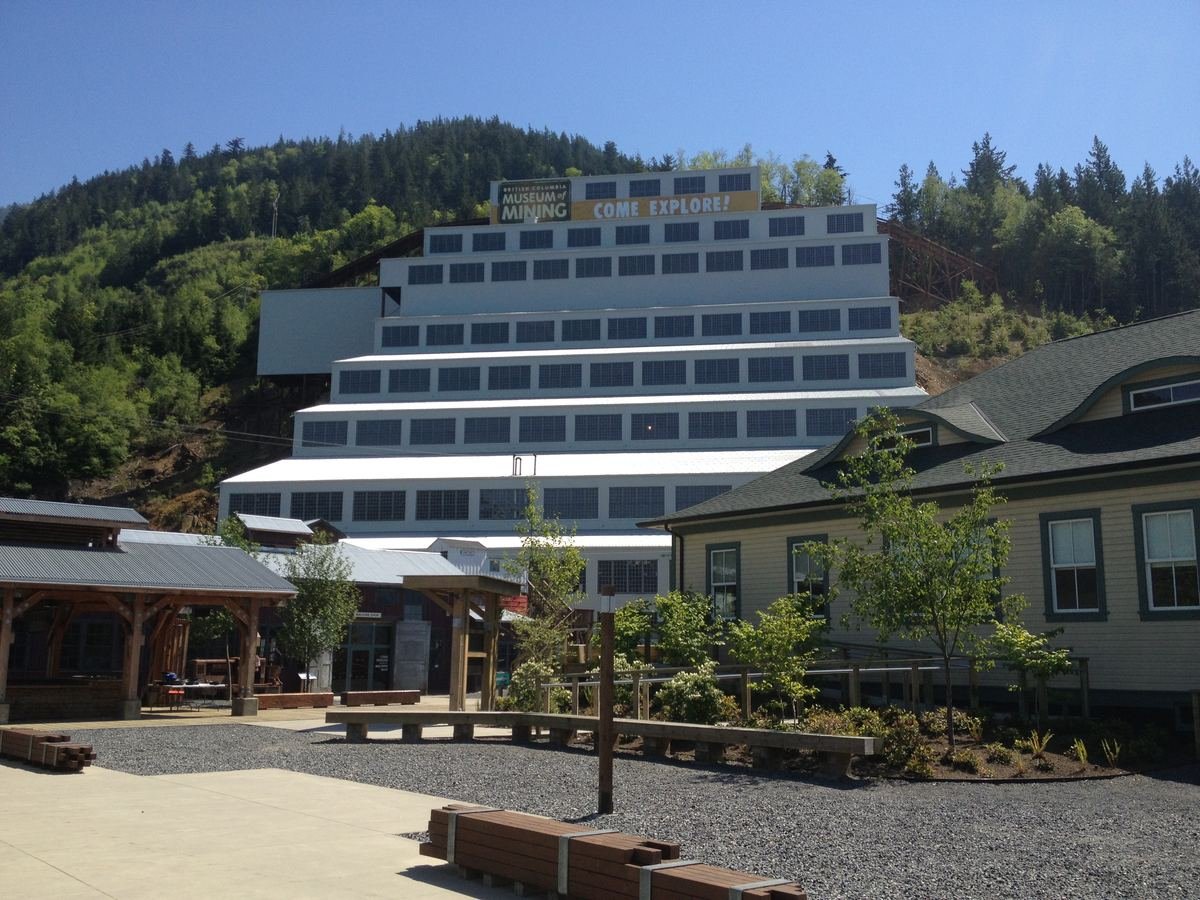
Twenty minutes south of Squamish, the Britannia Mine Museum turns a former copper mine — once the largest in the British Empire, if the guides are to be believed — into the best rainy-day stop on the corridor. The headline is the underground tour: you ride a mine train into the tunnel while a guide (in character, helmet lamp and all) shows you how the drills and the darkness worked. Then gold panning — yes, you keep what you find, and my vial of flakes lives on my desk — plus the hulking Mill No. 3, a National Historic Site.
I double-checked hours and admission on the official site before visiting — adult tickets run roughly $35–45 CAD, tours run on a schedule, and the underground tour is included, so arrive in time for a departure. → Britannia Mine Museum — official site
This is Squamish’s weather-proof card. I played it on a drizzly October morning when the gondola was socked in with cloud, and the mine was dry and fascinating. If the forecast turns, swap your gondola morning for Britannia and do the gondola when the sky clears.
5. Watch the climbers at Smoke Bluffs Park
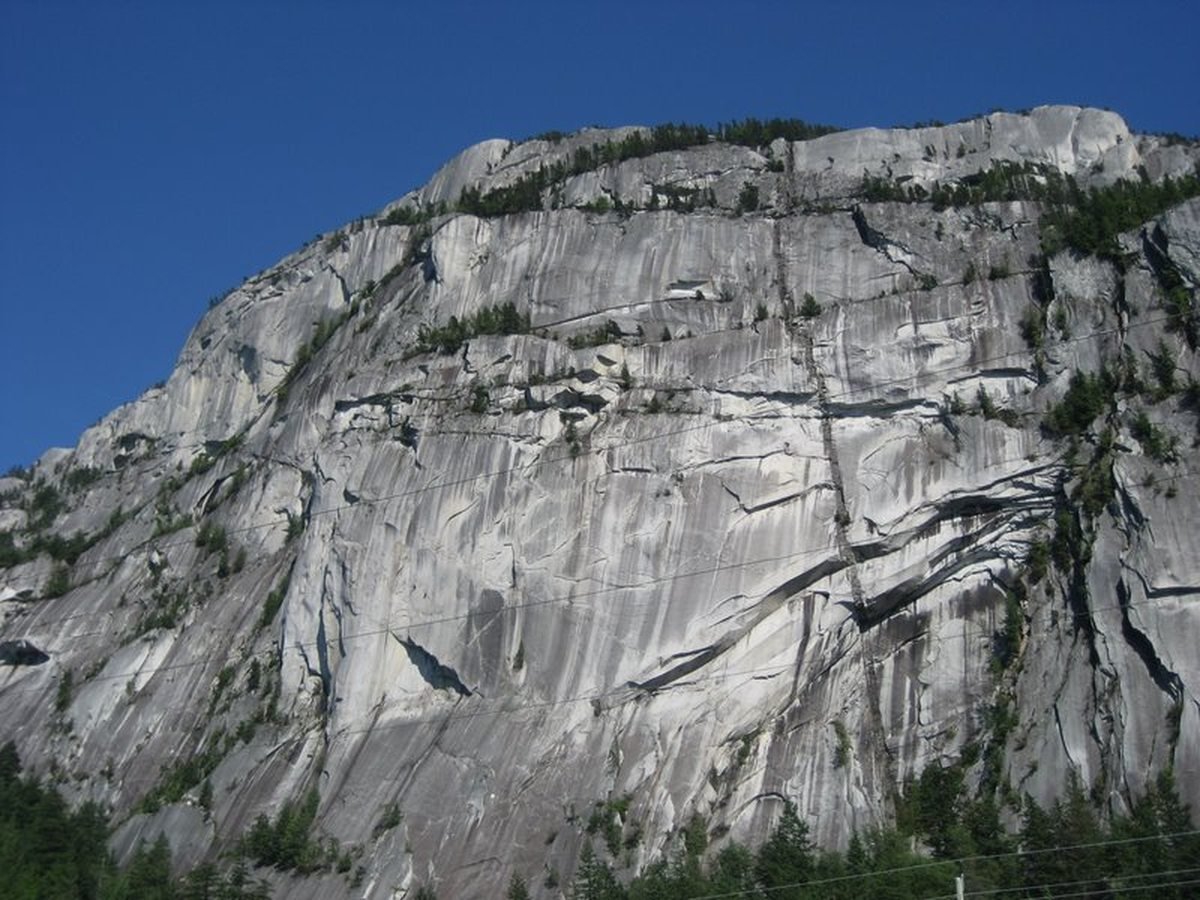
Even if you never tie into a rope, Smoke Bluffs is worth an hour. This little park in town holds dozens of short granite crags, and on any dry day you’ll find climbers — from first-timers on top-rope to people doing things with their fingers that I find personally alarming — working routes metres from the trail. The walking loop is short, shady and free, and it’s the best place to understand why Squamish is called the climbing capital of Canada: the rock is everywhere, and so are the people who love it.
If you do climb, this is your warm-up crag before the Chief’s big routes, and local guides run intro sessions here. Book through the Squamish Adventure Centre; don’t climb above your grade just because the rock looks friendly.
6. Feel the wind at the Squamish Spit
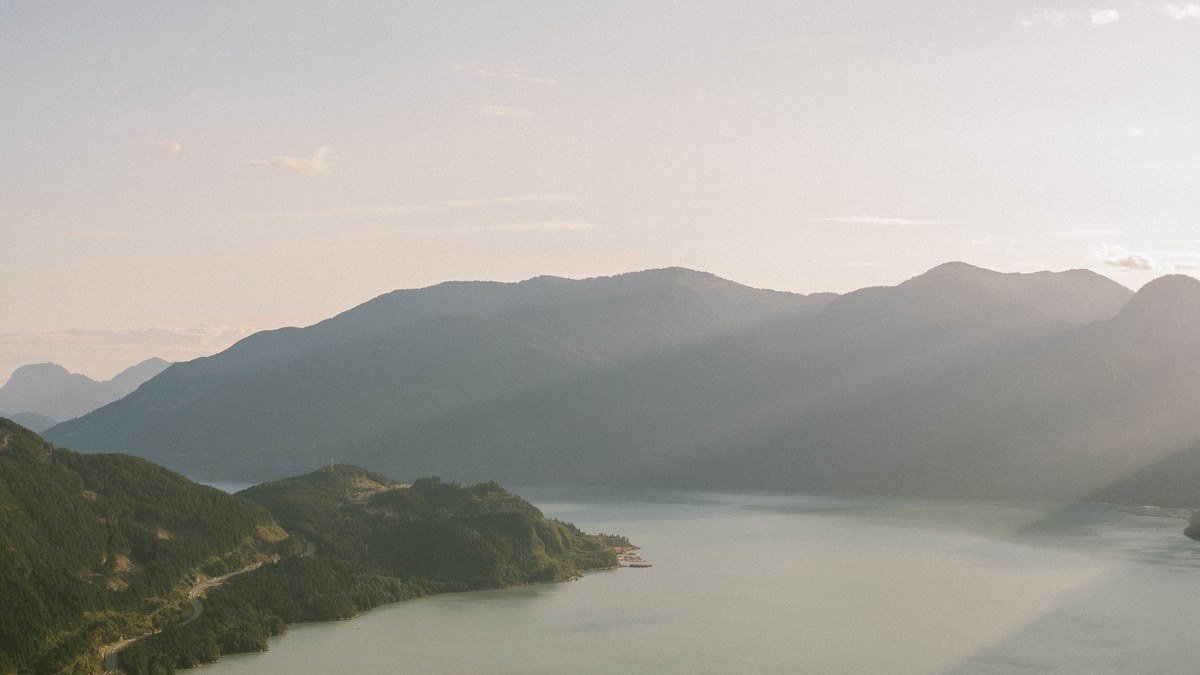
The Spit is a long finger of land jutting into Howe Sound at the mouth of the Squamish River, and on a windy summer afternoon it is the most alive place in town: dozens of kiteboarders and windsurfers skimming the water, kites stacked in the sky like confetti. Squamish’s thermal winds — warm valley air meeting cool ocean air — make it one of the best kiteboarding spots in North America. I am not a kiteboarder (my balance and I have an understanding), but I spent a very happy afternoon on the viewing area with a coffee, watching people do something I absolutely cannot.
The Spit is an active recreation site, not a beach park: no lifeguarded swimming, genuinely strong wind, and access rules that have changed as estuary restoration progressed. Check current access on the Tourism Squamish site before you go, and keep dogs leashed — the estuary is sensitive habitat. → Tourism Squamish — official visitor site
Local schools offer beginner kiteboarding lessons on the Spit in summer — book ahead, as windy days fill fast. Prefer land? The flat estuary trails nearby are peaceful birding walks, a total contrast to the adrenaline on the water.
7. Swim (bravely) at Alice Lake
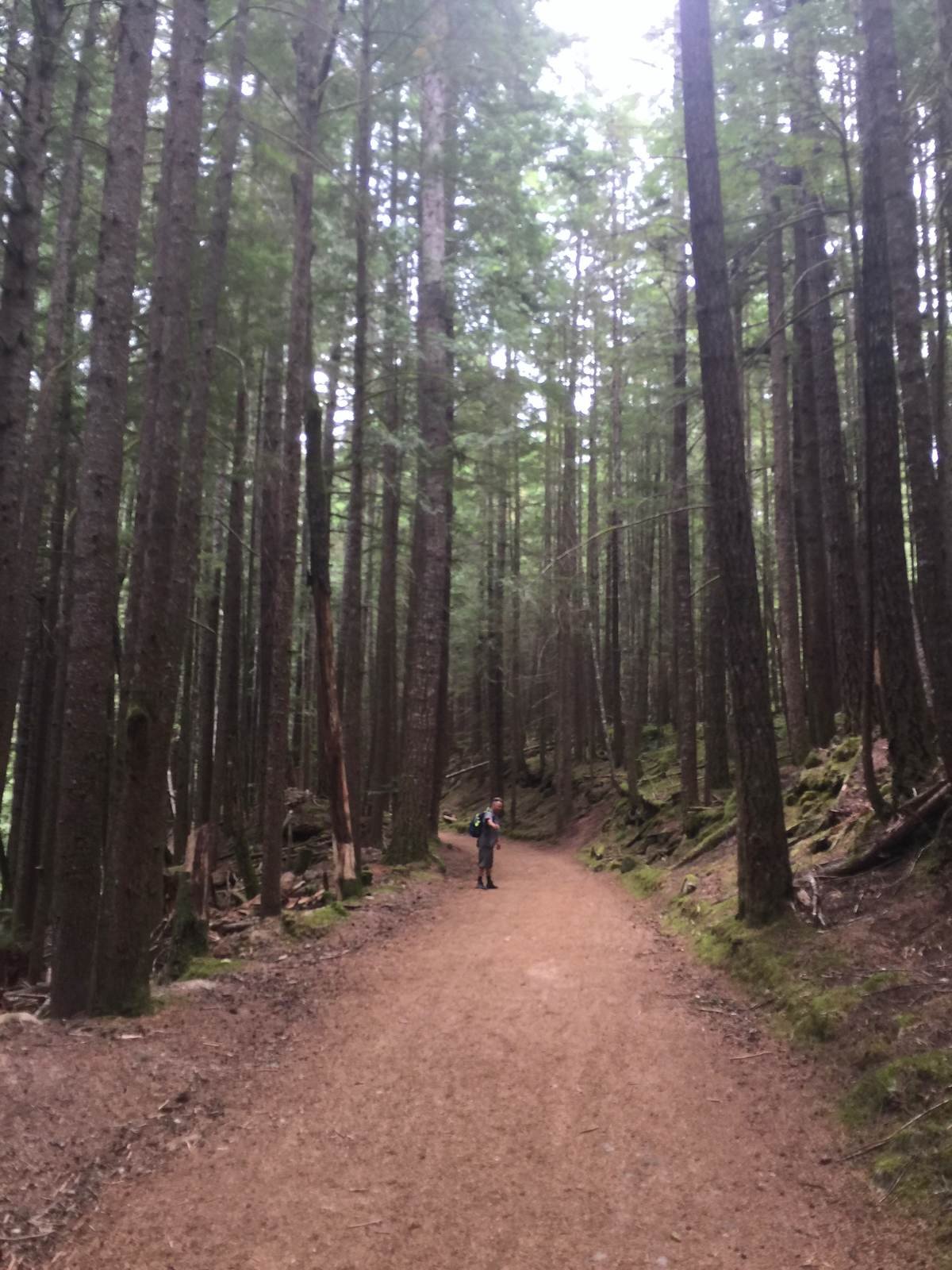
Thirteen kilometres north of downtown, Alice Lake Provincial Park is Squamish’s summer backyard: four small lakes, a sandy beach, a campground that books out fast, and a gentle 6-kilometre trail loop (the Four Lakes Trail) linking them through second-growth forest. The main lake is warm by BC standards — still brisk, but swimmable — and on a hot July day the beach is packed. I did the loop on a warm August morning and finished with a swim I’ll call “refreshing” and my companion called “why are you screaming.”
Skip the main beach at midday and walk ten minutes to the smaller lakes on the loop — Stump Lake and Edith Lake are quieter, prettier, and just as swimmable. I had Edith Lake nearly to myself on a Saturday while the main beach was shoulder to shoulder.
I double-checked details on the BC Parks page before going — the campground is reservable and popular, and day-use parking is limited, so arrive early in summer. → BC Parks — Alice Lake Provincial Park
8. See the eagles at Brackendale (November to February)

Here’s the thing nobody tells you about Squamish: the winter is arguably better than the summer, if you like eagles — and who doesn’t like eagles. From November to February, bald eagles gather along the Squamish River at Brackendale to feed on spawning salmon, counts regularly in the hundreds. I went in January, stood on the dyke in drizzle with borrowed binoculars, and counted forty eagles before I stopped counting and just watched. They sit in the cottonwoods like ornaments. Absurd and wonderful.
Go on a weekday morning in December or January, bring binoculars, and walk the dyke trail rather than crowding the main viewing pullout. The eagles are wild animals on a feeding ground, not a show — keep your voice down, stay on the trails, and never approach a perched bird for a photo. The Brackendale Eagle Festival runs in January; check Tourism Squamish for the current year’s dates.
Fair warning: eagle season is rainy season, and the dyke walk is exposed. Waterproof jacket, shoes, and a thermos — I learned the thermos part the hard way, in sideways rain, jealous of a stranger’s tea.
9. Wander downtown Squamish (Cleveland Avenue)
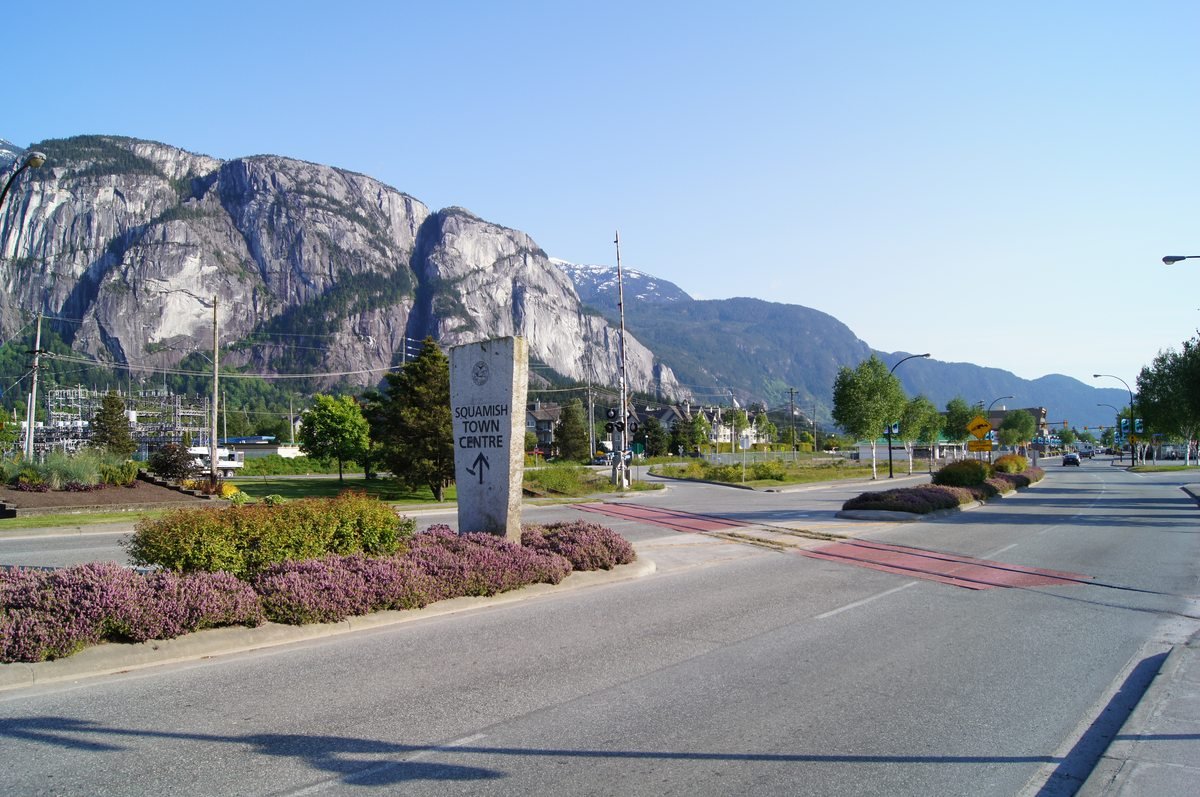
Downtown Squamish has changed fast — the old logging-town main street now mixes outdoor shops, cafes, breweries, and breakfast spots worth planning a morning around. Cleveland Avenue is the spine: start at the Squamish Adventure Centre (maps, advice, and genuinely helpful humans who will talk you out of a bad hiking plan), then wander the shops. The cafes fill with climbers and bikers by 7 AM — a good sign, and a reason to get there early.
The Squamish Farmers’ Market (Saturdays, late spring through fall, on Cleveland Avenue) is where the town shows its non-granite side: produce, baking, crafts and food stalls, with the Chief looming over it all. I bought honey, bread and an unreasonable amount of jam, and ate lunch standing up like a local. Check Tourism Squamish for the current season’s hours.
Evening in Squamish belongs to the breweries — Howe Sound Brewing is the long-running name, with newer taprooms nearby. My rule: one tasting flight, a proper dinner, then an early night if the Chief is on tomorrow’s plan.
10. Catch sunset at Porteau Cove
Twenty minutes south of Squamish, Porteau Cove Provincial Park is a small oceanfront park with a big reputation: campsites right on the water, a pier, and sunsets over Howe Sound that stop conversations mid-sentence. Even if you’re not camping, it’s worth the detour for an evening walk — I stopped here on my drive back to Vancouver after my first Squamish trip and immediately understood why the campground books out months ahead. I double-checked reservations on the BC Parks page — this is one of the hardest campsites in the corridor to get, so book the moment your dates are firm. → BC Parks — Porteau Cove Provincial Park
11. Ride the mountain bike trails
Squamish is a mountain biking mecca, with hundreds of kilometres of singletrack from gentle valley trails to the steep descents the town is famous for. New to it? The estuary and Alice Lake trails are a friendly introduction, and local shops rent bikes and match routes to your nerve. Fair warning: the famous trails are genuinely technical — check conditions and difficulty with a local shop first, and wear a helmet even on the easy stuff.
12. Raft the Squamish and Elaho rivers
From roughly May to September, guided rafting trips run the Squamish and Elaho rivers — glacier-fed, cold, and thrilling in the way only Class III and IV rapids can be. I did a half-day Elaho trip and can report two things: the scenery (waterfalls pouring straight off the cliffs) is unreal, and you will get wet no matter what the waiver says. Book ahead in July and August; wetsuits are standard.
Glacier rivers are cold year-round, and levels change with melt and rain. Never float these rivers without a guide unless you know them well — I watched a guided group scout a rapid for ten careful minutes before running it, and that caution is the whole point. Confirm minimum age and fitness requirements before you pay.
13. Walk the Squamish Estuary and Nexen Beach at sunset
For the gentlest hour in this guide, walk the estuary trails near the Spit at low tide, when herons and shorebirds work the mudflats. Then finish at Nexen Beach for sunset: driftwood and a front-row view of the sun dropping behind the mountains. I ended my second trip here with fish and chips eaten on a log — the correct way to end any Squamish trip, trust me on this one.
14. Eat and drink your way along the corridor
Squamish’s food scene is small but serious: brewery taprooms downtown, cafes that open before the climbers do, and farm-gate stands north of town in summer. My formula: a big breakfast on Cleveland Avenue, a packed lunch for the trail, and dinner back in town after the hike — you will have earned it.
15. Pedal the Sea to Sky Trail (or part of it)
The Sea to Sky Trail is a multi-use path that will eventually link Squamish to Whistler; the finished Squamish sections already make a lovely half-day ride or walk, connecting downtown to the estuary and toward Brackendale. I rode the downtown-to-estuary stretch: flat, paved, and constantly interrupted by views you have to stop for. It’s also the best car-free way to stitch the Spit, the estuary and downtown together in one morning.
What does Squamish cost?
Approximate ranges from my visits, per person per day, excluding accommodation. Pick your travel style and days, and the calculator does the rest.
Budget calculator
Per person, in Canadian dollars. Excludes accommodation.
Budget ≈ $85/day · Mid-range ≈ $155/day · Luxury ≈ $285/day. All figures approximate; check official sites for current admission and fares.
| Expense (per person / day) | Budget | Mid-range | Luxury |
|---|---|---|---|
| Accommodation | ~$50 (hostel / campsite) | ~$180 (downtown hotel) | ~$350+ (lodge / suite) |
| Food & drink | $40 | $70 | $130 |
| Sights (gondola, mine, tours) | $15 | $35 | $60 |
| Getting around (bus / taxi / fuel) | $20 | $30 | $60 |
| Coffee, treats & souvenirs | $10 | $20 | $35 |
| Daily total | ~$135 | ~$335 | ~$635 |
Suggested 2-day plan
| Time | Day 1 — icons & the fjord | Day 2 — the Chief & the town |
|---|---|---|
| Morning | Shannon Falls at opening, then the Sea to Sky Gondola first cabin | Stawamus Chief Peak 1 at opening (water, shoes, snacks) |
| Midday | Britannia Mine Museum underground tour + gold panning | Smoke Bluffs wander + lunch on Cleveland Avenue |
| Afternoon | Squamish Spit: watch the kiteboarders, walk the estuary | Alice Lake loop + a (brave) swim, or the Sea to Sky Trail by bike |
| Evening | Porteau Cove sunset on the way south, or Nexen Beach in town | Brewery dinner downtown, farmers’ market if it’s a Saturday |
FAQs about things to do in Squamish
How many days do you need in Squamish?
Two full days covers this guide comfortably — one day for the gondola, Shannon Falls and Britannia Mine, one for the Chief, the Spit and downtown. With a third day, add Alice Lake, a rafting trip, or a bike rental. One day works if you pick just the gondola and the falls, but you’ll leave knowing you missed the Chief.
What is the best time of year to visit Squamish?
June through September is the classic season: warm days, full gondola and tour schedules, swimmable (if brisk) lakes, and kiteboarders on the Spit. But don’t sleep on winter: November to February brings the Brackendale eagles and quieter trails. Spring (April–May) is waterfall season at Shannon Falls, though trails can be muddy. For the wider BC picture, see Canada in summer.
Do I need a car in Squamish?
Not necessarily, but it helps. The Squamish Connector bus gets you from Vancouver to downtown, downtown is walkable, and local buses reach several stops — but the falls, the gondola and Alice Lake are spread along the highway, so car-free days need bus timetables and the odd taxi. For the full two-day plan, a car (or a well-planned taxi budget) makes life much easier.
Is the Stawamus Chief hike hard or dangerous?
It’s strenuous but not technical for a fit hiker: steep stairs and rock, with chains and ladders near the top of Peak 1. The danger comes from underestimating it — bad shoes, no water, or winter ice. I’ve done it twice and both times saw people turn back early, which is the right call if unsure. Check the BC Parks trail status, start early, and if anything feels beyond you, take the gondola instead: same fjord, zero ladders.
When can I see the bald eagles at Brackendale?
November through February, when eagles gather along the Squamish River to feed on spawning salmon. December and January are typically peak months, with counts in the hundreds. Walk the dyke trail on a weekday morning, bring binoculars, and keep your distance — the eagles are feeding, not performing. The January eagle festival offers guided counts.
Can I do Squamish as a day trip from Vancouver?
Yes — about an hour each way, and the gondola plus Shannon Falls plus a downtown lunch makes a great single day. But you’ll skip the Chief, the mine and Alice Lake, and you’ll be watching the clock. If you can spare one night, stay over and do the two-day plan. If you truly only have a day, take the earliest bus, book the gondola ahead, and read my day trips from Vancouver without a car.
Keep exploring
Squamish is one stop on the corridor — here’s where I’d go next:
- Sea to Sky Highway stops — the full Vancouver-to-Whistler drive, pullout by pullout
- Things to do in Vancouver — the city at the south end of the highway
- Vancouver travel guide — neighbourhoods, transit and seasons for a longer stay
- Day trips from Vancouver without a car — Squamish and beyond, bus by bus
- Canada in summer — when to plan the whole BC coast
- Pacific Rim National Park guide — the next BC coast classic, out on Vancouver Island
You’ve got this. Squamish rewards the planner — and the early riser, and the person who packed an extra litre of water.