
Last updated: October 3, 2026
The short answer
- The short answer: for most tourists in 2026, a travel eSIM beats a physical SIM — buy it at home, scan a QR code, and you’re online before the plane door opens.
- Best eSIM picks: Airalo (~$6/1GB, ~$18/5GB) for light users, Holafly (unlimited from ~$37/7 days) for data-hungry streamers, Ubigi (from ~$5) for overall value.
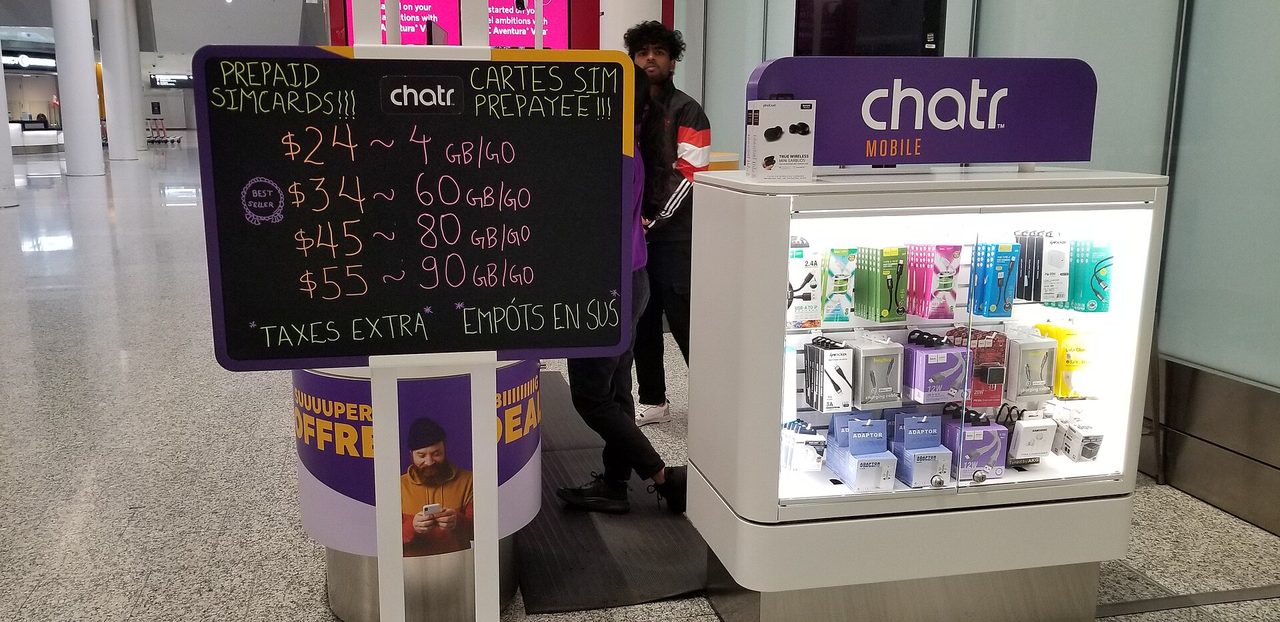
- Best local prepaid SIMs: Chatr (Rogers network) and Lucky Mobile (Bell network) both run $21/1GB, $25/5GB, $30/15GB, $35/30GB — but only if your phone is unlocked and you don’t mind a store visit.
I’ll be honest: my first trip to Canada started with a $45 roaming bill. Three days. My home carrier charged me ~$15 a day for the privilege of Googling “where is baggage claim,” and I paid it because I didn’t know better. Never again — and trust me on this one, you don’t have to learn the hard way like I did. Canada has some of the highest mobile data prices in the world, but in 2026 you can absolutely stay connected for the cost of a nice lunch. Here’s the thing, though: the system is not built for tourists, so you need a plan before you land. This is mine — every price below was checked in October 2026, and the prices marked ~ are estimates that move around, so confirm on the carrier’s official site before you buy.
The 2026 Canadian telecom landscape in 3 minutes

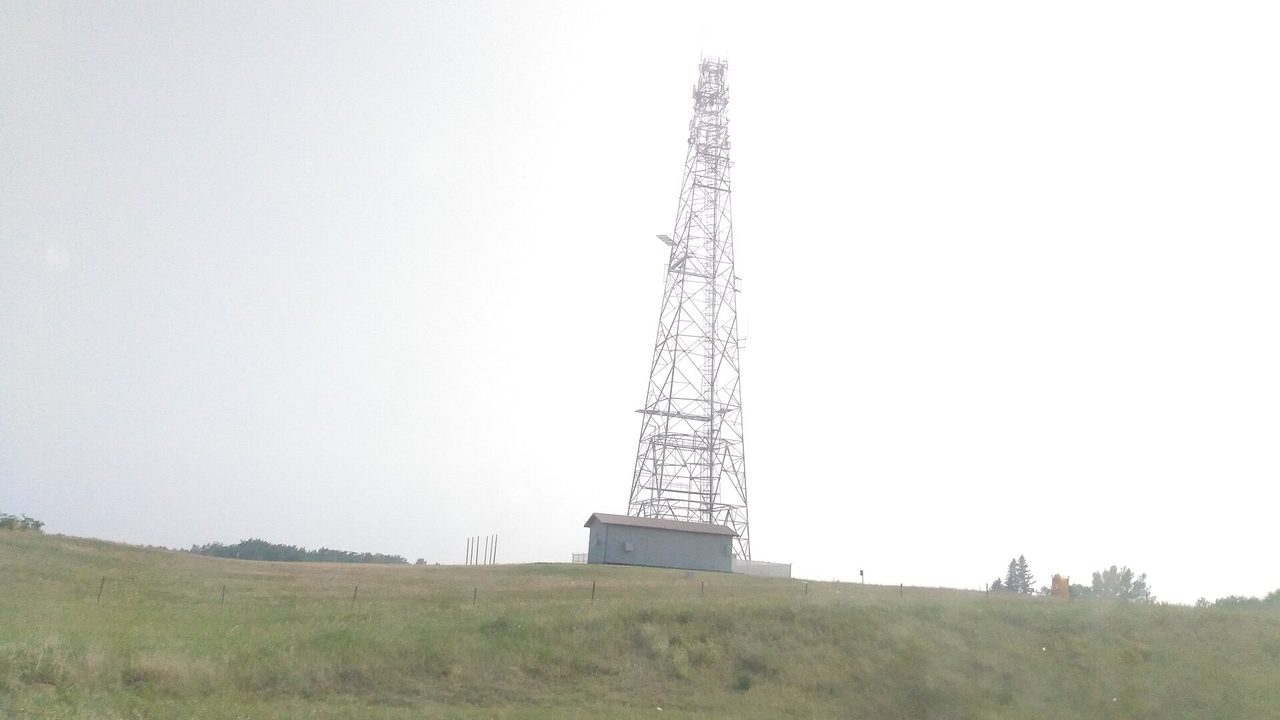
Canada runs on the “Big Three”: Rogers, Bell, and Telus. Together they cover roughly 95% of where Canadians actually live with 5G+ networks, and Rogers usually takes the speed crown in cities. Bell and Telus share a huge amount of tower infrastructure, which makes them the stronger pick once you leave the city lights (we’ll get to Banff in a minute).
Here’s the part that matters for your wallet: never buy directly from the Big Three. Each runs a “flanker brand” — a budget prepaid label on the exact same network:
- Chatr = Rogers’ network
- Lucky Mobile = Bell’s network
- Public Mobile = Telus’ network
Same towers, half the price, no credit check, no contract. Then there are the regionals: Freedom Mobile (great prices, but mostly a city network in Ontario/BC/Alberta) and Fizz (a Quebec darling that expanded Canada-wide). One genuinely good 2026 development: since June 2026, Canada’s regulators banned activation, plan-change, and cancellation fees industry-wide — I hadn’t heard about it until I read up for this guide, and it means you can switch plans or bail on one without a penalty. Game-changer for short trips.
eSIM vs physical SIM: my honest verdict
For 2026, the answer is eSIM — for most people, most of the time. With an eSIM you buy the plan at home, scan a QR code, and it activates the second you land. Your home SIM stays in the phone, so you can still receive bank texts and two-factor codes on your regular number while the eSIM handles data. Pro tip: most modern iPhones and Pixels support dual-SIM this way — I’ve done it four times now, and the 20 minutes it takes on your couch beats any airport line.
A physical SIM still wins in exactly two cases: your phone doesn’t support eSIM (check before you fly — older or budget phones often don’t), or you need a real Canadian phone number for calls and texts beyond WhatsApp. A few eSIMs (Airalo’s call/text plans, Saily’s optional number) now cover this, so the gap is closing.
Fair warning — the #1 eSIM support ticket in existence is this: you must turn Data Roaming ON for the eSIM line in your phone settings. I forgot once and spent 15 minutes at the gate convinced my eSIM was broken, re-reading the QR email like it was a crossword. It was not broken. I was. Do not skip this step.
The best travel eSIMs for Canada in 2026
I compared six providers in my (color-coded, naturally) spreadsheet the night before my last Banff trip. These are the ones that made the final cut, with prices checked October 2026. All prices in USD; all are data plans that ride on Rogers, Bell, or Telus:
| Provider | Best for | Sample price | Hotspot |
|---|---|---|---|
| Airalo (Tuque Mobile) | Light users, budget trips | ~$6 / 1GB / 7 days; ~$18 / 5GB / 30 days; ~$35 / 10GB / 30 days | Yes |
| Holafly | Heavy users, streamers | Unlimited: ~$37 / 7 days; ~$94 / 30 days | Yes (capped ~500MB/day) |
| Ubigi | Overall value | From ~$5 / 1GB / 7 days; unlimited from ~$29 / 7 days | Varies by plan |
| Saily | Security-conscious travelers | From ~$4.50 / 1GB / 7 days; optional phone number add-on | Yes |
| Nomad | Value + 5G in cities | From ~$5 / 1GB / 7 days | Yes |
| Jetpac | Cheapest entry point | From ~$2 / 1GB / 4 days | Varies by plan |
My pick? For a week in the cities, Airalo’s ~$18/5GB plan is the sweet spot — 5GB covers maps, socials, and a healthy amount of photo uploading. If you’re going to stream Netflix in your hotel room every night (no judgment — I’ve been there), Holafly’s unlimited plan pays for itself. → Airalo — official site · Holafly — official site · Ubigi — official site · Saily — official site
One more pro tip: install the eSIM the night before you fly, on your home Wi-Fi. The QR code works best when you’re not stress-installing it on shaky airport Wi-Fi with 40 minutes before boarding.
The best local prepaid SIM plans for tourists
Prefer a physical SIM, or need a Canadian number? The flanker brands are where it’s at. Plan prices from September–October 2026 (CAD), and I double-checked these on each brand’s official site before writing — they shift with promos, so do the same:
| Brand (network) | Entry plan | Mid plan | Best value | SIM cost |
|---|---|---|---|---|
| Chatr (Rogers) | $21 / 1GB | $25 / 5GB | $30 / 15GB · $35 / 30GB (auto-pay) | ~$10 |
| Lucky Mobile (Bell) | $21 / 1GB | $25 / 5GB | $30 / 15GB · $35 / 30GB | ~$10 |
| Public Mobile (Telus) | $24 / 5GB 4G | $28 / 10GB 4G | $35 / 50GB 5G Canada-wide | ~$10 |
| Fizz | $18 talk & text | $20 / 1GB 5G | $30 / 50GB 5G | ~$10 |
| Freedom Mobile | Cheapest big-data plans in Canada | …but coverage is mostly cities — fine for Toronto/Vancouver/Calgary only | ~$10 | |
For a week-long city trip, Public Mobile’s $35/50GB 5G plan is genuinely absurd value — 50 gigs, real 5G, on Telus’ network. (Fair warning: Public is an online-first brand with no phone support; their community forums handle questions. It works, but it’s not for the tech-anxious.) If you want to walk into a store and talk to a human, Chatr or Lucky Mobile at a mall kiosk is the easier path. → Chatr — official site · Lucky Mobile — official site · Public Mobile — official site · Freedom Mobile — official site
Where to buy a SIM on arrival (and where not to)

Airport kiosks are convenient and slightly overpriced — worth it if you need data in the first hour, otherwise wait for the city. Here’s the 2026 lay of the land by airport:
- Toronto Pearson (YYZ): Chatr has a kiosk in the arrivals area (it’s the purple booth you literally cannot miss), and the currency exchange counter sells tourist SIMs too. I timed it once: 25 minutes from touchdown to connected.
- Montréal–Trudeau (YUL): Chatr and Rogers/Fido kiosks sit on the public arrivals level between doors 27 and 28, and the i.c.e. currency exchange in international arrivals sells Lucky Mobile and Telus SIMs. → Aéroports de Montréal — where to buy a SIM card at YUL
- Vancouver (YVR): 7-Eleven stores in the airport sell SpeakOut SIMs, but their top-up system confuses even locals — I’d rather buy an eSIM on the plane’s Wi-Fi than wrestle with it. → Toronto Pearson — official site (check retail listings)
In the city, your best bets are Best Buy, Walmart, mall mobile kiosks, and independent phone shops — this is where staff actually know the plans and can activate you on the spot. Convenience stores (7-Eleven, Circle K) sell SIMs but can’t always activate them. Bring your passport as ID, and make sure your phone is unlocked — a locked phone rejects foreign SIMs entirely, and no store can fix that for you.
Coverage reality check: cities vs the national parks

Here’s the thing nobody tells you: Canadian coverage is a tale of two countries. In Toronto, Vancouver, and Montreal you’ll get blazing 5G on any network — pick by price and don’t think twice. But drive into the Rockies and the picture changes fast.
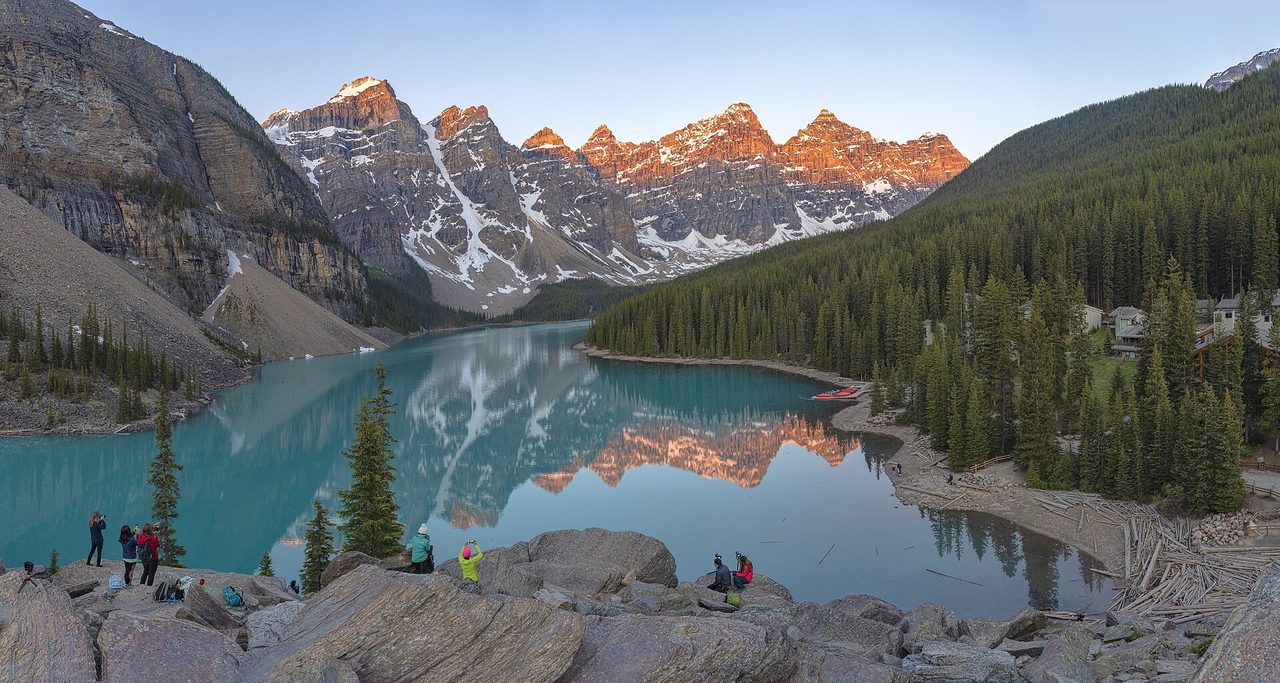
I learned this one the sunny way at Lake Louise: my Telus-network eSIM had full bars and I was live-posting the turquoise water, while my friend’s budget Freedom plan had… nothing. No bars. A very expensive brick. Freedom is fine in the cities; outside them, it’s Telus and Bell’s shared tower network that actually reaches the parks. Rogers is strong in Ontario and Atlantic Canada but historically thinner in the West.
Practical takeaways:
- Cities only (Toronto, Vancouver, Montreal, Calgary): any provider works. Choose by price.
- Banff, Jasper, the Rockies, rural anywhere: go with a Telus- or Bell-network option (Public Mobile, Lucky Mobile, or a Bell/Telus-backed eSIM). This one is worth every penny — do not skip it.
- Quebec: Vidéotron and Fizz are excellent locally.
- Download offline Google Maps for driving days regardless. Dead zones exist on every network in the mountains, and “no service” at a trailhead is a feature, not a bug — but you still want the map.
Pairing connectivity with your route? See my 2-day Banff itinerary and Alberta road trip itinerary — both assume you’ll need maps where the signal gets thin.
Before you buy: my 5-minute checklist

Run through this before you spend a cent — it’s my actual pre-flight ritual now:
- Is your phone unlocked? Call your carrier and ask. A locked phone won’t accept a Canadian SIM, and an eSIM install will fail. This is the single most common trip-ruiner I hear about.
- Does it support eSIM? Most iPhones from the XS onward and recent Pixels/Samsungs do. Check in Settings → Cellular → Add eSIM (iPhone) or Settings → Network → SIMs (Android).
- Does it support Canadian bands? You want LTE Bands 4, 7, and 66 (plus 12/13 for rural reach) and 5G bands n66/n78. Nearly all phones sold globally in the last five years do — but if your phone is ancient or a region-specific model, verify the specs on the manufacturer’s site.
- Install the eSIM at home on Wi-Fi, activate it when you land, and remember: Data Roaming ON for the eSIM line (yes, this feels wrong; yes, it’s required).
- Keep your home line active for texts and 2FA codes — just disable data roaming on it so nothing sneaks through at roaming rates.
How much data do you actually need?
My rule of thumb from four trips: ~1–1.5GB per day for normal tourist use (maps, messaging, socials, some photos). A 7-day trip ≈ 7–10GB; two weeks ≈ 15–20GB. Streaming video is the budget-killer — an hour of HD Netflix eats ~3GB, which is why heavy streamers should look at Holafly unlimited instead of counting gigs.
| Trip style | Data needed | My pick | ~Cost |
|---|---|---|---|
| Weekend city break | 3–5GB | Airalo 5GB / 30 days | ~$18 USD |
| 1 week, cities + a park day | 7–10GB | Airalo 10GB / 30 days or Public Mobile $35/50GB | ~$35 USD / $35 CAD |
| 2 weeks, heavy streaming | Unlimited | Holafly unlimited / 15 days | ~$51 USD |
| Road trip, need a local number | 10–30GB | Lucky Mobile or Chatr $30/15GB or $35/30GB | $30–35 CAD + ~$10 SIM |
(You can read these as starting points, not gospel — hotel and café Wi-Fi stretches everything further. You’ve got this.)
FAQs about SIM cards in Canada
Is it cheaper to buy a SIM card in Canada or use an eSIM?
In 2026 the gap has mostly closed. A travel eSIM like Airalo runs about ~$18 USD for 5GB/30 days, while a local Chatr or Lucky Mobile plan is $25 CAD for 5GB plus ~$10 for the SIM — roughly the same once you do the math. The eSIM wins on convenience (no store visit, no swapping cards); the local SIM wins if you need a real Canadian phone number. Compare both, then pick your priority.
Do I need my phone to be unlocked to use a Canadian SIM?
Yes — absolutely. A carrier-locked phone will reject any foreign SIM, physical or eSIM, and no Canadian store can unlock it for you. Call your home carrier before you fly and ask them to unlock it; most will do it for free if your phone is paid off.
Can I buy a SIM card at Toronto Pearson airport?
Yes. Chatr has a kiosk in the arrivals area, and the currency exchange counter sells tourist SIMs too — you’ll be connected in about 25 minutes. Expect airport pricing to be a bit higher than in the city. If you don’t need data immediately, wait and buy at a mall kiosk, Best Buy, or Walmart downtown for better plan choices.
Which Canadian network is best for tourists visiting national parks?
Telus or Bell (and their flanker brands Public Mobile and Lucky Mobile). Bell and Telus share tower infrastructure across Western Canada, giving them the best coverage in Banff, Jasper, and rural areas. Rogers is excellent in cities and Ontario but historically thinner in the Rockies. Budget city-only networks like Freedom Mobile are a poor choice for park trips.
Does my eSIM need data roaming turned on?
Yes — this is the #1 gotcha. For your eSIM line, Data Roaming must be ON in your phone settings, or the eSIM won’t connect. This feels wrong (roaming = expensive, right?) but travel eSIMs are designed to work this way and you won’t be charged extra. Just make sure data roaming stays OFF on your home line.
How do I keep my home number active while using a Canadian eSIM?
On dual-SIM phones (most modern iPhones, Pixels, and Samsungs), keep your home SIM as the line for calls and texts and set the Canadian eSIM as the line for mobile data. You’ll still receive bank texts and two-factor codes on your regular number — important for logging into things while traveling — while all data flows through the cheap Canadian plan. Disable data roaming on your home line so nothing leaks through at roaming rates.
Keep exploring
- The Ultimate 2 Days in Banff Itinerary: 2026 Guide
- The Ultimate Alberta Road Trip Itinerary
- The Ultimate 1 Day in Toronto Itinerary for 2026
- The Ultimate 2 Days in Montreal Itinerary: 2026 Guide
- The Ultimate 14-Day Canada Itinerary