
The Ultimate 2026 Travel Guide to Quebec: Plan Your Trip
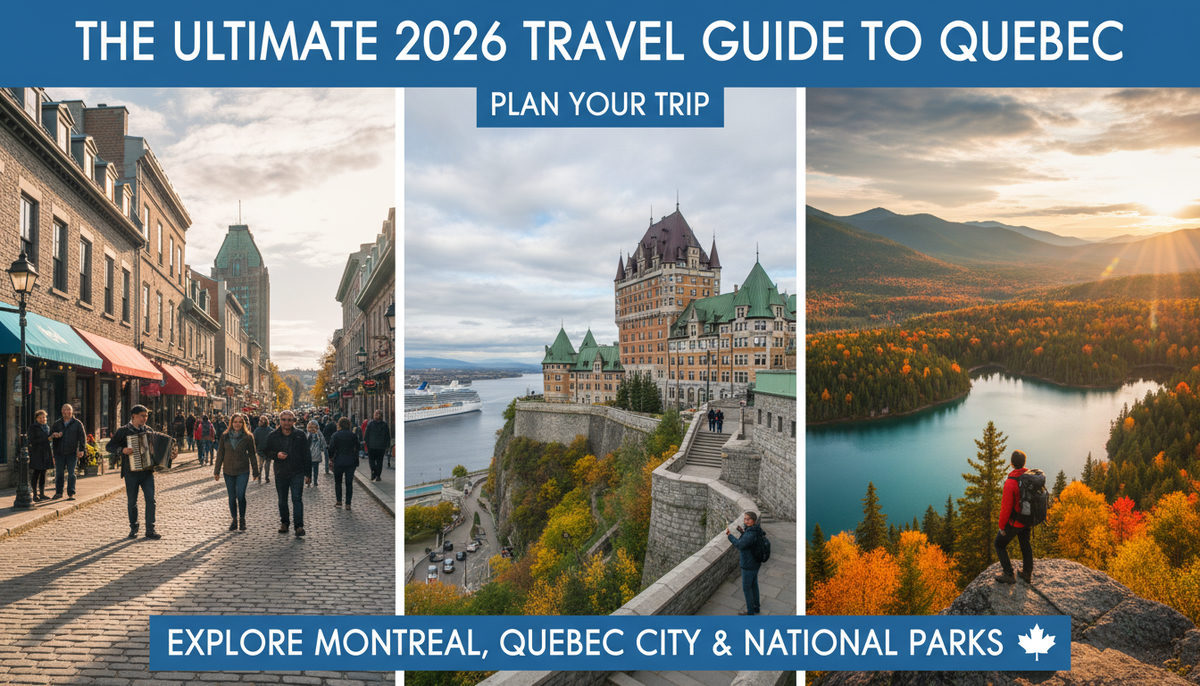
Imagine wandering through cobblestone streets that feel like 17th-century Europe, only to find yourself minutes away from breathtaking wilderness and world-class modern dining. This unique blend of old-world charm and rugged natural beauty makes Quebec a top destination for global explorers. However, planning a trip to Canada’s largest province can be overwhelming due to its vast size, distinct language, and diverse seasonal activities. This comprehensive 2026 travel guide to Quebec simplifies your planning, offering curated itineraries, cultural tips, and the best local secrets for an unforgettable adventure.
1. Essential Travel Guide to Quebec: Planning Your 2026 Visit
Quebec is much more than just a Canadian province; it is a distinct nation within a country. Specifically, its French-North American identity creates a cultural atmosphere you won’t find anywhere else on the continent. In 2026, the province continues to celebrate its heritage while embracing a very modern, eco-conscious future. You will notice this balance in the architecture, the food, and the daily rhythm of life in both cities and rural villages.
Language Etiquette: Do You Need to Speak French?
French is the official language of Quebec, and it is a core part of the local identity. While you do not need to be fluent to enjoy your trip, learning a few basic phrases goes a long way. For instance, starting a conversation with “Bonjour” (Good day) or “Merci” (Thank you) shows respect for the local culture. In major tourist hubs like Montreal and Quebec City, most service workers speak excellent English. However, as you travel into more rural areas like the Gaspé Peninsula, English becomes less common, making a translation app quite helpful.
2026 Travel Costs and Budgeting
Budgeting for your 2026 trip requires a clear understanding of current economic trends in Canada. On average, a mid-range traveler should budget between $200 and $300 CAD per day. This amount covers comfortable boutique accommodations, two restaurant meals, and local transportation. Notably, the exchange rate remains favorable for many international tourists, particularly those using US Dollars or Euros. To save money, consider visiting during the “shoulder seasons” of late spring or early autumn when hotel prices typically drop by 20%.
New Infrastructure and Sustainable Travel
Quebec has made massive strides in sustainable transportation for the 2026 season. The new high-frequency rail corridor now connects Montreal and Quebec City with faster, more reliable service than ever before. Additionally, the province has expanded its network of electric vehicle (EV) charging stations, making it easier to rent an electric car for rural road trips. Furthermore, many national parks now offer shuttle services to reduce traffic congestion. By choosing these green options, you contribute to the preservation of Quebec’s pristine boreal forests and waterways.
2. Montreal Itinerary: The Cultural and Culinary Heart
Montreal is a vibrant metropolis where North American energy meets European flair. As the second-largest French-speaking city in the world after Paris, it offers a rich tapestry of art, history, and gastronomy. When planning your montreal itinerary, you should aim for at least three to four days to truly soak in the different neighborhoods. The city is famous for its festivals, which seem to happen almost every week during the warmer months.
Top Things to Do in Montreal
There are countless things to do in Montreal, but a few landmarks are absolutely essential. Start your journey at Mount Royal Park, the “mountain” that gives the city its name. From the Kondiaronk Lookout, you can see the entire skyline stretching toward the St. Lawrence River. Afterward, head down to the Old Port (Vieux-Port) to walk along the historic waterfront. Here, you can visit the Notre-Dame Basilica, a masterpiece of Gothic Revival architecture known for its stunning blue interior and intricate wood carvings.
A 3-Day Montreal Itinerary for First-Timers
- Day 1: Historic Roots – Spend your morning in Old Montreal. Visit the Place d’Armes and the Pointe-à-Callière Museum of Archaeology. In the evening, enjoy a meal at a classic French bistro on Saint-Paul Street.
- Day 2: Modern Vibes – Explore the Plateau Mont-Royal and Mile End neighborhoods. These areas are famous for colorful houses with outdoor spiral staircases. Stop by a local bakery for a world-famous Montreal bagel.
- Day 3: Nature and Science – Head to the Espace pour la Vie complex. This area includes the Montreal Botanical Garden, the Biodome, and the Planetarium. End your day with a sunset view from the top of the Olympic Stadium tower.
Best Time to Visit Montreal for Festivals
The best time to visit Montreal depends largely on your interest in outdoor events. If you love music, June and July are unbeatable because of the International Jazz Festival and Just for Laughs. In 2026, the city is also hosting several new digital art installations throughout the downtown core. For those who prefer cooler weather, the fall brings crisp air and the beautiful “Gardens of Light” event at the Botanical Garden. No matter when you arrive, the city’s underground city (RÉSO) ensures you can navigate downtown comfortably regardless of the weather.
3. Quebec City Itinerary: Stepping Back in Time
Quebec City is the only fortified city north of Mexico, and its historic district is a UNESCO World Heritage site. Walking through the gates of the Old City feels like stepping into a time machine. Your quebec city itinerary should focus on slow exploration, as the beauty of this city lies in its narrow alleys and hidden courtyards. It is significantly smaller than Montreal, making it a very walkable destination for most travelers.
Must-See Historic Sites in Old Quebec
The list of things to do in Quebec City starts with the iconic Fairmont Le Château Frontenac. This grand hotel is said to be the most photographed hotel in the world. Even if you aren’t staying there, you can take a guided tour to learn about its royal history. Nearby, the Dufferin Terrace offers spectacular views of the river. Additionally, make sure to visit the Citadelle of Quebec, an active military installation where you can watch the changing of the guard during the summer months.
The Charm of Petit Champlain and Hidden Gems
For a truly magical experience, descend the “Breakneck Steps” into the Petit Champlain district. This area is filled with artisan boutiques, cozy cafes, and cobblestone paths. Specifically, look for the massive murals painted on the sides of historic buildings that depict the city’s 400-year history. If you want to escape the crowds, take a short 15-minute drive to Montmorency Falls. These falls are actually 30 meters higher than Niagara Falls and offer a thrilling suspension bridge walk for brave visitors.
Best Time to Visit Quebec City for Winter Magic
While summer is popular, many argue the best time to visit Quebec City is during the winter. The Quebec Winter Carnival (Carnaval de Québec) is a world-renowned event featuring ice sculptures, night parades, and the famous Bonhomme mascot. In 2026, the carnival will feature expanded interactive light displays and a new “ice village” on the Plains of Abraham. If you enjoy the cold, there is nothing quite like sipping hot caribou (a local spiced drink) while surrounded by snow-covered stone walls.
Sample 2-Day History Buff Itinerary
- Day 1: The Upper Town – Explore the fortifications, the Parliament Building, and the Plains of Abraham. Visit the Musée national des beaux-arts du Québec to see incredible Inuit art collections.
- Day 2: The Lower Town and Island – Spend the morning in Petit Champlain and Place Royale. In the afternoon, drive across the bridge to Île d’Orléans. This island is the “cradle of French civilization” in North America and is famous for its strawberries, apples, and vineyards.
4. Best Time to Visit Quebec 2026: A Seasonal Breakdown
Quebec experiences four very distinct seasons, each offering a completely different travel experience. Because the province is so large, weather patterns can vary significantly between Montreal and the northern regions. Therefore, your packing list and activity choices must align with the specific month of your arrival. In 2026, seasonal shifts are becoming slightly more pronounced, making timing more important than ever for outdoor enthusiasts.
Summer (June to August)
Summer is the peak tourist season for a reason. Specifically, the weather is warm and humid, perfect for patio dining and long hikes in the Laurentian Mountains. This is also the prime time for whale watching in Tadoussac. However, be prepared for larger crowds at major landmarks and higher accommodation prices. Most importantly, summer is “festival season,” so expect a high-energy atmosphere in every major city you visit.
Fall (September to October)
Many locals believe autumn is the most beautiful time of year. The maple trees turn brilliant shades of red, orange, and gold, usually peaking in early October. This is the ideal season for photography and visiting local orchards for apple picking. Additionally, the temperatures are cool and comfortable for walking tours. If you plan to visit during this time, book your hotels well in advance, as “leaf peepers” flock to the Charlevoix and Eastern Townships regions.
Winter (December to March)
Quebec embraces winter like nowhere else on Earth. While temperatures can drop well below freezing, the province is perfectly equipped for the cold. You can try dog sledding, ice fishing, or even stay in the famous Hôtel de Glace (Ice Hotel) near Quebec City. For skiers, the resorts at Mont-Tremblant and Mont-Sainte-Anne offer world-class conditions. Notably, the air is very dry, so as long as you dress in layers, the cold is quite manageable and even refreshing.
Spring (April to May)
Spring is a unique “shoulder season” often referred to as the “sugar season.” As the snow melts, the sap begins to flow in the maple trees. Consequently, visiting a “Sugar Shack” (Cabane à Sucre) is a mandatory activity. You can enjoy traditional meals drizzled in fresh maple syrup and try “maple taffy on snow.” While the weather can be unpredictable and rainy, spring offers the lowest prices and the quietest streets for sightseeing.
5. Quebec Road Trip Ideas: Beyond the Big Cities
To truly understand the spirit of the province, you must leave the urban centers and explore the vast wilderness. Quebec’s road trip routes are well-marked and offer some of the most scenic drives in North America. Whether you want to see rugged coastlines or rolling farmland, there is a route tailored to your interests. In 2026, many of these routes have updated visitor centers and improved digital maps for easier navigation.
The Whale Route (Route des Baleines)
Starting in Tadoussac, this route follows the northern shore of the St. Lawrence River. This area is one of the best places in the world to see marine mammals. Specifically, you can spot belugas, minke whales, and even the massive blue whale. For a closer look, take a sea kayak tour into the Saguenay Fjord, where towering cliffs meet deep, dark waters. The contrast between the blue river and the green forests is absolutely breathtaking.
Charlevoix: Art and Agrotourism
Located between Quebec City and the Saguenay, Charlevoix is a designated UNESCO Biosphere Reserve. This region is famous for its “Flavour Trail,” which connects local cheese makers, organic farmers, and cider producers. Moreover, the town of Baie-Saint-Paul is a hub for Canadian art, featuring dozens of galleries along its main street. The rolling hills of this region were actually formed by a massive meteorite impact millions of years ago, giving the landscape a unique, undulating shape.
The Gaspé Peninsula (Gaspésie)
For those who love the sea, the Gaspé Peninsula is a bucket-list destination. The highlight is Percé Rock, a massive limestone formation with a natural arch rising out of the Gulf of St. Lawrence. Additionally, visit Forillon National Park to see where the Appalachian Mountains finally meet the ocean. This drive is long, often taking 7 to 10 days to complete properly, but the coastal views and fresh seafood make every kilometer worth the effort.
Eastern Townships and Mont-Tremblant
- Eastern Townships – Located south of Montreal, this area feels like a mix of New England and Old France. It is famous for its wine route and charming Victorian villages like North Hatley.
- Mont-Tremblant – This is the premier four-season resort in the Laurentians. In 2026, the pedestrian village has expanded its luxury shopping and eco-adventure tours, including tree-top trekking and mountain biking.
- The King’s Road (Chemin du Roy) – This historic road connects Montreal and Quebec City, passing through some of the oldest villages in Canada. It is a slower, more scenic alternative to the main highway.
6. A Foodie’s Guide to French Canadian Culture
Quebec’s culinary scene is a delicious marriage of French technique and hearty North American ingredients. Food is a central part of the culture, and meals are often long, social affairs. While the province is famous for its comfort food, it also boasts some of the finest high-end restaurants in the world. In 2026, there is a growing focus on “hyper-local” ingredients, with chefs foraging for wild herbs and mushrooms from the boreal forest.
The Poutine Pilgrimage
You cannot visit Quebec without trying poutine. This iconic dish consists of crispy French fries topped with fresh cheese curds and savory brown gravy. However, not all poutine is created equal. For the best experience, look for “squeaky” cheese curds that haven’t been refrigerated. Many restaurants now offer gourmet versions with toppings like smoked meat, lobster, or even foie gras. Specifically, look for local “casse-croûtes” (snack bars) along the highway for the most authentic experience.
Montreal Bagels vs. New York Bagels
There is a friendly but fierce rivalry between Montreal and New York regarding who makes the best bagel. Montreal-style bagels are smaller, denser, and sweeter because they are boiled in honey water before being baked in wood-fired ovens. Notably, they are always handmade. Visit famous spots like St-Viateur or Fairmount Bagel to see the process in action. Most locals recommend eating them hot and fresh right out of the paper bag.
Traditional Staples and Craft Drinks
Beyond poutine, you should try tourtière, a traditional meat pie spiced with cloves and cinnamon. For dessert, look for pouding chômeur (unemployment pudding), a cake baked in a rich maple syrup sauce. To wash it all down, explore Quebec’s booming craft beverage scene. The province is a leader in ice cider, made from apples frozen on the tree. Furthermore, the microbrewery culture is incredibly strong, with hundreds of local beers available in every region.
7. Practical Tips for Navigating Quebec
Navigating a province as large as Quebec requires some logistical planning. Fortunately, the infrastructure is modern and generally very safe for international travelers. Whether you are hopping between cities or exploring the deep woods, knowing the local “rules of the road” will make your trip much smoother. In 2026, digital integration is high, so ensure your smartphone is ready for local apps and maps.
Transportation Options
For travel between Montreal and Quebec City, the train is often the best choice. VIA Rail offers comfortable seating and beautiful views of the countryside. If you plan to visit more remote areas, renting a car is essential. Be aware that in Montreal, turning right on a red light is strictly prohibited, unlike the rest of North America. Additionally, the bus network (Orléans Express) is an affordable and reliable way to reach regional hubs like Rimouski or Sherbrooke.
National Parks and Safety
Quebec is home to stunning national parks managed by SÉPAQ. For 2026, Parc national de la Mauricie and Jacques-Cartier remain top-rated for their hiking and canoeing opportunities. Always check the weather before heading out, as conditions can change rapidly in the mountains. Furthermore, Canada uses the Canadian Dollar (CAD), and tipping is standard at 15% to 18% in restaurants. Most importantly, Quebec is one of the safest regions in the world, but standard travel precautions should still be followed in crowded city areas.
How Many Days Are Enough?
If you only want to see Montreal and Quebec City, 7 days is usually sufficient. This allows for three days in each city plus a day of travel in between. However, if you want to include a road trip to the Gaspé or Charlevoix, you should plan for at least 10 to 14 days. This ensures you aren’t spending your entire vacation behind the wheel. Specifically, giving yourself extra time allows for spontaneous stops at roadside farm stands and scenic lookouts.
Conclusion
Quebec offers a unique blend of European charm and North American wilderness that is truly unmatched. Whether you’re exploring the bustling, artistic streets of Montreal, the deep history of Quebec City, or the rugged beauty of the Gaspé Peninsula, 2026 is the perfect year to experience French Canadian hospitality. From the first “Bonjour” to your final “Au revoir,” the province will captivate you with its culture, flavors, and landscapes. Start planning your 2026 Quebec adventure today by downloading our printable packing list and city maps to ensure you don’t miss a single moment of the magic!
Leave a comment