
Last updated: October 3, 2026
The short answer
- Pick the right train for the job: VIA Rail’s The Canadian for the full 4-night Toronto–Vancouver odyssey, The Ocean for Montréal–Halifax, the Corridor for city-hopping — and the Rocky Mountaineer only if you want daylight-only luxury through the Rockies.
- Book sleepers 4–6+ months ahead (summer Prestige cabins sell out fast), check VIA’s Discount Tuesday deals before you pay full price, and choose Escape fares only if your dates are set in stone — they’re the cheapest and the least flexible.
- Pack a train bag: layers, a real pillow plan (neck pillow at minimum), a power bank, and downloaded entertainment — Wi-Fi basically doesn’t exist on the long-haul routes, and that’s the point.
I am a spreadsheet person. I have a tab for this. And even with a color-coded plan, my first cross-country train trip taught me that Canada’s rail network has one quality no spreadsheet can fully tame: distance. Toronto to Vancouver is 4,466 km — roughly the same as London to Tehran — and the train takes four nights, four days, and every ounce of your camera’s battery.
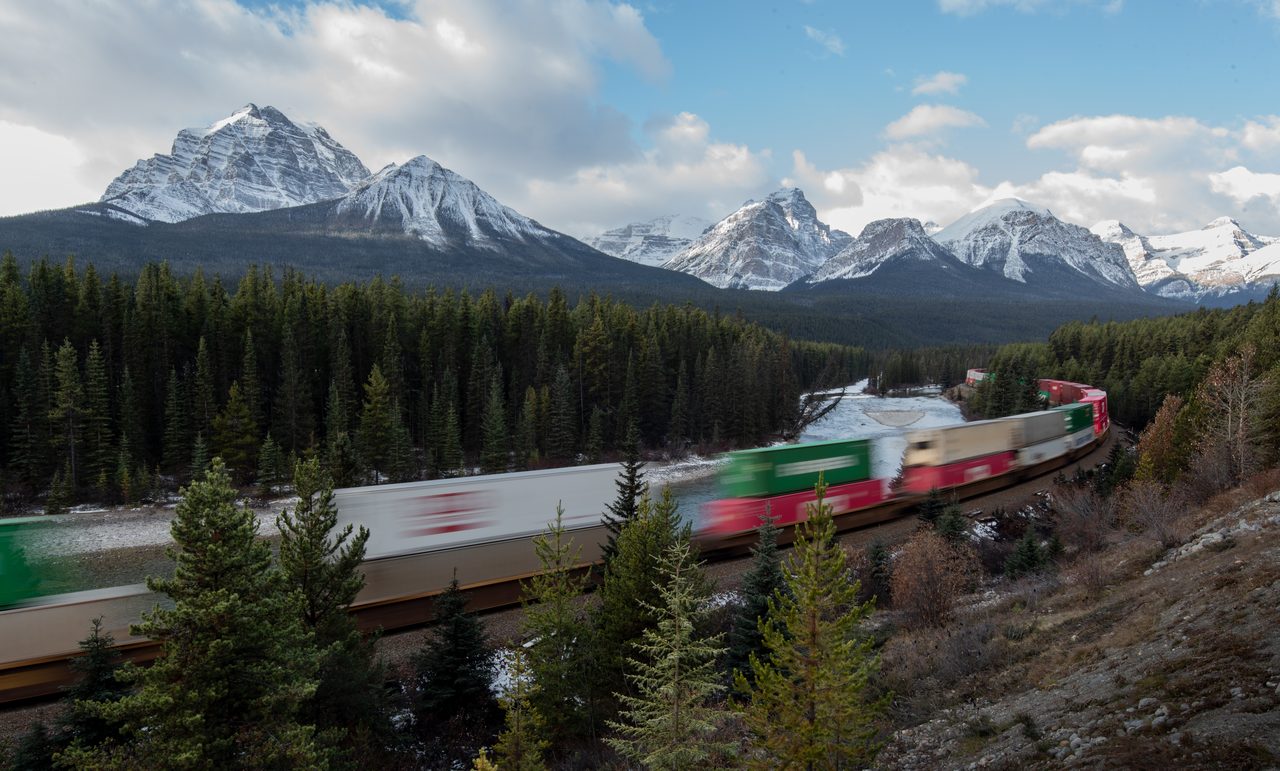
This is my ultimate 2026 guide to train travel in Canada: which trains actually run, how to book without overpaying (2026 fares, checked October 2026), what each class of service is really like, what to pack, and how VIA Rail stacks up against the Rocky Mountaineer. Fair warning: after Morant’s Curve rolls past your window, you’ll start planning a second trip before the first one ends.
The network in 60 seconds: which train goes where
Here’s the thing that trips people up (ha): Canada looks like it has one big train network, but it actually has a handful of very different services. Pick the wrong one and you’re either paying luxury money for a commute or trying to see the Rockies at midnight. I nearly did the latter once — trust me on this one, choose by purpose, not just by price.
The Canadian — Toronto ↔ Vancouver
The flagship. VIA Rail’s The Canadian runs year-round between Toronto’s Union Station and Vancouver’s Pacific Central, crossing five provinces over four nights. It’s the only train that does the full transcontinental run in one go, and the Rockies segment (Jasper to Vancouver, done in daylight if you plan it right) is the part everyone photographs.
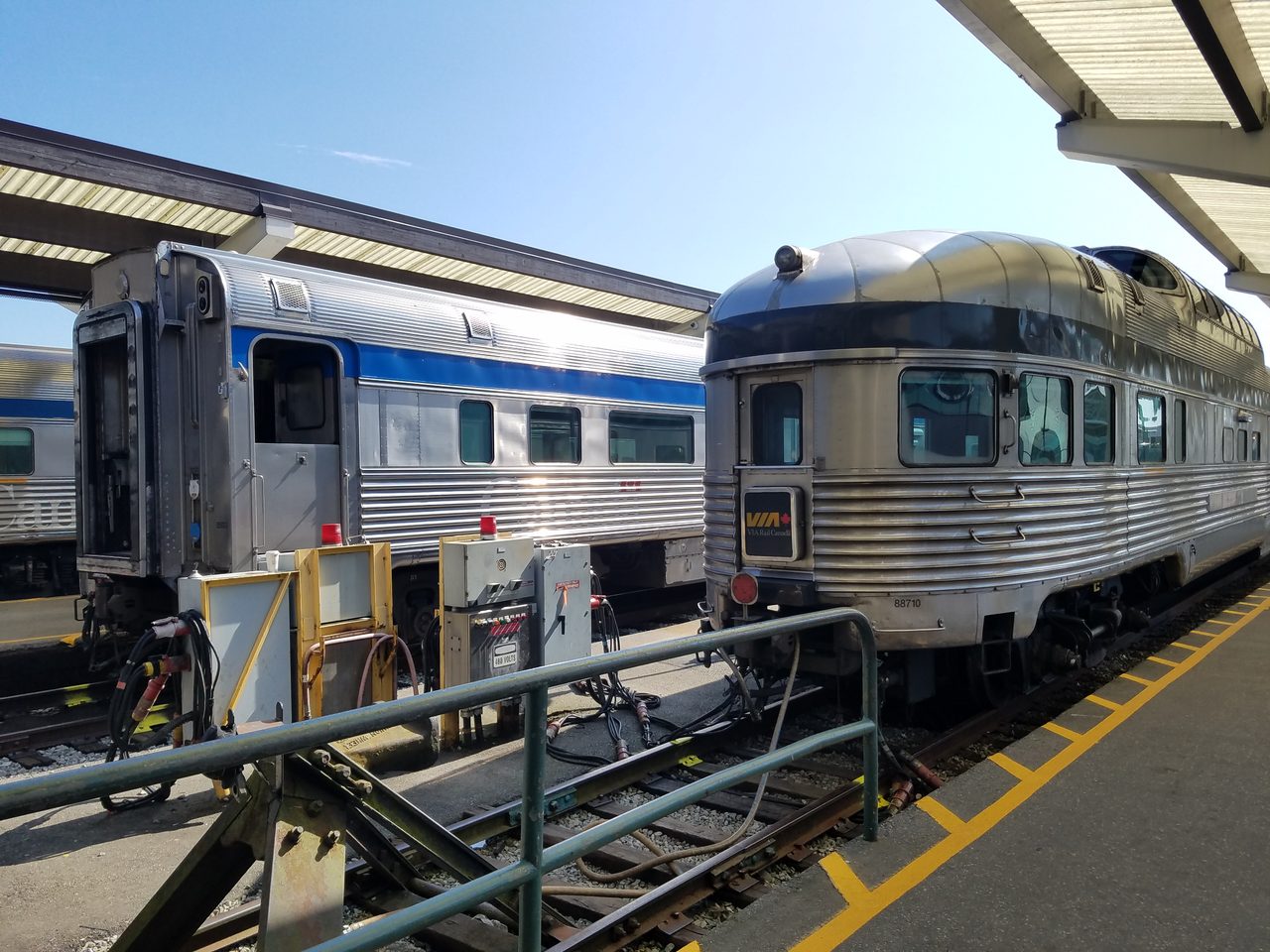
Daylight hack: westbound departures put the Rockies in daytime; eastbound too, depending on the schedule — check the timetable when you book, because “scenic section at 2 AM” is a real thing I refuse to let happen to you.
The Ocean — Montréal ↔ Halifax
Canada’s other classic sleeper train runs overnight between Montréal and Halifax, hugging the St. Lawrence and the Atlantic coast. It’s shorter (about 22 hours), moodier, and — I’ll be honest — criminally underrated. If your trip is east-coast shaped, pair it with our Halifax travel guide at the far end.
The Corridor — Québec City ↔ Windsor
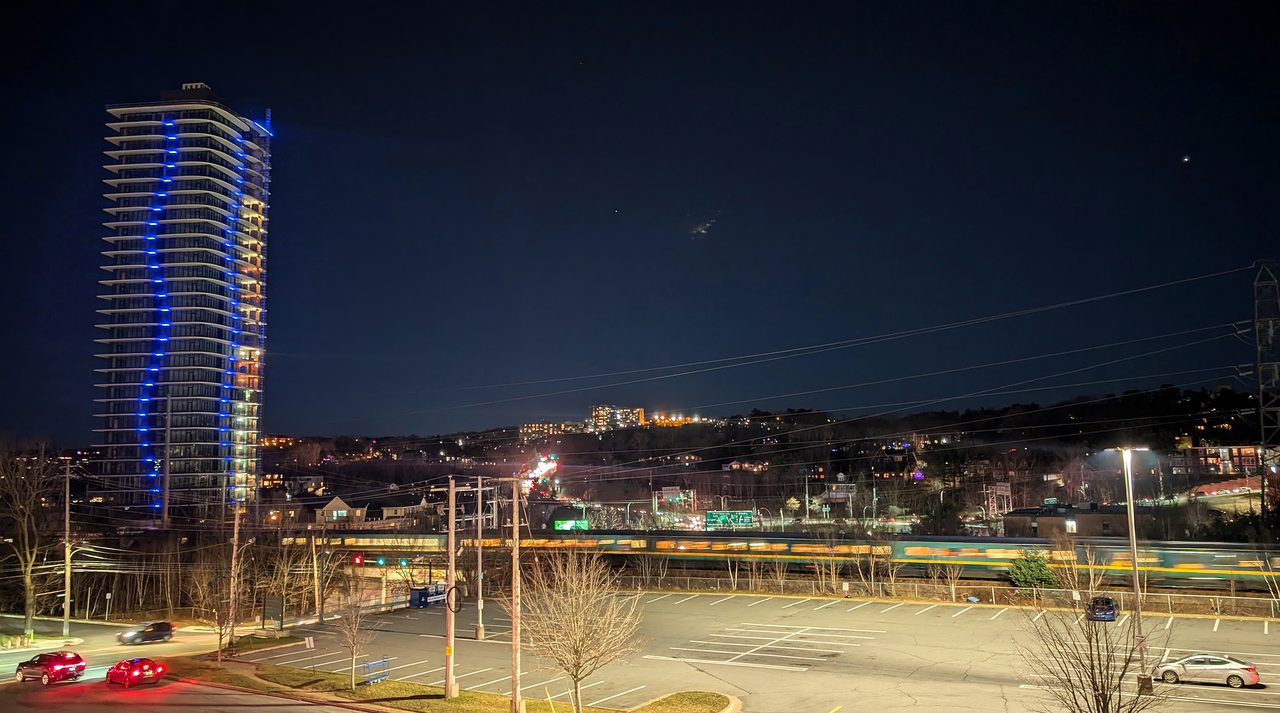
The workhorse: frequent daytime trains linking Québec City, Montréal, Ottawa, and Toronto (with Windsor at the western end). This is the route where the train genuinely beats flying — city center to city center, Wi-Fi onboard, no security theater. I use it for Toronto–Montréal the way other people use a bus, and it’s never let me down.
The Polar Bear Express — Cochrane ↔ Moosonee
The wildcard, and my favorite answer to “what’s the most unusual train in Canada?” Ontario Northland’s Polar Bear Express runs ~300 km north from Cochrane to Moosonee, near James Bay — a five-hour ride into roadless country with flag stops for remote communities. The summer 2026 schedule (June 7–October 24) runs five days a week, departing Cochrane at 9:00 AM. It’s basic, rugged, and unforgettable.
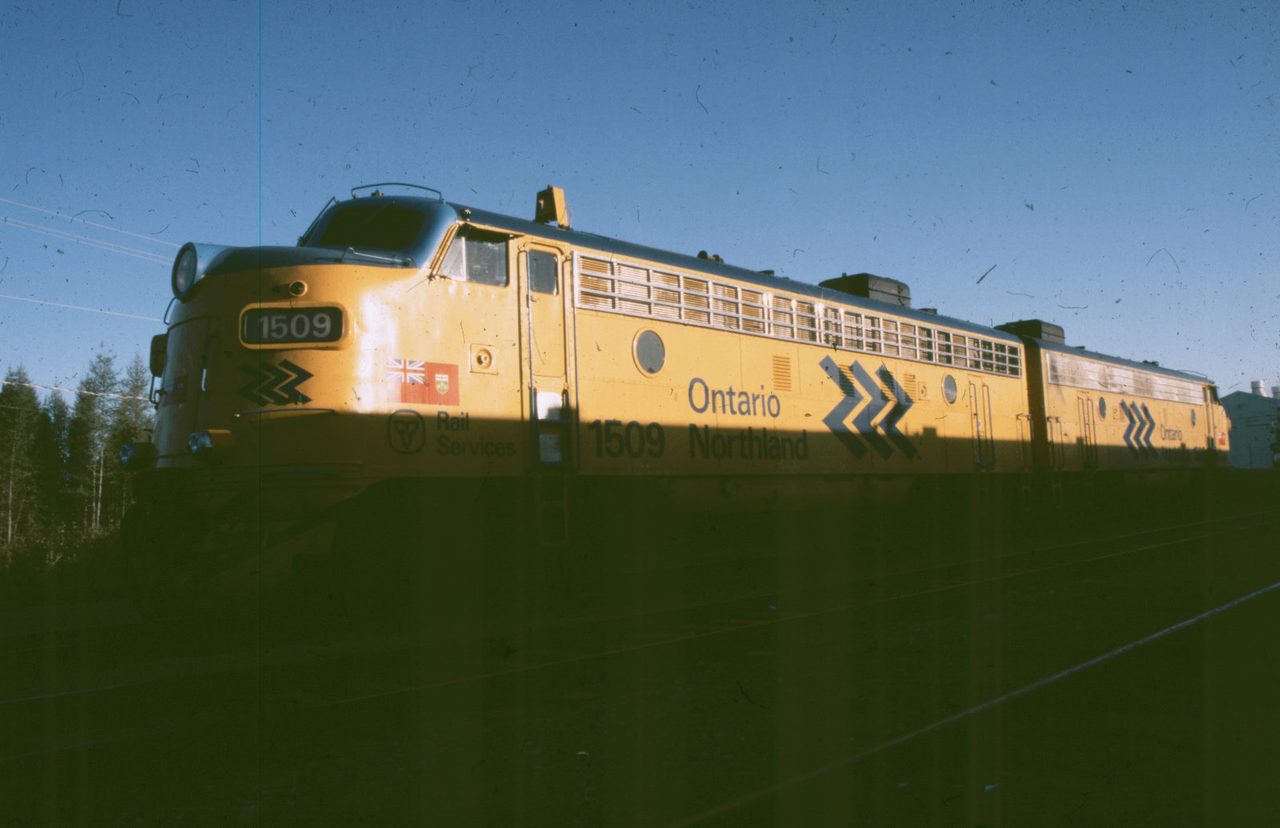
→ Ontario Northland — Polar Bear Express 2026 schedule (PDF) · Ontario Northland — the returning Northlander, Toronto ↔ Cochrane
Booking tips that actually save money (2026 fares)
I checked these numbers in October 2026, and I’ll be honest: train fares in Canada reward planners and punish the spontaneous. Here’s what works.
- Book sleepers 4–6 months ahead, 6–9 for summer. Sleeper Plus cabins and especially Prestige suites are limited inventory — popular summer departures on The Canadian genuinely sell out months out. Booking early also locks in lower fare tiers before prices climb closer to departure.
- Check Discount Tuesday before you buy. VIA Rail runs weekly Tuesday promo codes on select routes — sometimes an extra 10–20% off Economy and Business. It’s free to check and takes thirty seconds. I skipped this step once and paid full fare on a Tuesday morning. Still mad about it.
- Understand Escape vs. flexible fares. Escape fares are the cheapest tier but non-refundable with steep change fees. I found this out the expensive way when a trip date shifted and my “bargain” became a donation to VIA Rail. If your dates might move, the Economy or Plus fare’s flexibility is worth every penny.
- Age discounts are real — claim them at booking. Seniors 60+ get 10% off most fares, youth 12–25 get 10% off eligible tickets, and kids under 2 ride free. Select the right passenger type in the booking flow; it doesn’t always apply itself.
- Families: know about the Canada Strong Pass. For summer 2026 (June 19–September 7), VIA Rail offered free travel for ages 17 and under when accompanied by an adult, plus 25% off for 18–24s — no pass to carry, discounts applied at booking. Worth checking whether it returns for future seasons before you book family rail travel.
- Travel October–April if your schedule allows. Winter and shoulder-season fares on The Canadian run noticeably lower than June–October peak — and a snow-covered Rockies crossing is a game-changer of an experience.
Pro tip: fares are per person and one-way for long-haul routes. Always price your actual dates on VIA Rail’s official site — third-party fare tables (even good ones) lag.
Choosing your class: Economy vs Sleeper Plus vs Prestige
This is the decision that makes or breaks a four-night trip. I’ll be blunt: Economy on The Canadian for four nights is an endurance event, not a vacation.
- Economy — reclining seats (about 40 inches of legroom — genuinely roomy), no bed, no included meals. Fine for Corridor hops and even an overnight if you sleep anywhere. From ~$444 Toronto–Vancouver in the low season (fare tables, checked Oct 2026).
- Sleeper Plus — berth — the budget sleeper: two seats facing each other that convert to upper/lower bunks with a privacy curtain. All meals included in the dining car. From ~$1,083–1,109 per person, Toronto–Vancouver.
- Sleeper Plus — cabin for one/two — a proper room with a door (private toilet and sink in cabins for two; shared showers at the end of the car). This is the sweet spot for couples. From ~$1,785–1,960 per person based on double occupancy.
- Prestige — a 50%-larger suite with a leather sofa that folds into a double bed, private en-suite shower, heated floors, stocked minibar, dedicated concierge, and priority access to the dome Park car. All meals and drinks included. From ~$4,655–6,040 per person based on double occupancy — and yes, it sells out.
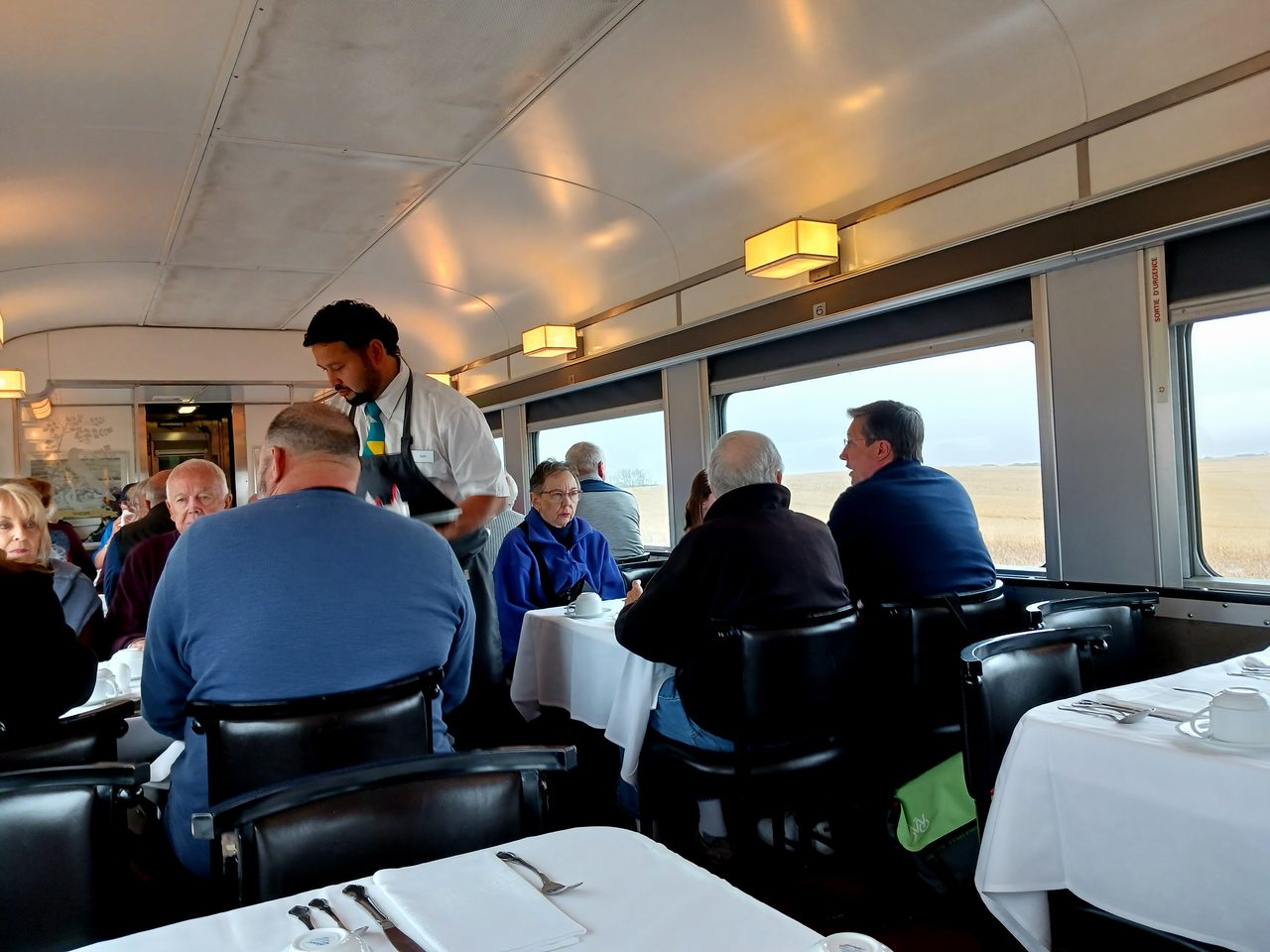
Dining reality check: the food is legitimately one of the best parts — three-course chef-prepared meals with regional Canadian ingredients in Sleeper Plus and Prestige. Economy buys from the take-out counter (fine, not fancy). Dietary restrictions? Tell them at least 48 hours before departure — a VIA attendant told me the kitchen can handle most requests if they get that heads-up.
Connectivity reality check: Wi-Fi is solid in the Corridor and essentially nonexistent on the Toronto–Vancouver long haul; cell signal drops for hours in the wilderness. Treat it as a digital detox. I downloaded a season of podcasts before my Rockies crossing and have never been calmer.
VIA Rail vs Rocky Mountaineer: the honest comparison
This is the question everyone asks, so here’s the thing: they’re barely the same product. VIA Rail is a working national railway that runs 24 hours a day; Rocky Mountaineer is a daylight-only luxury sightseeing train.
| VIA Rail (The Canadian) | Rocky Mountaineer | |
|---|---|---|
| What it is | Year-round national carrier, full transcontinental route | Seasonal luxury sightseeing (mid-April–early October) |
| Night travel | Yes — you sleep onboard | No — daylight only; you sleep in hotels (e.g. Kamloops) |
| Signature route | Toronto ↔ Vancouver, 4 nights | Vancouver ↔ Banff/Jasper, 2 days (First Passage to the West) |
| Service levels | Economy / Sleeper Plus / Prestige | SilverLeaf / GoldLeaf |
| 2026 pricing (from) | ~$444 economy; ~$1,083 sleeper berth; ~$4,655 Prestige (pp) | ~$2,289 SilverLeaf; ~$3,109 GoldLeaf (pp, April shoulder) |
| Meals | Included in Sleeper Plus/Prestige only | Included for all guests (seat-side in SilverLeaf; dining room in GoldLeaf) |
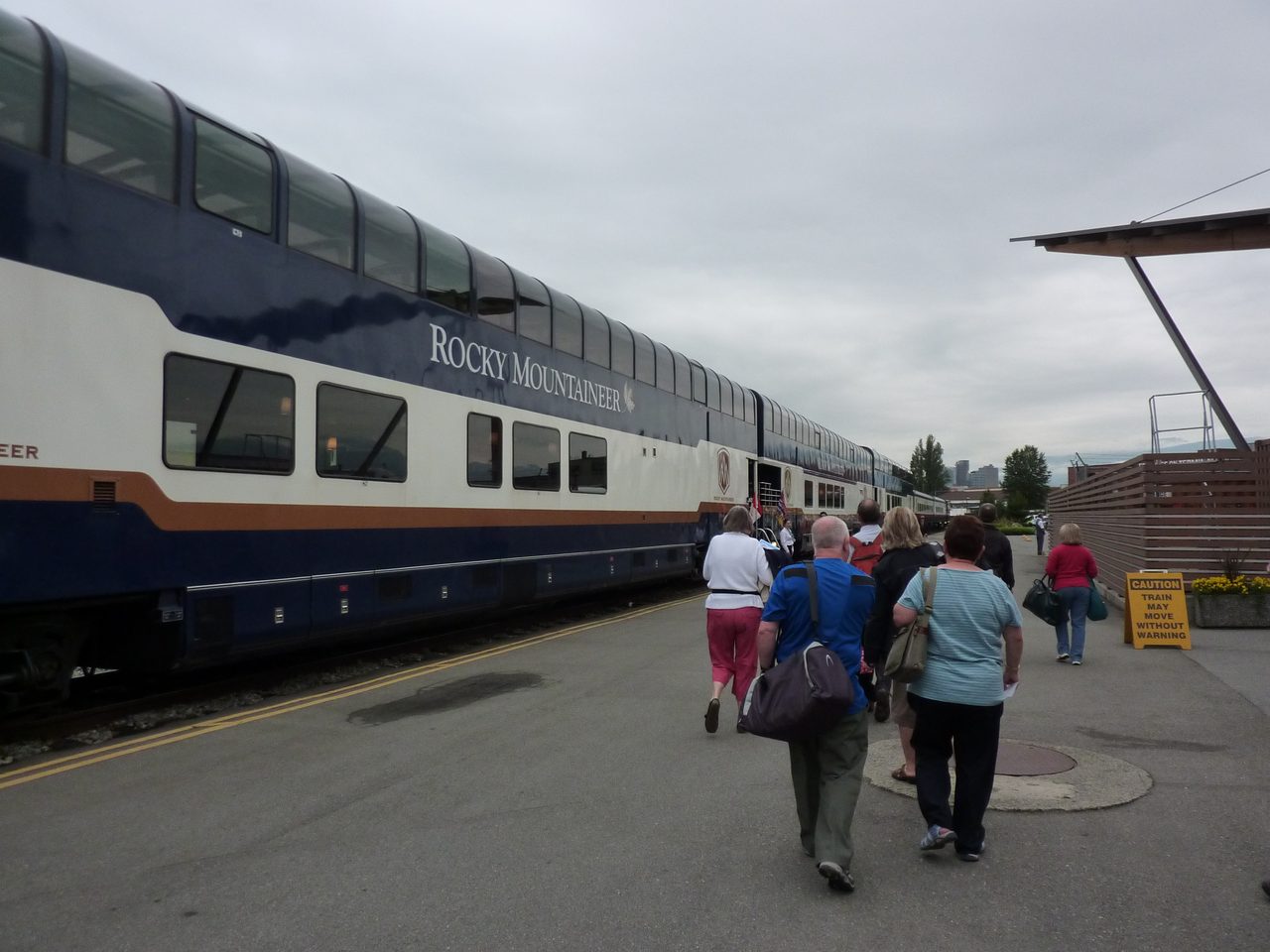
A few notes from my own math: Rocky Mountaineer’s 2026 First Passage to the West starts around $2,289 CAD per person for SilverLeaf in April, rising to ~$2,999 in September; GoldLeaf runs $3,109–$3,999 — and that includes the Kamloops hotel night and all onboard meals. GoldLeaf’s draw is the bi-level glass-domed coach with a separate downstairs dining room; SilverLeaf is a single-level coach with excellent service and meals at your seat. Fares are per person and climb hard in summer — September is the priciest month.
My verdict: choose VIA if you want the real cross-country journey (and better value), choose Rocky Mountaineer if your priority is photographing every single mile of the Rockies in daylight with a glass of BC wine in hand. They’re both worth it — they’re just not interchangeable.
→ Rocky Mountaineer — official First Passage to the West details
Where to break the journey: stopovers worth planning
The Canadian stops at Winnipeg, Saskatoon, Edmonton, and Jasper — and multi-day stopovers are allowed on many fares (check the fare rules when booking). I timed a Jasper stopover once and it was the best decision of the trip: the train pauses there long enough for a proper stretch, and the town is built for exactly this.
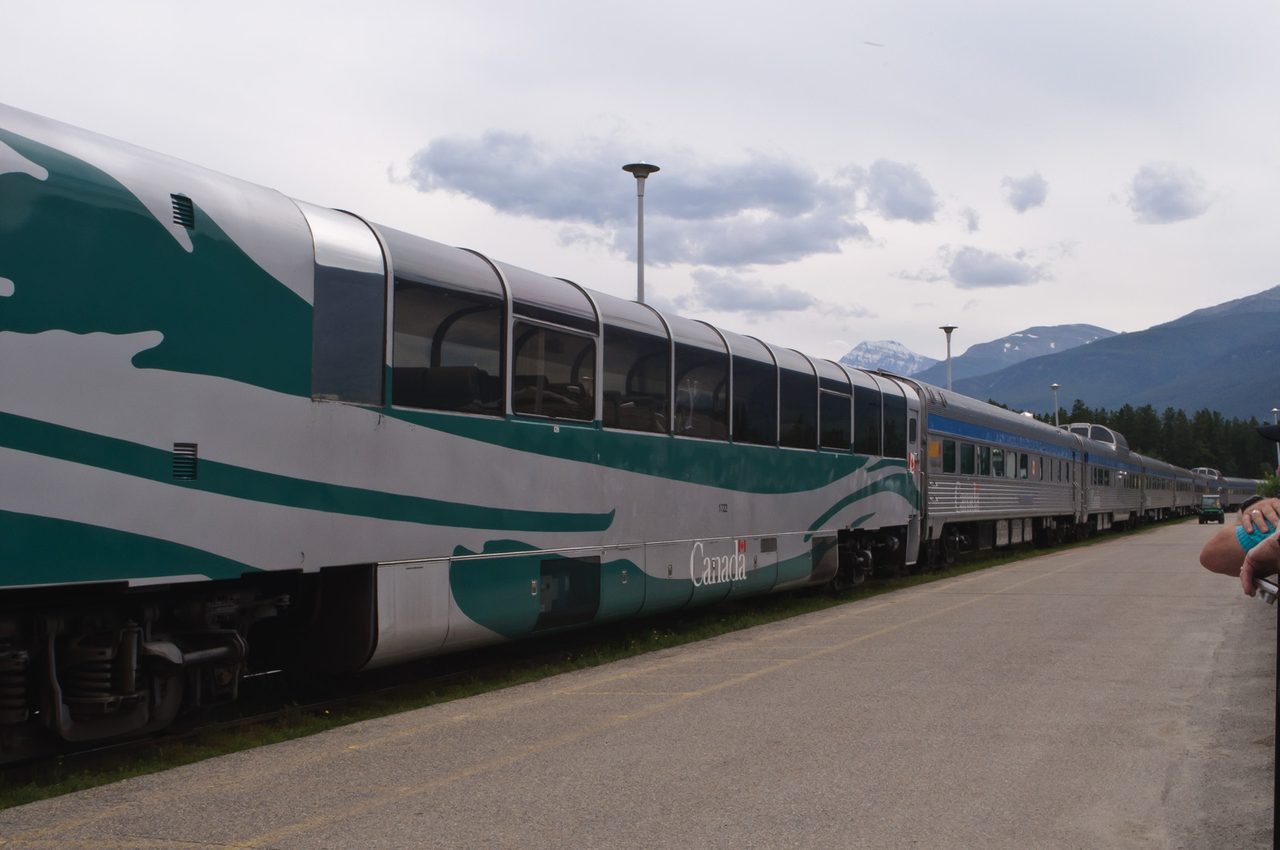
- Jasper — the mountain town most people picture; the station is steps from the townsite. See our 2-day Jasper itinerary for what to do with a stopover.
- Winnipeg — the halfway point and a genuinely fun city break; the Exchange District and the Forks are easy from the station.
- Banff — not on VIA’s line (that’s the Rocky Mountaineer’s territory), but an easy transfer from Calgary or Jasper. Our Banff travel guide covers it.
One caution from experience: freight trains get priority on Canadian tracks, so delays of several hours are normal, not exceptional. Build buffer into any same-day connection — do not book a flight 3 hours after scheduled arrival. Do not be me, circa 2023.
The train-bag packing list
Sleeper cabins are cozy, which is a polite word for small. Check the big bag, pack a train bag — a carry-on with everything you need for the journey:
- Neck pillow and eye mask — non-negotiable in Economy or open berths; nice to have even in cabins.
- Noise-canceling headphones — for track noise and chatty dome-car neighbors (said with love).
- High-capacity power bank — older cars may have one outlet per cabin; the dome car has none at your seat.
- Layers + a big scarf or light fleece — the AC runs cold even in August, and mountain mornings are brisk. My scarf doubled as a dome-car blanket. Twice.
- Slip-on shoes — for midnight bathroom runs down the corridor.
- Downloaded entertainment — movies, podcasts, e-books. Plus a physical book and a deck of cards for the social cars.
- Body wipes and dry shampoo — if you’re in Economy, showers are Sleeper Plus territory. Plan accordingly.
- Extra camera memory — you’re going to take 400 photos of the same mountain. It’s fine.
Stations, boarding, and onboard etiquette
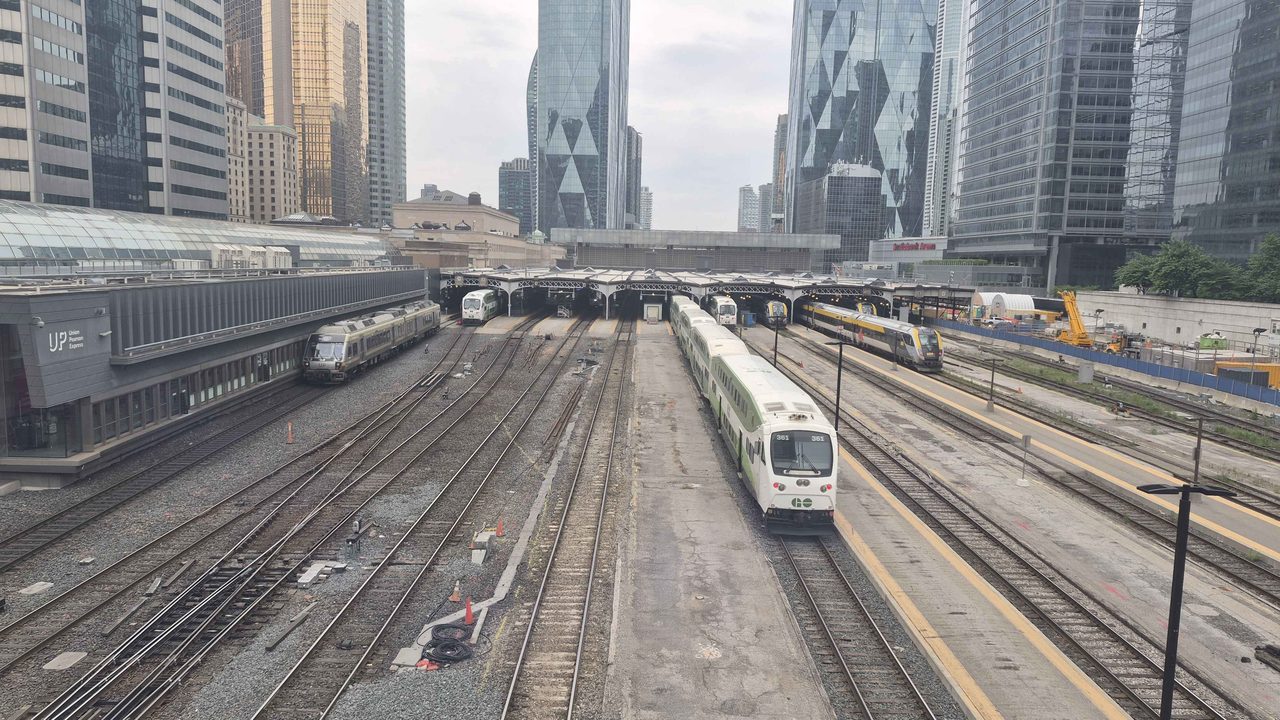
Toronto Union Station is the busiest hub and genuinely confusing at rush hour — arrive 60 minutes early for long-haul boarding. In Vancouver, Pacific Central Station sits a bit east of downtown; the SkyTrain’s Main Street–Science World station is a short walk away (tap on, tap off — you know I timed it). Montréal’s Central Station and Halifax’s VIA station are both compact and easy.
Onboard, the social contract is simple: the Skyline dome car and Park car lounge are the gathering places — bring your coffee, swap stories, watch the Prairies turn into the Shield. Keep volumes low near sleeper cars after 10 PM (fair warning: the walls are thin and everyone is tired). And the dining car runs on seatings for sleeper passengers — your attendant will tell you your time; don’t skip it, the white-tablecloth breakfast rolling through the Rockies is a core memory.
Quick note on the green angle: rail is one of the lowest-emission ways to cross this country per passenger — and the slower pace genuinely is better for your head. Four days of window-gazing beats four hours of airport queues. That’s just science. (Okay, it’s my opinion. But a strong one.)
What it costs: sample 2026 budgets
Sample per-person, one-way, Toronto ↔ Vancouver on The Canadian (low-season “from” fares, checked October 2026; peak summer runs higher — items marked ~ are estimates):
| Item | Cost (CAD) |
|---|---|
| Economy seat, 4 nights | ~$444 |
| Sleeper Plus — upper/lower berth | ~$1,083–1,109 |
| Sleeper Plus — cabin for two (per person, double occupancy) | ~$1,785–1,960 |
| Prestige suite (per person, double occupancy) | ~$4,655–6,040 |
| Onboard extras (Economy snacks, drinks, souvenirs) | ~$100–200 |
| Rocky Mountaineer SilverLeaf, 2 days (incl. Kamloops hotel + meals) | ~$2,289–2,999 |
| Rocky Mountaineer GoldLeaf, 2 days (incl. Kamloops hotel + meals) | ~$3,109–3,999 |
Pair the trip with city days at either end: our Toronto travel guide and Vancouver travel guide have you covered.
FAQs about train travel in Canada
How much does it cost to take the train across Canada in 2026?
On VIA Rail’s The Canadian (Toronto–Vancouver), low-season from-fares start around $444 in Economy, ~$1,083 for a Sleeper Plus berth, ~$1,785–1,960 per person for a private cabin for two (double occupancy), and ~$4,655–6,040 per person for Prestige (double occupancy). Summer fares run higher. Sleeper and Prestige fares include all meals — factor that against hotel and restaurant costs before comparing with flights.
When should I book VIA Rail sleeper cabins for 2026?
Book 4–6 months ahead at minimum, and 6–9 months for summer departures — popular dates and Prestige suites sell out months out. Early booking also locks in lower fare tiers. Check VIA Rail’s weekly Discount Tuesday deals before purchasing, and always confirm Escape fares’ non-refundable terms suit your plans.
Is the Rocky Mountaineer worth it compared to VIA Rail?
They’re different products: VIA Rail runs the full transcontinental journey year-round (you sleep onboard, from ~$1,083 for a berth); Rocky Mountaineer is a 2-day, daylight-only luxury sightseeing experience through the Rockies with hotel overnights, from ~$2,289 SilverLeaf / ~$3,109 GoldLeaf in 2026 (including the Kamloops hotel and meals). Choose VIA for the journey, Rocky Mountaineer for maximum Rockies scenery in daylight.
Is there Wi-Fi on Canadian trains?
Reliable Wi-Fi is available on VIA Rail’s Québec City–Windsor Corridor trains, but it’s essentially nonexistent on the long-haul Toronto–Vancouver and Montréal–Halifax routes, and cell signal drops for hours in remote areas. Download entertainment before you board and treat the trip as a digital detox — pack a power bank too, since outlets are limited in older cars.
Are meals included on VIA Rail long-distance trains?
Yes in Sleeper Plus and Prestige: all chef-prepared meals in the dining car are included. Economy passengers buy snacks and light meals from the take-out counter. If you have dietary restrictions, notify VIA at least 48 hours before departure so the kitchen can prepare options.
What’s the Polar Bear Express, and is it worth doing?
Ontario Northland’s Polar Bear Express runs ~300 km from Cochrane to Moosonee near James Bay — a five-hour ride into roadless northern Ontario with flag stops for remote communities. It runs five days a week in the 2026 summer schedule (June 7–October 24, departing Cochrane 9:00 AM). It’s basic and rugged rather than luxurious, but it’s the most unusual rail experience in the country and absolutely worth it if you’re in northern Ontario.
Keep exploring
- 2-Day Jasper Itinerary: 2026 Guide
- Banff Travel Guide: 2026 Edition
- The Ultimate Vancouver Travel Guide: 2026 Edition
- Toronto Travel Guide: 2026 Edition
- Halifax Travel Guide: 2026 Edition