

- ✓ Lift access is the big bill. A pre-booked adult day starts at about C$101 a day on a 10-day pass, while a single window-rate day runs C$202–329 depending on the season, so the pass-versus-day-ticket maths below matters more than any single dinner choice.
- ✓ Squamish is the honest savings lever. Sleeping an hour south of the Village can cut the nightly room bill by a wide margin — but it adds a daily drive, and that trade is spelled out, not hidden.
- ✓ Every price here is a 2026–27 planning range, not a quoted rate. Lift, lodging and rental prices move by date, so check the official pages linked below for your exact dates before you book.
Here’s the deal with Whistler: nobody goes broke on the coffee. They go broke on the lift ticket they bought at the window, the room they booked in the Village at peak-week prices, and the rental package they added at the last minute. I know, because I’ve done two of those three. The third one I only avoided because a front-desk clerk took pity on me and said, quietly, “Book it online tonight. Not tomorrow morning.”
Whistler Blackcomb is big. Two mountains, Whistler and Blackcomb, joined by the Peak 2 Peak Gondola, with a pedestrian Village at the bottom and Creekside a few minutes south. That size is the whole point — and the whole cost problem. A beginner can spend three happy days on green runs and never touch the alpine bowls. A strong skier can burn a week and still find new lines. Either way, you pay for the mountain by the day, so the number of days you actually ski is the number that runs your budget. Buckle up. This guide does the maths out loud.
One more thing up front, because it shapes everything below. I am not quoting you a single “Whistler costs $X” number and pretending it holds for Christmas week and a wet Tuesday in January. Prices here are planning ranges for the 2026–27 season, in Canadian dollars, per person unless a table says per room or per night. Where I checked an official site, I say so. Where I didn’t verify a live price, I say that too, and I point you to the page that has it.
The short answer: what a Whistler ski trip actually costs

For a 3-day trip, skiing all three days, a rough all-in planning range looks like this: budget around C$1,100–1,600 per person, mid-range around C$1,600–2,400, and a comfortable Village-based trip around C$2,400–3,600. Lodging is the swing factor in all three. Those totals include lift access, rentals if you need them, food, and getting from Vancouver to Whistler and back. They do not include your flight to Vancouver.
Here’s how a single ski day breaks down, before lodging. A pre-booked day ticket from about C$101 a day on a 10-day pass, or C$187 for a single unrestricted day, up to C$329 at peak-holiday window rates. Rentals, if you need a full ski or snowboard package, roughly C$69–118 a day at the village shops listed below. Food on the mountain and in the Village, roughly C$45–130 a day depending on whether you pack lunch or sit down for dinner. Local getting-around is mostly free on foot in the Village, or a short bus or taxi ride if you stay in Creekside. Add those up and one ski day lands around C$260 on a careful day and C$550 or more on a spendy one, before lodging. No joke — the lift ticket alone is more than a full day in most Canadian cities.
My own first Whistler mistake was the classic one. I drove up from Vancouver for a single Saturday, bought a day ticket at the window, rented at the base, ate lunch on the mountain, and drove home in the dark. Great skiing. Terrible value. One day, at peak price, with nothing booked in advance. I’ve made this mistake so you don’t have to: Whistler rewards the person who books lift access and lodging early, and punishes the person who wings it. The rest of this guide is just that lesson, broken into pieces you can actually use.
If you are only deciding one thing today, decide your ski days. A 3-day trip with 2 ski days and one rest day is often cheaper — and more fun — than a 3-day trip with 3 ski days bought at window prices. The rest day is when you do the Peak 2 Peak ride, the Village stroll, and the cheap grocery run, all without a lift ticket.
Whistler on a map: the bases, Creekside and Squamish
Three bases, one decision. Whistler Village is the main base: lifts, shops, restaurants, and the most expensive rooms. Blackcomb Base sits at the other end of the Village stroll, a short walk away, with its own lifts. Creekside is the quieter, older base a few minutes south by road, with its own gondola. Squamish is not a base at all — it’s a real town about an hour south, and that’s exactly why it saves money. Tap any stop to jump the map to it.
Map data © OpenStreetMap contributors. Open the full map
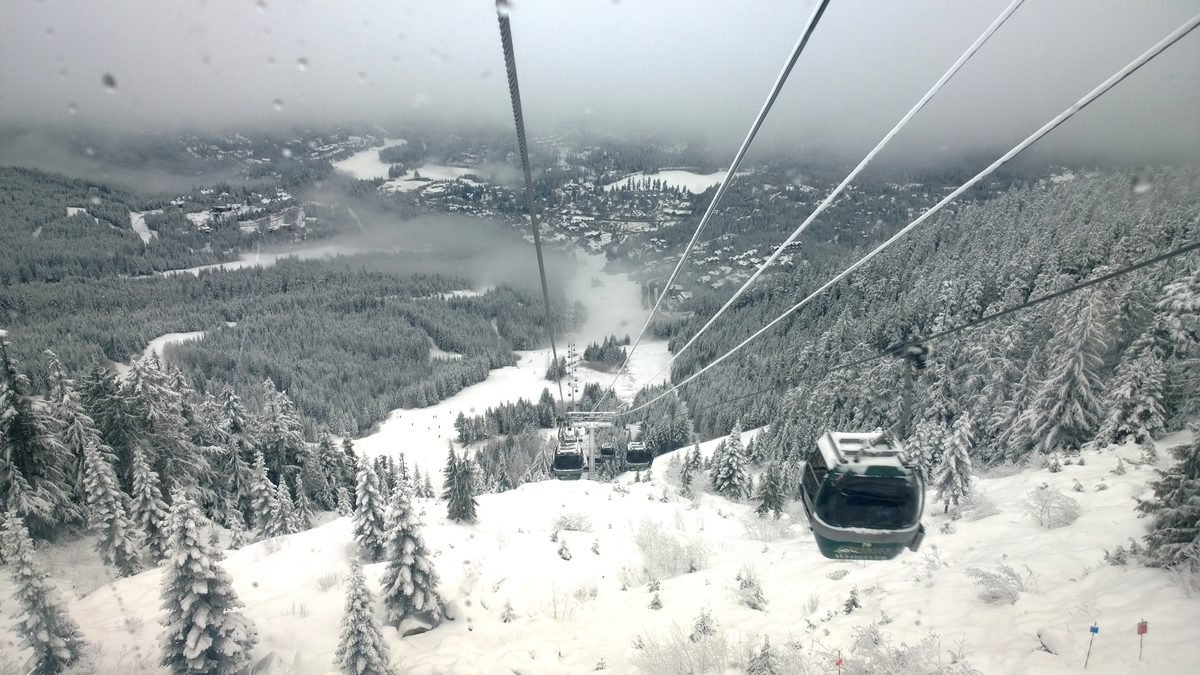
The Peak 2 Peak Gondola itself is not a separate pin, deliberately. Its Nominatim point reverse-geocodes to a trail name rather than a station address, so I won’t pin a guess and call it verified. Ride it from either base; the cabins are the red ones in the photo below, and the crossing is the cheapest sightseeing ticket on the mountain when you already hold lift access.
Lift tickets: what a day actually costs, and why the date matters more than the mountain
Whistler Blackcomb day tickets are priced by date, not by a single flat rate. Peak dates — Christmas week, New Year, Family Day weekend, and the best powder weekends — sit at the top of the range. A quiet midweek day in January or late March sits much lower. That is why this guide gives a range rather than a fake exact number. For 2026–27, I double-checked the season on the official Whistler Blackcomb hours page: Blackcomb opens November 20, 2026 and runs to May 16, 2027, while Whistler Mountain (and the Peak 2 Peak Gondola) opens November 25, 2026 and runs to April 18, 2027, all subject to weather and conditions. Lifts run 9:00 a.m. to 3:30 p.m. until January 15, 9:00 a.m. to 4:00 p.m. until February 12, and 8:30 a.m. to 4:00 p.m. after that. I checked the resort’s own lift-ticket pages during this research; the live price for your date is on the resort site, and it will move as the date gets closer. → Whistler Blackcomb — lift tickets, official site
Here’s the part people miss. Buying at the window on the morning you ski is usually the most expensive way to do it. Buying the same day online, in advance, is usually cheaper. Buying a multi-day ticket beats buying single days one at a time. None of that is a secret. It’s just boring, and boring is where the savings live. A family of four skiing three days can save several hundred dollars by booking lift access together, in advance, instead of sorting it out at the base each morning. I watched a family do the window version in front of me once. The dad did the maths out loud. Nobody looked happy.
Do not budget a Whistler ski day on a summer price you saw somewhere, or on a friend’s price from three seasons ago. Day-ticket pricing has moved a lot in recent years, and the top of this guide’s window range, C$329 on peak-holiday dates, is there for a reason: peak dates really do reach it. Check your exact date on the resort site before you lock in a total budget.
| Adult lift access, 2026–27 (verified, see notes) | Price | What it means |
|---|---|---|
| Whistler Blackcomb Day Pass, 1 day, unrestricted | C$187 | Pre-booked on whistler.com; restricted version C$160 (blackout dates apply) |
| Whistler Blackcomb Day Pass, 3 days, unrestricted | C$490 (C$163/day) | Multi-day beats single days; 10-day unrestricted is C$1,185 (about C$119/day) |
| Whistler Blackcomb Day Pass, 10 days, no-holiday access | From C$101/day | Cheapest per day, but blocked Nov 27–28, Dec 26–31, Jan 16 and Feb 13–14 |
| Tour-operator / window-rate adult 1 day, inside 27 days | C$202–329 | Open C$202, off-peak weekday C$269, peak C$309, peak-holiday C$329, spring C$249, late C$218 |
| Same 1-day rate, bought 28+ days ahead | C$219–265 | Off-peak weekday C$219, peak C$249, peak-holiday C$265 — the advance-booking saving, in numbers |
Kids, youth, and senior tickets run lower than adult tickets, and multi-day tickets bring the per-day average down. If you are travelling with kids, price the whole group on the resort site before you decide anything else — the group total, not the adult headline price, is your real number. Sources for the table: the Day Pass figures are the 2026/27 prices listed on whistler.com, and the C$202–329 window range is Whistler Blackcomb’s published 2026–27 tour-operator lift-ticket rates (November 20, 2026 to May 16, 2027). The two channels price the same mountain differently, which is exactly why the channel you buy through matters as much as the date. Taxes and fees are extra, and all of these prices move — check your exact date before you lock in a total.
Epic Pass maths: when a pass beats day tickets, and when it doesn’t

The Epic Pass is Whistler Blackcomb’s season pass, sold by Vail Resorts, and it also covers their other resorts. The Epic Day Pass is the shorter version: you pick a number of days in advance at a lower per-day price than a window ticket. Both are bought before the season or before your trip, not at the lift on the day. I double-checked the current 2026/27 Epic Pass listing on whistler.com during this research: the full Epic Pass starts from US$1,169, with unlimited access at Whistler Blackcomb and no blackout dates, while the Epic Local Pass gives 10 days in total shared across Vail, Beaver Creek and Whistler Blackcomb, with no access on the restricted dates (November 27–28, December 26–31, January 16 and February 13–14). Pass prices rise through the autumn and sales close in early December, so an early price and a late price are not the same product in practice. → Epic Pass — official site
The break-even question is simple, and you can do it on your phone. Take the pass price. Divide it by the day-ticket price you would otherwise pay. That answer is the number of ski days at which the pass starts saving you money. Everything after that day is, in effect, skiing at no extra lift cost. Everything before it means you paid more than day tickets would have cost. Here’s the deal: most people overestimate how many days they’ll ski, and underestimate how tired they’ll be on day four.
| Pass vs day ticket (2026–27 figures) | Day ticket you’d otherwise buy | Break-even days | Verdict for a 3-day trip |
|---|---|---|---|
| Epic Pass from US$1,169 (about C$1,548 on a third-party Canadian listing) | C$187/day (1-day Day Pass) | About 8 days | Day Pass wins |
| Epic Pass, same price | C$309/day (peak window rate) | About 5 days | Still not a 3-day win, unless you return |
| Epic Local Pass (10 days shared with Vail/Beaver Creek) | C$187–309/day | 10-day cap, holiday dates blocked | Only if you also ski Vail or Beaver Creek |
| Any full pass, if you ski 7+ days or visit twice | C$187–309/day | Passed by day 5–8 | Pass wins, clearly |
Read that table honestly. For a single 3-day Whistler trip, a full season pass rarely beats day tickets or a multi-day pass product, unless you already plan a second trip or a longer stay. The pass wins when you ski a lot: a week at Whistler, a Whistler trip plus another resort trip, or a season of weekends if you live in BC. For the classic first-timer long weekend, the Epic Day Pass or a multi-day lift ticket, bought in advance, is usually the sweet spot. Run your own numbers with the live prices before you buy — the table above uses the published 2026/27 pass price against the published day-ticket range, with the Canadian-dollar pass figure taken from a third-party listing because Vail sells the Epic Pass in US dollars, so treat the day counts as approximate, not exact to the dollar.
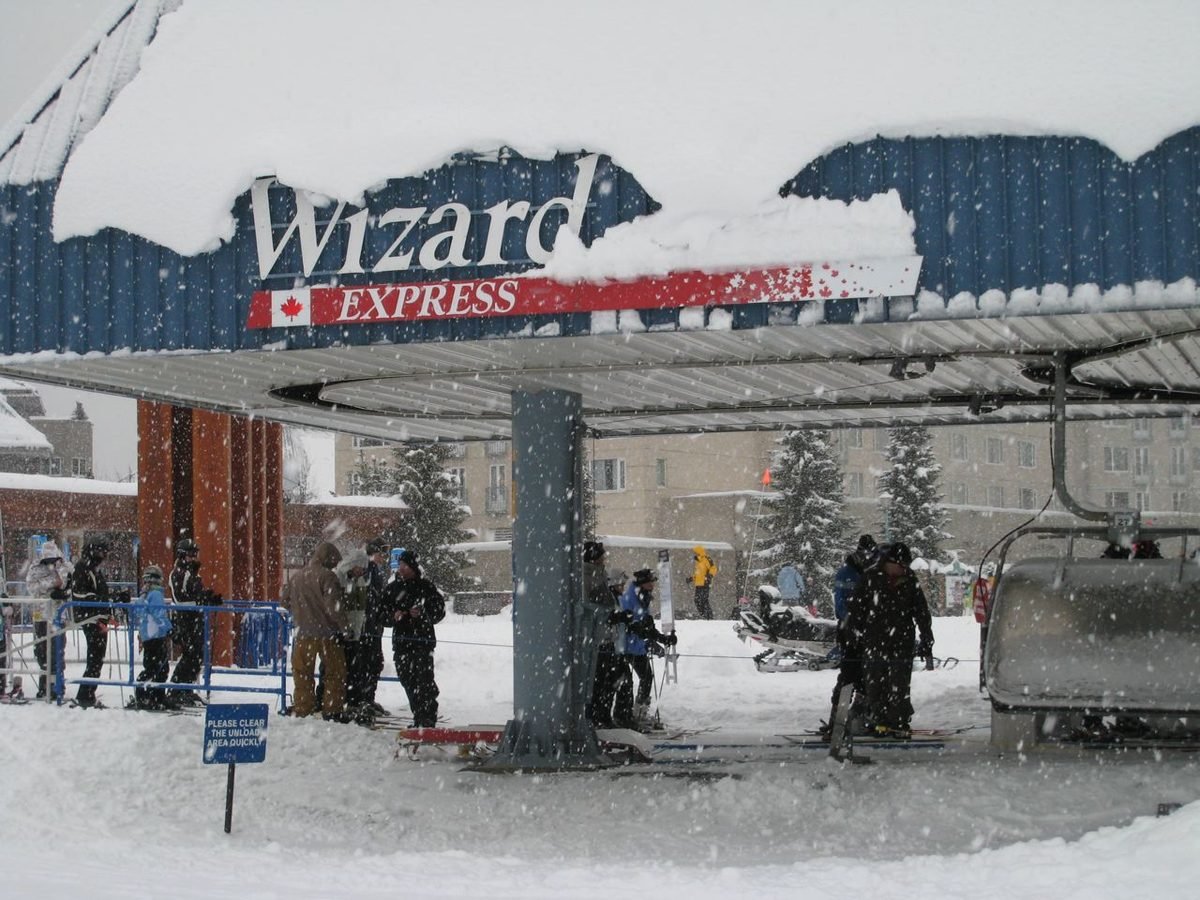
A second pass trap, and I’ve seen friends fall into it: buying the pass, then skiing fewer days because the weather turned, someone got sick, or the legs gave out on day three. The pass doesn’t refund the days you didn’t use. Day tickets don’t punish you for resting. If your group has a beginner, a kid, or anyone with dodgy knees (hello, that’s me on a bad week), the flexibility of day-by-day or a short multi-day ticket is worth real money, even if the per-day headline looks higher.
The cheapest lift day I ever had at Whistler wasn’t a pass day at all. It was a Tuesday in late January, booked online the week before, when the Village was quiet and the lift lines were short. Midweek, off-peak, booked ahead: those three choices together beat almost every pass hack for a short trip, and they cost nothing but planning.

Where to stay: Whistler Village vs Creekside vs Squamish
Lodging is where a Whistler budget is made or broken, and it’s also where the advice usually gets vague. So here are the three real choices, with planning ranges per night, not per person. Split a room two or three ways and the per-person number drops fast — that’s the single biggest lever for a group trip, and it’s why a “pricey” Village room can still work for three friends sharing.
| Base | Room planning range / night | Walk to lifts? | The trade |
|---|---|---|---|
| Whistler Village | ~C$250–600 | Yes, minutes | Priciest, easiest, best for first-timers and short trips |
| Creekside | ~C$200–450 | Yes, to the Creekside Gondola | Quieter, often cheaper, fewer late-night options |
| Squamish | ~C$130–250 | No — ~1 hour drive to Whistler | Cheapest rooms, real town prices, daily drive in winter conditions |
| Village hostel dorm | ~C$60–120 / bed | Yes | Cheapest Village sleep, shared rooms, book early |

Creekside is my pick for a second trip, or for anyone who likes quiet evenings. The gondola gets you up the mountain without the Village scrum, the rooms are often a step cheaper, and the base has what you need: rentals, food, a grocery run. The downside is small but real. If your group wants the Village at night, you’re taking a bus or taxi back and forth, and that gets old after a long ski day. I stayed in Creekside once and loved the mornings. I also paid for three taxis I hadn’t budgeted. Lesson filed.

Squamish is a different deal entirely. You save, conservatively, C$100–300 a night versus a comparable Village room, which over three nights is C$300–900 back in your pocket. That’s real money — it can pay for a whole extra ski day. The cost is the drive: about an hour each way on Highway 99, the Sea to Sky Highway, in winter conditions, in the dark, after skiing. You need winter tires, you need to check the road, and you need a driver who is not wiped out. For a confident winter driver with a rental that has proper winter tires, it’s a great trade. For a first-time winter driver, or a group that wants to walk to dinner after skiing, it’s a false saving. I’ve done the Squamish leg in a storm, in a rental with tires I hadn’t checked properly. Never again. Check the tires before you leave the lot. That sentence is worth more than any discount code in this guide.
Squamish savings only work if you count the drive honestly: fuel, winter-tire rental surcharge if it applies, and an hour each way that you are not skiing, resting, or eating. If your group has one driver and three tired skiers, price a Village hostel or a shared Creekside condo before you commit to the daily drive.
One more lodging note, because it catches people out: a room with a kitchen changes the food maths below completely. A condo with a kitchen, even in the Village, can save a group C$50–100 a day on breakfast and one cooked dinner. A hotel room with no kitchen pushes you into restaurants for every meal. When you compare rooms, compare kitchens, not just nightly rates.

Rentals, lessons, and the gear you don’t need to buy
Rent, don’t buy, unless you ski more than a couple of weeks a year. A full ski or snowboard rental package — skis or board, boots, poles for skiers — runs C$69 a day for a Sport package, C$87 for Performance and C$95 for Demo at WB Rentals in Delta Whistler Village Suites, or C$81 for Development, C$106 for Performance and C$118 for Premium with Black Tie delivery (two-day minimum) — those are the published package prices I found, and multi-day rentals are cheaper per day than single days. Helmets are usually a small add-on, and worth it. Demo or higher-end gear costs more. Renting in Squamish or Vancouver before you drive up is sometimes cheaper than renting at the base, but then you’re hauling gear, and you can’t swap it as easily if the fit is wrong. I rent at or near the base, and I try boots on properly, because a bad boot fit ruins a day faster than bad weather.
Lessons are the one place I’d tell a beginner not to cut corners. A full-day adult group lesson was listed at C$339 in the regular season, C$439 at peak and C$465 at peak holiday on Tourism Whistler’s published 2025/26 Snow School page (with a half-day afternoon lesson at C$199 regular), and a more recent listing puts the full-day group lesson at C$351 off-peak, C$454 peak and C$481 holiday-peak — so budget roughly C$340–480 for a full-day group lesson and check the current Snow School page for 2026/27 before you book. A full-day group lesson on day one pays for itself in confidence and in not spending day two relearning the same turn. Private lessons cost much more, roughly double or more, and make sense for a family that wants one instructor for the group, or for someone returning after an injury. Book lessons in advance in peak weeks; walk-up lesson spots on a holiday Saturday are not something to count on.
What not to buy for one trip: skis, boots, a new jacket, new pants, and a helmet you’ll use twice. What to bring or buy cheap: warm layers you already own, good socks, sunscreen (the alpine sun is no joke, even in January), and gloves that actually keep water out. I once bought a bargain pair of gloves in the Village that soaked through by lunch. My hands were done by 2 p.m. That’s a C$40 lesson I didn’t need twice.
Reserve rentals online, for the full number of ski days, and pick them up the evening before your first ski day if the shop allows it. Morning pickup lines at the base are where ski days go to shrink. An evening pickup turns day one into a full ski day, not a half day in a queue.
Getting there: Vancouver to Whistler without overpaying

The drive from Vancouver to Whistler is about 120 kilometres on Highway 99, the Sea to Sky Highway, and it takes roughly 2 hours in good conditions. It’s a beautiful leg — Howe Sound, the Chief near Squamish, then the climb into the mountains — and it’s also a winter drive, which means it deserves respect. My full route notes, including the stops worth making, are in my Sea to Sky Highway drive guide.
Your three transport choices, with published shuttle fares per person unless noted (I double-checked these on the Epic Rides and YVR Skylynx price pages during this research):
| Option | Planning range | Best for |
|---|---|---|
| Shuttle / coach, YVR or downtown to Whistler | Epic Rides C$33.50 one way + GST (C$35 after tax) or C$44 return from downtown Vancouver; YVR Skylynx C$32 one way / C$42 return from downtown, C$55 / C$75 from YVR | No winter driving, solo travellers, Village stays |
| Rental car, 3 days, split 2–3 ways | ~C$90–180 / day for the car, plus fuel | Squamish stays, groups, Sea to Sky stops |
| Private transfer | ~C$250–450 per vehicle one way | Families with lots of gear, late arrivals |
Winter tires are not optional decoration on this leg. BC winter-tire rules apply on Highway 99 in winter, and a rental without proper winter tires is a problem you do not want to discover at a road check or in a storm. I double-checked the winter-driving rules on the official BC pages when I planned a Squamish-based trip, and the short version is: winter tires, slower speeds, and a checked forecast. My full winter-driving notes are in the winter driving guide. Once you are in Whistler, the Village itself is walkable, the Resort Municipality’s Village shuttles (routes 4 and 5, Marketplace and Upper Village/Benchlands) are free, and a regular BC Transit ride in Whistler is C$2.75. If you don’t want to drive in winter at all, take the shuttle and stay in the Village. That combination is more expensive than a rental split three ways, but it’s cheaper than a tow truck, and a lot more relaxing.
Parking in Whistler Village is another line people forget. Day lots charge, and multi-day parking adds up. If you drive up and stay in the Village, ask your lodging about parking before you book — included parking versus paid parking can swing a trip total by C$100 or more over three days. If you stay in Squamish and drive up daily, count the Whistler day parking in the Squamish savings maths, or the savings will look better on paper than they feel in real life.
Food: eating well without the Village bill shock
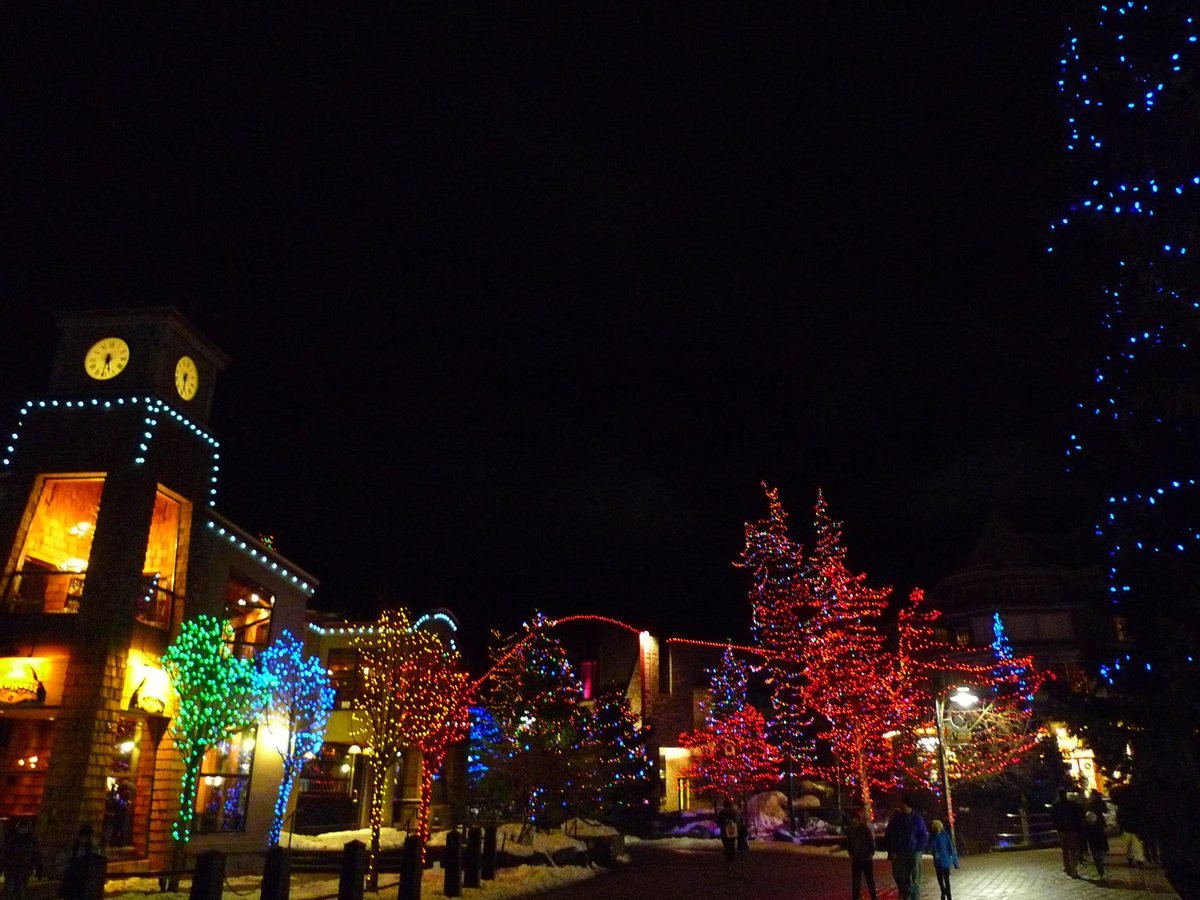
Food is the most controllable cost on this trip, and the most personal. A careful day — grocery breakfast, packed lunch or a mountain lodge soup, one simple Village dinner — runs roughly C$45–70 a person. A normal day with a sit-down lunch and a proper dinner runs roughly C$75–110. A long Village dinner with drinks runs C$130 and up, easily. None of those numbers is a judgment. Skiing all day earns a good dinner. Just decide which nights are the good dinners, instead of letting every night become one by default.
My pattern, learned the expensive way: grocery breakfast every day, packed lunch on at least two ski days, one big Village dinner as the trip treat, and simple dinners the other nights. The grocery run is the hack nobody writes about because it isn’t glamorous. A Village grocery shop for breakfasts, sandwich supplies, snacks, and water costs a fraction of buying every meal out, and it makes the one big dinner feel like a choice, not a habit. If your room has a kitchen, this pattern gets even easier. If it doesn’t, a grocery breakfast still works: bread, fruit, yoghurt, coffee from a shop instead of a full restaurant breakfast.
On the mountain, lunch is where budgets leak. A lodge lunch for a family adds up fast, and the seating at peak lunch hour is its own adventure. Pack sandwiches, eat early or late to dodge the rush, and save the sit-down meal for the Village in the evening when you can actually enjoy it. I once paid Village prices for a lodge lunch I ate standing up, holding my tray, while my gloves dripped on the table. Never again. Sandwiches in a backpack, eaten on a sunny lift-side bench, taste better anyway. That’s not a savings tip. That’s just true.
The Village Stroll after the lifts close is free entertainment, and it’s at its best in the early evening when the lights come on and the day skiers are still out. Walk it, window-shop, pick one place for a drink instead of a full dinner, and you’ve had a Village evening for the price of a round — not a banquet.
What does a Whistler ski trip cost, day by day?
Prices below are 2026–27 planning ranges per person per day, in Canadian dollars. Pick your travel style, tell the calculator how many days you’re staying, and it does the rest. Lodging is NOT included in the calculator — see the lodging table above for that. The calculator rows cover food, lift access, local getting-around, and rentals and treats.
Budget calculator
Per person, in Canadian dollars. Excludes accommodation.
Budget ≈ $209/day · Mid-range ≈ $332/day · Luxury ≈ $579/day. Lift-access figures in the table are the verified 2026/27 prices; other rows are planning ranges. In this article, “Sights & attractions” means lift access for a ski day; on a rest day, treat that row as sightseeing and activities instead.
| Expense (per person / day) | Budget | Mid-range | Luxury |
|---|---|---|---|
| Lift access (day-ticket range) | $119 (10-day rate) | $187 (1-day Day Pass) | $329 (peak-holiday window) |
| Food & drink | $45 | $75 | $130 |
| Getting around (local) | $15 | $25 | $40 |
| Rentals, coffee, treats | $30 | $45 | $80 |
| Daily total (excl. lodging) | ~$209 | ~$332 | ~$579 |
A note on how to read that table, because it matters. The budget column assumes a quieter date, a multi-day ticket, a grocery-heavy food plan, and rentals only if you need them. The luxury column assumes a peak date, a window-rate lift day, sit-down meals, and a rental package plus extras. Most real trips land between the budget and mid-range columns. If your trip lands above the luxury column, something specific is driving it — usually the room, not the skiing — and that’s where to look first.
Savings hacks that actually work at Whistler
Whistler savings advice is usually either obvious (“don’t eat out!”) or useless (“just go in summer!”). Here are the ones that actually move the total, in order of impact.
1. Book lift access in advance, for the right number of days. Multi-day, booked online, beats window tickets. A Day Pass product beats a full season pass for a short trip. Count rest days honestly. This is the biggest single saving in the guide, and it’s also the most boring. Boring wins here.
2. Ski midweek if you can. Tuesday to Thursday means lower lift prices, cheaper rooms, shorter lines, and a Village you can actually walk through. A midweek trip can save a group more than any coupon ever will. If your dates are fixed to a holiday weekend, accept the peak price and save elsewhere instead of fighting it.
3. Share a room with a kitchen. Three friends in a Village condo with a kitchen will out-save three friends in three hotel rooms, even before food. Cook breakfast, pack lunch, eat one good dinner. The kitchen is the hack.
4. Take the shuttle if you’re staying in the Village. No rental, no winter driving stress, no parking bill. The shuttle price looks high per person until you add rental, fuel, insurance, and parking together. Do that addition before you dismiss it.
5. Rent for the full trip, pick up the night before. Multi-day rental rates beat daily rates, and an evening pickup saves you a morning queue. Swap gear early if the fit is off — don’t tough out bad boots for three days to save a trip to the shop.
6. Use a rest day properly. A rest day without a lift ticket is not a wasted day at Whistler. It’s the Peak 2 Peak ride, the Village stroll, a slower morning, and a grocery run, all at a fraction of a ski day’s cost. Build one into any trip longer than two ski days. Your legs will thank you, and so will your budget.
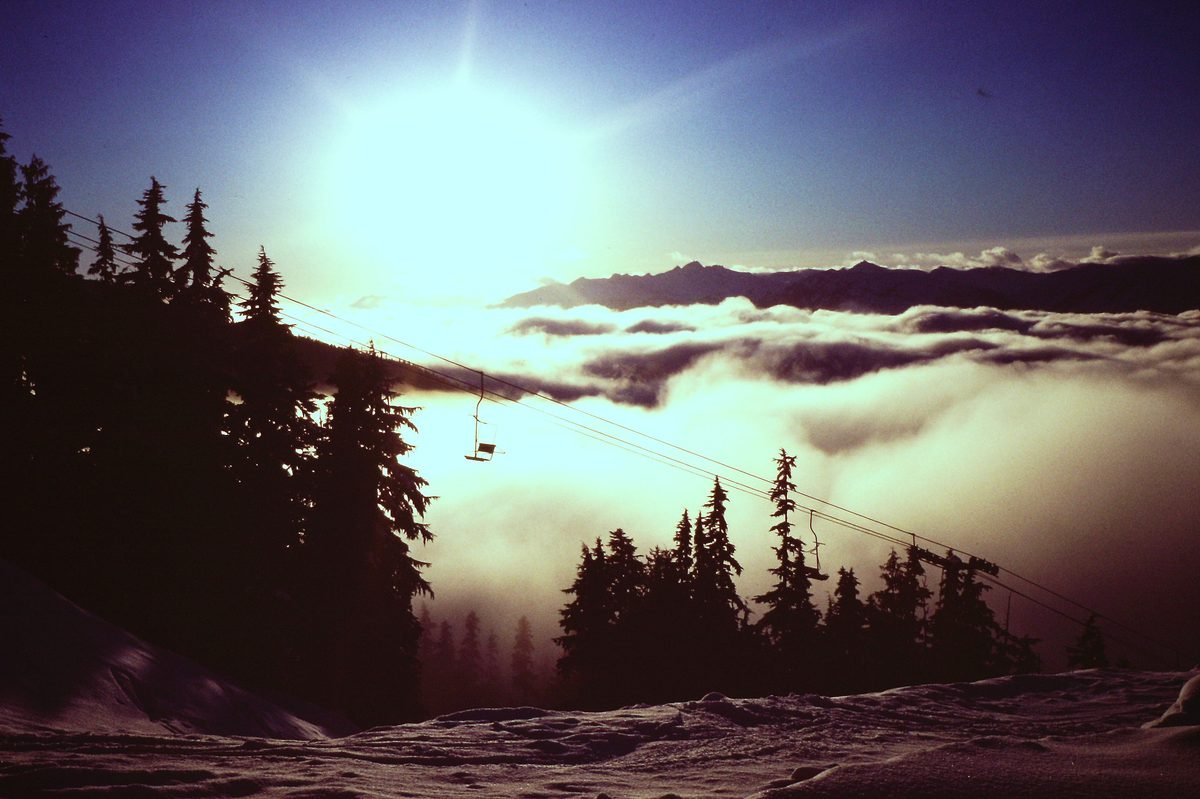
What doesn’t work, in my experience: buying cheap gear for one trip, skipping a lesson and then spending two days stuck on the wrong runs, driving to Squamish to save on a room and then paying Village parking and fuel without counting either, and booking the cheapest room an hour away and then never using it because you’re too tired to drive back. Savings that make the trip worse aren’t savings. They’re just a cheaper way to have less fun.
A sample 3-day Whistler ski trip, costed out
Here’s a mid-range 3-day plan for two friends sharing a Creekside room, skiing two days, with one rest day. All figures are planning ranges, per person, sharing the room.
| Day | Plan | Planning cost / person |
|---|---|---|
| Day 1 — arrive & ski | Shuttle or drive up, rental pickup the night before if possible, full ski day, simple dinner | Lift ~$230 + food ~$75 + local $25 + rentals share ~$45 = ~$375, plus room share |
| Day 2 — rest day | Slow morning, Peak 2 Peak and Village stroll, grocery run, one good dinner | No lift ticket; food ~$90 + local $15 + treats $20 = ~$125, plus room share |
| Day 3 — ski & go home | Full ski day, packed lunch, drive or shuttle home in the evening | Lift ~$230 + food ~$60 + local $25 + rentals share ~$45 = ~$360, plus room share |
| Trip total (excl. room & Vancouver transport) | 2 ski days + 1 rest day | ~$860 per person |
Add a shared Creekside room at roughly C$150 per person per night for two nights (C$300), and Vancouver–Whistler transport at roughly C$44–90 return per person by shuttle (Epic Rides downtown return C$44; YVR Skylynx return C$75 standard, C$90 express), and the full trip lands around C$1,200–1,290 per person. That’s the mid-range shape of a Whistler trip: not cheap, not fantasy, and very sensitive to the room and the lift dates you pick. Swap in a Squamish room and the total drops by a few hundred — minus the driving trade described above. Swap in a peak-week Village room and it climbs by a similar amount. The maths is yours now. Run it with your dates.
If you want the wider Canada picture, my Canada ski trip cost guide compares Whistler with other resorts, and my 2-day Whistler itinerary and 3-day Whistler itinerary lay out the days themselves. For a first trip, start with the 2-day version and add the rest day from this guide. You’ll ski better on day two if day one didn’t wreck you.
FAQs about Whistler ski trip cost
How much does a Whistler ski trip cost in total?
As a 2026–27 planning range, a 3-day trip with 2–3 ski days runs roughly C$1,100–1,600 per person on a budget plan, C$1,600–2,400 mid-range, and C$2,400–3,600 for a comfortable Village-based trip, excluding flights to Vancouver. Lift access and lodging drive the total; food and transport are smaller levers. Check live prices on the resort and lodging sites for your exact dates.
Is the Epic Pass worth it for one Whistler trip?
Usually not for a single 3-day trip. Divide the pass price by the day-ticket price you’d otherwise pay — that’s your break-even day count: about 8 days against a C$187 advance Day Pass, or about 5 days against a C$309 peak window day, using the published 2026/27 Epic Pass price of US$1,169. A multi-day ticket or an Epic Day Pass, bought in advance, usually wins for a short trip. The full pass wins when you ski a week or more, or visit more than one resort. Check live pass prices on the official Epic Pass site before you buy.
Is staying in Squamish really cheaper than Whistler Village?
Yes, on rooms alone — roughly C$100–300 a night cheaper in this guide’s planning ranges. But count the full trade: about an hour’s drive each way in winter conditions, fuel, and Whistler day parking. For a confident winter driver with a properly equipped car, it’s a strong saving. For a first-time winter driver, or a group that wants to walk to dinner, a shared Village or Creekside room is often the better deal overall.
How much are Whistler lift tickets per day?
For 2026/27, a pre-booked adult Whistler Blackcomb Day Pass is C$187 for one unrestricted day (C$160 restricted) and about C$101 a day on a 10-day no-holiday pass, while the published tour-operator/window adult 1-day rate runs C$202–329 depending on the season category (peak-holiday C$329). Multi-day tickets bring the per-day average down. Buy in advance online rather than at the window, and check your exact date on the official Whistler Blackcomb lift-ticket page.
Do I need a car for a Whistler ski trip?
No, if you stay in the Village or Creekside. A shuttle from Vancouver airport or downtown gets you there, and the Village is walkable. A car helps if you stay in Squamish, want Sea to Sky stops, or travel with a lot of gear — but then you need proper winter tires and you need to count parking. See the transport section above for the cost comparison.
What is the cheapest month to ski Whistler?
Generally January (after the holiday peak) and late March offer the lower end of lift and lodging prices in this guide’s planning ranges, with quieter midweek days cheapest of all. Early December can be cheaper too, but snow coverage is less certain. The cheapest week is not always the best week — weigh price against snow conditions and daylight, and check the resort site for your dates.
Keep exploring
Whistler is the big-ticket ski trip. Here’s where I’d go next:
- Canada ski trip cost — how Whistler compares with other Canadian resorts
- 2-day Whistler itinerary — the short version, days laid out
- 3-day Whistler itinerary — the relaxed version, with a rest day built in
- 1-day Whistler itinerary — the day-trip sprint from Vancouver
- Sea to Sky Highway stops — the drive up, done properly
- Things to do in Squamish — if you base yourself an hour south
- Winter driving in Canada — tires, storms, and the rules for Highway 99
- Things to do in Vancouver — add a city day before or after the mountain
You’ve got the maths now. Book the lift access early, pick the base honestly, and let the mountain do the rest.