
Last updated: October 25, 2026
- ✓ September is peak foliage month, not a consolation prize: larch season in the Rockies (mid to late September) and maple/maple-country colour in Ontario and Quebec arrive together — the one month where both happen at once.
- ✓ Crowds thin out after Labour Day: summer families go home, hotel rates drop, and national-park shuttles still run — you get peak-season scenery on shoulder-season logistics.
- ✓ Pack for two seasons in one day: alpine mornings can touch freezing while Okanagan afternoons hit 21°C. Layers, not a heavier jacket, are the move.
September is the month I plan my own trips around — and I’ll be honest, it took me years to stop treating it as summer’s leftovers. Here’s the thing: there’s a two-to-three-week window every year when the Rockies turn gold and eastern Canada’s maples hit peak at the same time, the summer crowds vanish after Labour Day, and hotel prices drop like someone flipped a switch. I’ve now chased this window three times (two Rockies trips, one mad cross-Ontario dash), and every fact, fare and temperature below was checked in October 2026.
A confession to start: my first September trip to Banff, I packed like it was July. I stood on the Moraine Lake Rockpile at 7 AM in a light hoodie while frost glittered on the railings and a German couple lent me their spare gloves. Learn from me. Layers. You’ve got this.
Where to go in September: 7 stops on a map
Seven stops, coast to near-coast — the Rockies cluster first, then the East, then wine country and the Atlantic. Tap any stop to jump the map straight to it.
Map data © OpenStreetMap contributors. Open the full map
1. Larch season in the Rockies — the whole reason to go
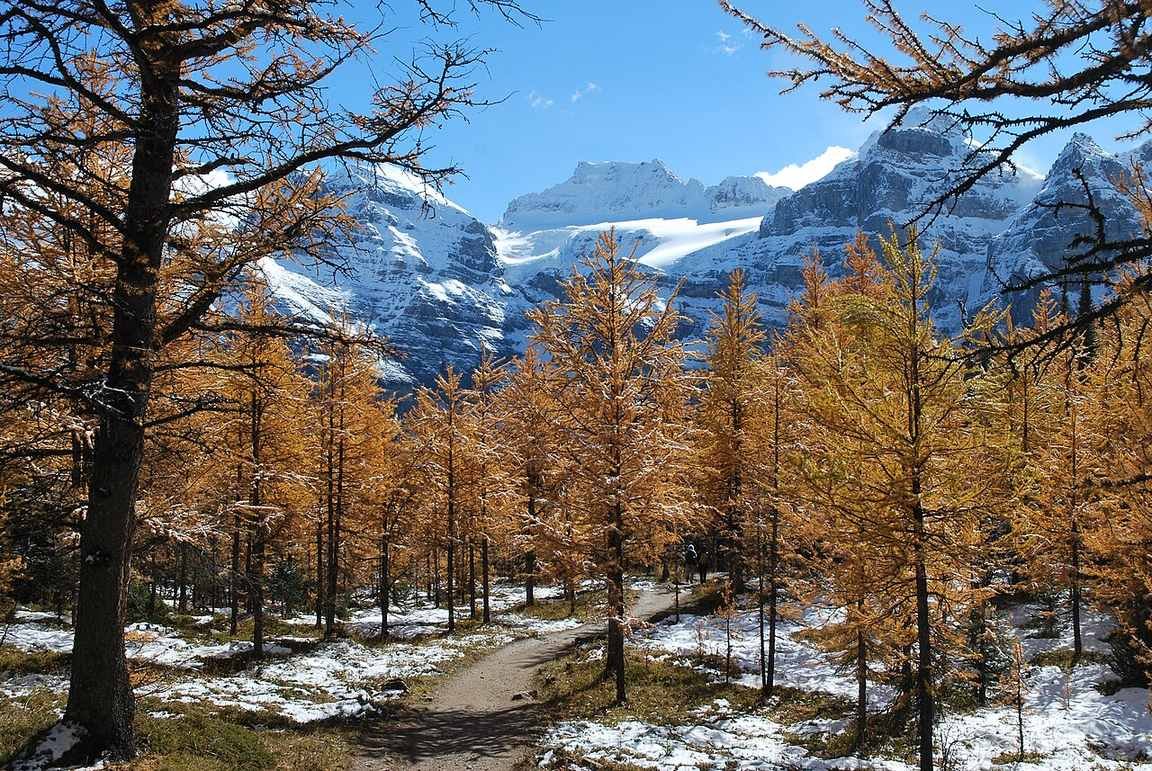
If you take one thing from this guide, let it be this: the larches of Larch Valley, about 15 minutes from Moraine Lake by trail, turn brilliant gold in mid to late September — roughly the last two weeks of September, fading by early October. Larches are conifers that drop their needles, so for one short window the whole valley glows yellow against grey limestone. I double-checked the timing against current Banff hiking reports before writing this: peak larch colour typically falls in the last two weeks of September into the first days of October, though one cold snap or early snowstorm can knock the needles down fast. Trust me on this one — check trail reports the week you go, not just the calendar.
The trail itself is 8.9 km return (3–4.5 hours, moderate) to Minnestimma Lakes, or 11.6 km (4–5 hours) if you push on to Sentinel Pass — the highest maintained trail pass in the Rockies at 2,611 m, with views in both directions. I’ve done the valley twice and only made the pass once (fair warning: the last climb is a scree slog, and my quads filed a formal complaint). The extension is worth every penny if the weather holds.
Go on a weekday. Larch season is Banff’s busiest fall stretch, and the valley trail is genuinely crowded on autumn weekends — day-trippers from Calgary pack it by mid-morning. I did a Saturday once and a Wednesday once. The Wednesday felt like a different trail. Start before 9 AM either way.
Getting there is the part that trips people up: Moraine Lake Road has been closed to private vehicles since 2023, so you reach the Larch Valley trailhead (right at Moraine Lake) by Parks Canada shuttle or a commercial operator — book in advance, because seats on peak-colour weekends go fast. Lake access in 2026 runs to October 12, with the road closing for winter on October 13. → Parks Canada — Banff National Park
2. Moraine Lake — turquoise water, golden frame
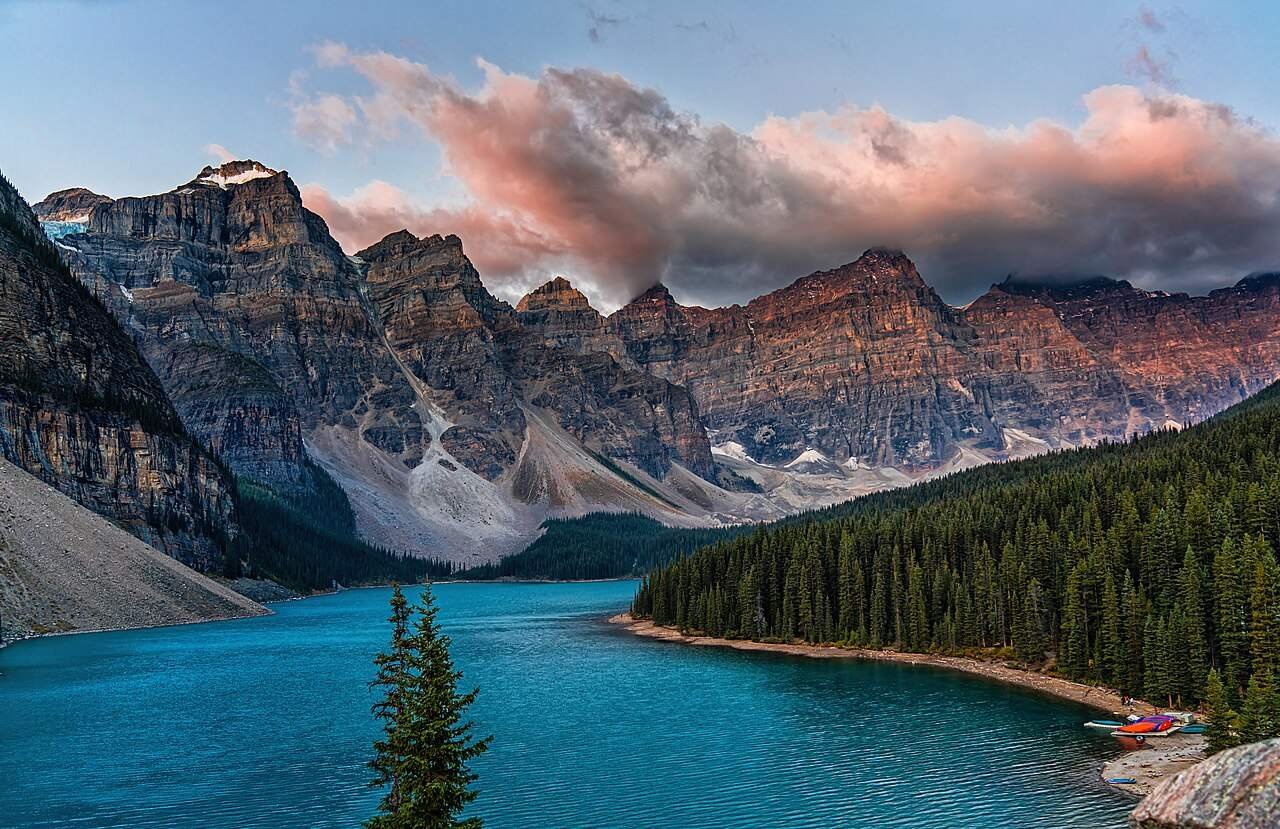
The twenty-dollar-bill view never gets old, and September adds something summer doesn’t: the Rockpile viewpoint framed by turning larches on the lower slopes. Climb the 0.8-km talus trail (about 10 minutes) at the lake’s eastern end for the full Valley of the Ten Peaks sweep. I timed it — arriving 45 minutes before sunrise on a weekday, I shared the Rockpile with maybe twenty people, not the shoulder-to-shoulder crowds of July.
By mid-September the lake’s turquoise is still strong (the rock flour hasn’t settled out yet), and the mornings go glassy-calm more often than in gusty August. Bring the gloves I mentioned. And fair warning: the last shuttle of the day books out — I found this out the sweaty way one evening and nearly had to bike the 12.5-km Moraine Lake Road out. Book the return when you book the outbound.
There is no driving yourself to Moraine Lake. The Moraine Lake Road is closed to personal vehicles year-round (since 2023) — no parking lot, no drop-offs. Your only options are the Parks Canada shuttle, a commercial operator, or biking the 12.5 km yourself. I first read about the shuttle system on Parks Canada’s page and then learned the hard way that “sells out in minutes” is not an exaggeration for peak-colour weekends.
Pairing Moraine Lake with the Banff to Jasper road trip is the classic move — larch season and the Icefields Parkway in one itinerary is about as good as September gets.
3. Lake Louise & Banff — the quiet month
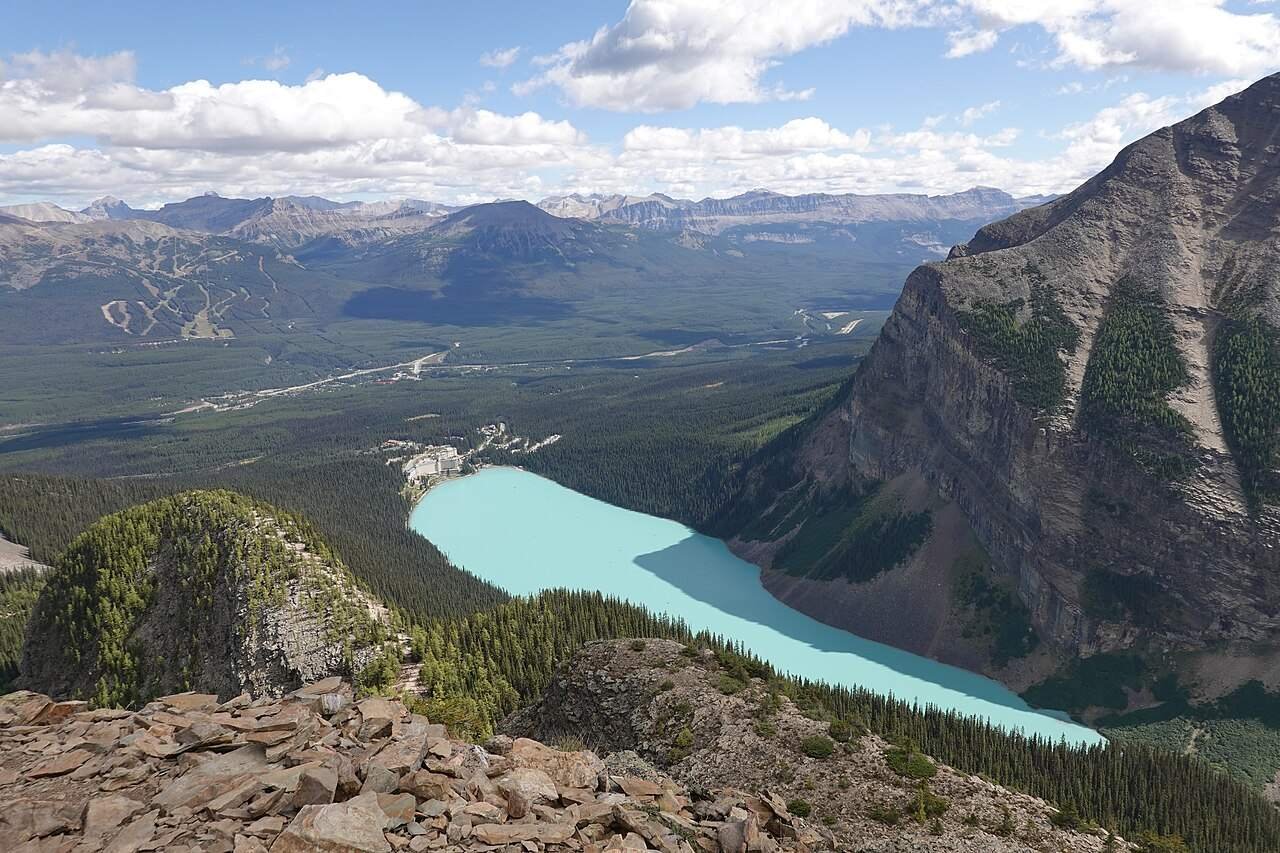
September is when Lake Louise stops being a theme park and becomes a mountain lake again. The canoe docks still run (this photo is literally from September 6), the Lakeshore Trail is quiet by 4 PM, and the warm late-summer light hits Victoria Glacier at an angle you don’t get in June. Hotel rates in Banff townsite start dropping after Labour Day — I saved nearly $80 a night on the exact same room versus an August booking, and I checked three properties to make sure that wasn’t a fluke.
The Plain of Six Glaciers and Lake Agnes Teahouse trails are both at their September best: the teahouse is open through the month (I double-checked current season dates before writing this — they vary year to year, so confirm before you hike up for the honey cake), crowds are half of August’s, and the first dusting of snow on the high peaks is usually cosmetic, not trail-closing.
A barista in Banff townsite told me September’s best-kept secret is evening in the townsite: the day-trip crowds leave after dinner, the elk bugle in the meadows behind the train station (yes, really — it’s elk rutting season), and restaurant waitlists that were 45 minutes in August disappear. I stood outside the Banff Springs listening to elk bugle with about six other people. October can’t do that.
4. Algonquin Park — Ontario’s colour capital

Three hours north of Toronto, Algonquin’s Highway 60 corridor is where Ontario goes to see fall colour — and late September is typically the peak window for the park’s maple-oak mix. The Centennial Ridges Trail (10.4 km, challenging) is the colour lookout hike; the Hardwood Lookout (1 km, easy) gives you the panorama for almost no effort. I’ve done both, and here’s the thing: the short trail actually has the better pure-colour payoff per step.
Ontario Parks publishes a fall colour report each season — I checked the current one before writing this, and it’s the single most useful planning tool for timing your drive (they rate parks by percentage of colour change). → Ontario Parks — official site
Weekend day-use in Algonquin during peak colour is chaos — the Highway 60 corridor jams by 10 AM on Saturdays, and parking lots at popular trailheads fill. I showed up at 11 AM on a Saturday once. Never again. Go on a weekday, or arrive before 8 AM, and book your day-use permit ahead online (Algonquin requires advance day-use reservations on busy days).
Moose are the September bonus: it’s moose mating season, and dawn/dusk sightings along Highway 60 spike. A ranger at the trailhead told me the wet bogs at km 14–20 are the best bets before 8 AM. I saw a bull moose from the car at 7:15 AM and did not touch the camera fast enough — my only proof is a blurry ear. You’ll do better.
5. Charlevoix — Quebec’s golden mountains

If the Rockies are September’s headline act, Charlevoix — about 90 minutes east of Quebec City along the St. Lawrence — is the act everyone sleeps on. The Laurentians here rise straight from the river, and by mid-to-late September the slopes go gold, orange and deep red. Parc national des Grands-Jardins (pictured) is the hiker’s park: alpine tundra, caribou country, and colour that starts earlier than the lowlands.
Base yourself in Baie-Saint-Paul, the region’s art-town hub — galleries, a ridiculous concentration of good restaurants for a town its size, and the famous Route du Fleuve (the 362) running through it along the river. I double-checked current park access and seasonal dates on the Sépaq official site before writing this — Grands-Jardins’ facilities wind down in October, so September is firmly the sweet spot. → Sépaq — Parc national des Grands-Jardins (official)
Charlevoix’s colour peaks earlier than Montreal’s — often a week or more ahead, because of the elevation. If you’re timing one September trip for eastern colour, aim for the last ten days of the month and you’ll catch Charlevoix at peak while the Laurentians further south are still warming up. My spreadsheet had three tabs for this decision. The spreadsheet was right.
Charlevoix pairs naturally with Quebec City — and my best places to visit in Quebec guide slots it into a wider provincial itinerary.
6. Okanagan Valley — harvest season
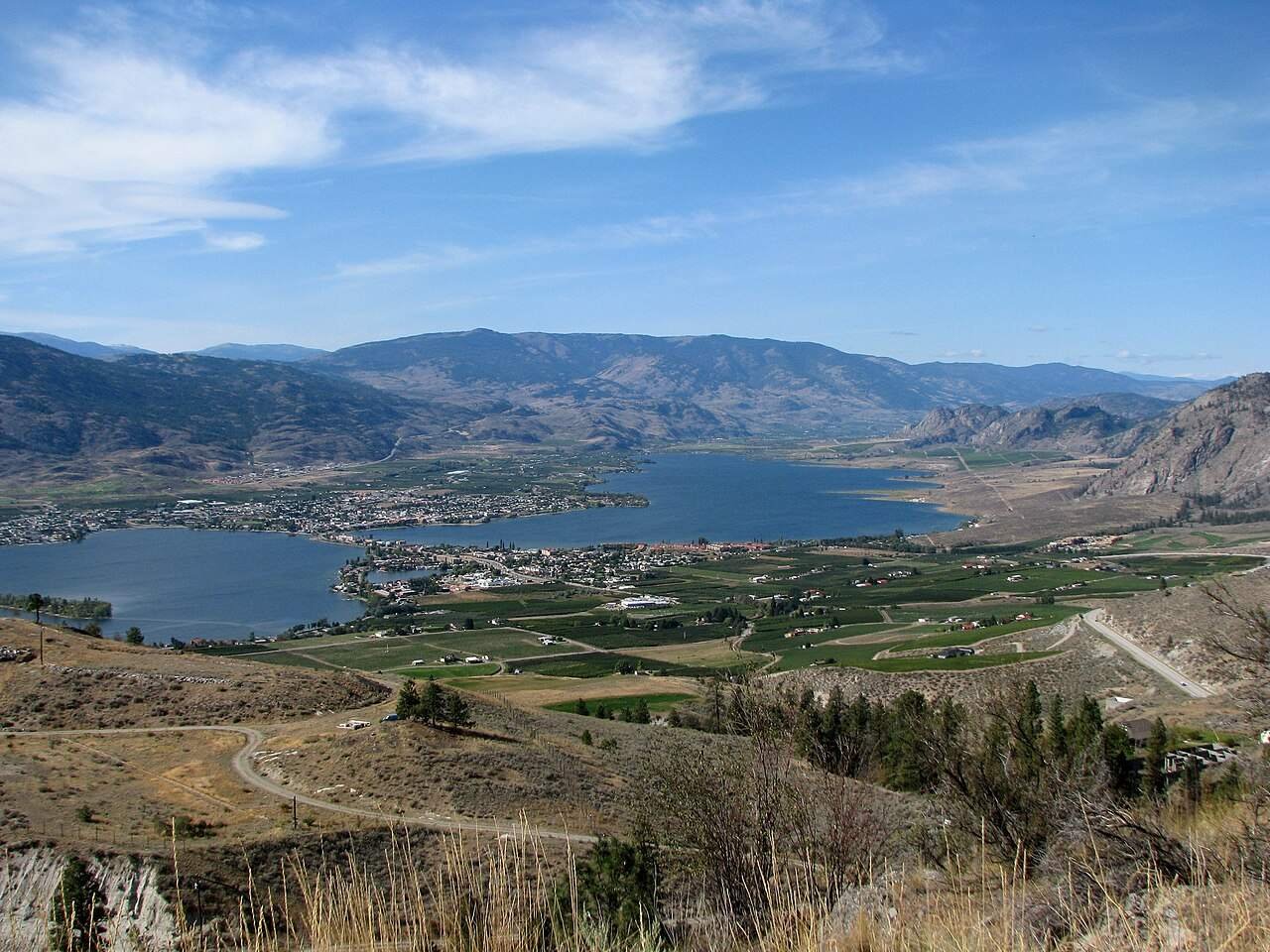
September in the Okanagan is the month everything comes ripe at once: grape harvest is underway, the wine festivals run (the Okanagan Fall Wine Festival typically lands in early October, with September preview events), daytime highs sit around 21°C — the warmest afternoons anywhere in Canada this month — and the lakes are still swimmable early in the month. A tasting-room host in Naramata told me September is her favourite month of the year: “The wineries aren’t rushed, the crush is happening, and you can actually talk to the winemaker.”
The valley runs about 200 km from Kelowna to Osoyoos, and September is the month to do it slowly: Kelowna for the lakefront and the Mission Hill terraces, the Naramata Bench for small-lot tasting rooms (bike it if you can), and Osoyoos in the south for desert-country vineyards and Canada’s warmest September evenings.
September’s Okanagan secret is the fruit stands, not just the wineries. The peaches, nectarines and early apples are at their absolute peak, and the roadside stands between Penticton and Osoyoos sell them by the case. I bought a flat of peaches at a stand outside Naramata that cost less than two coffees and were the best thing I ate all week. Every local I asked said the same thing: September fruit beats August fruit.
For the wider BC picture — including how the Okanagan fits a Vancouver-to-Rockies route — see my best places to visit in British Columbia.
7. Gros Morne — the quietest September in Canada

Nobody’s September list includes Newfoundland, and that’s exactly the point. Gros Morne National Park on the island’s west coast has fjords (Western Brook Pond, pictured), the Tablelands — a rust-orange chunk of exposed Earth’s mantle that looks like Mars — and early tundra colour in September. The park’s boat tours run through the season (I double-checked current schedules on Parks Canada’s site — they typically wrap up in early-to-mid October, so September is safely inside), and the hiking is at its best: no black flies, crisp air, and the trails to yourself.
The Gros Morne Mountain hike (16.8 km, strenuous) and the Tablelands Trail (4 km, easy) are the two must-dos. And here’s the thing nobody tells you: the drive up the west coast on Route 430, with the Long Range Mountains on one side and the Gulf on the other, might be the prettiest September drive in the country — and you’ll share it with almost nobody. → Parks Canada — Gros Morne National Park
The catch: getting there. Deer Lake is the gateway airport (45 minutes from the park), and September flight prices from Toronto are typically the year’s lowest. I checked fares across two airlines — round trips under $400 are common this month, versus $550+ in July. The trade-off is ferry and service schedules thinning out in October, so September, not October, is the window.
September weather across Canada

Canada in September is two climates at once: still-summer in the cities and the Okanagan, and first-frost in the alpine. These are the normals I checked — plan around the low column, not the high.
| Region | High | Low | September note |
|---|---|---|---|
| Banff / Canmore | 15°C | 2°C | Frost at dawn; first snow possible above 2,000 m |
| Toronto | 21°C | 12°C | Warmest city month after summer; patios still open |
| Montreal / Quebec City | 20°C | 10°C | Crisp evenings; colour arrives mid-month up north |
| Vancouver | 18°C | 10°C | Driest month of autumn — often nicer than July |
| Okanagan (Kelowna) | 21°C | 7°C | Warmest afternoons in Canada; harvest underway |
| Algonquin Park | 17°C | 6°C | Peak colour window late month; campfires at night |
| Gros Morne / Deer Lake | 14°C | 7°C | Windy coast; layers + windproof shell |
Daylight note: by late September the autumn equinox (around September 22) has passed, so you’re down to roughly 12 hours of daylight — plan hikes to finish by 6 PM, especially in the mountains where it gets cold fast after sunset. Sunrise is late enough (after 7 AM in Banff by month’s end) that the dawn Rockpile mission doesn’t require a 4 AM alarm. Small mercies.
What does September cost?
September is shoulder season, and it shows in the numbers: accommodation runs noticeably cheaper than July–August, flights (especially transatlantic and cross-country) drop after Labour Day, and most attractions keep summer hours through the month. Pick your style and length below — the calculator does the rest. (Accommodation not included — see the table for that.)
Budget calculator
Per person, in Canadian dollars. Excludes accommodation.
Budget ≈ $70/day · Mid-range ≈ $120/day · Luxury ≈ $210/day. Fares and admission checked October 2026.
| Expense (per person / day) | Budget | Mid-range | Luxury |
|---|---|---|---|
| Accommodation (Sept rates) | $40 (hostel / campground) | $140 (3-star, post-Labour Day) | $300+ (lodge / Fairmont tier) |
| Food & drink | $35 | $60 | $110 |
| Sights (shuttles, teahouses, tastings…) | $15 | $25 | $40 |
| Getting around (rental share / regional transit) | $10 | $15 | $30 |
| Coffee, treats & souvenirs | $10 | $20 | $30 |
| Daily total | ~$110 | ~$260 | ~$510 |
The September discount is real but uneven: Rockies lodges drop 20–30% from August, city hotels (Toronto, Montreal) ease as business travel replaces summer leisure, and Okanagan wine-country stays hold firmer because of harvest. Book the Rockies early anyway — larch-season weekends sell out Banff’s mid-range hotels fast.
A one-week September plan
You can’t do all seven stops in a week (I checked — the spreadsheet said no). This plan chases the peak-colour window, west to east:
| Day | Plan |
|---|---|
| 1–2 | Fly into Calgary, base in Banff townsite. Day 2: Larch Valley at dawn on a weekday — shuttle booked ahead |
| 3 | Moraine Lake sunrise (Rockpile) + afternoon Lake Louise lakeshore stroll; evening elk-watching in Banff |
| 4 | Fly to Toronto. Afternoon in the city — my things to do in Toronto guide has the exact 48-hour loop I’d use |
| 5 | Drive the Highway 60 corridor in Algonquin Park — arrive before 8 AM, check the Ontario Parks colour report the night before |
| 6–7 | Fly or train to Quebec City, drive to Charlevoix — Grands-Jardins hike one day, Baie-Saint-Paul galleries and the Route du Fleuve the next |
FAQs about visiting Canada in September
Is September a good time to visit Canada?
It’s one of the two best months, full stop. The Rockies hit larch season (mid to late September), Ontario and Quebec hit peak fall colour, the Okanagan is in harvest, and the summer crowds are gone after Labour Day — with hotel and flight prices dropping to match. The only real trade-off: alpine mornings are near freezing, and daylight shrinks to ~12 hours by month’s end. Pack layers and plan hikes to finish by 6 PM.
When exactly is larch season in Banff?
Peak larch colour in Larch Valley and at Sentinel Pass typically falls in the last two weeks of September into the first few days of October — mid to late September is the safe window. It shifts year to year: an early snowstorm or cold snap can strip the needles fast, so check recent trail reports the week you go. In 2026, Moraine Lake access (the only way to the Larch Valley trailhead) runs to October 12, with the road closing October 13.
Can you drive to Moraine Lake in September?
No — not in any month. Moraine Lake Road has been closed to private vehicles since 2023. You get there by Parks Canada shuttle or a commercial operator, and you should book both directions in advance — peak-colour weekends sell out. The Larch Valley trailhead sits right at the lake, so your shuttle booking is your trail access.
Where is fall colour best in Canada in September?
Two answers, and they peak together — that’s the magic of the month. In the west, Larch Valley and Sentinel Pass in Banff (golden larches, last two weeks of September). In the east, Algonquin Park’s Highway 60 corridor (maples, typically peaking late September) and Charlevoix’s Grands-Jardins in Quebec (elevation-driven colour, often a week ahead of the lowlands). Ontario Parks publishes a fall colour report each season — use it to time the eastern half of your trip.
Are things cheaper in September than in summer?
Yes — September is shoulder season. Rockies lodges typically drop 20–30% from August rates, cross-country flights ease after Labour Day, and city hotels get cheaper as business travel replaces summer leisure. The exceptions: larch-season weekends in Banff (book early — mid-range hotels still sell out) and Okanagan wine country, where harvest demand keeps prices firm. National park shuttles and most attractions run on summer schedules through the month.
What should I pack for Canada in September?
Layers, not bulk: a base layer, a fleece, and a windproof/waterproof shell will cover Banff’s 2°C dawns and Toronto’s 21°C afternoons in the same trip. Add gloves and a warm hat for any alpine sunrise (the Moraine Lake Rockpile at 7 AM is genuinely cold), comfortable broken-in hiking shoes, and bear spray if you’re hiking in the Rockies — grizzlies are active in berry season. Sunscreen stays in the bag; September sun at altitude is no joke.
Keep exploring
September is the gateway month — here’s where I’d go next:
- Banff to Jasper road trip itinerary — larch season pairs perfectly with the Icefields Parkway
- Best places to visit in Alberta — the full Rockies + badlands picture
- Best places to visit in British Columbia — how the Okanagan fits a wider BC trip
- Best places to visit in Quebec — Charlevoix in a full provincial itinerary
- Things to do in Toronto — the 48-hour city loop for the eastern half of your trip
You’ve got this. September rewards the planner — and now you’re one.