

- ✓ Cluster by geography: downtown + Stanley Park is one day, Granville Island + Kitsilano another, and the North Shore (Capilano, Grouse, Lynn Canyon) works as a single SeaBus-and-bus day — I’ve mapped the order for you below.
- ✓ Vancouver rain is a “when,” not an “if”: even in July, pack a rain shell and waterproof shoes. The city looks its best right after rain — the mountains come out like they’re showing off.
- ✓ Three days is the sweet spot: two for the city icons, one for the North Shore — with a fourth day banked for Whistler or Victoria if you can swing it.
Vancouver is the city that made my travel spreadsheet jealous of itself. Mountains on one side, ocean on the other, and a downtown you can cross on foot in twenty minutes — it’s the rare place where the postcard view is just… the view, from everywhere. I’ve visited four times now — twice in glorious September sunshine, once in sideways November rain, and once with my mom, who declared the gardens “better than advertised” (high praise from her). The twenty stops below are the ones I’d hand to anyone with three or four days. Every price and hour was checked in October 2026.
A confession to start: on my first visit I planned a romantic picnic at Queen Elizabeth Park for a Saturday afternoon. It rained. Not dramatically — just the steady, confident Vancouver drizzle that soaks through everything you own. I bought a $15 umbrella from a souvenir stall on Granville Island and ate my picnic under a tree like a determined raccoon. Here’s the thing: pack a rain shell, always, and the weather stops being a problem and starts being part of the charm. You’ve got this.
Getting around Vancouver
If you’re flying in, take the Canada Line SkyTrain from YVR Airport to downtown: about 25 minutes to Waterfront Station. Here’s the fare math that matters: a DayPass costs $12.55 for adults (all zones, good until 4 AM), single rides run about $2.85 for one zone with a Compass card, and leaving the airport adds a $6.50 YVR AddFare — so the DayPass pays for itself by your third tap. I double-checked the 2026 fares on TransLink’s official fares page before my last trip, and they held. Pro tip: tap the same card or phone in and out on SkyTrain and SeaBus; buses just need a tap on. → TransLink — official fares & trip planner
You do not need a car for the first eighteen stops in this guide. The North Shore trio (Capilano, Grouse, Lynn Canyon) is a SeaBus ride plus a short bus hop — I did the whole day car-free and it was one of the easiest transit days I’ve had in any Canadian city. Only Whistler and Victoria want a bus tour or a rental; everything else is SkyTrain, bus, ferry, or your own two feet. Destination Vancouver’s official trip-planning pages are genuinely useful for seasonal hours. → Destination Vancouver — official tourism site
The 20 best things to do, on a map
Twenty stops, from the UBC campus to the North Shore peaks. Tap any stop to jump the map straight to it.
Map data © OpenStreetMap contributors. Open the full map
1. Stanley Park & the Seawall — the non-negotiable

A 1,000-acre rainforest park on a downtown peninsula, ringed by the world’s most famous 10-kilometre waterfront path — and the single best thing you can do in Vancouver is ride it. I’ve biked the Seawall four times now (twice with rented cruisers from Denman Street, once on a drizzly Tuesday when I had the whole west side to myself), and it still feels like a small miracle: totem poles at Brockton Point, the Lions Gate Bridge dead ahead, Siwash Rock, Third Beach, and then the skyline swinging back into view at English Bay. Rent a bike for about ~$15–20 for two hours near the park entrance, keep right, and budget a full morning. The City of Vancouver’s official Stanley Park page has current rental kiosk and washroom info. → City of Vancouver — Stanley Park info
Ride counter-clockwise — that’s the official one-way direction for bikes, and it puts the water on your right the whole way. I rode it the wrong way once (a confused tourist move I do not recommend) and spent the loop apologizing to faster cyclists. Counter-clockwise, keep right, done.
2. Granville Island — breakfast, then graze

A former industrial island under the Granville Street Bridge, now home to the city’s best food hall. The Public Market is the main event: produce, bakeries, charcuterie, and the kind of food-court-that-isn’t-a-food-court where you can assemble a perfect lunch for ~$15. Go hungry and graze — on my last visit I did a full loop with a coffee, a spinach croissant, and a bag of cherries I absolutely did not need. Take the tiny Aquabus ferry across False Creek (~$3–4 one-way) instead of walking the bridge; the two-minute crossing is half the fun and it drops you right at the market dock. I double-checked the ferry’s current fares on the dock signage last summer — cash or card both work.
The Public Market is busiest from 11 AM to 2 PM on weekends, and the seating upstairs goes fast. I stood in a 20-minute line for a window seat on a rainy Saturday once. Never again — now I go at 10 AM sharp, eat downstairs by the water, and browse the craft studios while the crowds queue for lunch.
3. Capilano Suspension Bridge — the famous wobble

The 137-metre bridge swaying 70 metres above the Capilano River is the postcard, but here’s the thing: the Treetops Adventure (suspension bridges strung between 250-year-old Douglas firs) and the granite Cliffwalk are just as good, and the whole park is a masterclass in old-growth rainforest. Admission runs about ~$75 for adults — steep, but it includes everything, and I double-checked the current pricing on the park’s official tickets page before my last trip. Arrive before 10 AM to cross the bridge without a conga line, and wear shoes with grip: those planks get slick in the rain (which, in North Vancouver, is a personality trait).
4. Grouse Mountain Skyride — the Peak of Vancouver

A confession: my first Grouse trip, I rode the Skyride gondola straight up into a cloud. Paid full price (~$85 mountain admission, checked on the official site), saw absolutely nothing but white, and ate an overpriced hot chocolate at the top while the city hid below me. Lesson learned, permanently: check the mountaintop webcam before you go — it’s right on Grouse’s official site. On a clear day, this is the best viewpoint in the metro area, plus resident grizzlies Grinder and Coola, the lumberjack show, and the Eye of the Wind turbine viewpoint. Fair warning: it’s genuinely a full half-day, not a quick stop. → Grouse Mountain — official tickets, webcam & hours
Pair Grouse with Capilano in one North Shore day: SeaBus from Waterfront to Lonsdale Quay, then the 236 bus serves both. Do Capilano at opening, Grouse after lunch — the light on the city view is better in the afternoon anyway, and you’ll be back downtown for dinner.
5. Gastown & the Steam Clock — old Vancouver
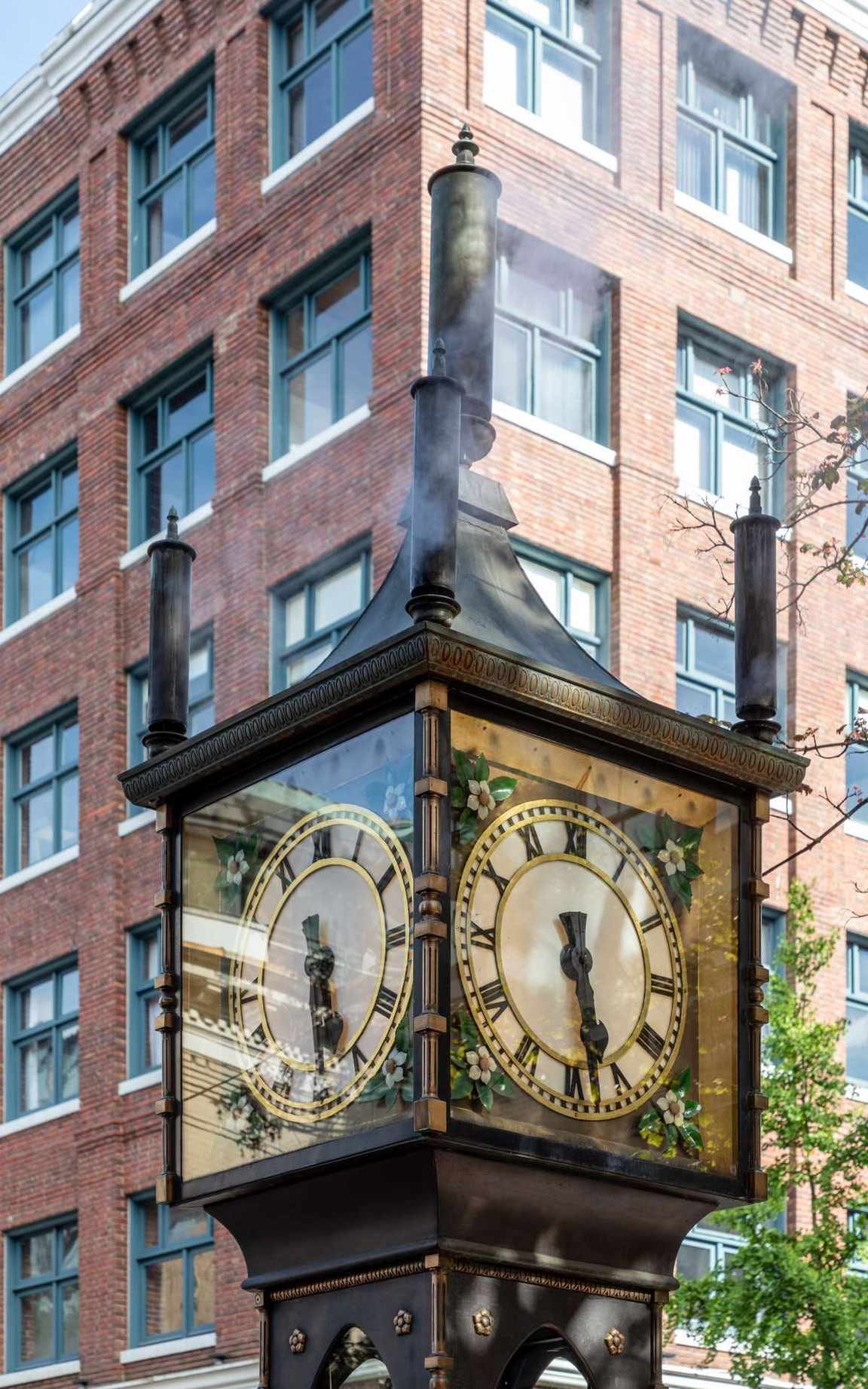
Vancouver’s oldest neighbourhood: cobblestone Water Street, Victorian brick, and the famous steam clock that whistles every 15 minutes (top of the hour gets the full show — time your arrival for it). Here’s the thing nobody tells first-timers: the clock is genuinely cool, but Gastown’s real magic is the side streets — the independent boutiques on Carrall, the restaurant patios, the Victorian architecture that survived the 1886 fire’s aftermath. It’s free to wander and pairs perfectly with nearby Chinatown (ten minutes on foot): the Millennium Gate, the shops on Pender, and some of the best dumplings in the city. I always do this as a slow evening stroll — the gas lamps come on, the patios fill up, and the steam clock does its thing under the lights.
6. VanDusen Botanical Garden — my mom’s favourite

Fifty-five acres of themed gardens in Shaughnessy — and the stop my mom still talks about, which tells you everything. The Elizabethan hedge maze is the playful centrepiece (I got properly turned around in it, twice), the rhododendron walk explodes in May, and the whole place is designed for slow wandering rather than rushing. Adult admission is about ~$12; I double-checked hours on the official site before going, because they shift with the seasons. In December it transforms into the Festival of Lights with over a million bulbs — if you’re visiting in winter, this is the city’s best evening plan, full stop. → VanDusen Botanical Garden — official site
7. Museum of Anthropology at UBC — the Raven

The Arthur Erickson–designed Great Hall alone is worth the trip to UBC: walls of glass, monumental Musqueam, Haida, and Kwakwaka’wakw carvings, and Bill Reid’s The Raven and the First Men in its own rotunda. I stood in front of the Raven for a full twenty minutes — it’s one of those artworks that rearranges something in your chest. Admission is about ~$20 for adults, and I double-checked current prices and hours on the museum’s official site before my last visit. Take the 99 B-Line or the 14 bus from downtown; the ride to UBC takes about 40 minutes and the campus itself is a pleasant wander afterwards. → Museum of Anthropology — official site
8. Lynn Canyon Suspension Bridge — the free one

Here’s the local’s answer to Capilano: a 48-metre suspension bridge swaying 50 metres above Lynn Creek, in the middle of a gorgeous temperate rainforest — and it’s completely free. The Lynn Canyon Ecology Centre, the waterfalls, the swimming holes (freezing, glorious, summer-only for the sane) — all of it, free. I did Capilano on my first trip and Lynn Canyon on my second, and honestly? The bridge wobble is comparable, the forest is just as cathedral-like, and the $75 I saved bought a very nice dinner in Gastown. Do both if you love suspension bridges; if you’re choosing, Lynn Canyon is the value pick and the locals’ pick. Take the SeaBus to Lonsdale Quay, then the 228 or 229 bus. Fair warning: the parking lot fills by noon on summer weekends, but you’re on the bus, so that’s someone else’s problem.
A bus driver on the 228 told me most visitors turn around at the bridge and miss the 30 Foot Pool — a ten-minute forest walk past the Ecology Centre to an emerald swimming hole that looks Photoshopped. Go in the morning, bring a swimsuit in summer, and thank me later.
9. Queen Elizabeth Park & Bloedel Conservatory — the city’s rooftop garden

Vancouver’s highest point (152 metres — modest, but the views are not): manicured quarry gardens, the dancing fountains, and the downtown-and-mountains panorama that locals take their out-of-town guests to first. Inside the park, the Bloedel Conservatory’s glass dome holds a tropical rainforest — parrots, 500+ plant species, and 28-degree air that feels like a small miracle on a drizzly February day (ask me how I know). Admission is about ~$7–8, and the park itself is free. I double-checked the conservatory’s current hours on the City of Vancouver site — it’s closed some Mondays, so verify before you go.
10. English Bay & the West End — sunset o’clock
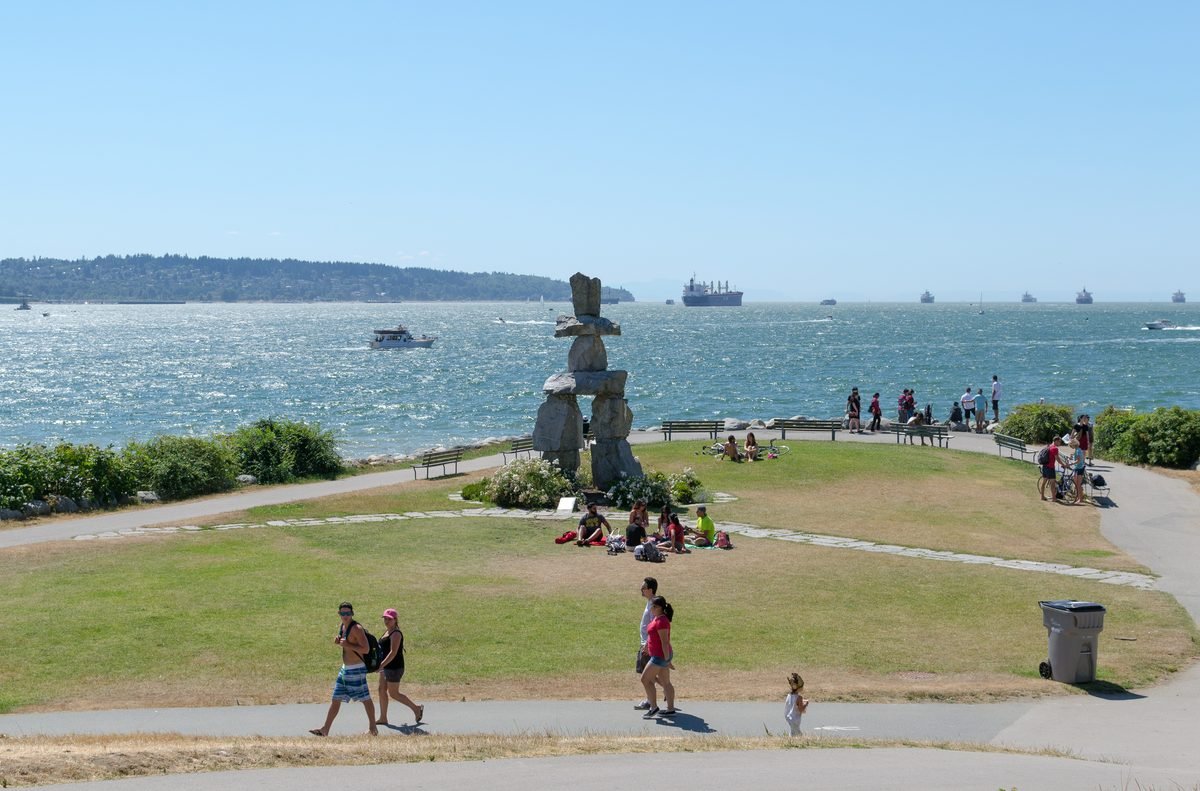
The west end of the Seawall, where Vancouver goes to exhale: the beach, the inukshuk, the sunset watchers lined up along the seawall like it’s a show (it is). Come for golden hour, stay for the West End’s Davie Street restaurant strip afterwards — this is one of the city’s best-value dinner neighbourhoods. If you’re visiting in August, check whether the Celebration of Light fireworks are on; the English Bay crowds that night are half the city and absolutely worth joining once.
11. Science World — the rainy-day game-changer
That glittering geodesic dome on False Creek isn’t just a skyline landmark — it’s Vancouver’s best bad-weather plan. The Eureka! Gallery is genuinely hands-on (I spent an embarrassing amount of time at the water tables), the BodyWorks exhibit is excellent, and the OMNIMAX dome films are worth the add-on. Adult admission is about ~$30; I double-checked current prices and hours on the official site before going. If you’re travelling with kids, this is a non-negotiable half-day; if you’re not, go anyway on a rainy afternoon and tell no one how much fun you had. → Science World — official site
12. The Vancouver Lookout — the 360-degree cheat code
The revolving observation deck atop Harbour Centre spins you a full 360 degrees in about an hour — downtown, the North Shore mountains, Stanley Park, the whole harbour. It’s touristy, it’s a little retro, and it’s the fastest possible orientation to the city’s geography. Admission is about ~$19 for adults, and your ticket is good all day — go once in daylight, come back for the night lights. I double-checked the current admission on the official site before my last visit. → Vancouver Lookout — official site
13. Dr. Sun Yat-Sen Classical Chinese Garden & Chinatown — a quiet hour
The first classical Chinese garden built outside China, and one of the most peaceful hours in the city: scholar’s rocks, covered walkways, koi ponds, and tour guides who actually make Ming-dynasty philosophy interesting. Admission is about ~$12, with free guided tours that are worth timing your visit around — I learned more in 45 minutes than in a semester of art history. Afterwards, walk the Chinatown blocks: the Millennium Gate at Pender and Taylor, the herbal shops, and a dumpling lunch. Fair warning: this pairs beautifully with Gastown (stop 5) as one walking afternoon.
14. Kitsilano Beach — the West Side’s living room
Kits Beach is where Vancouver’s beautiful people go to be seen being active — volleyball nets, the saltwater Kits Pool (137 metres, heated, open summers), and sunset views across to downtown that rival English Bay. The vibe is younger and sportier than the West End; the people-watching is elite. Grab fish and chips from a 4th Avenue takeout window and eat them on the logs. If you’re here in summer, this is also your August beach day — arrive before noon for a patch of sand.
Walk the Kitsilano–False Creek seawall east from the beach toward Granville Island (stop 2): it’s flat, it’s gorgeous, and it ends at the Public Market, where you can reward yourself with lunch. That’s my favourite half-day pairing in the city.
15. Robson Street — downtown’s main drag
You’ll walk it anyway — it connects the downtown hotels to Stanley Park — so do it properly: start at Robson Square (the ice rink in winter, the plaza in summer), window-shop the international brands, and detour one block north to the Vancouver Art Gallery’s plaza steps, the city’s unofficial town square. Robson’s real value is practical: this is where the outdoor gear shops cluster, which matters when Vancouver’s rain catches you under-prepared (see: my $15 umbrella era). Grab bubble tea, people-watch, keep walking toward the park.
16. Commercial Drive — “The Drive”
The city’s bohemian spine: Italian coffee bars next to Portuguese bakeries next to vintage shops, with almost no chains in sight. This is where Vancouverites actually hang out, and it shows — the patios on a summer evening are the city at its most itself. Come hungry: the Drive’s restaurant density is absurd, from old-school Italian to some of the best vegetarian food in Canada. It’s a SkyTrain ride (Commercial–Broadway station) from downtown, free to wander, and the single best answer to “where do locals go?”
17. Deep Cove — the village escape
A tiny waterfront village at the end of Indian Arm, forty minutes by bus from downtown — and it feels like a different province. The draw is the Quarry Rock hike: 3.8 km round trip, about 90 minutes, ending at a bald granite viewpoint over the fjord. It’s the best effort-to-view ratio near the city, and I’ve done it in both sunshine and mist (mist wins, weirdly — the fjord goes all moody and dramatic). Afterwards, the legendary Honey’s doughnuts on Galloway Road — the line moves fast, get the honey-glazed. This is also one of my favourite day trips from Vancouver without a car: the 211 bus from Phibbs Exchange drops you in the village.
18. Sea to Sky Gondola & Squamish — the highway is the attraction
The Sea to Sky Highway (Highway 99) to Squamish is one of the great drives on earth — and you can do it by bus. The Sea to Sky Gondola climbs 885 metres to the Sky Pilot suspension bridge, the Panorama Trail, and viewpoints that made my mom go quiet (again: high praise). Admission is about ~$70 for adults; I double-checked current pricing on the official site, and the mountaintop webcam rule from stop 4 applies double here. Stop at Shannon Falls on the way — Canada’s third-tallest waterfall, a ten-minute walk from the highway, free. → Sea to Sky Gondola — official site
19. Day trip: Whistler — the mountain town
Two hours north by bus, and worth every minute: North America’s biggest ski resort is a genuine four-season town, not just a winter one. Summer brings the Peak 2 Peak Gondola (a record-breaking 4.4 km span between Whistler and Blackcomb — the glass-bottom cabins are not for the faint of heart), alpine hiking, and a pedestrian village built for wandering. In winter it’s the skiing, obviously. I’ve done Whistler as a day trip twice and overnight once; the day trip works fine if you take an early bus and accept you’ll be happily tired by 8 PM. Book the Peak 2 Peak tickets ahead in summer — the line for the glass-bottom cabin is real.
20. Day trip: Victoria & Butchart Gardens — the island hop
The classic: ferry from Tsawwassen (or a floatplane if you’re feeling extravagant), 90 minutes across the Gulf Islands, and you’re in British Columbia’s storybook capital. The Inner Harbour, the Royal BC Museum, and the Butchart Gardens — 55 acres of sunken-garden splendour that justify the trip on their own (my mom’s exact words: “even better than VanDusen”). It’s a long day — start early, and know the last ferry home is the one deadline that matters. My where to stay in Victoria guide covers the neighbourhoods if you turn it into an overnighter, which I honestly recommend.
Got a fourth day and a car? Fort Langley National Historic Site — about 45 minutes east, run by Parks Canada — is the birthplace of British Columbia and a lovely half-day of fur-trade history on the Fraser River. → Parks Canada — official site
What does Vancouver cost?
Prices below are what I actually paid across my visits, per person per day. Pick your travel style, tell the calculator how many days you’re staying, and it does the rest. (Accommodation not included — see the table below for that.) Vancouver runs a touch pricier than Toronto on food, but the transit DayPass is excellent value — and half the best stops in this guide are free. My Vancouver travel cost guide breaks it all down in detail.
Budget calculator
Per person, in Canadian dollars. Excludes accommodation.
Budget ≈ $100/day · Mid-range ≈ $140/day · Luxury ≈ $230/day. Fares and admission checked October 2026.
| Expense (per person / day) | Budget | Mid-range | Luxury |
|---|---|---|---|
| Accommodation | $50 (hostel dorm) | $200 (downtown hotel) | $400+ (harbour-view suite) |
| Food & drink | $50 | $75 | $130 |
| Sights (Capilano, Grouse, gardens…) | $20 | $30 | $50 |
| Getting around (DayPass) | $15 | $15 | $20 |
| Coffee, treats & souvenirs | $15 | $20 | $30 |
| Daily total | ~$150 | ~$340 | ~$630 |
Suggested 3-day plan
| Time | Day 1 — downtown icons | Day 2 — North Shore | Day 3 — island, gardens & beaches |
|---|---|---|---|
| Morning | Bike the Stanley Park Seawall (counter-clockwise!) | Capilano Suspension Bridge at opening | Aquabus to Granville Island — market graze |
| Midday | Gastown steam clock + Chinatown dumplings | Grouse Mountain Skyride (check the webcam first) | VanDusen Botanical Garden + Queen Elizabeth Park |
| Afternoon | Vancouver Lookout + Robson Street wander | Lynn Canyon (free!) or Deep Cove | Museum of Anthropology at UBC |
| Evening | Sunset at English Bay + Davie Street dinner | SeaBus back + Commercial Drive dinner | Kitsilano Beach sunset, 4th Avenue dinner |
If you have four days, my 4-day Vancouver itinerary adds a full Whistler or Victoria day trip to this skeleton — the day-four decision is the hardest one in the whole guide, and you can’t get it wrong.
FAQs about things to do in Vancouver
How many days do you need in Vancouver?
Three full days covers the twenty stops in this guide at a comfortable pace — one day for downtown and Stanley Park, one for the North Shore, one for Granville Island, the gardens, and the beaches. Four days lets you add Whistler or Victoria. Two days works if you’re disciplined (skip the museum, keep the Seawall), but you’ll leave with a list. I’ve done it in two, three, and four — three is the sweet spot.
What is the best time of year to visit Vancouver?
May through September: the driest months, the gardens at their peak, and the long summer evenings that make English Bay sunsets legendary. July and August are the warmest but also the busiest — book Capilano and Grouse tickets ahead. I’m partial to September: warm days, thinner crowds, and the summer event season still running. Winter visitors get the Festival of Lights at VanDusen and empty museums — just pack the rain shell and lean into it. For the month-by-month breakdown, see my Canada in August guide and the cheapest time to visit Canada.
Is it better to visit Capilano Suspension Bridge or Lynn Canyon?
Capilano (~$75) is the polished experience: the Treetops Adventure, the Cliffwalk, the storytelling, the gift shop. Lynn Canyon (free) is the wilder one: a real rainforest, a real wobble, and the 30 Foot Pool. If you love suspension bridges, do both — they’re different enough. If you’re choosing: Capilano for the full attraction experience, Lynn Canyon for the forest and your wallet. Both are reachable car-free via SeaBus and bus.
Do I need a car in Vancouver?
No — eighteen of the twenty stops in this guide are easy by SkyTrain, SeaBus, or bus, and the $12.55 DayPass covers all of it. The two exceptions are Whistler and Victoria, which want a scheduled bus tour or a rental for the day. Downtown parking runs $25–40 a day, so the car would mostly sit there judging your budget. For the full cost picture, see my Canada trip cost guide.
What should I pack for Vancouver?
A rain shell and waterproof shoes, year-round — this is the hill I will die on (my $15 Granville Island umbrella era taught me). Layers, because a sunny morning can turn drizzly by lunch. Comfortable walking shoes with grip for the Seawall and the canyon bridges. And a swimsuit in summer — Kits Pool, English Bay, and the Lynn Canyon swimming holes are all calling. Travelling solo? My solo female travel safety guide for Canada covers Vancouver specifically.
Is Vancouver worth visiting in the rain?
Honestly? Yes — with the right gear and the right plan. The rainforest stops (Capilano, Lynn Canyon, VanDusen) are better in the rain — misty, moody, empty. Science World, the Museum of Anthropology, and the Vancouver Art Gallery are perfect wet-afternoon plans. The city even smells good in the rain — cedar and salt air. Just don’t plan the Grouse Skyride or the Sea to Sky Gondola for a socked-in day; check those webcams and pivot to a museum instead.
Keep exploring
Vancouver is just the start — here’s where I’d go next:
- 4-day Vancouver itinerary — this guide, stretched into a day-by-day plan with a Whistler day
- Day trips from Vancouver without a car — Whistler, Victoria, Squamish and more, all transit-accessible
- Vancouver travel cost guide — the full budget breakdown, neighbourhood by neighbourhood
- Where to stay in Victoria — if the island hop becomes an overnighter
- Best small towns in Canada — for the Deep Cove and Squamish itch, nationwide
- Cheapest time to visit Canada — when Vancouver costs less (and when it doesn’t)
- Where to stay in Jasper — if the mountains have you now (they will)
- Canada in August — summer festivals, fireworks, and peak-season strategy
You’ve got this. Vancouver rewards the planner — pack the rain shell, check the mountain webcams, ride the Seawall counter-clockwise — and now you’re one.
4 comments