
Last updated: October 3, 2026
The short answer
- Peak colour 2026: aim for October 9–17 — the island’s best colour window lines up with the 30th anniversary of the Celtic Colours International Festival, so you get the foliage and the fiddles.
- Do this: drive the 298 km Cabot Trail counterclockwise over 3 days, hike the Skyline Trail at sunset (reserve parking ahead — it’s required in October), and catch at least one concert in a tiny community hall.
- Book early: fall rooms and festival tickets go fast — 2025 sold ~20,000 tickets at 95% capacity, and the best B&Bs book out months ahead.
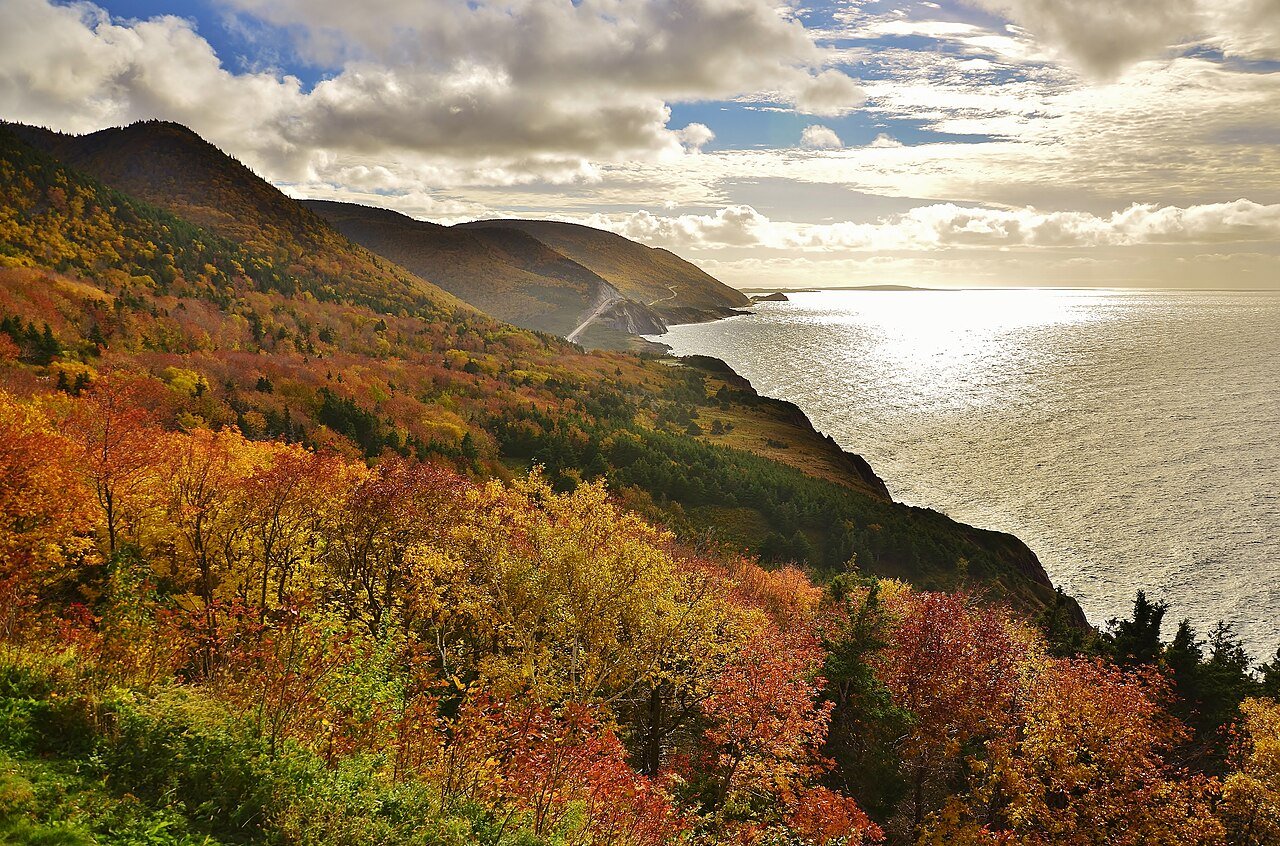
I’ll be honest: I used to think fall foliage trips were for people who owned too many scarves. Then I drove the Cabot Trail in mid-October, rounded a curve near Cape Smokey, and the entire mountainside in front of me was on fire — crimson maples, gold birch, the Atlantic glittering underneath. I pulled over so fast I nearly stalled. My color-coded spreadsheet said “Day 1: drive to Ingonish.” The island had other plans, and I have never been happier to be wrong.
Here’s the thing about Cape Breton in fall: it’s two trips in one. The 298-kilometre Cabot Trail loops around the northern tip of the island through Cape Breton Highlands National Park (about a third of the trail sits inside the park — I double-checked the park’s official visitor page before I went, and it’s 106 km), and every kilometre of it is doing something dramatic in October. And then, as if the scenery weren’t enough, the island throws a nine-day fiddle party on top of it. This guide is my complete 2026 playbook: when the colour peaks, a 3-day itinerary, the hikes worth your knees, Celtic Colours survival tips, and a real budget — all checked in October 2026.
When to visit Cape Breton in fall: the 2026 colour forecast
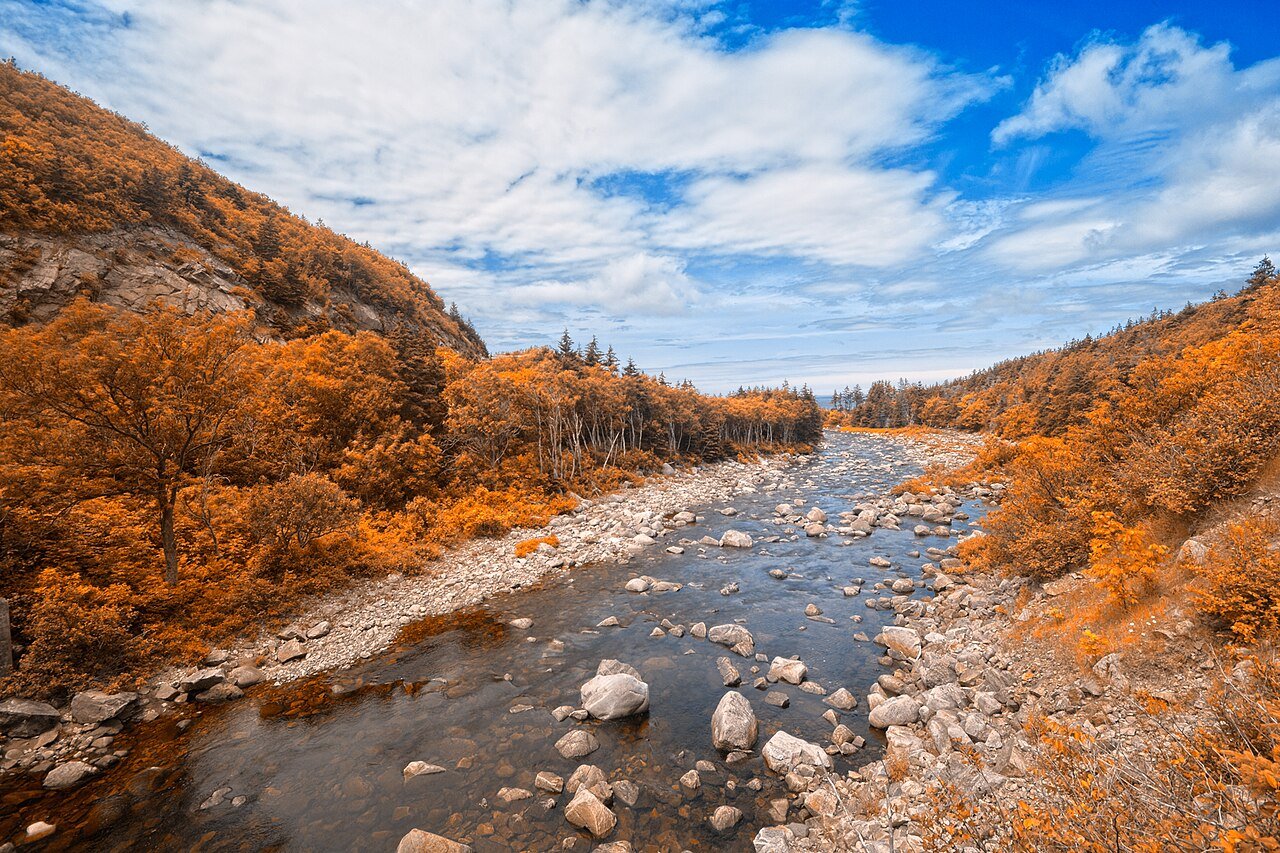
Timing is everything, and I’ll be honest — nobody can hand you a guaranteed peak-colour date. But the pattern is reliable: colour creeps in during late September, the inland Highlands and high plateaus turn first, and the display moves toward the coast through the month. Destination Cape Breton’s fall update this year puts the island-wide peak between roughly October 10 and 25, with the Highlands peaking in the first half of October. The ocean-side cliffs near the water lag a few days behind (the salt air keeps things just warm enough).
If you’re locking in one week for 2026, my answer is October 9–17. That’s peak colour for most of the island and the Celtic Colours International Festival — you get the views by day and live fiddle music by night. It is, trust me on this one, the best week of the year to be here.
Fair warning on weather: daytime highs run around ~12°C, and nights can flirt with freezing — pack the three-layer rule (moisture-wicking base, warm mid, waterproof shell). A sunny morning can turn into thick fog by noon on the plateau. I learned this the sweaty-then-freezing way on Franey: t-shirt at the trailhead, winter jacket by the summit.
One more 2026 note: the island took a heavy rainstorm in early September, and I checked Destination Cape Breton’s official fall update before writing this — roads, communities, and the festival are all proceeding exactly as planned. → Destination Cape Breton — fall 2026 update
Driving the Cabot Trail: my 3-day autumn itinerary
Three days is the minimum for this loop — do not skip the third day. You could drive the whole 298 km in about five hours, but that would be a crime. Base yourself in two or three hubs (Baddeck, Ingonish, Chéticamp) so you’re not driving the whole island after dark.
Pro tip on direction: drive the loop counterclockwise (Baddeck → Ingonish → north tip → Chéticamp → back). This is the local advice I got and ignored on my first trip — I drove clockwise and spent three days making left turns across oncoming traffic into pull-offs. Counterclockwise puts the ocean-side lookouts on your right for easy in-and-out. Do not be me.
Day 1 — Baddeck to Ingonish: Cape Smokey and the Atlantic side
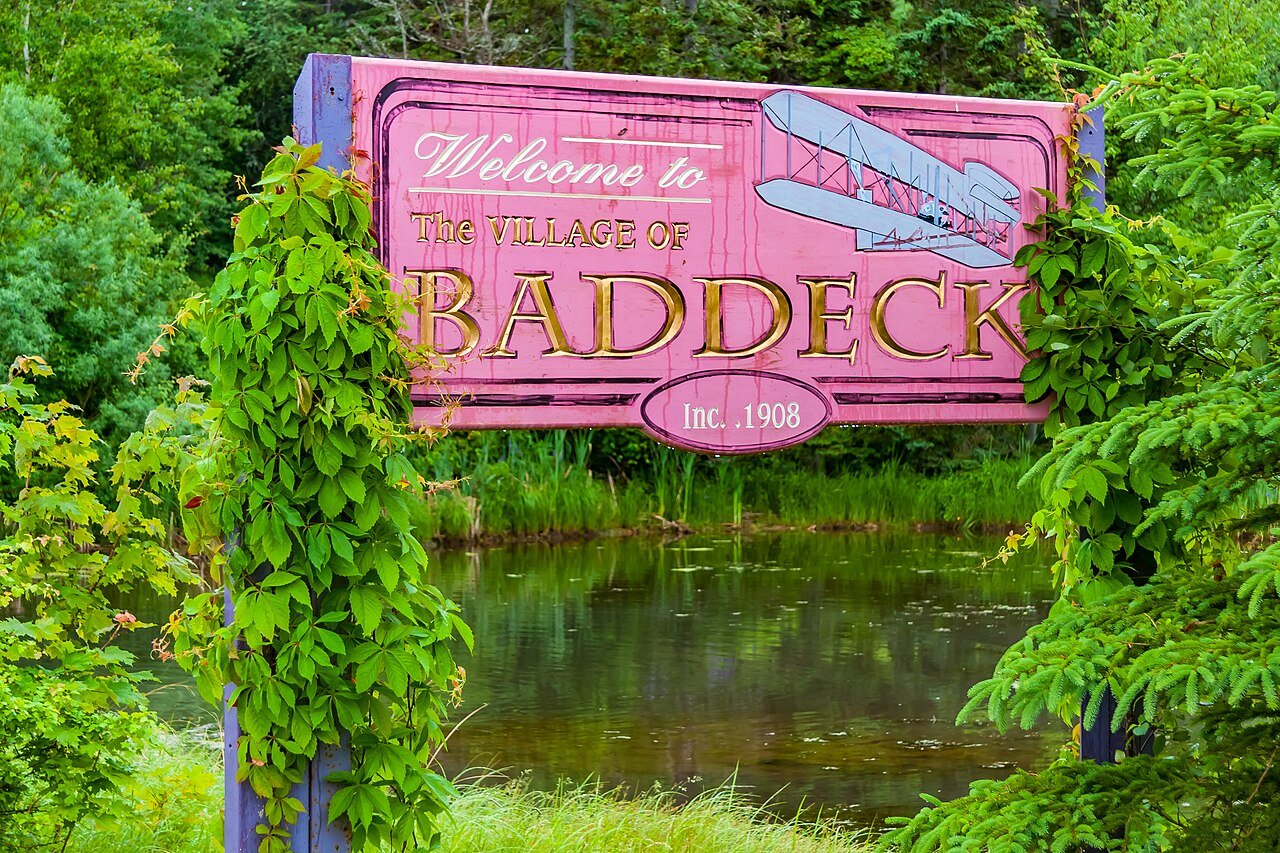
Start in Baddeck, the “beginning and end of the Cabot Trail” village on the Bras d’Or Lake. Give yourself a slow morning — the Alexander Graham Bell National Historic Site is genuinely worth an hour if you’re into that sort of thing (I am, unapologetically).
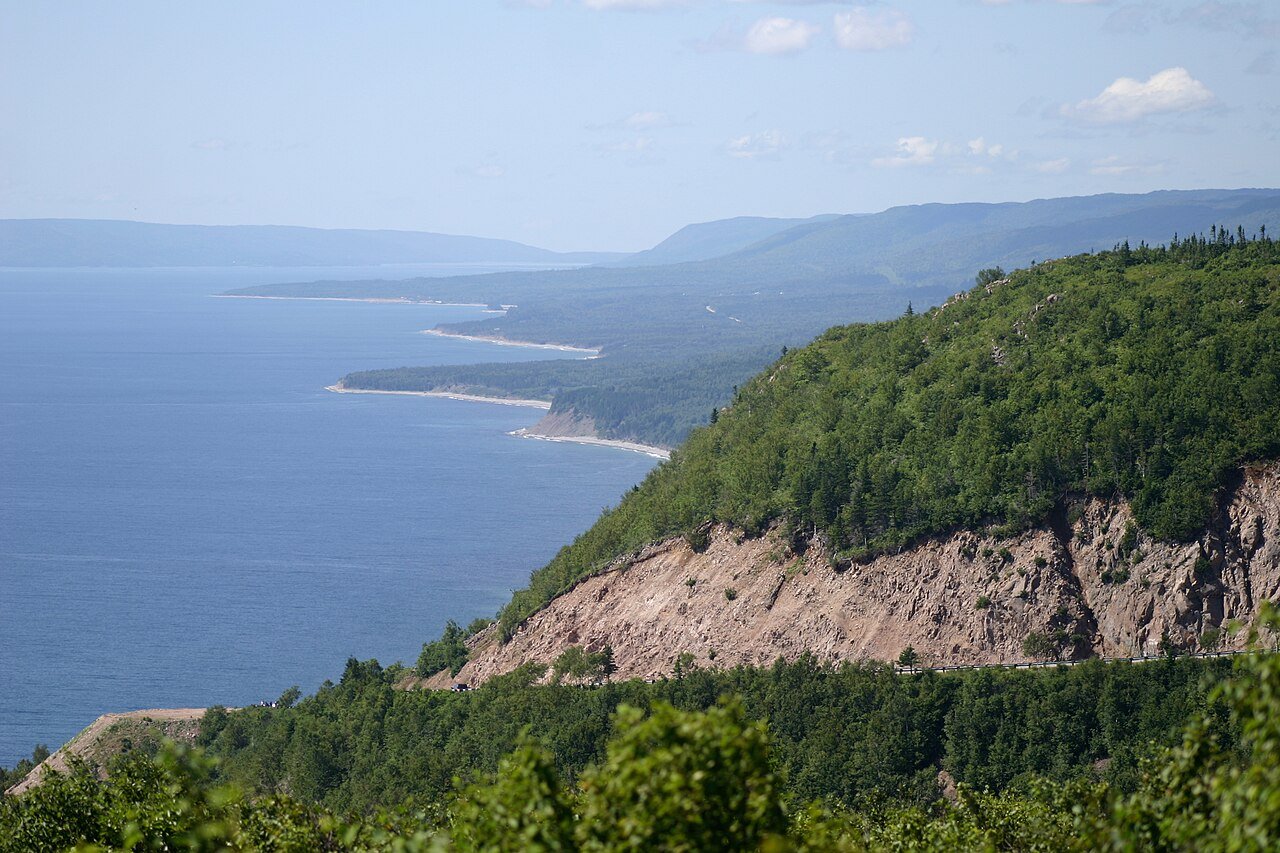
Then head east toward Ingonish. This is the dramatic side: the road climbs Cape Smokey, one of the steepest grades on the trail, and the view from the top is a full-on pull-over-and-stare moment. The turnoffs along this stretch face the open Atlantic — in October the headlands are rust and gold right down to the waterline.
Afternoon: settle into Ingonish (it’s inside the park’s orbit, with the Keltic Lodge area as the classic splurge). Walk the Middle Head Trail — a short, easy headland walk (~1 hour) between two bays, where I watched seals playing in the surf while the birches glowed behind me. Dinner in town, early night. Tomorrow is the big hiking day.
Day 1 driving: Baddeck → Ingonish is roughly 2 hours of actual road time — but budget 4–5 with stops. You’ll stop. Everyone stops.
Day 2 — Ingonish to Chéticamp: Skyline at sunset, then the Acadian coast
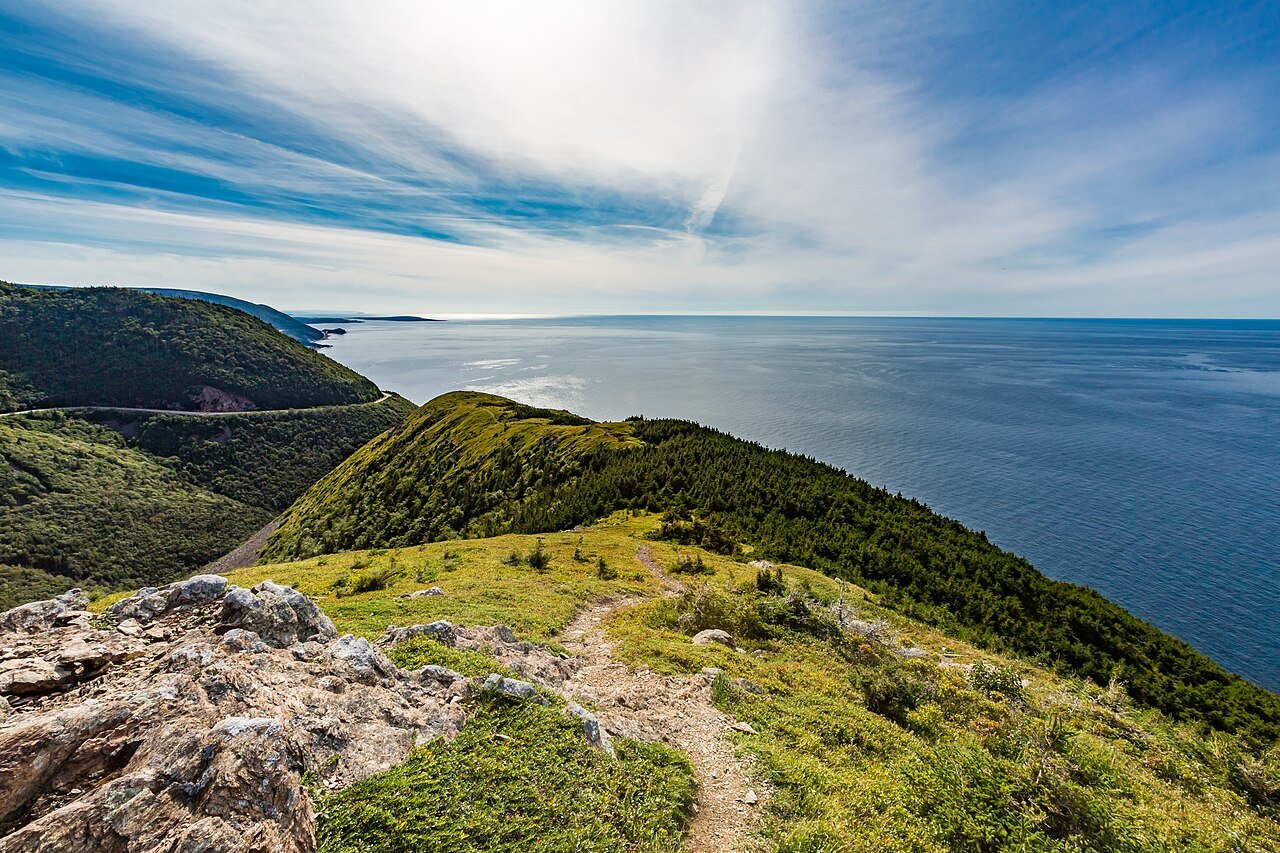
Today crosses the northern tip of the island — the Aspy Valley (often the most colourful stretch on the whole trail), the hairpin descents of North Mountain, and the afternoon’s main event: the Skyline Trail.
This is the island’s signature hike for a reason: a boardwalk leads out to a headland cliff above the Gulf of St. Lawrence, and at sunset the whole sky goes pink over the water. Go for the 8.2 km loop (2.5–3 hours), or the 6.5 km out-and-back (~2 hours) if your knees file complaints. Here’s the critical 2026 detail: parking reservations are required June 26 – October 25, 2026, in timed four-hour slots (8 AM–12 PM, 9 AM–1 PM, 12 PM–4 PM, 1 PM–5 PM, 4 PM–8 PM, 5 PM–9 PM). I double-checked this on Parks Canada’s official Skyline page — there’s an admission fee plus a parking fee plus a small reservation fee, and the lot only holds about 50 cars. I showed up at 11 AM on a Saturday once. Never again. → Parks Canada — Skyline Trail (reservations required)
Descend into Chéticamp as the light goes. This is Acadian country — French spoken in the shops, hooked-rug studios everywhere (the town is famous for them), and the harbour full of working fishing boats.
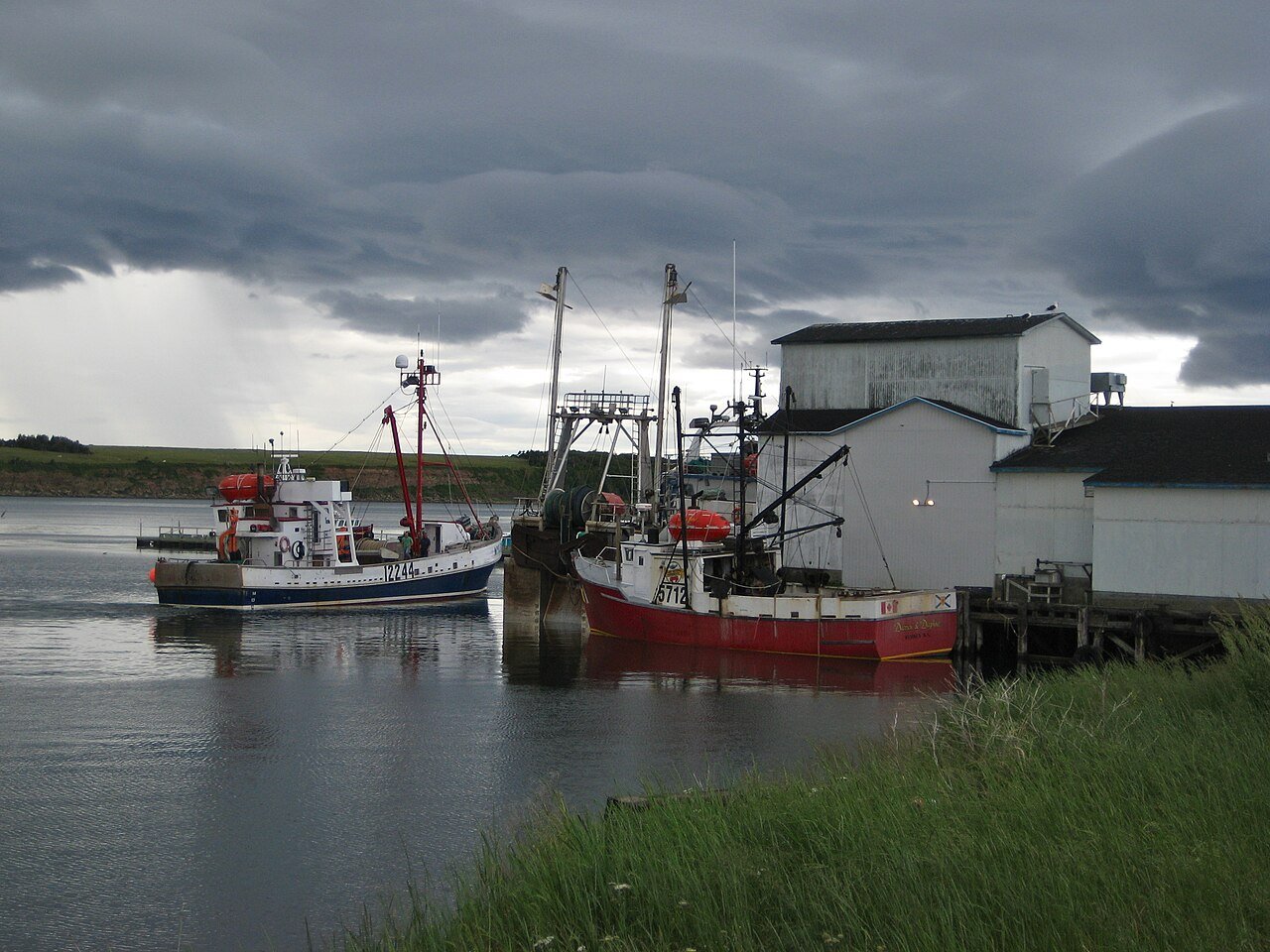
Day 2 driving: Ingonish → Chéticamp is about 3 hours of road time, plus the Skyline hike. Time your arrival for the 1 PM–5 PM or 4 PM–8 PM parking slot.
Day 3 — Chéticamp to Baddeck: the Margaree Valley
The final stretch is a complete change of pace: inland through the Margaree Valley, all rolling hills and a world-famous salmon river, the valley floor turning into a golden tunnel in mid-October. Stop at the lookouts over the Margaree River — the hills mirror in the water and it’s the calmest, dreamiest hour of the whole loop.
Back in Baddeck by late afternoon, which leaves you perfectly positioned for an evening Celtic Colours concert (Baddeck hosts several) or the drive back toward Sydney. If you’re flying out of Sydney (YQY), it’s about 2 hours from the park area — and worth knowing the airport connects through Toronto, or via Halifax for some European routes.
Day 3 spending: park pass + food + gas ≈ ~$60 per person (excluding hotel).
The best fall hikes on Cape Breton
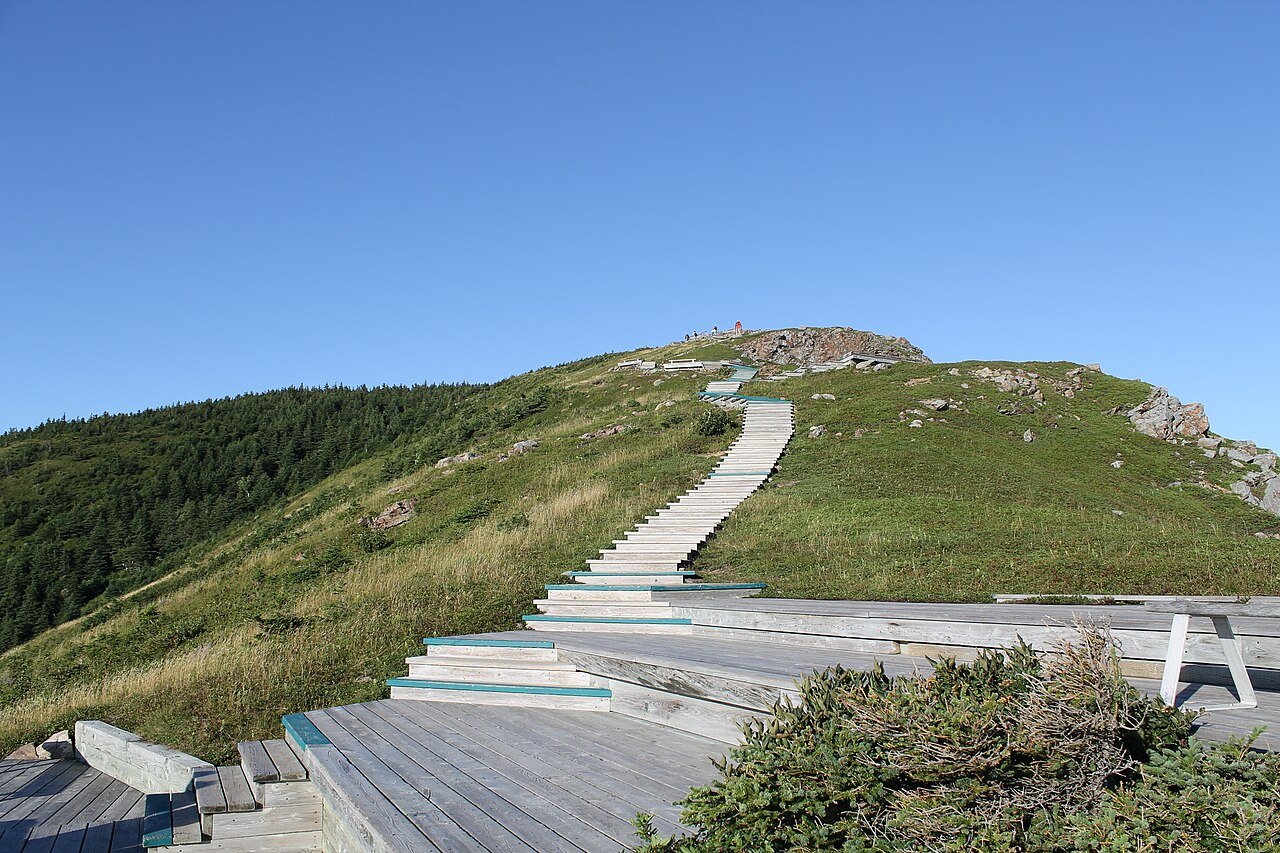
Driving is the main event, but hiking is how the island gets under your skin — dry leaves under your boots, woodsmoke in the air, the whole forest smelling like October. All of these are inside Cape Breton Highlands National Park, so you need a park pass (regular 2026 fees apply from September 8 — budget under ~$10/adult/day and confirm on the official Parks Canada visit page). Trail details below are from Parks Canada’s official hiking list, which I cross-checked before writing:
- Skyline Trail (6.5 km return or 8.2 km loop, 2–3 hours): the sunset headland walk. Moose are common here at dawn and dusk — I watched one materialize out of the ditch fog like a special effect. Reserve parking ahead (see Day 2).
- Franey Trail (4.5 km lower loop, 1.5–2 hrs / 13 km full loop, 5–6 hrs, difficult): the workout. The full loop climbs 423 m to a 360° summit over the Clyburn Brook canyon — when the maples peak, the canyon looks like a river of fire. I brought poles and was smug about it on the wet-leaf descent. Note the full loop’s season runs to mid-October, so check conditions if you’re visiting late.
- Acadian Trail (8.4 km loop, 3–4 hours, near Chéticamp): climbs above the Chéticamp River for forest-to-sea views. Fewer crowds than Skyline, just as pretty.
- Middle Head Trail (~1 hour, easy): the short coastal walk at Ingonish — old-growth forest, two bays, seals. My “rest day” hike.
- Lone Shieling (0.6 km loop, 15 minutes): a tiny walk through one of the oldest protected maple groves in the province — 350-year-old trees making a golden canopy. Do not skip it; it’s 15 minutes.
→ Parks Canada — full Cape Breton Highlands hiking list
Celtic Colours 2026: the 30th anniversary
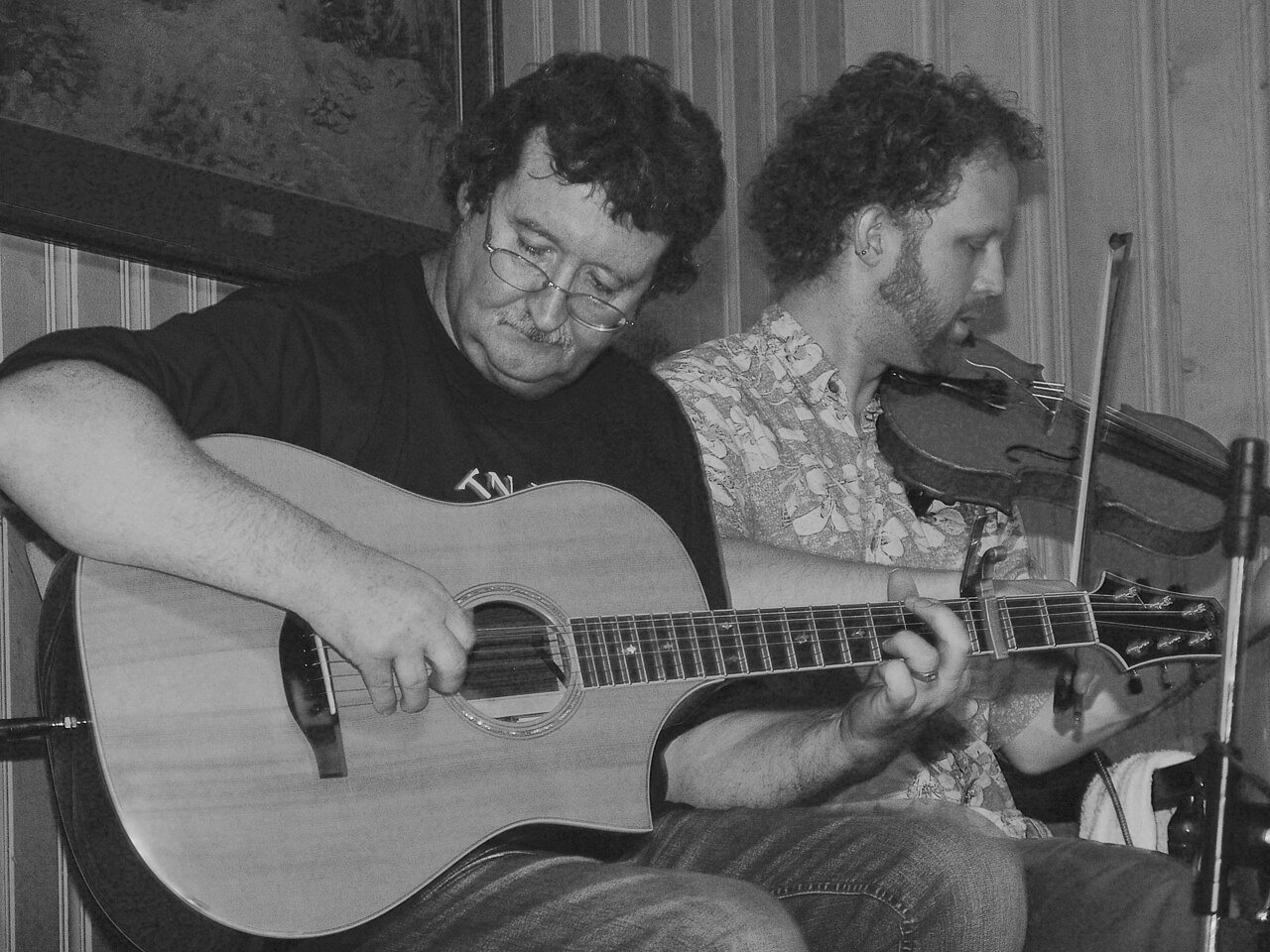
This is the soul of the island’s autumn, and 2026 is the big one: the 30th Celtic Colours International Festival, October 9–17, 2026, with 52 concerts (including 16 matinees) across 36 communities. It doesn’t happen in one stadium — it happens in dozens of tiny community halls, churches, and theatres from Port Hawkesbury (opening night, October 9) to Centre 200 in Sydney (closing night, October 17). Venues range from the historic Savoy Theatre in Glace Bay to the Fortress of Louisbourg. The festival’s own planning page spells out the one thing that matters most: this is a 10,311 km² island, and a concert in Ingonish can be over two hours from one in Port Hawkesbury. Plan your bases around your concert list.
I heard a fiddle leaking out of a community hall in Mabou one night and just… followed the sound. That’s the whole festival in one sentence. The big evening shows are wonderful, but the small-hall concerts — fifty people, wooden floors, everyone tapping — are the ones I still think about. And afterwards there’s the nightly Festival Club, where musicians from different shows jam together late into the night. Ask any local: that’s where the real magic happens.
The practical stuff, all confirmed for 2026:
- Tickets: the full lineup was announced June 22; tickets went on sale July 7 at 10 AM ADT via the festival’s official site. The big shows sell out — in 2025, ~20,000 tickets sold at 95% capacity with 40+ concerts completely sold out. For 2026’s 30th anniversary, assume the same or worse. → Celtic Colours — plan your trip (box office: 1-888-355-7744)
- Don’t only chase the headliners. A volunteer at the box office told me the smaller community concerts are often more intimate — and she’s right.
- Stay near your venues. Do not drive two hours on dark, winding highland roads after a late show if you can help it. Book rooms in the community where your evening concert is.
Where to stay (and what closes when)
Fall on Cape Breton is shoulder season wearing a Halloween costume: gorgeous, but things are winding down. Most hotels and restaurants stay open through Celtic Colours (October 17), then the island gets quiet fast. My base strategy:
- Baddeck — the classic hub: most dining, most rooms, central to everything. Best first-timer base.
- Ingonish — inside the park’s orbit; pricier, spectacular, book earliest.
- Chéticamp — Acadian town on the west side; great for the Skyline-to-sunset day.
Book months ahead for the festival week — a B&B owner in Baddeck told me her October rooms go to returning guests first, and she wasn’t exaggerating. On food: the little roadside seafood shacks of July are mostly boarded up by mid-October, so call ahead for dinner and stock up on snacks in Sydney or Baddeck before heading into the Highlands. The park’s campgrounds wind down through October too — check current dates on the official site before committing to tent plans.
Extending the trip? Our Ultimate Nova Scotia Road Trip Itinerary picks up where the island leaves off, and the Travel Guide to Nova Scotia covers the rest of the province.
How much does a fall trip to Cape Breton cost?
Sample budget per person, 3 days, excluding flights (prices checked October 2026; items marked ~ are estimates):
| Item | Cost (CAD) |
|---|---|
| Car rental ex-Sydney, 3 days (split 2 ways) | ~$150 |
| Parks Canada pass, 3 days | ~$27 |
| Skyline parking reservation ($9.50 parking + $3.50 booking fee, online) | ~$13 |
| Celtic Colours evening concerts × 2 | ~$90 |
| Mid-range hotel/B&B, 2 nights (split 2 ways) | ~$200 |
| Food & drinks, 3 days | ~$180 |
| Gas (~600 km of driving) | ~$70 |
| Total | ~$730 |
Worth every penny, and honestly cheaper than most Canadian fall trips because the scenery is free. See also our Best Fall Colours in Canada guide if you’re comparing destinations, or Canada in Fall for the national picture.
Timeline at a glance
| Day | Morning | Afternoon | Evening |
|---|---|---|---|
| Day 1 | Baddeck → Ingonish via Cape Smokey | Middle Head Trail (~1 hr) + Ingonish lookouts | Dinner in Ingonish |
| Day 2 | Aspy Valley drive to Skyline Trail | Skyline hike (reserve parking!) + North Mountain descent | Chéticamp harbour + Celtic Colours concert |
| Day 3 | Margaree Valley river lookouts | Back to Baddeck via the Bras d’Or | Concert in Baddeck or drive to Sydney |
FAQs about Cape Breton in fall
When is peak fall colour in Cape Breton for 2026?
Colour starts in late September in the inland Highlands and moves toward the coast; Destination Cape Breton puts the island-wide peak between roughly October 10 and 25, with the Highlands peaking in the first half of October. For 2026, October 9–17 is the sweet spot — peak colour plus the Celtic Colours festival.
How many days do I need for the Cabot Trail in fall?
Three full days minimum. The 298 km loop takes about 5 hours of pure driving, but you’ll want a day each for the Ingonish/Atlantic side, the northern tip with the Skyline Trail, and the Chéticamp-to-Margaree Valley return. Add a fourth day if you’re stacking multiple Celtic Colours concerts.
Do I need a Parks Canada pass to drive the Cabot Trail?
Only for stopping inside Cape Breton Highlands National Park — about a third (106 km) of the trail runs through it. If you hike, picnic, or use park facilities, you need a pass (regular 2026 fees apply from September 8; budget under ~$10/adult/day). Driving straight through without stopping doesn’t require one. Confirm current fees on the official Parks Canada visit page.
Do I really need to reserve Skyline Trail parking in October 2026?
Yes — parking reservations are required June 26 to October 25, 2026, in timed four-hour slots, and the lot holds only about 50 cars. Book on the Parks Canada Skyline page before you go; October weekends sell out.
How do I get Celtic Colours 2026 tickets?
The 30th anniversary festival runs October 9–17, 2026, with 52 concerts in 36 communities. Tickets went on sale July 7, 2026 at 10 AM ADT through the festival’s official site — buy online, by phone at 1-888-355-7744, or in person at the Eltuek Arts Centre in Sydney. Book early: 2025 sold ~20,000 tickets at 95% capacity. Details at celtic-colours.com.
Are restaurants and campgrounds open in late October?
Mostly through the end of Celtic Colours (October 17), then things close fast. Seasonal seafood shacks are largely boarded up by mid-October, and the national park’s campgrounds wind down through the month. Always call ahead for dinner reservations and check the official Parks Canada camping page before planning a tent trip.
Keep exploring
- Cape Breton in Summer: The Ultimate 2026 Travel Guide
- Ultimate Nova Scotia Road Trip Itinerary for 2026
- The Best Fall Colours in Canada: 2026 Foliage Guide
- The Ultimate 2026 Travel Guide to Nova Scotia, Canada
- Canada in Fall: The Ultimate 2026 Autumn Travel Guide
That’s my whole playbook — and I’ll leave you with the same thing I’d tell a friend borrowing my spreadsheet: pick your week, book the parking slot the same night you book the room, and leave one evening unplanned for whatever fiddle music drifts out of the nearest hall. You’ve got this.
2 comments