
- ✓ Toronto winter is milder than its reputation, but the wind is the real story: January days usually hover around freezing, yet a lakeside wind chill can make it feel 10 degrees colder — dress for the wind, not the thermometer.
- ✓ The PATH is your winter survival tool, not a tourist attraction: use it to cross downtown warm and dry, and come back up to street level for the actual sights — it is a hallway system, not a destination.
- ✓ All prices here are planning ranges, not quoted rates: rinks, markets and menus change prices by date, so check the official sites linked below for your exact dates.
Here’s the thing nobody tells you about Toronto in winter: it is not the frozen endurance test people imagine. I arrived on a January afternoon expecting to suffer nobly, and instead I found a city that has simply organised itself around the cold — underground walkways, outdoor rinks with hot chocolate stands, museums that are warm by design, and a restaurant festival built for the exact weeks when nobody wants to go out. I slipped exactly once, on an icy patch outside Union Station, in front of a commuter who did not even break stride. Fair warning: Toronto winter will humble your footwear before it humbles you.
This is not a rehash of my things to do in Toronto guide — that one covers the year-round icons. This guide answers the winter questions: how cold it really gets, how the PATH actually works, where to skate, when Winterlicious runs, and how to build a 3-day trip that keeps you warm without keeping you indoors the whole time. I have done Toronto in winter twice now, once in December for the markets and once in late January for the quiet version, and the plan below is the one I would hand a friend.
The stops on the map
Seven stops: the rinks, the market streets, the underground hub, and one warm museum for balance. Tap any stop to jump the map straight to it.
Map data © OpenStreetMap contributors. Open the full map
How cold it really gets (and why the wind matters more)
Let’s get the numbers out of the way, because Toronto’s reputation is colder than its weather. In January, the coldest month, daytime highs average around 0°C and overnight lows average around −7°C. February is a touch milder on paper, with highs around 1°C. That puts Toronto well south of the deep-freeze cities — it is cold, but it is not Winnipeg cold, and it is not Quebec City cold either.

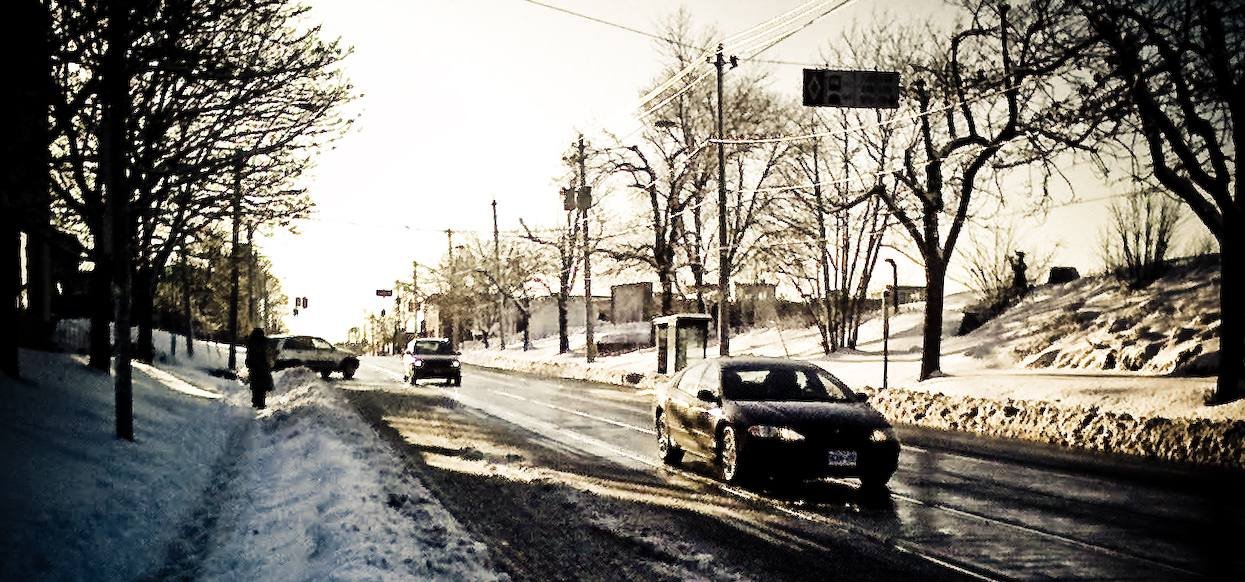
Here’s the thing, though: the average hides the two things that actually shape your day. First, wind chill. Toronto sits on Lake Ontario, and a wind off the lake on a −5°C day can feel like −15°C, especially along Queens Quay and the open squares. Second, the thaw. Toronto winters swing: a week of snow and −10°C can flip into a grey, slushy 4°C weekend, and then back again. The slush days are, honestly, the worst days — wet boots, grey skies, and ice hiding under puddles. I learned to check the forecast the night before and to plan my outdoor skating for the cold, sunny days and my museum days for the slush.
The lake also softens the extremes in one useful way: Toronto rarely gets the week-long −25°C stretches that hit the Prairies. What it does get is snow — on and off all winter, usually in manageable bursts rather than blizzards, with the city clearing major routes fast. A big storm can still slow the TTC and delay a flight, so never plan a tight connection on your last winter day. Build in a buffer afternoon. It costs less than a rebooked ticket.
Dress for wind chill and slush, not for the headline temperature. A −5°C day with a lake wind and wet sidewalks will beat you faster than a calm −12°C day. Waterproof boots with real grip, a windproof outer layer, and mitts (not thin gloves) are the whole game — I found this out the soggy way on my first December trip, in fashion boots I retired that same evening.
The PATH: your winter survival tool, explained honestly
The PATH is downtown Toronto’s underground pedestrian network: roughly 30 kilometres of tunnels, walkways and shopping concourses connecting more than 70 buildings, six subway stations, Union Station, the Eaton Centre, and a long list of office towers, hotels and food courts. I double-checked the scale on the City of Toronto’s PATH page before writing this — it is genuinely the largest underground shopping complex of its kind, and it is how downtown workers cross the core in January without ever putting a coat on.

Here is how to actually use it as a visitor. Start at Union Station, the southern hub, and walk north through the concourses toward King, Queen and Dundas. The coloured PATH signs are your compass: the letters are colour-coded by direction (north, south, east, west), and the signs name the next building you are entering. Follow building names, not street names — that is the trick every local I asked said first, and it is the trick that finally stopped me getting turned around. The walk from Union to the Eaton Centre takes about 20 minutes underground, and on a −12°C day it feels like a small miracle.

Now the honest limits, because the PATH is oversold as a tourist attraction and it is not one. It is mostly office-building concourses and food courts: fluorescent, busy at lunch, and quiet — some sections effectively closed — on evenings and weekends. It does not reach every sight: the CN Tower is a short walk from the Convention Centre end, not a PATH stop, and the Distillery District and the waterfront rinks are outside the network entirely. Use it the way locals do: as a warm hallway between two real destinations, with a food-court lunch in the middle. My favourite use is the simplest one — duck in at Union after a lakeside skate, warm up over coffee, and come out at Queen Street ready for the next thing. Pro tip: download the City’s PATH map before you go down. Phone signal is patchy underground, and a screenshot beats a spinning loading wheel. → City of Toronto — PATH, Toronto’s downtown pedestrian walkway
Enter the PATH at Union Station or the Eaton Centre, not at a random office tower door — those two entries are signed, staffed and easy to find. And if you get lost (you will, once, everyone does), just follow the signs to the nearest subway station and pop up to street level. Getting lost underground with a coffee in hand is a much better story than getting lost in the wind.
Skating: the three rinks that matter
Toronto runs more than 50 outdoor rinks in a typical season, and almost all of them are free to skate on if you bring your own skates. You do not need all 50. You need these three, each with a different mood, all within a short TTC ride of each other.
Nathan Phillips Square — the classic
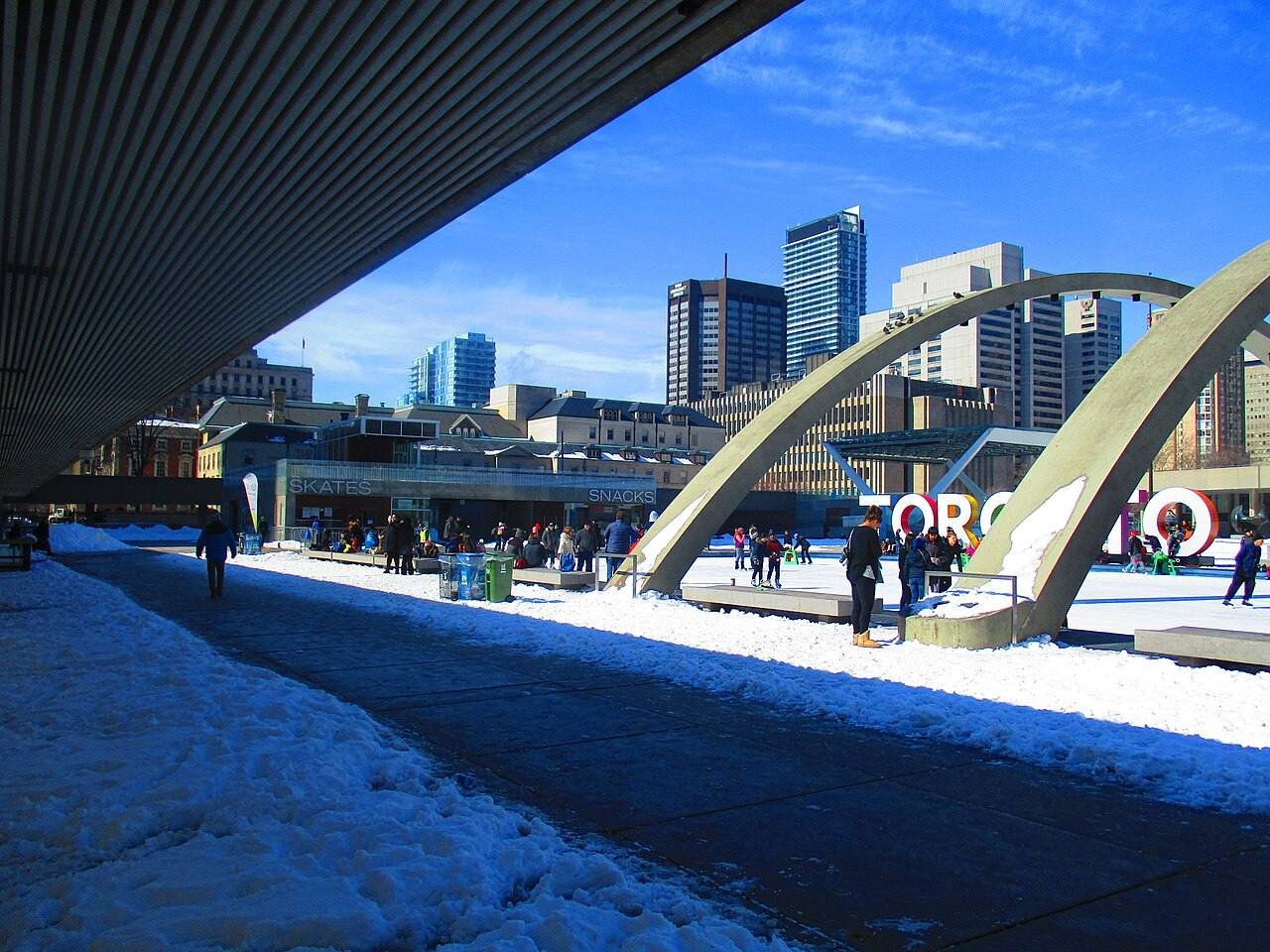
The rink in front of City Hall, under the illuminated TORONTO sign, is the one on every postcard and it earns it. Skating here is free, rentals are available on site (bring photo ID for rentals), and the rink typically runs from late November into March, weather permitting. I skated here on a Friday evening in January, badly, while a teenager did effortless crossovers past me and a couple took selfies under the sign. The change rooms and the food stalls are right there, and the whole square glows after dark. Go in the evening if you can — the daytime rink is school groups and lessons, and the night rink is the postcard. I timed it once: from the Queen subway station to laced up took about ten minutes, and that included the rental line.
Harbourfront Centre — the lakeside one
The rink at Harbourfront Centre, at 235 Queens Quay West, trades the downtown buzz for lake air and skyline views. Skating is free, rentals are available, and on Saturday nights the rink has run DJ skate parties in past seasons — check the Harbourfront programme for your dates, because the events calendar changes year to year. Fair warning: this is the windiest of the three rinks. The lake wind that makes the view dramatic also makes your face cold, so skate here on a calm day and save the windy day for the PATH. I did it the other way around once. Never again.

The Bentway — the weird, wonderful one
The Bentway skate trail is a roughly 220-metre loop under the Gardiner Expressway at 250 Fort York Boulevard — skating under a highway, between concrete pillars, with the city humming overhead. It is free, it is genuinely strange in a good way, and it is the rink locals recommend when you ask where they skate. The trail is shorter than the other two rinks, so treat it as a stop rather than an afternoon: skate the loop, warm up at the concession, and then walk into Liberty Village next door for coffee. The 2026–27 season dates were not posted when I checked in the autumn, so check thebentway.ca in early December before you build a day around it. Same rule for Harbourfront: both venues post their season dates late, and both are weather-dependent.
Skate twice in one day and you will understand Toronto winter: Nathan Phillips Square after dark for the classic photo, then Harbourfront the next morning for the quiet lake light. A skate-shop staffer at Nathan Phillips told me that pairing, and I have done it on both my winter trips. Bring your own skates if you have them — rental lines are the only queue in this whole guide that ever annoyed me.
Distillery Winter Village: the Christmas market season
The Distillery Winter Village — the market formerly known as the Toronto Christmas Market — fills the cobblestone lanes of the Distillery District with lights, stalls, a towering tree and food cabins from mid-November into early January. For the 2026–27 season it runs November 12, 2026 to January 3, 2027, and it is closed on Christmas Day. I double-checked those dates against the organisers’ announcement before writing this, and the entry rules are the part people get wrong, so here they are plainly: entry is free before 4 p.m. every day and all day Monday to Wednesday through December 13, while timed tickets (from about $16 plus fees, children 9 and under free) are required for busy evenings — opening night, Friday to Sunday evenings, December Thursdays, and daily from December 14 to 31. Tickets are sold online only, so book before you walk over.

Is it worth it? In December, yes — go on a free weekday, arrive before the 4 p.m. cutoff, and treat it as a wander with snacks rather than a shopping mission. The lanes themselves are the attraction: Victorian brick, string lights, and the smell of something sweet from every other cabin. In January, the Village is gone, and the District goes back to being its quieter, year-round self — galleries, cafés and the same beautiful lanes without the crowds. That is not a consolation prize. My January walk through the empty lanes, with snow on the cobbles and no queue anywhere, was one of the calmest hours of that trip. If you are choosing between December and January, December is the market and January is the city. → The Distillery District — official site
Do not show up at the Winter Village on a December Saturday evening expecting to walk in. The busy-evening tickets sell out, there is no box office at the gates, and the queue for the tree photo is the longest line in the District. Go Monday to Wednesday, or before 4 p.m. any day, and you will have the lanes nearly to yourself.
Winterlicious: the reason to come in late January
Winterlicious is the City of Toronto’s winter restaurant festival, and it is the smartest reason to pick late January over December. More than 200 restaurants across the city offer three-course prix-fixe lunch and dinner menus for about two weeks, at set price tiers that are well below those restaurants’ usual prices. It exists for exactly the weeks when restaurants are quietest, which means you eat very well, very warmly, for less than you would in October.
Here is what I can verify and what I cannot. The most recent full season ran January 30 to February 12, 2026, with more than 240 restaurants and lunch prices roughly $20–$55 and dinner roughly $25–$75, depending on the restaurant’s tier — those figures come from the City’s own announcement for that season. The 2027 dates had not been posted when I checked in early November 2026, so do not trust any site that claims them yet. The pattern is stable — late January into early February, about two weeks — but the exact dates, restaurant list and price tiers for 2027 will land on the City’s Winterlicious page, and reservations open weeks ahead and fill fast for the popular rooms. My advice: if your trip can flex by a week, flex it into Winterlicious, book the first night you arrive, and eat your biggest meal at lunch, when the same three courses cost less. For the full food picture beyond the festival, my best food in Toronto guide covers the year-round rooms. → City of Toronto — Winterlicious
Book Winterlicious tables the week reservations open, not the week you travel — I watched a friend lose her first-choice room that way, and she ended up eating very well somewhere else but still mentions it. Lunch menus are the bargain: same three-course format, lower tier prices, and a much easier reservation.
Warm indoors: the museum day and the market lunch
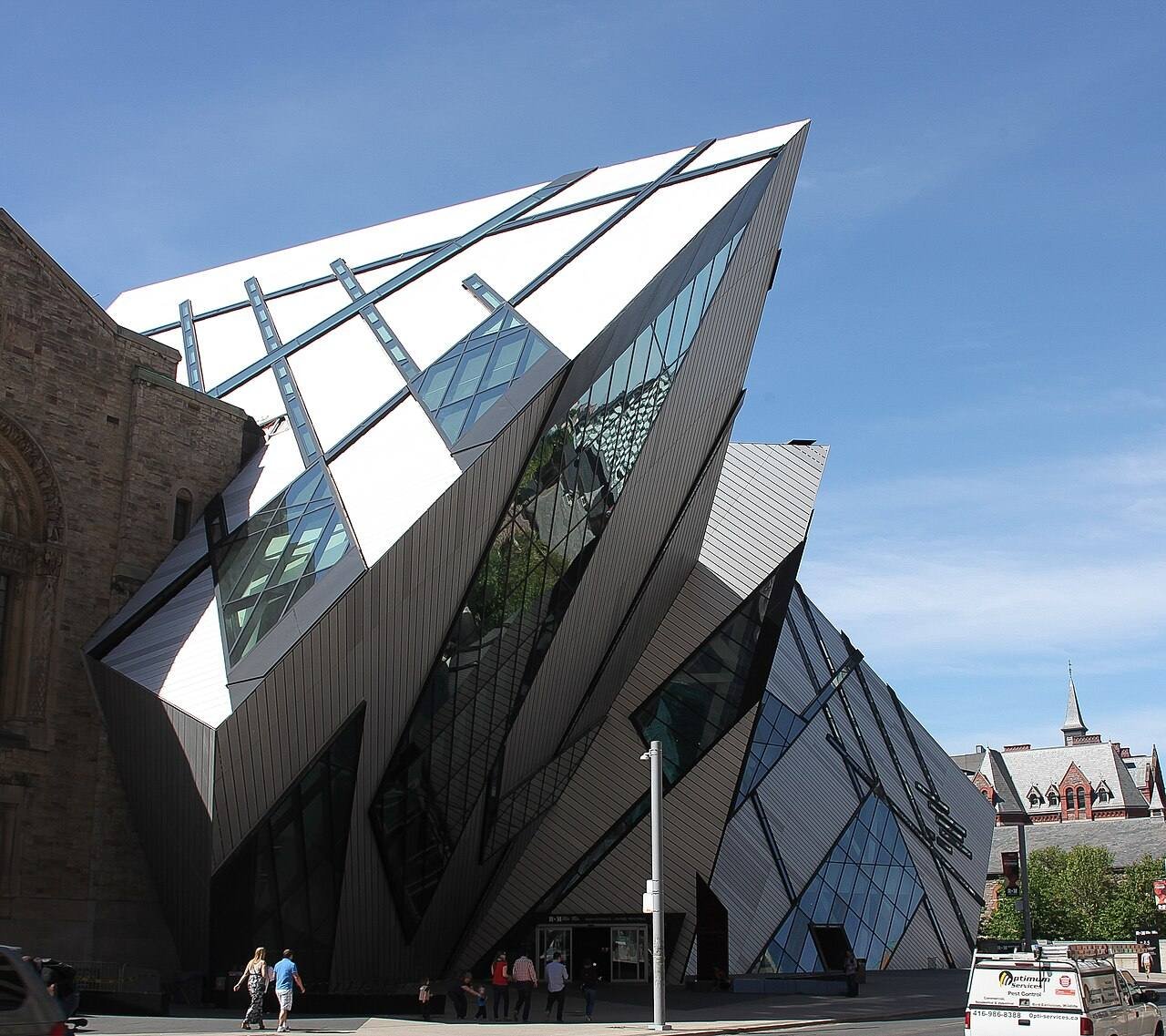
Every good Toronto winter trip has a warm day built in, and the Royal Ontario Museum is the obvious one. It is Canada’s largest museum, its Michael Lee-Chin Crystal juts out of the heritage facade on Bloor Street, and inside are 40-plus galleries — dinosaurs, minerals, world cultures — big enough to fill a whole slushy afternoon. I checked the current admission and hours on the ROM’s official page before my last visit, and you should do the same, because special exhibitions change what is open. Go on a weekday morning if you can: I have done the ROM on a rainy Saturday (school groups everywhere, still worth it) and on a Wednesday at opening (I had the dinosaur gallery nearly to myself). Wednesday wins. → Royal Ontario Museum — official site
For lunch, walk down to St. Lawrence Market at 92 Front Street East — the city’s market since 1803, and the warmest, tastiest room in the winter plan. The South Market is where you eat: the peameal bacon sandwich at Carousel Bakery is the classic order, and the surrounding stalls cover cheese, produce and hot food from a dozen kitchens. I double-checked the market’s hours on its official site before my last visit — they shift seasonally, so do the same — and remember the South Market is closed Sundays and Mondays. I once built a whole Monday morning around it and stood outside a shuttered building while a pigeon judged me. Go Tuesday through Saturday, and go hungry. → St. Lawrence Market — official site

Other warm rooms worth knowing: the Art Gallery of Ontario on Dundas (free for under-25s in past seasons — check before you go), the Hockey Hall of Fame inside Brookfield Place right off the PATH, and the public library’s Toronto Reference Library at Yonge and Bloor, which is free, warm, and has a superb view from the upper floors. The CN Tower and Ripley’s Aquarium are indoors too, and both are covered in my things to do in Toronto guide — winter changes nothing about them except the queues, which are shorter.
Cheaper hotels outside the holidays
Here is the budget truth about Toronto winter: December is the expensive month and January is the cheap one. The weeks around the Distillery Winter Village, the holiday lights and New Year’s Eve push downtown hotel prices up, and the moment January arrives, the same rooms drop — often noticeably — because the holiday crowds leave and the business-travel calendar is quiet. February, outside Winterlicious weekends, is usually the cheapest month of all.
Practical version: stay downtown, near a subway line, even in winter. The money you save by staying far out evaporates into TTC time and cold walks, and the PATH-connected hotels around Union and King are worth a small premium on a −15°C morning, trust me on this one. A mid-range downtown room in the quiet season runs roughly $150–$250 a night as a planning range, more in December, less in late January and February — check the actual rate for your dates, because Toronto hotel prices move with events, not seasons alone. If the budget is tight, look one subway stop out from the core (the Danforth, Bloor West, or the St. Clair corridor) rather than far out: still a 15-minute ride in, much less per night. The full neighbourhood breakdown is in our where to stay in Toronto guide.
What to pack (the list I wish I had first time)
Packing for Toronto winter is a solved problem, and my first trip solved it the hard way. Here is the list, in the order I now pack it: waterproof winter boots with real tread (not fashion boots, not sneakers, not anything with a smooth sole); a windproof, insulated coat that covers your hips; a base layer and a sweater rather than one giant coat you cannot adjust; mitts, not gloves, with thin glove liners underneath if you need to use your phone; a neck warmer or scarf you can pull over your chin; a warm hat that covers your ears; and hand warmers for the skating days, which cost a few dollars and feel like a minor miracle at −12°C. Skip the umbrella — winter precipitation here is snow and slush, and an umbrella in a lake wind is a sail, not a shelter. And bring a small daypack: you will be peeling layers off indoors every time you step into the PATH, a museum or a market, and carrying a coat is much easier than wearing it at 21°C indoors.

What a 3-day Toronto winter trip costs
Here is the honest math, per person, for three days based downtown. Every figure is an approximate planning range for 2026–27, not a quoted rate. Lodging assumes two people sharing a room, so the nightly room price is split in half. The calculator below covers food, sights, transport and extras; lodging is in the table.
| Expense (per person, 3 days) | Budget | Mid-range | Luxury |
|---|---|---|---|
| Lodging, 3 nights (shared room) | $225–375 | $450–750 | $900–1,500 |
| Activities: skating rentals, ROM, market snacks | $40–70 | $70–120 | $120–220 |
| Food, transport & extras (calculator, 3 days) | $330 | $570 | $990 |
| Estimated 3-day total, per person | $595–775 | $1,090–1,440 | $2,010–2,710 |
The table tells the real story: Toronto winter is not an expensive trip by Canadian city standards, because the best things — the rinks with your own skates, the PATH walk, the Distillery lanes on a free weekday, the market wander — are free or nearly free. Lodging is the lever, and January and February outside the holidays are the discount. The second lever is food: a market lunch and a Winterlicious lunch beat two full-price restaurant dinners, and save the money for one proper dinner. For the full Toronto budget picture, see our Toronto travel cost guide, and for the national context, our Canada trip cost guide.
Use the calculator below for the day-to-day part of the budget: food, sights, local transport and treats. It does not include lodging, which is in the table above. Pick your style, set your days, and it does the rest.
Budget calculator
Per person, in Canadian dollars. Excludes accommodation.
Budget ≈ $110/day · Mid-range ≈ $190/day · Luxury ≈ $330/day. Add accommodation from the table above. Prices are planning ranges for 2026–27 — check official sites for your dates.
A 3-day Toronto winter itinerary that actually works
| Time | Day 1 — rinks & the underground | Day 2 — markets & the lake | Day 3 — warm indoors & Winterlicious |
|---|---|---|---|
| Morning | Arrive via Union Station; PATH walk north to Queen | St. Lawrence Market breakfast & wander | Royal Ontario Museum at opening |
| Midday | Harbourfront skate (calm day) + lakeside lunch | Distillery District lanes (December) or gallery wander (January) | Bentway skate trail + Liberty Village coffee |
| Afternoon | Eaton Centre & PATH food-court warm-up | Old Town walk: Flatiron Building, Front Street | Kensington Market wander or CN Tower (see the year-round guide) |
| Evening | Nathan Phillips Square skate after dark | Dinner on King West or in the Distillery | Winterlicious dinner (late Jan–early Feb) or a farewell dinner downtown |
If you have a fourth day, the obvious move is the frozen-waterfall version of the classic escape: our Niagara Falls in winter guide covers the falls when the mist freezes on the railings. Closer to home, our day trips from Toronto guide and best weekend trips from Toronto guide cover the wider escapes. Do not try to fit Niagara into a 3-day winter trip unless you are happy to lose a whole Toronto day to it — I have done that swap, and Toronto deserved the day more.
FAQs about Toronto in winter
How cold does Toronto get in winter?
January, the coldest month, averages a daytime high around 0°C and an overnight low around −7°C. The number that matters more is wind chill: a lake wind can make −5°C feel like −15°C, especially along the waterfront and in open squares. Dress for wind and slush, not just the thermometer, and plan museum days for the slushy thaws.
What is the PATH, and can tourists use it?
Yes — the PATH is a public network of roughly 30 kilometres of underground walkways connecting more than 70 downtown buildings, six subway stations and Union Station. It is free to walk, it is signed by building name, and it is the warmest way to cross downtown in winter. Its limits: some sections are quiet or closed on evenings and weekends, and it does not reach the Distillery District, the waterfront rinks or the CN Tower directly.
Where is the best outdoor skating in Toronto?
Nathan Phillips Square (free, rentals on site, best after dark under the TORONTO sign), Harbourfront Centre (free, lakeside views, windiest of the three), and the Bentway skate trail under the Gardiner Expressway (free, about 220 metres, the locals’ pick). City rinks typically run late November to March, weather permitting, and both Harbourfront and the Bentway post their season dates late — check their sites in early December.
When is Winterlicious, and is it worth planning around?
Winterlicious is the City’s winter restaurant festival: about two weeks of three-course prix-fixe lunches and dinners at 200-plus restaurants. The most recent full season ran January 30 to February 12, 2026; the 2027 dates had not been posted when this guide was written in early November 2026, so check toronto.ca/winterlicious before booking. If your trip can flex into the festival, do it — and book tables the week reservations open.
Is Toronto worth visiting in January, or should I come in December?
Both, for different trips. December has the Distillery Winter Village, the holiday lights and the festive crowds — and higher hotel prices. January has Winterlicious, quieter rinks and museums, cheaper hotels, and the same snow. If you want the market, come in December; if you want the city to yourself, come in late January.
Do I need a car in Toronto in winter?
No — and winter is the worst season to have one downtown. Every stop in this guide is reachable by TTC subway, streetcar or on foot, plus the PATH underground, and downtown parking is expensive and slushy. The one exception is a Niagara Falls day trip, for which you rent for that day only. If you do drive in winter, get winter tires and check road conditions on the morning you travel.
Keep exploring
Toronto winter is the start of a bigger Ontario winter, not the whole of it:
- Things to do in Toronto — the year-round icons this guide builds on
- Best food in Toronto — the year-round rooms beyond Winterlicious
- Toronto travel cost — the full city budget breakdown
- Niagara Falls in winter — the frozen-waterfall day trip
- Day trips from Toronto — the wider escapes, winter included
- Canada trip cost — the national budget context
You’ve got this. Toronto winter rewards the planner who packs mitts, learns the PATH, and saves one evening for skating under the sign — and now you’re that planner.