
- ✓ Book the car and the bed first: summer rentals and rooms in tiny Tofino sell out weeks ahead — I learned this the expensive way, refreshing booking pages at midnight.
- ✓ Plan around the tides, not just the clock: low tide turns Long Beach and Chesterman into a different, far better place — check the tide table every morning before you choose a beach.
- ✓ Give the weather a vote, not a veto: fog, drizzle and even a full storm are part of Tofino’s charm — pack a proper rain jacket and let the forecast shuffle your days, not cancel them.
Tofino is the place that finally broke my spreadsheet — and I mean that as a compliment. I arrived with a color-coded plan, three beaches a day, and a firm belief that I could out-plan the Pacific. Then the fog rolled in sideways, my first morning’s “sunrise walk” turned into a wander through grey nothing, and I had the best trip of my year anyway. Here’s the thing: Tofino rewards the planner who leaves gaps. The beaches are enormous, the rainforest smells like cedar and salt after rain, and the town itself is small enough to learn in an afternoon. I’ve now done this trip twice — once in summer sun, once in full November storm season — and the ten stops below are the ones I’d hand to anyone with three or four days. Prices here are approximate ranges, checked against official sites in October 2026; always confirm ferry times, tour availability and park details before you go.
A confession to start: I am not a surfer. I took a lesson at Cox Bay, stood up for approximately four glorious seconds, and then spent the rest of the session being gently tumbled by waves that were, in my instructor’s kind words, “very friendly.” Do the lesson anyway. You’ll be cold, you’ll be laughing, and you’ll understand Tofino in a way no viewpoint can teach you.
Getting to Tofino
Tofino sits near the western tip of Vancouver Island, and getting there is half the adventure. Most visitors take a BC Ferries sailing to Nanaimo (from Vancouver’s Tsawwassen or Horseshoe Bay terminals), then drive Highway 4 across the island through Port Alberni and past Sproat Lake to the coast — allow roughly 3 hours of driving from Nanaimo, plus stops, because you will stop. The final stretch of Highway 4 winds through rainforest and along Kennedy Lake, and it is narrow and twisting in places, so drive it in daylight if you can. I double-checked the current sailing schedules on the official BC Ferries site before my last trip — summer sailings fill up, so reserve ahead. → BC Ferries — official site
You can also fly into the small Tofino–Long Beach Airport (YAZ) from Vancouver, or take a bus to Tofino and get around by bike and on foot. Fair warning: without a car, reaching Ucluelet and the far ends of Long Beach takes real planning — the local bus exists but runs far less often than a city visitor expects. If you’re flying in, I’d still rent a car at the airport for at least two days; it’s the difference between seeing three beaches and seeing the whole coast.
Once you’re in town, the rhythm changes completely. Tofino’s main strip is walkable end to end, the beaches connect by trails and quiet roads, and parking at the popular beach lots fills by late morning in summer. I timed it on my summer visit: arriving at Chesterman Beach before 10 AM meant an easy parking spot and an almost-empty beach; arriving at noon meant circling the lot and walking in from the road. Trust me on this one — early beats everything here.
The 10 must-see stops, on a map
Ten stops, from Hot Springs Cove in the north to the Amphitrite Point Lighthouse in Ucluelet in the south. Tap any stop to jump the map straight to it.
Map data © OpenStreetMap contributors. Open the full map
1. Long Beach & Pacific Rim National Park Reserve — the endless sand

Long Beach is not a beach so much as a horizon that happens to have sand on it. Part of Pacific Rim National Park Reserve, it runs for kilometres between rocky headlands, and on a weekday morning you can walk for twenty minutes and feel like you have the Pacific to yourself. I went at low tide, as the tide table told me to, and the beach doubled in width — wet sand like a mirror, sand dollars, tiny crabs in the pools, and the surf a long white line far out. It was the single best walk of my trip, and it cost nothing but a park pass and an early alarm.
A national park pass is required to stop in the park, and the main access points are at Green Point, Long Beach itself and the Kwisitis area — I checked the current pass details on Parks Canada’s site before I went, because the rules and prices change. → Parks Canada — official site For the full park picture, including the Broken Group Islands and the West Coast Trail, see my Pacific Rim National Park guide.
Walk Long Beach at low tide and again at sunset if you can. The low-tide walk is for exploring; the sunset walk is for standing still. I did both on the same day and they felt like two different beaches — one for wandering, one for watching the sky do something outrageous over the water.
2. Chesterman Beach — tide pools and long sandy walks
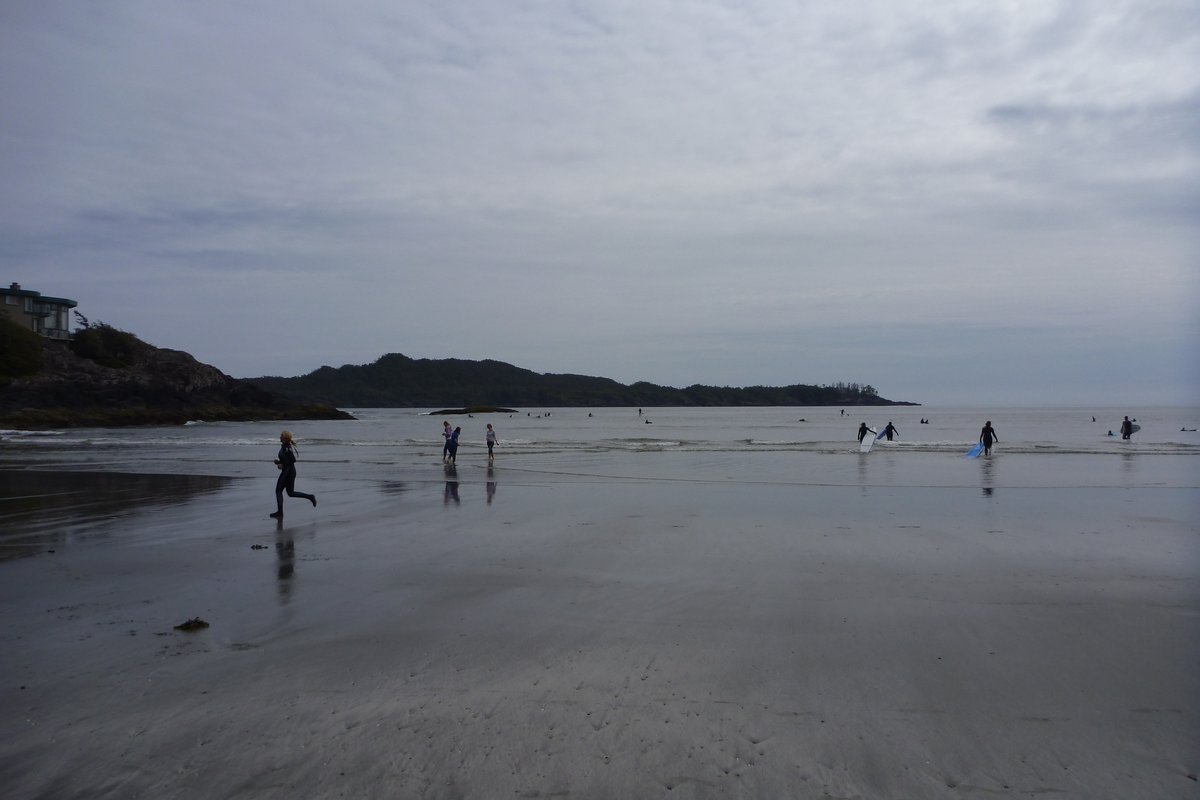
Chesterman is Tofino’s classic — the beach locals name first when you ask where to walk. At low tide it stretches far out to rocky islands you can reach on foot, with tide pools full of anemones, starfish and scuttling crabs. I went with a local’s advice ringing in my ears (“don’t touch, just look, and watch the tide coming back”) and spent two happy hours crouched over pools like a very earnest child. At high tide you can’t always pass between the north and south sections, so plan around the tide, not your watch.
The Pacific here is cold, powerful and indifferent to your swimming ability. I watched experienced surfers in full wetsuits treat the shore break with real respect, and I took the hint: paddle and splash near shore, swim only where others are swimming, and never turn your back on the ocean when you’re near the rocks. Sneaker waves are a real hazard on this coast.
3. Cox Bay — learn to surf (or watch people who can)
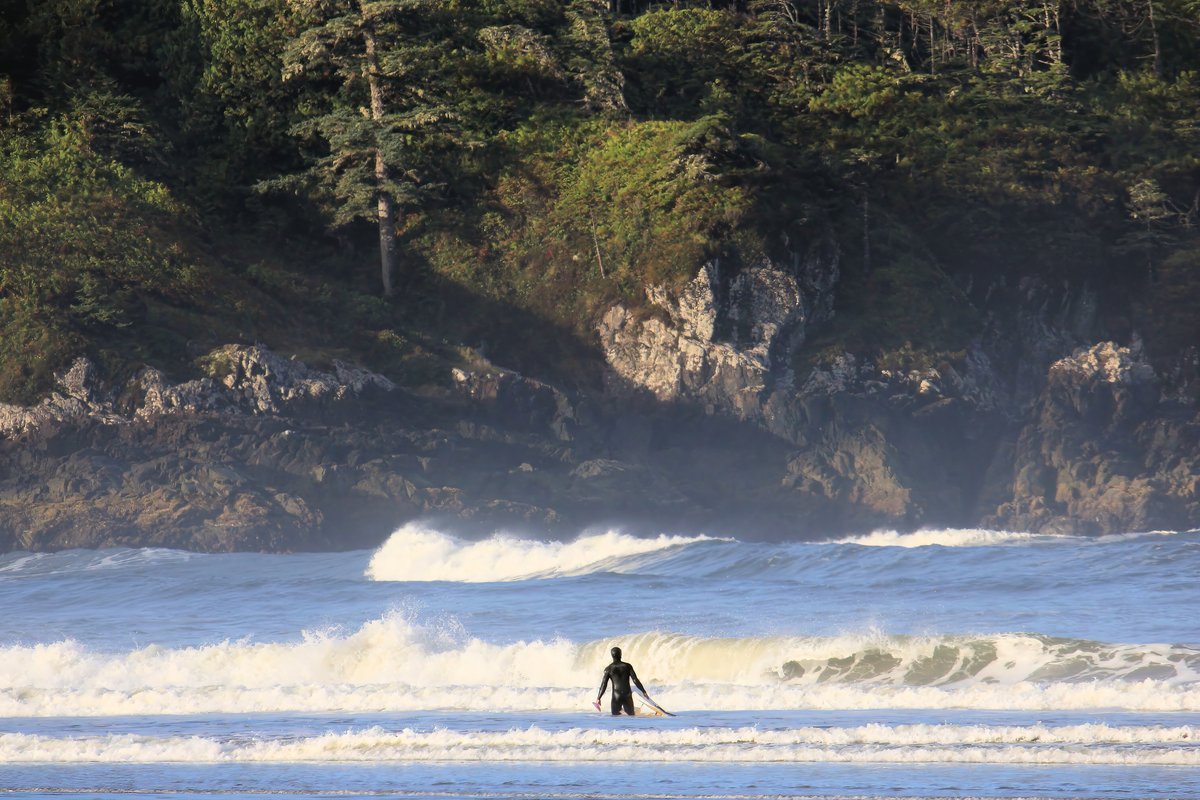
Cox Bay is Tofino’s surf school beach: consistent waves, a big sandy bay, and a row of surf shops renting boards and thick wetsuits (you will want the thick one — the water hovers around 10–12°C even in summer, and I say this as someone who gasped audibly on first contact). My lesson started on the sand, moved to the whitewash, and ended with me standing up just long enough to understand why people rearrange their lives around this sport. Lessons run roughly 2–3 hours including gear, and prices vary by shop and season, so compare a couple of operators rather than booking the first one you see.
Not surfing? Cox Bay is still worth an afternoon for the beach, the sunsets, and the lively end-of-the-day feeling when the surf schools come in. I sat on a driftwood log with a coffee and watched the last surfers of the day — one of the most peaceful hours of my trip.
A surf instructor told me the best beginner window is the morning lesson, before the wind picks up and chops the waves. I took the afternoon slot on my first day (rookie mistake, fully mine) and the morning slot on my second — the difference was night and day. Book the morning, thank me later.
4. Hot Springs Cove — the trip-within-the-trip
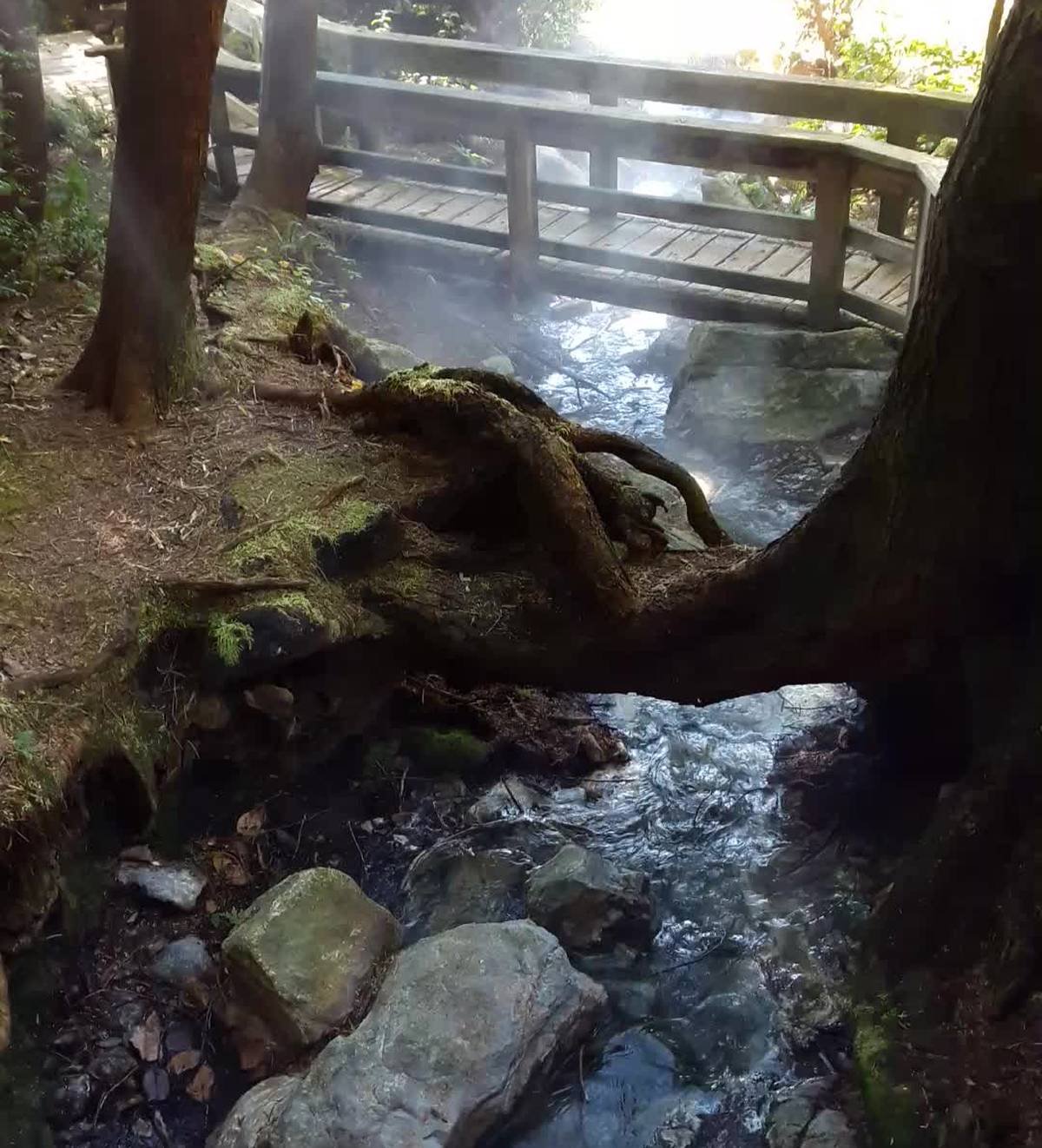
Hot Springs Cove is the one Tofino experience you cannot do by car: it’s reachable only by boat or floatplane from Tofino, followed by a boardwalk walk through old-growth forest to a series of natural rock pools where a hot stream meets the cold Pacific. I took the boat, which doubles as a wildlife tour — our captain slowed for a grey whale on the way out, and the whole boat went quiet in the best way. The pools themselves are gloriously unspectacular in the best sense: no buildings, no music, just steam, cedar and the sound of the surf on the rocks below.
Here’s the thing about Hot Springs Cove: it eats a day and it’s worth every penny of the tour cost (operators set their own prices, so check a couple and book ahead in summer). Wear water shoes for the boardwalk and the slippery rocks, bring a towel and a dry bag, and don’t expect phone signal. I double-checked the access details on the operators’ sites before booking — boats are weather-dependent, and a cancelled sailing is not a ruined day if you have a backup beach plan ready. Fair warning: the pools are popular, so go early in the day if your tour offers a choice.
5. The Rainforest Trail — a boardwalk through giants
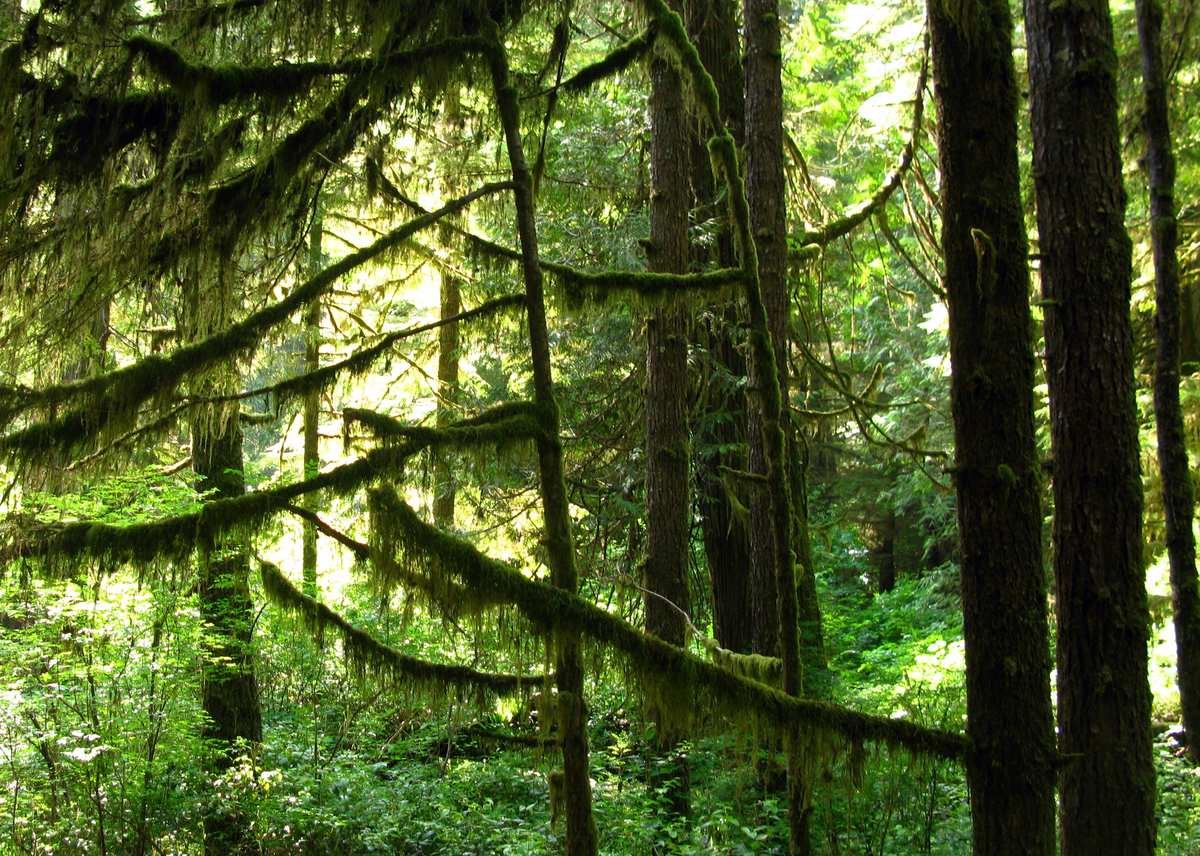
The Rainforest Trail, just off Highway 4 in the park, is two short boardwalk loops through old-growth forest — one side through towering Sitka spruce, the other through a boggy, stunted forest that looks like a miniature version of the first. It’s an easy, flat walk, and it’s the fastest way to understand what “temperate rainforest” actually means: moss on everything, ferns at knee height, trees so wide you can’t photograph them properly, and a hush that makes you lower your voice without thinking about it. I walked it in drizzle, which turned out to be perfect — the forest smells incredible after rain.
Do the Rainforest Trail on a rainy morning and save the beaches for the afternoon. I had the boardwalk nearly to myself in the rain, and by the time I reached Long Beach the cloud had lifted and the sand was empty. Rain here isn’t a ruined day — it’s a scheduling hint.
6. Ucluelet, the Wild Pacific Trail & Amphitrite Point Lighthouse

Ucluelet, about 40 minutes’ drive south of Tofino on the same peninsula, is the quieter sibling — a working fishing harbour, a smaller main street, and the magnificent Wild Pacific Trail, a cliff-top path that runs from the town toward the Amphitrite Point Lighthouse and beyond. I walked the lighthouse stretch on a grey afternoon, and the trail delivered everything the name promises: waves exploding against black rock, wind in the spruce, and that particular Pacific light that makes every photo look like you tried harder than you did. The lighthouse itself is small and sturdy, still working, and the headland around it is the best storm-watching platform on the peninsula.
The Tofino–Ucluelet drive is a highlight in itself: a winding coastal road past Long Beach, with viewpoints worth pulling over for. If you only have one day for the peninsula’s southern half, do the Wild Pacific Trail in the morning, lunch in Ucluelet harbour, and the lighthouse at golden hour.
A shopkeeper in Ucluelet told me the Wild Pacific Trail’s Black Rock section, past the lighthouse, is where the locals go when the main stretch gets busy. I followed her directions and had a whole headland to myself, watching a sea otter crack something on its belly in the kelp below. Ask in town for the current trail sections — the route keeps growing, and locals know which parts are newest.
7. Tonquin Beach & Mackenzie Beach — Tofino’s own backyard
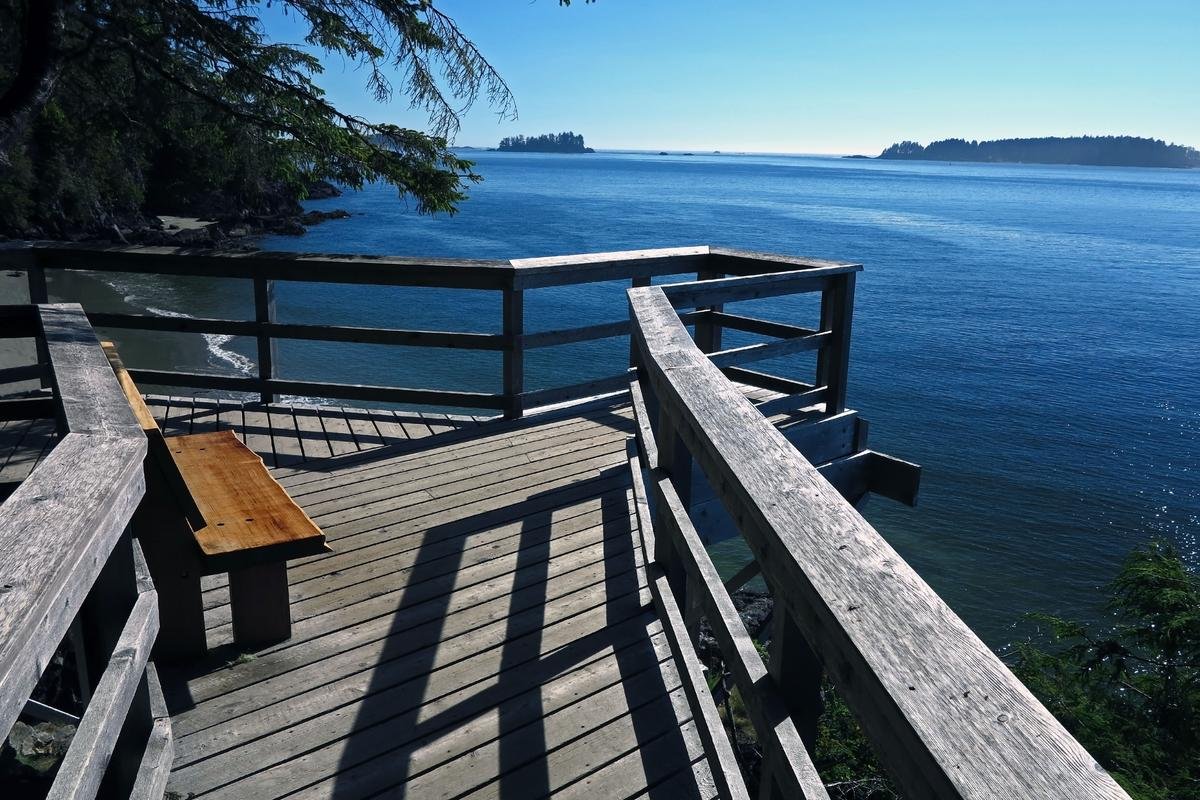
Tonquin Beach is the one you walk to from town: a trail and a long set of stairs down to a pocket beach framed by sea stacks and forest. It’s smaller and more sheltered than the big park beaches, which makes it a favourite for sunset — I climbed back up those stairs in the dark after watching the sun drop behind the islands, and the whole beach glowed orange for about ten minutes. Mackenzie Beach, just south of town, is the calm, family-friendly option: gentler waves, easy access, and several lodges right on the sand. If you’re travelling with kids or with someone who’d rather read than surf, Mackenzie is your beach.
8. Tofino town — harbour, food and small-street wandering

Tofino town is tiny — one main strip, a harbour full of fishing boats and tour boats, and a food scene wildly out of proportion to its size. I ate fish tacos from a food truck and spent an evening wandering the harbour watching floatplanes come and go. The town also carries a deeper story: Tofino sits on the traditional territory of the Tla-o-qui-aht First Nation, and I’d encourage every visitor to learn a little of that history through the town’s cultural stops and local guides, rather than treating the place as scenery alone.

For practical planning, Tourism Tofino’s official visitor site is the best single place to check what’s open, what’s seasonal, and what’s new — I checked it before both of my trips, and the seasonal notes saved me from at least one closed-restaurant disappointment. → Tourism Tofino — official visitor site
9. Whale season & wildlife — March to October
Tofino’s whale season runs roughly March through October, with grey whales migrating past in spring and humpbacks, orcas and sea lions around through summer and fall. I went out in May and we found grey whales feeding close to shore — the guide cut the engine, and we drifted while a whale surfaced, blew, and surfaced again, close enough to hear it breathe. That sound is something I think about more than any photo I took. Tours leave from the harbour, last about 2–3 hours, and operators set their own prices, so compare what’s included (hydrophone? naturalist guide? rain gear?) rather than just the headline price.
Beyond whales, keep your eyes open everywhere: black bears along the highway edges at dawn and dusk (never approach, never feed, and give them serious distance), bald eagles over every beach, and sea otters rafting in the kelp off Chesterman. I saw a bear from the car on the drive in — safely, from a long way off, engine running — and it reminded me that this is a wild coast first and a resort second. That’s the deal here, and it’s why the place stays with you.
Wildlife tours are weather-dependent and whales are wild animals, not a schedule. I’ve heard from fellow travellers who saw nothing but seabirds on a foggy morning — and still called it a great boat ride. Book the tour for your first full day so you can rebook if the weather cancels it, and treat any whale sighting as a gift, not a guarantee.
10. Storm season — November to February, Tofino’s other peak
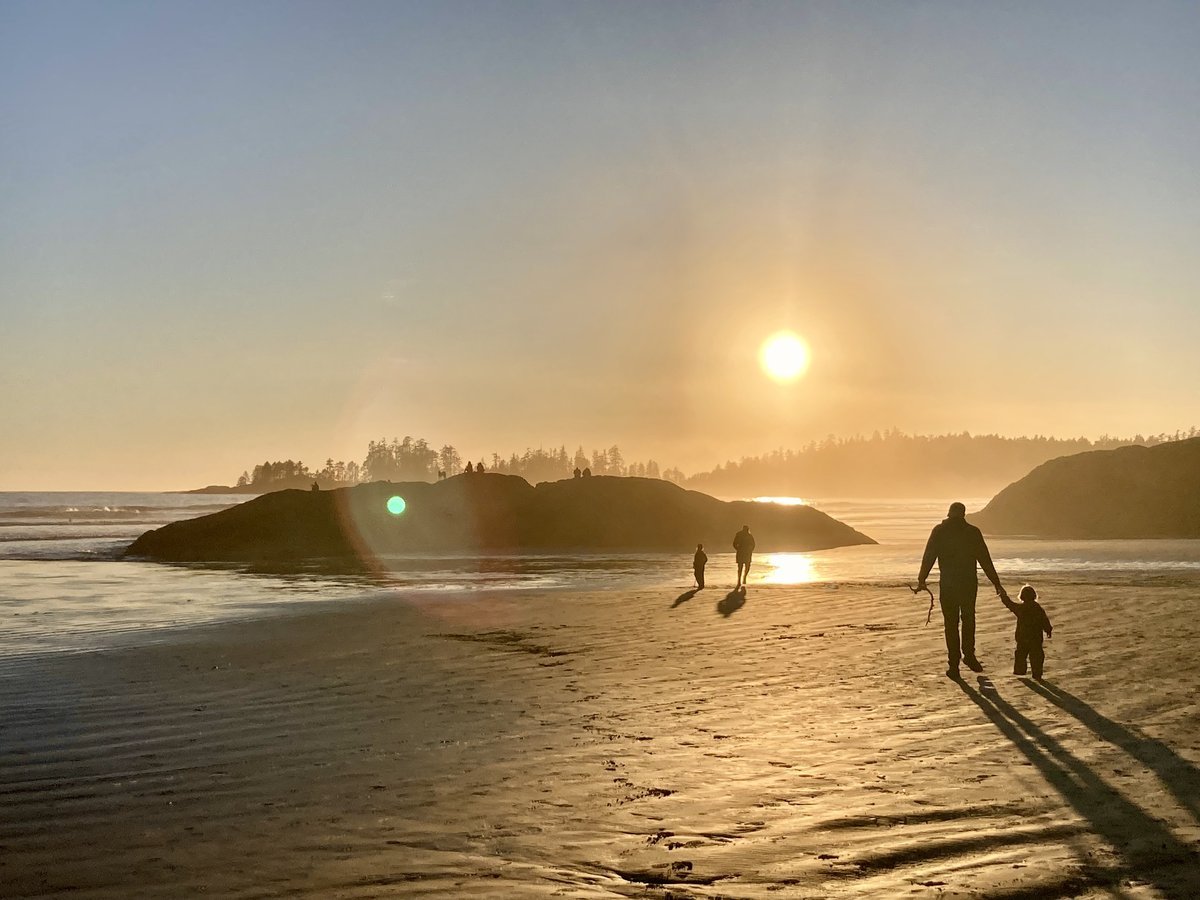
Storm season, roughly November through February, is when Tofino becomes a different destination: huge Pacific swells, horizontal rain, and the strange luxury of watching it all from a warm room with a fireplace. I went in November, stood on the Amphitrite headland in a rain jacket while the wind tried to steal my hood, and then retreated to a café with salt on my glasses and hot chocolate in my hands. It was one of the best days of my year. Hotels lean into it — storm-watching packages, soaker tubs, big windows — and the beaches empty out in a way summer visitors would envy.
Storm watching has rules, though, and they matter: stay behind barriers, stay off the rocks and logs near the waterline, and never watch a storm from a beach at high tide. The waves here can run much further up the sand than you expect, and driftwood logs in the surf are genuinely dangerous. Watch from headlands, lighthouses and your hotel window, and you’ll get all of the drama with none of the risk.
Where to stay in Tofino
Tofino’s stays range from campgrounds and hostels to lodges on Mackenzie Beach and high-end resorts with storm-watching windows — and almost everything is small, so summer books out early. As an approximate guide only (not quoted rates): budget stays run roughly $40–90 per person per night, mid-range rooms roughly $200–350 per night, and resort rooms roughly $400+ per night in peak season, with winter storm-season rates often lower. I stayed in a mid-range lodge near Mackenzie Beach on my summer trip and a smaller inn in town in November; both were booked weeks ahead, and both hosts gave me better local advice than any guidebook. If you’re camping, the park campground at Green Point is the classic choice — reserve through Parks Canada the moment bookings open, because it sells out fast.
Where you stay changes the trip more here than in most places. I’d pick town or Mackenzie for a first trip — beach walks before breakfast or food and the harbour at your door, with everything else within easy reach.
When to go to Tofino
| Season | What it’s like | Best for |
|---|---|---|
| Mar–May | Grey whale migration, spring rain, quieter trails | Whale watching, fewer crowds |
| Jun–Sep | Warmest, driest, busiest; best surf-lesson weather | Beaches, surfing, kayaking |
| Oct | Shoulder season: thinning crowds, first big swells | Value stays, moody coast walks |
| Nov–Feb | Storm season: huge surf, rain, cozy lodges | Storm watching, hot springs, quiet |
If you’re choosing between summer and storm season, here’s my honest take: summer is easier and prettier, storm season is more memorable. First-timers who want beaches and surf should pick June through September; returning visitors, photographers and anyone who loves wild weather should try November. For a month-by-month look at a different mountain region, see my best time to visit the Canadian Rockies guide — and if you’re extending a BC road trip, my Sea to Sky Highway stops guide covers the Vancouver-to-Whistler drive that pairs beautifully with a Vancouver Island extension.
What does Tofino cost?
Prices below are approximate per-person day plans, excluding accommodation and car rental. Pick your travel style, tell the calculator how many days you’re staying, and it does the rest.
Budget calculator
Per person, in Canadian dollars. Excludes accommodation and car rental.
Budget ≈ $100/day · Mid-range ≈ $165/day · Luxury ≈ $295/day. All figures approximate; tours, surf lessons and Hot Springs Cove trips are extra and priced by operators.
| Expense (per person / day) | Budget | Mid-range | Luxury |
|---|---|---|---|
| Accommodation (approx.) | $40–90 (hostel / campsite share) | $200–350 (lodge / inn room) | $400+ (resort room, peak season) |
| Food & drink | $45 | $75 | $140 |
| Sights (park pass share, trails) | $20 | $35 | $60 |
| Getting around (fuel / parking share) | $25 | $35 | $60 |
| Coffee, treats & souvenirs | $10 | $20 | $35 |
| Daily total (excl. stays) | ~$100 | ~$165 | ~$295 |
Suggested 3-day plan
| Time | Day 1 — Tofino beaches | Day 2 — park & surf | Day 3 — Ucluelet or Hot Springs |
|---|---|---|---|
| Morning | Chesterman Beach at low tide, tide pools | Surf lesson at Cox Bay (morning slot) | Hot Springs Cove boat trip, or drive to Ucluelet |
| Midday | Town lunch + harbour wander | Rainforest Trail boardwalk walk | Wild Pacific Trail to Amphitrite Point |
| Afternoon | Tonquin Beach + Mackenzie Beach | Long Beach walk at Green Point | Ucluelet harbour lunch, drive back via viewpoints |
| Evening | Sunset at Tonquin, dinner in town | Sunset at Long Beach or Cox Bay | Farewell dinner in Tofino town |
FAQs about visiting Tofino
How many days do you need in Tofino?
Three full days covers this guide’s highlights comfortably — a beach day in town, a park-and-surf day, and a day for Ucluelet or Hot Springs Cove. With four days, add a whale-watching tour and a slow storm-watching or rainforest morning. Two days works if you skip Hot Springs Cove, but you’ll leave feeling like you rushed the coast.
What is the best time of year to visit Tofino?
It depends what you want. June through September is warmest, driest and best for surfing and beach days — but also busiest, so book early. March to October is whale season. November through February is storm season: wild surf, empty beaches and cozy lodges. I’ve done both summer and storm season, and I’d honestly recommend one of each in your lifetime.
Do I need a car in Tofino?
A car makes the trip much easier — Long Beach, Ucluelet and the park trailheads are spread out, and the bus runs infrequently. Tofino town itself is walkable, and bikes cover the town beaches well. If you arrive without a car, base yourself in town, rent a bike, and book tours (which include transport) for Hot Springs Cove and whale watching.
How do you get to Hot Springs Cove?
Only by boat or floatplane from Tofino, followed by a boardwalk walk through the forest to the pools. Tours run from the harbour, take most of a day, and are weather-dependent — book ahead in summer, and keep a backup beach plan in case your sailing is cancelled. There is no road access, and that’s exactly what keeps it special.
Is Tofino expensive to visit?
It can be. A mid-range day runs about $165 per person excluding accommodation (see the calculator above), and rooms are the big cost — small town, high demand, especially in summer. The free stuff is superb, though: the beaches, the Rainforest Trail, Tonquin at sunset and the Wild Pacific Trail cost little more than a park pass and parking. Travel in October or storm season for noticeably lower room rates.
Is Tofino good for non-surfers?
Absolutely — I’m living proof. The beaches, rainforest trails, whale tours, Hot Springs Cove, storm watching and the food scene don’t require a surfboard at all. Surfing is the famous activity, but walking, wildlife and weather-watching are just as central to a Tofino trip, and the town is very welcoming to people who’d rather watch the waves than ride them.
Keep exploring
Tofino is just the start — here’s where I’d go next:
- Pacific Rim National Park guide — the full park picture, including the Broken Group Islands
- Sea to Sky Highway stops — the Vancouver-to-Whistler drive to pair with a Vancouver Island extension
- Best time to visit the Canadian Rockies — month by month, for the next stage of a BC trip
You’ve got this. Tofino rewards the planner who leaves room for fog, tides and one unplanned afternoon — and now you’re one.