

- ✓ Best overall: late May to June, or September. Warm enough for boats and patios, busy but not peak-crowded, and hotel prices have not hit their July–August highs.
- ✓ Cheapest and quietest: January to March. The falls are open and spectacular in ice, but the boats do not run and some attractions keep shorter hours.
- ✓ Come for the season, not just the falls: the same waterfall delivers a different trip in every season — mist and rainbows in summer, ice formations in winter, wine country in autumn.
I have now seen Niagara Falls in four seasons, and here is the honest truth: there is no bad month, only a wrong expectation. My first visit was a July Saturday, and I spent half the day shuffling along the railing behind a wall of selfie sticks, wondering why anyone would call this relaxing. My second visit was a January morning at minus 10, when the spray had frozen into white sculptures on every railing and I had the viewpoint almost to myself. Same waterfall. Completely different trip. This guide is the one I wish I had before that first July visit: month by month, what the weather actually feels like, when the crowds arrive, what costs more, and which season fits the trip you actually want.
A word on how I built this. Every seasonal claim below is either something I experienced myself or something I verified against an official source before writing. I double-checked attraction seasons on the official Niagara Parks site, and where a date or hour can change year to year — boat seasons, festival dates, illumination times — I tell you to check the official site before you go rather than asking you to trust a date printed months ago. Temperatures in the month table are approximate long-term averages for Niagara Falls, Ontario, rounded to whole degrees: use them to pack, and check the actual forecast before you leave.
The short answer: when should you go?
If you only visit once, go in late May, June, or September. The boats are running, the gardens are green, the patios are open, and the evenings are long enough to see the falls twice — once in daylight and once lit up after dark. July and August are the warmest and the most crowded, and they are also when hotel prices peak; go then if you love summer energy and do not mind queues, but book early and plan your viewpoints for early morning. October brings fall colour and wine-country harvest, plus thinner crowds once Thanksgiving weekend passes. November to March is the quiet, cheap, dramatic season: frozen spray, the Winter Festival of Lights, and viewpoints you can actually stand at — with the trade-off that the boats are out of the water and some attractions run reduced hours.
My personal pick, if you forced me to choose one month, is September. I drove the Niagara Parkway on a mid-September weekday once, stopped at a winery outside Niagara-on-the-Lake for a tasting that cost less than a movie ticket, and watched the falls at sunset with room to breathe at the railing. Summer’s heat was gone, the light was golden, and nobody was in a hurry. June is a close second, especially if you want the longest days and the fullest gardens.
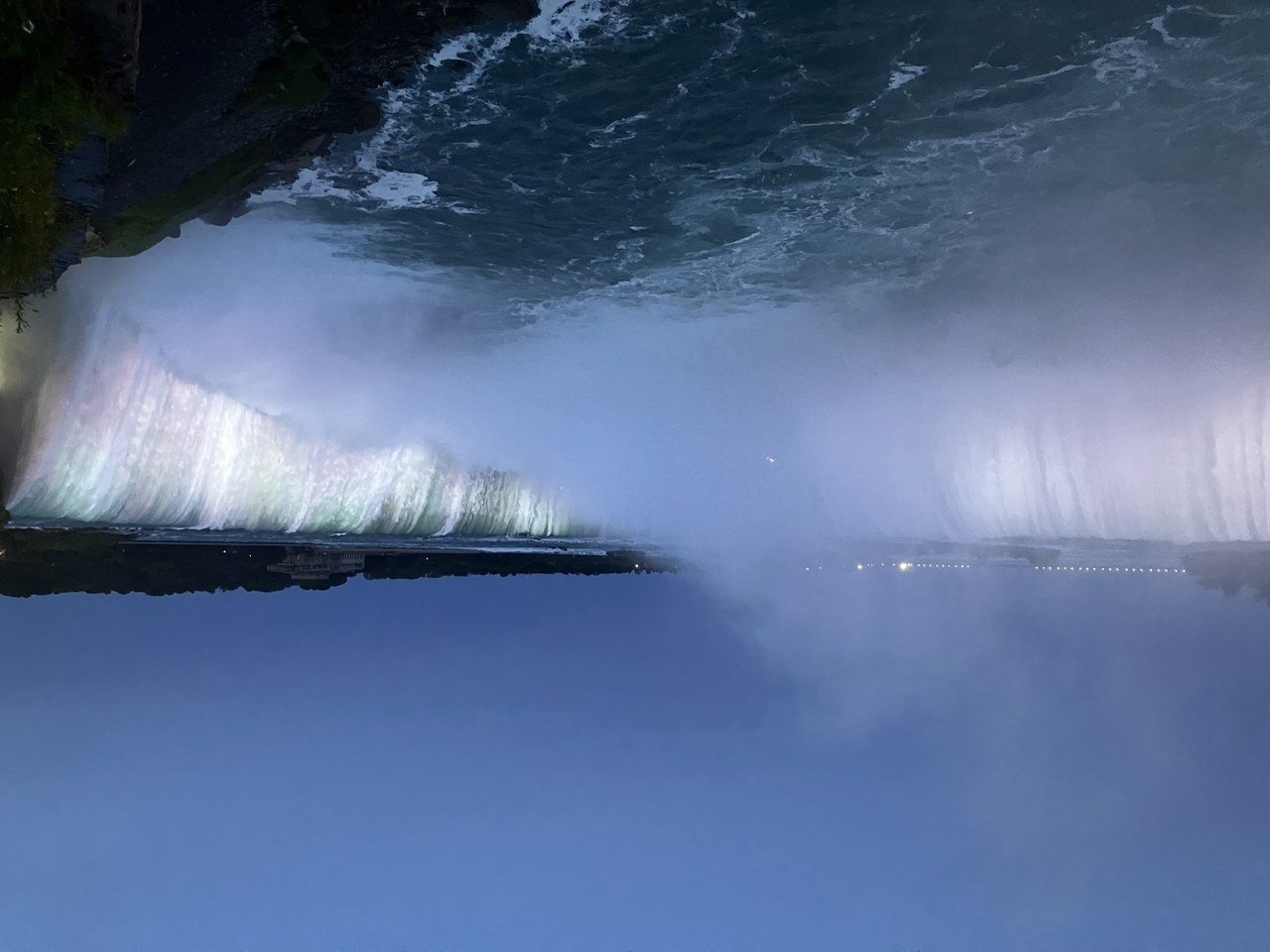
Whatever month you choose, see the falls twice: once in daylight and once after dark. The illuminated falls are a different sight entirely, and the evening crowd is a fraction of the midday one. I nearly skipped the night view on my first trip because I was tired — it ended up being the photo I still have on my wall.
Month by month: weather, crowds and costs
The table below is the whole year at a glance. Temperatures are approximate averages (high / low, °C) for Niagara Falls, Ontario. Crowd and price ratings are relative: $ is the cheapest stretch of the year, $$$ the priciest.
| Month | Avg. temp | Crowds | Prices | What’s on |
|---|---|---|---|---|
| January | -1 / -8 | Very quiet | $ | Winter Festival of Lights (to early Jan); ice formations; no boats |
| February | 0 / -7 | Very quiet | $ | Coldest, iciest falls views; shortest queues of the year |
| March | 6 / -3 | Quiet | $ | Late-winter ice giving way to spring melt; still no boats |
| April | 13 / 3 | Moderate | $$ | Gardens waking up; boats typically return late in the month |
| May | 20 / 9 | Moderate–busy | $$ | Boats running; tulips and blossom; Victoria Day weekend busy |
| June | 25 / 14 | Busy | $$ | Long days, full gardens, all attractions open; sweet spot |
| July | 28 / 17 | Peak | $$$ | Warmest month; fireworks season; book hotels early |
| August | 27 / 16 | Peak | $$$ | Hot, humid, crowded; mist feels wonderful, queues do not |
| September | 22 / 12 | Moderate | $$ | Golden light, harvest, wine country; my top pick |
| October | 15 / 6 | Moderate | $$ | Fall colour along the parkway; Thanksgiving weekend busy |
| November | 8 / 1 | Quiet | $ | Boats winding down; Winter Festival of Lights starts mid-month |
| December | 2 / -5 | Quiet–moderate | $$ | Festival of Lights in full swing; festive, cold, photogenic |
Winter (January to March): the falls in ice
Winter is the season most visitors never consider, and it is the one that surprised me most. The falls do not freeze solid — far too much water moves for that — but the spray freezes onto everything near the crest: railings, trees, lampposts, the rocks at the base. On a cold, still morning the whole gorge looks dusted in white, and the mist rises in slow columns instead of summer’s damp cloud. I walked the Table Rock viewpoint in January with a coffee going cold in my hand and counted maybe a dozen other people. In July that same railing is three deep.
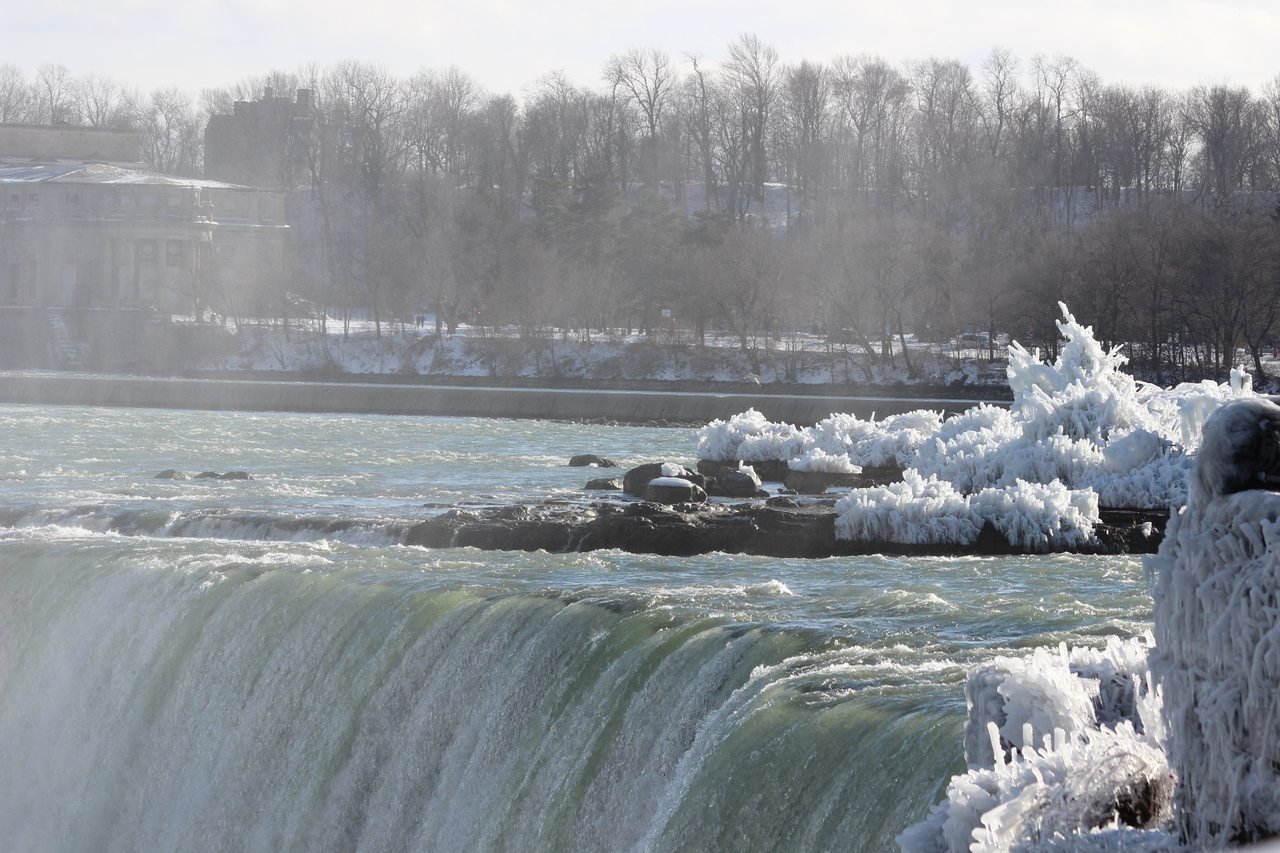
The trade-offs are real and you should know them before you book. The boat tours do not run in winter — the river is too icy and the docks come out — so the classic “into the mist” ride is off the table. Some attractions run shorter hours, and a cold snap can close outdoor walkways for safety. But the year-round essentials stay open: Journey Behind the Falls, the Table Rock Welcome Centre, the Butterfly Conservatory, and the illuminated falls at night. If you want the full winter story, my Niagara Falls in winter guide goes deep on what is open, what closes, and how to dress for it.
Winter viewpoints are slippery in a way summer visitors never imagine. The mist that makes the photos also ices the walkways. Wear boots with real grip, not fashion sneakers — I watched a visitor in smooth-soled shoes go down hard on the Table Rock path, and the park staff keep salt bins there for a reason. Gloves you can operate a phone camera in are worth their weight in gold.
Winter is also the cheapest season to sleep here. Fallsview rooms that command peak prices in July routinely drop to their lowest rates from January to March, and midweek winter nights can be genuinely cheap. If your budget matters more than boat rides, winter is the best value on this list by a wide margin. For the full cost picture, see my Niagara Falls trip cost breakdown.
Spring (April to May): the return of the boats
April is a transition month, and it rewards flexible travellers. The ice lets go, the gardens start to green, and the boat tours typically return late in the month — the exact date depends on river ice conditions, so I double-checked on the official Niagara Parks site before writing this and I would do the same before booking a boat-dependent trip. Early April can still feel wintry, especially in the wind off the gorge; by mid-May the parkway is in full leaf and the patios are filling up.
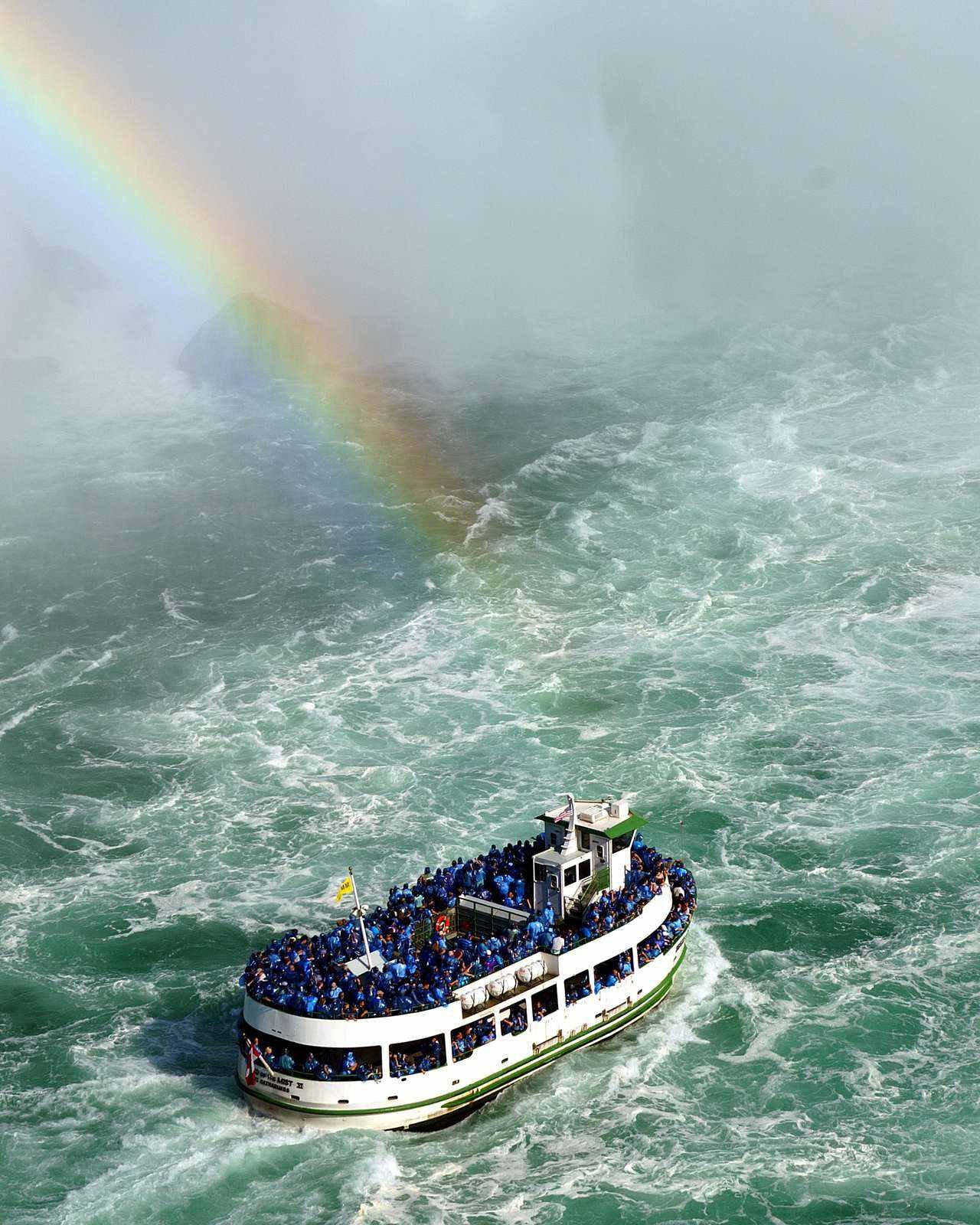
May is when the classic Niagara trip becomes possible again: boats, gardens, walkways, and long evenings, without July’s crowds. The one exception is Victoria Day weekend (the third Monday in May), when Toronto day-trippers flood in and the whole strip feels like peak season for three days. If you can, visit on a weekday in May and you will get most of summer’s experience at shoulder-season prices.
A spring packing note from experience: the falls create their own weather. Even on a mild May day, standing at Table Rock puts you inside a fine, cold mist. A light waterproof jacket beats an umbrella every time — umbrellas invert in the gorge wind, and you will look like everyone else who tried.
Summer nights: the illumination
One thing runs all year but matters most in summer, when the days are longest and the crowds thickest: the falls are illuminated in colour after dark, most evenings, weather permitting. Summer gives you the latest sunsets, so the lights switch on when the sky is still blue and the crowd is already thinning. The illumination is free — just stand at the railing — and it is the single best-value experience in Niagara Falls, in any season.
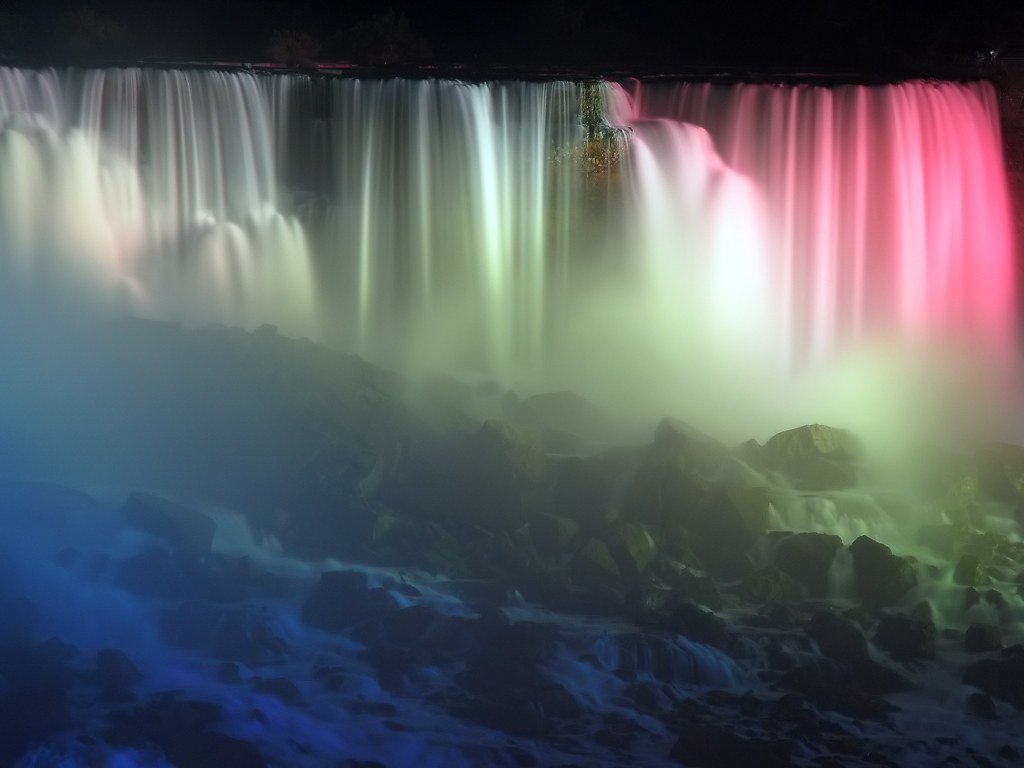
Fireworks add another layer in summer: on many summer evenings the sky over the gorge lights up too. Schedules change year to year, so check the official Niagara Parks site or the destination tourism site close to your trip rather than planning around a date you read months earlier. My rule after three summer visits: plan one unhurried evening at the falls with no reservation after it. Dinner can wait; the light show cannot be rebooked.
The best free seat for the evening show is not at Table Rock, where everyone gathers, but a little further along the parkway toward the Rainbow Bridge, where the railing curves and the crowd thins. A Niagara Parks gardener pointed me there on my second visit, and I have used that stretch ever since: same lights, same fireworks, room to lean on the railing.
Peak summer (June to August): full power, full crowds
June is the sweet spot inside peak season: everything is open, the days are at their longest, and the worst of the July–August crush has not arrived yet. July and August are the warmest months — highs around 27–28°C, humid, with afternoon thunderstorms that roll in fast and clear just as fast — and they are when Niagara Falls earns its reputation for crowds. Clifton Hill, the neon strip uphill from the falls, is at its loudest and most crowded in summer, and it is genuinely fun in small doses: arcades, wax museums, mini-golf, and the SkyWheel turning slowly over the strip.
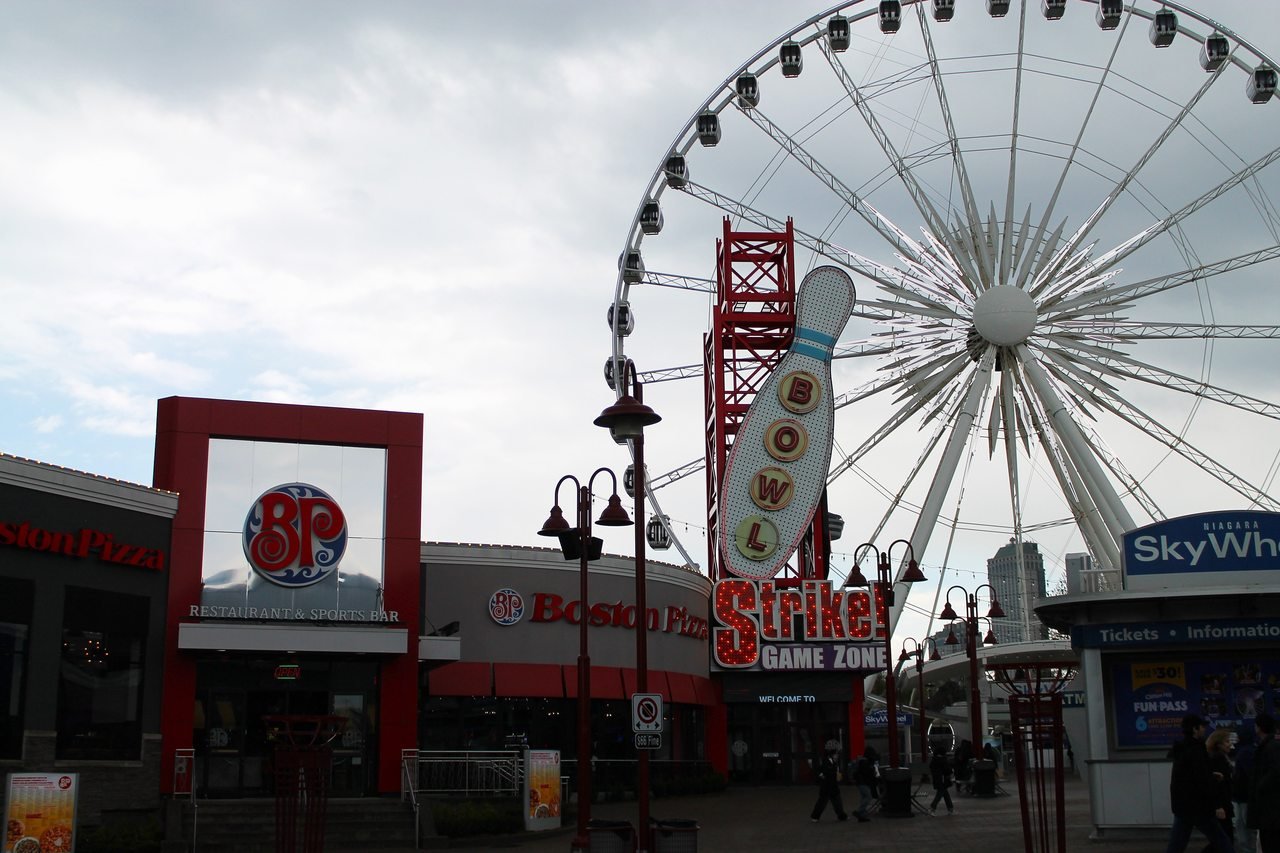
Here is how I handle peak summer now, after learning the hard way. I arrive at the falls before 9 AM, when the tour buses are still parking and the viewpoints are walk-up. I do the boat ride on a weekday, not a Saturday. I eat lunch away from the main strip — the side streets uphill have better food at lower prices — and I save the evening for the illuminated falls, when the day-trippers have gone home. If you are travelling with kids, summer is still the easiest season: every attraction is open, the weather forgives a wet boat ride, and the energy on Clifton Hill is part of the memory.
July and August hotel prices are the year’s highest, and Fallsview rooms on summer weekends sell out weeks ahead. If your dates are fixed for summer, book the room first and plan the rest second — I have seen friends pay double for a worse room because they planned the itinerary before the hotel. Weekday summer nights are noticeably cheaper than Friday and Saturday.
September: wine country and golden light
September is my answer to “when should I go?” and the reason is not just the falls — it is everything around them. The summer crowds thin after Labour Day, the air cools to comfortable walking weather, and the Niagara wine region, twenty minutes down the parkway, is in harvest. Niagara-on-the-Lake, the pretty 19th-century town at the mouth of the river, is at its best in September: tree-lined streets, heritage hotels, and wineries pouring the new vintage.
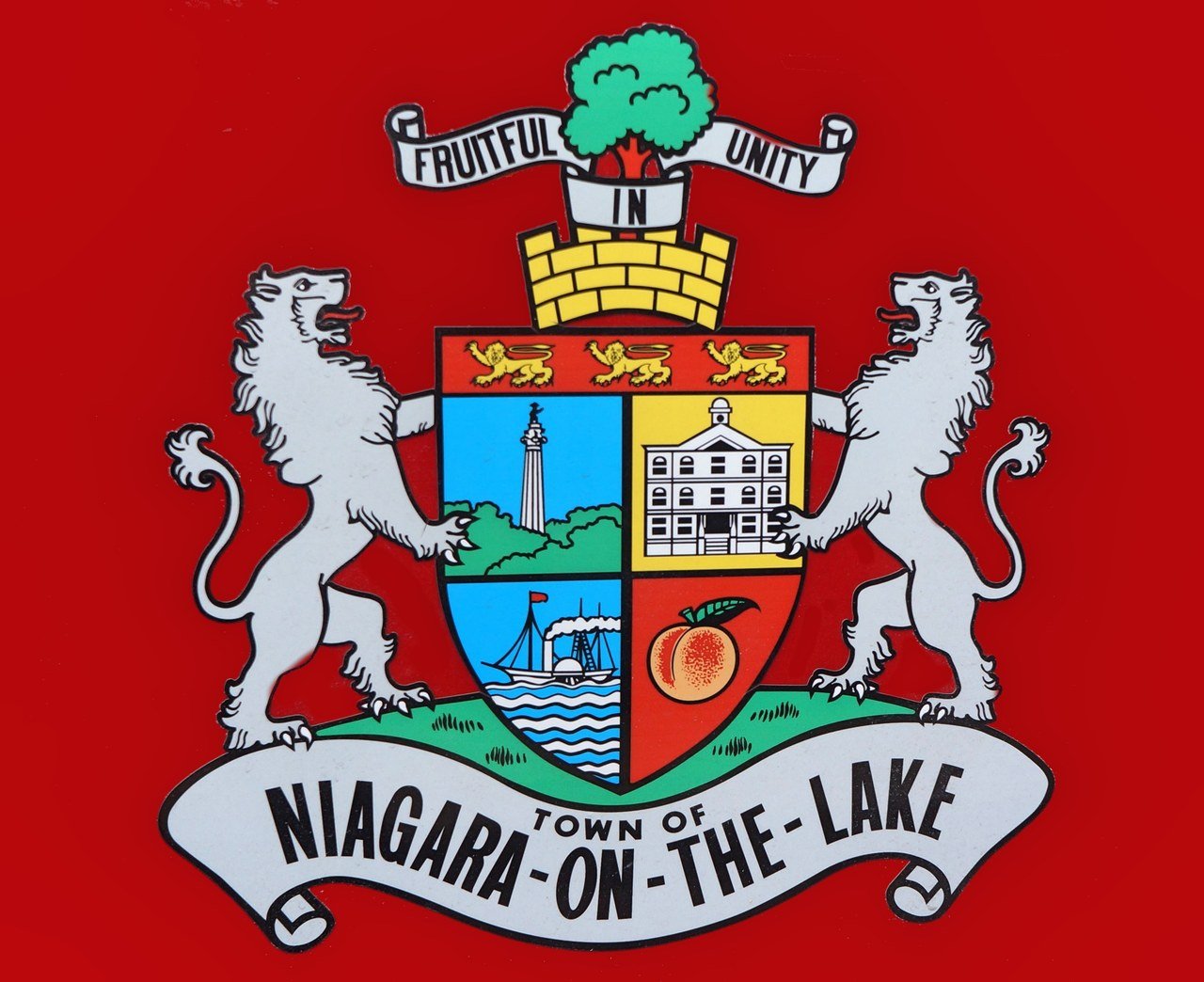
If you have a car, or can join a wine tour, pair one falls day with one Niagara-on-the-Lake day. The town is small enough to walk end to end, and the drive along the Niagara Parkway between the falls and the town is one of Ontario’s prettiest — river on one side, vineyards and orchards on the other. September also gives you the year’s best photography light: lower sun, longer shadows, and mist that glows gold in the morning instead of white. For a wider Ontario trip around this season, my best day trips from Toronto guide puts Niagara in context with the rest of the region.
October: viewpoints and fall colour
October is the month for looking at the falls from above. The Skylon Tower’s observation deck, 236 metres over the gorge, gives you the whole picture — both falls, the river bending away, the city on both sides of the border — and on a clear October day the view stretches for miles over autumn colour. I went up on a crisp October afternoon once and could pick out individual trees turning red along the parkway. It is the best orientation stop in Niagara Falls, and it earns its ticket price in October more than any other month.
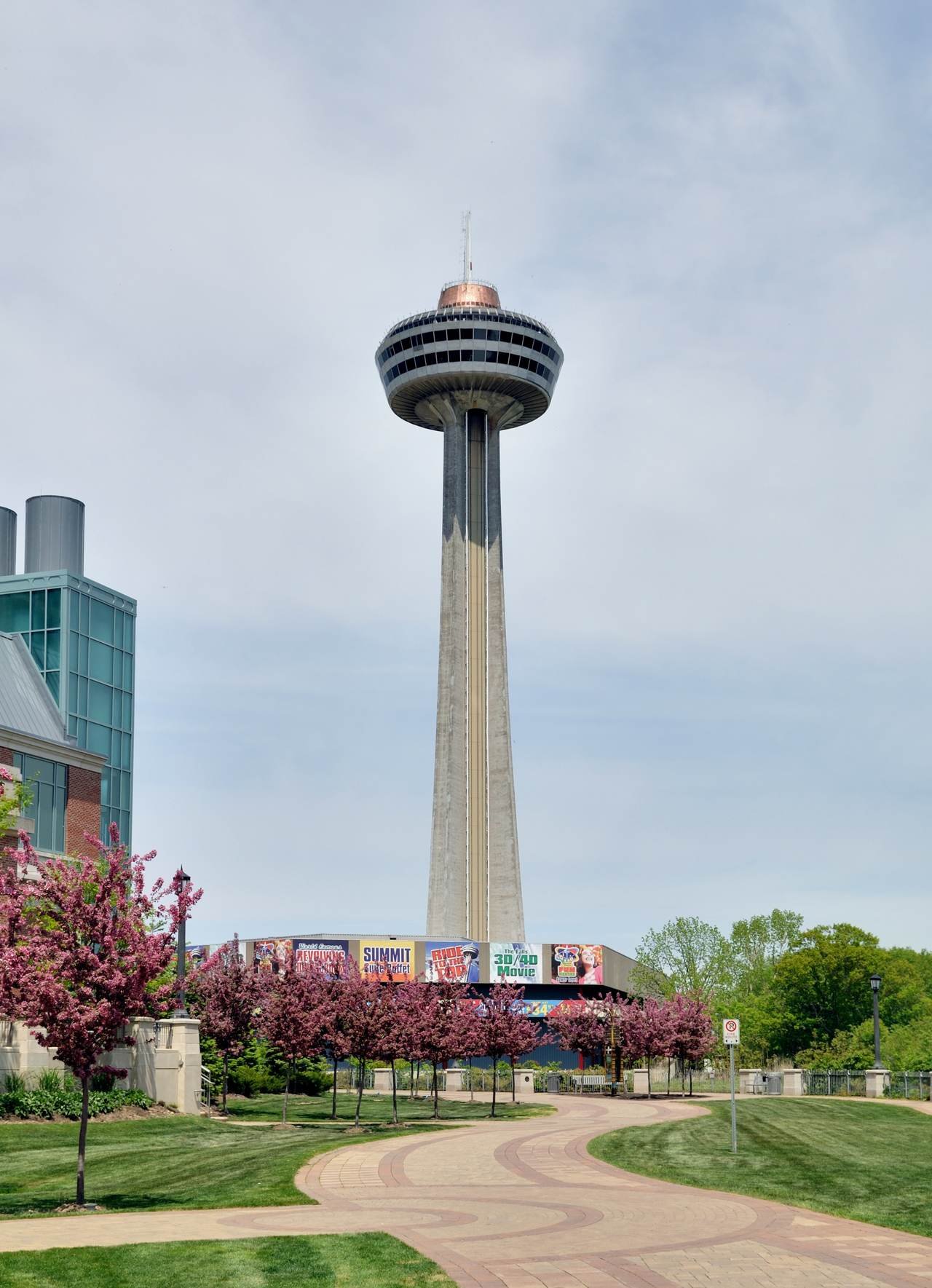
The colour itself peaks along the Niagara Parkway and the gorge trails in mid-to-late October, though the exact week shifts with the weather — a warm September delays it, an early frost hurries it. Thanksgiving weekend (the second Monday in October in Canada) is the one October spike: busy, pricey, and best avoided unless you specifically want the holiday atmosphere. After that weekend, October quiets down fast, and late October can feel like a secret season: colour on the trees, boats still running, and viewpoints you can walk straight up to.
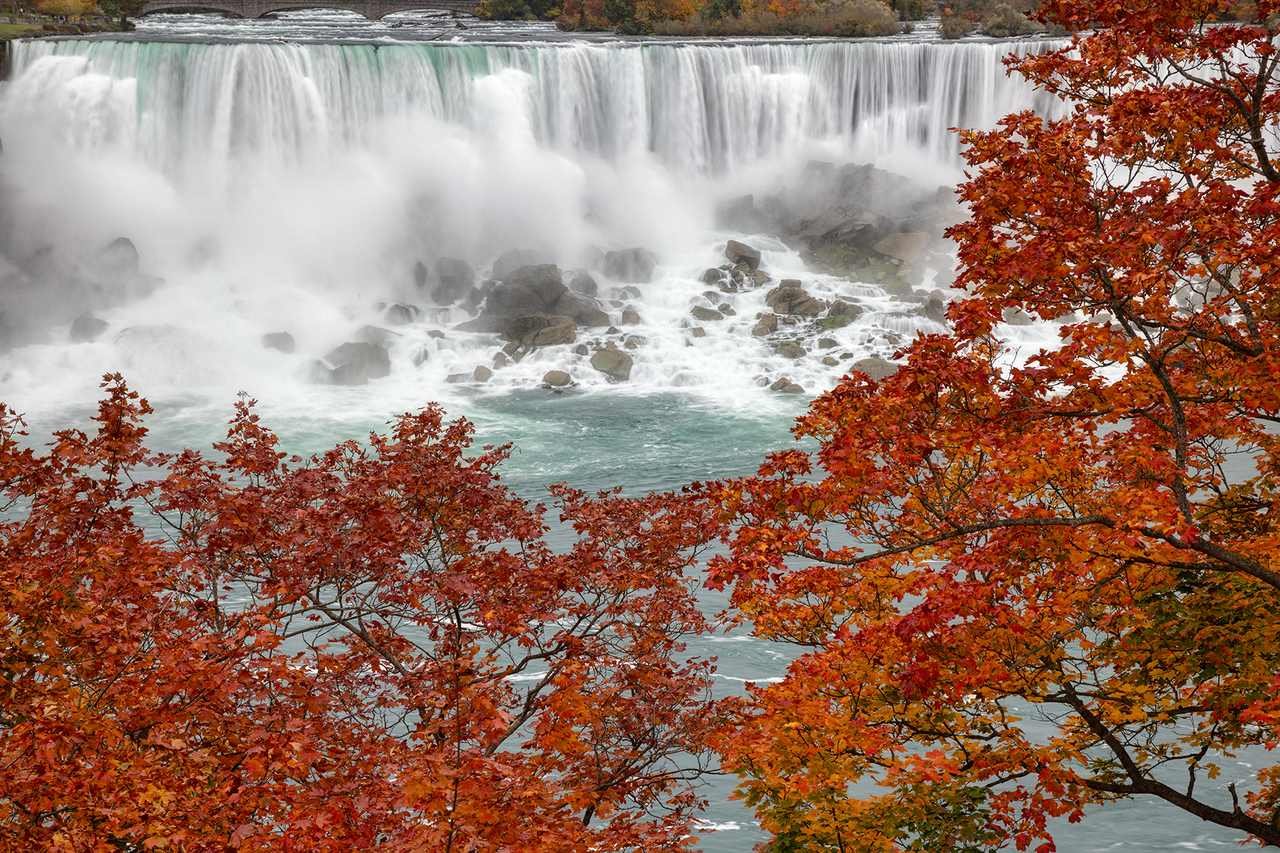
October mornings are the photographer’s window. The sun rises over the American side and lights the mist from behind, and the early chill keeps the day-trippers away until mid-morning. Bring a lens cloth — the mist coats everything within a minute at the Table Rock railing, and I have lost more good shots to a fogged lens than to bad light.
November and December: the lights come on
November is the year’s hinge month. The boats wind down, the gardens go to sleep, and the crowds thin to almost nothing — and then, mid-month, the Winter Festival of Lights switches on and the whole parkway glows. The festival is free, runs nightly, and stretches for kilometres along the falls and the parkway with millions of lights; the most recent season I verified ran from mid-November to early January. December keeps the festival going and adds a festive layer: holiday displays, seasonal markets, and the falls themselves lit against the early dark. It is cold, it is beautiful, and it is far quieter than summer.
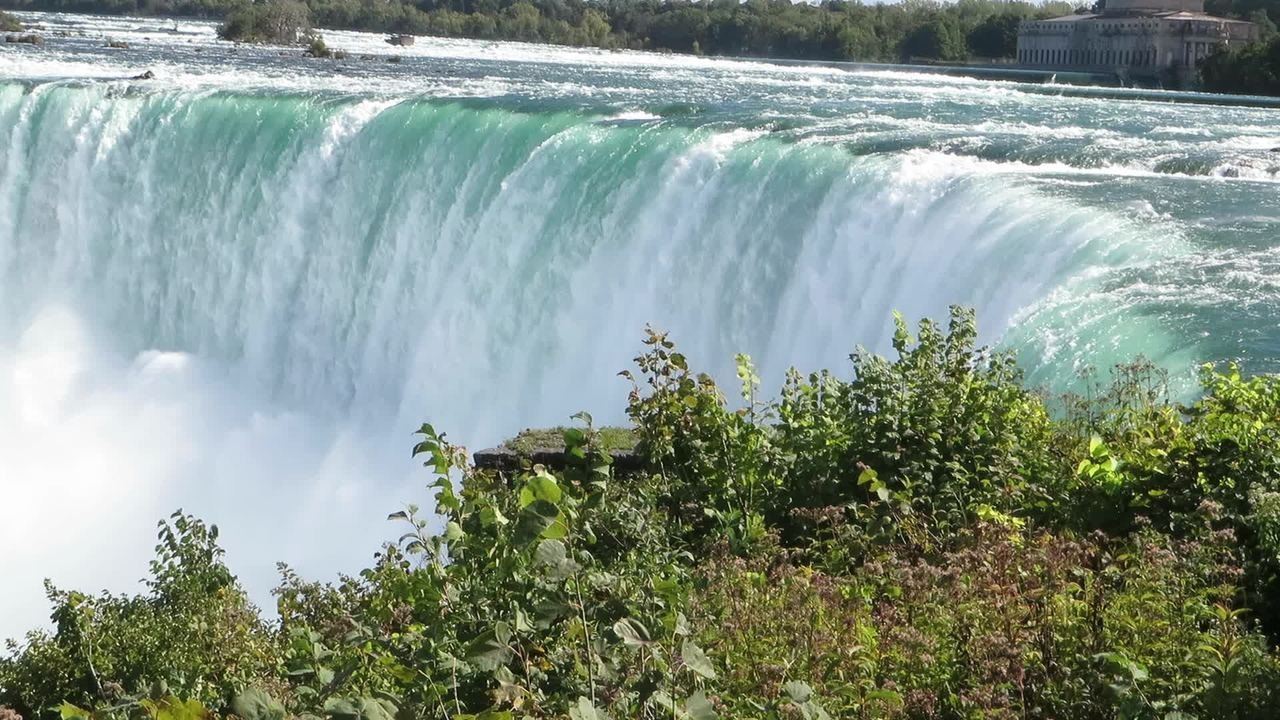
December’s catch is the same as January’s: no boats, shorter days, and weather that can swing from mild to bitter in a week. Pack for winter even if the forecast looks kind, and plan your outdoor time for midday when the light is best. If you are weighing a December trip against a January one, December wins on atmosphere and January wins on price — both beat a crowded summer Saturday in my book. My Canada in December guide covers the wider holiday-season picture if you are building a longer trip.
Crossing to the American side
One practical note that matters in every season: Niagara Falls is two cities sharing one river, and the Canadian side is the one with the postcard view — you face the Horseshoe Falls head-on from Ontario. The American side, reached on foot across the Rainbow Bridge, gives you a different angle: closer to the American Falls, with its own state park and its own boat dock. Crossing requires a passport and sometimes a wait at the border, and the bridge charges a small pedestrian toll, so check current crossing requirements before you go. I crossed on foot once on a quiet October weekday and walked straight through; friends who tried on a July Saturday waited the better part of an hour. Season affects the border queue just like it affects everything else here.
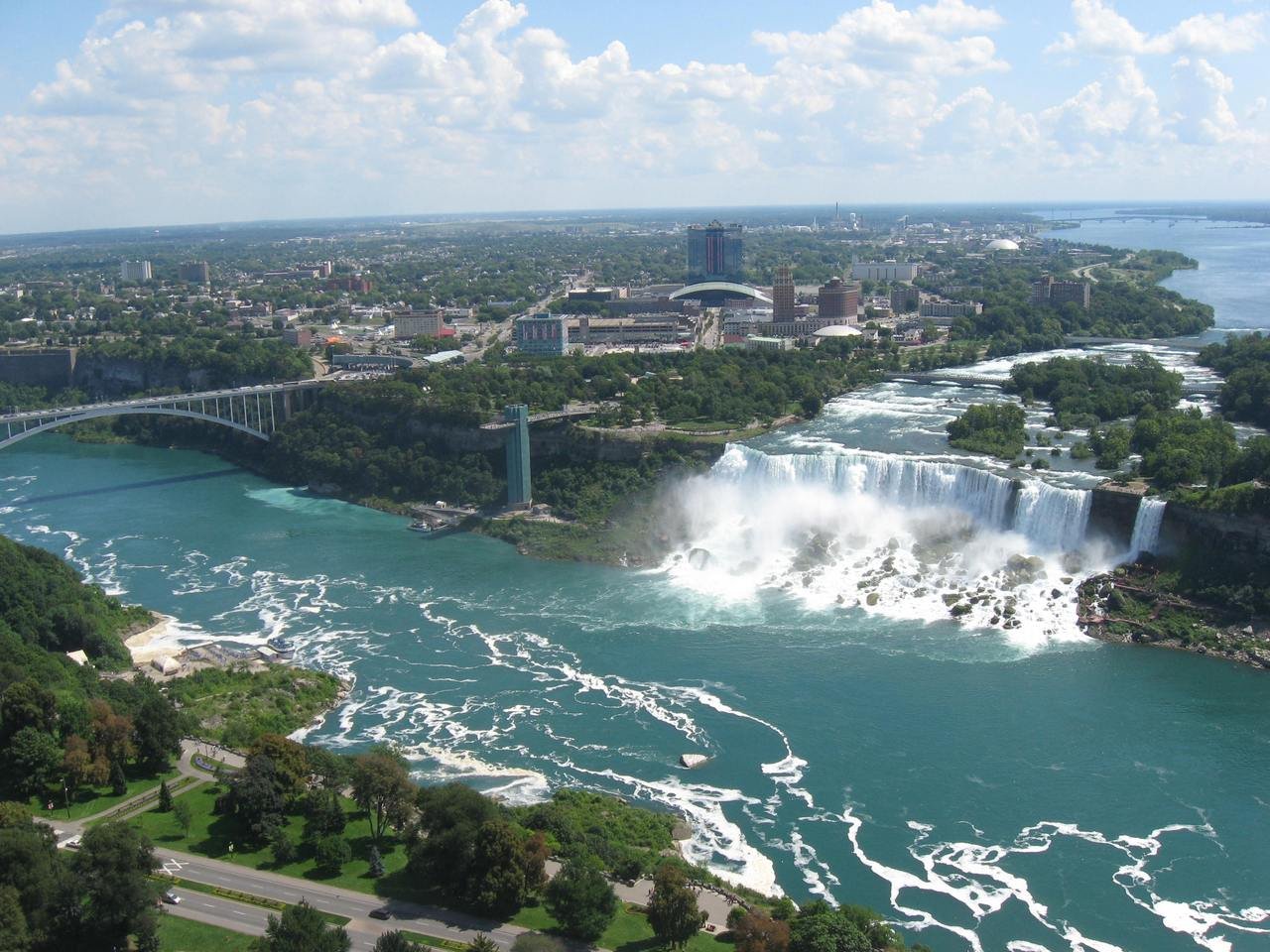
If you cross to the American side, walk the state park’s paths down to the base of the American Falls in the morning, when the sun is behind you and the rainbows sit in the mist. Most visitors never leave the Canadian railing, so the American-side paths stay quiet even in summer — and the view back across the river toward the Canadian skyline is one most visitors never see.
The 10 stops, on a map
Ten stops, from the falls themselves to wine country. Tap any stop to jump the map straight to it. Niagara Parks, which manages the parkland, gardens and attractions along the Canadian side, is represented here by its flagship stop, the Table Rock Welcome Centre at the brink of the Horseshoe Falls.
Map data © OpenStreetMap contributors. Open the full map
Getting here, whatever the season
Niagara Falls is about 90 minutes from Toronto by car, and you do not need one once you arrive: the falls area is walkable, and the local WEGO bus links the falls, Clifton Hill and the hotels. From Toronto, GO Transit runs seasonal train service to Niagara Falls and buses year-round — I double-checked the current schedules on GO Transit’s site before my last trip, and they change seasonally, so do the same. If you are driving, note that parking near the falls is priciest in summer and cheapest in winter, just like the hotels. Official planning starts at Niagara Parks and Niagara Falls Tourism.
What does a Niagara Falls trip cost?
Season moves the price of a Niagara trip more than almost anything else: the same room, the same parking, the same dinner all cost more in July than in January. The calculator below uses planning estimates per person per day, excluding accommodation — pick your travel style and trip length and it totals the rest. For the detailed day-trip-versus-overnight maths, see my Niagara Falls trip cost breakdown, and for the national picture, how much a Canada trip costs.
Budget calculator
Per person, in Canadian dollars. Excludes accommodation.
Budget ≈ $75/day · Mid-range ≈ $140/day · Luxury ≈ $260/day. Planning estimates, not quotes; accommodation excluded.
| Expense (per person / day) | Budget | Mid-range | Luxury |
|---|---|---|---|
| Accommodation | $60 (motel, winter low) | $180 (Fallsview hotel) | $350+ (Fallsview suite, summer) |
| Food & drink | $40 | $70 | $130 |
| Sights (boat, tower, attractions) | $15 | $30 | $60 |
| Getting around (WEGO / parking share) | $10 | $20 | $30 |
| Coffee, treats & souvenirs | $10 | $20 | $40 |
| Daily total | ~$135 | ~$320 | ~$610 |
FAQs about the best time to visit Niagara Falls
What is the single best month to visit Niagara Falls?
September, for most travellers: warm days, golden light, harvest season in wine country, and crowds well below the July–August peak. June is the runner-up if you want the longest days and the fullest gardens. If lowest prices matter most, January or February win — with no boat rides as the trade-off.
Is Niagara Falls worth visiting in winter?
Yes — with the right expectations. The falls are open year-round, the ice formations are spectacular, the Winter Festival of Lights runs from mid-November to early January, and hotel prices are at their lowest. What you give up: the boat tours, which do not run in winter, and some attractions’ full hours. My full winter rundown is in the Niagara Falls in winter guide.
When do the Niagara Falls boat tours run?
The boat tours run in the warmer months only, typically returning in late April once river ice clears and running through the autumn — the exact start and end dates shift with ice conditions each year, so check the official Niagara Parks site or the boat operator’s site before booking a boat-dependent trip. In winter, Journey Behind the Falls and the viewpoints are the way to experience the falls up close.
How crowded is Niagara Falls in summer?
Very, on summer weekends: July and August are peak season, and midday viewpoints, boat queues and Clifton Hill are all at their busiest. Beat it by arriving before 9 AM, visiting on weekdays, and saving evenings — when the day-trippers leave — for the illuminated falls. June and September give you summer weather with noticeably thinner crowds.
What is the cheapest time to visit Niagara Falls?
January to March, by a clear margin: hotels drop to their annual lows, parking is cheapest, and many attractions are quiet enough to walk straight into. November (outside the Festival of Lights peak weekends) is the next-cheapest window. Summer weekends are the most expensive time to come, especially for Fallsview rooms.
How many days do you need at Niagara Falls?
One full day covers the falls, a boat ride (in season) and Clifton Hill; two days lets you add Niagara-on-the-Lake, the Butterfly Conservatory and the White Water Walk without rushing, and gives you both a daylight and an illuminated view. If you are coming from Toronto, see my Canada in October guide for how Niagara fits an autumn trip, or the Toronto day trips guide for the classic one-day version.
Keep exploring
Niagara Falls is just one season of a much bigger trip — here is where I would go next:
- Niagara Falls in winter — ice, lights and what actually stays open
- Niagara Falls trip cost — day trip vs. overnight, season by season
- How much a Canada trip costs — the national budget picture
- Best day trips from Toronto — Niagara in regional context
- Canada in December — the wider holiday-season guide
- Canada in October — fall colour across the country
You’ve got this. Pick the season that fits your trip — not someone else’s summer — and Niagara Falls will deliver.