

Last updated: October 14, 2026
Here’s the deal with the Canadian Rockies: there is no single best month. There are about four different trips hiding inside this mountain range, and the calendar decides which one you get. Come in January and it’s a ski trip with serious cold attached. Come in May expecting turquoise lakes and you’ll find them still frozen white — I’ve made this mistake so you don’t have to. Come in late September and you get the version locals quietly keep for themselves: golden larches, thinner crowds, lakes still showing off. Same mountains. Completely different leg.
So this guide goes month by month, honestly. I’ll tell you what each stretch of the year actually gives you, what it costs you, and where it bites. I double-checked the seasonal access dates on Parks Canada’s pages and the local timing on Banff & Lake Louise Tourism’s site before writing — mountain dates shift with the snowpack, so treat everything below as the typical pattern, not a promise.
- ✓ The insider pick: late September. Golden larches, turquoise water, summer crowds gone, prices stepping down.
- ✓ The peak pick: July–August gives you every trail, lake and road open — at peak prices, peak crowds, and a real wildfire-smoke risk.
- ✓ The trap: April–May looks cheap for a reason. Mud season, high lakes still frozen, some seasonal roads still shut.
The short answer, before the months
If you can only pick one window: mid-to-late September. Hikers get the larches. Photographers get gold against turquoise. Road-trippers get every major road still open, including the Icefields Parkway in its best light. The one catch is Moraine Lake — its road season ends around mid-October, so September keeps you safely inside the window. Second choice: mid-June to early July, once the high lakes have thawed and before the peak crowds land. Skiers, ignore both of those and read the winter section. Budget travellers, your months are the shoulders — with eyes open about what’s closed.
Winter: December to March — ski season, real cold

What you get: three ski areas within easy driving of Banff town — Sunshine Village, Lake Louise Ski Resort and Mt. Norquay — plus frozen lakes, snowshoe trails, and towns that look like snow globes. December brings the shortest days and the Christmas price spike. January and February bring the deepest cold and, between storms, some of the best snow. March is the sweet spot for a lot of locals: longer days, a deeper base, and the worst of the cold usually behind you.
The honest downside: cold snaps are no joke. I’ve stood in a Canmore parking lot at roughly −30°C coaxing a rig that had opinions about starting, fingers going numb through my gloves, while a local walked past in an unzipped jacket like it was April. Dress for the snap, not the average: real winter boots, a proper parka, and no exposed skin on a windy lift. Highway driving needs the same respect — the Trans-Canada and the Icefields Parkway in winter demand winter tires, a full tank, and a willingness to pull out and wait when the weather turns. Gas up in town. Always.

Flying in for a ski week? Build one flex day into the plan. A cold snap or a storm day will cost you a day somewhere — if it’s a spare day, it costs you nothing but a long breakfast in Banff. If it’s your only Lake Louise day, it costs you the trip. Front-load the must-do mountain, too: conditions early in the week are a known thing, forecasts late in the week are a rumour.
April and May — shoulder season, mud season, frozen lakes
What you get: the cheapest beds of the year, empty trails at valley level, waterfalls starting to wake up, and ski hills winding down (Sunshine usually runs latest, sometimes into May — check before you count on it). Wildlife shows up along the valley bottoms as the snow line retreats. Town feels like it belongs to locals again.
The honest downside: this is mud season, and the postcard lakes are not ready. Lake Louise and Moraine Lake typically lose their ice somewhere around late May to early June — some years earlier, some years it drags toward mid-June. I drove up one mid-May full of plans and stood on the Lake Louise shoreline looking at a very pretty, very frozen white slab. Worth seeing once. Not the trip I’d sold myself. Higher trails stay snowbound, Moraine Lake Road stays shut until around June 1, and a few seasonal attractions haven’t opened yet. Come in April–May for quiet towns, valley walks and low prices. Do not come for the turquoise. It is still under ice.
June — the thaw, the waterfalls, the long evenings

June is when the Rockies flip the switch. The high lakes usually thaw in the first half of the month and the famous colour builds as glacial melt feeds in. Waterfalls hit their peak — Takakkaw Falls in Yoho runs loud enough to soak you from the viewpoint, and it’s worth the detour every single time. Daylight stretches past 10 PM around the solstice, which changes the whole rhythm of a road trip: dinner, then another short hike, because why not, it’s still light.
Crowds: building, not built. Early June weekdays still feel roomy; by late June the Lake Louise shoreline fills by mid-morning. The catch: high alpine trails can hold snow well into the month, some years into July, and June is statistically one of the wetter months in Banff. Rain jacket lives in the rig, not the hotel. Moraine Lake’s shuttle season typically starts around June 1 — personal vehicles don’t drive that road at all anymore, so book the Parks Canada shuttle ahead (I checked the current rules on Parks Canada’s Lake Louise and Moraine Lake page before writing this).
July and August — peak season, peak everything

Everything is open. Every trail, every lake road, every canoe dock, every campground. The lakes hit their most absurd colours — Moraine Lake and Lake Louise in late-morning sun is the exact image you’ve seen, and in person it still shuts you up for a second. Alpine wildflowers peak. This is the one window where a first-timer can do the full route without checking a single seasonal closure.

The honest downside: prices and people. Hotel rates in Banff and Lake Louise hit their yearly ceiling, the good campgrounds and shuttle seats go early, and trailhead parking lots fill by breakfast. Book the big pieces months ahead, not weeks — our breakdown in the Banff trip cost guide shows where that money actually goes. If August is your month, my Canada in August guide covers the country-wide picture. And then there’s the smoke.

Wildfire smoke is now a normal part of a Rockies summer, and October brings hard closures. In July and especially August, fires anywhere in western Canada can push smoke into these valleys for days — I’ve driven the Icefields Parkway under a grey lid with the peaks completely gone, on a trip planned a year out. You can’t schedule around it, only build flex: keep one unbooked day, check air-quality and fire maps each morning, and put your most-wanted viewpoint on your first clear day, not your last. At the other end of the season, Moraine Lake Road closes for winter around mid-October, typically just after Canadian Thanksgiving — after that, no shuttle, no access, no exceptions worth planning around.
September — larch season, the insider pick
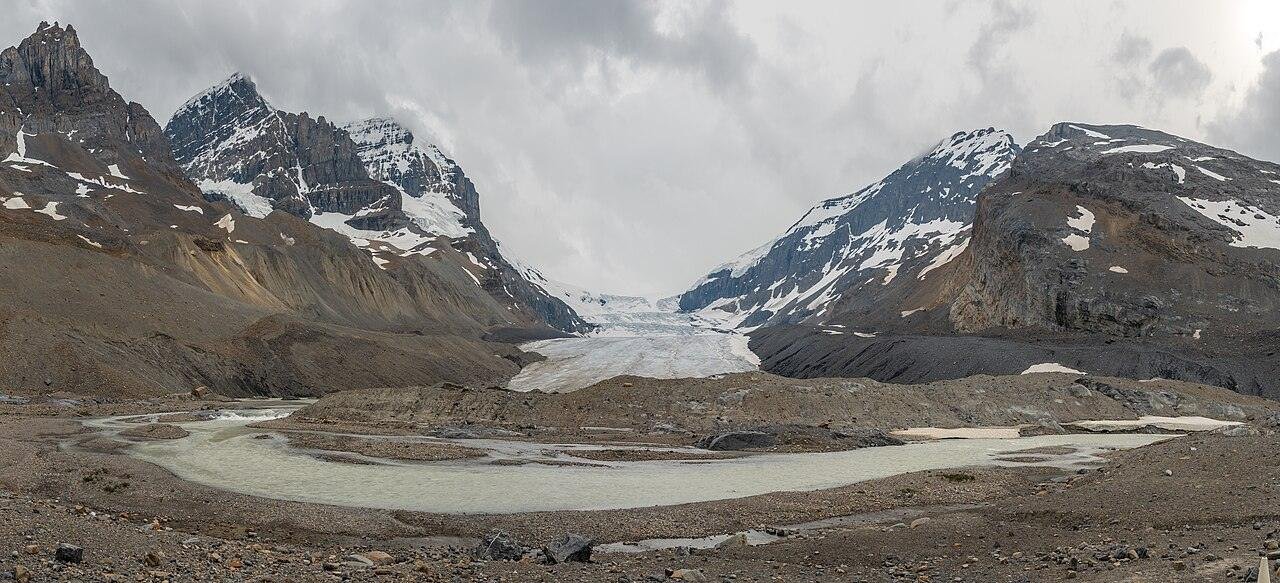
Early September is basically late summer with slightly fewer people — Labour Day passes, families go home, and the mountains exhale. Then, usually from about mid-to-late September, the alpine larches turn. Larches are conifers that didn’t read the manual: every fall their needles go gold and drop. Whole valleys above Moraine Lake and Lake Louise light up yellow against grey rock and turquoise water, for roughly two to three weeks, most years peaking in the last week or so of September. Exact timing moves with the weather — hedge your dates to the middle of the window, not the edge.
I stood in Larch Valley one late-September morning with my breath fogging, watching the light come over the Ten Peaks and hit a slope of larches all at once. Nobody talked for a bit. There was nothing useful to say. That’s the trip I tell people to take. Trails are mostly snow-free early in the month, nights get properly cold by the end of it, and hotel prices step down from the August ceiling. If you’re driving the full route, this is the month our Banff to Jasper road trip itinerary was basically built for — and for beds at the quiet end of it, see where to stay in Jasper.
Everyone fights for the same weekend in Larch Valley. Go midweek, take the first shuttle of the day, and don’t stop at the first viewpoint where the crowd stops — twenty more minutes up the trail toward Sentinel Pass, the valley opens out, the larches thicken, and the people thin to almost nobody. A shuttle driver told me the last week of September is when the staff book their own days off to hike it. Believe the staff.
October and November — last call, then the quiet
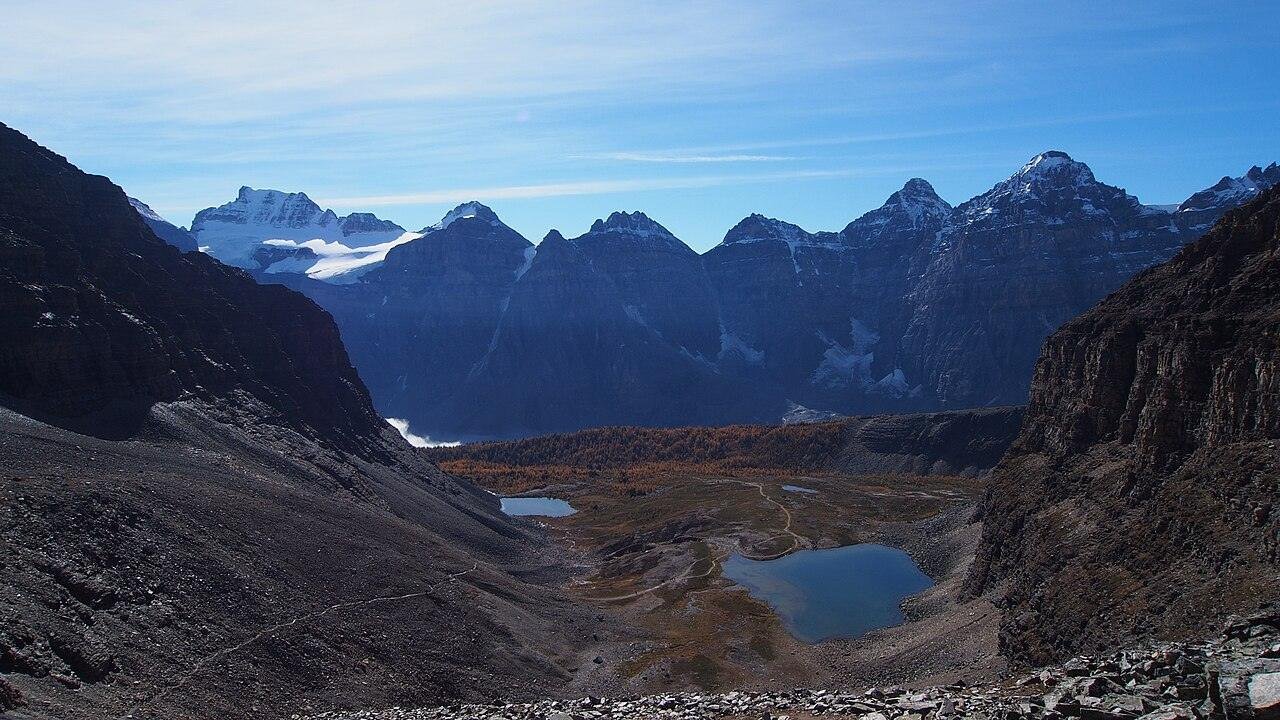
October splits in two. Early October can still catch the tail of the larches and the last of the season’s operations — then, around Canadian Thanksgiving (the second Monday of the month), Moraine Lake Road closes for the winter and the seasonal curtain comes down fast: shuttle service ends, some hotels and attractions close, high trails pick up snow. Late October is moody, cheap and quiet, and Banff town in it is a pleasure — just don’t build the trip around the famous lakes’ full summer setup.

November is the real shoulder. Ski hills usually start spinning lifts sometime in the month (snowmaking first, storms permitting), the lakes freeze again, daylight shrinks, and prices sit near their floor. It’s a fine month for a cheap, quiet Banff weekend based in Canmore — which earns its place in any honest list of the best small towns in Canada — and a poor month for a once-in-a-lifetime Rockies road trip. Know which one you’re booking.
Month by month, on one table
Temperatures below are typical daytime-to-overnight ranges around Banff townsite — higher at Lake Louise and on the Parkway, and any single day can ignore them entirely. That’s mountains.
| Month | Typical temps | Crowds | Prices | The deal |
|---|---|---|---|---|
| December | ~-4°C to -14°C | High at Christmas | High | Ski season opens, shortest days |
| January | ~-5°C to -16°C | Low–moderate | Moderate | Deep cold snaps, good snow |
| February | ~-1°C to -13°C | Moderate | Moderate | Prime ski month, frozen lakes |
| March | ~3°C to -9°C | Moderate | Moderate | Spring skiing, longer days |
| April | ~9°C to -3°C | Low | Low | Mud season starts, lakes frozen |
| May | ~14°C to 2°C | Low | Low | Cheap and quiet; thaw only late month |
| June | ~18°C to 6°C | Moderate, building | Moderate–high | Lakes thaw, waterfalls peak, long days |
| July | ~22°C to 9°C | Peak | Peak | Everything open, book far ahead |
| August | ~22°C to 8°C | Peak | Peak | Warmest trails; smoke risk highest |
| September | ~17°C to 3°C | Moderate, dropping | Moderate | Larches late month — best overall |
| October | ~10°C to -2°C | Low | Low–moderate | Moraine Lake closes ~mid-month |
| November | ~1°C to -9°C | Low | Low | Ski hills open; lakes refreeze |
Best month by traveller type

Photographers: late September, and it isn’t close. Gold larches, turquoise lakes, low sun, first snow dusting the peaks while the valleys are still green-gold. Runner-up: mid-June, for waterfalls at full power and fresh snow still on the high rock.
Hikers: early-to-mid September for the full trail network without peak crowds, or July if you need the highest passes guaranteed snow-free. June hiking is a negotiation with snowpack; by September the trails have had all summer to clear.
Skiers: February and March. Deepest base, settled snowpack, and March trades a little powder certainty for daylight and mercy on the thermometer. December is for keeners and Christmas trips; the base is still building.
Budget travellers: late April–May and November, with the caveats tattooed on them — frozen or refreezing lakes, seasonal closures, short days. The smarter budget play is the edge of the good season: early June or late September, basing in Canmore instead of Banff, cooking some meals, and letting the calculator below do its work. Either way you need a Parks Canada pass to stop in Banff, Jasper or Yoho — a daily pass per park day, or the annual Discovery Pass if your trip stacks up enough park days to earn it back. Prices change, so check the current fees on parks.canada.ca before you budget it, not after.
Where everything sits
South to north: Canmore and Banff at the bottom, Lake Louise and Moraine Lake up the Bow Valley, Emerald Lake west in Yoho, then the Icefields Parkway climbing past the Columbia Icefield to Jasper. Timing rules apply at every pin — the higher and further north you go, the later spring arrives.
Map data © OpenStreetMap contributors. Open the full map
What a day costs, by season of your wallet
Beds swing harder by month than anything else on this page — the same Banff room can cost half as much in May as in August — so this calculator covers the day itself: food, sights and passes, getting around, and extras. Pick your style, set your days. Peak months will push every line up; shoulder months pull them down.
Budget calculator
Per person, in Canadian dollars. Excludes accommodation.
Budget ≈ $140/day · Mid-range ≈ $215/day · Luxury ≈ $325/day. Per person, excludes accommodation. Prices checked October 2026.
Month picked, beds next: where to stay in Canmore lays out why downtown Canmore saves you roughly 30–40% over an equivalent Banff room in July — I ran the numbers on three weekends and Banff won on price exactly zero times. Here’s the deal on Banff itself: read the parking section of the Banff travel guide before you commit to driving everywhere — the summer lots fill by mid-morning and the Roam buses are two bucks, which is the cheapest lesson you’ll learn all trip.
FAQs
What is the single best month to visit the Canadian Rockies?
September — specifically mid-to-late September. The summer crowds and prices have stepped down, the lakes are still turquoise, high trails are usually clear, and the alpine larches turn gold for roughly two to three weeks. The trade-off is cold nights and a season that’s winding down, so book Moraine Lake shuttles and glacier tours early in your window, not at the end of it.
When do Lake Louise and Moraine Lake thaw?
Typically late May to early June. In an average year the ice comes off Lake Louise somewhere in that window and Moraine Lake, which sits higher, around the same time or slightly after; a cold spring can push it toward mid-June. The famous turquoise colour takes a little longer to build as glacial melt feeds in. If blue lakes are the whole point of your trip, don’t book before mid-June.
When is larch season in Banff, and how long does it last?
Usually mid-to-late September into very early October — roughly two to three weeks, with the peak most years landing in the last week of September. The best-known walk is Larch Valley above Moraine Lake; Lake Louise’s Saddleback and Plain of Six Glaciers trails also deliver. Timing shifts with each fall’s weather, so aim for the middle of the window and check Parks Canada trail reports as your dates approach.
Can I visit Moraine Lake in winter or late October?
Realistically, no. Moraine Lake Road closes to all traffic for the winter around mid-October, typically just after Canadian Thanksgiving, and the Parks Canada shuttle season runs roughly June to that closure. The road is also closed to personal vehicles year-round — even in summer, access is by shuttle, transit or licensed operator. Plan Moraine Lake for June through early October, full stop.
Should I worry about wildfire smoke in July and August?
Take it seriously, don’t let it cancel the trip. Smoke from fires across western Canada can sit in these valleys for days in peak summer, and there’s no way to predict your exact week months ahead. Build one flexible day, check air-quality forecasts each morning, and front-load your biggest viewpoint on your first clear day. Shoulder months — June and September — carry a lower, not zero, smoke risk.
What is the cheapest month to visit the Canadian Rockies?
April–May and November have the lowest hotel rates, because they come with mud season, frozen or refreezing lakes, and seasonal closures. The best-value compromise is early June or late September based in Canmore: near-peak scenery, prices off their ceiling. Expect roughly $140/day per person travelling lean, excluding beds, and remember the Parks Canada pass on top — daily, or the annual Discovery Pass if your park days add up.
Bottom line: pick your trip first, then your month. Skiers go February–March. Lake people go mid-June onward. Photographers and hikers who can only choose once go late September and don’t look back. Buckle up for the Parkway, gas up in Banff or Lake Louise before you climb it, and give the mountains a flex day — they’ll use it. Worth it every time. — James
2 comments