
Last updated: October 3, 2026

The short answer
- The big answer: Yes — Canada is very doable without a car in 2026 if you mix modes: VIA Rail for the scenic stretches, intercity buses (Megabus, FlixBus, Ebus, Red Arrow) for the cheap ones, and city transit everywhere you land.
- Easiest corridor: The Windsor–Québec City stretch (Toronto–Ottawa–Montreal) runs multiple trains and buses daily — this is where car-free travel actually beats driving.
- Watch out for: Rural gaps, winter weather delays (build in a buffer day), and shuttle reservations at Lake Louise and Moraine Lake — book those the moment Parks Canada releases them.
Can you really cross the world’s second-largest country without ever touching a steering wheel in 2026? I’ll be honest: when I first planned a car-free trip across Canada, my spreadsheet had three tabs and a column labeled “panic options.” Turns out I barely needed it. I’ve since done car-free trips in Toronto, Montreal, Vancouver, and the Rockies — and here’s the thing, the train-and-bus version of Canada is not the consolation-prize version. It’s often the better version.
This guide covers everything I’ve learned the sweaty, expensive, and occasionally soggy way: VIA Rail routes and real 2026 fares, the intercity bus network that replaced Greyhound, rideshares, budget flights, city transit, and what car-free actually costs. All prices and hours were checked in October 2026 — items marked ~ are estimates, and I’ll link the official source wherever one matters.
First, the honest truth: the two Canadas
Car-free travel in Canada is a tale of two countries. In the Windsor–Québec City corridor — Toronto, Ottawa, Montreal, Québec City — getting around without a car is not just possible, it’s often more convenient than driving (I have timed this; the train from downtown Toronto to downtown Montreal beats door-to-door driving once you count traffic and parking). Trains and buses run multiple times a day, and you can hop between cities on a few hours’ notice.
Outside that corridor, frequency drops and you need to plan connections like you mean it. Long-haul routes (think Winnipeg to Vancouver, or anything in Atlantic Canada) often run once a day or a few times a week. Pro tip: build at least one buffer day into any multi-province itinerary — especially October through April, when weather can rearrange schedules overnight. I learned that one the soggy way in Winnipeg.
VIA Rail: the romantic way across Canada
Train travel in Canada is slower than flying and more expensive than the bus — and I’d still put it at the top of this list. The Canadian, running Toronto to Vancouver (and back), is a four-night journey through Ontario lake country, the Prairies, and the Rockies. It’s less “commute” and more “moving hotel with dome cars.” I rode a three-day segment once and spent most of it with my forehead against the glass. Worth every penny.
The Corridor is the workhorse: Toronto–Ottawa–Montreal–Québec City with multiple departures daily. This is your airport-beating, traffic-dodging backbone for Eastern Canada.
2026 fares, roughly: Corridor economy fares between Toronto and Montreal often start around ~$60–90 when you book early; The Canadian’s economy seats from Toronto to Vancouver start from roughly ~$550 one-way (I’ve seen sale fares near $415). Sleeper Plus — private berth or cabin with meals included — runs several times that, and Prestige class is the once-in-a-lifetime splurge. A VIA Rail crew member in Winnipeg told me about the booking trick regulars actually use: Discount Tuesdays. VIA runs weekly Tuesday sales — I’ve seen the code TUESDAY knock real money off Corridor and long-distance fares. I double-checked the current offers on VIA Rail’s official Discount Tuesday page before writing this, and it’s still going strong in 2026 — so check what’s live before you book anything.
What about high-speed rail? The old “high-frequency rail” project was reborn in February 2025 as Alto, a true 300 km/h high-speed line planned between Toronto and Québec City (via Peterborough, Ottawa, Montreal, Laval, and Trois-Rivières). Construction is targeted around 2029 with service in the mid-to-late 2030s. Exciting? Absolutely. Relevant to your 2026 trip? Not yet — plan on today’s VIA network.
Intercity buses: life after Greyhound
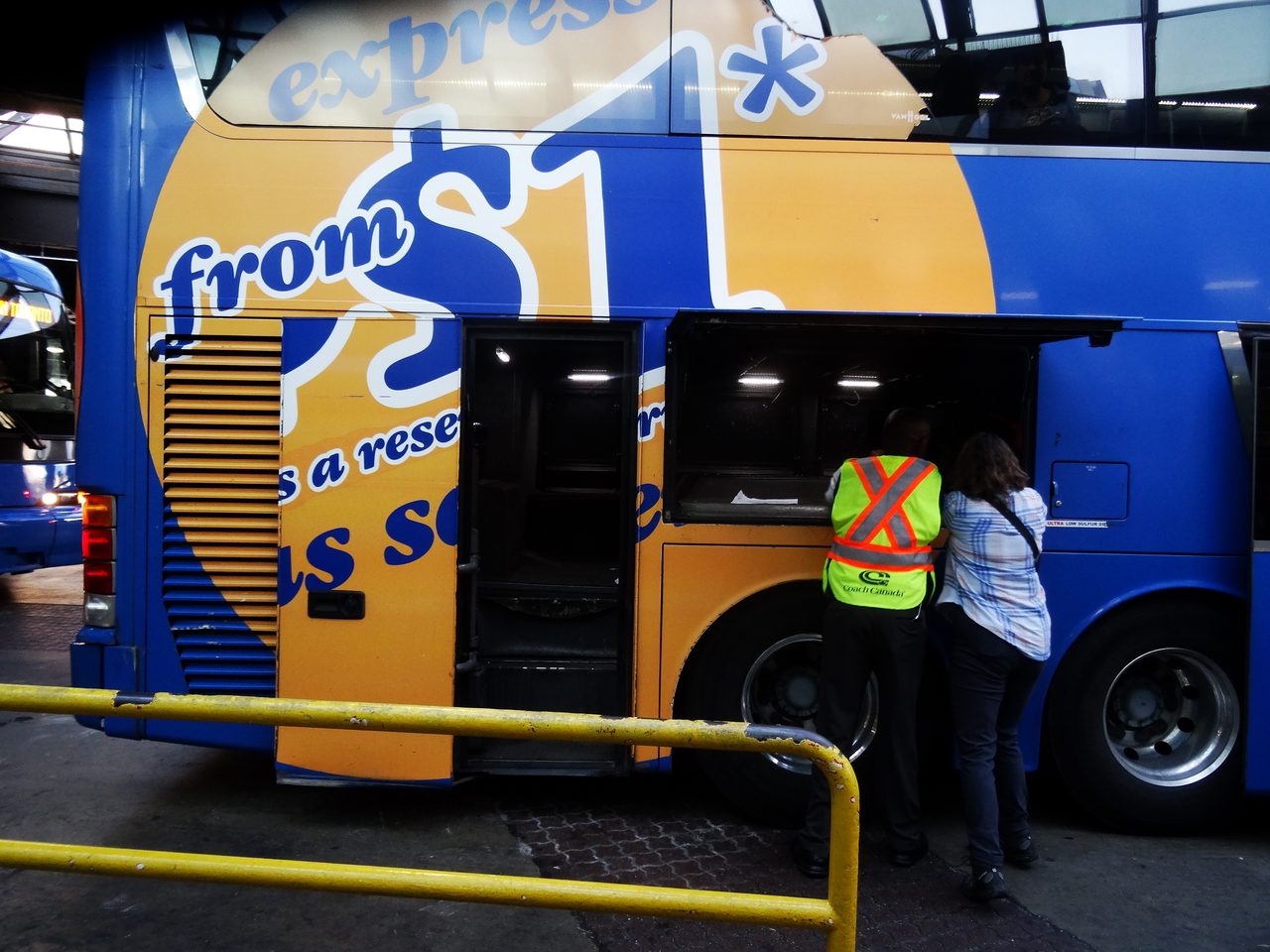
When Greyhound left Canada, everyone panicked — and then a genuinely better regional bus network filled the gap. Modern coaches, Wi-Fi, power outlets, and (in my experience) better on-time records than the old national system. The bus is almost always the cheapest way between mid-sized cities.
Your regional cheat sheet:
- Ontario & Québec: Megabus runs the famous double-deckers between Toronto, Montreal, Ottawa, Kingston, and Niagara Falls — book early and you can find promo fares as low as a few dollars (trust me on this one, the advance-purchase prices are a game-changer). FlixBus now runs Ontario–Québec and cross-border routes too.
- Western Canada: Ebus connects Vancouver, Kamloops, and Kelowna; Rider Express covers the Prairie routes including Winnipeg–Regina–Saskatoon–Edmonton and west to Vancouver.
- Northern Ontario: Ontario Northland runs Toronto–North Bay–Sudbury–Cochrane, plus the seasonal Polar Bear Express from Cochrane to Moosonee (yes, really — there’s a train to the edge of the Arctic watershed).
- Alberta: Red Arrow is the luxury option between Calgary and Edmonton — single-row seating, snacks, and the business-traveler crowd.
- Atlantic Canada: Maritime Bus links New Brunswick, Nova Scotia, and Prince Edward Island — it’s an essential service out there, not a nice-to-have.
One confession: I once stood in the wrong line at Montreal’s Gare d’autocars for twenty minutes because I confused my bus company’s bay with another’s. They’re all in the same station — just check your ticket’s bay number before you join a queue. Do not be me.
Rideshares and carpooling: the in-between option
For routes where the train doesn’t go and the bus schedule is awkward, long-distance carpooling fills the gap beautifully. Poparide is Canada’s leading carpool app: drivers post their route and a price to cover gas, passengers book verified seats. It’s often cheaper than the bus and much faster than the train on regional hops — and I’ve met genuinely lovely people this way (a retired teacher between Kelowna and Vancouver who gave me a full winery rundown; I still think about her recommendations).
Within cities, Uber and Lyft operate in the major metros, though availability thins out in smaller towns and parts of the Maritimes, where local taxi apps rule. Fair warning: surge pricing around big events and bad weather is real — budget a buffer.
Is Poparide safe for solo travelers? In my experience, yes — verified profiles, a rating system, and trip records make it a different universe from old-school hitchhiking, which I do not recommend in 2026 (it’s restricted on major highways in several provinces anyway). Book through the app, share your trip with someone, and trust the ratings.
Domestic flights: when flying is the smart move
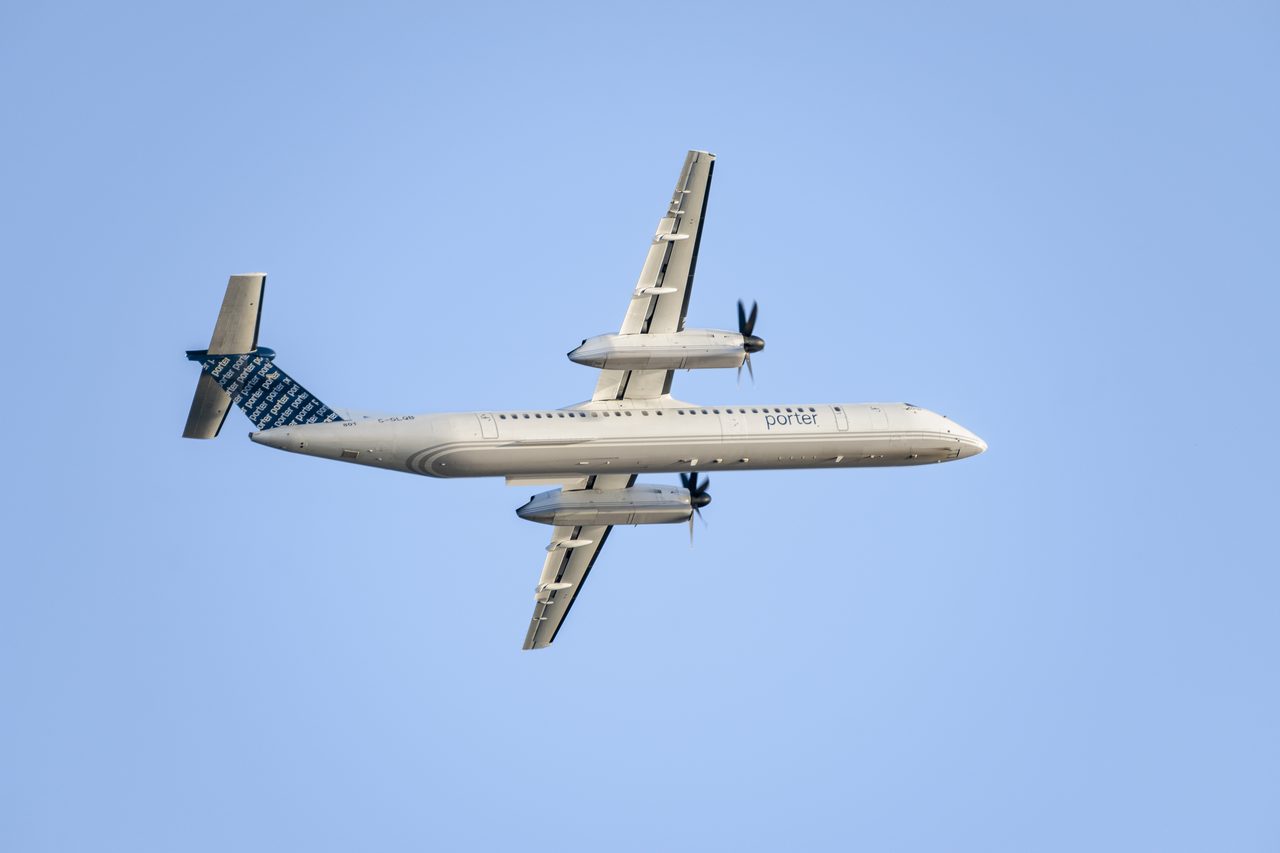
Let’s not be precious about it: Toronto to Vancouver is a four-night train or a five-hour flight. For the truly long hauls, flying is the only practical choice, and Canada’s low-cost carriers have made it far more affordable. Porter Airlines has expanded well beyond its Toronto island-airport roots and remains my favorite for service (free snacks and drinks in economy — in 2026! — and Billy Bishop airport is a ten-minute streetcar ride from downtown Toronto). Flair Airlines is the ultra-low-cost option: rock-bottom base fares, with fees for everything else, so read the fine print.
My rule of thumb: fly the hops over ~8 hours of ground travel, take the train or bus for everything shorter. And always price the train before defaulting to a flight — on Corridor routes, downtown-to-downtown rail often wins on total travel time once you count airport security and the trek in from Pearson or Trudeau.
City transit: tap on, tap off
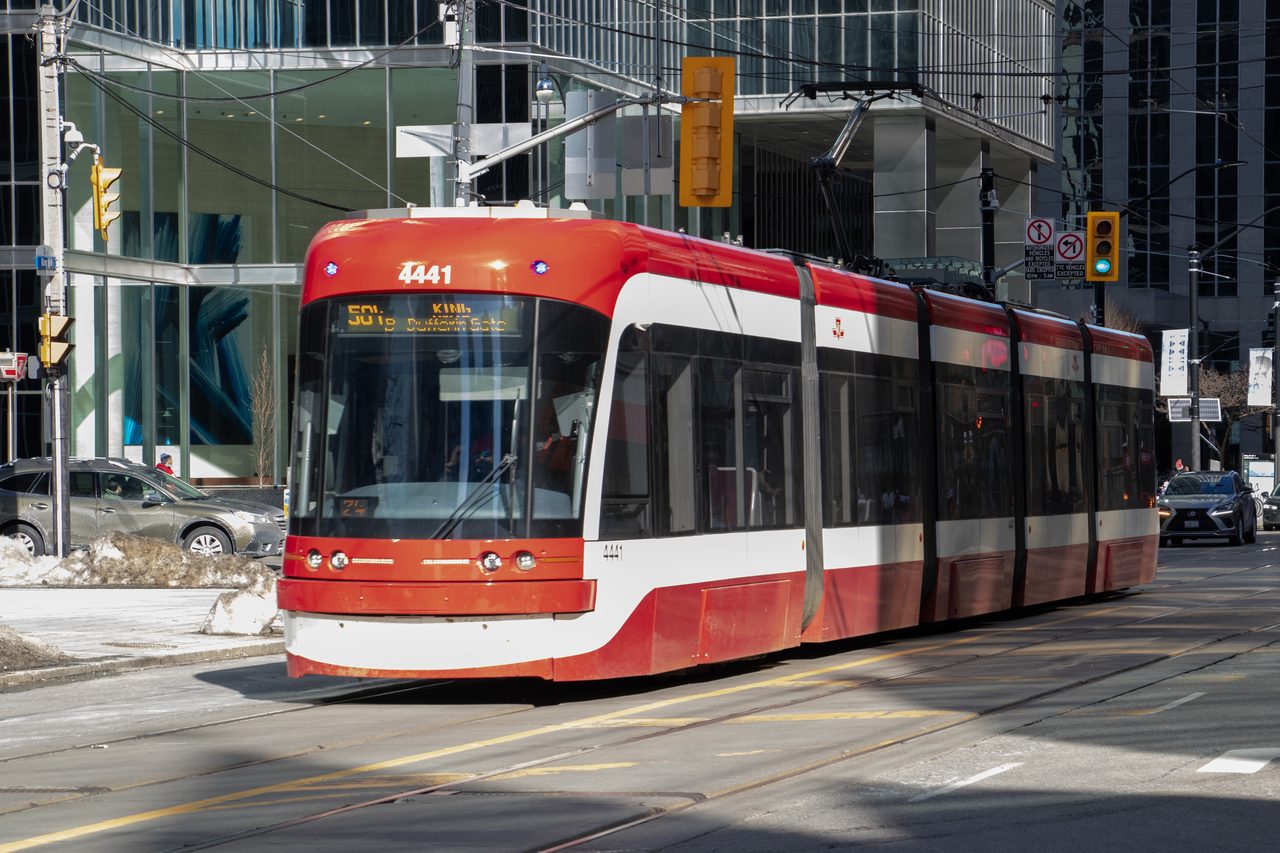
Canadian cities have fully embraced tap-to-pay transit, and it’s a game-changer for visitors — no fare cards to buy, no exact change to hoard. Here’s the 2026 snapshot:
- Toronto (TTC): $3.30 for adults when you tap a contactless credit/debit card or phone ($3.35 cash). One tap includes a two-hour transfer window across subways, streetcars, and buses — and since September 2026, there’s monthly fare capping: ride 47 times in a calendar month and the rest of the month is free. The streetcar network is genuinely useful for sightseeing — I rode the 504 King car the length of downtown and saw more of the city than any hop-on bus would show me.
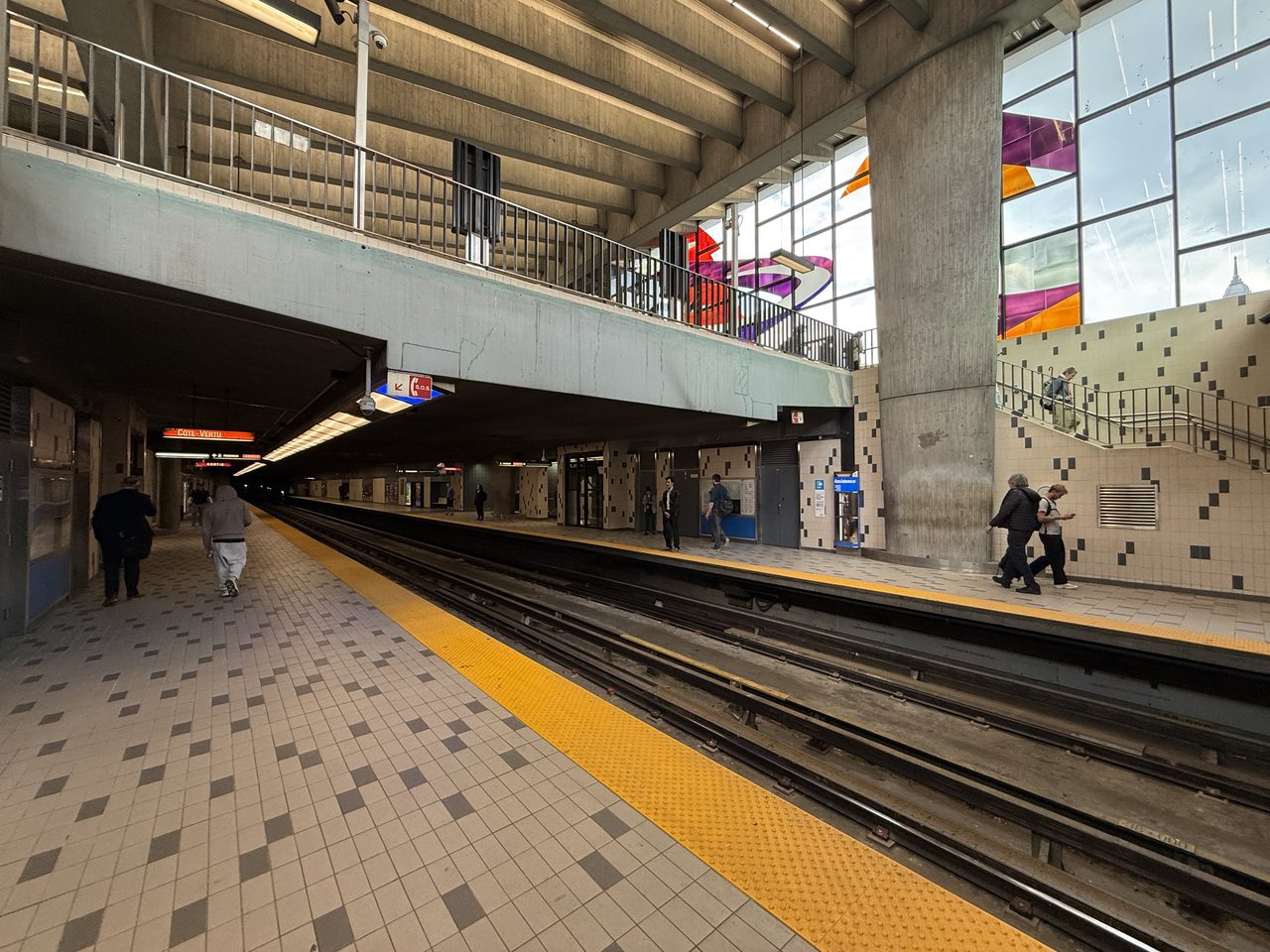
- Montreal (STM): $3.75 single ride in Zone A, with 90-minute transfers across the metro and buses. The metro’s rubber-tired trains are fast, frequent, and — fair warning — the stations double as an underground art gallery you’ll want to photograph. The REM light-rail network now connects Brossard to downtown and the Deux-Montagnes suburbs; the airport branch opens in late 2027, so don’t wait for it (more on airport links below).
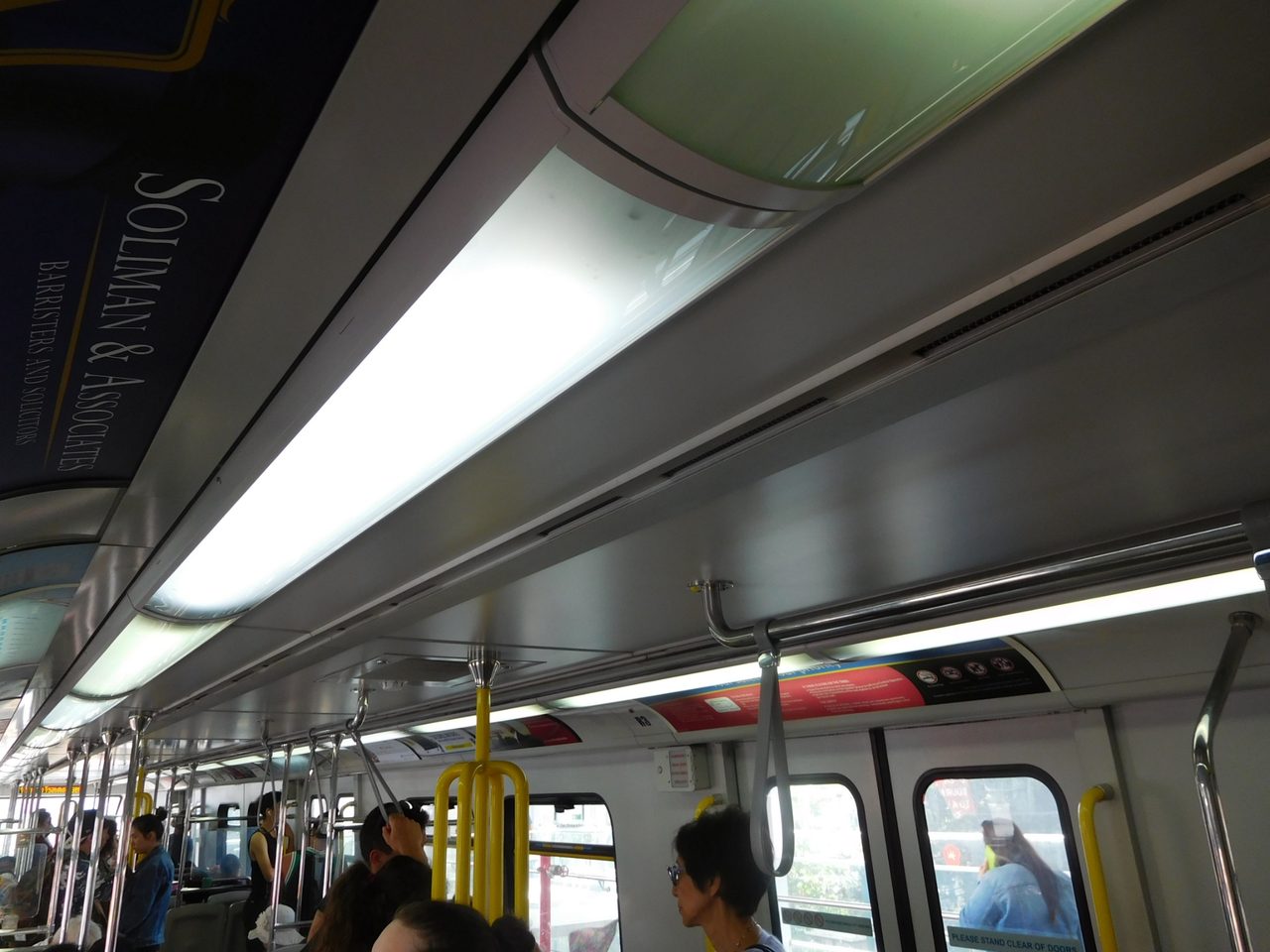
- Vancouver (TransLink): Tap your card or phone on SkyTrain, SeaBus, and buses — one fare covers 90 minutes of transfers. Note the YVR AddFare: trips starting at the airport stations carry an extra $6.50 surcharge (raised July 2026), so your first ride into the city costs more than the ride back.
Pro tip across all three cities: use the same card or phone for every tap. Transfers and fare caps are tracked per payment method — switch cards mid-day and you’ll pay twice. (My spreadsheet has a whole tab for transit math. I contain multitudes.)
Airport to downtown without a car
This is where car-free Canada quietly shines — every major airport now has a proper rail or express-bus link:
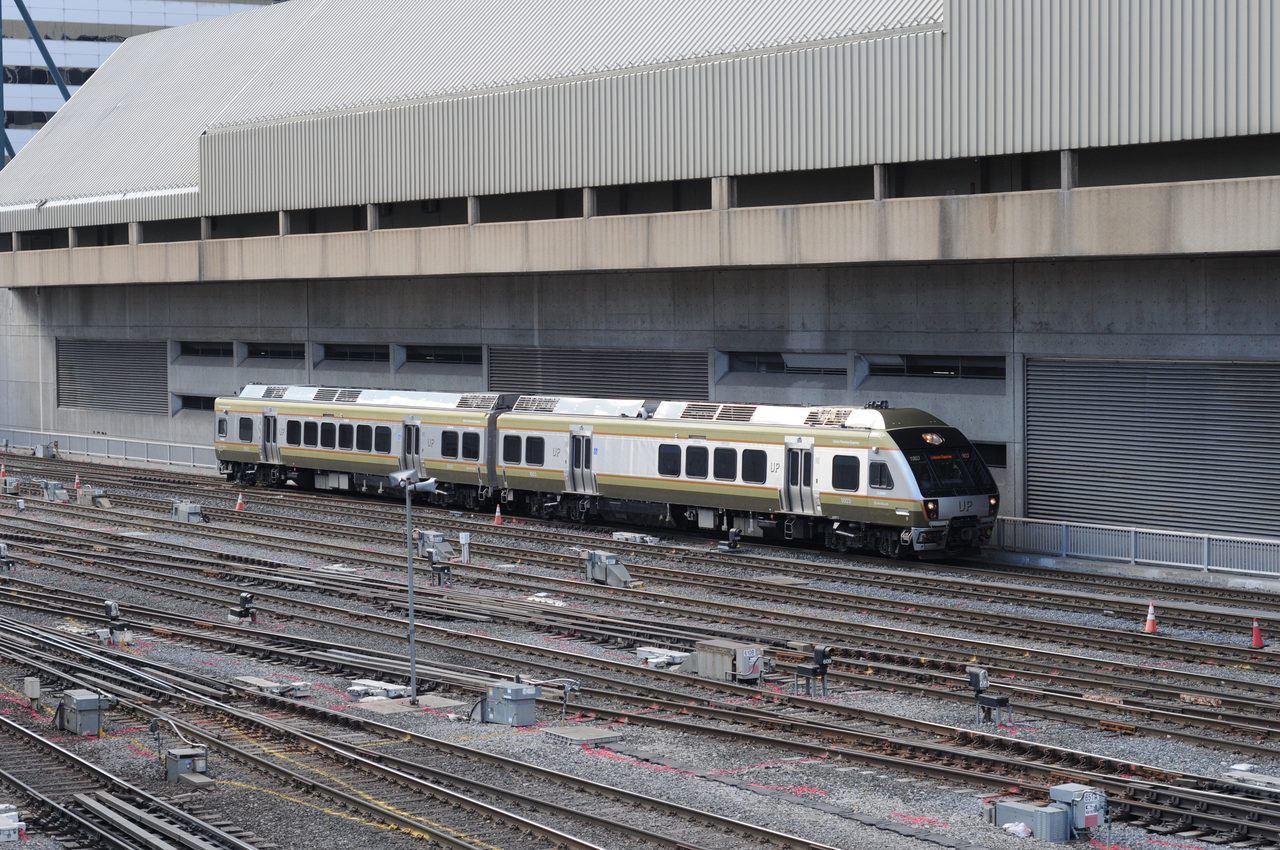
- Toronto Pearson → downtown: The UP Express runs every ~15–20 minutes, takes 25 minutes flat to Union Station, and costs $9.25 for adults with PRESTO (tap on, tap off — I timed it, and the train beat my friend’s taxi by 40 minutes during rush hour). A taxi will run you $60+.
- Vancouver YVR → downtown: The Canada Line SkyTrain reaches Waterfront Station in about 25 minutes. Expect roughly ~$9 for an adult (includes the $6.50 YVR AddFare I mentioned). I double-checked the AddFare details on TransLink’s official fares page — and pro tip: monthly passes and DayPasses bought outside the airport stations are exempt from the surcharge.
- Montreal Trudeau → downtown: The 747 express bus runs 24/7 to Lionel-Groulx metro and downtown. It’s $11.25 cash (exact change, coins only — or buy through the Chrono app), and here’s the lovely part: the driver hands you a pass valid 24 hours on the bus, metro, exo trains, and REM in Zone A. I confirmed the current fare and 24-hour-pass details on the STM’s official 747 page. The REM airport rail link opens in late 2027 — until then, the 747 is your ride.
The Rockies and national parks without a car
This is the question I get most, because the Rockies feel like car country. They’re not — not anymore.
Getting there: VIA Rail’s Canadian stops in Jasper (yes, you can arrive by sleeper train and step off into the mountains — very main-character). For Banff, the Brewster Express airporter runs Calgary Airport to Banff, and several shuttles serve Canmore.
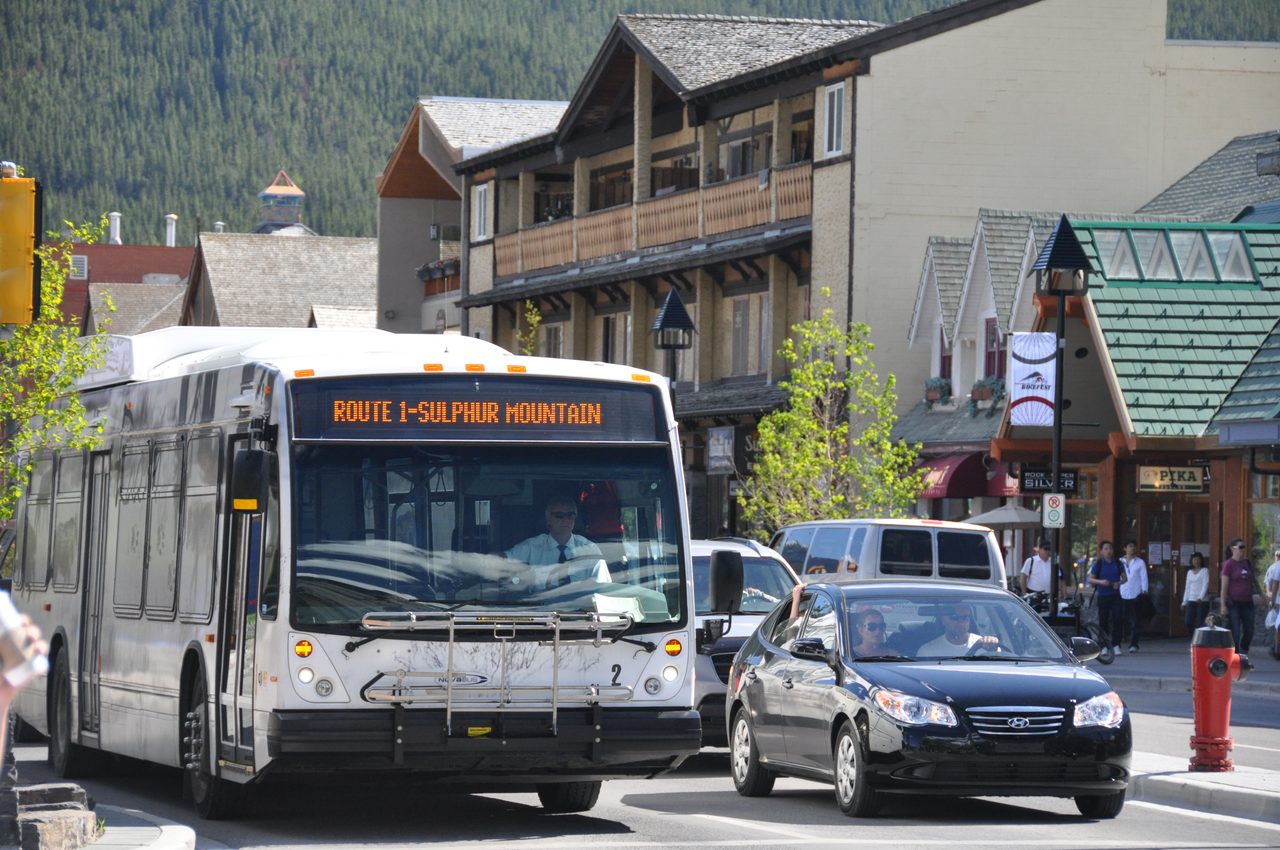
Getting around: Banff’s Roam public transit is genuinely excellent — local routes around town and Canmore, plus seasonal routes to Lake Minnewanka and Johnston Canyon, for a couple of dollars a ride. I rode the Route 1 bus up to Sulphur Mountain (pictured above) and had zero trouble reaching trailheads. These little buses are the backbone of car-free Banff, and they genuinely delight me every time.
Lake Louise and Moraine Lake: here’s where you must plan ahead. Parks Canada runs shuttle buses to both lakes in summer, and reservations are required — they release in waves on the Parks Canada site and sell out fast. I’ll be honest: I showed up at Lake Louise in July one year without a reservation, assuming I’d figure it out. I did not figure it out. Book the moment reservations open; the fare is roughly ~$8 per adult. Do not skip this step — trust me on this one.
Pair this with our 3-day Whistler itinerary (planned entirely car-free) or weekend trips from Vancouver without a car for more no-car mountain ideas.
What does car-free Canada cost?
Sample per-person costs (checked October 2026; items marked ~ are estimates):
| Trip | Cost (CAD) |
|---|---|
| VIA Rail Corridor: Toronto–Montreal, booked early | ~$60–90 |
| Megabus: Toronto–Montreal, advance fare | ~$10–40 |
| The Canadian: Toronto–Vancouver, economy | ~$550+ |
| Poparide: city-to-city carpool | ~$15–40 |
| UP Express: Pearson–Union Station | $9.25 |
| Canada Line: YVR–downtown Vancouver | ~$9 |
| STM 747: Montreal airport–downtown (24h pass included) | $11.25 |
| TTC: single ride, Toronto | $3.30 |
| STM: single ride, Montreal | $3.75 |
| Parks Canada shuttle: Lake Louise / Moraine Lake | ~$8 |
For city days, budget ~$10–15/day on transit if you’re hopping between neighborhoods — less if you walk the short hops (which I always do; it’s the best sightseeing there is). Pair a city stay with our 3-day Toronto itinerary or 2-day Vancouver itinerary to see how the days stack up.
Winter car-free travel: a few extra rules
I’ve done the car-free thing in February, and it’s absolutely doable — with caveats. VIA Rail’s long-distance trains can run hours behind schedule in deep winter (freight congestion plus weather); never book a same-day flight connection after The Canadian or The Ocean. Intercity buses on the main corridors (401, Trans-Canada in the west) are generally reliable, but check your operator’s alerts the morning of. City transit runs in all weather — Toronto’s PATH and Montreal’s Underground City (RÉSO) let you cross downtown cores without going outside, which feels like a superpower in -20°C. And fair warning: daylight is short, so front-load your sightseeing and save the cozy indoor stuff for 4 PM onward.
FAQs about getting around Canada without a car
Can you really travel across Canada without a car?
Yes — with planning. The Windsor–Québec City corridor (Toronto–Ottawa–Montreal) is easy car-free, with multiple daily trains and buses. Cross-country, combine VIA Rail’s Canadian (Toronto–Vancouver, four nights) with regional buses and budget flights for the longest hops. Rural and remote areas need the most planning, since some routes run only a few times per week.
Is VIA Rail’s The Canadian worth it in 2026?
If you have four nights to spare, absolutely — it’s one of the world’s great rail journeys, with dome cars through the Rockies. Economy seats from Toronto to Vancouver start around ~$550 (watch for sale fares near $415); Sleeper Plus berths and cabins include meals and cost several times more. Book on a Tuesday to catch VIA’s Discount Tuesday sales (code TUESDAY), and check current offers on VIA Rail’s official page.
What’s the cheapest way to get between Toronto and Montreal?
Usually the bus: Megabus and FlixBus run double-deckers between the two cities with advance fares from roughly ~$10–40 (promo seats can go even lower). VIA Rail’s Corridor trains start around ~$60–90 booked early and are faster and far more comfortable — downtown to downtown in about 5 hours. For current schedules, compare both before you commit.
How do I get from the airport to downtown without a car?
Toronto: the UP Express train to Union Station, 25 minutes, $9.25 with PRESTO. Vancouver: the Canada Line SkyTrain to Waterfront Station, ~25 minutes, roughly ~$9 including the $6.50 YVR AddFare. Montreal: the 747 express bus, $11.25 cash (exact change), which includes a 24-hour pass for the metro, buses, and REM in Zone A — the REM airport rail link doesn’t open until late 2027.
Is Poparide safe for solo travelers?
In my experience, yes. Poparide uses verified driver profiles, a two-way rating system, and recorded bookings — a big step up from hitchhiking, which is restricted on major highways in several provinces and not recommended. Book through the app, share your trip details with someone, and stick to highly rated drivers.
Can I see Banff and Lake Louise without a car?
Yes. Take the Brewster Express airporter from Calgary to Banff, then use Roam public transit for local routes and seasonal service to Lake Minnewanka and Johnston Canyon. For Lake Louise and Moraine Lake, book Parks Canada’s shuttle buses (roughly ~$8 per adult) — reservations are required and sell out in waves, so book as soon as they release. See also our weekend trips from Vancouver without a car.
Keep exploring
- Top Weekend Trips From Vancouver Without a Car (2026 Guide)
- The Ultimate 3 Days in Whistler Itinerary for 2026
- The Ultimate 2 Days in Vancouver Itinerary: 2026 Guide
- The Perfect 3 Days in Toronto Itinerary: 2026 Guide
- The Ultimate Vancouver Travel Guide: 2026 Edition