
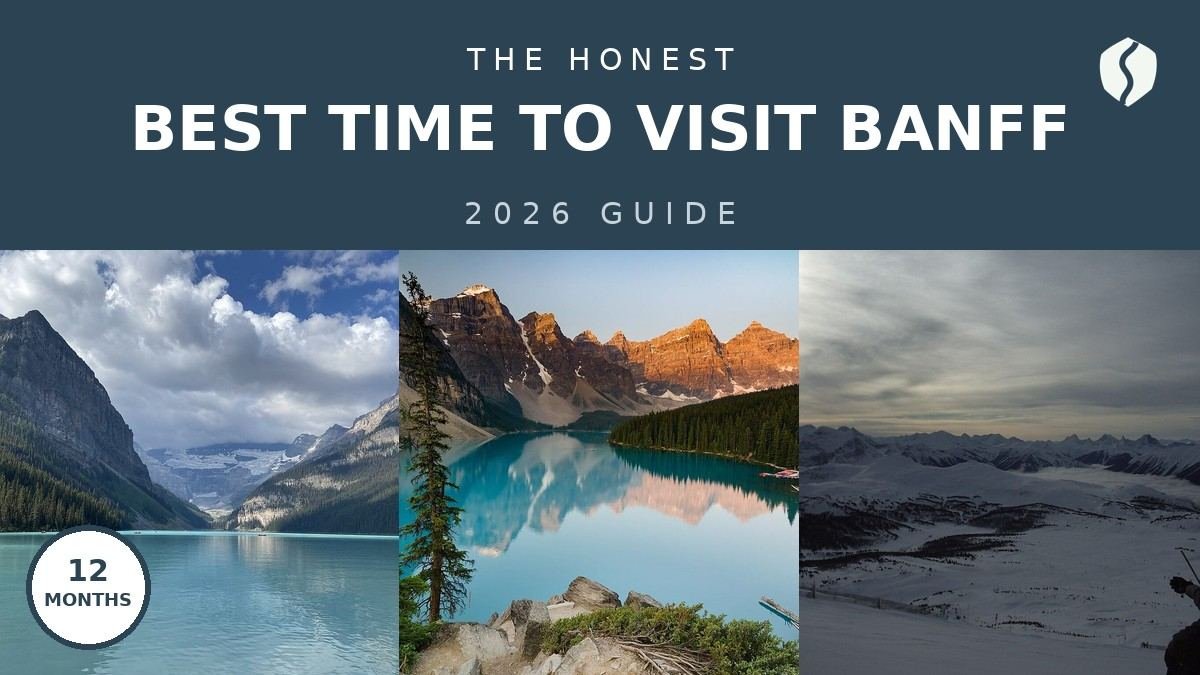
- ✓ Summer is the safest bet, not the only bet: mid-September gives you golden larches, elk bugling in the meadows, half the crowds — and Moraine Lake still open until October 12.
- ✓ You cannot drive to Moraine Lake anymore: since 2023 the road is shuttle-only (June 1–Oct 12), and reservations open April 15 at 8 AM MDT. Set an alarm. They sell out.
- ✓ August smoke is the real gamble: the mountains don’t care about your itinerary. Book refundable, check the smoke forecast, and have a canyon day as your backup plan.
I learned Banff’s most important lesson at a road barrier at 6:30 in the morning. It was mid-September, the larches were turning, and I’d driven up to Moraine Lake Road in the dark — headlamp on, thermos in the cupholder, the whole sunrise plan — only to find the gate locked and a sign explaining that personal vehicles hadn’t been allowed up that road since 2023. I’d read about the shuttle. I just hadn’t believed it applied to a guy arriving before dawn with good intentions. It applies to everyone. I’ve made this mistake so you don’t have to.
Here’s the deal with Banff: there is no single “best” month. There’s the best month for what you want. Powder? December through March. Lakes so blue they look edited? Late June through September. Golden larches and empty trails? September. Cheap beds and a quiet town? November and April — if you can live with mud and the occasional blizzard. I’ve been to Banff in nine different months across four trips now, and this is the honest month-by-month breakdown I wish someone had handed me before trip number one. Buckle up.
Where this guide applies: 7 Banff anchors, on a map
Every season below plays out across the same geography. Tap any stop to jump the map to it — these are the places your timing decision actually affects.
Map data © OpenStreetMap contributors. Open the full map
December–March: ski season, full send
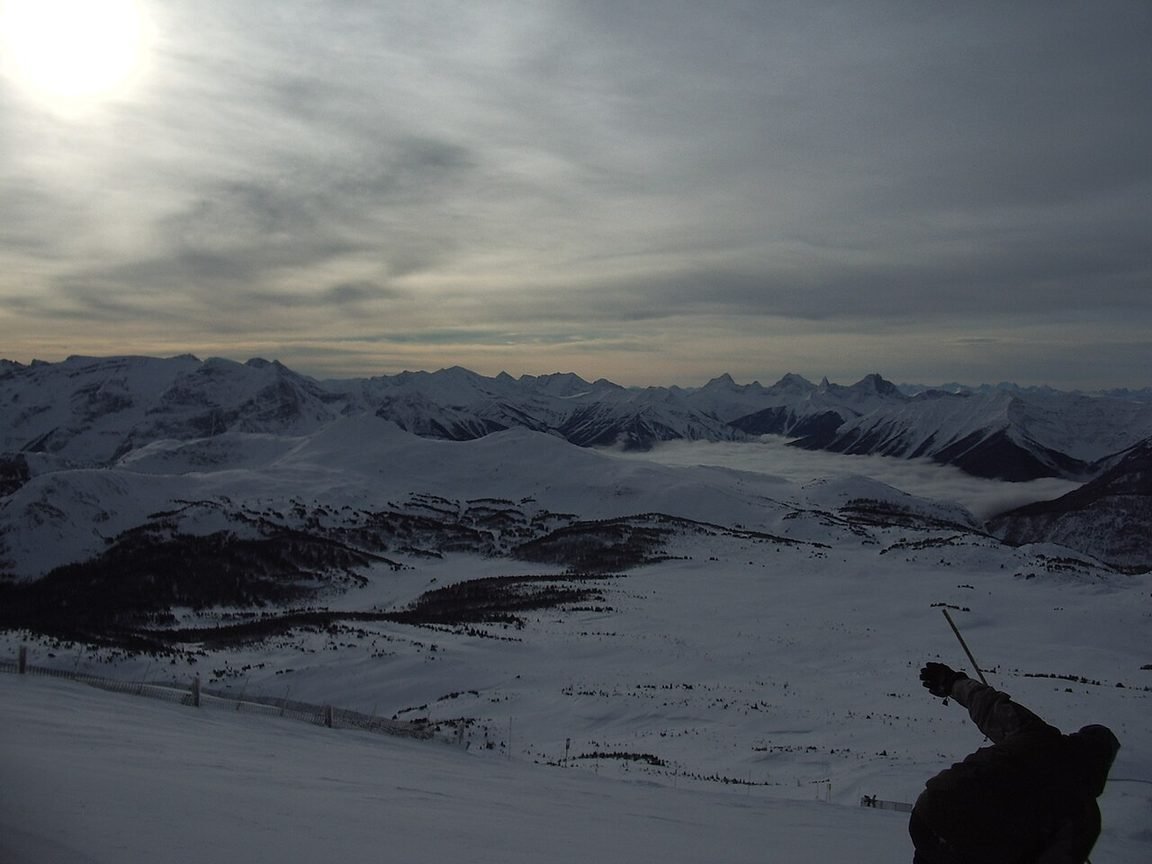
Banff has three ski hills — Sunshine Village, Lake Louise Ski Resort, and Mt Norquay — and winter is when the town belongs to skiers. Sunshine opens first (usually early November) and closes last (often late May), perched high enough that the snow is the reliable kind, not the wishful kind. I did an early-December powder day at Sunshine where it snowed 30 cm overnight and I couldn’t feel my fingers by the second chairlift. No regrets. None.
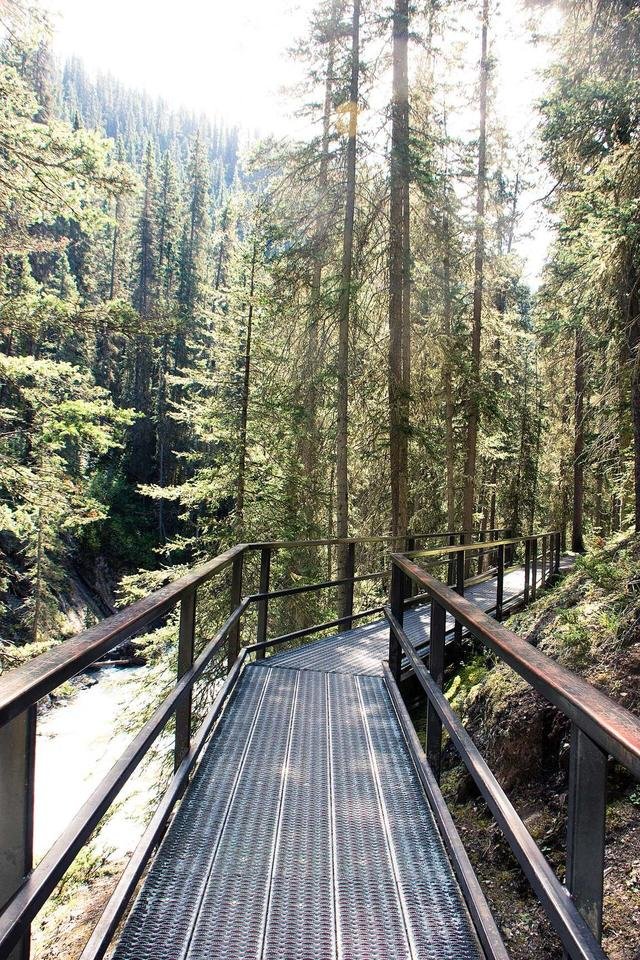
Non-skiers aren’t stranded either. The Johnston Canyon icewalk — a guided or self-guided walk up the frozen gorge on the catwalks — is the single best winter activity that doesn’t require owning skis. Lake Louise freezes into a natural skating rink (usually skateable from mid-December), with the ice castle the Fairmont carves most years. And the Banff Upper Hot Springs at 40°C, steaming while snow falls on your shoulders, is worth the detour on any winter night. I double-checked the hot springs’ current hours and prices on Parks Canada’s official page before my last winter trip.
January is the coldest month on paper — daytime highs around −4°C, nights dropping past −20°C — but it’s dry cold, and the town runs the SnowDays festival (ice sculptures, skijoring on Banff Ave) late in the month. February feels similar, with the Family Day long weekend the one spike in an otherwise calm month. March is the sleeper pick for skiers: longer days, milder air, and spring corn snow at Sunshine, though spring-break week at the hills gets busy.
Winter driving is not optional equipment — it’s mandatory gear. The Trans-Canada through the park can go from clear to whiteout in one pass, and rental companies don’t always fit proper winters. I watched a two-wheel-drive sedan do a slow 360 on the hill up to the hot springs. Rent the AWD, or take the Brewster bus from Calgary and let someone else white-knuckle it.
Crowds: low, except Christmas–New Year when Banff turns into a snow globe and hotel prices double. Costs: outside the holidays, winter is the cheapest time to sleep in Banff — January and early December routinely run 30–40% below summer rates.
April–May: mud season, and the thaw nobody photographs
April in Banff is the month travel brochures skip. The ski hill is still running at Sunshine, the town is quiet, the trails are muddy, and the lakes are still locked under ice. It’s also when Banff is cheapest and emptiest, and I have a soft spot for it — I once had the entire Vermilion Lakes road to myself at sunset in late April, one beaver, zero humans, and that’s a trade I’d make again.
May is when things start moving. The Lake Louise shuttle starts May 15, the Lake Minnewanka cruises start running, and the Johnston Canyon waterfalls hit their spring roar as the melt comes down — honestly the most impressive the canyon ever looks. Bears come out of hibernation (May is prime bear-viewing season along the Bow Valley Parkway, from the safety of your car — never stop and get out), and lower-elevation trails dry out by late May. The lakes, though? Still frozen. Lake Louise typically thaws in late May to early June, and if you arrive May 10 expecting turquoise water, you will find a very scenic ice rink. Manage the expectation, enjoy the skating.
The Bow Valley Parkway (Highway 1A) between Banff and Johnston Canyon closes to cars on select spring stretches for wildlife movement — which turns it into a cyclist’s dream. I rented a bike in town one May morning and rode the empty parkway with the mountains to myself. Check the current closure schedule on Parks Canada before you go; the dates shift year to year.
Crowds: thin until the Victoria Day long weekend, which is the unofficial starter pistol for summer. Costs: shoulder-season pricing through most of May, then the jump.
June: the lakes wake up

June is when Banff turns the color you came for. The ice leaves Lake Louise and Moraine Lake in early June, the Moraine Lake shuttle starts June 1, and the high-country trails start opening — though “start” is doing heavy lifting. Anything above the treeline can hold snow into late June, so check trail reports at the Banff visitor centre before committing to a big alpine day. I once post-holed up to my knees on the Plain of Six Glaciers trail in mid-June. The view was spectacular. My socks were not.
What June gets right: long days (sunset near 10 PM), wildflowers starting in the meadows, waterfalls at full volume, and crowds that are real but manageable — especially the first two weeks, before school lets out. Elk are calving in the valley bottoms (give them a very wide berth; a protective cow elk is no joke), and the mosquito situation is… enthusiastic. Bring the DEET. You’ll thank me at the Plain of Six Glaciers teahouse.
Prices in June sit one rung below the July–August peak, and if you want summer Banff without the summer scrum, early-to-mid June is the sweet spot. The one catch: some high passes on the Icefields Parkway can still be snowbound, and Moraine Lake Road occasionally opens late after heavy snow years. Flexibility, always.
July–August: peak summer — and the honest truth about smoke

Let’s not dance around it: July and August are the best-weather months and the busiest months, and those two facts are the same fact. Highs around 22°C, wildflowers peaking mid-July, every trail open, the Icefields Parkway in full glory, daylight until nearly 10 PM. It is magnificent. It is also the month when the Lake Louise parking lot fills by 8 AM, Moraine Lake is shuttle-only, and you will share every viewpoint with a few hundred of your closest friends. The Calgary Stampede (early July) adds an extra wave of regional visitors, so the first two weeks of July run particularly hot on hotel prices.
Now the smoke conversation, because it’s the question every reader actually has: yes, wildfire smoke is a real risk in late July and August. It’s not every year and it’s not every week, but after the 2023–2024 fire seasons — Jasper burned, no euphemism needed — pretending it can’t happen is dishonest. Here’s what I actually do on an August trip:
- Book refundable everything. Hotels with free cancellation, shuttles you can move. Non-negotiable in August now.
- Check the smoke, not just the sky. FireSmoke.ca and the Air Quality Health Index tell you what’s coming 48 hours out — smoke drifts, and a clear morning can turn hazy by afternoon.
- Keep a canyon day in your pocket. On my smokiest Banff trip — the Ten Peaks were a rumor, not a view — I pivoted to Johnston Canyon, where the gorge walls do the scenic heavy lifting even when the horizon is gone. Waterfalls don’t need blue sky.
- Be flexible on elevation. Smoke often sits in the valleys; sometimes the alpine is clearer, sometimes it’s worse. Check the Banff webcam network in the morning and chase the clear side.
If you have asthma or any respiratory condition, August in the Rockies deserves a real conversation with your doctor before you book — not a “she’ll be right.” Smoke days can push the AQHI into the high-risk band, and no viewpoint is worth a hospital trip. September sidesteps most of this.
Crowds: maximum. Costs: maximum — Banff hotel rooms that go for $180 in November routinely clear $400–500 in August. Book 4–6 months ahead for the best selection; the good-value spots (hostels, Canmore) sell out first. If you’re costing out the whole trip, my Banff trip cost breakdown has the full summer math.
September: larch season — my actual answer to “best time”
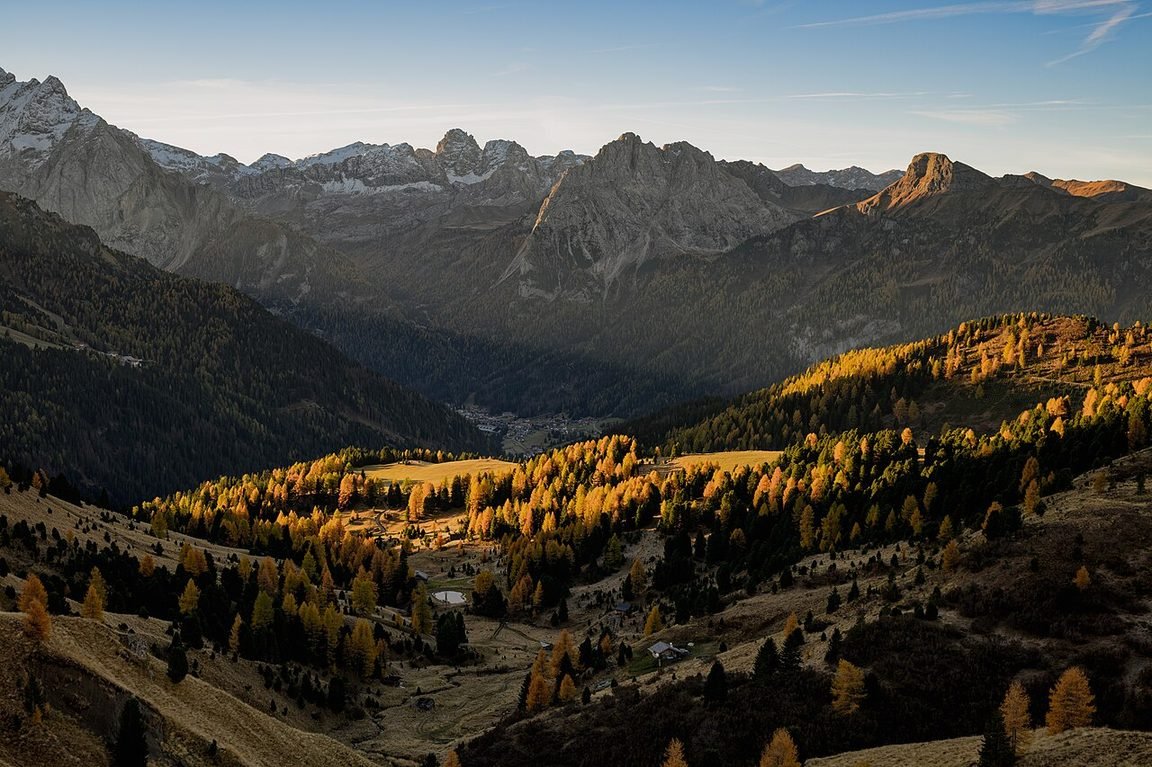
If this whole guide had to pick one month, I’d pick September without blinking. Here’s why: the larches turn gold, usually peaking in the third week of September (it shifts a few days either way with the weather), and the Larch Valley trail above Moraine Lake becomes the single prettiest hike in the Canadian Rockies. The crowds thin out after Labour Day. The smoke risk drops. The light goes golden. And the elk rut is on — bull elk bugling in the meadows around the townsite and the Banff Springs golf course, which is either thrilling or alarming depending on how close you are. (Stay in your car. This is their season.)

Logistics for larch season: the Moraine Lake shuttle runs through October 12, so September is fully in season — but book the shuttle the moment you have dates, because every larch-chaser in Alberta is competing for the same seats. Start the Larch Valley hike early; the parking area at the shuttle stop funnels everyone onto the same trail and it gets conga-line busy by 10 AM. I started at 7:30 AM on a weekday and had the golden valley to a dozen people. By the time I came down, the trailhead looked like a music festival.
Larch Valley gets the glory, but the Healy Pass trail at Sunshine has larches with a fraction of the foot traffic — same golden needles, meadows instead of crowds. A Sunshine staffer tipped me off when I asked where they go in September. It’s a longer day (18 km return), which is exactly why it stays quiet.
Crowds: moderate, spiking on larch weekends. Costs: shoulder pricing returns mid-month — September is the best value-for-weather month on the calendar. If you’re weighing Banff against the wider region, my Canadian Rockies timing guide covers how September plays across Jasper and Yoho too.
October–November: the quiet shoulder (and the gamble)
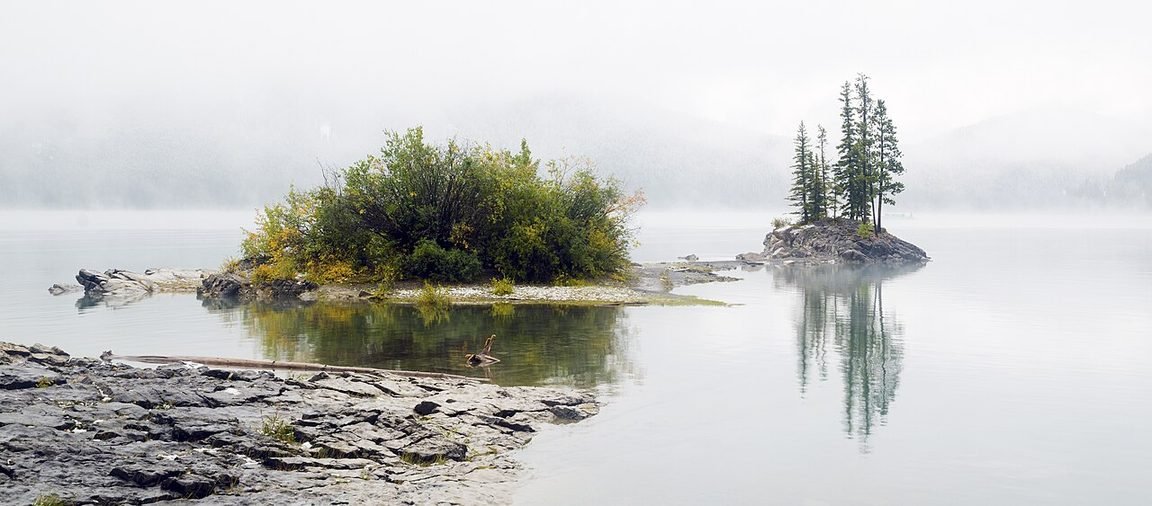
October is Banff’s moodiest month, and I mean that as a compliment. The first week can still be golden — larches fading, aspen going yellow in the valley — and then winter arrives whenever it feels like it, sometimes overnight. The Moraine Lake shuttle ends October 12 and the road closes; Lake Louise quiets to a murmur; most boat cruises and the gondola wind down by mid-month. Thanksgiving weekend is the one blip of crowds and prices.
What October is good for: dirt-cheap beds, empty trails at valley level, moody photography, and the hot springs with nobody in them. What it’s bad for: anyone with a fixed list of must-dos, because snow can close high trails and the weather flips daily. I’ve had a glorious 18°C hike on October 5 and a full blizzard on October 28. Same town. Pack for both or don’t come.
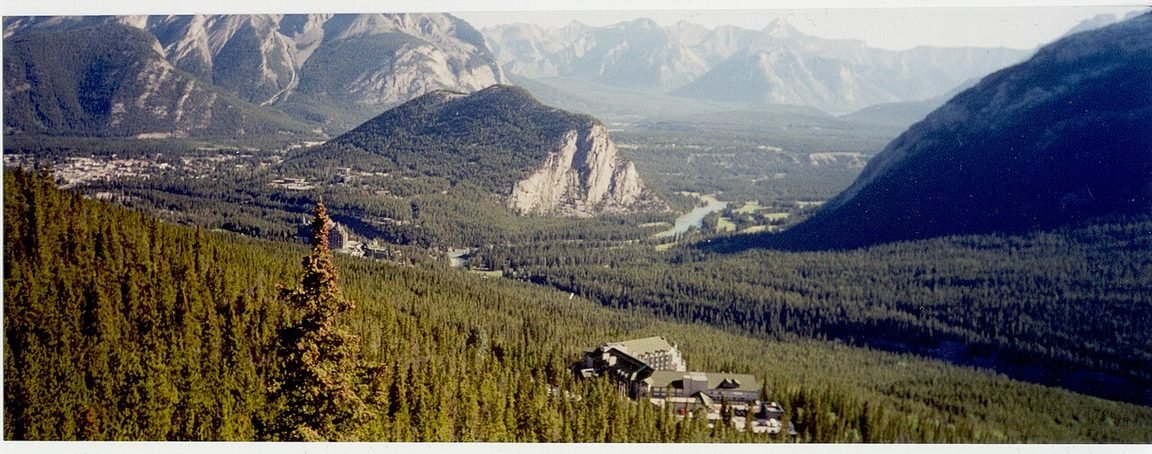
November is the true off-season — the quietest month in Banff, full stop. Most summer operations are closed, most winter ones aren’t open yet (Sunshine typically opens early-to-mid November; Lake Louise Ski Resort follows). The Banff Christmas Market usually starts late November and runs into December, which gives the town its first pulse of the season. Hotel rates bottom out. If your idea of a good trip is a cheap room, a good book, the hot springs, and maybe the first turns of ski season: November is criminally underrated.
The Banff townsite in November is when locals actually eat on Banff Avenue — restaurants run off-season specials and you can walk into anywhere without a reservation. Ask your server what’s good; November servers have time to talk, August servers do not.
When to book: the windows that actually matter
Banff punishes procrastinators more than most destinations. Here are the booking windows I plan around, all verified for 2026:
- Moraine Lake / Lake Louise shuttle: reservations open April 15, 2026 at 8:00 AM MDT via the Parks Canada Reservation Service. 40% of seats release on launch day; the remaining 60% drop two days before each departure day at 8 AM MDT. I double-checked these dates on Parks Canada’s official shuttle page — they hold for 2026, with Lake Louise running May 15–Oct 12 and Moraine Lake June 1–Oct 12. → Parks Canada — official shuttle info
- Summer hotels: book by February–March for July–August. The value tier (HI hostels, Canmore condos — see my Canmore accommodation guide) sells out first; the $500/night rooms are always available, funny how that works.
- Christmas/New Year: book by September. Banff at Christmas is a snow globe and priced like one.
- Ski season (non-holiday): 4–8 weeks out is usually fine; Sunshine and Lake Louise both sell lift tickets online with advance discounts.
- Shoulder months: a week out, sometimes the day before. November and April are the walk-in months.
One more: the park pass. You need one for every day you’re in the park — about $11/day per adult or the annual Discovery Pass if you’re doing 7+ days. Buy it online before you arrive or at the park gates; the east gate lineup on a July Saturday is a special kind of purgatory.
What Banff costs by season
Banff is not a cheap destination in any month, but the spread between seasons is enormous — the same hotel room can triple from November to August. Pick your travel style, set your days, and the calculator below gives you a per-person daily estimate. (Accommodation not included — see the table below, because beds are where Banff really gets you.)
Budget calculator
Per person, in Canadian dollars. Excludes accommodation.
Budget ≈ $100/day · Mid-range ≈ $180/day · Luxury ≈ $310/day. Shuttles, gondola and attraction prices checked October 2026.
| Expense (per person / day) | Budget | Mid-range | Luxury |
|---|---|---|---|
| Accommodation — summer (Jul–Aug) | $60 (hostel dorm) | $300 (Banff hotel) | $550+ (Fairmont tier) |
| Accommodation — shoulder (May, Sep–Oct) | $45 (hostel dorm) | $200 (Banff hotel) | $400+ (Fairmont tier) |
| Accommodation — winter low (Nov, Jan, Apr) | $40 (hostel dorm) | $160 (Banff hotel) | $350+ (Fairmont tier) |
| Food & drink | $45 | $80 | $140 |
| Sights (shuttle, gondola, hot springs…) | $25 | $45 | $80 |
| Getting around (Roam transit / fuel) | $20 | $35 | $60 |
| Coffee, treats & souvenirs | $10 | $20 | $30 |
| Daily total (summer, no bed) | ~$100 | ~$180 | ~$310 |
The seasonal cheat sheet
| Month | What’s on | Crowds | Prices |
|---|---|---|---|
| Jan | Peak ski, icewalks, SnowDays festival, hot springs | Low | Low |
| Feb | Peak ski, Lake Louise skating, coldest temps | Low–mod | Low |
| Mar | Spring skiing at Sunshine, longer days | Moderate | Low–mod |
| Apr | Late ski at Sunshine, mud, empty town | Lowest | Lowest |
| May | Lakes frozen early, shuttle starts May 15, bears emerge, waterfalls roaring | Low–mod | Low–mod |
| Jun | Lakes thaw, Moraine shuttle from Jun 1, long days | Moderate | Moderate |
| Jul | Wildflowers, all trails open, Stampede spillover | Peak | Peak |
| Aug | Warmest, longest days, smoke risk | Peak | Peak |
| Sep | Larch season (~3rd week), elk rut, Moraine open | Moderate | Moderate |
| Oct | Shuttle ends Oct 12, moody weather, cheap beds | Low | Low |
| Nov | Ski season starts, Christmas market late Nov, quietest month | Lowest | Lowest |
| Dec | Ski, Banff Christmas, ice skating, holiday prices | Mod–peak | High |
FAQs about the best time to visit Banff
What is the absolute best month to visit Banff?
September — specifically the third week, for larch season. You get golden larches, the elk rut, Moraine Lake still open, thinning crowds, dropping prices, and almost no smoke risk. July has better weather on paper but you’ll share it with everyone; September is the month I recommend to friends and the month I go myself.
Can you still drive to Moraine Lake?
No — personal vehicles have been banned on Moraine Lake Road since 2023. Access is by Parks Canada shuttle (reservations open April 15, 2026), Roam public transit, or licensed commercial operators, June 1 through October 12. I learned this at a locked gate at dawn; learn it from this paragraph instead.
Is Banff worth visiting in winter if I don’t ski?
Absolutely — winter might be the best value season in Banff. The Johnston Canyon icewalk, skating on Lake Louise, the Banff Upper Hot Springs in falling snow, and the town at its quietest, all with the cheapest hotel rates of the year. You don’t need skis; you need warm boots and a willingness to be outside at −15°C. The hot springs fix the second part.
How bad is the wildfire smoke in Banff in August?
It varies wildly year to year — some Augusts are crystal clear, others are hazy for weeks. The honest playbook: book refundable everything, check FireSmoke.ca and the AQHI before and during your trip, and keep a flexible plan (canyon hikes and lake days work in haze; alpine panoramas don’t). If smoke would ruin the trip for you, September is the safer bet — nearly all the beauty, a fraction of the risk.
When should I book the Lake Louise / Moraine Lake shuttle?
The moment reservations open: April 15, 2026 at 8:00 AM MDT, through the Parks Canada Reservation Service. 40% of seats go on launch day and the rest release two days before each departure — that second window is your backup if launch day sells out. For peak summer and larch season, treat the shuttle like concert tickets. I double-checked the 2026 dates on Parks Canada’s official page.
What’s the cheapest month to visit Banff?
November and April — the true shoulder months, when hotel rates bottom out and the town is at its quietest. The trade-off is real: some attractions are closed and the weather is a coin flip. For the best value (good weather + sane prices), pick May or late September instead. Either way, base in Canmore to cut accommodation costs further — my Canmore guide has the breakdown.
Keep exploring
Banff is one park in a big system — here’s where I’d go next:
- How much a Banff trip costs — the full budget breakdown behind the calculator above
- Best time to visit the Canadian Rockies — the region-wide version of this guide
- Where to stay in Canmore — the cheaper basecamp 20 minutes from Banff
- National parks in Canada — how Banff stacks up against the rest of the system
Pick your month, book the shuttle, and gas up before the park — the station in Lake Louise village has opinions about your wallet. See you out there.
2 comments