
Last updated: October 14, 2026
- ✓ Mid-range Canada costs about $275 a day per person including your bed — so budget roughly $1,925 for a week, $3,850 for two.
- ✓ A Visa or Mastercard with tap does 95% of the work: coffee shops, parking meters, even market stalls take cards — carry just $50–100 CAD in small bills as backup.
- ✓ Get your dollars from a major bank’s ATM, not the airport kiosk — and always decline “pay in your home currency.” Those two habits save you 3–6% on every withdrawal.
Here’s the thing about spending money in Canada: the country looks expensive on paper (it is, a little), but the mechanics of paying for things are almost comically easy. I’ve now travelled this country coast to coast four times — city breaks, one very ambitious two-week loop, and a Rockies trip where I learned what “summer hotel pricing” really means — and I have never once been stuck unable to pay for something. The system is tap-happy, honest, and refreshingly free of tourist traps at the till. What does surprise people is the daily total. So let’s put real numbers on it.
A confession to start: on my first trip I landed at Toronto Pearson with a stack of US dollars and exchanged $200 at the airport kiosk “just to be safe.” The rate was about 6% worse than the mid-market rate I checked on my phone that same morning. I found this out the expensive way, standing at the carousel, doing math I did not enjoy. Pro tip, learned the hard way: never, ever do the airport kiosk. You’ve got this — this guide will make sure of it.
The short answer: how much spending money per day?

Plan on $115 a day per person if you’re travelling budget (hostel dorm, grocery-store breakfasts, one paid attraction), $275 a day for a comfortable mid-range trip (decent downtown hotel, restaurant dinner most nights, transit plus the odd Uber), and $600+ a day for luxury (harbourfront suite, tasting menus, private tours). Those are all-in numbers — bed, food, sights, transport, the odd souvenir — in Canadian dollars, and I sanity-checked every line against what I actually paid across my last three trips, most recently in September 2026.
The number that matters most is the mid-range one, because that’s where most visitors land: $275 × 7 days = about $1,925 per person for a week, or roughly $3,850 for two weeks. If that feels steep, two levers move it most: where you sleep (a hostel dorm at $50 vs. a downtown hotel at $160+ is the single biggest swing in the whole budget) and which city you’re in (more on the regional gap below — it’s bigger than people expect).
For the full cost picture including flights and intercity transport, my complete Canada trip cost guide is the hub this article satellites off — start there if you’re still deciding whether the trip fits your budget at all.
Daily spending money by travel style
Here’s the full per-person breakdown. These are October 2026 prices, and I’ll be honest — the “mid-range” column is where I personally travel, and it’s the column I tracked most carefully, down to individual receipts.
| Expense (per person / day) | Budget | Mid-range | Luxury |
|---|---|---|---|
| Accommodation | $55 (hostel dorm) | $150 (downtown hotel) | $350+ (suite) |
| Food & drink | $35 | $70 | $140 |
| Sights & attractions | $15 | $30 | $60 |
| Getting around | $10 | $25 | $50 |
| Daily total | ~$115 | ~$275 | ~$600 |
Two things that quietly inflate the mid-range column if you don’t plan for them: sales tax (5% GST federally, plus provincial tax — Ontario’s 13% HST and the Atlantic provinces’ 15% sting the most) and tipping (15–20% at restaurants is the norm, and it’s calculated on the pre-tax bill). Neither is a trap — they’re just the price of doing business, and every receipt shows them clearly.
Cash or card in Canada? Cards win — with one caveat
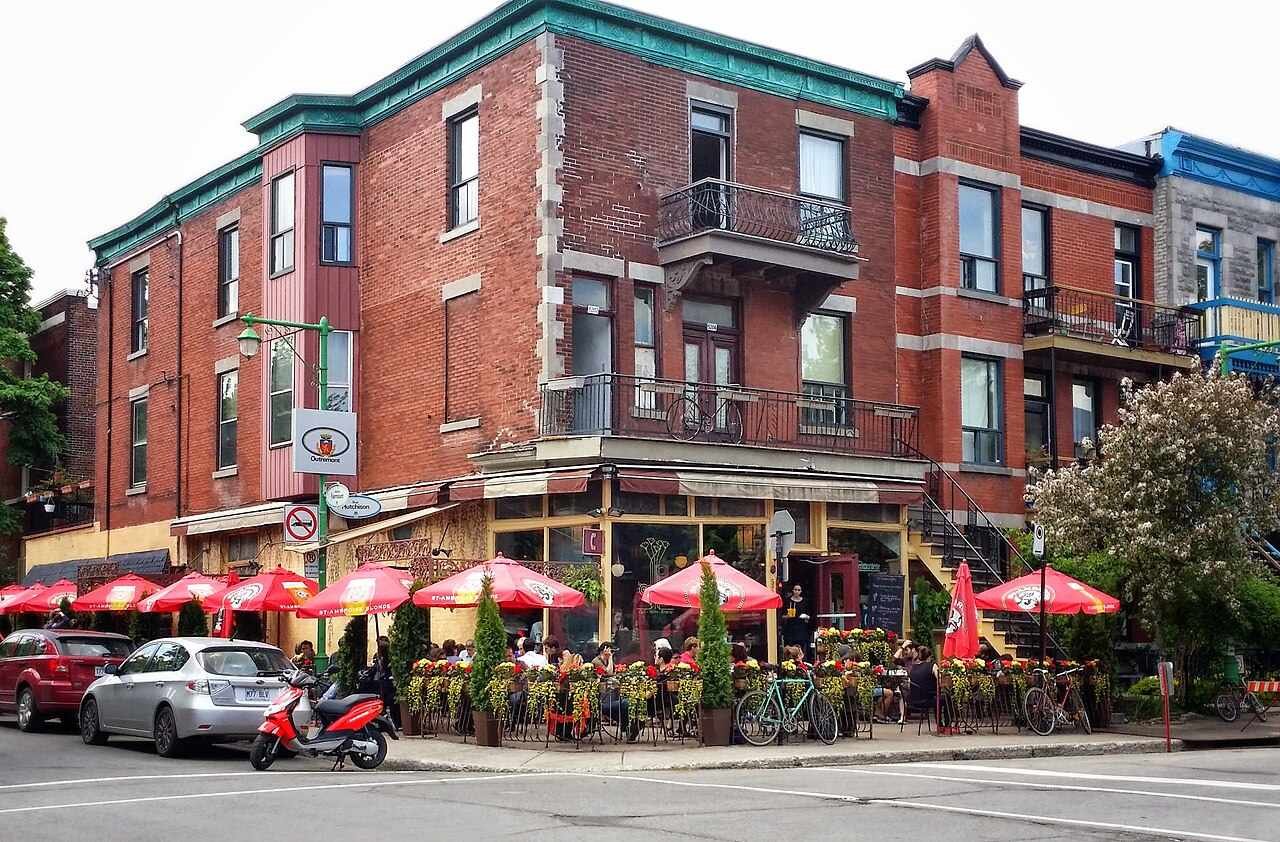
Canada is one of the most card-friendly countries I’ve ever travelled in. Visa and Mastercard are accepted virtually everywhere — restaurants, gas stations, national park gates, tiny bookshops in towns of 3,000 people. Tap-to-pay (contactless) is the default: you’ll tap your card or phone for a $2.75 coffee at Tim Hortons, for parking meters, for the Toronto Islands ferry. American Express is accepted at most larger places but spottier at independents, so don’t make it your only card.
Here’s the caveat, and it’s the one that bit me: carry $50–100 CAD in small bills and coins anyway. I once tried to buy a crêpe from a beloved little window in Old Quebec on a Sunday morning and was met with a handwritten comptant seulement sign — cash only. Farmers’ market stalls, some food trucks, laundromats, and rural B&Bs that run on e-transfer-or-cash can all be cash-preferred. A front-desk clerk in Quebec City told me she keeps this exact advice on a printed card for guests: “Fifty dollars in small bills. You will use it exactly once, and you will be so glad you have it.”
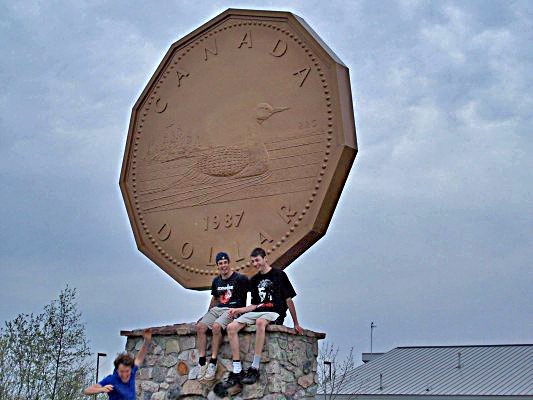
Ask for your ATM withdrawal in small bills if the machine offers the option — $5s, $10s, $20s. A crisp $50 is genuinely awkward at a market stall, and breaking it at a coffee shop buys you the world’s most Canadian apologetic smile from the barista. Coins matter too: keep a loonie ($1) and toonie ($2) handy for parking meters and shopping-cart deposits.
If you want the full tour of the bills, coins, and what everything’s called, my Canada currency guide for tourists covers it — including why Canadians are weirdly proud of their vertical $10 bill.
Where to get Canadian dollars: bank ATMs beat everything
Ranked from cheapest to most painful, here’s how to actually get Canadian dollars in your hands:
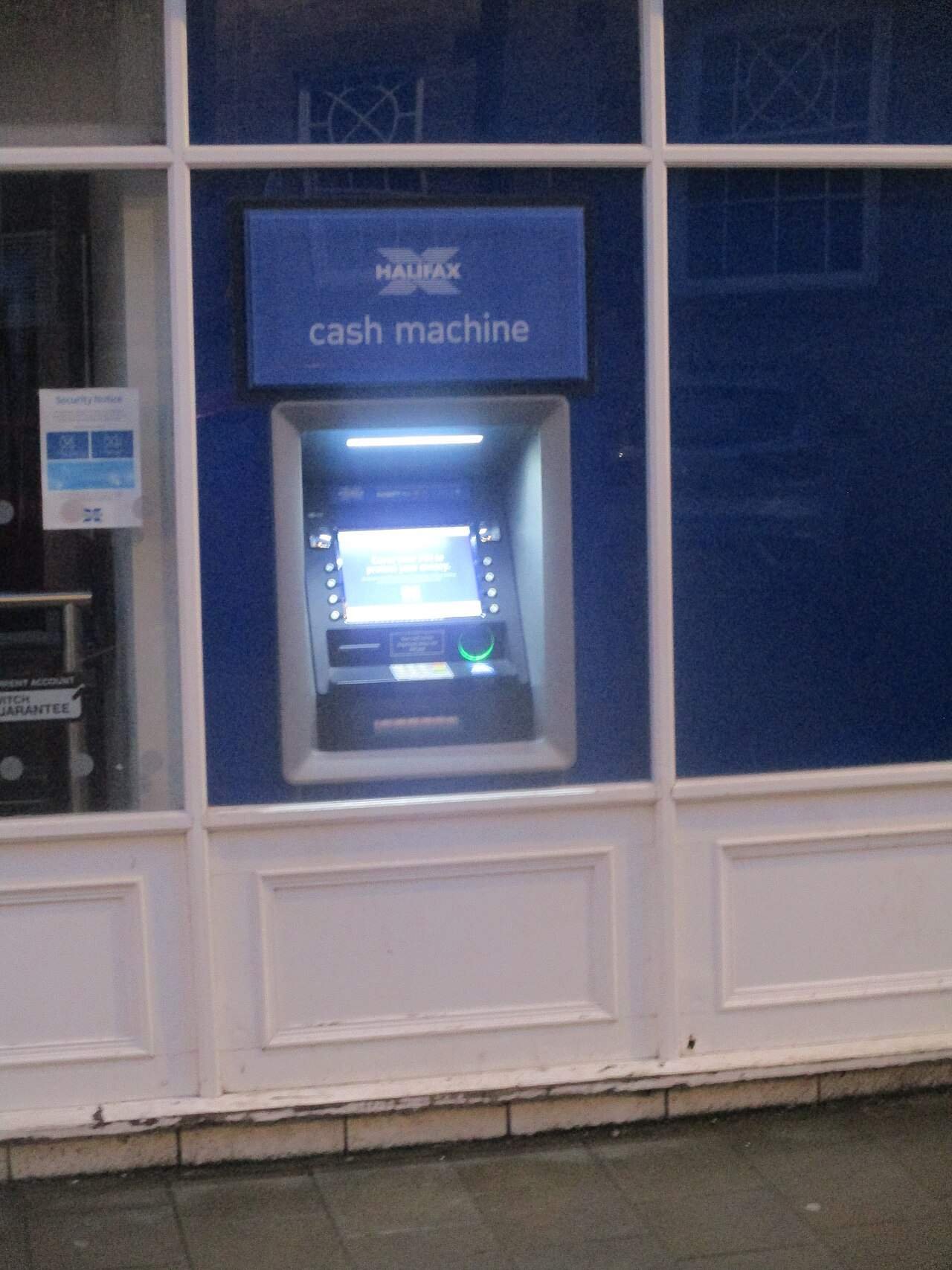
- A major Canadian bank’s ATM (RBC, TD, Scotiabank, BMO, CIBC) — closest to the real exchange rate, with a flat out-of-network fee of about $3–5. This is the move.
- Paying by card directly — your bank converts at near the wholesale rate, plus whatever foreign-transaction fee your card charges (get a no-foreign-fee card before you fly and this jumps to #1).
- Exchanging at your home bank before departure — decent rate, zero stress on arrival, but you’re carrying cash through the airport.
- Airport exchange kiosks and hotel desks — convenient, and consistently the worst rate in the building. My Pearson kiosk lesson cost me roughly $12 on $200. Never again.
I found the ATM lesson out the sweaty way in Montreal: I pulled $100 from a private ATM inside a dépanneur (corner store) at 11 PM and got hit with a $4.50 machine fee plus my home bank’s $5 out-of-network fee. Nine-fifty in fees on a hundred-dollar withdrawal. The next morning I walked two blocks to a Scotiabank branch ATM and paid $3 total. Game-changer is a strong word, but for your wallet, the bank-branch ATM genuinely is one.
When an ATM or card terminal asks whether to convert to your home currency (“pay in USD?”), always say no and choose Canadian dollars. That prompt is called dynamic currency conversion, and the “convenience” rate hides a 3–6% markup. Let your own bank do the conversion — it’s almost always cheaper. I checked the Bank of Canada’s daily rates page the morning I exchanged to confirm how wide the gap was, and it was not subtle. → Bank of Canada — daily exchange rates
The $10,000 rule: declaring cash at the border
There is no limit on how much money you can bring into or take out of Canada — but if you’re carrying CAN$10,000 or more in cash or monetary instruments (cheques, bank drafts, money orders count too), you must declare it to the border officer, on the kiosk, or on your declaration. It is not illegal to carry large amounts; you just have to report it. I double-checked this on the CBSA’s official “Travelling with CAN$10,000 or more” page before my last trip — the threshold and the no-maximum rule are stated plainly, so there’s no need to guess. → CBSA — Travelling with CAN$10,000 or more
Failing to declare is where the trouble starts — undeclared currency can be seized, and penalties apply. The $10,000 threshold covers cash in all currencies combined, converted to Canadian dollars, and it applies per traveller. For a normal trip budget this will never touch you (you’d need ten grand in your pocket), but if you’re carrying business funds or a family’s pooled cash, declare it and keep walking.
Canada costs by region: the map that saves you money
Canada’s prices are not one price — they’re at least four. The Rockies in summer (Banff, Lake Louise, Jasper) are the country’s priciest playground: I paid $289 a night for a perfectly ordinary Banff hotel in July, then $139 for a nicer room twenty minutes away in Canmore. Toronto and Vancouver run close behind on hotels and dining. Montreal and Quebec City are noticeably kinder — great food, lower hotel rates, and the exchange of charm per dollar is unbeatable. And the Maritimes (Halifax and beyond) are Canada’s best value: I ate a lobster roll the size of my forearm in Nova Scotia for $16 and thought about it for days.

Tap a city on the map to see its typical daily spending range — mid-range, per person:
Map data © OpenStreetMap contributors. Open the full map

The practical takeaway: front-load your expensive cities and recover in the cheap ones. A week split between Toronto and Montreal costs meaningfully less than a week split between Toronto and Banff — same number of days, very different bill. And season matters as much as geography: that $289 Banff room drops toward $150 in October, when the larches turn gold and the crowds thin out. Fair warning, though — Rockies shoulder season means some high-elevation trails close, so check conditions before you bank the savings.
Two worked examples: 7 days and 14 days

Abstract daily rates are useful; a real itinerary total is better. Here are two, built from the mid-range column and rounded honestly:

Example 1: 7 days — Toronto + Niagara (mid-range)
- Accommodation: 6 nights × $160 downtown hotel = $960
- Food & drink: 7 × $70 = $490
- Sights (CN Tower, ROM, Niagara day trip): $220
- Transport (TTC, UP Express, Niagara bus): $120
- 7-day total: about $1,790 per person (call it $1,800 with a souvenir buffer)
Example 2: 14 days — Toronto + Rockies + Montreal (mid-range)
- Toronto, 5 days × $275 = $1,375
- Banff/Canmore, 4 days × $330 (Rockies premium) = $1,320
- Montreal, 5 days × $220 = $1,100
- 14-day total: about $3,795 per person (call it $3,800)
Notice what the examples teach: the 14-day trip isn’t double the 7-day one, because the expensive leg (the Rockies) is only four days and Montreal pulls the average back down. Mixing one premium region with one value region is the single best structural trick for a two-week Canada budget — I’ve planned it this way twice now, and it works every time.
ATM fees: keep more of your dollars
Five rules that together save the average visitor $30–60 per trip:
- Use a Big Five bank’s ATM (RBC, TD, Scotiabank, BMO, CIBC) — never a white-label machine in a convenience store, bar, or gas station. The private ones add their own $3–5 surcharge on top of your bank’s fee.
- Withdraw larger amounts, less often — the fee is flat per transaction, so one $300 withdrawal beats three $100 ones.
- Always decline “convert to your home currency” at the ATM screen. This is dynamic currency conversion again — the markup is baked into a worse rate.
- Check for a partner-bank deal before you fly. Some banks waive out-of-network fees at specific Canadian partners (for example, Bank of America customers can use Scotiabank ATMs through the Global ATM Alliance — worth a five-minute check with your own bank).
- Withdraw during bank hours the first time — if the machine eats your card (rare, but it happens), the branch staff can help immediately instead of you filing a phone claim from a hostel bunk.
7 spending traps to avoid in Canada

- The airport exchange kiosk. Worst rate in the building, every time. Walk past it like you didn’t see it.
- Dynamic currency conversion. “Pay in USD?” sounds helpful and costs 3–6%. Always choose Canadian dollars.
- Downtown parking. $25–40 a day in Toronto and Vancouver cores. If you’re city-hopping, you mostly don’t need a car anyway — transit plus the odd ride-share is cheaper.
- The hotel breakfast upsell. $25–35 per person for eggs and toast you could get for $12 at the café across the street. I do the café walk every single time — it’s also just nicer.
- Forgetting tax and tip in your mental math. A $20 menu price is really ~$26 after 13% HST and a 18% tip in Ontario. Budget with the real number, not the menu number.
- Airport souvenir pricing. That maple-syrup gift set is literally double the grocery-store price. Buy edible souvenirs at a supermarket on your last day instead.
- Roaming charges. Not spending money in the classic sense, but a $12/day roam-like-home fee quietly adds $84 to a week. A Canadian eSIM or prepaid SIM is a fraction of that.

And the flip side — the best money-saving moves are all free or nearly: grocery-store breakfasts (a $6 croissant-and-coffee beats a $25 hotel buffet), free walking tours (tip-based, in every major city), city passes if you’ll hit three or more big attractions, and travelling in shoulder season (May and October hotel rates made me do a double-take — in the good way).
How much will your trip cost? Do the math
Pick your travel style, set your days, and the calculator totals it in Canadian dollars — per person, including accommodation. (Flights to Canada not included — see the full trip cost guide for those.)
Budget calculator
Per person, in Canadian dollars. Includes accommodation.
Budget ≈ $115/day · Mid-range ≈ $275/day · Luxury ≈ $600/day. Prices checked October 2026.
Here’s the thing: once you’ve run the numbers, the biggest lever left is where those dollars land — Toronto runs roughly $115–$600 a day depending on your style, and I break it down line by line in my Toronto travel cost guide, while smaller cities shave 20–30% off that without trying. Whatever city you pick, the real savings come from strategy, not suffering: I’ve road-tested the tricks in my guide to traveling Canada on a budget on three separate trips, and the shoulder-season hotel trick alone saved me $400 on a 9-day loop.
FAQs about spending money in Canada
How much cash should I actually bring to Canada?
$50–100 CAD in small bills and coins is the sweet spot. Cards handle everything else — Visa and Mastercard with tap-to-pay work at coffee shops, parking meters, park gates, and nearly every market stall. The cash is your backup for the occasional cash-only café, laundromat, or rural B&B. Withdraw it from a major bank’s ATM after you land; don’t buy it at the airport kiosk.
Can I use US dollars in Canada?
Don’t count on it. A few border-town shops and tourist traps near Niagara Falls will take greenbacks — at a punishing exchange rate they set themselves. Everywhere else expects Canadian dollars, and paying in USD usually means an improvised 1:1 “rate” that quietly costs you 25–35%. Use a card or withdraw CAD from an ATM instead.
Do I need to declare money when entering Canada?
Only if you’re carrying CAN$10,000 or more in cash or monetary instruments (cheques, bank drafts, money orders) — then you must declare it to the CBSA officer or on the arrivals kiosk. There’s no maximum and it’s not illegal to carry large sums; undeclared currency, however, can be seized. For a normal trip budget this rule will never touch you. → CBSA — official guidance
Is Canada a tipping country?
Yes — and it’s a real line item in your spending money. Restaurants: 15–20% on the pre-tax bill (18% is my default). Bars: $1–2 per drink. Taxis and ride-shares: 10–15%. Hotel housekeeping: $2–5 per night, left on the pillow. Tour guides: 10–15% for a great day out. Card terminals will prompt you with tip percentages — the percentages are suggestions, not obligations, but the custom is genuine and service staff depend on it.
Are credit cards widely accepted in Canada?
Visa and Mastercard: essentially everywhere, including contactless tap for small purchases. American Express is accepted at most larger businesses but patchier at independents. One quirk: some self-serve kiosks (parking, transit machines) want chip + PIN, so know your card’s PIN before you fly — signatures alone can stall at an unmanned machine at midnight in a parking garage. Ask me how I know. (Okay: it was a parking garage. At midnight. I know.)
How much spending money do I need for one week in Canada?
Per person, in Canadian dollars: about $800 budget (7 × $115), $1,925 mid-range (7 × $275), or $4,200 luxury (7 × $600). Those include accommodation but not your flight to Canada. A two-week trip isn’t simply double — mixing a premium region (the Rockies) with a value region (Montreal, the Maritimes) pulls the average down, as the worked example above shows. Run your own dates through the calculator to get your number.
Keep exploring
Spending money is one piece of the puzzle — here’s the rest of it:
- Canada trip cost guide — the hub: full trip budgets including flights, when to go, and how Canada compares
- Canada currency guide for tourists — bills, coins, the loonie, and how Canadian money actually works
You’ve got this. Bring the card, bring the fifty in small bills, skip the airport kiosk — and spend the savings on the lobster roll.