
Last updated: October 3, 2026
The short answer
- When to go: Late July to late August is the sweet spot — warmest weather, peak whale season, and every ceilidh hall is in full swing.
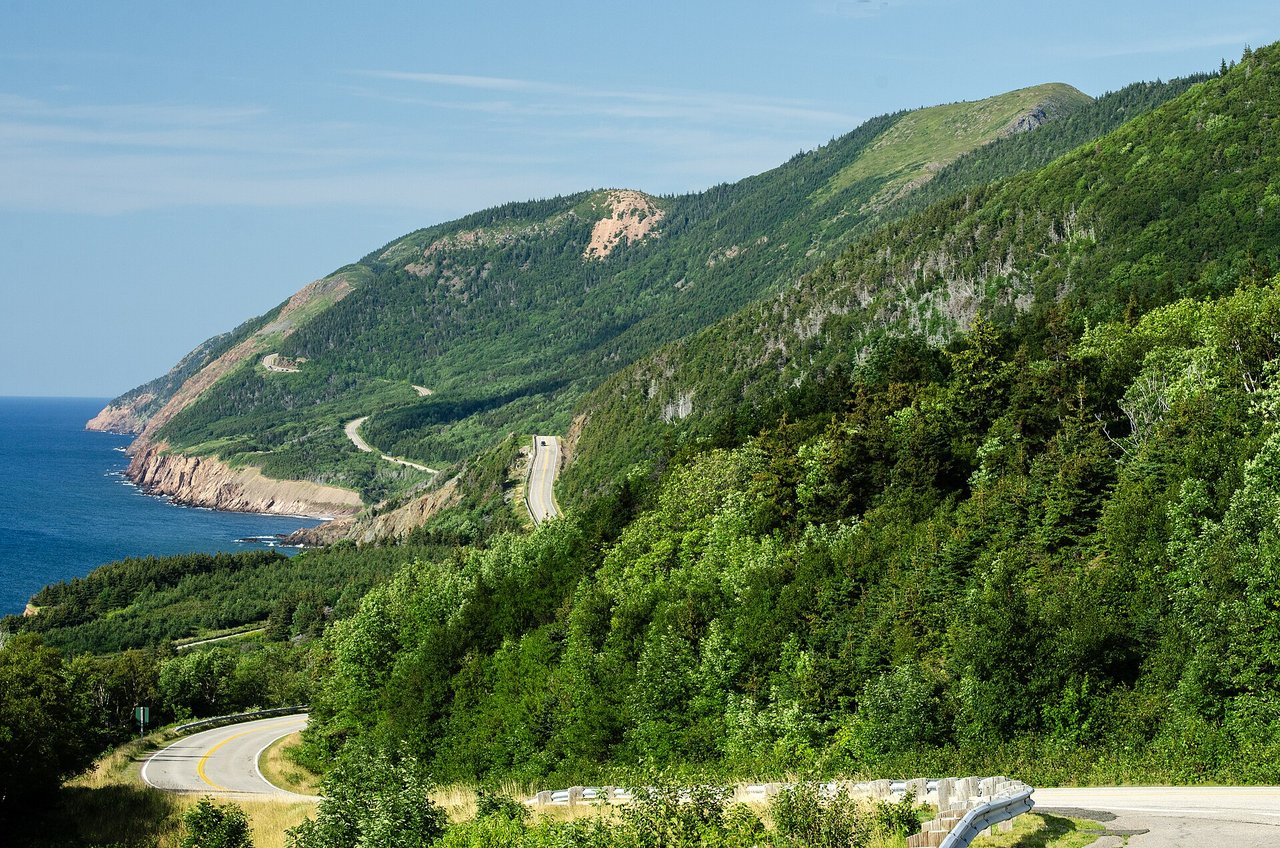
- Plan around: A 298 km loop, the Cabot Trail takes 5–7 days done properly, not the one-day sprint the rental-car brochure suggests. Driving counter-clockwise puts the ocean on your side of the road.
- Book early: Skyline Trail parking now requires a timed reservation in peak season, and island accommodations fill months ahead — I plan this trip like a military operation, and it still surprised me.
I’ll be honest: I underestimated Cape Breton the first time I went. I looked at the map, saw an island the size of a lazy afternoon drive, and budgeted three days. Three days! I spent the last one of them staring at the Fortress of Louisbourg sign as I drove past it, mentally adding “come back” to a list that was already two pages long. Trust me on this one — give Cape Breton a week, and it’ll give you back the best summer week of your year.
This is my planner brain’s favorite kind of trip: a giant, gorgeous loop (the Cabot Trail) with built-in decision points — which direction to drive, which trail to hike at sunset, which pub has the ceilidh tonight. Everything below is from my own trips, updated with 2026 details I double-checked on official pages before writing. Pro tip upfront: the 2026 summer season is over as I write this, so treat prices as your 2026 reference and confirm 2027 dates before you go.
When to go: Cape Breton in summer
Late July through late August is peak season, and here’s the thing — for once, peak season is actually the right answer. Daytime highs sit around 20–25°C (68–77°F), the water is at its warmest (which is still Atlantic-cold, fair warning), whales are feeding in the Gulf of St. Lawrence, and the music scene is at full volume. July is slightly quieter than August; August is slightly warmer than July. Pick your trade-off.
A quick heads-up on costs: summer 2026 had a lovely surprise — the Canada Strong Pass made admission free at every Parks Canada site (the Highlands national park, the Fortress of Louisbourg, Alexander Graham Bell’s site) from June 19 to September 7, 2026. Regular fees are back now. If you’re visiting multiple Parks Canada sites across Canada, a Discovery Pass can pay for itself fast — I double-checked the current fee list on the Parks Canada — Cape Breton Highlands visit page before writing this, and you should too before you travel.
Cape Breton weather in one sentence: bring layers. I once hiked in a T-shirt at 1 PM and a fleece plus rain shell by 4 PM, on the same trail. The fog can swallow a headland in twenty minutes — which is exactly why a buffer day in your schedule is worth every penny.
Driving the Cabot Trail: the 298 km loop, done right
The Cabot Trail is 298 km around the northern tip of the island — one-third of it (~106 km) runs right through Cape Breton Highlands National Park — and it connects everything in this guide. It takes about 5 hours to drive without stopping, which is a fun statistic and an irrelevant one, because you will stop. A lot.
Counter-clockwise vs. clockwise: pick your thrill level
Every local I asked said the same thing: drive it counter-clockwise (Baddeck → St. Ann’s → Ingonish → Pleasant Bay → Chéticamp → back around). Here’s why — on the ocean side of the road for the dramatic western half, so the pull-offs put you right against the cliff edge with nothing between you and the Gulf. It’s worth it. The alternative, clockwise, gives you a gentler climb into the highlands and saves the big descents for last, which is the one I’d pick if heights make you white-knuckle the steering wheel. I’ll be honest: I did counter-clockwise and nearly missed a turn because I was staring at the ocean. Driver’s eyes on the road. Passenger gets the views. That’s the rule.
Fuel, EV charging, and the moose situation
Do not skip the fuel planning. There are long stretches of the Trail with zero services — my spreadsheet has a whole tab for gas stations, and my rule is simple: never drop below half a tank. Parks Canada maintains EV charging stations at six spots in the park (Tesla and J-1772), but plan your charging stops the same way you’d plan fuel.
And the moose. Moose are enormous, dark-colored, and most active at dawn and dusk — exactly when the light is prettiest and visibility is worst. I finished my driving before dark every single day and felt very clever about it.
Cabot Trail stops I actually made (and would make again)
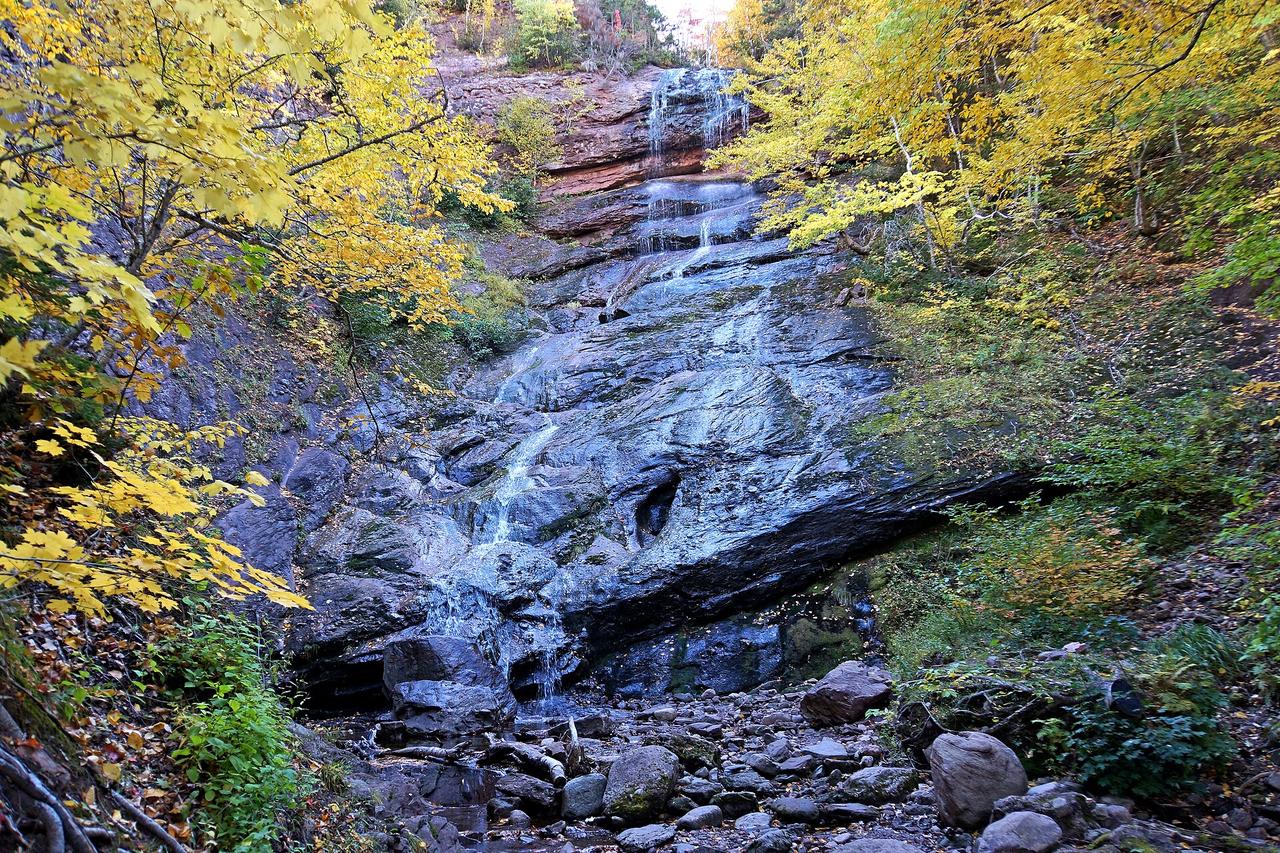
- Beulach Ban Falls — a short walk off the road to a gorgeous plunge waterfall. Easy, free, ten minutes.
- Lone Shieling — a replica Scottish crofter’s hut in a stand of ancient sugar maples, some of the oldest trees in Nova Scotia. Quiet, shaded, lovely.
- Lakies Head — red rocks, pounding surf, seals if you’re lucky. Bring the sweater you packed (you did pack it, right?).
- Meat Cove — the northernmost tip of Nova Scotia, reached by a bumpy unpaved road that your rental agreement may frown at. It feels like the end of the world, in the best way. I white-knuckled the gravel and then sat on the cliff edge for an hour, completely forgetting to be annoyed.
- Middle Head — a 3.8 km peninsula walk starting behind the Keltic Lodge, ocean on both sides. More on this under hiking.
Hiking in Cape Breton Highlands National Park
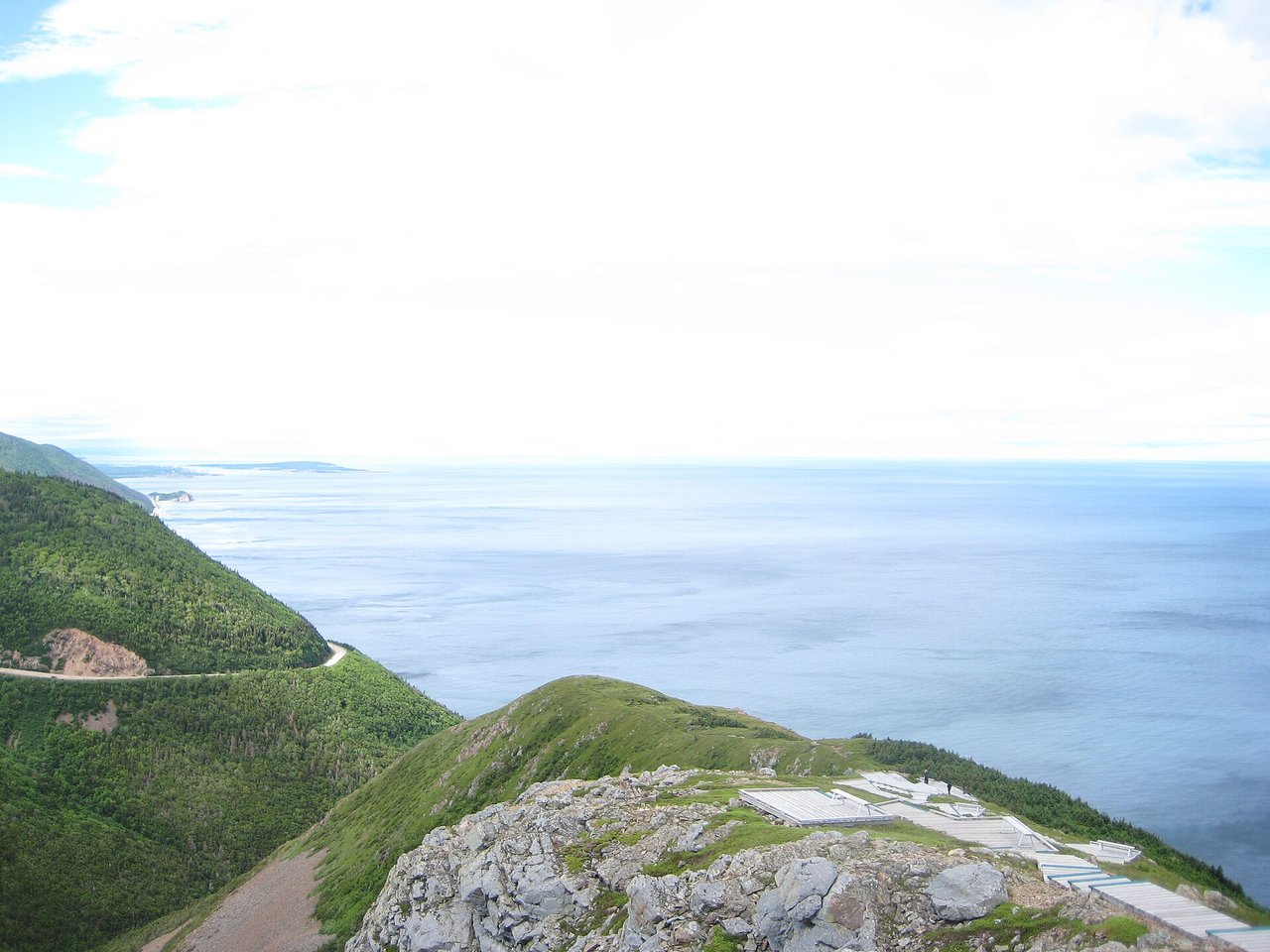
The park has 26+ trails, and the headline act is the Skyline Trail — and it has a new rule you need to know. From June 26 to October 25, 2026, parking at Skyline required a timed reservation (four-hour entry windows), and I expect Parks Canada to keep this system. I double-checked the reservation details on the official Parks Canada Skyline Trail page — book your slot as soon as you know your dates, because the sunset windows go first.
You have two options: the 6.5 km out-and-back to the famous boardwalk headland (about 2 hours) or the full 8.2 km loop (2.5–3 hours). I showed up at midday once, at 1 PM on a bright Saturday, and saw… a parking lot full of cars and not a single moose. Never again. Go about an hour before sunset: the golden light on the highlands is unreal, and that’s when the moose come out to graze the headland. Stay on the boardwalk and keep your distance — the highland plants are fragile and the moose are bigger than your car.
Beyond Skyline, my shortlist:
- Franey Trail — the workout. A steep, steady climb to the classic magazine-cover view over the Clyburn Brook canyon and the coast. Rocky, tough on knees, absolutely do not attempt in flip-flops (I saw someone try; it did not go well for them).
- Acadian Trail — an 8.4 km loop climbing 365 m above the Chéticamp River, with a bird’s-eye view of the valley meeting the ocean. Moderately challenging; bring real water, not vibes.
- Middle Head Trail — 3.8 km loop along a thin peninsula behind the Keltic Lodge, ocean crashing on both sides. My favorite “easy win” hike on the island.
- Bog Trail — a 0.5 km accessible boardwalk through carnivorous pitcher plants. I went in expecting a 15-minute filler walk and stayed 40 minutes photographing plants. Plants! Who am I.
- Broad Cove Mountain — 2.3 km return, short but steep, with a sweeping view over Ingonish.
You’re in bear and coyote country: make noise on the trail, carry the essentials (water, map, whistle, layers), and check current trail conditions on the Parks Canada page before you head out. A sunny parking lot does not mean a sunny summit — it can be 10°C cooler and raining at the top.
On the water: whales, beaches, and the Bras d’Or
July and August are peak whale season, and the Gulf of St. Lawrence is basically a giant cafeteria for humpbacks, minkes, and fin whales. Tours leave from Chéticamp, Pleasant Bay, Ingonish, and Neil’s Harbour — zodiac tours run roughly ~$50–60 per adult for 1.5–2 hours (2026 rates vary by operator, so check before you book). I went out of Pleasant Bay on a zodiac, which is the thrilling, wind-in-your-face option; bring a warm layer even in August, because the open water is always colder than you think. Fair warning: whales are wild animals, not performers. I had one trip with three humpbacks breaching and another with just seals and eagles — both were great days, but only one was the trip I’d dreamed about.
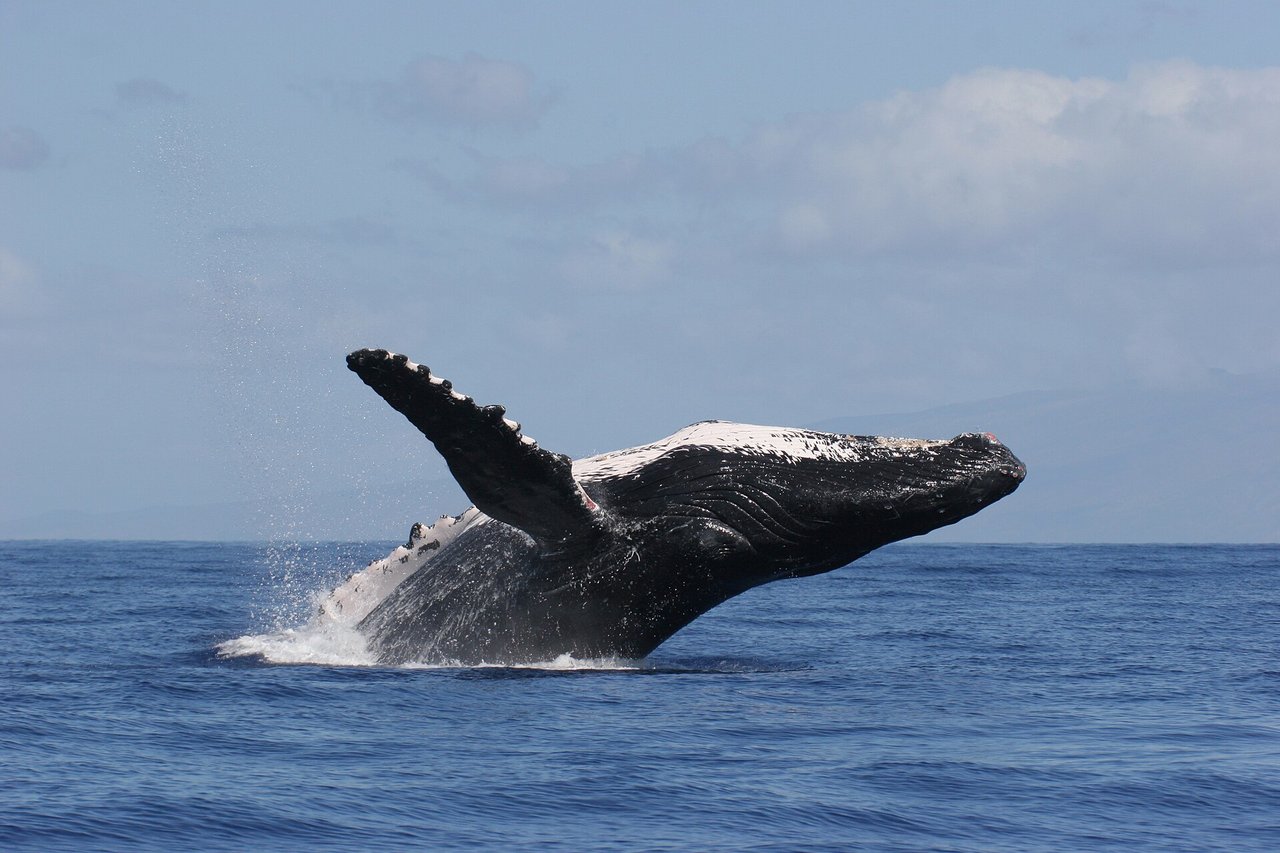
For beach days, you have two completely different coasts to choose from:
- Ingonish Beach (east coast) — a local favorite and mine too: a freshwater lake on one side of a thin stone bar, the salty Atlantic on the other. Lifeguards, facilities, and an easy full-afternoon setup.
- Inverness Beach (west coast) — softer sand, warmer water, and sunsets over the Gulf that turn the whole sky pink. It’s also a sea-glass hunting ground — I found three pieces in twenty minutes and felt disproportionately proud.
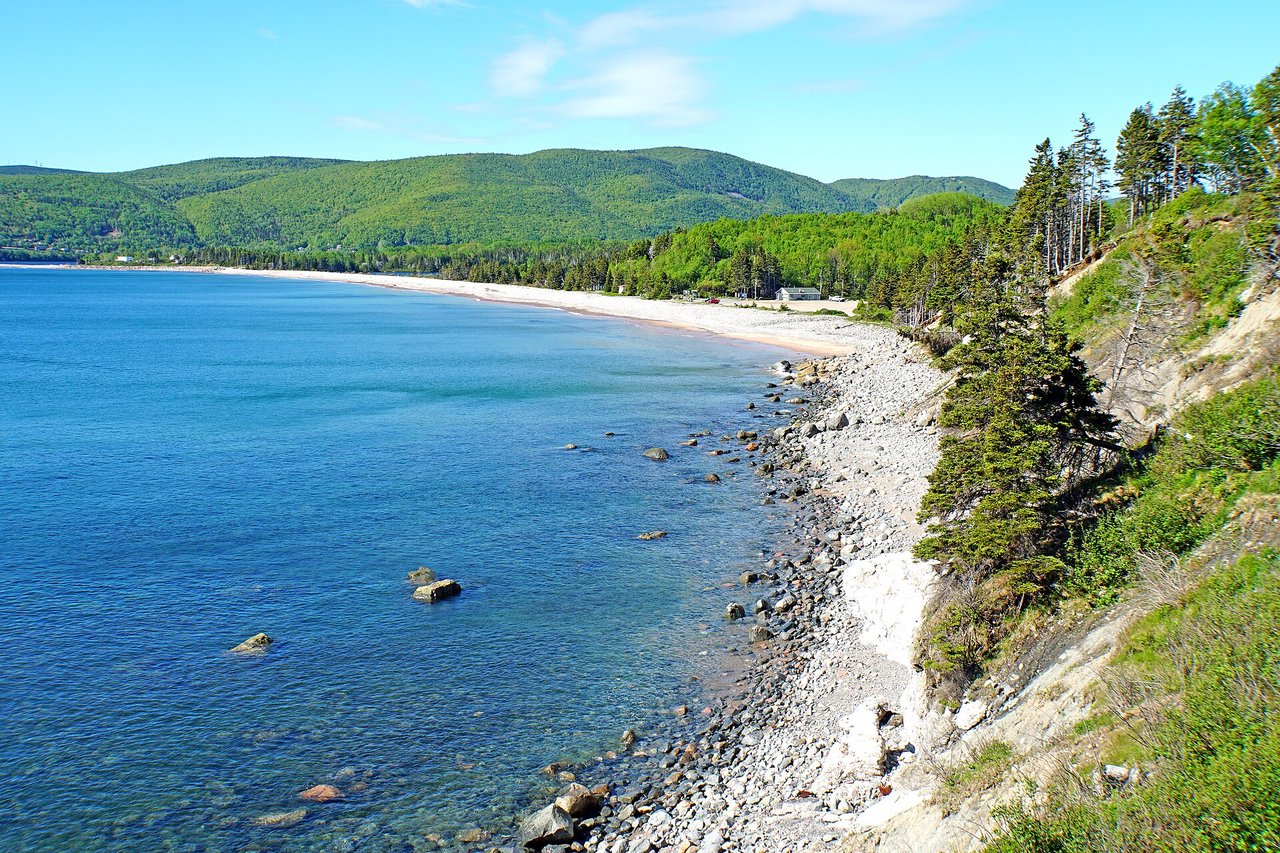
And then there’s the Bras d’Or Lake — a massive inland sea of mixed salt and fresh water, far calmer than the open ocean. The coves around Baddeck are made for a quiet morning of kayaking or sailing, with rentals right in town. On my last visit I spent a whole still morning on a paddleboard there and saw exactly one other human. Bliss.
Ceilidhs, KitchenFest, and the music that never stops
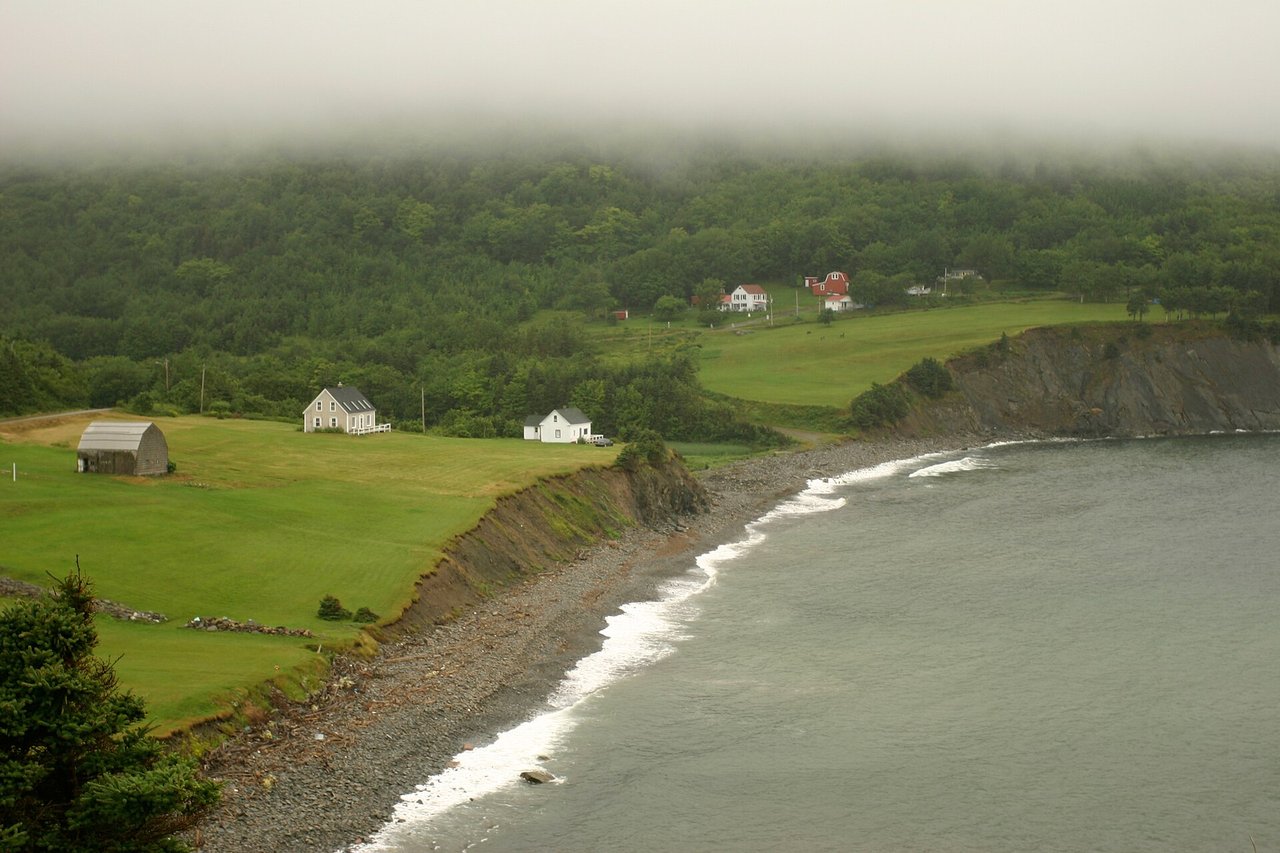
Cape Breton has the only living Gaelic-speaking community outside Scotland, plus deep Acadian and Mi’kmaq roots — and in summer, the fiddle is simply part of the air. KitchenFest! (Féis a’ Chidsin), the island-wide celebration of Gaelic music and kitchen-party culture, ran June 26 – July 4, 2026 for its 13th year — concerts, céilidhs, pub nights, and square dances in communities across the island. If your dates overlap with it, build your trip around it: kitchenfest.ca.
But you don’t need a festival to find the music. Almost every pub on the island has live music most summer nights. And then there are the ceilidhs — community kitchen parties with fiddles, step dancing, stories, and an intermission “lunch” (tea, sandwiches, oatcakes) where you chat with everyone in the hall. The Celtic Music Interpretive Centre in Judique is the classic venue; Chéticamp’s halls lean Acadian, with their own swing to the music. I’ll be honest about my own ceilidh debut: I didn’t know a single step of the square dance, a local grandmother grabbed my hand, and twenty minutes later I was stomping in time with forty strangers. Do not skip this. It’s the heart of the island.
In Baddeck, the Alexander Graham Bell National Historic Site runs a summer concert series on the grass overlooking the Bras d’Or — I caught a fiddle concert at sunset there, and watching the light go gold over the water with a live soundtrack is about as peaceful as travel gets.
Day trip: the Fortress of Louisbourg
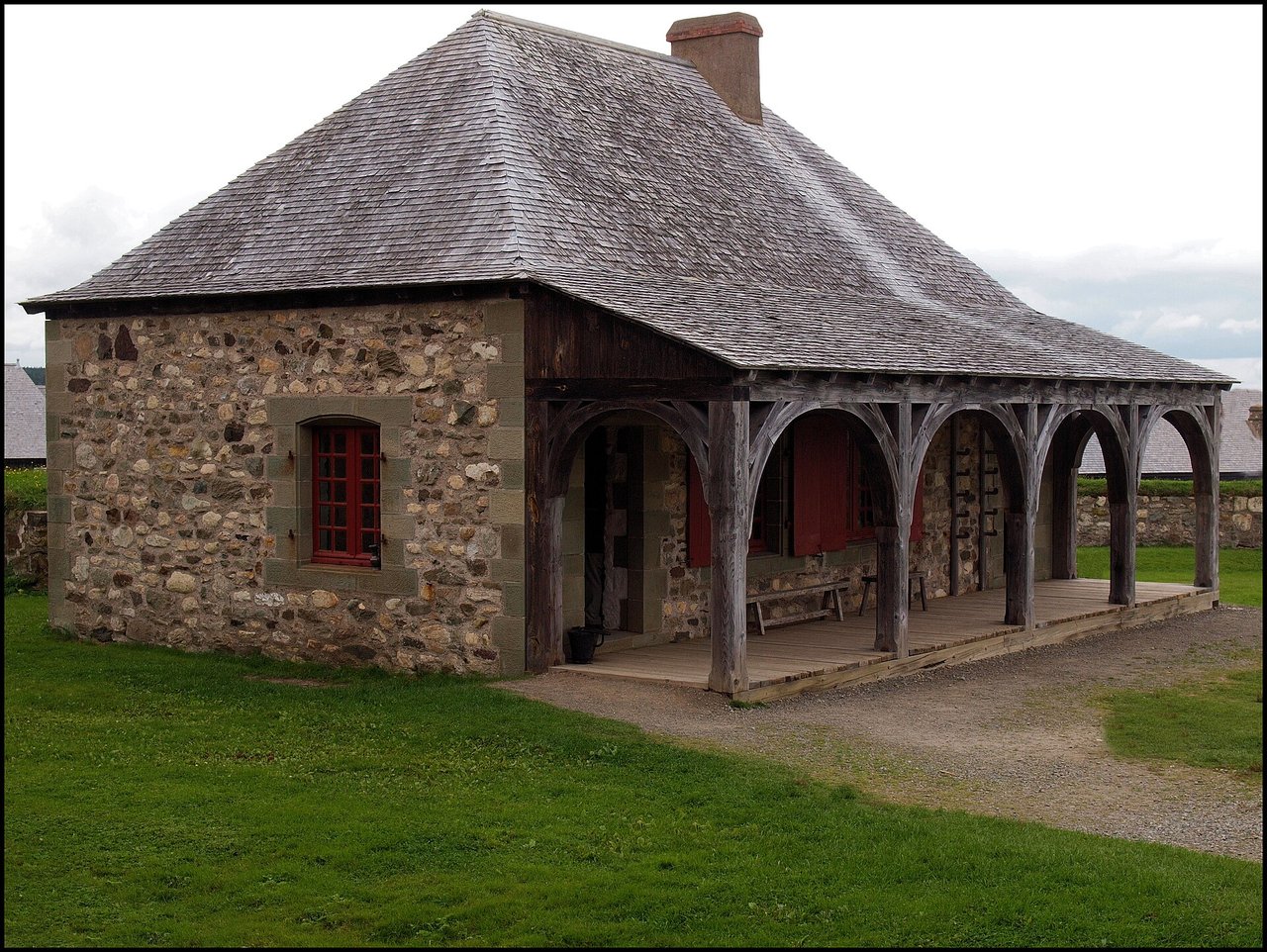
Okay, geographically this belongs at the end of the trip — Louisbourg is on the island’s southeast coast, about 40 minutes from Sydney — but it deserves its own section. The Fortress of Louisbourg is the largest historical reconstruction in North America: an entire 18th-century French fortified town, with costumed interpreters who stay in character, period food, and working 1700s trades. I planned “a quick three hours.” I stayed six. Plan a full day.
The practical details, double-checked on the official Parks Canada — Fortress of Louisbourg page: peak season (July 1 – September 12, 2026) it’s open daily 9:30 AM–5:00 PM. Admission was free under the Canada Strong Pass through September 7, 2026; regular fees apply now — check the fees page for current rates, and note youth 17 and under are free. Pro tip from my own miscalculation: it’s much bigger than it looks on the map. Wear real walking shoes, and don’t skip the King’s Bastion — the view from the ramparts is the whole point.
Where to eat: the Cape Breton seafood shortlist
Eating here is a contact sport and I am here for it. Summer is lobster season, and the best lobster I had all trip came at a community supper in a church hall — plastic bib, drawn butter, zero regrets. Beyond that:
- Lobster rolls in Neil’s Harbour — fresh off the boat, mayo-light, eaten with your feet in the sand.
- Snow crab in Cheticamp — the Acadian village does it best.
- Chowder in Baddeck — the little bistros along the waterfront all do a version; the ones with live music at dinner turn a meal into an event.
- Oatcakes — at every ceilidh intermission and every bakery. Cape Breton’s signature snack, and my suitcase came home full of them.
- Farm-to-table in the Margaree Valley — the island’s fertile middle is full of farm stands (berries, honey, cheese) perfect for trail picnics.
Budget roughly ~$60–90 per person per day for food if you’re mixing casual lunches with one nice dinner — chowder lunches are cheap, waterfront dinners with a view are not.
Where to stay: book early, thank me later
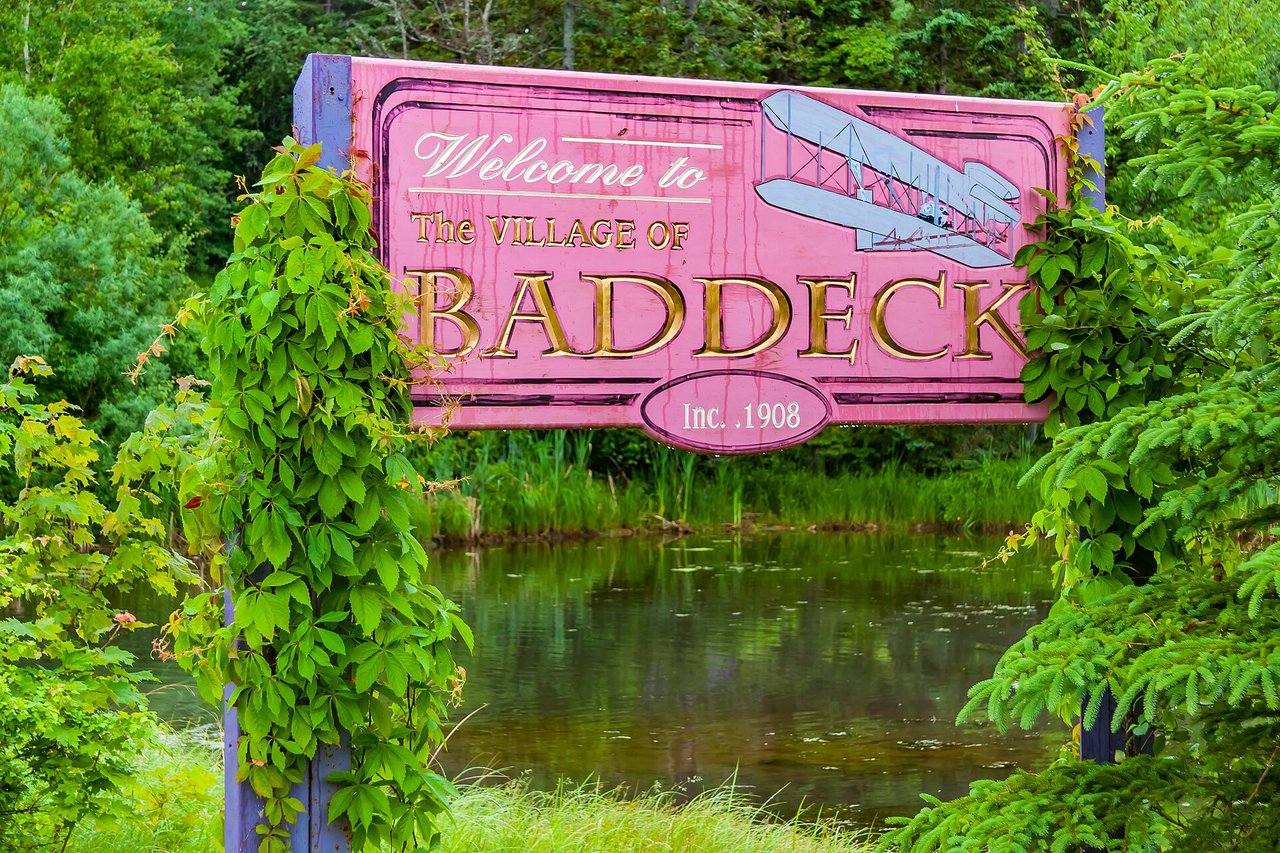
Cape Breton in summer is popular, and the good rooms go first — for peak weeks, book 4–6 months out. I learned this the expensive way one August and ended up an hour from where I wanted to be. Here’s my breakdown by base:
- Baddeck — the classic hub: central, right on the Bras d’Or, with the best restaurant row and the Bell site. Best first-timer base.
- Ingonish — the east-coast park gateway; the Keltic Lodge is the island’s grand old resort (and the Middle Head Trail starts behind it). Glamping domes are the trendy option here now.
- Cheticamp — the Acadian west coast: music, hooked-rug shops, and the best whale-tour launch point. Cozy B&Bs everywhere.
- Margaree Valley — farm country, quiet, and the hosts at the little B&Bs know every hidden spot on the island. Ask them. Seriously.
Mid-range hotels and B&Bs run roughly ~$180–350 per night in summer (before tax); campgrounds in the national park are far cheaper if you’re equipped (~$27–38/night unserviced, ~$106 for an oTENTik). See the budget table below for the full picture.
What a week in Cape Breton costs
Sample budget per adult, 6 nights / 5 full days, excluding flights (prices checked October 2026; items marked ~ are estimates):
| Item | Cost (CAD) |
|---|---|
| Rental car, 7 days (book early — summer rates climb) | ~$550–750 |
| Fuel for ~1,000 km of driving | ~$120–150 |
| Cape Breton Highlands National Park entry (~$9/day adult or Discovery Pass) | ~$27–45 |
| Whale-watching tour (zodiac, ~2 hours) | ~$55–65 |
| Fortress of Louisbourg (regular adult admission; check current rates) | ~$20–30 |
| Ceilidhs & concerts (3–4 evenings) | ~$40–60 |
| Food & drinks, 7 days | ~$420–630 |
| Total (excluding accommodation) | ~$1,230–1,730 |
Add ~$1,080–2,100 for six nights of mid-range accommodation (~$180–350/night), or a fraction of that for camping. Flying in? Pair this with our 3-day Halifax itinerary — most island trips start with a Halifax arrival and the 4–5 hour drive (or a short hop flight) to Cape Breton.
A sample week at a glance
| Day | Base | Plan |
|---|---|---|
| Day 1 | Baddeck | Arrive, Bras d’Or Lake paddle or sail, waterfront dinner with live music |
| Day 2 | Ingonish | Drive the Trail counter-clockwise: St. Ann’s, Beulach Ban Falls, Lone Shieling; Ingonish Beach afternoon |
| Day 3 | Ingonish | Franey or Middle Head hike AM; whale watching from Ingonish or Neil’s Harbour PM |
| Day 4 | Cheticamp | North around the top: Meat Cove detour, Skyline Trail at golden hour (book parking!) |
| Day 5 | Cheticamp | Acadian Trail hike, whale tour from Pleasant Bay, ceilidh in the evening |
| Day 6 | Baddeck | Margaree Valley drive, Alexander Graham Bell site concert, pack for departure |
| Day 7 | — | Fortress of Louisbourg full day en route to Sydney, or depart via the Nova Scotia road trip back to Halifax |
FAQs about Cape Breton in summer
Is a week enough for Cape Breton in summer?
Yes — 5 to 7 days is the sweet spot. That gives you 2–3 days on the Cabot Trail loop (hiking, look-offs, beaches), a full day at the Fortress of Louisbourg, and buffer time for fog, ceilidhs, and the unplanned stops that end up being the best part. Trying to do it in 3 days means driving past everything that makes the island special.
Which direction should I drive the Cabot Trail?
Most visitors (and every local I asked) recommend counter-clockwise, starting from Baddeck toward Ingonish: on the dramatic western half, you’ll be on the ocean side of the road, with the cliff-edge pull-offs right beside you. If you’re nervous about heights, go clockwise instead for a gentler climb into the highlands. Either way, keep the tank above half and finish driving before dark — moose are most active at dawn and dusk.
Do I need to book the Skyline Trail in advance?
For parking, yes — from June 26 to October 25, 2026, the Skyline Trail required a timed parking reservation (four-hour entry windows), and sunset slots go first. The hike itself is free with your park pass: 6.5 km out-and-back to the boardwalk headland (~2 hours) or the full 8.2 km loop (~2.5–3 hours). Check the official Parks Canada Skyline page for the current season’s reservation rules.
When is the best time to see whales around Cape Breton?
July and August are peak season, when humpbacks, minkes, and fin whales feed in the Gulf of St. Lawrence. Tours run from Cheticamp, Pleasant Bay, Ingonish, and Neil’s Harbour — expect roughly ~$55–65 per adult for a 1.5–2 hour trip. Book the morning sailing if the water is calm, and bring a warm layer: it’s always colder out on the water than on the dock.
How much does the Fortress of Louisbourg cost?
Admission was free for everyone from June 19 to September 7, 2026 under the Canada Strong Pass; regular fees apply now, so check the Parks Canada fees page for current rates before you go. Youth 17 and under are free. Peak season hours are daily 9:30 AM–5:00 PM (July 1 – September 12), and you should plan a full day — the reconstructed town is far bigger than it looks.
Is Cape Breton a good family trip in summer?
Wonderful — and the island is built for slow family travel. Kids love the Fortress of Louisbourg (costumed interpreters, cannon demonstrations), the easy Bog and Skyline boardwalks, tide-pooling at Ingonish Beach, and the ceilidh “lunch” intermissions (oatcakes for everyone). The main challenge is driving time between stops, so keep daily drives under two hours and build in beach afternoons.
Keep exploring
- The Ultimate 2026 Travel Guide to Nova Scotia, Canada
- Ultimate Nova Scotia Road Trip Itinerary for 2026
- The Ultimate 3 Days in Halifax Itinerary: 2026 Guide