
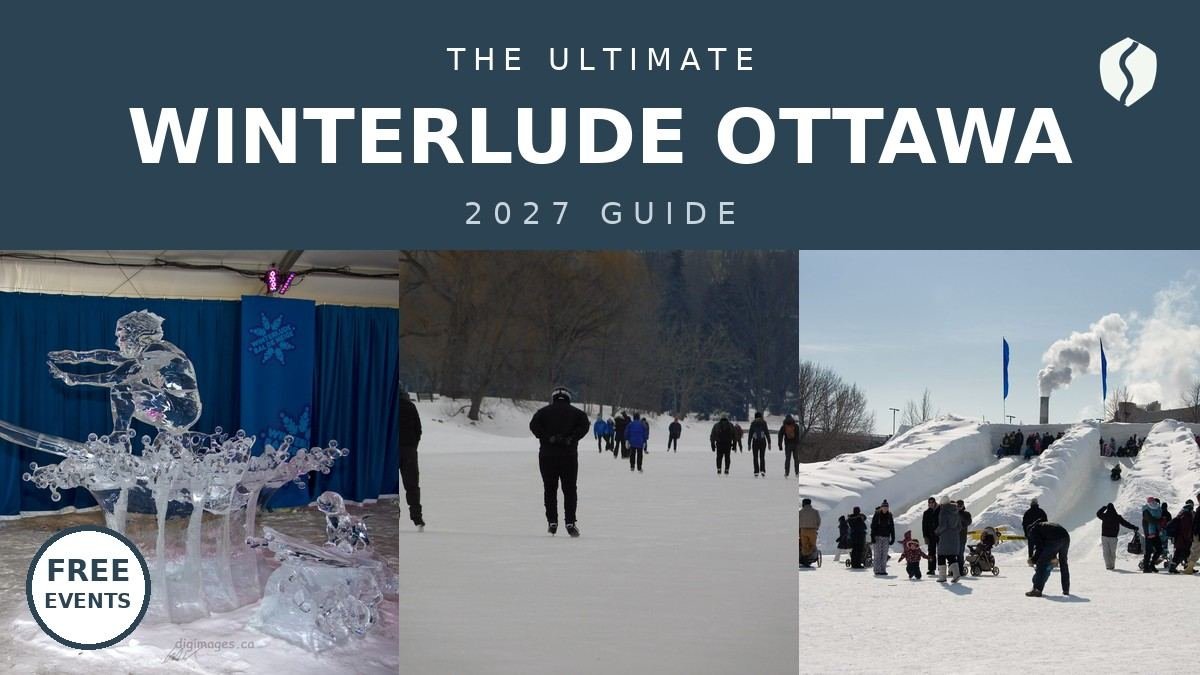
- ✓ Winterlude is mostly free: the ice sculptures, the Snowflake Kingdom playground, the concerts and skating on the Skateway itself cost nothing — you pay for rentals, food and a warm room, not for the festival.
- ✓ The Skateway is weather-dependent, the festival is not: Winterlude runs 29 January to 15 February 2027 whether the canal is open or not, so plan the festival first and treat a skate as the bonus it is.
- ✓ All prices here are planning ranges, not quoted rates: festival details change by year, so check the official pages linked below for your exact dates.
Here is the thing about Winterlude: it is the rare winter festival that actually lives up to its own postcards. I arrived in Ottawa on a February Friday when the overnight low had been minus eighteen, and my first stop was the Rideau Canal Skateway — all 7.8 kilometres of it, frozen solid, full of skaters, with a BeaverTail stand doing a roaring trade at the side. I laced up, pushed off, fell over within about thirty seconds (a small, dignified fall, mostly onto my own pride), and then spent the next hour gliding past downtown Ottawa thinking: okay, this is why people come here in February.
Winterlude 2027 runs from 29 January to 15 February 2027 — the 49th edition of the festival — across Ottawa and Gatineau, and I double-checked those dates on the official Canada.ca Winterlude page before writing this. Most events are free. The festival has three anchors: Crystal Garden, the ice-sculpture site in Confederation Park in downtown Ottawa; Snowflake Kingdom, the big snow playground in Jacques-Cartier Park across the river in Gatineau; and the Rideau Canal Skateway itself, the world’s largest skating rink when the ice cooperates. This guide covers all three, plus the downtown winter city around them, in a plan that works whether the canal is open or not. If you want the wider Ottawa winter picture beyond the festival, our companion guide to things to do in Ottawa in winter covers the rest of the season — I am not going to repeat its stops here as if they were new.
The stops on the map
Eight stops: the three Winterlude anchors, plus Parliament Hill, the ByWard Market, the National Arts Centre, the Canadian Museum of History and Major’s Hill Park. Tap any stop to jump the map straight to it.
Map data © OpenStreetMap contributors. Open the full map
First, the shape of a Winterlude day
Winterlude runs on a simple rhythm, and once you learn it, the cold stops being the story. Mornings are bright and bitter — Ottawa in late January and February regularly sits between minus ten and minus twenty, colder with wind chill on the canal. By midday the sun is doing real work, the parks fill up, and the city feels alive. By four the light is gone, the sculptures are lit, and everyone is either skating, eating, or sitting somewhere warm with something hot. I planned around that rhythm: hard outdoor activity late morning, easy walking and markets in the afternoon, and a warm room by evening.
The festival also runs on a simple geography. Downtown Ottawa holds Crystal Garden and the canal’s downtown access points. Gatineau, across the Ottawa River, holds Snowflake Kingdom. Between them are the bridges — the Alexandra Bridge is the scenic walk, about twenty minutes on foot from downtown to Jacques-Cartier Park — and the bus routes that cross them. I walked the bridge once, in falling snow, and took the bus every other time. Both work. The walk is the memory; the bus is the plan.
One more thing about the cold, because it matters: minus eighteen in Ottawa is a dry cold, and it is entirely manageable with the right layers. I wore a base layer, a sweater, a proper winter coat, insulated boots, mitts (not gloves — I learned that lesson in Banff and I am not relearning it here), and a neck warmer pulled up over my chin. The people who look miserable at Winterlude are the people in fashion boots and thin gloves. Dress like you mean it, take warming breaks without guilt, and the festival will be kind to you.
Crystal Garden: the ice sculptures in Confederation Park
Crystal Garden is Winterlude’s downtown heart, and it is where you should start. Confederation Park, at 101 Elgin Street, a few steps from Parliament Hill, fills with ice sculptures carved by artists from around the world, plus live shows, an ice lounge area and, new for recent editions, a lantern grove. Entry is free. I went twice: once in the afternoon, when the carvers were still working and the park smelled faintly of chainsaw and cold air, and once after dark, when the sculptures were lit from inside and the whole park glowed. The night visit was the better one, and it was free.

Pro tip from my own over-planning: do not try to photograph every sculpture. I showed up with a full camera battery and a list, and spent the first twenty minutes treating the park like homework. Then I put the camera away, walked the park slowly, and actually saw the sculptures. Pick three favourites, photograph those properly, and enjoy the rest with your eyes. The sculptures also change across the festival — carving competitions run on set days — so check the official Winterlude schedule on the Canada.ca Winterlude page for competition days if watching carvers at work matters to you.

See Crystal Garden twice: once in daylight to watch the carvers work, once after dark when the sculptures are lit. The evening visit is quieter, warmer-feeling (it is not, but the lights help), and free. Then step into the National Arts Centre next door to warm up properly — it is right there, and nobody will mind.
The Rideau Canal Skateway: 7.8 kilometres of free ice
Here is the thing nobody tells you about the Skateway until you are standing on it: it is not a rink, it is a commute. The Rideau Canal Skateway runs 7.8 kilometres from downtown Ottawa to Dow’s Lake, and when it is open, people skate it the way other cities bike to work — to get somewhere, with a coffee stop halfway. Skating is free. You pay only if you rent skates, and rentals are available at several access points along the canal for roughly $20–35 for a half-day as a planning range — check the posted rental prices at the kiosk, because outfits and rates change by season.
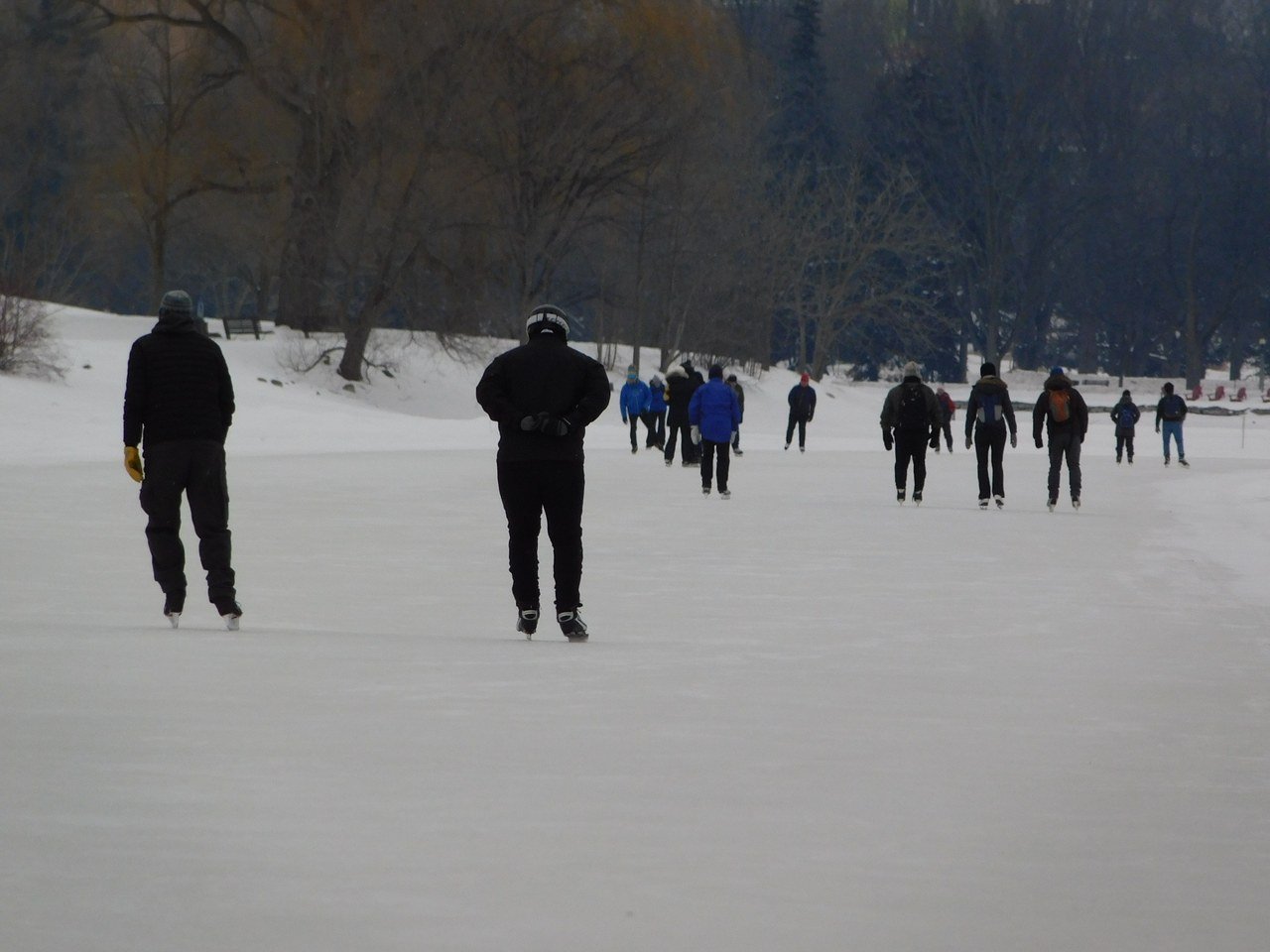
I skated the downtown stretch first, from near the National Arts Centre end toward the south, and I will be honest: the first kilometre is the crowded one, full of families, wobbly beginners (hello, that was me) and people stopping for photos. Past that, the canal opens up, the crowd thins, and the skate turns into what it is supposed to be — smooth ice, open sky, and the city sliding past at skating speed. I timed it, because of course I did: downtown to Dow’s Lake and back is a serious outing, not a quick loop, so first-timers should skate one way and walk or bus back, or just skate the downtown section and call it a win.
The Skateway is weather-dependent and may open late, close temporarily, or — in a bad year — not open at all. The National Capital Commission (NCC) needs ice at least 30 centimetres thick before it opens the canal to the public, and warm spells can close sections with little warning. Never build your whole trip around a single skate day. Before you go, check the current ice status on the NCC’s Skateway page (ncc-ccn.gc.ca/skateway), and never step onto the canal when it is closed — the ice may look solid and still be dangerously thin. Winterlude itself runs regardless, so a closed canal still leaves you Crystal Garden, Snowflake Kingdom and the whole downtown festival.
Access points: the downtown access near the National Arts Centre and Confederation Park is the easiest first skate, and Dow’s Lake at the southern end is the quieter start if you want space. Between them, staircases and ramps drop to the ice at regular intervals — look for the signed access points rather than climbing down anywhere. Rest stops with food stands, washrooms and warming huts sit along the route; the BeaverTail stand is a Winterlude institution, and yes, I ate one, standing on my skates, getting powdered sugar on my mitts. Worth every penny.

Skate the canal early in the morning, right after it opens for the day, not at midday. The ice is freshly groomed, the crowds have not arrived yet, and the light is low and beautiful. A skate-stand attendant told me that trick on my first morning, and I tested it twice. He was right both times.
Snowflake Kingdom: the Gatineau side of the festival
Snowflake Kingdom is Winterlude’s family headquarters, and it is the reason to cross the river. In the north section of Jacques-Cartier Park in Gatineau, the Kingdom builds a whole snow playground: giant snow slides, a snow maze, snow sculptures, games and shows, all aimed squarely at kids and at adults who are willing to admit they are kids. Entry is free. I went on a Saturday morning, when the slides were busy and the air smelled of hot chocolate, and watched a six-year-old go down the biggest slide four times in a row without once considering a break. I considered a break. I took one anyway.

Getting there is half the adventure. From downtown Ottawa, walk the Alexandra Bridge to Gatineau — about twenty minutes, with a wonderful view back toward Parliament Hill — or take a bus across. The park sits right on the Gatineau side of the river, and the walk from the bridge is short and signed. Budget half a day for the Kingdom, including the crossing each way, and go in the morning when the slides are freshly groomed and the lines are shortest. If you have kids, this is their day; if you do not, it is still worth one morning, because giant snow slides are objectively funny at any age.

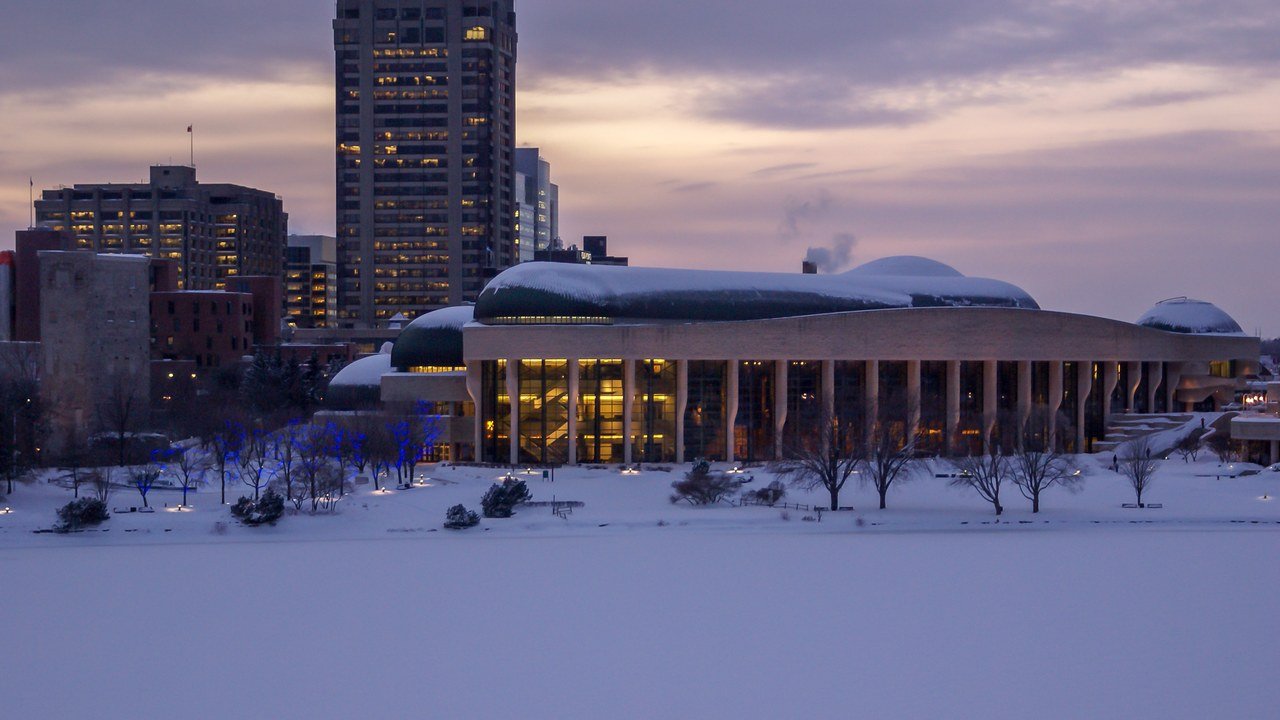
While you are on the Gatineau side, the Canadian Museum of History is the obvious warm-up stop. It sits on the riverbank at 100 Rue Laurier, a short walk from Jacques-Cartier Park, and its curved building is a landmark in its own right. I ducked in on a cold afternoon, spent two hours inside, and came out to the best view of Parliament Hill across the river — the classic Ottawa postcard shot, taken from the Quebec side. Museum admission is a paid ticket (roughly $20–25 per adult as a planning range; check the museum’s own site for your dates), and it is the best bad-weather backup in the whole festival.
Downtown Ottawa in festival mode: Parliament Hill, the Market and Major’s Hill
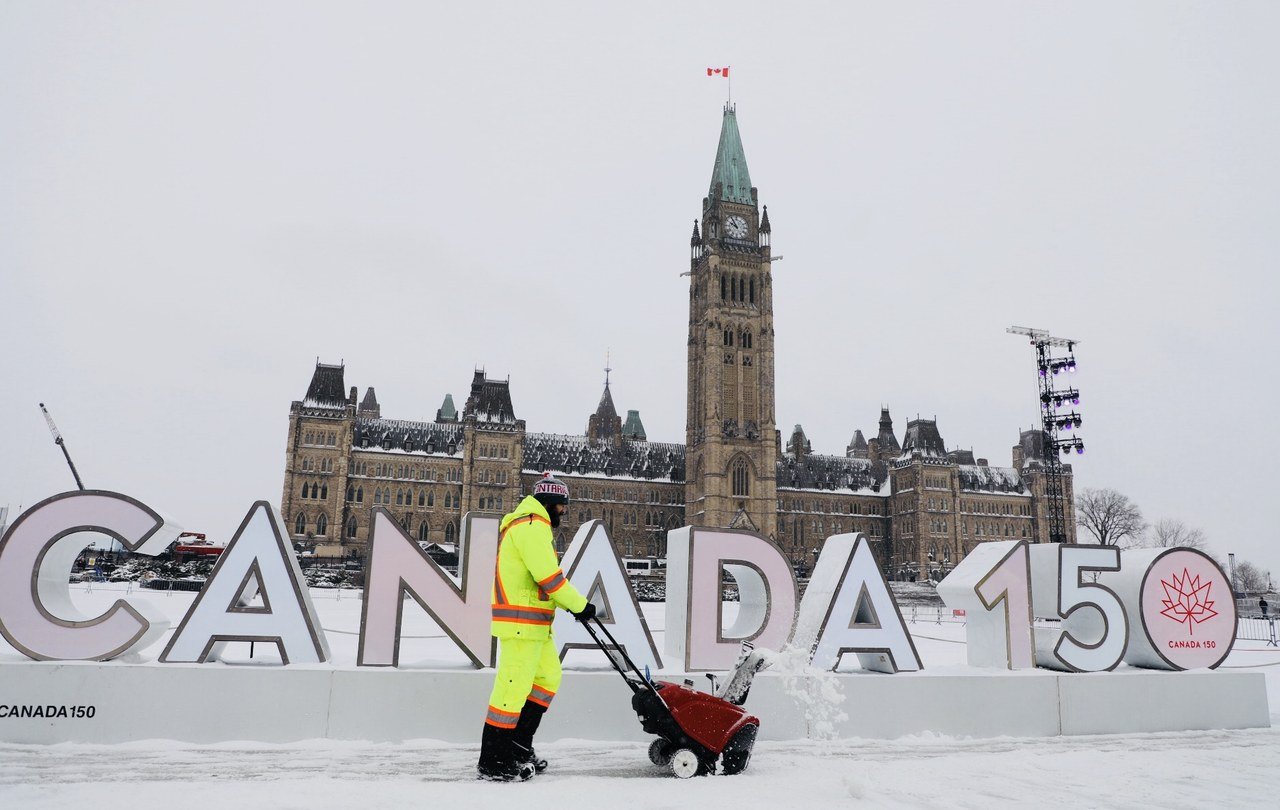
Winterlude spills well beyond its three anchors, and downtown Ottawa in February is worth a slow day on its own. Parliament Hill in winter light is the city’s great free sight: the buildings look enormous against a pale sky, the snow on the lawns is untouched in the morning, and the whole hill feels quieter than in summer. I walked it at dusk, when the lights came on, and it was the most photogenic twenty minutes of the trip. You do not need a ticket to walk the grounds and enjoy the view.
The ByWard Market, a ten-minute walk east of Parliament Hill, is where you eat and warm up. It is one of Canada’s oldest markets, and in winter it trades farmers’ stalls for shops, cafés and restaurants that stay busy all year. I ate lunch here twice: once a sit-down meal, once standing up with a sandwich and a coffee, watching the market go about its business. It is also where you buy the maple products to take home, and where you find a warm room when the canal wind gets to you. In December the market wears its Christmas look; by February it is back to being a working neighbourhood market, which I liked better.
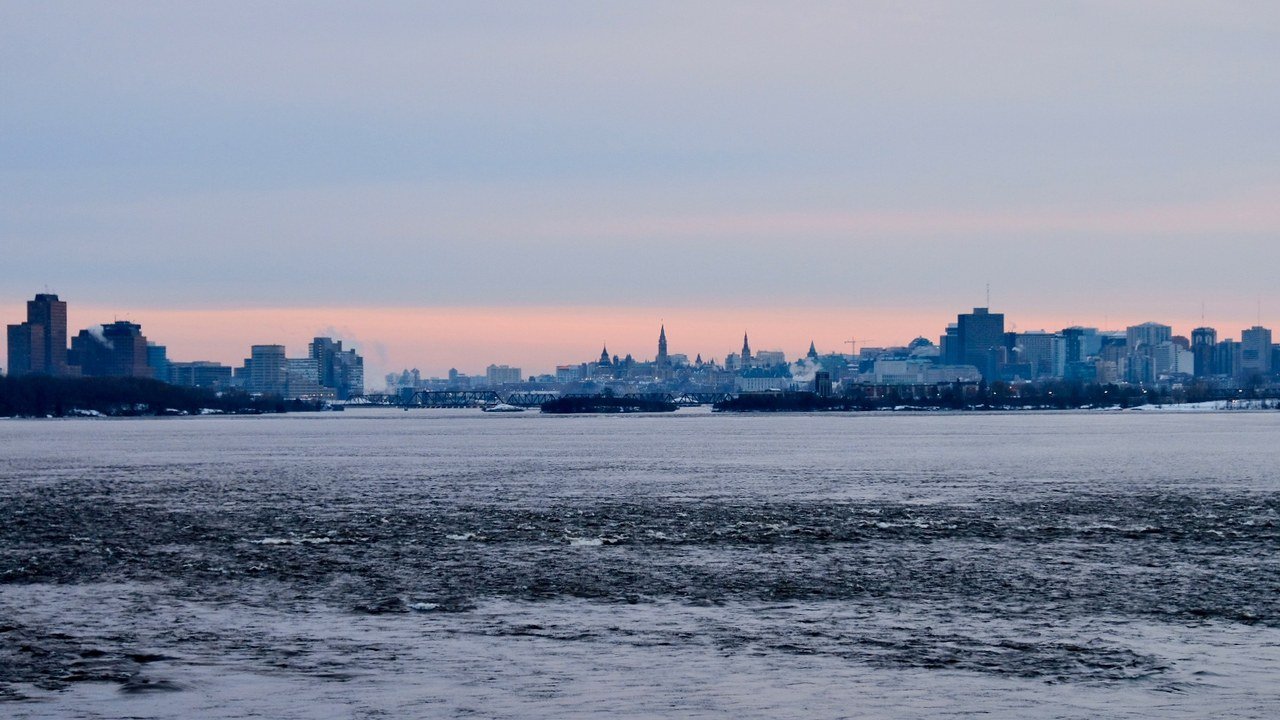
Major’s Hill Park, above the canal locks between Parliament Hill and the Market, is the quiet lookout most visitors walk past without noticing. It is free, it is small, and it gives you the canal, the locks and the river in one view. I stopped here on my last morning, when the snow was fresh and the park was empty, and it was the calmest half-hour of the trip. If the festival crowds are getting to you, this is where you go to breathe.
Book your downtown hotel early for Winterlude weekends — February weekends fill up fast, and the best-value rooms go first. I booked six weeks out and still paid a weekend premium; friends who left it to January paid more. Weekday stays are noticeably cheaper and quieter, and the festival runs all week, not just on weekends.
Where to stay: area pointers
Stay downtown if you can. The full neighbourhood breakdown is in our companion guide to the best area to stay in Ottawa, but the short version is this: downtown near Elgin Street or the ByWard Market for first-timers, because you can walk to Crystal Garden, the canal access points and the Market without touching a bus. The Glebe, south along the canal toward Dow’s Lake, is the quieter, local-feeling alternative, and it puts you right at the Skateway’s southern end. Gatineau, across the river, is usually cheaper and puts you beside Snowflake Kingdom, but you will cross the bridge or bus back for every downtown evening. Expect roughly $160–260 a night for a mid-range downtown room on a Winterlude weekend as a planning range, less on weekdays.
Food in festival season is hearty and unpretentious. Expect roughly $18–30 per person for a casual dinner main, $35–55 for a nicer sit-down dinner, and $10–18 for a café breakfast or lunch. My pattern was the same as everywhere I travel in winter: a big breakfast, a market or canal-side lunch, and one proper dinner in town each night. The BeaverTail on the canal is not dinner, no matter what I told myself at the time. It is a snack. A very good snack.
Getting there and getting around without a headache
Most visitors reach Ottawa from Toronto or Montreal: about 450 kilometres from Toronto (roughly four and a half hours in good conditions) and about 200 kilometres from Montreal (roughly two hours). Ottawa International Airport has flights from across Canada, and VIA Rail and buses connect both cities several times a day. If you drive in winter, get winter tires — Ontario does not mandate them the way Quebec does, but on a February highway you will be glad you have them — and check road conditions on the morning you travel.
Once you are downtown, you do not need a car at all. The festival core — Crystal Garden, the canal access points, Parliament Hill, the Market — is walkable, and OC Transpo buses and the O-Train cover the rest of Ottawa, with STO buses crossing into Gatineau. If you do rent a car, remember that downtown streets are busy on festival weekends and parking is tight — a car is a tool for day trips out of town, not for Winterlude itself.
Never plan a tight flight or train connection on your last Winterlude day. A storm that makes the festival beautiful can also slow the highways between Ottawa, Toronto and Montreal, and winter driving here does not respect itineraries. Build a buffer afternoon into your departure plan — it costs less than a rebooked ticket.
What a 3-day Winterlude trip costs
Here is the honest math, per person, for three days based downtown. Every figure is an approximate planning range for 2026–27, not a quoted rate. Lodging assumes two people sharing a room, so the nightly room price is split in half. The calculator below covers food, sights, local transport and extras; lodging and the bigger activity costs are in the table.
| Expense (per person, 3 days) | Budget | Mid-range | Luxury |
|---|---|---|---|
| Lodging, 3 nights (shared room) | $180–300 | $480–780 | $900–1,500 |
| Activities: skate rental, museum, extras | $30–60 | $60–120 | $100–200 |
| Food, transport & extras (calculator, 3 days) | $330 | $570 | $990 |
| Estimated 3-day total, per person | $540–690 | $1,110–1,470 | $1,990–2,690 |
The table tells the real story: Winterlude is not an expensive trip by Canadian city standards, because the best things — the sculptures, the snow slides, the concerts, the skating itself — are free. Lodging is the lever, and weekdays are the discount. The second lever is food: a market lunch and a canal-side snack beat a restaurant lunch every time, and save the money for one proper dinner.
Use the calculator below for the day-to-day part of the budget: food, sights, local transport and treats. It does not include lodging, which is in the table above. Pick your style, set your days, and it does the rest.
Budget calculator
Per person, in Canadian dollars. Excludes accommodation.
Budget ≈ $110/day · Mid-range ≈ $190/day · Luxury ≈ $330/day. Add accommodation from the table above. Prices are planning ranges for 2026–27 — check official sites for your dates.
A 3-day Winterlude itinerary that actually works
Day one: arrive, settle in downtown, walk to Crystal Garden in the afternoon light, and see the sculptures lit up after dark. Walk Parliament Hill at dusk, eat a proper dinner in the ByWard Market, and go to bed early. Do not try to fit Gatineau into arrival day. The snow slides will still be there tomorrow.
Day two: the Skateway in the morning, if the ice is open — check the NCC status first, skate the downtown stretch, and stop for a BeaverTail. If the canal is closed, swap in a slow downtown morning: Major’s Hill Park, the Market, and a long lunch. Afternoon: cross to Gatineau for Snowflake Kingdom and the Museum of History warm-up. Day two is the big outdoor day, and it should feel like one.
Day three: the festival stop you missed, at your own pace — a second skate, a return to Crystal Garden to see the carvers, or a quiet morning in the Market before departure. If the weather turns, swap day three for a slow downtown day: the museum, the shops, a long lunch, and a second look at the sculptures. The trip still works. That is the point of a festival where the main attractions are free and the city itself is the venue.
FAQs about Winterlude Ottawa 2027
When is Winterlude 2027?
Winterlude 2027 runs from 29 January to 15 February 2027, the festival’s 49th edition, across Ottawa and Gatineau. Those dates come from the official Canada.ca Winterlude page. The festival spans three weekends, and events run all week, not just on weekends.
Is Winterlude free?
Mostly, yes. The ice sculptures at Crystal Garden, Snowflake Kingdom, the concerts and skating on the Skateway itself are free. You pay for skate rentals, food and drinks, museum admission and any paid shows or guided experiences. Your main costs are lodging, food and transport, not festival entry.
Will the Rideau Canal Skateway be open during Winterlude 2027?
It depends on the ice, and nobody can promise it months ahead. The NCC needs ice at least 30 centimetres thick before opening the canal, and warm spells can delay the opening or close sections temporarily. Check the current status on the NCC’s Skateway page before you travel, and plan the festival first — Crystal Garden and Snowflake Kingdom run whether the canal is open or not.
Where are the main Winterlude sites?
Crystal Garden, the ice-sculpture site, is in Confederation Park at 101 Elgin Street in downtown Ottawa. Snowflake Kingdom, the snow playground, is in the north section of Jacques-Cartier Park in Gatineau, across the Ottawa River. The Rideau Canal Skateway runs 7.8 kilometres from downtown Ottawa to Dow’s Lake. All three are on the map at the top of this guide.
Do I need a car for Winterlude?
No. Downtown Ottawa’s festival sites are walkable, and OC Transpo buses and the O-Train cover the city, with STO buses crossing into Gatineau. The Alexandra Bridge walk from downtown to Jacques-Cartier Park takes about twenty minutes. A car is more trouble than it is worth on festival weekends: busy streets and tight parking downtown.
How cold is Ottawa during Winterlude, and what should I wear?
Expect daytime highs around minus five to minus ten, colder with wind chill on the canal, and overnight lows well below that. Wear layers, a proper winter coat, insulated waterproof boots with good grip, mitts rather than thin gloves, and a neck warmer. Take warming breaks indoors without guilt — cold is not a competition.
Keep exploring
If Winterlude has you planning the next leg, start with our things to do in Ottawa in winter guide for the full season beyond the festival, our best area to stay in Ottawa guide for the neighbourhood breakdown, our Quebec Winter Carnival guide if you want a second winter festival, and our Canada trip cost guide for the full national budget. Check the ice, pack mitts, and leave room in the plan for a snow day. Ottawa in February rewards the traveller who does.