

- ✓ Book the ferry and the car first: Newfoundland is an island, and summer sailings and rental cars both sell out — everything else in this guide can wait, those two cannot.
- ✓ One region per day, minimum: the driving distances look short on the map and then a moose, a fog bank, or a roadside cod-and-chips stand eats an hour (usually happily).
- ✓ Time it for late May to early June if icebergs are the dream: that is peak iceberg season on the northeast coast, and it overlaps with puffins arriving at Witless Bay.
I’ll be honest: I over-planned my first Newfoundland trip. I had a color-coded spreadsheet, a ferry booking printed in triplicate, and a daily itinerary timed to the half hour — and then the fog rolled into St. John’s harbour on day one, my carefully sequenced morning dissolved, and I had the best breakfast of my life while waiting it out. Here’s the thing about Newfoundland: it rewards the planner (ferries, cars, and summer rooms all need booking ahead) and then gently teaches the planner to relax. This guide is the version I wish I’d had: the island’s greatest hits, in a sensible order, with the logistics spelled out. I double-checked the key practical details on the official Newfoundland and Labrador tourism site before writing, and where I couldn’t verify a number, I’ve said so rather than guessed.
A confession to start: I cried a little at Cape Spear. Not at the lighthouse, exactly — at the wind, the cliffs, and the realisation that I was standing at the easternmost point of North America, further east than most of the Atlantic, with nothing but ocean between me and Ireland. Do not skip it, even if the fog eats the view. Especially then.
Getting there: fly, or take the ferry (or both)
Most visitors fly into St. John’s International Airport (YYT) and rent a car there — it is the simplest start, and the one I’d pick for a first trip. If you’re coming from the mainland with your own car, or you want the full island-arrival experience, Marine Atlantic runs ferries from North Sydney, Nova Scotia to Port aux Basques (year-round) and to Argentia (seasonal, summer only). Fair warning: schedules and crossing times change seasonally, and summer sailings book up weeks ahead — I checked the current schedule on Marine Atlantic’s official site before my trip, and you should check again before you book anything. The Argentia crossing is long (an overnight sailing), but it drops you an easy drive from St. John’s; Port aux Basques puts you on the west coast, which suits a Gros Morne-first route. → Marine Atlantic — official ferry schedules & bookings
If you’re weighing the ferry against flying for the wider trip, my Canada trip cost guide breaks down what cross-country transport actually adds to a budget.
Getting around: you need a car (trust me on this one)
St. John’s itself is walkable, and the downtown core is compact. Everywhere else on this island — Gros Morne, Trinity, Twillingate, the Great Northern Peninsula — is car territory. Public buses between towns exist but are thin, slow, and not built for sightseeing. Book the rental car the same week you book flights: Newfoundland’s summer rental fleet is small, and I watched prices climb while a friend dithered (she paid for it, literally). I timed it: St. John’s to Gros Morne is roughly a 7-hour drive, St. John’s to Twillingate about 4.5 hours, and Gros Morne to L’Anse aux Meadows another 5 or so — so build the trip around overnights, not day trips. And drive carefully at dusk: moose are a real hazard here, not a postcard joke. A local told me the rule is simple — if you see one moose, slow down, because there is almost always a second one you haven’t seen.
The 10 must-see stops, on a map
Ten stops, from the easternmost point of North America to a Viking settlement at the top of the island. Tap any stop to jump the map straight to it.
Map data © OpenStreetMap contributors. Open the full map
1. St. John’s — the colourful capital
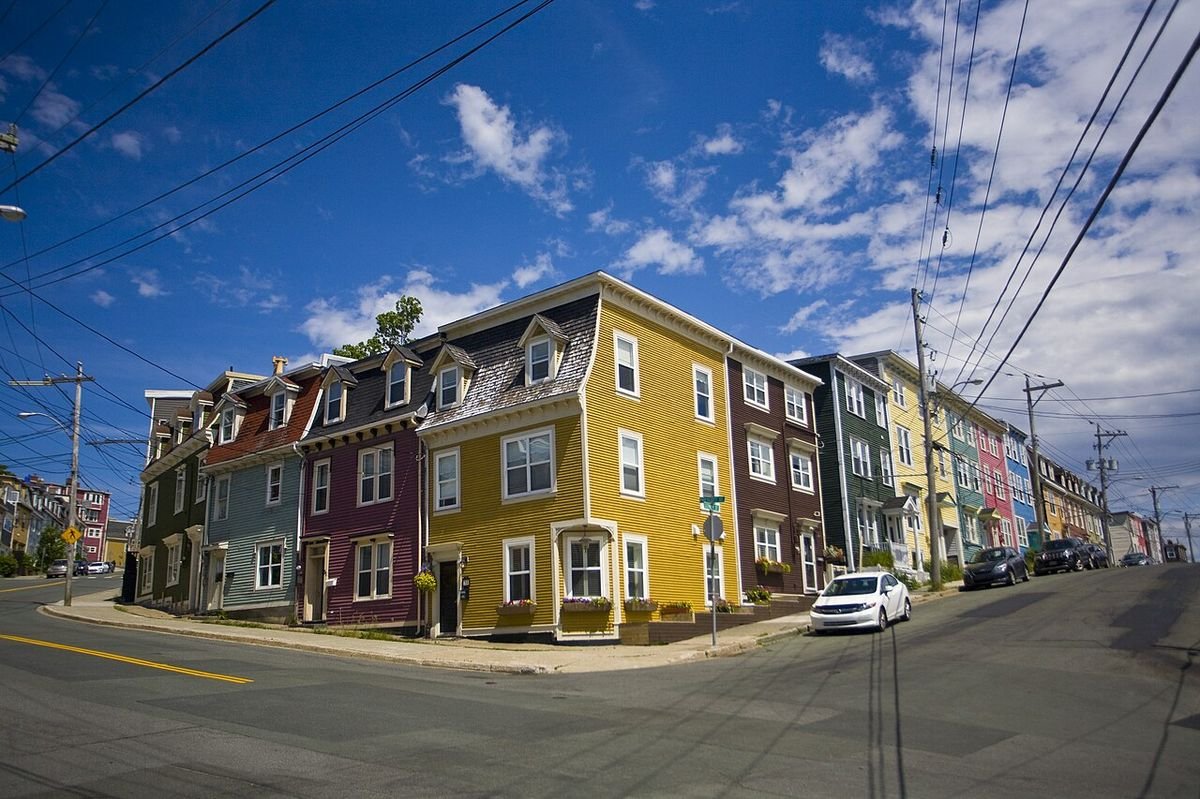
St. John’s is the oldest city in North America, and it looks it in the best way: steep streets, salt air, and the famous Jellybean Row houses painted in candy colours (the story goes the bright paint helped fishermen spot home through the fog — a local told me that one, and I choose to believe it). Spend your first day on foot: the downtown core, George Street’s pubs and live music, and the harbourfront where fishing boats still unload. I arrived jet-lagged and over-scheduled, and my best decision of the trip was abandoning the plan for a slow wander and a bowl of seafood chowder.

Then climb Signal Hill, where Cabot Tower watches over the harbour Narrows — the narrow gap where the Atlantic squeezes into port. This is where Marconi received the first transatlantic wireless signal in 1901, and the views down over the city and out to sea are worth every step (there is also a road up, if your knees are like mine after a flight). I double-checked the site details on Parks Canada’s page before going — it is a National Historic Site, and hours shift seasonally, so check the day before. → Parks Canada — Signal Hill National Historic Site
Do the North Head Trail along the cliffs from Signal Hill if you are steady on your feet — it is the prettiest walk in the city, and I had it nearly to myself on a weekday morning. Go early: the afternoon tour buses arrive around midday, and the trail is much better without them.
2. Cape Spear — stand at the edge of the continent
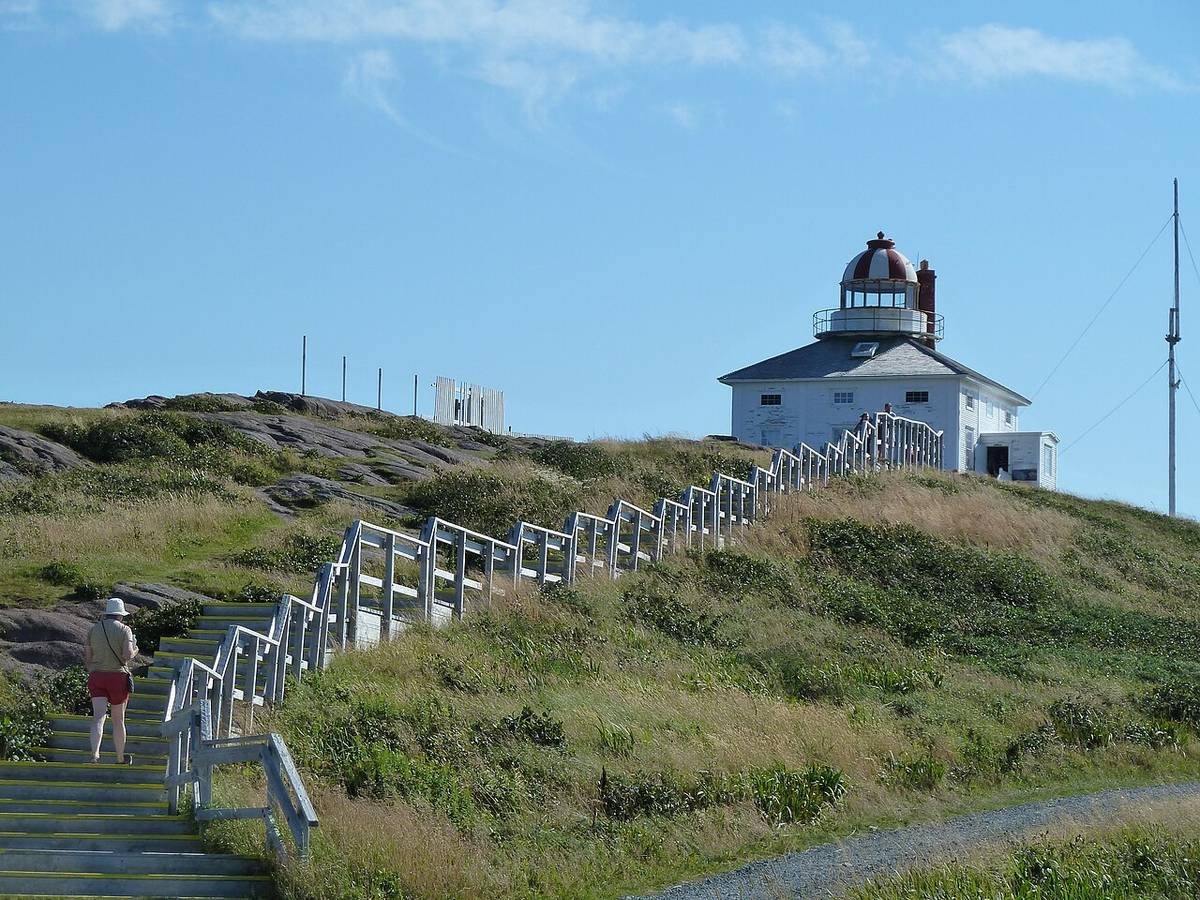
About 15 minutes’ drive from downtown, Cape Spear is the easternmost point of North America — and yes, it is genuinely moving, not just a photo stop. The restored 1836 lighthouse (the oldest surviving lighthouse in the province) sits on wild, wind-scoured cliffs, and on a clear morning you can watch the sun rise here before anywhere else on the continent. I double-checked the details on Parks Canada’s page before going — it is also a National Historic Site, and the new lighthouse beside it still guides ships today. → Parks Canada — Cape Spear National Historic Site
The wind at Cape Spear is no joke — I went in a light jacket in June and lasted about ten minutes before retreating to the car for a fleece. Bring a windproof layer even on a sunny day, and keep a firm grip on hats, maps, and small children’s enthusiasm near the cliff edges.
3. Gros Morne National Park — the fjords that stop you mid-sentence
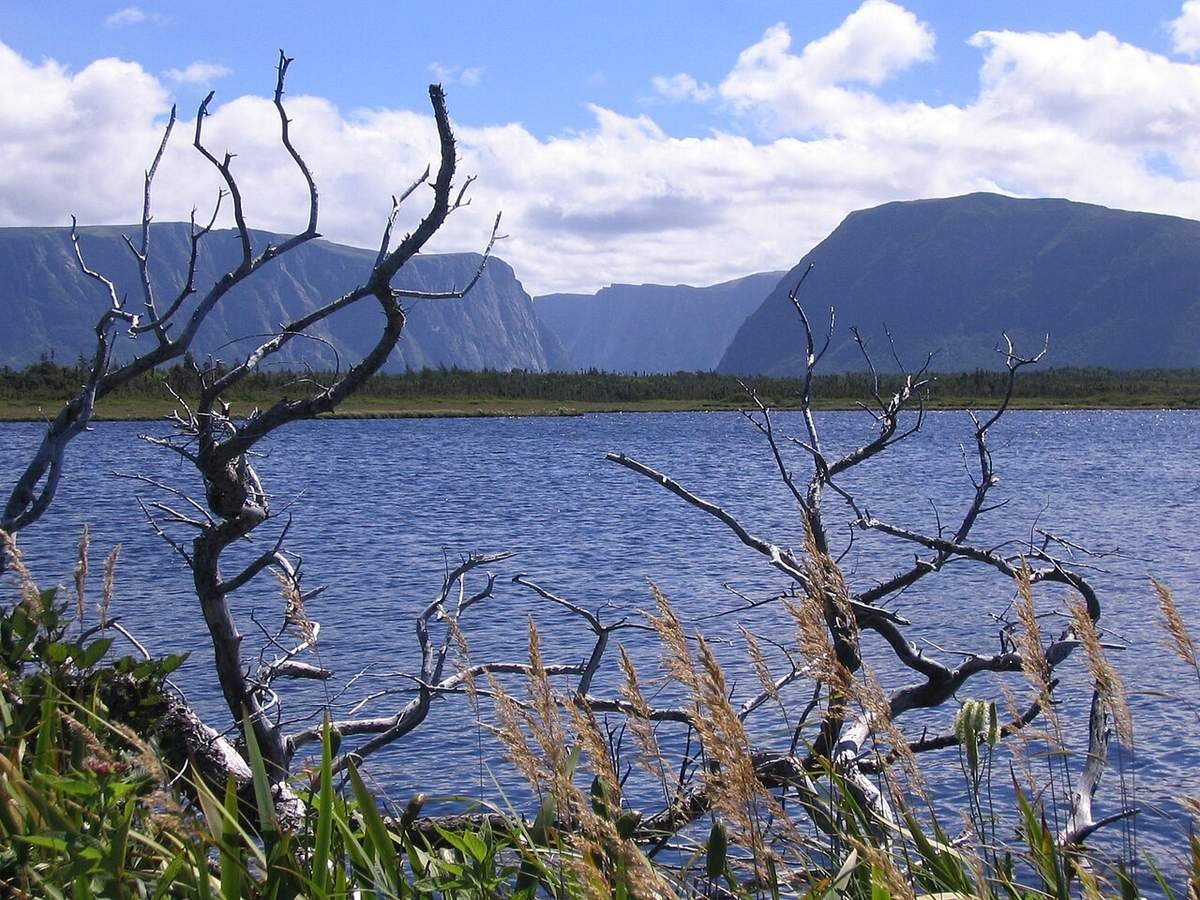
Gros Morne is a UNESCO World Heritage Site, and it earns the title within about five minutes of the drive in. The park’s signature experience is the Western Brook Pond boat tour: a short boardwalk-and-trail walk from the highway, then two hours gliding between 600-metre cliffs on a freshwater fjord that was carved by glaciers and then cut off from the sea. I took the first sailing of the day and had the upper deck nearly to myself; by the return leg, the boat was full and the light had gone flat — morning wins, trust me on this one. Base yourself in Rocky Harbour or Norris Point, and give the park at least two full days. I double-checked tour times on Parks Canada’s Gros Morne page before going — sailings are seasonal and sell out in summer, so book ahead. → Parks Canada — Gros Morne National Park
The park’s other must-do is the Tablelands, a rust-red, Mars-like plateau of exposed Earth’s mantle — one of the few places on the planet where you can walk on rock from deep inside the Earth. The guided walk is worth it: I learned more geology in two hours than in a school term.
A Parks Canada interpreter at the visitor centre told me the Western Brook Pond walk is best done in reverse order to the crowds: linger at the pond-side beach after your boat returns instead of rushing back to the car park. The late-afternoon light on the cliffs is the best photo of the trip, and you’ll have it to yourself.
4. Trinity & the Bonavista Peninsula — the storybook coast

Trinity looks like a film set and behaves like a real town — which is exactly why it works. The harbour is ringed with restored merchant houses, there is a small theatre scene in summer, and the coastal walking trails (the Skerwink Trail near Port Rexton is the famous one) deliver cliff-top views that rival anything in the province. I walked Skerwink in sea mist and still rate it among my favourite hikes in Canada; on a clear day it must be ridiculous. Give Trinity a full day and a night — it is the kind of place that punishes rushing.
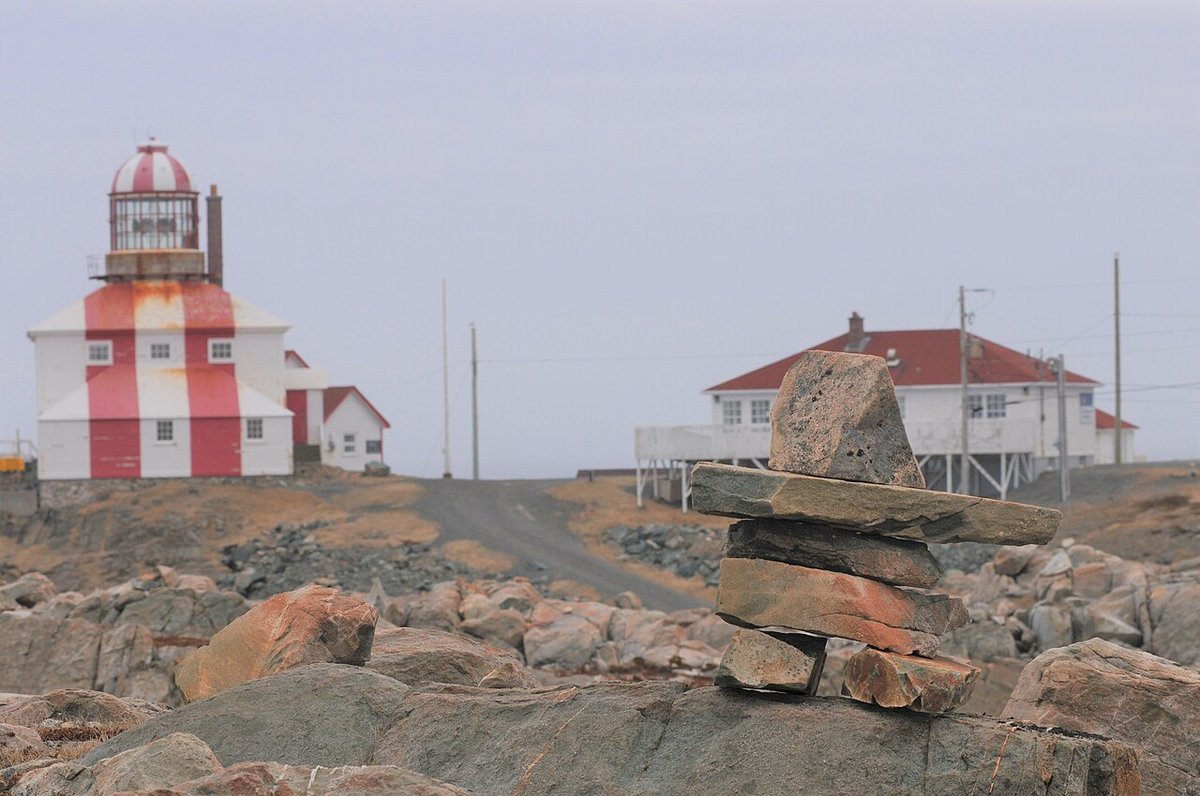
Up the peninsula, Bonavista is where John Cabot is said to have landed in 1497 (hence “O happy sight!” — buona vista). The Cape Bonavista Lighthouse is a beautifully restored 1843 light, and the cliffs around it are one of the best land-based puffin-watching spots in North America in summer — I watched them from the headland with binoculars, no boat required, while whales spouted offshore.
5. Twillingate — iceberg capital
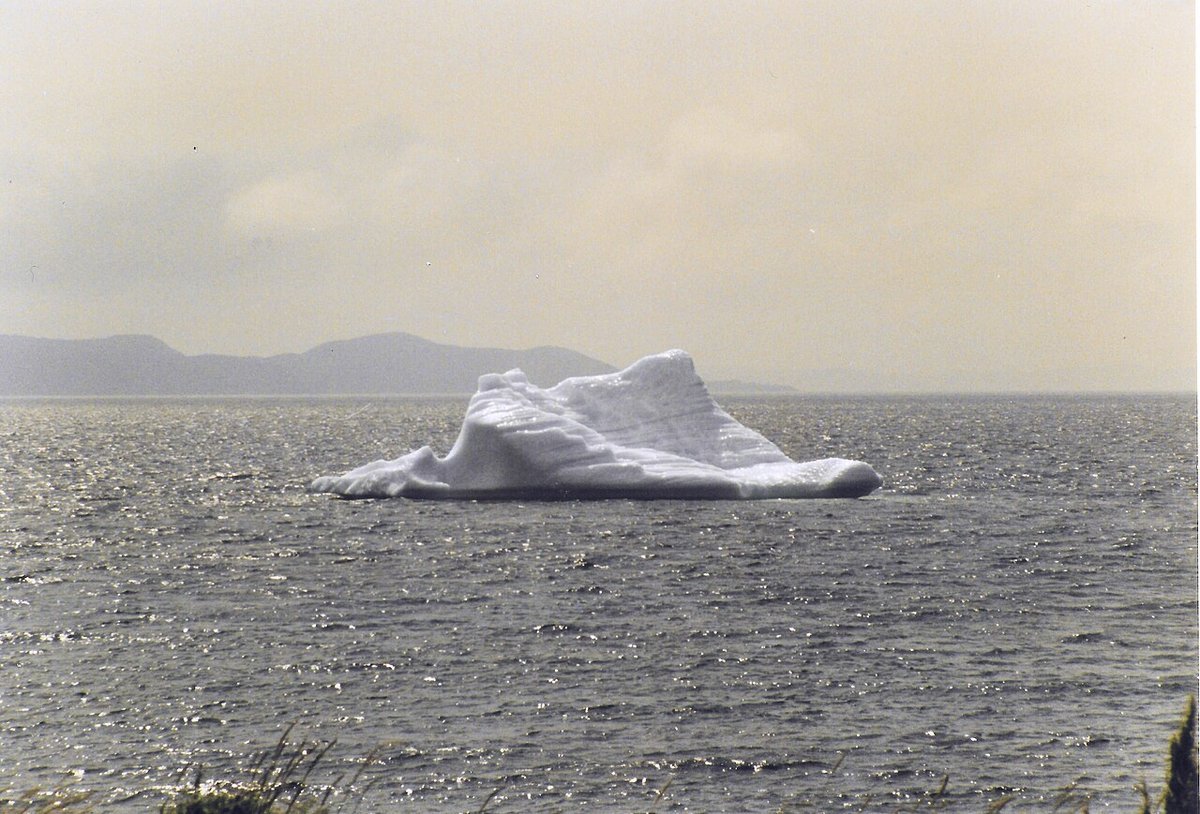
If icebergs are on your list — and they should be — Twillingate is where you go. The town calls itself the Iceberg Capital of the World, and in late May and early June the claim feels modest: bergs the size of apartment blocks drift past the harbour, close enough to photograph from shore. The Long Point Lighthouse walk is the classic viewpoint, and iceberg boat tours run from the harbour in season. Here’s the thing, though: icebergs are weather and current, not a timetable. I double-checked the season on the official Newfoundland and Labrador tourism site — late May to early June is peak, but a warm spring can push them through earlier and a cold one can delay them, so build in a flexible day and check the iceberg trackers before you drive up. → Newfoundland and Labrador Tourism — official site
Do not plan a Twillingate trip around a single day in iceberg season. I met travellers who drove four hours, saw fog, and left disappointed — fog is the iceberg hunter’s nemesis. Stay two nights, watch the morning marine forecast, and let the town’s fish-and-chips and hiking trails fill the foggy hours.
6. L’Anse aux Meadows & St. Anthony — the Viking north
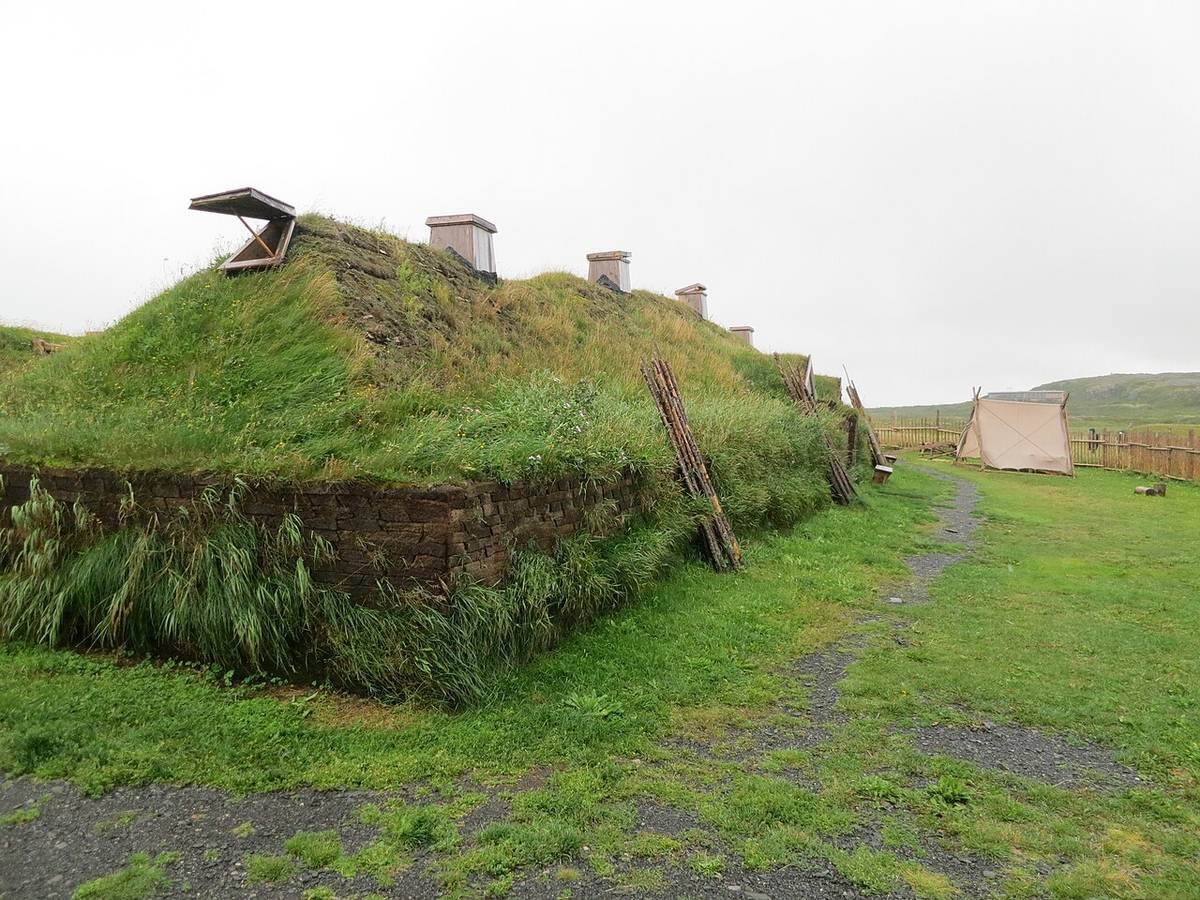
The drive up the Great Northern Peninsula is long, empty, and weirdly addictive — and then you reach L’Anse aux Meadows, where Norse explorers built a settlement around the year 1000, five centuries before Columbus. It is the only authenticated Viking site in North America, a UNESCO World Heritage Site, and it is genuinely humbling: reconstructed sod houses, costumed interpreters, and the grassy mounds of the original buildings, all at the edge of a cold grey sea. I double-checked the history on Parks Canada’s page — the site was excavated in the 1960s and the evidence for a Norse presence is conclusive, which makes standing there feel like time travel with footnotes. → Parks Canada — L’Anse aux Meadows National Historic Site
Base yourself in St. Anthony, about 40 minutes south, for the night: it has the peninsula’s best range of rooms and restaurants, the Grenfell heritage sites, and whale-watching tours in season. If you have an extra day, the nearby Burnt Cape Ecological Reserve (a rare limestone barrens landscape) is a strange, beautiful detour.
7. Fogo Island — the detour that steals the trip
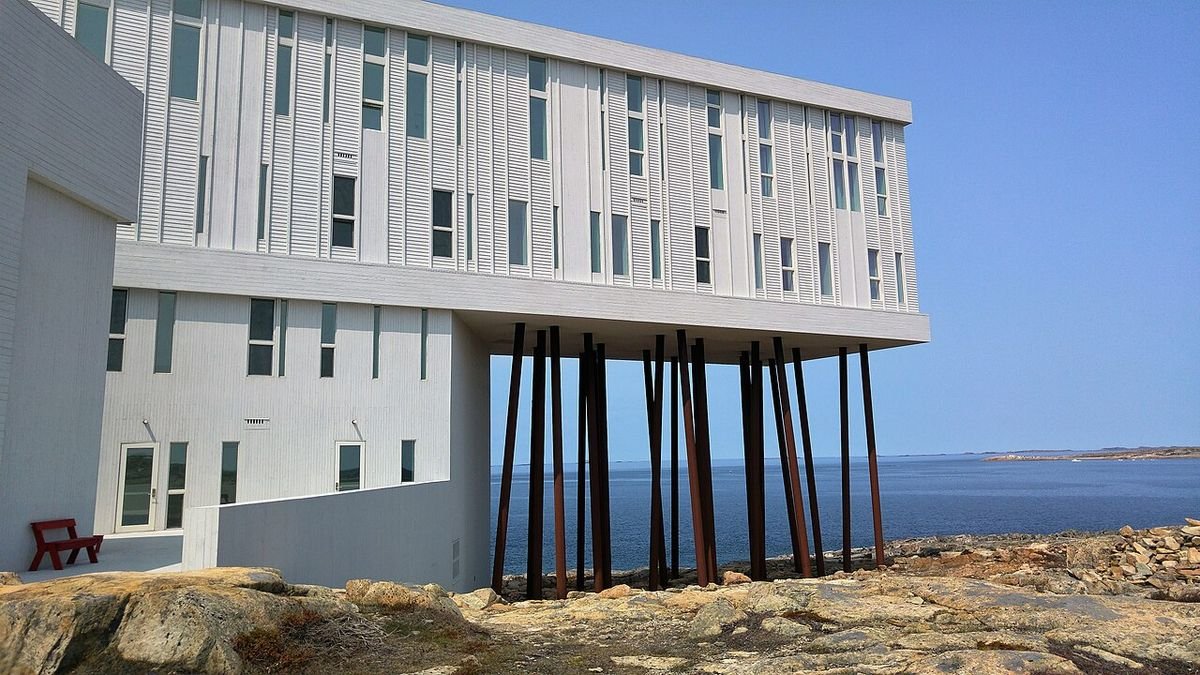
Fogo Island sits off the northeast coast, reached by a short ferry from Farewell (check the schedule — it is a provincial ferry, and summer lineups can be long). It is the island’s most distinctive detour: traditional fishing villages, community walking trails, and the striking modern Fogo Island Inn perched on the rocks at Joe Batt’s Arm. I’ll be honest: the inn’s rates are a splurge, not a baseline (I stayed elsewhere and visited for a coffee and the view, which is allowed and encouraged). Even without a night there, Fogo rewards a full day — the Brimstone Head trail, the village of Tilting with its Irish heritage, and the sense of being somewhere genuinely apart.
Take the first ferry of the day to Fogo and the last one back only if you have a room booked — otherwise, stay the night. I tried to day-trip it on a tight schedule once and spent the whole visit watching the clock. Fogo is a slow island; give it the day it asks for.
Best time to visit Newfoundland

The short answer: late May through September, with the exact sweet spot depending on what you want most. Icebergs peak late May to early June on the northeast coast (Twillingate, Fogo, St. Anthony). Puffins and whales run roughly June through August — Witless Bay Ecological Reserve, just south of St. John’s, hosts North America’s largest Atlantic puffin colony, and a July boat tour there left me happily outnumbered by birds. September brings thinner crowds, autumn colour, and still-decent weather — my Canada in September guide covers what that month looks like nationally, and Canada in October is the honest warning about what comes after. Winter is for the hardy and the snowmobilers only; many seasonal businesses close by mid-October, and the ferry to Fogo runs a reduced schedule.
One more timing note from my spreadsheet brain: Newfoundland has its own time zone — Newfoundland Time, 30 minutes ahead of Atlantic Time — which is the detail I forgot exactly once, missed a tour by half an hour, and have never forgotten since. Set your phone to auto time zone and move on.
Where to stay in Newfoundland
Book early, especially for July and August — this is the single most repeated piece of advice in the province, and it is true. In St. John’s, stay downtown or on the Battery for walkable pubs and harbour views (roughly CAD $120–200/night mid-range in summer). In Rocky Harbour / Gros Morne, rooms are simpler and scarcer — motels, cabins, and B&Bs around CAD $130–220/night, booked months ahead. In Trinity and Twillingate, heritage B&Bs dominate (roughly CAD $140–230/night); in St. Anthony, hotels and motels run roughly CAD $120–190/night. All figures are approximate summer ranges, not quoted rates — I did not verify individual properties for this guide, so check current prices before booking. If you like the idea of tiny communities done well, my best small towns in Canada guide is the same spirit, nationwide.
Ask your B&B host where they eat. I did this in Trinity and was sent to a church-hall-style supper I would never have found on my own — cod, scrunchions, and a room full of locals who treated me like a neighbour. Newfoundland hospitality is not a marketing line; it is the operating system.
What does Newfoundland cost?
Prices below are approximate per-person daily ranges for a summer trip, excluding accommodation (see above) and the car rental itself, which varies wildly by season. Pick your travel style, tell the calculator how many days you’re staying, and it does the rest.
Budget calculator
Per person, in Canadian dollars. Excludes accommodation and car rental.
Budget ≈ $90/day · Mid-range ≈ $155/day · Luxury ≈ $280/day. Approximate summer ranges; check current prices before booking.
| Expense (per person / day) | Budget | Mid-range | Luxury |
|---|---|---|---|
| Accommodation (approx.) | $90 (hostel / basic room) | $160 (B&B / motel) | $300+ (harbourfront / inn) |
| Food & drink | $40 | $70 | $130 |
| Sights (parks, tours, museums) | $15 | $30 | $55 |
| Getting around (fuel, share of rental) | $25 | $35 | $60 |
| Coffee, treats & souvenirs | $10 | $20 | $35 |
| Daily total (excl. car rental) | ~$180 | ~$315 | ~$580 |
Suggested 7-day plan
| Day | Where | What |
|---|---|---|
| 1 | St. John’s | Downtown wander, Jellybean Row, George Street evening |
| 2 | St. John’s | Signal Hill morning, Cape Spear afternoon, Witless Bay puffin tour if in season |
| 3 | Trinity / Bonavista | Drive the Bonavista Peninsula; Skerwink Trail; overnight Trinity |
| 4 | Twillingate | Cape Bonavista Lighthouse en route; Long Point Lighthouse; iceberg watching |
| 5–6 | Gros Morne | Long drive west; Western Brook Pond boat tour; Tablelands walk; Rocky Harbour base |
| 7 | Gros Morne / depart | Lobster Cove Head sunrise; drive on or fly home from Deer Lake (YDF) |
With 10 days, add Fogo Island (a full day plus ferry) and the run to L’Anse aux Meadows and St. Anthony — that northern extension is the trip’s best chapter, and it needs the extra days to breathe. For a different kind of Atlantic Canada road trip, my Cabot Trail itinerary covers Nova Scotia’s famous coastal loop in the same spirit.
FAQs about visiting Newfoundland
How many days do you need in Newfoundland?
Seven days covers St. John’s, the Bonavista Peninsula, Twillingate, and Gros Morne at a humane pace — that is the itinerary above. Ten days adds Fogo Island and the Great Northern Peninsula run to L’Anse aux Meadows, which is the version I’d pick if you can swing it. Fewer than five days and you’re really choosing one region: St. John’s plus the Avalon Peninsula, or Gros Morne alone.
When is the best time to see icebergs in Newfoundland?
Late May to early June is peak iceberg season on the northeast coast — Twillingate, Fogo Island, and the St. Anthony area are the classic viewpoints. Icebergs are not guaranteed on any given day: fog, wind, and currents move them around, so stay two nights in iceberg country and check the morning marine forecast. I double-checked the season window on the official Newfoundland and Labrador tourism site before writing this guide.
Do I need a car in Newfoundland?
Yes, outside St. John’s. The island’s sights are spread across hundreds of kilometres, inter-town buses are thin, and the best places in this guide are simply not reachable without a car. Book the rental the same week as your flights — summer supply is small and prices climb fast. Inside St. John’s, you can walk everywhere downtown and skip the car for a day or two.
Is Newfoundland expensive to visit?
It is mid-range by Canadian standards, with transport as the big cost: flights or the Marine Atlantic ferry, plus a rental car, dominate the budget. Day-to-day spending is moderate — the calculator above works out to roughly $155 a day mid-range per person excluding accommodation and the car itself. Food is the pleasant surprise: fish and chips, chowder, and bakery lunches are excellent and cheap, and many of the best experiences (lighthouse walks, coastal trails, iceberg watching from shore) are free.
Should I take the ferry or fly to Newfoundland?
Fly to St. John’s if your trip is a week or less — it is faster and usually cheaper once you add the car rental. Take the ferry if you’re bringing your own car, travelling for two weeks or more, or want the experience of arriving by sea (the Port aux Basques crossing is year-round; Argentia is seasonal and lands you closer to St. John’s). Either way, book early: summer ferry sailings and rental cars both sell out. Check the current schedule on Marine Atlantic’s official site before you commit.
What should I absolutely not miss in Newfoundland?
If I had to pick three: the Western Brook Pond boat tour in Gros Morne (book the first sailing), icebergs off Twillingate in late May or early June, and Cape Spear at sunrise — standing at the edge of the continent while the rest of North America is still asleep. Everything else in this guide is excellent; those three are the ones I still think about. For more off-the-beaten-path ideas across the country, see my hidden gems in Canada guide.
Keep exploring
Newfoundland is just the start — here’s where I’d go next:
- Canada trip cost guide — what a cross-country trip actually costs, by style
- Best small towns in Canada — the same small-community magic, nationwide
- Canada in September — shoulder season, thinner crowds, autumn colour
- Canada in October — the honest late-season picture
- Hidden gems in Canada — the places that don’t make the postcards
- Cabot Trail itinerary — Nova Scotia’s famous coastal loop
You’ve got this. Book the ferry, book the car, and then let the island do the rest — it’s very good at it.